NATIONAL BESTSELLER • A coming-of-age classic about a young girl growing up in Chicago • Acclaimed by critics, beloved by readers of all ages, taught in schools and universities alike, and translated around the world—from the winner of the 2019 PEN/Nabokov Award for Achievement in International Literature.“Cisneros draws on her rich [Latino] heritage...and seduces with precise, spare prose, creat[ing] unforgettable characters we want to lift off the page. She is not only a gifted writer, but an absolutely essential one.” —The New York Times Book ReviewThe House on Mango Street is one of the most cherished novels of the last fifty years. Readers from all walks of life have fallen for the voice of Esperanza Cordero, growing up in Chicago and inventing for herself who and what she will become. “In English my name means hope,” she says. “In Spanish it means too many letters. It means sadness, it means waiting."Told in a series of vignettes—sometimes heartbreaking, sometimes joyous—Cisneros’s masterpiece is a classic story of childhood and self-discovery and one of the greatest neighborhood novels of all time. Like Sinclair Lewis’s Main Street or Toni Morrison’s Sula, it makes a world through people and their voices, and it does so in language that is poetic and direct. This gorgeous coming-of-age novel is a celebration of the power of telling one’s story and of being proud of where you're from.
Sandra Cisneros is internationally acclaimed for her poetry and fiction and has been the recipient of numerous awards, including the Lannan Literary Award and the American Book Award, and of fellowships from the National Endowment for the Arts and the MacArthur Foundation.
Cisneros is the author of two novels The House on Mango Street and Caramelo; a collection of short stories, Woman Hollering Creek; two books of poetry, My Wicked Ways and Loose Woman; and a children's book, Hairs/Pelitos.
She is the founder of the Macondo Foundation, an association of writers united to serve underserved communities (www.macondofoundation.org), and is Writer in Residence at Our Lady of the Lake University, San Antonio. She lives in San Antonio, Texas.
The ones that blindside me and have that weird echo --- is or isn’t this real? Sleep isn’t going to happen. What’s new. I leave my room to check out the house. Doors locked? Check. Kids asleep? Check…whoa, hold up a minute. Em is awake. She’s sitting in the living room illuminated by a booklite. She’s got about 4 blankets piled on top of her and she’s….. reading. Reading? I’m used to the insomnia, on both our parts… we knock around each other, say a few words and pretend to sleep. It’s routine by now. But, to see her reading? She looks up at me and there are tears in her eyes. Okay, now I’m really testing that reality theory.
‘Mom, have you ever read The House on Mango Street?’
Huh? I look over the book. No. Never even heard of it. ’A novel of a young girl growing up in the Latino section of Chicago.’ Okay… assigned to a freshman English class in Northern Vermont. Where ethnicity is reserved for the Somalian refugees that pepper Burlington, but hardly touch the suburbs. I’ll bite.
I pick it up, it’s maybe an hour’s read. Tops. “We didn’t always live on Mango Street.” Then, I’m lost. This is lyrical, this is heart wrenching. Words are married, sentences consummated, images borne that my white-bread, New England-raised mind can’t comprehend except on an emotional level. I’m in love.
“She looked out the window her whole life, the way so many women sit their sadness on an elbow.”
“You can never have too much sky. You can fall asleep and wake up drunk on sky, and sky can keep you safe when you are sad. Here there is too much sadness and not enough sky.”
“Everything is holding its breath inside of me. Everything is waiting to explode like Christmas. I want to be new and shiny.”
“You know what you are Esperanza? You are like the Cream of Wheat cereal. You’re like the lumps.”
“But I think diseases have no eyes. They pick with a dizzy finger anyone, just anyone.”
“There were sunflowers as big as flowers on Mars and thick cockscombs bleeding the deep red fringe of theater curtains. There were dizzy bees and bow-tied fruit flies turning somersaults and humming in the air. Sweet sweet peach trees. Thorn roses and thistle and pears. Weeds like so many squinty-eyed stars and brush that made your ankles itch and itch until you washed with soap and water.”
I’m caught in this world that Cisnero’s painted for me. I’m hugging Alice who sees mice and wishing that Sire would hold my hand. I’m drinking papaya juice with Rafaela and reading Minerva’s poems. I’m hiding from Red Clowns.
I’m nostalgic for my own childhood. For that freedom that kids today cannot relate to. They have curfews, and GPS chips in cell phones, and mini LoJacks® implanted in their neck. What do they know of freedom? What do they know about riding their ten speed through dark streets guided by the screams of their friends ahead of them? Will they ever hang out in vacant lots with their friend’s older brothers who hand them warm beer and try to feel up their shirts? Hell no, not on my watch.
So, thank you, Sandra Cisnero. Thanks for giving me back all those summer nights…
“They will not know that I have gone away to come back. For the ones I’ve left behind. For the ones who cannot out.”
Esperanza Cordero is a latina teenage girl newly arrived to the house on Mango St, in one the poorest districts of Chicago. Through dozens of vignettes, she retells the story of her time growing up there, and the many friends and neighbors she shared her life with.
Overall this was good; lovely, sad, and heartbreaking. The poignancy is strong with this one. On the whole I enjoyed it, but with many reservations.
The main one being the incredible amount of vignettes regarding Esperanza's neighbors. I mean I think at least 3/4 of this book is just friends and neighbors alone, which makes around 40 stories with 40 different people, none of them exactly connected to the FMC, and sharing nothing with each other, other than they all lived around the same place. It was just too much for me, too many to hold on to the same thread.
In the end, I just felt like I read a short story collection of what's like living in the lower parts of Chicago, and Esperanza just a minor side-note in it, which is sad, because she was the strongest voice of them all. But anyway, it was still good. Very, very bittersweet though. And potentially triggering, at some parts.
----------------------------------------------- PERSONAL NOTE: [1984] [110p] [YA] [Conditional Recommendable] -----------------------------------------------
Esperanza Cordero es una adolescente latina recién llegada a la casa de la calle Mango, en uno de los distritos más pobres de Chicago. A través de decenas de viñetas, recuenta la historia de su infancia creciendo allí, y de los muchos amigos y vecinos con los que compartió su vida.
Dentro todo esto estuvo bien; lindo, triste, y desgarrador. La intensidad es fuerte con ésta. En su conjunto lo disfruté, pero con varias reservas.
La principal es la increíble cantidad de viñetas sobre los vecinos de Esperanza. O sea, creo que al menos 3/4 de este libro son sólo amigos y vecinos, lo cual hace alrededor de 40 historias con 40 personas distintas, ninguna de ellas exactamente relacionada con la protagonista, y que no comparten nada entre sí, excepto que todos viven alrededor del mismo lugar. Simplemente fue mucho para mí, demasiados para aferrarse al mismo hilo.
Al final, sentí como si hubiera leído una colección de cuentos cortos sobre lo que es vivir en las partes bajas de Chicago, y Esperanza sólo una nota al margen, lo cual es triste, porque ella era la voz más poderosa de todas. Pero bueno, igual fue bueno. Aunque muy, muy agridulce. Y potencialmente traumatizante, en ciertas partes.
----------------------------------------------- NOTA PERSONAL: [1984] [110p] [Joven Adulto] [Recomendable Condicional] -----------------------------------------------
Ever since middle school when I discovered the writings of the amigas, I have jumped at the opportunity to read novels written by Hispanic women. Despite my life long love of this genre, I have never until now had the privilege of reading Sandra Cisneros' A House on Mango Street. Cisneros is a torch bearer for the Hispanic women writers who I love to read today, so I feel privileged to have read her first novel, now over 30 years old.
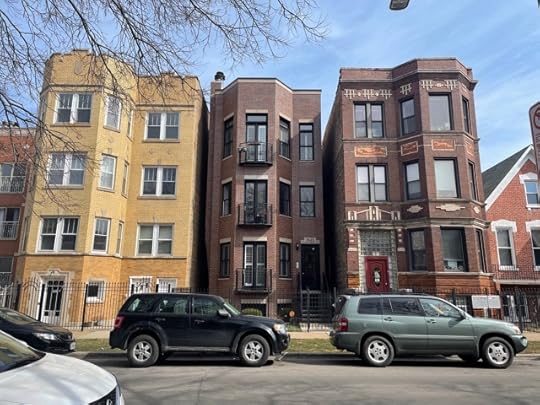
Sandra Cisneros grew up on Chicago's north side on Keeler street, not far from where my grandmother's family settled when they first came to the United States over half a century earlier than the Cisneros family. Recognizing street names and places, I felt an instant comradeship with Cisneros. Additionally, she attended the University of Iowa Writers Workshop, where I spent my undergraduate years. At the time she was one of two women of color in the program dominated by white men. She was viewed as a poet rather than a writer so was not afforded the same opportunities given to her colleagues. Yet, she found an agent to make the initial contacts for her and has persevered all these years later.
A House on Mango Street began to give Latin American women their voice. Along with Gloria Andalzua, Cherrie Moraga, and Denise Chavez, Cisneros started a network and these women are now the matriarchs of the amigas who I read now. They gave Hispanic women their opportunity to enter into the writing world so that they could begin to tell their stories about their place in the fabric of American society. In her Once Upon a Quinceanera, Julia Alvarez refers to Cisneros and her colleagues as las padrinas, the godmothers- to these next generations of writers. The House on Mango Street in this sense could refer to any Latin American girl who is first coming of age and looking to fulfill the American dream.
Mango Street, poetic in its prose, describes Esperanza, the oldest child in a Hispanic family who moves from apartment to apartment each year with her family. Mango Street is her family's first house and the neighborhood becomes a part of her existence. In two to three page vignettes, Cisneros poignantly describes Esperanza's adolescent angst. Navigating life as one of few Hispanics in her school, Esperanza faces pressure at school, at home, and with her friends. Partially autobiographical and part fiction, Cisneros employs luscious words to reveal how Esperanza desires to become a writer and leave Mango Street. As in her own life, her neighborhood will always be part of her, no matter how far she goes.
Only 110 pages in length, A House on Mango Street is widely studied in schools as both an example of Hispanic culture and coming of age. Cisneros with Mango Street paved the way for generations of Hispanic women writers. Her story of Esperanza is poignant, poetic, and a joy to read. I am glad that I finally took the time to read Cisneros, and I rate her ground breaking work 4.5 stars.
This little book is simply a marvellous miracle of growing up absurd and Hispanic in the Spanish-speaking poor section of the Windy City.
Its warm, uncluttered and sheer heartfelt humanity is a pure delight!
You know, when you’re living on a small fixed income that keeps falling behind with the inflationary times we live with, you cut corners.
You make do with only what you can afford.
And that teaches the narrator’s Dad to be practical and to stick to the tried and true ways of frugal family living. And it teaches her Mom to be doting and give amply of the little unsupervised freedoms that should come freely to a little kid.
What it teaches the narrator and her little sister is seeing the whole vast universe in the awesome grain of sand that is their immediate neighbourhood.
But, for Ms Cisneros, it causes the craving to capture that simplicity, that wonderful childhood pure immediacy, that magic of being very young and untarnished and not knowing or caring much about the adult world except as it affords her opportunities for wonder - to capture that beautiful world for us, in print.
And she does that.
Exceptionally well.
The poor in spirit, like Ms Cisneros, inherit the EARTH.
And all the immense riches of being poor and never knowing it.
Just REVELLING in a child’s basic Freedom.
The real world, as we adults know it, is a constricted world of bizarre rules and constant electronic surveillance.
But it is not that to an innocent child.
And these impoverished sisters are thrown, as Cisneros was, into a world that neither listens much to them or appreciated their wisdom:
And so they are thus thrown to their own free devices -
Which, being quite ingenuous and poor in spirit,
Are to them The Infinite Wealth of Little Princesses.
I found the introduction filled with unintended ironies. Cisneros said she wanted to write a book that you could turn to any page and find it accessible. For one thing, she said she was "abandoning quotation marks to streamline the typography and make the page as simple and readable as possible." Really? Personally, as far as I'm concerned, punctuation marks are our friends. Quotation marks in the most economical way signal that we are reading a conversation, and through conventions such as alternating paragraphs tell us this is an exchange between two people. Conventions help readability. Lack of quotation marks tell us we're in literary fiction land of difficult, dense prose beloved of academics--not a readable story the ordinary reader will enjoy. In fact, it has become my policy if an author doesn't use quotation marks to shut the book and back away slowly.
Why didn't I do that? Because I read this was a celebrated book about the Hispanic-American experience. Cisneros is fairly close to me in age, like me grew up in a big city (Chicago rather than New York) and like me has a Latino background. (Mexican rather than Puerto Rican). In other words, I thought I might identify, recognize commonalities in our experiences that would give me insight into what is accidental and incidental in my family experience and what comes out of being Hispanic, or at least something that took me back to my childhood with my family.
But really, I didn't last long despite my resolutions--I just hated the book's structure and style so much. Cisnero also says in her introduction that when she wrote this she didn't realize she wasn't writing a novel since she hadn't heard of "story cycles." You know what? I still don't think what she wrote was a novel. Not remotely. A novel isn't any work you say it is within two covers. I doubt this is long enough for one. I'd be very surprised if it came to even 30,000 words. That's a novella at best--not a novel. But also a novel represents a certain structure, and I don't think a series of short linked prose poems about a character (Esperanza Cordro) cuts it. Many of the 45 chapters didn't even come to 150 words. (And people think James Patterson is terse!) The prose was rambling, repetitive, and to me, instead of coming across as genuine seemed--oh, the sort of pretentious artificial thing I've seen a thousand times among a certain left-wing literati of all kinds of ethnicities that to me seems the very opposite of "diverse" yet seems to define it among many. Yeah, I totally believe this is often assigned in schools. Maybe that accounts for its bestseller status. I didn't for a moment believe this was the first person voice of a young teen girl coming of age. (That it was written by someone attending an elite poetry workshop as told in the introduction? That I believe.)
So yeah, so not something I enjoyed or that matched the hype in the blurbs and back cover.
Some children's books are good only in childhood. Some children's books are good at any age. And some children's books can be fantasticamazingmagical through your whole life, but only when you first read it when you were a kid.
I think this book is part of that last group.
I wish I read this when I was a kid, and yet I did not, and although I did read it and like it at the ripe old age of 23, it's not the same.
Alas.
Bottom line: Growing up sucks!! Having a Peter Pan moment.
-------------------- pre-review
yet another entry into my i-wish-i-read-this-in-childhood series.
review to come / 3.5 stars
-------------------- currently-reading updates
i'm not sure how i've gone this long without reading this book, but i'm changing that immediately
Book Review 4 out of 5 stars to The House on Mango Street, a short series of vignettes published in 1984 and written by Sandra Cisneros. Picture it: Long Island, August 1995. 18-year-old college student receives a letter in the mail, revealing two books he must read prior to attending the freshmen orientation seminar on his first day of college later that month. Young kid says "They're giving me work to do already? WT..." It went something like that. And it wasn't that I didn't want to read, and I was a good student, but seriously... I'm scared of going off to college and already being told to start doing some work. Can't I have some break before I... never mind. So I read it. And wow, it's fantastic. A short collection of stories about growing up in Chicago, learning how to live on your own (sort of). Meeting different people. Seeing other sides of life. Learning more than you thought was out there. Embracing change and culture.
Oh... I get it... that's what's about to happen to me! Wow... nice book. Thanks. So then I get to the orientation. And they want us to discuss it in a random group that was set up. So we get put in groups of 6. I'm with some weird-looking people. At 18, I looked about 12 still. For some reason, I got stuck with the other 18-year-olds who looked 28. I wanted to call them mom and dad. But I knew better. I kept my mouth shut. Sandra Cisneros has just taught me that. So... I'm very shy and don't say a word. No one speaks. I realize I guess I must say something. So I said. "I liked it a lot." Everyone nodded. I said something like "what did you think?"
I'll save you the drama. None of them read it. I was the only one who did. How embarrassing for them! It was so good... but I played it cool and described the plot. It seemed to open up the conversation, but then we were asked to nominate a leader to step up to the stage and explain your group's understanding of the book. Oh you know... vengeance... some day... payback...
My lesson. Don't ever read a book again. JUST KIDDING! You must read this one. It's a beautiful story and helps you embrace change and difference. And the characters are quite memorable and quirky. Quick read. Maybe 2 hours. You should definitely give it a chance.
About Me For those new to me or my reviews... here's the scoop: I read A LOT. I write A LOT. And now I blog A LOT. First the book review goes on Goodreads, and then I send it on over to my WordPress blog at https://thisismytruthnow.com, where you'll also find TV & Film reviews, the revealing and introspective 365 Daily Challenge and lots of blogging about places I've visited all over the world. And you can find all my social media profiles to get the details on the who/what/when/where and my pictures. Leave a comment and let me know what you think. Vote in the poll and ratings. Thanks for stopping by.
I did not care for the style of writing...each small chapter(1.5-2 pgs.)(vignette), is a snippet of what life is like on Mango Street for Esperanza. Tbe idea of these snippets (vignettes) is great, but they never kept my attention or painted a vivid picture for me. It is not a continuous plot, that keeps you hanging. I'm not used to this style, so it really didnt "grab" me. I was hoping that throughout the book I would connect with the character or "feel" something...I never did. I was not impressed. It's jut not a writing style I connect with.
The description on goodreads describes this as a novel. It is not a novel. It isn't a collection of stories either. The word is "vignette"--snapshots of significant moments, people, in young Esperanza's day-to-day life, sprinkled with her understanding that she will leave this House on Mango Street, and the Houses not on Mango Street that could be on Mango Street, and write, but that Mango Street will never leave her. There is no central plot line or conflict. Some characters go as quick as we meet them, while others linger throughout the book, or pop in here and there. It could be a journal, if Esperanza were a real girl writing in Chicago. But while the vignette style of the book lacks the conventions of short stories or a novel, The House on Mango Street shares one thing with those more traditional literary fiction forms: by the end of the book, Esperanza is changed. The snapshots she's stepped through and documented on paper have opened her eyes in a new way and she sees new avenues for her future. She's transformed from a child to a young adult. Each vignette is different and entertaining. Some sad, some funny, some dreamy, some fierce. I was 16 when my grandmother gave me this book for Christmas, and I think it rejuvenated my love for reading books, GOOD BOOKS. I'd been stuck on novels for school and Mary Higgins Clark since I turned 12 and reading Cisnernos led me to college to study English literature. No joke. Also, though I already knew I wanted to be a writer, this book opened my eyes to the excitement and versatility of voice in fiction. The writer's use of a young first person point of view as the voice through to convey the often difficult, unsavory realities in the adult world appealed to me greatly. Subsequently, I've been drawn to using this style of POV ever since.
"I make a story for my life, for each step my brown shoe takes."
Esperanza Cordero, a Mexican-American girl living in poverty, gives a soaring voice to a multitude of characters who otherwise would remain in darkness all their pitiful lives. Echoing the undying optimism even in the most wretched place, Esperanza stands for sunny days, for light and memories.
In the midst of countless insignificant young adult books, The House On Mango Street is an exception. Awe-inspiring writing with a powerful message duly delivered.
This book made me feel and think about a lot of things. The way we have been brought up. The way how our families influence us as grownups. The way the community we live in affects our lives.
And yes, I do think that many culture "did not want their women strong". And I do not believe in some astrology that says so.
I did search hard for the meaning of my own name while reading about Esperanza.
"I would like to baptize myself under a new name, a name more like the real me, the one nobody sees."
The use of some stereotypes and some words to describe some characters ("fat", "stupid", "fool", "ugly" and the like repeatedly) is something I didn't particularly liked in the writing. I know they're written from the viewpoint of a younger character but still it made me uncomfortable. And speaking of uncomfortable, there are some parts of the young girls taken advantage of. There are parts of domestic violence, sexual assault and body image issues.
The story reflects the different lives of different people who the narrator came across when her family moved to a new place. It also talks about writing, poetry and books. But the best parts are the ones which reflect identity, a sense of belonging and the idea of home.
Overall, I feel like I read a book talking about the struggles of being born as girls, of being a wife, being young mothers, of being mistreated and harassed just because they are women.
Not my cup of tea. Too abstract for my taste and jumping from one topic to another while I really wanted to learn more about some characters and stories.
Partly biographical, partly fiction, this wonderful book by Sandra Cisneros is an influential coming of age story that is still being used in schools today. Cisneros, born in Chicago in 1954 to Mexican parents, an only girl with 7 brothers, experienced a transient early childhood as the family moved back and forth from Chicago to Mexico. But when she was 11 they settled down and bought a house in the Humboldt Park area of Chicago, predominantly Puerto Rican, and it was from her life experiences there she drew the ideas for her stories in The House on Mango Street. As a child she experienced the inequalities that were connected to her culture, her gender, and her poor working class family. "Nevertheless, she persisted", and these experiences come to life in the character of Esperanza Cordero. They are told in little vignettes, short stories with a poetic feel to them. This book reminded me in many ways of Jacqueline Woodson's, Brown Girl Dreaming. I think this one is in that "must read" category. 4.5 stars.
The house where Esperanza Cordero lives with her family, on Mango Street in a predominantly Hispanic neighborhood of Chicago, is not the house that she would have wanted; at one point, she states that “I want a house on the hill like the ones with the gardens where Papa works.” But as chronicled by Sandra Cisneros, in her 1984 novel The House on Mango Street, Esperanza emerges as a perceptive and courageous young woman, trying against great odds to build a life for herself.
Author Cisneros’ life experiences are not exactly like those of protagonist Esperanza, but there are similarities. Cisneros grew up in a family that moved back and forth between Mexico and Chicago; as the only daughter of a family that also included six sons, she learned early that she would have to speak up if she were not to be overlooked. She studied poetry in the renowned creative-writing program of the University of Iowa; and her feelings of isolation there – Iowa is a beautiful state, but is not among the most diverse – may have nourished the way she emphasizes Esperanza’s loneliness in The House on Mango Street, as when Esperanza states early in the book that “Someday I will have a best friend all my own. One I can tell my secrets to. One who will understand my jokes without my having to explain them. Until then I am a red balloon, a balloon tied to an anchor” (p. 8).
The House on Mango Street consists of 44 vignettes. They vary in length, and many of them are quite short – a page or two, even a paragraph or two. Cisneros’ training as a poet serves her well, as she crafts what could be described as a novel made up of prose poems. That prose-quality comes through with particular strength in vignettes like “Darius & the Clouds,” in which a character not known for being eloquent, or even terribly bright, suddenly states that “You can never have too much sky. You can fall asleep and wake up drunk on sky, and sky can keep you safe when you are sad. Here there is too much sadness and not enough sky” (p. 33) The character’s observations reinforce the author’s emphasis on Mango Street as a place of limited possibilities.
The Chicago of The House on Mango Street is a landscape of cultural division. In “Those Who Don’t,” Esperanza reflects that “Those who don’t know any better come into our neighborhood scared. They think we’re dangerous. They think we will attack them with shiny knives. They are stupid people who are lost and got here by mistake” (p. 28). She finds their foolish fears ironical. At the same time, she acknowledges that, under other circumstances, she and her Latinx friends might feel much like those accidental visitors to Mango Street: “All brown all around, we are safe. But watch us drive into a neighborhood of another color and our knees go shakity-shake and our car windows get rolled up tight and our eyes look straight. Yeah. That is how it goes and goes” (p. 28).
An important theme of The House on Mango Street is the search for self-definition. Esperanza reflects in “My Name” that “In English my name means hope. In Spanish it means too many letters. It means sadness, it means waiting. It is like the number nine. A muddy color. It is the Mexican records my father plays on Sunday mornings, songs like sobbing” (p. 10).
As The House on Mango Street continues, it becomes clear that another important theme of the novel is the particularly difficult lot of Latina women in the community. They face, of course, racial and cultural discrimination from Chicago-area whites who control the lion’s share of power and money in Chicagoland. “Bums in the Attic” includes Esperanza’s musings on how the cultural geography of the Chicago metropolitan area reflects economic and class bias and cultural discrimination: “People who live on hills sleep so close to the stars they forget those of us who live so much on earth” (p. 86).
But the women of Mango Street also face gender oppression from Latino males who consider male privilege, and domination over women, to be their right by birth. “Marin” tells the story of one of Esperanza’s acquaintances – an older girl with a boyfriend in Puerto Rico. Older and pretty, Marin is considered “too much trouble” because “She is older and knows lots of things”. Women’s intelligence and autonomy, in other words, can be seen as a threat by many in this community. The vignette closes on a note that mixes imagery of hope, helplessness, and isolation: “Marin, under the streetlight, dancing by herself, is singing the same song somewhere. I know. Is waiting for a car to stop, a star to fall, someone to change her life” (p. 26).
Those same themes are emphasized in “A Smart Cookie,” in which Esperanza’s mother, while cooking a meal, tells Esperanza that “Shame is a bad thing, you know. It keeps you down. You want to know why I quit school? Because I didn’t have nice clothes. No clothes, but I had brains. Yup, she says disgusted, stirring again. I was a smart cookie then” (p. 90). The reader senses that Esperanza’s mother is warning her daughter: an education is the only thing that can save Esperanza from a lifetime as a second-class citizen along Mango Street.
A woman’s lack of choice in a difficult social situation is also an area of emphasis in “No Speak English,” a vignette that tells the story of Mamacita, “the big mama of the man across the street, third-floor front”. She has come with their baby from another country, and she only speaks eight words of English. She quarrels with her husband because she wants to go back to their native country and he doesn’t: “And then, to break her heart forever, the baby boy, who has begun to talk, starts to sing the Pepsi commercial he heard on T.V. No speak English, she says to the child in the language that sounds like tin. No speak English, no speak English, and bubbles into tears. No, no, no, as if she can’t believe her ears” (p. 77). The meaning of “No speak English” changes from “I don’t speak English” to “No! Don’t speak English!” Mamacita sees her son starting to imbibe the language and the commercialist values of a different culture, and she feels unable to do anything about it.
The potential danger that men pose to women and girls of the community is emphasized by “The First Job,” a vignette that describes a frightening incident from Esperanza’s first job at a photo-finishing shop on North Broadway:
I guess it was the time for the night shift or middle shift because a few people came in and punched the time clock, and an older Oriental man said hello and we talked for a while about my just starting, and he said we could be friends and next time to go in the lunchroom and sit with him, and I felt better. He had nice eyes and I didn’t feel so nervous anymore. Then he asked if I knew what day it was, and when I said I didn’t, he said it was his birthday and would I please give him a birthday kiss. I thought I would because he was so old and just as I was about to put my lips on his cheek, he grabs my face with both hands and kisses me hard on the mouth and doesn’t let go. (p. 54)
This passage looks ahead to later vignettes that emphasize the dangers of sexual assault for the women and girls of Mango Street. The presentation of this subject matter is restrained and responsible, and is all the more disturbing for that reason – part of why The House on Mango Street has faced banning attempts in various school and community libraries across the U.S.A.
Cisneros states, in the book’s preface, that she wanted to compose The House on Mango Street in such a way that readers from her community could turn to any place in the book, read one of the vignettes, and benefit from it, even if they hadn’t read the vignettes that came before. The book does seem to work that way, though there is a narrative line centering around Esperanza’s eventual decision to leave the community. In “The Three Sisters,” Esperanza goes to see three older women who are relatives of her friends Lucy and Rachel, and who have come into town after the death of Lucy and Rachel’s baby sister. Like three Fates, they offer Esperanza the chance to make a wish, assure her that her wish will come true, and add, “When you leave you must remember to come back for the others. A circle, understand? You will always be Esperanza. You will always be Mango Street. You can’t erase what you know. You can’t forget who you are” (p. 104).
And in “Mango Says Goodbye Sometimes,” the last vignette in the collection, Esperanza reflects on how her imminent departure from Mango Street is a Hasta luego (“See you later”) and not an Adios (“Goodbye”). She states quite directly that she intends to return, so that she can help others who are stuck in situations like what she has experienced, and she says of her fellow Latinas that “They will not know I have gone away to come back. For the ones I left behind. For the ones who cannot get out” (p. 109).
The concision of The House on Mango Street is key to its power and resonance. It is a book that one could read quickly – yet it would be a profound mistake to do so. This novel, with its poetic texture and its insights into character and culture, lends itself to repeat readings. Read it aloud, for a full appreciation of its poetic qualities.
This was so good I read it twice in a row. It's also quite short, at only 110 pages and told in about 40 or so short chapters, vignettes of a life.
The story follows Esparanza, a 12-year-old Chicana girl growing up in the Hispanic quarter of Chicago. Her observations, her friendships, her family life, her dreams of something bigger than herself: these things make up the short novel in eloquent, poetic language.
Each chapter is truly a prose poem. Every word is so deliberately chosen.
Cisneros describes her characters and their surroundings with such precision. From feet "fat and doughy like thick tamales" to three elderly sisters who "smelled like Kleenex or the inside of a satin handbag," she is vivid and succinct in her imagery.
The author also explores the plight of a young woman in mid-20th century America, especially in an environment that may not foster success as easily as others. Esparanza dreams of a home of her own, of possessing a space where she can create, liberating herself from her upbringing. But by the novel's end she's also understood her place on Mango Street, the inextricable hold that her neighborhood has on her life.
It's a simply told but complexly rendered story about home, how it may look different from person to person, but also in the rearview mirror. It's tender and touching and filled with so much love.
“I like to tell stories. I am going to tell you a story about a girl who didn’t want to belong.”
When this book was recently donated to my Little Free Library Shed, I was reminded that I had not reviewed it yet, although assigning only 3 stars. Why just 3 stars and no review?
Time to figure this out, by re-visiting this book.
What does it mean to re-visit a book that has already been read? For me, it is about beginning to read it again, first. And then, re-connecting to the characters and story. Once I have familiarized myself with what I have read in those initial pages, I may at times skip read through to the end. Thus, reminding myself of the initial premise and outcome – my experience as much as the story and its eventual ending.
To be honest, my own TBR is toppling over, literally, in my bedroom.📚 (And, I am not complaining. I am actually excited that these books are here for me to read.) And, I also have a backlisted request list of books ordered at my local library that I want to read. So, investment of time in something I have already read, is mostly to remind me of what I read in the past, so I could provide a review.
I offer this explanation only because I am constantly asked how I could read so many books. This is one way I do – for the sake of writing a review.
Very rarely have I read a book twice – other than if I completely forgot I had read it the first time, or because it was so good, I needed to escape between the pages again. Mostly, I am in the book re-visiting it so I can catch up on my backlog of read books, that haven’t been reviewed yet, by me. Has this happened to you, as well?
Although this wasn’t an easy read, it helped that it was a short book (110 pages). But it still worked well as a book to re-visit, because of its short vignette style chapters, and the times we are living in. Even as the book was published in 1983, and I am offering this review in 2025.
Why?
Because this book is frequently on the banned books list.
Now, on to this book. And, why it could possibly be considered for being banned.
This is not a light read. There are several trigger warnings that contribute to the story of Esperanza, our main protagonist. Domestic violence. Puberty. Sexual harassment. Racism.
It is a coming-of-age story, that shows the challenges of being a woman of color looking for independence in a strict patriarchal society.
It has a strong message that features a moral and ethical predicament that shows the consequences of what happens when one chooses one action over another.
It is tragic, thoughtful, multi-layered and profound. Thus, making it a great discussable book. And, controversial in its message. Since it appeals to a younger audience, some adults have vocalized that the content is too mature or offensive for young readers.
Should it be banned? Absolutely not. Books educate. They expose young people to a variety of experiences and perspectives, and an opportunity to critically think about our world and each other.
And, on this second-time-around, for me, an opportunity to raise the stars!✨
A gorgeously crafted modern classic that explores heritage, immigration, family, and what it means to belong to an expectation, an identity, a home. Humorous, truthful, and eloquent from beginning to end, the House on Mango Street is the embodiment of all of our ghosts, of our past, our dreams, our traumas, our conflicts, and it is the loving embrace of the heart that lies within us, the place to which we always return.
نصوص قصيرة عن فتاة مكسيكية لديها الكثير لتحكيه عن حياتها في شارع مانجو البيت والعائلة, الأصدقاء والجيران, لحظات الفرح والحزن الرواية كأنها ألبوم للصور, في كل صورة لقطة من لقطات حياتها
What a horrible, wretched waste of time and paper.
If you want to feel better about yourself, knowing that you can properly use punctuation and sentence structure, read this book. You'll see that someone else who can't can still get published.
If you want to feel better about yourself, thinking of the pleasantries of the simple things in life, read this book. You'll see plenty of characters who don't have them, and you can compare yourself to them and feel vain.
If you want to feel better about yourself, perhaps because you're an adult (or getting there soon) and doing things that are productive, or aiming for something real in life, read this book. You'll get a sense of what it's like to not have goals, aspirations, or determination…merely a desire to leave a place because nobody else has made it good enough for you.
If you want to feel better about yourself because your problems actually seem to matter, read this book. The frustrations of these characters simply don't.
If you want to feel better about yourself because you've never been raped, never been beaten, never been homeless, or never left school before you finished, read this book. It seems everyone in it has one of those four attributes already.
And if you want to feel better about yourself because you're a social worker and you feel the need to remind yourself of the poor, miserable, and terrible familial situations people in urban environments get themselves invariably stuck in, read this book. You'll be inspired by the poor, unfortunate souls living on Mango Street, and you'll be even more determined to go out into the world and do your good deeds. Because within the confines of this book, people suck and definitely need your help.
If you want to re-live your childhood memories of "Sideways Stories from Wayside School" from a more ethnically diverse and socio-economically depressed perspective, read this book. The short-narrative, one-character-per-chapter organization will make you feel right at home.
But on the other hand, if you like reading books that include lovely, breathtaking, or logical writing styles…if you like characters who have understandable motivations and seem to grow, change or develop through the course of the book…if you like books to have discernible plots…if you like stories that reward you sufficiently for the time you've invested…if you like to enjoy what you read…then do not even think of reading this book.
Yes, it's that worthless. Not bad. Not horrible. Worthless.
(Original pub date: 1984) This is another one of those "reading list classics" that I figured I should try. Especially since it's really short! ;) The book consists entirely of vignettes from the author's childhood in a poor section of Chicago. The writing is beautiful and spare - no vignette is longer that 2 or 3 pages (and the font is huge and widely spaced). It reads like poetry, really - the words are potent and evocative rather than exhaustively descriptive.
My reading of this book actually had some unexpected bonus material. I picked my copy up at a library used book sale in Maine, and the previous owner appears to have been a slightly dim-witted 8th or 9th grader who felt obliged to write inane comments in all the margins. When the author describes her annoyance at a tag-along little sister who just doesn't get it, the margins shout, "Is Nenny retarded?" An odd neighbor gets the same treatment: "Is Ruthie retarded?" By the time we get to the author's lovely description of her own weakness and vulnerability, a comparison between her and the skinny trees in front of her house, we've graduated to, "Eating disorder??? Why is she so thin?"
Sigh. Pop psychology has clearly killed future generations' ability to process art. RIP, intelligent thought.
I'm sitting here, wondering why I never read this book. First of all, Sandra Cisneros got her degree in Iowa City, my alma mater! I love her for that.
The House on Mango Street is a coming-of-age book about a 12-year-old Hispanic girl, Esperanza, growing up in a poor, confining neighborhood in Chicago. The stories are short vignettes, partially autobiographical, detailing the struggle of being different and defining yourself.
I appreciated the elegant writing that expressed young Esperenza's emotional vulnerability. She wanted more than the life she had--she held on to her dreams. There were moments of sheer joy and moments of heartbreaking pain.
I think many can relate to this book. I wish I had read it in my teen years. It's a moving story of someone who knew she could have more than what the world was offering. She needed to believe in herself to find it, not as a cliche, but genuinely search for freedom--owning her differences.
This book is raw, poignant, and definitely complex. It will make you smile and still hurt, but isn't that what great writing does?
"Someday I will have a best friend all my own. One I can tell all my secrets to. One who will understand my jokes without me having to explain them. Until then I am a red balloon, a balloon tied to an anchor"
5/5 stars for wonderful and memorable writing. I will definitely read it again.
This was pretty enjoyable. The writing style was a little annoying at first, but it eventually grew on me kind of like foot fungus. It was interesting to read about how Esperanza's character grew and matured over the course of the story, especially with her identity in the time period she was living in. The ending didn't provide very much resolution to the story, which irritated me for no real reason.
Overall, it was agreeable, but nowhere near as exceptional as I was led to believe. I will admit, however, that my enjoyment of this book might have been affected by the fact that I had to read it for school, and we did annoying assignments to fInD tHe DeEpEr MeAnInG nearly every day.
Easy to read and bite sized vignettes from the distinct viewpoint of a poor immigrant child Esperanza writing in her own style and keeping true to herself and her unique voice. Interesting. Different.
I had the opportunity to meet Sandra in one of her book readings and I was so overcome with emotions I was part babbling, part crying and part laughing with joy. I had to thank her because there was finally someone in the literary world that understood me and was able to tell stories that were similar to mine growing up as a Mexican in Chicago. I adore this book because I finally felt like I wasn't alone! I've seen so many stereotypes of hispanic people and I never felt like I identified with any of them. I'm just a simple first-generation Mexican-American girl trying to figure out the balance between my parent's culture and the American one.
I'm not latino, but I grew up poor. I was lucky enough that my mom tried her best to keep us from being super aware of this fact. We got free lunch and sometimes she pretended she'd already eaten dinner, and our house was infested with cockroaches and didn't have enough insulation to keep warm in a Florida winter, and I could never go on any fieldtrip that cost money, but I didn't feel inferior to other people. Reading that whole list, I realize that I was independently a fairly innocent, blinders-on kind of kid, regardless of my mom's particular efforts.
Anyway, I was always in gifted and advanced classes and got perfect grades. I got into a selective program at a neighboring high school and worked out the bussing situation to get there. I got into a highly selective northeast liberal arts college on full scholarship. I was living the dream.
Then I got to the school and started to realize: some people are rich. I had come to some relative understanding of my family's relative economic status in high school, but still the richest people around were like upper-middle-class, basically. I went to college with the children of oil tycoons, in some cases. And they were really nice people, a lot of the time. But I felt kind of lost. I had grown up in a world that a lot of these people didn't even realize existed, and I didn't know what it meant that I had left it behind. I didn't know what to think about how it should affect me, if at all, and how it should inform what I did with my life.
The House on Mango Street gave me a narrator who was dealing with a lot of these same issues, and comes up with some beautiful, sad, hopeful, frustrating, and ultimately affirming answers. It helped me sort out how to think about it, and inspired my own reflections on the home I grew up in as both a space, a place in time, and a character in my history.
"The House on Mango Street" is a coming-of-age book about a Mexican-American girl growing up in a Hispanic neighborhood in Chicago. We see Esperanza Cordero's family and neighborhood through the twelve-year-old girl's eyes, told in a series of vignettes. She sees many older women sitting by the windows. They feel trapped by their fathers, their husbands, and the responsibility of children. Others are trapped by their lack of education or inability to speak English. Esperanza is hoping her writing skills will be her ticket out of the neighborhood someday. She has dreams for her future, including a house of her own. But she'll always have ties to the old neighborhood.
Sandra Cisneros writes beautifully, painting a new picture for the reader in each vignette. This book would be perfect for classroom discussions for teens.
Note- I've read this book quite a few times in the last 20 odd years. Every time I pick it up, I am always tickled that I read something new, discovering something fresh, funny and always, heartbreaking.
In assessing this text, I write that my understanding and love of this book has evolved from when I first read it in high school, college, graduate school, and finally my years as a teacher. As you can see, a love of books can often evolve- and it’s one of those books that has really grown on me, that I’ve changed my mind since I’ve gotten older.
One of the most beloved and studied novels for the ages, Cisneros’ magical powers as both prose writer and poet are unparalleled in its ability to be both affecting and harrowing at the same time. Esperanza Cordero’s coming of age in an underprivileged community in Chicago is all at once raging with love, resentment, and what it means to be an outsider and an observer. It should be read by every teacher who teaches middle and high school as a way to teach their students the magic of pure, magical writing.
There are vignettes written so beautifully- a mixture of semi memoir, flash fiction, poetry, that are woven throughout that make this an ethereal coming of age classic. Such standouts are vignettes about growing up and coming of age, and bodies changing: "Hips", "Hairs", "Boys and Girls"; harrowing tales of abused women such as Alicia, and of Sally, from what is one of the most disturbing vignettes written, "The Monkey Garden"- a story of the traumas of puberty, sexual assault, and the grey areas that happen during the aftermath. "A Rice Sandwich" is also a highly charged sexual story about men who don't see girls as girls for their brains, but only to objectify them.
I am adding here that Cisneros is one of the few writers out there that inspires me everyday to be a better teacher and writer, and that like many minority novice writers out there- she has set the gold standard for this amazing method of storytelling tradition.
I have written in many reviews that Carson McCullers, James Baldwin, and Toni Morrison are the writers I read the most because of their language- Sandra Cisneros is the only one who makes me want to keep trying to write. I have been lucky to have met her a few times in both my student and in my teaching life- each encounter was always a gift, and I marvel at how she is just as earthy, just as wistful as the books that she writes.
After alllllllllllllllllllllllllll the backlash regarding the release of American Dirt, I stumbled upon this list and pretty much decided . . . . .
I weeded out the poetry because . . . .
As well as most of the nonfiction (for now at least – I’m not a huge nonfiction reader) and went to the library website to see what selections were available. I grabbed several (I’ll get around to reviewing them eventually) and then I saw an article where Sandra Cisneros (a Mexican author) offered her support to Jeanine Cummins’ release and explained her reasons for doing so with grace and eloquence which made The House on Mango Street get bumped to the forefront.
I should have read this book eons ago not only because it is considered a coming-of-age modern classic, or because it was an American Book Award winner, but also because of its perpetual status as a Banned and/or Challenged Book. (The House on Mango Street (along with others by Latino authors) was actually banned from ethnic studies classes by the Arizona legislature in 2012). Those are all lists that I pay attention to and since I read a couple hundred books per year I always just figured I’d get around to it.
I will also admit I am the absolute worst when it comes to remembering author names. Until the big blow up last month I didn't even think it was odd to never know who wrote what (that's what Alexa is for, right?) and I certainly don't do background checks for #ownvoices before requesting ARCs or reserving selections at the library. I can’t see that changing either, because as a reader/reviewer I have pretty much zero interest in the who/why/when/where/how behind a fictional release – I simply want a good story. Writers should write and if it’s good the people will read it. And it may not be fair for one person to get nearly a million dollars for a book while another (Cisneros in particular) makes practically nothing for ten years after her book is released, that’s a whoooooooooooooooole different issue than “who is allowed to write a particular book.”
So now that you have all that unnecessary information, let me tell you this book is freaking phenomenal. At little more than 100 pages, Cisneros packs not only some of her personal history, but also that of a neighborhood and an entire culture into what I saw someone call a “story collage” – vignettes of a few pages each that truly leave their mark. Her prose is lyrical; her messages regarding race and socioeconomic status and gender roles punch you in the face with feeling and authenticity. At over 25-years old The House on Mango Street reads like it could have been written yesterday. This absolutely should remain a requirement for students and I am thrilled to see that it is being adapted into a television show. As Cisneros herself says . . . .
You must remember to come back. For the ones who cannot leave as easily as you.
This book ensures that no one will forget where she came from.
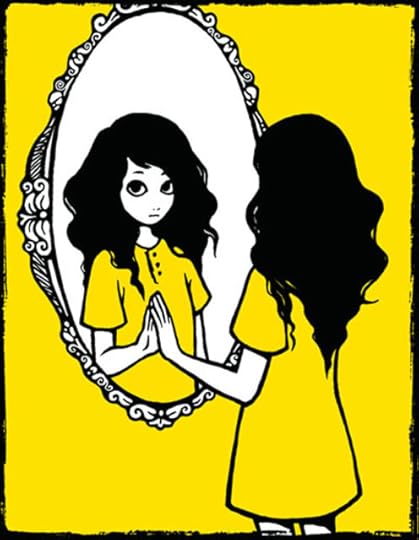
And since I spend about half my life complaining about ugly covers, can I just take a minute to give a major shout-out to Alejandro Romero’s artwork??????