This book was converted from its physical edition to the digital format by a community of volunteers. You may find it for free on the web. Purchase of the Kindle edition includes wireless delivery.
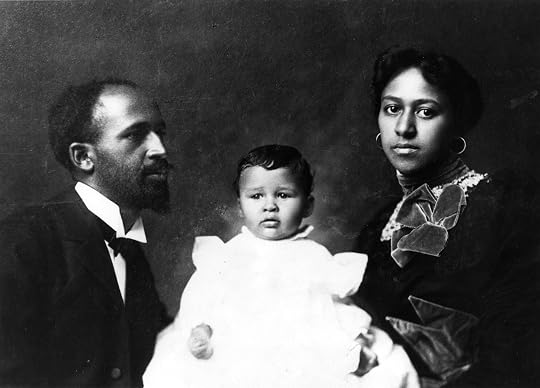
In 1868, William Edward Burghardt Du Bois (pronounced 'doo-boyz') was born in Massachusetts. He attended Fisk College in Nashville, then earned his BA in 1890 and his MS in 1891 from Harvard. Du Bois studied at the University of Berlin, then earned his doctorate in history from Harvard in 1894. He taught economics and history at Atlanta University from 1897-1910. The Souls of Black Folk (1903) made his name, in which he urged black Americans to stand up for their educational and economic rights. Du Bois was a founder of the National Association for the Advancement of Colored People, and edited the NAACP's official journal, "Crisis," from 1910 to 1934. Du Bois turned "Crisis" into the foremost black literary journal. The black nationalist expanded his interests to global concerns, and is called the "father of Pan-Africanism" for organizing international black congresses.
Although he used some religious metaphor and expressions in some of his books and writings, Du Bois called himself a freethinker. In "On Christianity," a posthumously published essay, Du Bois critiqued the black church: "The theology of the average colored church is basing itself far too much upon 'Hell and Damnation'—upon an attempt to scare people into being decent and threatening them with the terrors of death and punishment. We are still trained to believe a good deal that is simply childish in theology. The outward and visible punishment of every wrong deed that men do, the repeated declaration that anything can be gotten by anyone at any time by prayer." Du Bois became a member of the Communist Party and officially repudiated his U.S. citizenship at the end of his life, dying in his adopted country of Ghana. D. 1963.
I took an entire course on DuBois when I was in college and became a huge fan. Still, I wasn't sure he'd hold up as a novelist (I'd read essays, short stories, sociological materials), and I had put off reading this book for years. As it turns out, the book was actually a pretty good read, with some deliciously Machiavellian maneuvering in Washington as part of the plot. What made the book especially fun for me was seeing how all of DuBois's theorizing and political perspective translated into the novel, without being outrageously pedantic. In the novel his philosophical battles with Booker T. Washington, his sociological research on the cotton trade, and his socialist leanings all come through, but the novel still works. It's pretty cool. My favorite exchange on a frivolous level is this one: " You are right, Zora. I promised and I lied. Liars have no place in heaven and heaven is doubtless a beautiful place, but oh, Zora ! you haven't seen Paris!"
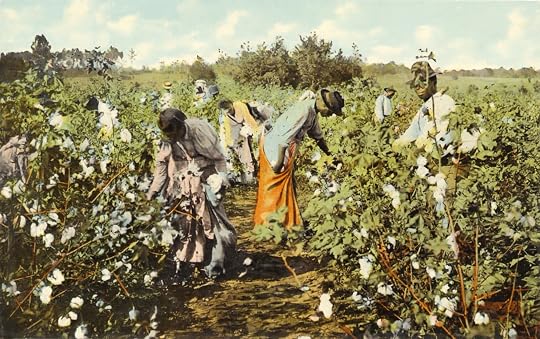
W.E.B. Du Bois plants a myth in the mud of a Georgia swamp and grows something tougher than Jason ever hauled home from Colchis. Cotton becomes the fleece here, pale and gleaming across the fields, and two children, Bles and Zora, bury a secret crop in the black earth like a promise sealed underground. Their harvest ripens into a whole economy of longing, and Du Bois spins the crop's fortunes into a portrait of a region still shackled to the ledger books of slavery, decades after emancipation supposedly cut the chain.
Bles comes down from the hill country hungry for schooling, and Miss Sarah Smith's little institution offers him letters, ciphering, and moral scaffolding based on Northern piety. Zora grows up wild in the swamp, half pagan, half prophet, raised by a conjure woman named Elspeth in a cabin thick with smoke and secrecy.
Du Bois pairs these two like grafted stock, one rooted in doctrine, one rooted in earth magic. Their courtship blooms alongside the cotton they plant together. They call it, in a phrase full of tenderness, their own Silver Fleece. The plot, once the seed takes, spreads roots into finance and politics far beyond the swamp. Planters and speculators corner the cotton market the way they once cornered bodies at auction, and the Cresswell family works every lever of Congress, courtship, and credit to keep the old order in bloom. Du Bois writes with a reformer's patience and a novelist's appetite for melodrama. A chapter on crop liens can share a shelf with a chapter of romantic anguish, both fully in season.
Zora travels north, meets reformers and reformist hypocrisy in Washington drawing rooms, and returns south transformed, buying up the very swamp that once raised her, turning superstition into stewardship. Bles drifts through politics and a rival courtship before finding his way back to the field where the whole tale began. Their reunion, staged again in the swamp under a crimson moon, closes the loop the opening chapter opened, cotton and courtship harvested together at last.
Du Bois signs off with a plea addressed straight to heaven, borrowing the cadence of Exodus for an American plantation still very much occupied. A century on, the pamphleteering can feel loud beside the finer domestic scenes, yet the anger suits the century that followed. Pick this fleece up and expect thorns among the fibers, plenty of them intentional. Beautiful, just beautiful.
The book can be a little on the nose sometimes, but I really appreciate it as an early attempt to critiquethe system of racial capitalism rather than simply point to good and bad individuals as I think earlier African American literature tends to do (and indeed Du Bois has not yet entitely gotten that out of his system). Beyond that though, the writing is excellent for much of the book (sometimes is faltets and wanes). Even more surprising, considering the author, is that the women are actually kind of fleshed out. Zora might be my favorite literary character of all time. My critiques are somewhat minor but not, I think, unimportant. One I already mentioned is that it can be on the nose. Certain monologues don't come across as realistic but rather Du Bois making a point. Two, it's a little idealistic. Not everything works out, but all the most important stuff plotwise eventually works out, even though Du Bois at least acknowledges that even with that there's still lots of work to be done. Lastly, I don't like how Zora just has this unconditional love for Bles. Bles mistreats her badly but she just keeps focusing her life around her love for him instead of realizing she could find someone who wouldn't be that disrespectful to her. To Du Bois's credit he does at least acknowledge that Bles was completely wrong and even has Zora semi acknowledge it, but whereas Bles moves on with his life and has other relationships, Zora is left in this space where she was either going to end up with Bles or be alone forever despite not wanting to be. Whereas Du Bois is willing to subvert what "purity" means, it is ultimately still something that only women must maintain.
This novel is certainly a testament to the exploitation and cruelty of which human beings are capable. But it also bears witness to the possibility that comes with education, for all.
Had the so-called southern gentleman had a better understanding of his investments, his exploitation by Northern investors could have been spared, and obviously the education of our young heroes allowed the possiblity of escape from part of their problem, or at least the possiblity to envision another way to live.
The ending leaves me with mixed feelings. No redemption there, really, in an attempt to wash away his sins upon his death chair, IMHO. No atonement, merely admission, and that more from fear than any repentance. A bit like our country, still. But we could Do Better.
W.E.B. DuBois was a pioneer sociologist, political scientist, social activist and co-founder of the N.A.A.C.P. Near the end of his career he attempted to broaden the audience of his ideas and philosophy by writing fiction. One of his efforts, first published in 1911, was The Quest of the Silver Fleece. The "silver fleece," of course, refers to cotton and the novel is set against the complex web of the cotton industry at the turn of the last century. The characters are the Southern plantation owners and politicians, the African-American sharecroppers, the Northern financial network of buyers, brokers, speculators and mill owners. DuBois artfully combines a tale of love and romance with a stark social commentary related to race, class, gender and social stratification. At the outset the reader is introduced to the ephemeral, misty swampland of Alabama, a world of superstition, dreamy and surreal. This is contrasted to Washington, D.C., the world of power, hypocrisy and greed and also the setting for the rise of the Black urban middle class, a world away from the plantation. In these contrasting settings the reader is presented with the story of Bles and Zora, whose love is branded by conflict and ill-fate as powerful and anguished as that of Romeo and Juliet. The plot is a tightly-woven adventure driven by their motives, ambitions and perseverance. DuBois writes his tale in a language and style that is rather formal and perhaps to our post-modern taste a bit grandiose and over-blown. This inflated poetic language helps set a tone of mystery and a nebulous spirituality with the main characters searching for the way in a dream world. Indeed, the climax of the novel does not deal so much with the resolution of the human, material and physical conflicts as it does with the coming to terms with what DuBois calls “The Vision Splendid.” The Vision very much matches his humanistic philosophy. “There she found God after a searching that had seared her soul: but He had simply pointed the Way, and the way was human.” The edition I read includes an introduction by renowned Pinko scholar Herbert Aptheker.
This is a beautiful and heart wrenching coming of age story of two African-Americans in the south 50 years after the end of slavery. While this story takes place in a emancipated American South it takes care to show the overt racism and connects it to the subtle ways it effects people both Black and White behind closed doors. It also talks of the easily manipulated government and how race relations along with equality ideals effect politics with the Black man in the center of it all. It is hard for me to read this story and not think that Mr.Du Bois modeled some of the events and characters after leader and highly regarded individuals of both races of the time. Very notable the rise in the career of the overly naive and idealistic heroin which seemed to have some resemblance of leaders like Booker T Washington. In the end at it's core this is an amazing love story filled with jealousy, pure joy, constant scheming, self growth, sadness, and much more similarly to that of the Golden Fleece which the book is named for. I find this book so intriguing and amazed at how more then 100 years later there are lessons and issues in America that haven't changed much and yet others that have. I greatly recommend this book!
"She had all the elements of power save the motive for doing anything in particular" (p. 146).
"She remembered the rector in Mrs. Vanderpool's library, and his question that revealed unfathomable depths of ignorance: 'Really, now, how do you account for the distressing increase in crime among your people?'" (p. 214).
"He realized that in Bles and Zora he was dealing with a younger class of educated black folk, who were learning to fight with new weapons...They must be crushed, and crushed quickly" (p. 239).
I loved this book! If you've read and appreciated anything by Du Bois, but especially The Souls of Black Folk, I think you would love this book. Published in 1911, Du Bois wrote it around the same time as his biography of John Brown, and just eight years after _Souls_. Du Bois had published serious history (The Suppression of the African Slave-Trade to the United States of America, 1638-1870 (1896) and sociology (The Philadelphia Negro: A Social Study (1899), and was well into his yearly studies headquartered at Atlanta University. Lots of non-fiction, data, facts. But Du Bois was more than a mere "scientist" -- as the title of his most famous book indicates, he was concerned about souls, about art, about the sublime, about those parts of our world that can't just be expressed in a table with data and figures, but demand the artistic form of poetry, and characters, and dialogue in order to convey them.
That's what _The Quest for the Silver Fleece_ is: the heart of Du Bois's other work, expressed in a riveting tale of love, loss, violence, hatred, money, greed, intrigue, plots, double, and triple crossings. It's a reflection, through Bles and Zoras' eyes, on the difference between the world *as it is* and the world *as it ought to be,* and how various figures cope with that dissonance.
I *LOVED* this book. I will be returning to it again, I'm sure. One of the subjective measures of mine for a "good novel" is did it leave me with a lump in my throat on the last page? This one did. Highly recommended.
"In those days, for these two souls, earth came very near to heaven. Both were in the midst of that mighty change from youth to womanhood and manhood. Their manner toward each other by degrees grew shyer and more thoughtful. There was less of comradeship, but the little meant more. The rough good fellowship was silently put aside; they no longer lightly clasped hands; and each at times wondered, in painful self-consciousness, if the other cared."
"Zora turned back steadily to her room, and locked herself in. After all, why shouldn't it be? Why had it not occurred to her before in her blindness? If she had wanted him—and ah, God! was not all her life simply the want of him?—why had she not bound him to her when he had offered himself? Why had she not bound him to her? She knew as she asked—because she had wanted all, not a part—everything, love, respect and perfect faith—not one thing could she spare then—not one thing. And now, oh, God! she had dreamed that it was all hers, since that night of death and circling flame when they looked at each other soul to soul. But he had not meant anything. It was pity she had seen there, not love; and she rose and walked the room slowly, fast and faster."
I read this at a feverish pace which certainly means I lost much of the magic, but this is a blessing because this is one of those classics I can only imagine gets better with rereads. Du Bois is most known for Souls of Black Folk and his broader nonfiction work, but little talk seems to be made of his fiction. I was slightly weary going in at the sparse comments on the direct messaging and on-the-nose interactions and that the high rating might be the usual GR echo-chamber situation, but this book showed once again that we as readers should be most weary of negative criticism and read more closely and think about the voice an author chooses. Du Bois is writing a picaresque novel of the likes one could expect from a writer drawing upon the deep wells of Thomas Pynchon, James Baldwin, and Ishmael Reed. It's no wonder when Pynchon came to write Against The Day he didn't reach even further back. Du Bois had already thoroughly ensnared the roots of the Gnostic Cypress Subject through the tendrils of the Octopus, The Carpet-baggers, and the education system and screamed out the Truth to us, The Observer of the entropy of Being in a state of fascistic bliss, and held on as rigor mortis set upon the "civil" past. There was no reconstruction other than that of Slavery into a liberal-approved outfit. In many ways, Burton's jab at the melancholy of the Slave in the second partition of his Anatomy can seem to bear the full weight of the less grotesque pages surrounding it when seen as a satirizing the mind of the Oppressor. The Rabelasian list of charities (basic living necessities) from one's Master that should quell the spirits does not without knowledge excise the freedom of optics from the matter. Rather it is of full consequence in the insult itself. What Burton abstracts methodologically, well aware of his exiles imposition being that of the Self, and what Du Bois more dramatically and symbolically explicates is the melancholy of having one's Being trifled in the most fundamental levels of expressing it: expression of sense and experience. Zora and Bles and Mrs. Smith are archetypes for the revolutionary conviction few held at the time and the subsequent tatters a Saint is made by the desires of Prejudice and Profit in those around them for whom the means are like the Id. This trio represents more than just a moral superiority but also incredible moral complexity and failings of their own which inform the convictions they have about these fundamental issues of equality, equity, and eugenics. Little equality is explicitly mentioned, but rather a radical leap (for the time believe it or not) is made beyond asking to be treated the same, in following Zora and Bles near to dotage we see the failures of demos in providing even equality under Capitalism (or its Reconstruction era Proto Fascist form) and a rejection of the offer to play the game and enter a hierarchy and play house (Congressional) for those who even in the North still expected subservience. Rather, our educator in this novel persists beyond bribery and extortion and threat and terrorism to give her best within her own limits under the predation of Capital to those who would be the worst off without even a meager education. Rather, our cool ( in the full sense of the word) Zora and Bles unite their old community and the old flame of that surreality of childhood in which each felt the future was not an outcome but a multiplicity of events and emotions and construct a commune and circumvent the legal dictatorship by establishing a demos that was class conscious. I had seen that Du Bois remarked about this book that it was an "economic study of some merit" yet for those aware of today's Cloud Capitalists and their insipient WS dog-whistling it would seem this book is THE economic study on American Finance and Tech capital and that it's demonstrations of heart merit immense study and reflection in these days of anger and rotted irony.
Excellent historical novel about America In the late 1800’s from the eyes of an influential Black American that lived through it, W. E. B. Du Bois. The South, the North, Politics, and Love all intermingled into a very interesting story that educates and enlightens the mind as it follows the lives of Zora and Bles. I am a better, more understanding, and compassionate person for the reading of this book. I highly recommend it.
On the epic tail of life for black Americans written in 1911 lyrical, prose, complicated characters and themes that are very much alive and relevant today right versus wrong, what is purity, how to treat each other, the role of politics and getting ahead in governmental and interpersonal relationships, the complicated nature of life itself. Zara and Bless embark upon this epic journey, not unlike Jason and the Argonauts in the quest for the golden fleece.
I really enjoyed this book, as much as one can while reading it for school, but the timeline was a little hard to grasp and GOOD GOD WAS THE PRINT SMALL! I basically needed a magnifying glass to read it. In all seriousness though, this novel was very beautifully written.
(published 1911) The Quest of the Silver Fleece is an amazing story, profoundly exploring and exposing America’s views on race. From the back of the book: “Originally published in 1911, The Quest of the Silver Fleece was the first novel to come from world-famous sociologist and civil rights leader W.E.B. DuBois. A controversial title of its time, the novel chronicles the complex interactions between Northern financing and Southern politics as it follows the story of free-spirited Zora, child of the Southern swamp, and her romance with Yankee-educated Bles, who will eventually face the opportunity to claim political power through corrupt means. In the middle of it all is the silver fleece, a crop of cotton rich with meaning and symbolism.” This piece of literature is not an easy ready – but it’s worth the effort. Du Bois touches on many societal issues, including: race, economics, abuse of power, education, virtue of hard work, loyalty and love. note: the reason I give it 3 stars instead of 4 is simply because the political aspects of the story were so difficult to get my mind around.
I first learned of this book via Slavery By Another Name. DuBois had studied the area and written a report, and then could not publish it as sociology, so turned it into a novel. It starts off somewhat slowly, and with an overly flowerly prose, which delayed my getting into the book. It became more gripping as I went on.
It does not cover the debt peonage so much as the regular sharecropping practices, though there is a reference, but you end up seeing the problems with that situation, the possible solutions, and the obstacles to those, with supporting characters who feel very real. Bles and especially Zora feel a bit too noble and innocent - I think there may be some influence from Rousseau there - but you wouldn't necessarily want them to become corrupt.
Anyway it's an interesting book for its source, and then it ended up being one I had a hard time putting down toward the end.
I am a great lover of black writers and their works. I had never read anything by Du Bois and for some reason chose this one as the starting point. It was an excellent choice since it was his first. It is an honest, unflinching look at race relations, the cotton crop (silver fleece) and the different races and social strata that come into play in the world of 1910 Alabama. His characters are well drawn. He manages to not only get the conflicts between races authentic but also takes on the question of religion (African mystic to strict Protestant). I am curious to read another of his works, since he went on to become a founder of the NAACP. I am wondering if his voice became more strident or whether he changed the racial slurs as the times changed. All in all very much worth reading
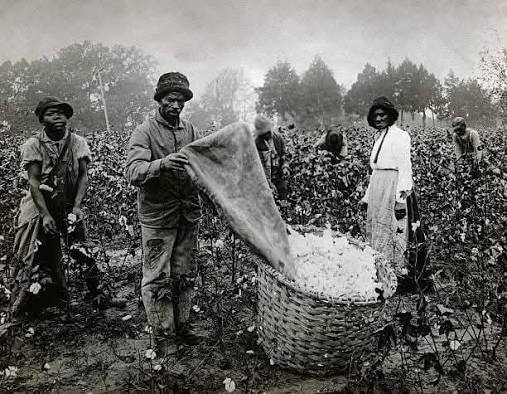
I have finished reading "The Quest of The Silver Fleece: A Novel" by W.E.B. Du Bois, 1911. I read the Harlem Moon Classic, Broadway Books, New York, 2004, with an introduction by Arnold Rampersod. Du Bois put his rise of the ten percent of a class of African Americans as a necessary condition for their rise in American life into this novel. He tested it with characters and realistic Jim Crow setting which had an embedded love story pressing amid or against the wave of forces, the white cotton aristocracy, the rising fortunes of the white working class, and the struggle of blacks for education, wealth, independence, and a way to safely rise. In many ways, Du Bois in this novel , has constructed and economic story much like Frank Norris's novels, such as "The Octopus." Du Bois also raises up a black female heroine Zora who challenges the white aristocracy while staying alive doing it, and building a community college/ agriculture school/farm community. Du Bois shows humanity along with the evil in the white characters, as Asian American authors, such as Carlos Bulosan, a Filipino who came to America and saw its heart along with its tragedy. This was Du Bois' first novel, having become known as a sociologist and civil rights leader (helped create the NAACP and found "The Crisis", the associations magazine). Du Bois is best known for his sociological study "The Souls of Black Folk." The male romantic character is Bles, educated in the north, gains meaningless and demeaning political appointment, and finally returns to the south to work with Zora. They had met and interacted in the early part of the book, as youth raising cotton-- the silver fleece-- on an island in the swamp. Two major aristocratic characters, the Cresswells, balance their racist demeanor with the necessary interaction with black folk, and good feelings arise mostly in the wife, as she confronts the lukewarm relations with her politician husband. The economic forces are, as with the wheat ranchers in "The Octopus," the rise of northern capitalism finally working to completely uproot the profitability of the post slavery plantation system. Poor white enter the system as rising workers, with their demands for better life, and inklings of a common need shared with black folk-- only the white racism is more alluring. We have not traveled far from that point, yet.
Below, a selection from the text:
" Colonel Cresswell stared at his neighbor, speechless with bewilderment and outraged traditions. Such unbelievable heresy from a Northerner or a Negro would have been natural; but from a Southerner whose father had owned five hundred slaves—it was incredible! The other landlords scarcely listened; they were dogged and impatient and they could suggest no remedy. They could only blame the mill for their troubles.
John Taylor left the conference blithely. "No," he said to the committee from the new mill-workers' union. "Can't raise wages, gentlemen, and can't lessen hours. Mill is just started and not yet paying expenses. You're getting better wages than you ever got. If you don't want to work, quit. There are plenty of others, white and black, who want your jobs."
The mention of black people as competitors for wages was like a red rag to a bull. The laborers got together and at the next election they made a clean sweep, judge, sheriff, two members of the legislature, and the registrars of votes. Undoubtedly the following year they would capture Harry Cresswell's seat in Congress.
The result was curious. From two sides, from landlord and white laborer, came renewed oppression of black men. The laborers found that their political power gave them little economic advantage as long as the threatening cloud of Negro competition loomed ahead. There was some talk of a strike, but Colton, the new sheriff, discouraged it.
"I tell you, boys, where the trouble lies: it's the niggers. They live on nothing and take any kind of treatment, and they keep wages down. If you strike, they'll get your jobs, sure. We'll just have to grin and bear it a while, but get back at the darkies whenever you can. I'll stick 'em into the chain-gang every chance I get."
On the other hand, inspired by fright, the grip of the landlords on the black serfs closed with steadily increasing firmness. They saw one class rising from beneath them to power, and they tightened the chains on the other. Matters simmered on in this way, and the only party wholly satisfied with conditions was John Taylor and the few young Southerners who saw through his eyes. He was making money. The landlords, on the contrary, were losing power and prestige, and their farm labor, despite strenuous efforts, was drifting to town attracted by new and incidental work and higher wages. The mill-hands were more and more overworked and underpaid, and hated the Negroes for it in accordance with their leaders' directions.
At the same time the oppressed blacks and scowling mill-hands could not help recurring again and again to the same inarticulate thought which no one was brave enough to voice. Once, however, it came out flatly. It was when Zora, crowding into the village courthouse to see if she could not help Aunt Rachel's accused boy, found herself beside a gaunt, overworked white woman. The woman was struggling with a crippled child and Zora, turning, lifted him carefully for the weak mother, who thanked her half timidly. "That mill's about killed him," she said.
At this juncture the manacled boy was led into court, and the woman suddenly turned again to Zora.
"Durned if I don't think these white slaves and black slaves had ought ter git together," she declared.
A realistic pix of life in the Reconstruction era. Despair abounds as racism continues to thrive and morph into new oppressive systems. There is some hope as formerly enslaved people begin to be educated, but the capitalist system built on the back of enslaved people continues to discriminate against people of color and individual biases continue to reinforce the false "inferiority" of people of color.
An important book for me to read as a white person who has benefited from systemic racism in the USA.
I've known of W.E.B, Du Bois for a long time as a famous black civil rights leader but not as a writer of fiction. He has however written several highly regarded fiction novels, his first being The Quest of the Silver Fleece. It is an imagined economic development of cotton as a way to boost the rise of black people of the south early in the 20th century.
It is also a story of love and morality, led by the growth of Bles and Zora. It is a book of powerful messages masterfully told through fiction. I couldn't quit reading this book until it was finished.
In some ways yes...a snapshot of racial attitudes 100 years ago. But in some ways more than that, for Dubois based his novel on one of the largest anthropological studies of post-slavery peonage in the South --- a study Dubois designed and supervised for the US Labor Dept. when the Labor Dept got the results, they destroyed the report and all the field work. This is your tiny glimpse, woven into an Edwardian era potboiler