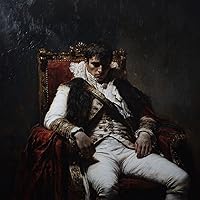
The Greek Chronicler Polybius' Histories Narrate Rome's Dramatic Rise To Power Over The Mediterranean, From 264-146 BCE.
The Greek historian Polybius was born in Megalopolis sometime near the end of the third century BCE, in Greece's Achaea region, which was located in the northern portion of the Peloponnese. He was the son of a wealthy aristocrat, and during his formative years he took a special interest in studying history and political theory. Very little is known of Polybius' early life and career, other than his being chosen in 181 BCE to carry the ashes of one of Hellenistic Greece's last great heroes, Philopoemen, and his election in 170/69 to the military rank of hipparch, or cavalry leader. These early experiences undoubtedly left an impression on the future historian and likely inspired him later in life to write two works which unfortunately have been lost, the Life of Philopoemen and the Tactics.
Following Greece's loss to Rome in the Third Macedonian War in 168 BCE, Polybius fell victim to the declamations of one Callicrates, a Greek politician with Roman sympathies, and he was thrown into prison for sixteen years without juridical procedure of any kind. After being transported to Rome, he experienced a fortuitous change of circumstance by meeting the son of Lucius Aemilius Paulus, the famous Scipio Aemilianus, and the two developed a lifelong friendship. The terms of Polybius' prison sentence were drastically reduced, and he was permitted to stay with Scipio at his home in the capital, where he met and became acquainted with many notable Roman dignitaries.
He later accompanied his patron on various military campaigns, among them the sack of Carthage during the Third Punic War and Greece's final defeat at the Battle of Leucapetra, both occurring in the year 146 BCE. Although little is known for certain of Polybius' later life, it is possible that he served as Scipio's military advisor during the Numantine War, which lasted from 144-133. While the date and manner of his death are not definitively known, there is a short excerpt from a dubious historical source, a 'Pseudo-Lucian', which states that, "[Polybius] fell from his horse while riding up from the country, fell ill as a result and died at the age of eighty-two".
This selection of Polybius' Histories is published by the Penguin Classics, featuring translation work by Ian Scott-Kilvert and an introduction by F.W. Walbank. The 541-page main text is split into nineteen 'books' which equate to chapters of varying length and are accompanied by nine maps of various regions in Europe and the Mediterranean. The text is annotated with notes on each corresponding page and there is also a chronological table of events in Greek, Roman, Carthaginian and Seleucid history from 280-146 BCE, and an index at the back of the volume.
F.W. Walbank's introduction covers a broad range of related topics which include a summary of events from Polybius' historical era, a short biography and an intriguing discussion on the Histories' composition and his particular style of writing, which also featured entertaining digressions on a number of topics, as well as Polybius' own opinions on what activities a prospective historian must engage in to become successful at their craft.
As Walbank observes, "The good historian should study and compare memoirs and other writings; but he must also make himself familiar with cities, districts, rivers, harbours and geographical features generally, and above all he must have personal experience of political life (pp. 442-3). It is these last two activities - knowing the country and practicing politics (which in ancient times included warfare) - that Polybius rates highest. Real history cannot be properly written in a library. The historian must get about; he must visit sites, test the various accounts of the battle on the spot and cross-question those who took part in it. This, says Polybius (p. 431), is the most important part of history."
He also emphasizes the role that Fortune, the Greek term Tyche, plays in the Achaean historian's writing. In the Histories, Polybius utilizes Tyche when it becomes necessary to explain uncontrollable events, such as famines, floods or earthquakes, or when people act in a peculiar way that makes their behavior illogical. "Tyche features frequently in his pages, and not always after other attempts at explanation have been exhausted. In particular, he calls in the aid of Tyche in situations where two lines of development, each in itself explicable in rational terms, intersect to produce a new, quite unforeseen situation." Another of Polybius' concepts, anacyclosis, is associated with the evolution and gradual regression of political institutions, and is an eight-part circular process that begins with monarchy, proceeding to tyranny, then to aristocracy, to oligarchy, to democracy, to mob rule and finally anarchy, before beginning anew with a monarchy.
Polybius' Histories were originally intended to encompass thirty volumes, spanning the period from 264-168 BCE - their purpose was to demonstrate "..by what means and under what system of government the Romans succeeded in less than fifty-three years in bringing under their rule almost the whole of the inhabited world, an achievement which is without parallel in human history." This era's chaotic chain of events combined with the fact that Polybius' relationship with Scipio Aemilianus allowed him to be a direct observer to many of them, elicited him to add one final stretch of years, 167-146 - enough material for ten extra volumes, bringing the total to forty. Of those forty volumes, a mere five remain in their entirety.
The Histories are considered to be pragmatike historia, or 'pragmatical history', which is a political and military history that is meant to be used for a didactic, or moral purpose. While composing the work Polybius was distinctly attuned to the type of audience he believed would be reading his chronicle. He intended it to be read by a mostly Greek clientele, and he differs from many classical historians in that he is very direct in the manner he expresses his moral lessons or advice - they are not embedded, veiled or implied - he tends to eschew high drama and theatrical speeches in favor of a straightforward, factually driven narrative that relies on objectivity and clear elucidations of what is considered to be 'good' behavior to be emulated or 'bad' behavior to be avoided at all costs.
Polybius' Histories is the main surviving account for the First Punic War, which was fought between Rome and Carthage from 264-241 BCE, and early on he makes the decision to discuss his own primary source for the war, the lost history of Philinus of Agrigentum, where he provides comparisons with his own account to demonstrate where his chronicle reflects the correct chain of events. Polybius was serious about getting the most accurate testimony from his eye-witnesses, and when the events occurred within his lifetime, while living in Rome he would often solicit multiple informants to choose what he would include in his chronicle. Otherwise, he would consult the available historical sources and make his own conclusions.
Although Polybius' totals differ greatly, modern estimates place the number of Roman and Carthaginian naval vessels involved in the maritime Battle of Cape Eknomus at 230 and 200, respectively. There was a tactical element to the conflict which involved the Roman ships, commanded by the consuls Marcus Atilius Regulus and Lucius Manlius, arrayed in a wedge-shaped formation appearing similar to a battering-ram, and the Carthaginians assembled in three formations, two arranged in a straight line and the third skewed in a direction angling toward the Romans.
During the engagement the Romans attempted to break through the thinly held center formation, while the left and right wings, which were led by Hamilcar the Great and, Hanno, respectively, rushed ahead only to sail back in a flanking maneuver which sought to envelop the Romans. But the Romans had developed an apparatus called a corvus that Polybius refers to as a 'raven', which was a massive hinged ramp with handrailings that was attached to a bow-mounted mast on a warship that could be sent crashing down onto the deck of an enemy ship, allowing the Romans to easily board and engage in hand-to-hand combat. This tactic proved devastating to the Carthaginian navy, whose ships were built for ramming, not close-quarters engagements. Walbank's notes inform the reader that "The sea-battle at Ecnomus has been described as 'Cannae with the result reversed'. On this occasion the Punic centre proved too weak to hold the Romans."
It is difficult to overstate the importance of naval combat in any discussion on the First Punic War - the fact that Rome emerged as the victor despite their numerous losses throughout the course of the campaign is a testament to their determination to succeed, no matter the cost. The Battle of Drepana was a decisive Carthaginian victory that resulted in 93 Roman ships being captured and an unknown amount sunk, and according to Polybius' numbers, between the disasters at Camarina and the Strait of Sicily, the Romans lost a staggering 344 warships and 400 supply transports to shipwrecks arising from inclement weather conditions. The Romans simply trained more troops, constructed more ships, and maintained their supply lines more effectively than their Carthaginian foes. Carthage's generals were experienced naval commanders able to successfully gauge weather conditions and counter Roman surprise attacks, but they grew complacent at the end of the war, and according to Polybius, they allowed the strength of their navy to slip.
In Book II Polybius discusses Roman affairs in Illyria, Spain and Greece, also summarizing a period of the intermittent Roman–Gallic wars that spanned 390-222 BCE. The First Illyrian War was waged from 229-8 BCE between the Roman Republic and the Kingdom of Illyria during the reign of its queen, Teuta, and began primarily due to the Romans' apprehension over trade in the Adriatic region and the Illyrian ruler's edict allowing her naval fleets to openly engage in piracy and pillage. The Illyrians were hired by the Epirote town of Medion to protect it from the army of the Greek Aetolian League, which was forcefully attempting to annex the settlement, and in a pitched battle they defeated the League in what Polybius claimed to be a single charge, during which the heavily-armed-and-armored Illyrians proved to be unstoppable against the Aetolians' comparatively lightly-equipped skirmishers.
Book III - The Second Punic War concerns Rome's sixteen-year campaign waged from 218-202 BCE against the Empire of Carthage, when the brilliant Carthaginian general Hannibal Barca achieved his stunning victories at the River Trebbia in 218, Lake Trasimene in 217 and Cannae in 216, bringing the Roman Republic to the brink of extinction. The Romans staged a dramatic resurgence in the campaign's later years by winning decisive encounters at the River Metaurus in 207 and Ilipa in 206, followed by Hannibal's final defeat at Zama in 202. Prior to reading the Histories, the reviewer had read Livy's account of the Second Punic War, whose primary source material was the work of the third century BCE historian Quintus Fabius Pictor, and the two historians' prose styles are very different. Livy's writing is florid and eloquent, with the morality it seeks to impart resting just beyond the reader's periphery, while his predecessor's is by comparison much more utilitarian, almost mechanical in its tone and manner of delivery. The didactic nature of Polybius' work is very straightforward, and he always mentions and discusses what he aims to teach his audience.
Book IV - Affairs in Greece contains Polybius' discussion of a civil war in the Arcadian city of Cynaetha, which originates when a group of political exiles receive clemency from the Cynaethan government and then betray the city to the Aetolian League, who lay waste to its environs and occupy it in defiance of Aratus of Sicyon's rival Achaean League. Byzantium and the Black Sea is a narrative exposition on the prosperous Greek settlement of Byzantium and the Pontus (Black Sea) regions. Polybius delineates his own theories, many of which are incorrect, on what will become of the Propontus (Sea of Marmara) and Maeotic Lake (Sea of Asov) in the aftermath of thousands of years of water flow and alluvial detritus. He also evaluates Byzantium's advantages and disadvantages in regard to its geographic and nautical situation, which range from a discussion of the Propontus' powerful marine currents to a description of the Thracian tribes inhabiting the area adjacent to Byzantium.
Polybius provides a brief description of the ascension of the Egyptian King Ptolemy IV, who assumed power in 221 BCE following the death of his father, Euergetes, and of the events leading to the demise of the Spartan King Cleomenes III, which involved a sinister plot hatched by Ptolemy's minister Sosibius, in Book V - The Death of Cleomenes. In Philip and the Greeks, the Macedonian King Philip V receives a missive with news of the Romans' ignominious defeat at the hands of Hannibal Barca in the Battle of Lake Trasimene, and after receiving counsel from Demetrius of Pharos, Philip sends envoys to several Greek towns, culminating in the conference at Naupactos, where he entreats them to put aside their differences and join him in conducting a unified assault on Rome.
Perhaps the most significant section of Polybius' Histories can be found in Book VI, which canvasses a host of political topics such as the different forms of states (kingship, aristocracy, democracy, tyranny, oligarchy and mob rule), and a comparison between the Roman Republic and other states' governments, but it mostly discusses the Roman constitution and the republic's military organization. Polybius contends that the Roman constitution's three component parts - the consuls, the senate and the people - each worked together to provide a series of checks and balances upon one another which prevented one entity from becoming too powerful. For example, the consuls possessed the supreme power of command over the Roman military, but the senate controlled the shipment of grain to keep the soldiers fed, and the consuls, upon relinquishing their command, were constrained to account for their actions taken while in office to the Roman people. The power to make treaties and ratify laws also rested with the people, but they were obligated to the senate under contract to perform tax and revenue collection for a variety of different government transactions.
In Book XII - Criticisms of Timaeus and His Approach to History, Polybius furnishes an assortment of literary critiques delineating what he believed to be glaring examples of subpar research and poor overall veracity that appear in the written works of the fourth-century Greek historian, Timaeus of Tauromenium. He provides a relentless stream of arguments which speak volumes in regard to the traits and practices he believed to have made a good chronicler. "It is clear from the evidence I have quoted that Timaeus' descriptions of Africa, of Sardinia, and above all of Italy are unreliable, and that speaking generally he has quite neglected the business of making first-hand inquiries, which is the historian's most important duty..Yet although Timaeus dwells at great length upon the need for accuracy, he seems to me to fall a long way short of the truth. So far from making a thorough investigation of the facts by questioning others, he cannot give us reliable information even about things which he has seen with his own eyes.."
Polybius' Histories is classified as a 'universal history', meaning that its narrative is concerned with world-spanning occurrences often transpiring at great distances from one another that are not always interrelated. The later books discuss a series of disparate events occurring at different locations throughout Italy and the Mediterranean. They concern major Roman political and military campaigns in the Second Punic War, the First and Second Macedonian Wars, fought from 214-196 BCE, and the Antiochal succession in 164, including key engagements such as Rome's Siege of Syracuse, which lasted from 213-212, as well as Hannibal Barca's treacherous seizure of the wealthy Roman city of Tarentum, also in 212.
These later books also contain Polybius' signature critiques on the classical historians who had predeceased him, analyzing topics such as Timaeus' remarks on Agathokles the Sicilian, and contrasting them with Theopompus' withering commentary regarding the vices of Philip II of Macedon. He provides his reader with brief character profiles of the famous rival generals, Hannibal and Scipio Africanus, and includes an intriguing short essay, On Generalship, that is believed to have been a companion piece to his lost military treatise, Tactics. It addresses the importance of the general possessing intimate knowledge of the terrain, and his ability to correctly calculate the time of day, among other topics related to leadership and strategy.
On Treachery serves as a cautionary tale that explores the deeds of a band of conspirators who betray King Philip V of Macedon, and On the Phalanx uses Polybius' own extensive military expertise to help ascertain the Macedonian phalanx's effectiveness when compared to the traditional Roman maniple. On Fate and Chance juxtaposes man's ability to avoid misfortune arising from events outside his control against his limited powers to affect the factors which lie within it.
This edition of Polybius' Histories is an outstanding translation of an authoritative literary work that has influenced historians and political writers throughout the ages. F.W. Walbank's introduction is invaluable as the reader progresses through the book, discussing the distinct characteristics and societal impact of Polybius' writing, including a selection of recent scholarly works. Polybius unabashedly allows his analytical personality and deep sense of morality to shine through in the pages of the Histories, demonstrating a considerable attention to detail and a profoundly ingrained sense of right and wrong through his spirited critiques of other historians and clearly elucidated moral lessons which accompany the main text. Thank you so very much for reading, I hope you enjoyed the review!