

What do you think?

Josephine Tey #1
An Expert in Murder
Alternate cover for this ISBN can be found here
March 1934. Revered mystery writer Josephine Tey is traveling from Scotland to London for the final week of her play Richard of Bordeaux, the surprise hit of the season, with pacifist themes that resonate in a world still haunted by war. But joy turns to horror when her arrival coincides with the murder of a young woman she had befriended on the train ride—and Tey is plunged into a mystery as puzzling as any in her own works.
Detective Inspector Archie Penrose is convinced that the killing is connected to the play, and that Tey herself is in danger of becoming a victim of her own success. In the aftermath of a second murder, the writer and the policeman must join together to stop a ruthless killer who will apparently stop at nothing.
March 1934. Revered mystery writer Josephine Tey is traveling from Scotland to London for the final week of her play Richard of Bordeaux, the surprise hit of the season, with pacifist themes that resonate in a world still haunted by war. But joy turns to horror when her arrival coincides with the murder of a young woman she had befriended on the train ride—and Tey is plunged into a mystery as puzzling as any in her own works.
Detective Inspector Archie Penrose is convinced that the killing is connected to the play, and that Tey herself is in danger of becoming a victim of her own success. In the aftermath of a second murder, the writer and the policeman must join together to stop a ruthless killer who will apparently stop at nothing.
322 pages, Kindle Edition
First published May 20, 2008
About the author
Nicola Upson
24 books569 followersNicola Upson was born in Bury St. Edmunds, Suffolk, and read English at Downing College, Cambridge. She has worked in theatre and as a freelance journalist, and is the author of two non-fiction works, and the recipient of an Escalator Award from Arts Council England. She lives with her partner and splits her time between Cambridge and Cornwall.
Nicola is currently writing the sixth book in the 'Josephine Tey' series, and a standalone novel set in the 1920s.
Series:
* Josephine Tey
Nicola is currently writing the sixth book in the 'Josephine Tey' series, and a standalone novel set in the 1920s.
Series:
* Josephine Tey
Ratings & Reviews
Friends & Following
Create a free account to discover what your friends think of this book!
Community Reviews
Displaying 1 - 30 of 879 reviews

May 9, 2019
This was an okay read but I have to own to being a little disappointed. It sounded to be just what I enjoy most - an historical mystery, set in England with an interesting main character.
So, it started well, but after a while it seemed to get bogged down in too much description, too many words! Maybe even too many characters. I waded on, not really enjoying it but not disliking it either, and then towards the end it picked up the pace and galloped to a really good ending.
I am now a little bit invested in Archie and Josephine so I will probably have to continue with the series. It may well grow on me:)
So, it started well, but after a while it seemed to get bogged down in too much description, too many words! Maybe even too many characters. I waded on, not really enjoying it but not disliking it either, and then towards the end it picked up the pace and galloped to a really good ending.
I am now a little bit invested in Archie and Josephine so I will probably have to continue with the series. It may well grow on me:)

Read
February 13, 2012Things that annoyed me about this book:
1. The ridiculous overuse of the word "lover".
2. The introduction of an enormous amount of characters with little or no purpose.
3. The main character (Josephine Tey) was extremely dull -- she didn't like being open or personal with anyone, including many if not all of her closest friends, though we are to feel sorry for her because she has suffered a horrible tragedy. Nor is she particularly friendly or kind, except of course when she inexplicably became best chums with the future murder victim after a short train ride. In addition to her general dislike of people, she was a pill about her play and how it brought all this unwelcome attention. It was hard to see why anyone really liked her very much. I know she is based on a real-life person, but she was a dry as a stack of toast served at a wedding reception.
4. The book is touted as a Josephine Tey mystery which would lead one to believe that Josephine is actually doing the sleuthing. This is not so; there is a police officer who does much of the investigating. Josephine figures it out at the end, mostly by accident.
1. The ridiculous overuse of the word "lover".
2. The introduction of an enormous amount of characters with little or no purpose.
3. The main character (Josephine Tey) was extremely dull -- she didn't like being open or personal with anyone, including many if not all of her closest friends, though we are to feel sorry for her because she has suffered a horrible tragedy. Nor is she particularly friendly or kind, except of course when she inexplicably became best chums with the future murder victim after a short train ride. In addition to her general dislike of people, she was a pill about her play and how it brought all this unwelcome attention. It was hard to see why anyone really liked her very much. I know she is based on a real-life person, but she was a dry as a stack of toast served at a wedding reception.
4. The book is touted as a Josephine Tey mystery which would lead one to believe that Josephine is actually doing the sleuthing. This is not so; there is a police officer who does much of the investigating. Josephine figures it out at the end, mostly by accident.

April 10, 2018
It is popular now to use real life characters in fictional situations. This novel takes mystery author, Josephine Tey, and puts her centre stage in a real life crime novel. Tey was a playwright, as well a mystery writer, and this book begins with Tey travelling to London for the final week of her successful play, “Richard of Bordeaux,” which is on at the New Theatre, St Martin’s Lane. The real play made John Gielgud a star and he features here as the fictional John Terry, alongside many other members of the cast and crew.
On the train journey down, Tey meets a young woman, called Elspeth Simmons. A huge fan of the theatre, and Josephine’s play, she is terribly excited to meet Tey and, although somewhat embarrassed, Tey finds she is warmed by Elspeth’s happiness and enthusiasm. When they get to London, Tey introduces her to Lydia Beaumont, the leading lady. Then Elspeth remembers that she has forgotten a bag and rushes back to the train. When Elspeth is found murdered in the train carriage, Inspector Archie Penrose has to investigate the death and the strange links to Josephine’s play.
One of my issues with this book are the links between all the characters. Archie Penrose knew Josephine Tey’s lover in WWI, he is the cousin of the two sisters that Tey is staying with, and the sisters are involved with the theatre. There is also simply too much in this novel that feels modern – from the open acceptance of relationships that might raise eyebrows in the 1930’s (Upson relying on the open mindedness of the theatre) to the very modern language, including copious swearing, which, along with the modern attitudes, just do not quite work as typical to the period.
This is an involved plot, which, as so many Golden Age mysteries really do, has its roots in the First World War. The shadow of this conflict lays over the whole novel and adds a darkness to the storyline. I listened to this on audio and Sandra Duncan read this very well. It was an enjoyable book, despite my issues with it. If you enjoy this novel, you might also like, “A Talent for Murder,” by Andrew Wilson, which features Agatha Christie in a fictional setting.
Rated 3.5
On the train journey down, Tey meets a young woman, called Elspeth Simmons. A huge fan of the theatre, and Josephine’s play, she is terribly excited to meet Tey and, although somewhat embarrassed, Tey finds she is warmed by Elspeth’s happiness and enthusiasm. When they get to London, Tey introduces her to Lydia Beaumont, the leading lady. Then Elspeth remembers that she has forgotten a bag and rushes back to the train. When Elspeth is found murdered in the train carriage, Inspector Archie Penrose has to investigate the death and the strange links to Josephine’s play.
One of my issues with this book are the links between all the characters. Archie Penrose knew Josephine Tey’s lover in WWI, he is the cousin of the two sisters that Tey is staying with, and the sisters are involved with the theatre. There is also simply too much in this novel that feels modern – from the open acceptance of relationships that might raise eyebrows in the 1930’s (Upson relying on the open mindedness of the theatre) to the very modern language, including copious swearing, which, along with the modern attitudes, just do not quite work as typical to the period.
This is an involved plot, which, as so many Golden Age mysteries really do, has its roots in the First World War. The shadow of this conflict lays over the whole novel and adds a darkness to the storyline. I listened to this on audio and Sandra Duncan read this very well. It was an enjoyable book, despite my issues with it. If you enjoy this novel, you might also like, “A Talent for Murder,” by Andrew Wilson, which features Agatha Christie in a fictional setting.
Rated 3.5

February 18, 2022
4.5*
Having read and thoroughly enjoyed a couple of later instalments in this excellent series, it was with a sense of great anticipation that I commenced reading the first book, An Expert in Murder. And I can happily report that it lived up to my high expectations!
The book opens with Inverness-based author-playwright Josephine Tey (whose real name was Elizabeth MacKintosh) boarding a train to London, where she's to attend the final performances of her much-lauded stage play Richard of Bordeaux: A Play in Two Acts (written under the pen name Gordon Daviot). She's also, somewhat reluctantly, committed to negotiations for the adaptation of the play into a film, as well as the upcoming staging of another historical play, Queen of Scots: A Play in Three Acts.
While on the train, Josephine makes the acquaintance of a fellow passenger, a young woman called Elspeth Simmons. Josephine is charmed by Elspeth's artless enthusiasm, and arranges to meet her at the theatre later in the week. However, not long after the train has reached Kings Cross station, Elspeth returns to the compartment to recover a bag and is brutally murdered, the perpetrator leaving behind items that indicate a connection with Josephine's play.
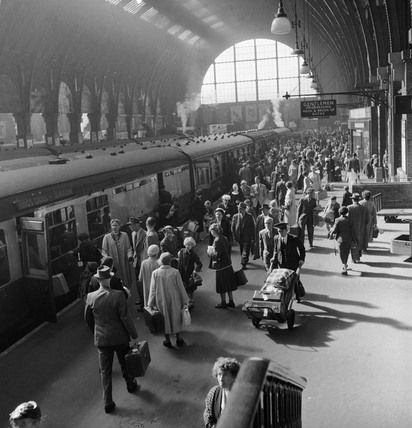 Kings Cross Station, London
The case falls to Josephine's good friend, Scotland Yard Detective Inspector Archie Penrose, who's also the cousin of the women she's staying with in London, providing an opportunity for Josephine herself to play a role in solving the crime. What a brilliant premise for a crime-mystery series - a real-life author of the "golden age" cast as a crime-solving heroine!
The action revolves around the final week of performances of Richard of Bordeaux: A Play in Two Acts at London's New Theatre (now the Noël Coward Theatre). Professional jealousies, neuroses and hidden alliances abound amongst the on-stage and backstage characters, while suspicion for Elspeth's murder initially falls on her boyfriend, Hedley White, who works as assistant stage manager at the theatre. As the narrative thread unfolds, however, it becomes clear that the motive for Elspeth's murder, and another killing that follows, may stem from events that transpired almost twenty years earlier, during the Great War.

New Theatre (now Noël Coward Theatre), St. Martin's Lane, London.
Like Josephine Tey's own classic mystery novels, An Expert in Murder is a slow-burning and cerebral style of murder mystery. Nicola Upson's elegant and nuanced prose lingers over detail and sensitively explores the lifelong effects that wartime trauma and loss have had on many of the characters. Reading it brought to my mind the great P.D. James's Adam Dalgliesh series, which I love - in fact the late lamented Baroness James provided the endorsement quote ("Highly original and elegantly written.") that appears on the cover of my edition. Readers who are used to fast-paced and action-packed contemporary mystery thrillers may find the style difficult to engage with at first, but for those who persevere, the rewards will come in the shape of a richly evocative historical mystery with genuine literary credentials.
Portraying a real-life figure as the central character of a fictionalised narrative is not a task to be undertaken lightly, and it is evident from her Author's note at the conclusion of the book that Nicola Upson is backed with significant academic credentials and meticulous research in bringing her version of Josephine Tey to the page. She has conducted comprehensive research into the author's life and works, including conducting interviews with those who knew her well in life. Several of the supporting characters in An Expert in Murder are also based, to greater and lesser extents, on individuals who existed in real life - in particular Sir John Gielgud, who was an associate of Elizabeth MacKintosh in real life and is here thinly veiled as the character John Terry. There was never a murder associated with the production of Richard of Bordeaux: A Play in Two Acts in 1933-4, but many aspects of the setting and action in An Expert in Murder draw from the historical record, including the fact that MacKintosh was sued for plagiarism over the play.
Overall, I found An Expert in Murder a fascinating and rewarding read. I'm deducting half a star on the basis that I found one of the motives given fairly unconvincing, in the light of surrounding circumstances. I look forward to catching up on the remainder of the series, and in particular I'm eagerly anticipating the release of book #10, Dear Little Corpses in May 2022.
I'd recommend An Expert in Murder to readers who love mysteries with historical settings, complex plots and great characters. This is more of a traditional and literary style of murder mystery, rather than a crime-thriller, so will appeal to readers who love the classic authors of the "golden age" (eg. Josephine Tey herself, Agatha Christie, Margery Allingham, Dorothy Sayers) and more modern authors who employ this style (eg. P.D. James, Ruth Rendell, Colin Dexter).
Re-read January 2026.
Having read and thoroughly enjoyed a couple of later instalments in this excellent series, it was with a sense of great anticipation that I commenced reading the first book, An Expert in Murder. And I can happily report that it lived up to my high expectations!
The book opens with Inverness-based author-playwright Josephine Tey (whose real name was Elizabeth MacKintosh) boarding a train to London, where she's to attend the final performances of her much-lauded stage play Richard of Bordeaux: A Play in Two Acts (written under the pen name Gordon Daviot). She's also, somewhat reluctantly, committed to negotiations for the adaptation of the play into a film, as well as the upcoming staging of another historical play, Queen of Scots: A Play in Three Acts.
While on the train, Josephine makes the acquaintance of a fellow passenger, a young woman called Elspeth Simmons. Josephine is charmed by Elspeth's artless enthusiasm, and arranges to meet her at the theatre later in the week. However, not long after the train has reached Kings Cross station, Elspeth returns to the compartment to recover a bag and is brutally murdered, the perpetrator leaving behind items that indicate a connection with Josephine's play.
Kings Cross Station, LondonThe case falls to Josephine's good friend, Scotland Yard Detective Inspector Archie Penrose, who's also the cousin of the women she's staying with in London, providing an opportunity for Josephine herself to play a role in solving the crime. What a brilliant premise for a crime-mystery series - a real-life author of the "golden age" cast as a crime-solving heroine!
The action revolves around the final week of performances of Richard of Bordeaux: A Play in Two Acts at London's New Theatre (now the Noël Coward Theatre). Professional jealousies, neuroses and hidden alliances abound amongst the on-stage and backstage characters, while suspicion for Elspeth's murder initially falls on her boyfriend, Hedley White, who works as assistant stage manager at the theatre. As the narrative thread unfolds, however, it becomes clear that the motive for Elspeth's murder, and another killing that follows, may stem from events that transpired almost twenty years earlier, during the Great War.
New Theatre (now Noël Coward Theatre), St. Martin's Lane, London.
Like Josephine Tey's own classic mystery novels, An Expert in Murder is a slow-burning and cerebral style of murder mystery. Nicola Upson's elegant and nuanced prose lingers over detail and sensitively explores the lifelong effects that wartime trauma and loss have had on many of the characters. Reading it brought to my mind the great P.D. James's Adam Dalgliesh series, which I love - in fact the late lamented Baroness James provided the endorsement quote ("Highly original and elegantly written.") that appears on the cover of my edition. Readers who are used to fast-paced and action-packed contemporary mystery thrillers may find the style difficult to engage with at first, but for those who persevere, the rewards will come in the shape of a richly evocative historical mystery with genuine literary credentials.
Portraying a real-life figure as the central character of a fictionalised narrative is not a task to be undertaken lightly, and it is evident from her Author's note at the conclusion of the book that Nicola Upson is backed with significant academic credentials and meticulous research in bringing her version of Josephine Tey to the page. She has conducted comprehensive research into the author's life and works, including conducting interviews with those who knew her well in life. Several of the supporting characters in An Expert in Murder are also based, to greater and lesser extents, on individuals who existed in real life - in particular Sir John Gielgud, who was an associate of Elizabeth MacKintosh in real life and is here thinly veiled as the character John Terry. There was never a murder associated with the production of Richard of Bordeaux: A Play in Two Acts in 1933-4, but many aspects of the setting and action in An Expert in Murder draw from the historical record, including the fact that MacKintosh was sued for plagiarism over the play.
Overall, I found An Expert in Murder a fascinating and rewarding read. I'm deducting half a star on the basis that I found one of the motives given fairly unconvincing, in the light of surrounding circumstances. I look forward to catching up on the remainder of the series, and in particular I'm eagerly anticipating the release of book #10, Dear Little Corpses in May 2022.
I'd recommend An Expert in Murder to readers who love mysteries with historical settings, complex plots and great characters. This is more of a traditional and literary style of murder mystery, rather than a crime-thriller, so will appeal to readers who love the classic authors of the "golden age" (eg. Josephine Tey herself, Agatha Christie, Margery Allingham, Dorothy Sayers) and more modern authors who employ this style (eg. P.D. James, Ruth Rendell, Colin Dexter).
Re-read January 2026.

September 4, 2017
He suddenly had an image of his down-to-earth sergeant rushing home from the Yard every night to devour the latest thriller by his fireside. Better still, perhaps he was actually writing one of his own. The thought of Miss Dorothy L. Sayers turning out to be a portly, moustached officer of the law in his early fifties was priceless, and he made a mental note to mention it to Josephine when he saw her tomorrow night.
It appears I may have found that most rare of things: a literary tribute (a.k.a. fan-fiction) that worked for me!
Josephine Tey was a bit of a mystery. She was a private person, little is known about her, and that which is known seems to indicate that she deliberately kept her affairs separate from each other - i.e. she led a multitude of lives - one as playwright, one as a mystery writer, one in Inverness, another in London, perhaps quite another somewhere else.
Nicola Upson took what research she could get and jumped on the idea of making this mystery woman the star of a semi-biographical murder mystery. (The murder is no biographical...I think.) For me this worked really well. It had biographical fact mixed with imagined scenes, but because we know so little about Tey, these elements change over seamlessly in Upson recreation of the 1930s London West End theatre-land, which happens to be one of my favourite places, too.
In fact, I thought the whole scene-setting, which is the undoing of many (mystery) writers for me, worked really well in this one:
We're passing by Tey's compartment on the train south from Berwick, because we learn in Tey's own The Man in the Queue that there is no direct train from Inverness, yet, and that Tey would have had to change at Edinburgh Waverley.
We get to see her being picked up by friends at King's Cross.
We get to be in the crowd queueing for theatre tickets.
We got go to the dress circle bar, mingle with the crowd outside the stage door after performances hoping to get an autograph. We get to go home with various actors and see behind the curtains.
I thought Upson's writing had an easy and fun flow to it that made this quite an easy, cozy read. Yet, she tackles quite serious issues, amongst which I was delighted to read how characters dealt with the aftermath of the First World War. Granted these parts reminded me more of Dorothy L. Sayer's writing than Tey's, but hey, I have not read all of Tey's work yet and given that Upson was trying to re-create a distinct time period in the pages of this, her first, Tey mystery, I was drawn in from start to finish.
As soon as he saw the great Union Jack which had replaced the usual hanging at the front of the pulpit, Penrose realised that God’s representative – a sanctimonious bigot at the best of times, even if he was family – had changed his agenda. After preaching a terrifying sermon on the glories of battle, sanctifying maiming, slaughter and bloodshed with the blessing of a higher authority, the rector had urged all the young men to join the army, to sate the country’s appetite for soldiers who would defend the justice of the war. What he had failed to mention was that it was a cause for which thousands of them would be asked to give their lives, but his harvest sermon had done the trick: by the end of the year, every eligible man in the village had signed up to Kitchener’s new army, an exodus which was replicated all over the country, swelling the ranks by nearly a million in the space of just four months. Some expected garrison service at home while the real soldiers went off to do the real soldiering; most believed the papers when they said it would be a short war, over by Christmas at the outside. All had been wrong, and he was still sickened to the stomach when he thought of that call from the altar for young men to offer themselves for the glory of God and eight shillings and nine pence a week.
It appears I may have found that most rare of things: a literary tribute (a.k.a. fan-fiction) that worked for me!
Josephine Tey was a bit of a mystery. She was a private person, little is known about her, and that which is known seems to indicate that she deliberately kept her affairs separate from each other - i.e. she led a multitude of lives - one as playwright, one as a mystery writer, one in Inverness, another in London, perhaps quite another somewhere else.
Nicola Upson took what research she could get and jumped on the idea of making this mystery woman the star of a semi-biographical murder mystery. (The murder is no biographical...I think.) For me this worked really well. It had biographical fact mixed with imagined scenes, but because we know so little about Tey, these elements change over seamlessly in Upson recreation of the 1930s London West End theatre-land, which happens to be one of my favourite places, too.
In fact, I thought the whole scene-setting, which is the undoing of many (mystery) writers for me, worked really well in this one:
We're passing by Tey's compartment on the train south from Berwick, because we learn in Tey's own The Man in the Queue that there is no direct train from Inverness, yet, and that Tey would have had to change at Edinburgh Waverley.
We get to see her being picked up by friends at King's Cross.
We get to be in the crowd queueing for theatre tickets.
We got go to the dress circle bar, mingle with the crowd outside the stage door after performances hoping to get an autograph. We get to go home with various actors and see behind the curtains.
I thought Upson's writing had an easy and fun flow to it that made this quite an easy, cozy read. Yet, she tackles quite serious issues, amongst which I was delighted to read how characters dealt with the aftermath of the First World War. Granted these parts reminded me more of Dorothy L. Sayer's writing than Tey's, but hey, I have not read all of Tey's work yet and given that Upson was trying to re-create a distinct time period in the pages of this, her first, Tey mystery, I was drawn in from start to finish.
As soon as he saw the great Union Jack which had replaced the usual hanging at the front of the pulpit, Penrose realised that God’s representative – a sanctimonious bigot at the best of times, even if he was family – had changed his agenda. After preaching a terrifying sermon on the glories of battle, sanctifying maiming, slaughter and bloodshed with the blessing of a higher authority, the rector had urged all the young men to join the army, to sate the country’s appetite for soldiers who would defend the justice of the war. What he had failed to mention was that it was a cause for which thousands of them would be asked to give their lives, but his harvest sermon had done the trick: by the end of the year, every eligible man in the village had signed up to Kitchener’s new army, an exodus which was replicated all over the country, swelling the ranks by nearly a million in the space of just four months. Some expected garrison service at home while the real soldiers went off to do the real soldiering; most believed the papers when they said it would be a short war, over by Christmas at the outside. All had been wrong, and he was still sickened to the stomach when he thought of that call from the altar for young men to offer themselves for the glory of God and eight shillings and nine pence a week.

March 16, 2011
I'm generally suspicious of crime novels that take real people and plunk them down in a series of murders, but in this one, Upson has captured beautifully the era and the person of Josephine Tey. I look forward to more.

February 8, 2010
Parts of this book were fine. I loved the setting and the author's desciptions of London during the 1930's. Overall, though, I can't really recommend it. I grew weary of all the characters, who were "theater people" and were awful humans. I just didn't really care about them. The laborious intertwinings of all the disfunctional families were difficult to keep straight. I don't think I bothered to finish it.
March 31, 2011
(June 2014)
As usual, I'm a "Johnny come lately" to another well-written mystery series. This time a dashing but slightly damaged WWI veteran turned detective joins with real-life author Josephine Tey, to solve classic "who dunnits" with a twist.
I really enjoyed the first of this series. I'd only heard of Tey, having never read her own mystery series, but I love how Upson drops her into the periphery of the story. Her involvement from the sidelines keeps the storyline and her interactions with the rest of the characters more believable. (Of course, now I've got to also pick up at least one of Tey's books, as I'm sure that would enhance this series.)
One of my favorite parts of the mystery was the setting. Upson places all the action in the West End theaters of the early '30s, where Tey would have been during her playwright years, and the variety of theatrical denizens pushed it right into "this is a keeper" series for me. Mix a little Hollywood or theater in my mysteries and I'm a happy reader!
Heading right into the next book - I'll admit I'm intrigued by Archie Penrose and his lady-authoress!
As usual, I'm a "Johnny come lately" to another well-written mystery series. This time a dashing but slightly damaged WWI veteran turned detective joins with real-life author Josephine Tey, to solve classic "who dunnits" with a twist.
I really enjoyed the first of this series. I'd only heard of Tey, having never read her own mystery series, but I love how Upson drops her into the periphery of the story. Her involvement from the sidelines keeps the storyline and her interactions with the rest of the characters more believable. (Of course, now I've got to also pick up at least one of Tey's books, as I'm sure that would enhance this series.)
One of my favorite parts of the mystery was the setting. Upson places all the action in the West End theaters of the early '30s, where Tey would have been during her playwright years, and the variety of theatrical denizens pushed it right into "this is a keeper" series for me. Mix a little Hollywood or theater in my mysteries and I'm a happy reader!
Heading right into the next book - I'll admit I'm intrigued by Archie Penrose and his lady-authoress!

October 22, 2015
I loved the setting for this book, both the period - 1930s - and the place - the West End of London. The story centred in and around the New Theatre in St. Martin's Lane and I really enjoyed finding out more about that area and the descriptions are so accurate that you can literally trace the routes on a map and check out the landmarks and buildings.
For me, it was one of those books that I just didn't want to end and that was on my mind still several days after I'd finished it.
For me, it was one of those books that I just didn't want to end and that was on my mind still several days after I'd finished it.

July 19, 2017
This had a promising start, but devolved into a POV salad, slipping here and there around a crime that became less interesting as time went on. As the author says, Josephine Tey was "bored by the trappings of theater life", and this book overall illustrates her frustrations, though obviously that wasn't the intent.

June 9, 2014
Author Nicola Upson has not recreated the novels of Josephine Tey (one of the pseudonyms used by Scottish novelist and playwright Elizabeth MacKintosh). But An Expert in Murder remains a pretty serviceable historical mystery, even if both Tey and love-interest, Detective Inspector Archie Penrose, are a bit twee.
Despite that, the mystery at the heart of the novel is a gripping one. A girl traveling with Josephine Tey is murdered soon after the train arrives. Was she the intended victim? Or was Tey? The action takes place in the last few weeks of the year-long run of Tey’s biggest West End hit, Richard of Bordeaux, and readers will enjoy a thinly veiled version of Sir John Gielgud in his brash youth. I couldn’t put the book down until I found out the ending.
I’ve already begun the sequel. Yes, the novel was that good. Here’s to hoping that Upson improves on the characterization of Tey and Penrose in Angel with Two Faces.
Despite that, the mystery at the heart of the novel is a gripping one. A girl traveling with Josephine Tey is murdered soon after the train arrives. Was she the intended victim? Or was Tey? The action takes place in the last few weeks of the year-long run of Tey’s biggest West End hit, Richard of Bordeaux, and readers will enjoy a thinly veiled version of Sir John Gielgud in his brash youth. I couldn’t put the book down until I found out the ending.
I’ve already begun the sequel. Yes, the novel was that good. Here’s to hoping that Upson improves on the characterization of Tey and Penrose in Angel with Two Faces.

July 1, 2015
In March 1934, Josephine Tey’s hit play Richard of Bordeaux is in its final week, so she takes the train into London for the festivities. On the train, she meets a lovely young woman who is a dedicated fan. But shortly after they arrive a shocking murder is committed, and it soon becomes apparent that Josephine is connected to the crime in ways she never imagined.
This is a very good historical mystery which features a real person. The story is fictional, but Upson includes some factual elements which lend a real sense of the time and place. The real Josephine Tey did have a very successful play titled Richard of Bordeaux, which ran for 483 performances, closing on 24March1934. Unlike in the novel, there was no murder associated with the actual play. Rather, it made a star out of John Gielgud.
I liked the cast of characters that Upson used for the novel, from the main characters to ancillary characters (love the housekeeper, Snipe). The mystery is well thought out and sufficiently complicated to keep the reader guessing. I did think the final reveal was a little over the top, but it didn’t materially affect my enjoyment of the book. And there’s an interesting side story about a potential relationship between Josephine and Detective Inspector Archie Penrose that will probably develop over successive books in the series. I’ll definitely read more of this series.
This is a very good historical mystery which features a real person. The story is fictional, but Upson includes some factual elements which lend a real sense of the time and place. The real Josephine Tey did have a very successful play titled Richard of Bordeaux, which ran for 483 performances, closing on 24March1934. Unlike in the novel, there was no murder associated with the actual play. Rather, it made a star out of John Gielgud.
I liked the cast of characters that Upson used for the novel, from the main characters to ancillary characters (love the housekeeper, Snipe). The mystery is well thought out and sufficiently complicated to keep the reader guessing. I did think the final reveal was a little over the top, but it didn’t materially affect my enjoyment of the book. And there’s an interesting side story about a potential relationship between Josephine and Detective Inspector Archie Penrose that will probably develop over successive books in the series. I’ll definitely read more of this series.

April 17, 2018
Set in 1934, Josephine Tey is on her way to London to the last week of her own award-winning West End play. But a young woman she meets on the train is murdered, and then the owner of the theatre where her play is being staged, and her friend Inspector Archie Penrose is convinced that Tey herself is the ultimate victim...
The setting for Upson's book - 1930s theatreland - is immaculate and fully-realised, and her characters are rounded with voices of their own. Indeed, dialogue, especially that of the wonderful Morley sisters, is one of the highlights of this book.
However, I felt that the central murder plot is both satisfying and highly artificial: far too many coincidences abound in how these people, linked through incidents that happened twenty years ago, find themselves in the same close circle. That said, Upson writes fluently and gives her characters emotional pasts and depths that are not frequently met with in GA novels.
This was a re-read for me with a book group and I can understand why some might not choose to read on. Personally, I like the way Upson sites her plot in a reconstructed past but with the sensibilities and hindsight of our present. The series goes from strength to strength and becomes more overtly feminist in its perspectives. It's even become entangled in my head with Tey's own original books - surely a compliment to Upson's act of historical ventriloquism.

June 8, 2012
What a disappointment. When I spotted this book and noticed it was concerning the writer Jospehine Tey I thought it had great potential.
How wrong could I be? Starting reasonably well with a good atmosphere it degenerated into something that I was unable to follow and left me wondering what was happening and why.
Okay there was murder but I couldn't understand why, even at the end of the book, which did have some reasonable moments but overall was dull and uninteresting.
How wrong could I be? Starting reasonably well with a good atmosphere it degenerated into something that I was unable to follow and left me wondering what was happening and why.
Okay there was murder but I couldn't understand why, even at the end of the book, which did have some reasonable moments but overall was dull and uninteresting.

June 11, 2019
I suppose for a first book in a series, this book wasn’t all bad but...
Josephine Tey is a writer who, whilst on a train journey from her home in Inverness to London, meets a young girl who claims to be one of her biggest fans. Later, the young girl is murdered. Josephine’s friend, Archie, is the detective assigned to the case and he soon becomes worried that perhaps Josephine was the intended victim. This idea is not such a leap when someone involved with the theatre production of Josephine’s play is also murdered.
Upson changes point of view from Josephine and Archie to a lot of the minor characters. This was obviously to increase the suspect pool but, at times, I found it was too much. Upson would have done better to have just Josephine or Archie discover some of the mystery plot points by actually detecting rather than revealing them to the reader via supporting characters.
Josephine and Archie for the most don’t really have any apparent skills when it comes to sleuthing. There’s million clues left at the scenes of the crimes but neither makes any links between them and the murderer. As is often the case in cosies, they basically just stumble across the answers to the mystery and the identity of whodunnit.
However, what is a little rarer in cosies was the graphic and gruesome portrayal of the murders and the murder scenes (the placement of the dolls in particular made me wonder if this was a horror story for a moment). This seemed odd for the genre (which this book is obviously being marketed towards). If I’d been involved in the editing, I’d have advised that this, along with the amount of swearing, should have been reined in for a cosy's target audience.
Actually, overall, the writing often felt too modern for the time setting of the book (a few years after WW1). I thought there was a few out of place references, especially when it came to the romantic relationships of the characters. Upson/the characters continually referred to Josephine’s late boyfriend as her ‘lover’. I feel like such an open acceptance and admission that he and Josephine were in an intimate relationship was incorrect for the time. (I must point out I never got a sense that the term ‘lover’ was meant to indicate anything less sexual between the characters.)
Two characters in a lesbian relationship also constantly use the term lover for each other and again, it felt a clunky term for the time setting of the book. (Actually it feels a clunky term for 2019. Maybe it’s something said more in the US and just seemed jarring to me? I don’t know.)
I wavered on the way the women’s gay relationship was portrayed. Okay, the characters were part of the acting community and as such would have been accepted by their peers more than in general society but for not one single character to mention their bravado of having an openly gay relationship in that era seems a little fanciful. It would have made more sense for the characters to be occasionally referred to as 'companions' than 'lovers'.
Meanwhile, some other society issues of the time (especially women’s rights, or lack of, I should say) became a little preachy.
Another huge issue I had with the book was the amount of chapters I had to wade through after the crime was solved. I have discovered I am more of a fan of finding out whodunnit and closing the book. Upson went into great detail of the murderer’s motivations and reasons for committing the crime, along with the affects this had on the other characters. It went on for several chapters and I think this should have been culled down considerably.
The parts in the final chapters focusing on Josephine and Archie’s almost romance even became boring. A shame, because I had enjoyed their scenes together up to that point.
I took the book on face value and had no idea that Tey and some other aspects portrayed (her late ‘lover’ and the play, for starters) were real until I read it in the author notes at the end. I’m not sure how I feel about this. Not very favourably though. In fact, I probably took off a star for this fact alone. (I might have felt better about this if I’d known about it beforehand.)
I have now read up on Tey who is an interesting character but as a book character, I’m not sure. It’s also perfectly obvious that one of the supporting characters was John Geilguld and, again, this makes me a little uncomfortable. It almost feels like I just read unapproved real life fanfic.
However, the book has made me want to read more of real life Tey’s books. I’m a little perplexed by why she isn’t as well known today as some of her contemporaries, despite how apparently successful she was when she was alive.
As for this book's Josephine Tey? I will probably give the next book in the series a go. Maybe some of the problems I have this time around will be less noticeable as Upson settles more confidently into the series.
3 out of 5
Josephine Tey is a writer who, whilst on a train journey from her home in Inverness to London, meets a young girl who claims to be one of her biggest fans. Later, the young girl is murdered. Josephine’s friend, Archie, is the detective assigned to the case and he soon becomes worried that perhaps Josephine was the intended victim. This idea is not such a leap when someone involved with the theatre production of Josephine’s play is also murdered.
Upson changes point of view from Josephine and Archie to a lot of the minor characters. This was obviously to increase the suspect pool but, at times, I found it was too much. Upson would have done better to have just Josephine or Archie discover some of the mystery plot points by actually detecting rather than revealing them to the reader via supporting characters.
Josephine and Archie for the most don’t really have any apparent skills when it comes to sleuthing. There’s million clues left at the scenes of the crimes but neither makes any links between them and the murderer. As is often the case in cosies, they basically just stumble across the answers to the mystery and the identity of whodunnit.
However, what is a little rarer in cosies was the graphic and gruesome portrayal of the murders and the murder scenes (the placement of the dolls in particular made me wonder if this was a horror story for a moment). This seemed odd for the genre (which this book is obviously being marketed towards). If I’d been involved in the editing, I’d have advised that this, along with the amount of swearing, should have been reined in for a cosy's target audience.
Actually, overall, the writing often felt too modern for the time setting of the book (a few years after WW1). I thought there was a few out of place references, especially when it came to the romantic relationships of the characters. Upson/the characters continually referred to Josephine’s late boyfriend as her ‘lover’. I feel like such an open acceptance and admission that he and Josephine were in an intimate relationship was incorrect for the time. (I must point out I never got a sense that the term ‘lover’ was meant to indicate anything less sexual between the characters.)
Two characters in a lesbian relationship also constantly use the term lover for each other and again, it felt a clunky term for the time setting of the book. (Actually it feels a clunky term for 2019. Maybe it’s something said more in the US and just seemed jarring to me? I don’t know.)
I wavered on the way the women’s gay relationship was portrayed. Okay, the characters were part of the acting community and as such would have been accepted by their peers more than in general society but for not one single character to mention their bravado of having an openly gay relationship in that era seems a little fanciful. It would have made more sense for the characters to be occasionally referred to as 'companions' than 'lovers'.
Meanwhile, some other society issues of the time (especially women’s rights, or lack of, I should say) became a little preachy.
Another huge issue I had with the book was the amount of chapters I had to wade through after the crime was solved. I have discovered I am more of a fan of finding out whodunnit and closing the book. Upson went into great detail of the murderer’s motivations and reasons for committing the crime, along with the affects this had on the other characters. It went on for several chapters and I think this should have been culled down considerably.
The parts in the final chapters focusing on Josephine and Archie’s almost romance even became boring. A shame, because I had enjoyed their scenes together up to that point.
I took the book on face value and had no idea that Tey and some other aspects portrayed (her late ‘lover’ and the play, for starters) were real until I read it in the author notes at the end. I’m not sure how I feel about this. Not very favourably though. In fact, I probably took off a star for this fact alone. (I might have felt better about this if I’d known about it beforehand.)
I have now read up on Tey who is an interesting character but as a book character, I’m not sure. It’s also perfectly obvious that one of the supporting characters was John Geilguld and, again, this makes me a little uncomfortable. It almost feels like I just read unapproved real life fanfic.
However, the book has made me want to read more of real life Tey’s books. I’m a little perplexed by why she isn’t as well known today as some of her contemporaries, despite how apparently successful she was when she was alive.
As for this book's Josephine Tey? I will probably give the next book in the series a go. Maybe some of the problems I have this time around will be less noticeable as Upson settles more confidently into the series.
3 out of 5

September 17, 2019
There is so much to unpack with this book I could be at it for a week and we'd still only be dealing with the underwear.
Does that analogy work? Like the underwear is something basic that you pack first like the cast of characters and there are so many of those that I could spend the whole review just talking about them leaving out the "pants" and "cocktail dresses" like those are the plot and the theme?
This is why I'm not a professional writer in case anyone was wondering.
This book is dense, very, very, verrrryyy dense. It's also very well written, down right beautiful at times, and once or twice utterly revolutory. That is when its not being a melodramatic soap opera populated with stereotypes and mustache twirling villains.
You see my conflict?
On the one hand we've got a totally cool concept. The really very talented Nicola Upson has taken the very real Josephine Tey, a mystery author and playwright, and turned her into the very kind of detective she once wrote about. With this particular book she's gotten even more meta by setting it in the midst of the run of "Richard of Bordeaux" the super successful very play Tey really did write in the 1930's. Tey meets a young fan of the play, which is about to close and go on tour, on the train, strikes up an immediate friendship and then the girl is promptly murdered in a weird, dramatic way.
Wackiness, as it always does, ensues.
Upson's descriptions of post World War I London are intense and dear god are they detailed. So detailed. The pages actually look jampacked. I don't know if that's the typeface or the layout but you can literally see how many words are jammed on the pages.
This is also possibly the most English book I have ever read in the history of books set in England. Everyone is just soooooooo English. They're all rich and theatery and "dahling" this and "do be a dear" that and someone is always putting the kettle on or serving kidney's and kippers and as people start being murdered left, right, and center the biggest concerns the victims loved ones are having is whether or not the police are being inconvenienced having to do all this wretched investigating.
Then we have the central mystery itself which isn't really revealed until you're a good three quarters of the way through the book and then it's not so much revealed as it is dropped directly onto the reader's head. I don't have a problem with that per say but its problematic here because instead of having anyone discover anything a character we've never met up till this point simply descends on everyone and exposits the entire thing to the detective investigating the crimes. Then the crime itself ends up being really, really dramatic to the point of absurdity. The only thing that keeps everything from going entirely off the rails is Upson's writing and the sincerity she imbues her characters with. They may be stereotypes but dammit they're sincere stereotypes.
There's another tiny thing that happens more than once that both boggled my mind and highly annoyed me. For some bizarre reason Upson would occasionally have conversations or investigative things happen "off stage." So a scene would start between two characters with one apologizing to the other for being so rude when they last spoke. Hang on, I'd think, when did they last speak? I don't remember an argument!? I'd spend several minutes trying to figure out if I'd skipped a scene or had amnesia only to eventually realize that for some bizarre reason Upson had skipped this argument and was instead just serving up the aftermath. It happened more than once and managed to both completely halt the story in its tracks while I tried to get my bearings again and served absolutely no technical purpose since the book is STILL way too long and involved.
I know all this sounds like I didn't like this book when the reality is I genuinely did. It was passionate and heartfelt and I loved Josephine's character. She's a strange, isolated, lonely woman trying to make her way in a world she doesn't recognize anymore. She's unsure if she even wants the fame that's come with her writing and doubtful that she will ever truly be able to connect with anyone after losing her lover in the war. She's deeply insightful, as writer's usually are, very brave, and unswerving in her loyalty to her friends. Its hard not to admire a character like that. I kept thinking she was someone I would have very much liked to know, that's how real she seemed.
I can forgive a lot of an author who can write a character like that.
Does that analogy work? Like the underwear is something basic that you pack first like the cast of characters and there are so many of those that I could spend the whole review just talking about them leaving out the "pants" and "cocktail dresses" like those are the plot and the theme?
This is why I'm not a professional writer in case anyone was wondering.
This book is dense, very, very, verrrryyy dense. It's also very well written, down right beautiful at times, and once or twice utterly revolutory. That is when its not being a melodramatic soap opera populated with stereotypes and mustache twirling villains.
You see my conflict?
On the one hand we've got a totally cool concept. The really very talented Nicola Upson has taken the very real Josephine Tey, a mystery author and playwright, and turned her into the very kind of detective she once wrote about. With this particular book she's gotten even more meta by setting it in the midst of the run of "Richard of Bordeaux" the super successful very play Tey really did write in the 1930's. Tey meets a young fan of the play, which is about to close and go on tour, on the train, strikes up an immediate friendship and then the girl is promptly murdered in a weird, dramatic way.
Wackiness, as it always does, ensues.
Upson's descriptions of post World War I London are intense and dear god are they detailed. So detailed. The pages actually look jampacked. I don't know if that's the typeface or the layout but you can literally see how many words are jammed on the pages.
This is also possibly the most English book I have ever read in the history of books set in England. Everyone is just soooooooo English. They're all rich and theatery and "dahling" this and "do be a dear" that and someone is always putting the kettle on or serving kidney's and kippers and as people start being murdered left, right, and center the biggest concerns the victims loved ones are having is whether or not the police are being inconvenienced having to do all this wretched investigating.
Then we have the central mystery itself which isn't really revealed until you're a good three quarters of the way through the book and then it's not so much revealed as it is dropped directly onto the reader's head. I don't have a problem with that per say but its problematic here because instead of having anyone discover anything a character we've never met up till this point simply descends on everyone and exposits the entire thing to the detective investigating the crimes. Then the crime itself ends up being really, really dramatic to the point of absurdity. The only thing that keeps everything from going entirely off the rails is Upson's writing and the sincerity she imbues her characters with. They may be stereotypes but dammit they're sincere stereotypes.
There's another tiny thing that happens more than once that both boggled my mind and highly annoyed me. For some bizarre reason Upson would occasionally have conversations or investigative things happen "off stage." So a scene would start between two characters with one apologizing to the other for being so rude when they last spoke. Hang on, I'd think, when did they last speak? I don't remember an argument!? I'd spend several minutes trying to figure out if I'd skipped a scene or had amnesia only to eventually realize that for some bizarre reason Upson had skipped this argument and was instead just serving up the aftermath. It happened more than once and managed to both completely halt the story in its tracks while I tried to get my bearings again and served absolutely no technical purpose since the book is STILL way too long and involved.
I know all this sounds like I didn't like this book when the reality is I genuinely did. It was passionate and heartfelt and I loved Josephine's character. She's a strange, isolated, lonely woman trying to make her way in a world she doesn't recognize anymore. She's unsure if she even wants the fame that's come with her writing and doubtful that she will ever truly be able to connect with anyone after losing her lover in the war. She's deeply insightful, as writer's usually are, very brave, and unswerving in her loyalty to her friends. Its hard not to admire a character like that. I kept thinking she was someone I would have very much liked to know, that's how real she seemed.
I can forgive a lot of an author who can write a character like that.

December 6, 2020
Pentru ca inca sunt un copil (cuminte), Mosul a venit mai devreme la mine cu acest roman politist in dar. Ma bucur mult ca inca primesc carti precum in copilarie si cu aceasta ocazie mi-am adus aminte de primul volum pe care l-am primit si anume "Tom Sawyer". Este vorba despre o varianta cartonata mare si grea cu multe ilustratii alb-negre pe care eu insa le-am colorat. Rasfoind-o acum si vazand bluza roz a lui Tom, mi-am dat seama ca inca de atunci eram o vizionara in ceea ce priveste fashion-ul barbatesc.
In ceea ce priveste prezentul roman, ne aflam in anul 1934 si o avem in prim plan pe Josephine Tey, o scriitoare de succes a carei piesa "Richard de Bordeaux" este cap de afis in teatrele din Londra. Calatorind cu trenul din Scotia spre Londra are ocazia sa o cunoasca pe Elspeth, o fana a operelor ei. Dupa ce ajunge la destinatie, afla ca fata a fost omorata chiar in cuseta, intr-un mod care are legatura cu piesa ei. Dupa ce o a doua crima are loc este din ce in ce mai clar ca in interiorul teatrului bantuie un criminal.
De investigatie se va ocupa inspectorul Penrose si el pasionat de teatru dar care, la fel ca si eroina este marcat de o intamplare traumatizanta din razboi.
Mi-au placut atat descrierile strazilor din Londra, a garilor si atmosfera din luxosul West End, cat si faptul ca ne-a permis sa patrundem in culisele teatrului. De asemenea actorul principal al piesei, John Terry, m-a dus cu gandul la celebrul fundas de la Chelsea Londra si totodata fostul capitan al selectionatei Angliei.
Mi s-a parut o carte politista buna, corect scrisa dar care la un moment dat m-a deranjat deoarece abunda in prea multe personaje feminine foarte vocale si mi s-a parut ca era un "chit-chat" continuu, care m-a obosit intr-un final. Desi am vrut sa imi placa, trebuie sa recunosc ca m-a plictisit putin aceasta lectura.
In ceea ce priveste prezentul roman, ne aflam in anul 1934 si o avem in prim plan pe Josephine Tey, o scriitoare de succes a carei piesa "Richard de Bordeaux" este cap de afis in teatrele din Londra. Calatorind cu trenul din Scotia spre Londra are ocazia sa o cunoasca pe Elspeth, o fana a operelor ei. Dupa ce ajunge la destinatie, afla ca fata a fost omorata chiar in cuseta, intr-un mod care are legatura cu piesa ei. Dupa ce o a doua crima are loc este din ce in ce mai clar ca in interiorul teatrului bantuie un criminal.
De investigatie se va ocupa inspectorul Penrose si el pasionat de teatru dar care, la fel ca si eroina este marcat de o intamplare traumatizanta din razboi.
Mi-au placut atat descrierile strazilor din Londra, a garilor si atmosfera din luxosul West End, cat si faptul ca ne-a permis sa patrundem in culisele teatrului. De asemenea actorul principal al piesei, John Terry, m-a dus cu gandul la celebrul fundas de la Chelsea Londra si totodata fostul capitan al selectionatei Angliei.
Mi s-a parut o carte politista buna, corect scrisa dar care la un moment dat m-a deranjat deoarece abunda in prea multe personaje feminine foarte vocale si mi s-a parut ca era un "chit-chat" continuu, care m-a obosit intr-un final. Desi am vrut sa imi placa, trebuie sa recunosc ca m-a plictisit putin aceasta lectura.
September 29, 2011
A friend dropped this book off for me because she knew I am a Josephine Tey (Elizabeth Macintosh) fan, as she is. We both love The Daughter of Time (which some think of as the best English mystery). She found this book which includes Tey as one of its characters, in London to see the last performances of her play, Richard of Bordeaux. A young woman, with whom she travels down from Inverness to London, is murdered soon after their arrival. Then begins the assortment of likely murderers, all surrounding the theater where her play is a solid hit. It's a gentle little mystery, and Detective Inspector Archie Penrose isn't too far off from Inspector Grant, if you know The Daughter of Time. That said, this isn't as riveting as "the real" mystery, which is based on the history of the two princes in the Tower. Nicola Upson does try to bring in aspects of Tey's Richard of Bordeaux and of World War I, some quotes from the play, the iris flower, English soldiers, but I didn't enjoy it as much. Good summertime read, though.

July 27, 2024
I was a bit underwhelmed with this, but am rounding it up to three stars. The description starts with gross exaggeration with the "A brilliant..." nor is it as original as promised. That said, there were a bevy of characters and it wasn't obvious who the murderer was, although hints began to be made at a certain point well into the book, but it was believable. That said, it was quite obvious from the outset who it wasn't for a couple of them. In addition I am not into fan fiction where an author is writing fiction books about a real person. I'm not planning to read more of these.

October 20, 2025
2⭐️ = Below Average.
Paperback.
Now, the writing was lovely and mature and it started really well. Then character after character became involved and it all got a little complicated. I enjoyed the theatrical setting.😁
I’d definitely read another by this author.
Paperback.
Now, the writing was lovely and mature and it started really well. Then character after character became involved and it all got a little complicated. I enjoyed the theatrical setting.😁
I’d definitely read another by this author.

October 20, 2020
Something about the writing style of this book made it difficult for me to follow the plot. Mystery author Josephine Tey plays a role in the mystery although Archie Penrose, the detective, figures more prominently. The mystery set in London's theatrical world focuses on the death of a woman who rode the train with Tey but never made it off. A key figure in the play's production also meets his demise soon afterward. I didn't find the novel very engaging, and I doubt I'll read others in the series. I like Tey's novels, but I'm not a fan of Upson's work.

January 29, 2021
3.5 stars.
Situating a real Golden Age mystery writer in a story where they solve murders seems to be a thing now; in this first book in Nicola Upson’s series, author and playwright Josephine Tey becomes central to a murder case involving her, a young woman, and the members of a theatre.
The first World War, though over now by several years, looms over the lives of the characters, and factors into the actions of various suspects, including the lives of the family of the young woman Josephine meets on a train at the beginning of the book, and who spends several enjoyable hours chatting with Josephine, before the young woman is murdered.
A lot of the Upson’s narrative was spent on the offstage drama and large personalities of many of the suspects, as well as their secrets, some of which were actually not germane to the motives for the crime.
Josephine comes across as careful, logical, and compassionate in her dealing with others, while her friend Inspector Archie Penrose must solve the confusing case.
I found it hard to keep track of the suspects, and actually confused who was who amongst the men. I’m not sure if this was because I was listening to this, or because the writing needed a little clarity.
That said, I was sufficiently interested in the author’s portrayal of Josephine to continue to book two.
Situating a real Golden Age mystery writer in a story where they solve murders seems to be a thing now; in this first book in Nicola Upson’s series, author and playwright Josephine Tey becomes central to a murder case involving her, a young woman, and the members of a theatre.
The first World War, though over now by several years, looms over the lives of the characters, and factors into the actions of various suspects, including the lives of the family of the young woman Josephine meets on a train at the beginning of the book, and who spends several enjoyable hours chatting with Josephine, before the young woman is murdered.
A lot of the Upson’s narrative was spent on the offstage drama and large personalities of many of the suspects, as well as their secrets, some of which were actually not germane to the motives for the crime.
Josephine comes across as careful, logical, and compassionate in her dealing with others, while her friend Inspector Archie Penrose must solve the confusing case.
I found it hard to keep track of the suspects, and actually confused who was who amongst the men. I’m not sure if this was because I was listening to this, or because the writing needed a little clarity.
That said, I was sufficiently interested in the author’s portrayal of Josephine to continue to book two.

April 15, 2015
not quite sure what this was meant to be - and not quite sure the author knew, either. was it meant to provide insight into the real-life josephine tey? (it doesn't.) to stand in as a "new" tey mystery? (it doesn't.) to pay homage to tey's wonderfully evocative and introspective writing style? (it may try to, but it doesn't.) to give us a worthy predecessor to inspector grant? (again: nope.)
here's what this novel is: boring. its characters, the sleuthing, the theatre, the psychology, and (most unforgiveable of all) josephine tey, who barely figures into the story at all. all dull and lifeless. bah!
here's what this novel is: boring. its characters, the sleuthing, the theatre, the psychology, and (most unforgiveable of all) josephine tey, who barely figures into the story at all. all dull and lifeless. bah!

April 21, 2008
Not only did I enjoy the writing style, I felt immediately fond of the heroine although I am still perplexed by the concept of writing a book about Josephine Tey, who isn't exactly a real person in that this was one of the pseudonyms used by Elizabeth Mackintosh.
I do recommend this highly. In some ways, it felt as if Tey could have written it and I was sad when it ended.
I do recommend this highly. In some ways, it felt as if Tey could have written it and I was sad when it ended.

May 10, 2024
Theaterglanz
Josephine Tey reist im Zug nach London, um einer der letzten Aufführungen ihres Stückes beizuwohnen. So überwältigend war der Erfolg des Theaterstücks, dass sie inzwischen eigentlich eher froh ist, dass sich der Rummel dem Ende zuneigt. Während der Fahrt lernt Josephine eine junge Frau kennen, die eine Bewunderin des Stückes ist. Elspeth freut sich riesig, dass sie die Autorin ihres Lieblingsstücks kennenlernen darf und auch auf das Wochenende bei Onkel und Tante freut sie sich ebenso wie auf das Treffen mit ihrem Freund. Die Welt steht ihr offen. Und mit ihrem freundlichen Wesen nimmt sie auch Josephine sofort für sich ein.
Bei diesem Roman handelt es sich um den ersten Band der im Original inzwischen elfbändigen Reihe um die Autorin Josephine Tey, Inspector Archie Penrose ist ein Freund Josephines. Sie kennen sich schon seit Ewigkeiten. Ihre Freundschaft wird allerdings von Ereignissen überschattet, die vor ungefähr fünfzehn Jahren während des ersten Weltkrieges stattgefunden haben. Dennoch bezieht Archie seine Freundin in die Ermittlungen um den Tod der jungen Elspeth mit ein. Schließlich hat sie die junge Dame gekannt und vielleicht hat sie etwas beobachtet. Josephine ist ausgesprochen schockiert. Wer kann nur ein Motiv haben, eine so liebenswerte junge Frau zu töten.
Josephine Tey hat tatsächlich gelebt, sie hat Theaterstücke und Kriminalromane geschrieben. Wie Nicola Upson um diesen Rahmen Krimis strickt, hat was. Was ist Wahrheit, was ist Fiktion? Bei dem Fall handelt es sich wohl eher um Fiktion. Diese ist sehr geschickt zusammengefügt. Kaum zu glauben, aber die verwickelte Geschichte führt tatsächlich zu einem Motiv. Mit einem, auf das man als Leser wirklich nicht kommt. Auch wenn die Nachforschungen zu Beginn etwas langsam vorangehen. Sobald man merkt, dass hinter einigen Andeutungen doch mehr steckt, ist man gepackt. Man will das Knäul entwirren, dessen Ursprünge weit in die Vergangenheit zurückreichen. Was auch Josephine dazu bringt, sich zu erinnern und in Erwägung zu ziehen, diese Erinnerungen auch mal loszulassen. Ein klassischer englischer Krimi wie man ihn gerne liest.
Grundsätzlich können die Bücher der Reihe unabhängig voneinander gelesen werden, um den Rahmen zu kennen, ist es vielleicht dennoch ratsam, mit dem ersten Band anzufangen.
Josephine Tey reist im Zug nach London, um einer der letzten Aufführungen ihres Stückes beizuwohnen. So überwältigend war der Erfolg des Theaterstücks, dass sie inzwischen eigentlich eher froh ist, dass sich der Rummel dem Ende zuneigt. Während der Fahrt lernt Josephine eine junge Frau kennen, die eine Bewunderin des Stückes ist. Elspeth freut sich riesig, dass sie die Autorin ihres Lieblingsstücks kennenlernen darf und auch auf das Wochenende bei Onkel und Tante freut sie sich ebenso wie auf das Treffen mit ihrem Freund. Die Welt steht ihr offen. Und mit ihrem freundlichen Wesen nimmt sie auch Josephine sofort für sich ein.
Bei diesem Roman handelt es sich um den ersten Band der im Original inzwischen elfbändigen Reihe um die Autorin Josephine Tey, Inspector Archie Penrose ist ein Freund Josephines. Sie kennen sich schon seit Ewigkeiten. Ihre Freundschaft wird allerdings von Ereignissen überschattet, die vor ungefähr fünfzehn Jahren während des ersten Weltkrieges stattgefunden haben. Dennoch bezieht Archie seine Freundin in die Ermittlungen um den Tod der jungen Elspeth mit ein. Schließlich hat sie die junge Dame gekannt und vielleicht hat sie etwas beobachtet. Josephine ist ausgesprochen schockiert. Wer kann nur ein Motiv haben, eine so liebenswerte junge Frau zu töten.
Josephine Tey hat tatsächlich gelebt, sie hat Theaterstücke und Kriminalromane geschrieben. Wie Nicola Upson um diesen Rahmen Krimis strickt, hat was. Was ist Wahrheit, was ist Fiktion? Bei dem Fall handelt es sich wohl eher um Fiktion. Diese ist sehr geschickt zusammengefügt. Kaum zu glauben, aber die verwickelte Geschichte führt tatsächlich zu einem Motiv. Mit einem, auf das man als Leser wirklich nicht kommt. Auch wenn die Nachforschungen zu Beginn etwas langsam vorangehen. Sobald man merkt, dass hinter einigen Andeutungen doch mehr steckt, ist man gepackt. Man will das Knäul entwirren, dessen Ursprünge weit in die Vergangenheit zurückreichen. Was auch Josephine dazu bringt, sich zu erinnern und in Erwägung zu ziehen, diese Erinnerungen auch mal loszulassen. Ein klassischer englischer Krimi wie man ihn gerne liest.
Grundsätzlich können die Bücher der Reihe unabhängig voneinander gelesen werden, um den Rahmen zu kennen, ist es vielleicht dennoch ratsam, mit dem ersten Band anzufangen.

November 27, 2017
From BBC Radio 4 - Extra Debut:
Murder mystery set in 1934. A playwright travels to London for the final week of her hit play and meets an ill-fated young fan. From April 2008.
Episode 2 0f 10
The clues to a murder lead Inspector Penrose to his old acquaintance Josephine Tey.
Episode 3 of 10
The investigation leads Penrose into the theatre world of London's West End.
Episode 4 of 10
Penrose waits for an opportunity to speak to impresario Bernard Aubrey, but tragedy is about to strike at the theatre.
Episode 5 of 10
Penrose is nowhere near catching the murderer and is anxious that Josephine could be the next victim.
Episode 6 of 10
Penrose suspects that the war may hold the key to his double murder investigation. Meanwhile, Hedley White, one of the chief suspects, reappears.
Episode 7 of 10
Hedley has seeks an alibi for the time of Elspeth's murder. Penrose is unconvinced that Josephine was not the intended victim.
Episode 8 of 10
Elspeth's adoptive mother Alice Simmons arrives in London and provides Penrose with a vital link between the past and the present.
Episode 9 of 10
Penrose has discovered a link between Elspeth and Bernard, but what he has yet to find out is the identity of the murderer. Vital information comes from a very unexpected source.
Episode 10 of 10
Josephine and Marta find themselves in mortal danger. Marta has made a ghastly discovery as the investigation closes in on the murderer.
http://www.bbc.co.uk/programmes/b009xzbk
Murder mystery set in 1934. A playwright travels to London for the final week of her hit play and meets an ill-fated young fan. From April 2008.
Episode 2 0f 10
The clues to a murder lead Inspector Penrose to his old acquaintance Josephine Tey.
Episode 3 of 10
The investigation leads Penrose into the theatre world of London's West End.
Episode 4 of 10
Penrose waits for an opportunity to speak to impresario Bernard Aubrey, but tragedy is about to strike at the theatre.
Episode 5 of 10
Penrose is nowhere near catching the murderer and is anxious that Josephine could be the next victim.
Episode 6 of 10
Penrose suspects that the war may hold the key to his double murder investigation. Meanwhile, Hedley White, one of the chief suspects, reappears.
Episode 7 of 10
Hedley has seeks an alibi for the time of Elspeth's murder. Penrose is unconvinced that Josephine was not the intended victim.
Episode 8 of 10
Elspeth's adoptive mother Alice Simmons arrives in London and provides Penrose with a vital link between the past and the present.
Episode 9 of 10
Penrose has discovered a link between Elspeth and Bernard, but what he has yet to find out is the identity of the murderer. Vital information comes from a very unexpected source.
Episode 10 of 10
Josephine and Marta find themselves in mortal danger. Marta has made a ghastly discovery as the investigation closes in on the murderer.
http://www.bbc.co.uk/programmes/b009xzbk

November 24, 2017
I have read a couple of the other books in this series but not the first. I found a copy of this in a charity shop whilst on holiday and thought it was the ideal opportunity to catch up. Clearly Nicola Upson is a good writer. I liked how she engaged my interest from the very beginning and developed her characters so swiftly. The device of using Elizabeth MacKintosh's nom de plume as an actual character appealed to me but throughout the book, I began to be somewhat thrown by the mixing up of identities. Elizabeth wrote as Gordon Daviot when writing plays: so to refer to Josephine as the writer of Richard of Bordeaux threw me a little. Also, knowing that the play had launched the career of John Gielgud from Old Vic actor to 'Superstar' - it was odd to find the actor referred to as John Terry, ( a clever reference given Gielgud's relationship to Ellen Terry). However that was really a minor problem and I swiftly entered into the story leaving my sceptical impulses behind me! It was interesting encountering characters whom I had already met in subsequent books in the series but I rather enjoyed that process. I found the structure of this book nowhere near as skilfully developed as in subsequent books. The way in which all the characters were introduced after the first murder seemed lengthy, clumsy and rather unwieldy to me. I found it difficult to remember who was whom! The intricacies of the plotting were impressive and I enjoyed this section of the book. However, the final reveal was altogether too swift and the explanation too facile. The male murderer was a cartoon caricature. I found myself altogether annoyed by Josephine's willingness to let the woman who had been totally willing to collaborate on her murder, escape! and thought it just too unbelievable. I did mostly enjoy the book but I am glad I did not read it first! I think the subsequent books in the series showed that Nicola Upson could learn from her mistakes and up her game. i was really unsure whether this was a 3 or 4 star read and in view of the flaws I have come down to a 3 but parts of it are definitely 4 star!
This entire review has been hidden because of spoilers.

September 15, 2022
AN EXPERT IN MURDER
Nicola Upson
This is my second or third book my Upson about Josephine Tey. In this one, Upson puts Tey on the train to London when she meets Elspeth, a young fan. Later, Tey learns that Elspeth was murdered on the train.
Tey is not much of a detective in this book, but the character development of the others and the back story is really interesting. Tey is involved, but more of a catalyst for the murder, than the solver of it. Thank goodness the story is unfolding because each new character brings a piece of it to the table.
Upson's research is to the letter and mirrors most of what actually happened in Tey's life. I really enjoy the time period between WW1 and WWII.
4 stars
Happy Reading!
Nicola Upson
This is my second or third book my Upson about Josephine Tey. In this one, Upson puts Tey on the train to London when she meets Elspeth, a young fan. Later, Tey learns that Elspeth was murdered on the train.
Tey is not much of a detective in this book, but the character development of the others and the back story is really interesting. Tey is involved, but more of a catalyst for the murder, than the solver of it. Thank goodness the story is unfolding because each new character brings a piece of it to the table.
Upson's research is to the letter and mirrors most of what actually happened in Tey's life. I really enjoy the time period between WW1 and WWII.
4 stars
Happy Reading!

November 26, 2021
After I read another in this series and commented to a friend that I enjoyed it they recommended that I go back to the start of the series and read from he first book which I am glad I did as I knew so little about Josephine Tey and this gave me some great background information about her, her life and her fascinating work.
What I did find that there was a lot of character introduction in this book and it did remind me of the Ngaio Marsh books that are set in a theatre that tend to go on and on and like those so did this read ;)
I still enjoyed it and will crack on with number two in the series very soon. I certainly won't be put off.
What I did find that there was a lot of character introduction in this book and it did remind me of the Ngaio Marsh books that are set in a theatre that tend to go on and on and like those so did this read ;)
I still enjoyed it and will crack on with number two in the series very soon. I certainly won't be put off.

April 16, 2015
Gave it a try, but found it very offensive.
Displaying 1 - 30 of 879 reviews