The thrilling, bloody and glorious new novel, from the master of the epic tale, Tim Willocks, author of The Religion
Paris, August 23rd, 1572
What do you do when your wife disappears
In the middle of the bloodiest massacre in European history
And you know she is about to give birth to your only child?
Three wars of religion have turned Paris into a fetid cauldron of hatred, intrigue and corruption. The Royal Wedding, intended to heal the wounds, has served only to further poison the fanatics of either creed. But Carla could not have known that when she accepted an invitation to the ceremony.
When Mattias Tannhauser rides into town, on Saint Bartholomew’s Eve, his only intention is to find her and take her home. But as the massacre of tens of thousands of Huguenots begins, and the city plunges into anarchy, Carla is abducted by Grymonde, the grotesque gang leader of the Yards, and Tannhauser finds himself imprisoned in the Louvre, at the centre of a vicious conspiracy.
Wanted by the law, the assassins’ guild, and a militant army who call themselves the Pilgrims of Saint-Jacques, Tannhauser must rise to pitiless extremes even he has never known before. With no one to help him but a stable boy, he wades into a river of blood without knowing what lies on the other side.
As he harrows Hell in search of his beloved
His destiny is changed forever by
The Twelve Children Of Paris…
Tim Willocks is a novelist, screenwriter and producer. He was born in Cheshire in 1957 and has lived in London, Barcelona, Los Angeles, New York, Paris, County Kerry, and Rome. After qualifying as a doctor from University College Hospital Medical School, he went on to specialize in psychiatry and addiction. Translated into twenty languages, his novels include The Religion - the first novel to feature Mattias Tannhausaer - Bad City Blues, and Green River Rising. He has worked with major Hollywood directors, dined at the White House and holds a black belt in Shotokan karate. His new book, The Twelve Children of Paris, also featuring Tannhausaer, is set during the Saint Bartholomew’s Day Massacre of 1572.
I'm really conflicted about this one. I loved The Religion, and this sequel has many of its good qualities -- a macabre sense of humor, memorable, surprising characters, and a keen sense of period values and morals. The premise -- that Mattias becomes increasingly encumbered by brave, precocious, endangered children in his quest to navigate the labyrinth of Paris and rescue his very pregnant wife -- is compelling, sometimes hilarious, and touching without being overly sentimental. The story is complex and fascinating, but by the halfway point of the novel, the presentation of Mattias as an unstoppable killing machine -- and the obsession with anatomically detailing each killing thrust and blow he delivers -- begins to feel like a first-person-shooter video game more than a novel. Willocks also quickly abandons his initial discussion of the political complexities of the religious power struggle in France, and the intersection of politics and religion was one of the things that made The Religion such a intelligent read. The fact that he has no real moral confrontation with his actual enemies and must chiefly overcome a series of confrontations with nameless armed companies (and the very occasional moment of self-loathing), also adds to the video-game feel of the novel's second half. The secondary characters are much more interesting, although they, too, behave in what feels like pretty programmed ways once they've committed themselves to Mattias's cause. I finished the novel more from a sense of duty -- and a curiosity about which characters would survive and which would not -- than from real enjoyment.
When I first heard about this book, the first thing I did was email and ask for a review copy, by ask I mean beg. Apparently after taking pity on me for my pitiful email or just to stop me emailing any-more Tim’s publicist sent me a copy. There are two reasons I wanted to read this book so badly. 1) This book while in my favourite genre, takes me well outside my comfort zone. It is so much more visually detailed that my usual read. 2) Tim Willocks last book Religion was so good and so long ago (7 years)
To say that reading this book gives the reader the sights sounds smells and feel of the time period would be far to demeaning, it really is so much more, Its a time machine back to 1572. To the real Paris, full of opulence and coated in shit. What is so unexpected is the lead man of the book (I say lead, not Hero, there is no real Hero in this book). The story follows the exploits of one Mattias Tannhauser, a Saxon-born ex-Janissary who travels to Paris to find his wife. A long journey that should have ended with a happy reunion in the palaces of Paris, is disrupted by a violent plot to wipe out The Huguenots (members of the Protestant Reformed Church of France)…and something more personal! The story has more than the single POV, while Mattias Tannhauser’s journey through Paris is one of the bloodiest swathes I have ever read, Carla Tannhauser’s is at first similar, but as the victim, and then turns more towards the emotive and spiritual. The spiritual exploring everything from Catholic thinking through to Tarot and Gia the earth mother, the sisterhood of women.
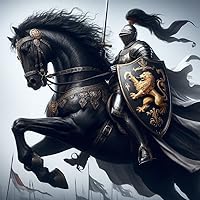
The above is the promo cover, and for me its a big buy in. I love something as blunt as that.
What I would disagree with is the headcount, Mattias kills ….so many more people that the cover suggests and in probably more varied ways than suggested. Its not that he is a psycho killer. Its that he is a lion among sheep, he has been trained in war, he has survived the biggest battle of his age (the siege of Malta, a bloody turning point in the fabric of Europe that halted the march of Islam), in fighting terms he is a man among children. There are a few points when it seems a bit beyond the pale, but when you compare his skills to the political and Militia appointed soldiers of Paris, you can clearly see this man achieving everything he set out to, bathing in blood and gore from one side of Paris to the other (and back again) But this journey of Mattias is not just a bloody trip through 1572 Paris, its also a journey to further self enlightenment, and to finding and building a new family. Carla his wife is not just in danger, she is Pregnant and both she and Mattias will journey through hell and wade through rivers of blood to ensure the child’s safety. Along the way 11 other children touch their lives, and save their souls. But even with all of this neither of them are my favourite character, that was Grymonde “The Infant”, a hugely simple yet complex character. A man warped by life, by Paris and by disease. Willing to commit all and win or lose all on the single throw of a dice. His cry “No tomorrow” sums up his view that the poor of Paris cannot plan a life, because they don’t know where their next meal will come from, they have no clean water, the streets are filled with shit and the price of life is less than a loaf of bread. Grymonde is death on legs, with no conscience, until he meets Carla. The author could so easily have taken the easy way out and set Grymonde and Mattias against each other, but he plays them so much better than that, or rather Carla does.
Twelve Children of Paris is a power House of thrilling historical fiction. Jam packed with the most realistic fighting this side of a Christian Cameron book. I’m not sure I can recommend this book highly enough, go buy it…now!
Ho letto 1/4 del libro ma non mi esimerò dall'esprimere un giudizio. Se "The Religion" era un capolavoro, "I dodici bambini di Parigi" è un totale disastro. Un inno alla violenza sfrenata, estrema e gratuita, un no sense di scene turpi e brutali. Se fosse un romanzo splatter, non sarebbe un problema, ma non lo è, è un romanzo "storico". Grazie e arrivederci.
First do as much harm as you possibly can, or, The science of butchery
This is an overblown, overwritten, over-violent, bloated mess of a novel, which despite its ghastly message manages to conceal the occasional gem beneath a rising mountain of ordure, blood and lopped off body parts.
You get 750+ pages of pretty much non-stop slaughter, lovingly described in the most lurid of detail. The author is a trained surgeon and (worryingly) it shows: ‘Tannhauser…clove him square through the web of the neck. The axe trimmed the top three ribs from their jointing to the breastbone and sundered the mediastinum.’
The plot, such as it is: Mattias Tannhauser arrives in Paris on the eve of the St Bartholomew’s Day massacre in 1572 and in his search for his heavily pregnant wife makes a very substantial contribution to the next day’s proceedings. I am sure someone has counted up the number of wretches he kills, maims and tortures, but frankly I lost interest well before the half way point. The fact is that there is no grandeur to this novel of war, it attains nothing worthwhile: Tannhauser’s enemies are without exception talentless cannon fodder – in the whole of the novel there is not a single worthy opponent; in addition, they are all thoroughly horrible people, all deserving (in Tannhauser’s eyes) of the most ghastly of deaths. Like a late medieval Josey Wales, he collects a coterie of children in his meandering, blood-soaked trail around Paris; they look upon him for protection and thus provide a fig-leaf of humanity for this savage beast of a man.
I suppose this novel might be looked upon as the literary equivalent of a shoot’em-up computer game. I liked the first Tannhauser novel, ‘The Religion’; I did not like this.
This book was exhausting! It's unendingly gory, dark and definitely qualifies for doorstop status, but this was definitely an improvement on the promising-but-frustrating Religion. More to come when the gelid cake of blood left on my psyche by this book flakes off.
I've waited years for this,the return of Matthias Tannhauser. If I'd lived in the middle ages the last thing I'd want to do is upset this one man army but some people never learn. What I love about Tim Willocks books is not just the violence,and believe me there's loads of it,it's the way he conjurs up the sights and smells of the world he describes. This isn't your usual wham,bam historical romp. It's so much more than that. I loved it so much,if I hadn't had a queue of people waiting to read it I'd have gone back to the beginning and started again. Only have five years to wait for the third part now.
First things first - I like Willocks. I went to the trouble to write a positive review of The Religion on Amazon, responding to someone who described it as a mere 'bodice-ripper'. I thought it was a beautifully written action novel about a man who starts out interested mostly in profit and women, and ends up caring more about family. I was really looking forward to this sequel.
Alas, I've been a little let down. Twelve Children has its moments, but they're matched by problems. Firstly - its length. This is a long book, with a lot of characters who come and go. Unless you read it in long sessions, I dare say you'll lose track. At the end, if you can remember where the boy with the birthmark was first mentioned, you're doing better than me.
What else? The conspiracy at the heart of the novel. It's simple enough, but it's made complicated by dragging it out. As for the resolution...I guess a lot of books try to over-explain the plot, but to say Willocks opts for the alternative here is a huge understatement. To write a book this long and leave out the motivation of a key conspirator is a big call, and I don't think it works.
My biggest complaint about the book is that it contains passages that just don't seem to flow in that usual must-read-the-next-page Willocks-style. I found myself going over what I'd already read to get a better picture of what was going on, mostly in battle scenes (of which there are quite a few), normally an area the author excels in. Which is another gripe - I don't think the author does enough to differentiate the confrontations Tannhauser finds himself in. Apart from the opening duel with three brothers, a massacre in a printhouse, and the end, I struggle to recall other scenes, beyond knowing that Tannhauser kills a lot of people easily, and when he does, his weapons tend to scrape bone.
There's much to praise as well. For every awkward patch, there are passages that will stay with you. A lot of those concern Grymonde, the hulking leader of the gang that kidnaps Tannhauser's wife. The injury he suffers towards the end, and his subsequent change in appearance, is memorable. As another reviewer mentioned, the idea of Tannhauser interacting with children as an entire city's adult population goes mad with bloodlust, is a good one. Truth be told, I would've swapped some carnage for more of their backgrounds.
At the end of the day, this is still a worthwhile read. Despite the issues I had, I found myself eager to get back into it after a night's rest. It's just a bit disappointing that Willocks had the right setting, premise, characters, the right everything, and just couldn't produce another Religion.
Book Recs: Extended action scenes, battle scenes, meaningful depictions of large scale violence, can be hard to depict in prose. I don't tend to enjoy reading them; maybe the screen is a better medium in this area. But there are some masterly literary practitioners of combat on a large scale (Abercrombie, McCarthy, Doctorow spring to mind). Willocks is another writer who excels in this area, and not only does he excel at depicting the appalling savagery of historical warfare, he also excels at recreating history and making the past, and its citizens, live so vividly.
Two epic stories here, often heartbreaking, with excruciating inner struggles that characters endure between baseness and grace. 'The Religion' probably remains one of my favourite novels. I read it on publication in 2006. It takes The Siege of Malta (1565) as its subject. Reading it left me feeling physically and mentally fatigued. A desert island book for me. Not long finished 'The Twelve Children of Paris'. Also a masterpiece imo, and based on the St Bartholomew's Day Massacre in Paris (1572); this one requires a strong stomach. Particularly poignant in a world still addicted to sectarian violence and both novels left me relieved that I was born in the late 1960s and not the 1560s. Each story completely transported me as a reader.
If you like grim but marvellous adventures of humanity in times of inhumanity, these are the first two books in the Tannhauser trilogy. I look forward to the third installment. One of the finest living British writers that I've read.
Tim Willocks writes with very gruesome action married to literary beauty. Yet in doing so he relates to all of us on the most basic of the human condition...depravity. A very intense read that I had to force myself to govern the speed I could have read, to delay its ending. Only one of three books that brought me to tears.
Most brutal book I've ever read. Absolutely unrelenting in its gore-soaked bleakness If I have to wait 7 more years for the next book in the series I will cry.
Showtime, HBO, Chris Hemsworth, Penelope Cruz, Javier Bardem. I would love to have 200 million euro and adapt this in to a movie. Tannhauser does a "Taken" meets "Rambo 5" and with every weapon known to mortal man goes forth and wreaks havoc in a Paris overtaken by a long forgotten genocide in search of his wife.
It's a bit like Orpheus descent into hell to find Eurydice, except in this case Orpheus, is armed to the teeth and has been through the wars, literally.
If you like your men, men and you have a taste for the exotic and you aren't afraid of a little blood on your plate then this book is for you. A literal massacre in the name of true love. I can't wait for book 3.
When I first picked up Tim Willocks’ “The Twelve Children of Paris”, I had no idea that he had already written a novel with the main character, Mattias Tannhauser, featured. However, discovering that there was a 6 year gap between the two novels made me suspect they might be stand alone novels for the newcomer and because it sounded interesting, I figured I could get away with diving straight in. Whilst there are references to previous events and existing relationships between some of the characters, they don’t spoil the story here and this novel certainly stands alone well enough.
Mattias Tannhauser has returned from fighting overseas and is heading for Paris to meet his heavily pregnant wife, Carla, who has been invited to the Royal Wedding due to take place, as she is a talented musician and was due to provide entertainment. The wedding, between the Catholic King of France and his Huguenot bride, has not proved entirely popular and the murder of a highly placed Huguenot adviser to the King starts a massacre. Fighting his way through the city, Tannhauser finds that Carla has been murdered, along with the family she was staying with and grieves for her.
However, there are plots afoot that Tannhauser is not party to and it transpires that Carla has not been killed, but was instead spared by Grymonde, the feared Infant of Cockaigne. Determined to save her and his newborn daughter, Tannhauser marks a trail of blood through Paris to find not on his and Carla’s children, but also assists others along the way. As a Catholic knight, Tannhauser is a killer by training, but a decent enough man at heart, even as that heart is surrounded by darkness. Politics may hold sway in Paris, but Tannhauser will not let anything stand in the way of his family.
“The Twelve Children of Paris” is a fantastic novel, written with a visceral pleasure that suggests Willocks enjoys bathing in blood as much as Tannhauser. Every arrow that lands in flesh, every strike of a sword, every drop of blood, lands on the page. Some of the battles are written in gleeful detail which may turn the stomach of some, but which I loved. I’ve not seen fighting written with this amount of detail since Ben Kane’s writing and Willocks writes it in a very visual way such that you can almost picture the fighting in your mind.
Given that this is a long novel, if it were nothing but the fighting, it would quickly become repetitive and boring. But that never happens here, because Willocks weaves the stories of Carla and Tannhauser into the narrative very nicely and there are the political machinations to be explored, as well as Tannhauser’s growing relationship with the children he rescues along the way, as well as their growing relationship to each other. Carla’s bond with Grymonde’s mother, Alice, is explored in detail and is a highly touching relationship and the change in Estelle, who starts hating Carla but falls in love with her new daughter is incredibly touching.
Whilst the fighting is perhaps the best writing here, there are other moments of pure beauty here. Grymonde’s visions when he has been given opium to assist with some of his wounds are written with a beauty which is almost poetry in parts and for all the death, love shines through the pages in many parts. Willocks may write death and fighting best of all, but he is also in touch with the emotional impact of events and so fear, excitement, friendship and love also reach out from the page very strongly.
Willocks’ visceral writing style, which splashes blood on nearly every page, won’t appeal to everyone. However, if you can stomach the violence Tannhauser invites, causes and embraces, there are few who write it better. Although this is a very long novel, the constant action and layers of intrigue keep the pace high and it’s a very well-paced and incredibly readable novel. As a huge fan of horror novels, the dark and bloody focus here doesn’t concern me in the least and if this is indicative of Willocks’s work, I’ll certainly be seeking out more.
I was really conflicted with what rating to give this book. The main story of Tannhauser trying to find his wife and in the process meeting children along the way that helped him on his journey (the story in its simplest form) was what I really enjoyed about this book. The killings were done with skill and anatomical knowledge which I liked as otherwise he just comes across as a maniac killing everyone who stands in his way.
However, I found this a difficult read as it's extremely descriptive and wordy in parts where I felt it to be a bit unnecessary. Other parts of the book went completely over my head due to not understanding the metaphors or the description, ideally I would have needed a dictionary next to me at all times but that would have made reading this 754 page book more laborious!
The political and religious aspect isn't something I fully understood or enjoyed reading either. As a book I wouldn't normally read (it was a received from a website called "A Box of Stories in a mixed selection of books) due to its genre and length, I was really surprised that I enjoyed it as much as I did and even more so that I finished it, definitely the longest book I have ever read.
I chose to give the book a 4 star rating as I didn't think my lack of fully understanding exactly what was going on at times should alter the books rating, as that's my issue not the authors.
This is the 2nd book in a trilogy and I may read the 3rd one but it has not yet been released. This one took 7 years after the first to be released so it's due about now if that's his average time frame! Initially I was curious about the 1st book but also put off by the title "The Religion" as that's the aspect of this book I enjoyed the least. From reading other reviews about this book it doesn't sound as if I would have enjoyed it either. So I may have to wait for some reviews of the 3rd one, on its eventual release, to figure out whether it is more like this one or the 1st one.
Bloed, bloederiger, alleen maar bloed. Een lang verhaal met ontelbare moorden, over een ridder die liever iemand dood dan iemand gedag zegt. Toegespitst op een van de bloederigste momenten van Parijs, de genocide op de hugenoten in 1572.
Het eerste deel las nog wel goed weg, maar daarna was het echt worstelen en te bloederig...
This stunning sequel to the epic that was THE RELIGION continues in the same hard, bloody vein.
Set in Paris in 1572 during one of Europe's bloodiest massacres never has so much blood been spilt by one man as he searches for his wife through the ravaged streets of a stinking Paris. Every page drips visceral imagery; the descriptions of the cesspit that was Paris at that time is a million miles from any image you may have had in your own mind prior to reading this novel.
Willocks' absolute skill of weaving historical fact with blood drenched fiction is unparalleled and you will be left shaken by the abject horrors written about; whether it be women being beaten to death by their own babies by evil men or the main character's bloody swath of destruction as Tannhauser scours the city to find the only thing he has ever loved every page thunders deep in to your psyche.
Tannhauser is a character that you can't help but love from his first introduction: here is a character who has accepted his own damnation many years before so now he has no qualms with slaughtering all who get in his way as he closes in on his wife and the child she carries.
Apart from the exacting detail to the political and religious landscape of Paris and the effortless descriptions of mankind's innate ability to be cruel we have a novel that deals with the human spirit and soul and along with Tannhauser Willocks creates some truly memorable characters in the form of Estelle, the Infant Grymonde and even a horse called Clementine; as readers we care about them all and Willocks' willingness to kill off main characters only adds to this novel's true originality.
10/10 from me, but be warned this novel is NOT for the faint hearted.
The Religion was a great, satisfying book so it's no surprise to see a sequel. TTCOP starts really well and pulled me in for the first hundred pages or so but ultimately - for me - the book fails for the following reasons:
* beyond the first 100 pages, the book felt rushed, poorly thought through and although studded with great scenes and dialogue, as a whole it doesn't amount to a great book. * After the inital storming of the Hotel and the music scene (all done really well), the Carla sections are ridiculous - Tarot Cards, Alice, etc. for me it didn't work. I never worked out the point of the character Alice. * Too many co-incidences, characters reappearing, neat ends tied up with a tortuos explanation by a character that felt as though it was more addressed to the reader! * It felt the author got hung up on getting the twelve (count them) children in and you could see him labouring on the pages to achieve this. * The killings became a little silly. I remember in The Religion, the killings were instrumental in the tone. They wound up tension, they let off steam, brought on characters and helped create what is book nirvana for me: a book world you can feel and live in. In this one, it seems like the author is wheeling them out again for the sake of it.
That said, I'd still say if you liked The Religion, read this, there's enough in there to make it a three star book; and a three star book is still worth reading.
I'll definitely be reading the third in the trilogy and hoping the author reconnects with the simple elements of the first in the series.
This entire review has been hidden because of spoilers.
I'm sorry to say I didn't enjoy The Twelve Children... as much as the first book in the trilogy: The Religion. In my opinion, the latter reached a better balance between fighting scenes, historical background, characterization and even political & theological discussions. This one seems to be mostly about the fighting in the streets of Paris in the midst of the St. Bartholomew's Day massacre & there was only so much I could take about main character Tannhauser's fighting skills & the wounds he inflicts on dozens of hapless foes... After a while I found myself skipping whole scenes, while the main plot (Tannhauser's efforts to get his wife back) moved along tediously. I think the book was simply too long. Willocks was so focused on Tannahauser's killing spree that he didn't even bother coming up with a justification for the villain's action! After the expansive set up of The Religion, this came as a surprise and maybe a disappointment.
When I was a kid, I wanted to be a surgeon - heart, brain, whatever. That helps explain why I so enjoyed this 750 page anatomy lesson.
We first met Mattias Tannhauser in The Religion as a slave trained in the arts of war as a Janissary and transmogrified during the Siege of Malta as a Knight Hospitaler. In Twelve Children, Tannhauser has matured, but his untrammeled sense of morality is more idiosyncratic than ever. The story spans just two days as Tannhauser searches for his pregnant wife who had been summoned to make music for the French court. His search coincides with the beginning of the Bartholemew's Day Massacre which provides a bloody and despicable backdrop for our anti-hero's own bloody and convoluted odyssey.
Twelve Children is listed as "volume 2 of the Tannhauser trilogy," but it's not clear that Willocks can write a third volume: a post-middle-age Tannhauser just could not credibly maintain the necessary level of carnage. Maybe Willocks has in mind a prequel, fleshing out the adolescent Janissary years.
Set in Paris in 1572, the story focuses on the quest by Mattias Tannhauser to find his wife, Carla, who has disappeared. Without knowing Mattias arrives in Paris on St Bartholomew’s Eve and is unwillingly drawn into one of the bloodiest massacres in European history.
This book is a sequel to Tim Willcocks' previous book, The Religion, and whilst some of the characters are the same, this is an entirely different story, but is no less powerful. There is the same fine attention to historic detail, and the undeniable pull of strong leading characters make this a memorable and worthy follow up. The content is not for the faint hearted, as the visceral and graphic nature of the story is often quite shocking, but putting that to one side, I am sure if you enjoyed The Religion, then you will be more than happy with this successor.
My thanks to NetGalley and Vintage Digital for the opportunity to read this book.
endless gore interspersed with fascinating and wry ruminations of the great Mattias Tannhauser. I enjoyed Willocks' black humor and philosophy that living exactly in the moment is enough (though I truly doubt anyone would agree that a moment of true knowledge of the world is enough to prepare one for death). However, the historical premise of St Bartholomew's Day Massacre was slim to support a 700 page tome like this, and the unrelieved killing was not enough balanced by historical interest or sustained interactions between the characters.
Those who loved the The Religion, with the rich well rendered history of the Siege of Malta, and the fascinating character of Mattias (balanced by a great villian) will not want to miss this second in the trilogy. However, don't expect the same level of achievement. That being said, there is no way that I will miss the third in the trilogy, though we may have to wait a few years.
Un grandissimo romanzo! L'autore riesce a fondere l'ambientazione storica medioevale con una modernità incredibile nell'azione e nella gestione delle varie fasi della vicenda. I vari personaggi sono tutti disegnati in maniera veramente speciale e, siano essi "buoni" che "cattivi", portano il lettore ad appassionarsi alla trama ed alle vicende narrate. la localizzazione e l'ambientazione sono precisissime e compongono un quadro della "Notte di S.Bartolomeo" (23-24 agosto 1572) indimenticabile. Le scene d'azione sono di altissimo livello e portano il lettore ad immergersi in una delle notti più buie della storia umana in modo relaistico, come se fosse presente sulla scena. Un incrocio riuscittissimo tra la "Trilogia dell'eretico" di Altieri ed i romanzi storici di Scarrow. Assolutamente imperdibile per tutti gli amanti della letteratura d'azione e storica. Ho scoperto un grandissimo autore!
That was my reaction after finishing the book. The first half of TCoP was true historical fiction. The latter half was a 14th century literary version of Call of Duty. The graphic detail in which the author describes the kills is too in depth. However, what did it for me was the fact that the author denies us the reason for the conspiracy. I hope the third book returns to the original Religion style format.
Incredibly bloody and violent. Tannhauser carries on a war almost single handed as he searches for Carla, his wife, throughout the terrors of the St Bartholomew's Eve Massacre in Paris. All the action takes place within a day and night. The violence is gruesomely portrayed, but you keep reding because you have become so involved with the characters.
This novel was quite simply brilliant, haven't read anything like it in years. Any criticism I provide cannot do it justice, such a mind-blowing experience cannot ever be fairly quantified or analysed in words. Tim Willocks' writing is from another planet.
This is the goods. This is real, bonded stuff. Folks looking for a summer read, only one with hair on its chest will find it in The Twelve Children Of Paris, the second book in a trilogy. I read the first one, The Religion, about seven years ago and enjoyed that tremendously. Willocks’s nail biting, stomach churning account of the Siege of Malta had me utterly spellbound and looking forward very much at the end to the next installment. Years passed without any sign of the sequel, however. I began to think it was one of those ambitious projects that for want of interest by publishers would languish.
A chance Amazon search turned up the sequel, which appeared in 2013, but isn’t available here in the USA. Willocks is British. This is a serious mistake since Game Of Thrones fans and medieval enthusiasts would simply eat this novel up. Scene, the late 16th Century with Europe embroiled in religious wars. A colossal atrocity in that internecine conflict is about to erupt, the St. Bartholomew’s Day massacre of the Huguenots in Paris. Into this giant warren of intrigue and debauchery rides grim Mattias Tannhauser, Knight of St. John, former Ottoman janissary, and the biggest ye olde badass who ever swung a battleax, hell bent on rescuing his wife, the fair Lady Carla, from a sinister, complicated revenge plot that involves the most powerful men in the Kingdom. Tannhauser’s enemies have no idea who they’re dealing with, however.
Ruthless, implacable, Tannhauser battles on through overwhelming odds and leaves a trail of carnage behind him, all against the morbid tableaux of endless scenes of massacre, looting, and rape. Readers who want a quick, crash course in how godawful the Reformation was couldn’t do better than Children. Along the way, Tannhauser collects a small menagerie of damaged, lost children, waifs who prove their worth in the course of their collective ordeal. Willocks’s strength at characterization shines here. His people are individual, distinctive from the start, and always consistent. They speak in a semi-Shakespearean vernacular, which Willocks also handles excellently, leavening high flying rhetoric with humor and commonplace observations, never falling flat or coming across as pompous.
This is one hell of a good read, but be warned, it’s not for those easily put off their food. Willocks is a doctor by trade. That combined with his expert knowledge of late medieval warfare, its methods and results, leads to some revolting although page turning reading. Children reads like an Alexandre Dumas Pere novel only with a Grand Guignol twist, with scenes of gore and slaughter no stage could ever simulate. This book and The Religion would both make incredible movies. Highly recommended. If you can handle GOT, you should get a big kick out of this novel.