

What do you think?

Travis McGee #11
Dress Her in Indigo
From a beloved master of crime fiction, Dress Her in Indigo is one of many classic novels featuring Travis McGee, the hard-boiled detective who lives on a houseboat.
Travis McGee could never deny his old friend anything. So before Meyer even says please, McGee agrees to accompany him to Mexico to reconstruct the last mysterious months of a young woman’s life—on a fat expense account provided by the father who has lost touch with her. They think she’s fallen in with the usual post-teenage misfits and rebels. What they find is stranger, kinkier, and far more deadly.
“To diggers a thousand years from now, the works of John D. MacDonald would be a treasure on the order of the tomb of Tutankhamen.”—Kurt Vonnegut
All Meyer’s friend wants to know is whether his daughter was happy before she died in a car accident south of the border. But when McGee and Meyer step foot in the hippie enclave in Oaxaca that had become Bix Bowie’s last refuge, they get more than they bargained for.
Not only had Bix made a whole group of dangerous, loathsome friends, but she was also mixed up in trafficking heroin into the United States. By the time she died, she was a shell of her former self. And the more McGee looks into things, the less accidental Bix’s death starts to seem.
Features a new Introduction by Lee
Travis McGee could never deny his old friend anything. So before Meyer even says please, McGee agrees to accompany him to Mexico to reconstruct the last mysterious months of a young woman’s life—on a fat expense account provided by the father who has lost touch with her. They think she’s fallen in with the usual post-teenage misfits and rebels. What they find is stranger, kinkier, and far more deadly.
“To diggers a thousand years from now, the works of John D. MacDonald would be a treasure on the order of the tomb of Tutankhamen.”—Kurt Vonnegut
All Meyer’s friend wants to know is whether his daughter was happy before she died in a car accident south of the border. But when McGee and Meyer step foot in the hippie enclave in Oaxaca that had become Bix Bowie’s last refuge, they get more than they bargained for.
Not only had Bix made a whole group of dangerous, loathsome friends, but she was also mixed up in trafficking heroin into the United States. By the time she died, she was a shell of her former self. And the more McGee looks into things, the less accidental Bix’s death starts to seem.
Features a new Introduction by Lee
322 pages, Kindle Edition
First published January 1, 1969
About the author
John D. MacDonald
586 books1,476 followersJohn D. MacDonald was born in Sharon, Pennsylvania, and educated at the Universities of Pennsylvania, Syracuse and Harvard, where he took an MBA in 1939. During WW2, he rose to the rank of Colonel, and while serving in the Army and in the Far East, sent a short story to his wife for sale, successfully. He served in the Office of Strategic Services (O.S.S.) in the China-Burma-India Theater of Operations. After the war, he decided to try writing for a year, to see if he could make a living. Over 500 short stories and 70 novels resulted, including 21 Travis McGee novels.
Following complications of an earlier heart bypass operation, MacDonald slipped into a coma on December 10 and died at age 70, on December 28, 1986, in St. Mary's Hospital in Milwaukee, Wisconsin. He was survived by his wife Dorothy (1911-1989) and a son, Maynard.
In the years since his death MacDonald has been praised by authors as diverse as Stephen King, Spider Robinson, Jimmy Buffett, Kingsley Amis and Kurt Vonnegut, Jr.. Thirty-three years after his passing the Travis McGee novels are still in print.
Following complications of an earlier heart bypass operation, MacDonald slipped into a coma on December 10 and died at age 70, on December 28, 1986, in St. Mary's Hospital in Milwaukee, Wisconsin. He was survived by his wife Dorothy (1911-1989) and a son, Maynard.
In the years since his death MacDonald has been praised by authors as diverse as Stephen King, Spider Robinson, Jimmy Buffett, Kingsley Amis and Kurt Vonnegut, Jr.. Thirty-three years after his passing the Travis McGee novels are still in print.
Ratings & Reviews
Friends & Following
Create a free account to discover what your friends think of this book!
Community Reviews
Displaying 1 - 30 of 209 reviews

February 7, 2018
“I envy the generation of readers just discovering Travis McGee and count myself among the many readers savoring his adventures again.” — Sue Grafton (1940-2017)
Perhaps more than any other book within the Travis McGee series, Dress Her in Indigo holds up a mirror to elements in society that were not nearly so pleasant as those wearing rose-colored, politically correct glasses want us to believe. This is most definitely not a Seattle coffee-shop-approved version of the hippie movement. It is a brutally candid and unflinchingly honest look at the darker side of those young people who dropped out during the 1960s. It’s a side not often spoken of, much less illuminated today, thanks to a whitewashing of history, but it is a side of the hippie movement that many will recognize as truth. Published in real-time, in 1969, it is all the braver in showing that it wasn’t all peace and flower-power, but drugs and depravity were part of the mix as well.
This is one of the Travis McGee Mexico entries, taking MacDonald's protagonist out of Florida while maintaining much the same vibe. As Carl Hiaasen noted long ago, MacDonald captured the great beauty and promise of Florida, along with its languid sleaze. He does the same with Mexico, especially rural Mexico, and Dress Her in Indigo is exactly that: a novel about sleaze. In a mingling of the lost and vulnerable, the type of personality seemingly born — perhaps even searching — for someone to prey upon them, and those among them doing the preying, an unpleasant and deeply sad portrait is painted. That portrait is not limited to the hippie culture, however, as MacDonald takes direct aim at the sleazier, predatory element of the homosexual community — male and female — in a manner which rings as brutally honest as McDonald’s take on the hippie dropouts heading to Mexico. With the latter there is sympathy, however, especially because Meyer remembers the girl whose final moments they are trying to uncover in Mexico for her father. Meyer has trouble reconciling just how far Beatrice (Bix) had fallen:
“Let’s give up on the whole thing, Trav. What the h*ll good are we doing? We can’t tell Harl any of this. She was on a gay adventure, full of plans and excitement and fun. Until the tragic accident. Let’s rehearse it. I don’t want to know any more about it. I knew that girl. She was a quiet, calm, decent kid. So she tripped and fell into this da*ned septic tank, and we don’t have to follow her any further into it, do we?”
There is little sympathy from McGee for the predators within the homosexual community, those looking to take advantage by any means, in order to “turn” someone. Nor should there be. One woman even acts as a “broker” of sorts for Bruce Bundy, procuring and then delivering someone she believes may be susceptible to Bundy’s machinations. Lady Rebecca Divin-Harrison, however, is herself a predator of sorts, on the heterosexual front, using her sexual expertise as an outlet for her own neurosis. She uses McGee for a while, until he finally manages to wiggle from her grasp and find a healthier, more rewarding intimacy with the lovely Elena. It takes McGee a while to figure out Lady Harrison, but when he does, it’s dead-center-perfect:
“I realized I had come upon a prime example of that uniquely English phenomenon, the true eccentric. Some of them build cathedrals out of bits of matchstick. Some of them count the number of stalks of hay in the average haystack. Some write a hundred letters a week to the London Times. Some catalogue all the birds in the fifty meadows. They are all quite mad, but do not know that they are mad, since they find a socially acceptable outlet for their monomania. This woman had been driven mad in a war, and had retained one little edge of sanity and built the rest of the structure of her life upon it.”
On this sad quest by McGee and Meyer to give Harlan Bowie an idea of the last months of his young daughter Bix’s life in Mexico before the accident, we get a real sense of the magic of Mexico. In a place where the bungalows have girl names like Alisha, even the older teddy-bear-like economist, Meyer, is affected by the flowers and the sky and the summery air; not to mention other natural beauties such a Ron Townsend’s very sexy, leather-clad and leggy companion, Miranda Dale:
“Didn't all those legs make you feel insecure?” — McGee
"And so did the age of the child. But this is the sort of place where I could try to overcome minor obstacles." — Meyer
MacDonald has McGee and Meyer flying into Oaxaca on a rivet-missing and shaky old Douglas:
“We were off to start at the end of her life and work back.”
Soon McGee and Meyer are drowning in the sad cesspool of Bix’s life with Minda McLean, Carl Sessions, Jerome Nesta, and finally, Walter Rockland and Eva Vitrier. On the sidelines waits Bruce Bundy, a slimy gay predator with enough dough to pull it off, and Minda Mclean’s father, who has retired and dropped out himself. He has turned into a hippie, thinking he’ll be able to bridge the gap easier when he finds Minda. While McLean’s spiel sounds good on paper, his liberal explanation for the hippie culture and why the kids were drawn to it plausible in some academic setting, it rings sad and hollow in contrast to the starker truth McGee is discovering. Just how hollow we don’t discover until several people are dead. The sleaze begins bothering McGee so bad he comments to Meyer:
“Dandy little village they've got here. These sweet kindly folk tear me up, they really do. I'm even beginning to wonder about Emilio Fuentes. He'll probably turn out to be a retired female wrestler going around in drag.”
MacDonald, always a terrific writer, intersperses wonderfully descriptive moments of the landscape and people of Mexico as he takes the reader deeper and deeper into the sad story of Bix’s life in Mexico:
“There was evident poverty, beggars with twisted limbs, sick children, stray mongrels, but there was a sense of great life and vitality, of enduring laughter.”
And we get a terrific character portrait of Emilio Fuentes, a thirty-something businessman who knows how to live. It is through him that we get a look at male/female interactions in Mexico, which despite wishes of the PC crowd to the contrary, surely rings as true today as it did in 1969 when this book was published. One such scene which some have made note of is a moment between Emilio and one of his secretaries, a tall solemn girl. She brings him the mail and this happens:
“He read the letters swiftly, scrawled his big signature on each and handed them to the girl, then slapped her smartly across the seat of her skirt as she turned. She yelped and jumped, and he said something in swift, slurred Spanish. She spoke in tones of protest. He spoke again. She smiled and flushed and walked swiftly out.”
Emilio turns to McGee and has this explanation:
“That one,” he explained, “that Rosita, she had the unhoppy love affair and now she has the long face. I told her I wanted to see if there was any feeling left in the back side. She told me I should have more respect. Then I said something, it doesn’t translate. But it made her face hot and it made her smile, no?”
Even though it may not be something we as a male reader might approve of or do, or how as a female reader we might react to such an action, it rings absolutely true, both then and today. In fiction, you have to be able to weave real-life moments within a story to give it validity. It is really a wonderful scene, because it accomplishes many things. First, it gives us a picture of a culture. Yes, some will say it’s 1969, but that’s a copout. Were we a fly on the wall today in parts of Mexico we would discover that such moments still happen, and with the same reactions from both parties. Secondly, it creates an indelible impression of Emilio Fuentes for the reader which is carried forward in the narrative. It helps the reader understand and like him — at least I did. Emilio, a friend of Ron Townsend who aids McGee as he backtracks Bix’s trail, takes McGee and Meyer to a rooftop beach party where they meet Elena and Margarita, who play important roles within the story, giving the reader moments of normalcy to offset the sleaze. Thirdly, it allows the reader to glimpse a culture at its basic level, the sexes interacting in “reality” as opposed to how the angry, militant feminists would like it to be, with every girl, every woman, adhering strictly to a party line not of their own making, removing their individuality. Because women are not all the same. Some use common sense, and are capable of taking care of themselves. They are not snowflakes, or man-hating angry feminists. They are capable of discerning intentions and differentiating between truly dreadful behavior which should be condemned, and relatively harmless — though inappropriate — actions. Because Rosita stood up for herself and put Emilio in his place, yet smiled because she did realize it wasn’t lecherous in that particular instance, it makes the reader like her, as well. You might say she’s Catherine Deneuve approved, which is a great thing.
I’m nearly always obligated to comment on minutiae like this when reviewing a Travis McGee book, because it invariably becomes a talking point with readers. Since much of the scene is quoted above, however, readers can see what "Actually" happens in the scene for themselves. Time to move on.
There are a couple of other good young people McGee encounters in Mike Barrington and Della Davis. They are closer to the image we have today of the hippie culture, showing that it wasn’t all the same for everyone. Yet they cannot remain untouched by the darker and tawdrier side of the coin for too long. Despite a violent confrontation McGee has with someone near the end of the book which leaves him injured, and Meyer wounded, it really is the sleaze we remember from this one, that ugly yet honest portrait of the drugs and the sexual predators, the sadness and anger. In the end, there’s a twist we didn’t see coming, but the reader’s elation is short-lived. This far down the septic tank, it’s impossible to get clean.
Perhaps it’s because we’ve lingered for too long a period with the murderers and homosexual predators and those looking to make a score from the misery of one another, Dress Her in Indigo seems longer than it is. Misery and sadness and depravity mingle with beauty and pleasure and MacDonald captures both, but it is the former which wins out in the end, and the reader can’t wait for McGee and Meyer to get back to Florida.
I’m tempted to give this one four stars, solid ones, because it’s a terrific story which resonates, yet doesn’t quite reach the upper echelon of Travis McGee entries. This is especially so because the next in the series, The Long Lavender Look is one of the absolute best. Yet, I’m going to give it five stars, and here is the reason:
Everything in this narrative rings true, yet in today’s PC climate, it is certain to get harangued or misrepresented. A great story is a great story, however, and one which tells the truth deserves some applause. For those who disagree with MacDonald’s painting of segments of society, which still ring true, that’s okay. I think they are ignoring the reality, and that’s okay too. But you must be able to write it, and to say it. And to that point, I’ll end the review by deferring to a very famous mystery writer, who just happens to be a woman:
“I believe that political correctness can be a form of linguistic fascism, and it sends shivers down the spine of my generation who went to war against fascism.” — P.D. James
Perhaps more than any other book within the Travis McGee series, Dress Her in Indigo holds up a mirror to elements in society that were not nearly so pleasant as those wearing rose-colored, politically correct glasses want us to believe. This is most definitely not a Seattle coffee-shop-approved version of the hippie movement. It is a brutally candid and unflinchingly honest look at the darker side of those young people who dropped out during the 1960s. It’s a side not often spoken of, much less illuminated today, thanks to a whitewashing of history, but it is a side of the hippie movement that many will recognize as truth. Published in real-time, in 1969, it is all the braver in showing that it wasn’t all peace and flower-power, but drugs and depravity were part of the mix as well.
This is one of the Travis McGee Mexico entries, taking MacDonald's protagonist out of Florida while maintaining much the same vibe. As Carl Hiaasen noted long ago, MacDonald captured the great beauty and promise of Florida, along with its languid sleaze. He does the same with Mexico, especially rural Mexico, and Dress Her in Indigo is exactly that: a novel about sleaze. In a mingling of the lost and vulnerable, the type of personality seemingly born — perhaps even searching — for someone to prey upon them, and those among them doing the preying, an unpleasant and deeply sad portrait is painted. That portrait is not limited to the hippie culture, however, as MacDonald takes direct aim at the sleazier, predatory element of the homosexual community — male and female — in a manner which rings as brutally honest as McDonald’s take on the hippie dropouts heading to Mexico. With the latter there is sympathy, however, especially because Meyer remembers the girl whose final moments they are trying to uncover in Mexico for her father. Meyer has trouble reconciling just how far Beatrice (Bix) had fallen:
“Let’s give up on the whole thing, Trav. What the h*ll good are we doing? We can’t tell Harl any of this. She was on a gay adventure, full of plans and excitement and fun. Until the tragic accident. Let’s rehearse it. I don’t want to know any more about it. I knew that girl. She was a quiet, calm, decent kid. So she tripped and fell into this da*ned septic tank, and we don’t have to follow her any further into it, do we?”
There is little sympathy from McGee for the predators within the homosexual community, those looking to take advantage by any means, in order to “turn” someone. Nor should there be. One woman even acts as a “broker” of sorts for Bruce Bundy, procuring and then delivering someone she believes may be susceptible to Bundy’s machinations. Lady Rebecca Divin-Harrison, however, is herself a predator of sorts, on the heterosexual front, using her sexual expertise as an outlet for her own neurosis. She uses McGee for a while, until he finally manages to wiggle from her grasp and find a healthier, more rewarding intimacy with the lovely Elena. It takes McGee a while to figure out Lady Harrison, but when he does, it’s dead-center-perfect:
“I realized I had come upon a prime example of that uniquely English phenomenon, the true eccentric. Some of them build cathedrals out of bits of matchstick. Some of them count the number of stalks of hay in the average haystack. Some write a hundred letters a week to the London Times. Some catalogue all the birds in the fifty meadows. They are all quite mad, but do not know that they are mad, since they find a socially acceptable outlet for their monomania. This woman had been driven mad in a war, and had retained one little edge of sanity and built the rest of the structure of her life upon it.”
On this sad quest by McGee and Meyer to give Harlan Bowie an idea of the last months of his young daughter Bix’s life in Mexico before the accident, we get a real sense of the magic of Mexico. In a place where the bungalows have girl names like Alisha, even the older teddy-bear-like economist, Meyer, is affected by the flowers and the sky and the summery air; not to mention other natural beauties such a Ron Townsend’s very sexy, leather-clad and leggy companion, Miranda Dale:
“Didn't all those legs make you feel insecure?” — McGee
"And so did the age of the child. But this is the sort of place where I could try to overcome minor obstacles." — Meyer
MacDonald has McGee and Meyer flying into Oaxaca on a rivet-missing and shaky old Douglas:
“We were off to start at the end of her life and work back.”
Soon McGee and Meyer are drowning in the sad cesspool of Bix’s life with Minda McLean, Carl Sessions, Jerome Nesta, and finally, Walter Rockland and Eva Vitrier. On the sidelines waits Bruce Bundy, a slimy gay predator with enough dough to pull it off, and Minda Mclean’s father, who has retired and dropped out himself. He has turned into a hippie, thinking he’ll be able to bridge the gap easier when he finds Minda. While McLean’s spiel sounds good on paper, his liberal explanation for the hippie culture and why the kids were drawn to it plausible in some academic setting, it rings sad and hollow in contrast to the starker truth McGee is discovering. Just how hollow we don’t discover until several people are dead. The sleaze begins bothering McGee so bad he comments to Meyer:
“Dandy little village they've got here. These sweet kindly folk tear me up, they really do. I'm even beginning to wonder about Emilio Fuentes. He'll probably turn out to be a retired female wrestler going around in drag.”
MacDonald, always a terrific writer, intersperses wonderfully descriptive moments of the landscape and people of Mexico as he takes the reader deeper and deeper into the sad story of Bix’s life in Mexico:
“There was evident poverty, beggars with twisted limbs, sick children, stray mongrels, but there was a sense of great life and vitality, of enduring laughter.”
And we get a terrific character portrait of Emilio Fuentes, a thirty-something businessman who knows how to live. It is through him that we get a look at male/female interactions in Mexico, which despite wishes of the PC crowd to the contrary, surely rings as true today as it did in 1969 when this book was published. One such scene which some have made note of is a moment between Emilio and one of his secretaries, a tall solemn girl. She brings him the mail and this happens:
“He read the letters swiftly, scrawled his big signature on each and handed them to the girl, then slapped her smartly across the seat of her skirt as she turned. She yelped and jumped, and he said something in swift, slurred Spanish. She spoke in tones of protest. He spoke again. She smiled and flushed and walked swiftly out.”
Emilio turns to McGee and has this explanation:
“That one,” he explained, “that Rosita, she had the unhoppy love affair and now she has the long face. I told her I wanted to see if there was any feeling left in the back side. She told me I should have more respect. Then I said something, it doesn’t translate. But it made her face hot and it made her smile, no?”
Even though it may not be something we as a male reader might approve of or do, or how as a female reader we might react to such an action, it rings absolutely true, both then and today. In fiction, you have to be able to weave real-life moments within a story to give it validity. It is really a wonderful scene, because it accomplishes many things. First, it gives us a picture of a culture. Yes, some will say it’s 1969, but that’s a copout. Were we a fly on the wall today in parts of Mexico we would discover that such moments still happen, and with the same reactions from both parties. Secondly, it creates an indelible impression of Emilio Fuentes for the reader which is carried forward in the narrative. It helps the reader understand and like him — at least I did. Emilio, a friend of Ron Townsend who aids McGee as he backtracks Bix’s trail, takes McGee and Meyer to a rooftop beach party where they meet Elena and Margarita, who play important roles within the story, giving the reader moments of normalcy to offset the sleaze. Thirdly, it allows the reader to glimpse a culture at its basic level, the sexes interacting in “reality” as opposed to how the angry, militant feminists would like it to be, with every girl, every woman, adhering strictly to a party line not of their own making, removing their individuality. Because women are not all the same. Some use common sense, and are capable of taking care of themselves. They are not snowflakes, or man-hating angry feminists. They are capable of discerning intentions and differentiating between truly dreadful behavior which should be condemned, and relatively harmless — though inappropriate — actions. Because Rosita stood up for herself and put Emilio in his place, yet smiled because she did realize it wasn’t lecherous in that particular instance, it makes the reader like her, as well. You might say she’s Catherine Deneuve approved, which is a great thing.
I’m nearly always obligated to comment on minutiae like this when reviewing a Travis McGee book, because it invariably becomes a talking point with readers. Since much of the scene is quoted above, however, readers can see what "Actually" happens in the scene for themselves. Time to move on.
There are a couple of other good young people McGee encounters in Mike Barrington and Della Davis. They are closer to the image we have today of the hippie culture, showing that it wasn’t all the same for everyone. Yet they cannot remain untouched by the darker and tawdrier side of the coin for too long. Despite a violent confrontation McGee has with someone near the end of the book which leaves him injured, and Meyer wounded, it really is the sleaze we remember from this one, that ugly yet honest portrait of the drugs and the sexual predators, the sadness and anger. In the end, there’s a twist we didn’t see coming, but the reader’s elation is short-lived. This far down the septic tank, it’s impossible to get clean.
Perhaps it’s because we’ve lingered for too long a period with the murderers and homosexual predators and those looking to make a score from the misery of one another, Dress Her in Indigo seems longer than it is. Misery and sadness and depravity mingle with beauty and pleasure and MacDonald captures both, but it is the former which wins out in the end, and the reader can’t wait for McGee and Meyer to get back to Florida.
I’m tempted to give this one four stars, solid ones, because it’s a terrific story which resonates, yet doesn’t quite reach the upper echelon of Travis McGee entries. This is especially so because the next in the series, The Long Lavender Look is one of the absolute best. Yet, I’m going to give it five stars, and here is the reason:
Everything in this narrative rings true, yet in today’s PC climate, it is certain to get harangued or misrepresented. A great story is a great story, however, and one which tells the truth deserves some applause. For those who disagree with MacDonald’s painting of segments of society, which still ring true, that’s okay. I think they are ignoring the reality, and that’s okay too. But you must be able to write it, and to say it. And to that point, I’ll end the review by deferring to a very famous mystery writer, who just happens to be a woman:
“I believe that political correctness can be a form of linguistic fascism, and it sends shivers down the spine of my generation who went to war against fascism.” — P.D. James

September 29, 2018
”The dregs of dreams were all of childhood, and in the morning mirror I looked at the raw, gaunt, knobbly stranger, at the weals and the pits and the white tracks of scar tissue across the deepwater brown of the leathery useful body and marveled that childhood should turn into this--into the pale-eyed, scruff-headed, bony stranger who looked so lazily competent, yet, on the inside, felt such frequent waves of Weltschmerz, of lingering nostalgia for the lives he had never lived.”
Travis McGee and his friend Meyer are asked to look into the final days of a girl’s life by her crippled father. Harlan Bowie has been struck hard by a series of recent events. His wife dies of a brain tumor. He is left paralyzed by an automobile accident. Then right on the heels of all of this, he learns his daughter, Bix, has died. If this was all a test from a higher power, someone upstairs needs to find better ways to be entertained.
This is an unusual case. Usually Travis is taxed with bringing back a young girl or finding a missing person or retrieving something valuable for the rightful owner. Sometimes things get rough, and that is how he has acquired some of those ”weals and pits and white tracks of scars.” This is more of a research trip into a story that led to such a tragic end.
Most of the book is set in Oaxaca, Mexico, and if John D. MacDonald didn’t spend a lot of time in Mexico before or maybe even during the time he spent writing this book, then he has completely fooled me with some great research. The descriptions of the terrain, the people, and the bars all ring as true as a solid gold coin. Bite down to see if it is really gold, and you will taste Mexico.
This is written and set in the 1960s, and American hippies have fled to Mexico for what they hope will be an easier life, or at least to experience some things they could never find back in the US. Drug use and abuse are rampant. These hippie kids are in various states of decrepitude, ranging from those who are just dirty, to those who are dirty and strung out, to those who will become casualties of the predators who are preying on those who have reached such desperate straits that they have become willing victims to get their next fix or even just a hot meal. Tuning out and dropping out has exacted some terrible costs for many of them.
As McGee investigates the last known movements of Bix Bowie, he starts to find holes in the story that was related to the father. The pieces will fall into place, but not without some real gumshoe work, some lucky breaks, and some pondering over the pieces that no longer fit the puzzle.
John D. MacDonald wants to show the various ways that people are predators. A gay man and a horny expatriate British woman who are plucking the most beautiful young boys from the newest arrivals. It sort of reminds me of the conversations I used to overhear on the pickup basketball courts from frat boys talking about the latest crop of freshmen girls to arrive at the university. Becky, the horny British woman, who is so proud of her astounding abilities in the sack, sets eyes on Travis McGee and decides she needs to break herself off a piece of Florida hardtack. He is a challenge. A man of experience who will test her skills to convince a man who has lapped the race track many times that she is the best lap of the course he will ever have the pleasure to drive/ride. McGee is not a man to be intimidated by a confident woman and soon finds himself in a gymnastic marathon that leaves him satisfied, but also strangely dissatisfied. When he makes love to a sweet Mexican woman named Elena, the difference between what he experienced with Becky and Elena is starkly contrasted.
”Elena had, with a splendid earthiness spiced with innocent wonder, so emphatically superimposed herself on the memories of Becky. I would have to carry those memories into a bright light to see who the hell they were about. After those dedicated decades striving to become the very best, thinking she had attained it, it would have crushed her to find out a sweet Latin amateur was, in the light of memory, by far the better of the two, more stirring, more fulfilling, and far more sensuous.”
This is what women talk about all the time, not wanting to be just a notch on a man’s bedpost. Women want to be seen as attractive for more attributes than just the base elements of curves and length of leg. From my own experience, it is much more sensual and satisfying to make love to a person whom I find to have an attractive mind, rather than having sex with a set of tits, or a round ass, or an adorable Italian accent.
Well, maybe the Italian accent.
So in this case, the tables are turned, and McGee is a notch on Becky’s bedpost, and it isn’t that McGee feels like a victim; it is just that there is an element that is missing. He is not chosen for the right reasons. He is a man among men, and women will always turn their heads for another look. He wants women to want him because of who he is, not just for what he represents. How surprised would Becky be to find out that on his deathbed it isn’t scenes from their encounter he will be flickering through the playhouse of his memories, but the sweet, tender love he had with the Mexican girl who made love to him and not just to his body?
So we have a plethora of male predators, circling like vultures over the nearly dead, looking with their beady eyes for what innocence they can still pluck from their docile victims. One cringe moment is when one of McGee’s friends slaps his secretary on the ass, making her giggle, to shoo her from the room. There is a woman who uses her skills to turn young men to jello. There is a gay man who dangles opportunities, maybe with the help of some pharmaceuticals, in front of young men to tempt them into his bed. I don’t remember gay people showing up much in the previous ten McGee adventures, so this is interesting. It is too bad he is a rather evil person, but then if the theme is the various shapes that predators take, that is unfortunately the role that is needed. As we know from the pages of our newspaper, maybe a Catholic priest would have been a much better example. Not to be left out, there is also a French widow of means who is using her money, fine tastes, and beautiful suite at the hotel to attract beautiful, impressionable girls into her web of lust.
Even Travis McGee feels a little out of his element among so much deceit.
It has been almost ten years since I’ve read a Travis McGee novel. George Pelecanos mentions him in his new novel The Man Who Came Uptown, and I felt a splash of nostalgia for a writer who had given me such pleasure in my youth. The McGee novels made John D. MacDonald rich and comfortable, but his other books, in many ways, are more compelling than the famous Fort Lauderdale series and should be explored by fans of this series. If you are curious about McGee, there is no better place to start than with the first book, The Deep Blue Good-Bye.
If you wish to see more of my most recent book and movie reviews, visit http://www.jeffreykeeten.com
I also have a Facebook blogger page at:https://www.facebook.com/JeffreyKeeten
Travis McGee and his friend Meyer are asked to look into the final days of a girl’s life by her crippled father. Harlan Bowie has been struck hard by a series of recent events. His wife dies of a brain tumor. He is left paralyzed by an automobile accident. Then right on the heels of all of this, he learns his daughter, Bix, has died. If this was all a test from a higher power, someone upstairs needs to find better ways to be entertained.
This is an unusual case. Usually Travis is taxed with bringing back a young girl or finding a missing person or retrieving something valuable for the rightful owner. Sometimes things get rough, and that is how he has acquired some of those ”weals and pits and white tracks of scars.” This is more of a research trip into a story that led to such a tragic end.
Most of the book is set in Oaxaca, Mexico, and if John D. MacDonald didn’t spend a lot of time in Mexico before or maybe even during the time he spent writing this book, then he has completely fooled me with some great research. The descriptions of the terrain, the people, and the bars all ring as true as a solid gold coin. Bite down to see if it is really gold, and you will taste Mexico.
This is written and set in the 1960s, and American hippies have fled to Mexico for what they hope will be an easier life, or at least to experience some things they could never find back in the US. Drug use and abuse are rampant. These hippie kids are in various states of decrepitude, ranging from those who are just dirty, to those who are dirty and strung out, to those who will become casualties of the predators who are preying on those who have reached such desperate straits that they have become willing victims to get their next fix or even just a hot meal. Tuning out and dropping out has exacted some terrible costs for many of them.
As McGee investigates the last known movements of Bix Bowie, he starts to find holes in the story that was related to the father. The pieces will fall into place, but not without some real gumshoe work, some lucky breaks, and some pondering over the pieces that no longer fit the puzzle.
John D. MacDonald wants to show the various ways that people are predators. A gay man and a horny expatriate British woman who are plucking the most beautiful young boys from the newest arrivals. It sort of reminds me of the conversations I used to overhear on the pickup basketball courts from frat boys talking about the latest crop of freshmen girls to arrive at the university. Becky, the horny British woman, who is so proud of her astounding abilities in the sack, sets eyes on Travis McGee and decides she needs to break herself off a piece of Florida hardtack. He is a challenge. A man of experience who will test her skills to convince a man who has lapped the race track many times that she is the best lap of the course he will ever have the pleasure to drive/ride. McGee is not a man to be intimidated by a confident woman and soon finds himself in a gymnastic marathon that leaves him satisfied, but also strangely dissatisfied. When he makes love to a sweet Mexican woman named Elena, the difference between what he experienced with Becky and Elena is starkly contrasted.
”Elena had, with a splendid earthiness spiced with innocent wonder, so emphatically superimposed herself on the memories of Becky. I would have to carry those memories into a bright light to see who the hell they were about. After those dedicated decades striving to become the very best, thinking she had attained it, it would have crushed her to find out a sweet Latin amateur was, in the light of memory, by far the better of the two, more stirring, more fulfilling, and far more sensuous.”
This is what women talk about all the time, not wanting to be just a notch on a man’s bedpost. Women want to be seen as attractive for more attributes than just the base elements of curves and length of leg. From my own experience, it is much more sensual and satisfying to make love to a person whom I find to have an attractive mind, rather than having sex with a set of tits, or a round ass, or an adorable Italian accent.
Well, maybe the Italian accent.
So in this case, the tables are turned, and McGee is a notch on Becky’s bedpost, and it isn’t that McGee feels like a victim; it is just that there is an element that is missing. He is not chosen for the right reasons. He is a man among men, and women will always turn their heads for another look. He wants women to want him because of who he is, not just for what he represents. How surprised would Becky be to find out that on his deathbed it isn’t scenes from their encounter he will be flickering through the playhouse of his memories, but the sweet, tender love he had with the Mexican girl who made love to him and not just to his body?
So we have a plethora of male predators, circling like vultures over the nearly dead, looking with their beady eyes for what innocence they can still pluck from their docile victims. One cringe moment is when one of McGee’s friends slaps his secretary on the ass, making her giggle, to shoo her from the room. There is a woman who uses her skills to turn young men to jello. There is a gay man who dangles opportunities, maybe with the help of some pharmaceuticals, in front of young men to tempt them into his bed. I don’t remember gay people showing up much in the previous ten McGee adventures, so this is interesting. It is too bad he is a rather evil person, but then if the theme is the various shapes that predators take, that is unfortunately the role that is needed. As we know from the pages of our newspaper, maybe a Catholic priest would have been a much better example. Not to be left out, there is also a French widow of means who is using her money, fine tastes, and beautiful suite at the hotel to attract beautiful, impressionable girls into her web of lust.
Even Travis McGee feels a little out of his element among so much deceit.
It has been almost ten years since I’ve read a Travis McGee novel. George Pelecanos mentions him in his new novel The Man Who Came Uptown, and I felt a splash of nostalgia for a writer who had given me such pleasure in my youth. The McGee novels made John D. MacDonald rich and comfortable, but his other books, in many ways, are more compelling than the famous Fort Lauderdale series and should be explored by fans of this series. If you are curious about McGee, there is no better place to start than with the first book, The Deep Blue Good-Bye.
If you wish to see more of my most recent book and movie reviews, visit http://www.jeffreykeeten.com
I also have a Facebook blogger page at:https://www.facebook.com/JeffreyKeeten

July 2, 2008
Eleven books into my rereading of the Travis McGee series and as usual there’s a Good and Bad side to it.
Good = Travis McGee continues to be an interesting character who has rejected the responsibilities associated with a modern American life circa 1969 by working as a kind of hybrid detective/con man who gets involved in shady dealings to make a buck. On the surface McGee is just a lazy boat bum on a series of extended vacations, and he’s willing to occasionally risk his life to finance this lifestyle. However, on another level McGee is deeply offended by injustice and the destruction of the individual by society.
Bad - Travis McGee can also be a narcissistic bore and all around Know-It-All-Pain-In-The-Ass. He’s also even more of a man-whore than James Bond, and a bigger sexist than all the male characters of Mad Men combined.
I almost dropped this rereading of the series after I had baited friend Amanda into reading one just for my own amusement because I figured the results would be spectacular, but I outsmarted myself there because she did such a thorough job of blasting 'Sea Cock' McGee in her review of Darker Than Amber that I actually had a hard time picking up another one. But then Audible released new audio versions of the entire series, and I couldn’t resist diving back in.
A wealthy widower was badly injured in a car accident and while recovering is informed that his daughter Bix had died in Mexico. The man had drifted away from her and wants someone to go retrace her steps and find out about her last days. McGee and Meyer fly to Mexico where they learn that Bix had been part of the damn dirty hippie subculture flourishing there as well as being involved with a very wealthy and private woman. McGee begins to suspect that there was more to Bix’s death than just a simple car accident.
As usual if you can get past the depiction of the female characters and how they’re treated, there’s a pretty enjoyable late ‘60s mystery story here. The women this time include an oversexed British expatriate who tries her best to wear McGee out (Guess how that goes.), and a secretary on vacation who falls for McGee‘s manly charms. Hell, there’s an actual scene with a friend of McGee’s slapping his secretary’s ass while she runs out of his office giggling. There are also some homosexual characters in this one and while it’s not as bad as it could be, MacDonald wouldn’t have been winning any GLAAD Awards.
Despite the flaws, I stick around for the Good elements as well as MacDonald’s writing. There’s a particularly nice chapter here where McGee is recounting all the bad luck that the wealthy Bowie experienced and reflecting on how easy it for even a well-constructed life to fall apart that’s a classic example of what redeems the dated parts of these books.
Also, the newly recorded audio versions of this are great. Narrator Robert Petkoff does a superior job of delivering McGee’s extended monologues as well as creating unique voices for all the different characters. McGee fans who enjoy audio books won’t be disappointed.
Good = Travis McGee continues to be an interesting character who has rejected the responsibilities associated with a modern American life circa 1969 by working as a kind of hybrid detective/con man who gets involved in shady dealings to make a buck. On the surface McGee is just a lazy boat bum on a series of extended vacations, and he’s willing to occasionally risk his life to finance this lifestyle. However, on another level McGee is deeply offended by injustice and the destruction of the individual by society.
Bad - Travis McGee can also be a narcissistic bore and all around Know-It-All-Pain-In-The-Ass. He’s also even more of a man-whore than James Bond, and a bigger sexist than all the male characters of Mad Men combined.
I almost dropped this rereading of the series after I had baited friend Amanda into reading one just for my own amusement because I figured the results would be spectacular, but I outsmarted myself there because she did such a thorough job of blasting 'Sea Cock' McGee in her review of Darker Than Amber that I actually had a hard time picking up another one. But then Audible released new audio versions of the entire series, and I couldn’t resist diving back in.
A wealthy widower was badly injured in a car accident and while recovering is informed that his daughter Bix had died in Mexico. The man had drifted away from her and wants someone to go retrace her steps and find out about her last days. McGee and Meyer fly to Mexico where they learn that Bix had been part of the damn dirty hippie subculture flourishing there as well as being involved with a very wealthy and private woman. McGee begins to suspect that there was more to Bix’s death than just a simple car accident.
As usual if you can get past the depiction of the female characters and how they’re treated, there’s a pretty enjoyable late ‘60s mystery story here. The women this time include an oversexed British expatriate who tries her best to wear McGee out (Guess how that goes.), and a secretary on vacation who falls for McGee‘s manly charms. Hell, there’s an actual scene with a friend of McGee’s slapping his secretary’s ass while she runs out of his office giggling. There are also some homosexual characters in this one and while it’s not as bad as it could be, MacDonald wouldn’t have been winning any GLAAD Awards.
Despite the flaws, I stick around for the Good elements as well as MacDonald’s writing. There’s a particularly nice chapter here where McGee is recounting all the bad luck that the wealthy Bowie experienced and reflecting on how easy it for even a well-constructed life to fall apart that’s a classic example of what redeems the dated parts of these books.
Also, the newly recorded audio versions of this are great. Narrator Robert Petkoff does a superior job of delivering McGee’s extended monologues as well as creating unique voices for all the different characters. McGee fans who enjoy audio books won’t be disappointed.

March 24, 2010
His eleventh adventure finds Travis McGee away from his familiar stomping grounds in Florida. A lot of bad luck has fallen upon the family of T. Harlan Bowie. His wife, Liz, has died suddenly and hideously from a brain tumor. Bowie himself is left paralyzed by an automobile accident, and then the gods decide to smack him around a little more by killing his only child, a daughter named Bix, in an auto accident in Mexico. Bowie is heart-broken and guilt-ridden because as a hard-charging businessman, he didn't pay nearly enough attention to Bix and now she has been taken from him.
Bix had traveled to Mexico with a number of other young people and Bowie is anxious to know what her final weeks were like--was she happy? He can't go to Mexico himself and so he appeals to his friend Meyer, who in turn appeals to his friend, McGee, and before long, McGee and Meyer are on a series of planes, deep into the heart of Mexico to investigate and report back to Bowie.
What they find isn't very pretty. This book was written in 1969, when the hippie movement and the drug culture were blooming, and Bix had clearly falling into what most adults of the time would have considered to be "bad company." McGee and Meyer will dutifully investigate and, naturally, McGee will find time to bed some interesting women who are desperately in need of his services.
Like all of the books in this series, this one is pretty dated and reading McGee's observations of women, gay people and others can cause one to cringe at times. If you can get past that, this is an OK read, but it's not one of the better books in the series. Neither the problem at hand nor the characters he encounters in this outing really seem up to McGee's usual standards.
Bix had traveled to Mexico with a number of other young people and Bowie is anxious to know what her final weeks were like--was she happy? He can't go to Mexico himself and so he appeals to his friend Meyer, who in turn appeals to his friend, McGee, and before long, McGee and Meyer are on a series of planes, deep into the heart of Mexico to investigate and report back to Bowie.
What they find isn't very pretty. This book was written in 1969, when the hippie movement and the drug culture were blooming, and Bix had clearly falling into what most adults of the time would have considered to be "bad company." McGee and Meyer will dutifully investigate and, naturally, McGee will find time to bed some interesting women who are desperately in need of his services.
Like all of the books in this series, this one is pretty dated and reading McGee's observations of women, gay people and others can cause one to cringe at times. If you can get past that, this is an OK read, but it's not one of the better books in the series. Neither the problem at hand nor the characters he encounters in this outing really seem up to McGee's usual standards.

October 11, 2017
"What a limited man believes is his emotional reality is indeed his emotional reality."
- John D. MacDonald, Dress Her in Indigo

This is an interesting story and it turns REALLY dark about 2/3 into it. Set mainly in Oaxaca, Mexico, it contains some of MacDonald's best descriptions. While MacDonald is skilled at describing the waters of Florida, there is only so many different ways you can describe sand, water, sunsets and islands. MacDonald goes all out on his trip to Mexico. And it is obvious that this book was written IN Mexico. It carries the color and the weight of Mexico in almost every page.
It was also published in 1969, so MacDonald is busy describing hippies who have flown down to Mexico to get high, check out, make love, make art, etc. But underneath it all there are also those who prey on those young Americans. MacDonald describes all the types and it is gnarly and ugly. Despite it being fiction, it does remind you that people have been doing ugly and ungodly things to each other for a long time.
One of the weaknesses of this book is McPhee's treatment of several of the gay characters. It isn't that they are bad. I'm OK with gay people being bad. Being evil even. However, I think McPhee tends to spend a bit too much time working through the whole gay preditor schtick. I keep on reminding myself that this was the late 60s and America had come a long way, but still was barely getting its feet wet with brown and black people.
I should probably admit, however, that I am on the MacDonald/Travis McGee bus until it gets to the final stop. There is always something to pick at in each of his books, but the scab is relatively small and the scars tend to be fascinating, and yet still grotesque, features.
- John D. MacDonald, Dress Her in Indigo
This is an interesting story and it turns REALLY dark about 2/3 into it. Set mainly in Oaxaca, Mexico, it contains some of MacDonald's best descriptions. While MacDonald is skilled at describing the waters of Florida, there is only so many different ways you can describe sand, water, sunsets and islands. MacDonald goes all out on his trip to Mexico. And it is obvious that this book was written IN Mexico. It carries the color and the weight of Mexico in almost every page.
It was also published in 1969, so MacDonald is busy describing hippies who have flown down to Mexico to get high, check out, make love, make art, etc. But underneath it all there are also those who prey on those young Americans. MacDonald describes all the types and it is gnarly and ugly. Despite it being fiction, it does remind you that people have been doing ugly and ungodly things to each other for a long time.
One of the weaknesses of this book is McPhee's treatment of several of the gay characters. It isn't that they are bad. I'm OK with gay people being bad. Being evil even. However, I think McPhee tends to spend a bit too much time working through the whole gay preditor schtick. I keep on reminding myself that this was the late 60s and America had come a long way, but still was barely getting its feet wet with brown and black people.
I should probably admit, however, that I am on the MacDonald/Travis McGee bus until it gets to the final stop. There is always something to pick at in each of his books, but the scab is relatively small and the scars tend to be fascinating, and yet still grotesque, features.

March 20, 2019
Better than 5-stars. Truly wonderful.
This book and his first, The Deep Blue Good-By, are my favourites.
The pacing is terrific as McGee and Meyer track down the mystery of the last days of a young lady and her friends in on vacation in Oaxaca, Mexico. MacDonald paints a terrible and poignant tragedy of the undeserving young, and with a sad, surprise ending.
Each book now surpasses the previous. MacDonald is extraordinary. There is astounding prose in this book, verging often on literary poetry. What an absolute joy to read.
Most of the book takes place in the Oaxaca city and region of Mexico. (Note: In 1969, many of the roads shown here simply did not exist)
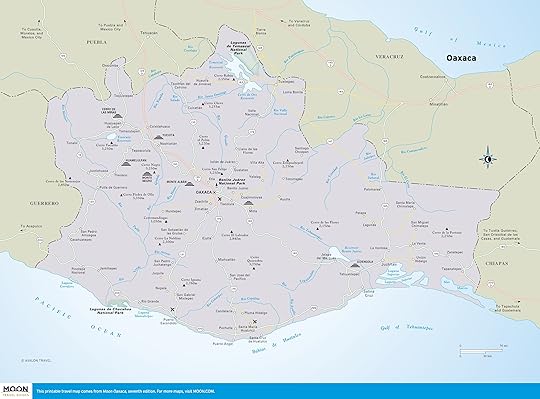
Full size image here
McGee and Meyer sit watching the young tourists come and go in Oaxaca -
Each little group of strangers establishes its own set of balances and unspoken agreements. Tentative relationships are made and broken until the ones are found which are durable enough to last the evening, at least. From long habit, Meyer and I could talk on one level while maintaining an elliptical kind of communication on a level inaccessible to the other three. Bruce and Becky were doing the same thing, wherein innocent expressions had subterranean values.
Oaxaca

Full size image here
As MacDonald continues to write this series, his McGee ages and begins to question his own life carefully and more frequently. His realisation of his ultimate loneliness is becoming more apparent.
This woman had been driven mad in a mad war, and had retained one little ledge of sanity and built the rest of the structure of her life upon it. But I could not carry my realizations any further, because something hitherto unknown had begun to happen, and it felt as if my head were starting to fry at the hair roots. I thought I heard her laughing, but then all I could hear in some far corner of the most primitive part of my mind, was myself roaring, atavistic and lonely.
-
I slept so deeply that when I awoke I had that rare and strange feeling of not only being unable to figure out where I was, or what month and year it was, but even who I was. The dregs of dreams were all of childhood, and in the morning mirror I looked at the raw, gaunt, knobbly stranger, at the weals and the pits and the white tracks of scar tissue across the deepwater brown of the leathery useful body, and marvelled that childhood should turn into this-into the pale-eyed, scruff-headed, bony stranger who looked so lazily competent, yet, on the inside, felt such frequent waves of Weltschmerz, of lingering nostalgia for the lives he had never lived.
-
It had to be some road that turned south of [road] 90 somewhere beyond Mitla, maybe as far as the village of Totolapan ... A few miles out of the city on the Mitla road we came upon El Tule, and Meyer said that he wanted to be a tourist for a few minutes, and look at the biggest tree in the world.
El Tule "The largest tree in the world"
https://en.wikipedia.org/wiki/Árbol_d...
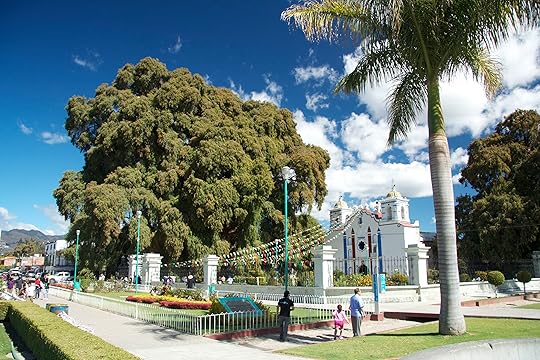
Full size image here
63% A startling realisation: After 10 books in the series, I have realised that I am Meyer .
-
McGee considers a young, inexperienced lover and finds surprising joy in himself (NOT a spoiler, and not pornography)
So make a note, McGee. There are some things which practice does not enhance: Thunderstorms never practice. Surf does not take graduate lessons in hydraulics. Deer and rabbits do not measure how high they have jumped and go back and try again. Violinists must work at it and study. And ballerinas. And goalies and shortstops and wingbacks and acrobats. But that business of acquiring expertise in screwing turns it into something it wasn't meant to be.
69% The pace now is Thrilling. Wow, what an incredible, clever story!
On the way I felt a stupid smile appearing on my stupid face from time to time. Perhaps more rictus than smile. It is one of the many curious phenomena of reaction. There is a dreadful jolly animal hidden inside us all who keeps reminding us we are alive and somebody else is dead.
-
"But the stinking wheels go around in my head. I keep remembering that day aboard the Flush, and trying to say something to [her] that would make it easier for her, somehow, to accept that ugly death, and those beautiful deep blue eyes of hers were absolutely bland and indifferent, no matter what polite thing her mouth was saying. There was a... a challenge there. Something like that. I wanted to try to reach her and get some reaction, some genuine reaction, no matter how. To say or do some... ugly thing, to shock her awake maybe. Travis, I wonder if there are people in this world who are appointed by the gods to be victims, so that they bring out the worst in everybody they touch. And the perfect victim would have to be surpassingly lovely, of course, to be most effective.
72% Paragraph after paragraph of brilliance. Wow.
McGee is old enough now to see a clear separation between himself, and the younger adults of the new 60s -
But most of them are damned good kids. They care about things. They've taken a good long look at our world and they don't like it. They don't like the corruption, and the way the power structure takes care of its own, and the way we're all being hammered down into being a bunch of numbers in a whole country full of computers. They believe that each individual person is getting so insignificant you can't really change anything by voting for a change. You get the same old crap. So what they want to do is get away from all the machinery that makes Vietnams and makes slums and discrimination and legalized theft and murder.
-
McGee considers modern life in this view of the history of the native peoples -
Five, six, seven hundred years ago, these mountain people, who had been led into this place by the priests and the soldiers, they climbed to that place you see, and they made offerings of food, and they worshipped. They built the temples, dug the well, carried the stones, made the pottery, cut the thatch. But the priests got too far away from the people. They thought they owned the people forever. They lost common understanding. So one day the people went up to the high places and killed the priests and killed the guards and pulled down the temples and never went back. They did not talk about it. They did not have elections. They just got tired of slave life, of catering to the demands of the priests for food and women and children to train, and tired of work that became more meaningless to them. They went up and killed them and put an end to it, and did not talk about it, or make legends, or write about the revolution.
Dangerous highways in the mountains near Oaxaca

Full size image here
-
"The Look" that McGee and police everywhere recognise -
Nesta looked at me, then at Enelio. It was a quick, flickering glance of appraisal. Without the beard he had the con look, the loser look. He had been there before, and knew he would be back there again, and it didn't make too much difference whether it was going to be a valid rap. He had the cronkey look, that flavor of upcoming trouble that alerts any cop anywhere. I don't know what it is. It is a combination of facial expression, posture, gesture-and the experience of the cop who sees the stranger and sees that indeflnable thing he has seen so many times before. The animal behavior experts report that something similar exists in those wild animals who have some form of community culture. Certain individuals will be run off by the others, will be killed, or will be left to roam alone.
-
Brilliant.
So with gray at the windows, and her mouth turning upward for the kiss, with the slow deep steady beat that would begin to change only when we neared climax, this became the reality, this became the life-moment, this became the avowal, the communion, the immortality. The private rhythm of our need, a small and personal and totally shared thing, was that special thing in the world and in time which changed the [familiar people's faces] to scare-masks fashioned of cardboard and spit, empty things which hang on strings from an empty tree, turning in the parching wind that blows across the empty heart.
Bonus. From the 1970 "Darker Than Amber" movie starring Rod Taylor, pictures of the producers' ideas of McGee's "The Busted Flush":

Full size image here

Full size image here

Full size image here
And finally, two great blogs about John D. MacDonald, McGee and the rumoured-never-written novel where McGee dies"...
The Birth of Travis McGee (fascinating)
http://thetrapofsolidgold.blogspot.co...
"Black Border for McGee" (rumours surrounding a final book, never published)
http://thetrapofsolidgold.blogspot.co...
.
This book and his first, The Deep Blue Good-By, are my favourites.
The pacing is terrific as McGee and Meyer track down the mystery of the last days of a young lady and her friends in on vacation in Oaxaca, Mexico. MacDonald paints a terrible and poignant tragedy of the undeserving young, and with a sad, surprise ending.
Each book now surpasses the previous. MacDonald is extraordinary. There is astounding prose in this book, verging often on literary poetry. What an absolute joy to read.
Most of the book takes place in the Oaxaca city and region of Mexico. (Note: In 1969, many of the roads shown here simply did not exist)
Full size image here
McGee and Meyer sit watching the young tourists come and go in Oaxaca -
Each little group of strangers establishes its own set of balances and unspoken agreements. Tentative relationships are made and broken until the ones are found which are durable enough to last the evening, at least. From long habit, Meyer and I could talk on one level while maintaining an elliptical kind of communication on a level inaccessible to the other three. Bruce and Becky were doing the same thing, wherein innocent expressions had subterranean values.
Oaxaca
Full size image here
As MacDonald continues to write this series, his McGee ages and begins to question his own life carefully and more frequently. His realisation of his ultimate loneliness is becoming more apparent.
This woman had been driven mad in a mad war, and had retained one little ledge of sanity and built the rest of the structure of her life upon it. But I could not carry my realizations any further, because something hitherto unknown had begun to happen, and it felt as if my head were starting to fry at the hair roots. I thought I heard her laughing, but then all I could hear in some far corner of the most primitive part of my mind, was myself roaring, atavistic and lonely.
-
I slept so deeply that when I awoke I had that rare and strange feeling of not only being unable to figure out where I was, or what month and year it was, but even who I was. The dregs of dreams were all of childhood, and in the morning mirror I looked at the raw, gaunt, knobbly stranger, at the weals and the pits and the white tracks of scar tissue across the deepwater brown of the leathery useful body, and marvelled that childhood should turn into this-into the pale-eyed, scruff-headed, bony stranger who looked so lazily competent, yet, on the inside, felt such frequent waves of Weltschmerz, of lingering nostalgia for the lives he had never lived.
-
It had to be some road that turned south of [road] 90 somewhere beyond Mitla, maybe as far as the village of Totolapan ... A few miles out of the city on the Mitla road we came upon El Tule, and Meyer said that he wanted to be a tourist for a few minutes, and look at the biggest tree in the world.
El Tule "The largest tree in the world"
https://en.wikipedia.org/wiki/Árbol_d...
Full size image here
63% A startling realisation: After 10 books in the series, I have realised that I am Meyer .
-
McGee considers a young, inexperienced lover and finds surprising joy in himself (NOT a spoiler, and not pornography)
So make a note, McGee. There are some things which practice does not enhance: Thunderstorms never practice. Surf does not take graduate lessons in hydraulics. Deer and rabbits do not measure how high they have jumped and go back and try again. Violinists must work at it and study. And ballerinas. And goalies and shortstops and wingbacks and acrobats. But that business of acquiring expertise in screwing turns it into something it wasn't meant to be.
69% The pace now is Thrilling. Wow, what an incredible, clever story!
On the way I felt a stupid smile appearing on my stupid face from time to time. Perhaps more rictus than smile. It is one of the many curious phenomena of reaction. There is a dreadful jolly animal hidden inside us all who keeps reminding us we are alive and somebody else is dead.
-
"But the stinking wheels go around in my head. I keep remembering that day aboard the Flush, and trying to say something to [her] that would make it easier for her, somehow, to accept that ugly death, and those beautiful deep blue eyes of hers were absolutely bland and indifferent, no matter what polite thing her mouth was saying. There was a... a challenge there. Something like that. I wanted to try to reach her and get some reaction, some genuine reaction, no matter how. To say or do some... ugly thing, to shock her awake maybe. Travis, I wonder if there are people in this world who are appointed by the gods to be victims, so that they bring out the worst in everybody they touch. And the perfect victim would have to be surpassingly lovely, of course, to be most effective.
72% Paragraph after paragraph of brilliance. Wow.
McGee is old enough now to see a clear separation between himself, and the younger adults of the new 60s -
But most of them are damned good kids. They care about things. They've taken a good long look at our world and they don't like it. They don't like the corruption, and the way the power structure takes care of its own, and the way we're all being hammered down into being a bunch of numbers in a whole country full of computers. They believe that each individual person is getting so insignificant you can't really change anything by voting for a change. You get the same old crap. So what they want to do is get away from all the machinery that makes Vietnams and makes slums and discrimination and legalized theft and murder.
-
McGee considers modern life in this view of the history of the native peoples -
Five, six, seven hundred years ago, these mountain people, who had been led into this place by the priests and the soldiers, they climbed to that place you see, and they made offerings of food, and they worshipped. They built the temples, dug the well, carried the stones, made the pottery, cut the thatch. But the priests got too far away from the people. They thought they owned the people forever. They lost common understanding. So one day the people went up to the high places and killed the priests and killed the guards and pulled down the temples and never went back. They did not talk about it. They did not have elections. They just got tired of slave life, of catering to the demands of the priests for food and women and children to train, and tired of work that became more meaningless to them. They went up and killed them and put an end to it, and did not talk about it, or make legends, or write about the revolution.
Dangerous highways in the mountains near Oaxaca
Full size image here
-
"The Look" that McGee and police everywhere recognise -
Nesta looked at me, then at Enelio. It was a quick, flickering glance of appraisal. Without the beard he had the con look, the loser look. He had been there before, and knew he would be back there again, and it didn't make too much difference whether it was going to be a valid rap. He had the cronkey look, that flavor of upcoming trouble that alerts any cop anywhere. I don't know what it is. It is a combination of facial expression, posture, gesture-and the experience of the cop who sees the stranger and sees that indeflnable thing he has seen so many times before. The animal behavior experts report that something similar exists in those wild animals who have some form of community culture. Certain individuals will be run off by the others, will be killed, or will be left to roam alone.
-
Brilliant.
So with gray at the windows, and her mouth turning upward for the kiss, with the slow deep steady beat that would begin to change only when we neared climax, this became the reality, this became the life-moment, this became the avowal, the communion, the immortality. The private rhythm of our need, a small and personal and totally shared thing, was that special thing in the world and in time which changed the [familiar people's faces] to scare-masks fashioned of cardboard and spit, empty things which hang on strings from an empty tree, turning in the parching wind that blows across the empty heart.
Bonus. From the 1970 "Darker Than Amber" movie starring Rod Taylor, pictures of the producers' ideas of McGee's "The Busted Flush":
Full size image here
Full size image here
Full size image here
And finally, two great blogs about John D. MacDonald, McGee and the rumoured-never-written novel where McGee dies"...
The Birth of Travis McGee (fascinating)
http://thetrapofsolidgold.blogspot.co...
"Black Border for McGee" (rumours surrounding a final book, never published)
http://thetrapofsolidgold.blogspot.co...
.

June 17, 2017
Instead of his usual haunts in the Florida marinas and the Gulf Coast swamps, “Dress Her In Indigo” takes Travis McGee on an adventure into the heart of Mexico. A rich man has been widowed and his only daughter disappeared into Mexico for months only to come back in a box. He wants to know what happened to her. McGee and a buddy (Meyer) head down to Oxaca to investigate, to ask questions, to find out what Bix’s last months were all about. Was she happy and just had a tragic accident or did something nefarious happen to her? The father never got to know his daughter well, but his instincts on this may have been right.
It’s the late Sixties and Bix ended up in Mexico in a camper with four other young people who fancied themselves hippies, dropping out from life in the States for a while. However, while from the outside, these hippies in the counterculture might all look similar without a care preaching flowers and rainbows, the truth is a little different. One trailer park owner in Oaxaca explains to McGee that there are a few categories and one is the predators who get their kicks out of turning the weaker kids on and taking monetary or sexual advantage of them or both. Another category, he explains, is the victims and some of the kids are just natural victims an seem to be looking for their own personal predator. These kids are susceptible once they get too far gone and end up down the drain. One of the boys in the camper with Bix was Rocko and he was a predator, one merciless son of a bitch. Another Jerry was a semi-predator. Carl, the guitar player, was already way down the drain and Bix, the blonde girl, didn’t look much like her picture anymore. She wasn’t too many steps behind Carl. “Cats tire of crippled mice that can’t scamper anymore,” he explained. How bad off was Bix, he is asked. “Bad. Passive, dirty, confused. Disoriented.” “Withdrawn and dull and listless.” She looked fifteen years older than her picture.
This is the bad side of the flower power generation. It’s the tale of being used and abused by vile predators on either side of the border. Its up to McGee to make sense out of it and find something to report back to her daddy.
It’s the late Sixties and Bix ended up in Mexico in a camper with four other young people who fancied themselves hippies, dropping out from life in the States for a while. However, while from the outside, these hippies in the counterculture might all look similar without a care preaching flowers and rainbows, the truth is a little different. One trailer park owner in Oaxaca explains to McGee that there are a few categories and one is the predators who get their kicks out of turning the weaker kids on and taking monetary or sexual advantage of them or both. Another category, he explains, is the victims and some of the kids are just natural victims an seem to be looking for their own personal predator. These kids are susceptible once they get too far gone and end up down the drain. One of the boys in the camper with Bix was Rocko and he was a predator, one merciless son of a bitch. Another Jerry was a semi-predator. Carl, the guitar player, was already way down the drain and Bix, the blonde girl, didn’t look much like her picture anymore. She wasn’t too many steps behind Carl. “Cats tire of crippled mice that can’t scamper anymore,” he explained. How bad off was Bix, he is asked. “Bad. Passive, dirty, confused. Disoriented.” “Withdrawn and dull and listless.” She looked fifteen years older than her picture.
This is the bad side of the flower power generation. It’s the tale of being used and abused by vile predators on either side of the border. Its up to McGee to make sense out of it and find something to report back to her daddy.

January 3, 2023
This is one of the lesser Travis McGee novels in the extensive series of books that focus on the Travis McGee character. Some of the basic and desirable elements of the series are present, such as the stoic attitudes of Travis McGee and MacDonald’s terse, Hemingway-esque writing. Beyond those qualities, however, the novel is a disappointing.
The characters are generic drug users that garner very little sympathy for their acts of self destruction. The story is set in central Mexico, which may seem interesting, but everything interesting is pushed aside. Rather than history or culture or kindness, Mexico is typecasted as a stereotypical “macho” environment. The country is made into male chauvinistic haven where gays are derided and women are seen as objects that exist for the pleasure of men. And the story itself is exceedingly predictable as to its outcome.
Overall, it was good to find one of the “worst-of” of the series so that it can be put aside, and hopefully, the “best-of” of the series is once again one book away from being found.
The characters are generic drug users that garner very little sympathy for their acts of self destruction. The story is set in central Mexico, which may seem interesting, but everything interesting is pushed aside. Rather than history or culture or kindness, Mexico is typecasted as a stereotypical “macho” environment. The country is made into male chauvinistic haven where gays are derided and women are seen as objects that exist for the pleasure of men. And the story itself is exceedingly predictable as to its outcome.
Overall, it was good to find one of the “worst-of” of the series so that it can be put aside, and hopefully, the “best-of” of the series is once again one book away from being found.

December 18, 2011
I decided to re-read the Travis McGee series and picked this one off the top of the pile. Bad choice. I remembered too late from my earlier readings how much less I liked the stories that took place away from FL and the Busted Flush. Indigo takes place in Mexico, and it is an ugly, drug-filled story with almost no redeeming characters or narrative. I felt like I needed a bath after each chapter. I still have 20+ books to go and I'm sure I will fully enjoy most of them.

June 2, 2023
The story has some exciting scenes and I probably should not have been so bored, but there seemed to be too much lollygagging. I liked the way MacDonald described the American "heepees" down in Oaxaca:
"The bigger girl looked less muscular, more suety, and smelled slightly rancid. There was grime in the creases of the redhead’s neck, and stains on the front of her Indian shirt."But then he bores me with stuff like: "The tin bird whoofed down the runway and lifted sharply."

February 14, 2010
Meyers and McGee travel to Mexico on behalf of a father who lost his daughter there. The girl had gone down, fallen in with a bad crowd, became addicted to drugs and died mysteriously. The father wanted to know what life had been like for his daughter.
I've decided to take a break in re-reading the McGee series, but this was an excellent one to stop on. It was a great story. It has the wonderful balance of characters, poetic description and adventure I love in the McGee stories. It also has one of the better endings. All-in-all, it is a great specimen of McGee.
I've decided to take a break in re-reading the McGee series, but this was an excellent one to stop on. It was a great story. It has the wonderful balance of characters, poetic description and adventure I love in the McGee stories. It also has one of the better endings. All-in-all, it is a great specimen of McGee.

January 12, 2019
COUNTDOWN: Mid-20th Century North American Crime
BOOK 242 (of 250)
This 1969 stupendously stamped-in-time work is so dated, and so ugly that it's hard to believe MacDonald wrote it: never has he/Travis been so sexist, so xenophobic, so homophobic and completely unbelievable. Both Travis (in Mexico, out of his element) and MacDonald (buried in stereotypes that are below the talents of most authors I've ever read) sink to a low for this series.
HOOK - 2 stars: "On that early afternoon in late August, Meyer and I walked through the canvas tunnel at Miami International...We were going first class because it was all private...at the behest of a very sick and fairly rich man...we had bulkhead seats on the port side because I am enough inces beyond six feet to cherish the extra room...tourists cards in order..." A very rich Mr. Harlan Bowie is sending Travis and his side-kick Meyer to find his young daughter, Beatrice ('Bix') who had taken off for Mexico that January and gone missing. It's been my experience that books in this series NOT set in and around Travis' Ft. Lauderdale stopping grounds aren't very good, thus the 1-star hook. (And I'll tell you now that the same is true for this one also, imo.)
PACE - 1: Looking for a geography/history lesson of Mexico? You'll find it here, pages and pages. Names of volcanoes, alternate names of volcanoes. This feels like MacDonald has just taken a trip to Mexico (good idea, research) and wants to ensure authenticity. At least 100 pages of "authenticity" should have been cut from this novel: it becomes grating inside its 317 pages.
PLOT - 2: Daughter Bix has become mixed up with some very unsavory characters. She's apparently made it all the way to Oaxaca (pronounced 'wuh-HOCK-ah'...because, you know, this novel is AUTHENTIC!!!). In Oaxaca, Travis and Meyer interview anyone who looks like a hippie and in one tavern, Travis causes an ugly scene bringing all attention to him because he wants a red-headed girl in a group to feel so insulted (he offers a few pesos to her friends to sell her to him for a round in bed) that she'll come looking for him later to ensure him she's not that kind. Yea, that's the way to get a young lady to track you down for sure! Men, if you're looking for a new pick up method....don't use this one. Travis has NEVER (in the past 10 books in this series, I've read them) trashed a lady in public and wouldn't do it: that's not in his character. Meyer sits by and laughs (no, Meyer would have been baffled and stalked off back to Ft. Lauderdale) then congratulates Travis on his technique. (No, no, no...) The plot itself, a man looking for a rich man's daughter, is fine, but the way Travis goes about it is senseless, and most readers will guess early THE BIG TWIST.
CHARACTERS - 1 star: An authority, cause this book is AUTHENTIC, has MacDonald actually putting on paper, "A rude Mexican is a great rarity," so apparently MacDonald has interviewed the entire population of the country. I've found, in travels to 20+ countries that "A rude stranger is a great rarity," as most people are nice (maybe a bit wary) to strangers. But I'll add that all countries have their fair share of rude people. Especially when you call their ladies whores, loudly, in bars. Like Travis, who at one point thinks to himself, "And I am sitting here on a fag's patio..." Travis goes to Mexico and uses derogatory terms? No, he wouldn't, and doesn't. Except in Mexico? Meyer has this line, "Trouble with these windmills, you stick a lance into one in a good wind, and it will surely toss the hell out of you." Why is MacDonald getting all literary on us? He doesn't write like this, Meyer doesn't talk like this. I like the line, but it's like MacDonald had it taped to his writing wall and thought he'd finally found the right time and place to type it. MacDonald was wrong. Becky says, "Me, I am just a wicked old woman with a ravenous appetite for strong young men. He [David Saunders] fancies himself as some sort of over whelming stud. But he has that talent for little bits of brutality that betrays him...he told me a horrid little story about beating up homosexuals...Such chaps are usually hiding their own tendencies." And David quickly hops into bed with Bruce. David nor Bruce are hiding anything from anyone. But as to why Becky uses David for an escort then trashes him behind his back doesn't make sense. There are many stinking hippies here, also. On drugs. You can tell cause...they stink and have needle marks.
ATMOSPHERE - 1: MacDonald names surrounding volcanoes (nice touch) then gives one of them an alternative name (cause this book is REALLY AUTHENTIC!!!). A torture porn scene left me sickened and as to the identy of that torturer, I didn't believe it. Even Travis finds an "inhabitant of the land of Lesbos" to wrap in wet sheets, tie down, fill her mouth with tissues, then wraps hosiery around her mouth. Travis reasons that when the sheets dry, she'll be able to escape, but not scream, cause, you know, he's really a nice guy. Everything one could buy in every tourist gift shop is listed here. Every. Single. Thing.
SUMMARY: 1.4. This book is at least 100 pages too long. Travis treats the ladies terribly. Travis is homophobic. Travis is an old, bitter man here, criticizing the "hippies". I didn't believe some scenes, didn't believe the way some people talked or acted. Travis is mean. Travis isn't Travis here, that's the bottom line. This is the weakest, to me, in this series. Travis should stay in Ft. Lauderdale. MacDonald seems to jump this proverbial shark here with this entry to the series. I've enjoyed 10 in these series. I feel like saying goodbye, but like in a bad 70's pop song (the kind of music now called country) but I can't quit Travis so I'm going one more round.
BOOK 242 (of 250)
This 1969 stupendously stamped-in-time work is so dated, and so ugly that it's hard to believe MacDonald wrote it: never has he/Travis been so sexist, so xenophobic, so homophobic and completely unbelievable. Both Travis (in Mexico, out of his element) and MacDonald (buried in stereotypes that are below the talents of most authors I've ever read) sink to a low for this series.
HOOK - 2 stars: "On that early afternoon in late August, Meyer and I walked through the canvas tunnel at Miami International...We were going first class because it was all private...at the behest of a very sick and fairly rich man...we had bulkhead seats on the port side because I am enough inces beyond six feet to cherish the extra room...tourists cards in order..." A very rich Mr. Harlan Bowie is sending Travis and his side-kick Meyer to find his young daughter, Beatrice ('Bix') who had taken off for Mexico that January and gone missing. It's been my experience that books in this series NOT set in and around Travis' Ft. Lauderdale stopping grounds aren't very good, thus the 1-star hook. (And I'll tell you now that the same is true for this one also, imo.)
PACE - 1: Looking for a geography/history lesson of Mexico? You'll find it here, pages and pages. Names of volcanoes, alternate names of volcanoes. This feels like MacDonald has just taken a trip to Mexico (good idea, research) and wants to ensure authenticity. At least 100 pages of "authenticity" should have been cut from this novel: it becomes grating inside its 317 pages.
PLOT - 2: Daughter Bix has become mixed up with some very unsavory characters. She's apparently made it all the way to Oaxaca (pronounced 'wuh-HOCK-ah'...because, you know, this novel is AUTHENTIC!!!). In Oaxaca, Travis and Meyer interview anyone who looks like a hippie and in one tavern, Travis causes an ugly scene bringing all attention to him because he wants a red-headed girl in a group to feel so insulted (he offers a few pesos to her friends to sell her to him for a round in bed) that she'll come looking for him later to ensure him she's not that kind. Yea, that's the way to get a young lady to track you down for sure! Men, if you're looking for a new pick up method....don't use this one. Travis has NEVER (in the past 10 books in this series, I've read them) trashed a lady in public and wouldn't do it: that's not in his character. Meyer sits by and laughs (no, Meyer would have been baffled and stalked off back to Ft. Lauderdale) then congratulates Travis on his technique. (No, no, no...) The plot itself, a man looking for a rich man's daughter, is fine, but the way Travis goes about it is senseless, and most readers will guess early THE BIG TWIST.
CHARACTERS - 1 star: An authority, cause this book is AUTHENTIC, has MacDonald actually putting on paper, "A rude Mexican is a great rarity," so apparently MacDonald has interviewed the entire population of the country. I've found, in travels to 20+ countries that "A rude stranger is a great rarity," as most people are nice (maybe a bit wary) to strangers. But I'll add that all countries have their fair share of rude people. Especially when you call their ladies whores, loudly, in bars. Like Travis, who at one point thinks to himself, "And I am sitting here on a fag's patio..." Travis goes to Mexico and uses derogatory terms? No, he wouldn't, and doesn't. Except in Mexico? Meyer has this line, "Trouble with these windmills, you stick a lance into one in a good wind, and it will surely toss the hell out of you." Why is MacDonald getting all literary on us? He doesn't write like this, Meyer doesn't talk like this. I like the line, but it's like MacDonald had it taped to his writing wall and thought he'd finally found the right time and place to type it. MacDonald was wrong. Becky says, "Me, I am just a wicked old woman with a ravenous appetite for strong young men. He [David Saunders] fancies himself as some sort of over whelming stud. But he has that talent for little bits of brutality that betrays him...he told me a horrid little story about beating up homosexuals...Such chaps are usually hiding their own tendencies." And David quickly hops into bed with Bruce. David nor Bruce are hiding anything from anyone. But as to why Becky uses David for an escort then trashes him behind his back doesn't make sense. There are many stinking hippies here, also. On drugs. You can tell cause...they stink and have needle marks.
ATMOSPHERE - 1: MacDonald names surrounding volcanoes (nice touch) then gives one of them an alternative name (cause this book is REALLY AUTHENTIC!!!). A torture porn scene left me sickened and as to the identy of that torturer, I didn't believe it. Even Travis finds an "inhabitant of the land of Lesbos" to wrap in wet sheets, tie down, fill her mouth with tissues, then wraps hosiery around her mouth. Travis reasons that when the sheets dry, she'll be able to escape, but not scream, cause, you know, he's really a nice guy. Everything one could buy in every tourist gift shop is listed here. Every. Single. Thing.
SUMMARY: 1.4. This book is at least 100 pages too long. Travis treats the ladies terribly. Travis is homophobic. Travis is an old, bitter man here, criticizing the "hippies". I didn't believe some scenes, didn't believe the way some people talked or acted. Travis is mean. Travis isn't Travis here, that's the bottom line. This is the weakest, to me, in this series. Travis should stay in Ft. Lauderdale. MacDonald seems to jump this proverbial shark here with this entry to the series. I've enjoyed 10 in these series. I feel like saying goodbye, but like in a bad 70's pop song (the kind of music now called country) but I can't quit Travis so I'm going one more round.

July 31, 2023
I read a list somewhere by somebody that mentioned the 10 best detectives in fiction. Travis McGee was on that list (my favourites, Beck / Kollberg, were not), and after reading the quick explanation for McGee's inclusion, I thought he'd be worth a try, so I went online and ordered a copy of what I thought was the first book in the series. I guess I saw #11 as #1 -- it was very late, so let's pretend my fatigue was the problem -- and the first McGee book to fall into my hands was Dress Her in Indigo.
I started it the next morning in the shower, and only realized then that I had missed the first 10 novels. A misting of water had already stained the pages, though, so there was no turning back. I'd probably have done better to read The Deep Blue Good-by first, but I am not sure it would have improved my experience with Dress Her in Indigo. In some ways diving into the middle of the series when our main characters, McGee and his partner Meyer, are well and truly established felt comfortable. I never felt like I was being introduced to these men. They were already there, already fully formed, they thoroughly existed, and I just happened to be meeting them in the way the characters in Oaxaca, Mexico were doing. And I found myself having similar responses to the pair that those connected to their search for what had happened to 'Bix' Bowie -- the daughter of a rich friend of Meyer's -- were having, which meant mostly charmed by them and filled with confidence in their capabilities.
Turns out that Florida is their usual bailiwick, and that Mexico was a journey afield, but the pair slipped right into the rhythms of Vietnam-era Mexico, full of reasonable Mexicans just living their lives while expats from all over the world -- the Euro riche alongside drug addled and/or shady Yankee hippies -- converge to hide from their past lives or make their fortunes in the Mexican underbelly or exact savage vengeance on those who've wronged them.
Dress Her in Indigo is a cracking tale. I am sure the inevitable new edition will have a couple of trigger warnings attached, what with all the sex and violence and sexual violence and drug use and torture (did I mention the violence?), yet so long as they keep John D. MacDonald's words intact such a warning shouldn't stop the daring amongst you from enjoying the sun drenched noir that awaits you.
If only someone had cast Jeff Bridges as McGee and Saul Rubinek as Meyer back in the late-80s. Now that would have been a series of films to rival even the great noir streak of Bogie.
Anywho ... The Deep Blue Good-by is on its way, and I am keen to take the journey back from #1 to #11 just to see what I think about Dress Her in Indigo with all the information I should have had this time through. I hope I end up liking it even more.
I started it the next morning in the shower, and only realized then that I had missed the first 10 novels. A misting of water had already stained the pages, though, so there was no turning back. I'd probably have done better to read The Deep Blue Good-by first, but I am not sure it would have improved my experience with Dress Her in Indigo. In some ways diving into the middle of the series when our main characters, McGee and his partner Meyer, are well and truly established felt comfortable. I never felt like I was being introduced to these men. They were already there, already fully formed, they thoroughly existed, and I just happened to be meeting them in the way the characters in Oaxaca, Mexico were doing. And I found myself having similar responses to the pair that those connected to their search for what had happened to 'Bix' Bowie -- the daughter of a rich friend of Meyer's -- were having, which meant mostly charmed by them and filled with confidence in their capabilities.
Turns out that Florida is their usual bailiwick, and that Mexico was a journey afield, but the pair slipped right into the rhythms of Vietnam-era Mexico, full of reasonable Mexicans just living their lives while expats from all over the world -- the Euro riche alongside drug addled and/or shady Yankee hippies -- converge to hide from their past lives or make their fortunes in the Mexican underbelly or exact savage vengeance on those who've wronged them.
Dress Her in Indigo is a cracking tale. I am sure the inevitable new edition will have a couple of trigger warnings attached, what with all the sex and violence and sexual violence and drug use and torture (did I mention the violence?), yet so long as they keep John D. MacDonald's words intact such a warning shouldn't stop the daring amongst you from enjoying the sun drenched noir that awaits you.
If only someone had cast Jeff Bridges as McGee and Saul Rubinek as Meyer back in the late-80s. Now that would have been a series of films to rival even the great noir streak of Bogie.
Anywho ... The Deep Blue Good-by is on its way, and I am keen to take the journey back from #1 to #11 just to see what I think about Dress Her in Indigo with all the information I should have had this time through. I hope I end up liking it even more.

July 25, 2019
Travis McGee is recruited by his good friend and semi-retired economist, Meyer to help out an old banker buddy. Seems Meyer’s friend had a daughter, Beatrice “Bix” Bowie, that went joyriding down to Mexico with some hippy friends and got herself into an automobile accident that she didn’t survive. Her father would simply like to know if her final weeks were happy ones. Thus McGee and Meyer find themselves in rural Mexico uncovering those few weeks and the cesspool that Bix had fallen into.
This eleventh novel in the Travis McGee series marks the halfway point. Only 10 more to go. I found this one to be another fine representation of John D MacDonald’s writing ability, his prose, his turn of a phrase. And when I found out Meyer would be a prominent character throughout the story, I figured I was in for a treat.
However, the subject matter in the book makes this one of the darker stories of the entire series. It’s also a real reflection on the times, from an “adult” perspective. Published in 1969, at the height of the hippy counterculture we follow Travis and Meyer to a hippy commune rife with the drug culture and the going-nowhere generation. The trail of Bix’s final days proves to be as unpleasant as can be. The author, through Travis’ eyes sees this from an older person’s perspective, a perspective that sees absolutely nothing positive about such a lifestyle. And that makes the whole novel dark and ugly. Readers really need to keep in mind the times during which this was written.
So, a well written novel to be sure but not one I plan to ever re-read.
This eleventh novel in the Travis McGee series marks the halfway point. Only 10 more to go. I found this one to be another fine representation of John D MacDonald’s writing ability, his prose, his turn of a phrase. And when I found out Meyer would be a prominent character throughout the story, I figured I was in for a treat.
However, the subject matter in the book makes this one of the darker stories of the entire series. It’s also a real reflection on the times, from an “adult” perspective. Published in 1969, at the height of the hippy counterculture we follow Travis and Meyer to a hippy commune rife with the drug culture and the going-nowhere generation. The trail of Bix’s final days proves to be as unpleasant as can be. The author, through Travis’ eyes sees this from an older person’s perspective, a perspective that sees absolutely nothing positive about such a lifestyle. And that makes the whole novel dark and ugly. Readers really need to keep in mind the times during which this was written.
So, a well written novel to be sure but not one I plan to ever re-read.

June 24, 2011
Number 11 in the series, from 1969, and this one's a bit off formula: McGee isn't out to recover money or goods, but rather a life story or perhaps a reputation. McGee and Meyer spend most of the book in Oaxaca, trying to find out what really happened to a wealthy businessman's hippy daughter. As always, the story pulls you along with a fair amount of narrative complexity for a thriller of its time; there is the usual "dated" social commentary (here on the counterculture), which I quite enjoy; and the novel features a twist at the end which I kind of saw coming but still really enjoyed. This one also seemed more sexually frank than the earlier books in the series, and also more brutal. JDM is a great storyteller and the Travis McGee novels are a wonderful guilty pleasure.

September 18, 2024
"A grown up man must make a lousy decision from time to time, knowing it is lousy, because the only other choice is lousy in another dimension, and no matter which way he jumps, he will not like it. So he accepts the fact that the fates dealt him two low cards, and he goes on from there."
...."empty things which hang on strings from an empty tree, turing in the parching wind that blows across the empty heart."
...."empty things which hang on strings from an empty tree, turing in the parching wind that blows across the empty heart."

August 2, 2015
Another excellent book in the Travis McGee series by John D. MacDonald. McGee and his friend Meyer assists a friend who lost his daughter in Mexico in an automobile accident. The friend wants to find out what was her life in Mexico. A surprise twist at the end.

October 19, 2019
When there are 20+ Travis McGee novels, there are bound to be good ones, bad ones, and a bunch in between. This one is lacking a bit in my opinion. Maybe its that he's away from his usual locale, or maybe it's because some of his less admirable qualities really come out in this novel, but I just didn't love this one like many of the previous ones. McGee can be charming, witty and calculated, which I love, but he can also be overbearing and annoying with his quick assembly of facts. In this novel, many of McGee's more unsavory and annoying traits seem to shine. I saw one review that described him as more womanizing than James Bond in this novel, and I couldn't have said it any better. It isn't all bad though. It's nice to have his friend Meyer jump into a staring role here, Mexico makes for an interesting new location, and the sheriff and others really fill out a nice cast of characters to bring to bring together an interesting plot. I'll read through this entire series at this point, no matter what, but I do hope that the next book or two harken back to the first half dozen or so in which I really fell in love with the protagonist.

February 27, 2023
Really two and a half stars. Hippie-noir crime novel written in 1969. This book hasn't aged well, especially the attitudes toward women. The plot was a bit slow until the last third of the book, and was filled out with alot of sex scenes to reach a length of 255 pages. This is my first Travis McGee mystery, but since I wasn't that fond of the detective, I'm not sure I'll continue with this series.

November 23, 2023
Best of the series so far imho. McGee is hired by the father to go to Mexico and investigate the last seven months of the life of a young girl who died there in an auto accident. More suspenseful than others in the series and the dialogue was more believable.

September 7, 2021
Aged badly, written excellently, covering a dead (no pun intended) topic of hippies and drug culture in Mexico in the late 60's, number #11 should have been dumped before printing.
JDM wasted McGee and Meyer's road trip on extended descriptions of a desolate country side and poor cultural awareness, while deviating from the premise of what his protagonist is supposed to be about. There is no treasure to be found here, nor half of what is recovered as payment. Just a lot of finger pointing, odd social behavior, and judgmental commentary.
Sure, a friend of Travis sends him down to dig up the past of how the friend's supposedly dead daughter spent her last days. What kind of travelogue is this? Doesn't the father have better memories to be fond of than this? Such a foolish pursuit must mean there is some chance for redemption-aka foreshadowing. Otherwise, why bother? And that is my recommendation for this book.
Ten previous entries have set a precedent of what to expect for good ol' Trav and his antiquated methodology. This story just seemed worse than normal for me. Old man sexual escapades for information and personal endurance tests don't equate to plotting for me. That and the overbearing local dialogue that transforms into clues was largely distracting. I was not hoppy to read it.
The pacing was dull, the premise was underwhelming, and the ending was more blatant with each "discovery of sexuality" revealed. Maybe this was shock reading in 1970's America.
Thank for reading.
JDM wasted McGee and Meyer's road trip on extended descriptions of a desolate country side and poor cultural awareness, while deviating from the premise of what his protagonist is supposed to be about. There is no treasure to be found here, nor half of what is recovered as payment. Just a lot of finger pointing, odd social behavior, and judgmental commentary.
Sure, a friend of Travis sends him down to dig up the past of how the friend's supposedly dead daughter spent her last days. What kind of travelogue is this? Doesn't the father have better memories to be fond of than this? Such a foolish pursuit must mean there is some chance for redemption-aka foreshadowing. Otherwise, why bother? And that is my recommendation for this book.
Ten previous entries have set a precedent of what to expect for good ol' Trav and his antiquated methodology. This story just seemed worse than normal for me. Old man sexual escapades for information and personal endurance tests don't equate to plotting for me. That and the overbearing local dialogue that transforms into clues was largely distracting. I was not hoppy to read it.
The pacing was dull, the premise was underwhelming, and the ending was more blatant with each "discovery of sexuality" revealed. Maybe this was shock reading in 1970's America.
Thank for reading.
August 31, 2011
A young woman named Beatrice Bowie (Bix) dies in an automobile crash on a lonely mountain road in Mexico. The father wants to know more about the time she spent in Mexico and who she was. He has lost his wife, is now confined to a wheelchair and since he spent more time with business than with his daughter, he wants to discover who his daughter really was. Travis McGee and Fred Meyer are hired to travel to Mexico to find the answers. The trip finds them chasing down any clue they can find. Bix had gone to Mexico with several other young people where she becomes addicted to one drug after another. An inheritance from her mother disappears into the hands of one of the travelers. Several deaths later McGee and Meyer find themselves in danger of losing their own lives. The ending has a unique twist as the two conclude their investigation. Very good mystery.

March 1, 2009
Much better than the last McGee. Trav and Meyer travel to Mexico to investigate the death of a friend's daughter. (I suspect she is actually still alive...!!)
I believe this is why I love Mr. McGee so much:
"Old friend, there are people - young and old - that I like, and people that I do not like. The former are always in short supply. I am turned off by humorless fanaticism, whether it's revolutionary mumbo-jumbo by a young one, or loud lessons from the scripture by an old one. We are all comical, touching, slapstick animals, walking on our hind legs, trying to make it a noble journey from womb to tomb, and the people who can't see it all that way bore hell out of me."
I believe this is why I love Mr. McGee so much:
"Old friend, there are people - young and old - that I like, and people that I do not like. The former are always in short supply. I am turned off by humorless fanaticism, whether it's revolutionary mumbo-jumbo by a young one, or loud lessons from the scripture by an old one. We are all comical, touching, slapstick animals, walking on our hind legs, trying to make it a noble journey from womb to tomb, and the people who can't see it all that way bore hell out of me."

April 26, 2011
McGee investigating events that culminated in a young woman's death in Mexico. Written in 1969 and an outsider's look at youth (hippies), drop-outs and drugs. A bit dated but still a suspenseful read. It could have easily taken place in California, considering this was written around the time of the Manson murders, but I'm thinking MacDonald used the novel as an opportunity to visit Mexico instead. A book of its time and interesting for that.

January 26, 2009
My first JDM - Travis McGee is Great!

June 21, 2018
We often peck off one of our still unread Travis McGee tales while on vacation, expecting basically a pleasant enough diversion from maybe our regular diet of murder mystery/thrillers. McGee is a middle-aged playboy who normally lives on a houseboat in Florida, and works occasionally as a “reclamation” expert, earning his keep via money or goods salvaged as he corrects wrongs committed upon some innocent victim. He has a somewhat more intellectual friend Meyer who accompanies him on many of these adventures, as herein in “Indigo,” the middle (#11) novel in this 21-book set, written mostly 30-45 years ago.
McGee has been hired to go find out about the last few months of a rich man’s daughter, named Bix, who has gone with some college-aged friends to Mexico but dies in an odd auto accident there. So Travis and Meyer spend 95% of the book traversing various Mexican locales (while “entertaining” themselves often with the locals) investigating the last few weeks of the girl’s life, as she partied with other “hippies” and eventually died in a crash.
Most of all that was pretty darn boring, not to mention the author’s views on the hippie culture, drugs, gays, “free love”, and the like, that have not necessarily aged too well. Frankly, only an unexpected twist at the very end really saved this whole tale from being otherwise virtually completely forgettable. Oh well. {2.5}
McGee has been hired to go find out about the last few months of a rich man’s daughter, named Bix, who has gone with some college-aged friends to Mexico but dies in an odd auto accident there. So Travis and Meyer spend 95% of the book traversing various Mexican locales (while “entertaining” themselves often with the locals) investigating the last few weeks of the girl’s life, as she partied with other “hippies” and eventually died in a crash.
Most of all that was pretty darn boring, not to mention the author’s views on the hippie culture, drugs, gays, “free love”, and the like, that have not necessarily aged too well. Frankly, only an unexpected twist at the very end really saved this whole tale from being otherwise virtually completely forgettable. Oh well. {2.5}

January 16, 2019
In this mystery/adventure, McGee is hired by a wealthy and ailing man to uncover the details of his daughter's demise. The daughter, a free spirit who fled to Mexico with some friends to live a bohemian, unfettered life, was apparently killed in an auto accident. The father wants the details of her last days. The good news for us is that McGee brings Meyer along with him, since the bereaved father is a friend of his. The duo makes for some enjoyable reading as the two of them peel back the layers of the onion and get to the sordid core of the mystery.
In his novels, MacDonald typically has some harsh opinions of the rich and privileged elite, and there is no exception here. What McGee and Meyer discover is a bunch of expatriates wallowing in world of sex and drugs, and they quickly discover this world is anything but the carefree bohemian lifestyle the escapists were seeking. He seems to have some criticism of the 'hippies', although I found his opinions a bit ambiguous. I think the main message here is that there is no escape; the bohemians are preyed upon and swallowed up by the criminal element just as easily, or maybe even more easily than back home.
In typical fashion, the climax comes very late in the story, with perhaps a bit too much build-up along the way. The end, though is a bit of a surprise, fairly ludicrous, and misogynistic. Par for the course though in this series, which I consider to be literate pulp fiction. I thought this one was above average in the series, but not quite a 4-star rating.
In his novels, MacDonald typically has some harsh opinions of the rich and privileged elite, and there is no exception here. What McGee and Meyer discover is a bunch of expatriates wallowing in world of sex and drugs, and they quickly discover this world is anything but the carefree bohemian lifestyle the escapists were seeking. He seems to have some criticism of the 'hippies', although I found his opinions a bit ambiguous. I think the main message here is that there is no escape; the bohemians are preyed upon and swallowed up by the criminal element just as easily, or maybe even more easily than back home.
In typical fashion, the climax comes very late in the story, with perhaps a bit too much build-up along the way. The end, though is a bit of a surprise, fairly ludicrous, and misogynistic. Par for the course though in this series, which I consider to be literate pulp fiction. I thought this one was above average in the series, but not quite a 4-star rating.

August 2, 2018
Pretty typical Travis story, as he travels to Mexico to track down the last days of a mid-20s daughter of a friend of his. More exposition than usual though, dragged it down a bit.
Sure, it may seem the attitudes he has are sexist, but I think in general he has a fairly healthy appreciation for women. And while you might say the guy who smacked the woman on the bottom at work dates this, I don't think it does, because, as John Oliver recently said, things have changed less than you might imagine. While not admirable, it isn't a shock, unfortunately.
And MacDonald can get away with it when he write paragraphs like these:
Sure, it may seem the attitudes he has are sexist, but I think in general he has a fairly healthy appreciation for women. And while you might say the guy who smacked the woman on the bottom at work dates this, I don't think it does, because, as John Oliver recently said, things have changed less than you might imagine. While not admirable, it isn't a shock, unfortunately.
And MacDonald can get away with it when he write paragraphs like these:
Siesta is sweet when the light is gold, and when the vivid, young face on the pillow looks into yours, beside her, inches away, and smiles the woman-smile older than time, her exhalations warm against your mouth, as with slow fingers she traces your brows, lips, and the shape of cheek and jaw. There is nothing more es-stock. It has all been unfastened, all turned loose, with a guile that was so sweetly planned it could not be denied, even had there been any thought of denying it. Elena, you are the Mexican afternoons forever.
June 6, 2020
Travis and his friend Meyer travel to Oaxaca to determine what happened to the daughter of a Florida man when she traveled to Mexico with a group of "friends". Her body was later shipped back to her father after her death in a road accident in Mexico. Her father wants to know what the last months of her life were like, as a way of helping him find closure after her death. Of course, the investigation in Mexico becomes increasingly complicated and depressing the farther it proceeds. Travis and Meyer get involved in all sorts of somewhat interesting situations, many of which are very hard to swallow. A factor in this is that this book was published in 1969, during the "Hippie" era, which is becoming ever harder to understand, even to those of us who lived on the edge of that culture.





December 27, 2019
Travis McGee usually doesn't agree on a new adventure without a clear understanding of the potential financial gain. But he knows T. Harlan Bowie, and the missing daughter, and on this trip he will be assisted in Mexico by Meyer, his adventuresome economist pal. Where this leads all parties is a mystery and a thriller and some Kung Fu fighting among the Mexican ruins. The situation gets all wrapped up neat and tidy by McGee, even though the outcome is a bit disturbing to our fictive problem solver.
Displaying 1 - 30 of 209 reviews