

What do you think?

Very Short Introductions #245
Romanticism: A Very Short Introduction
What is Romanticism? In this Very Short Introduction Michael Ferber answers this by considering who the romantics were and looks at what they had in common — their ideas, beliefs, commitments, and tastes. He looks at the birth and growth of Romanticism throughout Europe and the Americas, and examines various types of Romantic literature, music, painting, religion, and philosophy.Focusing on topics, Ferber looks at the 'Sensibility' movement, which preceded Romanticism; the rising prestige of the poet; Romanticism as a religious trend; Romantic philosophy and science; Romantic responses to the French Revolution; and the condition of women. Using examples and quotations he presents a clear insight into this very diverse movement, and offers a definition as well as a discussion of the word 'Romantic' and where it came from.ABOUT THE The Very Short Introductions series from Oxford University Press contains hundreds of titles in almost every subject area. These pocket-sized books are the perfect way to get ahead in a new subject quickly. Our expert authors combine facts, analysis, perspective, new ideas, and enthusiasm to make interesting and challenging topics highly readable.
169 pages, Kindle Edition
First published September 23, 2010
Ratings & Reviews
Friends & Following
Create a free account to discover what your friends think of this book!
Community Reviews
Displaying 1 - 30 of 41 reviews

December 20, 2023
'I cannot send you my explanation of the word 'romantic' because it would be 125 sheets long.' From a 1793 letter by Friedrich Schlegel to his brother Wilhelm.
This is a very good (even if shortish - 131 little pages long) introduction to Romanticism; accurate and inclusive (as far as I can tell), and with enough information in the text and titles in the bibliography to inspire further research. The text is easy to follow and, although always respectful, sometimes humorous:
'This image still has a grip on us - the outcast genius, the consecrated soul, the prophet without honour - even though the typical poet today has little expectation of public renown, and in any case has a job at a university.'
The illustrations are mostly too dark, but in this day and age it's no problem to quickly google up a more representative image.
Recommended if you want to refresh your knowledge of Romanticism, or to begin your acquaintance with it. An interesting and enjoyable read.
This is a very good (even if shortish - 131 little pages long) introduction to Romanticism; accurate and inclusive (as far as I can tell), and with enough information in the text and titles in the bibliography to inspire further research. The text is easy to follow and, although always respectful, sometimes humorous:
'This image still has a grip on us - the outcast genius, the consecrated soul, the prophet without honour - even though the typical poet today has little expectation of public renown, and in any case has a job at a university.'
The illustrations are mostly too dark, but in this day and age it's no problem to quickly google up a more representative image.
Recommended if you want to refresh your knowledge of Romanticism, or to begin your acquaintance with it. An interesting and enjoyable read.

October 6, 2012
This is a fabulous book - short and intelligent. Both for those who know much less than they ought about this movement (like me), and for those who know a great deal about it, Ferber's lucid prose and fresh and illuminating insights on nearly every page, will make this book well worth reading. Not to be missed.
July 18, 2023
I’ve always been a Romantic now that I think of it, even since my halcyon days as a somewhat cadaverous looking undergraduate - the live fast, die young mentality held me captive in its deleterious grip. Too many autumnal evenings paying homage to Dionysus in the park: ‘O, for a draught of vintage! that hath been cool'd a long age in the deep-delved earth, tasting of flora and the country green…’
Thankfully, studiousness begets maturation (as does the shock of a heavily depleted bank account); and finally, one somber morning, one countenances the mirror to evaluate the engravings of years of unbridled hedonism to realise it’s time to embrace those perennially shunted friends: prudence and abstinence!
But in seriousness, as my love of literature developed, the first novella which truly lead to my infatuation with the genre of Romanticism, was Goethe’s ‘Sorrows of Young Werther’; strictly not a product of the Romantic period, but a precursor to the German movement known as ‘Sturm Und Drang’ (Storm and Stress). It was the incisive, heart-rending tale of unrequited love that Goethe executed with such potency, which encapsulated some of the key elements that would later become synonymous with the Romantic movement.
Michael Ferber covers quite a bit of ground in this ‘Very Short Introduction’ to Romanticism, and does a pretty good job of elucidating what many have found to be a rather hard to define movement that began in 18th century Europe. After establishing the etymology from its Latin origins in the first chapter, he goes on to discuss the ‘cult of sensibility’, whereby he attempts to identify the themes that became prevalent in poetry, novels, music and paintings; oftentimes this was melancholy, madness, a fascination with death, the innocence of childhood, and a longing for a bygone era or exotic lands.
Ferber punctuates his chapters with excerpts of poetry from Wordsworth, Blake, Coleridge, Byron, Shelley, or the ancient writings of the Gaelic bard Ossian - who some epithetically refer to as the ‘Homer of the North’. Interestingly, certain quotes disabuse us of the notion that the Romantics were all radically liberal-minded. Many were politically left-leaning with a smattering aligned more with the right, but many prominent Romantics such as Wordsworth and Coleridge who, in their youth, passionately advocated for the revolution in France, later distanced themselves from their loose ideals and became increasingly conservative.
Primarily, what typified Romanticism in literature was the precedence of one’s emotions over rational thought and the glorification of nature - Wordsworth and Coleridge’s poetry was the embodiment of this theme; their proselytising of thickets and streams earned them a reputation as Pantheists. The same went for Spinoza whose philosophy many Romantics were sympathetic towards.
Romantic literature often begins with a disillusioned protagonist seeking out nature as an escape from the drudgery of what Blake termed the ‘Dark Satanic Mills’. Ferber postulates this may have been an allusion to the ‘intellectual mills that pulverise the soul - philosophies such as John Locke’s’. More than this though, it is the all-pervading doctrine of Utilitarianism undergirding the Enlightenment that has never left us, the essence of which Charles Dickens captured in ‘Hard Times’ has arguably evolved into the browbeating artifice of government policy that ensnares us all today; control cloaked in the ostensible veil of benevolence.
It is the yearning for self-emancipation embodied in Romanticism that resonates with me most now in 2023; a desire to, ‘escape finding oneself in the ranks of the insane’ as Mark Aurelius once said. I find myself addicted to the catharsis that solitary walks in the countryside bring: wandering aimlessly down meandering paths, overlooked by brooding clouds, distressed wattle trees, bark hanging off like strips of ill-applied wallpaper, wading through bramble, imbibing nature’s incense, ears swimming in the pastoral symphonies of Beethoven or the Nocturnes of Chopin, all while contemplating lines from ‘Tintern Abbey’ that never fail to mollify an overwrought mind...
‘And this prayer I make, knowing that Nature never did betray the heart that loved her; 'tis her privilege, through all the years of this our life, to lead from joy to joy: for she can so inform the mind that is within us, so impress with quietness and beauty, and so feed with lofty thoughts, that neither evil tongues, rash judgments, nor the sneers of selfish men, nor greetings where no kindness is, nor all the dreary intercourse of daily life, shall e'er prevail against us, or disturb our cheerful faith, that all which we behold is full of blessings.
Therefore let the moon shine on thee in thy solitary walk; and let the misty mountain-winds be free to blow against thee: and, in after years, when these wild ecstasies shall be matured into a sober pleasure; when thy mind shall be a mansion for all lovely forms, thy memory be as a dwelling-place for all sweet sounds and harmonies; oh! then, if solitude, or fear, or pain, or grief, should be thy portion, with what healing thoughts of tender joy wilt thou remember me, and these my exhortations!’
Thankfully, studiousness begets maturation (as does the shock of a heavily depleted bank account); and finally, one somber morning, one countenances the mirror to evaluate the engravings of years of unbridled hedonism to realise it’s time to embrace those perennially shunted friends: prudence and abstinence!
But in seriousness, as my love of literature developed, the first novella which truly lead to my infatuation with the genre of Romanticism, was Goethe’s ‘Sorrows of Young Werther’; strictly not a product of the Romantic period, but a precursor to the German movement known as ‘Sturm Und Drang’ (Storm and Stress). It was the incisive, heart-rending tale of unrequited love that Goethe executed with such potency, which encapsulated some of the key elements that would later become synonymous with the Romantic movement.
Michael Ferber covers quite a bit of ground in this ‘Very Short Introduction’ to Romanticism, and does a pretty good job of elucidating what many have found to be a rather hard to define movement that began in 18th century Europe. After establishing the etymology from its Latin origins in the first chapter, he goes on to discuss the ‘cult of sensibility’, whereby he attempts to identify the themes that became prevalent in poetry, novels, music and paintings; oftentimes this was melancholy, madness, a fascination with death, the innocence of childhood, and a longing for a bygone era or exotic lands.
Ferber punctuates his chapters with excerpts of poetry from Wordsworth, Blake, Coleridge, Byron, Shelley, or the ancient writings of the Gaelic bard Ossian - who some epithetically refer to as the ‘Homer of the North’. Interestingly, certain quotes disabuse us of the notion that the Romantics were all radically liberal-minded. Many were politically left-leaning with a smattering aligned more with the right, but many prominent Romantics such as Wordsworth and Coleridge who, in their youth, passionately advocated for the revolution in France, later distanced themselves from their loose ideals and became increasingly conservative.
Primarily, what typified Romanticism in literature was the precedence of one’s emotions over rational thought and the glorification of nature - Wordsworth and Coleridge’s poetry was the embodiment of this theme; their proselytising of thickets and streams earned them a reputation as Pantheists. The same went for Spinoza whose philosophy many Romantics were sympathetic towards.
Romantic literature often begins with a disillusioned protagonist seeking out nature as an escape from the drudgery of what Blake termed the ‘Dark Satanic Mills’. Ferber postulates this may have been an allusion to the ‘intellectual mills that pulverise the soul - philosophies such as John Locke’s’. More than this though, it is the all-pervading doctrine of Utilitarianism undergirding the Enlightenment that has never left us, the essence of which Charles Dickens captured in ‘Hard Times’ has arguably evolved into the browbeating artifice of government policy that ensnares us all today; control cloaked in the ostensible veil of benevolence.
It is the yearning for self-emancipation embodied in Romanticism that resonates with me most now in 2023; a desire to, ‘escape finding oneself in the ranks of the insane’ as Mark Aurelius once said. I find myself addicted to the catharsis that solitary walks in the countryside bring: wandering aimlessly down meandering paths, overlooked by brooding clouds, distressed wattle trees, bark hanging off like strips of ill-applied wallpaper, wading through bramble, imbibing nature’s incense, ears swimming in the pastoral symphonies of Beethoven or the Nocturnes of Chopin, all while contemplating lines from ‘Tintern Abbey’ that never fail to mollify an overwrought mind...
‘And this prayer I make, knowing that Nature never did betray the heart that loved her; 'tis her privilege, through all the years of this our life, to lead from joy to joy: for she can so inform the mind that is within us, so impress with quietness and beauty, and so feed with lofty thoughts, that neither evil tongues, rash judgments, nor the sneers of selfish men, nor greetings where no kindness is, nor all the dreary intercourse of daily life, shall e'er prevail against us, or disturb our cheerful faith, that all which we behold is full of blessings.
Therefore let the moon shine on thee in thy solitary walk; and let the misty mountain-winds be free to blow against thee: and, in after years, when these wild ecstasies shall be matured into a sober pleasure; when thy mind shall be a mansion for all lovely forms, thy memory be as a dwelling-place for all sweet sounds and harmonies; oh! then, if solitude, or fear, or pain, or grief, should be thy portion, with what healing thoughts of tender joy wilt thou remember me, and these my exhortations!’

December 28, 2022
Why is it called a ‘very short introduction’ if in actuality it is very long and boring with tiny little text that you have to squint to see and work to keep your eyes open so that you don’t fall asleep because it’s so dreary? Nevertheless, I am now much more educated on romanticism so I remain grateful

January 12, 2019
A helpful little guide, but the women were underrepresented, even in the sections dedicated to them.
October 15, 2023
I’m a Romantic now

July 1, 2022
It’s hard to pin down the definition, so a working one is provided by the author:
Romanticism was a European cultural movement or set of kindred,
movements, which found in a symbolic and internalized romance
blot a vehicle for exploring one's self and its relationship to others
and to nature, which privileged the imagination as a faculty
higher and more inclusive than reason, which sought solace in or
reconciliation with the natural world, which ‘detranscendentalized’
religion by taking God or the divine as inherent in nature or in the
soul and replaced theological doctrine with metaphor and feeling
which honored poetry and all the arts as the highest human
creations, and which rebelled against the established canons of
neoclassical aesthetics and against both aristocratic and bourgeois
social and political norms in favor of values more individual, inward,
and emotional.
Other than this definition, the book covers various aspects of this movement:
• Poets played a most prominent role in the movement. They were celebrities, dying young and suffering while living, often banished/exiled/fled
• In terms of religion, Romantics started to think God is dead but his divinity is bequeathed downwards, along with the feeling it inspired. Spinoza believes “the intellectual love of God” is the highest state of the mind. He didn’t believe that this “God or Nature” should be worshipped and certainly can’t be prayed to.
• The Romantics often yearned the exotic and in particular the Orient. Delacroix felt that his visit to the “Oriental world” of Morocco was crucial for his artistic development.
• The movement had various impact on art. There was a trend towards shorter forms such as deliberate fragments in literature. In Germany, there is an exaltation of music as an art form.
Romanticism was a European cultural movement or set of kindred,
movements, which found in a symbolic and internalized romance
blot a vehicle for exploring one's self and its relationship to others
and to nature, which privileged the imagination as a faculty
higher and more inclusive than reason, which sought solace in or
reconciliation with the natural world, which ‘detranscendentalized’
religion by taking God or the divine as inherent in nature or in the
soul and replaced theological doctrine with metaphor and feeling
which honored poetry and all the arts as the highest human
creations, and which rebelled against the established canons of
neoclassical aesthetics and against both aristocratic and bourgeois
social and political norms in favor of values more individual, inward,
and emotional.
Other than this definition, the book covers various aspects of this movement:
• Poets played a most prominent role in the movement. They were celebrities, dying young and suffering while living, often banished/exiled/fled
• In terms of religion, Romantics started to think God is dead but his divinity is bequeathed downwards, along with the feeling it inspired. Spinoza believes “the intellectual love of God” is the highest state of the mind. He didn’t believe that this “God or Nature” should be worshipped and certainly can’t be prayed to.
• The Romantics often yearned the exotic and in particular the Orient. Delacroix felt that his visit to the “Oriental world” of Morocco was crucial for his artistic development.
• The movement had various impact on art. There was a trend towards shorter forms such as deliberate fragments in literature. In Germany, there is an exaltation of music as an art form.

February 18, 2022
Not every book in this series fulfills the promise of its title, but this clear and lively introduction to a huge topic does its job admirably. Ferber takes a straightforward approach - there is no attempt to make this Theories of/The Study of/Approaches to Romanticism: A Very Short Introduction - and the book is all the better for it. Beginning with a definition, followed by an account of the historical background to the movement in those that preceded it (the Enlightenment and the age of Sensibility), Ferber goes on to explore and illustrate four topic areas ("The poet", "Religion, philosophy, and science", "The social vision of Romanticism", and "The arts") in chapters that are succint, well-illustrated with just the right amount of detail, and well-organised, both in themselves and as they contribute to the book as a whole. Perhaps a little of the space given to "the poet" could have been sacrificed in favour of a more comprehensive look at "the arts", but even with this minor caveat, I found this book to be just what I needed to help me start to get to grips with an area which I've never been able to appreciate as I should.

September 13, 2012
I just love this tiny book series- "A Very Short Introduction". They are so chuck full of info that I usually purchase it after I return the one I read to the library. (Bought Biography: A Short Introduction by Hermione Lee, it was excellent!) Romanticism from 1760 to 1860, covering literature, music, art, religion, and philosophy.
"Sensibility movement, which preceded Romanticism; the rising prestige of the poet as inspired prophet; the suffering and neglect of the poet; the rather different figure of the "poetess"; Romanticism as a religious trend; Romantic philosophy and science; and Romantic responses to the French Revolution, the Orient, gypsies, and the condition of women. Ferber offers a definition and several general propositions about this very diverse movement, as well as a discussion of the word "Romantic" and where it came from. Finally, some two hundred authors or artists are quoted including Blake, Wordsworth, Coleridge, Byron, Shelley, Keats, Emerson, Hugo, Goethe, Pushkin, Beethoven, Berlioz, Chopin, and Delacroix."
"Sensibility movement, which preceded Romanticism; the rising prestige of the poet as inspired prophet; the suffering and neglect of the poet; the rather different figure of the "poetess"; Romanticism as a religious trend; Romantic philosophy and science; and Romantic responses to the French Revolution, the Orient, gypsies, and the condition of women. Ferber offers a definition and several general propositions about this very diverse movement, as well as a discussion of the word "Romantic" and where it came from. Finally, some two hundred authors or artists are quoted including Blake, Wordsworth, Coleridge, Byron, Shelley, Keats, Emerson, Hugo, Goethe, Pushkin, Beethoven, Berlioz, Chopin, and Delacroix."

March 23, 2014
This book really turned me on. I plan to read more Romantic poetry and some art history books now.

September 4, 2022
A great comprehensive overview that covers the political, theological and philosophical currents of the movement.
- As it is hard to pin a definition of Romanticism, this book provides few commonalities.
- Chapters on Sensibility movement, role of poet and associated themes are worth reading.
- Nature as God (sublime), tensions in the movement over epistemology (feeling/ imagination over reason) and religion (enlightenment over classical/dogmatic theology) are well explained.
- Too much information is given on contents and forms of romantic art which may be worth coming back to after delving deeper elsewhere.
- As it is hard to pin a definition of Romanticism, this book provides few commonalities.
- Chapters on Sensibility movement, role of poet and associated themes are worth reading.
- Nature as God (sublime), tensions in the movement over epistemology (feeling/ imagination over reason) and religion (enlightenment over classical/dogmatic theology) are well explained.
- Too much information is given on contents and forms of romantic art which may be worth coming back to after delving deeper elsewhere.

February 16, 2019
I've read some bits for my dissertation. I found it quite interesting and helpful, as long as you make sure you see it as a 'very short introduction', more to get into the mood of romantic literature than to assess it critically. Would recommend it to EngLit geeks, easy to follow and to read.

January 18, 2021
thank u to this book for teaching me in one night everything my 12 weeks of classes were meant to <3
May 28, 2021
3.5
okay so it was fine but i still don’t trust these books my experience has been very hit and miss
okay so it was fine but i still don’t trust these books my experience has been very hit and miss
January 22, 2019
A handy introduction to the main themes and ideas of romanticism. However, its broad scope and attempt to quickly cover as much as possible, made some parts feel like a listing of notable people (with excessive block quoting), rather than a more targeted and concise overview. Admittedly, my eyes did glaze over certain bits that I found dry or draggy.
🌹 date finished: 15 jan 2019 🌹
🌹 date finished: 15 jan 2019 🌹

March 12, 2022
Romanticism was a literary, artistic, and philosophical movement of the late 18th and early 19th century. It’s commonly believed to have been a response to the Enlightenment, a desire to not throw out the baby with the bathwater as the influence of religion waned. In this book, we learn that that’s a misleading oversimplification, but not one completely devoid of truth.
Like a lot of “movements,” Romanticism is a fairly loose set, containing a disparate band of entities. This is exacerbated because it’s not just, say, a style of painting or of music, but rather it cuts across a diverse range of activities. Because of that, the book offers the least clarity in the opening chapters (ch. 1&2) and in the last one (ch. 6.) The first two try to rope in Romanticism and to differentiate it from “sensibility,” a movement oft-confused for Romanticism. The last chapter attempts to show the commonality that cuts across different domains, e.g. how are Romantic paintings similar to Romantic novels, or – for that matter - Idealist philosophy.
However, starting with chapter three, the book provides clear insight into the nature of Romanticism. Chapter three investigates poetry. Chapter four examines philosophy and Romantic attitudes towards religion and science. This was quite eye opening to me because I’d previously contrasted Romanticism with the Enlightenment, and here I learned that the Romantics’ views on religion and science were far from the opposite end of a spectrum. Chapter five shines light on the social context of Romanticism, focusing on politics, the French and the Industrial Revolutions, and War, but also evaluating what influence, if any, Romanticism had on changing views toward women.
I feel I came away from the book with a better understanding of Romanticism, and so I’d recommend it for others interested in learning more.
Like a lot of “movements,” Romanticism is a fairly loose set, containing a disparate band of entities. This is exacerbated because it’s not just, say, a style of painting or of music, but rather it cuts across a diverse range of activities. Because of that, the book offers the least clarity in the opening chapters (ch. 1&2) and in the last one (ch. 6.) The first two try to rope in Romanticism and to differentiate it from “sensibility,” a movement oft-confused for Romanticism. The last chapter attempts to show the commonality that cuts across different domains, e.g. how are Romantic paintings similar to Romantic novels, or – for that matter - Idealist philosophy.
However, starting with chapter three, the book provides clear insight into the nature of Romanticism. Chapter three investigates poetry. Chapter four examines philosophy and Romantic attitudes towards religion and science. This was quite eye opening to me because I’d previously contrasted Romanticism with the Enlightenment, and here I learned that the Romantics’ views on religion and science were far from the opposite end of a spectrum. Chapter five shines light on the social context of Romanticism, focusing on politics, the French and the Industrial Revolutions, and War, but also evaluating what influence, if any, Romanticism had on changing views toward women.
I feel I came away from the book with a better understanding of Romanticism, and so I’d recommend it for others interested in learning more.

December 11, 2024
Literary scholar Micheal Farber wrote an introduction to Romanticism. Romanticism is defined “Romanticism can be seen as a rejection of the precepts of order, calm, harmony, balance, idealization, and rationality that typified Classicism in general and late 18th-century Neoclassicism in particular” (The Editors of Encyclopedia Britannica 2024). Farber would agree with this definition (Farber 10-11). I read the book on my Kindle. Farber believes that the key political events that helped to understand early romanticism were the French Revolution, the rise of Napoleon, and the Napoleonic Wars (Farber 94-98). The Industrial Revolution started in Great Britain but spread “throughout the 19th century, through Belgium, France, Germany, and North America” (Farber 98). The last trend that shaped Romanticism was what Ferber calls the dual concept of “nationalism and internationalism” (Ferber 101-106). Ferber writes, “Love in a social sense sounds universal in many Romantic visions as the love of the human race or ‘philanthropy’ but it in practice was usually invoked as the basis for the ‘nation’” (Ferber 101). The book has illustrations. The book has an index. The book has a section entitled “further reading” (Ferber 133-136). The book has an “Appendix of names” (Ferber 137-144). Ferber writes, “Romanticism was, above all, a movement of the arts. Romanticism would still have left us with an enduring legacy of great literature, music, painting, architecture, and ballet” (Ferber 121). Ferber’s introduction to Romanticism is well done.
Works Cited:
The Editors of Encyclopedia Britannica. 2024. “Romanticism.” Chicago, Illinois: Encyclopedia Britannica, Inc. Retrieved: December 14, 2024. (Romanticism | Definition, Characteristics, Artists, History, Art, Poetry, Literature, & Music | Britannica).
Works Cited:
The Editors of Encyclopedia Britannica. 2024. “Romanticism.” Chicago, Illinois: Encyclopedia Britannica, Inc. Retrieved: December 14, 2024. (Romanticism | Definition, Characteristics, Artists, History, Art, Poetry, Literature, & Music | Britannica).
August 4, 2025
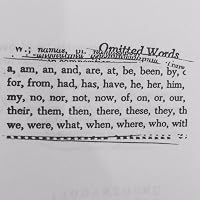
10 ‘Romanticism was a European cultural movement, or set of kindred movements,cwhich found in a symbolic and internalized romance plot a vehicle for exploring one’s self and its relationship to others and to nature, which privileged the imagination as a faculty higher and more inclusive than reason, which sought solace in or reconciliation with the natural world, which ‘detranscendentalized’ religion by taking God or the divine as inherent in nature or in the soul and replaced theological doctrine with metaphor and feeling, which honored poetry and all the arts as the highest human creations, and which rebelled against the established canons of neoclassical aesthetics and against both aristocratic and bourgeois social and political norms in favor of values more individual, inward, and emotional.’

November 17, 2025
Decent introduction to Romanticism as a literary, artistic & philosophic movement.
If you just want a clear & concise overview of Romanticism, this is the book to read. I picked this up because of my interest in consciousness research & was informed that the romantic poets were basically proto-panpsychists/idealists. The author didn't really explain how the romantics came to the conclusion that nature was alive/imbued with consciousness (from what I could tell). Their stances on politics, war, art, social life, etc. were interesting though.
Overall, decent introduction to Romanticism but I would imagine you'd have to look elsewhere for more in-depth analysis.
If you just want a clear & concise overview of Romanticism, this is the book to read. I picked this up because of my interest in consciousness research & was informed that the romantic poets were basically proto-panpsychists/idealists. The author didn't really explain how the romantics came to the conclusion that nature was alive/imbued with consciousness (from what I could tell). Their stances on politics, war, art, social life, etc. were interesting though.
Overall, decent introduction to Romanticism but I would imagine you'd have to look elsewhere for more in-depth analysis.

January 10, 2019
Really good overview of Romanticism as an era/mood/style etc. It's necessarily broad, but perhaps not broad enough because there is almost no mention of American romanticism outside of a few nods to Whitman, Emerson, or Poe. I'm probably a little biased because that's what interests me, but still, I think maybe America could have been accounted for a little more. But overall there's a ton of good information here and some extremely insightful observations by someone who obviously has done their research / is an expert in the field.

May 24, 2024
Useful survey covering literature, music and the visual arts and with a pan-European perspective. I always wish these sorts of things had more prescriptive recommended reading/listening/viewing suggestions at the head of each chapter, since what I’m going for is generally an approximation of a survey course (or at least an annotated syllabus for one). A bit dry, though I admit such a short overview probably has to be.

March 13, 2020
I was really looking for more discussion on romantic (prose) literature and music, and the relationship between them. This book didn’t really cover either very much at all. Lots of discussion on what romanticism means, etc., and lots of poetry. I understand space is limited- it’s a Very Short Introduction after all. It just wasn't what I wanted.

October 23, 2018
Romantics Unite
The romantic “movement” is pretty hard to nail down but if you want a good understanding of what it seems to be about along with a few dozen artists whose represents it all, this book is a great starting point.
The romantic “movement” is pretty hard to nail down but if you want a good understanding of what it seems to be about along with a few dozen artists whose represents it all, this book is a great starting point.

July 29, 2019
A very learned, interesting and varying overview of a complex topic spanning aspects of history and the arts. My only criticism, if appropriate, is that the final chapter wasn't used a bit more to explore the legacy of Romanticism and its lasting influence on the arts and humanities today...

January 30, 2024
I’ve read this for my undergraduate dissertation and it was extremely helpful. There is a lot of great context in here that paints a rich portrait of the development of and ideas behind Romanticism despite being a short introduction.
September 27, 2021
A bit chaotic and too detailed
January 2, 2022
Interesting overview. Was looking for more depth in particular areas - the poet's, mainly, but learnt some stuff.

Read
April 11, 2022Very informative- gives good ideas, so you can go away and delve further into them.
Would recommend
Would recommend
June 6, 2023
A perfectly adequate presentation of a notoriously complex topic. Really unnecessarily rather dull though.

June 13, 2024
very nice introduction although most is on literature, which could have been more broad. Well explained, good overview of the Romantic era, the roots and some consequences. Worth the read!
Displaying 1 - 30 of 41 reviews