

What do you think?

Skunk Works: A Personal Memoir of My Years of Lockheed
From the development of the U-2 to the Stealth fighter, the never-before-told story behind America's high-stakes quest to dominate the skies Skunk Works is the true story of America's most secret and successful aerospace operation. As recounted by Ben Rich, the operation's brilliant boss for nearly two decades, the chronicle of Lockheed's legendary Skunk Works is a drama of cold war confrontations and Gulf War air combat, of extraordinary feats of engineering and human achievement against fantastic odds. Here are up-close portraits of the maverick band of scientists and engineers who made the Skunk Works so renowned. Filled with telling personal anecdotes and high adventure, with narratives from the CIA and from Air Force pilots who flew the many classified, risky missions, this book is a riveting portrait of the most spectacular aviation triumphs of the twentieth century.
418 pages, Kindle Edition
First published October 1, 1994
Ratings & Reviews
Friends & Following
Create a free account to discover what your friends think of this book!
Community Reviews
Displaying 1 - 30 of 1,420 reviews

November 25, 2014
“Skunk Works” is one of the best books I’ve read. It’s just as fascinating to me when I read it the 8th time as it was the first. I believe one of the reasons I ultimately majored in aerospace engineering was due to this book (and perhaps my unhealthy space obsession helped).
This is a “behind-the-scenes” look at how the United States’ most successful planes were created. The book explains in simple terms WHY the engineering was so impressive and how a group of motivated men managed to create planes that are unmatched even to this day. You certainly don’t have to be an engineer to find the book intriguing. Both engineers and folks who hate math will find this book a fascinating read. I’d highly recommend this to anyone who has the least interest in American history as I believe the story in “Skunk Works” is one everyone should know.
Who should read it? Anyone with a remote interest in history, defense or the aerospace industry.
See all my reviews and more at www.ReadingToDistraction.com or @Read2Distract
This is a “behind-the-scenes” look at how the United States’ most successful planes were created. The book explains in simple terms WHY the engineering was so impressive and how a group of motivated men managed to create planes that are unmatched even to this day. You certainly don’t have to be an engineer to find the book intriguing. Both engineers and folks who hate math will find this book a fascinating read. I’d highly recommend this to anyone who has the least interest in American history as I believe the story in “Skunk Works” is one everyone should know.
Who should read it? Anyone with a remote interest in history, defense or the aerospace industry.
See all my reviews and more at www.ReadingToDistraction.com or @Read2Distract

July 7, 2023
Kelly Johnson was synonymous with Lockeed’s “Skunk Works” since at least World War II. This was Lockheed’s R&D facility but it was more than that. Ben Rich understood this and understood some of his responsibilities to the entity as well as Lockheed and the job of defending the USA against attack.
Other aircraft manufacturers saw Ben Rich as a ticket to getting up to speed. This is what Kelly thought of them: "The bottom line is that most managements don’t trust the idea of an independent operation, where they hardly know what in hell is going on and are kept in the dark because of security. Don’t kid yourself, a few among our own people resent the hell out of me and our independence. And even those in aerospace who respect our work know damned well that the fewer people working on a project, the less profit from big government contracts and cost overruns. And keeping things small cuts down on raises and promotions. Hell, in the main plant they give raises on the basis of the more people being supervised; I give raises to the guy who supervises least. That means he’s doing more and taking more responsibility. But most executives don’t think like that at all. Northrop’s senior guys are no different from all of the rest in this business: they’re all empire builders, because that’s how they’ve been trained and conditioned. Those guys are all experts at covering their asses by taking votes on what to do next. They’ll never sit still for a secret operation that cuts them out entirely."
But Ben Rich’s time at the helm had different challenges: "If the Skunk Works hoped to survive as a viable entity, we somehow would have to refashion the glory years last enjoyed in the 1960s when we had forty-two separate projects going and helped Lockheed become the aerospace industry leader in defense contracts."
"Kelly was known far and wide as “Mr. Lockheed.” No one upstairs had dared to cross him. But I was just plain Ben Rich. I was respected by the corporate types, but I had no political clout whatsoever." Ben Rich was up to the challenge. (Would this book have been written otherwise?)
This memoir chronicles the development of “stealth technology” and the F-117A. The result played out years later in Iraq:
"In spite of undertaking the most dangerous missions of that war, not one F-117A was hit by enemy fire. I know that Colonel Whitley had privately estimated losses of 5 to 10 percent in the first month of the air campaign. No one expected to escape without any losses at all. The stealth fighters composed only 2 percent of the total allied air assets in action and they flew 1,271 missions—only 1 percent of the total coalition air sorties—but accounted for 40 percent of all damaged targets attacked and compiled a 75 percent direct-hit rate. The direct-hit rate was almost as boggling as the no-casualty rate"
The first third of this book takes us from the time Rich succeeded Kelly to the above successes with stealth aircraft. The next portion of the book takes us back to Rich’s family’s beginnings in the Philippines and his time as a student. We then learned how he got to Lockheed, joined the Skunk Works and almost left. "I had actually given notice to Lockheed, but at the last moment changed my mind: I loved building airplanes a lot more than baking bagels or curing corned beef."
"I enjoyed the goodwill of my colleagues because most of us had worked together intimately under tremendous pressures for more than a quarter century. Working isolated, under rules of tight security, instilled a camaraderie probably unique in the American workplace."
This memoir jumps back and forth, guided more by projects than by a timeline. The narrative is most Ben’s in the first person but there are over a dozen other voices inserted to expand on certain projects or events. Though they are mostly validations of Rich’s assertions by those in authority, they tend to make the narration choppy.
The last third of the book was a series of goodbyes – to Kelly, to the job, to a way of doing business that is no longer possible. It is the least interesting unless you are willing to suspend your imagination and think that speculations like shipping oil by dirigible are likely to happen.
Aside from that, this book appeals to the avio-geek in me and provide loads of interesting information on the how and why of exotic airplane development.
Additional quotations from this book mostly dealing with stealth applications and spyplanes:
"The Soviet SAM-5, a defensive surface-to-air missile of tremendous thrust, could reach heights of 125,000 feet and could be tipped with small nuclear warheads. At that height, the Soviets didn’t worry about impacting the ground below with the heat or shock wave from a very small megaton atomic blast and estimated that upper stratospheric winds would carry the radiation fallout over Finland or Sweden. An atomic explosion by an air defense missile could bring down any high-flying enemy bomber within a vicinity of probably a hundred miles with its shock wave and explosive power."
"As he was leaving, Brzezinski asked me a bottom-line question: “If I were to accurately describe the significance of this stealth breakthrough to the president, what should I tell him?” “Two things,” I replied. “It changes the way that air wars will be fought from now on. And it cancels out all the tremendous investment the Russians have made in their defensive ground-to-air system. We can overfly them any time, at will.”"
"Military aircraft were so expensive and complex and represented such a sizable investment of taxpayers’ money that no manufacturer expected to win a contract without first jumping through an endless series of procurement hoops, culminating in the flight-testing phase, that under normal circumstances stretched nearly ten or more years. From start to finish, a new airplane could take as long as twelve years before taking its place in the inventory and become operational on a flight line long after it was already obsolete. But that was how the bureaucracy did business."
Very interesting and geeky discussion of the attempts to build a hydrogen powered aircraft in the Sixties. "On the drawing boards was a design for the dart-shaped CL-400 that would fly at 100,000 feet at Mach 2.5 with a 3,000-mile range. The body was enormous, dwarfing any airplane on the drawing boards. On the playing field at Yankee Stadium, for example, the tail would cover home plate and the nose nudge the right-field foul pole, 296 feet away….And the reason the body was so gigantic was that it would carry a fuel load of liquid hydrogen weighing 162,850 pounds, making it the world’s largest thermos bottle. Flying at more than twice the speed of sound, the outer shell of the body would blaze from heat friction above 350 degrees F while the inside skin would hold the frosty fuel at temperatures of minus 400 F—an 800-degree temperature differential that represented an awesomely complicated thermodynamic problem."
"The drone we designed had the flat triangular shape of a manta ray, was forty feet long, weighed about seventeen thousand pounds, would be built from titanium, powered by the same kind of Marquardt ramjet we once used for an experimental ground-to-air missile developed in the 1950s, called Bomarc. The drone had the lowest radar cross section of anything we had ever designed and could cruise faster than three times the speed of sound. It was equipped with a star-tracker inertial guidance system that could be constantly updated via computer feeds from the system aboard the mothership until the moment of launch. The system was fully automated, and the drone’s steering was directed by stored signals to its hydraulic servo actuators. It was capable of a sophisticated flight plan, making numerous turns and twists to get where it was going, then repeating them in reverse to return to where it came from. The payload was detached on radio command after the mission and parachuted to a waiting cargo plane equipped with a Y-shaped catching device. After the nose detached, the drone self-exploded."
"Viewed from head-on the ship looked like Darth Vader’s helmet. Some Navy brass who saw her clenched their teeth in disgust at the sight of the most futuristic ship ever to ply the seas. A future commander resented having only a four-man crew to boss around on a ship that was so secret that the Navy could not even admit it existed. Our stealth ship might be able to blast out of the sky a sizable Soviet attack force, but in terms of an officer’s future status and promotion prospects, it was about as glamorous as commanding a tugboat."
"I took our design and test results to the Pentagon office of a Navy captain in charge of submarine R & D. By the time I left his office, I was grimly reciting Kelly’s Skunk Works Rule Number Fifteen. Fourteen of his basic rules for operating a Skunk Works had been written out, but the fifteenth was known only by word of mouth, verbal wisdom passed on from one generation of employees to the next: “Starve before doing business with the damned Navy. They don’t know what in hell they want and will drive you up a wall before they break either your heart or a more exposed part of your anatomy.” I’d been a fool to ignore Kelly’s wise words of warning."
Other aircraft manufacturers saw Ben Rich as a ticket to getting up to speed. This is what Kelly thought of them: "The bottom line is that most managements don’t trust the idea of an independent operation, where they hardly know what in hell is going on and are kept in the dark because of security. Don’t kid yourself, a few among our own people resent the hell out of me and our independence. And even those in aerospace who respect our work know damned well that the fewer people working on a project, the less profit from big government contracts and cost overruns. And keeping things small cuts down on raises and promotions. Hell, in the main plant they give raises on the basis of the more people being supervised; I give raises to the guy who supervises least. That means he’s doing more and taking more responsibility. But most executives don’t think like that at all. Northrop’s senior guys are no different from all of the rest in this business: they’re all empire builders, because that’s how they’ve been trained and conditioned. Those guys are all experts at covering their asses by taking votes on what to do next. They’ll never sit still for a secret operation that cuts them out entirely."
But Ben Rich’s time at the helm had different challenges: "If the Skunk Works hoped to survive as a viable entity, we somehow would have to refashion the glory years last enjoyed in the 1960s when we had forty-two separate projects going and helped Lockheed become the aerospace industry leader in defense contracts."
"Kelly was known far and wide as “Mr. Lockheed.” No one upstairs had dared to cross him. But I was just plain Ben Rich. I was respected by the corporate types, but I had no political clout whatsoever." Ben Rich was up to the challenge. (Would this book have been written otherwise?)
This memoir chronicles the development of “stealth technology” and the F-117A. The result played out years later in Iraq:
"In spite of undertaking the most dangerous missions of that war, not one F-117A was hit by enemy fire. I know that Colonel Whitley had privately estimated losses of 5 to 10 percent in the first month of the air campaign. No one expected to escape without any losses at all. The stealth fighters composed only 2 percent of the total allied air assets in action and they flew 1,271 missions—only 1 percent of the total coalition air sorties—but accounted for 40 percent of all damaged targets attacked and compiled a 75 percent direct-hit rate. The direct-hit rate was almost as boggling as the no-casualty rate"
The first third of this book takes us from the time Rich succeeded Kelly to the above successes with stealth aircraft. The next portion of the book takes us back to Rich’s family’s beginnings in the Philippines and his time as a student. We then learned how he got to Lockheed, joined the Skunk Works and almost left. "I had actually given notice to Lockheed, but at the last moment changed my mind: I loved building airplanes a lot more than baking bagels or curing corned beef."
"I enjoyed the goodwill of my colleagues because most of us had worked together intimately under tremendous pressures for more than a quarter century. Working isolated, under rules of tight security, instilled a camaraderie probably unique in the American workplace."
This memoir jumps back and forth, guided more by projects than by a timeline. The narrative is most Ben’s in the first person but there are over a dozen other voices inserted to expand on certain projects or events. Though they are mostly validations of Rich’s assertions by those in authority, they tend to make the narration choppy.
The last third of the book was a series of goodbyes – to Kelly, to the job, to a way of doing business that is no longer possible. It is the least interesting unless you are willing to suspend your imagination and think that speculations like shipping oil by dirigible are likely to happen.
Aside from that, this book appeals to the avio-geek in me and provide loads of interesting information on the how and why of exotic airplane development.
Additional quotations from this book mostly dealing with stealth applications and spyplanes:
"The Soviet SAM-5, a defensive surface-to-air missile of tremendous thrust, could reach heights of 125,000 feet and could be tipped with small nuclear warheads. At that height, the Soviets didn’t worry about impacting the ground below with the heat or shock wave from a very small megaton atomic blast and estimated that upper stratospheric winds would carry the radiation fallout over Finland or Sweden. An atomic explosion by an air defense missile could bring down any high-flying enemy bomber within a vicinity of probably a hundred miles with its shock wave and explosive power."
"As he was leaving, Brzezinski asked me a bottom-line question: “If I were to accurately describe the significance of this stealth breakthrough to the president, what should I tell him?” “Two things,” I replied. “It changes the way that air wars will be fought from now on. And it cancels out all the tremendous investment the Russians have made in their defensive ground-to-air system. We can overfly them any time, at will.”"
"Military aircraft were so expensive and complex and represented such a sizable investment of taxpayers’ money that no manufacturer expected to win a contract without first jumping through an endless series of procurement hoops, culminating in the flight-testing phase, that under normal circumstances stretched nearly ten or more years. From start to finish, a new airplane could take as long as twelve years before taking its place in the inventory and become operational on a flight line long after it was already obsolete. But that was how the bureaucracy did business."
Very interesting and geeky discussion of the attempts to build a hydrogen powered aircraft in the Sixties. "On the drawing boards was a design for the dart-shaped CL-400 that would fly at 100,000 feet at Mach 2.5 with a 3,000-mile range. The body was enormous, dwarfing any airplane on the drawing boards. On the playing field at Yankee Stadium, for example, the tail would cover home plate and the nose nudge the right-field foul pole, 296 feet away….And the reason the body was so gigantic was that it would carry a fuel load of liquid hydrogen weighing 162,850 pounds, making it the world’s largest thermos bottle. Flying at more than twice the speed of sound, the outer shell of the body would blaze from heat friction above 350 degrees F while the inside skin would hold the frosty fuel at temperatures of minus 400 F—an 800-degree temperature differential that represented an awesomely complicated thermodynamic problem."
"The drone we designed had the flat triangular shape of a manta ray, was forty feet long, weighed about seventeen thousand pounds, would be built from titanium, powered by the same kind of Marquardt ramjet we once used for an experimental ground-to-air missile developed in the 1950s, called Bomarc. The drone had the lowest radar cross section of anything we had ever designed and could cruise faster than three times the speed of sound. It was equipped with a star-tracker inertial guidance system that could be constantly updated via computer feeds from the system aboard the mothership until the moment of launch. The system was fully automated, and the drone’s steering was directed by stored signals to its hydraulic servo actuators. It was capable of a sophisticated flight plan, making numerous turns and twists to get where it was going, then repeating them in reverse to return to where it came from. The payload was detached on radio command after the mission and parachuted to a waiting cargo plane equipped with a Y-shaped catching device. After the nose detached, the drone self-exploded."
"Viewed from head-on the ship looked like Darth Vader’s helmet. Some Navy brass who saw her clenched their teeth in disgust at the sight of the most futuristic ship ever to ply the seas. A future commander resented having only a four-man crew to boss around on a ship that was so secret that the Navy could not even admit it existed. Our stealth ship might be able to blast out of the sky a sizable Soviet attack force, but in terms of an officer’s future status and promotion prospects, it was about as glamorous as commanding a tugboat."
"I took our design and test results to the Pentagon office of a Navy captain in charge of submarine R & D. By the time I left his office, I was grimly reciting Kelly’s Skunk Works Rule Number Fifteen. Fourteen of his basic rules for operating a Skunk Works had been written out, but the fifteenth was known only by word of mouth, verbal wisdom passed on from one generation of employees to the next: “Starve before doing business with the damned Navy. They don’t know what in hell they want and will drive you up a wall before they break either your heart or a more exposed part of your anatomy.” I’d been a fool to ignore Kelly’s wise words of warning."

February 28, 2008
I wanted to read this book because I wanted an example of "nomad science", a kind of guerrilla approach to engineering and problem solving, where a relatively small group of intensely-involved engineers or scientists take on relatively large challenges--actually, nearly impossible looking challenges-- and triumph...All innovation, all mobile strike force, no bureaucracy, no backbiting politics, no ego, no external reward,( this latter not entirely true, but relatively true - Ben Rich received recognition and rewards but sometimes he either couldn't tell others he'd received the award, or couldn't tell others why he had received the award because the work was classified.)
The "Skunk Works" is the nickname of a small aerospace engineering unit within Lockheed Corporation responsible for the development of the U-2 high altitude spy plane, the stealth bomber, and many other notable, breakthrough aerospace technologies. Ben Rich, the author of this book, specialized in thermodynamic engineering problems at the Skunk Works before eventually becoming head of the Skunk Works. This book is the story of his career there.
I resisted reading the book because this is in part a story of the development of military-industrial complex and the conflict of interest between the needs of the death industry and the real need for national security, and real economic needs (and career needs?) versus propping up vested interests. There is the exciting story of the development of spectacular technology in remarkably short periods of time,under budget, but one can't forget (actually, I found it quite easy to forget, I had to prod myself to remember, and this is significant,) the technology is weapon technology.
Everyone at the Skunk Works had high security clearance ( rightfully so); everyone was selected in part because of anti-Soviet sentiment. Ben Richardson seems to consider his greatest contribution being to help the US win the Cold War.
Therefore, I found these four items from the book, (which I hadn't known or fully appreciated before reading the book,)particularly striking:
1)During the 1950's, information from CIA director Allen Dulles supplied to US citizens regarding Soviet military strength suggested a crushing military superiority of the Soviets over the US...Dulles' data at the time did not support his conclusions... The CIA's misinformation helped to create a climate of fear in the US-- at this time, polls showed a majority of Americans believed death in a nuclear war was a likelihood;
2)During his time as President, Eisenhower was scoffed and resented by management in the aerospace industry because he moved slowly, cautiously, and was conservative on military spending;
3)The Eisenhower administration was not alarmed by the revelation of Soviet Sputnik technology because Sputnik technology was not superior to existing American satellite technology. The US had superior technology...Sputnik was not a demonstation of technological prowess; really, it was more of a public relations coup. Eisenhower wished to ignore it, in fact. He was finally persuaded to mount what was in essence a public relations counter-measure to the Soviets and also a strengthening of the hand of the political-economic element in the US which benefited from the crisis mentality of the Cold War.
4)Lockheed scientists and engineers and production craftsmen require continuing engineering and scientific challenges in order to keep their skills up. If they are engaged in developing military technology but military threats are not present, the government's motivation for developing military technology disappears; investment in these skills disappears, and the skills disappear. I consider keeping these skills up a very real consideration, but coupling this consideration to continuing an arms race very problematical.
5)Lockheed, a private corporation, makes its profits in production runs...For example, after the Stealth bomber design was completed, Lockheed made money building Stealth bombers. But it turned out that Stealth bomber design was completed when the Cold War was by and large over. There was, for Lockheed, an incentive to build large numbers of Stealth bombers anyway, to encourage policies where the building of Stealth bombers can be seen as necessary. Stealth bomber technology was "proven" in battle during the first Gulf War. Private profit incentivizes deployment of war technologies, and I am uncomfortable with this.
The story of the relationship between Ben Rich and his boss at the Skunk Works, Kelly Johnson, is touching. Two great men. Can I wholeheartedly honor them when I feel such reluctance and ambivalence about what was going on during the Cold War era, the role of the US in the world at that time?
The "Skunk Works" is the nickname of a small aerospace engineering unit within Lockheed Corporation responsible for the development of the U-2 high altitude spy plane, the stealth bomber, and many other notable, breakthrough aerospace technologies. Ben Rich, the author of this book, specialized in thermodynamic engineering problems at the Skunk Works before eventually becoming head of the Skunk Works. This book is the story of his career there.
I resisted reading the book because this is in part a story of the development of military-industrial complex and the conflict of interest between the needs of the death industry and the real need for national security, and real economic needs (and career needs?) versus propping up vested interests. There is the exciting story of the development of spectacular technology in remarkably short periods of time,under budget, but one can't forget (actually, I found it quite easy to forget, I had to prod myself to remember, and this is significant,) the technology is weapon technology.
Everyone at the Skunk Works had high security clearance ( rightfully so); everyone was selected in part because of anti-Soviet sentiment. Ben Richardson seems to consider his greatest contribution being to help the US win the Cold War.
Therefore, I found these four items from the book, (which I hadn't known or fully appreciated before reading the book,)particularly striking:
1)During the 1950's, information from CIA director Allen Dulles supplied to US citizens regarding Soviet military strength suggested a crushing military superiority of the Soviets over the US...Dulles' data at the time did not support his conclusions... The CIA's misinformation helped to create a climate of fear in the US-- at this time, polls showed a majority of Americans believed death in a nuclear war was a likelihood;
2)During his time as President, Eisenhower was scoffed and resented by management in the aerospace industry because he moved slowly, cautiously, and was conservative on military spending;
3)The Eisenhower administration was not alarmed by the revelation of Soviet Sputnik technology because Sputnik technology was not superior to existing American satellite technology. The US had superior technology...Sputnik was not a demonstation of technological prowess; really, it was more of a public relations coup. Eisenhower wished to ignore it, in fact. He was finally persuaded to mount what was in essence a public relations counter-measure to the Soviets and also a strengthening of the hand of the political-economic element in the US which benefited from the crisis mentality of the Cold War.
4)Lockheed scientists and engineers and production craftsmen require continuing engineering and scientific challenges in order to keep their skills up. If they are engaged in developing military technology but military threats are not present, the government's motivation for developing military technology disappears; investment in these skills disappears, and the skills disappear. I consider keeping these skills up a very real consideration, but coupling this consideration to continuing an arms race very problematical.
5)Lockheed, a private corporation, makes its profits in production runs...For example, after the Stealth bomber design was completed, Lockheed made money building Stealth bombers. But it turned out that Stealth bomber design was completed when the Cold War was by and large over. There was, for Lockheed, an incentive to build large numbers of Stealth bombers anyway, to encourage policies where the building of Stealth bombers can be seen as necessary. Stealth bomber technology was "proven" in battle during the first Gulf War. Private profit incentivizes deployment of war technologies, and I am uncomfortable with this.
The story of the relationship between Ben Rich and his boss at the Skunk Works, Kelly Johnson, is touching. Two great men. Can I wholeheartedly honor them when I feel such reluctance and ambivalence about what was going on during the Cold War era, the role of the US in the world at that time?

April 28, 2021
I listened to the first 90% of this book at Mach speed. I couldn’t put it down, much like the Russians attempting to take down the SR-71, or should I say RS-71 (read it to find out what I’m talking about!). Hearing about the insides and outs of the Skunk Works was both fascinating and entertaining. 100% would recommend.

July 29, 2015
Skunk Works is a personal memoir written by the chief engineer of Lockheed’s Skunk Works Ben Rick. The book tells of his first experiences at Lockheed during the 1950s; it ranges all the way past the First Gulf War.
The author describes the varied events that occurred and projects that were undertaken at Lockheed’s aerospace development wing. The first four chapters are about building the first stealth bomber. Rich tells how the name Skunk Works came about. He describes the U2 project and Blackbird.
Rich also tells about his co-workers and particularly his boss the genius Kelly Johnson. He also discusses his colleagues from other agencies such as the Air Force and the CIA. Rich covers many of the technical details and challenges that the Skunk Works’ team faced overcoming engineering problems as well as the difficulties of funding and politics. Rich also covers his personal life including the death of his wife. I enjoyed the comment from various fellow workers from Lockheed, Air Force offices and the various Secretary of Defenses and other political appointees.
This is a great book as it describes the almost impossible challenges the engineers rose to solve. The book is well written and moves right along. This is a book you will want to keep to use as a reference book. I read this as an audiobook downloaded from Audible. Pete Larkin narrated the book.
The author describes the varied events that occurred and projects that were undertaken at Lockheed’s aerospace development wing. The first four chapters are about building the first stealth bomber. Rich tells how the name Skunk Works came about. He describes the U2 project and Blackbird.
Rich also tells about his co-workers and particularly his boss the genius Kelly Johnson. He also discusses his colleagues from other agencies such as the Air Force and the CIA. Rich covers many of the technical details and challenges that the Skunk Works’ team faced overcoming engineering problems as well as the difficulties of funding and politics. Rich also covers his personal life including the death of his wife. I enjoyed the comment from various fellow workers from Lockheed, Air Force offices and the various Secretary of Defenses and other political appointees.
This is a great book as it describes the almost impossible challenges the engineers rose to solve. The book is well written and moves right along. This is a book you will want to keep to use as a reference book. I read this as an audiobook downloaded from Audible. Pete Larkin narrated the book.

November 15, 2022
This isn't the book for everyone. Most people would come away from this wondering why they bothered to read it. But, for the right person, it is spectacular. So who's the right person? First of all, you have to like airplanes. Second you have to have a bit of a nerdy tilt for engineering. Is it cool to you that at high temperatures black paint radiates heat faster than it absorbs it? Then welcome to a book you're going to love!
Skunk Works basically follows the history of the development of a number of high end US military planes from the U-2 to the SR-71 to the F-117 and provides a ton of great engineering stories along the way. This is the kind of book that has something you won't have known in each chapter, and will have you laughing (nerdy laughing) regularly.
Skunk Works basically follows the history of the development of a number of high end US military planes from the U-2 to the SR-71 to the F-117 and provides a ton of great engineering stories along the way. This is the kind of book that has something you won't have known in each chapter, and will have you laughing (nerdy laughing) regularly.

February 1, 2011
I picked this book up after having read Don DeLillo's Libra, which pictures the protagonist, Lee Harvey Oswald, at a USAF base in Atsugi, Japan during his military service. The U2 spy plane that was based there definitely adds to the aura of mystery and fatefulness that pervades the whole of DeLillo's excellent novel and aroused my curiosity. Rich's account of the Skunk Works' history entirely satisfied my interest in this mysterious airplane. The book can be read in different ways: as a thrilling account of the Cold War, a captivating portrait of the complex and brilliant designer Kelly Johnson, and as a treatise on corporate innovation, cutting edge management methods and industry-government relationships. I found the book to be exceedingly well written, with just the right dosage of technical details, humour, personal anecdotes and historical drama. The integration of 'other voices' from test pilots, high level policy makers and air force top brass complements Rich's narrative nicely and helps in modulating the sometimes breathless pace. An excellent book. I enjoyed it a lot.

January 7, 2011
Despite the Tom Clancy recommendation glaring on the cover of this edition, Skunk Works isn't a bad read. Whatever the writing skills of engineer Rich, cowriter Janos's collaboration with him resulted in an engrossing text. Of course I've long had a special interest in the history of espionage, so the subject-matter went far towards keeping me involved.
The Skunk Works is a part of the Lockhead Corporation, one of the few major contractors for high-tech defense contracts with the U.S. government--a relationship described as "paternalistic socialism". Unlike most corporate divisions, Skunk Works (named for a device in Al Capp's cartoons) operated semi-autonomously from the end of WWII until at least the end of the directorship of the author in 1991. During this period it developed the first military jet, the U-2, the SR-71 and the first stealth jets. Although most of this story is told by the voice of Rich, the book includes short sections from various individuals ranging from test pilots to Defense Secretaries who had meaningful association with the Works and its products.
Pointedly, the book ends with a lengthy section about how to do R&D, especially for defense and intelligence, with optimal accomplishment at minimal cost, using the Skunk Works' history as an example of success contrasted with normal corporate-government contracts as examples of inefficiency and waste.
Interestingly, the authors never once mention Nellis or Groom Lake (home of the fabled Area 51) in their text, although one of the minor contributors does. Instead, they refer to the "secret base" where the U-2 and other hush-hush products were flight tested.
The Skunk Works is a part of the Lockhead Corporation, one of the few major contractors for high-tech defense contracts with the U.S. government--a relationship described as "paternalistic socialism". Unlike most corporate divisions, Skunk Works (named for a device in Al Capp's cartoons) operated semi-autonomously from the end of WWII until at least the end of the directorship of the author in 1991. During this period it developed the first military jet, the U-2, the SR-71 and the first stealth jets. Although most of this story is told by the voice of Rich, the book includes short sections from various individuals ranging from test pilots to Defense Secretaries who had meaningful association with the Works and its products.
Pointedly, the book ends with a lengthy section about how to do R&D, especially for defense and intelligence, with optimal accomplishment at minimal cost, using the Skunk Works' history as an example of success contrasted with normal corporate-government contracts as examples of inefficiency and waste.
Interestingly, the authors never once mention Nellis or Groom Lake (home of the fabled Area 51) in their text, although one of the minor contributors does. Instead, they refer to the "secret base" where the U-2 and other hush-hush products were flight tested.

May 31, 2020
Skunk Works is one of those phrases which sets aviation fans' hearts a-flutter. The secretive engineering team from Burbank was responsible for some of the most incredible planes of all times. The SR-71 was built in the 1960s, and it remains the highest flying, fastest plane in aviation. It's a marvel of engineering built with slide rules.
Ben Rich, the second director of the Skunk Works, writes a fun account of his views on aviation, engineering, and procurement politics. The Skunk Works was an elite brotherhood devoted towards the best in aviation, with rules to minimize management bullshit and keep every engineer within a stone's throw of the production floor. Rich discusses in detail his work on the F-117 stealth fighter, the U-2, and the SR-71, with dips into Navy stealth boats ("never work for the Navy, they don't know what they want and they'll break your heart"), and the red tape of military bureaucracy.
Kelly Johnson stories are another major theme of the book. I've no doubt that Ben Rich is a great engineer, but Johnson, the founder of the Skunk Works, was a legend who won two Collier Trophies and could estimate an aviation problem to 95% accuracy that'd take hours of calculation to prove. Johnson was a genius, but his abrasive personality alienated Air Force generals, who hated a man who built the best planes for the CIA and castigated their procurement efforts as fuck-ups that'd kill pilots and lose wars. The book is lived up by 'other perspective sections', with pilots describing what flying these planes was like, and five or six Secretaries of Defense talking about how vital the planes were to US national security.
Rich also tries to get at the culture of engineering excellence that defined the Skunk Works. As someone with a sideline in organizational studies, this is really hard. How do you know your asshole leader is a real genius and not a cargo-culting lunatic (see Musk, Elon)? It's a difficult challenge, and one not quite clear aside from 'get good people, give them hard but specific goals, and get the hell out their way', but Rich tries. I just wonder what he'd think of Lockheed's latest stealth wonder-blunder, the F-35...
Ben Rich, the second director of the Skunk Works, writes a fun account of his views on aviation, engineering, and procurement politics. The Skunk Works was an elite brotherhood devoted towards the best in aviation, with rules to minimize management bullshit and keep every engineer within a stone's throw of the production floor. Rich discusses in detail his work on the F-117 stealth fighter, the U-2, and the SR-71, with dips into Navy stealth boats ("never work for the Navy, they don't know what they want and they'll break your heart"), and the red tape of military bureaucracy.
Kelly Johnson stories are another major theme of the book. I've no doubt that Ben Rich is a great engineer, but Johnson, the founder of the Skunk Works, was a legend who won two Collier Trophies and could estimate an aviation problem to 95% accuracy that'd take hours of calculation to prove. Johnson was a genius, but his abrasive personality alienated Air Force generals, who hated a man who built the best planes for the CIA and castigated their procurement efforts as fuck-ups that'd kill pilots and lose wars. The book is lived up by 'other perspective sections', with pilots describing what flying these planes was like, and five or six Secretaries of Defense talking about how vital the planes were to US national security.
Rich also tries to get at the culture of engineering excellence that defined the Skunk Works. As someone with a sideline in organizational studies, this is really hard. How do you know your asshole leader is a real genius and not a cargo-culting lunatic (see Musk, Elon)? It's a difficult challenge, and one not quite clear aside from 'get good people, give them hard but specific goals, and get the hell out their way', but Rich tries. I just wonder what he'd think of Lockheed's latest stealth wonder-blunder, the F-35...

May 25, 2020
Destin Sandlin of Smarter Every Day made me do it. Not my normal fare. But truly enjoyable and instructive. I had no idea what achievements the U2, the SR-71, and the various stealth aircraft I’ve always sort of known were. And I had no idea how long ago they were made.

January 1, 2021
A good look at the military aviation industry in the US from the end of the World War II, with the first jet aircraft, until the end of the 20th century.
Particularly interesting are the development and further clandestine use of these aircraft ahead of its time: the magnificent U-2 and SR-71 "Blackbird" spy planes and also the incredible F-117, the first fighter jet with stealth technology.
Particularly interesting are the development and further clandestine use of these aircraft ahead of its time: the magnificent U-2 and SR-71 "Blackbird" spy planes and also the incredible F-117, the first fighter jet with stealth technology.
January 5, 2017
Cool memoir. Very interesting read. A great time (and place!) to be an aeronautical engineer.

August 20, 2017
Summary: The story of Lockheed’s secret “Skunk Works” operation that produced innovative planes and other products for the military including the U-2, the SR-71 Blackbird, and the F-117 Stealth fighter.
The term “skunk works” has become common parlance in the business and technical worlds for a group within an organization given a high degree of autonomy and freedom from bureaucratic control to work on advanced or secret projects. The development of the original Apple Macintosh computer is an example of a “skunk works” project. This book is the story of the original Skunk Works, a top secret operation with Lockheed responsible for building some of the most cutting-edge and innovative military aircraft. Ben Rich was the second boss over the Skunk Works, mentored under the legendary (and formidable) Clarence “Kelly” Johnson.
The book opens with the first test flight of the F-117, the first real stealth fighter, and the first plane built under Rich’s leadership after he took over from Kelly Johnson in 1975. He describes the process of winning the contract to develop the plane, and the incredible engineering work to make the plane practically invisible to enemy radar through a combination of flat surfaces and absorptive materials. One of the biggest problems turned out to be designing a canopy that would deflect radar while being able to be seen out of. Otherwise, the pilot’s head actually had a bigger radar profile than the plane! The biggest test of the plane was the bombing mission the first night of Operation Desert Storm, against heavily defended Baghdad, in which key command and control facilities, and communication facilities were taken out under heavy anti-aircraft fire without a single plane being lost, not only that night but throughout the conflict.
This was just one in a long line of innovative planes designed by the Skunk Works. Rich tells the story of how Kelly Johnson formed this secret operation within Lockheed in 1943 to develop a jet fighter (the P-80) to counter German development of similar technology. Rich describes his own initiation into the Skunk Works as a thermodynamicist brought on to help with the inlet design on the F-104 Starfighter, the first supersonic jet fighter. He was unsure how long he would work there.
Rich made the grade and goes on in the book to narrate the histories of two of the most innovative planes designed under Kelly Johnson’s leadership, the U-2 and the SR-71, both involved in overflights over the Soviet Union and other countries. The U-2 was designed to fly at 70,000 feet, with wings two-thirds as long as the fuselage which entailed special design challenges. It was put into use on overflights over the Soviet Union in 1956, securing critical intelligence on nuclear and conventional military capabilities until Gary Powers was shot down in 1960 (they actually thought they would only get two years of overflights in before this happened). Later it was used over Cuba, and the remarkable fact is that this plane is still in use, having gone through its latest upgrade in 2012.
Rich and his fellow engineers faced a whole different set of engineering challenges in designing the SR-71 Blackbird, capable of sustained Mach 3.2 speeds and flight at over 80,000 feet while taking crystal clear pictures. The plane still holds sustained speed records that have not been surpassed. It was the first titanium-bodied plane, used a special inlet cone design to force air into the engine at high altitudes, and one of the first to use stealth technology to reduce radar cross-sections.
The book mixes Rich’s narrative with “testimonials” from pilots who flew the planes, defense secretaries like Bill Perry, and national security figures like Zbigniew Brzezinski. More than simply a narrative of building innovative aircraft (and even a stealth ship), it is a narrative of what it was like to work under Kelly Johnson and how he shaped the Skunk Works. One of the most significant contributions Johnson made, referenced by many texts on “skunk works” was Kelly’s 14 Rules, that articulated the requirements of a top secret, lean, innovative, cost-effective organization free of bureaucratic control that inflates costs, bogs down development and stifles creativity. One of the rules also established alternative compensation policies that compensated for performance rather than number of reports.
Kelly was a formidable leader. He did not suffer fools gladly, losing him some contracts. He would not build a plane he didn’t believe in. He had zero tolerance for pretense. He had an amazing knowledge of every aspect of aviation engineering. He insisted that engineers work in close proximity to the shop floor. Rich speculates that such a leader probably would not be possible in his own era.
Rich’s concluding chapter, “Drawing the Right Conclusions” outlines his own ideas for more sensible procurement policies throughout the defense industry. He anticipates the widespread use of drones. I don’t know enough to determine whether any of his idea have been adopted, but they make sense if one wants both to control costs, and maintain a technological edge in weaponry.
It is fascinating to me that most of the applications of “skunk works” ideas have been in the technology world. I’m curious about the application of these ideas to the non-profit world, coming up with innovative ways to deliver services that better people’s lives. Often the challenge here is money to fund something outside of line management or support services, and satisfying funding entities that such an operation is not frivolous. My hunch is that there is a need for clear mission and bench marks, leadership that can manage lightly yet effectively a talented group of people, and good bridges back into the rest of the organization to test and implement ideas.
All that said, Rich has given us a fascinating narrative of the original Skunk Works, fascinating both for anyone interested in military aviation, and instructive for those wanting to learn key principles for skunk works-type operations.
The term “skunk works” has become common parlance in the business and technical worlds for a group within an organization given a high degree of autonomy and freedom from bureaucratic control to work on advanced or secret projects. The development of the original Apple Macintosh computer is an example of a “skunk works” project. This book is the story of the original Skunk Works, a top secret operation with Lockheed responsible for building some of the most cutting-edge and innovative military aircraft. Ben Rich was the second boss over the Skunk Works, mentored under the legendary (and formidable) Clarence “Kelly” Johnson.
The book opens with the first test flight of the F-117, the first real stealth fighter, and the first plane built under Rich’s leadership after he took over from Kelly Johnson in 1975. He describes the process of winning the contract to develop the plane, and the incredible engineering work to make the plane practically invisible to enemy radar through a combination of flat surfaces and absorptive materials. One of the biggest problems turned out to be designing a canopy that would deflect radar while being able to be seen out of. Otherwise, the pilot’s head actually had a bigger radar profile than the plane! The biggest test of the plane was the bombing mission the first night of Operation Desert Storm, against heavily defended Baghdad, in which key command and control facilities, and communication facilities were taken out under heavy anti-aircraft fire without a single plane being lost, not only that night but throughout the conflict.
This was just one in a long line of innovative planes designed by the Skunk Works. Rich tells the story of how Kelly Johnson formed this secret operation within Lockheed in 1943 to develop a jet fighter (the P-80) to counter German development of similar technology. Rich describes his own initiation into the Skunk Works as a thermodynamicist brought on to help with the inlet design on the F-104 Starfighter, the first supersonic jet fighter. He was unsure how long he would work there.
Rich made the grade and goes on in the book to narrate the histories of two of the most innovative planes designed under Kelly Johnson’s leadership, the U-2 and the SR-71, both involved in overflights over the Soviet Union and other countries. The U-2 was designed to fly at 70,000 feet, with wings two-thirds as long as the fuselage which entailed special design challenges. It was put into use on overflights over the Soviet Union in 1956, securing critical intelligence on nuclear and conventional military capabilities until Gary Powers was shot down in 1960 (they actually thought they would only get two years of overflights in before this happened). Later it was used over Cuba, and the remarkable fact is that this plane is still in use, having gone through its latest upgrade in 2012.
Rich and his fellow engineers faced a whole different set of engineering challenges in designing the SR-71 Blackbird, capable of sustained Mach 3.2 speeds and flight at over 80,000 feet while taking crystal clear pictures. The plane still holds sustained speed records that have not been surpassed. It was the first titanium-bodied plane, used a special inlet cone design to force air into the engine at high altitudes, and one of the first to use stealth technology to reduce radar cross-sections.
The book mixes Rich’s narrative with “testimonials” from pilots who flew the planes, defense secretaries like Bill Perry, and national security figures like Zbigniew Brzezinski. More than simply a narrative of building innovative aircraft (and even a stealth ship), it is a narrative of what it was like to work under Kelly Johnson and how he shaped the Skunk Works. One of the most significant contributions Johnson made, referenced by many texts on “skunk works” was Kelly’s 14 Rules, that articulated the requirements of a top secret, lean, innovative, cost-effective organization free of bureaucratic control that inflates costs, bogs down development and stifles creativity. One of the rules also established alternative compensation policies that compensated for performance rather than number of reports.
Kelly was a formidable leader. He did not suffer fools gladly, losing him some contracts. He would not build a plane he didn’t believe in. He had zero tolerance for pretense. He had an amazing knowledge of every aspect of aviation engineering. He insisted that engineers work in close proximity to the shop floor. Rich speculates that such a leader probably would not be possible in his own era.
Rich’s concluding chapter, “Drawing the Right Conclusions” outlines his own ideas for more sensible procurement policies throughout the defense industry. He anticipates the widespread use of drones. I don’t know enough to determine whether any of his idea have been adopted, but they make sense if one wants both to control costs, and maintain a technological edge in weaponry.
It is fascinating to me that most of the applications of “skunk works” ideas have been in the technology world. I’m curious about the application of these ideas to the non-profit world, coming up with innovative ways to deliver services that better people’s lives. Often the challenge here is money to fund something outside of line management or support services, and satisfying funding entities that such an operation is not frivolous. My hunch is that there is a need for clear mission and bench marks, leadership that can manage lightly yet effectively a talented group of people, and good bridges back into the rest of the organization to test and implement ideas.
All that said, Rich has given us a fascinating narrative of the original Skunk Works, fascinating both for anyone interested in military aviation, and instructive for those wanting to learn key principles for skunk works-type operations.

September 4, 2018
Ben Rich worked at Lockheed Martin's Skunk Works from 1954-1991, and spent nearly 20 years overseeing the legendary engineering organization. His memoir is equal parts a Cold War history, a how-to manual for running high-output engineering organizations and a meditation on how technology progresses, not by random stochastic chance but by sheer force of will and a commitment to excellence.
The Skunk Works was responsible for an incredibly large number of the major breakthroughs that occurred in the 20th century; their list of production-quality aircraft included the U-2, the SR-71, the C-130, and then, finally, the F-117, the world's first stealth fighter, and Ben Rich was in the arena on all of it. It's hard to summarize this book - there's just a lot here. But as someone who builds technology for the US government, the sense of patriotism and true American creativity the permeated Lockheed Martin during the Cold War was a notable theme, as was the impact that the technological breakthroughs made in those secret labs had on the national security posture of the US.
Finally, Ben Rich articulates a positive and deterministic vision for America and American technologists that has become rare in the 21st century's worship of market efficiency and indeterminate optimism. He ran one of the most high-performing engineering teams in the world, and he's completely confident that without those people, working together, the world of aviation would be totally different. In the face of the statistical historians of technology, Rich provides a full-throated defense of exceptionalism, not just at the individual level, but exceptionalism at the organizational level. There are places that are special, and the Skunk Works during the mid 20th century was one of them.
Some other notes:
- During his career, Rich worked on 27 different airplanes!
- The increasing layers of bureaucracy over his career added crazy paper, lots of oversight and huge numbers of people to the staff.
- Commodity, rather than military-grade manufacturing kept them lean.
- Tiny lockheed teams were able to outperform huge military team maintaining the SR-71s.
- They hired top people, paid them top dollar, and put the engineers next to the shop workers.
- All workers were responsible for Quality Control.
- B2 Bomber was a wildly crazy failure of procurement.
The Skunk Works was responsible for an incredibly large number of the major breakthroughs that occurred in the 20th century; their list of production-quality aircraft included the U-2, the SR-71, the C-130, and then, finally, the F-117, the world's first stealth fighter, and Ben Rich was in the arena on all of it. It's hard to summarize this book - there's just a lot here. But as someone who builds technology for the US government, the sense of patriotism and true American creativity the permeated Lockheed Martin during the Cold War was a notable theme, as was the impact that the technological breakthroughs made in those secret labs had on the national security posture of the US.
Finally, Ben Rich articulates a positive and deterministic vision for America and American technologists that has become rare in the 21st century's worship of market efficiency and indeterminate optimism. He ran one of the most high-performing engineering teams in the world, and he's completely confident that without those people, working together, the world of aviation would be totally different. In the face of the statistical historians of technology, Rich provides a full-throated defense of exceptionalism, not just at the individual level, but exceptionalism at the organizational level. There are places that are special, and the Skunk Works during the mid 20th century was one of them.
Some other notes:
- During his career, Rich worked on 27 different airplanes!
- The increasing layers of bureaucracy over his career added crazy paper, lots of oversight and huge numbers of people to the staff.
- Commodity, rather than military-grade manufacturing kept them lean.
- Tiny lockheed teams were able to outperform huge military team maintaining the SR-71s.
- They hired top people, paid them top dollar, and put the engineers next to the shop workers.
- All workers were responsible for Quality Control.
- B2 Bomber was a wildly crazy failure of procurement.

July 10, 2020
A fascinating insights into the very secretive Skunk Works. Covering mostly the famous U2, SR-71 and F-117 with a bunch of side stories.
It didn't top my ratings despite some entertaining stories and intriguing anecdotes about technical, political and personal aspects of spy plane development after WW2 and during the cold war. Story-telling is ok but not great, but this is what you usually get from this kind go biographie. Sometime over-romanticized and repetitive but sufficiently entertaining overall.
The early part of the book is the most interesting- about how they came up with stealth technology and the testing around it. But I could have done without the last part of the book which is mostly whining about the state of the aerospace industry and ramblings about politics. That part felt way too long and did not really fit with the rest of the book.
Read it if you have a general interest in the topic and want entertaining, slightly technical stories surrounding those iconic planes/jets.
It didn't top my ratings despite some entertaining stories and intriguing anecdotes about technical, political and personal aspects of spy plane development after WW2 and during the cold war. Story-telling is ok but not great, but this is what you usually get from this kind go biographie. Sometime over-romanticized and repetitive but sufficiently entertaining overall.
The early part of the book is the most interesting- about how they came up with stealth technology and the testing around it. But I could have done without the last part of the book which is mostly whining about the state of the aerospace industry and ramblings about politics. That part felt way too long and did not really fit with the rest of the book.
Read it if you have a general interest in the topic and want entertaining, slightly technical stories surrounding those iconic planes/jets.

January 17, 2022
So, this is the 3rd time I read this book, and my review would have been different each time. I read it before I ever did any aircraft acquisition or flight test work, I read it while doing flight test, and now after having done program office work too. I fear we’ve lost the edge - and we’ve stood up a ton of “werx” organizations to emulate, but I’m not sure they hit the mark.
Separately - this book is really insightful. A great book on management and the limits for what make skunk works work!
Separately - this book is really insightful. A great book on management and the limits for what make skunk works work!

December 20, 2021
As a layman fascinated by aerospace engineering this was an engrossing read. Makes you wonder what they're working on now that we might be able to read about in another 25 years or so. I came away with even more admiration for the engineers and test pilots who made breakthroughs like the Blackbird possible. Recommend.

April 15, 2022
Great biography, lines up with my space/aerospace/history/engineering interests.
Well-written and well-edited. It was non-chronological so it could hook you with the "good" stuff at the beginning.
Well-written and well-edited. It was non-chronological so it could hook you with the "good" stuff at the beginning.

February 8, 2025
Very interesting memoir of a guy who worked at Lockheed's Skunk Works during the time they developed the U2 and SR-71 Blackbird spy planes and the F-117 stealth fighter jet (among a LOT of other stuff). He started out designing intake ducts and became Kelly Johnson's hand picked successor, running the organization from 1975 to 1991.

July 11, 2018
This book is a fascinating tour through the development of the most groundbreaking planes built by the legendary Skunk Works division of Lockheed. From the U-2, through the SR-71 Blackbird, to the stealth fighter, it’s an impressive record of engineering might.
My brother, who is an engineer, has been recommending this book to me for years, but I’ve always thought “Sure, YOU like it, because you’re exactly the kind of nerd it would appeal to. I’m a different kind of nerd entirely.” But it was very accessible from beginning to end, and written in a very conversational and easy to digest style. I enjoyed every minute of it.
And there’s more to the book than the story of technical achievements. For one thing, it includes some of the more interesting failures. We also get to hear the dramatic stories of men who flew these planes, like the U-2 pilot who accidentally flew into the Soviet Union during the Cuban Missile Crisis, nearly sparking WW3, to the stealth bomber pilot whose bomb bay doors didn’t close after he dropped his payload in Iraq. With the doors open he was uncomfortably exposed to enemy radar, and he had to crank the doors shut by hand as a missile streaked towards him (once the doors were shut he became invisible again and the missile missed).
I listened to this on audiobook and the reader was very good.
My brother, who is an engineer, has been recommending this book to me for years, but I’ve always thought “Sure, YOU like it, because you’re exactly the kind of nerd it would appeal to. I’m a different kind of nerd entirely.” But it was very accessible from beginning to end, and written in a very conversational and easy to digest style. I enjoyed every minute of it.
And there’s more to the book than the story of technical achievements. For one thing, it includes some of the more interesting failures. We also get to hear the dramatic stories of men who flew these planes, like the U-2 pilot who accidentally flew into the Soviet Union during the Cuban Missile Crisis, nearly sparking WW3, to the stealth bomber pilot whose bomb bay doors didn’t close after he dropped his payload in Iraq. With the doors open he was uncomfortably exposed to enemy radar, and he had to crank the doors shut by hand as a missile streaked towards him (once the doors were shut he became invisible again and the missile missed).
I listened to this on audiobook and the reader was very good.

December 30, 2016
Excelente livro para quem gosta de aviação ou qualquer coisa relacionada. Ben Rich CEO Lockheed Skunk Works foi o responsável pelo centro de inovação da Lockheed Martin de 1975 a 1991, quando lançaram o primeiro avião realmente invisível a radares (o F-117 Nighthawk da capa). Ele reconta como foi o desenvolvimento dos U-2 espiões, do Blackbird (que me motivou a comprar o livro) e outros.
Com ótimos detalhes sobre de onde vieram os planos, como as máquinas se comportavam, situações de testes e performance e muitas histórias interessantes. O livro ainda é bem costurado com o relato de várias pessoas envolvidas nos projetos. Os depoimentos dos pilotos são particularmente interessantes.
Matou minha curiosidade de saber mais sobre o SR-71, o avião mais rápido já construído. A escala da engenharia envolvida, o desenho dos motores, do material do avião (foi o primeiro uso em grande escala de titânio) ao combustível (que vazava do tanque com o avião na pista, o tanque só vedava quando dilatado), todos desafios únicos e impressionantes.
Com ótimos detalhes sobre de onde vieram os planos, como as máquinas se comportavam, situações de testes e performance e muitas histórias interessantes. O livro ainda é bem costurado com o relato de várias pessoas envolvidas nos projetos. Os depoimentos dos pilotos são particularmente interessantes.
Matou minha curiosidade de saber mais sobre o SR-71, o avião mais rápido já construído. A escala da engenharia envolvida, o desenho dos motores, do material do avião (foi o primeiro uso em grande escala de titânio) ao combustível (que vazava do tanque com o avião na pista, o tanque só vedava quando dilatado), todos desafios únicos e impressionantes.

October 2, 2016
There are many wonderful non-fiction, semi-technical books that appeal beyond their own field. For me, Michael Lewis' ability to create drama around the financial sector is the pinnacle. Michael Pollen has dome similar for the industrial food complex, etc.
I hoped Skunk Works would have the same effect on me, but it didn't. It's not that the book was overly technical, but rather that the author doesn't stop to reflect between technical sections. This got worse as the book went on (the editing was stronger in the first 20%, after which the book became increasingly linear in its technical narrative).
As a person who considers string theory, modern middle east history, or the earlier-mentioned topics light reading, I have no issue with reading about aerospace or the arcane workings of the US government. But I want to know the author's take on it - what he learned - the emotional impact it had on him and others - how it might apply to me today. No doubt Skunk Works could have been that book, but it wasn't. At least not for me.
I hoped Skunk Works would have the same effect on me, but it didn't. It's not that the book was overly technical, but rather that the author doesn't stop to reflect between technical sections. This got worse as the book went on (the editing was stronger in the first 20%, after which the book became increasingly linear in its technical narrative).
As a person who considers string theory, modern middle east history, or the earlier-mentioned topics light reading, I have no issue with reading about aerospace or the arcane workings of the US government. But I want to know the author's take on it - what he learned - the emotional impact it had on him and others - how it might apply to me today. No doubt Skunk Works could have been that book, but it wasn't. At least not for me.

February 14, 2017
A fantastic look at how Skunk Works works, told through stories of designing the U-2 spy plane, SR-71 Blackbird, and the F-117 stealth fighter.
Three factors led to the success of Skunk Works.
The first was how the Skunk Works defined its mission: "to develop low cost and rapid prototypes to achieve extremely difficult but specific objectives." The combination of extreme difficulty and extreme specificity is the recipe for innovation.
The second was how it operated with a high degree of autonomy and minimal bureaucracy. Skunk Works wasn't held to the same profit standards as other departments of Lockheed. Instead, it was free to experiment so long as it did so at modest expense.
Finally, Skunk Works passed the autonomy it received from Lockheed on to employees of the department. Skunk Works recruited the best engineers and technicians and encouraged them to try imaginative and unconventional approaches to problem solving, take risks, and fail if necessary.
Three factors led to the success of Skunk Works.
The first was how the Skunk Works defined its mission: "to develop low cost and rapid prototypes to achieve extremely difficult but specific objectives." The combination of extreme difficulty and extreme specificity is the recipe for innovation.
The second was how it operated with a high degree of autonomy and minimal bureaucracy. Skunk Works wasn't held to the same profit standards as other departments of Lockheed. Instead, it was free to experiment so long as it did so at modest expense.
Finally, Skunk Works passed the autonomy it received from Lockheed on to employees of the department. Skunk Works recruited the best engineers and technicians and encouraged them to try imaginative and unconventional approaches to problem solving, take risks, and fail if necessary.

October 14, 2017
I thoroughly enjoyed this book. It's clearly not for everyone, but if you grew up like I did daydreaming about all the incredible fighter, bomber and recon planes that were rumored (but never confirmed) to be in development or in use by the military, then this may be the perfect book for you. The book is all about Lockheed's legendary Skunk Works, but focuses mostly on the U-2 spy plane, the mach-3 Blackbird, and the technology known as "stealth". It's simply amazing how this group of engineers, cooped up in buildings with no windows, could design technologies that were well beyond anything conceivable in their time.
April 12, 2015
BOYS WILL BE BOYS!

August 24, 2018
This book is a must read.
Skunk Works is the best R&D team in the world and you can see a little bit - do you need more encouragement? I don’t think so.
Skunk Works is the best R&D team in the world and you can see a little bit - do you need more encouragement? I don’t think so.
August 11, 2024
This book was an excellent example of the powers of passion and the progress that is possible when smart people are put in an environment that allows them to interact and push forward at pace. The book was effective in highlighting both the work that was done and the immense impact that the work done by the skunk works team. Though the activities took place decades ago I appreciated learning about the challenges that they faced and more about the details of the US activities during the Cold War. As we continue to move to more of a bipolar world I think these concerns will become increasingly relevant once again.
I thought Rich was generally an effective narrator in sharing his firsthand experience of what it was like to be working with the impressive Kelly Johnson, on extremely difficult technical tasks and then also leading the team and the different sets of problems that were confronted through these different roles. I felt the other perspectives that were interspersed throughout were also valuable and well done to get a wide ranging view of the intersecting interests and the pride that was experienced by the individuals who worked on these projects.
One aspect that I found confusing was the way that the timeline jumped around during the book. While I understood the rationale behind starting with a Ben Rich centric win and the difficulties that entailed, and that provided for a good hook, I think the book as a whole would have been improved by a more chronological structure. I also would have appreciated some more descriptions of technical topics that went over my head as someone without a lot of technical knowledge related to this domain. This book was also a compelling warning for what might be lost through our current age of increased bureaucracy and red tape and how that could hamper innovation and American exceptionalism. Overall, this book was inspiring, and a blend of spy thriller and engineering thriller, with added elements of strong adversaries and personalities making this an entertaining read, allowing me to learn about a time I knew little about with lessons that are still generally applicable.
I thought Rich was generally an effective narrator in sharing his firsthand experience of what it was like to be working with the impressive Kelly Johnson, on extremely difficult technical tasks and then also leading the team and the different sets of problems that were confronted through these different roles. I felt the other perspectives that were interspersed throughout were also valuable and well done to get a wide ranging view of the intersecting interests and the pride that was experienced by the individuals who worked on these projects.
One aspect that I found confusing was the way that the timeline jumped around during the book. While I understood the rationale behind starting with a Ben Rich centric win and the difficulties that entailed, and that provided for a good hook, I think the book as a whole would have been improved by a more chronological structure. I also would have appreciated some more descriptions of technical topics that went over my head as someone without a lot of technical knowledge related to this domain. This book was also a compelling warning for what might be lost through our current age of increased bureaucracy and red tape and how that could hamper innovation and American exceptionalism. Overall, this book was inspiring, and a blend of spy thriller and engineering thriller, with added elements of strong adversaries and personalities making this an entertaining read, allowing me to learn about a time I knew little about with lessons that are still generally applicable.

January 1, 2026
Rollicking stories of defence R&D from c. 1950–80. Cold War, Vietnam War, Gulf War; Dragon Lady, Blackbird, Nighthawk; jet fuel, testosterone.
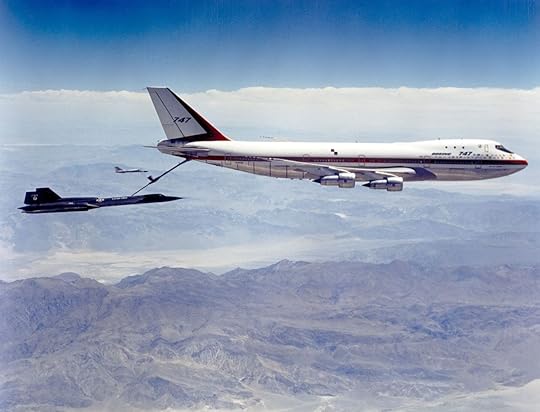
A favourite anecdote:
A favourite anecdote:
We were issued [cyanide pills] in case of capture and torture and all that good stuff, but given the option whether to use it or not. But [the pilot] didn't know the cyanide was in the right breast pocket of his coveralls when he dropped in a fistful of lemon-flavored cough drops. The cyanide pill was supposed to be in an inside pocket. Vito felt his throat go dry as he approached Moscow for the first time […] so he fished in his pocket for a cough drop and grabbed the cyanide pill instead and popped it into his mouth. He started to suck on it […] and spit it out in horror before it could take effect. Had he bit down he would have died instantly and crashed right into Red Square.

March 27, 2025
I loved this book! Beyond interesting reading about the creation of the coolest planes ever built. Listening to Ben Rich, the head of Skunk works, share past classified and secret projects was captivating. Hearing the stories of pilots, generals, military and CIA personnel was a real treat. It was special to read actual events where the planes were utilized and the understand the significance they played in world conflicts. I was amazed by the creativity and forward thinking that skunk works employed to succeed in such futuristic projects. What a book!!

August 25, 2024
this is so intel girly of me but unfortunately I did like it :/
Displaying 1 - 30 of 1,420 reviews