What do you think?
Rate this book


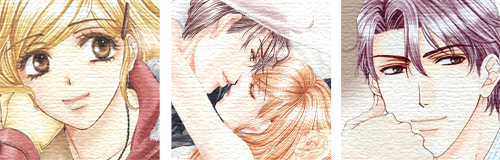
In order to help her father, Chiwa Takanashi agrees to an arranged marriage with the company president, Hokuto Mamiya—a man she doesn’t know—at the request of Hokuto’s grandfather. Chiwa believes the arrangement isn’t binding, but her new partner seems to think otherwise. Can two strangers living together find their way to a happy marriage?!
192 pages, Kindle Edition
First published June 10, 2009
- They try to establish boundaries/rules, but these rules ultimately are rendered worthless and the act of crossing them is part of how the leads grow closer.
- They fight over petty things to try to showcase how, at least on the surface, they are too different and unsuitable they are for one another and this creates tension, casting doubt on whether the marriage will ultimately work out.
- They have instances where potential rivals for their partner's attention either urges them to confess their love to retain their spouse or detours feelings from being acted upon because they believe their spouse prefers the potential rival.
- They get dumbly jealous of their partner in any situation where they interact with someone of the opposite sex, making a state of jealousy a frequent situation in the story, and will happen even when plot-wise it doesn't make sense for them to be jealous at that point.
- They have problems in their relationship because of family matters, like disapproving in-laws or being expected to conform to unfamiliar expectations.
- Their jobs and/or goals intersect with and disrupt their ability to be a spouse, causing tension that threatens the relationship from becoming genuine.
- They constantly fail to communicate with one another, usually because of something that amounts to "I'm just a means to an end, not a true spouse, they don't actually care about me, so I can't be open/vulnerable with them." Very classic "stupid misunderstanding is the root of major conflict" plot stuff.
Basically every bit of conflict followed the formula of:
1) Chiwa has a rational, reasonable concern to raise over something Hakuto did or said.
2) Hakuto proceeds to have a fit and/or yell at Chiwa, claiming she's causing trouble.
3) Chiwa gets upset and does something in retaliation like not talk to him or stop doing the laundry.
4) Hakuto, in turn, stays huffy and angry like a brat.
5) Chiwa, after being upset for a little while, suddenly abandons her feelings because she remembers that Hakuto has a dead mom or had a rough childhood or something to that effect, which is accepted as a coverall excuse for all his terrible behavior.
6) Chiwa starts doing housework again and all but begs for Hakuto to forgive her and stop being mad at her, essentially framing herself as wrong for everything and solely to blame.
7) Hakuto learns no lessons and makes no efforts to not cause similar problems in the future.
8) The cycle repeats again shortly after.