An illicit romance at one of America's most esteemed colleges leads to tragedy in Robert Stone's most compelling novel since the bestselling Damascus Gate.
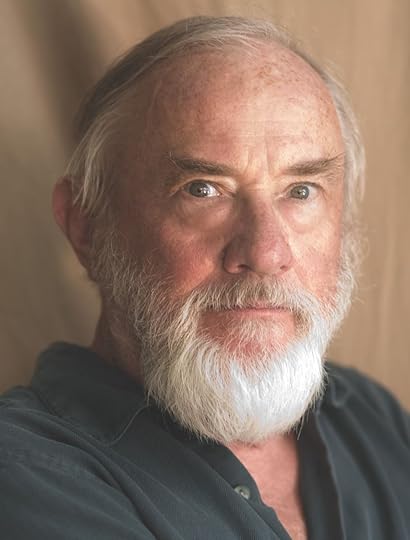
ROBERT STONE was the author of seven novels: A Hall of Mirrors, Dog Soldiers (winner of the National Book Award), A Flag for Sunrise, Children of Light, Outerbridge Reach, Damascus Gate, and Bay of Souls. His story collection, Bear and His Daughter, was a finalist for the Pulitzer Prize, and his memoir, Prime Green, was published in 2006. His work was typically characterized by psychological complexity, political concerns, and dark humor.
A lifelong adventurer who in his 20s befriended Ken Kesey, Neal Cassady, and what he called ‘‘all those crazies’’ of the counterculture, Mr. Stone had a fateful affinity for outsiders, especially those who brought hard times on themselves. Starting with the 1966 novel ‘‘A Hall of Mirrors,’’ Mr. Stone set his stories everywhere from the American South to the Far East. He was a master of making art out of his character’s follies, whether the adulterous teacher in ‘‘Death of the Black-Haired Girl,’’ the fraudulent seafarer in ‘‘Outerbridge Reach,’’ or the besieged journalist in ‘‘Dog Soldiers,’’ winner of the National Book Award in 1975.
Maud Stack is a beautiful, vivacious, intelligent, and careless student. Professor Steven Brookman is a handsome, Hemingway-masculine, intelligent, and careless instructor. Of course, we know what this means. It's not long before office hours become after hours, and the classroom becomes the bedroom. In terms of plot, there's nothing new or shocking in Death of the Black-Haired Girl. Professor Brookman is, of course, a very married man who, despite his occasional sexual liaison, is very much in love with his wife, who has recently discovered she is pregnant with their second child. Taking a personal vow to be a better husband and a better father, Brookman decides to end his relationship with Maud, but hell hath no fury like an undergraduate scorned. It's not long before Maud spirals out of control, leading to her eventual death under questionable circumstances in front of the Brookman home.
Despite seeming like the setup for a by-the-numbers whodunit, Death of the Black-Haired Girl is anything but. For those familiar with Stone's writing, this shouldn't be a shock and many of the negative reviews I've read come from readers who felt misled. I can't say that I blame them. With a title that conjures The Girl With the Dragon Tattoo and blurbs and summaries that throw around words like "thriller" and "noir," it does seem to project the wrong image. However, I read and enjoyed Stone's Dog Soldiers, so I was eager to enter into Stone's morally-nebulous universe.
That enthusiasm did not last very long.
Stone uses the aftermath of Maud's death to explore morality in both specific and broad terms. The novel's setting is a prestigious liberal arts college in New England, an academic institution whose motto, Lux in Umbras Procedet, or Light Will Go Forth Into Shadows, hearkens to a vainglorious past, its original mission to bring civilization and God's light to the wilderness. Ironically, in its 21st century manifestation, it has become the place that creates shadows, a place of locks and barriers--no longer seeking to interact with the world, it seems to insulate itself from it. In its attempt to protect itself from outside influence, it's evident that its insular nature is destroying it from within. It is a gray, dismal wasteland populated by the selfish and the insane. As Maud quotes Mephistopheles from Doctor Faustus as saying of the world, "Why this is hell . . . nor am I out of it" (15). After Maud writes a scathing indictment (although, from my perspective, a clumsy, rambling and ridiculously written diatribe that I cannot imagine anyone finding persuasive or brilliant) of the hypocrisy of Christian right-to-lifers that is published in the school newspaper, the college becomes a literal battleground between the secular and the sacred as hundreds of protesters flock to the campus and some go so far as to physically threaten Maud.
Many of the characters here seem to be in hell: Maud; her father, Eddie; the school counselor, Jo Carr; and Steve Brookman carry and create their own personal demons. There are also lesser angels presented in the form of the dean's wife, Mary Pick, whose tragic past in Ireland seems to have only strengthened her faith, and Ellie Brookman, who routinely leaves the college to return to the Garden-like existence offered by her Mennonite community in Canada. A woman of deep faith who believes her life to be firmly in the hands of God, Ellie serves as the embodiment of the platonic ideal for Brookman: a constant presence reminding him to do better and be better in light of his past. Discovering her pregnancy months after leaving their home to return to the fold of her family seems to remove her from the sordid sexual escapades at the college, making her pregnancy seem almost immaculate and her presence in Brookman's life divine.
So, yes, there's a lot going on here in terms of spirituality, repeatedly dancing at the edge of existential angst and then pulling back again. There's a lot going on in terms of abortion, Christian fundamentalism/radicalism, adultery, marriage, and temptation. There's some beautiful writing (the scene depicting the reaction of Maud's father, Eddie, after he learns of her death is heart-wrenching).
So what's the problem? Remember how I said Maud's editorial rant was rambling and clumsy? Ultimately, that's how I felt about the structure of the novel. The story isn't really about Maud's death at all, but splinters off into a dozen different directions, following secondary characters in such a hurried, abrupt way that the reader never finds resolution on any front. It's like Maud's death is a bare Christmas tree from which Stone hangs every vituperative, cynical, and nihilistic bauble he can find. But then he stands back and thinks something is missing. So out come the garlands of devotion and piety as a counterweight. But still, it's not quite right. Maybe some twinkling obvious symbolism lights? The plot becomes so weighted under these conflicting and ponderous messages that I just lost interest.
But the real death knell? The host of unlikable characters. Now, don't get me wrong--I'm not suggesting they should be likable in the sense that they should be good (in fact, it is the intended saints in the novel that I find particularly obnoxious), but there should be something about them that I still find appealing. Not so here. Part of my complaint comes from the fact that the novel does far more telling than showing, so many of the characters seem two-dimensional. It doesn't help that these are self-centered, pretentious, beautiful people who are careless with the lives of others. Surprisingly, the only sympathetic character is the one I thought I would loathe the most: Steve Brookman. Despite everything, there's the sense that he did love Maud in some way that went beyond lust. He doesn't come across as a lecherous Humbert Humbert in that what he loved and celebrated in Maud had as much to do with her intellect and her potential as her youth and beauty.
In the end, I can only state that Death of the Dark-Haired Girl ultimately seems tedious and unnecessary despite its grander aspirations.
While browsing in the library I picked this book up because - from the title - I thought it was a mystery. Though there's a death in the story it's not a mystery as such, with detectives following clues, etc. It's more of a literary novel.
The basic story: Maud Stack is a beautiful, bright co-ed at a prestigious New England college. She drinks too much, is having an affair with her professor/advisor Steve Brookman, and writes for the college newspaper, 'The Gazette.' Local anti-abortion protestors inspire Maud to write a scathing editorial supporting women's rights.
The editorial describes non-aborted babies with serious birth defects and/or lethal syndromes - with distressing photos when the article goes online. Before it's published Maud drops the article off at Brookman's office, hoping to impress him with her writing.
As it happens Brookman has just learned that his wife is pregnant with their much-desired second child and has decided to break up with Maud. Thus, he doesn't read her article, avoids her phone calls, and doesn't respond to her text messages.
Without Brookman to deter her, Maud's article is published. It garners enormous fury and blowback from the anti-abortion community, especially religious Catholics. (This part is hard to buy into. Surely the editor of 'The Gazette' would nix publication of such an inflammatory piece.)
Maud, very much in love with Brookman, is devastated by the break up. She shows up drunk outside his house one blizzardy evening and throws snow at the windows, screams at him, yells things about his wife, and so on. Brookman, wanting to protect his family, goes out to confront Maud - hoping to convince her to go home. Maud attacks Brookman, punching and hitting. Brookman tries to restrain the girl, and during the struggle a car hits Maud and she's killed.
Detectives investigate the incident. Did an anti-abortion protestor hit Maud? Did Brookman push her in front of the car? Was it a random accident? Was it the religious, stalkerish, estranged husband of Maud's roommate? Various 'witnesses' provide conflicting accounts of what happened and it's hard to decipher the truth.
As it happens Maud's father, Ed Stack, was once a New York City police detective who was at the Twin Towers on 9/11. Stack got emphysema from the dust, became disabled, and retired. Stack loves his daughter, is devastated by her death, and is determined to get retribution. Stack also feels guilty for 'abetting' thefts from dead victims of 9/11, and speculates that God might be punishing him by taking his child. (It's pretty horrifying to think that cops would steal from disaster victims but who knows if this is true or not).
Though some of this sounds like the stuff of mystery, the story doesn't really slant that way. It's more about a teacher/student affair, abortion/pro-choice issues, religion, a former nun who's now a student counselor, a militant priest who once worked in South America, a mentally ill man wandering around campus, Ed Stack's possible revenge, how Brookman's wife and co-workers react to the scandal, and more. In the end we do find out who killed Maud but this isn't the important part of the story.
The book has interesting characters and situations but I found it hard to remain engaged in the tale, which seems to wander all over the place. Thus, in the end, I didn't like the book much.
This is a perfectly ridiculous campus melodrama, written by a man who writes very well about drugs and violence and warzones and should probably just stick to that. And I could should just leave it at that, because that's true and it's hardly worth wasting type on a mistake of a novel. BUT HOLY SHIT WHAT A MISTAKE.
This book got two stars from me BECAUSE IT WAS SO ABSURD AND BORDERLINE OFFENSIVE IT WAS LIKE A PAGETURNER OF ABSURD AND BORDERLINE OFFENSIVE. I couldn't stop reading it. It was a total trainwreck. If you like outdated insulting ethnic stereotypes, gorgeous women powerless to the charms of shitty men, beautiful saintlike wives devoted to their terrible husbands, outdated insulting religious stereotypes, outdated insulting regional stereotypes, insulting authorial attitudes to the mentally ill, casual racism, hilariously outdated language and behavior by "young people," a complete lack of understanding of how technology works, outdated notions of class, a complete lack of understanding of how a contemporary college operates, bizarro dumb-dumb machismo seemingly played as "noble," and much, much more. I mean, I don't demand realism from my fiction, in fact, I love wingnut shit that flies way out of bounds. But this book seems to think it is realism. And to give you one example of just how off-base that is, there are a lot of ways you might describe a heroine that is purportedly six feet tall and weighs 120 pounds but "well-nourished and athletic?" For real? Robert Stone, have you ever met a women in real life?
In the meantime, there are all these strange details that are so wackado, that I can't tell if Stone is just playing everyone and that, in fact, he intends this book to be a comedy. Take for example, the elaborate scene setting about vast mentally ill homeless population haunting the edges of his fictionalized liberal arts Ivy-lite so pervade the story for the first few pages that even the students live in renovated flophouses. That's an interesting detail that gets dropped entirely. Likewise spectral Andean flute players, a (ghost? zombie? who the fuck knows?) new age, terrorist priest, a one night stand with a (Polish?) fake Wall Street executive with cheap Scotch, a baby-faced Irish mob family that still "whacks" people and seems to have been lifted full cloth from a comic book, some Canadian German Amish-lite sect who believes in standing by your man and Native American folklore and the Appalachian,former Christian rocker, schizophrenic ex-husband of the heroine's b-movie starlet roommate (I AM NOT MAKING THIS UP). And I have so many questions: Why does the protagonist dress in drag to walk to a coffeeshop in the morning? Why do people think that she's a good writer (because the extracted bits are beyond nonsensical)? Who in their right mind actually reads the editorials in a campus newspaper at a small, liberal arts college? Actually, you know what? Let me answer that last one for you: nobody. Nobody at all outside the campus, except the (maybe) parents of the students writing the editorials.
I'd like to raise a broader point here, and it's not entirely fair to Mr. Stone (who really has written some great books. Seriously. Damascus Gate? A Flag For Sunrise? A Hall of Mirrors? All good. In fact, Dog Soldiers is still probably my favorite book written about the Vietnam War) that I leave this here, but it has to be said:
Male authors in late middle age (or actual senescence as the case may be): we get it. You want to have sex with hot nineteen year olds. You want to believe they will become obsessed with your brilliant fiction and manly ways and swoon and sigh and keen like some tragic Gothic heroine. You want to believe you have the power to break their heart and break them. You want to believe that even though you haven't hung out with teenagers since 1965, you're still hip to the lingo. That your inherent coolness will allow you to write incisively about the lives of young people in general, and young women in particular, with razor sharp insights. And listen to me, unless you are (maybe) Thomas Pynchon (who is evidently still partying incognito with real, truly, live kids and listening to what they actually have to say), YOU SHOULD NOT DO THIS. You are making an ass of yourself. You are insulting your readers. Just stop. If you want to write a campus novel (and I'd ask you to reconsider whether we really need another one of those, because GOD HELP ME, THERE ARE SO MANY OF THEM), how about 1) setting it during a time you were actually on a young person on a campus and 2) making it not about an beautiful ingenue having an affair with a Hemingway-esque lit/creative writing professor and/or getting torn apart by campus politics. You have the power to make it stop. So MAKE IT STOP.
Rant concluded.
Seriously, people, this book is so absolutely terrible, I almost want to recommend it to you.
"How learned and fine we believed ourselves to be! How shitty of the world to deal with us this way."
It's a story as old as academia. Adolescent co-ed falls for, and falls into bed with, her university professor. It doesn't matter if he's paunchy in plaid or sexy in silk shirts. She can't resist the allure of age and power and worldliness. But the guy's always married, with a kid or two and a career to protect. Relationship ends. Girl is left bereft by father figure.
Did Maud Stack, the black-haired girl, have to die because of her affair with Professor Brookman? Or was it her substance abuse and emotional instability that doomed her? Did she have to die at all? Do any of us get what we have coming to us, according to our measure of responsibility for good and bad events? My guess would have to be that Bob Stone says no. Some play and others pay.
This novel is more philosophical than the plot description might lead you to believe. Robert Stone stirs up a lot of serious questions without ever giving away his own stance on any of them. Is consenting adult sex between student and professor acceptable? How much responsibility does the professor bear for the consequences of such a relationship? Who has the higher moral ground on questions of abortion? At what point should confidentiality be breached to save someone from self-destructive behavior? What part, if any, should religion play in determining appropriate decisions and punishments?
All of these questions are raised, and left unanswered, in this story. And perhaps that was Bob Stone's intent, to present a bleak reality in which there are no right or wrong answers and people regularly suffer, disproportionately, for their own mistakes as well as for the sins of others.
At a small, prestigious New England liberal arts college, a brilliant young undergraduate student, Maud Stack, is killed by a hit-and-run driver. When it happened, she had been standing outside with her college professor ex-lover in an angry confrontation. There were many witnesses, and opposing points of view about how she died, why she died, and who killed her. Additionally, there are characters either central or peripheral to Maud's life that provoke the reader into asking questions about truth and illusion; religious rearing; the connections and responsibilities of our patrons and protectors; and the security of our civic structure.
Maud, who has an increasing problem with alcohol, had just posted an article in the college Gazette, railing on the anti-abortion fetishists who have placed grizzly pictures of dead fetuses on protest posters to shove in the faces of women on their way to abortion clinics. Maud, angry with the vigilantes, decides to turn it around, by publishing pictures of fetuses with birth defects, with the argument that two can play this game of propaganda.
Did Maud's death come as a result of this article? If not directly, then indirectly? Or was it related to the affair with the married professor? Or did she bring it on herself, with her increasingly outrageous and self-destructive behaviors? The truth is hidden in plain sight.
There are several other characters that have relationships with Maud. There's her actress roommate, Shelby, who has a schizophrenic, stalking ex-husband who is obsessed with a punitive Christian dogma. Maud's one-time counselor, Jo Carr, is a compassionate ex-nun, who also works at the hospital and believes in a woman's right to choose. Jo is certain that she has seen a menacing preacher from her younger years in South America, one who may have come to pursue and shadow Maud. Then there is Maud's father, a former detective with the NYPD, slowly deteriorating from emphysema, due to exposure to Ground Zero. He also harbors secrets that trouble him, and he worries that he may have Maud's blood on his hands.
There are also characters that represent the class division of the city. This appears to be a crumbling Massachusetts mill town. Apart from the scholars and students at the college, it is a depressed place. Most of the inhabitants are meagerly educated malingerers and blue-collar workers, some who hold the esteemed college in contempt. There is also a strong presence of mental health patients who stroll in clusters of support for each other, very near the college grounds. For the most part, there is a hospitable understanding or informal agreement between the haves and the have-nots. Or is there?
The plot is less important than the themes, but it is the plot, or the unanswered questions, that keeps the reader reading. Stone writes sparingly, similar in some ways to DeLillo, examining academia and exploring themes of intellectualism, piousness, and the fractures of the family. Most of the characters live in internal disenfranchisement, in a desperate isolation from each other. Stone explores the woefully and ruefully marginalized, and his prose enhances that feeling--the hollow and bleak existence of those that fail to connect, and a mournful dependence of doctrine that breeds exile, and chains them to their transgressions. And he tinges it with dark humor and irony.
"People's religion -- it's not like opium. It don't work that way. It's their mother, you understand. They may not understand their mother at all. They may hate their mother. Maybe they're ashamed of their mother. Sometimes a mother makes someone hate other people. Any thing can drive such people to anything."
Stone's new novel is not straightforward mystery or police procedural. He is a former National Book Award winner, known for his stylized narration. The detached tone required some adjustment on my part, and I never felt an emotional attachment while reading. What lingers is the impressionistic images of a complex moral universe that Stone creates through his prose, and that evolve into a composition of exile, dependence, and internment.
As I’d read the back cover blurb about this book I expected to be following college academic Steve Brookman, who’d been having an affair with the lovely but headstrong Maud Stack; as we’re reliably informed (from the blurb) that Brookman realises his folly and – though obviously reticent – decides to break off his relationship. (Well that, plus his wife is pregnant (again) after many years of trying.)
However, we’re first introduced to college student Maud and her moderately successful actress roommate (and fellow student) Shelby.
And then there’s Shelby’s ex husband who is supposedly incarcerated in a mental institution in her hometown; and Jo, a former nun and now college counsellor.
By the time tragedy strikes we’ve also met Maud’s father Ed – former cop and alcoholic with whom she has a complicated relationship.
Because I actually thought this novel was going to be focused on Brookman, his family and the fallout of his dalliance, I found myself disappointed when we jumped between the heads of a myriad of characters and exploring a range of issues. In addition to the moral matters of adultery and abortion, religion and the church were also offered as fodder for consideration.
Author Robert Stone is an acclaimed writer, but in my humble opinion, Death of the Black-Haired Girl was a huge anti-climax. Perhaps it’s more of a study of human nature than anything else, although I felt our major players’ reaction to the novel’s tragic turning point, could have been explored in greater detail. At that point it felt like the novel became about Jo and Ed, with the Brookmans all-but disappearing.
Because it felt like we were constantly moving from one character’s head to another, I didn’t really connect with any of the main players; and the control freak in me still struggles to define or even describe the novel in any detail. I suspect I read most of the novel with a furrowed brow… wondering where on earth Stone was taking us.
Robert Stone’s Death of the Dark-Haired Girl will be available from 12 November 2013.
I received a copy of this novel for review by publishers, Houghton Mifflin Harcourt via NetGalley.
I don’t know why I read this. Death of the Black Haired Girl came very close to being donated to the Salvation Army a bunch of times. Each time I’d hold it in my hands read what it was about and think, maybe I should read this, and then keep it.
On my latest attempt to purge some books I decided to put a few of the ones that I kept thinking of getting rid of but also felt I should read and put them on top of the pile of books that I actually want to read but never seem to get around to.
I’m sure there are very good books in my to-read pile that I should have read instead of this one.
There are some other reviews that I saw on here that do a very good job at describing what is wrong with the book. And my problem isn’t that it really isn’t the thriller that it seemed to be, or that looking at the book now I can see why someone might have thought it might be a little misleading in it’s Girl With The Dragon Tattoo sort of feel to the cover. The book just isn’t good.
I’ve never read Robert Stone before. I know he has a reputation as a good writer. This isn’t good though. It actually reads as if it were pretty much unedited. Maybe this was the first draft of what could have been a decent novel once some of the unnecessary parts were cut away, and little details were fixed and characters were more consistent and didn’t seem to sometimes change when it was good for the storyline or to delivery some heavy handed metaphor about who knows what.
Like what was the point of in one line giving the Professor who was sleeping with the eponymous Black Haired Girl a skinhead past?
”Won’t stand up. But the guy (professor) did time.” (police officer) “What the fuck?” Stack said (black haired girls dad) “Yeah. It was...like it was technical. But the guy did federal time.” “What the fuck? The guy did federal time? The professor? He’s what? He’s some ‘I was there’ writer?” “He’s a big skinhead white guy. He was a fisherman.” Stack endered a moment’s struggle for breath.
I’m imagining he was struggling for breath about why he was trapped in this ridiculous novel having already had to endure the scene where his wealthy crooked cop mobbed up ex-brother in law came by wearing an expensive suit that had been probably stolen from a fancy clothing store on the morning of 9/11 when the mob went and looted in the hour or so between planes hitting buildings and everything really going to shit in downtown Manhattan… and wondered if the girl had been killed because of things he had stolen on that Tuesday morning in 2001.
Because why not, I guess.
There are just lots of little things like this. Any one of them would be fine, but there is ridiculousness and sloppiness abound. In a couple of instances things are commented on about a character chapters before the detail is given. And I don’t mean in a foreshadowing kind of way, but in a, yeah I probably should have mentioned the detail before making a call back to it.
Whatever, at least now I can safely donate the book to the Salvation Army. I’m sorry to whomever buys this if they have the same level of enjoyment that I did.
Is the universe indifferent to our suffering? Do those who believe they hold all the answers always think they have the right to hurt those who don’t believe them? These two broad questions are at the core of Robert Stone’s latest novel.
The eponymous black-haired girl is Maud Stack – beautiful, mercurial, spoiled, and self-destructive. While attending college in New England, she begins an affair with her middle-aged and emotionally damaged college advisor, Steven Brookman. To prove her mettle, Maud writes a highly inflammatory college newspaper article tackling the faith-filled anti-abortion protestors at the most visceral level. There is no doubt what happens to Maud; the very title of the book gives the main plot point away.
But is the book truly about the death of the black-haired girl…or is it a book about the death of all our illusions? In the most important ways, this book is not about Maud at all and it’s certainly not any kind of classic whodunit. We meet the people who hang on the periphery of Maud’s life: Jo Carr, school counselor and ex-nun, who is still mentally tortured from horrors in South America, her father, Eddie Stack, an emphysema-ridden former policeman who lives with his own nightmares, her friend and roommate Shell, an actress with a mentally disturbed ex-husband, Lieutenant Salmone—her father’s ex-partner and many more.
All of them struggle to make their lives – and Maud’s death – make sense and mean something at a time when the institutions that are supposed to protect them (the churches, the law, the colleges) are failing. All of them strive for a sense of connection yet most must carry on alone.
It’s a strong premise, but it didn’t entirely work for this reader. To buy into any of this means that the reader must first buy into the premise of Maud and Brookman and how her death unravels those around her. But her character not nuanced enough. As portrayed, Maud appeared as an unstable, potentially alcoholic, terribly entitled and naïve young woman; her smartness, creativity and beauty seemed secondary to that. Some of the scenes between Maud and Steven did not seem quite genuine.
Also, at times, I felt that Robert Stone was walking a thin line between serious literary work and crime novel territory. Both are valid genres, but for me, the cohesion between the two had to be more seamless.
I wanted to give this a 4 star rating for many reasons: the assuredness of the prose, the universal questions it raises, and the simple fact that once I got going, I didn’t want to stop reading. But it never really coalesced, hence my 3-star rating.
I wish I had started with Stone's earlier work, which I hear is good and even excellent. This, sadly, read like "notes for some possible screenplays if I need money fast." I could not even detect an editor's slight touch. I pity the editor who is associated with this book.
There were what in movies are called continuity errors - a college counselor is paid enough to dress well, but her office is In a basement because her status is so (aptly) low. This character, a former nun, had a rough draft of a back story that was literally pointless to the book, the plot, such as it was, and had me flipping back thru the book at one point to see if it was missing pages. She had been in another country. There was a mysterious revolutionary? Man, anyway, known as The Mourner. I think his name was symbolic.
The adulterous college professor was not even developed enough to be a cliche, although much detail was provided about the drapes in his office; his wife, apparently an idiot, had some thinly sketched out religious background that she maintained - Mennonite? which contributed nothing to the barely existent plot, except more of the "toss some themes in the blender" -- to confuse the reader?
An alcoholic cop, references to 9/11, corruption in the NYPD, abortion rights, the Catholic Church, oh, wait -- a woman widowed by an IRA bombing? College students with iPhones proving to be poor witnesses...ripped from the headlines and then tossed in a blender. Or to keep current, juicer.
I finished it at last. And it was not a long book. And it was not, according to what I hear, even close to the caliber of writing that Stone made his name with. For which I am, despite being out the price of the book, glad to know.
I definitely had the wrong idea about this book. I thought I was getting a crime thriller, maybe some mystery, a little romance. Instead, I found this philosophical rambling much more boring. I don't mind authors who spend a lot of time on character development, but I still didn't understand the characters by the time I turned the last page.
Some of the scenes and descriptions were so vague, I'd have no clue what was going on or what author Robert Stone was referring to until it was referenced more straightforwardly several chapters later. Rather than focuse on Maud, the young collegiate who is the main character, or Steve Brookman, the professor with whom she's having an affair, Stone jumps from character to character — Maud's roommate, the roommate's crazy ex-husband, a former nun who does have some sort of mysterious history in Latin America (but I was too confused to know what it was).
It was a struggle to get through this book. And the main plot point — who killed Maud — was wrapped up in a couple short paragraphs. At that point, I didn't even care who killed her.
Not good. Stone, a writer I really admire, is now at the point in his career where he's sadly cannibalizing parts and characters from previous novels (in particular Flag for Sunrise and Bay of Souls) in order to crank out something "new." Some (the New York Times) are calling this a fast paced "literary thriller." Well, it is true that there are elements of both literary fiction and noirish thriller (none of which are "fast") in the novel, but not enough to satisfy the lover of literary fiction or genre novels. There are some cool moments throughout, but too often characters and motivation seem undercooked. There's an interesting and recent piece on Stone by the Wall Street Journal. In it Stone confesses to being both a perfectionist -- and lazy. A bad combination according to Stone. I think that harsh, but he's not exactly a prolific author, though much of what he's written is extremely well crafted, recalling high-end Hemingway and Conrad. In Death of the Black-Haired Girl, you will find numerous passages, stunning sentences, and terrific meditations on the nature of good and evil. But the parts don't equal a satisfying whole. If you're coming to this novel as a first time reader of Stone, and are mystified about his reputation after reading it, I suggest you turn to the novels Dog Soldiers and Flag For Sunrise, or perhaps his remarkable (and grim) short story, "Under the Pitons." In these stories you will see why Stone has such devoted fans. Below is a link to the "Pitons" story. It says you can sign on to read the whole story for free. If so, check it out...
This is probably the worst book I have ever read, as I can not think of one redeeming quality. As I was reading this, the question running through my mind was "how could this have been published?"
This book was terrible, for MANY reasons. A brief sample: 1- The dialogue was absolutely ridiculous, especially between Maud and Brookman (most cringeworthy) and Maud and her roommate. Being only a few years older than Maud, I can clearly remember my college years and I can absolutely guarantee that my friends and I never spoke like that. 2- Related, partially due to the language, I kept feeling like this book took place in the 70s or 80s, only to have the author specifically reference the year as 2004. The dialogue, the clothes that the characters are described as wearing- everything screams of decades past. I want to open my book to describe specific examples, but I also can't imagine opening that book again. 3- The attitudes towards abortion again feel out of place in a liberal arts college in New England in 2004. Considering the absolute uproar that Maud's (poorly written) article (in a college paper, that apparently EVERYONE read) induces, this again made me feel like I was reading a book set a few decades ago. In such a setting, the fact that people were literally travelling to this college to harass a college student seemed ridiculous. 4- The fact that literally everyone can find something in this book to be offended by. Again, I don't want to go back through this book, but off the top of my head: the casual attitudes towards the mentally ill just wandering through the college, the indifference towards the town's supposedly huge homeless population (only mentioned on a surface level, as they only served to hit on Maud as she walked by), Brookman's attitudes towards his wife's religious sect in Alberta, the absolute dismissal of the roommate's mentally ill, abusive husband and the lack of concern of those around her concerning his violations of the restraining order...and I can still go on. 5- The misleading title/blurb on the back of the book: don't be fooled in to thinking this is about a student who dies shrouded in mystery, or think that her affair with her married professor will make this any sort of a suspense novel. There were so many random plots inserted, and at some point I just stopped caring.
I got this book for maybe $3 in the cheap bins at the book store and I can't even recommend buying it then.
Judging by other reviews, it seems that this author has other, far worthier novels that someone looking to read this book should probably choose instead.
A bright, beautiful, troubled student at an elite New England college is dumped by her professor-lover after he learns that his wife is pregnant. When the girl dies in an apparent hit-and-run, there is some question as to whether it was an accident. Might her aggressive diatribe against anti-abortion protesters have been a factor? The professor?
In a Robert Stone novel, you don't expect a thriller. You expect contemplation of moral and spiritual questions, characters wracked with guilt and ambivalence. Check. What suspense there is is of the psychological rather than the whodunit variety. There are interesting secondary characters, well-drawn atmospherics of a fading town and its uneasy relationship with the pristine institution in its midst, and mostly first-rate writing. The pages turn easily. But “Death of the Black-Haired Girl” not only isn't a thriller. It isn't much of anything else either.
I found this book to be a waste of my time. It is self-indulgent and pretentious. The author apparently wants to communicate a few randomly associated opinions he has (regarding religion, abortion, drugs, police, higher education) and has combined them with chewing gum and post-it notes. The plot is thin and stressed by the number of ornaments Stone has decided to dangle from its weak limbs. The descriptions are often just attempts to show off how good he is without advancing the story, the setting, or the understanding. Overall, this felt like the first novel of a not-very-good author, or even an undergraduate writing thesis. So, I checked the jacket blurbs to get some more info on the author and found out that he is "considered one of America's greatest living authors". I only have two explanations for that: we are very short of authors, or he wrote the blurb himself.
I was going to write this review later, but I can't sleep. The longer I think about this book, the more I hate it. What gets under my skin, more than the book itself, are the reviews oozing praise for this book from some of the major newspapers. Then I check GoodReads and see that many other readers agree with me. Thank god!
My first hint that this book would not make it onto my favorites list was when the lovely Maud gave dear professor a blowjob. It was like a scene from a cheesy porno; all that was missing was the plaid skirt. "I bet a man wrote this." Hey, look! I was right!
Except for the professor, the characters were lifeless shells. Maud, who was supposed to be intelligent, was an absolute pinhead. The counselor was flat as a pancake-very little dimension. Even Maud's grieving father toed the line between real and a robot.
I understand what Stone was trying to accomplish with the religious references, the highlighting of hypocrisy directly and indirectly, the edges between where sin begins and ends, and everything else. At least, I think I do. He never quite reaches his goal, whatever it is, and instead splinters the story in a dozen directions. Each direction ends in a pointless mess, and the book closes with a weak attempt to bring it all together.
I finished this last night. I've already forgotten how it ended.
Many novels don't hold my attention long enough for me to finish them, so this at least passed that test. But at the end, I was kinda.....Why did somebody spend so many hours writing that? When one embarks on a Robert Stone novel, I guess there's an expectation of some larger point in addition to the main story. I suppose this one may have dwelt a bit longer than most on what it's like to be falsely accused, and there was some mystical mumbo-jumbo that I skimmed over, but this was kinda featherweight. And while I didn't hate it, I can understand why so many reviewers here did.
I grew disappointed with this work after about 50 pages, but I kept reading all the way to the end, hoping that a compelling story would emerge from the book. It did not.
In the days of old the college had presumed to send forth its light, a few homilies, to doomed praying Indians. In its own heart it never knew and never learned, light or darkness -- about either or how to distinguish one from another. It sent out bookish young men, and eventually women to save the world by generations. But the college had never known darkness until they threw away the keys, and the shadows the place had pondered and reported and tried to witch away turned up at its door. -- the voice of the narrator
Nothing was so bad it didn't have a dark side -- Eddy Stack, reflecting on 9/11
In examining the body of work to-date from Robert Stone, it's clear this writer of philosophically-inclined noir intrigue hankers after dangerous, exotic locales.
In 'Dog Soldiers' and 'A Flag for Sunrise' respectively, there's heroin-dealing in wartime Vietnam and revolutionary regime change in Central America. 'Outerbridge Reach' positions its main character, Owen Browne, alone, on a racing yacht in high-seas, fighting for his life. And in 'Damascus' Gate', a bomb plot threatens the holy city of Jerusalem where contending faithful and the heretics, the politicos and the madmen, work out destiny for themselves and each other. These volatile settings promise moral and physical challenges for Stone's adventurers, but often, moth to the flame, they come to them unprepared, in spiritual disarray, compromised by alcohol, drugs and fatal errors of judgment.
The Coltish Girl and the Professor
In 'Death of the Black-Haired Girl', his first novel in ten years and his eighth in the oeuvre, Stone details not exotica as setting but, instead, something familiar and ostensibly tame, an elite university placed in the old New England mill town of Amesbury that has seen better days. On paper, the dramatis personae appear consonant with the school's mission and motto -- 'Lux in umbras procedet' (Light proceeding into darkness) -- and better suited to a campus novel of manners than a story of life on the edge. It feels, at the outset, like something we've seen before: the beautiful student is the young 'coltish' titled girl Maud Stack, National Merit Award Scholar, editor of the college daily Gazette and daughter of retired New York City detective Eddy Stack, a first responder on 9/11; her handsome lover and academic advisor is the popular middle-aged humanities professor Steve Brookman, married, a father, planning to break off the affair. A quirky roommate, the religious 'good wife', and a sensitive, older female counselor round out the cast. Hardly the kind of material to get us thinking of Hemingway or Conrad.
Know that 'Death of a Black Haired Girl' has been constructed as a 'procedural', a kind of inquiry less interested in character and motivation than in laying bare the causes and history behind a tragic death that in a caring orderly world might never have occurred. Though the novel's less ambitious than Stone's earlier work, make no mistake -- it bears his signature style and calls out themes we've seen from him before -- the high-stakes consequences of carelessness and drift, the proximity of madness in ourselves and the world at large, the seductiveness of the altered state, and the threatening malignancies in the fabric of society, ignored, hiding in plain site. This may be a campus novel but the campus itself neither inspires or educates, it threatens, blighted as it is by the sufferings of the disadvantaged and the malign indifference of the college and its staff to the welfare of the students. 'Death' turns on the vulnerabilities of Brookman and Stack, and builds steadily in its second half as an involving police murder-investigation, replete with twists and red herrings and haunted by a dramatic, spiritual sub-text. The procedural questions get cleared up, the larger ones remain, unanswered but not unexamined.
Leave it to Stone, the former Merry Prankster, to conclude the novel with the provocative image of a film auteur: a quiet memorial service for the dead girl at the Church of the Holy Redeemer, where, following an 'old idea' on the European model, Maud's cremated ashes and crypt are placed like the others, not catacombed under the shadowy cathedral, but on its main floor, right alongside its praying -- and living -- faithful.
Recognizable Patterns
Brookman knows he must end the affair with the passionate Maud; his Canadian wife Elsa, also a professor at the college, is pregnant with their second child and the Brookman's adultery looms as a threat to the marriage and his career. But, he's drinking too much, insulting acquaintances at parties, procrastinating with the grading of final exams -- the best he can do now is hint to Maud of his need to separate. Meanwhile, Stack, angry over Brookman's cooling ardor, misdirects her fury and cooks up an incendiary pro-choice editorial targeting 'The Holy Romantic MegaChurch', i.e. Catholicism and its abortion canon. In response to the horrifying photos of the aborted fetuses Church groups use as agitprop, Maud, a former Newman club member now 'fallen away', plans to combine the editorial with similarly shocking photos taken from Smith's Recognizable Patterns of Human Malformation, examples of God's own handiwork, new-borns at full term, hideously contorted by genetic happenstance and soon to die (Later, Eddy Stack, Maud's father, will characterize his daughter's battle with the Church as a kind of game of dueling, dirty pictures).
The author and Master of the Dark Arts
Maud leaves the editorial and photos with adviser Brookman for his review but, fatally, he postpones an evaluation. The Gazette publishes the editorial, sans the photos, as Maud returns home to visit her Dad and starts drinking heavily. When she returns to school, roommate Shelby Magoffin, alarmed by suspicious visitors wanting to see Maud, drags her off for counseling with Jo Carr, a fifty-ish ex-nun social worker who over the years has come to know a thing or two about treating alcoholic female students and young pregnant teenagers in crisis. Maud, still full of piss, vinegar and plenty of booze, has none of it. The night of the big hockey game then arrives with a series of unfortunate events: the university breaking with protocol by failing to re-route traffic away from the streets surrounding the stadium; an inebriated, angry Maud appearing in front of the Brookman house, shouting out at and taunting the professor, as he rushes out to calm her; a speeding car crashing into the street crowd and launching Maud onto an adjacent wrought-iron fence, impaling her, then disappearing into the cover of night.
How can this have happened on the streets of the hollowed college? Who's ultimately responsible? Did Brookman push her into the path of the car, as some bystanders claim, or was he trying to wrest her from it? Could Maud's death have been premeditated, the work of the religious right targeting the Gazette editor for her editorial? And how much blame can be assigned to the reckless victim herself?
Hanging with the Housies
First up for review is the institution. Regardless of any evidentiary link to Maud's death, Stone's narrative voice here wants to indict the college. We learn that since the time of the Indians it has a history of being less than accommodating to both natives and townies. Today, on its boundaries, a sizeable homeless population, actively panhandling, acts as a constant reminder that the college provides neither a safe hassle-free learning environment for its students or a separate haven for the poor. Along the town river, drug transactions occur routinely among dealers and students, a fact Maud plans to expose in print. Night-time female joggers, fearing rape and foul play, know enough to rule-out certain on-campus streets. Even the campus coffee depot seems tense: a nearby half-way house permits its 'recovering' mental patients, called 'Housies', to sit among the latte-drinking students, spooking many of them with their hostile staring and grimacing. Stone's sidebar tale on Margaret Kemp -- a teacher shuffled off-campus after a nervous breakdown and later unable to get help from the college before she hangs herself -- lets us know this institution is long past the days of functioning in loco parentis. How could the Maud tragedy not have happened?
But there are more conventional leads to pursue, police business that might result in an arrest. Roommate Shelby has a restraining order against her out-of-state ex, John Clemmer, a mentally unstable religious zealot sprung from his care facility by yet another religious zealot, the preacher Russell Fumes, former chaplain of a state insane asylum. She's been getting calls from him and is frightened enough to purchase a gun for protection. Clemmer knows Shelby rooms with the apostate Maud and believes her ex has been led astray. Did he seek retribution by killing Maud?
In addition, a chilling, phantom-like figure from the past pays a visit to Carr. He calls himself the 'Mourner' and says he hears 'silent screams'. A frightened Carr believes she remembers him from the days of her mission work as a nun long ago in South America when he was known as 'Father Walter' and murdered ceaselessly in the cause of a nameless and now forgotten revolution. Should he be another person of interest? If so, why can't the police locate him?
And then there's Brookman. Detective Lou Salmone, an old friend of Stack, conducts his interrogation of the educator as a confrontation meant less to find legal culpability then to unmask the indifferent philanderer behind the facade of the pained advisor. But it makes hardly a dent. Later, Brookman will carefully characterize his affair with Maud only in terms of what it's not -- a committed relationship with a woman that bears his children. The word 'fornicate' never crosses his mind.
As the detective story progresses, the images of fear and pain Stone has created accrete to critical mass and, with his searing portrait of grief in the person of the father of the dead girl, Eddy Stack, we start to feel how the investigation of Maud's death has become just one pathway in a more generalized anguished search for meaning in suffering. This is not an unfamiliar moment in Stone's fiction -- despairing humans at the edge of the precipice, deprived by their God of comforting delusions, ruminating on Why. In the case of Stack, this pugnacious Irish cop near the end of his life, drinking again and struggling with emphysema contracted at Ground Zero, bitterly reviles the corrupt politicians, fellow cops on the take, 'the pussy-faced' priests of his Roman Church and especially Brookman. They are all 'Them', the despised Other. To Eddy, every face now, including those from his family, bears the mark of a group or an institution that conspired to take away his only child, ahead of him, into the next world. All that destiny allows for Stack now is to place her remains at the sanctioned Catholic site, along side her deceased mother. And then die.
Coyote Singing
There may be one more thing. Perhaps, thinks Eddy, the God of Creation runs a zero-sum game based on the old street dictum of the mobsters he used to encounter on his beat. If a mistake is made, they always said, somebody has to pay. Is this something actionable for Stack?
Meanwhile, a contrite Brookman listens to the pregnant wife Elsa, a faithful German-based Mennonite, recounting how, on her recent visit to Saskatchewan, she and her family got trapped in the remote mountains by a heavy noreaster snowfall. Brookman knows her forebears -- some of whom were mad -- cohabited with anamistic Indians in earlier times, and as she speaks, he comes to understand his wife has learned from them some of the old legends and ceremonies. Says Elsa:
...That's the life of the bush. There are no ironies there. There's nothing but irony there. That's what the tales are all about. But the ceremony when the light goes, it will be gone for fifteen hours. The storm's trapped us and my thought is, I'm pregnant. I have to take care....Someone was singing a song about Coyote and I started to shake. Darkness all around. I thought I saw Coyote...Coyote singing, 'Child will die, Elsa' I thought: My land, were fucked, eh? I thought we'll lose the child. But I didn't. No. Maud died instead. Ya. So, I saw it coming'.
This is vintage Stone, the idea of an unfathomable God, the Mobsters and Mennonites keepin' it real. So too is the link he makes between the fate of Maud and Eddy and what might have occurred amidst the rubble at the Twin Towers. In Stone's world, there's always a distorting, psychic disturbance at work in the field, sourced from human consciousness struggling with disorder in human institutions -- political and religious -- that seem to be verging on breakdown.
The Pro-Life Position and the Devil's Advocate
It would be difficult to read this book without thinking Stone associates Christianity with a world of hurt and mental instability. But, the attack on religion here eschews ideological criticism and seems to be sourced mostly from the author's latter-day anti-clerical sentiment, targeting especially the half-demented, self-proclaimed ministers of God. Further, with the introduction of the Mary Pick, the wife of the college dean, late in the novel, Stone provides a short but reasoned defense of the Catholic, pro-life position that's especially lucid amidst the rootless disaffection at work in the book. Who would've thought? After all the religion-bashing, the author, it seems, enjoys playing the role of the devil's advocate.
I picked up this book up from the library because it was shorter and different than the other books I've been reading lately. But I didn't care for it. I read it all the way to the end and my feelings didn't change. Doubt I'll be picking up anything else from this author. Not my style.
No spoilers for this novel, other than the one Robert Stone placed in the title. This novel is set in a New England college town which has seen better days. It's the story of a college student, Maud, who's been told of her beauty and brilliance from an early age, and her professor, adviser and lover, Steven Brookman. Stone is a wonderful observer of people and places and he paints the picture of a campus surrounded by a small city and how even a walk from one place to another has ominous overtones. I currently work on a campus and Stone's words brought this school in Amesbury to life; the campus life has a kind of sequestered feel, but having a city just footsteps away creates a kind of dissonance that shakes the illusions one might have of ivory towers.
In this tale, Maud goes about her every day business, working on her courses, hanging out with her roommate Shell and stopping by for a visit to Brookman. Brookman is married, to another professor, and has a ten-year old child. He'd fallen into the liaison with Maud sometime back and has a sense he's way out of bounds, but seems reticent to admit it. In a complication, his wife Ellie, has just told him she's pregnant -- a moment that should be joyous, but injects a dose of reality into Brookman's life. Another person of note is Jo, a former nun, who now is involved with a nearby hospital and often helps out students who need some counseling. Jo -- like Stone himself -- spent time living in South America and brings the street smarts of a grownup into this story. She gives advice to many who need it, but it's often not followed. And so the tableaux is set, as these characters are aware of each other, but follow their own pursuits. Into this, Maud injects an article written for the school newspaper, where she satirizes a local group of right-to-life protesters and decorates it with photos of children who were malformed from birth, and likely destined not to live long. Since it's now time for winter break, Maud returns back to her home area outside of New York, where her widower father, Ed Stack, a former policeman lives. Her Dad reads the article and immediately realizes it would thoroughly piss off a segment of the church going public, and tells Maud. Maud says she's proud of what she wrote; the daughter and father still not understanding each other. One might want to read Stone's story "Bear and His Daughter" for another take on this theme.
In the second half of the book, the tableaux unravels and Maud is a victim -- but of what? Stone takes us through the grief of Ed Stack and the consequences faced by Brookman when his erstwhile liaison with Maud becomes known. Stone gives us many views of the participants in this story, but refuses to offer the glib explanations that would tie up the loose ends. But in the ambiguity one senses larger truths. This is the last novel by a master writer. Stone gives the reader so much to ponder and chisels with words that grab us and don't let us go. Read this book and all of his others. If there was a men's fiction genre, Stone might be the perfect author candidate, but no, his fiction is not just for my gender, but for all who love words shaped into stories that speak truths.
Robert Stone's dark-haired girl of the title falls to the violence of a hit-and-run driver one night near the campus of the New England college she attends, in front of the house of her professor and faculty advisor, who also happens to have been her lover. But the professor's wife, who's been away, has just come home from visiting Canadian relatives. And, the wife is pregnant. Maud of the dark hair is beautiful, brilliant, sometimes impulsive, and drinks a bit. On the evening of her death she has a blood alcohol level of .20, and decides to confront the professor along with his family in their own space, calling him out in what is simultaneously an act of aggression, of bitterness, of desperation. A physical confrontation ensues, which makes it harder to tell how Maud winds up in front of the speeding car. Was she pushed? Was her injudicious professor concerned for Maud's safety, as well as the peace and safety of his family in the house?
Before her final day, Maud had recently written a heavily caustic and condescending column for the campus newspaper on anti-abortion demonstrators in the neighborhood, ridiculing the protesters and their beliefs. The piece caused a stir, and generated denunciations and death threats. Was the driver of the car exacting a vengeance? Lots of questions arise in the investigations to follow, but the answers do not follow as logically as a conventional mystery or police procedural would have it. The questions here are larger ones.
Two men in Maud's life--her widower father, a retired NYC policeman in very poor health, and her professor/lover--cross paths when the father visits the New England college town to confront the professor. Stone writes of the father, Ed Stack, as haunted by a guilt for something that could have been associated distantly with Maud. And of Father Stack: "It seemed to him that he had been poisoned by anger long before he had any right to it. It must be in his blood, he thought."
Professor/lover is also haunted by guilt and anger, and a fervent wish to shield his family from a confrontation with Stack. How does he feel, why does he agree to meet his late lover's angry, vengeful father? "Maybe the temptation of oblivion, or an obsessive curiosity about the ineluctability of fate. And an ancient anger he had been born with, an insatiable rage against himself, his cast of mind . . ."
I don't pretend to know exactly what the rage is about, but I get hints of it in the final pages of the novel, in a brief conversation between Jo, a woman who had been Maud's counselor at one time, and Victor, a friend of hers introduced only at the end. Jo notes that "history is poisoned by claims on underlying truth," and wonders aloud whether such truths exist. Victor is skeptical, but understands the impulses that generate the search for such truth, noting that "people always want their suffering to mean something."
Given the eminence of Robert Stone and the appeal of a psychological thriller I was looking forward to this one. Considerable disappointment followed. This final effort from the author lacked cohesion, believability and ultimately interest.
I should have known better. Often when trying to decide whether to read/buy/ borrow/ keep a book I use Goodreads for guidance, when enough readers have supplied a rating. I have found, however, the titles I check are almost always above three stars. So not much help. But this one is low at 2.68 stars, lower than every other Robert Stone work.
The rating is 2.68 for good reason. The story was tired and cliched, the arguments about abortion superficial. I found it impossible to engage with characters fleshed out with potted biographies rather than emerging through events and dialogue. I had no rapport with the dark-haired radical student girl Maud Stack, let alone her sad cop father Eddie Stack, hapless lover Professor Spofford, his IRA widowed wife, or the well-meaning but traumatised South American former-nun counsellor. Oddly, the only character I warmed to was the Dean, who was actually nuanced.
Stone’s treatment of contentious issues left me cold – abortion, mental illness, corruption, academic intrigue - there are some splendid assessments of these matters among the Goodreads reviews. So I should have known better.
There are some tell-tale giveaways: as early as page 3: ‘Maud had written a witty and passionate column in the college newspaper, opposing and mocking the move which had been much admired.’ I asked my ten-year-old what was much admired? He said: ‘the witty and passionate column in the paper? No wait. The move? I’m not sure.’ Exactly.
Later on, at page 209: ‘Mrs Spofford was sometimes useful at mass because he often forgot the responses and she had them handy.’ The use of both ‘sometimes and ‘often’ is sloppy. Better to just says Mrs Spofford was useful at mass. I usually forgive such things.
Finally, an anachronistic reference. On page 104, Maud’s roommate Shelby, aged in her early twenties and getting a name in independent cinema, is talking on the phone with her mother and says: ‘I gotta shoot my crazy husband? … Cute on screen no more, Mom. I’ll be a Fatty Arbuckle.’
Seriously? The Arbuckle scandal happened in 1923. It is conceivable Shelby may have heard of Arbuckle or perhaps even the scandal itself (silent comic Arbuckle was tried for raping a starlet and acquitted three times, but his reputation was ruined), but it is unlikely. Stone on the other hand was born in 1937 and far more likely to be familiar with the case.
Deeath of a Black Haired Girl reads as easily as a murder mystery, while tackling some very big issues. In the end the book is not merely about the death of the black haired girl, a college student who wades into the abortion issue. The book is ultimately about how we as individuals choose what has meaning for us and whether ultimately that choice is meaningful at all. On a micro level the book seems to suggest that very little of what we believe or hope for has much affect on our fellow beings. However, it is more about the striving for meaning that is more important than anything else. This issue is played out through the question of abortion. Maud Stack, (the black haired girl) writes an article in her college paper about the despicable conduct of anti-abortion zealots. She is particularly galled by the photos protesters use to scare women away from getting abortions. Thus, she finds photographs of horribly deformed children who were born and suggests that God does a pretty good job of aborting children as well. (Some of the live births only last for a few minutes or hours.) This of course agitates the anti-abortion crowd. There are several candidates the police could look at for the crime. But there are characters in this book with varying degrees of religious morality and it dawns on the reader that there is indeed a lot of gray area in this debate no matter how strongly you might feel about one side or the other. As with most other major issues, the movement appears much different when one focuses on or has a relationship with individuals. Movements seem to create an inertia of there own that simply may be too big for individual actors, who are nonetheless cogs in the machinery. If they want to be a part of the movement, they are part of the machine. It becomes very difficult to have a meaningful dialogue under these circumstances. The police search for the usual suspects until the crime is solve. But is not how the crime is solved that is the focal point of this book. Rather the book ask us to question why we do what we do and whether there is ultimately in meaning in our daily lives at all.
This book is obviously not for everybody. It seems to be the lowest rated book overall to which I have chosen to give a 5-star review. The author has a lot of things to opine about, including religion, abortion, elitist college life, homelessness, class divide, drug abuse, mental illness, and even rebel uprisings in Central America. I can see where this could be a bit disconcerting for some. I felt that he expressed himself well and commented, ala Don DeLillo, on our modern times. The story involves an extramarital affair of a popular English professor and a stunning, intelligent, and troubled student (the black-haired girl of the title). With overtones of Fatal Attraction, things start to go wrong when he attempts to end the affair after learning that his wife is pregnant. The plot becomes more coherent and compelling as it evolves. It could be argued that the author attempts to do too much. For me, it all fit together into a scathing indictment of the problems in our world, especially in the area of religion. I'm not sure Robert Stone is supremely anti-religion, but he obviously has problems with those that are indignant in their beliefs. This is a theme throughout the novel and drives many important aspects of it.
1.5 stars.... Stone's final novel is a busy mess of a book, one that never pauses to develop the character at its center. College student Maud Stack is by turns an alcoholic, a firebrand writer for the campus newspaper, and the lover of a professor. It's Maud's death that sets the story in motion, but Stone is only interested in her as a set of behaviors that cause reactions in others. The world Robert Stone sets this novel is resolutely depressing, and Stone doesn't hesitate to pile on. Recently released mental patients roam the streets near Maud's campus alongside angry pro-life marchers, and it's a rant about the marchers (one that no newspaper, college or otherwise, WOULD EVER PRINT) that provides the most likely reason for Maud's death. There's also a mention of the robbing of dead bodies at Ground Zero and counselor whose work with radicals in Mexico Stone uses for digressions that add nothing. In the end there's a meeting between two men central to Maud's life, and we realize Stone's point. Robert Stone, for all his facility as a writer, was incapable of putting himself inside the head of a young woman c. 2015. What we have here is a novel about the Sadness of Men. Not recommended.
First there was film noir, now there is college noir. A distinguished writer turns Harvard into Sin City (I'm looking at you, graphic-novel-turned-incomprehensible-movie). I tried hard getting into these characters, into that dark college that we know to be Harvard but, coyly is Not Named. I tried holding on through sad nuns, room mates with far too much back story, infidelity, young writers who truly did need an editor (what a badly written diatribe), the alcoholic emphysema ex cop morning his wife and awaiting death, the (gasp) Mourner... After the central character gets thrown under the bus (I'll leave it to you to read other reviews and figure out what actually happens), I stopped reading in mid-book and said to myself, "Self, WTF is going on here, and furthermore, do I really care?" The only upsides for me are, 1) that I understand that Stone is a much-revered writer and I'm willing to give his works another chance ("Dog Soldiers," e.g.) and, 2) I'm glad I borrowed this book from my local library instead of buying it. I may commit the unforgivable sin of skipping to the last few pages just to bring this sorry tale to an end. Or I may not.
Depressing, but interesting in how it outlines the fallout from the death of one girl. I don't think that's a spoiler, seeing that it's in the title that she's going to die. But it's interesting that the reader is allowed to get to know her a bit before she actually dies, with the knowledge that she is going to. And you can't help but like her, not because she is a kind and sweet person, but because of her edges and because she wants what everyone wants out of life.
Definitely an interesting read. It was especially harsh to read about her father, who was a policeman there on 9-11 and doesn't expect anything for all the crap that got in his lungs. He doesn't even bother to go to the doctor; he's just pretty much given up.
This is one of those books where every character has a deep background, and it was great to read about her roommate and her husband issues as well as the counselor and her history with other girls and before she came to the school.
Pretty fantastic. At times incredible. My first Robert Stone novel, and won't be my last. The titular event occurs about halfway through the novel, and it does suck a little life out of things. What began as an almost sprawling book gets pretty focused, and I missed the anything-can-happen nature of things. This seems to be billed as a thriller or a sort of genre novel in certain places, but aside from some serious exposition (esp. in character introductions), it reads like pure high lit. Some really great moral questions handled here, most of it woven into the story brilliantly, some of it just straight-up explicit. The end gets a little moralizing, actually, and things wrap up nicely in an almost Hollywood sort of epiloguey way, but still, this was a great book. Spectacular first half, good second half.