Contains 92 illustrations and 45 maps of the Russian Campaign.
A brilliant modern history of the German invasion of Russia to their bloody crushing defeat by the re-invigorated Russian forces at the siege of Stalingrad.
During 1942, the Axis advance reached its high tide on all fronts and began to ebb. Nowhere was this more true than on the Eastern Front in the Soviet Union. After receiving a disastrous setback on the approaches to Moscow in the winter of 1941-1942, the German armies recovered sufficiently to embark on a sweeping summer offensive that carried them to the Volga River at Stalingrad and deep into the Caucasus Mountains. The Soviet armies suffered severe defeats in the spring and summer of 1942 but recovered to stop the German advances in October and encircle and begin the destruction of the German Sixth Army at Stalingrad in November and December. This volume describes the course of events from the Soviet December 1941 counteroffensive at Moscow to the Stalingrad offensive in late 1942 with particular attention to the interval from January through October 1942, which has been regarded as a hiatus between the two major battles but which in actuality constituted the period in which the German fortunes slid into irreversible decline and the Soviet forces acquired the means and capabilities that eventually brought them victory. These were the months of decision in the East.
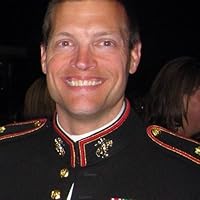
Earl Frederick Ziemke was an American military historian who specialized in German operations on the Eastern Front in World War II. After service in the United States Marine Corps in the Pacific during the war, Ziemke earned a Ph.D. in history at the University of Wisconsin. From 1951 until 1955, he worked at the Bureau of Applied Social Research at Columbia University, after which he spent twelve years as an historian for the United States Army’s Office of the Chief of Military History in Washington, D.C. In 1967, he moved to the University of Georgia, where he was a full professor form 1967 until 1977, and research professor from 1977 until his retirement in 1993.
Very well written and an impressive achievement. Other reviewers are right that recent scholarship (particularly in Soviet sources) has demonstrated some of this book's shortcomings, but still worth reading. There are books that deal with individual battles and campaigns, but very few others that deal with the Russo-German War from Dec 1941 - Jan 1943 in the same scope. This book is still worth the time, despite its age and flaws.
This is not for the faint of heart amateur, new to the history of the war in Russia in W.W. ll. Having said that, doesn't change the fact that this is, excellent, (for its time) in depth history at it's very best. In time, others have or will write from better sources. This is not to say this isn't great history by a great historian. Those who like wanting everything in minute detail, will no doubt get that here. Those who like punchier prose and less detail might want something else. Nevertheless this is an excellent job by Prof. Ziemke and I'm glad to finally see it as an ebook.
Anyone tasing every word is commended but even skimmed in parts it provides a coherent view of the war in the east from Moscow to the turning point at Stalingrad.
Professor Ziemke's presentation of the facts is excellent. Of all the works I have read that are non-ficiton, this is by far the best. It was very interesting to see how the tide of the battle for Moscow could have turned into a disaster for the Wehrmacht and Hitler. Hitlers constant interference and self-loathing of his Generals clouded good sound military judgement. Staling too was plagued with same problems (which he corrected in late 42).
His presentation of facts places the reader right in the thick of the decisions being made at OKW/OKH and The Stavka. A few different decisions and the war could have ended sooner or HItlers plan of conquering Eastern Europe would have been successful. The failings of ot taking Moscow/Leningrad propelled the Germans into a long, unwinable bloody affair.
I highly reccommend this work to all students of history and those in the military on how no to conduct a campaign.
This was a slogged but that mostly had to do with reading it only on my computer as it was a free PDF book. This book was written by the US Army and is an official history of the war on the Eastern Front in WWII. It was done because of all the new source material that came availble in the 80's after the fall of the Soviet Union. The book it self is a dry recitation of the events and if you want a more detailed idea of how the war happen on the eastern front in WWII it is worth the push to get through it. I would recommend more modern works from David Glantz for the most up to date info but this was free and it is a good over view of the War in the East with the Soviet material added in for more detail and accuracy. It was probably more cutting edge when it first came out.
This was a marvelous volume in its day but Great Patriotic War scholarship (particularly that of David Glantz and David Stahel) have long since passed it by. Sorely in need of a second edition/update/revision. Quite readable, but reflects the perspectives of the German sources available to the author.