

What do you think?

Mafia Summit: J. Edgar Hoover, the Kennedy Brothers, and the Meeting That Unmasked the Mob
Mafia Summit is the true story of how a small-town lawman in upstate New York busted a Cosa Nostra conference in 1957, exposing the Mafia to America
In a small village in upstate New York, mob bosses from all over the country—Vito Genovese, Carlo Gambino, Joe Bonanno, Joe Profaci, Cuba boss Santo Trafficante, and future Gambino boss Paul Castellano—were nabbed by Sergeant Edgar D. Croswell as they gathered to sort out a bloody war of succession.
For years, FBI director J. Edgar Hoover had adamantly denied the existence of the Mafia, but young Robert Kennedy immediately recognized the shattering importance of the Appalachian summit. As attorney general when his brother JFK became president, Bobby embarked on a campaign to break the spine of the mob, engaging in a furious turf battle with the powerful Hoover.
Detailing mob killings, the early days of the heroin trade, and the crusade to loosen the hold of organized crime, fans of Gus Russo and Luc Sante will find themselves captured by this momentous story. Reavill scintillatingly recounts the beginning of the end for the Mafia in America and how it began with a good man in the right place at the right time.
In a small village in upstate New York, mob bosses from all over the country—Vito Genovese, Carlo Gambino, Joe Bonanno, Joe Profaci, Cuba boss Santo Trafficante, and future Gambino boss Paul Castellano—were nabbed by Sergeant Edgar D. Croswell as they gathered to sort out a bloody war of succession.
For years, FBI director J. Edgar Hoover had adamantly denied the existence of the Mafia, but young Robert Kennedy immediately recognized the shattering importance of the Appalachian summit. As attorney general when his brother JFK became president, Bobby embarked on a campaign to break the spine of the mob, engaging in a furious turf battle with the powerful Hoover.
Detailing mob killings, the early days of the heroin trade, and the crusade to loosen the hold of organized crime, fans of Gus Russo and Luc Sante will find themselves captured by this momentous story. Reavill scintillatingly recounts the beginning of the end for the Mafia in America and how it began with a good man in the right place at the right time.
318 pages, Kindle Edition
First published January 22, 2013
About the author
Gil Reavill
28 books19 followersGil Reavill latest crime novel is a Nordic thriller, This Land Is No Stranger, co-authored with American dramatist (and long-time Stockholm resident) Sarah Hollister, available in paperback and Kindle editions on March 11, 2021 His "13" series of thrillers kicked off with 13 Hollywood Apes, followed up by 13 Stolen Girls, and 13 Under the Wire. He is a leading true-crime journalist, his work widely featured in magazined and in the non-fiction books Mafia Summit and Aftermath, Inc. A screenwriter, Reavill co-wrote the corrupt cop thriller, Dirty, starring Cuba Gooding. Reavill also works as a collaborative writer, with recent credits including Club King, by Peter Gatien, Famous Nathan, by Lloyd Handwerker, I Only Know Who I Am When I Am Somebody Else, by Danny Aiello, Steve & Me: My Life with the Crocodile Hunter, by Terri Irwin and Tiki, by Tiki Barber. Reavill lives in Westchester County, New York.
Ratings & Reviews
Friends & Following
Create a free account to discover what your friends think of this book!
Community Reviews
Displaying 1 - 30 of 44 reviews

May 7, 2013
November 14, 1957 was an extremely important day in American history that nobody knows about. It was the day that the Mafia in the U.S. began its steady decline and fall, and it started with an observant police sergeant running the license plate of a Chrysler Crown Imperial limousine, a car that seemed out of place for the small Upper New York town of Apalachin.
Gil Reavil's fascinating true-crime book "Mafia Summit" describes an incident that, for many, has become a folk legend, one that did not involve gunplay or violence of any kind, but the repercussions of it started a chain reaction that led to the virtual destruction of the organized crime syndicate known as the Mafia. Of course, the Mafia still exists today, but its heyday of splendor and glamour has long since passed, and much of the credit is due to primarily three men.
It was a rainy Thursday when Police Sergeant Edgar Croswell noticed the limousine driving through the wooded back roads of his small town. It was one of many odd vehicles he noticed driving up to the property owned by Joe Barbara, a local well-to-do businessman whom Croswell had been keeping an unofficial eye on.
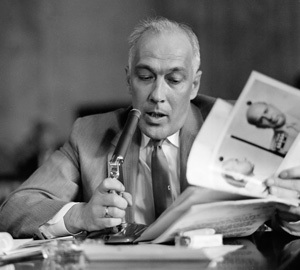
Edgar Croswell
For all intents and purposes, Barbara was a legitimate business owner, but Croswell had had a hunch, for years, that something about the old man wasn't kosher. After running the plates of a few cars, Croswell and his fellow law enforcement officers began to understand what was going on.
Various members---mostly bosses, underbosses, and "made" men---of different mob families were traveling from as far as New York City, Miami, Cleveland, Chicago, Vegas, and L.A. to meet at Barbara's lavish estate. Apparently, the Mob was meeting for a summit, the purpose of which was unclear to Croswell and his men, but the very fact of their presence meant something big was happening.
When Croswell gave the order to approach the property, the mobsters inside panicked. Despite some of the more colorful embellished versions of the story, a violent gun battle never took place. No one was killed or injured, but many mobsters---there were close to 60 in attendance---were caught jumping out windows and running through the muddy forests in three-piece suits and expensive shoes. Some of them got away, but many of them were held for questioning. For a time, at least.
When Croswell realized that he had no actual crime for which to hold them, he was forced to release them. The damage, however, had been done.
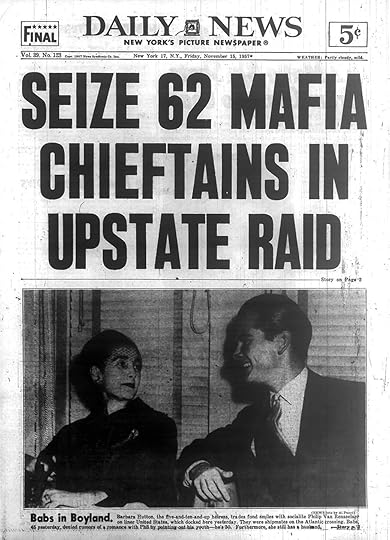
Much of the damage was done to J. Edgar Hoover's credibility. The famous director of the FBI had, for years, told the general public that the Mafia was a fairy tale, that it didn't exist. Organized Crime was, for the most part, a myth. And the general public bought it.
Until the photos of mobsters jumping out the windows of Joe Barbara's house were splashed on the front pages of almost every newspaper in the U.S.
Literally overnight, the Mafia was the topic of conversation for everyone. Clearly, Hoover had been wrong. Not only that, but Hoover's obsessive and myopic preoccupation with "communists" had helped the federal law enforcement agency to seriously overlook the very real threat of organized crime members who had, like the alleged communists, infiltrated and/or corrupted law enforcement and government officials with bribes and pay-offs.
In the right place at the right time, Robert Kennedy, brother of the President of the United States, John F. Kennedy, became attorney general and went after the Mob like white on rice.
Perhaps, as Reavill theorizes, as an attempt to overcome the accusations of nepotism or an Oedipal projection of hatred of his father, Joe Kennedy (notorious for his many mob connections), Bobby's passion for destroying the Mafia became less of a job and more of a religion.
Arrests and convictions happened in droves. Bobby pissed off a lot of mafiosi, receiving constant death threats, many by people who could easily pull it off. (Many JFK conspiracy theorists use this fact to support their theory that the Mafia had JFK murdered as a warning to his brother to back off, a theory that Reavill doesn't discount completely, although he does make the point that members of the mafia are notorious for their inability to shut their mouths and keep secrets, so for a secret conspiracy to remain quiet for this long seems pretty unrealistic.)
Reavill's reportage is fascinating and fairly thorough. At the very least, it makes for an exciting read. At its best, Reavill's book examines the complex lives of three very extraordinary men---Croswell, Hoover, and Kennedy---whose intersection in history resulted in something grand and powerful.
Gil Reavil's fascinating true-crime book "Mafia Summit" describes an incident that, for many, has become a folk legend, one that did not involve gunplay or violence of any kind, but the repercussions of it started a chain reaction that led to the virtual destruction of the organized crime syndicate known as the Mafia. Of course, the Mafia still exists today, but its heyday of splendor and glamour has long since passed, and much of the credit is due to primarily three men.
It was a rainy Thursday when Police Sergeant Edgar Croswell noticed the limousine driving through the wooded back roads of his small town. It was one of many odd vehicles he noticed driving up to the property owned by Joe Barbara, a local well-to-do businessman whom Croswell had been keeping an unofficial eye on.
Edgar Croswell
For all intents and purposes, Barbara was a legitimate business owner, but Croswell had had a hunch, for years, that something about the old man wasn't kosher. After running the plates of a few cars, Croswell and his fellow law enforcement officers began to understand what was going on.
Various members---mostly bosses, underbosses, and "made" men---of different mob families were traveling from as far as New York City, Miami, Cleveland, Chicago, Vegas, and L.A. to meet at Barbara's lavish estate. Apparently, the Mob was meeting for a summit, the purpose of which was unclear to Croswell and his men, but the very fact of their presence meant something big was happening.
When Croswell gave the order to approach the property, the mobsters inside panicked. Despite some of the more colorful embellished versions of the story, a violent gun battle never took place. No one was killed or injured, but many mobsters---there were close to 60 in attendance---were caught jumping out windows and running through the muddy forests in three-piece suits and expensive shoes. Some of them got away, but many of them were held for questioning. For a time, at least.
When Croswell realized that he had no actual crime for which to hold them, he was forced to release them. The damage, however, had been done.
Much of the damage was done to J. Edgar Hoover's credibility. The famous director of the FBI had, for years, told the general public that the Mafia was a fairy tale, that it didn't exist. Organized Crime was, for the most part, a myth. And the general public bought it.
Until the photos of mobsters jumping out the windows of Joe Barbara's house were splashed on the front pages of almost every newspaper in the U.S.
Literally overnight, the Mafia was the topic of conversation for everyone. Clearly, Hoover had been wrong. Not only that, but Hoover's obsessive and myopic preoccupation with "communists" had helped the federal law enforcement agency to seriously overlook the very real threat of organized crime members who had, like the alleged communists, infiltrated and/or corrupted law enforcement and government officials with bribes and pay-offs.
In the right place at the right time, Robert Kennedy, brother of the President of the United States, John F. Kennedy, became attorney general and went after the Mob like white on rice.
Perhaps, as Reavill theorizes, as an attempt to overcome the accusations of nepotism or an Oedipal projection of hatred of his father, Joe Kennedy (notorious for his many mob connections), Bobby's passion for destroying the Mafia became less of a job and more of a religion.
Arrests and convictions happened in droves. Bobby pissed off a lot of mafiosi, receiving constant death threats, many by people who could easily pull it off. (Many JFK conspiracy theorists use this fact to support their theory that the Mafia had JFK murdered as a warning to his brother to back off, a theory that Reavill doesn't discount completely, although he does make the point that members of the mafia are notorious for their inability to shut their mouths and keep secrets, so for a secret conspiracy to remain quiet for this long seems pretty unrealistic.)
Reavill's reportage is fascinating and fairly thorough. At the very least, it makes for an exciting read. At its best, Reavill's book examines the complex lives of three very extraordinary men---Croswell, Hoover, and Kennedy---whose intersection in history resulted in something grand and powerful.

March 24, 2013
Mafia Summit is non-fiction about the heydays of the mafia in the United States. The book chronicles the lead up to the pinnacle of their mafia’s power. The central event of the book is a large gathering of the kingpins of US mafia that took place 1957. Up to this point the Mafia was largely flying under the radar of Law Enforcement. The FBI (and Hoover) where even denying the existence of the mafia before this summit meeting. The book goes into the story of the key leaders who fought and scratched their way to head of the mafia in the 30s, 40s and 50s. In these early heady days of the mob, they really did own the police and courts as can be witnessed by their multiple murder arrests that were almost always followed by non-convictions.
The book also tells the story of a police officer who refused to be bought (unlike almost everyone around him in the department) that ultimately leads to the discovery of the summit meeting and thus the exposure of a conspiracy of these bad actors.
The timing of the summit and its subsequent exposure of the criminal underworld offers a cause that two brothers ultimately ride into the White House and the head of US Justice department (the Kennedy brothers).
Though the book is more about the lead up to the summit and how invincible the mafia was in America during this time period, it also carefully documents how the summit and its discovery leads to enormous public scrutiny. Also how this starts and long slow decline of the unchecked power of these organizations.
I very much enjoyed this book and now look forward to reading more about some of the central mafia figures and their history.
The book also tells the story of a police officer who refused to be bought (unlike almost everyone around him in the department) that ultimately leads to the discovery of the summit meeting and thus the exposure of a conspiracy of these bad actors.
The timing of the summit and its subsequent exposure of the criminal underworld offers a cause that two brothers ultimately ride into the White House and the head of US Justice department (the Kennedy brothers).
Though the book is more about the lead up to the summit and how invincible the mafia was in America during this time period, it also carefully documents how the summit and its discovery leads to enormous public scrutiny. Also how this starts and long slow decline of the unchecked power of these organizations.
I very much enjoyed this book and now look forward to reading more about some of the central mafia figures and their history.

June 30, 2024
An interesting event, made all the more fascinating for me when I learned this summit of dozens of mob bosses, made men, and wise guys was just 30 minutes from home!
Even that aside, the first 2/3rds of the book was well told, great narration. The last third dragged a bit, with a nearly academic level of detail…. I was done with the topic by then. Amazing how many of these men lived out the rest of their lives without legal consequences for so much murder, fraud, and destruction.
Even that aside, the first 2/3rds of the book was well told, great narration. The last third dragged a bit, with a nearly academic level of detail…. I was done with the topic by then. Amazing how many of these men lived out the rest of their lives without legal consequences for so much murder, fraud, and destruction.

June 23, 2023
I wanted a nonfiction book and this was definitely nonfiction. It was interesting just not my favorite. Also, they really did not care about the 4th Amendment back in the day. Unreasonable search and seizure who?

June 30, 2013
Author Gil Reavill begins with a reality check on the Apalachin Summit. Despite all the hype and bluster, it was not a bust, and no significant charges against the attendees ever stuck. What it was, was an event that exposed the existence of a national crime syndicate and forced authorities to deal with it.
Reavill begins with a short history of the Mafia, profiles of the some of the key Mafia figures and a description of the political environment in which they operated. The FBI, under J. Edgar Hoover, denied the existence of the mafia and used the bureau's resources for safer headline grabs by chasing communists and for building files on his "enemies" (and bosses). Given this neglect, it is not surprising that the strange flight of well-heeled men with large wads of cash was precipitated by state troopers far down on the organizational chart.
NY State Police Sergeant Edgar Coswell didn't fully stumble on it; He had been following the careers of local mobsters. He didn't know where his road block was going, but he wisely let the situation unfold. The resulting flight of the mobsters yielded great headlines and forced federal and state law enforcement officers to deal with the mob. Reavill gives some anecdotes on the finger pointing and turf wars that followed (i.e. NYS chiefs argue about whose district Apalachin is in; Hoover says there is no Mafia, but admits to a Cosa Nostra, etc.)
The Apalachin Summit "bust" ended not only ended FBI neglect it alerted politicians to an area ripe for good press. One of those crusaders was Robert Kennedy who had success pulling in agencies together for the common goal. Reavill notes that after his brother's death, RFK ended his anti-Mafia campaign and took up social justice in its stead. Reavill does not believe the Mafia was involved in JFK's death, although, he clearly thinks RFK did.
The book is brief and uneven. Some mobsters are well defined and others not. There are longish and interesting pieces on Vito Genovese and Joe Barbara. Stefano Magaddino is noted as being so important that this meeting occurred in his territory, but he isn't profiled. There are some good photos of the Barbara estate and maps of the compound and its area. Almost a third of the book is devoted to an Appendix (briefs on the attendees, again, absent Stefano Magaddino) and Endnotes.
The value of the book is in focusing on why the summit and its aftermath are important.
Reavill begins with a short history of the Mafia, profiles of the some of the key Mafia figures and a description of the political environment in which they operated. The FBI, under J. Edgar Hoover, denied the existence of the mafia and used the bureau's resources for safer headline grabs by chasing communists and for building files on his "enemies" (and bosses). Given this neglect, it is not surprising that the strange flight of well-heeled men with large wads of cash was precipitated by state troopers far down on the organizational chart.
NY State Police Sergeant Edgar Coswell didn't fully stumble on it; He had been following the careers of local mobsters. He didn't know where his road block was going, but he wisely let the situation unfold. The resulting flight of the mobsters yielded great headlines and forced federal and state law enforcement officers to deal with the mob. Reavill gives some anecdotes on the finger pointing and turf wars that followed (i.e. NYS chiefs argue about whose district Apalachin is in; Hoover says there is no Mafia, but admits to a Cosa Nostra, etc.)
The Apalachin Summit "bust" ended not only ended FBI neglect it alerted politicians to an area ripe for good press. One of those crusaders was Robert Kennedy who had success pulling in agencies together for the common goal. Reavill notes that after his brother's death, RFK ended his anti-Mafia campaign and took up social justice in its stead. Reavill does not believe the Mafia was involved in JFK's death, although, he clearly thinks RFK did.
The book is brief and uneven. Some mobsters are well defined and others not. There are longish and interesting pieces on Vito Genovese and Joe Barbara. Stefano Magaddino is noted as being so important that this meeting occurred in his territory, but he isn't profiled. There are some good photos of the Barbara estate and maps of the compound and its area. Almost a third of the book is devoted to an Appendix (briefs on the attendees, again, absent Stefano Magaddino) and Endnotes.
The value of the book is in focusing on why the summit and its aftermath are important.

November 30, 2022
This is a pretty good book about the events that led up to the 1957 gathering of some of the biggest names and bosses in the Italian Mafia in the 1950s to the tiny rural town of Apalachin, New York. This was followed by the biggest mob bust in history and led to the eventual death of the Mafia in America. All thanks to the dedication and investigative skills of local cop Sergeant Edgar Croswell and a handful of local and state troopers.
Despite what one might think, the FBI supposedly played little if any role in this particular Mafia bust, and if anything under the inept and corrupt leadership of J. Edgar Hoover, the FBI was initially ignorant and even obstructive in the investigation and prosecution of the mob defendants.
The author covers at length the rivalry that existed between Hoover and the Kennedys, particularly the young Bobby Kennedy who was appointed to Attorney General (Hoover's superior). While Hoover initially tarried and even denied the existence of organized crime, Bobby aggressively pursued the Mafia which he and many others believe led to his brother's assassination.
Despite what one might think, the FBI supposedly played little if any role in this particular Mafia bust, and if anything under the inept and corrupt leadership of J. Edgar Hoover, the FBI was initially ignorant and even obstructive in the investigation and prosecution of the mob defendants.
The author covers at length the rivalry that existed between Hoover and the Kennedys, particularly the young Bobby Kennedy who was appointed to Attorney General (Hoover's superior). While Hoover initially tarried and even denied the existence of organized crime, Bobby aggressively pursued the Mafia which he and many others believe led to his brother's assassination.

January 12, 2014
I suggest this as a must read for anyone from the Southern Tier. Very informative! Don't fugetaboutit!
January 23, 2025
If anyone has ever read books on organized crime, the name "Appalachin" would have come up at one time or another. This book, Mafia Summit: J. Edgar Hoover, the Kennedy Brothers and the Meeting That Unmasked the Mob by Gil Reavill explains the significance of Appalachin. First of all, the name of the Appalachin is pronounced "apple-lay-kin" not "app-uh-Lay-chin". It is a small town located near Binghamton, New York. It was a meeting that started (and ended) November 14, 1957 with 60 Mafia figures at the house of mobster Joseph Barbara. It was a meeting to settle a dispute between men who wanted to be the "boss of all bosses"-Carlo Gambino, Joseph Bonanno (aka Joe Bananas) and Vito Genovese. Strangely, an observant State police sergeant, Edgar Croswell, was the difference. Craswell noticed the plethora of Lincoln Continentals and Cadillacs all going to the same address. Croswell is familiar with the residence of Joseph Barbara as he had been keeping an eye on the mobster over the years. The meeting ends almost as soon as it begins when mobsters notices state troopers are taking down the numbers of the license plates on the fancy cars going to the Barbara residence. Fearing what may happen next, the mobsters leave. It was not a raid. The mobsters panicked. Eventually, the Department of Justice would lay charges against 27 attendees. Bobby Kennedy (the Good Bobby, the father) figures prominently in the story following the Appalachin meeting. Mr. Reavill does a fine job explaining RFK's efforts to prosecute Mafia figures. He also discusses the impact it had on RFK, professionally and politically. Mr. Reavill has done some excellent work trying to explain what the "Summit meeting" was and was not. He explains how the news media missed the point. The great significance of the Appalachin was that it showed the Mafia was real and ongoing threat in the United States, despite the statements by the FBI denying its existence. Mr. Reavill provides excellent descriptions of the many high profile Mafia figures in the story. I highly recommend this book. This book is available in accessible formats from the Centre for Equitable Library Access (CELA) in Canada and Bookshare in the United States.

January 12, 2022
Comprehensive book about the people (mobsters, Sergeant Edgar Croswell, FBI, politicians) and history of events leading up to the infamous Mafia gathering in Apalachin, NY 1957; the meeting itself and subsequent pursuit and arrest of attendees; and the ensuing legal/political struggles and battles that finally broke the Mafia down.
I picked this up specifically to learn about this historic meeting, it's significance, and everything/everyone around it because it happened in my hometown - albeit before my time. But I recently learned I went to school with the children/grandchildren of the local installation of the Mafia that I pooh-poohed at the time. For me, it was a peripheral claim that I attributed to 'stereotypical' assumptions made: Italians = Mafia. However, it was real and I had no idea. I wanted to better understand my town and its people beyond the usual fame of Endicott Johnson Shoes, or the beginning of IBM.
This book laid out everything I hoped it would, and I got a fair education out of it. The idea of the Mafia being ensconced in my town significantly enough to enable a hosting of top mob leaders from around the world, blows my mind... Well-written, well-researched, and laid out in logical, compact groupings of coverage, this rings true (to me) as the most accurate overall coverage centered around the meeting at Apalachin.
I picked this up specifically to learn about this historic meeting, it's significance, and everything/everyone around it because it happened in my hometown - albeit before my time. But I recently learned I went to school with the children/grandchildren of the local installation of the Mafia that I pooh-poohed at the time. For me, it was a peripheral claim that I attributed to 'stereotypical' assumptions made: Italians = Mafia. However, it was real and I had no idea. I wanted to better understand my town and its people beyond the usual fame of Endicott Johnson Shoes, or the beginning of IBM.
This book laid out everything I hoped it would, and I got a fair education out of it. The idea of the Mafia being ensconced in my town significantly enough to enable a hosting of top mob leaders from around the world, blows my mind... Well-written, well-researched, and laid out in logical, compact groupings of coverage, this rings true (to me) as the most accurate overall coverage centered around the meeting at Apalachin.

January 9, 2020
Interesting book. I skimmed it, I'm getting educated on the mafia but have found the material is pretty sobering. There is really nothing positive about any of the mafia families or bosses or how they handled "business". They were filled with repugnant and evil people carrying out repugnant and evil agendas.
The most fascinating items involved the media and its portrayal of the mafia.
Pg 212 "America's image of the mob, and its recollection of the Apalachin summit, is colored by overweening romanticization. ....... Who writes this stuff? English majors, film students, garret-stranded authors. They're the bookish nerds looking across the playground at the bullies, the tough corner boys, the ones who victimized them with repeated beat downs and random humiliations, and in response the nerds create an underworld of their own imagining. THEY INVENT THE FIGURE OF THE NOBLE MOBSTER." (my emphasis added)
There are no noble mobsters. The fascinating world of "The Godfather" and "Goodfellas" and "Boardwalk Empire"? To quote the author, "overweening romanticization". I wonder what Martin Scorsese would have to reply to that?
The most fascinating items involved the media and its portrayal of the mafia.
Pg 212 "America's image of the mob, and its recollection of the Apalachin summit, is colored by overweening romanticization. ....... Who writes this stuff? English majors, film students, garret-stranded authors. They're the bookish nerds looking across the playground at the bullies, the tough corner boys, the ones who victimized them with repeated beat downs and random humiliations, and in response the nerds create an underworld of their own imagining. THEY INVENT THE FIGURE OF THE NOBLE MOBSTER." (my emphasis added)
There are no noble mobsters. The fascinating world of "The Godfather" and "Goodfellas" and "Boardwalk Empire"? To quote the author, "overweening romanticization". I wonder what Martin Scorsese would have to reply to that?

April 18, 2025
Hay momentos en la historia que cambian la percepción de lo que hacemos o creemos. Incluso momentos que cambian la visión institucional de las cosas. Y muchos de ellos se dan de la manera más aleatoria posible. Vaya... el "burro que tocó la flauta" llevado al extremo. Así fue la reunión en Apalachin, en el rancho de Joe Barbara. Más de 100 personalidades de todos los niveles de la mafia, desde choferes hasta los grandes capos. Ahí estaban Tony Guarnueri y Bartolo Guccia, pero también Rusell Buffalino, Giovanni Bonventre, Vito Genovese, Carlo Gambino, Joe Profaci, Fat Lou LaRasso, Sal Falcone, Frank Valenti, Santo Trafficante, Frank DeSimone...
Pero también estaba Edgar Croswell, el policía que terminaría demostrando que la negación de J. Edgar Hoover sobre la existencia de una organización del crimen organizado era, justamente, negación. Un libro para entender el crimen organizado a partir del punto en que comenzó la gigantesca persecución de todos los aparatos del Estado hacia ellos, incluyendo los esfuerzos de Robert Kennedy que, muchos dicen (yo incluido) que lo llevaron a la muerte.
Para los amantes de la historia del crimen organizado, es un gran libro.
Pero también estaba Edgar Croswell, el policía que terminaría demostrando que la negación de J. Edgar Hoover sobre la existencia de una organización del crimen organizado era, justamente, negación. Un libro para entender el crimen organizado a partir del punto en que comenzó la gigantesca persecución de todos los aparatos del Estado hacia ellos, incluyendo los esfuerzos de Robert Kennedy que, muchos dicen (yo incluido) que lo llevaron a la muerte.
Para los amantes de la historia del crimen organizado, es un gran libro.

March 25, 2018
Extreme detail of the upstate NY barbecue at the root of the Mafia's downward spiral in the U.S.
A lot more than is covered herein than that that day's events. We learn of a wealth of prior history, subsequent court cases, political embarrassments, and even of the last years of all the main players.
At times, Mafia Summit reads like a textbook -- one that might be used in a criminal justice course. This style and level of minutiae leads to some dryness, and the reader may be tempted to speed through large sections. I certainly was. But, this book is almost a must-read for mafia history buffs. The facts in this biography are not laid this bare in any well-known text on the Mafia (coming from someone who's read them all).
A lot more than is covered herein than that that day's events. We learn of a wealth of prior history, subsequent court cases, political embarrassments, and even of the last years of all the main players.
At times, Mafia Summit reads like a textbook -- one that might be used in a criminal justice course. This style and level of minutiae leads to some dryness, and the reader may be tempted to speed through large sections. I certainly was. But, this book is almost a must-read for mafia history buffs. The facts in this biography are not laid this bare in any well-known text on the Mafia (coming from someone who's read them all).

October 23, 2019
Few readers will come away from reading this book without a better understanding of how the Mafia operated in America. Rather than the Hollywood version of the Godfather, author Gil Reavill offers a compelling tale of gansters getting together at an Apalachin mansion to discuss carving up the mob business in America. It's ironic that the police presence was mostly accidental and the actual meeting resulted in no significant convictions of any of the bosses. However, as the author points out it was a turning point in which J. Edgar Hoover was finally forced to admit the pervasive mob operations in America. The author also offers a revealing portrait of Robert F. Kennedy and his efforts to combat the mob through legally questionable tactics.

January 22, 2022
This is a well put together book about the infamous Apalachin (Apple-aken) Meeting in New York on Nov 14, 1957 where 100 Bosses and Consiglieres had gathered to determine how the Families were going to proceed after the shocking murder (Oct 25, 1957) of Albert Anastasia, who was one of the founders of the American Mafia and Murder, Inc. Covered some background I didn't know and also tied in Robert F Kennedy's role in prosecuting.
June 8, 2017
Taking place not far from my hometown, Reavill does an excellent job of recounting the Apalachin Summit, from what led up to it to it's aftermath. He discussed his book at one of our local libraries to a packed house. Many of whom came to share their stories or stories that were passed down. Very nice guy. Definitely worth the read.
September 23, 2021
I found the police turf war, personal dedication of Rockwell, and general politcal and judiciary atmosphere following the bust of the meeting specially interesting. I would have loved to learn more about said political and judicary context and have less vignettes about single mobsters (not enough detailed anyway per person to make it interesting)
September 15, 2026
A special book for me because my family is from Endicott, and my grandmother gave me her copy of the book to read this summer, complete with my grandfather’s annotations of people they knew in the text. I heard stories about this growing up, and now that I know all the information I can’t wait to go back and visit this winter.
September 17, 2017
It was a bit dry, but an interesting look at a world I am not at all familiar with. These guys are messed up. I will have to read more, and re-watch the Godfather.
March 2, 2018
Very entertaining and informative...

May 31, 2020
Good educational awareness documentary.

August 31, 2020
Very few new facts I didn't already know and it was slow paced.
December 26, 2020
I find all things related to the Mafia fascinating. It takes a crook to find, fight and expose another crook...thus the Kennedy’s and J. Edgar Hoover.

November 9, 2021
Interesting but never compelling.

June 5, 2022
True to life an accidental roundup of Mafia chiefs
May 9, 2023
This is a thorough telling of the mafia summit held in rural NY in the 1950s that was raided and proved to most of the United States the mafia existed.
August 14, 2023
Wow, lots I never knew.

February 10, 2025
no new info but entertaining audio presentation. 3.5
January 14, 2026
Helpful research — have been attempting to write a novel set in this time period for years now and this might be the source material to finally get me to finish.

August 29, 2014
It is about time someone looked closely at the Apalachin meeting. There is so much speculation that the subject begs more rigorous examination. Reavill does a good job at examining the minute chronology of the meeting and the subsequent investigations. He could have done more to investigate the confirmed attendees; but appears to have stuck largely with newspaper accounts full of minute detail. He also claims to use some material from an actual attendee.
The bombshell that one of the attendees was actually an informant is amazing. Reavill uses the first-hand account to definitively state who was there, what they were doing, and what was discussed. However, it is not until the end, when he is discussing his sources that he reveals this fact, and that it is based on the oral story of the informant's State Police handler, who died in 2011. You will need to read the book to learn the identity of the informant...sorry, no spoilers here.
This omission goes into one of the main mysteries of the meeting. Who was there? He rarely speculates about other attendees. He clearly states that 60 people were caught in the initial raid; and that wide speculation steadily increased that number. Without naming his inside source, he states that the Chicago mob and Stefano Magaddino were present; but decided not to leave the house. Interesting tactic. I would like to have more information about the attendees than what he includes as an appendix. He does not assign mafia affiliation, criminal history, and a little modus operandi. More would have been helpful.
Overall, it is a useful addition to the literature. It could have been a much better book had he taken the time to do more research. Overall, it is a good addition to any crime library because of the subject.
The bombshell that one of the attendees was actually an informant is amazing. Reavill uses the first-hand account to definitively state who was there, what they were doing, and what was discussed. However, it is not until the end, when he is discussing his sources that he reveals this fact, and that it is based on the oral story of the informant's State Police handler, who died in 2011. You will need to read the book to learn the identity of the informant...sorry, no spoilers here.
This omission goes into one of the main mysteries of the meeting. Who was there? He rarely speculates about other attendees. He clearly states that 60 people were caught in the initial raid; and that wide speculation steadily increased that number. Without naming his inside source, he states that the Chicago mob and Stefano Magaddino were present; but decided not to leave the house. Interesting tactic. I would like to have more information about the attendees than what he includes as an appendix. He does not assign mafia affiliation, criminal history, and a little modus operandi. More would have been helpful.
Overall, it is a useful addition to the literature. It could have been a much better book had he taken the time to do more research. Overall, it is a good addition to any crime library because of the subject.

May 4, 2013
Straightforward accounting of the organized crime summit in Apalachin, N.Y., in 1957. Meeting set in historical context from Lucky Lucciano's reorganization of the American "Mafia" into a hierarchical structure in the early 30s to it's history throughout the 20th century.
The meeting came out of the shadows because a N.Y. State policemen, who regularly spot-checked (known criminal) Joe Barbara's property, noticed many expensive autos from across the country parked at nearby hotels and Barbara's property. Roadblocks captured about half (70+) of the fleeing attendees, some trying to escape through the surrounding woods.
Apalachin baffled law enforcement which was stuck with "catch-and-release" of the detained alleged mobsters gathered at Barbara's compound since no existing law addressed this type of situation. Event eliminated ability of FBI and J.E. Hoover to continue to deny the existence of a national organized crime organization, known to the public as the Mafia, later found to be called "La Cosa Nostra (Our Thing).
This event eventually led to the RICO statutes, i.e., a criminal organization by its very existence is illegal. First major RICO litigation was the mid-80s Mafia Commission Trial.
The meeting came out of the shadows because a N.Y. State policemen, who regularly spot-checked (known criminal) Joe Barbara's property, noticed many expensive autos from across the country parked at nearby hotels and Barbara's property. Roadblocks captured about half (70+) of the fleeing attendees, some trying to escape through the surrounding woods.
Apalachin baffled law enforcement which was stuck with "catch-and-release" of the detained alleged mobsters gathered at Barbara's compound since no existing law addressed this type of situation. Event eliminated ability of FBI and J.E. Hoover to continue to deny the existence of a national organized crime organization, known to the public as the Mafia, later found to be called "La Cosa Nostra (Our Thing).
This event eventually led to the RICO statutes, i.e., a criminal organization by its very existence is illegal. First major RICO litigation was the mid-80s Mafia Commission Trial.
Displaying 1 - 30 of 44 reviews