

What do you think?

The History of Danish Dreams
From the bestselling author of Smilla's Sense of Snow comes his first novel--an inspired and often hilarious Danish family saga suffused with satire and magical realism.
356 pages, Hardcover
First published January 1, 1988
About the author
Peter Høeg
20 books844 followersPeter Høeg was born in Copenhagen, Denmark. Before becoming a writer, he worked variously as a sailor, ballet dancer, and actor. He published his first novel, A History of Danish Dreams (1988), to positive reviews. However, it was Smilla’s Sense of Snow (1992), a million-copy best seller, that earned Høeg immediate and international literary celebrity. His books have been published in more than thirty countries.
Ratings & Reviews
Friends & Following
Create a free account to discover what your friends think of this book!
Community Reviews
Displaying 1 - 30 of 118 reviews

September 16, 2017
I've read and enjoyed two others by this author, but this book (his first) defeated me in many ways. I was intrigued at the beginning, lost focus in the middle, and just wanted it over by the end.
Too befuddled to say more. I usually need two readings to really 'get' what he is talking about anyway, but I don't think I have the energy to face this one again.
Too befuddled to say more. I usually need two readings to really 'get' what he is talking about anyway, but I don't think I have the energy to face this one again.

July 21, 2013
It isn't the fault of this book. I've just read all this before- depths of European mourning of the past, the freezing of the present, the absurdities that go along with ancient cultures. I only got to the first two chapters and I didn't feel that I needed to go any farther. The first chapter was a straightforward metaphor with one or two grotesque images and nothing surprised me in the second.
Just read Gormenghast instead. You'll get the same message, less nationally specific, and with even more grotesquely fascinating imagery to go along with it.
Just read Gormenghast instead. You'll get the same message, less nationally specific, and with even more grotesquely fascinating imagery to go along with it.

May 19, 2017
This book has been called "The Danish Gormenghast," which intrigued me. I love Denmark. I love Gormenghast. Sign me up!
It started strong. The opening stories had a fairy-tale quality that felt very much like a journey through a nation's collective unconscious. To my delight, there were echoes of Andersen. And it was because of Andersen's influence that I gave Høeg the benefit of the doubt when he started talking shit about spoiled princesses...which segued into talking shit about eating disorders...which segued into the same old, same old about sexual abandon being the true mark of goodness and authenticity in a woman, at which point the book had become just a boring story about a boy going off to school, and if you want to know what happens in the last 50 pages, you'll just have to ask someone else.
(So I guess it's the Danish Titus Alone.)
It started strong. The opening stories had a fairy-tale quality that felt very much like a journey through a nation's collective unconscious. To my delight, there were echoes of Andersen. And it was because of Andersen's influence that I gave Høeg the benefit of the doubt when he started talking shit about spoiled princesses...which segued into talking shit about eating disorders...which segued into the same old, same old about sexual abandon being the true mark of goodness and authenticity in a woman, at which point the book had become just a boring story about a boy going off to school, and if you want to know what happens in the last 50 pages, you'll just have to ask someone else.
(So I guess it's the Danish Titus Alone.)

November 23, 2019
worst experience of my life

if it wasn't for maria (and the fact that i need this for my final literature exam) i would've smacked my lit professor with this by now and demand to get a refund. i want these ten days of pushing myself to finish this back... seriously.
if it wasn't for maria (and the fact that i need this for my final literature exam) i would've smacked my lit professor with this by now and demand to get a refund. i want these ten days of pushing myself to finish this back... seriously.

October 22, 2014
I know Høeg only through Smilla's Sense of Snow, an entertaining and well done work that never exactly blew me away. This book, though, blew away. It feels like Calvino or Marquez mixed with something not at all like either.
The writing is stunning and surreal and Høeg plays game after game with the reader's expectations. It moves from fairytale to a weird Danish Gatsby to a piercing psychological study and back. And in the end, it is deeply moving.
I pretty clearly need to reevaluate my opinion of Høeg, based on this. The man can fucking write, that's for sure.
The writing is stunning and surreal and Høeg plays game after game with the reader's expectations. It moves from fairytale to a weird Danish Gatsby to a piercing psychological study and back. And in the end, it is deeply moving.
I pretty clearly need to reevaluate my opinion of Høeg, based on this. The man can fucking write, that's for sure.

July 14, 2012
I loved this book. The story was so rich that I often would fall asleep after reading only a few pages. Thus, reading it took forever but I was glad to be immersed in this book. For more about how the author uses ambiguity to create layers of meaning in a dreamworld, check out my blog.

August 31, 2014
This book is such a literature delight, Marquez-scaled saga, situated in two-century scope of the Danish history. Høeg observes the changes in the social environment along with the inner ties of life, penetrating the lives of the characters, embodying the places they abide, vibing in the tunes of their dreams.
A pure delicacy of slow reading adventure.
A pure delicacy of slow reading adventure.

November 27, 2021
Ok, io ci ho provato, dico sul serio. Ho iniziato questo libro quasi un mese fa e mi ha letteralmente fatto perdere la voglia di leggere per due settimane.
Peter Høeg è un autore che non ho interesse ad approfondire ulteriormente, di sicuro non oltre le 109 pagine di questo libro che sono riuscito a leggere senza crepare di noia. Avrebbe altri due terzi offesi con me perché non li ho degnati di uno sguardo, ma continuo ad ignorarli.
Le vicende sembrano sforzarsi con tutte se stesse ad entrare nel mio raggio d'interesse (sufficientemente ampio da accogliere anche l'intera lettura di libri odiosi come L'Ospite di Stephenie Meyer o l'agghiacciante e deludentissimo Follia di Patrick McGrath) ma nulla riesce a cogliere la mia attenzione per più di trenta secondi, non arrivo a concludere due pagine che la mia mente comincia a fluttuare spostandosi verso questioni molto più interessanti ad esempio "Ma chissà se esiste una persona addetta a determinare la spaziatura esatta per redigere i documenti delle visure catastali" "Chissà come mai per la copertina di questo libro il nome dell'autore è tre volte più grande del titolo del libro".
Peter Høeg utilizza stilemi del realismo magico, passando da descrizioni catastrofiche in cui non si capisce che cazzo sta dicendo, se effettivamente le case cambiano forma o se è solo un'analogia del sentire del protagonista; a descrizioni di un didascalismo elementare che non hanno nulla a che vedere con il criptismo linguistico di altri passaggi.
Stando alle recensioni, i primi due racconti sono addirittura i migliori della raccolta. Io ho letto i primi quattro e sinceramente non ho il tempo da dedicare alle rimanenti 220 pagine che so già in partenza che non mi lasceranno nulla se non una triste prosecuzione di questo sentiero arido in cui la rabbia fluttua come una nebbia sottile, frustrazione del tempo, dell'energia e dei soldi che non mi restituirà nessuno.
La prosa è lineare, al punto da essere ipnotica, i guizzi e le divagazioni non funzionano proprio, non aggiungono nulla di interessante alla narrazione, anzi, i tentati picchi letterari diventano cunette inaspettate che producono inciampi, mentre le piccole digressioni si appiccicano alle caviglie del lettore come folletti vecchi e lagnanti mentre egli cerca, spinto da chissà quale delirio, di avanzare per questo cammino sterrato.
Decisamente un libro dimenticabile, che non ha niente da insegnare, in cui la Danimarca non si percepisce affatto e va bene così perché dopotutto di uno che fa il mestierante quando scrive non si ricorderà mai nulla nessuno.
Peter Høeg è un autore che non ho interesse ad approfondire ulteriormente, di sicuro non oltre le 109 pagine di questo libro che sono riuscito a leggere senza crepare di noia. Avrebbe altri due terzi offesi con me perché non li ho degnati di uno sguardo, ma continuo ad ignorarli.
Le vicende sembrano sforzarsi con tutte se stesse ad entrare nel mio raggio d'interesse (sufficientemente ampio da accogliere anche l'intera lettura di libri odiosi come L'Ospite di Stephenie Meyer o l'agghiacciante e deludentissimo Follia di Patrick McGrath) ma nulla riesce a cogliere la mia attenzione per più di trenta secondi, non arrivo a concludere due pagine che la mia mente comincia a fluttuare spostandosi verso questioni molto più interessanti ad esempio "Ma chissà se esiste una persona addetta a determinare la spaziatura esatta per redigere i documenti delle visure catastali" "Chissà come mai per la copertina di questo libro il nome dell'autore è tre volte più grande del titolo del libro".
Peter Høeg utilizza stilemi del realismo magico, passando da descrizioni catastrofiche in cui non si capisce che cazzo sta dicendo, se effettivamente le case cambiano forma o se è solo un'analogia del sentire del protagonista; a descrizioni di un didascalismo elementare che non hanno nulla a che vedere con il criptismo linguistico di altri passaggi.
Stando alle recensioni, i primi due racconti sono addirittura i migliori della raccolta. Io ho letto i primi quattro e sinceramente non ho il tempo da dedicare alle rimanenti 220 pagine che so già in partenza che non mi lasceranno nulla se non una triste prosecuzione di questo sentiero arido in cui la rabbia fluttua come una nebbia sottile, frustrazione del tempo, dell'energia e dei soldi che non mi restituirà nessuno.
La prosa è lineare, al punto da essere ipnotica, i guizzi e le divagazioni non funzionano proprio, non aggiungono nulla di interessante alla narrazione, anzi, i tentati picchi letterari diventano cunette inaspettate che producono inciampi, mentre le piccole digressioni si appiccicano alle caviglie del lettore come folletti vecchi e lagnanti mentre egli cerca, spinto da chissà quale delirio, di avanzare per questo cammino sterrato.
Decisamente un libro dimenticabile, che non ha niente da insegnare, in cui la Danimarca non si percepisce affatto e va bene così perché dopotutto di uno che fa il mestierante quando scrive non si ricorderà mai nulla nessuno.

April 2, 2026
After reading 'Miss Smilla's Feeling for Snow', I decided to read another Peter Høeg book, 'The History of Danish Dreams'. This is his first book.
This story tries to describe how Denmark changed through the 20th century through the eyes of some of the characters and their descendants. There is a count who hates the way modern advances are changing the world. So he tries to freeze time in his estate and stops all the clocks. There is a woman who runs a newspaper. It is very successful and she is able to predict all the future news. But she can't read and write. And then there is a couple who are both thieves. They try to induct their son into their profession but, unfortunately for them, he is honest, and he refuses to steal. He even takes the things they've stolen and puts them back. These three are some of the fascinating characters who are featured in the book. What happens to them and to their daughters and sons and to their granddaughters and to their grandsons as Denmark goes through major changes in the 20th century is described in the book.
Peter Høeg's writing is beautiful, the book is experimental and inventive, the story is charming, the humour is wonderful. There are fantastic events and coincidences which sometimes border on the magical. But this book is not for everyone. Sometimes it requires deep concentration, a careful attention to detail, to appreciate the humour and the inventiveness and the intellectual pyrotechnics that Peter Høeg delivers. Sometimes the book was hard going because of that. But I'm glad I got to read it.
Sharing some of my favourite parts from the book.
"And here I have to pause for a moment. From this point onward certain problems arise in writing Maria's story: I would like to depict her as a coherent individual – well, in one sense or another we are all coherent – but this proves to be impossible. It has something to do with the writing of history. History is always an invention; it is a fairy tale built upon certain clues. The clues are not the problem, not even in Maria's case, where they consist of what Anna and Adonis remembered and what Maria herself remembered, together with the school register, then the police reports, and later the files of the child welfare committee, and later still other pieces of information to all of which we will return. These clues are pretty well established; most of them can literally be laid on the desktop for anyone to handle. But these, unfortunately, do not constitute history. History consists of the links between them, and it is this that presents the problem. And the link is especially opaque when. as here, we are dealing with the History of Dreams, because the only thing that anyone – and that includes me – can use to fill in the gaps between history's clues is themselves. In the case of Maria Jensen, the problem becomes pressing because it is not possible – at least not for me – to cover all the gaps, not even roughly."
"He stayed on at Sorø in an effort to combat the process of dissolution. He stayed on because he hated – more, feared – the thought of things falling apart and proving to be incoherent. He stayed on because he could not absorb the fact that he no longer belonged here at the school and in its grounds and in the assembly hall and in the big, sunken bath where, once a week, there had been compulsory communal bathing. If there had been anyone in whom he could have confided, he would have said that at Sorø he had learned about Eternal Values and the Significance of the Individual and Human Fellowship – and here he was, discovering that even the fellowship of the academy could be dissolved, from one day to the next, and all the familiar faces fade from view. Next year it would start all over again, with the message being imparted to new faces, and he, Carsten, would be forgotten, even though he had received an A-plus in every subject and the collected works of Voltaire as a prize for diligence."
Have you read 'The History of Danish Dreams'? What do you think about it?
This story tries to describe how Denmark changed through the 20th century through the eyes of some of the characters and their descendants. There is a count who hates the way modern advances are changing the world. So he tries to freeze time in his estate and stops all the clocks. There is a woman who runs a newspaper. It is very successful and she is able to predict all the future news. But she can't read and write. And then there is a couple who are both thieves. They try to induct their son into their profession but, unfortunately for them, he is honest, and he refuses to steal. He even takes the things they've stolen and puts them back. These three are some of the fascinating characters who are featured in the book. What happens to them and to their daughters and sons and to their granddaughters and to their grandsons as Denmark goes through major changes in the 20th century is described in the book.
Peter Høeg's writing is beautiful, the book is experimental and inventive, the story is charming, the humour is wonderful. There are fantastic events and coincidences which sometimes border on the magical. But this book is not for everyone. Sometimes it requires deep concentration, a careful attention to detail, to appreciate the humour and the inventiveness and the intellectual pyrotechnics that Peter Høeg delivers. Sometimes the book was hard going because of that. But I'm glad I got to read it.
Sharing some of my favourite parts from the book.
"And here I have to pause for a moment. From this point onward certain problems arise in writing Maria's story: I would like to depict her as a coherent individual – well, in one sense or another we are all coherent – but this proves to be impossible. It has something to do with the writing of history. History is always an invention; it is a fairy tale built upon certain clues. The clues are not the problem, not even in Maria's case, where they consist of what Anna and Adonis remembered and what Maria herself remembered, together with the school register, then the police reports, and later the files of the child welfare committee, and later still other pieces of information to all of which we will return. These clues are pretty well established; most of them can literally be laid on the desktop for anyone to handle. But these, unfortunately, do not constitute history. History consists of the links between them, and it is this that presents the problem. And the link is especially opaque when. as here, we are dealing with the History of Dreams, because the only thing that anyone – and that includes me – can use to fill in the gaps between history's clues is themselves. In the case of Maria Jensen, the problem becomes pressing because it is not possible – at least not for me – to cover all the gaps, not even roughly."
"He stayed on at Sorø in an effort to combat the process of dissolution. He stayed on because he hated – more, feared – the thought of things falling apart and proving to be incoherent. He stayed on because he could not absorb the fact that he no longer belonged here at the school and in its grounds and in the assembly hall and in the big, sunken bath where, once a week, there had been compulsory communal bathing. If there had been anyone in whom he could have confided, he would have said that at Sorø he had learned about Eternal Values and the Significance of the Individual and Human Fellowship – and here he was, discovering that even the fellowship of the academy could be dissolved, from one day to the next, and all the familiar faces fade from view. Next year it would start all over again, with the message being imparted to new faces, and he, Carsten, would be forgotten, even though he had received an A-plus in every subject and the collected works of Voltaire as a prize for diligence."
Have you read 'The History of Danish Dreams'? What do you think about it?

March 12, 2012
My bookshelves were missing a Danish flavour, so I purchased this volume to fill that rather glaring hole. Rather like Denmark itself, I was left somewhat ambivalent after finishing this...not sure if it was really great magical realism or just too much northern depression.
Hoeg sketches a family representing the Danish transition from medieval times (and charm) to modern society (20th-century conformity). I was completely absorbed in the story of the aristocrat who seals off his estate and makes time stop. Magical yet symbolic of the upper class losing their sway as Denmark became one of the most modern of modern societies. The strange family also includes a domineering old woman who uses the newspapers to control the lives of the residents to the point that they only do what the paper tells them to do.
All well and good...but then past history is weaved into the story and the magic disappears at times. Still, it's a keeper as I had dreams about the home and the clocks that stopped ticking. If a book can make me think about it weeks later, it must have something. That something was not enough to get it a higher rating, so to each reader their own.
Book Season = Autumn (when time goes backward)
Hoeg sketches a family representing the Danish transition from medieval times (and charm) to modern society (20th-century conformity). I was completely absorbed in the story of the aristocrat who seals off his estate and makes time stop. Magical yet symbolic of the upper class losing their sway as Denmark became one of the most modern of modern societies. The strange family also includes a domineering old woman who uses the newspapers to control the lives of the residents to the point that they only do what the paper tells them to do.
All well and good...but then past history is weaved into the story and the magic disappears at times. Still, it's a keeper as I had dreams about the home and the clocks that stopped ticking. If a book can make me think about it weeks later, it must have something. That something was not enough to get it a higher rating, so to each reader their own.
Book Season = Autumn (when time goes backward)

January 2, 2018
Představy o 20. století podle mě patří mezi jednu z nejlepších knih, co v Evropě za poslední roky vyšly. Je to takových dánských 100 roků samoty. Četla jsem ji několikrát a včele vám doporučuju totéž.

April 11, 2020
"History is always an invention, a fairytale built upon certain clues" (p. 144).

April 23, 2009
I know little of Denmark and Danish history, so much of this novel probably went over my head. Here and there, though, the commentary on Denmark is so broad and direct that it can hardly be missed, and it is both funny and bitter. For example, "While her guests discuss the excellent warming qualities of angora and the merits of sulfur powder and how Copenhagen museums have so many lovely plaster figures, what they are in actuality discussing is the big questions of life: love and money and religion and life and death--only it is hard to catch this because they speak so softly. While keeping within the bounds of society and making sure that no one could hold them responsible for anything whatsoever, because they have spoken so obtusely and with such tremendous discretion, they carry on conversations . . . ." (p. 283). Yeah, I get this . . . and I like it. But most of this longish book (see earlier references to the economy of reading!) is a family history of the most bizarre type--a mixture of wild imagination and the very real. Yes, like dreams. Like a "History of Danish Dreams." Hoeg, I admit, has a kind of genius, but I could not stay focused on his rambling, fantastic narrative. I kept calculating the number of pages before I would be done and could start something else. Not a good sign!

April 6, 2015
I think I would need to read some Danish history, let this book simmer a bit in my subconscious, and then read it again, before I could say I really understood all of it. And, I get the impression that part of the point of this novel is that things, especially national dreams, don't make sense so much as they just are. Our world views and fears and past experiences (which we perceive imperfectly and thus may not fully understand) construct our perceptions of the present and build up our expectations and wishes. The resulting dream, one's own personal dream or a nation's dream, is a surreal amalgamation of logic, absurdity and the results of particular circumstances that may or may not seem at all significant to outside observers.
If you want an easy read, this book may be a bit annoying, but if you want the sort of book that makes your brain feel like it is working overtime trying to keep up, and that continues to make you think about it afterward, you may like this book.
If you want an easy read, this book may be a bit annoying, but if you want the sort of book that makes your brain feel like it is working overtime trying to keep up, and that continues to make you think about it afterward, you may like this book.

May 22, 2022
2022 has been a year of surprises in reading for me, and this is the second time a book this year has left me windswept and delighted, if a bit bemused.
A grand oversimplification would be to summarize 'The History of Danish Dreams' as a Danish 'One Hundred Years of Solitude,' though in terms of marketing I could see why that would be done. Like 'One Hundred Years of Solitude' this is a multi-generational family saga that parallels, in this case, the evolution of 'The Danish Dream' as presented by author Peter Høeg, and it does so through the deft employment of magical realism.
Does that mean that having read one, one has no need to read the other? I think that would be an insult to both. Granted, I've not read 'One Hundred Years of Solitude', though I have enough proximal knowledge to speak on it to this degree. From my understanding, 'One Hundred Years of Solitude' is an exploration of nearly the exact same things as 'A History of Danish Dreams': repetition, class, trauma, sex, and how all of these things intertwine. In that sense, 'A History of Danish Dreams' is the Danish 'One Hundred Years of Solitude.' Needless to say, however, Argentina and Denmark's unique histories would inevitably lead to different explorations of these themes. And the places where they intersect might be an interesting place to start when examining 'human truth' in fiction.
All of this to say: Høeg very patently modeled his project off of Gabriel García Márquez's work, but I don't think that necessarily cheapens it, and if anything, gives the people more of what they so clearly want given the near universal acclaim 'One Hundred Years of Solitude' enjoys.
As far as I'm concerned, now having read 'A History of Danish Dreams', I'm more inclined to read 'One Hundred Years of Solitude' than I was before because I liked this so much.
So, enough of the (necessary)'discourse'; let's get to the novel.
This is an incredibly dense 400 page novel. Not dense in language (Høeg's style is generally bouncy and breezy), but in ideas; Høeg manages to squeeze about a million different things onto a single page, and yet I never felt bogged down by it--just surprised every time I realized that after so much action I'd only gotten through several hundred words. And the asides! Høeg clearly never met an aside he didn't like. In this way, the style isn't unlike Salman Rushdie's -- specifically in 'Midnight's Children.'
One of the 'love it or hate it' elements to 'A History of Danish Dreams' is, as the name perhaps suggests, its dreaminess. 'Truth' in this novel is established early on as subjective, and our first person narrator (whose identity remains unknown to us until the final pages) reminds us of this from time to time:
Similarly, the novel concerns itself with the push and pull between perception and reality of an individual's experience.
Again, we see this in how Ramses's father views himself as the century's most infamous criminal, while Ramses sees him as a fraud who takes the credit for other people's crimes to build this fake mythos for himself.
Rinse, repeat.
I really appreciated this aspect of the novel because it sucessfully captures the idea of memories being very like dreams in the sense that they so easily slip through our fingers and are colored more by emotion than factual truth the farther we move away from them.
This is also a great opportunity to bring up magical realism. The closer to the present (1989) we get, the less of it there is, so that while the first chapter (set in 1520) reads like a twisted fairytale, the final section (set in the mid to late 80s) has only the vaguest whisper of magic about it, and it's almost exclusively attached to older characters.
I loved this execution, because it built into the bones of the narrative that very essence of the memories of the past as understood by those in the present being almost magical, especially when it comes to familial/national histories.
In the US at least, this mythologizing of the past is embedded in our very understanding of ourselves as a nation. Stories like 'The Boston Tea Party', 'one if by land, two if by sea,' the writing of the Constitution by the 'Founding Fathers,' the 'first Thanksgiving.' All of these are stories that most Americans recognize and could enthusiastically recount. However, I'd be willing to bet that if somehow a modern American could tell one of these stories to those that actually experienced these events, they would be rather surprised by some of the embellishments, smoothings over, and downright incorrectness. But then again, even those that were there probably didn't remember those things the same way either.
Because what even is the truth, anyway? Whose truth? As Høeg says succinctly:
And boy let me tell you, the stories that Høeg came up with to express the emotional reality of the period of history he covers in this text manage to be both poignant and completely bonkers, especially some of the first few.
We start with a king literally stopping time after determining that his kingdom is the center of the universe. Over the centuries, most of his subjects become so inbred that they lose the ability to talk and are visually indistinguishable from the cows ('how could they have become inbred if time stopped?' one may ask. Because this is a fairy tale and a metaphor. 'nuff said.). It's grotesque, it's uncomfortable, it's sickening...and it's a great way to understand the damage of clinging to tradition, of national isolationism, etc. And (form serving function) a fairytale is also the closest we can get to how people looking back at a period so far away from their own conceptualize the past: three hundred years is both infinitely long and yet somehow nothing changes ('Ancient Egypt' 'the Dark Ages' 'Medieval Ages' feel this way in my mind).
'The History of Danish Dreams' tackles so many social issues beyond just this question of 'what is memory?' that a thorough breakdown would take a book nearly as long.
There are a few things I took issue with here and there that are definitely worth mentioning. Firstly, the pacing towards the end of the final section of the final chapter felt incredibly rushed, like what had been a marathon suddenly became a sprint in the last 50 pages. I could almost feel Høeg running out of steam, which really was a pity given that that is then what a reader is left with. This could partially have been resolved if the final set of children had been reduced to one (the character of Madaline serves no real purpose whatsoever). The idea of twins as an image could have been interesting, except that Høeg didn't do anything interesting with it. Or, if it could have been interesting, it went by so quickly it wasn't possible for him to really tease that brilliance out.
Secondly, and this was just more of a feeling I had, but I didn't care for Høeg's presentation of 'the racialized other' in this novel. This only comes up twice explicitely, but both times it struck me how both women of color he presents (implied to be gypsies) are the exact caricature you'd expect: a circus performer turned thief, and a granddaughter who is incapable of not getting kicked out of every school she attends (she starts fights, she cuts class, she starts a fire at one point, she develops a drug addiction...). And neither of these characters are ever really given a voice, and one isn't even given a name and is simply referred to as 'The Princess.' I dunno, maybe this wouldn't bother other readers, but it really leapt out at me.
Not to end on a sour note, especially given how much I enjoyed the reading experience, I want to highlight several sections that really touched me:
1. The section in the chapter 'Adonis and Anna' where Høeg describes how both characters woefully misunderstand their own dire circumstances, to their eventual detriment:
The myth of meritocracy from the perspective of the poor is particularly vivid, and is one half of Høeg's investigation into class.
2. Carsten's experience of being a 'golden child' in the chapter 'Maria and Cartsten'. Here we have this kid who (to say the absolute least) grows up first with parents in a very toxic relationship, then is completely smothered by a mother who ties her own value to his sucess or failure in life (as determined by her), and so he must be the best at everything he does. And yet, because of this being such a nebulous goal, he never has the chance to be fully present at any point during his school days or post-graduate education, and never at any time gets to self-actualize, leading to severe depression as a middle-aged adult.
I hope to return to 'The History of Danish Dreams' once the dust settles over this first read-through. I have so many notes on other themes (nationalism, intergenerational trauma) that I couldn't quite pull together for any kind of argument this go-round.
This is a great place to start when it comes to Danish literature (especially of the twentieth century) because it covers so much of the context that I imagine would be relevant when getting stuck into anything else written in the 1900s, so you'd have a sense of pertinant events that came before, during, or after its time.
Absolutely loved it.
A grand oversimplification would be to summarize 'The History of Danish Dreams' as a Danish 'One Hundred Years of Solitude,' though in terms of marketing I could see why that would be done. Like 'One Hundred Years of Solitude' this is a multi-generational family saga that parallels, in this case, the evolution of 'The Danish Dream' as presented by author Peter Høeg, and it does so through the deft employment of magical realism.
Does that mean that having read one, one has no need to read the other? I think that would be an insult to both. Granted, I've not read 'One Hundred Years of Solitude', though I have enough proximal knowledge to speak on it to this degree. From my understanding, 'One Hundred Years of Solitude' is an exploration of nearly the exact same things as 'A History of Danish Dreams': repetition, class, trauma, sex, and how all of these things intertwine. In that sense, 'A History of Danish Dreams' is the Danish 'One Hundred Years of Solitude.' Needless to say, however, Argentina and Denmark's unique histories would inevitably lead to different explorations of these themes. And the places where they intersect might be an interesting place to start when examining 'human truth' in fiction.
All of this to say: Høeg very patently modeled his project off of Gabriel García Márquez's work, but I don't think that necessarily cheapens it, and if anything, gives the people more of what they so clearly want given the near universal acclaim 'One Hundred Years of Solitude' enjoys.
As far as I'm concerned, now having read 'A History of Danish Dreams', I'm more inclined to read 'One Hundred Years of Solitude' than I was before because I liked this so much.
So, enough of the (necessary)'discourse'; let's get to the novel.
This is an incredibly dense 400 page novel. Not dense in language (Høeg's style is generally bouncy and breezy), but in ideas; Høeg manages to squeeze about a million different things onto a single page, and yet I never felt bogged down by it--just surprised every time I realized that after so much action I'd only gotten through several hundred words. And the asides! Høeg clearly never met an aside he didn't like. In this way, the style isn't unlike Salman Rushdie's -- specifically in 'Midnight's Children.'
One of the 'love it or hate it' elements to 'A History of Danish Dreams' is, as the name perhaps suggests, its dreaminess. 'Truth' in this novel is established early on as subjective, and our first person narrator (whose identity remains unknown to us until the final pages) reminds us of this from time to time:
In these streets animal tamers presented creatures from Noah's arc: giraffes, hippopotamuses, elephants [...] all of these trained to make obscene gestures and to copulate with one another before the very eyes of the spectators. Now here I have to step in to say that I have had a hard time recognizing Rudkøbing, that respectable provincial town, in this, a description from the annals of the Danish Evangelical Mission. Nevertheless, that is what the faithful remember having seen. (p.83)
Similarly, the novel concerns itself with the push and pull between perception and reality of an individual's experience.
It was not long after this that Anna started to clean. This is a historical fact and, no matter what I do, history is history. [...] but I do have to say, beware of this "not long after" because it reminds me that time -- while establishing a context in an account such as this-- seems so unreliable [...] when this happened it was viewed in a much different light -- not least by Anna, who would have maintained that she had always had this need for order. And so it is Maria's, her daughter's, time that we relate to.(p.154)
Again, we see this in how Ramses's father views himself as the century's most infamous criminal, while Ramses sees him as a fraud who takes the credit for other people's crimes to build this fake mythos for himself.
Rinse, repeat.
I really appreciated this aspect of the novel because it sucessfully captures the idea of memories being very like dreams in the sense that they so easily slip through our fingers and are colored more by emotion than factual truth the farther we move away from them.
This is also a great opportunity to bring up magical realism. The closer to the present (1989) we get, the less of it there is, so that while the first chapter (set in 1520) reads like a twisted fairytale, the final section (set in the mid to late 80s) has only the vaguest whisper of magic about it, and it's almost exclusively attached to older characters.
I loved this execution, because it built into the bones of the narrative that very essence of the memories of the past as understood by those in the present being almost magical, especially when it comes to familial/national histories.
In the US at least, this mythologizing of the past is embedded in our very understanding of ourselves as a nation. Stories like 'The Boston Tea Party', 'one if by land, two if by sea,' the writing of the Constitution by the 'Founding Fathers,' the 'first Thanksgiving.' All of these are stories that most Americans recognize and could enthusiastically recount. However, I'd be willing to bet that if somehow a modern American could tell one of these stories to those that actually experienced these events, they would be rather surprised by some of the embellishments, smoothings over, and downright incorrectness. But then again, even those that were there probably didn't remember those things the same way either.
Because what even is the truth, anyway? Whose truth? As Høeg says succinctly:
"History is always an invention; it is a fairy tale built upon certain clues. [...] These clues are pretty well established; most of them can be laid on the desktop for anyone to handle. But these, unfortunately, do not constitute history. History consists of the links between them, and it is this that presents the problem. And the link is especially opaque when, as here, we are dealing with the History of Dreams, because the only thing that anyone --and that includes me-- can use to fill in the gaps between history's clues is themselves. (p.171)
And boy let me tell you, the stories that Høeg came up with to express the emotional reality of the period of history he covers in this text manage to be both poignant and completely bonkers, especially some of the first few.
We start with a king literally stopping time after determining that his kingdom is the center of the universe. Over the centuries, most of his subjects become so inbred that they lose the ability to talk and are visually indistinguishable from the cows ('how could they have become inbred if time stopped?' one may ask. Because this is a fairy tale and a metaphor. 'nuff said.). It's grotesque, it's uncomfortable, it's sickening...and it's a great way to understand the damage of clinging to tradition, of national isolationism, etc. And (form serving function) a fairytale is also the closest we can get to how people looking back at a period so far away from their own conceptualize the past: three hundred years is both infinitely long and yet somehow nothing changes ('Ancient Egypt' 'the Dark Ages' 'Medieval Ages' feel this way in my mind).
'The History of Danish Dreams' tackles so many social issues beyond just this question of 'what is memory?' that a thorough breakdown would take a book nearly as long.
There are a few things I took issue with here and there that are definitely worth mentioning. Firstly, the pacing towards the end of the final section of the final chapter felt incredibly rushed, like what had been a marathon suddenly became a sprint in the last 50 pages. I could almost feel Høeg running out of steam, which really was a pity given that that is then what a reader is left with. This could partially have been resolved if the final set of children had been reduced to one (the character of Madaline serves no real purpose whatsoever). The idea of twins as an image could have been interesting, except that Høeg didn't do anything interesting with it. Or, if it could have been interesting, it went by so quickly it wasn't possible for him to really tease that brilliance out.
Secondly, and this was just more of a feeling I had, but I didn't care for Høeg's presentation of 'the racialized other' in this novel. This only comes up twice explicitely, but both times it struck me how both women of color he presents (implied to be gypsies) are the exact caricature you'd expect: a circus performer turned thief, and a granddaughter who is incapable of not getting kicked out of every school she attends (she starts fights, she cuts class, she starts a fire at one point, she develops a drug addiction...). And neither of these characters are ever really given a voice, and one isn't even given a name and is simply referred to as 'The Princess.' I dunno, maybe this wouldn't bother other readers, but it really leapt out at me.
Not to end on a sour note, especially given how much I enjoyed the reading experience, I want to highlight several sections that really touched me:
1. The section in the chapter 'Adonis and Anna' where Høeg describes how both characters woefully misunderstand their own dire circumstances, to their eventual detriment:
"Most of the time I am afraid that [Adonis] is walking with his eyes only half-open, or even closed. He might well be Aladdin, but he is also blind, and this is a disturbing combination; a blind Aladdin perpetually smiling at a world he cannot properly see [...] After all, who is going to believe a young girl who tells them they are living in a sinking Atlantis [...]?" (p.148, 155)
The myth of meritocracy from the perspective of the poor is particularly vivid, and is one half of Høeg's investigation into class.
2. Carsten's experience of being a 'golden child' in the chapter 'Maria and Cartsten'. Here we have this kid who (to say the absolute least) grows up first with parents in a very toxic relationship, then is completely smothered by a mother who ties her own value to his sucess or failure in life (as determined by her), and so he must be the best at everything he does. And yet, because of this being such a nebulous goal, he never has the chance to be fully present at any point during his school days or post-graduate education, and never at any time gets to self-actualize, leading to severe depression as a middle-aged adult.
On lingering exploratory tours of his childhood home --where everything was coated with a thick but transparent layer of memories--he discovered that it looked just as it had always done, and yet it had changed irrevocably. [...] What Carsten became aware of during these days was that phenomenon he had already sensed at Søro [...] the relentlessness of time. Anyone else might have seen the white villa in a different light, but Carsten was as he was, and what now confronted him--sighing and wailing, and yet silent and uneasy-- was the traces of a bygone time and the pain of knowing that it will never come again, that it had gone [...] This longing for an imaginary past was to remain with Carsten all his days, transforming, as time went on, into a pale, faint melancholy. (p.337)Stunning prose, and a very good sample of the whimsical melancholy that the entire novel is drenched in.
I hope to return to 'The History of Danish Dreams' once the dust settles over this first read-through. I have so many notes on other themes (nationalism, intergenerational trauma) that I couldn't quite pull together for any kind of argument this go-round.
This is a great place to start when it comes to Danish literature (especially of the twentieth century) because it covers so much of the context that I imagine would be relevant when getting stuck into anything else written in the 1900s, so you'd have a sense of pertinant events that came before, during, or after its time.
Absolutely loved it.

February 3, 2019
I must say I absolutely loved this book at the beginning, the imagery was stunning, and I was pulled into the story head first. However, two thirds of the way through I found that I did not particularly care about these people anymore and the magic was lost. Still I enjoyed reading it and will look out for more of Hoeg’s work, as I enjoy a complicated plot and you won’t find one more complicated than this.

May 5, 2019
Hmm, tämä Hoegin esikoinen vaikutti vähän raakileelta. Kirjailijalle tyypilliset aihiot ovat kaikki tässäkin: sukutarinoita, surrealismia ja tanskalaista yhteiskuntaa vuolain sanankääntein kerrottuna. Kokonaisuudesta vain tuli tässä teoksessa tasapaksu, vai sanoisinko jopa että tylsä. En myöskään oikein ymmärtänyt kirjan rakennetta, vaikka se kronologinen tavallaan olikin. Rakenne johti nimittäin mielestäni siihen, ettei henkilögalleria oikein pysynyt lukijalla hallittavissa, mikä puolestaan vaikutti siihen, ettei henkilöihin oikein pahemmin kiintynytkään. Kielessäkin oli jotain, mikä ei puhutellut minua. Runsassanaisuus vaikutti enemmän itsetarkoitukselliselta kuin tarkoitukselliselta, ja loputtomiin lauseisiin uupui eikä uponnut. Väkisin luin loppuun.

August 19, 2020
The main impression you get from this book is that all lives end sadly and badly in some way no matter how different people and their circumstances are.

July 31, 2016
La storia dei sogni danesi è un romanzo magico che ricostruisce le storie di una famiglia attraverso le varie generazioni, a partire dal 1500 fino agli Sessanta del Novecento; non vi è un narratore onnisciente a raccontarci le vicende ma una ricostruzione in prima persona basata su testimonianze, documenti e storie tramandate, cosicché il narratore ci mette a parte di quanto ha scoperto e prova a ipotizzare le motivazioni dei vari personaggi basandosi sui rispettivi caratteri, ambienti sociali e periodo storico. Ogni periodo storico ha un suo sogno, dall’ottimismo nel progresso tecnologico, all’incertezze della guerra, al sogno danese sui comportamenti e le etichette della borghesia ecc; poi ci sono i sogni personali di ogni protagonista intesi come speranze, progetti concreti o anche fantasie che fanno da carburante alla realizzazione di un’impresa.
Lo stile del romanzo è quello del realismo magico, in una cornice concreta e ben salda nei vari periodi storici si intersecano conoscenze, destini e sogni di famiglie fuori dall’ordinario, magiche: dal primo racconto in cui il protagonista per fermare l’incedere del tempo stoppa gli orologi facendo volteggiare la dimora in un limbo atemporale, persone dalle vite pazzescamente lunghe, dalle rocambolesche esistenze ecc. La storia trasuda fantasia e originalità avanzando ad un ritmo costante, senza tentennare o procrastinare: ci sono troppe vite da ricostruire per perdere tempo in descrizioni non essenziali alla storia dei sogni, così come possiamo solo ipotizzare le motivazioni dei protagonisti ma non addentrarci in un’analisi meticolosa della loro personalità perché a disposizione abbiamo solo testimonianze, documenti e storie. La Danimarca del romanzo è una sorta di Macondo danese, i luoghi e i sentimenti che pervadono i vari periodi storici sono una testimonianza accurata e interessante in cui si incasellano con precisione orologiaia i destini dei vari personaggi fantastici; cinematograficamente lo si potrebbe paragonare al film Big Fish oppure anche ad un film di Wes Anderson in cui ci sono famiglie non ordinarie in contesti ordinari (ho in mente la casa in cui vivono i Tenenbaum).
Originale, scorrevole, con un pizzico di ironia e mai monotono, La storia dei sogni danesi è stata una piacevole sorpresa in grado di mantenere l’interesse del lettore per tutto il romanzo, nonostante la difficoltà (credo) di portare avanti questo sogno per così tante pagine.
Lo stile del romanzo è quello del realismo magico, in una cornice concreta e ben salda nei vari periodi storici si intersecano conoscenze, destini e sogni di famiglie fuori dall’ordinario, magiche: dal primo racconto in cui il protagonista per fermare l’incedere del tempo stoppa gli orologi facendo volteggiare la dimora in un limbo atemporale, persone dalle vite pazzescamente lunghe, dalle rocambolesche esistenze ecc. La storia trasuda fantasia e originalità avanzando ad un ritmo costante, senza tentennare o procrastinare: ci sono troppe vite da ricostruire per perdere tempo in descrizioni non essenziali alla storia dei sogni, così come possiamo solo ipotizzare le motivazioni dei protagonisti ma non addentrarci in un’analisi meticolosa della loro personalità perché a disposizione abbiamo solo testimonianze, documenti e storie. La Danimarca del romanzo è una sorta di Macondo danese, i luoghi e i sentimenti che pervadono i vari periodi storici sono una testimonianza accurata e interessante in cui si incasellano con precisione orologiaia i destini dei vari personaggi fantastici; cinematograficamente lo si potrebbe paragonare al film Big Fish oppure anche ad un film di Wes Anderson in cui ci sono famiglie non ordinarie in contesti ordinari (ho in mente la casa in cui vivono i Tenenbaum).
Originale, scorrevole, con un pizzico di ironia e mai monotono, La storia dei sogni danesi è stata una piacevole sorpresa in grado di mantenere l’interesse del lettore per tutto il romanzo, nonostante la difficoltà (credo) di portare avanti questo sogno per così tante pagine.
March 16, 2026
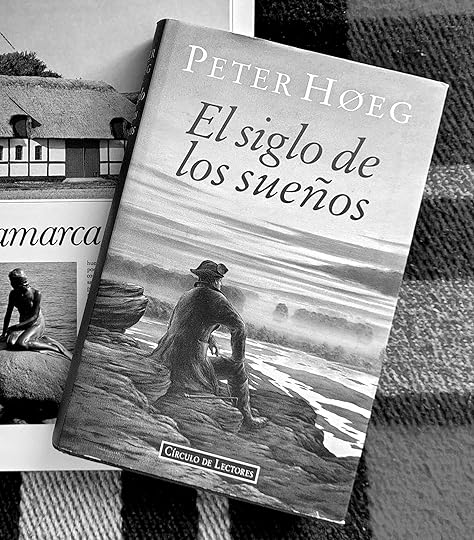
HØEG, Peter (1996) El siglo de los sueños (Forestilling om det Tyvende Århundrede, 1988). Traducción del danés a cargo de Ana Sofía Pascual, en 1995. Licencia editorial para Círculo de Lectores por cortesía de Tusquets Editores.
La literatura escandinava, o literatura nórdica, comprende obras escritas y orales de los países del norte de Europa, incluidos Dinamarca, Finlandia, Islandia, Noruega, Suecia y los diversos territorios de Escandinavia.
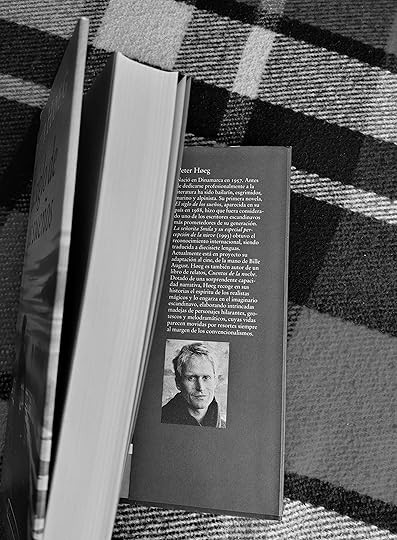
Peter Høeg (Copenhague, 1957) es un escritor danés, conocido principalmente por su novela La señorita Smilay su especial percepción de la nieve (Frøken Smillas fornemmelse for sne, 1992), cuya trama se desarrolla en Dinamarca y Groenlandia. En 1997 se realizó una adaptación cinematográfica de la misma llamada Smila, misterio en la nieve, dirigida por Bille August.
Inagotable, la imaginación de Peter Høeg parece nutrirse de todos los cuentos infantiles para elaborar en El siglo de los sueños, con una fantasía rayana en la impertinencia, la historia, de arriba abajo en la escala social, de cuatro familias. Y de sus sueños: los pobres quieren irse y los nobles detener el tiempo, la vida de unos se confunde con el sueño utópico del poder de la industria, y para otros, con la espera del amor. Los héroes y los holgazanes, los herederos y los desheredados, los escépticos y los hechiceros se cruzan, se lanzan a una ronda de generaciones llenas de dramas, catástrofes y esperanzas.
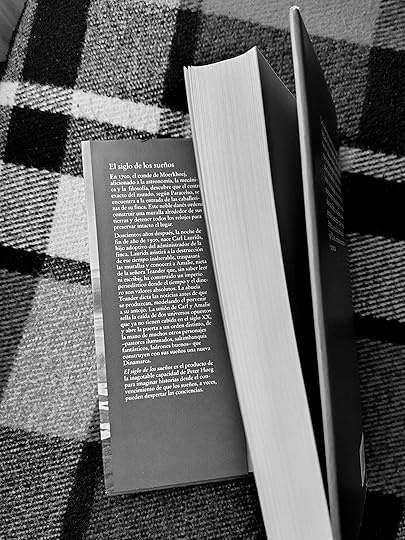
En 1700, un noble danés, el conde de Moerkhoej, descubre, siguiendo las pautas de Paracelso, el lugar exacto del punto central del cosmos: ¡cerca de un montón de estiércol en la entrada de sus caballerizas! Doscientos años después, en la Nochevieja de 1900, nace en esa mansión aislada, en la que se han detenido todos los relojes y se ha cortado, por voluntad del conde, toda relación con el mundo exterior, Carl Laurids, hijo adoptivo del administrador de la finca, que junto con el amor descubre la fugacidad del tiempo. En otro lugar, en contrapunto, vive la familia de los Teander, nuevos ricos en posesión de un imperio periodístico para quienes, en cambio, el tiempo es oro. Amalie, la nieta, siempre en busca de una verdad superior, se casará más tarde con Carl. Todos estos y otros personajes imaginan en cierto modo su propia historia, que, en conjunto, condensa aquello que hemos temido, deseado y soñado a lo largo de todo el siglo XX.
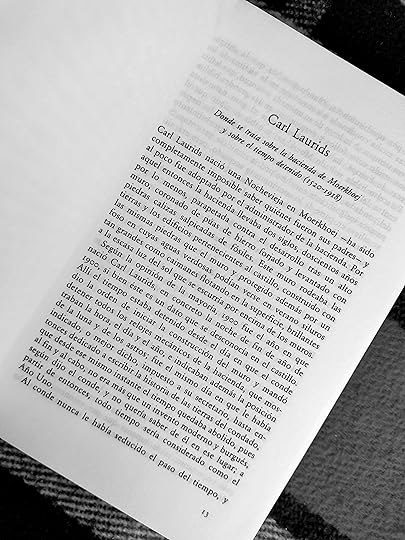
La saga familiar de Carsten y Maria a lo largo de todo el siglo XX.
Carl Laurids, que nace la Nochevieja de 1900 en Moerkhoej, es el primer personaje que aparece en esta novela llena de intriga y no pocos elementos peculiares. La historia, de hecho, se nos presenta con un misterio: la imposibilidad de conocer la identidad de sus padres. Dos siglos antes, un conde danés descubre, cerca de sus caballerizas, el punto central del universo. Todos los relojes se detienen por su deseo y, entonces sí, aparece Carl Laurids. En otro lugar, durante el propio siglo XX vivido por Carl, los Taender llevan a cabo sus negocios periodísticos. Amalie, nieta de los Taender, terminará casándose con el joven Laurids y fundando una extraña familia.
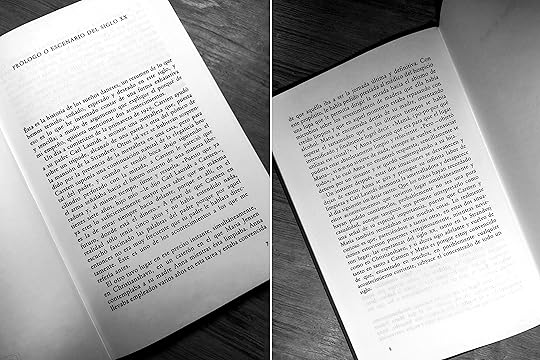
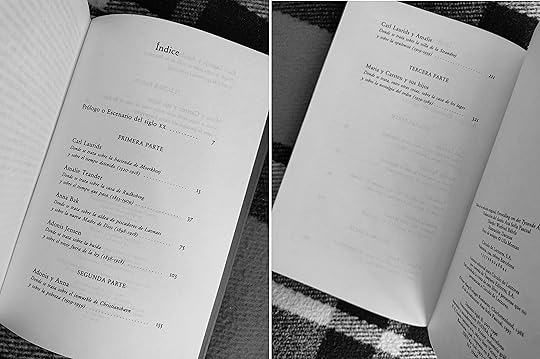
El libro se estructura en capítulos que son cada uno de ellos la historia de una parte de la familia en un periodo histórico concreto. Así, el primer capítulo trata de Carl Laurids abarcando 1520-1918; el segundo, que trata de Amalie Tander, abarca 1853-1909, y así sucesivamente (véase índice). En la segunda parte del libro las historias relatadas en la primera, sin relación aparente, se unen para dar forma a una trama en la que hay de todo: artistas de circo que tiene decenas de hijos, familias de ladrones, correccionales, incesto madre-hijo, casas y personas que se desvanecen, lugares donde no pasa el tiempo, etc.
El conjunto de relatos de Hoeg intercala episodios fantásticos, como el de la detención del tiempo en la hacienda de Moerkhoej, el hundimiento y desaparición de inmuebles, etcétera, con otros más realistas. El autor logra que empaticemos con unos personajes que adolecen de una increíble verborrea, pese a que en contadas excepciones no les vemos realizar demasiadas actividades. La novela gana en interés cuando el autor deja que los personajes sean los que se expresen, como al final, con la historia de Carsten y Maria. El autor pretende llevar a cabo una alegoría en torno a determinados estamentos sociales daneses; pero, si no se conoce la cultura e historia de ese país, no funciona.
Escrito en primera persona, el narrador va contando los hechos al lector de manera que a éste no le quepa la menor duda de que conoce muy bien a los personajes; al final, descubrimos algo interesante a este respecto (Mads, el hijo de Carsten y Maria, quien cuenta la historia de sus antepasados, es el propio narrador).
[Recomiendo: La obra literaria de Peter Høeg, por Ana Sofía Pascual: https://www.uv.es/capelo/Peter_Hoeg.html]

March 12, 2019
3 hvězdy jsou zde spíš "neutrální", protože tuhle knížku jsem já jako čtenář doopravdy nezvládla. Vyžaduje hluboké znalosti dánských reálií (které mi rozhodně ještě chybí) close reading a zkušenosti se čtením komplexních textů. Pokud to tedy člověk chce chápat do hloubky. Pokud se rozhodne si to jen prostě přečíst, možné je to taky a myslím, že vytěží hodně z proměn vypravěčů/časů vyprávění i samotné výstavby. Nemluvě o tom, že Høeg je prostě geniální autor. Takže "reader beware", ale zároveň od této knihy nikoho neodrazuju.
June 8, 2017
I tried. I really did. I keep trying to convince myself to pick this book up again, but it's just so boring. It's been compared to Italo Calvino, who I also find incredibly dull, so I should've known better. Høeg's and Calvino's brand of magical realism tends to be a bit too absurdist for my taste with an obsessive focus on eccentric rich people whom I am not in the least bit interested. Life's too short.
March 1, 2010
I don't have much to say about this novel. I think I enjoyed it because it held me hostage most of the fall and winter - a type of literary Stockholm Syndrome. It was funny and absurd at times, with ridiculous, larger than life characters. In the end, though, none of the absurdity led to any meaningful conclusions or resolutions - just gratitude at finally being free.

December 1, 2007
In the beginning, I was completely taken with the magical realism--especially the thief who mustrusted the rich and so only stole used shoes and the like--unfortunately, the quality of surreality came to feel strained, and I lost my feeling for the characters. The book just never carried me away.
October 4, 2021
A nicely written book that opens dramatically and is enthralling for a while. However it does lag later and although it has quality, it drags as for a long time nothing seems to develop. However it is an interesting book. The over-zealous comparisons to Ghormenghast do it no favours at all, though.

December 8, 2014
Didn't finish.
February 1, 2017
Sorry Mr. Hoeg, I loved the weird in the Elephant Keeper's Children. But this might be a little too far out for me. Got through the first two sections but couldn't really get hooked.

September 30, 2021
Хёг всегда великолепен, точен, изящен. Каждый раз, читая его роман, удивляюсь умению создавать эту вязь из фантазий и наблюдений.

March 20, 2016
Moc se mi libilo

September 9, 2020
La storia dei sogni danesi… che libro è? La verità è che non lo so nemmeno adesso che l’ho chiuso e, non del tutto convinta e un po’ persa, ho riletto l’introduzione. Che mai come in questo caso è necessaria, perché nel corso della lettura, tra i tanti personaggi e le loro avventure, si rischia di perdere il filo.
Un filo sottile, ma robusto: un intero secolo di storia Danese di cui Carsten e Maria sono ultimo anello di una catena che inizia nel sedicesimo secolo. Ma i fatti non sono raccontati in ordine cronologico: qui si è in una dimensione diversa, quasi magica , surreale, dove il tempo, se c’è, non scorre allo stesso modo per tutti; la dimensione del sogno.
E, come accade quando sogniamo, si passa da una scena ad un'altra, da un luogo all'altro in un attimo. E può capitare di ritrovarsi in luoghi già sognati da noi o da altri, in un tempo –come dicevo-che è quasi inesistente e non risponde alle leggi universali. Come accade per il Conte di Morkhoj che vive in un tempo sospeso, dove la modernità non riesce ad entrare.
O ,all'opposto, come per la Vecchia Signora, che del tempo e della precisione fa una regola di vita. Addirittura sembra lei a organizzarlo, con le sue previsioni del futuro sempre azzeccate. ( ho trovato geniale il fatto che la Signora, per quanto pazza e detestabile, gestisca un quotidiano. Un giornale che racconta il tempo, in un certo senso!)
Cosa accade, dunque, in questo romanzo dal sapore onirico, poetico e quasi mitologico? Tutto e niente, è un poderoso tentativo di fissare un’epoca con i suoi tratti, le sue ossessioni e le sue peculiarità. Oserei dire che è una fotografia in perenne movimento. Paradossale, lo so, ma meglio di così non lo so spiegare.
Ha una struttura “circolare”: si parte dalla coppia Carsten e Maria e a loro si torna, nel mezzo e nel tragitto vivono e rivivono i loro antenati. Tutto è collegato, anche se a volte il legame si palesa solo dopo. Mi ha fatto pensare alla scena di un film, V per vendetta, quando V mette le tessere del domino in fila, una dietro l’altra e, posata l’ultima, le fa cadere. All’altezza del pavimento sembra non succedere niente, ma guardando la scena dall’alto si vede un’immagine emblematica: nel caso del film il simbolo di V, nel caso di questo romanzo - ma solo arrivati alla fine- uno spaccato di vita.
L’autore crea a personaggi, ambienti e situazioni che vanno dal fiabesco al grottesco e il linguaggio si adatta ai contesti perfettamente, anche se il ritmo è veramente molto lento.
È una lettura molto diversa dalle mie solite e che richiede un certo impegno e una buona dose di costanza(se siete amanti dei libri pieni di azione non è il libro per voi.) e che mi ha fatto pensare a una frase che ho letto in un altro libro che dice più o meno così: “tutti siamo stati il sogno di qualcuno”* ( e ai miti indù per cui l’uomo e l’universo altro non sono che sogni di un dio (Siva?) e quando il dio si sveglierà noi non saremo più.)
E questo libro, forse è il sogno di Peter Hoeg.
3 stelle , ma forse ne meriterebbe di più..è la valutazione più difficile dell'anno!
Citazione: “ La storia è sempre un’invenzione, una fiaba costruita a partire da alcune tracce. (…) “
* Il circo della notte -Morgernstern
Un filo sottile, ma robusto: un intero secolo di storia Danese di cui Carsten e Maria sono ultimo anello di una catena che inizia nel sedicesimo secolo. Ma i fatti non sono raccontati in ordine cronologico: qui si è in una dimensione diversa, quasi magica , surreale, dove il tempo, se c’è, non scorre allo stesso modo per tutti; la dimensione del sogno.
E, come accade quando sogniamo, si passa da una scena ad un'altra, da un luogo all'altro in un attimo. E può capitare di ritrovarsi in luoghi già sognati da noi o da altri, in un tempo –come dicevo-che è quasi inesistente e non risponde alle leggi universali. Come accade per il Conte di Morkhoj che vive in un tempo sospeso, dove la modernità non riesce ad entrare.
O ,all'opposto, come per la Vecchia Signora, che del tempo e della precisione fa una regola di vita. Addirittura sembra lei a organizzarlo, con le sue previsioni del futuro sempre azzeccate. ( ho trovato geniale il fatto che la Signora, per quanto pazza e detestabile, gestisca un quotidiano. Un giornale che racconta il tempo, in un certo senso!)
Cosa accade, dunque, in questo romanzo dal sapore onirico, poetico e quasi mitologico? Tutto e niente, è un poderoso tentativo di fissare un’epoca con i suoi tratti, le sue ossessioni e le sue peculiarità. Oserei dire che è una fotografia in perenne movimento. Paradossale, lo so, ma meglio di così non lo so spiegare.
Ha una struttura “circolare”: si parte dalla coppia Carsten e Maria e a loro si torna, nel mezzo e nel tragitto vivono e rivivono i loro antenati. Tutto è collegato, anche se a volte il legame si palesa solo dopo. Mi ha fatto pensare alla scena di un film, V per vendetta, quando V mette le tessere del domino in fila, una dietro l’altra e, posata l’ultima, le fa cadere. All’altezza del pavimento sembra non succedere niente, ma guardando la scena dall’alto si vede un’immagine emblematica: nel caso del film il simbolo di V, nel caso di questo romanzo - ma solo arrivati alla fine- uno spaccato di vita.
L’autore crea a personaggi, ambienti e situazioni che vanno dal fiabesco al grottesco e il linguaggio si adatta ai contesti perfettamente, anche se il ritmo è veramente molto lento.
È una lettura molto diversa dalle mie solite e che richiede un certo impegno e una buona dose di costanza(se siete amanti dei libri pieni di azione non è il libro per voi.) e che mi ha fatto pensare a una frase che ho letto in un altro libro che dice più o meno così: “tutti siamo stati il sogno di qualcuno”* ( e ai miti indù per cui l’uomo e l’universo altro non sono che sogni di un dio (Siva?) e quando il dio si sveglierà noi non saremo più.)
E questo libro, forse è il sogno di Peter Hoeg.
3 stelle , ma forse ne meriterebbe di più..è la valutazione più difficile dell'anno!
Citazione: “ La storia è sempre un’invenzione, una fiaba costruita a partire da alcune tracce. (…) “
* Il circo della notte -Morgernstern
Displaying 1 - 30 of 118 reviews