Simone de Beauvoir was a French existentialist philosopher, novelist, essayist, memoirist, and feminist whose writings profoundly shaped twentieth-century philosophy, literature, and modern feminist thought. Born in Paris into a bourgeois Catholic family, she displayed exceptional intellectual ability from an early age. After studying philosophy at the Sorbonne, she passed the prestigious agrégation examination in 1929, becoming one of its youngest successful candidates. During her studies she met Jean-Paul Sartre, with whom she formed a lifelong intellectual and personal partnership that became central to the development of French existentialism. Although Beauvoir often rejected the title of philosopher during her lifetime, her work established her as one of the discipline's most influential modern thinkers. She explored themes of freedom, responsibility, ethics, oppression, and human existence through both philosophical and literary writing. Her groundbreaking book The Second Sex (1949) transformed feminist theory by arguing that femininity is shaped primarily by social and historical conditions rather than biology, introducing the celebrated idea that "one is not born, but rather becomes, woman." The work challenged traditional assumptions about gender and became one of the foundational texts of contemporary feminism. Beauvoir also authored influential philosophical studies, including The Ethics of Ambiguity, alongside acclaimed novels such as She Came to Stay, The Blood of Others, The Mandarins, which received the Prix Goncourt in 1954, and The Woman Destroyed. Her four-volume autobiography, beginning with Memoirs of a Dutiful Daughter, remains an important account of twentieth-century intellectual and cultural life. Throughout her career she served as co-founder and editor of the influential journal Les Temps Modernes, contributing essays on politics, literature, philosophy, and contemporary social issues. Beyond her writing, Beauvoir was deeply engaged in public life. She campaigned for women's rights, reproductive freedom, and social equality, signing the Manifesto of the 343 that called for the legalization of abortion in France. She also opposed colonialism, criticized social injustice, and supported progressive political causes throughout her life. Her travels inspired widely read travel books and essays examining cultures in the United States and China. Beauvoir's legacy extends far beyond feminism, influencing existential philosophy, literary criticism, political theory, ethics, sociology, and gender studies. Despite continuing debate over aspects of her personal life and controversial relationships, her intellectual contributions remain central to modern scholarship. Her books have been translated into numerous languages and continue to be studied worldwide for their philosophical depth and literary achievement. Honored with distinctions including the Prix Goncourt, the Jerusalem Prize, and the Austrian State Prize for European Literature, Simone de Beauvoir is widely regarded as one of the defining intellectual figures of the twentieth century, whose writings permanently transformed discussions of gender, freedom, morality, and the human condition while continuing to inspire scholars, writers, and activists across generations.
قراءة أولى ديسمبر 2013 قراءة ثانية ديسمبر 2016 الخلاصة: وجع مضاعف، وحب أبدي لهذه المرأة يحكي الكتاب رحلة العذاب التي عاشتها المجاهدة الكبيرة جميلة بوباشا وتقوم هنا محاميتها جيزيل حليمي بسرد تفاصيل ذلك الدهليز الذي يدعى التعذيب بأبشع صوره .
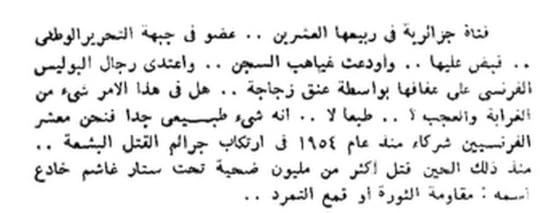
يقول أحد المدرسين الفرنسيين في خطاب أرسله لجريدة لوموند ردا على مقال الكاتبة سيمون دي بوفوار :
رجائي أن تقولي للآنسة بوباشا أننا معشر المدرسين نشعر بالخزي والعار من أجل فرنسا... بل نشعر بعجزنا عن المضي في تلقين تلاميذنا ما تتضمنه الكتب الفرنسية من مبادئ سامية و أخلاقيات ..." 0
جميلة بو باشا المناضلة الجزائرية ذات ال٢٢ ربيعاً تم القاء القبض عليها من قبل القوات الفرنسية في فبراير ١٩٦٠ بتهمة التستر على اخوانها وتهمة وضع قنبلة في مقهى فرنسي ، تعرضت لكل انواع التعذيب من إغراق بالماء وصعق بالكهرباء وضرب واحراق والاعتداء الجنسي لمدة ٣٤ يوماً، الى أن طلبت من المحامية جيزيل حليمي الدفاع عنها امام المحكمة الجزائرية ، وتحولت هذه القضية بفضل المحامية جيزيل والكاتبة سيمون دو بوفوار والعديد من السياسيين وابنشطاء والكتاب الى قضية رأي عام لفتت انتباه الحكومة الفرنسية وفتح تحقيق مكثف بشأن التعذيب الذي يتعرض له الجزائرين في السجون الفرنسية، وتم اثبات التهم على السجانين والضباط بعد محاولات عدة لاخفاء الحقيقة. ولكن بالرغم من كل أشكال التعذيب التي تعرضت لها المناضلة الجزائرية جميلة بو باشا إلا أني أعتبرها محظوظة لما لاقته من اهتمام بقضيتها ودعم من كل الأسماء الكبيرة والمهمة التي استطاعت أن تقلب الرأي العام لصالحها، لكن كم من مناضلين ومناضلات عذبوا وماتوا تحت التعذيب ولم يسمع عنهم أحد!
ملاحظة: التقييم 5/5 لرفع الكتاب ليس تقييم لقصة عذاب!
خداوندا... یه انسان و یه زن چقدر میتونه بزرگوار باشه... یه همچین زنایی هستن که برام ثابت میکنن که زن ارزش الهه بودن رو داشته و داره... یادمه یه بار با یه الجزایری چت میکردم، بحث رو به جمیله کشوندم، اونقدر براش محترم بود این خانوم که حتی اسمش رو هم نمیخواست تایپ کنه، چون میترسید از احترامش بهش کم بشه
يا الله جميلة بوباشا شخصية من العظماء بصدقها ونضالها وايمانها بالقضية انتهاك حقوق الانسان مستمرة ضد اى حد يطالب بكرامة او حرية , المطالبه بالحقوق تعتبر جريمة التعذيب والانتهاكات شىء طبيعى . الناس اللى بتمارس التعذيب والانتهاكات دى واللى بيبرروها تركبيتهم ايه ؟ جميلة وكل امثالها ابطال فى كل العقول والقلوب ,وكل السجانين والجلادين عمر التاريخ والزمن بيمحى جرائمهم جرائمهم فى قلوبنا وعقولنا لا تسقط بالتقادم . السادة الافاضل امثال المحامية وسيمون دوبفوار وكل اللى ساعدوا جميلة دول اللى بيخلوا الدنيا متوازنه ربنايعينهم
I read this in English (André Deutsch + Weidenfeld and Nicholson, 1962), but the English language edition doesn’t have a useable entry on Goodreads so I’m attaching my comments to the French edition.
This could be read as a courtroom drama, and as such it’s a pretty good one. Djamila, a staunch advocate of Algerian independence, is being tried for her life in Algeria on a charge of having planted a bomb in a café, following a month of torture resulting in a ‘confession.’ Djamila’s lawyer, Gisèle Halimi, first gets an adjournment, then lodges a case on Djamila’s behalf (ie. Djamila is the plaintiff) against her torturers, then (after much publicity and threats of further litigation) persuades the Minister of Justice to move Djamila’s torture case from Algeria to France, where it is to be tried by a judge who is committed, without fear or favour, to discover the truth of Djamila’s allegations. There it ends, with Djamila still in prison and both cases still unresolved. For all that, it’s a swingeing condemnation of the corruption of French law and government for the sake of maintaining imperial power over Algeria.
Having missed a short note at the front of the book, I was left wondering what happened to Djamila’s torturers and whether she was ever exonerated for the crime of which she had been accused. Wikipedia provides a date of birth, but does not record her death so she is presumably still living. Incredibly, Djamila was condemned on June 29th, 1961, to be executed, apparently while Halimi was still pursuing a case against the Minister of War and the Commander in Chief of French Forces in Algeria for harbouring criminals (ie. the torturers) by withholding incriminating documents in defiance of the court, a case supported by a variety of impeccable legal opinions.
As it transpired, the Evian Accords were concluded in March 1962, acknowledging Algeria as an independent state; one condition of which was amnesty for Muslim political prisoners (including Djamila), and another of which was amnesty for their torturers. So Djamila was found guilty of planting the bomb, despite manifestly tainted evidence, and her torturers were apparently never tried. Once again Charles de Gaulle saved French honour, or at least the appearance of it, by sweeping a great many embarrassing matters under the carpet. By the time this book was published, Djamila as a ‘cause celebre’ was yesterday’s news. It looks like a bombshell book that should have saved Djamila from the machinations of a corrupted legal system, but in fact it appeared too late to help her at all with the law. The book’s a squib, but a pretty good read for all that. It’s a great corrective for French pretensions of noble principles and high ideals.
And Peter Green, the translator, deserves a bouquet for making some very complex French legal concepts accessible, even to legally unsophisticated reader such as myself
لم أعتد يوماً تقييم حياة أي إنسان ، فمابالكم بتقييم قصة عذابه ، خاصة أن هذا الإنسان مناضلة جزائرية ضد الاحتلال الفرنسي .. الجزائرية التي هزت الرأي العام وحركت سياسيين وكُتّاب وناشطين لإعادة الحق لأهله وإزالة الظلم الواقع عليهم ..
ألقي القبض عليها مع أبيها و أخيها و أختها المجاهدة نفيسة بو باشا وكلهم عائلة ثورية , عذبت جميلة بوباشا عذاباً لا يتحمله بشر حتى فجع العالم لما عانته من وحشية الجيش الفرنسي على جسدها الشاب الغض. هتكو عفافها ، أطفئوا اعقاب السجائر في جسدها ، عذبوا أهلها ووالدها العجوز على مرأى ناظريها لساعات ، ثم اتهموها بالجنون ، والإرهاب .. أحداث محاكمتها والجهد الذي بذلته محاميتها جيزيل حليمي لنصرتها . ففي هذا الكتاب ثلاث عظيمات وليس فقط المناضلة جميلة بل المحامية جيزيل التي دافعت بكل ماتملك من مخالب عن حرية جميلة وعن القصاص العادل من وحشية المعذبين والكاتبة سيمون دوبوفوار التي ساعدت على تدويل القضية بالرغم من أن الجيش المعني هو جيش بلادها، ففي الإنسانية لاتوجد تحيزات لعرق أو وطن أو مذهب .. يقف الكتاب دون أن يعطيك النهاية الحاسمة في المحاكمة"لذلك نقصت نجمة" ولكن حسب غوغل فإن جميلة قدحكم عليها بالاعدام سنة 1961 ولكنه تم الإفراج عنها بموجب اتفاقيات ايفيان في 07 مايو 1962 لتنضم إلى أول مجلس وطني للجزائر المستقلة أثر فيّ جداً تفاعل الشعب الفرنسي في طليعة المتفاعلين ضد الانتهاكات الوحشية لابنة ال22 عام فقد ذكرت أنها وصلها رسائل عديدة تقف في صفها اذكر منها يقول أحد المدرسين الفرنسيين في خطاب أرسله لجريدة لوموند ردا على مقال الكاتبة سيمون دي بوفوار :
رجائي أن تقولي للآنسة بوباشا أننا معشر المدرسين نشعر بالخزي والعار من أجل فرنسا... بل نشعر بعجزنا عن المضي في تلقين تلاميذنا ما تتضمنه الكتب الفرنسية من مبادئ سامية و أخلاقيات ..." من المهم جداً أن نعرف أن هذا العالم يضم الكثير من النساء اللواتي يحملهن المجد دون أن يسعين لذلك ، فيكفي أن تفكر بشكل عظيم حتى تمتلك حياة عظيمة ..
Gisèle Halimi et Simone de Beauvoir racontent l’histoire de Djamila Boupacha, une jeune militante algérienne violée et torturée par des soldats de l’armée française lors de la période coloniale. Alors qu’Emmanuel Macron vient de reconnaître, au nom de la France, l’assassinat de l’avocat et du dirigeant nationaliste Ali Boumendjel, par l'armée française en Algérie, il me semblait important de lire l’histoire de Djamila. Ce livre est vraiment un récit de l’affaire juridique et non de l’histoire en tant que telle, néanmoins je pense qu’il est extrêmement important de le lire pour le devoir de mémoire.
جميلة بوباشا ايقونه الكفاح الجزائري ضد الاستعمار الفرنسي، جميلة كانت وما زالت مثال يحتذي به في ارجاء الوطن العربي ودول التحرر سخرية الاقدار ان يكون الطرف الظالم هو نفسه من يتشدق بقوانين الحريه وثورات التحرر الني تدرس وينبع منها الثوار، المستعمر هو نفسه من تشدق بقصص التحرر ابان الاستعمار الألماني لبلادهم في الحرب العالميه الثانيه واحداث الجزائر جائت بعد هذه الحرب والعالم لم يزل يزيل غبار الحرب فطبق الاستعمار الفرنسي ما عانا منه من قبل
جميلة بوباشا ايقونه الكفاح الجزائري ضد الاستعمار الفرنسي، جميلة كانت وما زالت مثال يحتذي به في ارجاء الوطن العربي ودول التحرر سخرية الاقدار ان يكون الطرف الظالم هو نفسه من يتشدق بقوانين الحريه وثورات التحرر الني تدرس وينبع منها الثوار، المستعمر هو نفسه من تشدق بقصص التحرر ابان الاستعمار الألماني لبلادهم في الحرب العالميه الثانيه واحداث الجزائر جائت بعد هذه الحرب والعالم لم يزل يزيل غبار الحرب فطبق الاستعمار الفرنسي ما عانا منه من قبل
Un rapport précis et intéressant de l’affaire DB… j’ai aimé la tendresse, le pathos et la subjectivité apportés par Gisele Halimi. Cela permet de prendre plus facilement le parti de Djamila Boupacha et de comprendre ses actions, ses tortures …
This entire review has been hidden because of spoilers.
يعني الفيلم يلي قدمه يوسف شاهين جزء بسيط جداً من التعذيب وهتك عرض التي تعرضت له المناضلة " جميلة " والصعوبات القانونية التي تعرضوا لها وع فكرة محامية يلي ترافعت عنها .
It's a good book and that's the only reason I gave it 3.5 stars. Anyone who actually says they enjoy reading this type of literature is fucking sick in the head. Noone should enjoy rape related shit.
من این کتاب را با ترجمه منصور تاراجی و حسن پویان چاپ سال 51 خواندم ترجمه بسیار بد با ویراستاری و غلط های چاپی فاجعه بار امیدوارم چاپ جدیدتر این کتاب ترجمه بهتر و دقیقتری داشته باشد.
ترجمه خانم گیسو پارسای را خواندم. خیلی بهتر از نسخه دیگر بود ولی همچنان اشتباهات چاپی فراوانی در کتاب دیده می شود
و بقول سیمون دوبوار لازم بود بی تفاوتی فرانسویان را نسبت به رویدادهای ااجزیره , از بین ببرم : آنچه از یک افتضاح بدتر می نماید , خو گرفتن با افتضاح است.