Jump to ratings and reviews
Rate this book

Notes on Old Edinburgh

Rate this book
This book was converted from its physical edition to the digital format by a community of volunteers. You may find it for free on the web. Purchase of the Kindle edition includes wireless delivery.

34 pages, Kindle Edition

First published January 1, 1869

Loading...
Loading...

About the author

Isabella Lucy Bird

124 books100 followers
Isabella Lucy Bird Bishop (October 15, 1831 – October 7, 1904) was a nineteenth-century English traveller, writer, and a natural historian.

Works:
* The Englishwoman in America (1856)
* Pen and Pencil Sketches Among The Outer Hebrides (published in The Leisure Hour) (1866)
* The Hawaiian Archipelago (1875)
* The Two Atlantics (published in The Leisure Hour) (1876)
* Australia Felix: Impressions of Victoria and Melbourne (published in The Leisure Hour) (1877)
* A Lady's Life in the Rocky Mountains (1879)
* Unbeaten Tracks in Japan (1880)
* Sketches In The Malay Peninsula (published in The Leisure Hour) (1883)
* The Golden Chersonese and the way Thither (1883)
* A Pilgrimage To Sinai (published in The Leisure Hour) (1886)
* Journeys in Persia and Kurdistan (1891)
* Among the Tibetans (1894)
* Korea and her Neighbours (1898)
* The Yangtze Valley and Beyond (1899)
* Chinese Pictures (1900)
* Notes on Morocco (published in the Monthly Review) (1901)

Ratings & Reviews

What do you think?
Rate this book

Friends & Following

Create a free account to discover what your friends think of this book!

Community Reviews

5 stars
7 (20%)
4 stars
14 (40%)
3 stars
9 (25%)
2 stars
2 (5%)
1 star
3 (8%)
Displaying 1 - 10 of 10 reviews
Profile Image for Maureen .
1,749 reviews7,552 followers
July 30, 2024
Edinburgh is one of my favourite cities, but this report published in 1868 shows a very different face. While nobody could suggest that poverty has been eradicated today, the abject poverty displayed here is heartbreaking.

The squalor, the overcrowding in mean decayed buildings, many of the rooms without natural light, contributed to many diseases. There was no sanitation, no fresh water to hand. Waiting for hours in queues to pump water and then carry this heavy load up many stairs for the inhabitants of the tenements, meant that people would buy whisky for a few pence as it was more readily available. This only contributed further to the downfall of these poor people, many of whom descended into alcoholism. A sad but enlightening look at how far this city has come.
Profile Image for Bettie.
9,973 reviews8 followers
June 1, 2015
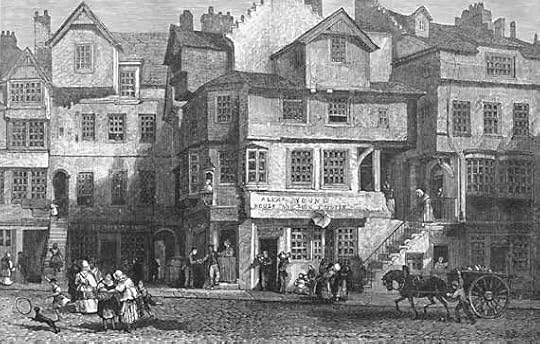
John Knox House

https://www.gutenberg.org/ebooks/36014

Opening: It has been my fortune to see the worst slums of the Thames district of London, of Birmingham, and other English and foreign cities, the “water-side” of Quebec, and the Five Points and mud huts of New York, and a short time ago a motive stronger than curiosity induced me to explore some of the worst parts of Edinburgh—not the very worst, however. Honest men can have no desire to blink facts, and no apology is necessary for stating the plain truth, as it appears to me, that there are strata of misery and moral degradation under the shadow of St. Giles’s crown and within sight of Knox’s house, more concentrated and unbroken than are to be met with elsewhere, even in a huge city which, by reason of a district often supposed to have no match for vice and abjectness, is continually held up to public reprobation. The Rev. R. Maguire, rector of St. James’s, Clerkenwell, accompanied me through a portion only of the district visited, and he expressed his opinion then, and since more formally in print, that more dirt, degradation, overcrowding, and consequent shamelessness and unutterable wretchedness, exist in Edinburgh than in any town of twice its size, or in any area of similar extent to the one explored, taken from the worst part of London. With this opinion my own convictions cordially concur. We have plenty of awful guilt-centres in London—as, for instance, the alleys leading out of Liquorpond Street and the New Cut, but even the worst are broken in upon by healthy neighbourhoods. Here there is a loathsome infectious sore, occupying a larger area than anywhere else—a district given up in great measure to moral degradation, which extends from the Lawnmarket to Holyrood, from Holyrood along the parallel streets of the Cowgate, the Grassmarket, and the West Port, including most of the adjacent wynds and closes, and only terminating with Cowfeeder Row.

Compare and contrast this with Edinburgh: Picturesque Notes, which was published eleven years later than this essay.
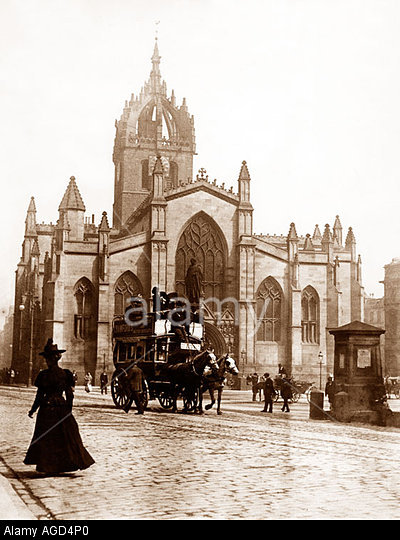
St Giles 1884

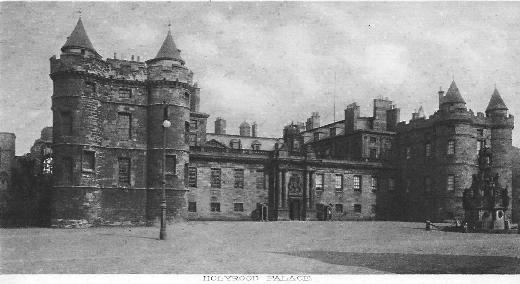
Holyrood House, Victorian era

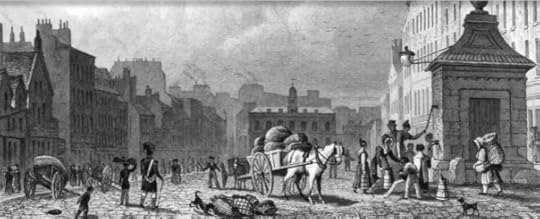
Grassmarket

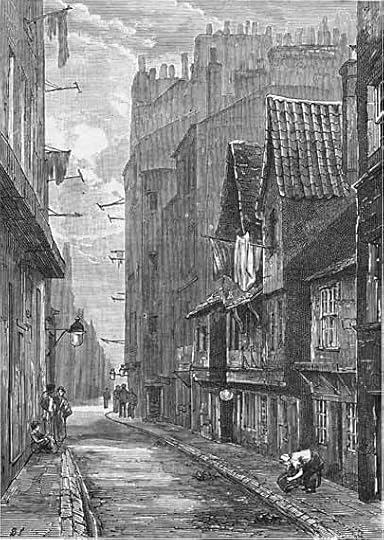
Cowgate

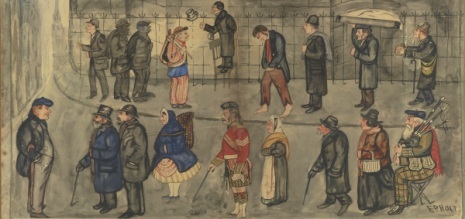
Street Life in Victorian Edinburgh: The colourful world of Ned Holt

3* Notes on Old Edinburgh
3* Among the Tibetans
Profile Image for Alison Lyles.
14 reviews
May 14, 2018
I knew Edinburgh was grimy in the 1800s but I don't think I was aware of how hideous it actually was to live in the Old town. We don't know how lucky we are today.
Profile Image for Opalgem.
34 reviews24 followers
July 7, 2016
A heartbreakingly frank commentary on the poverty and deprivation that existed in the heart of Edinburgh once upon a time. For someone from Edinburgh, and who has walked through the streets mentioned here, it is an uncomfortable read. Comparing Edinburgh now to as it was then is to see just how far the city has come since, and a confirmation of what the people of this city have gone through over the centuries. (Which is not to say Edinburgh is now perfect or "cured" of poverty but still...)
Profile Image for Justina 🏺.
152 reviews5 followers
May 30, 2019
I knew that Old Town vs. New Town translated to the poor vs. The rich but I never would’ve imagined the absolute poverty of Cowgate. Makes me happy I occupied it in the 21st century vs the 19th century.
Profile Image for Janine.
327 reviews6 followers
March 22, 2019
Interesting book

Interesting insight into the squalor of Edinburgh during the Victorian era. I have read many books about Edinburgh during this time, and this just confirms things.
2 reviews
January 12, 2017
Wretched poverty in Edinburgh

A stark description of society in 1868 Edinburgh that illustrates the inability or unwillingness of institutions to successfully address the needs and problems of its destitute citizens - issues with which we still grapple today this day.
Profile Image for Kjersti.
2 reviews
January 17, 2016
A shocking read about the tragic conditions of 19th century Edinburgh. As someone with no pre-existing knowledge on this topic, I was shocked to discover the harsh reality of the widespread poverty that existed during this time.
Profile Image for Avis Black.
1,575 reviews58 followers
November 20, 2020
Not a travel book like her others, but a Dickensian look at poverty. Not enjoyable, but someone had to write it.
Displaying 1 - 10 of 10 reviews