Beginning with an illustrated guide to the herbs and roots used in traditional Appalachian healing, “Mountain Folk Remedies” is a fascinating collection of historic remedies ranging from the practical (burdock tea will help aching feet) to the magical (carrying a buckeye in your pocket will help lessen arthritis).
I have been interested in herbs ever since I saw a friend's herb garden in Creston, CA back in 1987. She began sharing her plants with me, so I was on my way to enjoying them too. We didn't use them for medicinal purposes; instead we made beautiful swags and wreaths. Now I am living in Oklahoma, and again, I have my own herb/flower garden. One of my favorite herbs is artemisia, and so last year I bought several types from Companion Plants online. It took me 8 years to finally find a good source with a lot of varieties. Who knows if there are more elsewhere that I can buy. There has to be.
While I don't use them for medicinal purposes, you never know when it may become necessary to do so. And it isn't that I didn't try herbal remedies from time to time, all the way back to my years in Berkeley, Ca. They just didn't seem to work, but other remedies I have used have worked very well, which is why I am a frequent reader of earthclinc.com, a website where people talk about what they have used for cures that worked or made them better. I also used to have telephone appointments with an herbalist, Dr. Alan Tillotson, who has written the book, "The Herbal Sourcebook: Everything You Need to Know About Chinese, Western, and Ayurvedic Herbal Treatments." While I own the book I have not read it. I am still using his recommendations for vitamins and minerals. And I still use ginkgo and other herbs for my eyes, so I should not have said that I don't use them, just that I am not sure if they work.
Anyway, this book is a fun read, and I have a friend here that was raised in the Appalachian mountains and knows about some of these Appalachian remedies and claims that they work. I was telling her the other day that I had read that they used kerosene on bed posts to kill bedbugs. The straw bedding was removed from the cases, and the cases were scalded in hot water. The wooden bed posts were taken outside and rubbed with kerosene, and I joked to her that if you were not sure that it had killed the bugs, you could light a match to it. She said that they did light matches to them but only to metal bed frames. The smoke would go into the hollow part of the metal frames and kill the bugs. So, if you have bedbugs this may work. I just can't imagine using it. I would throw out my mattress and try something else, and then if all else failed...
One thing I really liked about the book was when the students of this Foxfire book talked about gathering herbs. They said to make sure that you find four of the same type of plant and leave three so that they can reproduce. They added that we should have a reverent relationship with the land and the belief that God owns and provides all things for us if we care for them.
Here are some tidbits from the book:
"A black walnut cake is a regional favorite." My mother used to make a chocolate cake with chocolate frosting and she would mix black walnuts into the frosting. That was really, really delicious. I wonder how many people today have tasted anything like this? How many have even tasted black walnuts? They are used to kill intestinal worms, which is a good reason to eat that chocolate cake every day.
Bloodroot helps or cures asthma. I would be afraid to try it, unless I had more information. I remember reading about skin cancer and bloodroot in a holistic health doctor's book, and how it penetrated to the root of the cancer and killed it. So one day I got a piece of bloodroot from a health food store and tried it on a brown non-cancerous spot on my arm. I followed the instructions in the book I was reading: Chop it up, get it wet, and place it on the spot and cover with a Band-aide for three days. Three days later I took it off and the brown spot was gone. I bought some a few years ago and tried it on another spot. Nothing. Perhaps it was too old. I grow my own bloodroot, but I have never dug up any of the root to test it again. Still, it is there if I need it.
"Butterflies get their protective poison from butterfly weed." I was just given a butterfly weed yesterday. It also says that some people call this plant "chiggerweed," but it doesn't say why. Does it repel them or does it draw them to it? I looked it up online; it draws them, but they claim that they won't get on you from a butterfly weed. Hmmm? I've had my fill of chigger bites. I was told after moving here that if you chew tobacco and then put it on your chigger bites it will get rid of the itch. I really don't like tobacco, and once I had over 200 chigger bites, and I couldn't see myself covered in tobacco which may have been poisonous in that amount. I do know what really works, a hair dryer. I kind of burned myself on my thigh when using it, but I didn't realize it until I woke up in the middle of the night with it burning. I put an ice pack on it, and the next day that was the only place on me that didn't itch anymore. Had I used the hair dryer all over me, I could have become really ill from the burns. I wonder what kerosene would have done? Why doesn't this book talk about chiggers? Ah, they don't have them in the Appalachian mountains. The best thing I have learned here is to not walk in the weeds, but when I work in my own garden, I come into the house after a few hours and shower with a bar of lye soap. Bleach in tub water is also suppose to work. No thanks. The Native Americans, I was once told, used to have control burnings for ticks and chiggers.
I was also hoping to find a natural remedy for coughs because I get during allergy season, which is year around here. I had tried cough drops, but if they have sucrose in them you will not wish to use them frequently. I had given up my use of Tabasco sauce for this purpose, but I am using it again. (You will get used to it in time, so it won't make you tear up after a while. I just carry a bottle with me and sprinkle it my mouth.) What does it do for a cough? For me it stops the coughing spasms that I get. Anyway, years ago a chiropractor once told me that 20 drops on the tongue will take care of a sore throat, but you have to use it a few times a day. First time I got a sore throat I began using it, and it got rid of the pain. I wasn't feeling any better, so I went to a doctor. He looked down my throat and said, "This must be the worse sore throat that you have ever had." I said, "No, I didn't know I had one anymore." I learned that I had strep throat. (Update: I bought some horehound cough drops. They seem to work well on allergy coughs. I have not had a serious 2 minute allergy cough to really put it to work yet.)
I remember that my former Arkansas mother-in-law used to make sassafras tea for a spring tonic. She used the bark, filled a sauce pan with water, and steamed it on the stove. She kept it in that pan with water and used it daily. It became very strong. One day she gave me a glass of this tea. It was so strong that I went outside and regurgitated. Last time I ever drank sassafras tea. Being a spring tonic, I supposed it purged me of all the demons that I had gathered up inside of me over the winter. But I don't think that the sassafras tea was harmful except to me. Strong tea of any kind, especially instant tea can cause the same reaction in me.
So if you want to read a fun relaxing book this is one, and if you like to grow plants or even try herbal remedies, check this book out.
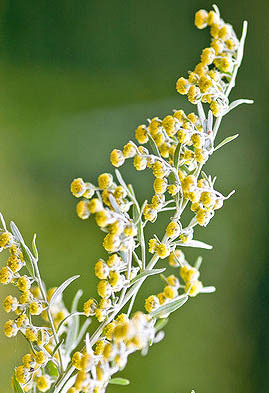
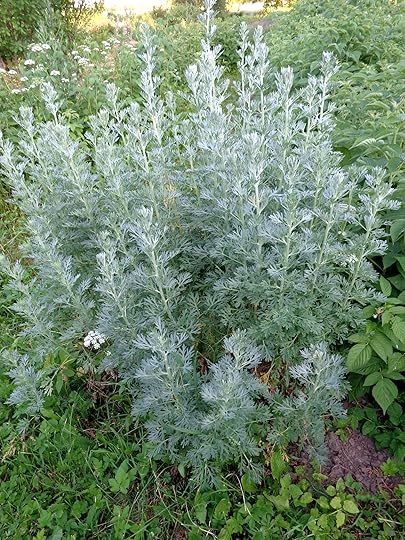
This is Artemisia absinthium. This is what I used in making the background of the swags I made.
This was fun to read and if you know the science behind some of the remedies then you know why it works (like Epsom salts for a headache - low magnesium often causes headaches). The dialects and speech patterns were enjoyable. I wish more information like this from past generations was saved and passed down.
Not great as references go but interesting history and some cures that are entertaining even if they are a bit iffy. The internet can round out information about the individual herbs and the list is a decent place to start.
A wonderful book with many natural bush recipes and kitchen remedies before there were a lot of doctors available but written by some and the Apache People that used these recipes in their every day living.
Fun interesting read , historical but also a great laugh at a few of the sillier remedies , but tones of interesting old folk remedies and information.m