

What do you think?
Instrumentality of Mankind
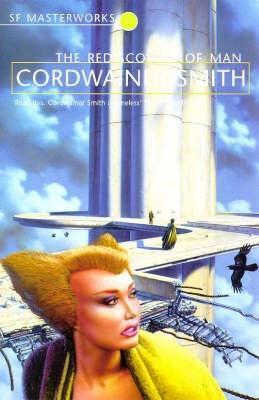
The Rediscovery of Man
Cordwainer Smith was one of the original visionaries to think of humanity in terms of thousands of years in the future, spread out across the universe. This brilliant collection, often cited as the first of its kind, explores fundamental questions about ourselves and our treatment of the universe (and other beings) around us and ultimately what it means to be human.
Contents:
* Cordwainer Smith: The Shaper of Myths (1975) • essay by John J. Pierce [as by J. J. Pierce]
* The Instrumentality of Mankind (timeline) (1975) • essay by John J. Pierce
* Scanners Live in Vain [The Instrumentality of Mankind] (1950) / novelette by Cordwainer Smith: meet Martel, a human altered to be part machine-a scanner-to be able withstand the trauma space travel has on the body. Despite the stigma placed on him and his kind, he is able to regrasp his humanity to save another; Fantasy Book #6 ’50
* The Lady Who Sailed The Soul [The Instrumentality of Mankind] (1960) / novelette by Cordwainer Smith, Genevieve Linebarger; Galaxy Apr ’60
* The Game of Rat and Dragon [The Instrumentality of Mankind] (1955) / short story by Cordwainer Smith; Galaxy Oct ’55
* The Burning of the Brain [The Instrumentality of Mankind] (1958) / short story by Cordwainer Smith; If Oct ’58
* Golden the Ship Was - Oh! Oh! Oh! [The Instrumentality of Mankind] (1959) / short story by Cordwainer Smith, Genevieve Linebarger; Amazing Apr ’59
* The Crime and the Glory of Commander Suzdal [The Instrumentality of Mankind] (1964) / short story by Cordwainer Smith; Amazing May ’64
* The Dead Lady of Clown Town [The Instrumentality of Mankind] (1964) / novella by Cordwainer Smith: get to know the underpeople-animals genetically altered to exist in human form, to better serve their human owners-and meet D'Joan, a dog-woman who will make readers question who is more human: the animals who simply want to be recognized as having the same right to life, or the people who created them to be inferior; Galaxy Aug ’64
* Under Old Earth [The Instrumentality of Mankind] (1966) / novelette by Cordwainer Smith; Galaxy Feb ’66
* Mother Hitton's Littul Kittons [The Instrumentality of Mankind] (1961) / novelette by Cordwainer Smith; Galaxy Jun ’61
* Alpha Ralpha Boulevard [The Instrumentality of Mankind] (1961) / novelette by Cordwainer Smith; Galaxy Jun ’61
* The Ballad of Lost C'mell [The Instrumentality of Mankind] (1962) / novelette by Cordwainer Smith: the notion of love being the most important equalizer there is, is put into action when an underperson, C'mell, falls in love with Lord Jestocost. Who is to say her love for him is not as valid as any true-born human? She might be of cat descent, but she is all woman!; Galaxy Oct ’62
* A Planet Named Shayol [The Instrumentality of Mankind] (1961) / novelette by Cordwainer Smith: it is an underperson of bull descent, and beings so mutilated and deformed from their original human condition to be now considered demons of a hellish land, who retain and display the most humanity when Mankind commits the most inhumane action of all; Galaxy Oct ’61
aka: Paul M. A. Linebarger, Paul Myron Anthony Linebarger, Paul Linebarger, Felix C. Forrest, Carmichael Smith, Kordvejner Smit.
.
Contents:
* Cordwainer Smith: The Shaper of Myths (1975) • essay by John J. Pierce [as by J. J. Pierce]
* The Instrumentality of Mankind (timeline) (1975) • essay by John J. Pierce
* Scanners Live in Vain [The Instrumentality of Mankind] (1950) / novelette by Cordwainer Smith: meet Martel, a human altered to be part machine-a scanner-to be able withstand the trauma space travel has on the body. Despite the stigma placed on him and his kind, he is able to regrasp his humanity to save another; Fantasy Book #6 ’50
* The Lady Who Sailed The Soul [The Instrumentality of Mankind] (1960) / novelette by Cordwainer Smith, Genevieve Linebarger; Galaxy Apr ’60
* The Game of Rat and Dragon [The Instrumentality of Mankind] (1955) / short story by Cordwainer Smith; Galaxy Oct ’55
* The Burning of the Brain [The Instrumentality of Mankind] (1958) / short story by Cordwainer Smith; If Oct ’58
* Golden the Ship Was - Oh! Oh! Oh! [The Instrumentality of Mankind] (1959) / short story by Cordwainer Smith, Genevieve Linebarger; Amazing Apr ’59
* The Crime and the Glory of Commander Suzdal [The Instrumentality of Mankind] (1964) / short story by Cordwainer Smith; Amazing May ’64
* The Dead Lady of Clown Town [The Instrumentality of Mankind] (1964) / novella by Cordwainer Smith: get to know the underpeople-animals genetically altered to exist in human form, to better serve their human owners-and meet D'Joan, a dog-woman who will make readers question who is more human: the animals who simply want to be recognized as having the same right to life, or the people who created them to be inferior; Galaxy Aug ’64
* Under Old Earth [The Instrumentality of Mankind] (1966) / novelette by Cordwainer Smith; Galaxy Feb ’66
* Mother Hitton's Littul Kittons [The Instrumentality of Mankind] (1961) / novelette by Cordwainer Smith; Galaxy Jun ’61
* Alpha Ralpha Boulevard [The Instrumentality of Mankind] (1961) / novelette by Cordwainer Smith; Galaxy Jun ’61
* The Ballad of Lost C'mell [The Instrumentality of Mankind] (1962) / novelette by Cordwainer Smith: the notion of love being the most important equalizer there is, is put into action when an underperson, C'mell, falls in love with Lord Jestocost. Who is to say her love for him is not as valid as any true-born human? She might be of cat descent, but she is all woman!; Galaxy Oct ’62
* A Planet Named Shayol [The Instrumentality of Mankind] (1961) / novelette by Cordwainer Smith: it is an underperson of bull descent, and beings so mutilated and deformed from their original human condition to be now considered demons of a hellish land, who retain and display the most humanity when Mankind commits the most inhumane action of all; Galaxy Oct ’61
aka: Paul M. A. Linebarger, Paul Myron Anthony Linebarger, Paul Linebarger, Felix C. Forrest, Carmichael Smith, Kordvejner Smit.
.
400 pages, Paperback
First published July 1, 1975
About the author
Cordwainer Smith
238 books335 followersPseudonym of:
Paul Myron Anthony Linebarger
Linebarger also employed the literary pseudonyms "Carmichael Smith" (for his political thriller Atomsk), "Anthony Bearden" (for his poetry) and "Felix C. Forrest" (for the novels Ria and Carola).
Linebarger was also a noted East Asia scholar and expert in psychological warfare.
Paul Myron Anthony Linebarger
Linebarger also employed the literary pseudonyms "Carmichael Smith" (for his political thriller Atomsk), "Anthony Bearden" (for his poetry) and "Felix C. Forrest" (for the novels Ria and Carola).
Linebarger was also a noted East Asia scholar and expert in psychological warfare.
Ratings & Reviews
Friends & Following
Create a free account to discover what your friends think of this book!
Community Reviews
Displaying 1 - 30 of 294 reviews

December 5, 2020
SF Masterworks #10, The Rediscovery of Man is a truncated version of the collected (short story) works of Cordwainer Smith, (Paul Myron Anthony Linebarger use of this pen name remained a secret throughout his life!). These 12 stories feature his trademark strange very far-future Lords of the Instrumentality constructed reality.
The scope of his imagination is pretty awesome as he takes the reader from a future humankind utopia with a dark underbelly (genetically modified human-animal hybrid slave class) to the Rediscovery of Man. The stories are set in chronological order of when they took place in his timeline. Some of the concepts used are still his, and his alone, and yet to repeated; an amazing creator! At least 8 of the 12 stories are pretty good. 8 out of 12.
2020 read
The scope of his imagination is pretty awesome as he takes the reader from a future humankind utopia with a dark underbelly (genetically modified human-animal hybrid slave class) to the Rediscovery of Man. The stories are set in chronological order of when they took place in his timeline. Some of the concepts used are still his, and his alone, and yet to repeated; an amazing creator! At least 8 of the 12 stories are pretty good. 8 out of 12.
2020 read

September 12, 2021
When I first encountered Smith early in my SF reading endeavors I didn't fully appreciate the beauty and unique imagination that went into his work. But thanks to a recent interview that Alastair Reynolds gave where he mentions Smith's influence on his reading tastes as a lad I decided he was worth revisiting, and I'm very glad I did.
These stories set in his Instrumentality of Mankind far future universe are incredibly rich and powerful, full of strange and curious oddities and encompass an epic scope. They are emotionally stirring, frequently sentimental and motivated by concepts of humanism, ethics, social justice and equality. (Apparently Smith also really loved cats, which pop up again and again.) Rather than adopt a political and/or technological perspective as you'd typically see of SF of the 1950's and 60's, Smith has a distinctly socio-cultural emphasis in his writing, as you'd see perhaps from humanistic SF authors such as Ursula K. Le Guin. And rather than take on these topics in a heavy handed, top down way, his tales often take on the guise of myth and are ultimately deeply personal.
The stories are often set against the backdrop of the harsh realities of interstellar travel and the colonization of remote alien planets. The web of human society, known as the Instrumentality, has become devoid of vitality, a result of millennia of having "perfected" life and "programmed" happiness to the point of homogeneity and blandness. The stories are often written in a style which recalls past events in order to illuminate the truths behind what has become revered mythology within Instrumentality civilization, and often in fact mirror elements of our own mythology. Some of the stories are loosely connected, but the scope here is grand, millennia and galaxy spanning. Many of the stories represent a kind of rediscovery or return of a small part of what makes us human, the good and the bad, that serve to ignite the reclamation of the human soul in the development of Instrumentality society.
Smith's writing can seem daunting at times, dropping the reader right into the thick of things with a minimum of exposition and a myriad of bizarre terms and concepts that prove wholly unique and help create a rich tapestry to this sweeping universe that he's created and brings alive in these short yet incredibly rich episodes.
These stories set in his Instrumentality of Mankind far future universe are incredibly rich and powerful, full of strange and curious oddities and encompass an epic scope. They are emotionally stirring, frequently sentimental and motivated by concepts of humanism, ethics, social justice and equality. (Apparently Smith also really loved cats, which pop up again and again.) Rather than adopt a political and/or technological perspective as you'd typically see of SF of the 1950's and 60's, Smith has a distinctly socio-cultural emphasis in his writing, as you'd see perhaps from humanistic SF authors such as Ursula K. Le Guin. And rather than take on these topics in a heavy handed, top down way, his tales often take on the guise of myth and are ultimately deeply personal.
The stories are often set against the backdrop of the harsh realities of interstellar travel and the colonization of remote alien planets. The web of human society, known as the Instrumentality, has become devoid of vitality, a result of millennia of having "perfected" life and "programmed" happiness to the point of homogeneity and blandness. The stories are often written in a style which recalls past events in order to illuminate the truths behind what has become revered mythology within Instrumentality civilization, and often in fact mirror elements of our own mythology. Some of the stories are loosely connected, but the scope here is grand, millennia and galaxy spanning. Many of the stories represent a kind of rediscovery or return of a small part of what makes us human, the good and the bad, that serve to ignite the reclamation of the human soul in the development of Instrumentality society.
Smith's writing can seem daunting at times, dropping the reader right into the thick of things with a minimum of exposition and a myriad of bizarre terms and concepts that prove wholly unique and help create a rich tapestry to this sweeping universe that he's created and brings alive in these short yet incredibly rich episodes.
November 6, 2015
Legends and myths of a past that lays far into the future of humanity. The first things that struck me as I picked up this collection is the particular style of Corwainer Smith of telling most of his science-fiction stories as events shrouded in the mist of history, with all the epic scale and slight alterations of fact to suit the public image of a heroic figure. I understand that the author was inspired in this by Chinese classical tales, like The Romance of the Three Kingdoms, borrowing the past remembrance structure and the elegiac prose. The second thing I believe is remarcable about the collection is how these stories than span 15000 years of our future and several decades of the author’s career are in fact episodes of a unitary and coherent vision – The Instrumentality of Man, a society defined and structured according to the different stages of scientific discovery.
The mythical scope of the stories and of the prose led me to expect something closer to fantasy than to science-fiction, but I soon realized that each story is firmly anchored in a revolutionary technology that either directly influences the fate of the main characters or the direction of evolution for the whole human race. By looking at these turning points in history, Smith is also examining, as the introduction clearly points out, the relationship between science and religion, the definition of the nature of Man both in biological and spiritual terms.
The human body, which had taken four million years on Earth to grow, has immense resources within it, resources greater than the brain, or the personality, or the hopes of the individual.
The future history included in this collection is not complete (it looks like I need to read also the Nostrilia books), but it is arranged chronologically, allowing the reader to follow the expansion of our race to the stars and the changes incurred by the new possibilities offered by science.
Scanners Live In Vain is one of the first stories published in the Instrumentality universe. The first steps outside the Solar System are made in ships manned by ‘habermans’ – criminals and outcasts whose nerve systems are disconnected from their brains in order to survive the terrible pain of interstellar radiation. To control the ships there is a different type of haberman: scanners who go through the operation voluntarily and use monitors to control and regulate their metabolism.
How, O Scanners, are habermans made?
They are made with cuts. The brain is cut from the ears, the nose. The brain is cut from the mouth, the belly. The brain is cut from desire, and pain. The brain is cut from the world. Save for the eyes. Save for the control of the living flesh.
Scanners are basically humans turned into robots, their minds altered by the physical changes and by the strict rules of their guild. The only way they can experience normal human emotions is when they are ‘cranched’ – a dangerous electric shock that restores them to their family and feeling for a short period. A new technology threatens to make their privileged guild obsolete.
Without going into plot details, the main theme is to answer the question of what separate us from machines, how can ethics be reconciled with a pragmatic technocracy.
Martel knew this because he was cranched. Had he been haberman, he would have thought only with his mind, not with his heart and guts and blood. How could the others know?
The Lady Who Sailed the Soul is a space romance, a love story that spans the light years, with a touch of the supernatural thrown in. I believe it is one of the attempts of Smith to reconcile religion with science.
The Game of Rat and Dragon still shows ships guided by human pilots, with the colonists in cryo-sleep. The space out there is still dangerous, with interstellar monsters ready to attack the ships through psychic waves. To overcome the dangers, human partner with animals in a telepatic link that allows them to achieve nanosecond reflexes. As we will notice later in the future history, this link between human and animal will be further developed, thanks in part to the love of the author for his house pets.
For a moment, they stared at each other, man squatting, cat standing erect on her hind legs, front claws digging into his knee. Human eyes and cat eyes looked across an immensity which no words could meet, but which affection spanned in a single glance.
The Burning of the Brain in a continuation of the theme of the untapped reserves of our brains, capable of reaching much farther out in space than our physical senses, Smith continues to explore the psychological dangers of space travel.
For a second or a year (he could never tell how long it really was, subjectively), the funny little flash went through him and then he was loose in the up-and-out, the terrible open spaces between the stars, where the stars themselves felt like pimples on his telepathic mind and the planets were too far away to be sensed or read.
A new development allows the go-captains to guide their ships mainly by telepathic waves
What does happen to us when we planoform? Do you think it’s sort of like dying? Did you ever see anybody who had his soul pulled out?
Pulling souls is just a way of talking about it. After all these years, nobody knows if we have souls or not.
Golden the Ship Was – Oh! Oh! Oh! looks more closely at the Lords of Instrumentality and at the political evolutions in a space-faring civilization. This Instrumentality is not clearly explained here, leaving the reader to come to his own conclusions (or maybe it is chronicled in one of the episodes not included here). I see this Old Earth government as a sort of bureaucracy, theocracy, technocracy, autocracy – all rolled into one and not exempt from corruption, mismanagement and discrimination. There are also signs of decadence, as the pursue of happiness alone can take us down a dead-end alley:
He was lying on the air-draft with his brain pleasure centers plugged into the triggering current. So deeply lost in pleasure was he that the food, the women, the clothing, the books of his apartments were completely forgotten and neglected. All pleasure save the pleasure of electricity acting on the brain was forgotten.
Another subject worth pondering here is the government monopoly on the capital punishment, and on where we draw the line between war crimes and rules of engagement.
The Lords of Instrumentality played at being chivalrous and did loved money, but when life and death were at stake, they no longer cared much about money, or credit, or even about honor. They fought like the animals of Earth’s ancient past – they fought to kill.
The Crime and the Glory of Commander Suzdal is one of the weirdest novellas included here, mixing long-term space travel with genetic manipulation and gender politics. This genetic manipulation is one of the first instances of the rise of the underpeople – hybrids with genetic code both from humans and from animals.
I tell you, it is sad, it is more than sad, it is fearful – for it is a dreadful thing to go into the up-and-out, to fly without flying, to move between the stars as a moth may drift among the leaves on a summer night.
The Dead Lady of Clown Town is both revolutionary and biblical in content. The Lords of Instrumentality have finally achieved happiness for all their subjects. Underpeople do all the hard work, police is made up of robots and telepathic mind control checks that everybody is thinking happy thoughts, or they are sent for re-education.
The people were beautiful, but they felt themselves useless, and they were quietly desperate without knowing it themselves.
A person’s career is pre-established before birth by scanning his or her genetic code. One of the rarest talents is that of ‘witches’ , persons who can use a kind of empathy to reach inside the body and heal illnesses. The Lords are even capable of transferring their personality into an electronic memory. The problem with happiness apears to be that it turns people into morons who lack the motivation to try anything in their lives.
People shuffled between worlds – when they had the money to pay their passage back and forth – like leaves falling in soft, playful winds.
The catalyst for change is the meeting between a witch and a group of underpeople, or non-persons. For me, the plot is obviously a variation of the Messianic myth, , with all the accompanying bluring of the border between fact and fiction.
the story of D’joan was already being carried between the stars and developing with all the new twists of folklore and legend.
Under Old Earth is a sequel to the Clown Town episode, both in the future timeline and in the Messianic message.
A god? What do you call a god?
A person or an idea capable of starting wholly new cultural patterns in motion.
Such a person has taken residence into the deep caverns of the Old Earth, where he dances a mesmerizing, hallucinatory dance with a piece of worlf shattering ‘anti-matter’ in his hands, mentally linked to a distant multiple star system. An elderly Lord of Instrumentality descends to investigate, accompanied by two android bodyguards with human personalities downloaded into their chipsets. The Lord realizes that the direction the humanity is following is wrong, and sets in motion a return to the old values.
Mother Hitton’s Littul Kittons is another weird offering, a spy thriller in space that mixes longevity offered by the drug ‘stroom’ with the use of telepathy as a weapon. Greed is also a powerful motivator, as the riches of the planet Norstrilia, sole source of stroom n the galaxy, are what sets events in motion.
Alpha Ralpha Boulevard begins a new era in the future history of mankind : The Rediscovery of Man, as humans abandon their perfect but boring utopia in favor of a return to diversity, danger and dissimulation.
The nightmare of perfection had taken our forefathers to the edge of suicide.
Under the leadership of progressive Lords of Instrumentality, Paul and Virginia go through a mental alteration that ressurects in their brains a dead language and a dead cultural identity (French).
Look at the ruinous fads and foolish fashions which have nuisanced mankind even in the ages of the highest orderliness. We today know that variety, flexibility, danger and the seasoning of a little hate can make love and life bloom as they never bloomed before; we know it is better to live with the complications of thirteen thousand old languages resurrected from the dead ancient past than it is to live with the cold blind-alley perfection of the Old Common Tongue.
Suddenly unsure of who they are and what their love for each other truly means, the two set out on a quest down the dangerous Alpha Ralpha Boulevard to go see the Wizard of Oz (oops! sorry, I mean a computer in a huge space tower that utters prophetic phrases). The theme of separation between human and non-human returns with a question of the social status of the underpeople slaves of the old system.
The Ballad of Lost C’mell gives an answer to this underpeople issue, in one of the most famous and most elegiac of all the Corwainer Smith stories. C’Mell is a ‘girlie-girl’, a sort of geisha with cat genes in her DNA. She falls in love with one of the Lords of Instrumentality, but the fate of her people is more important that her personal happiness. Smith returns to the inquiry into the relationship between science and ethics.
Some of you are bad and kill other kinds of life. Others of you are good and protect life.
Thought I, is that all there is to good or bad?
A Planet Named Shayol is a nightmare tale worthy of the imagination of Dante. Criminals against the Instrumentality of Mankind are send to Shayol never to return. What exactly goes on on this isolated and dreaded planet? Is it really so bad that inmates prefer to have their skin desensitized and their brains fried before they go down?
It’s much worse than I expected, and it goes ultimately down to the same question of where we draw the line between the good of society and the good of the individual, between the scientific progress and our inner sense or right and wrong. Which brings me to the last bookmark I made in the book, a fitting coda to fifteen millenia of future history:
There’s a special sort of majesty to kindness. It’s the best part there is to being people.

May 1, 2013
The Rediscovery of Man: The Strangest Future Mythology You’ll Ever Read
The universe that Cordwainer Smith created has captured the imagination of many SF fans and authors thanks to the short stories that have been collected in The Instrumentality of Mankind (1974), The Best of Cordwainer Smith (1975), and The Rediscovery of Man (1999). It is without doubt one of the strangest and most memorable creations in SF, even if it only affords short, tantalizing glimpses of a much greater tapestry that the author was never able to fully reveal due to his untimely death at age 53.
The most famous of those stories are included in the Gollancz edition:
Scanners Live in Vain (1950)
The Lady Who Sailed the Soul (1960)
The Game of Rat and Dragon (1955)
The Burning of the Brain (1958)
Golden the Ship Was---Oh! Oh! Oh! (1959)
The Crime and the Glory of Commander Suzdal (1964)
The Dead Lady of Clown Town (1964)
Under Old Earth (1966)
Mother Hitton's Littul Kittons (1961)
Alpha Ralpha Boulevard (1961)
The Ballad of Lost C'mell (1962)
A Planet Named Shayol (1961)
Just by the titles you can get a sense of his unique and playful mind, and the stories themselves can be strange, haunting, humorous, and lyrical by turn. It’s fair to say that his voice was unique. Every story stands alone but adds a thread to the tapestry of his Instrumentality of Mankind universe. The stories are told like far-future fables or legends, and really defy easy description.
“Scanners Live in Vain”, which is about a rebellion by a guild of cyborg-like scanners that help pilot ships through “The Great Pain of Space”, is probably one of the strangest and most disturbing SF short stories I have ever read. Strange concepts like habermen, cranching, and the fraternity of scanners are thrown at the reader immediately, so you have to be prepared to take it in. It is the best story in the collection, and some consider it the best SF short story ever written.
“The Lady Who Sailed the Soul” is an epic love story of two star-crossed lovers who go to great lengths through time and space to be reunited. The linkage between pilot and sailing ship to navigate the stars is quite painful and awkward, and perhaps was inspired by the author’s continual health troubles in real life.
“The Game of Rat and Dragon”, about pin-lighters and their partners who help protect interstellar spaceships that travel via planoforming, is one of the most bizarre, original, amusing, and touching stories I’ve read. I can’t reveal any more details without ruining the surprise, but this is also one of my favorites.
“The Buring of the Brain” features a famous Go-Captain (a pilot who directs his ship to planoform from one part of space to another) and his formerly beautiful wife, who has become mentally disturbed. To save his ship and passengers, he must make a terrible choice. Smith goes back to this theme frequently in his stories.
“Golden the Ship Was---Oh! Oh! Oh!” is another strange story about how the Lords of the Instrumentality take unusual and underhanded tactics to combat an upstart rival threatening Earth. Besides the strange title, it also features the best character names ever, Prince Lovaduck (there is an explanation of course).
“The Crime and the Glory of Commander Suzdal” tells the tragic tale of a brave and well-meaning space captain who comes to the aid of a rescue call from the planet Arachosia, which turns out to be a trap designed to lure humans into the clutches of a bizarre all-male society. He uses time travel and feline genetic material (what???) to orchestrate his escape, but is still punished by the Instrumentality for his mistake.
“The Dead Lady of Clown Town” is a very powerful tale of martyrdom by a Christ-like dog-girl (one of the underpeople) named D’Joan (the name is not accidental), a human therapist named Elaine, an electronic copy of the long-dead Lady Panc Ashash, and a telepath named The Hunter who start a revolution to uphold the rights of underpeople, genetically-modified animals who are essentially slaves that serve real humans. The religious overtones are quite overt, but the story is very good.
“Under Old Earth” is perhaps the most bizarre story of the bunch, telling the story of Lord Sto Odin, the most venerable Lord of the Instrumentality, who is now dying and ventures to an unregulated region of Old Earth called the Gebeit to see a cure for the “tired, sterile happiness” of humanity. He encounters a wild and suicidal young man below the surface who has stolen some “congohelium” (matter + anti-matter) and is under the thrall of a continuous, loud, pounding music that he must dance to, while all the other young people have collapsed in exhaustion. According to an article on www.everything2.com, this story is Cordwainer Smith’s response to the frightening hippie and youth movement of the 1960’s.
“Mother Hitton's Littul Kittons” is a story about Norstrilia, the planet that has a monopoly on the immortality drug stroon, which itself can only be harvested from giant sheep infected with a certain virus. Due to the incredible wealth of this planet, every criminal and government covets the stroon and Norstrilia has developed a drastic means of repelling all attempts to take it by force. The title refers cryptically to this, so I wouldn’t dare spoil it for you.
“Alpha Ralpha Boulevard” is set later in the history of the Instrumentality, when the tired utopia is starting to crack and the Rediscovery of Man is taking place, where the Instrumentality deliberately allows danger, uncertainty, mortality, and all the illogical and messy old cultural practices of man be reintroduced to reinvigorate humanity. The story is about some of those first people who encounter this new and dangerous world.
“The Ballad of Lost C'mell” is about one of the most famous underpeople, a feline femme fatale named C’mell whose job is a “girly girl”, an escort and geisha-type entertainer of humans who visit Old Earth. The plot is fairly convoluted for a short story, and is somewhat hard to follow, but basically involves a plot by Lord Jestocost, a Lord of the Instrumentality, and the E'telekeli, a powerful telepathic underperson that is unknown to the Instrumentality, to use C’mell to steal information from the Instrumentality to further the rights of the underpeople. These characters are also featured in Smith’s full-length novel Norstilia.
“A Planet Named Shayol” is another standout story, a very literal descent into Dante’s Inferno, the prison planet of Shayol where the worst criminals in the Instrumentality are sent to be punished eternally. The main character is named Mercer, a name also used in Philip K. Dick’s Do Androids Dream of Electric Sheep to describe the Christian-like martyrdom cult of Mercerism. He is sent to Shayol for an undescribed crime, and learns the true nature of punishment there, which is in turns more cruel and yet more benevolent than anyone would have expected. The imagery here would not be out of place in a Hieronymous Bosch painting.
The universe that Cordwainer Smith created has captured the imagination of many SF fans and authors thanks to the short stories that have been collected in The Instrumentality of Mankind (1974), The Best of Cordwainer Smith (1975), and The Rediscovery of Man (1999). It is without doubt one of the strangest and most memorable creations in SF, even if it only affords short, tantalizing glimpses of a much greater tapestry that the author was never able to fully reveal due to his untimely death at age 53.
The most famous of those stories are included in the Gollancz edition:
Scanners Live in Vain (1950)
The Lady Who Sailed the Soul (1960)
The Game of Rat and Dragon (1955)
The Burning of the Brain (1958)
Golden the Ship Was---Oh! Oh! Oh! (1959)
The Crime and the Glory of Commander Suzdal (1964)
The Dead Lady of Clown Town (1964)
Under Old Earth (1966)
Mother Hitton's Littul Kittons (1961)
Alpha Ralpha Boulevard (1961)
The Ballad of Lost C'mell (1962)
A Planet Named Shayol (1961)
Just by the titles you can get a sense of his unique and playful mind, and the stories themselves can be strange, haunting, humorous, and lyrical by turn. It’s fair to say that his voice was unique. Every story stands alone but adds a thread to the tapestry of his Instrumentality of Mankind universe. The stories are told like far-future fables or legends, and really defy easy description.
“Scanners Live in Vain”, which is about a rebellion by a guild of cyborg-like scanners that help pilot ships through “The Great Pain of Space”, is probably one of the strangest and most disturbing SF short stories I have ever read. Strange concepts like habermen, cranching, and the fraternity of scanners are thrown at the reader immediately, so you have to be prepared to take it in. It is the best story in the collection, and some consider it the best SF short story ever written.
“The Lady Who Sailed the Soul” is an epic love story of two star-crossed lovers who go to great lengths through time and space to be reunited. The linkage between pilot and sailing ship to navigate the stars is quite painful and awkward, and perhaps was inspired by the author’s continual health troubles in real life.
“The Game of Rat and Dragon”, about pin-lighters and their partners who help protect interstellar spaceships that travel via planoforming, is one of the most bizarre, original, amusing, and touching stories I’ve read. I can’t reveal any more details without ruining the surprise, but this is also one of my favorites.
“The Buring of the Brain” features a famous Go-Captain (a pilot who directs his ship to planoform from one part of space to another) and his formerly beautiful wife, who has become mentally disturbed. To save his ship and passengers, he must make a terrible choice. Smith goes back to this theme frequently in his stories.
“Golden the Ship Was---Oh! Oh! Oh!” is another strange story about how the Lords of the Instrumentality take unusual and underhanded tactics to combat an upstart rival threatening Earth. Besides the strange title, it also features the best character names ever, Prince Lovaduck (there is an explanation of course).
“The Crime and the Glory of Commander Suzdal” tells the tragic tale of a brave and well-meaning space captain who comes to the aid of a rescue call from the planet Arachosia, which turns out to be a trap designed to lure humans into the clutches of a bizarre all-male society. He uses time travel and feline genetic material (what???) to orchestrate his escape, but is still punished by the Instrumentality for his mistake.
“The Dead Lady of Clown Town” is a very powerful tale of martyrdom by a Christ-like dog-girl (one of the underpeople) named D’Joan (the name is not accidental), a human therapist named Elaine, an electronic copy of the long-dead Lady Panc Ashash, and a telepath named The Hunter who start a revolution to uphold the rights of underpeople, genetically-modified animals who are essentially slaves that serve real humans. The religious overtones are quite overt, but the story is very good.
“Under Old Earth” is perhaps the most bizarre story of the bunch, telling the story of Lord Sto Odin, the most venerable Lord of the Instrumentality, who is now dying and ventures to an unregulated region of Old Earth called the Gebeit to see a cure for the “tired, sterile happiness” of humanity. He encounters a wild and suicidal young man below the surface who has stolen some “congohelium” (matter + anti-matter) and is under the thrall of a continuous, loud, pounding music that he must dance to, while all the other young people have collapsed in exhaustion. According to an article on www.everything2.com, this story is Cordwainer Smith’s response to the frightening hippie and youth movement of the 1960’s.
“Mother Hitton's Littul Kittons” is a story about Norstrilia, the planet that has a monopoly on the immortality drug stroon, which itself can only be harvested from giant sheep infected with a certain virus. Due to the incredible wealth of this planet, every criminal and government covets the stroon and Norstrilia has developed a drastic means of repelling all attempts to take it by force. The title refers cryptically to this, so I wouldn’t dare spoil it for you.
“Alpha Ralpha Boulevard” is set later in the history of the Instrumentality, when the tired utopia is starting to crack and the Rediscovery of Man is taking place, where the Instrumentality deliberately allows danger, uncertainty, mortality, and all the illogical and messy old cultural practices of man be reintroduced to reinvigorate humanity. The story is about some of those first people who encounter this new and dangerous world.
“The Ballad of Lost C'mell” is about one of the most famous underpeople, a feline femme fatale named C’mell whose job is a “girly girl”, an escort and geisha-type entertainer of humans who visit Old Earth. The plot is fairly convoluted for a short story, and is somewhat hard to follow, but basically involves a plot by Lord Jestocost, a Lord of the Instrumentality, and the E'telekeli, a powerful telepathic underperson that is unknown to the Instrumentality, to use C’mell to steal information from the Instrumentality to further the rights of the underpeople. These characters are also featured in Smith’s full-length novel Norstilia.
“A Planet Named Shayol” is another standout story, a very literal descent into Dante’s Inferno, the prison planet of Shayol where the worst criminals in the Instrumentality are sent to be punished eternally. The main character is named Mercer, a name also used in Philip K. Dick’s Do Androids Dream of Electric Sheep to describe the Christian-like martyrdom cult of Mercerism. He is sent to Shayol for an undescribed crime, and learns the true nature of punishment there, which is in turns more cruel and yet more benevolent than anyone would have expected. The imagery here would not be out of place in a Hieronymous Bosch painting.

May 19, 2014
I'm gonna hit my bongo drum, Sun-man. Anyone up for a laminated mouse brain? I love it. So many great ideas packed into these short stories, I feel as giddy as if I sent my frozen cat people back two million years in the past to fight off the tragic planet of men, men, and nothing but men.
Really, people, this is some classic stuff. :)
Really, people, this is some classic stuff. :)

November 27, 2013
Cordwainer Smith, pen name of Dr. Paul Linebarger, was at least fifty years ahead of his time. He was writing great, lyrical, thoughtful, modern stories before it was the cool thing to do. He isn't too well known currently because he was never successful at novel-length, but I guarantee that this book contains some of the best novelettes the field ever produced.

May 27, 2014
My acquaintance with Cordwainer Smith happened ages ago on the pages of a certain SF magazine. I was reading “A Planet Named Shayol” and I was completely awed and even shocked. The crazy imagination, the context and a bit of a hangman’s humor – everything was there. Considering the whole thing was written in 1961 made it even more impressive. And Cordwainer – what kind of weird name was that? I was hooked.
Then I forgot about the whole thing for about ten years.
So now, when I got the whole The Rediscovery of Man collection, I was reading it slowly and with great pleasure, which always accompanies me while going through good old classic science fiction stuff. By "old" here I mean written in years 1950-60. But no worries, it feels surprisingly fresh.
I must warn the potential readers that it’s not much like Sheckley or Bradbury. Be ready for a total craziness of Carnival de Futuristique - for something that looks like legends or fairy tales retelling future history through colourful and weird, sometimes deformed and crippled characters, with impossible technologies that look like magic, on exotic worlds and about humankind that is not even human any more. Also, get ready for some utopia and some mind control, and some drugs of happiness (yeah, hello there, Huxley, Orwell and friends!) and drugs of eternal living, get ready for overlords, making decisions and plans for humans and under humans and everything else in universe. And the language, oh my god, that was a crazy ride as well - names, terminologies and such. You need to get used to it.
I am sure this is not for everyone, but also sure that fans of Ph.K.Dick will appreciate it, as well as readers who care more about WHAT than HOW in stories. The What is quite impressive here. As for How, Smith on purpose doesn’t give us too many answers, which isn’t really that bad – it allows us to use our own imagination. Get ready to think a lot.
I also suggest potential readers to learn about the author. C.Smith (aka Paul Myron Anthony Linebarger) was a pretty colorful character himself – only to mention his work for CIA, the fact that he was an expert in psychological warfare and professor of East Asia studies, and that he was writing under three other pseudonyms things very different from SF, and more. I would love reading something about Smith, suggestions are welcome here.
My personal favs in this collection are:
Scanners Live in Vain
The Lady Who Sailed the Soul
The Game of Rat and Dragon
Golden the Ship Was---Oh! Oh! Oh! (not everybody seems to like it)
The Dead Lady of Clown Town
Mother Hitton's Littul Kittons (this was batshit crazy!!)
and of course A Planet Named Shayol
Then I forgot about the whole thing for about ten years.
So now, when I got the whole The Rediscovery of Man collection, I was reading it slowly and with great pleasure, which always accompanies me while going through good old classic science fiction stuff. By "old" here I mean written in years 1950-60. But no worries, it feels surprisingly fresh.
I must warn the potential readers that it’s not much like Sheckley or Bradbury. Be ready for a total craziness of Carnival de Futuristique - for something that looks like legends or fairy tales retelling future history through colourful and weird, sometimes deformed and crippled characters, with impossible technologies that look like magic, on exotic worlds and about humankind that is not even human any more. Also, get ready for some utopia and some mind control, and some drugs of happiness (yeah, hello there, Huxley, Orwell and friends!) and drugs of eternal living, get ready for overlords, making decisions and plans for humans and under humans and everything else in universe. And the language, oh my god, that was a crazy ride as well - names, terminologies and such. You need to get used to it.
I am sure this is not for everyone, but also sure that fans of Ph.K.Dick will appreciate it, as well as readers who care more about WHAT than HOW in stories. The What is quite impressive here. As for How, Smith on purpose doesn’t give us too many answers, which isn’t really that bad – it allows us to use our own imagination. Get ready to think a lot.
I also suggest potential readers to learn about the author. C.Smith (aka Paul Myron Anthony Linebarger) was a pretty colorful character himself – only to mention his work for CIA, the fact that he was an expert in psychological warfare and professor of East Asia studies, and that he was writing under three other pseudonyms things very different from SF, and more. I would love reading something about Smith, suggestions are welcome here.
My personal favs in this collection are:
Scanners Live in Vain
The Lady Who Sailed the Soul
The Game of Rat and Dragon
Golden the Ship Was---Oh! Oh! Oh! (not everybody seems to like it)
The Dead Lady of Clown Town
Mother Hitton's Littul Kittons (this was batshit crazy!!)
and of course A Planet Named Shayol

October 7, 2010
Usually after reading a book I give it away. A small number I keep for myself because I know I'll want to re-read them in the future. This volume belongs to the second category. I only discovered Cordwainer Smith last year. One of the stories in this book, 'The Dead Lady of Clown Town', is my favourite SF story ever; 'Under Old Earth' and 'Alpha Ralpha Boulevard' aren't far behind.
Smith started writing in the 1920s but he remained extremely obscure until publishing 'Scanners Live in Vain' in 1950. Before discovering Smith's oeuvre I assumed that all pre-1960s SF authors always followed orthodox narrative structure and employed conventional 'straight' prose techniques. Cordwainer Smith is different. All literature of the imagination is 'strange' and most of it is created by men and women who are not particularly strange. Most tales of the far future maintain the impression that they are imagined by writers who are living in the present: this is normal.
But Smith's stories give the impression that they are realistic or historical fictions written from the future. I believe Robert Silverberg made the witty suggestion that Smith was a real time traveller from the future who offered the mainstream, non-fantastical works of his own age to the science-fiction magazines of ours. This is a pleasing conceit. I have heard it said elsewhere that the strangeness of Smith's style derives from Chinese methods of story-telling (Smith spent his formative years in China) but that doesn't account for the strangeness of his visions. They are authentically strange, not forced or contrived, and I am enthralled by them.
Smith started writing in the 1920s but he remained extremely obscure until publishing 'Scanners Live in Vain' in 1950. Before discovering Smith's oeuvre I assumed that all pre-1960s SF authors always followed orthodox narrative structure and employed conventional 'straight' prose techniques. Cordwainer Smith is different. All literature of the imagination is 'strange' and most of it is created by men and women who are not particularly strange. Most tales of the far future maintain the impression that they are imagined by writers who are living in the present: this is normal.
But Smith's stories give the impression that they are realistic or historical fictions written from the future. I believe Robert Silverberg made the witty suggestion that Smith was a real time traveller from the future who offered the mainstream, non-fantastical works of his own age to the science-fiction magazines of ours. This is a pleasing conceit. I have heard it said elsewhere that the strangeness of Smith's style derives from Chinese methods of story-telling (Smith spent his formative years in China) but that doesn't account for the strangeness of his visions. They are authentically strange, not forced or contrived, and I am enthralled by them.

Read
January 9, 2019Read first time in the late 80s/early 90s, in a Finnish translation with a title using the name of one of the stories, "A Planet Named Shayol". Liked it back then, but need proper reread to rate and review it.

June 15, 2019
A set of sci-fi stories written in the 1950s and 1960s, set in the far future. Humans have spread across the Galaxy and are ruled by an oligarchy called “The Instrumentality of Mankind”. The stories move on in time, so that the events of the earlier stories are viewed as historical events in the later ones.
The Introduction describes this future history as one of “estranging weirdness”. It’s a good phrase, and there’s nothing wrong with weirdness in a sci-fi novel. In my case though, I found the stories a little too successful in achieving estrangement.
There were a couple of stories I liked, in particular the opening tale, “Scanners Live in Vain” and another, “The Game of Cat and Dragon”. In the latter, Earth spaceships are attacked by creatures that live in space itself, and who materialise out of cosmic dust. The Earth spaceships are defended by telepathic cats. They did say it would be weird, and I found these stories entertaingly so, but for all the vividness of the author’s imagination, there was a certain conservatism around social issues, reflecting the time they were written. In “The Crime and the Glory of Commander Suzdal”, a group of Earth colonists settle a planet where it turns out the solar radiation causes all females to develop tumours at a young age. Their scientists undertake genetic modifications to create a new single merged gender, male in appearance but capable of bearing children (curious they can do all that but not find a cure for cancer, but never mind). It’s clear though, that the author views this society with absolute horror. The future can have telepathic cats, but not hermaphrodites.
The far future is a disappointingly hierarchical place. Apart from the oligarchic rulers, a bunch of Dr Moreau types have been at work creating animal/human hybrids called “underpeople” who are treated as slaves and appear to have less rights than the animals of today. “The Dead Lady of Clown Town” is a story about a young female leader of the underpeople, clearly based on the story of Joan of Arc. I found it hackneyed, but maybe that’s the cynic in me.
Many of the stories have a spiritual theme, and the Introduction suggests this may have been due to the author’s own upbringing. Another tale “A Planet Named Shayol” is apparently a version of Dante’s “Inferno”. I’ve not read Dante, but whilst reading this story I couldn’t shake off the feeling that I had previously read something very similar. Towards the end it struck me that it was one of Iain Banks’ sci-fi novels, “Surface Detail”. Of course, Smith’s story considerably pre-dates Banks’ novel.
From the middle of the book onwards the stories have a common theme around the creation of a society where war, poverty, suffering, disease etc have been eliminated, and where all work is undertaken by either underpeople or robots. The drawback is that humans lack any sense of purpose or challenge, and spend all their lives in a sort of stupefied daze. The title of the collection relates to how this is to be dealt with.
I can see from the reviews that most people have rated this collection more highly than I have. I sometimes dip into sci-fi but wouldn’t really call myself a fan. If you are, you may well enjoy the book. I found it a little bit of a chore.
The Introduction describes this future history as one of “estranging weirdness”. It’s a good phrase, and there’s nothing wrong with weirdness in a sci-fi novel. In my case though, I found the stories a little too successful in achieving estrangement.
There were a couple of stories I liked, in particular the opening tale, “Scanners Live in Vain” and another, “The Game of Cat and Dragon”. In the latter, Earth spaceships are attacked by creatures that live in space itself, and who materialise out of cosmic dust. The Earth spaceships are defended by telepathic cats. They did say it would be weird, and I found these stories entertaingly so, but for all the vividness of the author’s imagination, there was a certain conservatism around social issues, reflecting the time they were written. In “The Crime and the Glory of Commander Suzdal”, a group of Earth colonists settle a planet where it turns out the solar radiation causes all females to develop tumours at a young age. Their scientists undertake genetic modifications to create a new single merged gender, male in appearance but capable of bearing children (curious they can do all that but not find a cure for cancer, but never mind). It’s clear though, that the author views this society with absolute horror. The future can have telepathic cats, but not hermaphrodites.
The far future is a disappointingly hierarchical place. Apart from the oligarchic rulers, a bunch of Dr Moreau types have been at work creating animal/human hybrids called “underpeople” who are treated as slaves and appear to have less rights than the animals of today. “The Dead Lady of Clown Town” is a story about a young female leader of the underpeople, clearly based on the story of Joan of Arc. I found it hackneyed, but maybe that’s the cynic in me.
Many of the stories have a spiritual theme, and the Introduction suggests this may have been due to the author’s own upbringing. Another tale “A Planet Named Shayol” is apparently a version of Dante’s “Inferno”. I’ve not read Dante, but whilst reading this story I couldn’t shake off the feeling that I had previously read something very similar. Towards the end it struck me that it was one of Iain Banks’ sci-fi novels, “Surface Detail”. Of course, Smith’s story considerably pre-dates Banks’ novel.
From the middle of the book onwards the stories have a common theme around the creation of a society where war, poverty, suffering, disease etc have been eliminated, and where all work is undertaken by either underpeople or robots. The drawback is that humans lack any sense of purpose or challenge, and spend all their lives in a sort of stupefied daze. The title of the collection relates to how this is to be dealt with.
I can see from the reviews that most people have rated this collection more highly than I have. I sometimes dip into sci-fi but wouldn’t really call myself a fan. If you are, you may well enjoy the book. I found it a little bit of a chore.

March 7, 2022
Unique. Bizarre. Elusive. Bewildering. Tragic. Essential.
The Rediscovery of Man was written by Cordwainer Smith, a pseudonym for Paul M. Linebarger. Linebarger himself had a fascinating, accomplished, multicultural life that imprinted the fiction he created. The book is a collection of short stories often set thousands of years apart concerning The Instrumentality, which is a cabal of near immortal human elites that are obliquely operating a utopian, spacefaring society. The drug Stroon, cultivated and distributed by the wealthy New Australians, allows incredibly long life spans, and is only vaguely addressed in these pages. Instead we get stories of space travel, catstronuats hunting space dragons, wild riffs on Joan of Ark and Dante’s Inferno, technology that’s nonsensical and hardly explained, psychological warfare, profound sadness, and concern for the lives of humans and underpeople - animals uplifted into near human form and used and treated much like slaves.
This is a difficult book to describe because it’s a difficult book to understand. There were moments of acute confusion that felt intriguing and mystical, like meaning and understanding were a blur on the horizon just out of reach. These were the best moments. There were also moments of utter bewilderment, where I was unable to grasp the tenuous connection between Smith’s stories and timelines, and his language with reality. These were the worst moments.
Smith has built his own world here that’s unlike anything I’ve ever read. He’s a spinner of enigmatic myths. His prose is lyrical and mystical and obtuse at times. There is minimal exposition and instead you just have to soak it all in and allow yourself to be engulfed by the complex hallucinatory wave of his writing. While I wouldn’t compare his prose directly to James Tiptree Jr. or Ursula K. Le Guin I do get hints of both while reading. Here you will find the blunt bizarreness of Tiptree, along with the elusive fogginess of Le Guin’s worldbuilding.
Here’s a few examples of his prose that I enjoyed so much:
“Death is a when, not a what.”
“Dolores Oh sighed a dry, ugly sigh, like the crackling of a sub-zero winds through frozen twigs. ‘So you see, Dita, being beautiful the way you are is no answer for anything. A woman has got to be herself before she finds out what she is. I know that my lord and husband, the Go-captain, loves me because my beauty is gone, wnd with my beauty gone there is nothing but me to love, is there?’”
“She was more frightening than a mud-caked reptile raising its wounded and venomous head with blind hunger and blind rage. To Magno Taliano the ghastly woman who stood like a witch beside him was somehow the beautiful girl he had wooed and had married one hundred sixty-four years before. He kissed the withered cheek, he stroked the dried and stringy hair, he looked into the greedy, terror-haunted eyes as though they were the eyes of a child he loved.”
And the last one, and probably the best; delightfully humorous for those us social introverts.
“But do we have to go on talking? Let me go or kill me or something. This doesn’t make any sense. I was tired when I got here, and I’m a million years tireder now.”
Smith’s myths might be murky at times when attempting to fully understand what you’re reading, but one aspect of his writing is abundantly clear: He was a humanist, whose own cross cultural experiences influenced his world view and his empathetic plots and characters. Also, he really loved cats.
Standout stories for me on my first read were The Burning of the Brain, Golden the Ship Was - Oh! Oh! Oh!, Mother Hitton’s Littul Kittons, and A Planet Named Shayol.
Scanners Live in Vain, probably the most recognized story in this collection, I’ve read twice, and I’m still trying to process how I feel about it.
I’m so happy to have discovered this author and this collection and I would encourage any science fiction enthusiast to seek it out.
Stories-8, Language-10, Ideas-9, Characters-8, Enjoyment-9, Overall-8.8
The Rediscovery of Man was written by Cordwainer Smith, a pseudonym for Paul M. Linebarger. Linebarger himself had a fascinating, accomplished, multicultural life that imprinted the fiction he created. The book is a collection of short stories often set thousands of years apart concerning The Instrumentality, which is a cabal of near immortal human elites that are obliquely operating a utopian, spacefaring society. The drug Stroon, cultivated and distributed by the wealthy New Australians, allows incredibly long life spans, and is only vaguely addressed in these pages. Instead we get stories of space travel, catstronuats hunting space dragons, wild riffs on Joan of Ark and Dante’s Inferno, technology that’s nonsensical and hardly explained, psychological warfare, profound sadness, and concern for the lives of humans and underpeople - animals uplifted into near human form and used and treated much like slaves.
This is a difficult book to describe because it’s a difficult book to understand. There were moments of acute confusion that felt intriguing and mystical, like meaning and understanding were a blur on the horizon just out of reach. These were the best moments. There were also moments of utter bewilderment, where I was unable to grasp the tenuous connection between Smith’s stories and timelines, and his language with reality. These were the worst moments.
Smith has built his own world here that’s unlike anything I’ve ever read. He’s a spinner of enigmatic myths. His prose is lyrical and mystical and obtuse at times. There is minimal exposition and instead you just have to soak it all in and allow yourself to be engulfed by the complex hallucinatory wave of his writing. While I wouldn’t compare his prose directly to James Tiptree Jr. or Ursula K. Le Guin I do get hints of both while reading. Here you will find the blunt bizarreness of Tiptree, along with the elusive fogginess of Le Guin’s worldbuilding.
Here’s a few examples of his prose that I enjoyed so much:
“Death is a when, not a what.”
“Dolores Oh sighed a dry, ugly sigh, like the crackling of a sub-zero winds through frozen twigs. ‘So you see, Dita, being beautiful the way you are is no answer for anything. A woman has got to be herself before she finds out what she is. I know that my lord and husband, the Go-captain, loves me because my beauty is gone, wnd with my beauty gone there is nothing but me to love, is there?’”
“She was more frightening than a mud-caked reptile raising its wounded and venomous head with blind hunger and blind rage. To Magno Taliano the ghastly woman who stood like a witch beside him was somehow the beautiful girl he had wooed and had married one hundred sixty-four years before. He kissed the withered cheek, he stroked the dried and stringy hair, he looked into the greedy, terror-haunted eyes as though they were the eyes of a child he loved.”
And the last one, and probably the best; delightfully humorous for those us social introverts.
“But do we have to go on talking? Let me go or kill me or something. This doesn’t make any sense. I was tired when I got here, and I’m a million years tireder now.”
Smith’s myths might be murky at times when attempting to fully understand what you’re reading, but one aspect of his writing is abundantly clear: He was a humanist, whose own cross cultural experiences influenced his world view and his empathetic plots and characters. Also, he really loved cats.
Standout stories for me on my first read were The Burning of the Brain, Golden the Ship Was - Oh! Oh! Oh!, Mother Hitton’s Littul Kittons, and A Planet Named Shayol.
Scanners Live in Vain, probably the most recognized story in this collection, I’ve read twice, and I’m still trying to process how I feel about it.
I’m so happy to have discovered this author and this collection and I would encourage any science fiction enthusiast to seek it out.
Stories-8, Language-10, Ideas-9, Characters-8, Enjoyment-9, Overall-8.8

October 30, 2021
This is a collection of weird SF future history by Cordwainer Smith, whose style and ideas were notably ahead of their time in the 50s and 60s, when they were published. Before reading this collection, I’ve read only one story by the author and I guess a bit underestimated its quality because I wasn’t aware of the larger picture of his universe.
Cordwainer Smith is a pen-name of an American SF author Paul Myron Anthony Linebarger (July 11, 1913 – August 6, 1966). His short and very interesting biography, including his work on how he made Chinese solders to concede during the Korean war w/o loss of honor, is described here.
This collection consists of nine works, each with a short one paragraph note by the editor on where/when in his future history it fits.
Scanners Live in Vain (1950) his is the first work set in that universe and while initially published in an obscure magazine, but got popular, entering multiple Best of books for the 50s SF. The idea is that there is the "pain of space", making space travel impossible for humans, and there are Habermans and their supervisors, Scanners, had all their sensory nerves but eyesight cut to block that pain to guide the spaceships with sleeping passengers. The protagonist visits his wife and is temporary ‘crunched’ i.e. gets a virtual restoration of emotions, when he is unexpectedly summoned to a meeting of Scanners, who discuss a possible technological breakthrough that may make them obsolete. 4*
The Lady Who Sailed the Soul (1960) a story of a women pilot Helen America of solar sail ship, who fells in love with another pilot, Mr. Grey-no-more. The problem is that piloting takes decades of real time, but drugs make pilots feel them like a month, even if their body ages much more rapidly. The story is made as a historical essay of a famous romance, later embellished by many authors. 4*
The Game of Rat and Dragon (1955) The only story I’ve read before. There is a new way to travel between planets – Planoforming, where a spacecraft shifts to change the number of dimensions to achieve faster travel. However, in these dimensions live some malevolent entities, which endanger the ship. A crew of human telepaths and cats are defending against the attacks. 4.5*
The Burning of the Brain (1958) a version of The Lady Who.. from above, but with a Go-Captain Magno Taliano and of his wife Dolores Oh, whose obsessive jealousy leads to a tragedy. 3*
Golden the Ship Was---Oh! Oh! Oh! (1959) one of a weirder pieces, a to win a war a special golden ship is created by Earth, The ship itself, larger than most stars, was an incredible monstrosity. but is actually ‘all barf no bite’. 3* sidnote: the earliest notion of electrostimulating brain pleasure region as a drug variant, later used by e.g. Larry Niven.
The Crime and the Glory of Commander Suzdal (1964) a planet on the outskirts of human space is discovered by Commander Suzdal. There, initial human colonists were affected by alien illness that targetted women, so they ended up a men-only society that over generations (they recreate) developed a hate-love to unknown beings – women and Earth and Suzdal fought them the crazy way that led to a creation of Underpeople - animals modified into human form and intelligence to fulfill servile roles, and treated as property. 5*
The Dead Lady of Clown Town (1964) a new utopia shows dark backside: a woman named Elaine by error was born on a developed world with good healthcare – she is a witch, one of modified humans (most people are these day, eugenic heaven) for new colonies, where they worked unaccountable cures. For pioneer parties, these lay therapists were invaluable; in settled societies, they became an awful nuisance. She doesn’t know why she doesn’t fit into a society and once she meets a robot with an uploaded real person mind, who opens her a way to Underworld, where Underpeople hide. These uplifted animals had a mythos of a savior that will come one day, and this is the day. 5*
Under Old Earth (1966) the Lord Sto Odin prepares to die and wonders on a palatine with two robots made like Roman legionaries and uploaded personalities, because he assumes that happy new world made people uninterested in living and outcasts and rebels live deep underground. One of such rebels, Sun-boy, got an alien artifact with strange properties and started his cult. 4*
Mother Hitton's Littul Kittons (1961) there is a rejuvenation drug, stroon is harvested only on the planet Norstrilia from gigantic, virus-infected sheep each weighing more than 100 tons. Norstrilians are the richest people in the galaxy and defend their immensely valuable drug with sophisticated weapons. A representative of another planet, the best of thieves, tries to steal the secret of their defenses. 3.5*
Alpha Ralpha Boulevard (1961) bland happy utopia that almost destroyed the humanity is replaced by the Rediscovery of Man, a revival of old cultures and languages to return risks, that spice the life. A couple of people, who are now Frenchmen rediscover the world around them. 4*
The Ballad of Lost C'Mell (1962) a cat Underperson C'Mell worked as a girly girl on the Earthport, welcoming visitors, and together with the Lord Jestocost she is to change the status of underpeople from property to persons. 3*
A Planet Named Shayol (1961) a hell for criminals, a planet were local biosphere causes people to grow extra organs, which the Empire harvests for medical purposes. The bull-man B'dikkat administers the prisoners a drug called super-condamine to alleviate the pain of their punishment and from their surgeries, so they fluctuate between bliss and damnation. Inspired by Dante Alighieri‘s The Divine Comedy:. 4*
Cordwainer Smith is a pen-name of an American SF author Paul Myron Anthony Linebarger (July 11, 1913 – August 6, 1966). His short and very interesting biography, including his work on how he made Chinese solders to concede during the Korean war w/o loss of honor, is described here.
This collection consists of nine works, each with a short one paragraph note by the editor on where/when in his future history it fits.
Scanners Live in Vain (1950) his is the first work set in that universe and while initially published in an obscure magazine, but got popular, entering multiple Best of books for the 50s SF. The idea is that there is the "pain of space", making space travel impossible for humans, and there are Habermans and their supervisors, Scanners, had all their sensory nerves but eyesight cut to block that pain to guide the spaceships with sleeping passengers. The protagonist visits his wife and is temporary ‘crunched’ i.e. gets a virtual restoration of emotions, when he is unexpectedly summoned to a meeting of Scanners, who discuss a possible technological breakthrough that may make them obsolete. 4*
The Lady Who Sailed the Soul (1960) a story of a women pilot Helen America of solar sail ship, who fells in love with another pilot, Mr. Grey-no-more. The problem is that piloting takes decades of real time, but drugs make pilots feel them like a month, even if their body ages much more rapidly. The story is made as a historical essay of a famous romance, later embellished by many authors. 4*
The Game of Rat and Dragon (1955) The only story I’ve read before. There is a new way to travel between planets – Planoforming, where a spacecraft shifts to change the number of dimensions to achieve faster travel. However, in these dimensions live some malevolent entities, which endanger the ship. A crew of human telepaths and cats are defending against the attacks. 4.5*
The Burning of the Brain (1958) a version of The Lady Who.. from above, but with a Go-Captain Magno Taliano and of his wife Dolores Oh, whose obsessive jealousy leads to a tragedy. 3*
Golden the Ship Was---Oh! Oh! Oh! (1959) one of a weirder pieces, a to win a war a special golden ship is created by Earth, The ship itself, larger than most stars, was an incredible monstrosity. but is actually ‘all barf no bite’. 3* sidnote: the earliest notion of electrostimulating brain pleasure region as a drug variant, later used by e.g. Larry Niven.
The Crime and the Glory of Commander Suzdal (1964) a planet on the outskirts of human space is discovered by Commander Suzdal. There, initial human colonists were affected by alien illness that targetted women, so they ended up a men-only society that over generations (they recreate) developed a hate-love to unknown beings – women and Earth and Suzdal fought them the crazy way that led to a creation of Underpeople - animals modified into human form and intelligence to fulfill servile roles, and treated as property. 5*
The Dead Lady of Clown Town (1964) a new utopia shows dark backside: a woman named Elaine by error was born on a developed world with good healthcare – she is a witch, one of modified humans (most people are these day, eugenic heaven) for new colonies, where they worked unaccountable cures. For pioneer parties, these lay therapists were invaluable; in settled societies, they became an awful nuisance. She doesn’t know why she doesn’t fit into a society and once she meets a robot with an uploaded real person mind, who opens her a way to Underworld, where Underpeople hide. These uplifted animals had a mythos of a savior that will come one day, and this is the day. 5*
Under Old Earth (1966) the Lord Sto Odin prepares to die and wonders on a palatine with two robots made like Roman legionaries and uploaded personalities, because he assumes that happy new world made people uninterested in living and outcasts and rebels live deep underground. One of such rebels, Sun-boy, got an alien artifact with strange properties and started his cult. 4*
Mother Hitton's Littul Kittons (1961) there is a rejuvenation drug, stroon is harvested only on the planet Norstrilia from gigantic, virus-infected sheep each weighing more than 100 tons. Norstrilians are the richest people in the galaxy and defend their immensely valuable drug with sophisticated weapons. A representative of another planet, the best of thieves, tries to steal the secret of their defenses. 3.5*
Alpha Ralpha Boulevard (1961) bland happy utopia that almost destroyed the humanity is replaced by the Rediscovery of Man, a revival of old cultures and languages to return risks, that spice the life. A couple of people, who are now Frenchmen rediscover the world around them. 4*
The Ballad of Lost C'Mell (1962) a cat Underperson C'Mell worked as a girly girl on the Earthport, welcoming visitors, and together with the Lord Jestocost she is to change the status of underpeople from property to persons. 3*
A Planet Named Shayol (1961) a hell for criminals, a planet were local biosphere causes people to grow extra organs, which the Empire harvests for medical purposes. The bull-man B'dikkat administers the prisoners a drug called super-condamine to alleviate the pain of their punishment and from their surgeries, so they fluctuate between bliss and damnation. Inspired by Dante Alighieri‘s The Divine Comedy:. 4*

February 16, 2022
Easily the most insane, and probably the best, science fiction collection I've ever read. A lot of it struck me as very reminiscent of Jodorowsky /Mœbius' Incal series (which of course was written much later). Very cartoon-like in some ways. Humanoid-animal revolutions, torture planets and super-opioids, a pulsating star that sends techno-vibrations through the vastness of space on psychic frequencies, and a bunch of other stuff I can't even describe. Doesn't start out tremendously strong, but gets better, story by story, as it goes.
Here's the breakdown. The best stories get an extra star:
Scanners Live in Vain - 3
The Lady Who Sailed The Soul - 4
The Game of Rat and Dragon - 4
The Burning of the Brain -4
Golden the Ship Was - Oh! Oh! Oh! -4.5
The Crime and the Glory of Commander Suzdal - 4.5
The Dead Lady of Clown Town -5
Under Old Earth - 6
Mother Hitton's Littul Kittons -5
Alpha Ralpha Boulevard - 6
The Ballad of Lost C'mell - 5
A Planet Named Shayol - 6
Here's the breakdown. The best stories get an extra star:
Scanners Live in Vain - 3
The Lady Who Sailed The Soul - 4
The Game of Rat and Dragon - 4
The Burning of the Brain -4
Golden the Ship Was - Oh! Oh! Oh! -4.5
The Crime and the Glory of Commander Suzdal - 4.5
The Dead Lady of Clown Town -5
Under Old Earth - 6
Mother Hitton's Littul Kittons -5
Alpha Ralpha Boulevard - 6
The Ballad of Lost C'mell - 5
A Planet Named Shayol - 6

June 4, 2022
These stories are way out there and so ahead of their time I had to keep checking the original publication dates. There are concepts that would fit into the new wave, social sci-fi and even cyberpunk that wouldn’t come back for years. Smith was clearly influential in a way that reverberates even now. He further stands out by using Chinese story formats he picked up when living in china in his youth. If that’s not enough to convince you, he’s got some killer prose.
Because of his early death most of his output was short stories all taking place in a future history called the instrumentality of mankind. He did write one novel called notstrillia that I intend to get to soon.
Because of his early death most of his output was short stories all taking place in a future history called the instrumentality of mankind. He did write one novel called notstrillia that I intend to get to soon.

September 30, 2018
Παρωχημένο, θα έλεγα, με κάποιες ενδιαφέρουσες ιδέες. Ο χρόνος δεν του φέρθηκε πολύ καλά. Συμβαίνει κι αυτό, συχνότερα από όσο θέλουμε να παραδεχτούμε.

April 19, 2013
Cordwainer Smith is one of the most distinctive and idiosyncratic SF writers, along with Jack Vance, whose writing is totally unlike any other author. His far-future tales of The Instrumentality of Mankind are completely original, uniquely strange, richly imaginative, full of wonder, mythic in scope, layered with humor and emotion, and simply unforgettable. Do yourself a favor and read this underrated and overlooked masterwork.

December 26, 2011
Cordwainer Smith is a most unusual story writer whose execution and creativity in ideas usually outshone the way they were ended. One usually expects a good, decisive ending to a SF short story but such was the sheer strangeness of his ideas, his poetical prose style and varied range of narrative techniques that I didn't mind too much.
This collection contains about half the stories the author published pertaining to his vision of a future history of mankind. They are arranged in chronological order within this story arc with often thousands of years in between stories. In Smith's vision of our future, our civilization eventually collapses but from the ashes a new civilization emerges guided by the benign Instrumentality that strives to protect and nurture mankind towards it's ultimate state of being.
There are many thematic threads running through this collection. We see mankind's relationship with animals evolve as we see the "pinlighters" working with cats telepathically to protect interstellar ships from the ravages of all consuming menace that thrives in the darkness between stars. Later animals are moulded into human form are are used as slaves and their striving and gradual struggle for equality and freedom.
We also see perhaps Smith's own evolution of ideas about how you can maximise human happiness. Can it be by protecting people from uncertainty, pain, strife and suffering? Or does mankind only truly thrive in adversity?
This is not for those who want everything explained and rationalised. Much is left to the reader to speculate upon. But I was constantly surprised by the elegance and rhythm of the prose that, again, is not something one often expects with SF. In a way, this is more a fantastic retelling of myths and legends told in a far distant future.
This collection contains about half the stories the author published pertaining to his vision of a future history of mankind. They are arranged in chronological order within this story arc with often thousands of years in between stories. In Smith's vision of our future, our civilization eventually collapses but from the ashes a new civilization emerges guided by the benign Instrumentality that strives to protect and nurture mankind towards it's ultimate state of being.
There are many thematic threads running through this collection. We see mankind's relationship with animals evolve as we see the "pinlighters" working with cats telepathically to protect interstellar ships from the ravages of all consuming menace that thrives in the darkness between stars. Later animals are moulded into human form are are used as slaves and their striving and gradual struggle for equality and freedom.
We also see perhaps Smith's own evolution of ideas about how you can maximise human happiness. Can it be by protecting people from uncertainty, pain, strife and suffering? Or does mankind only truly thrive in adversity?
This is not for those who want everything explained and rationalised. Much is left to the reader to speculate upon. But I was constantly surprised by the elegance and rhythm of the prose that, again, is not something one often expects with SF. In a way, this is more a fantastic retelling of myths and legends told in a far distant future.
June 11, 2008
NO ONE ELSE writes like this dude. His titles are great: "Mother Hitton's Littol Kittuns," "Alpha Ralpha Boulevard," "The Burning of the Brain," "Under Old Earth," "Golden the Ship Was- Oh! Oh! Oh!," "The Game of Rat and Dragon." Science fiction that draws on Chinese myth and a sense of immense, immovable age. Stories that make me feel whirling and small.

July 14, 2026
Reading Cordwainer Smith sometimes feels like reading science fiction that evolved separately from everything else on the shelf. The stories don't unfold the way you expect them to. Characters appear briefly and vanish again. Entire civilizations rise and fall in the background. Centuries pass almost casually. Myth, religion, folklore, political theory and space opera all seem to occupy the same space. At times it feels less like reading stories and more like listening to legends that people in the far future tell one another, which is fascinating.
There were stories in this collection that absolutely grabbed me. Not necessarily because of plot, but because of atmosphere, imagery, or some strange idea. Smith had an extraordinary ability to make the future feel genuinely alien while still remaining recognisably human underneath all the strangeness. The Instrumentality, the Underpeople, the rediscovery of old human experiences and emotions after centuries of control and stability — there are ideas here that feel unlike almost anything else in the genre, even decades later.
Then there were stories that simply didn't work for me at all. Sometimes the style created distance rather than wonder. Some stories felt more like fragments of a much larger mythology than complete pieces in their own right, and occasionally I found myself admiring the imagination while struggling to connect with the actual narrative sitting in front of me.
It's an odd collection in that way. My reaction swung wildly from one story to the next. One would leave me wanting to immediately read more of this universe, while the next would leave me cold despite clearly operating in the same setting. But perhaps that inconsistency is almost inevitable with a writer this unusual. Cordwainer Smith doesn't really write in the way most science fiction writers do. His stories often feel translated from some older storytelling tradition into the language of science fiction afterwards. There are moments that read almost like fables, others like oral history, others like dreams someone is trying to remember correctly. Even the weaker stories remained interesting simply because they never felt predictable.
I finished the collection feeling less as though I had read a sequence of short stories and more as though I had spent time wandering through the ruins of an enormous future history, finding inscriptions, legends and half-forgotten memories scattered throughout it. Some of them I'll probably forget. Some of them I suspect I won't.
There were stories in this collection that absolutely grabbed me. Not necessarily because of plot, but because of atmosphere, imagery, or some strange idea. Smith had an extraordinary ability to make the future feel genuinely alien while still remaining recognisably human underneath all the strangeness. The Instrumentality, the Underpeople, the rediscovery of old human experiences and emotions after centuries of control and stability — there are ideas here that feel unlike almost anything else in the genre, even decades later.
Then there were stories that simply didn't work for me at all. Sometimes the style created distance rather than wonder. Some stories felt more like fragments of a much larger mythology than complete pieces in their own right, and occasionally I found myself admiring the imagination while struggling to connect with the actual narrative sitting in front of me.
It's an odd collection in that way. My reaction swung wildly from one story to the next. One would leave me wanting to immediately read more of this universe, while the next would leave me cold despite clearly operating in the same setting. But perhaps that inconsistency is almost inevitable with a writer this unusual. Cordwainer Smith doesn't really write in the way most science fiction writers do. His stories often feel translated from some older storytelling tradition into the language of science fiction afterwards. There are moments that read almost like fables, others like oral history, others like dreams someone is trying to remember correctly. Even the weaker stories remained interesting simply because they never felt predictable.
I finished the collection feeling less as though I had read a sequence of short stories and more as though I had spent time wandering through the ruins of an enormous future history, finding inscriptions, legends and half-forgotten memories scattered throughout it. Some of them I'll probably forget. Some of them I suspect I won't.

May 7, 2011
Smith is a fabulist. His stories have a dream-like, disorienting quality. There's a grand scheme of future history lurking behind all his narratives. Part of the fun and the dreaminess is that he never fully reveals all the details. One of his fairy-tale elements is the "Underpeople," a race of partly human/partly non-human beings. For example, there are races cat-people and dog-people. These races are oppressed and shunned by ordinary humans and a group of god-like rulers known as the "Instrumentality." I think that Smith may have been, on some level, reflecting on the civil rights movements of the 1960s. All the stories in this anthology were published during that decade.
I am downgrading my rating of this book. The first 5 or 6 stories are wonderful, but then everything begins to stiffen up when Smith experiments with longer forms. "Dead Lady of Clown Town" and "Under Old Earth" are terribly cumbersome and slow-moving. Not much happens, and there are no surprises. Reading these two stories feels like gazing upon a medieval tableau: nice to reflect on, but no dynamism.
I have four stories left to read in this anthology, including "Mother Hittons Littul Kittons" (which I read in another anthology, and enjoyed very much).
If anyone would like an introduction to Smith, I'd say start with the short story, "Scanners Live in Vain" or read "Norstrilia," which is a novel. ("Norstrilia" was my introduction to Smith; it is great fun to read and without a doubt one of the great sf classics). There's nothing quite like Smith in all of science fiction and fantasy literature.
I am downgrading my rating of this book. The first 5 or 6 stories are wonderful, but then everything begins to stiffen up when Smith experiments with longer forms. "Dead Lady of Clown Town" and "Under Old Earth" are terribly cumbersome and slow-moving. Not much happens, and there are no surprises. Reading these two stories feels like gazing upon a medieval tableau: nice to reflect on, but no dynamism.
I have four stories left to read in this anthology, including "Mother Hittons Littul Kittons" (which I read in another anthology, and enjoyed very much).
If anyone would like an introduction to Smith, I'd say start with the short story, "Scanners Live in Vain" or read "Norstrilia," which is a novel. ("Norstrilia" was my introduction to Smith; it is great fun to read and without a doubt one of the great sf classics). There's nothing quite like Smith in all of science fiction and fantasy literature.

March 10, 2010
Read it twice. First, in Romanian translation. Then, in an elegant British edition. Recommended.

May 26, 2010
Whoa, I file this under giving-sci-fi-a-bad-name. At first I just found it not my cup of tea. I don't go in for short stories or mythical far future stuff to begin with. And Smith is so obsessed with moralizing about traditional gender roles it borders on misogyny. But I tried to persevere and finish this for the SF Masterworks group.
Then. Then I got to the story "The Crime and the Glory of Commander Suzdal" which holds the dubious honor of being the most hateful piece of fiction I have ever read. It's literally about GAY MONSTERS FROM SPACE COMING TO GET US. Not even in a metaphorical way. It's... not subtle. So the premise is on some far away planet "femininity became carcinogenic" (!) and thanks to another sci-fi standby, a cold-hearted woman scientist, all the women transgendered into men. Cue B-movie as produced by the Family Research Council.
"Since they did not have the rewards of family life, they became
strutting cockerels, who mixed their love with murder, who blended
their songs with duels, who sharpened their weapons and who earned the
right to reproduce within a strange family system which no decent
Earth-man would find comprehensible... The family, as they recalled
it, was filth and abomination which they were resolved to wipe out if
they should ever meet it."
"Mankind could not meet the terrible people of Arachosia without the
people of Arachosia following them home and bringing to mankind a
grief greater than grief, a craziness worse than mere insanity, a
plague surpassing all imaginable plagues."
Hoooooly crap. I felt dirty just retyping that. This from a man who is widely considered a visionary and master of the genre. I don't want to censor his writing or lessen the inspiration readers have taken from him, but it makes me sad that amidst the rave reviews I couldn't find one single reference or discussion online regarding his gender issues, let alone this virulent homophobia. Scifi community, you're letting me down!
Then. Then I got to the story "The Crime and the Glory of Commander Suzdal" which holds the dubious honor of being the most hateful piece of fiction I have ever read. It's literally about GAY MONSTERS FROM SPACE COMING TO GET US. Not even in a metaphorical way. It's... not subtle. So the premise is on some far away planet "femininity became carcinogenic" (!) and thanks to another sci-fi standby, a cold-hearted woman scientist, all the women transgendered into men. Cue B-movie as produced by the Family Research Council.
"Since they did not have the rewards of family life, they became
strutting cockerels, who mixed their love with murder, who blended
their songs with duels, who sharpened their weapons and who earned the
right to reproduce within a strange family system which no decent
Earth-man would find comprehensible... The family, as they recalled
it, was filth and abomination which they were resolved to wipe out if
they should ever meet it."
"Mankind could not meet the terrible people of Arachosia without the
people of Arachosia following them home and bringing to mankind a
grief greater than grief, a craziness worse than mere insanity, a
plague surpassing all imaginable plagues."
Hoooooly crap. I felt dirty just retyping that. This from a man who is widely considered a visionary and master of the genre. I don't want to censor his writing or lessen the inspiration readers have taken from him, but it makes me sad that amidst the rave reviews I couldn't find one single reference or discussion online regarding his gender issues, let alone this virulent homophobia. Scifi community, you're letting me down!

February 23, 2012
THE DEAD LADY OF CLOWN TOWN, SCANNERS LIVE IN VAIN!, THE LADY WHO SAILED THE SOUL, THE CRIME AND GLORY OF COMMANDER SUZDAL, GOLDEN THE SHIP WAS OH! OH! OH!, THE GAME OF RAT & DRAGON, QUEEN OF THE AFTERNOON These are the hallucinatory and strange titles to some of the strange and hallucinatory tales penned by Cordwainer Smith. Stylistically weird (he apparently based much of his writing style on classical Chinese fiction like THE ROMANCE OF THE 3 KINGDOMS) and full of unique word coinages and ideas. Planoforming. Cranching. Klopts. Underpeople. Girly-girls (A kind of gene-engineered geisha, frequently feline-based). Stroon, the immortality-conferring wonder drug derived from mutant sheep the size of houses. Chronopathic idiots. Pussycat space pilots doing battle with void-dwelling monsters. Aryan teenagers shot into cold-sleep orbit by their Nazi rocket scientist papa. It's ten kinds of weird all right, which is one of the primary reasons I read SF. Isn't it one of yours?
September 7, 2022
Outrageously inventive sf that (at least partly) predates the New Wave but in some cases surpasses that movement. Some stories here are told as ancient legends of the far future - intentional or not, these remind me on a structural level of the more bizarre tales collected by the Brothers Grimm. Elsewhere more direct narratives are explored, but there's always some phenomenal bizzarity every few pages, ready to scramble your brain. These more conventionally told stories are occasionally let down by the dialogue, but this is more than made up for by the resolute strangeness of everything else (have I made that point clear enough yet? ha.).

December 18, 2012
Originally published on my blog here in August 2001.
In the fifties and sixties, Cordwainer Smith was one of the most original writers in the science fiction genre. His stories include many undisputed classics - Scanners Live in Vain, The Game of Rat and Dragon, The Lady Who Sailed the Soul, The Dead Lady of Clown Town, for example - and introduced a level of psychological interest which was much greater than usual in a field generally considered fit only for the cheap pulp magazines. (Under his real name, Paul Linebarger was responsible for the US Army's textbook on psychological warfare.)
The original title of this collection reveals its purpose; it was presumably changed for this reprint because it would affect re-publication of the rest of Smith's output - a novel, another volume of independent short stories, and a collection of related ones. As the best of his work, it provides an excellent introduction to every aspect of his writing.
What is it that was - and in many cases still remains - distinctive about Smith's writing? He has a unique ability to express the alien in a single phrase; examples include referring to space travel as "going into the up-and-out" and the first lines of his earliest published story, Scanners Live in Vain: "Martel was angry. He did not even adjust his blood away from anger".
There is a breadth of vision about Smith's writing which marks him apart from his contemporaries. Like two of the most successful science fiction authors of the period, Robert A. Heinlein and (to a lesser extent) Isaac Asimovv, Smith's stories can be fitted into a consistent conception of a future history spanning hundreds or thousands of years. (Smith's, reconstructed from the stories as his notes don't survive, covers about twelve thousand years.) Comparing Smith with these other authors, a clear difference is immediately obvious. Most science fiction of the time is concerned with technological change; there is a tendency to assume that American capitalism will always be the mainstream of human culture. Smith, on the other hand, is interested far more in social and psychological change, with technology being used only to illuminate his ideas.
In the fifties and sixties, Cordwainer Smith was one of the most original writers in the science fiction genre. His stories include many undisputed classics - Scanners Live in Vain, The Game of Rat and Dragon, The Lady Who Sailed the Soul, The Dead Lady of Clown Town, for example - and introduced a level of psychological interest which was much greater than usual in a field generally considered fit only for the cheap pulp magazines. (Under his real name, Paul Linebarger was responsible for the US Army's textbook on psychological warfare.)
The original title of this collection reveals its purpose; it was presumably changed for this reprint because it would affect re-publication of the rest of Smith's output - a novel, another volume of independent short stories, and a collection of related ones. As the best of his work, it provides an excellent introduction to every aspect of his writing.
What is it that was - and in many cases still remains - distinctive about Smith's writing? He has a unique ability to express the alien in a single phrase; examples include referring to space travel as "going into the up-and-out" and the first lines of his earliest published story, Scanners Live in Vain: "Martel was angry. He did not even adjust his blood away from anger".
There is a breadth of vision about Smith's writing which marks him apart from his contemporaries. Like two of the most successful science fiction authors of the period, Robert A. Heinlein and (to a lesser extent) Isaac Asimovv, Smith's stories can be fitted into a consistent conception of a future history spanning hundreds or thousands of years. (Smith's, reconstructed from the stories as his notes don't survive, covers about twelve thousand years.) Comparing Smith with these other authors, a clear difference is immediately obvious. Most science fiction of the time is concerned with technological change; there is a tendency to assume that American capitalism will always be the mainstream of human culture. Smith, on the other hand, is interested far more in social and psychological change, with technology being used only to illuminate his ideas.

February 21, 2015
A friend loaned me this collection of short stories and I was blown away. Mr. Smith constructs a coherent world that spans tens of thousands of years. Each story offers us a glimpse into a particular point in this massive history.
The thrust of the history here is the slow awakening of humanity to its common destiny with all sentient beings - many of which have been created by humanity itself. There is a sense of threat to high hopes. Technology is often cruel but necessary, and generally has bizarre side effects requiring great sacrifice from those who employ it. The stories vary greatly in style and tenor with some such as "The Crime and Glory of Commander Suzdal" being quite comical, while others are deeply disturbing ("Scanners Live In Vain", "A Planet Named Shayol").
Parallels can be made to the scale of Dune and the hope for humanity's future of Foundation, but the beauty of Mr. Smith's stories is an attention to personal emotions and the individual scale that works in strange concert with the massive scope of the world building, both contrasting it and strengthening it.
Even the introduction with its brief outline of the author's career was a fascinating read. Mr Linebarger (his real name) presents quite a character himself with his upbringing in Asia and Europe and his work in the military bureaucracy in Far Eastern Affairs. I look forward to reading more of Mr. Smith's work. A great find.
The thrust of the history here is the slow awakening of humanity to its common destiny with all sentient beings - many of which have been created by humanity itself. There is a sense of threat to high hopes. Technology is often cruel but necessary, and generally has bizarre side effects requiring great sacrifice from those who employ it. The stories vary greatly in style and tenor with some such as "The Crime and Glory of Commander Suzdal" being quite comical, while others are deeply disturbing ("Scanners Live In Vain", "A Planet Named Shayol").
Parallels can be made to the scale of Dune and the hope for humanity's future of Foundation, but the beauty of Mr. Smith's stories is an attention to personal emotions and the individual scale that works in strange concert with the massive scope of the world building, both contrasting it and strengthening it.
Even the introduction with its brief outline of the author's career was a fascinating read. Mr Linebarger (his real name) presents quite a character himself with his upbringing in Asia and Europe and his work in the military bureaucracy in Far Eastern Affairs. I look forward to reading more of Mr. Smith's work. A great find.

May 22, 2007
When I finished "The Rediscovery of Man," I felt like I had read an entire 20-novel future-history cycle; such is the totality and scope of this collection of interconnected short stories. The closest and most obvious comparison would be Asmiov's Foundation books, but I honestly believe that The Rediscovery of Man does the same thing better in the space of about 300 pages. The first story begins 4000 years in the future, and the stories proceed in chronological order from there. Mindblowing.
September 24, 2020
The author loves cats
but in a creepy-sex way
Persians float his boat.
but in a creepy-sex way
Persians float his boat.

June 13, 2019
These stories are strange, in a good way, and feel very original. For example, there's a story in here about cats, regular house cats, fighting side by side with mankind against the dragons that haunt the depths of interstellar space. This story is told with a straight face, and somehow it works. I don't think you could get away with making such a story into a movie, it would be impossible to not make it seem ridiculous (see Andy Samberg's Laser Cats). My biggest complaint about Smith is his overwrought style. He can be a bit much at times. Solid golden age science fiction.

February 27, 2011
I must admit, I didn't have the reaction most people seem to with Scanners live in Vain. 'The Game of Rat and Dragon' loosened me up, made me smile. The universe of Cordwainer Smith started to fill out. Space age, cold ingenuity of mankind, romance, eventual march of progress etc etc.
And then 'The Dead Lady of Clown Town' knocked me out. I didn't expect it to move me to tears, or make me empathise with real-world events.
Taken all together, its an entire vast universe. Some of the characters and stories may get resolved but there is an enormous sense of time marching on. The history of mankind gets lots of holes and legends and no neat beginnings and no neat conclusions. Its just classic, mythical stuff.
And then 'The Dead Lady of Clown Town' knocked me out. I didn't expect it to move me to tears, or make me empathise with real-world events.
Taken all together, its an entire vast universe. Some of the characters and stories may get resolved but there is an enormous sense of time marching on. The history of mankind gets lots of holes and legends and no neat beginnings and no neat conclusions. Its just classic, mythical stuff.
Displaying 1 - 30 of 294 reviews