Gentle counsel and realistic advice for families contending with one of today's most misunderstood forms of mental illness.
For family members of people with Borderline Personality Disorder (BPD), home life is routinely unpredictable and frequently unbearable. Extreme mood swings, impulsive behaviors, unfair blaming and criticism, and suicidal tendencies--common conduct among those who suffer from the disorder--leave family members feeling confused, hurt, and helpless.
In Stop Walking on Eggshells, Randi Kreger's pioneering first book which sold more than 340,000 copies, she and co-author Paul T. Mason outlined the fundamental differences in the way that people with BPD relate to the world. Now, with The Essential Family Guide to Borderline Personality Disorder, Kreger takes readers to the next level by offering them five straightforward tools to organize their thinking, learn specific skills, and focus on what they need to do to get off the emotional (1) Take care of yourself; (2) Uncover what keeps you feeling stuck; (3) Communicate to be heard; (4) Set limits with love; and (5) Reinforce the right behaviors.
Together the steps provide a clear-cut system designed to help friends and family reduce stress, improve their relationship with their borderline loved one, improve their problem-solving skills and minimize conflict, and feel more self-assured about setting limits.
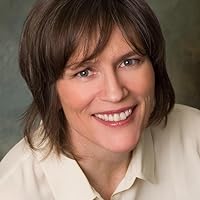
Randi Kreger is a best-selling author of books about borderline personality disorder. Her site also offers a number of specialized booklets and CDs for family members. The site is also a conduit to her online family support community "Welcome to Oz."
I thought nothing could ever top the first book Randi Kreger co-wrote ("Stop Walking on Eggshells") but her newest book does it---I wish I could give ten stars instead of five. This seemingly simple book is one of the top five most useful books I've ever read in my life---I've already reread it twice, and will be reading it again in the years to come to help keep me in the right mental place. If you want to not only understand emotionally troubled people, but also do something concrete to help yourself, push the button and order this book right now.
There are so many powerful and easy-to-use tools provided in this book that it's tough to figure out which ones to mention in this review. They all give concrete answers to the seemingly unanswerable question that always arises whenever you're faced by a troubled personality--what do you do about it?
For example, I've always heard that you need to "set firm limits" with people who would overstep your boundaries. But personally, I never really quite understood what the word "limits" actually meant, and I certainly didn't know how to set them. Nothing I ever read on the topic helped much, because what little I found was so vague.
But Randi gives example after concrete example of what limit setting actually means in a variety of situations, emphasizing throughout that it's important to understand your own greater sense of what's fair and right for yourself as well as for others. Her chapter on uncovering what keeps you feeling "stuck" provides a terrific explanation of a problem in relationships with people who are troubled. In the chapter on communication, Randi describes precisely how to communicate and actually be heard.
And the good news is that it IS possible to get your troubled person to make changes---Randi tells precisely how to do it, even while you are improving your own health and life.
If you are dealing with a person who is making your life miserable and who leaves you constantly feeling as if you are walking on eggshells, you need this extraordinary book.
It has been a couple of months since I finished this book, so my memory is getting rusty, but my general impression was that it is full of a lot of good resources but poorly organized. On the positive side, the author has generated an incredible resource with his online forum connected to the Stop Walking On Eggshells books. But: My overriding criticism is more about this field of psychology than the book in itself: To me there are two very distinct categories of BPD - high-functioning and low-functioning - and because they manifest so differently and present totally different treatment needs it can, at times, seem like a waste of time as a family member to read about coping skills for dealing with the wrong category of borderline personality. As the family member of a high-functioning borderline personality (let's call it HF BPD), I am not faced with the challenges of life-threatening addictions, reckless work or spending habits, or self-harm behavior that present in the case of low functioning BPDs. At the same time, I face a constant struggle with a personality that is self-convinced that, for a well functioning employee and active citizen, therapy is not needed - as a result, the underlying terrifying fear of criticism kicks in to wholly reject any suggestion of therapy, which is seen as a form of attack. This dynamic is the single most challenging aspect of having a loved one with HF BPD - not only does it make it very difficult to make any progress toward a more peaceful life for the borderline himself or herself, but it is also extremely isolating for the family member, who faces the constant trauma of being accused of being the source of endless conflict but who lacks any ability to deal with the problem professionally, except in a sort of ALANON context of therapy (as in, my loved one is an alcoholic - or BPD - and I deserve treatment to cope with it.) Even in the process of seeking therapy as the family member of a HF BPD, months or more are spent getting past the preliminary question of evaluation and reassurance that it is the HF BPD who is the genesis of most conflicts, before the family member can actually begin to dig through the experiences of responsibility, guilt, and healing that need to be addressed. A ready resource for family members and their own struggles is sorely needed. The author clearly understands the drastic difference between this type of personality and a lower functioning and unstable BPD, but does not economize the book to make it more useful for each category of family members to find the right resources. I'm not a professional, but I would assume that the advice for each category of family members would be drastically different: in one case, for the safety of the BPD and those around him or her, it would seem imperative to urge therapy - and that effort would more likely to succeed given the personality's propensity to hit rock-bottom. In the case of a family member of an HF BPD, I think the priority might often be to discourage therapy for the personality, which could be more destructive in the end due to the HF BPD's deftness in skirting self-analysis; and instead it's more advisable to work individually with the family member on coping and interacting skills and rebuilding personal stability and peace. In the end, I guess what I'm saying is that there should be two different books. And to bring it full circle with a post-script, this problem really stems back to the central problem that this disorder is mis-named. While I can't speak for low-functioning individuals, so forgive me if this is flippant of me to say, it seems that it matters less what your disorder is called when you're fighting for the will to live and finding yourself on a yo-yo between sobriety and padded walls. But for a HF BPD, who works hard to maintain a facade of stability by strictly avoiding any "textbook" flaws like addiction and suicide, that person is already ultra-sensitive to labels of any kind. Imagine then, how extremely confrontational and unsuccessful it would be to label that person with a disorder like "Borderline." In the mind of the HF BPD, they would justifiably expect that they are being diagnosed as "on the border of sanity," and/or "on the border of a normal society," after all, that's what the average layperson thinks the term means. As long as the label "borderline" is applied to a high functioning individual, I challenge anyone to succeed with treatment for that person. And I estimate that this is a vast segment of society (how many people do you know who have an "estranged" family member?) that is being entirely ignored by the mental health profession.
I didn't entirely read the book, but skipped a few chapters, because they were not relevant to my situation. The person that I knew with Borderline Personality Disorder is no longer in my life, although the consequences of their behaviour still are. I don't think they will ever get treatment or even be properly diagnosed for that matter, so a lot of the book was not relevant to my circumstance.
I cannot say how the book compares to other books on the same topic, but it was certainly an essential book for me. I had thought of my experience as unique and often felt like I was describing a space alien when I described this person. (Other people often act as if I have as well.) Just reading the book confirmed that the problem was Borderline Personality Disorder and that has been an essential piece of information for me. It helped me understand why the person with Borderline Personality Disorder had acted as they did, how it had affected me, what it was that even happened and that I was not alone. Most of all, it gave me some insight into their motivations for their actions and words that to me were inexplicable.
Because of that it will be a life changing book for me. It has answered questions that have plagued me for many years and I highly recommend that anyone who even suspects that they may be dealing with a loved one who has Borderline Personality Disorder read the book immediately. It may be that other books on the same topic are better, but I feel that a lot of things that had made no sense before, suddenly make sense now.
Update: It is now clear that this book contained exactly the information I needed to know and that it appears to be better than equivalent books. It has allowed me to coherently describe the behaviour of this person and to provide an explanation for it that makes complete sense. As a direct result, people now are capable of acting appropriately in response.
A very concise and informative read for families of those with borderline personality disorder. In the same vein as Stop Walking on Eggshells: Taking Your Life Back When Someone You Care about Has Borderline Personality Disorder, it provides clear strategies and insight for interacting with a loved one who struggles with BPD. Excellent resource guide in the back of the book. I would definitely recommend this book to family members of patients with BPD or anyone who wants to better understand the disorder.
I escaped an abusive 20 year relationship with a BPD without realizing she was. Once I came to understand her disorder, this book was monumental in helping me understand what had happened to me. And also to understand why I continue to be afraid of the world, depressed, and unable to get close to others. My healing as taken a sharp turn upward. Much of the book deals with how to live with a BDP, which I don't anymore, and I can see how it would be 'essential' for those who do and aren't able to leave the relationship- whether spouse, parent, sibling, child or friend. Read this for YOURSELF, then you can decide how live in a way that puts yourself first.
I found this confusing, unorganized, and kind of all over the place. I don't think I'd recommend this as a mental health BPD guide/aide for that reason. Also, the concentrations for the most part are on parents with BPD children or romantic partners dealing with BPD in their relationships, excluding examples of other BPD situations.
A must if you have someone in your life with BPD but also generally very helpful tips on dealing with trauma, stress, and depression in amy instance with any interaction. I found extremely helpful.
This is a good overview book for those that know nothing about behaviour and dealing with it. Having lived in high behaviour autism-land for 20+ years many of the skills are the same. Also, reading the book and listening to Dr Phil's podcast on personality disorders (6 weeks Nov-Dec 2021), flashes of conversations with Dr's of all kinds (male only, my kid has always manipulated women) dealing with behavioural issues come to mind making me realize that they knew it was more than just HFA.
I do recommend those 6 podcasts. They don't go into depth enough, but it's a start. Also, to remember that blaming the parent is a tried and true method of how someone ends up with a mental health diagnosis and it needs to stop. This book, stopped some. Dr Phil stopped it, some. But, it needs to 100% stop.
If you have been talking to a professional, therapy group - for parents/spouses/etc, this book won't tell you anything you don't already know
I stopped reading this book because I completely disagree with certain things the author wrote. I bought this book to give to my mom since I have borderline but decided to read it first and the book infuriated me. Not everyone with borderline has all the same symptoms. This book only portrays the typical borderliner with huge mood swings, anger issues, manipulative, just awful person. That is not me at all. Wish I could give this book zero stars
Useful for understanding behaviour but simplifies the causes. Somewhat disturbing "othering" of people with BPD. This is a guide for family members and the focus is on surviving with a BPD in your life, and the assumption is that it will be a horrific struggle. I have very mixed feelings about the book but it does provide a lot of information on a misunderstood disorder.
hmm. This was incredibly frustrating for me to read, because I already a lot of the things in the book. And it has worked. But now I'm at a point where I'm sick and tired of being a therapeutic aid for my older sister who has always cast me in the role of her parent. I DO listen actively (she does not however), that's why I'm her favorite person to call. I'm sick and tired of listening. I need a guide about how to stop feeling like I need to fix my person with bpd, about how to grey rock without feeling guilty etc. This book just isn't for me, but it would probably have been super helpful to understand her condition ten years ago. Today I'm starting to want to embrace being "selfish" (aka the ultimate bpd insult).
A great book for understanding the disease borderline personality disorder better and it is evident that the author spent a great deal of time on research and finding new information. The first part of the book talks about what borderline personality disorder actually is, while the second part describes tools and mechanism to cope with people who have BDP. The book is packed with examples of situations and stories of people with BDP and contains a lot of useful information. Worth the read if you are interested in BDP or have a family member/friend/lover dealing with this problem.
I read this for a context broader than family. I was asked to read this author by someone with BPD. The principles and insights appear to be transferable to broader contexts. I was most helped by understanding the different ways of thinking, feeling and reacting that someone with BPD typically has and the backgrounds reasons.
Excellent and realistic suggestions about limits, communication, and so forth. The aim is to enable a kind of well informed tough love. The challenge will be developing new habits and sticking with better patterns when not welcomed.
This book is an excellent resource for anyone with a Borderline person in their life. It wasn’t until I moved out on my own that I realized something isn’t quite right in a family relationship but I’m not sure what is wrong. I had basically come to the same conclusions this book suggests on my own. It’s nice though to have a name for the problem and relate with others who are dealing with this same struggle. It’s also good to see how far I have come in my own self care journey.
I wrote this book. I have an online support group you can join from my website BPDCENTRAL dot COM.
Randi Kreger
PS. I have three other folks on borderline personality disorder, stop walking on eggshells, the stop walking on eggshells workbook, and stop walking on eggshells for parents. That last one is coming out winter of 2021. If you want to be notified when it comes out join the newsletter on my website.
I love that this book gives many examples of interpersonal difficulties, and offers realistic alternatives. I feel more hopeful for the future, and I feel much less alone. Mental illness is a never-ending mystery, so much of the time, and it is rare to find information about how it affects the people around the identified patient, much less how the people around the IP can alter their own responses, not to mention influence the response of the IP.
A self-help book geared to help those with loved ones with BPD aka borderline personality disorder. It was beneficial for my reading taste and hopefully, the techniques in this will help if I have to use the things the book like deescalating the tension/conflict and making sure you actively listen to what being said for example.
An accessible guide for families coping with a loved one's borderline personality disorder. The characteristics of borderline personality disorder often rupture relationships. This well-researched, highly informative, & very readable guide discusses every aspect of the disorder, including symptoms, diagnosis, common treatment plans, finding the right therapist, & coping strategies for families.
The best book for people who have a BP on their family or other kind of relationships! There are a lot of insights and step by step actions and explanations on how to avoid challenging situations with your borderline person. I highlighted most sections of the book specially the last part and I got emotional with many testimonials provided on the book!
For having someone in my life with BPD I found this book so helpful and informative. It was really helpful in working through some of my thoughts and actions that have been right or wrong and also to give me new insights. New ways to challenge my patterns of behaviour and the behaviour of the BPD person. New methods to try and use.
Read this several years ago, but I remember it being extremely helpful for the situation I was dealing with. Boundaries are often times the missing key in any dysfunctional family, but especially ones with BPD.
This helped me understand a family member who is going through this. There is a lot of jargon in this that may be difficult to understand and follow. Stop Walking on Eggshells is a much easier to understand book, but with less information.
This book tells you how to be the "bigger" person all the time, and accept that your BPD family member is not going to be accountable for anything. It teaches you how to walk on eggshells. I disagree with most of it
Full of practical advice and steps to enact to help improve your communication. The techniques described are useful even for dealing with stressful interactions not related to someone with BPD.
For anyone dealing with difficult people in their lives, not just BPs, this is an excellent book that reinforces the idea that to help others, you must first help yourself.
Nuts and bolts information about borderlne personality disorder with some ideas for self-preservation, all in one place Good starting point by anyone who has a family member with BPD.