

What do you think?

Woodcutters: A Novel
Fiercely observed, often hilarious, and “reminiscent of Ibsen and Strindberg” (The New York Times Book Review), this exquisitely controversial novel was initially banned in its author’s homeland.
A searing portrayal of Vienna’s bourgeoisie, it begins with the arrival of an unnamed writer at an ‘artistic dinner’ hosted by a composer and his society wife—a couple he once admired and has come to loathe. The guest of honor, a distinguished actor from the Burgtheater, is late. As the other guests wait impatiently, they are seen through the critical eye of the writer, who narrates a silent but frenzied tirade against these former friends, most of whom have been brought together by Joana, a woman they buried earlier that day. Reflections on Joana’s life and suicide are mixed with these denunciations until the famous actor arrives, bringing an explosive end to the evening that even the writer could not have seen coming.
A searing portrayal of Vienna’s bourgeoisie, it begins with the arrival of an unnamed writer at an ‘artistic dinner’ hosted by a composer and his society wife—a couple he once admired and has come to loathe. The guest of honor, a distinguished actor from the Burgtheater, is late. As the other guests wait impatiently, they are seen through the critical eye of the writer, who narrates a silent but frenzied tirade against these former friends, most of whom have been brought together by Joana, a woman they buried earlier that day. Reflections on Joana’s life and suicide are mixed with these denunciations until the famous actor arrives, bringing an explosive end to the evening that even the writer could not have seen coming.
194 pages, Kindle Edition
First published January 1, 1984
About the author
Thomas Bernhard
293 books2,613 followersThomas Bernhard was an Austrian writer who ranks among the most distinguished German-speaking writers of the second half of the 20th century.
Although internationally he’s most acclaimed because of his novels, he was also a prolific playwright. His characters are often at work on a lifetime and never-ending major project while they deal with themes such as suicide, madness and obsession, and, as Bernhard did, a love-hate relationship with Austria. His prose is tumultuous but sober at the same time, philosophic by turns, with a musical cadence and plenty of black humor.
He started publishing in the year 1963 with the novel Frost. His last published work, appearing in the year 1986, was Extinction. Some of his best-known works include The Loser (about a student’s fictionalized relationship with the pianist Glenn Gould), Wittgenstein’s Nephew, and Woodcutters.
Although internationally he’s most acclaimed because of his novels, he was also a prolific playwright. His characters are often at work on a lifetime and never-ending major project while they deal with themes such as suicide, madness and obsession, and, as Bernhard did, a love-hate relationship with Austria. His prose is tumultuous but sober at the same time, philosophic by turns, with a musical cadence and plenty of black humor.
He started publishing in the year 1963 with the novel Frost. His last published work, appearing in the year 1986, was Extinction. Some of his best-known works include The Loser (about a student’s fictionalized relationship with the pianist Glenn Gould), Wittgenstein’s Nephew, and Woodcutters.
Ratings & Reviews
Friends & Following
Create a free account to discover what your friends think of this book!
Community Reviews
Displaying 1 - 30 of 1,189 reviews

July 23, 2019
Woodcutters is a story about the ruination of artistic hopes – it is a complex, multilayered and caustic tale of life in the world of arts.
The narration – a virtual torrent of gall – is an inner soliloquy of an old lonely writer disappointed in all those present at the artistic dinner and in all their creative ambitions. This inner monologue is sorrowfully bitter and sadly ambivalent…
High hopes of youth… But the artists grew older and their hopes got fewer… Some of them were left behind, some were over the edge, some drowned their talents in alcohol, some compromised, some became opportunistic and some sold themselves out…
There are true objects of art and there are fashionable objects of art: fashionable books, fashionable films, fashionable music… To live in accordance with fashion is to live a life of pretence and falsehood.
People hated me and everything I wrote, and ganged up against me in the most vicious fashion whenever they saw me. But ever since my return from London I had been on my guard against them, against all the people I had known previously, but above all against these so-called artistic figures from the fifties, and especially those who had come to this artistic dinner.
The narration – a virtual torrent of gall – is an inner soliloquy of an old lonely writer disappointed in all those present at the artistic dinner and in all their creative ambitions. This inner monologue is sorrowfully bitter and sadly ambivalent…
How low they’ve sunk, I thought as I sat in the wing chair – these people who as far as I can see have been artistically, intellectually and spiritually bankrupt for decades… At one time, of course, all these people had actually been artists, or at least possessed artistic talents, I thought, sitting in the wing chair, but now they were just so much artistic riffraff, having about as much to do with art and the artistic as this dinner party of the Auersbergers’. All these people, who were once real artists, or at least in some way artistic, I thought as I sat in the wing chair, are now nothing but shams, husks of their former selves…
High hopes of youth… But the artists grew older and their hopes got fewer… Some of them were left behind, some were over the edge, some drowned their talents in alcohol, some compromised, some became opportunistic and some sold themselves out…
There sit the Marianne Moore, the Gertrude Stein and the Virginia Woolf of Vienna, I thought, and yet they are nothing but devious, ambitious little state protégées, who have betrayed literature – and art in general – for the sake of a few ludicrous prizes and a guaranteed pension, kowtowing to the state and its cultural riffraff, churning out their derivative kitsch for the vilest of motives and spending their time going up and down the stairs of the ministries that dole out subventions.
There are true objects of art and there are fashionable objects of art: fashionable books, fashionable films, fashionable music… To live in accordance with fashion is to live a life of pretence and falsehood.
February 17, 2018
As I sat in my chair after reading of a man sat in a chair, I thought, what an odd, darkly comic and nihilistically cold book this was. The only thing I am sure of is I haven't read anything quite like it before. I wouldn't have minded going for a drink with Mr Bernhard, but if this is his idea of a dinner party, I would decline the invitation and stay at home with a good book and some takeaway noodles. The novel takes place over only a couple of hours, but is told with large chunks of flashback thoughts, so the time scale feels far greater, and features an intolerable narrator who can't be bothered to leave the 'wing-backed chair' his derrière is comfortably planted on, during an uncomfortable dinner party held in honour of an actor performing in a production of Ibsen's The Wild Duck. The hosts, 'the Auersbergers', are a most unlikeable couple (ignorant cultural snobs), I though, as I sat in my chair, so unlikeable in fact, that I actually started to like them the more the story progressed, the novel on the whole is a scathing attack on the futile pretentiousness at the heart of Austrian bourgeoisie society. And Bernhard marvels in it's telling.
After attending the funeral of friend Joana, a suicide victim, our narrator is off to the artistic dinner party, after accepting to be a guest of the Auersbergers, after bumping into them whilst out. He hasn't been acquainted with them for many years, and despises them with deep repugnance. Still, he goes along, observing the rest of the despicable crowd from his winged chair, waiting for what seems like an eternity for the actor to arrive. He looks back over the past, and reviews his grievances against his hosts and their pretentious friends, and thinks, hard, and in such a flurry of disdain, and his account is set down in one long paragraph that starts on the book's first page and doesn't close until the narrative concludes. There are no chapters, and no breaks, it's all done in one long swoop. The nonstop stream of consciousness is demanding of the reader but fully appropriate to this satirical jeremiad, and he, the narrator is consumed by a crotchety, often vitriolic interior monologue which illuminates his own personality and his relationships with the other guests, I thought, as I sat in my chair. Apparently, many Viennese who feel worthy of greatness recognised themselves here and were upset at their depiction, it's little wonder, as there's little in the way of compassion. Bernhard pretty much pokes fun and loathes most of those in the novel.
On reading Bernhard for the first time, there will definitely be more to follow, I thought, as I sat in my chair. I was stunned, I was hooked, and even though it feel like going round and round in a loop at times, overall I was well impressed. After confronting a circular tide of mass of sentences, with a repetition of building into a dizzying wall of words seemingly intended to obscure meaning and prevent progress, I slowly but surely, accepted Bernhard's narrative, and just went with it. The narrator sees in his eyes, some blame falling on the shoulders of the Auersbergers for Joana's death (someone he was very close to), but in fact, the truth be told, he, is just as guilty as all the others of using those around, below and above him to make his way to the top of society, financially, sexually, any which way really.
It felt like reading this with an annoying piece of lemon stuck in my mouth, the sour taste throughout was unprecedented. I cursed under my breath at every given opportunity for these nauseating characters, but this is the whole point - Berhard's love/hate relationship with his homeland. Only this evening, it appears any love decided to quickly exit the premises.

June 6, 2017
The book is excellently readable, and in my opinion this makes it a very good entry for people who have not read Bernhard yet. But it contains everything that makes the books of Bernhard so readable: repetitions, cynicism, polemics and yet a certain sense of humor.

December 21, 2022
Dreams and fairy stories were the real stuff of her life, I thought. That was why she killed herself, because a person who life is built on dreams and fairy stories can't survive in this world - has no right to survive, I thought.

(Espen Terjesen)
If we cannot become what we want to become, we resort to another person - inevitably the person closest to us - and make of him what we have been unable to make of ourselves.
Read in July in Vienna on the perfect moment, almost impossible to make any progress without tumbling out and slowly crawling back to another chunk of variation in Bernhard’s dense, continuous monologue while trying to ignore the bickering of the grumpy son and daughter in the blazing summer heat, maximising the experience of immersing in Bernhard’s ravenous rage and corrosive moodiness. No better cure for one’s own irritability than the funhouse mirror.
(Espen Terjesen)
If we cannot become what we want to become, we resort to another person - inevitably the person closest to us - and make of him what we have been unable to make of ourselves.
Read in July in Vienna on the perfect moment, almost impossible to make any progress without tumbling out and slowly crawling back to another chunk of variation in Bernhard’s dense, continuous monologue while trying to ignore the bickering of the grumpy son and daughter in the blazing summer heat, maximising the experience of immersing in Bernhard’s ravenous rage and corrosive moodiness. No better cure for one’s own irritability than the funhouse mirror.

March 11, 2013
Ok, let’s just cut to the chase. This work, this novel, this brilliantly flowing diatribe of comic vitriol, is a work of pure consummate genius. The writing, the pacing, the internal dialogue, the word choice, and probably the translation, too (though that is only a guess)—it is all perfect, perfect, perfect. You people will think I’m joking when I say this, but I am telling you: this book is a freaking page-turner.
Woodcutters is the first-person narrative of an over-the-hill, acrimonious gentleman who becomes reunited with a group of shallow, pretentious, artistic “wannabe” individuals with whom he had once been intimately acquainted, after the death of one of their mutual friends. For most of the story, the narrator sits in a wing chair in the corner of the anteroom of one of these people’s homes, after having been invited there following the friend’s funeral, and silently blasts his hosts for their abominable character and their tactlessness at hosting this party to begin with, as it was initially meant to be an artistic dinner to honor an artistic guest, and only later became an in memoriam dinner to honor their dead friend, as—it should be mentioned—it was only for this latter purpose, once it was learned that the friend had died, that the narrator was extended an invitation.
And that’s it. That is the entire premise of this novel, and yet it is all Bernhard needed to completely knock it out of the park.
For anyone who knows me, or for those who have been following my reviews long enough (why? why would you do that to yourselves?), you might know I’m a sucker for an ambiguous character, or perhaps a character whose motives reveal themselves as contrary to what the character would prefer you to believe. Our narrator would like you to believe, as he seethes away in his wing chair, that he is unlike the miserable hosts of the party to which he had been invited, unlike their vacuous, imbecilic guests, and unlike the insufferable artistic-guest-of-honor who hasn’t even shown up yet but who the narrator has already made clear is insufferable and is unlike him, the narrator, as he sits in his wing chair. But as he continues to rip into these people, you start to wonder...how did the hosts manage to invite the narrator to their party in the first place if the narrator insists he has always tried to avoid these people? How has his opinion of these people managed to change so drastically from the days during which he used to associate with them? And what do these people think of him, the narrator, as he sits in his wing chair ridiculing all of them?
Look, you know what? I’ve said enough about this novel. I don’t like long reviews, so I’m just going to say one more thing: this book is phenomenal, and my only challenge to you, my review-reading audience, is to read one paragraph, just one single paragraph of this novel, because it is all you will need to become as enamored with this book as I am.
Woodcutters is the first-person narrative of an over-the-hill, acrimonious gentleman who becomes reunited with a group of shallow, pretentious, artistic “wannabe” individuals with whom he had once been intimately acquainted, after the death of one of their mutual friends. For most of the story, the narrator sits in a wing chair in the corner of the anteroom of one of these people’s homes, after having been invited there following the friend’s funeral, and silently blasts his hosts for their abominable character and their tactlessness at hosting this party to begin with, as it was initially meant to be an artistic dinner to honor an artistic guest, and only later became an in memoriam dinner to honor their dead friend, as—it should be mentioned—it was only for this latter purpose, once it was learned that the friend had died, that the narrator was extended an invitation.
And that’s it. That is the entire premise of this novel, and yet it is all Bernhard needed to completely knock it out of the park.
For anyone who knows me, or for those who have been following my reviews long enough (why? why would you do that to yourselves?), you might know I’m a sucker for an ambiguous character, or perhaps a character whose motives reveal themselves as contrary to what the character would prefer you to believe. Our narrator would like you to believe, as he seethes away in his wing chair, that he is unlike the miserable hosts of the party to which he had been invited, unlike their vacuous, imbecilic guests, and unlike the insufferable artistic-guest-of-honor who hasn’t even shown up yet but who the narrator has already made clear is insufferable and is unlike him, the narrator, as he sits in his wing chair. But as he continues to rip into these people, you start to wonder...how did the hosts manage to invite the narrator to their party in the first place if the narrator insists he has always tried to avoid these people? How has his opinion of these people managed to change so drastically from the days during which he used to associate with them? And what do these people think of him, the narrator, as he sits in his wing chair ridiculing all of them?
Look, you know what? I’ve said enough about this novel. I don’t like long reviews, so I’m just going to say one more thing: this book is phenomenal, and my only challenge to you, my review-reading audience, is to read one paragraph, just one single paragraph of this novel, because it is all you will need to become as enamored with this book as I am.

May 9, 2017
English: Woodcutters
Thomas Bernhard is the Shakespeare of grumpy ramblings, fiercely holding his ground while embracing contradictory emotions. Almost 30 years after his death, his literary importance doesn’t fade, on the contrary: Bernhard has become a postmodern classic, and just recently, author Benjamin von Stuckrad-Barre (who is extremely famous in German-speaking countries) maintained that “Woodcutters” was the best novel ever written.
One of Bernhard’s trademark traits: He never shied away from controversy. When “Woodcutters” was first published in 1984, a former friend (composer Gerhard Lampersberg) sued the author for defamation - in consequence, all printed copies were confiscated, which of course caused an enormous scandal (Lampersberg and Bernhard later sought an extrajudicial settlement). And Lampersberg was not the only one who felt offended by Bernhard’s text.
In it, the narrator (an alter ego of Bernhard`s) takes part in an “artistic dinner” (“künstlerisches Abendessen”) in the house of a Viennese composer (ha!) and his wife. The couple has invited artists, friends, and even an actor from the famous Imperial Court Theatre (which is the national theatre of Austria). The whole book takes place in this setting, the narrator and the other guests only moving from one room to the other – and the narrator also doesn’t really interact with the other guests, we read his stream-of-consciousness and all the thoughts that come to his mind while he is sitting in his wing chair and later at the table observing the others (in German, the steady references to the wing chair are a lot funnier, as the German expression is “ear chair” (“Ohrensessel”), so Bernhard is playing with the concepts of listening and expression). It is the chain of thoughts that introduces us to the other artists present (and partly absent), jumping back and forth between people, time frames and, most interestingly, perspectives of judgement.
Bernhard’s text is funny, mean, complex and engaging – and it seems like the same could be said about its author. I am often confused or even disappointed when I see what gets translated and widely read, but when I see a non-German speaker reading Bernhard, I am definitely happy.
Thomas Bernhard is the Shakespeare of grumpy ramblings, fiercely holding his ground while embracing contradictory emotions. Almost 30 years after his death, his literary importance doesn’t fade, on the contrary: Bernhard has become a postmodern classic, and just recently, author Benjamin von Stuckrad-Barre (who is extremely famous in German-speaking countries) maintained that “Woodcutters” was the best novel ever written.
One of Bernhard’s trademark traits: He never shied away from controversy. When “Woodcutters” was first published in 1984, a former friend (composer Gerhard Lampersberg) sued the author for defamation - in consequence, all printed copies were confiscated, which of course caused an enormous scandal (Lampersberg and Bernhard later sought an extrajudicial settlement). And Lampersberg was not the only one who felt offended by Bernhard’s text.
In it, the narrator (an alter ego of Bernhard`s) takes part in an “artistic dinner” (“künstlerisches Abendessen”) in the house of a Viennese composer (ha!) and his wife. The couple has invited artists, friends, and even an actor from the famous Imperial Court Theatre (which is the national theatre of Austria). The whole book takes place in this setting, the narrator and the other guests only moving from one room to the other – and the narrator also doesn’t really interact with the other guests, we read his stream-of-consciousness and all the thoughts that come to his mind while he is sitting in his wing chair and later at the table observing the others (in German, the steady references to the wing chair are a lot funnier, as the German expression is “ear chair” (“Ohrensessel”), so Bernhard is playing with the concepts of listening and expression). It is the chain of thoughts that introduces us to the other artists present (and partly absent), jumping back and forth between people, time frames and, most interestingly, perspectives of judgement.
Bernhard’s text is funny, mean, complex and engaging – and it seems like the same could be said about its author. I am often confused or even disappointed when I see what gets translated and widely read, but when I see a non-German speaker reading Bernhard, I am definitely happy.

July 7, 2021

This is a wing chair. Look carefully, and you may just see an unnamed writer sitting in a wing chair - there are 222 occurrences in 145 pages of him seated in his wing chair - which is slightly behind the door where he can observe, without being observed for the most part, the guests at this “artistic dinner” (on the day that a mutual friend was buried) held in honour of an actor who is yet to appear and has already kept everyone waiting for what seems to be hours, particularly as dinner has not yet been served.
And as the observer in his wing chair thinks with great disgust of all the despicable things that he associates with the various dinner guests, and how he hates, detests and despises this, that and the other (the narrator uses a large number of derogatory words!), it gradually occurs to him that his own behaviour may have been despicable too.
Meanwhile, after a couple of hours, the celebrated actor appears and promptly monopolises the conversation which is entirely about himself. While the unnamed writer sits in his wing chair thinking how utterly detestable the celebrity is, he becomes aware that the actor is perhaps putting on a show for the diners, and that just maybe he isn’t all that bad. And as the narrator continues observing and pondering, he realises that he himself has been ‘guilty’ of the same ‘offences’ that he observes. In fact these people are a mirror image of his own behaviour.
Wait a minute… is that Thomas Bernhard I see getting up from that wing chair? Isn’t it just like him to excoriate the precious and pretentious? He has such mordant wit. And wait… wasn’t he a bass-baritone training to be an opera singer too, just like the narrator, and didn’t he also suffer from a lung complaint, the result of which was a career as an author and not as a singer. Hmmm… perhaps the resemblance is coincidental.
”To get ourselves out of a tight spot, it seems to me, we are ourselves just as mendacious as those we are always accusing of mendacity, those whom we despise and drag in the dirt for their mendacity; we are not one jot better than the people we constantly find objectionable and insufferable, those repellent people with whom we want to have as few dealings as possible, though; if we are honest, we do have dealings with them and are no different from them. We reproach them with all kinds of objectionable and insufferable behavior and are no less insufferable and objectionable ourselves—perhaps we are even more insufferable and objectionable, it occurs to me.”
(Picture from Wikipedia)

November 15, 2010
In a prominent, well-trafficked gallery of the Bad Dinner Guest Hall of Fame we should logically expect to find the (unnamed) narrator of Thomas Bernhard's excoriating masterpiece Woodcutters, who not only isolates himself from the other guests, preferring a lone wing chair in the entryway to their generally detestable company, but also spends the better part of the evening mentally dissecting, dismantling, and disparaging everyone who is unlucky enough to fall under his gaze. At the long-anticipated conclusion of the party, the narrator admits that he only spoke twice -- once to ask a question of the guest of honor, and later to insult the host. Once he falls asleep and shrugs off the hostess testily when she tries to wake him. Later he remains at the dinner table, alone, after everyone has retired to the 'music room.'
Bernhard is preoccupied with antisocial characters to a remarkable extent. It isn't merely that they confine themselves to a subculture, or anti-culture; they are resolutely alone, standing as a lone bulwark against a society they loathe -- and perhaps love, but only as a side effect of intense familiarity.
I wonder about Austria, don't you? Both Bernhard and Austrian filmmaker Michael Haneke seem to have harbored a virulent hatred of their native country. While I sense the depths of their antipathy, I wonder what it is that is peculiar to Austrian society that they dislike. Is there an Austrian condition -- or a particular variety of decadence -- that can be defined or delimited from that of Europe or the 'Western World' in general?
At any rate, our proximity to our own homes, wherever they may be at the moment, affords us an ideal vantage from which to examine their faults. Austria or America. Uruguay or Uzbekistan. Sri Lanka or Sudan. There's nothing so revolting as the place where we shit. There's nothing so instructive as the cultural claustrophobia of spending too many days among like-kinds. (There's, of course, a comfort too. Even in Bernhard's bleak appraisal.)
This novel should be read by Americans because Americans (in general) are too optimistic. They think too highly of themselves and of the human species. Or I should amend that statement... Americans think too infrequently about themselves, in a serious way, reflectively, critically, and prefer to subsist on a high-fat diet of platitudes, new age aphorisms, and moronic idealism. This isn't to say that idealism is itself categorically moronic, but the American brand often is. It fails to take into account even the most basic constraints of reality. It's saccharine, false... It's the mirage that leads the dying man farther into the desert.
I think the narrator's almost unmitigated bitterness is the [or my] antidote to the wan security a nation or society feels in itself, whether ours or any other's. Many readers may find the narrator's harping and ruthless judgments to be too radical a corrective. We've been instructed to regard cynicism with suspicion. It is a cancerous affliction which undermines the effects of positivity and lightness of spirit. There are all kinds of studies, you know, that seem to indicate that positive thinking heals us (to some limited extent) physically and psychologically. But at what cost? If I am here to live my life (at the bidding of science, fortune, or both), I'd prefer not to live it anesthetized, a disciple in the cult of can-do-ism. I'd rather sit alone in the wing chair and think to myself what a complete and total ass you are. And by 'you' I mean anybody.
Bernhard is preoccupied with antisocial characters to a remarkable extent. It isn't merely that they confine themselves to a subculture, or anti-culture; they are resolutely alone, standing as a lone bulwark against a society they loathe -- and perhaps love, but only as a side effect of intense familiarity.
I wonder about Austria, don't you? Both Bernhard and Austrian filmmaker Michael Haneke seem to have harbored a virulent hatred of their native country. While I sense the depths of their antipathy, I wonder what it is that is peculiar to Austrian society that they dislike. Is there an Austrian condition -- or a particular variety of decadence -- that can be defined or delimited from that of Europe or the 'Western World' in general?
At any rate, our proximity to our own homes, wherever they may be at the moment, affords us an ideal vantage from which to examine their faults. Austria or America. Uruguay or Uzbekistan. Sri Lanka or Sudan. There's nothing so revolting as the place where we shit. There's nothing so instructive as the cultural claustrophobia of spending too many days among like-kinds. (There's, of course, a comfort too. Even in Bernhard's bleak appraisal.)
This novel should be read by Americans because Americans (in general) are too optimistic. They think too highly of themselves and of the human species. Or I should amend that statement... Americans think too infrequently about themselves, in a serious way, reflectively, critically, and prefer to subsist on a high-fat diet of platitudes, new age aphorisms, and moronic idealism. This isn't to say that idealism is itself categorically moronic, but the American brand often is. It fails to take into account even the most basic constraints of reality. It's saccharine, false... It's the mirage that leads the dying man farther into the desert.
I think the narrator's almost unmitigated bitterness is the [or my] antidote to the wan security a nation or society feels in itself, whether ours or any other's. Many readers may find the narrator's harping and ruthless judgments to be too radical a corrective. We've been instructed to regard cynicism with suspicion. It is a cancerous affliction which undermines the effects of positivity and lightness of spirit. There are all kinds of studies, you know, that seem to indicate that positive thinking heals us (to some limited extent) physically and psychologically. But at what cost? If I am here to live my life (at the bidding of science, fortune, or both), I'd prefer not to live it anesthetized, a disciple in the cult of can-do-ism. I'd rather sit alone in the wing chair and think to myself what a complete and total ass you are. And by 'you' I mean anybody.

May 26, 2025
3.7
چوببرها نوشته برنهارد مثل بقیه آثاری که از این نویسنده خوندم بسیار بیرحمانه، سرد، تاریک و خشن بود. او در این اثرش با لحنی گزنده و بسیار صریح به نقد هنرمندان میپردازه و تیغ تیز نقد خودش رو به این جماعت روانه میکنه. هنرمندانی که به زعم برنهارد درسته شیک و پیک و فرهیخته به نظر میرسند اما پوچ بزرگی بیش نیستند و اون فرهیختگی چیزی جز فرهیخته نمایی نیست. او نقاب این جماعت رو کنار میزنه و با ادبیات رک و بیرحم خودش تصویر واقعی این جماعت رو نشون میده..داستان در چند ساعتی که راوی بی نام ما در مهمانی شرکت کرده میگذره. او دوستی داشته به نام جوانا که خودکشی میکنه.پس از شرکت در مراسم ختم او، خانواده آرسبرگر رو میبینه و اونها، راوی بی نام رو به مهمانی شام هنری دعوت میکنند. او در طول مهمانی در صندلی راحتی مینشینه و مدام در ذهن خودش شخصیت های حاضر در مهمانی رو نقد میکنه و در این بین گذری هم به گذشته میزنه و اطلاعاتی از این جماعت در قدیم میده.داستانهای برنهارد ( تا اینجا که من خوندم) ماجرا محور نیستند.اینطور نیست که از موقعیت الف در اول داستان با کلی اتفاقات به موقعیت ب در انتهای داستان برسیم. در همین داستان، در واقع ما سفری پرپیچ و خم به ذهن راوی بی نام داریم و متوجه میشیم در این مهمانی پر زرق و برق این آدم گوشه نشین که علاقهای هم به صحبت با بقیه نداره، چه افکاری در سرش داره. یک سری المانهایی در این داستان بود که در بقیه آثار برنهارد هم دیده بودم. انتخاب راوی بی نام، سفر به درون و بهتر بگم اعماق ذهنیت منفی او، تنفر از وطن و نقد بی رحمانه به همه چیز و همه کس. داستان به صورت یک مونولگ پیش میره و مثل یک پاراگراف 184 صفحه ای روایت میشه. هیچ توقفی در کار نیست. خواندن آثار برنهارد برای من هیچگاه ساده نبوده.این اثر هم همین ویژگی ها رو داشت. سختی کار هم بی رحمی عجیب و غریب و صراحت بیش از اندازه و مطلق گرایی او در نقد به اون شخص یا مساله ایست که داره انجام میده. شاید همذات پنداری کامل با شخصیتهای داستانهای برنهارد ممکن نباشه.شاید شخصیت خلق شده توسط او دور از ذهن و آزاردهنده به نظر برسه، اما برای من یکی اینطوری است که شخصیت و جهانی که برنهارد در این اثرش خلق کرده، توانایی این رو داره کاملا منو درگیر خودش بکنه و جاهایی حس گیر افتادن در گردباد تند او رو داشته باشم. راوی بینام داستان چوب برها، دچار نوعی تناقض فکری هم در درون خودش هست؛ جایی که لب به اعتراف باز میکنه و میگه:
«... اینکه وین، شهری که آن را منزجز کننده میدانستم و همیشه آن را منزجر کننده یافته بودم، ناگهان یک بار دیگر بهترین شهر دنیا، وین من، وین محبوبم شده بود و این مردمی که همیشه از آنها نفرت داشته بودم و هنوز هم نفرت داشتم و نفرتم از آنها ادامه مییافت، هنوز بهترین مردم دنیا بودند: من از آنها متنفر بودم، با این وجود به نحوی دلم برایشان میلرزید، من از وین متنفر بودم، اما به نحوی دلم برایش میلرزید، من این مردم را لعنت میکردم، با این حال نمیتوانستم دوستشان نداشته باشم، من از وین متنفر بودم با این وجود نمیتوانستم دوستش نداشته باشم....»
برنهارد یکی از متفاوت ترین نویسنده هایی است که تا به امروز ازش چیزی خوندم. آنچه که در آثار او میبینم ، جای دیگری ندیدم.یک جهان مخصوص خود، یک جهان ابدا غیر دوست داشتنی خلق میکنه که درسته این جهان ، دوست داشتنی نیست اما نمیتونمم نادیدهاش بگیرم! شاید ما هر چه قدر در زندگی مشکل داشته باشیم، درک کامل شخصیتهای برنهارد سخت باشه و اصلا جاهایی هم تحمل این حجم بدبینی و سیاهی نباشه اما قابل چشم پوشی هم برای من نیست!به نظرم این برمیگرده به تبحر و قدرت بالای نویسنده.تو ادبیات شاید ما خیلی اوقات دنبال این میگردیم که بخشی از خودمون رو در شخصیتی پیدا کنیم و از این یافتن خود در دیگری ذوق زده میشیم اما به گمانم اگر با شخصیتهای داستان هم فاصله داشتی باشی و باز هم سمت اثر بمونی، باید اعتبارشو رو به نویسنده بدی. برنهارد تا اونجایی که کمی ازش خوندم، فکر میکنم همیشه بخشی از وجود و تفکرات خودش رو در شخصیتها میگذاره. او به شدت از وطنش بدش میومد و آدمی بود صریح اللهجه و تندمزاج.در مصاحبه ای ازش پرسیده بودند، سرنوشت کتابهات برات مهمه؟که اونم در پاسخ گفته بود سرنوشت خودمم مهم نیست چه برسه کتابهام!
به جلد کتاب نگاه کنید. یکی از بهترین جلدهای کتابی بود که باهاش مواجه شدم..کاملا مرتبط با فضای داستان. مردی که روی صندلی راحتی خودش نشسته.کلافه و بی حوصله به نظر میرسه و در سیطره افرادی است که در حال گپ و گفت (شایدم مخ زدن،استغفرالله) هستند. و حالا مخاطب در طول !کتاب میره وارد مغز این پیرمرد بدعنق میشه. این انتخاب شماست که وارد جهان فکری این پیرمرد بشید یا نه؟
چوببرها نوشته برنهارد مثل بقیه آثاری که از این نویسنده خوندم بسیار بیرحمانه، سرد، تاریک و خشن بود. او در این اثرش با لحنی گزنده و بسیار صریح به نقد هنرمندان میپردازه و تیغ تیز نقد خودش رو به این جماعت روانه میکنه. هنرمندانی که به زعم برنهارد درسته شیک و پیک و فرهیخته به نظر میرسند اما پوچ بزرگی بیش نیستند و اون فرهیختگی چیزی جز فرهیخته نمایی نیست. او نقاب این جماعت رو کنار میزنه و با ادبیات رک و بیرحم خودش تصویر واقعی این جماعت رو نشون میده..داستان در چند ساعتی که راوی بی نام ما در مهمانی شرکت کرده میگذره. او دوستی داشته به نام جوانا که خودکشی میکنه.پس از شرکت در مراسم ختم او، خانواده آرسبرگر رو میبینه و اونها، راوی بی نام رو به مهمانی شام هنری دعوت میکنند. او در طول مهمانی در صندلی راحتی مینشینه و مدام در ذهن خودش شخصیت های حاضر در مهمانی رو نقد میکنه و در این بین گذری هم به گذشته میزنه و اطلاعاتی از این جماعت در قدیم میده.داستانهای برنهارد ( تا اینجا که من خوندم) ماجرا محور نیستند.اینطور نیست که از موقعیت الف در اول داستان با کلی اتفاقات به موقعیت ب در انتهای داستان برسیم. در همین داستان، در واقع ما سفری پرپیچ و خم به ذهن راوی بی نام داریم و متوجه میشیم در این مهمانی پر زرق و برق این آدم گوشه نشین که علاقهای هم به صحبت با بقیه نداره، چه افکاری در سرش داره. یک سری المانهایی در این داستان بود که در بقیه آثار برنهارد هم دیده بودم. انتخاب راوی بی نام، سفر به درون و بهتر بگم اعماق ذهنیت منفی او، تنفر از وطن و نقد بی رحمانه به همه چیز و همه کس. داستان به صورت یک مونولگ پیش میره و مثل یک پاراگراف 184 صفحه ای روایت میشه. هیچ توقفی در کار نیست. خواندن آثار برنهارد برای من هیچگاه ساده نبوده.این اثر هم همین ویژگی ها رو داشت. سختی کار هم بی رحمی عجیب و غریب و صراحت بیش از اندازه و مطلق گرایی او در نقد به اون شخص یا مساله ایست که داره انجام میده. شاید همذات پنداری کامل با شخصیتهای داستانهای برنهارد ممکن نباشه.شاید شخصیت خلق شده توسط او دور از ذهن و آزاردهنده به نظر برسه، اما برای من یکی اینطوری است که شخصیت و جهانی که برنهارد در این اثرش خلق کرده، توانایی این رو داره کاملا منو درگیر خودش بکنه و جاهایی حس گیر افتادن در گردباد تند او رو داشته باشم. راوی بینام داستان چوب برها، دچار نوعی تناقض فکری هم در درون خودش هست؛ جایی که لب به اعتراف باز میکنه و میگه:
«... اینکه وین، شهری که آن را منزجز کننده میدانستم و همیشه آن را منزجر کننده یافته بودم، ناگهان یک بار دیگر بهترین شهر دنیا، وین من، وین محبوبم شده بود و این مردمی که همیشه از آنها نفرت داشته بودم و هنوز هم نفرت داشتم و نفرتم از آنها ادامه مییافت، هنوز بهترین مردم دنیا بودند: من از آنها متنفر بودم، با این وجود به نحوی دلم برایشان میلرزید، من از وین متنفر بودم، اما به نحوی دلم برایش میلرزید، من این مردم را لعنت میکردم، با این حال نمیتوانستم دوستشان نداشته باشم، من از وین متنفر بودم با این وجود نمیتوانستم دوستش نداشته باشم....»
برنهارد یکی از متفاوت ترین نویسنده هایی است که تا به امروز ازش چیزی خوندم. آنچه که در آثار او میبینم ، جای دیگری ندیدم.یک جهان مخصوص خود، یک جهان ابدا غیر دوست داشتنی خلق میکنه که درسته این جهان ، دوست داشتنی نیست اما نمیتونمم نادیدهاش بگیرم! شاید ما هر چه قدر در زندگی مشکل داشته باشیم، درک کامل شخصیتهای برنهارد سخت باشه و اصلا جاهایی هم تحمل این حجم بدبینی و سیاهی نباشه اما قابل چشم پوشی هم برای من نیست!به نظرم این برمیگرده به تبحر و قدرت بالای نویسنده.تو ادبیات شاید ما خیلی اوقات دنبال این میگردیم که بخشی از خودمون رو در شخصیتی پیدا کنیم و از این یافتن خود در دیگری ذوق زده میشیم اما به گمانم اگر با شخصیتهای داستان هم فاصله داشتی باشی و باز هم سمت اثر بمونی، باید اعتبارشو رو به نویسنده بدی. برنهارد تا اونجایی که کمی ازش خوندم، فکر میکنم همیشه بخشی از وجود و تفکرات خودش رو در شخصیتها میگذاره. او به شدت از وطنش بدش میومد و آدمی بود صریح اللهجه و تندمزاج.در مصاحبه ای ازش پرسیده بودند، سرنوشت کتابهات برات مهمه؟که اونم در پاسخ گفته بود سرنوشت خودمم مهم نیست چه برسه کتابهام!
به جلد کتاب نگاه کنید. یکی از بهترین جلدهای کتابی بود که باهاش مواجه شدم..کاملا مرتبط با فضای داستان. مردی که روی صندلی راحتی خودش نشسته.کلافه و بی حوصله به نظر میرسه و در سیطره افرادی است که در حال گپ و گفت (شایدم مخ زدن،استغفرالله) هستند. و حالا مخاطب در طول !کتاب میره وارد مغز این پیرمرد بدعنق میشه. این انتخاب شماست که وارد جهان فکری این پیرمرد بشید یا نه؟

August 12, 2026
Me lo he pasado fenomenal con este libro. Se coloca entre mis preferidos de los que llevo leídos del autor.
"Tala" es una novela de corta extensión en la que Bernhard compone una crítica despiadada y feroz contra la hipocresía cultural, la decadencia de la burguesía y el falso elitismo del mundo del arte.
La novela completa transcurre en unas pocas horas, prácticamente en un solo escenario. El narrador y protagonista acepta a regañadientes una invitación a una "cena artística" en casa de los Auersberger, un matrimonio de la burguesía vienesa que finge ser mecenas de las artes.
El reencuentro ya empieza con mal pie. No digo el porqué por no hacer spoilers. El caso es que sentado en un sillón de orejas en una esquina de la sala, el narrador observa y destruye mentalmente a cada uno de los presentes mientras esperan la llegada del invitado de honor, un pedante actor del Burgtheater de Viena.
Y todo esto con el estilo característico de Bernhard. Como he señalado en otras ocasiones, con él no hay término medio. O te atrapa o sales pitando, pero si te atrapa, cada libro suyo es como entrar en un remolino del que ya no escapas. Da igual la densidad del texto, no puedes parar de leer.
En este libro y desde sus señas de identidad, monólogo interior obsesivo, repetitivo y rítmico, Bernhard convierte una simple velada en un retrato demoledor de la sociedad artística de Viena. No hay puntos ni divisiones por capítulos. Es un flujo continuo que no tiene desperdicio. No deja títere con cabeza. Nadie retrató el esnobismo y la falsedad del mundillo cultural con tanta lucidez y mala leche como Bernhard. Y lo hizo elevando la queja y el desprecio a la categoría estética. Caigo rendida a sus pies.
Y algo que no me había encontrado hasta ahora en los libros suyos que llevo leídos. A pesar de su misantropía y amargura, el libro resulta profundamente divertido por lo ridículo de las situaciones y el extremismo del narrador. Hasta me he reído y no lo esperaba. Humor negro, eso sí.
En conclusión."Tala" es una lectura obligatoria para cualquier amante de Bernhard. Funciona como un espejo incómodo de las simulaciones sociales. Es un ejercicio de honestidad brutal y demolición cultural que demuestra que, a veces, el odio y el resentimiento pueden ser el motor de creación de una joya literaria como esta. Recomendable si te gusta este autor.
"Tala" es una novela de corta extensión en la que Bernhard compone una crítica despiadada y feroz contra la hipocresía cultural, la decadencia de la burguesía y el falso elitismo del mundo del arte.
La novela completa transcurre en unas pocas horas, prácticamente en un solo escenario. El narrador y protagonista acepta a regañadientes una invitación a una "cena artística" en casa de los Auersberger, un matrimonio de la burguesía vienesa que finge ser mecenas de las artes.
El reencuentro ya empieza con mal pie. No digo el porqué por no hacer spoilers. El caso es que sentado en un sillón de orejas en una esquina de la sala, el narrador observa y destruye mentalmente a cada uno de los presentes mientras esperan la llegada del invitado de honor, un pedante actor del Burgtheater de Viena.
Y todo esto con el estilo característico de Bernhard. Como he señalado en otras ocasiones, con él no hay término medio. O te atrapa o sales pitando, pero si te atrapa, cada libro suyo es como entrar en un remolino del que ya no escapas. Da igual la densidad del texto, no puedes parar de leer.
En este libro y desde sus señas de identidad, monólogo interior obsesivo, repetitivo y rítmico, Bernhard convierte una simple velada en un retrato demoledor de la sociedad artística de Viena. No hay puntos ni divisiones por capítulos. Es un flujo continuo que no tiene desperdicio. No deja títere con cabeza. Nadie retrató el esnobismo y la falsedad del mundillo cultural con tanta lucidez y mala leche como Bernhard. Y lo hizo elevando la queja y el desprecio a la categoría estética. Caigo rendida a sus pies.
Y algo que no me había encontrado hasta ahora en los libros suyos que llevo leídos. A pesar de su misantropía y amargura, el libro resulta profundamente divertido por lo ridículo de las situaciones y el extremismo del narrador. Hasta me he reído y no lo esperaba. Humor negro, eso sí.
En conclusión."Tala" es una lectura obligatoria para cualquier amante de Bernhard. Funciona como un espejo incómodo de las simulaciones sociales. Es un ejercicio de honestidad brutal y demolición cultural que demuestra que, a veces, el odio y el resentimiento pueden ser el motor de creación de una joya literaria como esta. Recomendable si te gusta este autor.

September 27, 2020
„Auch wenn Sie den Drang oder die Manie haben, jetzt hundertprozentig die Wahrheit zu schreiben, gelingt es Ihnen nicht, weil Sie müßten die Wirklichkeit auf‘s Papier klatschen können, das geht nicht. In dem Moment aber, wie Sie mit stilistischen Mitteln und Sprache drangehen, ist es etwas anderes und auf jeden Fall eine Verfälschung, aber vielleicht eine Annäherung.“
aus Kurt Hofmann - Aus Gesprächen mit Thomas Bernhard
Als Österreicher ist es schwierig, Holzfällen ganz unbedarft zu lesen, wenn man die öffentliche Erregung selbst miterlebt hat, die der Roman 1984 ausgelöst hat, einschließlich des gerichtlichen Urteils über einen eigentlich erkenntnistheoretischen Fall von Wirklichkeit und Fiktion, und einschließlich der amtlichen Beschlagnahme der Erstauflage durch uniformierte Polizei in allen Buchhandlungen des Landes.
Für das jüngere oder ortsfremde Publikum ist es einfacher, denn diesem dürfte außer der "größenwahnsinnigen Wiener Lokalschriftstellerin" alias Anna Schreker (Friederike Mayröcker) kaum jemand aus dieser Provinzposse bekannt sein. Dem Verkauf des Buches hat die Aufregung sicher nicht geschadet, so man ja auch zu einer typisch österreichischen Lösung gekommen ist: Kläger Lampersberg zog die Klage zurück und Verleger Unseld bezahlte die Rechnung.
Ich fand den ganzen Zirkus damals widerwärtig und habe die Lektüre trotzig verweigert. Für Thomas Bernhard hatte ich wenig übrig, meine Sympathien lagen eher bei dem Ehepaar Lampersberg, die als Förderer der von mir sehr geschätzten Wiener Gruppe um H.C Artmann, Gerhard Rühm oder Konrad Bayer galten.
Gut, dass ich Holzfällen erst später gelesen habe, so konnte ich ganz den inneren Gehalt konzentrieren und diesen entsprechend würdigen: von dem Dutzend Bernhards, die ich bis heute gelesen habe, hat dieser einen Grad von Perfektion erreicht, der mir schon fast unheimlich ist. Wer keinen Bernhard lesen will, sollte Holzfällen lesen.
Stichwort innerer Gehalt: Bernhard hat sich ausschließlich für das Innere interessiert. Das Äußere, Handlung, Ereignisse, usw., "... die halten ja nur auf, sind ja auch uninteressant. Innere Vorgänge, die niemand sieht, sind das einzige Interessante an Literatur überhaupt. Alles Äußere kennt man ja. Das was niemand sieht, das hat einen Sinn aufzuschreiben." so Bernhard im Interview mit Krista Fleischmann.
Auch wenn man Personen und Fakten in diesem autobiografisch inspirierten Schlüsselroman eindeutig dem Äußeren zuordnen kann, sind sie nur der Lehm, aus dem Bernhard seinen Roman als neues und eigenständiges Kunstwerk formt und dabei eher wie ein Komponist vorgeht als ein Autor, indem er sein Material vor allem in einen formalen und rhythmischen Zusammenhang bringt.
Natürlich kann das Buch als ein Lehrstück über Künstlichkeit und Oberflächlichkeit gelesen werden, auch über die Eitelkeit einer dekadenten Kunstszene, der ein typischer Bernhardscher Geistesmensch als Beobachter gegenübersitzt und im Hochwald der Gedanken das Holzfällen als Sinnbild für die natürlichste aller Geistestätigkeit pflegt. Noch mehr als das "was" hat mich aber das "wie" begeistert, die stilistische Substanz, die in der Ordnung der Worte und Sätze liegt.
Der Erzähler sitzt abseits und gänzlich unbeteiligt an der Abendgesellschaft im Ohrensessel, einmal schläft er sogar ein. Er berichtet nur, was sich in seinem Inneren abspielt: Wahrnehmung, Gedanken, Erinnerungen, Gefühle. Das ist jedoch kein Gedankenstrom, wie gerne behauptet wird, denn niemand denkt in solch fein ziselierten und strukturierten Sätzen, die bis in die Satzzeichen hinein minutiös durchkomponiert sind. Später wechselt der Erzähler ins Esszimmer und nach dem Essen ins Musikzimmer. Die beiden Ortswechsel sind seine einzigen Handlungen und sie stehen quasi als Wegweiser, die dem Stück seine dreisätzige Form geben. Die drei Teile unterscheiden sich ganz klar in ihrem Temperament und steigern sich analog zum Champagnerpegel der Gäste in ihrer Dynamik.
Die rhythmische Phrasierung der Worte und Sätze - sie fasziniert mich bei Bernhard immer mehr, erreicht eine unglaubliche Präzision und Intensität. Manchmal findet sie sich sogar im Kontext der Worte wieder und mimt so wie hier einen ¾ Takt:
[…] und er sagte, wieder Suppe löffelnd, und zwar alle zwei Wörter einen Löffel Suppe nehmend, also er sagte der Ekdal und löffelte Suppe und sagte war schon und löffelte Suppe und immer meine und löffelte Suppe und sagte Lieblingsrolle gewesen und löffelte Suppe […]
Was den Text so reizvoll und spannend macht, ist auch das Spiel mit Gegensätzen und Widersprüchen, das dauernde Oszillieren zwischen These und Antithese. Auch wenn der Erzähler die Anwesenden auf das niederträchtigste bloßstellt, entdeckt er auch immer wieder positive Seiten. Das führt auch zur Schlüsselszene, in der der Burgschauspieler plötzlich "Wald, Hochwald, Holzfällen" ausruft und der Erzähler von dieser spontanen Einsicht geradezu begeistert ist und mehrere Seiten lang sein Staunen darüber schildert, wie dieser widerwärtige Witze- und Anekdotenerzähler, der nur durch Lächerlichkeit, Dummheit und Aufgeblasenheit aufgefallenen war, auf einmal zur interessanten, ja sogar zur philosophischen Figur dieses künstlerischen Abendessens wurde.
Ganz am Ende des Romans gibt er noch eine Hasstirade auf die Stadt Wien, um dann aber festzustellen, dass er ja doch nur in Wien glücklich sein könne. Nichts ist definitiv, alles ist ambivalent, der Stimmungslage des Augenblicks ausgeliefert und selbst der Augenblick kann unbestimmt sein.
"Ich bin, obwohl ich auf keinen Fall in die Gentzgasse hatte gehen wollen, in die Gentzgasse gegangen, sagte ich mir auf dem Ohrensessel […]"
Diese Spiel wirkt ganz besonders eindrucksvoll, wenn der Fokus immer wieder zum Selbstmord der Joana und auf das am selben Tag stattgefundene Begräbnis schwenkt. Vor diesem Hintergrund erscheint die aufgesetzte Künstlichkeit der Abendgesellschaft und ihre Oberflächlichkeit noch viel lächerlicher und Bernhards vielleicht bekanntestes Zitat wird Programm: Es ist alles lächerlich, wenn man an den Tod denkt!.
Kurz gesagt, ich bin begeistert und freue mich schon, bald seinen nächsten und achten Roman Alte Meister zu lesen.
ps.: Ich habe vergessen zu erwähnen, dass ich auch diesmal herzlich lachen und schmunzeln konnte, der subtile Humor ist eine von Bernhards Qualitäten, die ich ganz besonders schätze.
Löffelte der Burgschauspieler seine Suppe schnell, löffelten auch sie ihre Suppe schnell, löffelte er sie langsamer, löffelten auch sie sie langsamer und wie er aufgehört hatte, seine Suppe auszulöffeln, hatten auch sie ihre Suppe ausgelöffelt. Sie waren längst mit dem Suppenauslöffeln fertig, da hatte ich noch den halben Teller voll Suppe. Sie schmeckte mir übrigens nicht und ich ließ sie stehen.
aus Kurt Hofmann - Aus Gesprächen mit Thomas Bernhard
Als Österreicher ist es schwierig, Holzfällen ganz unbedarft zu lesen, wenn man die öffentliche Erregung selbst miterlebt hat, die der Roman 1984 ausgelöst hat, einschließlich des gerichtlichen Urteils über einen eigentlich erkenntnistheoretischen Fall von Wirklichkeit und Fiktion, und einschließlich der amtlichen Beschlagnahme der Erstauflage durch uniformierte Polizei in allen Buchhandlungen des Landes.
Für das jüngere oder ortsfremde Publikum ist es einfacher, denn diesem dürfte außer der "größenwahnsinnigen Wiener Lokalschriftstellerin" alias Anna Schreker (Friederike Mayröcker) kaum jemand aus dieser Provinzposse bekannt sein. Dem Verkauf des Buches hat die Aufregung sicher nicht geschadet, so man ja auch zu einer typisch österreichischen Lösung gekommen ist: Kläger Lampersberg zog die Klage zurück und Verleger Unseld bezahlte die Rechnung.
Ich fand den ganzen Zirkus damals widerwärtig und habe die Lektüre trotzig verweigert. Für Thomas Bernhard hatte ich wenig übrig, meine Sympathien lagen eher bei dem Ehepaar Lampersberg, die als Förderer der von mir sehr geschätzten Wiener Gruppe um H.C Artmann, Gerhard Rühm oder Konrad Bayer galten.
Gut, dass ich Holzfällen erst später gelesen habe, so konnte ich ganz den inneren Gehalt konzentrieren und diesen entsprechend würdigen: von dem Dutzend Bernhards, die ich bis heute gelesen habe, hat dieser einen Grad von Perfektion erreicht, der mir schon fast unheimlich ist. Wer keinen Bernhard lesen will, sollte Holzfällen lesen.
Stichwort innerer Gehalt: Bernhard hat sich ausschließlich für das Innere interessiert. Das Äußere, Handlung, Ereignisse, usw., "... die halten ja nur auf, sind ja auch uninteressant. Innere Vorgänge, die niemand sieht, sind das einzige Interessante an Literatur überhaupt. Alles Äußere kennt man ja. Das was niemand sieht, das hat einen Sinn aufzuschreiben." so Bernhard im Interview mit Krista Fleischmann.
Auch wenn man Personen und Fakten in diesem autobiografisch inspirierten Schlüsselroman eindeutig dem Äußeren zuordnen kann, sind sie nur der Lehm, aus dem Bernhard seinen Roman als neues und eigenständiges Kunstwerk formt und dabei eher wie ein Komponist vorgeht als ein Autor, indem er sein Material vor allem in einen formalen und rhythmischen Zusammenhang bringt.
Natürlich kann das Buch als ein Lehrstück über Künstlichkeit und Oberflächlichkeit gelesen werden, auch über die Eitelkeit einer dekadenten Kunstszene, der ein typischer Bernhardscher Geistesmensch als Beobachter gegenübersitzt und im Hochwald der Gedanken das Holzfällen als Sinnbild für die natürlichste aller Geistestätigkeit pflegt. Noch mehr als das "was" hat mich aber das "wie" begeistert, die stilistische Substanz, die in der Ordnung der Worte und Sätze liegt.
Der Erzähler sitzt abseits und gänzlich unbeteiligt an der Abendgesellschaft im Ohrensessel, einmal schläft er sogar ein. Er berichtet nur, was sich in seinem Inneren abspielt: Wahrnehmung, Gedanken, Erinnerungen, Gefühle. Das ist jedoch kein Gedankenstrom, wie gerne behauptet wird, denn niemand denkt in solch fein ziselierten und strukturierten Sätzen, die bis in die Satzzeichen hinein minutiös durchkomponiert sind. Später wechselt der Erzähler ins Esszimmer und nach dem Essen ins Musikzimmer. Die beiden Ortswechsel sind seine einzigen Handlungen und sie stehen quasi als Wegweiser, die dem Stück seine dreisätzige Form geben. Die drei Teile unterscheiden sich ganz klar in ihrem Temperament und steigern sich analog zum Champagnerpegel der Gäste in ihrer Dynamik.
Die rhythmische Phrasierung der Worte und Sätze - sie fasziniert mich bei Bernhard immer mehr, erreicht eine unglaubliche Präzision und Intensität. Manchmal findet sie sich sogar im Kontext der Worte wieder und mimt so wie hier einen ¾ Takt:
[…] und er sagte, wieder Suppe löffelnd, und zwar alle zwei Wörter einen Löffel Suppe nehmend, also er sagte der Ekdal und löffelte Suppe und sagte war schon und löffelte Suppe und immer meine und löffelte Suppe und sagte Lieblingsrolle gewesen und löffelte Suppe […]
Was den Text so reizvoll und spannend macht, ist auch das Spiel mit Gegensätzen und Widersprüchen, das dauernde Oszillieren zwischen These und Antithese. Auch wenn der Erzähler die Anwesenden auf das niederträchtigste bloßstellt, entdeckt er auch immer wieder positive Seiten. Das führt auch zur Schlüsselszene, in der der Burgschauspieler plötzlich "Wald, Hochwald, Holzfällen" ausruft und der Erzähler von dieser spontanen Einsicht geradezu begeistert ist und mehrere Seiten lang sein Staunen darüber schildert, wie dieser widerwärtige Witze- und Anekdotenerzähler, der nur durch Lächerlichkeit, Dummheit und Aufgeblasenheit aufgefallenen war, auf einmal zur interessanten, ja sogar zur philosophischen Figur dieses künstlerischen Abendessens wurde.
Ganz am Ende des Romans gibt er noch eine Hasstirade auf die Stadt Wien, um dann aber festzustellen, dass er ja doch nur in Wien glücklich sein könne. Nichts ist definitiv, alles ist ambivalent, der Stimmungslage des Augenblicks ausgeliefert und selbst der Augenblick kann unbestimmt sein.
"Ich bin, obwohl ich auf keinen Fall in die Gentzgasse hatte gehen wollen, in die Gentzgasse gegangen, sagte ich mir auf dem Ohrensessel […]"
Diese Spiel wirkt ganz besonders eindrucksvoll, wenn der Fokus immer wieder zum Selbstmord der Joana und auf das am selben Tag stattgefundene Begräbnis schwenkt. Vor diesem Hintergrund erscheint die aufgesetzte Künstlichkeit der Abendgesellschaft und ihre Oberflächlichkeit noch viel lächerlicher und Bernhards vielleicht bekanntestes Zitat wird Programm: Es ist alles lächerlich, wenn man an den Tod denkt!.
Kurz gesagt, ich bin begeistert und freue mich schon, bald seinen nächsten und achten Roman Alte Meister zu lesen.
ps.: Ich habe vergessen zu erwähnen, dass ich auch diesmal herzlich lachen und schmunzeln konnte, der subtile Humor ist eine von Bernhards Qualitäten, die ich ganz besonders schätze.
Löffelte der Burgschauspieler seine Suppe schnell, löffelten auch sie ihre Suppe schnell, löffelte er sie langsamer, löffelten auch sie sie langsamer und wie er aufgehört hatte, seine Suppe auszulöffeln, hatten auch sie ihre Suppe ausgelöffelt. Sie waren längst mit dem Suppenauslöffeln fertig, da hatte ich noch den halben Teller voll Suppe. Sie schmeckte mir übrigens nicht und ich ließ sie stehen.

October 1, 2013
This excellent monologue combines the acid wit of Sorrentino’s Imaginative Qualities of Actual Things to another book whose title escapes me for the moment but will be added to the review upon remembering. A melancholic and hilarious novel sans para breaks (first Bernhard for me—assuming all of them are similar) told from the perspective of an embittered writer in his twilight years reflecting (after the death of a friend) upon the odious Austrian demi-monde he has been trapped in for too long. The suicide of Joana brings him to an after-funeral shindig at the home of rich artistic poseurs the Auersbergers, who he proceeds to eviscerate from the comfort of his wing chair in some of the most painful and acute putdown-prose this side of Laura Warholic, offering little flashes of his own unnoble behaviour, but mostly observing like the Underground Man but with no drunken payoff. In the midst of this, the narrator reflects upon his relationship with the doomed Joana, in scenes that constitute the “heart” of this mostly splentic novel, and suggest a note of tenderness through disappointment and romantic idealism. A sensational and breathtaking book that also contains the most uses of the phrase “as I sat in the wing chair” in any book written by a sentient creature.

May 20, 2007
2026 listen, third time through the text: started the audiobook on Spotify immediately after finishing Morrissey's Autobiography while cleaning out the garage for the first time since we moved in 2019. Immediately the familiar rhythms and opening scenes turned my frown upside down. This time through as I listened at 1.2x speed, I smiled and laughed in recognition of the return to this voice, first time hearing it read, slowly, masterfully, in a way that deemphasized repetitions and bile in favor of natural cycling perseverating introspection. This time through, listening to it, Joanna's suicide stood out and how the relationships had changed over time. I was also struck, as though for the first time, by the lines related to the title that the actor says toward the end, about the ideal life of the woodcutters in the open forest, an authentic life compared with all those at this so-called "artistic dinner." Like the young writers who laugh at how ridiculous everything is without knowing why, I suppose I am no longer a young writer laughing at the famous "sitting in the wing chair" repetition, and am now older, more exposed to the complexities of life, struck now by the consistent presentation of the narrator's consciousness, evocation not just of the scene in the present (the "artistic dinner") but the three decades of depth among the primary players. Really worth listening to if you're a fan of the technology (Bernhard prose style but also the streaming audiobook). Only this one is available on Spotify in English -- hope they add a few others, if they exist.
***
2013: Just re-read after 8+ years: not nearly as funny as I remembered, which isn't what I was expecting, since I re-read it to prep for an essay on Bernhard's humor: hmmm. Laughs at first may have come in part from initial exposure to his intoxicating/detoxifying technology in prose. It's not all bile at all -- the moments of tenderness for his friends and Vienna really stood out this time, as when he shifts into generalizing "we" mode. The style isn't totally refined yet either. I'd almost be tempted to drop this a star on re-read, in part because I found the histories of the narrator's friends tiring on second read, but still I think that initial intox/detox exposure must be respected.
***
Here's what I wrote in 2007 about the book, which I read in 2003 maybe?
So fucking funny, he wrote, sitting in the wingchair . . . How is it possible that I'm the only one who has reviewed this book, and no one I know has rated it?! It is a sure sign, he wrote, sitting in the wingchair, of the decline of western civilization . . . If you read the overview of this book, you'll see all these newspaper reviews that project exactly the sort of snotty literary attitude the writer-narrator of "Woodcutters," sitting in the wing chair, would absolutely loathe. Also, how is it possible that the overview does not even mention the book's abounding humor. This is not comedy, but if "funny" is defined by times per book you hear yourself laugh, snort, or chortle, it's one of the funniest books I've ever read.
***
2013: Just re-read after 8+ years: not nearly as funny as I remembered, which isn't what I was expecting, since I re-read it to prep for an essay on Bernhard's humor: hmmm. Laughs at first may have come in part from initial exposure to his intoxicating/detoxifying technology in prose. It's not all bile at all -- the moments of tenderness for his friends and Vienna really stood out this time, as when he shifts into generalizing "we" mode. The style isn't totally refined yet either. I'd almost be tempted to drop this a star on re-read, in part because I found the histories of the narrator's friends tiring on second read, but still I think that initial intox/detox exposure must be respected.
***
Here's what I wrote in 2007 about the book, which I read in 2003 maybe?
So fucking funny, he wrote, sitting in the wingchair . . . How is it possible that I'm the only one who has reviewed this book, and no one I know has rated it?! It is a sure sign, he wrote, sitting in the wingchair, of the decline of western civilization . . . If you read the overview of this book, you'll see all these newspaper reviews that project exactly the sort of snotty literary attitude the writer-narrator of "Woodcutters," sitting in the wing chair, would absolutely loathe. Also, how is it possible that the overview does not even mention the book's abounding humor. This is not comedy, but if "funny" is defined by times per book you hear yourself laugh, snort, or chortle, it's one of the funniest books I've ever read.

July 27, 2013
“I eagerly crack open the book and can feel myself getting smarter as I turn the first few pages. At first, even though it is really depressing, this book excites me because it deals with mental health the arts, a subject I am very interested in.”
Do you consider yourself an eclectic reader? Willing to broaden your horizons, now and then explore one of those slightly obscure but much-admired novels? On top of that do you find it next to impossible to abandon a book? Well try this one on for size...From his wingchair at an ‘artistic’ party in Vienna an aging writer reflects back on his life, and mentally assassinates the character of every person (himself included) in the room. The party’s focus shifts between discussing an actress who has recently hung herself and the pompous guest of honour, a stage actor from ‘the Burgtheater’. And that’s it – prepare yourself for some serious navel-gazing, a nonstop monologue that's tediously repetitive, dripping venom & oozing contempt.
“But the novel is nothing but a trick. I will not be quotingHemingway Bernhard anytime soon, nor will I ever read another one of his books”
I’ve never struggled so hard to finish a book so why did I bother? Bragging rights at parties! Hey Matthew Quick’s just a flash in the pan, how about that Bernhard? Sorry. The richness of the characters, his biting satire, his masterful scene setting – you are IN Vienna - just brilliant. And I did like the ending.
When all is said and done, it is a novel I'll never forget, poker burned into my psyche. Similar to how I feel about Edvard Munch’s “The Scream” – Yes I admire it and no I don’t like it. Bernhard is a brilliant writer – sucked me right into that wingchair.
“And if he were still alive, I would write him a letter right now and threaten to strangle him dead with my bare hands just for being so glum.”
All quotes are from Matthew Quick’s The Silver Linings Playbook
The Scream sells for $120 Million: http://leicesterbangs.blogspot.ca/201...
Do you consider yourself an eclectic reader? Willing to broaden your horizons, now and then explore one of those slightly obscure but much-admired novels? On top of that do you find it next to impossible to abandon a book? Well try this one on for size...From his wingchair at an ‘artistic’ party in Vienna an aging writer reflects back on his life, and mentally assassinates the character of every person (himself included) in the room. The party’s focus shifts between discussing an actress who has recently hung herself and the pompous guest of honour, a stage actor from ‘the Burgtheater’. And that’s it – prepare yourself for some serious navel-gazing, a nonstop monologue that's tediously repetitive, dripping venom & oozing contempt.
“But the novel is nothing but a trick. I will not be quoting
I’ve never struggled so hard to finish a book so why did I bother? Bragging rights at parties! Hey Matthew Quick’s just a flash in the pan, how about that Bernhard? Sorry. The richness of the characters, his biting satire, his masterful scene setting – you are IN Vienna - just brilliant. And I did like the ending.
When all is said and done, it is a novel I'll never forget, poker burned into my psyche. Similar to how I feel about Edvard Munch’s “The Scream” – Yes I admire it and no I don’t like it. Bernhard is a brilliant writer – sucked me right into that wingchair.
“And if he were still alive, I would write him a letter right now and threaten to strangle him dead with my bare hands just for being so glum.”
All quotes are from Matthew Quick’s The Silver Linings Playbook
The Scream sells for $120 Million: http://leicesterbangs.blogspot.ca/201...

August 17, 2014
This is a winged chair:

Nothing spectacular. Just a chair.
This is a man in a winged chair:

He is the observer; the archetype of neurosis.
Neither are authentic to the story of ‘Woodcutters’, but are significant in nature. A man possibly perceived as having a sense of ubiquity mocks his old acquaintances, but also mocks 19th century Viennese bourgeoisie society. As this non-forgiving, self-deprecating curmudgeon sits in his winged chair he displays his angst of the past and his hatred for the hypocrisy of the people who he has accepted an artistic dinner invitation from as they both learn of a mutual friend’s suicide.
When this unrelenting attitude is not displayed from the winged chair, it’s from a dinner table as the actor arrives, for whom they’ve been waiting for. The all-inclusive dinner is reminiscent of this scene from Beetlejuice:


…and the actor, a Tombstone-esque Billy Zane type, the one you love to hate as he conforms to the absurd and arrogant people to which he is a part of and then as characteristics are exposed, you start to warm up to him as he blasts one of the guests as he transforms into the philosopher , an unyielding man of emotion.
As the dinner disperses for the late night/early morning, the narrator is the same, yet reflective. Knowing he hates the society for which he left, but also knowing without it, he wouldn’t be who he is. It is a love/hate relationship not only for Vienna, but for himself.
Entertaining and intelligent. 4 stars easily.
Nothing spectacular. Just a chair.
This is a man in a winged chair:
He is the observer; the archetype of neurosis.
Neither are authentic to the story of ‘Woodcutters’, but are significant in nature. A man possibly perceived as having a sense of ubiquity mocks his old acquaintances, but also mocks 19th century Viennese bourgeoisie society. As this non-forgiving, self-deprecating curmudgeon sits in his winged chair he displays his angst of the past and his hatred for the hypocrisy of the people who he has accepted an artistic dinner invitation from as they both learn of a mutual friend’s suicide.
When this unrelenting attitude is not displayed from the winged chair, it’s from a dinner table as the actor arrives, for whom they’ve been waiting for. The all-inclusive dinner is reminiscent of this scene from Beetlejuice:
…and the actor, a Tombstone-esque Billy Zane type, the one you love to hate as he conforms to the absurd and arrogant people to which he is a part of and then as characteristics are exposed, you start to warm up to him as he blasts one of the guests as he transforms into the philosopher , an unyielding man of emotion.
As the dinner disperses for the late night/early morning, the narrator is the same, yet reflective. Knowing he hates the society for which he left, but also knowing without it, he wouldn’t be who he is. It is a love/hate relationship not only for Vienna, but for himself.
Entertaining and intelligent. 4 stars easily.

December 9, 2019

Razviti umjetnost starenja vjerovatno predstavlja najveće zadovoljstvo.
Vrlo je lijepo bilo čitati ovu knjigu. Naročito po kišnim i sivim danima. Tada se daleko dublje osjeti Bernhardov animozitet koji polako ali sigurno pronikava u nas same. Međutim, mi ne treba da ga prihvatimo u potpunisto kao takvog, već da taj animozitet preokrenemo u našu korist, i izbjegnemo sve nelagodnosti s kakvim se sam autor susretao.
Da bi se napravilo jedno umjetničko veče bila je potrebna smrt nekoga od bliskih poznanika iz družine umjetnika. Na toj večeri Tomas Bernhard će voditi unutrašnji monolog o tome kakav je umjetnički život grada Beča. Kakav je nekada bio, a kakav je sada.
Zagađivači kulturne sredine će da isplivavaju na svakoj stranici. Srozavanje bečkih umjetnika na svim nivoima. Naročito onih koji rade za nezasićenu publiku, štono kažu mase, i tako pretvarajući sve u šund teže da se nakače na državu ne bi li muzli premiju od iste. Neki su mišljenja da ministarstvo kulture ne bi ništa trebalo da daje novca za umjetnost, jer što se on sve više ubacuje to je umjetnost sve gora. Sve one nagrade, stipendije i počasti stvaraju jednu zarobljenu, oportunističku umjetnost. Bernharda izrazito hvata mučnina od onih umjetnika koji najviše energije troše do odlaska u ministarstvo po novac, a već godinama tupe o revoluciji i napretku.

September 13, 2018
3,5
Είχα καιρό να βρεθώ σε φυσικό βιβλιοπωλείο. Ήθελα να ξεχάσω το χρόνο, περιμένοντας δυο φίλους να διαλέξουν δωράκια για μια παιδική γιορτή. Ξεχώρισα αρχικά το Μηδέν και το άπειρο και μετά συνέχισα να κοιτάω. Επέλεξα τελικά κάποιο του Ρεβέρτε, τον οποίο δεν έχω διαβάσει γενικά. Φεύγοντας έπεσε το μάτι μου στα πίσω ράφια της κλασικής και είδα ένα μικρό βιβλιαράκι που έκανε μπαμ από μακριά ότι είναι Έξαντας. Το είχα αναζητήσει παλιότερα και έτσι το πήρα στα χέρια μου. Αν και είχα διαβάσει κριτικές, επέλεξα να μη μάθω ποτέ την περίληψη. Αυτή τη φορά τη διάβασα. Ο λόγος που πήρα τελικά αυτό το βιβλίο και όχι του Ρεβέρτε ήταν μια λάθος εντύπωση που σχημάτισα για τη σχέση του συγγραφέα με τη Γιοάνα και κεντρίστηκα βιωματικά. Όχι δεν είχα ποτέ κάποια που να αυτοκτόνησε ή να αποπειράθηκε, αλλά με ναυάγια έχω μπλεχτεί και μάλλον πάντα μπλέκομαι. Αλλά δεν ήταν αυτό το στοιχείο που κέντρισε το ενδιαφέρον μου, ήταν πολύ περισσότερο πως αυτά τα ναυάγια όπως και το ναυάγιο του Μπέρνχαρτ έχουν ποιότητες, που πολλοί ‘’λογικοί’’ και νορμάλ δεν έχουν ούτε στο ελάχιστο.
Ξεκίνησε έτσι μια κατρακύλα στην απόγνωση. Δεν είναι για όλους το βιβλίο κι ούτε διαβάζεται χωρίς απόλυτη συγκέντρωση. Η συμβουλή μου είναι αν το βιβλίο σου έχει κεντρίσει το ενδιαφέρον, μην το πάρεις από ηλεκτρονικό κατάστημα, τουλάχιστον όχι άμεσα. Κάντο όπως αγοράζουμε κράνη. Πήγαινε σε ένα φυσικό βιβλιοπωλείο και πιάστο. Αφού διαβάσεις την περίληψη, άνοιξε το και διάβασε μερικές σελίδες. Θα ξέρεις. Αν είσαι ο αναγνώστης του, θα το ξέρεις. Σε επιλέγει. Ανήκει σε αυτή την κατηγορία. Μην το πάρετε γιατί θα σας το πουν οι άλλοι και οι δηθενιές των τάχα μου ιντελεξουέλ κριτικών. Να το πάρετε μόνο αν αρχίσει να τρέμει στα χέρια σας. Κι αν συμβεί αυτό δεν θα μπείτε καν στη διαδικασία να πάτε στο σπίτι να το παραγγείλετε, θα το πάρετε επιτόπου, μα 10 το βρείτε, μα 15.
Το πρώτο στοιχείο που με τράβηξε ήταν η ακριβολογία που θυμίζει μαθηματική πρόταση. Όσοι έχουν ασχοληθεί με την Ανάλυση, θα κατανοήσουν με μεγαλύτερη σαφήνεια τι εννοώ. Κι όποιος απ’ αυτούς δεν παραδεχτεί ότι μέσα στην ακέραιη έκφρασή, στην σε απόλυτες τιμές έκφραση, πως όσο κι αποστειρωμένη κι αν τη βρούνε, δε βλέπουν αυτό το πάθος που εκβάλλει ανάμεσα στις λέξεις και αναδίδει το παρελθόν, την αναζήτηση, τη ζωή, τους προτείνω ν’ αφήσουν τα μαθηματικά στην ησυχία τους, ν’ ασχοληθούν με κάτι άλλο.
Το ύφος του είναι πολεμικό, μου θύμιζε έντονα το Στρίντμπεργκ ( όχι ανόητε επειδή αναφέρεται μέσα στο κείμενο, δεν εννοώ τα θεατρικά έργα του, αλλά τον προσωπικό του τόνο ), τις σκέψεις του Ρασκόλνικωφ, σε ορισμένα μέρη τις Αναμνήσεις εγωτισμού και περισσότερο όλων τον Κιρκεγκώρ.
Ακολουθούν οι σκέψεις μου όπως ακριβώς σημείωνα στο ημερολόγιο μου, ήταν το μόνο που μπόρεσα να κάνω, όλα τα άλλα είχαν παραλύσει. Και δεν υπερβάλλω. Δυο νύχτες έβλεπα όνειρα στα οποία τσακωνόμουν με άλλους και με τον εαυτό μου και σπάνια βλέπω όνειρα.
Μ’ αρέσει ο συγγραφέας, τον καταλαβαίνω, έχω νιώσει έτσι ανάμεσα σε παρέες που παλιότερα ακολούθησα, εκμηδενίστηκα απ’ το τακίμιασμα στις εστίες τους, τη συνάφεια μαζί τους και την ευτέλεια των τρόπων και των θελήσεων τους και όμως σε στιγμές που βρέθηκα ευάλωτος, δέχτηκα ν’ ακολουθήσω πάλι, σαν το Μπέρνχαρτ. Η αποτύπωση του μονολόγου είναι εξαιρετικής πιστότητας. Ακόμη κι οι τόσο συχνές και κουραστικά διαβρωτικές επαναλήψεις γνωμοδοτούν ακριβώς τη συνεχή στροφή για νέα επίθεση προς τον εαυτό, περνώντας μέσα από την κριτική των άλλων και γυρνώντας στο αμείλικτο αυτομαστίγωμα.
Όμως, ομολογώ πως έχω δαγκώσει τη λαμαρίνα με συγγραφείς σαν το Μπροχ και σα το Σοπενάουερ ( που τόσο εύκολα κατηγορείται, αλλά που όμως ο Πεσιμισμός ουδεμία σχέση έχει με το Νιχιλισμό που συναντάμε εδώ. Ο Πεσιμισμός μόνο καταδεικνύει, προτείνει και περιφρονεί. Δεν ισοπεδώνει, Αφήνει παράθυρα, αφήνει τόπους ) και σαν άλλους κι είναι αδύνατο να μην απορρίψω την πολεμική επίθεση. Όχι. Προτιμώ την αντίσταση, την άμυνα, την απώθηση. Κι όλο αυτό με την πολεμική επίθεση συνάδει με την μοναξιά ως αυτοποινή, ως αυτοεξοστρακισμό, δεν είναι επιλογή σαν τη μοναχικότητα, όσο κι αν μοιάζουν. Αυτός που αντιστέκεται δεν έχει ανάγκη να παρελάσει, να ζητωκραυγάσει, να κατατροπώσει. Βεβαίως και θα νιώσει την ανάγκη της κοινωνικότητας, θα εκπέσει, μα θα πάρει μαζί και τον εαυτό του, γιατί ξέρει. Ξέρει τους ανθρώπους και ξέρει πώς να μην κλείνει την πόρτα του, να τον παίρνει μαζί, να είναι περισσότερο μ’ αυτόν και λιγότερο με τους άλλους. Δεν πάει σ’ αυτούς πολεμώντας. Μένει στον τόπο του και δεν απωθείται με τίποτα. Βεβαίως και θα τον πληγώσει η ευτέλεια, βεβαίως και θα νιώσει σαν προσβολές την κοινοτοπία, την κακογουστιά, τη μη ποιότητα, μια κουβέντα με κάποιο τόνο. Δεν είναι συνηθισμένος πια, άρα είναι ευαίσθητος όσο κι η νεαρή άβγαλτη ντεπιντάν. Και τελικά είναι πολύ επικίνδυνο για την αυταπαλλοτρίωση σου να κρίνεις καθ’ ολοκληρία τους άλλους και η αυτοκριτική σου να περιορίζεται στις πεπερασμένες επιλογές σου και να μην απλώνεται στο σύνολο που τις περικλείει, ουσιαστικά ακόμη και αν δε το λες βάζοντας στο βάθρο τον εαυτό σου, όχι ως καλύτερο, αλλά ως μη κρινόμενο. Στο απυρόβλητο. Μόνο όταν αντιμετωπίζεις το σύνολο σου πεπλεγμένο ή μη, βρίσκεσαι σε δρόμο διαφάνειας. Αποφεύγεις αυτό το μη υγιή διαρκή ερεθισμό.
Αυτό που στην αρχή έψαχνα δεν το βρήκα, χωρίς να είναι άκαρπο ταξίδι. Φοβάμαι πως οι Γιοάνες συχνά αυτοθυματοποιούνται. Αρνούνται να δουν την κλίση τους, βλέπουν μόνο την επιθυμία τους κι ας τους βγαίνει στην ύψιστη δημιουργική φωνή η πραγματική τους τάση και προκαλούν την απόρριψη τους. Έλκουν την εκμετάλλευση τους. ‘Η αυτή είναι μια λογικοφανής δικαιολογία, πολλών από μας απ’ τη θέση του συντρόφου, του φίλου, ή του κριτή, χωρίς όμως να ντυνόμαστε και τον προσδιορισμό του ανθρώπου. Κι ίσως όταν έρχεται η ώρα της δικής μας κριτικής αυτό να είναι το πλέον λυπηρό: να μη βλέπει το αντικείμενο των κατηγοριών της και να προκαλεί διαρκώς τον εαυτό της, να τον εκνευρίζει, ακριβώς για να μη το βρει. Και τότε τι μένει άλλο απ’ την αδυσώπητη αυτοκριτική, τη διάλυση σε κομματάκια όλων των στιγμών, το ξεμπρόστιασμα του εαυτού για κάθε κίνητρο του; Πού είναι η ευεργετική αναζήτηση της Αιτίας; Γιατί αυτό ή εκείνο ή το άλλο; Πού βρίσκεται το κατασταλαγμένο έτσι κι όχι αλλιώς; Τόσοι κεραυνού απαξίωσης κι αυτοαπαξίωσης, χωρίς σταματημό. Κατηγορεί εν προκειμένω, τους ντόπιους καλλιτέχνες που προσκολλήθηκαν στα ψίχουλα κι εκείνος αυτή τη στιγμή στέκει γαντζωμένος στη μπερζέρα, παγωμένος και δε μπορεί να κουνηθεί. Η πόρτα είναι πίσω του μα έχει ξεχάσει πως υπάρχει πόρτα. Είναι αδύνατο να μιλήσει στον εαυτό του κι έτσι σιωπά, μιλώντας.
Μια ανάσα παρακαλεί ο αναγνώστης! Πάρε μια ανάσα επιτέλους! Να σ’ είχα μπροστά μου να σε ταρακουνήσω, να σου παίξω μια τρίλια με νότες που δεν ταιριάζουν στο πιάνο, να χύσω τη σαμπάνια εκεί που τελειώνει το παπούτσι κι αρχίζει η κάλτσα σου, σταμάτα του λες, αλλά δε σταματάει. Ρέει κι επαναλαμβάνεται, ρέει κι αυτοπροσδιορίζει κάθε τόσο σαν για να θυμηθεί πως σκέφτηκε, είπε, πως είναι ακόμη στη μπερζέρα, σκέφτηκε ενώ ήταν στη μπερζέρα, για χτες, σκέφτηκε για χτες, για πριν τριάντα χρόνια, για πριν εικοσιπέντε, ναι εικοσιπέντε και πριν είκοσι χρόνια, σκέφτηκε στη μπερζέρα για πριν είκοσι χρόνια.
Σταμάτα του λες, είναι 1986, σε τρία χρόνια από τώρα θα κλατάρει η καρδιά σου. Κυοφορείς τη θανάσιμη ασθένεια σου, θα σε συντρίψει, θα σε διαλύσει, θα κόψει ένα νήμα που δεν πρέπει να κοπεί. Σταμάτα, φύγε, πήγαινε στον Μονταίνι σου, πήγαινε στον Τσέχωφ σου, πήγαινε στον Πασκάλ σου. Ναι αυτό είναι, να πιάσεις το ανθρώπινο πάθος του Πασκάλ. Δες το πάθος στις δικές σου σκέψεις, άδραξε το, κοινώνησε μέσα του, διοχέτευσε το στο φως. Και τελικά μένει ξέπνοος ο αναγνώστης. Μιλάω σ’ αυτό το νεκρό μηδενιστή, ή μιλώ στον εαυτό μου;
Είναι πάντα μεγάλο, επίκαιρο θέμα οι άνθρωποι που προδίδουν τα ιδανικά τους και μαζί εκείνους που τους πίστεψαν, που γι’ αυτό τους ακολούθησαν, δέχτηκαν να χειραγωγηθούν, να εκπέσουν γιατί εκείνοι τιμούσαν αυτά τα υψηλά. Αυτομάτως τη στιγμή που διατηρούν την έκφραση, αλλά μένει κούφια έκφραση, μετατρέπονται σε τοξικά σωματίδια, που μόνο εκμηδένιση μπορούν να προσφέρουν σ’ εκείνους που κάποτε τους πίστεψαν, τους ακολούθησαν, ερωτεύτηκαν τα μέσα τους.
Όσο για τη μετάφραση του μετέπειτα εκδότη των Νησίδων έχω να πω τα καλύτερα κι αισθάνομαι ασφαλής και νοσταλγικός στο αντίτυπο μου των 237 σελίδων του 1996, που φέρει την ασφάλεια της σφραγίδας Κοτζιά.
Είχα καιρό να βρεθώ σε φυσικό βιβλιοπωλείο. Ήθελα να ξεχάσω το χρόνο, περιμένοντας δυο φίλους να διαλέξουν δωράκια για μια παιδική γιορτή. Ξεχώρισα αρχικά το Μηδέν και το άπειρο και μετά συνέχισα να κοιτάω. Επέλεξα τελικά κάποιο του Ρεβέρτε, τον οποίο δεν έχω διαβάσει γενικά. Φεύγοντας έπεσε το μάτι μου στα πίσω ράφια της κλασικής και είδα ένα μικρό βιβλιαράκι που έκανε μπαμ από μακριά ότι είναι Έξαντας. Το είχα αναζητήσει παλιότερα και έτσι το πήρα στα χέρια μου. Αν και είχα διαβάσει κριτικές, επέλεξα να μη μάθω ποτέ την περίληψη. Αυτή τη φορά τη διάβασα. Ο λόγος που πήρα τελικά αυτό το βιβλίο και όχι του Ρεβέρτε ήταν μια λάθος εντύπωση που σχημάτισα για τη σχέση του συγγραφέα με τη Γιοάνα και κεντρίστηκα βιωματικά. Όχι δεν είχα ποτέ κάποια που να αυτοκτόνησε ή να αποπειράθηκε, αλλά με ναυάγια έχω μπλεχτεί και μάλλον πάντα μπλέκομαι. Αλλά δεν ήταν αυτό το στοιχείο που κέντρισε το ενδιαφέρον μου, ήταν πολύ περισσότερο πως αυτά τα ναυάγια όπως και το ναυάγιο του Μπέρνχαρτ έχουν ποιότητες, που πολλοί ‘’λογικοί’’ και νορμάλ δεν έχουν ούτε στο ελάχιστο.
Ξεκίνησε έτσι μια κατρακύλα στην απόγνωση. Δεν είναι για όλους το βιβλίο κι ούτε διαβάζεται χωρίς απόλυτη συγκέντρωση. Η συμβουλή μου είναι αν το βιβλίο σου έχει κεντρίσει το ενδιαφέρον, μην το πάρεις από ηλεκτρονικό κατάστημα, τουλάχιστον όχι άμεσα. Κάντο όπως αγοράζουμε κράνη. Πήγαινε σε ένα φυσικό βιβλιοπωλείο και πιάστο. Αφού διαβάσεις την περίληψη, άνοιξε το και διάβασε μερικές σελίδες. Θα ξέρεις. Αν είσαι ο αναγνώστης του, θα το ξέρεις. Σε επιλέγει. Ανήκει σε αυτή την κατηγορία. Μην το πάρετε γιατί θα σας το πουν οι άλλοι και οι δηθενιές των τάχα μου ιντελεξουέλ κριτικών. Να το πάρετε μόνο αν αρχίσει να τρέμει στα χέρια σας. Κι αν συμβεί αυτό δεν θα μπείτε καν στη διαδικασία να πάτε στο σπίτι να το παραγγείλετε, θα το πάρετε επιτόπου, μα 10 το βρείτε, μα 15.
Το πρώτο στοιχείο που με τράβηξε ήταν η ακριβολογία που θυμίζει μαθηματική πρόταση. Όσοι έχουν ασχοληθεί με την Ανάλυση, θα κατανοήσουν με μεγαλύτερη σαφήνεια τι εννοώ. Κι όποιος απ’ αυτούς δεν παραδεχτεί ότι μέσα στην ακέραιη έκφρασή, στην σε απόλυτες τιμές έκφραση, πως όσο κι αποστειρωμένη κι αν τη βρούνε, δε βλέπουν αυτό το πάθος που εκβάλλει ανάμεσα στις λέξεις και αναδίδει το παρελθόν, την αναζήτηση, τη ζωή, τους προτείνω ν’ αφήσουν τα μαθηματικά στην ησυχία τους, ν’ ασχοληθούν με κάτι άλλο.
Το ύφος του είναι πολεμικό, μου θύμιζε έντονα το Στρίντμπεργκ ( όχι ανόητε επειδή αναφέρεται μέσα στο κείμενο, δεν εννοώ τα θεατρικά έργα του, αλλά τον προσωπικό του τόνο ), τις σκέψεις του Ρασκόλνικωφ, σε ορισμένα μέρη τις Αναμνήσεις εγωτισμού και περισσότερο όλων τον Κιρκεγκώρ.
Ακολουθούν οι σκέψεις μου όπως ακριβώς σημείωνα στο ημερολόγιο μου, ήταν το μόνο που μπόρεσα να κάνω, όλα τα άλλα είχαν παραλύσει. Και δεν υπερβάλλω. Δυο νύχτες έβλεπα όνειρα στα οποία τσακωνόμουν με άλλους και με τον εαυτό μου και σπάνια βλέπω όνειρα.
Μ’ αρέσει ο συγγραφέας, τον καταλαβαίνω, έχω νιώσει έτσι ανάμεσα σε παρέες που παλιότερα ακολούθησα, εκμηδενίστηκα απ’ το τακίμιασμα στις εστίες τους, τη συνάφεια μαζί τους και την ευτέλεια των τρόπων και των θελήσεων τους και όμως σε στιγμές που βρέθηκα ευάλωτος, δέχτηκα ν’ ακολουθήσω πάλι, σαν το Μπέρνχαρτ. Η αποτύπωση του μονολόγου είναι εξαιρετικής πιστότητας. Ακόμη κι οι τόσο συχνές και κουραστικά διαβρωτικές επαναλήψεις γνωμοδοτούν ακριβώς τη συνεχή στροφή για νέα επίθεση προς τον εαυτό, περνώντας μέσα από την κριτική των άλλων και γυρνώντας στο αμείλικτο αυτομαστίγωμα.
Όμως, ομολογώ πως έχω δαγκώσει τη λαμαρίνα με συγγραφείς σαν το Μπροχ και σα το Σοπενάουερ ( που τόσο εύκολα κατηγορείται, αλλά που όμως ο Πεσιμισμός ουδεμία σχέση έχει με το Νιχιλισμό που συναντάμε εδώ. Ο Πεσιμισμός μόνο καταδεικνύει, προτείνει και περιφρονεί. Δεν ισοπεδώνει, Αφήνει παράθυρα, αφήνει τόπους ) και σαν άλλους κι είναι αδύνατο να μην απορρίψω την πολεμική επίθεση. Όχι. Προτιμώ την αντίσταση, την άμυνα, την απώθηση. Κι όλο αυτό με την πολεμική επίθεση συνάδει με την μοναξιά ως αυτοποινή, ως αυτοεξοστρακισμό, δεν είναι επιλογή σαν τη μοναχικότητα, όσο κι αν μοιάζουν. Αυτός που αντιστέκεται δεν έχει ανάγκη να παρελάσει, να ζητωκραυγάσει, να κατατροπώσει. Βεβαίως και θα νιώσει την ανάγκη της κοινωνικότητας, θα εκπέσει, μα θα πάρει μαζί και τον εαυτό του, γιατί ξέρει. Ξέρει τους ανθρώπους και ξέρει πώς να μην κλείνει την πόρτα του, να τον παίρνει μαζί, να είναι περισσότερο μ’ αυτόν και λιγότερο με τους άλλους. Δεν πάει σ’ αυτούς πολεμώντας. Μένει στον τόπο του και δεν απωθείται με τίποτα. Βεβαίως και θα τον πληγώσει η ευτέλεια, βεβαίως και θα νιώσει σαν προσβολές την κοινοτοπία, την κακογουστιά, τη μη ποιότητα, μια κουβέντα με κάποιο τόνο. Δεν είναι συνηθισμένος πια, άρα είναι ευαίσθητος όσο κι η νεαρή άβγαλτη ντεπιντάν. Και τελικά είναι πολύ επικίνδυνο για την αυταπαλλοτρίωση σου να κρίνεις καθ’ ολοκληρία τους άλλους και η αυτοκριτική σου να περιορίζεται στις πεπερασμένες επιλογές σου και να μην απλώνεται στο σύνολο που τις περικλείει, ουσιαστικά ακόμη και αν δε το λες βάζοντας στο βάθρο τον εαυτό σου, όχι ως καλύτερο, αλλά ως μη κρινόμενο. Στο απυρόβλητο. Μόνο όταν αντιμετωπίζεις το σύνολο σου πεπλεγμένο ή μη, βρίσκεσαι σε δρόμο διαφάνειας. Αποφεύγεις αυτό το μη υγιή διαρκή ερεθισμό.
Αυτό που στην αρχή έψαχνα δεν το βρήκα, χωρίς να είναι άκαρπο ταξίδι. Φοβάμαι πως οι Γιοάνες συχνά αυτοθυματοποιούνται. Αρνούνται να δουν την κλίση τους, βλέπουν μόνο την επιθυμία τους κι ας τους βγαίνει στην ύψιστη δημιουργική φωνή η πραγματική τους τάση και προκαλούν την απόρριψη τους. Έλκουν την εκμετάλλευση τους. ‘Η αυτή είναι μια λογικοφανής δικαιολογία, πολλών από μας απ’ τη θέση του συντρόφου, του φίλου, ή του κριτή, χωρίς όμως να ντυνόμαστε και τον προσδιορισμό του ανθρώπου. Κι ίσως όταν έρχεται η ώρα της δικής μας κριτικής αυτό να είναι το πλέον λυπηρό: να μη βλέπει το αντικείμενο των κατηγοριών της και να προκαλεί διαρκώς τον εαυτό της, να τον εκνευρίζει, ακριβώς για να μη το βρει. Και τότε τι μένει άλλο απ’ την αδυσώπητη αυτοκριτική, τη διάλυση σε κομματάκια όλων των στιγμών, το ξεμπρόστιασμα του εαυτού για κάθε κίνητρο του; Πού είναι η ευεργετική αναζήτηση της Αιτίας; Γιατί αυτό ή εκείνο ή το άλλο; Πού βρίσκεται το κατασταλαγμένο έτσι κι όχι αλλιώς; Τόσοι κεραυνού απαξίωσης κι αυτοαπαξίωσης, χωρίς σταματημό. Κατηγορεί εν προκειμένω, τους ντόπιους καλλιτέχνες που προσκολλήθηκαν στα ψίχουλα κι εκείνος αυτή τη στιγμή στέκει γαντζωμένος στη μπερζέρα, παγωμένος και δε μπορεί να κουνηθεί. Η πόρτα είναι πίσω του μα έχει ξεχάσει πως υπάρχει πόρτα. Είναι αδύνατο να μιλήσει στον εαυτό του κι έτσι σιωπά, μιλώντας.
Μια ανάσα παρακαλεί ο αναγνώστης! Πάρε μια ανάσα επιτέλους! Να σ’ είχα μπροστά μου να σε ταρακουνήσω, να σου παίξω μια τρίλια με νότες που δεν ταιριάζουν στο πιάνο, να χύσω τη σαμπάνια εκεί που τελειώνει το παπούτσι κι αρχίζει η κάλτσα σου, σταμάτα του λες, αλλά δε σταματάει. Ρέει κι επαναλαμβάνεται, ρέει κι αυτοπροσδιορίζει κάθε τόσο σαν για να θυμηθεί πως σκέφτηκε, είπε, πως είναι ακόμη στη μπερζέρα, σκέφτηκε ενώ ήταν στη μπερζέρα, για χτες, σκέφτηκε για χτες, για πριν τριάντα χρόνια, για πριν εικοσιπέντε, ναι εικοσιπέντε και πριν είκοσι χρόνια, σκέφτηκε στη μπερζέρα για πριν είκοσι χρόνια.
Σταμάτα του λες, είναι 1986, σε τρία χρόνια από τώρα θα κλατάρει η καρδιά σου. Κυοφορείς τη θανάσιμη ασθένεια σου, θα σε συντρίψει, θα σε διαλύσει, θα κόψει ένα νήμα που δεν πρέπει να κοπεί. Σταμάτα, φύγε, πήγαινε στον Μονταίνι σου, πήγαινε στον Τσέχωφ σου, πήγαινε στον Πασκάλ σου. Ναι αυτό είναι, να πιάσεις το ανθρώπινο πάθος του Πασκάλ. Δες το πάθος στις δικές σου σκέψεις, άδραξε το, κοινώνησε μέσα του, διοχέτευσε το στο φως. Και τελικά μένει ξέπνοος ο αναγνώστης. Μιλάω σ’ αυτό το νεκρό μηδενιστή, ή μιλώ στον εαυτό μου;
Είναι πάντα μεγάλο, επίκαιρο θέμα οι άνθρωποι που προδίδουν τα ιδανικά τους και μαζί εκείνους που τους πίστεψαν, που γι’ αυτό τους ακολούθησαν, δέχτηκαν να χειραγωγηθούν, να εκπέσουν γιατί εκείνοι τιμούσαν αυτά τα υψηλά. Αυτομάτως τη στιγμή που διατηρούν την έκφραση, αλλά μένει κούφια έκφραση, μετατρέπονται σε τοξικά σωματίδια, που μόνο εκμηδένιση μπορούν να προσφέρουν σ’ εκείνους που κάποτε τους πίστεψαν, τους ακολούθησαν, ερωτεύτηκαν τα μέσα τους.
Όσο για τη μετάφραση του μετέπειτα εκδότη των Νησίδων έχω να πω τα καλύτερα κι αισθάνομαι ασφαλής και νοσταλγικός στο αντίτυπο μου των 237 σελίδων του 1996, που φέρει την ασφάλεια της σφραγίδας Κοτζιά.

September 12, 2026
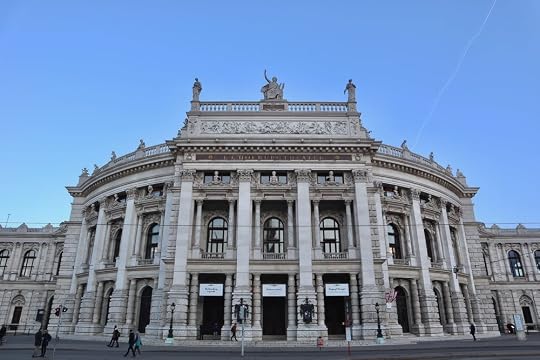
The Burgtheater in Vienna has long been considered one of the most important theatres in the world. However, according to the tale's narrator: "It's not only the gentle Raimund and the sensitive Kleist who get beaten to a pulp at the Burgtheater, which fancies its taken a perpetual lease on the theatrical art: even the great Shakespeare falls victim to the butchers of the Burgtheater."
With Woodcutters, Thomas Bernhard has given us one of the most memorable narrators in all of modern literature—a narrator who spends a large portion of the novel sitting in a wing chair to reflect on his past life in Vienna, eviscerating the despicable men and women, the repugnant events, and an entire society drowning in its own hypocrisy and tasteless stupidity.
Similar to his other major novels, Bernhard wrote Woodcutters in one continuous paragraph—composed of hypnotic, propulsive sentences that take over a reader (a writing style that certainly has this effect on me; I have reread the novel and listened to the audiobook several times).
In the opening pages we're given the framework: In his twenties, following his studies in music at the Mozarteum, the narrator came to Vienna from Salzburg, and, as a poor, struggling youth, fell under the spell of the Auersbergers for ten full years. He then fled to London for twenty years. Upon his recent return, he unexpectedly encounters the Auersbergers on the Graben—a famous, upscale pedestrian street. They break the news of their mutual friend Joana's tragic suicide, pressuring him to attend her funeral that very afternoon in Kilb. They then invite him back to their apartment for an artistic dinner later that evening.
While nearly the entire novel takes place over several grueling hours in a single apartment, Bernhard uses this tight setting to build a towering literary monument. Below are key highlights that define the text's brilliant architecture, beginning with the unique auditory rhythm:
MINIMALIST AESTHETIC
Bernhard's writing style in the novel leans heavily on what in the world of music is termed ostinato—a continually repeated musical phrase or rhythm. For me, this brings to mind the minimalism of Philip Glass, Terry Riley, and Simeon ten Holt. With each of Bernhard's repetitions, by an added word, detail, or description, there's an accumulation of color and intensity, mimicking the phrase-shifting found in Glass's Music with Changing Parts and ten Holt's Canto Ostinato. Although Woodcutters is written in one continuous paragraph, the novel breathes in three distinct movements, each movement deserving its own highlight.
MOVEMENT ONE - THE WING CHAIR
This opening section of the novel is by far the longest and can be aptly called the overture. And the ostinato? Without question, it is the narrator's continual reference to sitting “in the wing chair”—a phrase invoked over one hundred times as he fumes and seethes. His internal rant grinds, pounds, and scorches through his past life and recent events in Vienna, fueled by his profound torment over Joana's tragic death and funeral. Woven into this rage is his toxic history with the Auersbergers and their artistic dinner: “They were always meant to be the acme of refinement, but they always turned out to be the acme of tastelessness—they were intended to be the most splendid occasions, but they unfailingly turned out to be unmitigated disasters, I recalled in the wing chair.”
MOVEMENT TWO - THE DINNER TABLE
When the narrator joins the other men and women at the dinner table, the ostinato switches to the honored guest—the actor from the Burgtheater, yammering on about Ibsen's The Wild Duck and his role as the elder Ekdal: “The actor had already spooned up half his potato soup with great rapidity, as though he were famished, with such rapidity that some of it was now lodged in his beard. Ekdal, he said, spooning up his soup, has been my dream role for decades.”
Toward the end of dinner, however, this musical rhythm degenerates into a bitter recollection of the narrator's revolting past with Jeannie Billroth, the sixty-something novelist sitting across from him who has proclaimed herself the "Virginia Woolf of Vienna." The narrator viciously dismantles her career and their shared history: “I recalled The Wilderness of Youth and all the nonsense she had put into it, in the belief that it was world-class literature, whereas it was only petit bourgeois kitsch. She hates you, I told myself, and you despise her—that's the truth of it. But she hates you not just because you left her more than twenty years ago—twenty-five years ago in fact—and because you're a writer, but because you're ten years her junior.”
MOVEMENT THREE - THE MUSIC ROOM
At the conclusion of dinner, everyone moves to the music room where, shortly thereafter, the social masks and set roles finally begin to slip, causing the collapse of the entire evening's artificiality. The narrator witnesses the ultimate crescendo: the Burgtheater actor telling Jeannie Billroth to her face that she has asked him a rude, stupid, and tasteless question: “You're one of those people who know nothing and are worth nothing and consequently hate everybody. It's as simple as that. You hate everybody because you hate yourself and your own pitiful inadequacy. You talk incessantly about art, without having the faintest notion of what art is.”
This shocking transformation of the Burgtheater actor—from a pompous bore into a fascinating, philosophic figure—ignites a profound transformation and eventual resolution in the narrator, the exact nature of which is explored below.
While the musical cadence of the prose carries the reader forward, the content of the narrator's monologue is haunted by past tragedies and psychological scars. Here are three specific highlights that linger over the evening like ghosts:
THE STEINHOF CONNECTION
“The Auersbergers are the people who destroyed your existence, your very life, I told myself, sitting in the wing chair; they were the people who, in the early fifties, drove you into such an appalling mental and physical state, into what amounted to an existential crisis, into a state of such complete helplessness that you ended up in the Steinhof mental clinic.”
This is the only mention of the narrator's past history as a patient in the Steinhof. We are well advised to keep this fact in mind before we judge him too harshly for being curt and downright rude. From a certain angle, his hatred and caustic observations throughout the novel serve as the necessary armor to prevent another mental breakdown.
THE FATE OF JOANA
The more we learn of Joana, the more we can appreciate her sad, tragic story. Joana came to Vienna as a young lady full of life, aspiring to be a great actress or dancer. She loved theater, taught movement, acted dramatic parts privately for the narrator in her studio, and harbored a fascination for other world cultures, from Egyptian to Asian. She read everything about them, even wearing their traditional clothing and jewelry. But what did Viennese society do to Joana in those years when the narrator lived abroad? He relates his last visit to Joana's studio upon his return from London: “The apartment was full of laundry and stank abominably. . . On the floor were dozens of empty white wine bottles, some standing, some knocked over . . . There was nothing touching about this last visit of mine, nothing sentimental, I thought, sitting in the wing chair—I found it simply nauseating.” Again, the narrator realizes quite clearly that he himself could have shared Joana's fate had he remained in Vienna under the influence of a society composed of people like the Auersbergers.
EPIPHANY AND RESOLUTION
The final few pages of Woodcutters caught me completely by surprise. The narrator runs through downtown Vienna and thinks: “I'll write about this artistic dinner in the Gentzgasse, I thought, without knowing what I would write—simply that I would write something about it. And as I went on running I thought: I'll write something at once, no matter what—I'll write about this artistic dinner in the Gentzgasse at once, now. Now, I thought—at once, I told myself over and over again as I ran through the Inner City—at once, I told myself, now—at once, at once, before it's too late."
And he did write about it—bequeathing us the very novel we are reading. The book caused quite a stir and an intense scandal in Vienna when published.
Woodcutters is not to be missed.
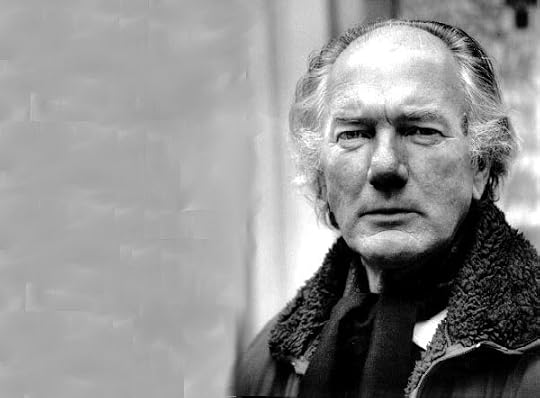
Austrian author Thomas Bernhard, 1931-1989

February 3, 2013
Brilliant, bilious, hilarious, unsettling, a breathlessly intense, sustained novelistic experience that leaves you smiling and strained on the outside, nicked and nourished beneath the skin. By this point in his literary output Thomas Bernhard was a master craftsman, and the narrative voice he conjures for the unnamed—but immensely Bernhardian—writer whose interiority serves as the driving force of this little human engine that couldn't ranks among his very best. Personally, and has always proven the case with this author, the experience of reading Woodcutters was binary in nature—there's the surface story, unfolding in monoparagraphic form before one's eyes, that features the usual cast of obsessive, anguished, speechifying, misanthropic, circular and suicidal Austrians, barking, baiting, and biting at each other before the caustic gaze of the narrative ringmaster, who weaves his own perception of personal, idealistic, and mental erosion into the blistering denunciations that nucleate the essence of the textual spell cast across the pages. And then there simultaneously exist the mineshafts tunneling deeper into the existential state of things—and where, progressing whilst yet diverted from the story happenings above, you can become immersed in wending along the various gradients—in which the excavations of the living, daylong mind are presented, amplified and inflated, both as regards the mazing undertaken and erected on the back side of that incorporeal cracked mirror and how it frames and sublimates that which it takes in, via relentless sensory suction, and parses as a personal evaluation of all that lies exterior, foreign and unassimilated, to that motive emulator of Maxwell's Demon. That is, it's a stream of consciousness in which a story is told in twain—one of the mind's corroded perception of the world, the obverse of the mind's magnification, disruption, and distortion of the latter, such that the first awareness can be both clarified and cast in doubt. It's a difficult act to pull off; but, in my opinion, there are few authors better endowed to handle the task than Thomas Freaking Bernhard. He gets it and gives it every time.
Thus, we open with the narrator, an Austrian author of a singularly sour, dissatisfied bent, resentfully present at an artistic dinner being hosted by the Auersbergers, a wealthy Viennese couple, held in honor of an as-yet-unarrived actor from the state-sponsored Burgtheater, where he's starring in a production of Ibsen's The Wild Duck, and transpiring late in the evening of the same day in which Joana—an artist friend of narrator, host, and the assembled guests, who hanged herself a few days prior—was buried in her home village of Kilb. This nameless voice—who delivers his relentless procession of declarative, ruminative, and speculative invective with a measured steadiness that speaks of a calm belying the angry agitation that fuels the torrent—was once a constant friend, companion, and lover to the Auersbergers and Joana, not to mention other guests such as Jeannie Billroth, an (allegedly) hackneyed writer long sold out to creature comforts who nonetheless fancies herself as the Austrian Virginia Woolf. But that was thirty, twenty-five, twenty years ago—the dates are as fluid as the choleric current which carries them along—and in the intervening years, those in which he apparently secreted himself away from the lot of them ere they destroyed and then annihilated him with their insatiable demands, he has taken the true measure of their character, their abilities, their lifestyle, permeated as they are with the essence of an abhorred state, and now views them, and their works, with a hatred that teeters between contempt and exhaustion.
In this way, the narrator, secreted away upon his shrouded wing chair, passes two thirds of the novel in a vituperative, circular, and encompassing tirade upon each and every aspect of this absurd supper, its ridiculous guests, the dolorous suicide, its acidic locale, and—the focal anchor for the narrator's obsessive reviling—the Auersbergers: obscenely wealthy bourgeois parasites (allegedly), a conductor and singer whose undoubted talents have been squandered through the corruptions of time, mediocre ambitions, and the essential nature of Vienna/Austria. The remainder comprises more of the same, but conducted in the dining and music rooms after the arrival of the actor, whilst the revelations grow more personal, spreading inwards and outwards—and with the aged, weary actor himself enkindling both the narrator's visceral disregard and spontaneously exuberant rebirth, in which the greaves and curiass of his mental armor are, at the end, rapturously abandoned, that a new set might be constructed from the memorial detritus of this dinner as Dunciad. It is negativity and hilarity, engirding poignancy and contemplation, alienation and abandon, all in equal measure and taken unto the limits such that they fill every particle of textual being.
What's that? Sounds about as inviting as a train wreck? Well, that's the funny thing. What it is about Bernhard that sucks me right into and down his own particular splenetic rabbit hole are those underworld passageways, the subtexts and parallel purposes—at least as I have discerned them—that accompany and are intertwined within what's transpiring under the open sky. For as much as Woodcutters details a ceaseless assault upon all that is wrong with the modern world in its mountainous permutation of Austrian state and ancient capital, the shabbiness, falsehoods, pretensions, and debilitations of faux-artsy cliques maneuvering within a crass, status-riven society overseen by a fumbling, strangling bureaucracy deaf to human desires, it simultaneously redirects that obloquy against the accuser. The narrator's polemic, which consumes all traces of oxygen in its encompassing nature, serves yet as a polemic against that degree of mental hyperemia, a modern incarnation of obsession taken to the maximum degree. Indeed, within this twinning of accusation, in which the light cast forth shines inwards at least as brightly as it does without, the accuracy of the latter comes more and more to be called into question. And I think this is the inevitable result of such a solipsistic, ego-driven engagement with the physical world. Such is the manner in which Bernhard pens his prose that he endows his voices with a potent conviction, limns their words with a truth emphasized by the thoroughness and breadth with which they are uttered—and so when things leak out, slip through the cracks of controlled repetition, burst forth to startling effect, that persuasive essence comes to undermine its own case. In every Bernhard novel that I've read, the principal narrative agent impresses me as being both searingly honest and utterly unreliable.
The writer voicing Woodcutters makes allusion to the oft-stated Bernhardian ideal that only in the highest is there satisfaction. This is a gnostic level of expectation—since the perfect idea is always imperfectly realized, the material world in which it is so rendered comes to seem marred, debilitating, of a lesser degree and, hence, filled with lesser creatures. But wouldn't that apply, in full, to the mind hurling such continuous and bitter denunciations? The narrator condemns all that isn't highest—but that encompasses almost everything, including the narrator himself. In such a complete denigration of the failures and frauds of others, the limitations, even illusions, of that standard are laid bare, morally mangled and metastasized. The mind, locked on such a pervasive abundance of targets, in projecting from itself must, as gravity bends light, come to circle in on itself, exaggerating, reducing through repetition, abrading and eroding its target-the world-until it has diminished it, and itself, to the point of pallidity and absurdity. This process produces outbursts and tangents that vary from the mediating script. Thomas Bernhard fully understands the circular rhythms of mental processes, especially when they are engorged and inflated. The usage of repetition, the mantras of steadying thought function as a defense mechanism, taken to extremes. It shores up foundations, builds verity and confidence, no matter the actuality of what it is providing that interior service for. Even lies, repeated often enough and in unvarying form, take on the hue of truth.
So it is that, from that echoing nature, it comes forth that the narrator may, in fact, be the agent and instigator of virtually every sin he pins to the Auersbergers, Jeannie, Joana, the aged actor. All that he accuses them of may, in fact, have derived from his actions, his abandonments, his abuses. The intervening years, then, have perhaps not served as a salvational period away from those who would have insatiably reduced him to a husk, but rather provided the time and means to ensure that self-knowledge of his own culpability, existing inside such a formidable condemnatory machine, was turned outwards, exercised unto pervasiveness and furiously launched and maintained, that some manner of reparation might be effected on the one most responsible for the ills being decried.
Why? I don't know. Maybe that's a lot my own words and thought expended upon something neither particularly insightful nor applicable to Bernhard, here or in whole. And it's a bleak presentation—for if we're in the kind of echo chamber where a corroded mind turns itself against the world, diminishes the latter to the point of execration and simultaneously is leeched of its will by that degraded world it so perceives, where lies the road to salvation? With Bernhard, often in suicide, or early death from the inevitable breakdowns deriving from such severe physical and mental impairment. And if bodily extinction manages to be avoided, it's to pursue the course of isolation: removing oneself from the pathogens of the modern world and its ravenous populace—either by hiding oneself away (preferably in, say, a garret) to pass the days in reading great works, pacing the floor, and burnishing that (one) perfect idea that resides within the mind and should/will/must never be brought out of that idealized womb; or else absconding into the heart of quiet, forested, being-empty nature, where in tranquil silence and arboreal envelopment one can find the harmony so alien to life as experienced within the bustle and schemes, inevitable despairs and spiritual envelopment of mastering civilization.
As I say, that may all be absolute fucking nonsense. So here's what I do know: I thrill, chill, shrink from and marvel at how much of myself I can recognize in Bernhard's damaged creations. I am engaged in a similar sort of struggle with a mind that has grown outsized and outlandishly smothering, declaring war on both the self within which it is contained and the world that fosters the self. So I feel a sort of kinship with this author, in that he has to have experienced the same frightening, enervating, and immobilizing metastasis of that maddened mind locked into avenues of repetition and regurgitation that insatiably devour time and ambition whilst hobbling hope and anticipation. He's more openly and outwardly bitter than I am, aggressive, his anger far more visceral, focused, and brought to bear upon targets on both sides of the plane—but that's simply because he's more honest than I am, more courageous and prepared to engage in struggle to escape the labyrinthine distractions and despairs inflicted when STENTORIAN CONSCIOUSNESS ATTACKS! Perhaps, too, like Cioran, in that though he may paint in a hard light the grim means of egress from this intolerable situation, he yet tolerated it. So we should tolerate it. Even consider, try to configure, how it might all be an illusion of that shrilly overactive mind. Perhaps the world is not really quite as horrid as it is made to be. It may be that the perfect is the true enemy of the good—because that kind of purity is simply unattainable, and in gauging against such an immeasurable standard, even the good will come to seem paltry, meager, and contemptible. And that's where the humour that walks hand-in-hand with the blanketing mind and its unstoppable tergiversations, growing in tandem with its chest-puffing companion, looms so large, releasing the pressure and persistently painting in the bright hues of the absurd. That's how I feel, particularly and pungently right here, right now. I don't know if it's the same for others—for that matter, I worry that I've lost the plot here and haven't managed, or found the conviction, to state things clearly and accurately. All I can say, with absolute certainty, is that I love the novels written by this man—this brilliant, bilious, hilarious, unsettling, breathlessly intense and sensitive man.
Thus, we open with the narrator, an Austrian author of a singularly sour, dissatisfied bent, resentfully present at an artistic dinner being hosted by the Auersbergers, a wealthy Viennese couple, held in honor of an as-yet-unarrived actor from the state-sponsored Burgtheater, where he's starring in a production of Ibsen's The Wild Duck, and transpiring late in the evening of the same day in which Joana—an artist friend of narrator, host, and the assembled guests, who hanged herself a few days prior—was buried in her home village of Kilb. This nameless voice—who delivers his relentless procession of declarative, ruminative, and speculative invective with a measured steadiness that speaks of a calm belying the angry agitation that fuels the torrent—was once a constant friend, companion, and lover to the Auersbergers and Joana, not to mention other guests such as Jeannie Billroth, an (allegedly) hackneyed writer long sold out to creature comforts who nonetheless fancies herself as the Austrian Virginia Woolf. But that was thirty, twenty-five, twenty years ago—the dates are as fluid as the choleric current which carries them along—and in the intervening years, those in which he apparently secreted himself away from the lot of them ere they destroyed and then annihilated him with their insatiable demands, he has taken the true measure of their character, their abilities, their lifestyle, permeated as they are with the essence of an abhorred state, and now views them, and their works, with a hatred that teeters between contempt and exhaustion.
In this way, the narrator, secreted away upon his shrouded wing chair, passes two thirds of the novel in a vituperative, circular, and encompassing tirade upon each and every aspect of this absurd supper, its ridiculous guests, the dolorous suicide, its acidic locale, and—the focal anchor for the narrator's obsessive reviling—the Auersbergers: obscenely wealthy bourgeois parasites (allegedly), a conductor and singer whose undoubted talents have been squandered through the corruptions of time, mediocre ambitions, and the essential nature of Vienna/Austria. The remainder comprises more of the same, but conducted in the dining and music rooms after the arrival of the actor, whilst the revelations grow more personal, spreading inwards and outwards—and with the aged, weary actor himself enkindling both the narrator's visceral disregard and spontaneously exuberant rebirth, in which the greaves and curiass of his mental armor are, at the end, rapturously abandoned, that a new set might be constructed from the memorial detritus of this dinner as Dunciad. It is negativity and hilarity, engirding poignancy and contemplation, alienation and abandon, all in equal measure and taken unto the limits such that they fill every particle of textual being.
What's that? Sounds about as inviting as a train wreck? Well, that's the funny thing. What it is about Bernhard that sucks me right into and down his own particular splenetic rabbit hole are those underworld passageways, the subtexts and parallel purposes—at least as I have discerned them—that accompany and are intertwined within what's transpiring under the open sky. For as much as Woodcutters details a ceaseless assault upon all that is wrong with the modern world in its mountainous permutation of Austrian state and ancient capital, the shabbiness, falsehoods, pretensions, and debilitations of faux-artsy cliques maneuvering within a crass, status-riven society overseen by a fumbling, strangling bureaucracy deaf to human desires, it simultaneously redirects that obloquy against the accuser. The narrator's polemic, which consumes all traces of oxygen in its encompassing nature, serves yet as a polemic against that degree of mental hyperemia, a modern incarnation of obsession taken to the maximum degree. Indeed, within this twinning of accusation, in which the light cast forth shines inwards at least as brightly as it does without, the accuracy of the latter comes more and more to be called into question. And I think this is the inevitable result of such a solipsistic, ego-driven engagement with the physical world. Such is the manner in which Bernhard pens his prose that he endows his voices with a potent conviction, limns their words with a truth emphasized by the thoroughness and breadth with which they are uttered—and so when things leak out, slip through the cracks of controlled repetition, burst forth to startling effect, that persuasive essence comes to undermine its own case. In every Bernhard novel that I've read, the principal narrative agent impresses me as being both searingly honest and utterly unreliable.
The writer voicing Woodcutters makes allusion to the oft-stated Bernhardian ideal that only in the highest is there satisfaction. This is a gnostic level of expectation—since the perfect idea is always imperfectly realized, the material world in which it is so rendered comes to seem marred, debilitating, of a lesser degree and, hence, filled with lesser creatures. But wouldn't that apply, in full, to the mind hurling such continuous and bitter denunciations? The narrator condemns all that isn't highest—but that encompasses almost everything, including the narrator himself. In such a complete denigration of the failures and frauds of others, the limitations, even illusions, of that standard are laid bare, morally mangled and metastasized. The mind, locked on such a pervasive abundance of targets, in projecting from itself must, as gravity bends light, come to circle in on itself, exaggerating, reducing through repetition, abrading and eroding its target-the world-until it has diminished it, and itself, to the point of pallidity and absurdity. This process produces outbursts and tangents that vary from the mediating script. Thomas Bernhard fully understands the circular rhythms of mental processes, especially when they are engorged and inflated. The usage of repetition, the mantras of steadying thought function as a defense mechanism, taken to extremes. It shores up foundations, builds verity and confidence, no matter the actuality of what it is providing that interior service for. Even lies, repeated often enough and in unvarying form, take on the hue of truth.
So it is that, from that echoing nature, it comes forth that the narrator may, in fact, be the agent and instigator of virtually every sin he pins to the Auersbergers, Jeannie, Joana, the aged actor. All that he accuses them of may, in fact, have derived from his actions, his abandonments, his abuses. The intervening years, then, have perhaps not served as a salvational period away from those who would have insatiably reduced him to a husk, but rather provided the time and means to ensure that self-knowledge of his own culpability, existing inside such a formidable condemnatory machine, was turned outwards, exercised unto pervasiveness and furiously launched and maintained, that some manner of reparation might be effected on the one most responsible for the ills being decried.
Why? I don't know. Maybe that's a lot my own words and thought expended upon something neither particularly insightful nor applicable to Bernhard, here or in whole. And it's a bleak presentation—for if we're in the kind of echo chamber where a corroded mind turns itself against the world, diminishes the latter to the point of execration and simultaneously is leeched of its will by that degraded world it so perceives, where lies the road to salvation? With Bernhard, often in suicide, or early death from the inevitable breakdowns deriving from such severe physical and mental impairment. And if bodily extinction manages to be avoided, it's to pursue the course of isolation: removing oneself from the pathogens of the modern world and its ravenous populace—either by hiding oneself away (preferably in, say, a garret) to pass the days in reading great works, pacing the floor, and burnishing that (one) perfect idea that resides within the mind and should/will/must never be brought out of that idealized womb; or else absconding into the heart of quiet, forested, being-empty nature, where in tranquil silence and arboreal envelopment one can find the harmony so alien to life as experienced within the bustle and schemes, inevitable despairs and spiritual envelopment of mastering civilization.
As I say, that may all be absolute fucking nonsense. So here's what I do know: I thrill, chill, shrink from and marvel at how much of myself I can recognize in Bernhard's damaged creations. I am engaged in a similar sort of struggle with a mind that has grown outsized and outlandishly smothering, declaring war on both the self within which it is contained and the world that fosters the self. So I feel a sort of kinship with this author, in that he has to have experienced the same frightening, enervating, and immobilizing metastasis of that maddened mind locked into avenues of repetition and regurgitation that insatiably devour time and ambition whilst hobbling hope and anticipation. He's more openly and outwardly bitter than I am, aggressive, his anger far more visceral, focused, and brought to bear upon targets on both sides of the plane—but that's simply because he's more honest than I am, more courageous and prepared to engage in struggle to escape the labyrinthine distractions and despairs inflicted when STENTORIAN CONSCIOUSNESS ATTACKS! Perhaps, too, like Cioran, in that though he may paint in a hard light the grim means of egress from this intolerable situation, he yet tolerated it. So we should tolerate it. Even consider, try to configure, how it might all be an illusion of that shrilly overactive mind. Perhaps the world is not really quite as horrid as it is made to be. It may be that the perfect is the true enemy of the good—because that kind of purity is simply unattainable, and in gauging against such an immeasurable standard, even the good will come to seem paltry, meager, and contemptible. And that's where the humour that walks hand-in-hand with the blanketing mind and its unstoppable tergiversations, growing in tandem with its chest-puffing companion, looms so large, releasing the pressure and persistently painting in the bright hues of the absurd. That's how I feel, particularly and pungently right here, right now. I don't know if it's the same for others—for that matter, I worry that I've lost the plot here and haven't managed, or found the conviction, to state things clearly and accurately. All I can say, with absolute certainty, is that I love the novels written by this man—this brilliant, bilious, hilarious, unsettling, breathlessly intense and sensitive man.

November 29, 2010
The artistic life. The artistic world.
Writing feels fake to me. Not other people's writing. I mean that me writing doesn't feel natural to me. The more articulate I try to be the worse it gets. This "You're such a fake" voice and a rising of stupidity blush on the back of my neck (my ears get it the worst, in the end). I do it anyway. I like thinking about stuff. I pretty much have to have it or I'll feel even more doldrums and pointless circles than ever. It's the trying to say it all together in one place with some kind of point and in a way that makes sense that's really embarrassing. Especially if I try to say it well. Faker! What's clarity? And what are connections to other things? (I would love it if my brain could produce some kind of map connecting all of the things I've heard, seen and read. With lines in thick or thin shapes that correlate to their relevance to other things.)
Thomas Bernhard does it. The puffed up standing around and sitting around and talking about la di da da da artistic dinners and did you hear that song and the next Virginia Woolf, the percursor to Webern, blah blah. Thinking you know anything about someone else's marriage because they invited you into their home and are putting on a cracks and all facade for someone's benefit. What an asshole you feel like because you find yourself playing the society game of "It's so nice to be here. I'll call you". I'm such a jerk, I wanted to know how she killed herself. Did she do it in the way that I suspected would fit a person that I suspected her to be? I could have placed bets on when I thought she would have done it by now. They don't look as upset as I think they should be. What assholes! Life sucks. People die, go to a dinner party. What am I even doing here?
I missed the writer keeping himself alive writing playlets for Joanna the movement director, Joanna the woman behind the tapestry artist, Joanna the ballerina or Joanna the actress. Hunched together in her room when her husband isn't home. Or happy and singing arias in German, English and Italian at the Auersberger's piano. It felt sad that he couldn't go back to that, couldn't pretend that their "art" was going anywhere, or was at the center of their lives. He could have been reading alone in his bedroom. Me too.
The cruel thing is when you need people and when you don't need them and you spit them out. There's a loss and a doubt in their place.
The actor from the Burgtheatre, the one they wait past midnight for soup to be served, played his dream role as Ekdal in the production of Ibsen's The Wild Duck (I can't remember if I ever read this one). He could be there out of politeness, or maybe he liked the idea of an "artistic dinner". He wouldn't have gone if he knew that there would be someone there who would take apart his every component until the parts meant nothing. It's like saying something so often, maybe in an interview, until it is all lines to be rehearsed. I wasn't as taken aback when the actor becomes interesting to the writer by saying out loud what he is thinking (if he had known those words could have been addressed to the writer himself, not that he gets that). He doesn't play the part of the guest any more and get poked and prodded. It wasn't the being silent in a dinner party and having all of these thoughts that interested me about Woodcutters. I would have imagined that the actor was not happy to be there. I could see the Viennese Virginia Woolf feeling like the abandoned child when her parents have a new favorite baby.
My mind map that I've got would walk (down the Graben) on planks to jump off pedestals. I've read complaints (maybe they were just remarks) that Bernhard is a one note kind of guy. I think of it more as walking down the same street in the same town, not necessarily the same direction. The Loser made me think a lot about keeping people on pedestals. Woodcutters made me think about knocking people off of them to feel like you're still moving. That's what interested me about Woodcutters. The love he once had and then that he had to stop loving them. There's a quote on the back of the book that compares Bernhard to Beckett. I can see this, especially for Beckett's Watt. I might not have put this together otherwise. I mean, my book connections are not usually the ones on book jackets. I'm probably the only person on the entire internet who connected The Loser with The Fountain Overflows (Rebecca West). I will not get invited to dinner parties with the Viennese Virginia Woolf. They would ask me who they are the next something something of and I'll say the wrong thing, like "The poor girl's Kathy Griffin?" Watt's repeat sentences felt to me like someone trying to feel around for reality by constantly naming it. Bernhard's repeat sentences felt to me a little like that. If he was missing a tooth he might touch the empty spot with his tongue to keep checking that it was gone. Even to keep alive like stoking a fire or a shark swimming. Sometimes the truth changes. I don't need them, I need them. I could be somewhere else. Touch the hole and that becomes the keeping you alive movement. I don't need them, I don't need the city.
Yesterday a coworker was criticizing someone we work with for being the man he knew who wanted to be high society more than any other man he ever knew. I caught myself from replying "But what about Auersberger?" in excited, "Yeah, I know!" tones. (This man's only crime is wearing dorky sweater vests and playing tennis. He's hardly Auesberger!) I do that a lot. Book people are real people to me and I take it way too seriously. That's why I don't think I could ever start referring to anything as artistic anything. I would hate myself if I ever did. It wouldn't feel really me. Real me doesn't make art. It stumbles in repeat sentences.
Woodcutters made me think about people I used to find interesting and then no longer did. (Some of them books and not real people.) Not that I think it could go any other way, just that it's something that's too easy to do... Maybe it hurts more than you think it does. Maybe you'll try to get it back and sit in a wingchair at a dinner party and hope to see the lost magic again. Or go on taking it apart and you won't have to.
"And as I went on running I thought: I'll write something at once, no matter what -- I'll write about this artistic dinner in the Gentzgasse at once, now. Now, I thought -- at once, I told myself over and over again as I ran through the Inner City -- at once, I told myself, now -- at once, at once, before it's too late."
What do you know? He had to think about it too. If you don't draw them into shapes you have no idea what they mean, I think.
I did think Woodcutters was funny. Like when Auesberger slams the table and complains about the quality of the goulash. If I ever get invited to any kind of party again I'll do that and then talk about Auesberger like he was a real person.
Writing feels fake to me. Not other people's writing. I mean that me writing doesn't feel natural to me. The more articulate I try to be the worse it gets. This "You're such a fake" voice and a rising of stupidity blush on the back of my neck (my ears get it the worst, in the end). I do it anyway. I like thinking about stuff. I pretty much have to have it or I'll feel even more doldrums and pointless circles than ever. It's the trying to say it all together in one place with some kind of point and in a way that makes sense that's really embarrassing. Especially if I try to say it well. Faker! What's clarity? And what are connections to other things? (I would love it if my brain could produce some kind of map connecting all of the things I've heard, seen and read. With lines in thick or thin shapes that correlate to their relevance to other things.)
Thomas Bernhard does it. The puffed up standing around and sitting around and talking about la di da da da artistic dinners and did you hear that song and the next Virginia Woolf, the percursor to Webern, blah blah. Thinking you know anything about someone else's marriage because they invited you into their home and are putting on a cracks and all facade for someone's benefit. What an asshole you feel like because you find yourself playing the society game of "It's so nice to be here. I'll call you". I'm such a jerk, I wanted to know how she killed herself. Did she do it in the way that I suspected would fit a person that I suspected her to be? I could have placed bets on when I thought she would have done it by now. They don't look as upset as I think they should be. What assholes! Life sucks. People die, go to a dinner party. What am I even doing here?
I missed the writer keeping himself alive writing playlets for Joanna the movement director, Joanna the woman behind the tapestry artist, Joanna the ballerina or Joanna the actress. Hunched together in her room when her husband isn't home. Or happy and singing arias in German, English and Italian at the Auersberger's piano. It felt sad that he couldn't go back to that, couldn't pretend that their "art" was going anywhere, or was at the center of their lives. He could have been reading alone in his bedroom. Me too.
The cruel thing is when you need people and when you don't need them and you spit them out. There's a loss and a doubt in their place.
The actor from the Burgtheatre, the one they wait past midnight for soup to be served, played his dream role as Ekdal in the production of Ibsen's The Wild Duck (I can't remember if I ever read this one). He could be there out of politeness, or maybe he liked the idea of an "artistic dinner". He wouldn't have gone if he knew that there would be someone there who would take apart his every component until the parts meant nothing. It's like saying something so often, maybe in an interview, until it is all lines to be rehearsed. I wasn't as taken aback when the actor becomes interesting to the writer by saying out loud what he is thinking (if he had known those words could have been addressed to the writer himself, not that he gets that). He doesn't play the part of the guest any more and get poked and prodded. It wasn't the being silent in a dinner party and having all of these thoughts that interested me about Woodcutters. I would have imagined that the actor was not happy to be there. I could see the Viennese Virginia Woolf feeling like the abandoned child when her parents have a new favorite baby.
My mind map that I've got would walk (down the Graben) on planks to jump off pedestals. I've read complaints (maybe they were just remarks) that Bernhard is a one note kind of guy. I think of it more as walking down the same street in the same town, not necessarily the same direction. The Loser made me think a lot about keeping people on pedestals. Woodcutters made me think about knocking people off of them to feel like you're still moving. That's what interested me about Woodcutters. The love he once had and then that he had to stop loving them. There's a quote on the back of the book that compares Bernhard to Beckett. I can see this, especially for Beckett's Watt. I might not have put this together otherwise. I mean, my book connections are not usually the ones on book jackets. I'm probably the only person on the entire internet who connected The Loser with The Fountain Overflows (Rebecca West). I will not get invited to dinner parties with the Viennese Virginia Woolf. They would ask me who they are the next something something of and I'll say the wrong thing, like "The poor girl's Kathy Griffin?" Watt's repeat sentences felt to me like someone trying to feel around for reality by constantly naming it. Bernhard's repeat sentences felt to me a little like that. If he was missing a tooth he might touch the empty spot with his tongue to keep checking that it was gone. Even to keep alive like stoking a fire or a shark swimming. Sometimes the truth changes. I don't need them, I need them. I could be somewhere else. Touch the hole and that becomes the keeping you alive movement. I don't need them, I don't need the city.
Yesterday a coworker was criticizing someone we work with for being the man he knew who wanted to be high society more than any other man he ever knew. I caught myself from replying "But what about Auersberger?" in excited, "Yeah, I know!" tones. (This man's only crime is wearing dorky sweater vests and playing tennis. He's hardly Auesberger!) I do that a lot. Book people are real people to me and I take it way too seriously. That's why I don't think I could ever start referring to anything as artistic anything. I would hate myself if I ever did. It wouldn't feel really me. Real me doesn't make art. It stumbles in repeat sentences.
Woodcutters made me think about people I used to find interesting and then no longer did. (Some of them books and not real people.) Not that I think it could go any other way, just that it's something that's too easy to do... Maybe it hurts more than you think it does. Maybe you'll try to get it back and sit in a wingchair at a dinner party and hope to see the lost magic again. Or go on taking it apart and you won't have to.
"And as I went on running I thought: I'll write something at once, no matter what -- I'll write about this artistic dinner in the Gentzgasse at once, now. Now, I thought -- at once, I told myself over and over again as I ran through the Inner City -- at once, I told myself, now -- at once, at once, before it's too late."
What do you know? He had to think about it too. If you don't draw them into shapes you have no idea what they mean, I think.
I did think Woodcutters was funny. Like when Auesberger slams the table and complains about the quality of the goulash. If I ever get invited to any kind of party again I'll do that and then talk about Auesberger like he was a real person.

December 13, 2013
Novel "Woodcutters" takes place during one evening through so-called artistic dinner given by a couple of narrator’s former friends. A pretext for the dinner is a visit of known actor, but the real reason is a suicidal death of their mutual friend, unfulfilled artist Joana. And that way a celebration for the actor transforms into a funeral reception. What would come of it? Nothing good except a gripping writing.
Narrator, an uncompromising observer hidden in the shadow, sitting in the wing chair with contempt and boundless spitefulness comments behavior of the guests. His obsessive an interior monologue with one continually repeated phrase I thought, sitting in the wing chair is one great accusation of an artistic circles, upper classes and bourgeois mentality and finally Austria itself. Bernhard seems to take a perverted delight in massacring own country. Austria for him is an inept country, Vienna – city destroying artists, not mention famous Burgtheater, according to Bernhard, the worst theatre scene in the world. He's not the subtle one and shows no mercy to anyone and anything, with aversion verging on fascination attacks Vienna elites, their snobbery and obscurantism, xenophobia and pro-fascist sympathies, complacency and shallowness. Bernhard straight out throws up Austria, with delight pulling all this mutual adoration society apart, these mediocre so-called artists and their claims to greatness. His reluctance or, as a matter of fact, hatred is almost substantial.
Powerful prose.Keep you in the seat. Literally.
And by way of digression, what’s wrong with Austria ?

November 18, 2022
Podrazumeva se, praktično već s tim što je ovo napisao Bernhard, da kod Auersbergerovih neće banuti, recimo, Klaus Maria Brandauer. [Htedoh reći Cica Perović, ali bilo bi dramaturški nekorektno!]
A dalje?
Dalje: kako da se čovek ne naslađuje sled one vrste opsedajuće muke i besa"Koji ću kijak kod Auersbergerovih! I kako sam se, koji moj, uvalio?! " - ko se ne bi samoispičkarao, neka se prvi baci kamenom! - da bi i muka i bes implodirali u izgovorenom. U konvencionalnom licemerju. U pufić. Biće i da "budak iz Burgteatra" mnogo više drži do sebe pa je malo i do jalovosti pripovedača ili...
Ili?
Ili će o tome napisati roman (koji je, uhvaćen u mrežu paradoksa, već napisao)... ili je samo mrtav stvaralac pravi stvaralac, što nam (se) podtekstualno nabacuje...
Treba li čitalac da žali zbog nečega?
Da žali, dabome da žali, da žali što pripovedaču ne mogu da se ozvuče misli, jer bi od jeda visoke frekvencije otišlo sve u kijak, onaj gore pomenuti, uključujući i domaćine, Auersbergerove, i Bilrotovu, i stanovitog glumca Burgteatra, i pripovedača samog, s iskolačenim očima, sa sve beržerom!
A dalje?
Dalje: kako da se čovek ne naslađuje sled one vrste opsedajuće muke i besa"Koji ću kijak kod Auersbergerovih! I kako sam se, koji moj, uvalio?! " - ko se ne bi samoispičkarao, neka se prvi baci kamenom! - da bi i muka i bes implodirali u izgovorenom. U konvencionalnom licemerju. U pufić. Biće i da "budak iz Burgteatra" mnogo više drži do sebe pa je malo i do jalovosti pripovedača ili...
Ili?
Ili će o tome napisati roman (koji je, uhvaćen u mrežu paradoksa, već napisao)... ili je samo mrtav stvaralac pravi stvaralac, što nam (se) podtekstualno nabacuje...
Treba li čitalac da žali zbog nečega?
Da žali, dabome da žali, da žali što pripovedaču ne mogu da se ozvuče misli, jer bi od jeda visoke frekvencije otišlo sve u kijak, onaj gore pomenuti, uključujući i domaćine, Auersbergerove, i Bilrotovu, i stanovitog glumca Burgteatra, i pripovedača samog, s iskolačenim očima, sa sve beržerom!

March 25, 2011
The great paradox of this Bernhard narrator, like so many others, is his hypercritical nature, which is often in conflict with itself, and, for the entire book, his utterly static physical presence. Indeed, he never moves during the narration, which occurs at a dinner party, except to go to the next room and back. The action, if it can be called that, for most is reminiscence, takes place during a single day. The phase he uses constantly is: "I thought, sitting in the wing chair. . ." The unnamed narrator has returned to Vienna for the first time in thirty years, from his self-imposed exile in London.
Since his return he has spent a portion of each day walking up and down Vienna's streets, most recently the Graben and the Karntnerstrasse. Here he runs into old associates, the Auerbergers, who were lovers and mentors thirty years before, but whom he now despises with a passion that is often laughable in its boundlessness. The entire book is an internal monologue of rage. Everyone he was friendly with 30 years ago he now despises. He is appalled by the fact that he has actually attended this so-called artistic dinner. Why did he come? He doesn't know. He is indifferent to nothing. Anything and everything provokes an almost out of control rage. He seeths with perceived slights. Yet, he says nothing. He is as much controlled by the social contract as anyone at the dinner. Indeed, perhaps more so, since a few others are at least not afraid to make their displeasure known when they hear an opinion they disagree with.
Joana, an old associate, has recently hung herself. Most of those who attended the funeral also seem to be at the artistic dinner in honor of an actor currently playing Ekdal in a production of Ibsen's The Wild Duck at the Burgtheater. The narrator knows better than to get worked up. He repeatedly berates himself for giving way to his hysteria, but then just as quickly he is right back at it. He cannot help himself. Now why? Why does he sit there and seeth and yet bottle it up. Well, you see, he is a writer. This is his process; this is his subject matter. The book we have just read is the product of that terrible evening.
Since his return he has spent a portion of each day walking up and down Vienna's streets, most recently the Graben and the Karntnerstrasse. Here he runs into old associates, the Auerbergers, who were lovers and mentors thirty years before, but whom he now despises with a passion that is often laughable in its boundlessness. The entire book is an internal monologue of rage. Everyone he was friendly with 30 years ago he now despises. He is appalled by the fact that he has actually attended this so-called artistic dinner. Why did he come? He doesn't know. He is indifferent to nothing. Anything and everything provokes an almost out of control rage. He seeths with perceived slights. Yet, he says nothing. He is as much controlled by the social contract as anyone at the dinner. Indeed, perhaps more so, since a few others are at least not afraid to make their displeasure known when they hear an opinion they disagree with.
Joana, an old associate, has recently hung herself. Most of those who attended the funeral also seem to be at the artistic dinner in honor of an actor currently playing Ekdal in a production of Ibsen's The Wild Duck at the Burgtheater. The narrator knows better than to get worked up. He repeatedly berates himself for giving way to his hysteria, but then just as quickly he is right back at it. He cannot help himself. Now why? Why does he sit there and seeth and yet bottle it up. Well, you see, he is a writer. This is his process; this is his subject matter. The book we have just read is the product of that terrible evening.

November 13, 2010
Cada vez son menos las obras de Thomas Bernhard que me quedan por leer, es por ello que me las voy racionando, porque después ya sé que no habrán nuevas obras de mi admirado Bernhard por leer, y sólo me quedará releer sus obras. Crítica severa de la sociedad artística y cultural de Viena, y crítica despiadada de la propia Viena, ‘Tala’ (1984) es un monólogo interior, desde su sillón de orejas, de un narrador y protagonista que ha sido invitado a una cena artística por los Auersberger, a los que llevaba muchos años sin ver, cena artística que también rememora a la fallecida Joanna, que se ha suicidado. Durante dicha velada, el protagonista repasará parte de su vida, haciendo hincapié en las relaciones con algunos de los invitados a esta cena artística. ‘Tala’, por tanto, es una crítica a la sociedad artística vienesa, a su falta de autenticidad, hipocresía y mediocridad, además de una reflexión sobre la estulticia humana. Bernhard despliega una excelente prosa que se encuentra en el culmen de su carrera. Un prosa circular, repetitiva, hipnótica, con palabras clave que se repiten durante la narración, exponiendo una idea repetidamente, volviendo sobre sus pasos para retomarla, exponiendo unos hechos para volver sobre ellos periódicamente, por los mismos hechos. En fin, es Bernhard.

August 20, 2017
Thus is my third experience of reading Bernhard, and after Old Masters and Correction, I had a pretty good idea what to expect. Once again this book is largely an intemperate rant against Austrian society written in a single long paragraph full of repetitions but this time I picked up on more of the humour.
The unnamed narrator is a writer who has returned to Vienna after a long period in London. He is invited to an artistic dinner by his one time friends, the petit bourgeois Auersbergers, after they see him on the street on the day they have heard about the suicide of a mutual friend Joana. The book covers the events of that dinner, and for the first half of the book the narrator sits in a wing chair drinking champagne and observing and remembering while waiting for the guest of honour, an actor in the Burgtheater.
The events of the dinner play out remorselessly, . This is another memorable book but not a comfortable read.
The unnamed narrator is a writer who has returned to Vienna after a long period in London. He is invited to an artistic dinner by his one time friends, the petit bourgeois Auersbergers, after they see him on the street on the day they have heard about the suicide of a mutual friend Joana. The book covers the events of that dinner, and for the first half of the book the narrator sits in a wing chair drinking champagne and observing and remembering while waiting for the guest of honour, an actor in the Burgtheater.
The events of the dinner play out remorselessly, . This is another memorable book but not a comfortable read.

May 5, 2020
İlk Thomas Bernhard okumam. İlk satırından son satırına kadar hiç bölüm, paragraf vb ayırıcı öğe kullanmadan blok olarak yazılmış bir roman. İlginç bir tarzı var, bir cümleyi 4-5 kez tekrarlıyor. Bir baştan sona, bir sondan başa, veya cümle ortasında bir yerden başa veya sona doğru çeşitlemelerle yazdığı metni tekrarlıyor, aynı tekrarlamaları kelimelerde de yapıyor. Biraz sinir bozucu bir tarz geldi bana, bu nedenle sağlam ve etkileyici bir öyküyü zayıflattığını düşünüyorum.
Kendi yaşamından, yirmili yaşlardan ellili yaşlara kadar olan bir kesitten bahseden Bernhard, kendisinin de içinde yer aldığı, Viyana’lı sanatçılar ve sanat çevresi hakkında kızgınlık, öfke ve nefretini anlatırken kendi ezikliğini de anlatmaktan çekinmemiş. Romanın adı aslında içeriği yansıtmıyor, roman kahramanlarının birinin bir sözünden esinlenmiş, neden böyle anlamadım. Şimdilik T. Bernhard beklentimin altında, ama bir kaç kitabını daha okurum.
Notum 3,5’dan 4 yıldız
Kendi yaşamından, yirmili yaşlardan ellili yaşlara kadar olan bir kesitten bahseden Bernhard, kendisinin de içinde yer aldığı, Viyana’lı sanatçılar ve sanat çevresi hakkında kızgınlık, öfke ve nefretini anlatırken kendi ezikliğini de anlatmaktan çekinmemiş. Romanın adı aslında içeriği yansıtmıyor, roman kahramanlarının birinin bir sözünden esinlenmiş, neden böyle anlamadım. Şimdilik T. Bernhard beklentimin altında, ama bir kaç kitabını daha okurum.
Notum 3,5’dan 4 yıldız

March 2, 2013
You’ve always lived a life of pretense, not a real life – a simulated existence, not a genuine existence. Everything about you, everything you are, has always been pretense, never genuine, never real.
Bernhard's satire of Viennese petit bourgeois society is one long frantic, hateful, angry, and at times even nostalgic internal monologue. It’s narrated as if it’s one deep exhale by an aging writer who has returned to Vienna after several decades away and has reunited with people he “didn’t like 30 years ago and doesn’t like now.” He spends the majority of the novel sitting in the corner at a dinner party hating everything about everyone, and hating himself even more for attending. That’s it. But, it’s fascinating.
Once you get over how funny this book is, it turns quietly sad. There’s that complicated feeling when one has an intense love-hate of their city and their people (and themselves), and that old adage of how you can never really escape who you are and where you come from, no matter how much you turn up your nose. And by the way, all those people you’re making fun of? You’re just as vile and pedantic, if not more.
The dinner party sort of turns into an impromptu gathering for the group’s friend (and the narrator’s ex-lover) who has committed suicide. His internal tirades start to become a bitter reminiscence about love and relationships, youth, loss.
We spend years sucking all we can out of someone, and then, having almost sucked them dry, we suddenly say that we ourselves are being sucked dry. And then for the rest of our lives we have to live with the knowledge of our own baseness.
This book makes Bukowski seem almost cheerful. Loved it.
Bernhard's satire of Viennese petit bourgeois society is one long frantic, hateful, angry, and at times even nostalgic internal monologue. It’s narrated as if it’s one deep exhale by an aging writer who has returned to Vienna after several decades away and has reunited with people he “didn’t like 30 years ago and doesn’t like now.” He spends the majority of the novel sitting in the corner at a dinner party hating everything about everyone, and hating himself even more for attending. That’s it. But, it’s fascinating.
Once you get over how funny this book is, it turns quietly sad. There’s that complicated feeling when one has an intense love-hate of their city and their people (and themselves), and that old adage of how you can never really escape who you are and where you come from, no matter how much you turn up your nose. And by the way, all those people you’re making fun of? You’re just as vile and pedantic, if not more.
The dinner party sort of turns into an impromptu gathering for the group’s friend (and the narrator’s ex-lover) who has committed suicide. His internal tirades start to become a bitter reminiscence about love and relationships, youth, loss.
We spend years sucking all we can out of someone, and then, having almost sucked them dry, we suddenly say that we ourselves are being sucked dry. And then for the rest of our lives we have to live with the knowledge of our own baseness.
This book makes Bukowski seem almost cheerful. Loved it.

August 27, 2020
ცოტა უცნაურია, მთელი წიგნი თითქმის უძრავად მჯდომი ადამიანის ფიქრები იყოს და მაინც ასეთი დინამიკური გამოვიდეს მეთქი, ვფიქრობდი გორგოლაჭებიან სავარძელში მჯდომი. წინა საუკუნის ვენის თეატრალური სამყაროს კრიტიკა იყოს და ჩვენს ეპოქასაც არანაკლებ ერგებოდეს მეთქი, ვფიქრობდი გორგოლაჭებიან სავარძელში მჯდომი. თან უძრავი და თან დინამიკური. თან ძველი და თან უახლესი. თან შედარებით უცნობი კულტურის და თან შეუდარებლად ნაცნობი მეთქი, ვფიქრობდი. თან იმდენად კარგად ნათარგმნი, ორიგინალთან შედარებაც რომ არ გჭირდება იმის მისახვედრად, რამდენად კარგად არის ნათარგმნი მეთქი, ვფიქრობდი გორგოლაჭებიან სავარძელში მჯდომი. შემოქმედებით ვახშმად წოდებული უფრო რეალური სპექტაკლი, ვიდრე “გარეული იხვია”, საიდანაც ამ შემოქმედებით ვახშამზე საპატიო სტუმარი, ბურგთეატრის მსახიობი მოდის, მეთქი, ვფიქრობდი და ვწერდი, ვწერდი და ვფიქრობდი ამ ტექსტს სამსახურის მაგიდასთან, გორგოლაჭებიან სავარძელში მჯდომი.
Read
March 17, 2020Holzfällen – eine erregende Deutung
Während alle in dem Buch Bernhards noch auf den Burgschauspieler warteten oder der Erzähler selbst noch auf dem Graben in Wien hin und her lief, fuhr ich in meinem Auto auf dem Oslovej in Silkeborg, Dänemark, zurück nach Hause, nachdem ich meine Kinder in der Schule und im Kindergarten gelassen hatte, und da, auf dem Autositz sitzend, fing ich nochmals an, Holzfällen als Hörbuch zu hören. Ich dachte, dass es ein verheerender Fehler gewesen war, allein nach Hause zu fahren, wo ich den ganzen Morgen frei bin, bis ich um 2 Uhr nachmittags meine Arbeit in der Fabrik anfangen soll, wo ich wegen des stumpfsinnigen, repetitiven Produktionsprozesses auch andauernd Hörbücher hören kann und jetzt nochmals Holzfällen, das wer weiß wie viele Male ich schon gehört und gelesen habe. Und ich dachte noch, auf dem Autositz sitzend, warum ich nicht lieber ein bisschen mehr mit meinen Kindern gespielt habe und dann auch das Haus besser geputzt habe, vielleicht dazu etwas für meine Familie gekocht habe, etwas, das sie essen können, wenn sie zurück nach Hause kommen werden. Ich kann leider nicht auf sie warten, sie kommen erst, nachdem ich schon in die Fabrik gefahren bin, und auch sie warten nicht auf mich, wenn ich zurück nach Hause komme, sie schlafen dann schon seit Langem.
Und ich dachte, jetzt schon allein in meinem kleinen Gästezimmer, beim Tisch auf einem gewöhnlichen Secondhand-Ikea-Stuhl sitzend und schon auf meinem Handy mehr oder weniger dieselben Worte tippend und zwischen die Nebensätze immer wieder einen kleinen Schluck aus dem bitteren Kaffee machend, den ich mir selbst gekocht habe und den ich in der anderen Hand halte, nicht der rechten, in der ich mein Handy halte. Es sieht schon wie eine Buchbesprechung aus, dachte ich erregt, und schon wechselte ich mein Handy mit dem Laptop, und das war sehr leicht zu tun, weil ich Google Docs verwende. Es wird nochmals weder geputzt noch gekocht, jetzt tippte ich los mit beiden Händen, unbehaglich auf meinem Secondhand-Ikea-Stuhl sitzend, die sehr schwere deutsche Grammatik, die für meine eigene Schreibweise ungewöhnlich ist, aber nicht für Bernhard, die natürlichste, ja die einzig denkbare Schreibweise für Bernhard, aber für meine Hände und meinen Kopf, wenn ich ähnliche Sätze mit meinen eigenen Händen und aus meinem eigenen Kopf produziere, naturgemäß zu gewundene und sogar schwindelerregende Sätze. Der Kaffee inzwischen neben mir, schon seit Minuten unberührt, kalt werdend.
Als ich auf meinem Secondhand-Ikea-Stuhl saß, saß der Erzähler in seinem weltberühmten Ohrensessel und dachte, “daß es besser gewesen wäre, an diesem Abend und meinetwegen auch noch die ganze Nacht Pascal oder Gogol oder Dostojewskij oder Tschechow zu lesen, als auf dieses abstoßende künstlerische Abendessen in der Gentzgasse zu gehen.” Und ich dachte: Na ja, ich verstehe genau, warum diese Autoren genannt werden. Pascal – und auch Montaigne, der später erwähnt wird – ist ein Schwätzphilosoph. Die Franzosen waren ja die ersten und sind noch die allergrößten Schwätzphilosophen; sie haben die Schwätzkunst, die immer eine französische Kunst gewesen ist, zu einer SchwätzmitsichselbstinseinemeigenenKopfKunst gemacht. Leicht zu sehen, warum Bernhard mit ihnen eine Affinität hat.
Aber warum wird Gogol genannt? Das ist ein bisschen schwerer zu verstehen, und wir müssen dafür schon das Ende des Romans antizipieren. Gogol (dieser Autor mit einem runden Namen) vereint den Anfang des Holzfällens mit seinem Ende. Am Anfang spricht der Erzähler über die „Luft am Graben“ und den „Menschenwirbel“, und das ist wie in Gogols Newski Prospekt, wo die ganze Atmosphäre des nordischen Boulevards präsentiert wird, wo die grauen und beschäftigten oder die bunten und behaglichen Leute, die dort hin und her laufen, allesamt wie eine fremde Spezies betrachtet werden.
Am Ende des Holzfällens wird der Erzähler hier, wie der Erzähler in Gogols Tote Seelen, pathetisch und komisch, aber trotzdem authentisch und tief sentimental. Seine Hassliebe wird plötzlich und unerwartet rührend.
Dostojewskij ist ja der größte abyssale Psychologe, und wie wir sehen werden, sind alle Personen dieses Buches wie Dämonen.
Tschechow wird höchstwahrscheinlich von Bernhard als der Genie betrachtet, der eine echte Revolution im Theater gemacht hat. Tschechow ist der große Dichter des Nichtstuns der Gesellschaft.
Ibsen, der viel mehr als Tschechow in Holzfällen erwähnt wird – der Burgtheater-Schauspieler, der große Gast beim „abstoßenden künstlerischen Abendessen“, hat gerade in Ibsens Wildente gespielt – ist allerdings ein Klassiker und gehört, zusammen mit Strindberg, der auch erwähnt wird, mehr zum 19. Jahrhundert als zum 20. Jahrhundert. Die tolle Gegenüberstellung dieser beiden und die überflüssige Frage, wer klassischer ist – Ibsen oder Strindberg – ridikülisiert beide und zeigt sie als gleich irrelevante Sozialkritiker für die zeitgenössische Gesellschaft.
Die erste Dämonin dieses Buches ist, selbstverständlich, Joana, eine frühere Freundin des Erzählers und der Auersberger, von vor zwanzig Jahren, als sie noch Freunde waren. Joana war eine gute Person und eine sehr talentierte, aber in Wien gescheiterte Künstlerin. Sie hat sich vor einigen Tagen erhängt. Sie ist das Gespenst der Gesellschaft bei den Auersbergern. Das „abstoßende künstlerische Abendessen“ findet am selben Tag wie ihr Begräbnis statt, und die Gäste bei den Auersbergern kommen vom ersten zum zweiten Ereignis, ohne ihre Trauerkleidung zu wechseln.
Die Auersberger sind die dämonisierten (als fiktionalisierten) Lampersberger. Sie waren in Wirklichkeit Freunde Bernhards. Der Erzähler ist, vom literaturtheoretischen Standpunkt aus, der Dämon des Autors. Aber der Schauspieler ist ebenfalls ein Dämon, per Definition und als Beruf, wie alle Schauspieler. Darüber hinaus ist er auch der Dämon Bernhards, sein personifiziertes Sprachrohr, ein Dämon des Erzählers, der als Gast bei den Auersbergern meist schweigt. Der Schauspieler sagt am Ende allen ins Gesicht, wer sie sind.
Alle Frauenfiguren sind Dämonen der Dämonin Joana – nur mittelmäßige, dilettantische, aber gemütliche und selbstsichere Künstlerinnen. Frau Auersberger ist Sängerin, und manchmal begleitet sie ihr Mann, der ein „Komponist in der Weber-Nachfolge“ ist. Jeannie Billroth, die Schriftstellerin der Gesellschaft, ist selbstverständlich auch eine Dämonin Bernhards und eine Dämonin (als Epigonin) Virginia Woolfs:
“Nun saß ich der Wiener Virginia Woolf gegenüber, dieser abgeschmackten Gedichte- und Prosaschöpferin, die, das war jetzt aufeinmal klar, zeitlebens nur in ihrem kleinbürgerlichen Kitsch gebadet hat, wie ich denke. Und eine solche Person getraut sich ohne weiteres zu sagen, daß sie noch besser schreibe als die Virginia Woolf, die von mir, seit ich in schriftstellerischem Denken geschult bin, immer als die erste aller Dichterinnen bewundert gewesen ist, daß sie, die Billroth, in ihren Romanen weiter sei als Die Wellen, weiter als Orlando, weiter als Die Fahrt zum Leuchtturm.“
Diese Dämonenversammlung ist zugleich wie in Gogol und Dostojewski. Beide haben das Thema der Verdoppelung als Usurpation erforscht. In ihren Werken sehen wir auch, wenn auch auf eine offensichtlichere Weise als bei Bernhard, Doppelgänger als selbstzufriedene Eindringlinge.
All dies habe ich wie in einer Fuge auf meinem Laptop getippt. „Es klingt schon zu kompliziert“, dachte ich beim Nachlesen. „Aber ich muss diese Buchbesprechung ohnehin für die Bernhard-Fanatiker schreiben, sie werden verstehen“, dachte ich, während ich mich ein wenig in meinem Ikea-Stuhl zurücklehnte. Naturgemäß werden sie auch immer wissen wollen – ja, wissen sollen –, genau wo ich sitze, dachte ich, auf dem Secondhand-Ikea-Stuhl sitzend, weiter auf meinem Laptop schreibend. Wie das Buch eine Selbstparodie über Bernhards Person und Werke ist, so muss auch meine Besprechung eine Parodie seiner Selbstparodie und eine persönliche Selbstparodie zugleich sein, dachte ich, auf dem Secondhand-Ikea-Stuhl ungemütlich sitzend, diese für mich ungewöhnlich langen und gewundenen Sätze jetzt mit beiden Händen schreibend und editierend, während mein schwarzer Kaffee neben mir so kalt wurde wie die Luft in meinem kleinen Gästezimmer.
Holzfällen ist voll von „zweiter Hand“-Personen, dachte ich, während ich mich umschaute, wie auch mein Haus voll von Secondhand-Möbeln und -Objekten ist. Selbst das Buch Holzfällen habe ich gebraucht gekauft. Der anonyme Erzähler, der genau wie Bernhard seit 30 Jahren Schriftsteller ist, ist seine eigene Karikatur. Er trägt nicht seinen Namen wie der Erzähler in Wittgensteins Neffe, wo ein realistischer und autobiografischer Bernhard schreibt und spricht und tatsächlich Bernhard genannt wird. Der anonyme Selbstkarikaturist hier schwadroniert erwartungsgemäß alles und alle zu Grunde – aber nur in seinem und unserem Kopf. In diesem Roman ist er zumeist ein schweigender Gast.
Seine Gastgeber, genauer gesagt die „Künstlerische Abendessen“-Gastgeber und lächerlichen „Landmäzenaten“, also die Auersberger, sind alte Freunde, aber seit 30 Jahren Feinde des Erzählers. Sie sind auch die Karikaturen der in Wirklichkeit existierenden Lampersberger. Die Satire war für seine Zeitgenossen so offensichtlich, dass diese Lampersberger Bernhard wegen Verleumdung verklagt haben. Das Buch wurde aus den Buchhandlungen beschlagnahmt, und das Ganze war in Wien ein echter Skandal. Doch die Parodie und Selbstparodie, die Karikaturen und Selbstkarikaturen sowie andere Spiegelungen sind in dem Roman weitaus subtiler und heikler, als sie auf den ersten Blick erscheinen.
Ich glaube, dass alle Männerfiguren gewissermaßen verzerrte Abbildungen Bernhards sind. Der pathetisch betrunkene Auersberger ist ebenso lakonisch wie der Erzähler selbst, der meist hört, was die anderen sagen, während er einen langen inneren Monolog hält. Auersberger ist merkwürdigerweise immer an der Grenze zu seinen Gästen – mehr abwesend als anwesend –, meist nachlässig am Klavier sitzend, ohne zu spielen, in der charakteristischen Pose eines mittelmäßigen „Weber-Nachfolgers“. Er bildet einen echten Kontrast zum Erzähler, der ebenfalls beiseite sitzt, aber sehr nüchtern im Ohrensessel, die gesamte Handlung beobachtend und innerlich kommentierend – wie es einem Schriftsteller eben zukommt, dachte ich, auf dem Secondhand-Ikea-Stuhl sitzend, weiterschreibend.
Auersberger, der betrunkene, nachlässige Gastgeber, ist wie ein Schatten des nüchternen Erzählers, der von der anderen Seite des Gästezimmers aus seinem Ohrensessel heraus eine sehr enge Perspektive auf die gesamte Versammlung bei den Auersbergern ermöglicht. Der Erzähler ist während seines gesamten Besuchs in seine Beobachtungen und seinen inneren Monolog vertieft und äußert seltsamerweise nur einzelne Worte oder sehr kurze Sätze wie „künstlerisches Leben“ oder „Ekdal“ und dann „Aber was für ein Ekdal?“ Diese verbalen Eingriffe, so lakonisch sie auch sind, genügen jedes Mal, um Gäste und Gastgeber zu verblüffen und das allgemeine Gespräch am Tisch in eine unerwartete Richtung zu lenken.
Wir hören selbstverständlich nicht, was in Auersbergers Innerem vorgeht – vielleicht ist sein Geist eigentlich leer. Doch auch er drückt sich lakonisch aus, ebenso plötzlich und unvermittelt wie der Erzähler, nur im Gegensatz zu diesem ungeschickt und grob. So zum Beispiel, wenn er in Richtung der Küche schreit, wo die unsichtbare Köchin, die um Mitternacht für alle gekocht hat, sich befindet: „Ein scheußliches Essen!“ Überdies ist er ein unverblümter Menschenhasser, der im betrunkenen Zustand dazu fähig ist, fast skandierend im Gesicht all seiner Gäste zu verkünden: „Die Menschheit gehört ausgerottet.“
Der Erzähler, der auf dem weltberühmten Ohrensessel sitzt und sich selbst von der gesamten snobistischen Versammlung bei den Auersbergern ausschließt, scheint nur ein raffinierterer Misanthrop zu sein. Für alle Bernhard-Fanatiker ist er jedoch selbstverständlich nicht und niemals ein Menschen-, sondern ein Unmenschenhasser, dachte ich, auf meinem bescheidenen Ikea-Stuhl sitzend und weiterschreibend.
Der langerwartete Burgschauspieler trifft bei den Auersbergern ein, während der Erzähler in seinem Ohrensessel eingenickt ist. Der Letztere verschläft den Eintritt des Hauptgastes. Auf eine interessante Weise erscheint der Schauspieler, als käme er direkt aus dem Unbewussten des Erzählers. Später wird sich zeigen, dass er die extrovertierte Seite des ansonsten schweigsamen Erzählers verkörpert und gewissermaßen dessen Sprachrohr ist:
“Und ich hatte den Eindruck, daß das alle, die Zeuge dieses Ausbruchs des Burgschauspielers gewesen waren, nicht nur im Augenblick gefreut hat, sondern ihnen allen eine größere, doch länger als nur die kürzeste Zeit anhaltende Genugtuung gewesen ist. Natürlich, sie haben dieses ihr Gefühl nicht ausgesprochen, dazu hatten sie auch keine Veranlassung und sie hätten es sich auch nicht leisten können. Der Burgschauspieler aber konnte es sich leisten genauso, wie ich es mir habe leisten können, allein durch mein Schweigen dem Burgschauspieler gegenüber in allem, das er gegen die Jeannie vorgebracht hat, recht zu geben. Endlich, nach Jahren, nach Jahrzehnten, sagt ein Mensch jenem die Wahrheit ins Gesicht, dem wir sie wünschen, jahrzehntelang wünschen, genau die Wahrheit, die er vorher nie gehört hat, weil es bis dahin niemand gewagt hat, diesem Menschen die Wahrheit ins Gesicht zu sagen und ich dachte, allein wegen dieser von dem Burgschauspieler der Jeannie ins Gesicht gesagten Wahrheit, was immer diese Wahrheit sein mag oder nicht sein mag, hat es sich schließlich doch ausgezahlt, die Einladung zu dem künstlerischen Abendessen anzunehmen.”
(Hervorhebung von mir)
Besonders wichtig ist zu verstehen, dass der Aufenthalt in dieser Gesellschaft sich für den Erzähler letztlich wegen einer Sympathie lohnt, nicht wegen einer Antipathie.
Der Schauspieler sitzt im Zentrum der Gesellschaft und spricht viel mehr als alle anderen – schärfer und aufrichtiger, als sie es wagen. So sagt er etwa zu Jeannie Billroth, der arroganten österreichischen Pseudo-Virginia Woolf:
“Sie gehören zu diesen Leuten, die nichts wissen und die nichts wert sind und deshalb alles Andere hassen, so einfach ist das, Sie hassen alles, weil Sie sich selbst hassen in Ihrer Erbärmlichkeit. Sie reden andauernd von Kunst und haben keine Ahnung, was das ist”
Im Gegensatz dazu kommt der Hass des Schauspielers, des Erzählers und auch Bernhards nicht aus Hochmut oder Erbärmlichkeit, sondern hat einen moralischen Ursprung:
“Menschen wie Sie, sind gefährliche Menschen und man tut gut daran, mit solchen Menschen wie Sie, keinen Umgang zu pflegen. “
Die Dummen sind gefährlich:
“diese Person ist absolut eine dumme Person, wenn ich gewußt hätte, daß auch diese Person hierher kommt, wäre ich niemals Ihrer Einladung gefolgt, sagte der Burgschauspieler zu den Auersbergerischen pathetisch”
Am Anfang erscheint der Schauspieler dem Erzähler als eine lächerliche Figur – ein Hofnarr im Gästezimmer der Auersberger, der nicht fähig ist, mit seinem Schwätzen aufzuhören, selbst wenn er Suppe löffelt:
“Alle aßen hastig und hörten, was der Burgschauspieler zu sagen hatte, während er seine Suppe löffelte. [...] Der Ekdal, sagte er und löffelte die Suppe, der Ekdal ist schon jahrzehntelang meine Wunschrolle gewesen, und er sagte, wieder Suppe löffelnd, und zwar alle zwei Wörter einen Löffel Suppe nehmend, also er sagte der Ekdal und löffelte Suppe und sagte war schon und löffelte Suppe und immer meine und löffelte Suppe und sagte Lieblingsrolle gewesen und löffelte Suppe und er hatte auch noch zwischen zwei Suppenlöffeln seit Jahr- und dann wieder nach zwei Suppenlöffeln zehnten gesagt und das Wort Wunschrolle genauso, als redete er von einer Mehlspeise, denke ich.”
Doch dieser Narr verwandelt sich am Ende. Vom Schauspieler wird er – sozusagen – zum „Wahrspieler“:
“es hatte mich auch nicht im geringsten interessiert, was der Burgschauspieler während des Essens gesagt hatte, erst viel später, erst im Musikzimmer, also, nachdem der Burgschauspieler schon mehr, als ihm im Grunde zuträglich gewesen ist, getrunken hatte, war er auch für mich interessant geworden, weil er sich, wie ich jetzt denke, in der Zwischenzeit völlig verändert hatte”
Auch die anfängliche Abneigung des Erzählers gegenüber dem Schauspieler wandelt sich schließlich in Zuneigung:
“Der anfängliche Schwätzer, der nur durch seine faulen Witze und abgestandenen Anekdoten Eindruck hatte machen wollen zu Beginn, war im Laufe dieses künstlerischen Abendessens aufeinmal zur interessanten, ja sogar zur philosophischen Figur dieses künstlerischen Abendessens geworden, dachte ich und ich denke, daß wir das nicht an sehr vielen Menschen, aber doch ab und zu an alten beobachten können, daß solche Leute am Anfang als Schwätzer und als widerwärtige Witze- und Anekdotenerzähler auftreten wie der typische sogenannte künstlerische oder intellektuelle Wiener und dann nach und nach geradezu eine philosophische Entwicklung nehmen während eines Abends, während eines Abendessens, wie im Zuge dieses künstlerischen Abendessens bei den Auersbergerischen in der Gentzgasse, daß sie zuerst nur durch Lächerlichkeit und Dummheit und Aufgeblasenheit auffallen und dann mit der Zeit, wenn sie etwas und etwas mehr, als ihnen gut tut, getrunken haben, plötzlich unsere Abneigung gegen sie zu einer Zuneigung machen können, weil sie ein durchaus geistiges, wenn nicht gar philosophisches Element ins Spiel bringen.”
Fortsetzung und Ende im ersten Kommentar
Während alle in dem Buch Bernhards noch auf den Burgschauspieler warteten oder der Erzähler selbst noch auf dem Graben in Wien hin und her lief, fuhr ich in meinem Auto auf dem Oslovej in Silkeborg, Dänemark, zurück nach Hause, nachdem ich meine Kinder in der Schule und im Kindergarten gelassen hatte, und da, auf dem Autositz sitzend, fing ich nochmals an, Holzfällen als Hörbuch zu hören. Ich dachte, dass es ein verheerender Fehler gewesen war, allein nach Hause zu fahren, wo ich den ganzen Morgen frei bin, bis ich um 2 Uhr nachmittags meine Arbeit in der Fabrik anfangen soll, wo ich wegen des stumpfsinnigen, repetitiven Produktionsprozesses auch andauernd Hörbücher hören kann und jetzt nochmals Holzfällen, das wer weiß wie viele Male ich schon gehört und gelesen habe. Und ich dachte noch, auf dem Autositz sitzend, warum ich nicht lieber ein bisschen mehr mit meinen Kindern gespielt habe und dann auch das Haus besser geputzt habe, vielleicht dazu etwas für meine Familie gekocht habe, etwas, das sie essen können, wenn sie zurück nach Hause kommen werden. Ich kann leider nicht auf sie warten, sie kommen erst, nachdem ich schon in die Fabrik gefahren bin, und auch sie warten nicht auf mich, wenn ich zurück nach Hause komme, sie schlafen dann schon seit Langem.
Und ich dachte, jetzt schon allein in meinem kleinen Gästezimmer, beim Tisch auf einem gewöhnlichen Secondhand-Ikea-Stuhl sitzend und schon auf meinem Handy mehr oder weniger dieselben Worte tippend und zwischen die Nebensätze immer wieder einen kleinen Schluck aus dem bitteren Kaffee machend, den ich mir selbst gekocht habe und den ich in der anderen Hand halte, nicht der rechten, in der ich mein Handy halte. Es sieht schon wie eine Buchbesprechung aus, dachte ich erregt, und schon wechselte ich mein Handy mit dem Laptop, und das war sehr leicht zu tun, weil ich Google Docs verwende. Es wird nochmals weder geputzt noch gekocht, jetzt tippte ich los mit beiden Händen, unbehaglich auf meinem Secondhand-Ikea-Stuhl sitzend, die sehr schwere deutsche Grammatik, die für meine eigene Schreibweise ungewöhnlich ist, aber nicht für Bernhard, die natürlichste, ja die einzig denkbare Schreibweise für Bernhard, aber für meine Hände und meinen Kopf, wenn ich ähnliche Sätze mit meinen eigenen Händen und aus meinem eigenen Kopf produziere, naturgemäß zu gewundene und sogar schwindelerregende Sätze. Der Kaffee inzwischen neben mir, schon seit Minuten unberührt, kalt werdend.
Als ich auf meinem Secondhand-Ikea-Stuhl saß, saß der Erzähler in seinem weltberühmten Ohrensessel und dachte, “daß es besser gewesen wäre, an diesem Abend und meinetwegen auch noch die ganze Nacht Pascal oder Gogol oder Dostojewskij oder Tschechow zu lesen, als auf dieses abstoßende künstlerische Abendessen in der Gentzgasse zu gehen.” Und ich dachte: Na ja, ich verstehe genau, warum diese Autoren genannt werden. Pascal – und auch Montaigne, der später erwähnt wird – ist ein Schwätzphilosoph. Die Franzosen waren ja die ersten und sind noch die allergrößten Schwätzphilosophen; sie haben die Schwätzkunst, die immer eine französische Kunst gewesen ist, zu einer SchwätzmitsichselbstinseinemeigenenKopfKunst gemacht. Leicht zu sehen, warum Bernhard mit ihnen eine Affinität hat.
Aber warum wird Gogol genannt? Das ist ein bisschen schwerer zu verstehen, und wir müssen dafür schon das Ende des Romans antizipieren. Gogol (dieser Autor mit einem runden Namen) vereint den Anfang des Holzfällens mit seinem Ende. Am Anfang spricht der Erzähler über die „Luft am Graben“ und den „Menschenwirbel“, und das ist wie in Gogols Newski Prospekt, wo die ganze Atmosphäre des nordischen Boulevards präsentiert wird, wo die grauen und beschäftigten oder die bunten und behaglichen Leute, die dort hin und her laufen, allesamt wie eine fremde Spezies betrachtet werden.
Am Ende des Holzfällens wird der Erzähler hier, wie der Erzähler in Gogols Tote Seelen, pathetisch und komisch, aber trotzdem authentisch und tief sentimental. Seine Hassliebe wird plötzlich und unerwartet rührend.
Dostojewskij ist ja der größte abyssale Psychologe, und wie wir sehen werden, sind alle Personen dieses Buches wie Dämonen.
Tschechow wird höchstwahrscheinlich von Bernhard als der Genie betrachtet, der eine echte Revolution im Theater gemacht hat. Tschechow ist der große Dichter des Nichtstuns der Gesellschaft.
Ibsen, der viel mehr als Tschechow in Holzfällen erwähnt wird – der Burgtheater-Schauspieler, der große Gast beim „abstoßenden künstlerischen Abendessen“, hat gerade in Ibsens Wildente gespielt – ist allerdings ein Klassiker und gehört, zusammen mit Strindberg, der auch erwähnt wird, mehr zum 19. Jahrhundert als zum 20. Jahrhundert. Die tolle Gegenüberstellung dieser beiden und die überflüssige Frage, wer klassischer ist – Ibsen oder Strindberg – ridikülisiert beide und zeigt sie als gleich irrelevante Sozialkritiker für die zeitgenössische Gesellschaft.
Die erste Dämonin dieses Buches ist, selbstverständlich, Joana, eine frühere Freundin des Erzählers und der Auersberger, von vor zwanzig Jahren, als sie noch Freunde waren. Joana war eine gute Person und eine sehr talentierte, aber in Wien gescheiterte Künstlerin. Sie hat sich vor einigen Tagen erhängt. Sie ist das Gespenst der Gesellschaft bei den Auersbergern. Das „abstoßende künstlerische Abendessen“ findet am selben Tag wie ihr Begräbnis statt, und die Gäste bei den Auersbergern kommen vom ersten zum zweiten Ereignis, ohne ihre Trauerkleidung zu wechseln.
Die Auersberger sind die dämonisierten (als fiktionalisierten) Lampersberger. Sie waren in Wirklichkeit Freunde Bernhards. Der Erzähler ist, vom literaturtheoretischen Standpunkt aus, der Dämon des Autors. Aber der Schauspieler ist ebenfalls ein Dämon, per Definition und als Beruf, wie alle Schauspieler. Darüber hinaus ist er auch der Dämon Bernhards, sein personifiziertes Sprachrohr, ein Dämon des Erzählers, der als Gast bei den Auersbergern meist schweigt. Der Schauspieler sagt am Ende allen ins Gesicht, wer sie sind.
Alle Frauenfiguren sind Dämonen der Dämonin Joana – nur mittelmäßige, dilettantische, aber gemütliche und selbstsichere Künstlerinnen. Frau Auersberger ist Sängerin, und manchmal begleitet sie ihr Mann, der ein „Komponist in der Weber-Nachfolge“ ist. Jeannie Billroth, die Schriftstellerin der Gesellschaft, ist selbstverständlich auch eine Dämonin Bernhards und eine Dämonin (als Epigonin) Virginia Woolfs:
“Nun saß ich der Wiener Virginia Woolf gegenüber, dieser abgeschmackten Gedichte- und Prosaschöpferin, die, das war jetzt aufeinmal klar, zeitlebens nur in ihrem kleinbürgerlichen Kitsch gebadet hat, wie ich denke. Und eine solche Person getraut sich ohne weiteres zu sagen, daß sie noch besser schreibe als die Virginia Woolf, die von mir, seit ich in schriftstellerischem Denken geschult bin, immer als die erste aller Dichterinnen bewundert gewesen ist, daß sie, die Billroth, in ihren Romanen weiter sei als Die Wellen, weiter als Orlando, weiter als Die Fahrt zum Leuchtturm.“
Diese Dämonenversammlung ist zugleich wie in Gogol und Dostojewski. Beide haben das Thema der Verdoppelung als Usurpation erforscht. In ihren Werken sehen wir auch, wenn auch auf eine offensichtlichere Weise als bei Bernhard, Doppelgänger als selbstzufriedene Eindringlinge.
All dies habe ich wie in einer Fuge auf meinem Laptop getippt. „Es klingt schon zu kompliziert“, dachte ich beim Nachlesen. „Aber ich muss diese Buchbesprechung ohnehin für die Bernhard-Fanatiker schreiben, sie werden verstehen“, dachte ich, während ich mich ein wenig in meinem Ikea-Stuhl zurücklehnte. Naturgemäß werden sie auch immer wissen wollen – ja, wissen sollen –, genau wo ich sitze, dachte ich, auf dem Secondhand-Ikea-Stuhl sitzend, weiter auf meinem Laptop schreibend. Wie das Buch eine Selbstparodie über Bernhards Person und Werke ist, so muss auch meine Besprechung eine Parodie seiner Selbstparodie und eine persönliche Selbstparodie zugleich sein, dachte ich, auf dem Secondhand-Ikea-Stuhl ungemütlich sitzend, diese für mich ungewöhnlich langen und gewundenen Sätze jetzt mit beiden Händen schreibend und editierend, während mein schwarzer Kaffee neben mir so kalt wurde wie die Luft in meinem kleinen Gästezimmer.
Holzfällen ist voll von „zweiter Hand“-Personen, dachte ich, während ich mich umschaute, wie auch mein Haus voll von Secondhand-Möbeln und -Objekten ist. Selbst das Buch Holzfällen habe ich gebraucht gekauft. Der anonyme Erzähler, der genau wie Bernhard seit 30 Jahren Schriftsteller ist, ist seine eigene Karikatur. Er trägt nicht seinen Namen wie der Erzähler in Wittgensteins Neffe, wo ein realistischer und autobiografischer Bernhard schreibt und spricht und tatsächlich Bernhard genannt wird. Der anonyme Selbstkarikaturist hier schwadroniert erwartungsgemäß alles und alle zu Grunde – aber nur in seinem und unserem Kopf. In diesem Roman ist er zumeist ein schweigender Gast.
Seine Gastgeber, genauer gesagt die „Künstlerische Abendessen“-Gastgeber und lächerlichen „Landmäzenaten“, also die Auersberger, sind alte Freunde, aber seit 30 Jahren Feinde des Erzählers. Sie sind auch die Karikaturen der in Wirklichkeit existierenden Lampersberger. Die Satire war für seine Zeitgenossen so offensichtlich, dass diese Lampersberger Bernhard wegen Verleumdung verklagt haben. Das Buch wurde aus den Buchhandlungen beschlagnahmt, und das Ganze war in Wien ein echter Skandal. Doch die Parodie und Selbstparodie, die Karikaturen und Selbstkarikaturen sowie andere Spiegelungen sind in dem Roman weitaus subtiler und heikler, als sie auf den ersten Blick erscheinen.
Ich glaube, dass alle Männerfiguren gewissermaßen verzerrte Abbildungen Bernhards sind. Der pathetisch betrunkene Auersberger ist ebenso lakonisch wie der Erzähler selbst, der meist hört, was die anderen sagen, während er einen langen inneren Monolog hält. Auersberger ist merkwürdigerweise immer an der Grenze zu seinen Gästen – mehr abwesend als anwesend –, meist nachlässig am Klavier sitzend, ohne zu spielen, in der charakteristischen Pose eines mittelmäßigen „Weber-Nachfolgers“. Er bildet einen echten Kontrast zum Erzähler, der ebenfalls beiseite sitzt, aber sehr nüchtern im Ohrensessel, die gesamte Handlung beobachtend und innerlich kommentierend – wie es einem Schriftsteller eben zukommt, dachte ich, auf dem Secondhand-Ikea-Stuhl sitzend, weiterschreibend.
Auersberger, der betrunkene, nachlässige Gastgeber, ist wie ein Schatten des nüchternen Erzählers, der von der anderen Seite des Gästezimmers aus seinem Ohrensessel heraus eine sehr enge Perspektive auf die gesamte Versammlung bei den Auersbergern ermöglicht. Der Erzähler ist während seines gesamten Besuchs in seine Beobachtungen und seinen inneren Monolog vertieft und äußert seltsamerweise nur einzelne Worte oder sehr kurze Sätze wie „künstlerisches Leben“ oder „Ekdal“ und dann „Aber was für ein Ekdal?“ Diese verbalen Eingriffe, so lakonisch sie auch sind, genügen jedes Mal, um Gäste und Gastgeber zu verblüffen und das allgemeine Gespräch am Tisch in eine unerwartete Richtung zu lenken.
Wir hören selbstverständlich nicht, was in Auersbergers Innerem vorgeht – vielleicht ist sein Geist eigentlich leer. Doch auch er drückt sich lakonisch aus, ebenso plötzlich und unvermittelt wie der Erzähler, nur im Gegensatz zu diesem ungeschickt und grob. So zum Beispiel, wenn er in Richtung der Küche schreit, wo die unsichtbare Köchin, die um Mitternacht für alle gekocht hat, sich befindet: „Ein scheußliches Essen!“ Überdies ist er ein unverblümter Menschenhasser, der im betrunkenen Zustand dazu fähig ist, fast skandierend im Gesicht all seiner Gäste zu verkünden: „Die Menschheit gehört ausgerottet.“
Der Erzähler, der auf dem weltberühmten Ohrensessel sitzt und sich selbst von der gesamten snobistischen Versammlung bei den Auersbergern ausschließt, scheint nur ein raffinierterer Misanthrop zu sein. Für alle Bernhard-Fanatiker ist er jedoch selbstverständlich nicht und niemals ein Menschen-, sondern ein Unmenschenhasser, dachte ich, auf meinem bescheidenen Ikea-Stuhl sitzend und weiterschreibend.
Der langerwartete Burgschauspieler trifft bei den Auersbergern ein, während der Erzähler in seinem Ohrensessel eingenickt ist. Der Letztere verschläft den Eintritt des Hauptgastes. Auf eine interessante Weise erscheint der Schauspieler, als käme er direkt aus dem Unbewussten des Erzählers. Später wird sich zeigen, dass er die extrovertierte Seite des ansonsten schweigsamen Erzählers verkörpert und gewissermaßen dessen Sprachrohr ist:
“Und ich hatte den Eindruck, daß das alle, die Zeuge dieses Ausbruchs des Burgschauspielers gewesen waren, nicht nur im Augenblick gefreut hat, sondern ihnen allen eine größere, doch länger als nur die kürzeste Zeit anhaltende Genugtuung gewesen ist. Natürlich, sie haben dieses ihr Gefühl nicht ausgesprochen, dazu hatten sie auch keine Veranlassung und sie hätten es sich auch nicht leisten können. Der Burgschauspieler aber konnte es sich leisten genauso, wie ich es mir habe leisten können, allein durch mein Schweigen dem Burgschauspieler gegenüber in allem, das er gegen die Jeannie vorgebracht hat, recht zu geben. Endlich, nach Jahren, nach Jahrzehnten, sagt ein Mensch jenem die Wahrheit ins Gesicht, dem wir sie wünschen, jahrzehntelang wünschen, genau die Wahrheit, die er vorher nie gehört hat, weil es bis dahin niemand gewagt hat, diesem Menschen die Wahrheit ins Gesicht zu sagen und ich dachte, allein wegen dieser von dem Burgschauspieler der Jeannie ins Gesicht gesagten Wahrheit, was immer diese Wahrheit sein mag oder nicht sein mag, hat es sich schließlich doch ausgezahlt, die Einladung zu dem künstlerischen Abendessen anzunehmen.”
(Hervorhebung von mir)
Besonders wichtig ist zu verstehen, dass der Aufenthalt in dieser Gesellschaft sich für den Erzähler letztlich wegen einer Sympathie lohnt, nicht wegen einer Antipathie.
Der Schauspieler sitzt im Zentrum der Gesellschaft und spricht viel mehr als alle anderen – schärfer und aufrichtiger, als sie es wagen. So sagt er etwa zu Jeannie Billroth, der arroganten österreichischen Pseudo-Virginia Woolf:
“Sie gehören zu diesen Leuten, die nichts wissen und die nichts wert sind und deshalb alles Andere hassen, so einfach ist das, Sie hassen alles, weil Sie sich selbst hassen in Ihrer Erbärmlichkeit. Sie reden andauernd von Kunst und haben keine Ahnung, was das ist”
Im Gegensatz dazu kommt der Hass des Schauspielers, des Erzählers und auch Bernhards nicht aus Hochmut oder Erbärmlichkeit, sondern hat einen moralischen Ursprung:
“Menschen wie Sie, sind gefährliche Menschen und man tut gut daran, mit solchen Menschen wie Sie, keinen Umgang zu pflegen. “
Die Dummen sind gefährlich:
“diese Person ist absolut eine dumme Person, wenn ich gewußt hätte, daß auch diese Person hierher kommt, wäre ich niemals Ihrer Einladung gefolgt, sagte der Burgschauspieler zu den Auersbergerischen pathetisch”
Am Anfang erscheint der Schauspieler dem Erzähler als eine lächerliche Figur – ein Hofnarr im Gästezimmer der Auersberger, der nicht fähig ist, mit seinem Schwätzen aufzuhören, selbst wenn er Suppe löffelt:
“Alle aßen hastig und hörten, was der Burgschauspieler zu sagen hatte, während er seine Suppe löffelte. [...] Der Ekdal, sagte er und löffelte die Suppe, der Ekdal ist schon jahrzehntelang meine Wunschrolle gewesen, und er sagte, wieder Suppe löffelnd, und zwar alle zwei Wörter einen Löffel Suppe nehmend, also er sagte der Ekdal und löffelte Suppe und sagte war schon und löffelte Suppe und immer meine und löffelte Suppe und sagte Lieblingsrolle gewesen und löffelte Suppe und er hatte auch noch zwischen zwei Suppenlöffeln seit Jahr- und dann wieder nach zwei Suppenlöffeln zehnten gesagt und das Wort Wunschrolle genauso, als redete er von einer Mehlspeise, denke ich.”
Doch dieser Narr verwandelt sich am Ende. Vom Schauspieler wird er – sozusagen – zum „Wahrspieler“:
“es hatte mich auch nicht im geringsten interessiert, was der Burgschauspieler während des Essens gesagt hatte, erst viel später, erst im Musikzimmer, also, nachdem der Burgschauspieler schon mehr, als ihm im Grunde zuträglich gewesen ist, getrunken hatte, war er auch für mich interessant geworden, weil er sich, wie ich jetzt denke, in der Zwischenzeit völlig verändert hatte”
Auch die anfängliche Abneigung des Erzählers gegenüber dem Schauspieler wandelt sich schließlich in Zuneigung:
“Der anfängliche Schwätzer, der nur durch seine faulen Witze und abgestandenen Anekdoten Eindruck hatte machen wollen zu Beginn, war im Laufe dieses künstlerischen Abendessens aufeinmal zur interessanten, ja sogar zur philosophischen Figur dieses künstlerischen Abendessens geworden, dachte ich und ich denke, daß wir das nicht an sehr vielen Menschen, aber doch ab und zu an alten beobachten können, daß solche Leute am Anfang als Schwätzer und als widerwärtige Witze- und Anekdotenerzähler auftreten wie der typische sogenannte künstlerische oder intellektuelle Wiener und dann nach und nach geradezu eine philosophische Entwicklung nehmen während eines Abends, während eines Abendessens, wie im Zuge dieses künstlerischen Abendessens bei den Auersbergerischen in der Gentzgasse, daß sie zuerst nur durch Lächerlichkeit und Dummheit und Aufgeblasenheit auffallen und dann mit der Zeit, wenn sie etwas und etwas mehr, als ihnen gut tut, getrunken haben, plötzlich unsere Abneigung gegen sie zu einer Zuneigung machen können, weil sie ein durchaus geistiges, wenn nicht gar philosophisches Element ins Spiel bringen.”
Fortsetzung und Ende im ersten Kommentar
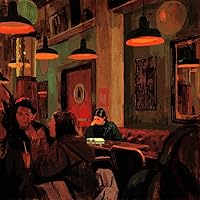
Read
April 28, 2026I've liked this one actually the most out of three novels by him I've read. Maybe I've warmed up to him. Maybe he has mellowed down somewhat in spite of the usual 'rant'. Maybe both. Also having read a few insipid contemporary novels in 'bernhardian' vibe has really helped to appreciate the real thing. It is strange as I find some 'sebaldian' novels much better that Sebald himself.
I think the last scene with the choreography of the actor and his contrast to the main group has made a big difference. Bernhard's dramatic plays should be really special. It was masterful how he managed to integrate 'the chorus' of the background, the main voice (the actor) and small interjections from other characters in that last part.
It was interesting to observe that behaving 'perfomatively' was a phenomenon in Vienna of the 80s, not the prerogative of modern-day millennials. The Viennese Beau monde have not bothered to coin a special word for this. Though Bernhard's characterisation of 'perfidious society masturbators' for this people involved in such an activity might sound little less enigmatic and charitable.
I am still not the biggest fan. But I will read more of his novels and may be move to the 'right' direction.
I think the last scene with the choreography of the actor and his contrast to the main group has made a big difference. Bernhard's dramatic plays should be really special. It was masterful how he managed to integrate 'the chorus' of the background, the main voice (the actor) and small interjections from other characters in that last part.
It was interesting to observe that behaving 'perfomatively' was a phenomenon in Vienna of the 80s, not the prerogative of modern-day millennials. The Viennese Beau monde have not bothered to coin a special word for this. Though Bernhard's characterisation of 'perfidious society masturbators' for this people involved in such an activity might sound little less enigmatic and charitable.
I am still not the biggest fan. But I will read more of his novels and may be move to the 'right' direction.
Displaying 1 - 30 of 1,189 reviews