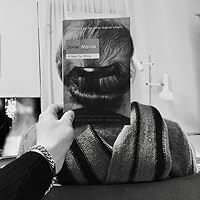
“At once a harrowing mystery, an illuminating psychological novel of subverted love and family dysfunction, and a powerful commentary on class structure in America . . . [Banks is] one of America’s finest contemporary fiction writers.” —Boston Globe
Part love story, part murder mystery, set on the cusp of the Second World War, Russell Banks's sharp-witted and deeply engaging novel raises dangerous questions about class, politics, art, love, and madness—and explores what happens when two powerful personalities, trapped at opposite ends of a social divide, begin to break the rules.
Vanessa Cole is a stunningly beautiful and wild heiress. Twice-married, she has been scandalously linked to rich and famous men. On the night of July 4, 1936, inside her family’s remote Adirondack Mountain enclave known as the Reserve, Vanessa will lose her father to a heart attack—and meet Jordan Groves, a seductively carefree local artist. Jordan is easy prey for Vanessa’s electrifying charm. But when Vanessa becomes unhinged by her father’s unexpected death, she begins to spin out of control, manipulating and destroying the lives of all who cross her path.
Moving from the secluded beauty of the Adirondacks to war-torn Spain and fascist Germany, and filled with characters that pierce the heart, The Reserve is a clever, incisive, and passionately romantic novel of suspense and drama.
Russell Banks was a member of the International Parliament of Writers and a member of the American Academy of Arts and Letters. His work has been translated into twenty languages and has received numerous international prizes and awards. He has written fiction, and more recently, non-fiction, with Dreaming up America. His main works include the novels Continental Drift, Rule of the Bone, Cloudsplitter, The Sweet Hereafter, and Affliction. The latter two novels were each made into feature films in 1997.
For having those flappers & decade-roarers in full glamour and splendor, The Reserve inhabits a similar geography and time as American classic The Great Gatsby. It also flips the conventions of Romance: what begins in slight 1900's post Victorian provocative mode, that is, a surplus of clandestine feelings about enigmatic (rich!) characters by other mortals (including the reader him/herself!), ends with a thrilling surprise, as romance morphs into thriller.
The place is electric with extravagance and affluence, the intentions of the inhabitants of the Reserve are cloudy, immoral, mentally ill.
I abandoned this book around p. 50, shortly after Jordan Groves held his would-be-lover’s hand “tightly, but carefully, as if her hand were a small, captured bird, terrified and fragile, struggling to escape his powerful grip without injuring itself.”
Oy vey, people!
As far as I could tell from the preceding pages, this was going to be the story of a vain, fragile asshole falling in love/lust with a vain, arrogant asshole. I understand that the story eventually becomes a kind of murder mystery/war story, and I couldn’t help but wish that one, or both, of these assholes would die right away.
Take character 2, Jordan Groves, who considers his wife’s idea of giving their home a name a pretentious notion, but has no problem naming his dogs “Dayga and Gogan, after two of his favorite artists, Degas and Gauguin” !!! (exclamation points mine). Or naming his sons Wolf and Bear “after animals he admired.” Talk about taking pretension to a higher sphere.
I really like Russell Banks so I was very disappointed. I did skip to the end to check it out, and it seems the melodrama didn’t abate much, and both assholes were still around, so no regrets here.
When I heard last week that Russell Banks had died I knew it was time to experience at least one of his books. I had two on my shelves. The Reserve and Continental Drift (Drift was nominated for a Pultizer in 1986 and is probably his best known novel). I had tried Continental Drift once before and had set it down--can't remember why. The Reserve was shorter and seemed a better starting place. Also found it on audio by a narrator I really enjoy, Tom Stechschulte
A friends drama that progresses quite slowly, more character driven with a meandering plot for the first 200 pages. Once the back ground is set and the small group of important characters fleshed out, it starts getting good. Much patience is called for but the writing is quite good and while the story seemed a little cliche and almost veered into a soap opera at times I found it quite enjoyable.
In the story we meet a small family that summers on a Reserve or area of wilderness in the Adirondacks. Into this group of Dr and Mrs Cole and grown daughter Vanessa comes Jordon, a local renown artist. Vanessa still young and beautiful and already twice married and divorced becomes immediately intrigued with Jordon and is soon angling to seduce him, though he is married and seems to have little interest initially.
In the early pages Dr. Cole unexpectedly dies which sets off a series of events. It was a bit of a wild ride at times. For a novel that opens so slowly it develops some surprising twists and turns. Not all the answers are given and there is a mysterious second timeline. How it all comes together is quite clever at least for this reader as I saw so little of it coming. An excellent read for me. A solid 4 star and I will be certain to pick up my other Banks book soon.
This could have been a superb read. Unfortunately the experience was undermined by a structure that did not work. Banks uses a dual narrative technique which is confusing to say the least. It amazes me how often publishing house editors appear to be asleep on the job. Maybe big name authors are too arrogant to be approached, I’ve no idea. In any even a technique which was so obviously flawed disrupts the flow of what otherwise was a promising work. The Reserve is strong on atmosphere and illuminating about privileged lives and class tensions in pre Second World War America.
I hoped to ring in the new year with one of my stalwart favorite authors. Anxious to read his new novel "Lost Memory of Skin", I figured I try to fill in the Banks blanks with a few of his more recent works I'd managed to overlook. I'd been of late fixating on Goodreads cume scores, and "The Reserve"'s measly 2.90 might've been why subconsciously I was ignoring this novel's existence: I didn't want to set myself up for disappointment. Alas, the 2.90 doesn't lie. This pseudo-historical skeeze-fest is an Adirondack esker and mountain tarn away from banishment to an upstate New York landfill: a HUGE disappointment. The only reason why I didn't give this dreck 1 star is because very occasionally the old trusty Russell Banks-ian cinematic clarity would shine through the banal skeezery.
There is a reason why Atom Egoyan champed at the bit to adapt Banks' "The Sweet Hereafter". Likewise with Paul Schrader and "Affliction". Despite the dour subject matter of each of these novels, they were tailor-made to make the jump to the big screen: Banks bedaubs his literary canvas with sweeping brushstrokes, and the images indelibly etch in the mind. It seems as though (to chime in with other fellow reviewers on here) Banks' intention with "The Reserve" was to create a 1930s-era melodrama, but in painting the picture forgot the requisite substance to make it at all meaningful, and is left with merely a pretty portrait of the mountains, lakes and forests of the Adirondacks, and a tawdry lovers' quadrangle that only the most desperate of B-movie hacks would deign to translate to the big screen.
A prominent artist, his wife, an Adirondack guide, and an heiress are the adulterers in question; the (ahem) action takes place in and around an exclusive private resort in upstate New York. And that's about it. Throw in a disingenuous (and paper-thin) flash-forward subplot namedropping, among others, authors John Dos Passos and Ernest Hemingway (evidently, skeezers too), and a trans-Atlantic passage on the Hindenberg to cloyingly attempt to make this blecchy stew relevant on some historical level.
(The jacket blurb mentions Mr. Banks' status as "New York State Author". Is this an elected position? Who decides this? After reading this poop, one might ask for a recall election.)
I don't quite know why I wasn't able to give this a more enthusiastic review. The characters are interesting, the plot is inherently dramatic, I like this period of history, you had a dash of Spanish Civil War and the Hindenburg thrown in, there were family and class conflicts.
And yet, for all that, I either never understood these characters well enough or sympathized with them enough to give me that deeply satisfied connection that I look for in a book about dramas of the heart.
The lead character, Jordan Groves, is loosely based on Depression era artist and womanizer Rockwell Kent, who lived near the author's current home in the Adirondacks, where this book is set. He is a self-made man, a pilot who built his home, named his sons after animals, married a former student, and periodically travels abroad to write illustrated travelogues and bed exotic women. The other axis of the story is provided by the wealthy, possibly insane daughter of a noted neurosurgeon and his wife who own a luxurious "cabin" in a private wooded reserve.
When their lives collide, there are disastrous consequences for all, including a killing, an arson, liaisons, breakups and plenty of class conflict to spice the stew. Yet I never really could appreciate what drove Groves or what powered the heiress, and that made the characters curiously hollow, despite thousands of words expended describing their feelings, their views and their verbal exchanges.
This is my first Russell Banks. I know he's an icon, but maybe it's my last?
goodreaders seem to be down on this book, as do editorial reviewers (i've actually checked only the two reviews published on amazon.com, which i assume must be the best). i can see why, but me, i'm not down on it. i've given it three stars because i don't think it's that special, and i don't care for the story much, but it's a good book about something important, and it's beautifully and captivatingly written.
goodreaders seem to be down, in particular, on the language of this book, but it seems to me the language is its one glaring virtue. i have read other russell banks and, though i don't remember them well, i feel innerly certain the language was vastly different; banks says in a little preface (also published on amazon.con) that he wrote this after having reread lots of hemingway, and you can see hemingway all over the organization of the sentences and the feel of the prose. since i love hemingway and the way his language makes me feel, i have no qualms about the book's language. russell banks is a first rate writer and when he sets out to imitate another first rate writer he does it in a first rate way.
like hemingway, banks provides here a visceral sense of the ways in which strong men and nature naturally mesh. the first time i read hemingway it was the nick adams stories and i was enchanted by hemingway's depiction of the natural affinity between men and nature. hemingway and banks make technology (boats, airplanes) part of this meshing and affinity (banks doesn't seem big on cars; maybe hemingway isn't either: boats and planes seem to require a physical mastery that cars do not require).
there is also much fitzgerald here, especially the fitzgerald of tender is the night. some reviewers, and banks himself, claim that this book is about class. and true, the impoverished inhabitants of the small adirondacks towns the surround the reserve get some good play, and the contrast between their plight and the oblivious comfort of the super-wealthy lodgers of the reserve is addressed. but the pleasure of the book doesn't come from this and i think banks might be slightly disingenuous when he says that the impoverished locals are his main interest. this is not about poor mountain people braving the depression. this is about the follies of the wealthy, their crazes, their lusts, their luxuries, golden rum against the hearth's glow, the allure of the successful artist's life, the distant, diamond-hard, predatory, irresistible attraction of beautiful women.
i had no idea, coming into this, that it was about a mentally disturbed young(ish) woman with a history of horrible child abuse and the prospect of forced psychiatric hospitalization in the heydays of lobotomy. how do these books land in my hands? well, i'm grateful. this part of it is the tender is the night bit, and i found it interesting. a lot of female madness is simply thrown in books and movies. this book takes it seriously and addresses it gravely, and i find this a good thing.
the part that bored me were the intertwined love stories, which are the main focus of the novel. love stories bore me silly.
in conclusion, not a spectacular book, but i think it holds its own, especially if, as i said, you like hemingway and those other macho guys who shaped american literature in the first few decades of the 20th century.
I am now (January 2010) listening to this novel on cd. I find it entertaining, a good listen. I had forgotten the story (that says something); and in the year and a half since I read it--my knowledge and experience has expanded. For one, I'm reading "The girls who went away," (2006) a non-fiction account of what happened when girls got pregnant out-of-wedlock (what a strange word--wedlock) prior to Roe v. Wade and the social revolutions of the 1970s'; which happens to be the genesis for all that unfolds in this bizarre tale of "Manly Men," adoption, infidelity, high culture, sexual perversion, child abuse, sexual acting out, and madness. I think my first review is on target. Kudos to me.
Jordan Groves is the hero in this character driven novel set in upstate New York in the 1930's. Sounds a little like Robert Jordan, doesn't it? Wasn't that the protagonist of Hemingway's "For whom the bell tolls" ? This is Russell Banks being Hemingway, me thinks, or trying to. But, during many dialogues, I found myself laughing out loud. Is this written with the intention of being a movie? I found myself asking: What is this? I read it quickly and enjoyed it, but found it very hard to take seriously, although the heroine, Vanessa Cole, was a tragic figure--most likely having a Personality Disorder--brought about by events and behaviors during her birth and childhood. Serious subjects but bad writing? To test my evaluative skills, I read it aloud to friends around a campfire one evening--The consensus: "That's ridiculous." In addition, Banks goes off on scenic descriptions that become tedious. I put this in the category of a summer beach read, or winter ski trip novel.
Who Cares about a bunch of rich people in upstate New York and whether they're cranky or tired? Oh, so you are in the woods! Oh there's a woodsman. That one girl, who got a lobotomy at the end, hey. She was the only one who I could really connect with at the end! I hope anyone who reads this book never talks to me about it.
No, thank you.
Steve Wallant
PS: Russel Banks is one of my favorite guys, but he REALLY missed the bus on this one. And as usual someone had to be made an example of. And I will put up a five-star for Cloudsplitter, and the Book of Jamaica. NOt sure off the top of my head if I ever read anything else by him. Oh yeah, Continental Drift you should TOTALLY check it out. It was kind of like Nick Nolte in Affliction goes to Florida, plus Haiti, Voodoo, Loas! You know, Affliction was money too. I mean just thinking about it gives me a toothache! (Guy had a toothache). So also, he drives those little carts that clear the snow off the sidewalk in the cruel cruel northeast. I never thought about how much that job must SUCK, but now you too can think about it1 IF you read affliction.
This entire review has been hidden because of spoilers.
First, I should say that I was blown away by Cloudsplitter. It was the kind of book where I had to sit silently for an hour or so after I finished it, just to take it all in. So I picked up The Reserve expecting it to be at least average. The kindest word to describe this book is sophomoric. Banks takes an Ayn Rand-ish approach to his two protagonists. Of course, they're ultra-wealthy. They have unspeakable animal charisma, an innate and timeless style, and an effortless physical grace and beauty that is the stuff of legend. And of course, whether it's holding their liquor, brawls, or seduction, they are the absolute best at everything they set their hands to. Add to this some family dysfunction, a few deaths, and an implausible convergence of historical events. The result is a mess that I wouldn't have bothered to finish if I hadn't been stuck on a plane for three and a half hours. Yuck.
I got to the end of the book (last CD of the book) and decided not to finish it. It's described as part love story and part mystery. It's neither. Actually I don't read romance, but I can only imagine this would disappoint. As for a mystery, it completely disappointed.
A book can be miscategorized and still be successful. Not this one.
Russell Banks is turning down the heat. His most recent novels -- released to wide critical and popular acclaim -- were fiery tales of revolution: Cloudsplitter (1998) told the explosive story of abolition terrorist John Brown, and The Darling (2004) raced us through the sprawling horrors of Liberia's modern-day civil war. But with The Reserve Banks has narrowed his scope dramatically, returning to the smaller scale of his earlier fiction, even the compressed time frame of his fine short stories.
The title refers to a private sanctuary in the Adirondacks, a pristine wilderness maintained by a few families so wealthy that the deprivations of the Depression do not affect them at all. Banks provides a sobering description of the sad economic conditions that developed during this time and still prevail in such resort locales. A staff of servants and caretakers live like medieval serfs on the 40,000-acre Reserve, abiding by regulations set down by the summer people to maintain the area's idyllic atmosphere. "They were allowed onto the Reserve and club grounds," Banks writes, "but only to work, and not to fish or hunt or hike on their own. . . . The illusion of wilderness was as important to maintain as the reality."
That tension between illusion and reality is what interests Banks most here. This is primarily a novel about right and wrong, and how class and sex cloud that distinction. He focuses on a man who moves confidently among the haves and the have-nots: Jordan Groves, a left-wing artist who sells his pictures to wealthy collectors, seduces their wives, and pals around with their servants. He's loosely based on Rockwell Kent, the celebrated illustrator and labor advocate who donated a number of his works to the Soviet Union, ran afoul of Sen. McCarthy and eventually appeared on a U.S. postage stamp.
But Jordan is entirely Banks's own invention; The Reserve alludes to historical events, but it isn't built on them the way Cloudsplitter and The Darling are. Instead, Banks has created a small collection of characters from different levels of society and then brought them together for a disastrous encounter in this pastoral setting during the summer of 1936.
The novel opens when Jordan flies his plane to the wilderness palace of a wealthy collector, Dr. Cole, "an internationally renowned, if somewhat controversial, brain surgeon." Dr. Cole's only daughter is a scandalous beauty named Vanessa, 30 years old, already twice divorced. "She was rumored to have had affairs with Ernest Hemingway and Max Ernst and Baron von Blixen," but Jordan's not interested: "Plutocrats," he decides at once. "Leisure-class Republicans. People with inherited wealth and no real education and, except for the doctor, no useful skills." He recognizes Vanessa from the pages of Vanity Fair, but to him "the woman was nothing more than a socialite . . . a parasite." Nonetheless, when she bends down close to his face and whispers, "I won't be happy until you take me for a ride in your airplane," he immediately agrees, a decision that entangles him far more than he realizes.
After Dr. Cole dies from a heart attack later that night, Vanessa appeals to Jordan to give her another ride in his plane so that she can spread her father's ashes over the lake. It's a violation of the Reserve's rules, but such an innocent, harmless one that, again, Jordan can't resist.
Unfortunately, Vanessa is plotting something much more forbidden than spreading her father's ashes -- or sleeping with Jordan Groves, who's married with two boys. Behind her celebrated beauty is the dangerous and unbalanced character of a woman frightened into moral idiocy: "The truth was somewhat transient and changeable" for Vanessa, "one minute here, the next gone. It was something one could assert and a moment later turn around and deny, with no sense of there being any contradiction. Merely a correction."
That expedient attitude is completely alien to Hubert St. Germain, a proud woodsman who also gets dragged into Vanessa's deadly plot. He considers himself a throwback "to men of an earlier era, when the region had not yet been settled by white people -- solitary, self-sufficient hunters and trappers and woodsmen who thought of themselves as living off the land, regardless of who owned title to it." Now, of course, those days are gone. Once a man of "calm good sense and moral clarity," he too falls into a quagmire, "where he could no longer choose between right and wrong." But how different that challenge appears to someone who has no money, no options, no escape from his own sins.
Banks is a genius at showing people slipping into crises that scramble their moral reason, but this story depends on several startling revelations that alter everything we thought we knew about these characters. In some ways, The Reserve is a romantic thriller laboring away in the heavy costume of social realism. It vacillates oddly between aha moments and long passages of subtle analysis. And the novel's complicated political and aesthetic concerns are too quickly upstaged by romantic angst and bedroom shenanigans: e.g., "They made stormy love the entire rest of the night, until dawn broke." Sure.
The scandal that develops is periodically gripping, but what doesn't work is a series of italicized, intercalary chapters that show glimpses of Jordan and Vanessa in the future, serving in the war in Europe. At first, these episodes are so brief and elliptical that they convey no meaning at all, and even when they eventually do come into some focus, they remain unresolved. They're one more incongruous element in this alternately engaging and frustrating novel.
Part love story, part murder mystery, Russell Banks’s The Reserve is as gripping as it is beautifully written, set in a pre-WWII world of class, politics, art, love and madness.Vanessa Cole is a stunningly beautiful and wild heiress, her parents’ adopted only daughter. Twice-married, she has been scandalously linked to rich and famous men. On the night of July 4, 1936, inside the Cole family’s remote Adirondack Mountain enclave, known as the Reserve, Vanessa will lose her father to a heart attack – and meet Jordan Groves, a seductively carefree local artist whose leftist political loyalties to his working class neighbours are undercut by his wealth and his clientele. Jordan is easy prey for Vanessa’s electrifying charm. But the heiress carries a dark family secret. Unhinged by her father’s unexpected death, she begins to spin out of control, manipulating and destroying the lives of all who cross her path.Moving from the secluded beauty of the Adirondacks to war-torn Spain and fascist Germany, filled with characters that pierce the heart, The Reserve is a passionately romantic novel of suspense and drama that adds a new dimension to this acclaimed author’s extraordinary repertoire. ***This is the first book I read by this author and I am happy that I did. I loved the time period and the setting in the Adirondacks. I actually started this book in the morning and finished it by the end of the day. Fell in love with the characters and had to keep turning the pages to see what happened to them on the next page. I love books like that! Rate this 4/5 and will read this author again!
In a way, a disappointment, even though I can't say I didn't enjoy the book. Banks is one of my favorite writers (and the author of one of my all-time favorites, "The Sweet Hereafter"), a writer with a simple style filled with calm authority and devastating conclusions that kind of sneak up on you. This seemed to be an experimental novel in its way--a noir story about a femme fatale up in the NY Adirondacks during the mid 1930's--and is written in a style that I wouldn't have attributed to its author. It's a suspenseful story and a fun read, but I have to admit that at the end, I was left with the feeling of: "Ok...so...?" I'd be interested if anyone knew the "so".
Ok, I'll admit it. Even though I have hardly ever done this before, I quit more than half way and gave up. I have done this less than a handful of times before. Why? I'm getting too old to read sub-par books where the author is describing cardboard characters that I simply have no sympathy for. The whole plot seemed so contrived and unoriginal. Like he was trying way too hard. He writes beautifully, but it wasn't enough to pull me through.
Russell Banks is a good, serious writer, which raises the interesting question of how he could have written a book as disappointing and unpersuasive as his novel, The Reserve.
The Reserve is large tract of forest, lakes, and mountains controlled by very wealthy families who are, by the 1930s , in their third generation of entitlement, living the lodge and golf and fishing life in the heart of the Adirondacks.
Such places exist around the country; sometimes they are whole islands; at other times they are vast private wilderness areas dotted with rustic but elegant second or third homes.
The depiction Banks offers of his cast of Reservists, if I may call them that, reminds me of anthropologist Ashley- Montagu's description of adults as deteriorated children. The key family in this story, from within the Reserve, is the Cole family, whose daughter would be fairly difficult to diagnose. Vanessa is a vamp or a nymphomaniac or a borderline personality or the fragile victim of sexual abuse at age three who, despite her beauty as a woman and her fine sensibility (and on and on), specializes in wrecking her own and other people's lives.
We know this type, unfortunately, and more often encounter it in the movies than in serious novels.
One life Vanessa takes an interest in wrecking belongs to the graphic artist Jordan Groves, who lives on the edge of The Reserve when he is not having adventures in the world's wilds, often documenting these activities not only with woodcuts and drawings but also with suggestive accounts of his liaisons with the local femininity, such as it may be around the Arctic Circle or in the Andes. (Toward the end of the book, when he's in agony over his wife's first and only infidelity , he really has to scamper to list all the ways in which he's confused about the fact that he can screw around but she can't.)_
Groves is a talented artist, perhaps, and an amateur pilot, but also a gross, wife-abusing boor. He has some Hemingway in him, unfortunately, and even claims to know Hemingway. He also is upstate New York's resident Red, if such a thing is meaningful or even imaginable.
Between them Vanessa Cole and Jordan Groves put a hex on her parents, his wife and children, and a handsome widower who serves as an accomplished hunting guide and naive lover to the needy rich.
Well, I didn't like the book, so why go on? Perhaps it's just being perplexed, as I said above, by a good writer gone bad--someone who still can describe the physical world very well, someone who still moves expertly between exposition and dialogue/scene, someone who in earlier books has focused on misfits but done it in an interesting way. The core problem really is the melodrama of it all, the woodsy sniffiness of the Reservists, the tough guy disdain exhibited by the aesthetically gifted Jordan, and so on and so forth. The Reserve as a novel exhibits moments when it seems to reaching for the territory Fitzgerald sketched out in Tender is the Night but many more moments when it is posing for a movie option in Hollywood.
Essentially an experienced writer is exhibiting control here, but he is controlling unworthy subjects and taking them far too seriously. I'm not exaggerating or giving much away when I say that the series of calamities arrayed in The Reserve go from death by heart attack to death by shotgun to lobotomization to death in the brutal skies of the Spanish civil war (on the good guys' side, of course.) And somehow, in a flash forward sequence, the Hindenburg zeppelin floats past, which we know went up in flames, just as (oops, I'm giving something else away) the Cole family's magnificent retreat goes up in flames.
The issue may be this: a writer of Banks' skill, proven elsewhere, can make a creepy crawly kind of tale work…sort of…but it would be better to simply take this strange ensemble right over the top…push it into Poe-land or Lawrence-land or McCarthy-land. Banks avoids the solemn simplifications of the later Hemingway--who began to falter when he really began to try to write about women--yet he fails to realize that he is dealing in caricatures more than characters.
For more of my comments on contemporary fiction, see Tuppence Reviews (Kindle).
This is not the greatest book in the world, and it's definitely melodrama. But the writing is decent and I learned a bit more about the social history of my favorite part of the U.S. (the Adirondacks region), so for me, it was worth the effort.
I really like this passage, on page 99 of the P.S. edition:
"Vanessa was well aware that she had done a terrible, probably irreversible thing. But she had done terrible, irreversible things in the past, and the consequences had not been fatal or even life-threatening. In time they had merely become part of her biography, episodes in the ongoing story of Vanessa Cole, which she later embroidered and elaborated upon, making of it a shifting, regularly revised tale filled with surprises and contradictions that shocked, amused, and perplexed those who heard it. From Vanessa's perspective, this was the desired effect. Since hers was a story of ongoing beginnings, it was the best she could hope for. There were no necessary middles or inevitable endings to her life's story. She wasn't like other people, and she knew it. She hadn't chosen this plight, exactly; it seemed to have been thrust upon her. It was as if her personal and public past and future were not real, as if her past could be constantly altered and her future indefinitely postponed. She was free to start her life over, again and again--daily, if she wished--but by the same token she had no alternative."
Kind of an interesting commentary on what it's like to live a life of privilege, without repercussions. Does it suck? Is it liberating? Hard to tell. Probably a little bit of each.
Call it 2.5 stars. I mean, Russell Banks will always be readable, but this one seems a little ... contrived, I guess, and the crux of the story, the moment at which everything teeters past the point of no return, would be clichéd and obvious in a second-rate movie, let alone a novel by one of America's greatest authors. There's a hint of T.C. Boyle's creeping dread in this story of a philandering artist, his philandering wife, the backwoods guide she loves, and the is-she-or-isn't-she-crazy heiress who ties them all together – and, like Boyle, Banks is a dab hand at seamlessly weaving historical elements into the narrative – but unlike, say, Banks' far superiorThe Darling or Cloudsplitter, the stylistic touches aren't worthy of the story he's telling.
The book jacket describes the novel as part-romance, part-murder mystery, but it's really a good old-fashioned soap opera. Banks gussies it up with references to Hemingway, Dos Passos, the origins of psychotherapy, and Communism, but The Reserve is, at heart, no more compelling or inventive than any given episode of The Young and the Restless. Pretty but empty.
I am embarrassed to say that I read this book but it was the fourth and last book I took on vacation and for the lack of anything else, I read it. I bought it at Barnes and Noble sale table thinking it was a book by Dennis Banks, an American Indian activist, about an Indian reserve. I did not read the cover and learned to not miss that step in the future. Anyway, this book was a love interest book that has no redeeming features, the story is poor, the writing is terrible, a total waste. The surprise is that the author has written a number of other books. How can somebody who write so terribly get published.
The lovely setting of New York's Adirondack Mountains and a few eccentric characters sparked my imagination. During the late 1930s a few super rich families enjoyed the wildness of an exclusive reserve. Interspersed with the tale are a couple of mysterious vignettes representative of a different time period. They are never fully melded to the principle narrative. You, the reader, must eventually connect the dots. A most satisfying proposition.
When I started reading this book, I had no idea where it was going to take me. It totally surprised me. I love Russell Banks' descriptive writing. I could vividly picture the settings in the Adirondacks. This book turned out to be suspenseful and another hard to put down book with interesting characters and plot.
Interesting story of an Adirondack forest reserve in the 1930’s. Very exclusive and private, but filled with rich people’s summer places; and a lodge for the rich but ones that had no ancestors that were part of the beginning of the “reserve”. The family in focus had an alcoholic mother, a father that was a doctor, and a crazy adopted daughter that turned out to be the mother’s out of wedlock baby. It did not end well. An artist with an airplane and a family took part in the end of the family and their “reserve”. Reading the story kept me interested until the end.
I only finished The Reserve so that I could write a scathing review of it on Goodreads (and I'm snowed in), but my plan has backfired. While much of the first 3/4ths of the novel reads like a hee-laar-eeous parody of Hemingway, the last quarter is, thankfully, mightily redeeming. I was on the verge of writing Harper Collins and asking what they'd done with the real Russell Banks in 2008, when this work was published until I reached, quite late in the novel, the pivotal moment that sets its undeniable purpose in motion.
As brilliant as I found the Sweet Hereafter and Affliction were, I wonder if Banks was fully aware of what, in its entirety, The Reserve accomplishes: exposing how flimsy and inauthentic is self-mythologizing, even when the general populace accepts, or even worships, the narrative; how class (and race) stratification fragments our country (and each separate individual's psyche), and how we use our self-and media-created mythologies to quiet others as well as ourselves.
I am a big fan of this writer and have always enjoyed cracking open one of his books. This departs a little from the territory of his finest works (such as "Affliction" and "Continental Drift"), and takes us into the past, although he has done that in other works as well. This contains some melodramatic elements, and references to artists and writers of the 1930s (such as John Dos Passos, who is a friend of one of the characters, but does not actually make an appearance). For the most part, it is an effective period piece, and is superbly written, as one would expect from the man who has been called America's best living, white male writer. It is impossible not to think of Hemingway and Fitzgerald while reading this, although the book is not a homage to either of them.
The story concerns a beautiful, charming, but emotionally disturbed woman, Vanessa Cole, daughter of a leading physician, and occasional resident of the Reserve, a fictional summer colony for the elite in New York State's Adirondack mountains. She crosses paths with Jordan Groves, a Hemingwayesque painter and leftist activist - a man's man, uncompromising, masculine, and egoistic. Groves knows she is trouble, but even as he tries to ruin their relationship before it can go anywhere, he finds himself drawn into her wealthy but troubled world.
Other characters come into play - in particular, Hubert St. Germain, a ladies man and Adirondack guide. There is infidelity, madness, an unlawful detention, bloodshed, and the portrayal of the lives of the privileged few side by side with the rural working class. Banks's writing is more stately than I recall from other works of his - descriptions are lengthy, and the characters' thoughts are often carefully examined. It is not always a convincing presentation - there is something artificial going on - but I found the story interesting and enjoyable overall. I listened to an audio version that was very effectively read by Tom Stechschulte, who gives it a properly serious, north woodsy feel.
The Reserve is hailed as “love story, part murder-mystery, set on the cusp of the second world war” as claimed by the book jacket. I had already read and loved Banks’ Cloudsplitter, so I was eager to read another book by the author. The story opened with the arrogant Jordan Banks, architect, visiting the wealthy Cole family in their Adirondack home. The characters bored me, quite frankly, and the storyline didn’t even give me the slightest interest until page 82, when we find out that Vanessa Cole is a lunatic.
Unfortunately, even that wasn’t enough to save the story for me. And, to make matters worse, the Spanish Civil War and Hindenburg flashbacks didn’t work here at all. They seem thrown in haphazardly in a deliberate attempt to point out contrasts in the characters. Instead, it just seemed like you were watching television and someone changed the channel for a moment. Overall, a disappointing read.
I had heard of Russell Banks, but don't remember reading any of his books. I picked this one up at a used bookstore and really enjoyed it. His writing is just beautiful -- so much so that I frequently re-read sentences & paragraphs just to experience them again.
This is a story that's somewhat reminiscent of The Great Gatsby -- super-wealthy part-time residents of "The Reserve" live a life far different from the locals who are employed as fishing/hunting guides and servants. The focus is on a young woman who may or may not be crazy, a famous artist, and one of the guides. There are several unexpected moments, but it's really the experience of watching how each of these characters interacts with the others and how they react to the events of the story. A beautifully written story. This won't be the last of Banks' books I'll read.