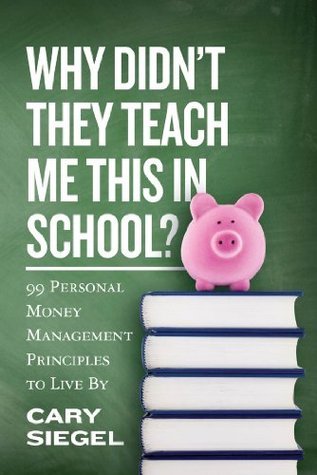
basic but straight to the point and very practical.
Has a lots of "tips" that are, i have to say it, common sense but it's good to hear them again once in a while - especially if you're trying to get out of debt.
That's not my case. But i'm no better : i'm a broke student. While most of my highschool friends are getting a job and going on vacations, while most of my classmates are financially fully looked after by their parents, i have to be really cautious with my expenses so that they fit in my budget, put every single dollar to work and save whatever i can.
When i talk with my peers, i look stingy because i don't have the same lifestyle as them, i feel frustrated also... so when i read this type of books, it gives me a reminder that i'm doing the right thing and that i'm being financially responsible. I know that i can't afford to waste money and i refuse to take a loan to live a lifestyle that i can't pay for in cash.
Anyway, back to the book, there was lot of tips specific to the US (the whole investment part, the one about credit cards,...) and some i know i won't use for a very long time (home investment, car payments,...) but it's good to have heard them at least once now, it'll be useful later.
It felt a bit redundant on some part : the ones about saving, and the ones about not buying random/expensive stuff. I was particularly bored when reading the part about shopping carefully because i never buy on impulse and i very seldom buy high tickets items.
Mostly, i loved tip 13 : develop a written budget and evaluate it every month.
I used to do it when i first moved to uni, but then got lazy.
I had a negative balance earlier this year so I created a new excel sheet (it gave me headaches, cold sweats and took me a week end) but it was worth it. By making minor changes in my habits, i was back within budget and increased my savings.
One tip i never heard anywhere before was the : "live an emergency month every january" where you act as if you have no income, leading to review your priorities. I don't think i'll ever do something like that (mostly because every month is an emergency month for me...) but that's interesting to see what other people do to stay on track.
My top 5 money management habits :
-pay everything in cash or debit. (i'm surprised anything else is even allowed in foreign countries)
-make your budget sheet and check it either bi weekly or monthly (it's hard at first, but then it takes you only a couple of minutes each month to know your financial health).
-shopping isn't a hobby. don't buy stuff to make you feel better. don't buy stuff because you're bored. don't fall for marketing strategies. "deals and bargains" are never in your favor.
-save up. i do 2 types of saving : "long term/emergency" that i keep for later but would spend if there's a sudden, unexpected major problem (health, car, family,...) and "short term/personal use" that i have something in mind for (next vacation, new laptop, car check up,...)
-learn about finance on a micro and a macro level. teach yourself, don't be the puppet of anyone. be knowledgeable, be responsible.