H A Culley’s first historical novel brings the Norman invasion of England to life through the eyes of both Normans and Saxons. In 1057 William the Bastard, Duke of Normandy, is surrounded by enemies on the continent who he must overcome before he can pursue his claim to the English crown. In 1066 Harold Godwinson narrowly defeats a Norse army near York only to find that William has landed in the south.
Even after the Normans have killed Harold and broken the military strength of the Saxons at Senlac Hill near Hastings, William faces another five years of hard campaigning before he can call himself the ruler of all England. Against this setting Hugo de Cuille, heir to a manor in Maine as a boy, is disinherited before being kidnapped and kept as a slave. Later he is knighted for bravery but faces many more trials including the enmity of powerful nobles and rejection by the Saxon girl he loves. The book ends with the horrifying “harrying of the north” and the winter march over the Pennines to capture Chester, the last important town to hold out against the new regime.
About the Author:
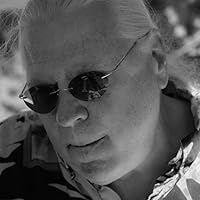
H A Culley served in the Army for twenty four years during which time he had a variety of unusual jobs. These included commanding an Arab unit in the desert for three years and a tour as the military attaché in Beirut in the late seventies. After leaving the Army he became the business manager of a large independent school for twenty years before moving into marketing and fundraising. He has also been involved in two major historical projects and now works for an educational charity.
He has given talks on a wide variety of historical topics for several years and the research involved provided his inspiration for writing.
He has three grown up children and lives near Holy Island in Northumberland, England with his wife and two Bernese Mountain Dogs.
H.A. Culley served in the Army for twenty four years during which time he had a variety of unusual jobs. These included commanding an Arab unit in the desert for three years and a tour as the military attaché in Beirut in the late seventies. After leaving the Army he became the business manager of a large independent school for twenty years before moving into marketing and fundraising. He has also been involved in two major historical projects and now works for an educational charity. He has given talks on historical subjects for several years and the research involved provided his inspiration for writing historical fiction. He has three adult children and lives near Holy Island in Northumberland with his wife and two Bernese Mountain Dogs.
The Bastard's Crown is a novel with definite potential. The research that went into creating this book is evident from beginning to end. The reader is taken through the politics leading up to the Norman invasion and through the conquest of England. The problem is that the author has tried to cover all this in a little over 200 pages, which just was not enough to also develop characters and much of a storyline to go along with the known history.
Most of the story follows Hugo de Cuille, beginning when he is a child in Maine. The Cuille family is displaced by the fight for control of Maine, and Hugo winds up in the Norman forces at Hastings. Since the author had introduced several characters on both sides of the fighting at Hastings, the battle and action leading up to it was told from both sides. I found this a little bit awkward, as was much of the dialog.
Due to the number of characters introduced and the amount of time covered in this rather short novel, it ended up feeling a little bit like a story outline that is waiting to be fleshed out. Some of the characters were not developed enough for me to remember who they were, let alone care about what happened to them. Relationships seemed shallow. I shouldn't have to be told what people's feelings are for each other. I should be able to tell by their interactions. The author seemed a little uncomfortable telling a story from the Norman viewpoint. Each of the Norman characters dealt with seemed to be begrudgingly doing their duty in devastating the Saxons, certainly the Normans could not have all felt that way.
I enjoyed the amount of historical details given, but would have appreciated more depth to Hugo's story and improved dialog. The history is well told, but the writing style is somewhat simplistic, leaving me reading about the Norman Conquest, never transported into it. I also grew weary of the constant use of destrier/courser/palfrey/rouncey - I get it, the guy knows his medieval horses. Sadly, enough grammatical errors exist to be distracting.
Overall, this is a novel that could be wonderful with some editing and development. In it's current form, I just wasn't drawn in and will probably not continue with the series.
I really enjoyed this historical novel, the multi level tale was captivating from start to finish and I can't wait to read the sequels. Highly recommended.
The Bastard's Crown was an unexpected surprise. I had always been interested in William the Conqueror and had thought the whole transition from Anglo-Saxon England to Norman England was rich with possibilities for historical fiction. I expected a good story emphasizing that political struggle. Instead, I was pleasantly surprised with the story of the de Cuille family set against the backdrop of 1066 and Hastings.
In many ways the book reminded me of Pillars of the Earth (fantastic book). The story of William the Conqueror was secondary to the story of Hugo de Cuille and his family. William and the political backdrop only impact the story as it means that the family faces a new challenge - betrayal, recovery, revenge, and more. This is where the book shines - those intimate, familial moments. I found myself caring a great deal for Hugo, and his English counterpart, Oswin.
The book's main draw backs were twofold. First, the author is, perhaps by necessity, prone to recount medieval dynastic disputes in detail. I found these passages a bit tedious. Tedious, but probably necessary. Next, the book tends to bounce around between characters which makes it a bit hard to keep characters, relationships and story-lines straight.
Still, all-in-all, it was a surprisingly good book. I give it three and a half stars, rounded down to three.
I'm 80% done with The Bastard's Crown: The information is good but the development of characters is a bit lacking. There are so many key characters that as soon as the author builds a story for them, s/he moves onto a different character. Add to that the lack of editing (sorry, grammar snob) and a potential 4-5 only gets a 3-star review.
Great book by Culley. Fast paced and interesting, believable characters. Plenty of history brought to life and enough death and destruction without overly dwelling on the sordid detail.
It's complicated because the history of the time was complicated. People appearing and disappearing, changing sides and then changing back and then changing sides again. Action and relationships drive the story on.
The Normal invasion never seemed so alive. Can't wait to read the next ones.
yes, I did like this book very much. I found the story very interesting to read. However, not the fault of the author's, but, the author will get the blame. The book should have been proofed! Thoroughly edited and re-edited then proofed and again. At least once on every page was either a misspelled word, or a word placed wrong, or a double word, or just something wrong.
I looked forward to this book because it covered a period that I had not previously delved into. While it did provide insight into the Norman conquest and the immediate aftermath, I never really became attached to the main characters. I would have preferred it if it had concentrated more on William the Conqueror and what drove him to conquer England, rather than on fictitious characters whose development I felt was somewhat lacking.
Enjoyed this book however was very disappointed with the many grammatical errors in the kindle version of the book such as the word is instead of in or the instead of then and repeated words which detracted from the flow of the story.
The story was a good one but sometimes it just got hung-up and hard to follow. Also whoever proof read the book did a very poor job of it because there was all sorts of typos, words repeated and words left out. Made for a hard read some places.
Battles galore. I enjoyed this book since it covers a great story, but agree with others that character development is a bit weak, which makes me not so interested in continuing with the series.
The way the characters were brought together was cleverly worked. To read how the famous Battle of Hastings was brought about and how both sides possibly fought was enlightening. Looking forward to the next book.