Jump to ratings and reviews
Rate this book

How to Be #1

How to be a Victorian

Rate this book
How to be a Victorian by Ruth Goodman is a radical new approach to history; a journey back in time more personal than anything before. Moving through the rhythm of the day, this astonishing guide illuminates the overlapping worlds of health, sex, fashion, food, school, work and play. Surviving everyday life came down to the gritty details, the small necessities and tricks of living and Ruth will show you how.

456 pages, Kindle Edition

First published March 1, 2013

1413 people are currently reading
20134 people want to read

About the author

Ruth Goodman

14 books693 followers
Ruth Goodman is a social and domestic historian working with museums, theatre, television and educational establishments. She has presented (and consulted on) several highly successful television series including “The Edwardian Farm”, “The Victorian Farm”, “Victorian Farm Christmas” “Tales from the Green Valley” and “The Victorian Pharmacy” (all for primetime BBC Two) as well as presenting a variety of films for The One Show and Coast. “The Victorian Farm” was one of BBC Two’s biggest hits in 2009 and was nominated for a Royal Television Society Award. The book of the series, also called “The Victorian Farm” went to No. 1 in The Sunday Times’s best seller list. These were followed by The Wartime Farm which regularly attracted up to 3 million viewers per week and was also accompanied by a successful book of the same title. In 2013 she presented Tudor Monastery Farm and earlier in the year ‘The Wonder of Dogs’ (BBC 2). She was the Judge on BBC 1’s ’24 Hours in the Past’ and is the historical expert on BBC 2’s “Inside the Factory: How our Favourite Foods are Made (now in its 8th series). Ruth is currently Presenter on Channel 5’s “On the Farm”.

As well as her tv tie-in books, she has published “How to be a Victorian” and “How to be a Tudor” (Pub: Penguin Viking) both critically and commercially successful in the UK and abroad including the US and China. Her most recent books are “How to Behave Badly in Renaissance Britain” was published in 2018 by Michael O’Mara and “The Domestic Revolution – How the introduction of Coal into our homes changed Everything” was published in 2020.

As well as her television work, Ruth offers advisory services, lectures and holds practical workshops around the country. As a social historian she works with a whole range of people, institutions and museums such as The Weald and Downland, The Globe Theatre, Shakespeare’s Birthplace Trust, the National Trust and the heritage and drama departments of several universities.

Her particular interest is the domestic; how we lived our daily lives and why we did the things we did. Also how seemingly little things change the world. Our day to day routines have a huge cumulative effect on the environment; our shopping habits can sway the world’s patterns of trade and how we organise and run our family life sets the political tone of nations.

As Ruth says “We matter. How our ancestors – ordinary men, women and children – solved the nitty gritty problems of everyday life made the world what it is today”.

Ruth’s consultancy work covers media (including assisting make up artists with Elizabethan cosmetics in ‘Shakespeare in Love’, information on personal hygiene practices for Channel 4’s Colonial House), interpretation for museums and heritage sites, designing exhibitions and training staff. Her courses and lectures cover everything from ‘History of Eating’, ‘Victorian Cleaning’, ‘The Cycle of Life’, ‘Babies and Birth’, ‘Medicine – A Consumer’s Guide’ and ‘A Good Death’. Her favoured periods are Tudor, Edwardian, Elizabethan and Victorian.

Ratings & Reviews

What do you think?
Rate this book

Friends & Following

Create a free account to discover what your friends think of this book!

Community Reviews

5 stars
3,310 (43%)
4 stars
3,196 (41%)
3 stars
1,011 (13%)
2 stars
124 (1%)
1 star
35 (<1%)
Displaying 1 - 30 of 1,080 reviews
Profile Image for Nataliya.
982 reviews16k followers
July 30, 2024
History, once you look past the dates and events and all that boring stuff the textbooks love to distill it to, is an incredibly fascinating thing that, no matter how much we want to, we can’t ever experience separately from the filter of our own time. But books like this help cross that divide a little, help show just a bit what your actual life would be like if you found yourself somewhen in the later 2/3rds of the 19th century.

Victorian period in history at the first glance doesn’t seem too obscure — not only is it comparatively close to us in time but there are numerous accounts and contemporary literature (think how many of literary British classics hail from that time period) and even photos, but it’s pretty heavily featured in contemporary culture with the books (historical and fantasy alike) and movies and TV shows set around then. No wonder we *think* we have an idea of what it would be like to live in Victorian times (and often that idea stops right around Austenesque country estates and voluminous crinolines and the hint of an exposed ankle being tantalizing to those prudish snobs) — but the actual experience of daily life at that time as shown in this book at least to me ended up completely fascinating and terrifying.

What Ruth Goodman does excellently is the focus on those little things that constitute everyday life — and a lot of it is that behind-closed-doors we-don’t-talk-about-it women’s lives back then. She knows what she’s talking about - a social historian and historical recreator, she actually spent time living like the Victorians did, making and wearing the clothes, cooking and cleaning and tilling the fields in a corset and the rest of the period garb, making and using hair products and cosmetics, cooking, doing laundry, etc.

There are so many little things that comprise daily life, and understanding those is what can make you begin to see what it was like to actually live back then. How do you get up on time without an alarm clock? (A knocker-upper is the answer). How do you perform your morning ablutions at the wash stand in the freezing room without stepping into the shower? (The stand-up wash is pretty fascinating). How about toothpaste? Or menstrual products? Or combing hair vs washing hair? How do you empty a chamber pot and what does it take for a comfortable privy?

And don’t get me started on the monumental task of laundry. (Have you ever considered that without drains, not only do you have to bring water in, but also that water needs to be removed and not just splashed right of the front door? Me neither.)
“My own historical laundry experiences have led me to see the powered washing machine as one of the great bulwarks of women’s liberation, an invention that can sit alongside contraception and the vote in the direct impact it has had on changing women’s lives.”

How about clothing? It’s not just all crinolines and frock coats. And not all about the corsets (and even if they are not the horror stories they seem to me, the idea of a tiny waist and women’s bodies supposedly unable to function without all that extra core support - a self-fulfilling prophecy as constant corsetting indeed changed the way core muscles would function).
“Every set of accurate period clothing I have ever worn – and there have been a few of them, not just Victorian – has influenced the way I move. Each outfit changes your general posture, whether sitting, standing or walking. It also changes how you do things; each era’s clothes make some movements easy and comfortable and others awkward and unnatural. I find myself using completely different techniques and approaches to do the same job or activity, depending on which type of clothing I am wearing.”

Accustomed to indoors environments set at similar comfortable temperatures regardless of the season, it was almost revelatory for me to see how much effort went into all the layers and fabrics for warmth (and yet at the same time those poor Victorian kids were made to sleep in freezing rooms with open windows in the winter for the health benefits). There was a good reason why all those trousers went up to what seems like chin height, too:
“Victorian trousers, despite many fashion variations over the years, always carried on up towards the ribcage, keeping the lower back covered and warm, no matter how much digging or stooping one had to do in the course of physical labour outside.”
———
“Throughout the period, indoor and outdoor temperatures in Victorian Britain were not so far apart. Most people, including the wealthy, lived in much colder rooms than we do now. The weight and fineness of a twentieth-century wool suit, which is lighter and less substantial, would have been considered suitable only for colonial service in the Victorian mind – something to be worn in the tropics. Which, when you consider that most of us now spend our days in offices and buildings heated to around 18–24ºC, is what we essentially use them for: we now have tropical temperatures in our daily lives. The Victorian office, however, was likely to be around 10ºC, if heated at all, in winter. Many reports exist of the ink freezing in the inkwells of workplaces, as well as schools.”

What’s horrifying to me was how dangerous and difficult it was for all but the richest to merely survived how pervasive hunger was, how little value lives seemed to have, and the absolute horror of child labor.
“Victorian commentators themselves noticed a difference in height among the contemporary population, with many people noting how much smaller, at every age, working-class people were than the upper classes. Several newspaper and magazine articles point to a four-inch height difference between a twelve-year-old Etonian and a twelve-year-old lad from the East End of London. It takes a lot of hunger to do that to people.”
———
“In a vicious cycle of overwork and poverty, one of the main reasons a lad in his later teens could out-earn his father was that a man approaching forty was often too broken down physically to keep up, his own working life, begun at a similarly young age, having worn him out.”


At some point at least the horror of small children working in the mine shafts for hours and hours in darkness, with backbreaking labor, or being crushed in textile mills offended even Victorian sensibilities and hours were limited and schooling was introduced. Although it often was, let’s just say, not quite ideal.
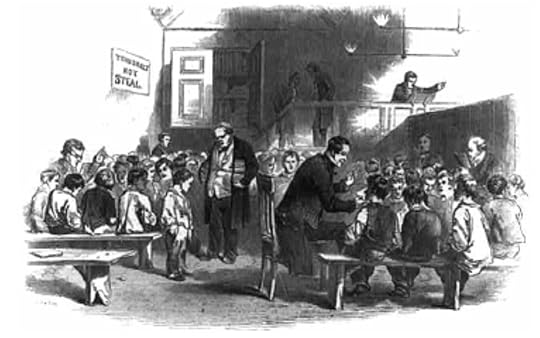
“Worse still, a teacher sent to take up his post at Deptford workhouse discovered that he was replacing two illiterate seamen who had held the position for many years, and had merely endeavoured to keep the children quiet. A similar story emanated from Walcott workhouse in the 1830s, when a visiting clergyman reported being taken into a room where thirty small children stood, a man holding a whip in their midst. There were no slates and no books. ‘Are you the schoolmaster?’ he asked. ‘Yes,’ came the reply. ‘What do you teach the children?’ ‘Nothing.’ ‘How then are they employed?’ ‘They do nothing.’ ‘What then do you do?’ ‘I keep them quiet.’ ”

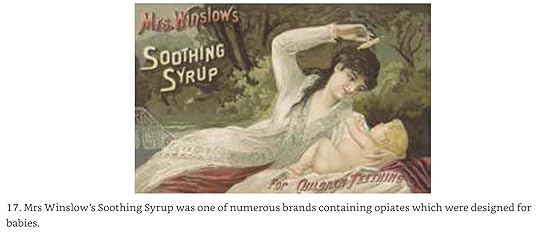
Opium in children’s medicines and treating everything with laxatives (yes, even diarrhea itself) was almost funny in the blackest humor way, and the fear that of girls overexert themselves physically or mentally they will be childless spinsters — all that makes me wonder how much stupid we are doing now thinking we’ve made it far and are better than our Victorian predecessors.

Victorian period was difficult. Unless you were rich (possibly a child of Mr. and Mrs. Darcy) you worked and worked, from when you were a small kid to when your body was ready to give up, for insane hours, barely making ends meet and dying from smog if you were a Londoner. But eventually some rights seeped into the Industrial Revolution bleakness and a modicum of leisure time occasionally popped up, and here we got football and rugby and cricket and boxing, and children playing those games that are familiar to children of now (except for those were played in factory yards between shifts).
“However, for all the popularity of parks, gardening and sporting activities, the leisure pursuit most common among Victorian men, and some women and boys, was drinking.”

Here’s what I have learned — I’m damn lucky to not be born in the Victorian times. I would have not survived.

5 stars.
Profile Image for Petra X.
2,456 reviews35.7k followers
March 20, 2018
See note at end about comments being removed

This is a pre-dawn to fast-asleep story of the day detailing everything from what a poor girl, middle-class lady, working man would have used to wash their faces, through breakfast, work, children, medicine, leisure and so to bed. It is only political in as much as the laws of the day affect daily life, for example, working hours and education. It is perhaps the book that has brought me closest to exactly how a Victorian would have lived and experienced their lives.

The author brings an unusual perspective as she has lived as a Victorian, dressed in clothes she made and working as one as a historian for museums, tv and her own research for books. The most surprising conclusion is the change living such a lifestyle brought to her own tastes:

"Living in a barely heated Victorian house through a whole winter and engaging in the daily physical routine of Victorian domestic and farming life, I found that my appetite and tastes temporarily changed. Foods that I would simply dismiss in my twenty-first-century lifestyle became delicious. I was able to eat with enthusiasm the bread and dripping, the pig’s trotters and the plain suet pastry with a scrape of jam. The notion of Mediterranean food seemed laughable and utterly unappealing. When I thought of more exotic foods, the tastes I imagined seemed thin and insubstantial in the taste buds of my mind; when I thought of roly-poly pudding or a dish of brawn (jellied pig’s head), my mouth watered. My body was telling me in no uncertain terms that it needed plenty of carbohydrates and animal fats to sustain the Victorian lifestyle."

The Victorian attitude towards sex was most peculiar. It was thought men "needed" sex at least four times a week, ideally in marriage and never through masturbation. Therefore the single man would have to employ a prostitute (if not commit adultery, or have an unmarriageable 'bad woman' mistress). But a woman,

"Many people still held to the ancient belief that a woman’s sexuality was latent in girlhood and only ‘awakened’ on her wedding night by her husband. From that moment onwards, her sexual appetite was thought to be lascivious, and greater than that of men. It was in need of firm male control, and it was up to husbands to ensure the carnal discipline of their wife. "

You ever heard such rot in your entire life? How did they come by a belief that was so obviously false? How could experiencing life as women or as men living with thousands of generations of wives, girlfriends and mistresses still have got people believing such an obvious myth? That sort of myth is usually the province of religion where no justification is necessary to belief anything no matter how strange, outlandish and contrary to all evidence.

The book is better than the author's How To Be a Tudor: A Dawn-to-Dusk Guide to Tudor Life and that was a 4* read. I think the difference was she researched Tudor lifestyle, but actually, in as authentic a way as possible, actually lived as a Victorian at different times.
_________________________

Notes on reading

All comments removed when I had inserted the wrong book into the text and attempted to remove it and lost the review, likes, and comments. The comments are important to me, so I went back and have copied them here:

Comments
Profile Image for Beata .
899 reviews1,380 followers
April 3, 2019
Ruth Goodman is an expert. I could even call her a Victorian lady through and through! She is a historian who does more than just write about the period, she actually lived the life of a Victorian woman doing hundreds of menial jobs that we are 9fortunately) spared today. While listening to this invaluable book on all aspects of everyday life under the reign of Queen Victoria, I was overwhelmed by all the details the Authoress covers, the details that are mostly omitted in historical fiction, and often rightly so, as would you like to be informed by the heroine about the laundry details, personal hygiene or her sewing abilities? Naturally, the chores and are often described in novels, but not in such detail. Thanks to Ms Goodman’s informative guide, while reading fiction covering the period, I’ll look differently at the attire, meals, education or entertainment, and all the effort the average Victorians had to put in their daily lives.
Profile Image for Diane.
1,116 reviews3,189 followers
January 14, 2015
This book was fascinating. Ruth Goodman set out to explain what life was like for the Victorians, starting from when they got up in the morning until they went to bed at night. There are chapters on getting dressed, using the privy, personal grooming, exercise, meals, school, work, and even sex.

I'm a nut for British lit, so I was thrilled when I first heard about this book. Goodman has some credibility in this field because she spent months living in re-created Victorian conditions on a farm. Her experience and anecdotes livened up the book, which could get a little dry at times.

I will warn readers that this book is dense with historical details, and it took me a while to get through it. I learned a lot and thought it was interesting, but it was a slow read.

Here are a just few of the things I learned:


That Victorians could hire a "knocker-upper," which was a man with a pocketwatch who carried a long cane so he could tap on the windowpanes of his clients, which allowed workers to wake up on time and be punctual.

That women who wore cosmetics were considered to be unhealthy and unmodern, because Florence Nightingale had talked of how blocking pores would cause a long, slow poisoning through the skin. Also, wearing makeup made women feel deceitful, and others would say they lacked honesty.

That Victorians often ate a fried breakfast because it was the easiest way to cook early in the morning. A typical range would take a while to heat up, so any heavy baking had to wait until the afternoon, when the oven would be hot enough.

That drug abuse was widespread among Victorian babies. Their daily food was often accompanied by a dose of medicine, and these soothing syrups often left infants drowsy and addicted.


This book also reminded me about all of the things we take for granted today. For example, because cloth was expensive, even having the means to make a rug out of rags was a luxury. Victorian homes were much colder, so having a rug on the floor would have been a small comfort.

I think what I liked best about the book was how the information gave me context in understanding other things I've read and watched about that period. The details of why women wore what they wore, why they ate what they ate, and just why they acted in such a way. If I were a historian or writing something about the Victorian age, I would keep this book handy as a reference because it gave such a good overview of daily life.

Favorite Quotes
"Exercise for girls was a much more worrying subject. A girl's developing body was thought to be easily upset and at risk of permanent damage if involved in even the lightest of energetic pursuits. It was feared she could be left unable to fulfill her primary function in life: the bearing of children. This was a long-standing, traditional belief fueled by the Ancient Greek theory that the womb was mobile within the torso. Despite nineteenth-century anatomical studies, which definitively informed the early Victorian doctor that the womb was, in fact, firmly anchored by a series of ligaments, medical opinion was still concerned about undue movement ... Most parents firmly believed that allowing their daughters to jump out of trees or to cartwheel in the street was unforgivable and irresponsible parenting; they would be failing to secure their daughter's long-term health."

"Parents were also required to be vigilant about a girl's reading material. Sensationalist or romantic literature, such as Emily Bronte's Wuthering Heights, was likely to cause emotional turmoil and overstimulation of sexual feelings. Even the novels of Jane Austen worried some parents. Girls who read novels were widely believed to reach physical maturity more quickly than their less adventurous reading sisters. An early or rapid passage through puberty was thought to be detrimental to one's health and a strain on one's morals."

[After explaining the arduous process for washing clothes and linens] "My own historical laundry experiences have led me to see the powered washing machine as one of the great bulwarks of women's liberation, an invention that can sit alongside contraception and the vote in the direct impact it has had on changing women's lives."

[on Victorian schools] "Punctuality and obedience were highly desired and valued traits, partly because the ability to follow instructions accurately and the self-control to handle boredom and repetitive exercises were thought to produce good factory workers. If many schools felt like a factory, especially towards the end of the century, it was deliberate. School was meant to be a training ground for life: a rigid hierarchy with strict rules and regulations. Instant submission to those in authority was required of everyone, from maidservant to office worker. The direct and physical lessons that corporal punishment in schools taught those who strayed even an iota from the rules was thought to be valuable preparation for the real world."

"Sewing was almost like breathing: one of the most ubiquitous and necessary of skills. It was taught at all levels of society: at home, by family members and governesses; and at schools and colleges, by professors and tutors. An aristocratic girl may not have needed to sew her own underwear, but she was often proficient. She would also have been required to be adept at some of the more decorative and sophisticated branches of needlework. To be unable to sew was unthinkable — comparable to being unable to use a phone in the twenty-first century."

"This opportunity to be useful, and the intense personal one-to-one tuition and time spent with a mother or sister, could be a source of enormous pleasure for many young girls. Sewing was not an enforced or oppressive regime but often quite the opposite: a quiet and intimate break in an otherwise busy day when a mother could bestow all her attention upon her daughter and the two of them could tell stories and talk as they worked."

"Cookery books filled an important role not only in reminding a young woman of all that she had ever been taught and expanding her repertoire of recipes but also in giving her reassurance that she was not entirely alone; a cookery writer was always there to help. One of the reasons Mrs. Beeton's recipe collection proved so popular over so many years may well have been her willingness to provide richly detailed instructions about the very simplest of recipes."
Profile Image for Caroline.
558 reviews718 followers
March 21, 2021
This is fascinating book about life in Victorian Britain, covering a wide range of topics. Goodman writes very well and the book is both educating and entertaining. I almost settled on giving it 3 stars, due to one great drawback..... A lot of the book is devoted to clothing and related subjects, and given my interest I found this boring. I ended up skim-reading a lot of those sections. In the end though I decided to give the book 5 stars. I enjoyed the non-clothing sections so much. The areas discussed are quite disparate....and below I mention some of the items that I found particularly absorbing.

From invalid baths to swimming pools:

Baths emerged slowly into our lives, at first the were prescribed by doctors for medical conditions "There were baths for skin problems, baths for liver and digestion difficulties, baths for rheumatism, and any number of bathing regimes for nervous disorders", and baths would be hired. In the 1850s, they would be hired from portable bath companies. Often the company would also supply hot water, "carried in by men wearing slippers so not as to disturb the invalid." This renting out of baths morphed into the creation of public baths, where people could go to take a bath. Later this began to include the option of swimming in a swimming pool.

Leisure:

In the 1870s men were offered 10 hour workings days, and Saturday afternoons off - something already given to women and children in the cotton mills. It now became a generalized practise that everyone had Saturday afternoons and Sundays off work. To everyone's surprise, profits didn't drop. It also meant that recreational sports began to flourish. For men horse racing, boxing, cricket, football, rugby and swimming. For women there were callisthenics, walking, archery and croquet. In the 1870's lawn tennis began to replace croquet. (This was aided by the vulcanization of rubber in 1839, which let the balls bounce, and the invention of the lawnmower in 1827. ) Cricket had already become associated with the upper class, so many men turned instead to football, which was still class-neutral. By the beginning of the 20th century, football and cricket were flourishing as spectator sports.

At the beginning of the 20th century sport was also put on the agenda in schools. The impetus for this was surprising - it was the onset of the Boer War. The nation was shocked by the appalling levels of unfitness in the young working class men who volunteered in 1899, with only two out of every nine being judged fit for combat.

Gardening:

The 1830s to 1850s were the heyday of florist's societies: groups of mainly urban working-class men who grew competition-quality blooms. Flowers became their passion. By the 1850s, the middle and upper classes were also discovering the joys of gardening. Women and clergymen especially became keenly involved for the first time.

Exams and education:

Nationally recognized written examinations began not with schools but with the Navy in the eighteenth century. They were a resounding success The idea of a meritocracy spread. Exams became a requirement for joining the Indian Civil Service, then a requirement for becoming an army officer, and the idea spread. For instance no longer could anyone casually open a pharmacy - you had to become a qualified pharmacist to enter the profession, and university students leaving college had to sit exams. People with greater application and intelligence started to have more success.

Education became more important, and people began to experiment with various organisations to promote teaching. Throughout the schools the discipline was strict, and there was little thought of sparing the rod. Education was soon desired not only to push an individual towards personal success in life, but for the economic development of the nation.

Drugs:

There were an awful number of drugs swilling around in Victorian society - cocaine, morphine, chloroform, heroin and cannabis - most of which could be bought over the counter in a chemist, usually via patented medicines and tonics. Florence Nightingale and Elizabeth Barrett Browning were said the be addicted to laudanum, and even Arthur Canon Doyle had his hero Sherlock Holmes dependent on opium and heroin. It's difficult to gage exactly how many people died from using these drugs, as their use wasn't given as the cause of death.

Health:

Many people's health was extremely poor, "the chances of long-term malnutrition and of body-deforming dietary deficiencies in Victorian Britain were as bad as any we have ever known. " In spite of the leaps into modernity that so many organisations experienced, there were many individuals with appalling health problems. Laxatives and purging were used to great excess, often on children. " One of the major underlying feelings about health in the Victorian era was that the body could heal itself only if the poisons, waste matter and noxious substances of disease could be quickly drawn out of the body." Babies that couldn't be breast fed were for a long time fed grossly inadequate substitutes, nor were bottles sterilized. They were also given tonics that contained drugs, and these often meant the babies wouldn't feed properly. "One commentator at the time believed that as many as a third of all the deaths of infants in industrial Manchester were because of drugs." Rickets and scurvy were common. Initially commercial baby foods consisted of crushed up biscuits, to which water was added. "A starchy diet allowed babies to put on weight, but without the fatty acids, proteins, vitamins and minerals present in breast milk, bones did not form properly, nor brains develop as they should."

Clothes:

Goodman writes at length about the clothes that people wore, changes in fashion, and how they looked after them. Her interest was surely sparked in part by the experiences she had when taking part in the television series where three historians actually spent several months living and working in a re-creation of a Victorian farm. Goodman was one of them. As a result she is able to do some of her writing on this subject from first hand knowledge. A quirk that interested me was that apparently servants were given cast-offs, and this acted as a spur for people to try and wear fashionable clothing. Unfashionable clothing meant you looked like a servant.

London Fog:

The pea-soup fogs of London were notorious, mostly due to the large number of coal fires. "....the effects were life-threatening. London sits in a natural basin, and the weather can act as an atmospheric lid, trapping the air and smoke of the city in place. Unable to dissipate, the air gets thicker and thicker, the pollutants more and more concentrated........" People couldn't see their hand if they held it up in front of them. "Delivery men had to use a boy, who walked along the kerb with one hand on the horse and one foot – invisible to him – knocking against the kerb at each step. When they got to a junction, the pair would slow to a crawl as the boy felt his way across and tried to find the kerb on the other side." The toxicity affected everything "Whenever the air was damp or it rained, the water combined with the pollutants, creating a range of noxious compounds, including sulphuric acid. Other pollutants were simply washed out of the air, falling on to the plants and the soil, as well as on the people. This toxic cocktail could be withstood by only a handful of the hardiest species. London gardening was about finding the species which could survive. Plane trees and rhododendrons." Unsurprisingly, respiratory problems were common.

All in all I enjoyed most of this book enormously. I just wish Goodman could have reined in her passion for clothes, perhaps saving it for a book specifically on this subject.
Profile Image for Geevee.
449 reviews338 followers
October 1, 2017
I grew up in a late-Victorian terraced house. This house had wooden sash windows, tiled porch and kitchen floors, a slate roof with terracotta finials and two chimneys with terracotta pots that lead down to six fireplaces.

That house when I was a very young boy also had a coal bunker, an outside toilet, a wrought iron front gate (no railings as they'd been cut and taken away during WWII), a small front garden with fuscias all edged with dark glazed earthenware edgers. We found bottles with marbles (early way to seal drinks) and other glass in blue, green and brown as well as Victorian blue and white china in the garden. The hot water was supplied by a coal fired boiler in the kitchen and a Park-ray coal fire in the lounge/sitting room. The back garden led to a small footpath dividing one set of terraced houses to the next. That cindered footpath lead to an alleyway that divided other houses, where at both ends stood corner shops that behind them had stores and old buildings that would have kept animals, grain and the like in years gone by.

These roads were in a Victorian town with Victorian churches and graves and memorials, parks and flower beds and houses - terrace after terrace and also many grand detached small estate homes (many already gone and many following to make way for modern semi-detached estates in their place) - and vacant old stonemasons, factories, potteries and brickyards alongside farms and meadows. Populating these houses, especially the terraces, were men and women; my neighbours who were late Victorian and Edwardian boys and girls, some had been young soldiers of WWI.

Although my parents installed over the years double glazing, central heating, knocked the front-room (parlour) into one room with the dining room and converted the outside toilet into part of the kitchen, I felt and still feel connected to Victorian Britain through all of this: I lived in their houses, walked their streets, played on or in their old workplaces, saw their graves and tombs, and saw how they shaped some of their and my world.

Ruth Goodman's excellent book puts huge detail and meaning in what it meant to be and live as a Victorian. From early-morning ablutions to fashion; to feeding babies and wearing clothes; to menstruation and adulterated food; prostitution and medicines and much much more.

In the house I lived the outside toilet is a modern novelty or horror but it was a mains water-fed luxury away from communal toilets or earthen pits for the folk who moved in to them in the 1890s. The coal boiler was a pain to light each day but we had a gas oven, electricity, a twin-tub washer and fridge - the Victorians in Ruth Goodman's book do not and so heating, lighting, cooking, washing and storing food was hard work and a constant struggle with dirt, dust, damp and darkness making life harder. Finding money to fill the larder and coal bunker (or rather get a few lumps of coal) was a constant struggle.

I was born in a hospital with access to national health service GPs (doctors) and chemists and education with school milk and dinners. The Victorians, unless one was middle/upper class did not have these and even if they did knowledge of diseases and illnesses and their treatment was far from the understanding we have today.

Luckily for me too our coal ash went to make the alleyway a bit less bumpy with fewer puddles; not like the Victorians who used the ash for medical remedies or adulterated food (brick dust in cocoa anyone?).

My town was in Southern England and surrounded by hills and farms. Yet in Ruth Goodman's book I discover my southern ancestors ate less well and earnt fewer pounds, shillings and pence (mostly pence) than a miner. Miners for all the danger and hard worked earned better wages and so could afford better food (although still a struggle and not Michelin starred food by any means either). Bread was the staple of the south - poor nutritional value white-floured bread whereas mining communities ate potatoes so gained more carbs and nutrients.

Child labour - a terrible stain on the Victorian era; until one recognises the struggle for food, money and heat. Industrialisation killed the wages of cottagers across traditional industries meaning children needed to work to help; and in turn people moved to towns to get better wages and more regular or even some employment; that in turn saw the machine age crave increased hours and more people to feed production that the world's largest empire required; including more children, women and men living near and working in or around the factories.

The book is a great read and bolstered by Ruth Goodman's own experience as one of Britain's most knowledgeable and experienced experts in this area. She has lived and worked on Victorian farms for months, or sewn and worn their clothes including working in the fields, and has baked and washed in kitchens and sculleries (for example you can watch Vicorian Farm on YouTube).

If I'd read it in my parents' old house I'd easily have felt I could see and hear the mothers, fathers and children as they dressed for work, ate, cooked, washed their clothes and argued, prayed and slept.

It is this combination of excellent story-telling, riveting subject-matter with personal research and strong source material and first-person accounts that makes this book so good.


Profile Image for Lori  Keeton.
682 reviews200 followers
January 8, 2021
Have you ever been curious about how different your life would be if you’d lived in the 1800’s during Queen Victoria’s 60 year reign? Ruth Goodman has experienced much of the cultural differences by living the lifestyle and learning many of the ways of life. In her book, How to Be a Victorian, she presents a thorough and very in-depth account of Victorian life in a “dawn-to-dusk guide” for the ever curious modern day nostalgist. Goodman demonstrates everything from a typical morning routine, to include meals, dressing, grooming, exercise, and getting to the privy from the perspective of servants to the wealthy aristocrat and the laborers and middle class workers. She has lived in Victorian communities in an effort to research her topic and worn corsets, cooked on the ovens and experienced laundry day. To say that she is an expert on the life of a Victorian would be accurate.

The details with which Goodman writes enables the reader to experience through her words what a day could have been like. As I sat in my loungewear leaned back on my couch in comfort and warmth with my modern plumbing just a few steps away, I became very grateful to not have had to be burdened with so many layers of clothes and such frigid temps inside the house. I would have had to be made of tougher stuff to have lived in those conditions. Corsets as the norm during this period were only taken off for about an hour a week just to wash!

"A neat, corseted figure was, ultimately, what society expected of a woman. Wearing one meant that she was daily proving to herself, and to her neighbors, that she had standards and, more importantly, self-respect. An uncorseted woman was thought to lack self-control and would have faced public disapproval and crude assumptions about her lifestyle. Only those who were prepared to be social outcasts went without."

My, my, how far we have come, and quite thankfully. However, Goodman did comment that she didn’t ever experience discomfort while corseted and that her daughter wanted to wear one, excited by the idea. Her experiences proved that the Victorian lifestyle could be adjusted to and that one could be clean and presentable utilizing their methods without all of our modern amenities.

I was definitely intrigued by the majority of topics presented. Goodman talks about clothing (for all sexes, stages of life and station of life), hats, food, going to the privy (outside and away from the home prior to indoor plumbing), medicine and addiction, school for children and the differences in girls and boys’ educations, fears of exercise for girls, bathing and how community baths were what created the leisure swimming pool, sports and the advent of spectators at rugby and football, and even sex. I said this was a thorough account.

Some of the information was surprising to our modern minds. Such as, an ounce of laudanum for only a penny! And that laudanum was put into the baby’s food just to keep them quiet. Needless to say, addiction was common and especially if you became ill as opiates were liberally dosed. Teenage girls were advised to never run up and down stairs or engage in strenuous activity (other than walking) that might upset their wombs. And even such wild ideas as "sex with a woman was held to be the perfect cure for a range of male health problems. Men who suffered from depression, restlessness, apathy, great fatigue and headaches were all at times diagnosed as suffering from a lack of intercourse." Doctors actually prescribed relations with a woman whether a wife, prostitute or mistress. WOW! Other shocking ideas involved the lack of freedom of suspected prostitutes. I won’t go into details, just to say that what was happening would never fly today.

If you are at all interested in learning about the life of the Victorian people of all walks of life, you’ll learn quite a bit if you pick this up. I’ll guarantee you’ll be grateful for your modern amenities and luxuries when you finish!
Profile Image for Jo .
928 reviews
June 10, 2021
Ruth Goodman is amazing. I will read or watch anything that she appears in. I've been a fan since I watched her wonderful, in-depth documentary of her living on a makeshift Victorian farm, along with a couple of other presenters. She lived like a Victorian would, and she went to great lengths to show her viewers a peek of what life may have been like.

This book is just as good. It gets a little heavy at times, especially in the clothing section, but that's great if you're interests lie in what the people wore during that period. This is well written, and highly informative, and quite honestly, I enjoyed every chapter.

Goodman feeds our curiosity with how a person living in that period might go about their daily routine, from the moment their feet hit the cold floor in the morning, to the moment they retire to bed for the night, and their sexual ventures, or the dipping of the bread, as I like to call it. It's all here, and I definitely have particular chapters that tickled my fancy more than others.

The corset. It always fascinates me how those women could wear one, day in, day out. I know one gets used to things, to a degree, but a hard boned piece of clothing around my torso is not something I could accept willingly. I've wore a corset maybe twice, and on both occasions, I was relieved to rip it off. Interestingly enough, according to a doctor in Victorian times, a corset was to be worn by a woman in order for her to be able to support her "delicate organs." And yes, I eye rolled at this revelation. Several times, in fact.

Victorian health. The majority of people suffered from poor health and malnutrition, and spent the most part of their lives hungry, hardly ever being satisfied. Children did not receive an adequate amount of vitamins, so in turn, this lead to many cases of scurvy and rickets.

Condoms were made from sheep guts. Apparently, once they were used, they were rinsed out and left to dry, ready for the time the man demands it. Yes, the MAN demands it. According to Goodman, it was the man's perogative to decide when he wanted sex, be it day or night, his woman had to be ready and willing. The woman was only let off if she was with child or menstruating.

Masturbation. We all know men did it back then. but for women, it was a taboo subject, and in some ways, it still is. Yes, it's true. Women can and do orgasm.

I enjoyed how Goodman included important topics like child labour and drug abuse, too. It didn't feel like just a list of information from a text book. Plus, there some photographs included, which added to the overall interest of the book.

I've since added three other Goodman books to my list which I can't wait to get to!
Profile Image for Tristram Shandy.
873 reviews265 followers
May 11, 2014
Little Nell Never Brushed Her Teeth, and No-One in Barchester Ever Changed Their Underwear

Okay, most likely they did. However, Dickens and Trollope did not find it worth their while to record it, for which we may, after all, feel grateful since Little Nell’s dental hygiene or excursions on Bishop Proudie’s linen would not have carried on the respective plot very much.

And yet who has not asked themselves at least once in a while how people in the Victorian era started their day, how they washed themselves, what they wore, what medicine they took, what childcare was like and many other questions pertaining to people’s everyday life at that time? In her fascinating book How to Be a Victorian Ruth Goodman gives a very detailed account of the minutiae of daily life in the Victorian era. She structures her overview of Victorian chores and pleasures by following a typical daily routine, i.e. her first chapter covers everything people did when they got up in the morning and her last chapter sees them to bed and also gives an account of Victorians’ sexual mores. Goodman is very well aware of the differences between social classes and of changes from the early Victorian period to the latter days of that era, and she is not only content with listing and commenting on daily routines but she also paints a picture of the important issues of the time – like, for instance, child labour, the problem of hunger, schooling, or the dangers of medical treatment. Even George Costanza would like that book as it has a little sub-chapter on toilet-paper as well.

So – for example – we learn that Victorians usually slept with their windows open for fear of suffocation, that they still believed in the miasma theory although by and by scientific progress opened their eyes to the nature of infections, that early condoms were made from sheep guts, that milk was usually adulterated with water and dyed with chalk in big cities, and many other things. Goodman knows what she is talking about since she has not only studied various sources but also actually tried Victorian dress, Victorian make-up and Victorian work and can tell us a lot about her personal experience with these things. Her style is generally extremely sober and inornate because she seems to know that the facts she presents are interesting in themselves.

The only major aspect I found missing in her book is religion but then there is a plethora of information on what is usually taken for granted by Victorian writers and what, consequently, they never bother to explain. Therefore, I think this book indispensable to all those who love reading Dickens, Trollope, George Eliot, the Brontës and all the other great writers of the Victorian era because it will provide them with a deeper understanding of the texture of that time. It also helps against starry-eyed romanticism à la “Things used to be much better in ye olden days” in that it shows the hardships people had to face and the little free-time they usually had. What I found most appalling was that malnutrition and hunger were an everyday issue to many people even in the midst of the 19th century, and not only in connection with the Irish Potato Famine, which is probably a household topic to anyone remotely familiar with the 19th century. Another gross fact I did not know about were the Contagious Diseases Acts of 1864, 1866 and 1869, which allowed the forcible examination of any woman believed to be a prostitute.

So, Ms. Goodman, in case you might be reading this: Chapeau and thank you very much for this wonderful book!
Profile Image for nettebuecherkiste.
677 reviews175 followers
April 5, 2018
Was fasziniert uns so an den Jahren 1837 bis 1901, den Jahren der Herrschaft von Viktoria I. im Vereinigten Königreich? Niemand, der sich für England und seine Kultur interessiert, kommt an dieser Epoche vorbei. Ich persönlich muss feststellen, dass ich viel mehr über Großbritannien während dieser Zeit weiß als über Deutschland im gleichen Zeitraum. Wie kommt das? Vielleicht liegt es daran, dass Großbritannien, das damalige Britische Weltreich, unter Viktoria auf dem Höhepunkt seines Einflusses war, untrennbar verbunden mit dem Imperialismus und dem exotischen Flair der Kolonien. Vielleicht bietet aber auch die Tatsache Diskussionsstoff, dass der Kontrast zwischen Arm und Reich während der industriellen Revolution deutlicher wurde als je zuvor: fantastischer Reichtum und dekadenter Lebensstil der Oberklasse, entsetzliche Arbeitsbedingungen und Hunger am unteren Ende der Gesellschaft. Gleichzeitig ist es das Zeitalter der großen Literaten: Charles Dickens, Elizabeth Gaskell, Thomas Hardy, Anthony Trollope, die Bronte-Schwestern, das Viktorianische Zeitalter hat uns einige der wunderbarsten Werke der Literatur geschenkt, einer Literatur, die sich nicht auf das Leben der oberen Zehntausend konzentrierte, sondern vielmehr begann, die sozialen Strukturen ihres Landes infrage zu stellen.

Geschichte und Geschichtsforschung bedeutet heute nicht mehr nur Beschäftigung mit der Politik eines Landes in einem bestimmten Zeitraum und das Auswendiglernen von Daten. Vor allem im populärwissenschaftlichen Bereich befasst man sich inzwischen viel mehr damit, wie das tatsächliche Alltagsleben von Menschen verschiedener gesellschaftlicher Ebenen aussah. Erfolgreiche Fernsehformate wie „Schwarzwaldhaus 1902“ belegen dies. Auch die Autorin des vorwiegenden Buchs, Ruth Goodman, war Teilnehmerin mehrerer solcher TV-Reihen der BBC, die das Leben beispielsweise auf einem viktorianischen Bauernhof nachstellten.

Die Historikerin wurde so zur Expertin für das Alltagsleben der Menschen in Großbritannien in vergangenen Zeiten. In „How to be a Victorian“ schildert sie detailliert, wie ein Tag im Leben der Menschen verschiedener Schichten aussah, und zwar chronologisch, vom Frühstück bis zum Zubettgehen. Dabei deckt sie alle möglichen Lebensbereiche ab: Kleidung, Hygiene, Sport, Mahlzeiten, Arbeit und Schule, Freizeit (für die unteren Schichten freilich kaum vorhanden) und Sexualität. Sie räumt dabei mit so manchem Vorurteil auf, etwa dass man bei Menschen aus der Vergangenheit grundsätzlich die Nase über mangelnde Körperpflege rümpfen müsste: Es gab funktionierende Alternativen zum Waschen mit Wasser, wie wir es heute kennen. Der Löser stößt auf Überraschendes, etwa den vergessenen Beruf des Aufweckers, der morgens von Haus zu Haus ging, um seine Kunden rechtzeitig vor Arbeitsbeginn zu wecken (einen mechanischen Wecker konnten sich die wenigsten leisten!) Diesen Beruf gab es bis in das 20. Jahrhundert hinein. Ein wenig kurz kommt das Thema Religion – der Tag, von dem die Autorin ausgeht, ist nun mal nicht der Sonntag.

Viele Lebens- und Arbeitsbedingungen lassen uns heute erschaudern: 10 Grad Raumtemperatur im Winter, einseitige Ernährung, Krankheiten, eine schrecklich lange Wochenarbeitszeit, Kinderarbeit. Trotzdem gab es Raum für Dinge wie Sport und Spiel, die Ruth Goodall in ihrem Buch keineswegs vernachlässigt.

„How to be a Victorian“ ist ein unterhaltsames und informatives Geschichtsbuch, das allen Spaß machen wird, die sich für das Leben der einfachen Menschen interessieren. Rundum gelungen.
Profile Image for Kristina .
1,047 reviews917 followers
June 11, 2024
Informative, exhaustive and *mostly* interesting

The whimsical cover and title kind of mislead you with this book a bit. While it’s extremely informative and very dense, it’s often dry and lacks much in the way of personality. Very textbook like but still quite readable. It has good parts and I learned a lot, but books like this are why I don’t read non-fiction often.
No doubt this author is incredibly knowledgeable and this is a great reference manual for Victorian day to day life, but expect to only be able to read it in short bursts and set it down for long periods of time.
Glad I read it, I am very informed on the life and times, but yee gads! I need to read something fun now.
Profile Image for A.E. Chandler.
Author 5 books250 followers
April 13, 2021
This book sits horizontally on top of the others on its shelf, because I take it down to reference so often. It’s a great combination of history and experimental archaeology, resulting in an intimate and accurate portrait of everyday Victorian life, and it’s a very engaging read.
Profile Image for Jill H..
1,634 reviews100 followers
October 17, 2017
I learned something very important when I read this book......I don't want to be a Victorian! To provide background for the book, the author lived a year following the Victorian way of life, so she knows of what she writes and she does it with great detail and humor. She only touches briefly on the upper class life-style and concentrates on the middle and lower classes of Britain. These families didn't have the means to employ servants, so the rigors of the day-to-day maintenance of the home was solely the responsibility of the wife and daughters.

The book begins with rising in the morning and follows the routine of the day in which the wife's duties could take up to 14 hours, especially on Mondays which was laundry day; additionally, there were always several children to care for. To say it was a tough life is putting it mildly. The author covers everything from emptying slop jars, cooking on rudimentary stoves, sewing and repairing clothes to house cleaning. To make things even more difficult was the type of clothing that all classes wore. There were at least 4 layers of underclothing including the infamous corset before outer clothing was donned. Imagine scrubbing the floors clad in that manner!! She also concentrates on the types of food that were prepared, personal hygiene, and medicines used to treat the multitude of illnesses that were prevalent during the Victorian age.

An interesting and informative guide to a time when life was harder than the modern reader can imagine. Well done.


Profile Image for Axl Oswaldo.
414 reviews257 followers
January 11, 2023
2023/02

I know, it took me almost two years to finish up How to Be a Victorian, I know it is a lot, but I finally made it, and my first goal this year was literally to read the last chapters of this book—almost 5 chapters—and complete this 'task' before picking up a new one.
It won't be a surprise to say that I was never in the mood to read this book: on the one hand, you can learn a lot of the Victorian era by reading it, from the moment people wake up in the morning until the end of the day, when they go to sleep—school, meals, work, leisure, relationships, customs, everything is well depicted in this book. On the other hand, it is quite repetitive, it follows the same pattern so that you can clearly understand what's going on in every chapter, however, at some point this 'formula' turns the book into an overwhelming, boring experience. Not only did I feel that the author was digressing a little from the core topic in every chapter, but I also noticed that the book itself is not that deep, that you can find some of these topics even in the classics, in Victorian novels to be more specific. I'm not saying that the book is not worth reading, but that it is nonetheless superfluous if you have read a lot of Victorian literature. I have, unfortunately—is it really an unfortunate situation?—so this book wasn't that interesting for me in the end.

I would recommend How to Be a Victorian to anyone who wants to know the way people used to live during the Victorian age, but who are not familiar with it whatsoever. If you are into Victorian classics a lot, but you haven't read so many, go for it now, tomorrow might be too late.

My rating on a scale of 1 to 5:*

Quality of writing [3/5]
Pace [3/5]
Plot development [N/A]
Characters [N/A]
Enjoyability [3.5/5]
Insightfulness [3/5]
Easy of reading [4/5]
Photos/Illustrations [3.5/5]

Total [20/6] = 3.33

* This is going to be the way I'm going to rate my reads in 2023, so I hope it pays off.
Profile Image for Kasia.
268 reviews40 followers
November 11, 2022
How to be delighted.

I would never expect that descriptions of daily routine from over a century ago can be so interesting. Mundane everyday tasks like brushing your teeth or preparing breakfast were so radically different from what we are doing right now it is almost like reading about a foreign culture. Yet, a strange feeling of familiarity did not leave me even for a second. In the end a lot of inventions and knowledge that was starting to form in Victorian era is obvious for us and took for granted. XIX century was a difficult time that bore the conveniences of our present day.

What makes this book very readable its the fact that it keeps perfect balance - its equally heartbreaking (famine, child labor, poor living conditions, widespread abuse etc) and uplifting (public education, improvement of medicine, electricity, improving the quality of life etc). If you want to know why invention of the washing machine was as important to feminism as contraception or why public laundry places were precursors of swimming pools then pick up this book. You wont be disappointed.

4 stars only because I prefer my historical books to be on the drier side. I would also love to have a bibliography that consists of something more than a list of magazines and diaries/letters.

Finally I feel like this book is perfect for people that usually feel intimidated by non-fiction - it's light, engaging and contains hilarious passages describing how author of this book tried out different Victorian solution (like washing yourself without water or working in a field in stays). Give it a try!
Profile Image for Emma.
2,677 reviews1,083 followers
September 10, 2020
This was excellent: accessible, well researched, fascinating. It covers all aspects of Victorian life and is written by what I think is called and experimental historian’ who has spent a lot of time living as a Victorian, using all the same methods and ingredients as were used in the period.
Profile Image for Susanna - Censored by GoodReads.
547 reviews700 followers
August 17, 2017
Every bit as good as her guide to the Tudor age. And a refresher course on why not all regulations are bad. Some prevent things like six-year-olds being hired as coal miners, or opium being sold as a gentle herbal supplement for babies, to provide Victorian examples.
32 reviews2 followers
April 14, 2025
This book details the life in Victorian England, mostly focused on the life of ordinary people. I have realised how hard life was for most people at that time, as the upper and middle classes were just a very small minority. I was also shocked by how some of the aspects of Victorian society were closer to today’s society than I had imagined. During my reading, I could not help but compare the life of the Victorians to the life of my own ancestors, those who lived in Qing China. While I do not know the details of the Qing society, I have some idea about it, especially regarding the extremely restrictive life of females. In Victorian England, there were schools available for girls from wealthier families, and there were sports for girls to play. The media had heavy influence on the changing trends in the era, and topics ranging from contraception to housework were all openly discussed and debated. All these details were fascinating to read and I was impressed by the fact that the author actually managed to experience some of the aspects of Victorian life herself.
However, the fact that English is not my first language limited my ability to understand the content. On many occasions, I have found it very difficult to understand, especially when the author mentioned the details of how something was made of. For this reason, this book was a bit boring for me.
Profile Image for Emma Deplores Goodreads Censorship.
1,413 reviews1,995 followers
June 18, 2024
This turned out to be excellent. A readable, engaging and well-researched work of 19th century British social history, by an author who also engages in extensive reenactment and so has tried these things (the clothes, the grooming, the food, the work) herself, reporting back with some fascinating findings.

The organization did cause me doubt early on: it’s loosely structured by time of day (beginning with getting up and talking about heating of homes, moving on to dressing where we talk about clothes, then going to work and talking about transportation and workplace safety...), which means the entire first 150 pages are devoting to clothing, grooming and hygiene. While Goodman’s in-depth research and personal experiments keep these sections alive, they nonetheless exceeded my interest and made me wonder how anyone not a historical novelist or reenactor could have stuck with it! Happily, when we finally arrive at breakfast, Goodman pivots to discussing the extensive hunger in the Victorian world, and from there on out it’s a broader social history. Kept my attention and I learned a lot, despite having read a decent amount about the period already.

Some interesting tidbits:

- Victorian homes just weren’t heated much—even by the wealthy, unless someone was sick. Workplaces and schools weren’t either, explaining stories like ink freezing in inkwells.

- This is perhaps related to the Victorian obsession with ventilation. They not only believed smelly miasmas caused disease, they also thought closed rooms would give you carbon dioxide poisoning—so you’d better sleep with those windows open, even in winter. This fascinates me—first because, amusingly, I can’t actually explain why we don’t all asphyxiate at night, and second because it’s such a great example of how societies adopt bugbears and refuse to be reasoned out of them (a modern American equivalent might be obsessive supervision of children due to overwrought kidnapping fears. Victorian reformers thought about poor families sleeping together in closed rooms the way some people today think about children playing unsupervised).

- At any rate, based on the author’s experience, heavy Victorian clothing and carb-heavy, relatively unseasoned Victorian food both make a lot more sense when you’re doing manual labor in a mostly-unheated home during an English winter. And you can in fact do said manual labor in a corset as long as you don’t lace it too tightly, as fashionable young women were wont to do.

- Most Victorians, however did not have enough food, and for most people it was monotonous (southern English laborers might eat nothing but bread and beer day after day. The temperance movement then got the beer replaced with tea, which lacks beer’s nutritional value). Workhouse and prison rations were actually below the necessary for survival, causing people to slowly waste away. But even children from upper-class families didn’t always get enough, as hunger was thought to improve moral character, especially in girls.

- Food adulteration was a common problem, especially among staples bought by the poor: for instance, milk might be watered down and colored with chalk. Between toxic adulterants and completely unbalanced diets (including for babies) it’s hard to see how anyone survived—skeletal remains show malnutrition to be a major problem.

- Medicine could be toxic or dangerous too, and this was the era of giving opium to babies to keep them quiet. Goodman posits that a baby of the era was best off born to an lower-middle-class or upper-working-class family: well-off enough that the mother didn’t have to work, but not so wealthy that she was delegating child care (likely to a poor young girl), and with enough money for food but not enough to indulge much in medications.

- The period was also the height of non-home-based child labor, as children as young as 7 or 8 could be employed full-time in factories or mines. It was bad enough that the Victorians did finally start to regulate this (ultimately also arriving at some regulation of adult labor too—at least by the end of the period they had Saturday afternoons). Of course, part of the problem was that all this hard labor as a child caused people’s bodies to give out early, so by the time the kids were old enough (by Victorian standards) to work, their father might be failing.

- On a less depressing note, some Victorian hygiene and grooming practices are surprisingly similar to today’s (cold cream + powder = foundation, more or less), while others are surprisingly different. It actually is true that they mostly didn’t bathe—though they founded some public bathing facilities, these began mostly as laundry facilities and turned into recreational swimming pools—but they certainly washed: standing up in their bedrooms with a basin, soap and towel, washing just one part of the body at a time, was a standard morning ritual. The author recommends this as an eco-friendly way of staying clean and notes that even just dry toweling can keep body odor down surprisingly well.

- Girls’ education focused more on sewing than any other single subject, but rather than dismissing this as a travesty, Goodman delves into the extraordinary knowledge and skills the average woman had in this era—even better than many professionals today. Patterns in magazines offered almost no instruction, with the assumption that their readers could look at a picture and figure it all out, as indeed they could.

At any rate, this is a strong choice for those interested in social history and the day-to-day realities of a different time. My only other complaint is the lack of citations, though the author often does make her sources clear in the text. In the end, while especially recommended for the historical novelists and reenactors among you, the book has plenty to offer the average armchair historian too. A good complement to Inside the Victorian Home—that one focuses exclusively on the middle class, while this one does a strong job relating the lives of the lower classes as well. I’d love to see books of this caliber focusing on other countries too.
Profile Image for S7.
84 reviews
July 4, 2018
A mostly fascinating read of all the big and little activities of daily life in Victorian times, arranged from pre-dawn to bed-time, as experienced by all classes and both sexes. From getting out of bed and morning ablutions, to making and wearing clothes and cosmetics, to doing the laundry, to buying, cooking and serving food, and drugging your babies and children so they don’t require as much attention (the Victorian version of iPad baby-sitting!). Even school, sport / leisure and sex is covered. The author’s research is excellent, explaining not just what they did but why. She also reports on her own experience of putting Victorian practice into use, e.g. wearing corsets while doing housework.

It is a long read and can be very detailed at times, though - if you start to lose interest, I recommend you skim past to get to the next juicy topic that takes your fancy.
Profile Image for Negin.
773 reviews147 followers
December 18, 2016
This book was interesting, but certainly not riveting as I had hoped it would be. After a certain point, the amount of detail made it rather tedious. I ended up skimming those parts a bit. The author tried out many of the practices that she talks about – corsets, methods of transport, cooking, and so on. The worst part for me, and what I personally think was far too excessive, was the fact that she did not wash with water for four months! Sorry, but that’s plain out disgusting in my eyes. Four months?! Come on! Other than that, the book is thoroughly researched and would be of great interest to those who are love Victorian history.
Profile Image for Sylvester (Taking a break in 2023).
2,041 reviews87 followers
June 8, 2015
What makes this different from other historical books of the period is - Ruth! Ruth has worn the clothes, made the clothes, done the washing, cooked the food. There is nothing like experience and enthusiasm, and Ruth has both. I could go on and on. I've watched "Victorian Farm", "Edwardian Farm" and all the other farms and pharmacies, so yes, I already loved Ruth when I read this, but she is more than just a corker, she's a professional. There so many things in this book I had no inkling of. Like how public swimming pools started. Or, for me the most impressive, just exactly how much sewing was the center of life for most women - I mean, an incredible focus and knowledge and skill. You really have to read this book if you like Victorian anything. Oh, and go on Pinterest and check out Victorian clothing - that was all hand-made by ordinary people. I made an apron once. I could NOT be a Victorian.
Profile Image for Kara.
Author 27 books95 followers
October 9, 2023
I already knew that Victorian life had plenty of downsides – but this book left me convinced 120% that I would want NO part of that time period.

The book’s chapters are arranged around the tasks of a typical day – wake up, eat breakfast, get dressed, go to work, etc. Each chapter shows how the middle and lower classes of the time period would have performed these tasks, with lots of primary sources cited, and both individuals and averages cited.

An excellent read – the kind of history book that leaves you wincing in sympathy and immensely grateful to be living in the 21st century.
Profile Image for Katie Lumsden.
Author 3 books3,770 followers
April 17, 2016
A fascinating, well-told and detailed account of everyday life in the Victorian period - one of my favourite non-fiction books to date!
Profile Image for Amanda .
923 reviews13 followers
February 12, 2020
This book was everything I hoped Unmentionable: The Victorian Lady's Guide to Sex, Marriage, and Manners would be but failed to be. Whereas Unmentionable was low on facts with almost total reliance on "humor," this book was a comprehensive look at life in Victorian England and ten times better. I appreciated the author’s detail to every detail of life, both for the poor and working class families as well as for the middle class and upper class. I also appreciated the author’s anecdotes from her personal life living and working as a Victorian. That was a unique perspective.

Learning about the chronic hunger and cold most citizens faced made me so sad for people in Victorian England. "As Britain continued to industrialize, people were willing to endure almost anything, including sickness and early death, in order to eat more."

Best line in the book: "Drug abuse was widespread among Victorian babies."

Goodman was very careful not to impose her own biases on the reader. I appreciated one of her side comments about the place of women in Victorian England, though and how mainstream "experts" viewed women. "My own historical laundry experiences have led me to see the powered washing machine as one of the great bulwarks of women’s liberation, an invention that can sit alongside contraception and the vote in the direct impact it has had on changing women’s lives."

"Hysteria was a common diagnosis for a range of symptoms. Later, at the beginning of the twentieth century, these symptoms would be referred to as ‘nervous complaints’; in the 1930s and 1940s, they would come together to be known as a ‘mental breakdown’; and in the twenty-first century, they would likely be termed ‘depression’."

The one thing I didn’t like was the section on sports, which I couldn't have cared less about. Overall, this was a thorough and compelling read.
Profile Image for Victorian Spirit.
291 reviews756 followers
May 24, 2021
Libro de no ficción que, siguiendo la estructura de una jornada prototípica, repasa cómo era la vida de las personas en la época victoriana, desde que se despertaban hasta que se acostaban. Es una colección de anécdotas y datos curiosos bien hilvanados y presentados de una manera bastante amena. Lo más interesante es la aproximación a la Historia que hace esta autora, ya que ella experimenta muchas de las cuestiones que describe: desde la ropa, los remedios caseros de higiene, las herramientas de trabajo o de cocina… etc, con lo cual, en muchos casos no depende de otras fuentes para documentarse sino que aporta su propia opinión y experiencias personales.
Si te gusta la época y te genera curiosidad, te interesará, sobre todo porque abarca aspectos tan triviales que difícilmente encontrarás en un Dickens o un Trollope, y que sirven para rellenar lagunas de conocimiento sobre este periodo, ayudándote además a desarrollar cierta capacidad crítica sobre las adaptaciones y su verosimilitud.

RESEÑA COMPLETA: https://www.youtube.com/watch?v=cLAvM...
Profile Image for Pamela Shropshire.
1,453 reviews72 followers
July 28, 2017
"Fascinating" seems to be a common descriptor in the reviews on the book and for good reason. Ms. Goodman takes her reader through the steps of an ordinary day for ordinary people during the Victorian era. She particularly emphasizes what life was like for working-class people, citing extant letters and journals from the period.

For example:

Hannah Cullwick fitted her morning wash in just before she cooked the family breakfast, often making use of the kitchen facilities. 'Wash'd me at the sink and laid the cloth for our breakfast,' she recorded on 11 August 1863. But most stand-up washes happened in the bedroom, for all the utensils would be ready and waiting. All a person needed was a bowl, a slop pail, a flannel, some soap and a single jugful of hot water brought up from the kitchen.
She goes on to describe exactly how to accomplish such a complete wash, without compromising one's modesty in the presence of a roommate.

In addition to quoting 19th century individuals, Ms. Goodman reports her own experiences in living a Victorian lifestyle. Like the section on laundry:

To both my pleasure and discomfort, I have had much experience of Victorian laundry in my career and can vouch for just how much hard work it is. A day thus spent is exhausting, and it is no surprise that so many women from the period mentioned in their diaries tempers fraying on wash day. . . In my own encounters, I did not mind the steam that filled the kitchen like a fog, but the constant change of temperature, from working inside with the hot pans to being outside in the cold moving water around, was almost unbearable.


There are chapters on grooming, exercise, breakfast, the midday meal, the evening meal, leisure activities, the bedroom (sexual attitudes) and others, covering the practices of all social classes. She describes a factory worker's dinner consisting of a boiled potato and tea without milk or sugar, as well as the sumptuous family dinner served a la francaise in an upper middle class barrister's townhouse.

Sewing, sport, gardening, prostitutes, hair pieces, school exams - a full range, in fact, of Victorian life. If you have even the tiniest bit of curiosity about the past, you should read this book.
Profile Image for Mela.
2,000 reviews265 followers
June 23, 2023
this is the allure of history; the desire to piece together the evidence, to hunt down the clues and to measure the facts and opinions

Ruth Goodman painted the fascinating (and often horrible) world of people who lived in the Victorian era (in the UK). I learned much. And I will appreciate more from now on well-researched historical fiction taking place in XIX century England. Such books are a must-read for any fan of historical fiction. I read such non-fiction from time to time and I am always in awe of how much I still don't know/understand, etc.

Some visions will stay with me for a long long time...

it was only the more solid waste that was hauled away by the night-soil men; the rest would leach into the soil. Basement dwellers were known to find it oozing in through their walls

Some ladies at this point rubbed a very small amount of hand cream into their nails, but others felt that they got much better results if they rubbed them against their own scalp for a few seconds, using the natural oils of the head to condition them

Some facts deserved a book or a movie (even a TV series) like the history of Thomas Ernest Boulton and Frederick William Park.

Although I admit, I have read it in parts, between other books (it was hard to read it whole without breaks), the book was definitely worth reading. Of course, one must remember that it described only parts of everyday-life history.

[4.5 stars]
Displaying 1 - 30 of 1,080 reviews

Can't find what you're looking for?

Get help and learn more about the design.