An ex-con struggles to adjust to life outside prison walls in "one of the great crime novels of the past 30 years" (James Ellroy). After eight years spent locked up, Max has gotten very good at being a prisoner. He knows the guards, the inmates, and how to survive. But the parole board has decided that he has sufficiently reformed, and it's time for him to say goodbye. When Max reaches the outside world, he finds that freedom doesn't make anything easier.
Based on his own experiences in prison, Edward Bunker first drafted No Beast So Fierce in the 1950s, while incarcerated in San Quentin State Prison. He spent the next two decades in and out of jail, writing essays for various magazines and working on the novel, which was finally published in 1973. Eighteen months later, the book was used as evidence that he was fit to leave jail. He received parole, and spent the rest of his life a free man.
Rooted in real-life experiences and hailed by Quentin Tarantino—who cast Bunker in his film Reservoir Dogs—as "the best first person crime novel I have ever read," No Beast So Fierce is a gritty and compelling read like no other.
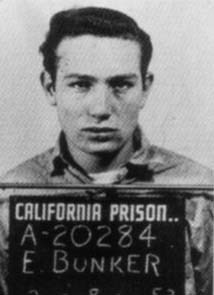
Edward Heward Bunker was an American author of crime fiction, a screenwriter, and an actor. He wrote numerous books, some of which have been adapted into films. Bunker was a bright but troublesome child, who spent much of his childhood in different foster homes and institutions. He started on a criminal career at a very early age, and continued on this path throughout the years, returning to prison again and again. He was convicted of bank robbery, drug dealing, extortion, armed robbery, and forgery. A repeating pattern of convictions, paroles, releases and escapes, further crimes and new convictions continued until he was released yet again from prison in 1975, at which point he finally left his criminal days permanently behind and became a writer. Bunker stayed out of jail thereafter, and instead focused on his career as a writer and actor.
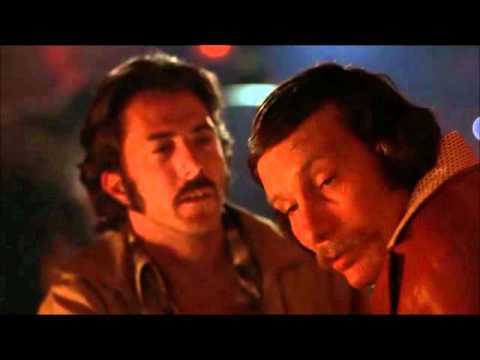
Edward Bunker/Mr Blue accanto a Michael Madsen/Mr Blonde all’inizio del capolavoro di Tarantino “Reservoir Dogs - Le iene”, 1992.
Credo che Bunker in vita abbia rispettato una sola regola: scrivi solo quello che conosci. Le altre regole? Le ha infrante tutte. Il primo romanzo è la sua vita. Gli antenati paterni sono francesi e Bunker è la forma anglicizzata del cognome Bon Coeur, il che sembra ben più che amaramente ironico considerato il corso della sua vita.
Edward nasce a Hollywood, e non sembra un caso. Camminava ancora a quattro zampe quando ebbe il suo primo contatto con le divise blu: mamma e papà erano alcolizzati e si picchiavano spesso e volentieri ma non molto allegramente, perciò i vicini chiamavano la polizia, per farli smettere di urlare. I genitori si separano presto e il bambino Edward (6 anni) finisce in una casa famiglia. Ma scappa.
Bunker con Dustin Hoffman in “Straight Time – Vigilato speciale” di Ulu Grosbard, 1978. È il film tratto da questo suo romanzo d’esordio, ed è il suo debutto come attore.
Fino a 15 anni la strada è la sua scuola: si alterna tra orfanotrofi, collegi militari, rifugi per senza tetto, perfino un ospedale psichiatrico, e poi l’approdo in riformatorio. Perché, chiaramente, per la sopravvivenza i furti erano pratica quotidiana. A 17 anni diventa una star: è il detenuto più giovane della storia del famigerato carcere di San Quentin. In prigione sembra aver trovato il suo milieu: se non altro, qui, sa subito come comportarsi, e sopravvivere. Ed è proprio in cella che scopre la macchina da scrivere e inizia a raccontare le sue storie sulla carta.
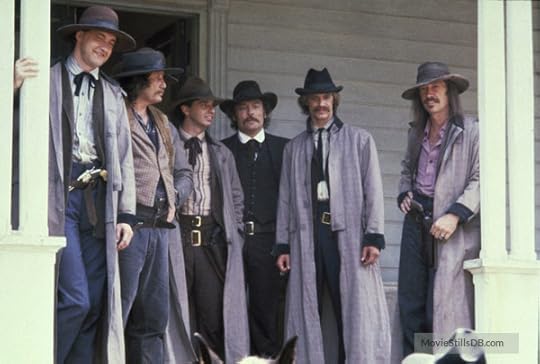
”The Long Riders – I cavalieri dalle lunghe ombre” di Walter Hill, 1980. Da sinistra a destra: Randy Quaid, Edward Bunker, Robert Carradine, Stacy Keach, Keith Carradine, David Carradine. È la seconda partecipazione attoriale di Bunker.
Esce da San Quentin dopo cinque anni per buona condotta: adesso ne ha 22 e per la prossima dozzina d’anni abbondante continuerà a entrare e uscire di galera, per motivi vari, rapina, truffa, spaccio, finché nel 1972 (Edward ne ha 39 a questo punto), la polizia lo arresta mentre sta per rapinare una banca. Si becca altri cinque anni di detenzione.
Per la cronaca a San Quentin conosce Danny Trejo che poi diventerà attore. È ancora in cella quando, nel 1973, riesce a far pubblicare il suo primo romanzo, proprio questo, No Beast So Fierce – Come una bestia feroce. Dustin Hoffman opziona i diritti cinematografici: e i soldi dell’opzione serviranno a Edward per evitare di tornare al furto quando uscirà con la condizionale nel 1975.
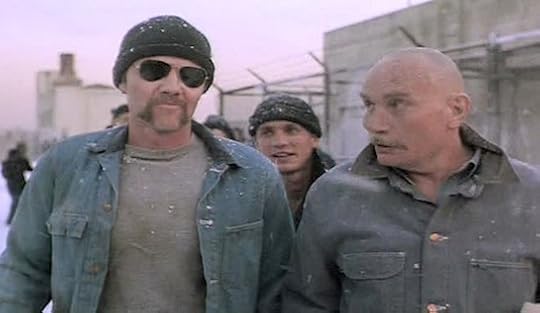
Con Jon Voight ed Eric Roberts, il fratello di Julia, che inspiegabilmente Goffredo Fofi considera un bravo attore, in “Runaway Train – A trenta secondi dalla fine” di Andrey Konchalowskiy, 1985.
Nel 1977 esce il secondo romanzo, Animal Factory, e Bunker è ormai uno sceneggiatore, consulente cinematografico, attore di piccoli ruoli (a cominciare da Straight Time – Vigilato Speciale, il film tratto dal suo romanzo d’esordio, con Hoffman nel ruolo del protagonista, e Ulu Grosbard alla regia. 1978. Muore nel 2005 prima di compiere 72 anni. Ce lo ricordiamo probabilmente per il brillante inizio del primo film di Quentin Tarantino, forse il suo migliore (se non è questo, è il seguente, Pulp Fiction), Reservoir Dogs – Le iene: seduto al tavolo del diner, Bunker è Mr Blue, che si arrabbia con Steve Buscemi/Mr Pink perché non vuole lasciare la mancia.
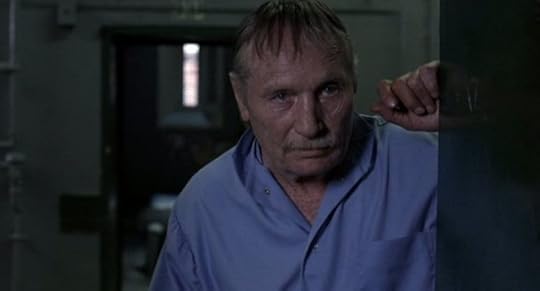
Edward Bunker in “Animal Factory” di Steve Buscemi, 2000. Bunker scrisse romanzo e sceneggiatura.
Non serve che Bunker ce lo dica nelle interviste, si sente che in lui è forte l’influenza di Dostoevskij, si percepisce con chiarezza. E dunque, cosa potrebbe raccontare il romanzo d’esordio di un soggetto umano di questo tipo? Mi pare ovvio che si muova intorno al mondo della prigione e del furto, dentro e fuori. Così è, ovviamente.
Max Dembo esce di prigione dopo otto anni per furto. Ci prova, cerca di rigare dritto, di rifarsi una vita, un lavoro, un tetto e un letto, dei soldi, magari una ragazza. Ma forse Max vuole assaporare la libertà con troppa intensità – o forse Max vuole vivere invece di sopravvivere – oppure, forse, Max è sfortunato – forse ancora Max è nato sbagliato. Com’è o come non è, Max non si adatta, non riesce a far parte del mondo dei ‘buoni’: il crimine, il furto in particolare, rimane la sua strada. Questo romanzo è un manuale di rapina. Gli unici amici, gli unici capaci di darti una mano, e di trattarti col rispetto umano che tutti meritiamo, sono quelli come te. E siccome sono come te, anche loro delinquono, e possono lasciarti per strada sul più bello (che pertanto diventa il più brutto). Max ha la sua deontologia: non ruba nelle case perché potrebbe portare via qualcosa che ha anche un valore affettivo per il proprietario.
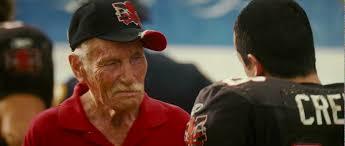
”The Longest Yard – L’altra sporca ultima meta” di Peter Segal, 2005. Edward Bunker e, di spalle, Adam Sandler.
Il film: è eccellente come e più del romanzo. Hoffman è perfetto e convincente nel ruolo: incredibile la forza, anche fisica e violenta, che riesce a esprimere con quella sua stazza ridotta, semplicemente con lo sguardo. La regia è efficace, senza orpelli. Forse Theresa Russell è un po’ fuori parte (è comunque un piacere vederla in azione), ma Gary Busey, Harry Dean Stanton ed Emmet Walsh regalano partecipazioni grandiose. Mi pare un tipico esempio del cinema americano di quell’epoca, la cosiddetta New Hollywood: Max/Dustin prima di tutto è un ribelle, uno che va contro le regole perché sono regole decise da altri, altri che non sono come lui, regole che non vanno bene per lui. E quindi, il percorso di Max non è solo quello di un disadattato, di un criminale incallito nato sul lato sbagliato della strada: Max delinque per cercare la sua libertà. Alla fine quando si separa da Jenny/ Theresa, l’auto che guida si allontana per la strada che procede diritta e sembra non finire mai, che cosa pensiamo? Max ha capito che non ha chance? Si sta forse andando a cercare un arresto perché si è infine convinto che il suo mondo è la prigione? O invece, magari, sta davvero fuggendo? Da dove fugge lo sappiamo, verso cosa possiamo solo immaginarlo: libertà, direi io.
Bunker scrive come se stesse eseguendo un’autopsia: freddo, spietato, accurato, scientifico. Grandioso.
”I was going to war with society, or perhaps I would only be renewing it. Now there were no misgivings. I declared myself free from all rules except those I wanted to accept--and I’d change those as I felt the whim. I would take whatever I wanted. I’d be what I was with a vengeance: a criminal.
Society had made me what I was (and ostracized me through fear of what it had created) and I gloried in what I was.”
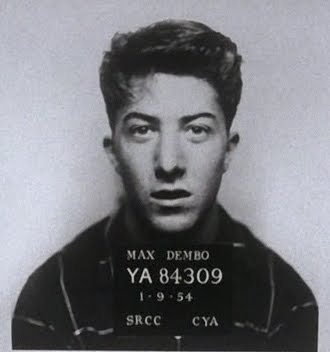
Dustin Hoffman is Max Dembo in the movie Straight Time(1978)
Max Dembo has a lot of reasons to hate society. The deck is stacked against him from the very beginning. He is just finishing an eight year hitch, and the outside world has moved on without him. ”A sense of unreality, so intense as to make me dizzy, swelled up. Everything was weird. The tinkling resonance of women’s voices, which I hadn’t heard in eight years was as alien as Chinese to my ears.”
Max is probably more scared than relieved to be finally back out in society. He is pissed off that he has been judged and found unworthy. He is pissed off that he has been locked away from women and forced to expend his desires on soft mouthed, pretty boys and feminine homosexuals. That isn’t who he is, but that is who he had to become.
Now that he is out on parole with $65 in his pocket, his primary concern is supposed to be to find a job, but of course, before he can even think about that, he has to find himself a woman. A soft, good looking woman will be great, but any woman will do. He tries to play the game as it has been dictated to him, but his ball busting parole officer doesn’t make it easy for him to even want to stay straight. Max may have paid his debt to society, but the striped suit of his incarceration is still itching in his skin like a tattoo that never heals.
Max may have been guilty, but he never felt the punishment fit the crime. We keep hearing these stories about people thrown in jail for long sentences who turn out to be innocent. We hear about nonviolent offenders who somehow end up in jail for decades. The whole system needs to be overhauled and reexamined. Why does the United States have more people incarcerated than the whole rest of the world combined?
Fortunately, I was not a hip cat back in 1973.
”A jazz musician I knew had served ten years for possessing a speck of marijuana so small that it had to be placed in a jar of clear oil and floated so the jury could see it.”
Seriously?
We create career criminals out of people who have struggled to find and keep gainful employment. We make criminals out of people suffering from addictions. We need to intercede in young men and women’s lives when they first start to get in trouble. We need to deviate their path, instead of becoming resigned to thinking that they are already lifetime members of the system.
It’s WAY too late for Max.
Max is going to take down a big score and ride the wave for as long as he can. He knows he will be gunned down or caught and thrown back into the hole his life has been in for most of his life. He doesn’t care. He doesn’t see any other alternative. Before he goes down though, he is going to tell you his story.
”So I began this memoir, which became grinding labor, especially when it fell short of absolute truth. The lack is not through deceit, but because truth is difficult. Fools think truth is a simple thing, but I”ve found that it is hard. The facts I’ve written are real, but facts and truth are cousins, not brothers. I’ve imposed a rationality rather than exposed truth.”
Edward Bunker wrote this book as a novel, but it feels more like the genuine confessions of a career criminal.
For those struggling novelists who need a glimmer of hope, this is the sixth novel that Bunker has finished, but the first to be published. The style of this book, written in the first person, is as sharp as curled barbed wire and so compellingly authentic that I feel like I was caught up in a moment by moment docudrama of the life of an active criminal. Bunker makes sure every punch he throws hits the reader in the jaw or in the stomach, making his breath whistle out through his gritted teeth. You will wince. You will cringe. You will shudder. Bunker KNOWS what he is writing about; he spent a good part of his life in jail. He suffered through several bullshit convictions that put him behind bars for way longer than what sanity would dictate. The punishment should fit the crime! The anger that the fictional Max Dembo feels and expresses is mainlined right out of the veins of the writer.
Edward Bunker as Mr. Blue.
I was reminded that I needed to read Edward Bunker’s work when I rewatched Reservoir Dogs. I actually smiled with secret joy when I saw Bunker cast as Mr. Blue. Quentin Tarantino was a big fan of his novels and his screenplays, so it was a true Tarantino homage to have a real criminal/writer cast in his famous heist film.
”Edward Bunker was dealt a rotten hand at the beginning of his life, and his days thereafter were largely those of a victim in society’s brutalizing institutions. That he emerged from these dungeons not a brute but an artist with a unique and compelling voice is a tribute to his own invincible will, besides being a sweet victory by the artist himself over society and its contempt for the outcast.”---William Styron
To prepare yourself for reading this novel, you need to practice saying MOTHERfucker and motherFUCKER. ”The all-purpose word is ‘motherfucker’, serving as noun, verb, adverb, and adjective--it’s meaning depending on context and intonation. Remove this word from the convict vocabulary and prisons would fall silent.”
What are you looking at motherfucker? Go buy this frilling book!
Soy un lector ocasional de este género literario, será por eso que este libro no cubrió ni de lejos las expectativas que me crearon los numerosos comentarios y críticas, la mayoría entusiastas, que leí.
Excepto por un episodio puntual de las dos primeras partes y la breve tercera, me ha parecido un libro flojillo, muy lejos de la novela absorbente que se supone iba a leer. La he encontrado plana y sosa en general. Tampoco he visto por ningún lado ese análisis psicológico de personajes complejos que algunos apuntan y, desde luego, nunca se me ocurriría calificarlo como el libro más bello jamás escrito sobre... sea la cosa que sea. Vamos, que no le he encontrado la gracia, y no me refiero solo a que el sentido del humor se lo debió guardar el autor para mejores menesteres.
Dejando aparte temas como el deficiente sistema penitenciario americano, la vida de delincuencia del exconvicto como única alternativa real, incluso como la alternativa que esta sociedad se merece, o la adición a las drogas como compensación a una vida de mierda, es un libro sobre la lealtad y la amistad, aunque a veces su tratamiento me haya parecido un tanto pastelón.
Eso sí, el tío habla de lo que conoce y de una forma que quiere ser objetiva. Todo suena muy creíble, aunque quizás ese enfoque frío que el autor parece que quiso darle a la historia consiguió precisamente eso conmigo: que me distanciara. Y creedme que lo lamento.
When Max Dembo gets paroled after eight years in the joint, he's starting at square one. With no money and no job, how will he avoid falling back into his old habits?
As a white collar, law-abiding citizen, prison has always held a bit of mystique for me. I enjoyed The Animal Factory enough to snap this up when it showed up in my BookGorilla email on the cheap.
If I ever had any doubts about the ineffectiveness of the American prison system, they would have been shattered by this. Max is put back on the street with a suit ten years out of fashion and thirty bucks and expected to make something of himself. When no one will hire him, what other choice does he have but to turn to a life of crime?
Bunker's no Chandler but his writing gets the job done. I was reminded of Richard Stark's Parker at times. While he wasn't a complete asshole, Max wasn't a nice person when the chips were down. He did live by a certain criminal code, though, making him a much more complex character than I originally thought. The self-destructive nature of some of the characters and the way the wheels came off of Max's scheme also made me think of Jim Thompson and his happy hell storms.
The capers were well done, including the inevitable one where the wheels come off. There were some good twists and I didn't see the ending going down like that. I almost wish I'd skipped the epilogue, though.
While I didn't enjoy it as much as The Animal Factory, No Beast So Fierce was definitely worth a read. Three out of five stars.
Leer a Edward Bunker es siempre un placer para mi. Es un autor que me gusta mucho porqué te introduce en la mente del atracador de bancos, del ladrón, del traficante de drogas, del delincuente. En este caso, Max Dembo acaba de salir de prisión y realmente quiere redimirse y encontrar el camino recto. Pero todo va en su contra. Su agente de la condicional, sus amigos, sus conocidos, la sociedad, ... Los delincuentes habituales tienen también (aunque cueste entenderlo) su propia moral y sus propias reglas. Cada categoría funciona de una manera determinada en función del "oficio" que tiene. El yonqui, el atracador, el estafador, el intermediario, ... Todos juegan un papel en la novela y Max lo va relatando. El único inconveniente es que no hay un tema que centre la novela. La historia trascurre entre golpe y golpe. Todo se reduce al siguiente atraco o a sobrevivir una semana más. No hay un hilo argumental único, si no que tengo la sensación que la novela podría ser eterna. No hay un hilo argumental que concentre la novela y todo se reduce a tener dinero y a vivir para poder disfrutarlo. Aún así, es una novela muy entretenida, con un ritmo ágil. Max no es un atracador tonto. Es un tipo culto, inteligente, perspicaz, lector empedernido. Todos los personajes son interesantes y cumplen su función. El ambiente de Los Ángeles está muy bien descrito: los nightclubs, las calles, cada barrio. Bunker lo conoce muy bien y lo describe casi mejor.
-----------------------------------
Reading Edward Bunker is always a pleasure for me. He is an author I like very much because he takes you into the mind of the bank robber, the thief, the drug dealer, the delinquent. In this case, Max Dembo has just been released from prison and he really wants to redeem himself and find the right path. But everything goes against him. His parole officer, his friends, his acquaintances, the society, ... Habitual offenders also have their own morals and their own rules (even if it is hard to understand). Each category functions in a certain way according to the "trade" it has. The junkie, the robber, the swindler, the middleman, ... They all play a role in the novel and Max tells the story. The only drawback is that there is no central theme to the novel. The story takes place between one heist and the next. It all comes down to the next heist or surviving another week. There is no single storyline, but I have the feeling that the novel could go on forever. There's no central plot and it's all about having money and living to enjoy it. Still, it is a very entertaining novel, with an agile pace. Max is not a dumb mugger. He's a cultured, intelligent, perceptive, hard-reading guy. All the characters are interesting and play their part. The atmosphere of Los Angeles is very well described: the nightclubs, the streets, every neighbourhood. Bunker knows it very well and describes it almost better.
I have a soft corner for books and movies which involves a character getting out of jail and trying to fit back into square society. How does he get a job? Does his family stand by him? How does he attract a mate after years in jail? The Executioners Song, Straight Time (based on this book), Sherry Baby, American Heart and The Getaway are examples of a man/woman out of jail movies and books.
No Beast So Fierce must be one of the best books about a man out of jail, trying to fit back into society. Told in first person, the book is based on Bunker's own experiences in jail and out of it. The parts where the man out of jail looks longingly at women and eats out all alone from a diner after a very long time behind bars are very touching. You can't help but root for these guys who have not been paraded towards the right way early in their lives and after being in jail for ages, do not know the rules of the world they have been released into.
My low rating for the book is because the writer explains the heist planning in too much detail. He just takes lot of the tension out of the action when it actually happens. The film - Straight Time based on this book is excellent.
"I was wagering my life, but as it stood that was worthless. I didn't care about it if I couldn't live as I wanted."
I'm sure this was utterly shocking and revelatory when first published, but perhaps a bit less by today's standards. Still, a powerful, savage tale of the black hole that is a life of crime, whether ultimately due to faults in society or the individual, fate or human nature. My interest piqued after the protagonist is freed on parole and teeters on the edge between his seeming genuine intentions to walk the straight and narrow and the pull of the only life he's ever really known. Yet it doesn't take long for him to realize his true, unalterable nature and the walls to come crashing down on his fantasy. Although it doesn't generate much sympathy, the gritty realism of the story succeeds in humanizing the life of a remorseless criminal and the brutal, self-destructive path he finds himself on. If nothing else, it is a stinging rebuke of the ineptitude of the criminal justice system.
Cuando la historia borre Estados Unidos o America, y la naturaleza recupere el terreno robado, dejando solo el rastro de pueblos humeantes y algunos rascacielos corroídos y oxidados, deberemos recordar que de esa tierra surgieron los mejores mitos del siglo XX. Primero, el western, con sus héroes solitarios, sus pioneros, tramperos, cazarrecompensas o buscadores de oro, abriendo fronteras y forjando un país a base de sangre y oro. Después, conforme las ciudades crecieron y barrieron aquellos puebluchos de mierda perdidos en el desierto, nuestro héroe mudó en villano. Y en honor a sus antepasados, decidió forjar su destino en el crimen, como un buscador de oro fuera de la ley.
Max Dembo es un lobo solitario huido de la sociedad carcelaria que lo controla, que decide seguir su destino: seguir siendo un criminal huido de la ley. No hay bestia tan feroz, de título shakespeariano, es una novela que bebe del mundo carcelario y criminal que conoció Edward Bunker. De ese particular descenso a los infiernos surge este Max Dembo, tan deformado como Ricardo III, que sobrevive a su destino criminal en las cloacas y vertederos que la sociedad escupe.
Escrita en primera persona, es una novela áspera y dura tal como requiere el género pero a la vez tallada y sublimada con notas poéticas y fogonazos de humor negro. Cárceles, robos de bancos y joyerías, yonkis, huida por largas carreteras, moteles, desiertos... toda la mitografía de America cabe aquí.
E'stato tratto un film da questo libro, “Sorvegliato speciale”, con Dustin Hoffmann. E’ perfetto per una versione cinematografica, coinvolgente e con un ottimo ritmo. Solo contro l’umanità. Per tutto il libro questo è il leit motiv. Max Dembo è un criminale appena uscito di prigione pieno di buoni propositi, che presto annegheranno nel nulla. L’unica cosa che sa fare è il criminale, ma non è solo la natura, l’istinto che lo portano a scegliere, la “colpa” è anche della società, che anziché perdonare lo spinge sempre di più ai margini, lo mette all’angolo e così il suo istinto ha la meglio. Max Bembo si dice “solo contro l’umanità: una frase che era sia vanto sia lamento”. Da un lato c’è la rivendicazione orgogliosa della propria natura e il desiderio di vendetta nei confronti della società che lo rifiuta; dall’altro c’è la solitudine del criminale che sa di non poter fare una vita “normale”, perché riconosce che “il desiderio di appartenenza, il bisogno di significati è a quanto pare inestirpabile dalla natura umana”.E non si può fare a meno di provare empatia per quest’uomo (anche se alla fine la sua spietatezza mi ha dato fastidio, lo ammetto).
Ed Bunker, the author of No Beast So Fierce, is the only guy in the movie Reservoir Dogs who actually looks like a real criminal. That's because he was one, for a long time. And then he was in jail for a long time. This is his first novel, very auto-biographical, with some elements of fiction, and, despite the ugliness of the subject matter (real crime), it pulsates with such a raw energy, such an intensity, that at the end of it, when you close it, you have to raise your eyebrows and go: “Shit”. And perhaps add a little whistle.
Max's black friend from prison breaks out, Max drives up north above the Bay area to pick him up and find him a safe house while the authorities are looking for him. Max intends to set him up as a potential partner-in-crime back in L.A., see? Great.
This is the description of the neighborhood of the pad Max has found for his pal:
We found him a furnished room in a large Victorian house. The room was quite spacious, on the second floor. A huge window overlooked the front lawn and tree-shaded street. It was on the northwestern fringe of the black ghetto. And it was a ghetto only in the sense that all who lived there were black. It was middle-class. The homes were old, but had been fashionable less that a decade earlier. Aaron would be inconspicuous in the neighborhood, and it was ten minutes driving time from Hollywood. I wouldn't have to drive through hostile country to visit him.
Now...this is but one example of where I stagger through a paragraph only to reach the end and wonder, "why did I have to read that entire paragraph just then?"
I can't finish this but I'm giving it 3 stars because I love this guy's acting and the films he co-wrote or acted as adviser on.
This is a terrible autobiographical-crime novel. It might have been great 40 years ago or some other time but I don't have the time or inclination to finish it.
I have to move on to something that suits me. Like another Goodis or maybe Larry Brown. Might re-read the entire Chandler "Marlowe" novels. I can't stand this any longer.
Leggi un libro come questo e capisci cosa voglia dire "avere il dono". Il lavoro d'esordio di uno scrittore tutt'altro che curricolare, ex criminale senza particolari esperienze letterarie precedenti e dalla vita piuttosto movimentata. Uno stile di scrittura intrigante, ad alto tasso affabulatorio (oltre che autobiografico) per una storia originale e convenzionale allo stesso tempo. E' difficile decidere se sia una crime story, un hard boiled o piu' semplicemente un frammento di vita grama, quel che e' certo e' che e' un bel libro senza cedimenti con qualche difetto trascurabile.
Probably the best crime novel I've ever read, though it certainly transcends genre. Relentlessly engaging and readable. Bunker's prose is articulate, precise, and sleek. Great stuff.
There is a song by musician David Baerwald inspired by Edward Bunker called A Prisoner's Dream and in the song, Baerwald depicts that prisoners can also have hopes, wishes, and dreams while being caged from society. From listening to the song, it seems as if this song describes prison inmates in the most idealistic of fashion. It depicts prisoners as often being the product churned out by society and influences beyond their control and how they, too, maintain faith in humanity while trying to live and survive.
For those not familiar with now-deceased Edward Bunker, he was a long-time convict who found liberation through the written word. Forged by his institutional life, his writing was published in well-received novels, which led to films of his work and even acting roles.
The novel No Beast So Fierce portrays Max Dembo, a just released parole and child of the system as he tries to float through society and live like he thought he could, only to realize about the only thing he is good at is living a life of criminality.
Bunker's writing is poignant and raw. While Dembo is violent and mostly irredeemable and a creature of his environment, Bunker does not try to make him sympathetic.
No Beast So Fierce is a very good crime novel with very good writing and descriptions and it does not ask you to like Max Dembo, only to just see him.
No Beast So Fierce was also made into a movie called Straight Time with Dustin Hoffman.
Me gustó más la primera vez pero reconozco que sigue siendo una de las mejores novelas negras que jamás he leído. En una segunda lectura, ya sabiendo lo que pasa, le he visto algún error. Pero todos lo tienen. Me gusta esta obra. Me sigue gustando.
Max is a career criminal, having been abused by the system after being dumped there by an uncaring father, he found his way into the Los Angeles underworld of thugs, pimps, pushers and thieves. He turned out to be a competent enough shark to get a brief taste of the good life before being thrown in jail for eight long years. Long enough for Max to give himself an ad hoc education and form friendships and come to the realization that when he gets out, he's going give living the straight life a try. However, it all proves too much and a cruel and tight-laced probation officer triggers something in Max to embrace his inner lion. If the rules of society are rigged against him, he's going to live by his own rules, come hell or high water.
Hard Rain Falling is one of my favorite novels and I've been looking for something like it for a while and while this isn't quite as tragic, Edward Bunker decides to paint with more emphasis the brutal mindset of a criminal the uncaring system has no interest in reforming. Max is intelligent internally and externally, but ultimately selfish and judgmental. Yet he is also empathetic and generous, if only on a sociopathic level, making him a not so fierce beast. What a minute, that's the name of the novel!
The writing here is top notch, some of the best I've read in a crime novel, again matching Hard Rain Falling. Bunker endows Max with a sort of poetic sensibility towards nature with sneering skepticism towards humanity. Nothing is worse than a stool pigeon to Max, but if you follow his "code" he'll work with you. Bunker is sparse with his descriptions, but the imagery he conjured in my head were some of the sharpest I've experienced. The dialogue is razor sharp and the lingo being used is eerily modern feeling. I'm not kidding you; Max once describes an awkward encounter by saying "the vibes were wrong". And Max's inner monologuing never gets old or stale, despite being a sociopath, I could have spent more time in there.
There's so much more I'd like to say to convince you to read this book if you have any interest in the crime genre at all, especially if you liked Hard Rain Falling. It's not quite the spiritual successor but more like the dark Link of the pair.
This is as interesting a book, and as intelligent a writer as I've read all year. It is searing, authentic, original, simple...moving, uncompromising...
I don't know quite how to review it, except to say that I'll pound the table on this one.
If you liked Don Carpenter's Hard Rain, and John Williams' Stoner, and like crime novels and thrillers, and psychologically complex and existential characters, try this book. It is that good.
A Edward Bunker le conoce todo el mundo por protagonizar la película de Tarantino "Reservoir Dogs" (hacía de Mr Blue), lo que seguramente nadie conocía era su faceta como escritor, tenemos la suerte de empezar a ver publicados sus libros por aquí. "No hay bestia tan feroz" es hardboilismo puro y duro, nunca se podrían haber reflejado los bajos fondos de una manera tan realista, no en vano el bueno de Edward estuvo entrando y saliendo de la cárcel toda su vida. Escalofriante y dura por momentos, dolorosa, pero aún así, sorprendentemente lírica en otros momentos muy bien escritos. Toda ella una maravilla del género... Muy recomendable.
Atención que tenemos un librazo entre manos. Es de esas obras que cuando llegue el frío, se intuyan la presión de los regalos navideños y suframos la fiebre de las listas con las que creemos que cerramos un año que fue como el anterior y será como el siguiente, estará probablemente en mis mejores lecturas del año.
Me ha fascinado de No hay bestia tan feroz su la manera en que está escrito y las capas que lo componen. Pero antes de entrar en desarrollar ambas partes creo necesario hacer mención al título. No hay bestia tan feroz es salir al campo con los futbolistas dopados, a un combate de boxeo con los nudillos recubiertos de metal. Luego está la edición de lujo que se marcan los amigos de Sajalin, una de esas editoriales que no tienes más remedio que adorar si es que tienes sueños húmedos con los libros. En este caso incluyen un prólogo firmado por el propio James Ellroy. Pero vamos al ajo. No hay bestia tan feroz es el buque insignia de toda una institución como fue Edward Bunker. Un tipo que aparece en un cameo de Reservoir dogs de Tarantino solo puede hacer algo brillante. Y vaya que si lo es. Es la historia de un ladrón. Un tipo llamado Max Dembo que sale de la cárcel con la lección aprendida. No voy a delinquir escribe una y otra vez en la pizarra mental de su cabeza. Sin embargo, Bunker sabe por experiencia que la vida es jodida y también es dura. La sociedad, las propias dificultades del sistema de libertad condicional empujan a Max Dembo a hacer lo único que sabe hacer y lo único que alguna vez ha hecho bien: robar. Arrojarse por la espiral de la perdición que son las drogas y el dinero fácil, el único al que paradójicamente los personajes de esta vida tienen acceso. La novela que habría hecho llorar a Michel Foucalt.
Hasta aquí una historia apasionante, que además está escrita con pulso, con ritmo y sangre. Pero es que además de ser una patada al sistema penitenciario norteamericano, y hacerlo con una narrativa que se desliza como la seda, la obra, al estar escrita en primera persona, permite una serie de reflexiones sobre la desgracia del ser humano, sobre la pobreza, sobre la imposibilidad de progresar en la sociedad que podrían hacer que se corroyeran las vísceras del tipo más avezado. Como decíamos al principio, librazo es lo que tenemos entre manos.
«Lo peor de mi dilema era la incapacidad para encontrar un bastión de fe que mitigara los golpes de la existencia, que hiciera soportable mi situación. No tenía ningún dios que soportara mis cargas. El dolor sin sentido es el más difícil de soportar. Mis pensamientos angustiados no tenían más sentido que el zumbido de un mosquito delante de una ventana. Sumido en aquel abismo estéril, en aquel vacío, estallé de indignación. Era una ira que iba más allá del odio. Abarcaba a Dios y al hombre. Surgía de los estertores de mi fe en mi condición de ser humano y en lo que la humanidad consideraba que era el bien. No solo se habían truncado todas mis esperanzas, sino que el deseo también estaba muerto y enterrado».
Delinquente! Sicuramente scritto peggio dei Promessi Sposi, quantunque Bunker sappia scrivere, salvo che lui fu veramente un Bravo, e mentre i Bravi narrati nel libro sono verosimili o autobiografici addirittura, quelli nei PS sono delle macchiette irredimibili che mostrano solo (per fortuna dell'Autore) che di certi soggetti, al massimo ne ebbe nozione con racconti di terza mano o clich� libreschi. Per cui se parliamo di importanza letteraria, vinceranno sempre i libri "PS", se parliamo di informazioni operative sull'argomento specifico cio� raccontare una storia di uomini non pupazzi, (in realt� su altri aspetti i PS veicolano quantitativi portuali di informazioni e caratteri e dialoghi di qualit� sopraffina), tra Biondino Carlotto Grignapoco Griso Nibbio Montanarolo Squinternotto Tanabuso infine Tiradritto e Max Dembo, non ci sarebbe nemmeno partita. E' notevole quanto il crollo dell'importanza del giudizio morale, etico sull'argomento e i personaggi di un libro, in decremento asintotico dalla met� del '700, e l'ascesa del divertimento e dell'informazione come criteri sempre pi� frequenti in mano ai lettori, specie nell'ultima parte del '900, abbiano stravolto le classifiche o imbrigato la vita dei compilatori di canoni. Rimane solido ancora il criterio del ben scritto, ma oramai mi sono reso definitivamente conto che la forma conta - da sola - sempre meno. O un autore mi diverte, o scambia informazioni operative su un fatto una situazione o un carattere o lo lascio sullo scaffale dei senza nostalgia, niente di personale. Ars longa, vita brevis. E Sfregiato? Pensavate lo avessi dimenticato vero? Nonono, Sfregiato va benissimo, ma solo se si chiama Scarface e lo interpreta Pacino. colonna sonora: Bob Dylan - blood on the tracks Howlin' Wolf - the back door wolf
Authentic crime fiction, written behind bars by a man who spent nearly twenty years in the hatch for all manor of crimes, some violent. Edward Bunker doubtless called on actual experience for much of the story, which is not so much a plot as an unfolding of events.
His fictional protagonist, Max Dembo, is a career criminal, dreaming of going straight the day of his release after serving an eight year stretch, his longest incarceration. Upon hitting the streets, however, lack of employment opportunities, a hardline parole officer and his own criminal nature bring him back to the life, at first working alone on petty larcenies, then pulling an armed robbery with fellow ex-cons.
Like I said, No Beast So Fierce is hardly plotted so much as splurged. Dembo never convinces as a convict who will reform, despite the blame that he attaches to "the system" and its adherents, such as the parole officer, who seemed unreasonably unfair.
The behaviour of others towards Dembo only made sense if you ignored his own take on things and pinned him for a career criminal, which Bunker himself was at the time. It's hard not to look at the final acts of his fictional surrogate as representing the wish fulfillment of an unrepentant recidivist, which gave the book a ferocious, unbridled morality befitting its title.
Soon after this novel was published Bunker was released, and incredibly he didn't commit any more crimes, instead writing more books and making cameo appearances in films by the likes of Quentin Tarantino (he was Mr. Blue in Reservoir Dogs).
He tenido la suerte de poder leer esta novela, siguiendo la recomendación de un grandísimo amigo.
Desde luego no es un libro adecuado para según qué sensibilidades. Es escabroso (por los temas que trata) y muy directo en sus planteamientos.
Su formato es impresionante: una autobiografía del escritor, relatada con tanta finura que parece que cuenta la historia de un tercero. Edward Bunker fue un interfecto, encarcelado durante muchos años, que descubre su salvación en la Literatura. Y tiene un don para escribir, y para leer.
Pienso que puede atraer especialmente, si uno es capaz de saltarse las barreras de sus escrúpulos. Las reflexiones que Bunker transmite sobre cómo se ve a sí mismo son magníficas. Expone los hechos, explica su porqué y no se regodea en una ñoña autocompasión. Y hay que entender de qué tipo de hechos estamos hablando…
Bueno, un libro recomendable si el lector gusta de las delicias de historias sobre criminales, bajos fondos de ciudades, música country y algunas reflexiones de carácter moral.
Max Dembo sa di aver sbagliato e ne ha pagato le conseguenze. Ora vuol provare a ricominciare, a sistemarsi, come una persona normale. E ci prova. Forse, però, non abbastanza. O forse, per uno come lui non c'è altra via che quella del crimine E' un poco di buono, in fondo, e all'occorrenza sa mascherarsi da bestia feroce. Alla fine, resta il tremendo rimpianto per un'occasione sprecata.
Aunque tiene algunos problemas es un libro muy especial y no será lo último que lea de Edward Bunker. Tiene muchas frases que piden subrayado. Para mi, lo mejor es su narrador: ese ladrón literato con una visión entre trágica y romántica de la vida criminal y la compulsión irresistible de hacerse comprender por el lector. El retrato de la vida de los bajos fondos parece realista y lo muestra todo sin regodearse. El personaje que menos me gusta es Allison, su interés romántico. El final tiene su qué. Recomendado.
I was intrigued by the book's author description and thought I would give it a try, wasn't disappointed as it turned out as well-written and authentic as I could have hoped for. Kind of Danny Trejo meets Charles Bukowski in a On the Road type of Jack Kerouac journey. A good book find enjoyed the story and enjoyed the feel of Los Angeles (my home town) described how it was back in the sixties.