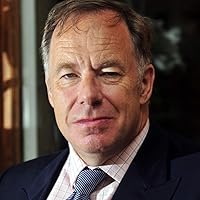
Great-grandson of a crofter and son-in-law of a Duke, Harold Macmillan (1894-1986) was both complex as a person and influential as a politican. Marked by terrible experiences in the trenches in the First World War and by his work as an MP during the Depression, he was a Tory rebel - an outspoken backbencher, opposing the economic policies of the 1930s and the appeasement policies of his own government.
Churchill gave him responsibility during the Second World War with executive command as 'Viceroy of the Mediterranean'. After the War, in opposition, Macmillan was one of the principal reformers of the Conservatives, and after 1951, back in government, served in several important posts before becoming Prime Minister after the Suez Crisis.
Supermac examines key events including the controversy over the Cossacks repatriation, the Suez Crisis, You've Never Had It So Good, the Winds of Change, the Cuban Missile Crisis and the Profumo Scandal. The culmination of thirty-five years of research into this period by one of our most respected historians, this book gives an unforgettable portrait of a turbulent age.
D. R. (Richard) Thorpe was educated at Fettes College, Edinburgh and Selwyn College, Cambridge. He taught history at Charterhouse, a public school in Surrey, for over 30 years. Among other academic appointments, he was Archives Fellow of Churchill College, Cambridge, and a Fellow of St Antony's College, Oxford and Brasenose College, Oxford.
D. R. Thorpe’s Supermac: The Life of Harold Macmillan offers a sweeping account of one of Britain’s most distinctive and complicated twentieth-century prime ministers. The book charts Macmillan’s early life, his formative experiences as a soldier in the First World War, and his rise through the Conservative Party during the turbulent interwar years. Thorpe covers Macmillan’s difficult and morally fraught role in the Second World War, including the Cossack repatriation episode, a decision that has since cast a long shadow over his otherwise principled reputation. Supermac: The Life of Harold Macmillan then follows him into the post-war era, where he helped steer Britain from the harsh years of national austerity towards unprecedented consumer prosperity, culminating in the famous declaration that Britons had ‘never had it so good.’ As prime minister, he presided over the managed retreat from empire, accelerating decolonisation and attempting to reshape Britain’s global influence even as its power visibly waned.
Thorpe’s biography excels at capturing the breadth of Macmillan’s world: the intellectual Tory who read widely, the war veteran haunted by loss, the statesman who navigated Cold War diplomacy, and the deeply private man whose personal life was marked by strain and quiet endurance. A key component of Supermac: The Life of Harold Macmillan is the combination of immense scholarship with surprisingly fluid readability; the contextual detail enriches the narrative rather than overwhelming it. Thorpe is also at his best when demonstrating the contradictions that defined Macmillan, for example that he was moralistic yet pragmatic, genteel yet ruthless when necessary, nostalgic yet forward-looking. However, the biography occasionally errs on the side of sympathy, treating certain controversies with more delicacy than some readers might expect. At times, the narrative drifts into extended background explanations that pull focus away from Macmillan himself, and on several moral questions, particularly regarding wartime decisions, Thorpe’s touch can feel too soft.
Macmillan’s lasting legacy is a blend of achievement and decline, and Thorpe’s account helps clarify why. His domestic reforms, including the introduction of Premium Bonds and his earlier championing of mass housebuilding, reflected a belief in a modern, paternalistic conservatism that sought to soften inequality without fundamentally reshaping the system. Internationally, his decision to hasten decolonisation—walking away from the empire with a mixture of realism and regret—set the stage for Britain’s reinvention but also underscored the nation’s diminishing global stature. His premiership coincided with the high-water mark of post-war growth, yet it also masked structural weaknesses that would later come to define Britain’s decline. I feel that in this sense, Macmillan was a decent prime minister who governed competently and often imaginatively but presided, unavoidably, over a period when Britain’s power, confidence, and cohesion were already ebbing.
Thorpe’s biography ultimately leaves the impression of a leader whose legacy is complex but important: a man who believed in duty, steadiness, and national prestige, yet found himself guiding a country that was slowly slipping from the world stage. Macmillan is often seen as an aristocrat, he wasn’t but he married into the aristocracy. He was seen as a high Tory, but he wasn’t. Some even considered him not to be one at all. However, one thing is clear from Supermac: The Life of Harold Macmillan, he that he was a patriot who wanted to serve his country. Macmillan’s life was full of achievement, contradiction, and melancholy. This all emerges from Thorpe’s study which looks at both the limits and the dignity of political leadership.
This massive read gives a fascinating insight into one of the last century's most successful politicians. I was left marvelling at his cleverness - and his ruthlessness. He benefitted from the Suez debacle yet was one of those most responsible for it. His relationship with his wife was extraordinary. It casts light on other figures of the time, including Churchill, and the great man's one-liners still raise a smile.
Thorpe's elegant, sympathetic, but not uncritical biography of the late prime minister does justice to the man and the great hinterland - martial, intellectual and social - which underpinned his political life.
After Churchill, Macmillan's story is probably the most fascinating of any 20th century premier. This Thorpe celebrates, while never forgetting the triumphs and eventual failure of his time at Number Ten.
Richard Thorpe's "Supermac" is a thorough and entertaining trudge through the life and times of Harold MacMillan, one of the more influential British prime ministers of the 20th Century. More than anything, MacMillan intuitively had a feel for the times, harkening postwar prosperity and Britain's calculation of its new role in a world dominated by the United States and Soviet Union. MacMillan gets it mostly right by playing up Great Britain as the Greece to America's Rome, the intellectual companion and conscious of a more powerful empire with which it shares cultural and historical ties. On economics, MacMillan is something of a everyman's Keynesian, ushering in an era of Premium Bonds and an economy that allowed Britons to recover from the more dire times of the 1940s. MacMillan stands as a contrast between the Churchillian worship and Thatcherite revolution, a conservative not afraid of progressive policies and eyeing for Britain a closer role within the merging European markets and alliances. Alongside Eisenhower, he stands as a pivotal figure in determining the postwar order and ushering in greater plenty and prosperity for Western peoples.
Macmilian, on leaving Balliol to volunteer in the First World War, writing to Ronald Knox about his conversion to Roman Catholicism:
“I’m going to be rather odd. I’m not going to ‘Pope’ until after the war (if I’m alive). 1 My people. Not at all a good reason, which weighs. 2 My whole brain is in a whirl. I don’t think God will mind.”
What though the radiance which was once so bright Be now for ever taken from my sight, Though nothing can bring back the hour Of splendour in the grass, of glory in the flower; We will grieve not, rather find Strength in what remains behind.
A well-written and synpathetic biography of, as the author notes, one of the most psychologically interesting postwar prime ministers. Full of fascinating anecdotes one wishes the author expanded further on. At times lacks understanding of some contemporaneous critics of Macmillan (& of Eden), but on the whole the biography benefits from the critical sympathy of the author.