

What do you think?
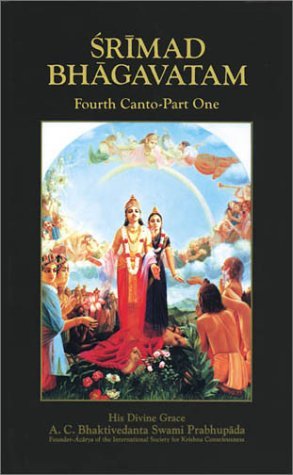
Srimad-Bhagavatam: Bhagavata Purana
Srimad-Bhagavatam, an epic philosophical and literary classic, holds a prominent position in India's voluminous written wisdom. This ancient text touches upon all fields of human knowledge. The timeless wisdom of India is expressed in the Vedas, ancient Sanskrit texts. Originally preserved through oral tradition, the Vedas were first put into writing by Srila Vyasadeva. After compiling the Vedas, Srila Vyasadeva was inspired to present their profound essence in the form of Srimad-Bhagavatam. Known as "the ripened fruit of the tree of Vedic literature, "Srimad-Bhagavatam is the most complete and authoritative exposition of Vedic knowledge - covering everything from the nature of the self to the origin of the universe. The first verse of Srimad-Bhagavatam makes clear that because the book is intended for people serious about spiritual progress, it will not deal with sectarian religious ideas, philosophical conjecture, or worldly concerns. The second text promises that anyo
Hardcover
First published January 1, 1983
About the author
A.C. Bhaktivedanta
369 books736 followersHis Divine Grace Abhay Charanaravinda Bhaktivedanta Swami Prabhupada (अभय चरणारविन्द भक्तिवेदान्त स्वामी प्रभुपाद)was born as Abhay Charan De on 1 September 1896 in Calcutta, India.
He first met his spiritual master, Srila Bhaktisiddhanta Sarasvati Gosvami, in Calcutta in 1922. Bhaktisiddhanta Sarasvati, a prominent devotional scholar and the founder of sixty-four branches of Gaudiya Mathas (Vedic institutes), liked this educated young man and convinced him to dedicate his life to teaching Vedic knowledge in the Western world. Srila Prabhupada became his student, and eleven years later (1933) at Allahabad, he became his formally initiated disciple.
At their first meeting, in 1922, Srila Bhaktisiddhanta Sarasvati Thakura requested Srila Prabhupada to broadcast Vedic knowledge through the English language. In the years that followed, Srila Prabhupada wrote a commentary on the Bhagavad-gita and in 1944, without assistance, started an English fortnightly magazine.
In the last ten years of his life, in spite of his advanced age, Srila Prabhupada circled the globe twelve times on lecture tours that have took him to six continents. In spite of such a vigorous schedule, Srila Prabhupada continued to write prolifically. His writings constitute a veritable library of Vedic philosophy, religion, literature and culture.
He first met his spiritual master, Srila Bhaktisiddhanta Sarasvati Gosvami, in Calcutta in 1922. Bhaktisiddhanta Sarasvati, a prominent devotional scholar and the founder of sixty-four branches of Gaudiya Mathas (Vedic institutes), liked this educated young man and convinced him to dedicate his life to teaching Vedic knowledge in the Western world. Srila Prabhupada became his student, and eleven years later (1933) at Allahabad, he became his formally initiated disciple.
At their first meeting, in 1922, Srila Bhaktisiddhanta Sarasvati Thakura requested Srila Prabhupada to broadcast Vedic knowledge through the English language. In the years that followed, Srila Prabhupada wrote a commentary on the Bhagavad-gita and in 1944, without assistance, started an English fortnightly magazine.
In the last ten years of his life, in spite of his advanced age, Srila Prabhupada circled the globe twelve times on lecture tours that have took him to six continents. In spite of such a vigorous schedule, Srila Prabhupada continued to write prolifically. His writings constitute a veritable library of Vedic philosophy, religion, literature and culture.
Ratings & Reviews
Friends & Following
Create a free account to discover what your friends think of this book!
Community Reviews
Displaying 1 - 26 of 26 reviews

June 7, 2012
I read Srila Prabhupada's translation back in 1978. The later translations by his disciples were not available when I was in the movement. I have to divide my review into categories:
1). The translation: excellent.
2). The commentary (purports). Good, but very repetitive. Prabhupada believes in the literal truth of this work, and frankly there is much in the Bhagavata Purana that cannot be reconciled with reality. The astronomy in the Fifth Canto is a notable example. However, there is no doubt in my mind that Prabhupada's commentary accurately describes the intentions of the original authors of the book. It could use some editing though.
3). Illustrations. Fantastic, good beyond belief. I do note that the current edition may not have all of the illustrations that my 1978 edition had.
1). The translation: excellent.
2). The commentary (purports). Good, but very repetitive. Prabhupada believes in the literal truth of this work, and frankly there is much in the Bhagavata Purana that cannot be reconciled with reality. The astronomy in the Fifth Canto is a notable example. However, there is no doubt in my mind that Prabhupada's commentary accurately describes the intentions of the original authors of the book. It could use some editing though.
3). Illustrations. Fantastic, good beyond belief. I do note that the current edition may not have all of the illustrations that my 1978 edition had.

August 19, 2010
Prabhupada has little use for Yoga Vasistha and I've been picking it up exactly where it says that time and again. He has such a passion for Krishna but my mind continues to describe him as Nixon and Daddy and Christian Conservative although God knows the Christians would have nothing to do with him.
I don't think his books are an objective view but I love those plates. They are so psychedelic. I'm more of a materialist lately though. I bought the set a year ago. They're still pretty fresh.
I don't think his books are an objective view but I love those plates. They are so psychedelic. I'm more of a materialist lately though. I bought the set a year ago. They're still pretty fresh.

May 23, 2013
As a practicing sadhana bhakta, the Srimad Bhagavata Purana has a special place in my heart. And, as always, every aspiring Krsna bhakta is indebted to A.C. Bhaktivedanta Swami for his pioneering efforts. Haribol!!!

April 28, 2013
The most amazing literature in the whole Universe!
May 18, 2016
Easily the Best Book in the World with highest philosophy!

June 4, 2020
Compared to the previous five Cantos, this Canto contains the most number of shocking interpolations, nauseating mistranslations and Prabhupada's purposeful misinterpretations.
As a scripture, the Canto's first three chapters are very informative, useful and instructive. The rest of the Canto, although contains some interesting nuggets of facts about spiritual life and details concerning sadhana and spiritual practices, is not very useful to sadhaks in general.
What grossly impairs the quality and integrity of the translation, and even spoils and vastly diminishes the perfection of the scripture is Prabhupada's unpardonable sectarian prejudice and distasteful and odious bigotry. If anyone reading this is interested in getting more details of this observation, please contact me, and I shall be more than happy to cite the examples in the work.
If one learns to ignore the obvious partiality and bias in Prabhupada's commentaries, something which is often difficult for people who are not quite au fait with Hinduism and her scriptures, one can derive a lot of marvelous benefits from the history of Ajamila covered in Chapter 1 to 3. There is, for example, valuable information on Japa (=chanting) and satsang (=associating with people in god-consciousness).
If anyone uses this text for the purposes of discovering Hinduism, and its right and proper teachings, he will only be thoroughly misled and misguided. It is one of Prabhupada's dangerous texts that propagate falsehood about spirituality and particularly Hinduism.
As a scripture, the Canto's first three chapters are very informative, useful and instructive. The rest of the Canto, although contains some interesting nuggets of facts about spiritual life and details concerning sadhana and spiritual practices, is not very useful to sadhaks in general.
What grossly impairs the quality and integrity of the translation, and even spoils and vastly diminishes the perfection of the scripture is Prabhupada's unpardonable sectarian prejudice and distasteful and odious bigotry. If anyone reading this is interested in getting more details of this observation, please contact me, and I shall be more than happy to cite the examples in the work.
If one learns to ignore the obvious partiality and bias in Prabhupada's commentaries, something which is often difficult for people who are not quite au fait with Hinduism and her scriptures, one can derive a lot of marvelous benefits from the history of Ajamila covered in Chapter 1 to 3. There is, for example, valuable information on Japa (=chanting) and satsang (=associating with people in god-consciousness).
If anyone uses this text for the purposes of discovering Hinduism, and its right and proper teachings, he will only be thoroughly misled and misguided. It is one of Prabhupada's dangerous texts that propagate falsehood about spirituality and particularly Hinduism.

December 24, 2015
timeless wisdom
April 21, 2019
In this book you find god
September 20, 2012
Some Hare Krishna came to my door like he was a Jehovah Witness or something and gave me this book. Didn't realize it was an 18 vol set. I've only read the first page, but it seems pretty rad so far.... hahaha

February 27, 2016
this complete vbolumes of srimad is an authoritative source of indian philosophy. why dont you try to read it people?...after reading it, seems you are already a member of ISKCON. you will be familiar with their beliefs..a great book!

April 6, 2008
Now, these folk can tell a good story.
July 12, 2020
This Canto, too, has been marred by Prabupada's mistranslation and sectarian bigotry.
Want to Read
April 16, 2020HARE KRISHNA
April 3, 2021
It's truly the best book I've ever read! It has answers to all questions & solutions to all problems.
October 29, 2025
Changed my life
July 10, 2026
Hare Krishna
Hare Krishna
Krishna Krishna
Hare Hare
Hare Rama
Hare Rama
Rama Rama
Hare Hare
Hare Krishna
Krishna Krishna
Hare Hare
Hare Rama
Hare Rama
Rama Rama
Hare Hare
May 24, 2020
Of the four cantos that I have read, this is one of the interesting ones. In fact, the most interesting and informative. It has the answers to some of the following questions:
1. Why an impious or worthless child is born of good parents?
2. Why the earth refuses yield good crops?
3. How fraudulent sanyasis (=monks) came to be?
Despite the above, however, I have given the text but two stars because of the following reasons:
1. Unfair sectarian bias is evident in the translation and especially commentaries.
2. There are too many purposeful inaccuracies and (sadly) unforgiveable lies in Prabhupada's interpretations. In the following pages, one will find the evidence of my accusation: pgs. 139, 152, 136, 229, 355, 441, 28, 77-79, 135, 40 (interpolation), 159 (interpolation), 77, 80, 618.
Of all his purposeful misinterpretations, misinformation, disinformation and lies, the following is the worst: issue of sayujya mukti (=merging with God). Prabhupada, like in many previous Cantos, where he has insisted that this stage of liberation is "hellish" and undesirable, in this Canto (on page 441) declares that "sayujya mukti...is not actually 'mukti' because from (it) one may again fall down to this material world." To substantiate his claim, he cites Bhagavatam 10:2:32, where he claims there is a proclamation that people who attain the said mukti will return to this earthly plane. If one makes a close study of the scriptures and his citations (especially if one looks at the actual sanskrit sloka in 10:2:32), one will know that Prabhupada is either lying or is wilfully purveying wrong information. Let me corroborate my point:
1. On page 274 of Canto 4 Chapter 7, verse 35 says that the Lord's pastimes are "as good as the pleasure of MERGING IN THE ABSOLUTE". (The clause in capital letters refers to "sayjuya mukti"). If it is as pleasurable as being in the company of the Lord, viz., the other three stages of muktis, how could "merging" be deemed "hellish"?
In Canto 1, Chapter 9, verse 43-44, we discover that Bhismadev merged with God, i.e., attained "sayujya mukti" --- obviously, it cannot be inferred that Bhismadev was destined to return to earth, to take another birth! (But Prabhupada, knowing this difficulty of explaining why the sanskrit sloka in the above verse said that Bhisma merged with God, tried to explain it away, very unconvincingly, that Bhisma actually attained Vishnu loka without merging. "Attaining the loka" is not the same as "merging with the Lord". If Bhismadev has, indeed, first attained "sayujya mukti" and had later, by the will of God attained "Sarupya mukti", it would have been explicitly mentioned in the scriptures, just the way that it did in the case of Aghasura, who first "merged" and "entered into Krishna's body" (10:12:33), and later, by the will of God attained Sarupya mukti (10:12:38). There is no evidence of the same having occurred in the case of "pithmaga", Bhismadev. That was, therefore, being untruthful of Prabhupada for lying about 1:9:43-44.
As with all other previous cantos, this canto too cannot be used by researches and scholars and even serious Hindus to get accurate information about spiritual life and sadhana. So far, the cantos contain some useful information, which is sprinkled here and there in the cantos, but principally lack in accuracy, as the evidence above shows.
1. Why an impious or worthless child is born of good parents?
2. Why the earth refuses yield good crops?
3. How fraudulent sanyasis (=monks) came to be?
Despite the above, however, I have given the text but two stars because of the following reasons:
1. Unfair sectarian bias is evident in the translation and especially commentaries.
2. There are too many purposeful inaccuracies and (sadly) unforgiveable lies in Prabhupada's interpretations. In the following pages, one will find the evidence of my accusation: pgs. 139, 152, 136, 229, 355, 441, 28, 77-79, 135, 40 (interpolation), 159 (interpolation), 77, 80, 618.
Of all his purposeful misinterpretations, misinformation, disinformation and lies, the following is the worst: issue of sayujya mukti (=merging with God). Prabhupada, like in many previous Cantos, where he has insisted that this stage of liberation is "hellish" and undesirable, in this Canto (on page 441) declares that "sayujya mukti...is not actually 'mukti' because from (it) one may again fall down to this material world." To substantiate his claim, he cites Bhagavatam 10:2:32, where he claims there is a proclamation that people who attain the said mukti will return to this earthly plane. If one makes a close study of the scriptures and his citations (especially if one looks at the actual sanskrit sloka in 10:2:32), one will know that Prabhupada is either lying or is wilfully purveying wrong information. Let me corroborate my point:
1. On page 274 of Canto 4 Chapter 7, verse 35 says that the Lord's pastimes are "as good as the pleasure of MERGING IN THE ABSOLUTE". (The clause in capital letters refers to "sayjuya mukti"). If it is as pleasurable as being in the company of the Lord, viz., the other three stages of muktis, how could "merging" be deemed "hellish"?
In Canto 1, Chapter 9, verse 43-44, we discover that Bhismadev merged with God, i.e., attained "sayujya mukti" --- obviously, it cannot be inferred that Bhismadev was destined to return to earth, to take another birth! (But Prabhupada, knowing this difficulty of explaining why the sanskrit sloka in the above verse said that Bhisma merged with God, tried to explain it away, very unconvincingly, that Bhisma actually attained Vishnu loka without merging. "Attaining the loka" is not the same as "merging with the Lord". If Bhismadev has, indeed, first attained "sayujya mukti" and had later, by the will of God attained "Sarupya mukti", it would have been explicitly mentioned in the scriptures, just the way that it did in the case of Aghasura, who first "merged" and "entered into Krishna's body" (10:12:33), and later, by the will of God attained Sarupya mukti (10:12:38). There is no evidence of the same having occurred in the case of "pithmaga", Bhismadev. That was, therefore, being untruthful of Prabhupada for lying about 1:9:43-44.
As with all other previous cantos, this canto too cannot be used by researches and scholars and even serious Hindus to get accurate information about spiritual life and sadhana. So far, the cantos contain some useful information, which is sprinkled here and there in the cantos, but principally lack in accuracy, as the evidence above shows.

March 18, 2024
The Srimad-Bhagavatam is one of the most revered and celebrated texts in the Vaishnava tradition of Hinduism. A.C. Bhaktivedanta Swami Prabhupada's translation and commentary on this monumental work is a gift to spiritual seekers and scholars alike.
The Bhagavatam covers an expansive canvas, delving into profound philosophical concepts, recounting enthralling parables, and providing intricate details on spiritual practices and yogic disciplines. At its core, however, is the message of bhakti -- "loving devotion to the Supreme Lord, Krishna".
Prabhupada's commentaries are remarkable for its accessibility and depth. His command over Sanskrit and his intimate understanding of the nuances of the text allows him to convey the essence of the Bhagavatam with remarkable clarity. His commentary, drawing upon authoritative sources and his own realisations, illuminates the verses, providing invaluable context and insight.
One of the text's greatest strengths is its emphasis on dharma – righteous living and ethical conduct. The narrations and discourses within offer timeless wisdom on the path of spirituality, self-realisation, and the ultimate attainment of life's purposes.
The Bhagavatam is also a treasure trove of mythology, replete with captivating accounts of avatars, sages, kings, and devotees. Prabhupada's vivid storytelling brings these tales to life, infusing them with profundity while preserving their artistic richness.
Perhaps most significantly, the Bhagavatam elucidates the philosophical tenets of Vaishnava Vedanta, including the concepts of Brahman, Paramatma, Ishwara and Bhagavan. Prabhupada's explanations are systematic and comprehensive, catering to sincere students and scholars alike.
A.C. Bhaktivedanta Swami Prabhupada's work on Srimad-Bhagavatam is a magnum opus – a labor of love and erudition that has opened the doors to this seminal Vedic text for generations of readers. It is a work that demands repeated study, for with each reading, new layers of wisdom and inspiration unveil themselves.
Srila Prabhupad has also introduced terminologies that are unique to his writing style such as
1. Personality of Godhead, Back to Godhead, back home
2. Krishna Consciousness, Causeless Mercy
3. Transcendental pastimes
4. Eternally liberated souls & Conditioned souls
5. Material energy/illusory energy
6. Vaikuntha planets
7. Supersoul (i.e. Paramatma), Impersonal Brahman effulgence
8. Bonafide Spiritual Master, Disciplic succession
9. Fruitive Action
10. Neophyte Devotees
11. Sense Enjoyment & Philosophical/Mental Speculation
(and many more)
This treatise is genuinely a life changing literature and will bring so much joy in one's life.
The Bhagavatam covers an expansive canvas, delving into profound philosophical concepts, recounting enthralling parables, and providing intricate details on spiritual practices and yogic disciplines. At its core, however, is the message of bhakti -- "loving devotion to the Supreme Lord, Krishna".
Prabhupada's commentaries are remarkable for its accessibility and depth. His command over Sanskrit and his intimate understanding of the nuances of the text allows him to convey the essence of the Bhagavatam with remarkable clarity. His commentary, drawing upon authoritative sources and his own realisations, illuminates the verses, providing invaluable context and insight.
One of the text's greatest strengths is its emphasis on dharma – righteous living and ethical conduct. The narrations and discourses within offer timeless wisdom on the path of spirituality, self-realisation, and the ultimate attainment of life's purposes.
The Bhagavatam is also a treasure trove of mythology, replete with captivating accounts of avatars, sages, kings, and devotees. Prabhupada's vivid storytelling brings these tales to life, infusing them with profundity while preserving their artistic richness.
Perhaps most significantly, the Bhagavatam elucidates the philosophical tenets of Vaishnava Vedanta, including the concepts of Brahman, Paramatma, Ishwara and Bhagavan. Prabhupada's explanations are systematic and comprehensive, catering to sincere students and scholars alike.
A.C. Bhaktivedanta Swami Prabhupada's work on Srimad-Bhagavatam is a magnum opus – a labor of love and erudition that has opened the doors to this seminal Vedic text for generations of readers. It is a work that demands repeated study, for with each reading, new layers of wisdom and inspiration unveil themselves.
Srila Prabhupad has also introduced terminologies that are unique to his writing style such as
1. Personality of Godhead, Back to Godhead, back home
2. Krishna Consciousness, Causeless Mercy
3. Transcendental pastimes
4. Eternally liberated souls & Conditioned souls
5. Material energy/illusory energy
6. Vaikuntha planets
7. Supersoul (i.e. Paramatma), Impersonal Brahman effulgence
8. Bonafide Spiritual Master, Disciplic succession
9. Fruitive Action
10. Neophyte Devotees
11. Sense Enjoyment & Philosophical/Mental Speculation
(and many more)
This treatise is genuinely a life changing literature and will bring so much joy in one's life.
September 26, 2020
The one-star that I have given is not for the actual text written by Srila Vyasadev, the author who wrote it in Sanskrit; rather, it is particularly for the commentaries on the text by the Hare Krsnas, who like their founder, Prabhupada, have chronically and unapologetically been discriminatory, bias and sectarian. Bigotry aside, their translations and commentaries contain an unconsciouable number of purposeful mistranslation and grave interpolations, done with the principal purpose of misrepresenting the teachings of Sri Krishna and Hindu Dharma. (Refer to my other reviews of and comments on other Cantos by the publisher.) Therefore, scholar, serious students and even true seekers of God, who want to understand the true teachings of Sanatana Dharma and Sri Krishna, are strongly advised not to rely on this publication's translations, transliterations and commentaries on Srimad Bhagavatam.
Anyone who disagrees with my views may feel free to contact me anytime for proofs of my assertions.
Notwithstanding the above, the 11th Canto is one of the best Cantos of the texts. It contains Uddhava Gita, where God's advice to sincere seekers can be found in abundance. Anyone who wants to get an even better understanding of Cantos 10, 11 and Uddhava Gita ought to study Swami Sivananda's "Lord Krishna, His Lilas and Teachings", which is a better translation of and commentary on the said Cantos and texts.
Anyone who disagrees with my views may feel free to contact me anytime for proofs of my assertions.
Notwithstanding the above, the 11th Canto is one of the best Cantos of the texts. It contains Uddhava Gita, where God's advice to sincere seekers can be found in abundance. Anyone who wants to get an even better understanding of Cantos 10, 11 and Uddhava Gita ought to study Swami Sivananda's "Lord Krishna, His Lilas and Teachings", which is a better translation of and commentary on the said Cantos and texts.
June 11, 2020
As with all my other reviews of Srimad Bhagavatam, this review, too, is not about the scripture but about Prabhupada's egregious translation of and prejudicial commentaries on the scripture.
This Canto contains quite a number of his sectarian biases, parochial misinformation, and most important of all, his purposeful interpolations, and mistranslations of a number of important verses in the scripture. For instance, he purposefully mistranslated 7:15:72, interpolating the expression "the glories of other demigods..." after the verb "singing", when he defined the Sanskrit word "gayan". The same verb had, however, been defined as only "singing" in 1:6:38, 3:2:34, 5:14:38, in 21:13 of Madhya.
Obviously, Prabhupada's intention was to denigrate other deities, and also at the same time to make this verse not to contradict 6:2:14, 6:2:19, 6:2:49, and Canto 5 (pgs. 855, 887).
This is a very serious disservice that Prabhupada had done to the people who trusted and trust him.
Other than the above, there are many other examples of his mischief in the same Canto.
This is not a Canto that anyone should read to acquire proper, authoritative and authentic understanding of Sanatana Dharma and of the purana.
This Canto contains quite a number of his sectarian biases, parochial misinformation, and most important of all, his purposeful interpolations, and mistranslations of a number of important verses in the scripture. For instance, he purposefully mistranslated 7:15:72, interpolating the expression "the glories of other demigods..." after the verb "singing", when he defined the Sanskrit word "gayan". The same verb had, however, been defined as only "singing" in 1:6:38, 3:2:34, 5:14:38, in 21:13 of Madhya.
Obviously, Prabhupada's intention was to denigrate other deities, and also at the same time to make this verse not to contradict 6:2:14, 6:2:19, 6:2:49, and Canto 5 (pgs. 855, 887).
This is a very serious disservice that Prabhupada had done to the people who trusted and trust him.
Other than the above, there are many other examples of his mischief in the same Canto.
This is not a Canto that anyone should read to acquire proper, authoritative and authentic understanding of Sanatana Dharma and of the purana.
May 27, 2020
As part of a major scripture, this Canto contains a lot of valuable information about life in general, and spiritual life in particular. I am, therefore, not reviewing the contents of the purana, rather of Prabhupada's commentaries on the scripture.
As with the previous Cantos, in this, too, Prabhupada has not hesitated to inform our views by his parochial and sectarians bias. People who are acquainted with the hare krsnas, and with the "veerya" Vasihnavism would not, however, be surprised by this attitude and behaviour of Prabhupada, who is deemed a "spiritual master" by many of his followers.
Other than his apparent prejudice, what stand out quite prominently in the translation are his reckless interpolations, serious factual solecisms, twisting-and-turning, and lies. If people who are reading this require me to corroborate my observations, they can contact me, and I shall provide them with the evidence.
As with the previous Cantos, in this, too, Prabhupada has not hesitated to inform our views by his parochial and sectarians bias. People who are acquainted with the hare krsnas, and with the "veerya" Vasihnavism would not, however, be surprised by this attitude and behaviour of Prabhupada, who is deemed a "spiritual master" by many of his followers.
Other than his apparent prejudice, what stand out quite prominently in the translation are his reckless interpolations, serious factual solecisms, twisting-and-turning, and lies. If people who are reading this require me to corroborate my observations, they can contact me, and I shall provide them with the evidence.
February 27, 2016
to understand Hinduism in General and Isckon in particular...these are the Books...but there are many more subtle things to unfold..the conjugal relationship is the Highest the devotee can render..with no awe and reverence to their god krsna and gopis..Radha is foremost among these gopis...

April 22, 2020
Read this in an Eastern Philosophy course. Took most of the course as there are three (I believe) parts. He made it very interesting by providing historical context and explanation. If I took this upon myself I don't think I would have finished it.

July 4, 2011
The teachings and beliefs of Swami Prabhupada which he tried to spread in the 1960s through 1980s in the United States. Written in English.
July 26, 2020
Although the commentaries on the this text were not written by Prabhupada, it did not lack his bigotry, unashamed interpolations.

November 3, 2020
Srimad Bhagvatam has always answered all of my quest! It’s more than a book, a friend, companion and a teacher. ♥️
Displaying 1 - 26 of 26 reviews