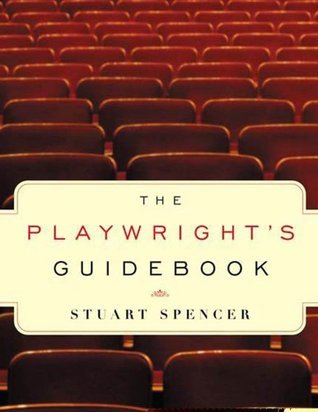
This is exactly what it claims to be, a primer on writing a play. It has a lot of merits, and would be a good addition to anyone's shelf, regardless of your level of theatre experience because it does something very well: It breaks everything down into bite-sized pieces and offers exercises to flex your muscles and suggestions for how to solve problems that might arise out of the process. Spencer heavily bases his technique on the writings of Aristotle, but uses an approachable vernacular that anyone could understand. For myself, it was helpful in reminding me of all the things I already knew about theatre after multiple decades around it, which was important because so often you begin to take certain things for granted. As a guidebook to the basic building blocks of theatre and methods for creating a work from scratch it achieves its purpose.
I did have one bone to pick, and that came from Spencer's section on historical plays. It might be because I am a historian who lives in the theater world, but I found his assertions about this to be downright harmful. He openly admits to being a "crank" on the topic and it shows. He says that people don't go to plays to get history, and if you see something like Shakespeare's Henry V for the history you are a fool. Well, let me tell you then, there are a LOT of fools out there, because I have genuinely lost track of the amount of people who have approached me with the firm belief that whatever historically-set play they've seen is the Absolute Truth. He also asserts that if you write about something more obscure in history, the likelihood of anyone who knows about it actually seeing it is extremely tiny. That's not true either. There are a lot of us historians out there, and we do see your plays, and how you treat history on the stage does matter. Of course some amount of historical inaccuracy is going to be forgivable and understandable in a dramatic context but I found myself actually angry at his spending several pages discussing why someone doing extensive research was wrong(!!) and then concluding that the play written by the person he was chiding ended up being beautiful and successful. Spencer's belief? None of the extra research mattered because it wasn't explicit in the play. I vehemently disagree with him.
This otherwise useful work is in desperate need of a new edition. I say this because in the 15 years since it was released so much of the theatre world has changed and many of his tips could use expansion. The existence of online ticket apps and lotteries, as well as the current trend of showing productions in movie theatres (the National Theatre, Allegiance, Newsies, etc.) and on television are just some examples of what any modern guide should include in its section on advice for seeing plays, not to mention BroadwayHD streaming service. It would also be invaluable to up-and-coming playwrights to have the selection of plays listed as suggested readings expanded. The number of superb plays of the recent decade and a half is not small, and it is a shame to not have them added to the appendix.