A compulsively readable account of a journey to the Congo — a country virtually inaccessible to the outside world — vividly told by a daring and adventurous journalist.
Ever since Stanley first charted its mighty river in the 1870s, the Congo has epitomized the dark and turbulent history of a failed continent. However, its troubles only served to increase the interest of Daily Telegraph correspondent Tim Butcher, who was sent to cover Africa in 2000. Before long he became obsessed with the idea of recreating Stanley’s original expedition — but travelling alone.
Despite warnings Butcher spent years poring over colonial-era maps and wooing rebel leaders before making his will and venturing to the Congo’s eastern border. He passed through once thriving cities of this country and saw the marks left behind by years of abuse and misrule. Almost, 2,500 harrowing miles later, he reached the Atlantic Ocean, a thinner and a wiser man.
Butcher’s journey was a remarkable feat. But the story of the Congo, vividly told in Blood River, is more remarkable still.
Tim Butcher is a best-selling British author, journalist and broadcaster. Born in 1967, he was on the staff of The Daily Telegraph from 1990 to 2009, covering conflicts across the Balkans, Middle East and Africa. Recognised in 2010 with an honorary doctorate for services to writing and awarded the Mungo Park Medal for exploration by the Royal Scottish Geographical Society, he is based with his family in Cape Town, South Africa.
Libro che mi è piaciuto molto, ma che prima di iniziare guardavo con scarsa fiducia: copertina mediocre, titolo brutto, retorico, a effetto (il solito effetto che sfrutta Conrad e la tenebra) – il trionfo della banalità.
Henry Morton Stanley (28.01.1841–10.05.1904) scrisse: Chi controllerà il grande fiume avrà sotto controllo la grande autostrada per i traffici dell'Africa. Nel 1878 Leopoldo II lo mandò nelle foreste congolesi per stipulare ingannevoli contratti commerciali e diplomatici con le popolazioni locali. In cinque anni l'agente Stanley avviò lo sfruttamento sistematico del Paese per conto del sovrano del Belgio.
Invece, per fortuna, da subito si è rivelato il contrario delle mie basse aspettative: asciutto, senza enfasi, senza pregiudizio, molto documentato, sempre sul pezzo, divagazioni solo dove serve e tutte molto interessanti, avvincente, appassionante, ironia con la giusta partecipazione alla materia. L’ho letto con un ritmo simile a quello tenuto per leggere la trilogia Millennium, il che è tutto dire, per i miei standard.
L’incontro tra Stanley e il medico missionario esploratore scozzese David Livingstone il 10 novembre 1871 a Ujiji, vicino al lago Tanganica, odierna Tanzania. La celebre frase è un falso storico opera dello stesso Stanley, il cui vero nome era John Rowlands, ed era persona avvezza a inventare bufale. Livingstone fu il primo bianco ad avvistare le cascate Vittoria e poi, ripartito per scoprire la sorgente del Nilo, era misteriosamente scomparso nel nulla. Il quotidiano New York Herald assunse Stanley per ritrovarlo.
Materia che a me interessa in modo particolare: il Congo, questo immenso cuore dell’Africa sub sahariana, la sua storia e il suo presente. Un viaggio lungo cinque secoli, con ovvio fuoco sul viaggio di Stanley dal 1874 al 1877, e quello dello stesso Tim Butcher sulle orme del primo nel 2004. L’esplorazione di un paese tra i più grandi del mondo (da solo è ben più vasto dell’Unione Europea). La colonizzazione belga, tra le più bestiali della storia, al punto da suscitare ampi movimenti per la difesa dei diritti umani già a fine Ottocento (argomento ampiamente affrontato ne Il sogno del Celta di Mario Vargas Llosa) e calcolare milioni di vittime a quell’epoca (una decina di milioni di morti, nell’arco di una ventina d’anni, direttamente per le amputazioni o per le violenze, o indirettamente per epidemie o per fame).
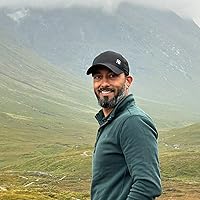
Tim Butcher ripreso durante il suo viaggio in Congo.
Una delle dittature africane più brutali (Mobutu). La guerra 1998-2002, mai veramente finita, la più tremenda dalla fine dell’ultima mondiale (4 milioni di morti), con tanti paesi coinvolti. La forza di pace più numerosa nella storia delle Nazioni Unite. Un sottosuolo ricchissimo, immensa risorsa naturale che naturalmente sfama quattro ladroni e affama un popolo intero. Eccetera. Una quantità di argomenti interessantissimi che Butcher affronta con chiarezza e competenza, tra giornalismo reportage saggio.
Il Congo è davvero il cuore dell’Africa, per la sua posizione, per la sua importanza, paradigma della storia dell'intero continente e l’intreccio di tutti i suoi problemi e contraddizioni. Un cuore spezzato.
Il bacino del fiume Congo: è lungo 4700 km, il secondo fiume più lungo dell’Africa dopo il Nilo. Quando il paese si chiamava zaire, lo stesso nome era usato per il fiume. È navigabile quasi completamente e con le ferrovie che scavalcano le tre principali cascate, gran parte della merce dell'Africa centrale viene trasportata al mare (oceano Atlantico).
I read this book on the airplane during my epic 42 hour flight from Papua New Guinea to South Carolina. It kept my attention despite my incredible fatigue and anxiety. But I had mixed feelings about it.
At first, it annoyed the hell out of me. He kept going on and on about his fear and how scary the Congo is. The Congo is scary. However, the people in the Congo are amongst some of the most amazingly friendly, hospital, and cheerful helpful people in Africa. While he gradually did give some shoutouts to all the Congolese who dragged his white ass through the DRC (not unlike Stanley, his hero), it wore on me. And it annoyed me because it kept pushing the DRC back into the "heart of darkness" trope that so many love to use.
But then again, I'm not really surprised at his fear at the same time- the DRC is one of the most frustratingly difficult environments to work in. The portraits of the wiped out aid workers, the cynical UN employees, and the priests and nuns who keep the place functioning, reminded me of the people i met while I was there. I didn't go to all the places he went - I was in Kissangani, Bunia in Ituri (scene of one of the worst massacres that drove UN soldiers mad), Bukavu, and Goma. And while I wasn't on the back of a motorbike, I did travel through hostile land in an unarmed convoy and take a treacherous boat ride that lost one boat to a storm to deliver things to some internally displaced people there. It wasn't all roaring around in UN helicopters.
The part that moved me the most was his conversation with the Malaysian UN boat captain. It summarized to me the frustration that all of us humanitarian and development workers have with the Congo - its got everything you would need to be a great country. Its got natural resources, natural beauty, charming and beautiful people, and smart wily people. Yet somehow, it seems to get worse and worse. It burns out the do gooders and limps along. Why is that? So I guess in the end, I enjoyed the book and felt it did, in some small way contribute to my understanding of the country - in its rich history, if nothing else.
Tim Butcher is officially a diamond geezer. He's just joined Goodreads and read my review below and still sent me a thank you message today. Rereading the below review, I think some authors could have taken umbrage because, well, it's actually quite cheeky. The word pompous is used. Some fun is poked. Given some of the frankly unsavoury, if not downright ugly, author/reviewer encounters there have been on this site, I therefore salute Tim.
***
A BOOK WHICH DESERVES TWO REVIEWS – FIRST, THE CHURLISHLY CYNICAL
“My Congo journey deserved its own category : ordeal travel.” p216
I hereby announce my ordeal reading challenge. I will read the complete works of Gertrude Stein, Samuel Beckett and Georges Perec in reverse alphabetical order whilst listening to Karlheinz Stockhausen’s Helicopter Symphony, John Cage’s Atlas Elipticalis and Trout Mask Replica which will be played continually on a giant loop tape. All the time, ladies and gentlemen, I will be suspended – suspended I say - and gradually lowered into – a tank containing 127 tarantula spiders and a life-sized model of Richard Nixon. Surely corporate sponsors will be falling over themselves in a bid to offer me large amounts of sponsorship cash to fund my bizarre self-indulgent fantasy. Chat show host : “What was it like?” PB : "Well, my torso was firmly anchored to the ceiling by this ingenious contraption specially made by the brilliant engineers at Unilever (ka-ching!). Therefore I wasn’t too concerned I would fall into the tank of tarantulas manufactured by Pilkingtons Glass blah blah blab blab." Yes, I will be admired far and wide for my feat – I will explain that it was a challenge I had to take on, it came from deep within me, I had been wrestling for many years with the twin problems of how to bring 20th century avant-garde literature to a wider audience and also how to get on the chat show circuit and here I am being asked to explain Oulipo to a daytime TV audience – I feel I may say – mission accomplished!
SECOND REVIEW : TAKING TIM BUTCHER AT HIS WORD
As Tim Butcher grinds his way across the Congo by 100cc motorbike, dugout canoe and barge, he is filled with a rising sense of despair:
“the normal laws of development are inverted here in the Congo. The forest, not the town, offers the safest sanctuary and it is grandfathers who have been more exposed to modernity than their grandchildren. I can think of nowhere else on the planet where the same can be true.” p141
Verond Ali Matongo : “I am the mayor of Kasongo, appointed by the transitional government in Kinshasa. But I have no contact with them because we have no phone, and I can pay no civil servants because I have no money and there is no bank or post office where money could be received and we have no civil servants because all the schools and hospitals and everything do not work. I would say I am just waiting. Waiting for things to get back to normal.” Tim Butcher : “And when was the last time things were normal?” VAM : “The 1950s. From what I hear, that is when this town was last normal.” p 162
“Some of the best coffee in the world used to be grown neat Kisangani but now the finest hotel in the city served only imported Nescafe” p256
This is the whole of the truth Tim has to tell us about the Congo (third largest country in Africa in size, fourth in population). It’s going backwards. Everything in the whole country – schools, roads, hospitals, trains, rivers, everything, was not just slightly but hugely better fifty years ago. Like previous white men in the Congo, Tim couldn’t get anywhere without Africans doing all the heavy lifting. Sometimes these helpers get paid, other times they’re just being kind. He steps from one situation to another like Harold Lloyd or Popeye stepping from one skyscraper girder to another. He finds some guys with pirogues (canoes) at the riverside, picks out the likeliest looking group, hires them on the spot to take him way way down the river where he has to get to a priest’s house in a particular town (the only safe place) in order to go from there to the UN compound the next day where he can cadge a ride to the next town. When they get to the town “Malike said he knew the way to the priest’s house and I was banking on him being right”. I bet you were, Tim! There’s a recurrent strangeness to these travellers’ tales – in the middle of a disaster zone you can easily find the kindness of strangers. I remember a famous BBC war correspondent being interviewed and the question was how the hell do you get around inside a war zone and he said “I just walk out of my hotel and ask the first few people I see what’s going on and how do I get there and they’re always very kind and helpful” – well, you have to take their word for it. But somebody must be doing all those bad things…
“time and again during my journey with Benoit and Odimba I was struck by just how much tougher and more resilient than me they were” p 148
“Kisangani.. I found it to be chaotically administered by inept, corrupt local politicians” p255
p309-10
This division of people into those Tim met (all good, strong, resourceful) and those causing all the problems (very bad people) was not altogether helpful in figuring anything out. Eventually Tim has to bite the bullet and ask the big question. He approaches it like this. He’s on a UN barge with Captain Ali who is from Malaysia.
Captain Ali : “I don’t know what it is about these Congolese people, or Africa in general, but look at this wasted opportunity… In Malaysia people make millions from palm oil. It is one of the most valuable commodities in the world right now… [and the plants from which it comes grow all over the Congo:]. But the Congo people. They don’t want to make money for themselves. They just wait to take money from others.” …he had distilled the quintessential problem of Africa that generations of academics, intellectuals and observers have danced around since the colonial powers withdrew. Why are Africans so bad at running Africa?”
Tim dismisses the stock answers – neo-colonialism, foreign meddling, rapacious multinational companies – as so much liberal huffing and puffing. Yes, they are elements, but they are by no means the whole story. But he gives no answer of his own. He has no idea. It’s such a dangerous question to ask – there are, after all, a thousand racists out there who think they know the answer.
Apart from the hundreds of miles of the Congo where there is no single element of modern technology to be found, the towns which were thriving once and have been rusting and crumbling for 40 years, the forests which are empty of animal cries because the local villagers have eaten them all, Tim stumbles (often literally) on perfect examples of things profoundly not working. At one point he realises he’s on the Ubundu-Kisangani road. Before the trip, back in London, he’d been told by the British Government’s Department for International Development that this road had already been developed and upgraded following the 2002 peace treaty. British taxpayers’ money had been spent on it. Tim finds no such thing of course. The once-four-lane highway is now a single track footpath. Nothing has been done. The money had vanished, who knows where. Moreover, the British government department officials never come along to check, so they are still blithely telling anyone who asks that the Ubundu-Kisangi road has been upgraded and is now suitable for cars and heavy goods vehicles.
In the end Tim says : “in six harrowing weeks of travel I felt I had touched the heart of Africa and found it broken”. He does himself no favours with this uncharacteristically pompous sentence, but still, I admire all who excavate difficult truths from such hard-won experience as this. I have to admit, grudgingly, that Tim Butcher has earned his chat show appearances.
Tom Myanwaya : “What makes you do this sort of thing? I would not travel anywhere in this country except by plane. I don’t think I can stand more than a few months and I will leave as soon as I can. There are some jobs in the aid world which you have to do to get on.” p156
By rights, the Congo should be a world power in its own right. The vast resources of minerals and timber should ensure an affluent lifestyle for every citizen in the country. Instead, the country is regressing instead of progressing. Armed gangs and militias roam the countryside, killing and looting. Dissident forces from neighbouring countries rob, rape, and kill as well. The Congo has been on a constant downhill slide since gaining independence in the sixties and is, at least at the time this book was written, a very dangerous place for citizens, never mind solitary white travellers. Tim Butcher decided to attempt to retrace Stanley's route through the Congo alone, something I would be hesitant to do with anything less than a platoon of troops. I have no doubt that he questioned his own sanity in the process; I know that I frequently found myself thinking "this guy is out of his friggin' mind!"
Mr. Butcher used different forms of transport to complete his journey through a country where public transport is now only a distant memory, a story told by great-grandpa and possibly not even believed by the listener. As the author points out, the whole country has a post-apocalyptic aura: nature has reclaimed what used to be a modern and thriving country. Buildings have collapsed, the jungle has reclaimed the railways, former highways are now overgrown trails. Fuel, when available, is often tainted and electricity is a rare treat. The trip begins on motorcycles, (100cc, barely larger than mopeds), continues by pirogue (as in "me gonna go pole me pirogue down the bayou"), and then switches over to motor boat, helicopter and jeep. In a country where you can't call ahead to make reservations, Tim had to lay his head where he could and, like Blanche, relied a lot on the kindness of strangers. During his travels he meets all manner of interesting characters; UN troops, aid workers, tribesmen breaking their backs trying to make a buck.
Tim has a great eye for detail and the reporter's tendency to record important information. He easily switches from enlightening the reader regarding the history of the Congo to describing the fascinating characters he meets on his journey. The sad part is that most of the Congolese are on the make, particularly those who are in positions of authority. Most try to take advantage of you in some way, some by begging, some by stealing, some by trying to ransom your own travel documents back to you. One even tried to get Tim to smuggle his child out of the Congo so that the infant would have a chance at a decent life.
While reading this book I couldn't help comparing the situation in the Congo with the comfort we enjoy in my own country. The main difference is the rule of law. I can't even imagine attempting to bribe a public official in this country - it would be a guaranteed ticket to the hoosegow. In Congo, nothing gets done without a bribe to an official. One can hardly blame them, as none of the wealth enjoyed by the few who run the country seems to trickle down to the man in the street. Having a job does not necessarily mean one will have a paycheck.
I've been interested in the goings-on in the Congo since the early seventies when I made the acquaintance of a couple of soldiers who had served in the Canadian contingent in the UN. I soaked up their stories and read whatever I could find on the topic, including Mike Hoare's book. Consequently, on 186, I was thrilled when Mr. Butcher discovered the remains of a rebel armoured car destroyed by Hoare's troops back in the sixties, almost completely lost to the jungle now but still sitting where Hoare's troops had blown it up. What a thrill it must have been to find that piece of machinery!
This was quite a trip for Mr. Butcher, a real ordeal, but difficult journeys make for interesting stories. I enjoyed every minute of it. To close, I'd like to say a word about the author. On page 224, he mentioned an account written by a Murray Taylor regarding a massacre by the Mulele Mai rebels in 1964. I wanted to learn more but couldn't find anything online. I found Tim's website and sent an inquiry, figuring that he was probably too busy a man to be troubled with a casual inquiry from a total stranger. To my surprise, within a couple of days I had a reply and a copy of the article from which he had gleaned the information. In my eyes a good writer and a gracious individual!
The author reads the audio version of this book. The book is very good and definitely worth reading but choose the paper format. Tim Butcher is an English-born broadcaster, journalist and author of travel books with a slant toward adventure. He narrates quickly, very quickly. The rapid speed diminishes the listening experience. It is not pleasant to listen to a book read this fast. I am giving the audiobook performance one star. This is my way of letting it be known that I do not want audiobooks to be read quickly. Furthermore, the audiobook version should have been accompanied by a PDF file with maps and photos.
Now, to the more interesting topic, the book!
Tim Butcher writes of his journey from Lake Tanganyika at the eastern border of the Democratic Republic of the Congo westward to the mouth of the Congo River on the Atlantic. He traveled alone, set off in August 2004, carried only a knapsack and camera, a pocketknife and 2000$ in his right and left boot. His journey took 44 days. His plan was to follow the route taken by Henry Morton Stanley. Yep, that Stanley, the Stanley that found David Livingston in 1871. Both Butcher and Stanley were employees of the London based paper the Daily Telegraph! In addition, Butcher’s mother had resided in towns along the river back in the 1950s; she had spoken of her memories with delight. He sets out to compare the Congo of times passed, of the 1950s and 1870s, and the Congo of today. The passage of years has not brought the prosperity one assumes the progression of time will bring. From the 1950s, conditions have gone backwards. The Democratic Republic of the Congo is not merely underdeveloped, it is, using Butcher’s own words, underdeveloping! The book draws an alarmingly vivid picture of the violence, anarchy and lawlessness that existed in 2004, and still today.
The steps of Butcher’s journey are followed in chronological order from start to finish. Relevant tangential information is interspersed throughout. A large amount of historical, geopolitical, sociological, geographical, meteorological and natural historical facts supplement the text. Mention is made of authors who have set their stories in the Congo River Basin. All of this I like very much. The variety stimulates interest. There is however repetition; some topics are returned to multiple times.
The history of places passed through is fascinating. Kalemi (formerly Albertville), the Arab slave trade center Kasongo, Kisangani (formerly Stanleyville) and Kinshasa (formerly Léopoldville) are examples.
It is important to note that in 1885, eight years after Stanley’s exploratory travels along the Congo River, King Leopold II of Belgium claimed the Congo Free State as a private possession. Rather than making it a colony, he declared it to be his own, making its natural resources his too.
Leopold’s and Belgium’s plundering of the land’s resources, the atrocities committed, the transfer of possession to the Belgian state, independence granted in 1960, the mercenary armies of the following decade, Mobutu’s dictatorial reign lasting over thirty years, the rebel uprisings and wars of the late 1990s and the succession of Congolese presidents from Lumumba to Mobutu to Laurent Kabila to Joseph Kabila are covered.
Readers are given the opportunity to observe corrupt dealings both in the past and in the present, during Butcher’s journey, as well as those individuals who proved themselves to be trustworthy and helpful. Without their support, Butcher’s journey could never have been successfully completed.
The author speaks of the dire need for the implementation of a functioning judicial system. The country has great natural resources—copper, diamonds, gold, cobalt, timber and tin—but profits have lined the pockets of those wielding power rather than back to the Congolese nation, its infrastructure and its people. He proposes no concrete solutions on how to bring about change. Nor does he sufficiently point out the failure of the Belgian government to provide an adequate amount of money and time to train the Congolese people in the art of self-government, i.e. before independence.
I always give two ratings to an auddioook—the first for the book’s written content and the second for its narration. The book’s content I have given four stars but its narration only one.
In 2004 Tim Butcher realised his dream of crossing the Congo from side to side. It’s an enormous country with hugely challenging terrain. He was following in the footsteps of his hero, Henry Stanley – he of “Dr. Livingstone I presume” fame. They shared a link. Both Butcher and Stanley were journalists working for The Telegraph newspaper in London.
Tim Butcher
In some way his trip was every bit as difficult as that experienced by Stanley. Exhaustingly high levels of humidity and heat, matted rainforest, mosquitoes, roads reduced to pot holed muddy paths through the jungle, seriously hostile and dangerous fighting factions, very few (and very primitive) hotels, difficulties in finding food, sometimes even difficulty in finding water. He also had to rely on other people providing him with transport and to guide him across this difficult landscape – motorbikes to get him across the land, and boats to get him down the Congo river. Obtaining these things was not easy.
Herewith his description of a typical Congolese town – Kalemie:
He was helped by a few humanitarian organisations, dotted like minute islands amid the chaos of the Congo. But most of all he was helped by the people of the Congo, who with courage, kindness and stoicism led him from one step of his journey to the next. Their lives are tough. Butcher describes life in the Congo post independence as being "an age of economic decay, war, coup and crisis" . He speaks on several occasions about the extraordinary greed of the dictator Mobutu, and the legacy of corruption and lawlessness that he bestowed upon his country when he ruled as president between 1965 and 1997. He is no kinder when he speaks about the effect of Belgium as a colonial power before that, nor when he speaks of the involvement of the USA in supporting Mobutu. It’s a mucky cocktail based on greed for the natural resources of the country.
In many way the amazing wealth of the Congo has been its downfall – diamonds, gold, cobalt, tin, coltan and timber…..it also has navigable rivers and rich agricultural land. All of this has been coveted – currently by Uganda and Rwanda (yes, even tiny Rwanda has a huge stake in its vast next door neighbour, backing fighting factions that will bring it mineral rewards). The legacy of these abuses has resulted in near anarchy, with a mind-boggling breakdown in infrastructure. Where there were roads, railways and plantations fifty years ago, there is now wilderness. Where there was the rule of law there is now every man for himself. Time and time again people speaking to Butcher talk about having to run off into the jungle when their villages are attacked by marauding soldiers. And they are seemingly attacked on whim. It all seems incredibly senseless.
Yet Butcher meets brave individuals trying to lead ordinary lives in spite of all the difficulties:
And the friendship and support he is offered during his trip warms you towards the Congolese people. So often they seem prepared to walk the extra mile, even for a stranger, and even when their lives might be in danger because of it.
I thought this was a marvellous book. I learnt so much about the Congo – its history, geography and politics, and the difficulties that people face trying to live there today. Tim Butcher’s journey was also an amazing adventure - the gung ho of a Boy’s Own magazine story couldn’t have been more exciting. An excellent read.
This is a very engaging, but at the same time, disturbing story of this man’s journey on the Congo River.
Mr. Butcher gives us many moving impressions of life in this part of the world – and it is for the most part not very pretty. He meets a wide array of characters, most of who have been deeply affected by the violence and poverty in the Congo. There are many enduring images from this book. The four Africans who took him by pirogue (a type of canoe) up a part of the Congo left a very forlorn feeling.
There is a disconnect between life in the Congo and the rest of the developing world. Life has regressed – the railroad adjoining the river has been taken over by the jungle and is no longer serviceable. Large boats, that were once used to transport goods and people from village to village, are decaying on river banks. If the makers of the “African Queen” were to return to the Congo they would think they had gone fifty years backwards in time instead of fifty years ahead. It would be logistically impossible to make a movie in the Congo today.
In many ways the author is fortunate to have survived his journey – he provides examples of some who did not. There is a constant threat from assorted marauding groups. Also the environment is unforgiving – the sweltering heat, the mosquitoes, lack of drinking water and of food. The author was physically exhausted towards the end of his 44 day sojourn and reluctantly took a plane to Kinshasa from Mbandaka. Many of the NGO’s and U.N. workers were counting the number of days remaining in their Congo stay. One can imagine the stamina of Stanley, the first European to traverse the African continent. It took him almost 1000 days. Also Stanley made three significant expeditions to Africa. I say this because I feel the author was unnecessarily harsh on Stanley. It was King Leopold and the Belgian colonialists who turned the Congo into a slave state. For a more sympathetic view of Stanley read Tim Jeal’s biography of the explorer.
As well I feel, Mr. Butcher paints Patrice Lumumba too optimistically as a potential saviour of the Congo (Lumumba was assassinated with U.S. complicity). Lumumba was an ineffective leader unable to get along with anybody – inside and outside of his country. He even managed to distance himself from the U.N., who were trying (way back then) to aid his newly liberated country.
Nevertheless this book is spellbinding and very readable. Mr. Butcher gives us a harrowing portrait of the life of ordinary people in the Congo. Magnificently many still have a decent sense of humanity. Mr. Butcher was most vulnerable during his trip – but all he found were those willing to help and guide him and share their food. The author is a wonderful and perceptive observer and gives us many fulfilling passages from his diverse encounters.
In 2004, British journalist Tim Butcher took his life in his hands and traveled the interior of the Democratic Republic of Congo (DRC). He followed the approximate path of Henry Morton Stanley, the explorer that found David Livingstone in 1871 and went back in 1874 to map the Congo River. Between descriptions of his journey, Butcher tells the history of the country, including Stanley’s expedition, colonial rule by the Belgians, post-colonial political upheaval, and uprisings that have brought regular bouts of violence to the region.
He was also inspired by his mother, who, in 1958, crossed the Congo by train. That train and its infrastructure have since been reclaimed by the jungle. Butcher explains how a country so rich in natural resources –diamonds, cobalt, copper, oil, palm products, rubber – can remain underdeveloped and the bulk of its people living in deprivation. This country is one of the few that had gone backwards from fifty years before, primarily due to corruption, exploitation, lack of leadership, and lawlessness.
It is a description of an amazing 44-day journey through close to 3000 kilometers of jungle on foot, motorbike, pirogue, and riverboat, not knowing exactly where he would stay the night and relying on a network of contacts he had made before the trip. He connects with United Nations employees, humanitarian workers, and missionaries. He sees and describes how the people live, both in the bush and the decaying cities. He dodges militia carrying AK47s, survives on cassava, and suffers disease. He also meets caring Congolese that offer hospitality despite possessing few resources.
Tim Butcher writes in a direct style and does not shy away from expressing his opinions. This book is so much more than a travelogue. It provides an informative history of the DRC, while documenting an extremely challenging journey, offering perspective on the immense issues facing the country, and providing thoughts on the outlook for the Congolese people. It is eye-opening and inspired me to look up the recent history of the DRC to find out what has happened since 2007, when this book was published.
Inspired by Stanley, in 2004 journalist Tim Butcher decided to retrace his steps and follow the River Congo through the heart of Africa. The resulting book is part travelogue, part history, and completely riveting. Along the way he meets some fascinating people and has some quite scary adventures (Mr Butcher is clearly a lot braver than I am!!). He also writes about the Congo’s history, and how its violent colonial past has impacted on its present state: corruption, lawlessness, poverty, a country which seems to have gone backwards as the rest of the world has developed. Fantastic story, fantastic book.
In 2004 journalist and historian Tim Butcher set out to retrace the 1874-77 route of legendary explorer Henry Morton Stanley (of "Dr. Livingstone, I presume" fame) across the Congo to the mouth of the river on Africa's west coast. A few years ago I read King Leopold's Ghost which spells out the horrifying years of King Leopold of Belgium's rape of the region. The history presented in this book largely picks up where that one left off, with the 1908 Belgian annexation of the region which was precipitated by humanitarian campaigns against the genocidal crimes of Leopold's personal agents. However, this book does not move chronologically, but rather introduces topics as Butcher moves through the insanely dangerous regions by motorbike, pirogue, barge, helicopter, and four-wheel vehicle, assisted by various aid workers and Congolese opportunists.
I am not a fan of journalists who put themselves in extreme danger to get exclusive scoops, and I definitely don't agree with Butcher's decision to do so just to retrace a historical journey, albeit a very important one. The DR Congo had just emerged from a 6-year African civil war, and though a ceasefire was supposedly in effect, the entire eastern part of the country (through which Butcher traveled with a few companions) was still a rebel war zone.
What I was most shocked about in this book was to learn that outside Kinshasa, which in itself is far behind the modern world, there is almost no public infrastructure or government control in the Congo. Even cities with millions of people have no consistent electricity, no sewage system, no functioning local government...it's a mess of corruption that barely functions as a subsistence economy. The thing that's amazing about this is that before Belgium turned Congo over to the native peoples, there was a lot of infrastructure, development, and trade (though largely of the exploitive variety). With lack of basic security and absolutely no investment in the country, everything has just slowly rotted and rusted away. The railroads no longer function, the roads are completely grown over by the jungle, even the river is unsafe for travel because of security concerns.
Why have the Africans made such a mess of their post-colonial independence? Butcher makes the excellent point that before white Europeans scrambled for Africa, society was completely tribal. People had a say in their small government; chiefs could be replaced if they didn't rule well. Leopold brought in modern weapons and completely subdued the tribal system, enslaved the people, and taught them that survival came only through subservience. The independence of the 1960s in theory could have brought democracy and progress, but one has to remember that the people of the Congo were a polyglot lot who had been united only through conquest. There was not overlying loyalty, little common interest, and no experience at modern self-government. The result was a take-over by African elites who, like Leopold before them, saw the Congo as a personal fiefdom to fleece for diamonds, gold, and anything they could get from it, with no intention of putting money into the state economy. Since then there have been a few different despots, and constant struggle between groups backed by Uganda, both Tutsi and Hutu groups from Rwanda, etc etc etc. No group has looked out for the interests of the Congolese people as a whole.
What a mess! As Butcher says repeatedly, DR Congo is one of the few places in the world where grandfathers experienced more modernity than their grandchildren, and where the pace of progress seems to run backwards.
I love travelogues. And I am very interested in Africa and its history. Therefore, I was very curious for this book which describes one of the most challenging travels in contemporary Africa: Starting at Lake Tanganjika and ending at the Atlantic Ocean where the river Congo completes his journey of thousands of kilometers. I was very impressed by the speed the author managed to finish his journey. It took him about six weeks – a real sprint compared to the man who went this way first, Henry Morton Stanley, who was underway for nearly three years. I was a little bit disappointed that Butcher travelled about one fifth of his way with a helicopter because he was ill after one week on board of a vessel sailing down the river Congo. I travelled in Africa too, and I know how exhausting this can be, but somehow I expected a tougher traveler writing a book like this. When faced with the devastating situation in Congo, Butcher seems to long for the end of his journey. This is bad for his book, because he almost never stays at one place for a longer time and fails to connect with the people there. Everything is a fast race through the heart of the continent.
Another point I didn't like much is that Butcher emphasizes all the time that Congo is a failed state. That's certainly true, but overall, he just joins Joseph Conrad in his famous words 'The Horror! The Horror!' The author comes to the conclusion that a combination of the consequences of colonialism and the inability of African leaders to rule just and successful for all the people makes the Congo as broken as it is today. Again, this is certainly no false point, but that's the conclusion after six weeks in Congo? At least for me, this information wasn't new and I wished Butcher would have been able to bring some new point of view in my mind. If you like to inform yourself about Congo now, the book surely is quite interesting. For me, the work lacks an 'Aha!'-effect. Butcher seemed to be continuously on the run. I wish he had dared to spend some more time in Congo, presenting the reader a deeper experience than he finally did.
Very good indeed. How Tim Butcher managed to travel across the Congo, following in the footsteps of H.M Stanley, is truly remarkable. Relying on the kindness of strangers, from UN aid workers and missionaries to local fishermen, he manages to navigate across the country.
The story he has to tell about Congo's decline since independence and Belgiums brutal colonial rule makes for gripping reading.
Tim Butcher clearly has a passion for the course and its history and he writes about his subject matter with great empathy.
Adorning my Book shelf for couple of years, I finally picked this up before my first journey to Africa. Partly Travelogue and Partly Journalistic, this is a must read for anyone interested in Congo History and its troubled present.
Writer follows 18 Century Adventurer Stanley's path of charting through Africa's second longest river, Congo and that too overland. The idea itself draws lots of gasps, astonishment and disbelief among many with whom the author shares his maniac idea with.
Anyhow, without giving out much of the plot, the writer shares the difficult ordeal of his Travel experience in this riveting, exciting and informative travel journal. It is fully packed with lot of facts which looks so unreal like one of the character describing Congo of the 1950's much more progressive and developed than his home country Greece or that this massive 'Western-Europe' sized country has 80% reserves of Cobalt or that the Discharge of the massive Congo river is so huge that it completely encapsulates the Atlantic Ocean up to 45 kms from its source or that the conflict in Congo has taken on an average of 1200 lives a day from 1998 - 2002 and the disgusting antipathy of rest of the world towards the country.
Its a must read for anyone interested in Travel Writing and interested to know about new places.
I definitely look forward to reading Tim Butcher's next adventure through Sierra-Leone and Liberia.
At the outset, you have to admire his gutsiness in attempting this journey across Africa at the Equator. His mom did a trip along the Congo River back when the Congo was under Belgian rule. Now he was attempting the trip in 2004 just after the end of a brutal civil war (not all parties were maintaining peace as he starts). A brief review of history and geography leads off his book:
This is one depressing book. He devotes some time to discussing the business of slavery practiced by the Europeans (west coast of the Congo) contrasted with the Arabs in the east of the country.
He is of two minds while traveling through the country. He meets hard working, honest and trustworthy individuals while decrying the cruel, corrupt and criminal society he is moving through. While traveling with a Malaysian UN soldier operating a barge along the river, a discussion ensues about why such a rich country has fallen completely apart. He offers the standard Western excuses:
The author does comment on the impact of colonialism and has the opinion that, while the Belgians were cruel and exploitive, the country may not have faired better under any other colonial empire. Blame goes all around for the state of affairs:
This is a dark, depressing book and you (and he) wonder why he even attempted it. I did not find him a sympathetic person but he did write honestly about his trip and his state of mind. I found the Democratic Republic of Congo even less sympathetic. 3 Stars
Tim Butcher is to be saluted for making and recording this extraordinary trip. It was every bit as dangerous as Stanley's, if not more. He faced the same diseases and supply problems as Stanley and his men. While armed enemies haunted Stanley, Mr. Butcher is vulnerable to more powerful weapons and is traveling essentially alone.
Descriptions of the former civilization are striking, especially coupled with the author's observations of time going backwards. Mr. Butcher describes hotels, roads, functioning railroads and means of production from the colonial period and their present state of damage and decay. He has a deep sense of history and a keen eye for the present. He helps the reader imagine the plight of those who scramble to stay alive while natural and man made forces hold them back and the extraordinary qualities of those who can somehow maintain.
While this book is very good there was not enough of it for me. The author writes of bicycle traders, guides on land and river, UN and missionary workers and government officials, some of whom he spent a lot of time with. He usually described their encounters and something of their history or point of view. I wanted to know more. We don't know if they live in huts or houses. Do they, and all locals are men, have a wife (wives) or kids? It is not so much that they speak English or French, but it is how did they became so good at a second language or come into their positions? While Mr. Butcher spoke with female aid workers and missionaries, there is not one interview with an African woman.
Aid programs appear to be band aids on huge problems. What do these aid agencies do? From this book, they receive supplies and their staffs live in air conditioned pre-fabs. I don't remember a single description of a clinic or the dispensing of aid.
In his discussion of what went wrong, it's clear that the need for the rule of law far transcends the need for democracy. Libertarians should take note of the consequences of a weak government. In these discussions of the African continent, the stability of Botswana and Namibia are not cited.
I'm giving this book 5 stars because of the value of the author's actually doing this and putting it down and because it is so readable that I gobbled it up.
Excellent. The text was clear and had enough reference material to give it serious credibility. It was compelling enough that I reread Heart of Darkness while reading Blood River, I rented the movies Blood Diamonds and Rawanda, pulled out my copy of Poisonwood Bible and bought a copy of Dancing in the Glory of Monsters.
Although billed as a travel book, it's also a political commentary by the author. His passion is sincere and mildly contagious. I don't think the answer is as simple as elections and increased law enforcement, though. Who makes the laws?? The west? The levant? IDK. Don't we face similar situations in many places?
I have a theory which is that politicians often cannot do much to help a country but can certainly ruin one.
Tim Butcher's Blood River provides ample evidence for this theory and also poses two more questions: How can people live like this and how can a country fall so far?
Blood River tells us the recent history of the Congo and its descent from a wealthy and functioning country into a failed state. In the Congo the law is no more than another excuse for one group of people to arbitrarily extract money from another group and the only true power is exercised at a local level, meaning at the barrel end of whichever party is holding the gun.
One inspiring story in a book lacking inspiring stories is where Tim meets a trader who builds his own bicycle out of wood, loads it up and pushes it along jungle trails longer than a hundred kilometers, risking death from armed gangs on the way, just to sell his goods for a few tens of dollars. What a pampered life we lead.
By coincidence I read Why Nations Fail which goes a long way to explaining the reasons for the current state of the Congo and many other developing nations. This book outlines the theory that nations become relatively poor or fail because of what the authors call "exclusive political institutions" fostering "exclusive economic institutions" that allow a politically connected elite to extract a country's wealth at the cost of those without political power
Less a theory than common sense you may think, but we in the West, in the UK and US in particular, have seen the rise of our own "exclusive political and economic institutions" in the form of Wall Street and other wealthy people with no conscience who use their money to buy influence in the media and politics and so profit from favors that the rest of us pay for. Money spent on political lobbying in the US has the returns far, far better than anything as mundane as building a factory.
There is no reason for the West to be complacent. We are a long way from the Congo but a few decades ago the Congo's citizens were living a relatively peaceful and wealthy life but then watched as the erosion of their political institutions and power grabbing by the elite pulled the country to a state of anarchy.
Regrettably the West seems to have taken a few steps down the same path that the Congo has walked already and in that sense Blood River serves as a useful warning as to where this path ends. Worryingly as Why Nations Fail explains once a society has started walking down this path it is remarkably difficult to turn back.
The Congo could be our future and we have no reason to be complacent at all.
One PS I listened to this book on Audible rather than reading at and Tim Butcher himself is the narrator, which gives it a great immediacy which I would really recommend.
What is it with me and muggy, hot, equatorial places and rivers? Like the book The Lost City of Z: A Tale of Deadly Obsession in the Amazon by David Grann, Blood River recounts the tale of Tim Butcher's crazy obsession to the trace the routes of a great explorer, Stanley in this case, through the Congo. While the rest of the world has become more accessible in the past half century, these two equatorial locales on different continents show that winning a battle (finding a route, establishing a forward post, or even building a city) is not winning a war (creating a functioning state). Vegetation has reclaimed much of the railway in the Congo, and once busy trading hubs have fallen into disrepair with no functioning services. Rule of law is unknown. Despair is endemic.
In a way, the Congo may be a perfect example of how bad things can get when a state goes so wrong that great wealth of a few is squandered in the face of the unbounded poverty of the majority. And the resources are there for everyone to share in the future. All I could think was to have millions and millions of people descend on the Congo at once--the equivalent of holding a thrashing baby to silence it--and rock it into silence, until it unclenched enough to learn and notice there might be a better way to get what one needs. It is a terrible waste. Mankind is not always to be admired. We need to find a way to bring out the best in the Congo.
---------------- August 2014
I am embarrassed by this review now that I have listened to King Leopold's Ghost: A Story of Greed, Terror and Heroism in Colonial Africa by Adam Hochschild. I did not know when I wrote this what a horror was perpetuated there, and how many slaughtered. Survivors continued the unbridled greed, notably President Mobutu Sese Seko and his offspring. I am aghast at my ignorance and the horror of what the Congo has had to live with.
This book doesn't deserve less than five stars in my opinion because Mr.Butcher,while completing this dangerous assignment,never forgot he was a journalist too. He made me see DRC through his eyes.His writing style is awesome and often when you feel its too monotonous, he pauses and writes about the days when Stanley was there in his place.The only thing I missed were the photographs of his adventure. It is sad to note that DRC is 'undeveloping'.The author also asks some serious questions to the international community,especially the United Nations, about their willingness to help those in need. Finally, I learnt a lot about DRC. I feel whenever anyone will start a journey to DRC or navigate through Congo river,he will use this book as a guidebook. Thanks Tim Butcher for introducing us to Africa's broken heart.
Ich weiß gar nicht mehr, seit wann oder warum Blood River auf meinem to-read stand – ich glaube, dass das Buch mal auf irgendeiner Liste mit Büchern, die man gelesen haben muss, oder so stand. Irgendwann habe ich es dann für wenig Geld auf Medimops bestellt und seitdem lagerte es in meinem Regal. Dass ich es nun in die Hand genommen habe, war eigentlich eher Zufall – allerdings ein sehr glücklicher, wie sich herausgestellt hat.
Tim Butcher ist Mitte 30, als er von der britischen Zeitung Telegraph als Korrespondent nach Afrika geschickt wird. Schon bei seinen Vorbereitungen auf den Job merkt er, dass ein Land ihn nicht loslässt: der Kongo. Da es in dem Land immer wieder Unruhen gibt, berichtet er immer wieder darüber, recherchiert immer weiter und reist dann sogar einmal dorthin.
Eine Idee reift in Butchers Kopf heran: Auf den Spuren des Entdeckers Henry Morton Stanley, dem ersten, dem eine Durchquerung des Kongo gelang, möchte er den von Rebellengruppen, Urstämmen und Kannibalen bevölkerten Staat auf dem Landweg und auf dem Fluss bereisen. Dieser Plan stößt bei Hilfsorganisationen und ortsansässigen Unternehmern nicht auf große Begeisterung: seit Jahren hat niemand, schon gar kein Weißer, mehr versucht, den Kongo von Ost nach West zu durchkreuzen. Die aktuellste Karte der Region stammt von 1960, die wenigen Organisationen, die sich in den Kongo trauen, operieren über Luftbrücke mit ihren Stationen.
Butcher lässt sich davon nicht entmutigen – und beginnt mit den Vorbereitungen für seine Reise.
Herausgekommen ist eine eindrucksvolle Reportage, die einfach durch den Umstand, dass der Kongo ein spannendes Land ist, sehr mitreißend ist. Wer hätte gedacht, dass Sachbücher so ziehen können? Der Autor schreibt gut (ist ja auch Journalist) und schlüsselt sowohl historische Ereignisse als auch aktuelle politische Geschehnisse so auf, dass sie für die Lesenden verständlich sind. Beeindruckend fand ich, dass wirklich viele Hilfsorganisationen, Missionare und Einheimische dann doch bereit waren, ihn bei seinem Unterfangen zu unterstützen.
Anfangs war ich etwas besorgt, dass das hier so eine Art „weißer Abenteuerroman“ ist. Der Kongo ist ein chaotisches, kriegszerfressenes und höchst instabiles Land. Für die Leute dort ist das grausamer Alltag und dann kommt da irgendein Journalist aus Europa und will gerne einmal quer durch diesen Riesenstaat kutschiert werden. Und wir Europäer haben ja eh die Angewohnheit, uns und unsere Meinungen gerne in den Mittelpunkt zu stellen – im Sinne von „Schaut her, was MIR in diesem Land wiederfahren ist“. Ich persönlich finde, dass Butcher der Spagat ganz gut gelungen ist: Klar, es geht um ihn und seine Reise, aber er schwenkt den Blick auch oft auf die Ursachen, die hinter der heutigen Situation des Landes stecken. Livingstones und Stanleys Entdeckerreisen, die brutale Kolonialisierung durch den belgischen König Leopold II und die grausamen Jahre der Kolonialherrschaft. Auch die Jahre nach der Unabhängigkeit sind unstet: der erste Präsident, antiimperialistische Ikone, wird nach nur wenigen Monaten im Amt durch einen Putsch entmachtet, der Nachfolger regiert über 30 Jahre diktatorisch über ein Land, in dem er Verfall und Korruption gedeihen lässt.
Bis heute ist der Kongo trotz seiner Bodenschätze und des humiden Klimas ein fragiles Land – ausländische Firmen besetzen die Minen, Rebellengruppen durchstreifen die Gebiete, fasst alle Beamten sind bestochen. Das Opfer: Die Bevölkerung. Tim Butcher versucht herauszufinden, was hier schiefgelaufen ist. Ein Land, das so reich sein könnte. Bodenschätze, ein schiffbarer Fluss mit 4700 Kilometern Länge. Und es gab eine Zeit, da sah es anders aus: Butchers Mutter reiste Ende der 50er Jahre per Zug und Schiff durch das Land. Die Postkarten, die sie damals mitbrachte, haben nichts mehr mit dem Kongo zu tun, den wir heute sehen. Zugstrecken gibt es schon lange nicht mehr, Schiffe verkehren kaum noch, die Verbindungsstraßen zwischen Ansiedlungen hat sich die Natur zurückgeholt.
Read for my WI book group (None of us liked it...)
I feel like I need a prize for having actually finished this book. There were many times I threw it down in disgust and felt I couldn't carry on. There's good historical research but that's about the most positive thing I have to say.
The first 80+ pages are basically people telling Tim Butcher not to do the journey, and not just any people, these are people who know the country and know what he's letting himself in for. Does he listen to them? No. He just blindly carries on, expecting help, and food, and water, and motorbikes from people that, I felt, had much more important things to be doing, such as Aid organisations, the UN, missionary workers etc. So, he goes against all advice to make this historic journey, emulating Stanley (who wasn't the nicest of blokes...) for what? I was never clear about why he was doing this. For fame? For a book deal? He certainly didn't help the country in any way. He didn't describe it particularly well. He just used the people, as others have used them over the years. Perhaps he is a nice and good man, but I'm afraid that wasn't the impression I came away with from reading this.
I was frustrated by the photos (where are all the people he meets and helps?) and the descriptions (severely lacking) and the real insights into those he speaks with. It felt cold and disconnected. I wanted to know more, and all I was given was more whining about the wait for a boat.
My ultimate throw-the-book moment came at Page 192, when Mr Butcher has just been speaking about an Italian aid worker who is very sick, and in the same paragraph speaks about all the bloody massacres in the country and how the bodies of the dead were thrown into the river. He then writes, in the next sentence, ''Most frustrating for me was the utter collapse of the ferry system...''!!!!! What an utter lack of compassion & understanding! This country, tormented by fighting, and his big complaint is the lack of a boat to take him where he wants to go?!
I continued to read in the hope that things would get better but, sadly, they didn't. When Mr Butcher gets a little ill he then gives up on the final part of his journey and takes a UN helicopter to complete the route. My respect was all used up at this point, and thank goodness the story ended soon after.
I can't believe how many people rate this book so highly. I wonder if everyone who says they read it actually made it all the way through. Award winning bestseller? Not for me. Disappointing, frustrating, and an empty, hollow book.
As someone who loves adventure and travel, I absolutely loved this book!
People not familiar with travel may think the author may have exaggerated with his story but all you have to do is look at Congo today...
Today Congo is a lawless state. The author (for his own reasons) travelled across the country which seems pretty insane given the situation in the country... First overland to the Congo River then across it to its mouth at the Atlantic...
The Congo, deep in central Africa... Another country invaded by the elite (King Leopold of Belguim) in the late 1800s, only to be raided of its riches (Gold, Cobalt and diamonds) as well as for slaves!
A reoccurring theme given all the colonists who have for many years, many times invaded a country for wealth and greed... Leaving it in despair... It seems to happen way too often!
After the country's independance in 1960, the country kept spiralling downward.
Now today it is run by gangs. Hoarding all the countries wealth neglecting its millions of native people.
The book was written wonderfully... With the writing, I was taken back to some of my adventures including my river ride deep into the Amazon - at times with lush nature and quiet peace with the occasional wildlife... (However not nearly as dangerous as the author's ride on Congo)
I am going to preface this review by stating that the most exotic place I've ever been is probably Hawaii, and so I should not cast stones. That being said, the book was kind of disappointing. I was expecting something akin to Lost City of Z but instead I got a story that should have been entitled "It's Really Hot and This Place Sucks". I get that maybe the Congo is one of the worst countries in the world, but I guess I wouldn't have expected an Africa correspondent to be so incredibly whiny. Yes, I personally probably would have been miserable, but the worst conditions I've ever had to deal with is summer in Philadelphia.
Again, maybe the point of this book is that this guy has been to some pretty bad places and they all pale in comparison to the Congo. However, he seemed incredibly biased and sort of ready to be miserable. He struck me as cowardly and not particularly ashamed of it. He was completely fixated on this finite goal of just getting to the end of his journey so he could say he followed Stanley's route, write a book about it and call it a day. The whole time he seemed to just want to get to the end as quickly and painlessly as possible. For all the actual effort he seemed to put in, he might has well have been carried on a litter by Congolese natives. He was basically just strapped to the back of a motorcycle and/or the deck of a boat and sat back while everyone else did all the work and he bitched about the heat and the mosquitoes. He seemed to barely be able to work up the energy to boil his own water for most of the trip. And of course in the end he sort of just throws in the towel and takes a helicopter because he's sick, dirty, and wants to get back to his wife, dogs, and Caucasian brethren in Johannesburg.
Maybe it's true that the Congo is particularly corrupt among other African countries, and maybe the people did benefit on some level from the Belgian rule and the infrastructure it maintained, but the author just seemed incredibly negative and cynical right from the beginning. He seemed to have no desire to actually connect with the Congolese people he met along the way - in fact he seemed to try to avoid them at all costs, labeling everyone as greedy and corrupt, and latching on to any foreign aid worker he could find to protect him from the thieves. The people he met along the way were simply-drawn characters with obvious motives and no depth - he didn't attempt to really put people into the context of the hostile situations they face on a daily basis. He seemed more concerned with his own discomfort than the conditions that these people have to live in every day of their life. The whole thing just seemed like some thinly veiled testament to the colonial idea that it takes white Westerners to keep these poor backward savages in line. Or maybe I'm just too liberal to admit that there could be a bit of truth to that.
In any event, this book was okay. I knew almost nothing about the Congo before reading this, and I did learn a bit. But it wasn't particularly well written and the author just couldn't decide what story he wanted to tell - an adventure tale, a history lesson, a diatribe about corruption, or just a bitchfest about his own miserable experience. The book just seemed to hold almost no hope or positive message, as if we should all just chalk the plight of the Congolese up to a hopeless situation and move on to the Middle East (which is what he did).
Amazing read of Butcher's journey Westward to the mouth of the Congo River, following Dr. Stanley's trip from the 1870s. It starts with a 700km bike ride through footpaths to the Eastern starting point, and then follows him as uses canoes, UN ships, and cars to navigate to the starting point over several months.
Along the way he includes history about Dr. Stanley's journey, which he is tracing. Because of the 50 years of instability (more often chaos), in the Congo, Butcher may have been the first person to complete this trip since the 1950s. Ironically his mother had completed a leisurely course of the river during the 50s, which she thought nothing of at the time, unaware of the impending crash.
He interviews locals and expat workers along the way, trying to find the source of the scale of the collapse in the Congo. After seeing urban Liberia (which is the 3rd? poorest country in the world) it was appalling to see just how much more things could worsen, as he paints a vivid portrayal of bush life in the Congo.
I love travel books in general and liked this one in particular as this is not simply cultural exposure but rather a combination of history, politics and adventure faced by the author.
Tim Butcher´s book was a very insightful and vivid writing about the author´s promise to follow Stanley´s footsteps and trek across the DRC. Great reading and learning about the history of this country and about the adventure that Butcher had there. His account shows the backward spiral that this country, full of natural resources, has faced over the course of the past century, and it is tragic to read and learn the details. He had clearly researched his destiny thoroughly, before taking on his journey, and it makes the reading even more agreeable, informative and concrete.
It feels like his trek across Congo is the long due fulfilment of a promise the author has made for himself for his mother (who happened to pass by there as a youngster) , and while it takes him years of wait and preparation to arrive to the perfect moment to take this trip, once he gets on it, it feels like it is like a redemption to him, despite of all the life-threatening risks involved. it’s a way for the author to try to travel back in time to the childhood of his mother and to discover what happened eversince. It is probably also a clear journey of introspection and whilst it is difficult to understand the risk he has taken to trek across the DRC, taking into account he has been a war journalist, I understand that these moments of reality (in between life and death) are those of introspection and inner discovery and realization of the value of life.
Butcher is a journalist, and as such his writing style is that of an informative reporter, which is highly appreciated, however for me his portrayal of personal emotion could be stronger at times. Certainly a lot of emotions were involved in this trip, but managing to portray theif full scope more intensely would certainly profit the book! Nevertheless, I somehow think I understand the reason the author takes these life threatening risks as part of his work, and I can just imagine the adrenaline and the joy of living the author gets out of these scary trips. I guess I have had a similar experience when, after an operation, I had to wait for a whole dreadful month to know if I had cancer or not. After finding out I was well, I have never valued life more, and my life perspective has changed and my guess is that Butcher has a similar feeling of joy of being alive after his DRC and other similar travel experiences which in my mind probably makes the whole life-treatening trip worthwhile taking!
This book was a great discovery to me, and I look forward to reading my second Butcher book now, on Sierra Leone and Liberia, to learn about the history of those countries, as well as to read the author´s adventures.
I was surprised by the lack of blood in the book to be honest. Despite the author's continual expressions of fear and terror on his journey, he somehow fails to convey it other than by just saying so. The dreaded Mau Mau are glimpsed but not engaged with, and the massacres that often happened in the past aren't rendered in a way that makes much of an impact. I also became a bit tired with the subtext that seemed to say all the Congo's problems are rooted in the problems laid by the Belgian Empire, or that this or that horrific dictator was supported by America. He does bring out the tragedy of Africa and the Congo, even if you might disagree with his analysis of the causes, and he does allow one of his colleagues to put across a forceful denunciation of his Empire guilt – Malaysia had a similar colonial history to Africa, and it isn’t drowning in blood and corruption. You also have to admire the guts and tenacity of the Victorian British and Belgians who tried to make sense of the land which seems even now somewhat untamable, even if Butcher doesn’t. In the end, I felt he could have been a more positive chronicler, and less politically correct reporter, of the river’s heritage.
For lovers of Africa, travel writing or sheer adventurism. Tim takes the reader on a vividly narrated journey into the heart of the Congo. Partly recreating Stanley's original expedition, and expertly intertwining that great undertaking with his own adventures, Tim takes on challenges, extreme adversity and genuinely uplifting experiences. Fast paced but with great attention to detail, this is a terrific read.
Last night I finished Blood River. This morning I requested a dozen books on the History of the Congo at the library. Tim Butcher is an excellent introduction to a complicated place. What works so well in this book is that Butcher fashions the narrative of his own journey through the DRC around an elegantly retold history. The final sixty or so pages are the finest in the book and the end is surprisingly affecting.
A truly fascinating read from 2008. If you like travel books or history or you've ever had an interest in the Congo or Henry Morton Stanley or Heart of Darkness or The African Queen then this read is "journalism" par excellence.
I am glad Butcher did this dangerous recreation of Stanley's route across Africa, so no one else has to.