It is April 1962. The Korean War has escalated and the US is struggling to keep the Russians and Chinese north of the 38th parallel. All the men are away fighting, but that doesn’t mean the Space Race is lost. NASA decides to look elsewhere for its astronauts: the thirteen women pilots who passed the same tests as the original male candidates. These are the Mercury 13: Jerrie Cobb, Janey Hart, Myrtle Cagle, Jerri Sloan, Jan Dietrich, Marion Dietrich, Bernice Steadman, Wally Funk, Sarah Gorelick, Gene Nora Stumbough, Jean Hixson, Rhea Hurrle and Irene Leverton. One of these women will be the first American in space. Another will be the first American to spacewalk. Perhaps one will even be the first human being to walk on the Moon.
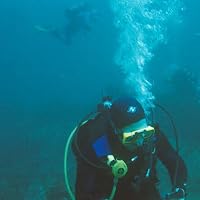
Beneath the surface of the Atlantic Ocean, deep in the Puerto Rico Trench north of San Juan, lies a film bucket from a KH-4 Corona spy satellite. It should have been caught in mid-air by a C-130 from the 6549th Test Group. That didn’t happen. So the US Navy bathyscaphe Trieste II must descend twenty thousand feet to retrieve the bucket, down where light has never reached and the pressure is four tons per square inch. But there is more in the depths than anyone had expected, much more.
I don't usually say this because I can understand people having different opinions about fiction, but I'm baffled by the higher scores on this book. The first two in this quartet had a conventional plot; even if the stories were mostly about the journey with just a little twist tacked onto the end. But on this one I didn't even understand how the two stories fit together. The book provides a history less at the end so we understand in which way Mr. Sales different from our timeline, but I almost feel the fact that this one hewed so close to reality that he had to do that was a failure compared to the other two books. Oh well, we'll see what happens with the fourth one.
Ian Sales' Apollo Quartet is an award-winning sequence of alternate history novellas which explore different aspects of the twentieth-century space race.
I have a lot of time for what Sales is doing here with the Apollo quartet project. Each novella is published separately in ebook, paperback or handsome and affordable hardcover (which I recommend!) and I hope that once the sequence is complete a mass-market publisher buys up the rights to publish the complete collection. Its an interesting achievement: the goal of each appears to be to try write with the style and depth of 'literary' fiction but with a careful focus on the details of the hard SF subject matter. Sales' research appears comprehensive and nuanced.
The previous two stories were both superb, but also, for me, ever-so-slightly lacking. The first, a tale of a military moon base after the end of the world, seemed to rely on an unexplained macguffin that also pops up in another of Sales' stories (but not one of the Quartet). The second was my favourite: a superb exploration of the astronaut mindset and the reality of relativity on space exploration. My minor quibble here was that important story details are hidden away in a rather dry timeline of this alternate history, and the vital final scene of the story is positioned after the timeline (the details in the timeline do bridge the two parts of the narrative, I just wish it was more elegantly done). Now I'm all for a good paratextual game, and I love appendices, footnotes and found documents as much as the next bibliophile, but there was no real need, and it detracted from a superb story, rather than enhanced it.
This third story, published late last year tells two different stories in parallel, alternating segments, and then concludes with historical notes about the real life events that they are based on.
The first part of the story tells the story of the "Mercury 13". If the Korean War had gone on for longer then our Mercury 7 would not have been available for the early NASA programme, and thus the Mercury astronauts are recruited from female aviators. This part of the narrative begins in the early sixties and follows the first Americans in space: all women, from Mercury to Gemini and Apollo. Our viewpoint is that of Jerrie Cobb, the second American in space and part of each of the different programmes. What starts as novelty quickly becomes normalcy and the astronauts are accepted as such.
At every stage beaten by the Russians, and with rumours of male astronauts returning from the extended war in Korean this part of the narrative concludes with the astronauts in the second Apollo mission (1969) servicing early spy satellites. In this reality, as in our own, the great hopes of discovery and dreams of exploration that inspire space programmes are inevitably grounded by the mundane realities of the Cold War.
As I said, Sales has done an impressive amount of research into the space programme and in lesser hands this level of detail would overwhelm the narrative and make it just another info-dumping hard SF tale. His skill is in using it to support the narrative, by giving it a layer of authenticity. It might be overwhelming for some - but I have limited knowledge of the details of the different space missions, or of twentieth-century pilots, and I worked it out.
The interleaved storyline is of a 1970s military deep sea search for the camera film from one such spy satellite. Early satellites ejected their film and let it fall to earth, where the agencies would catch it. In this instance the film has missed its window for some reason and fallen to a great depth which can only be reached by a bathyscaphe (similar to a bathysphere crossed with a submersible). This segment of the narrative is rather inscrutable - the aquanauts discover the classic ship and plane undersea graveyard beneath the Bermuda Triangle but eventually recover the missing film. The year isn't clear, though the historical note about the equivalent mission in our reality establishes that it took place in 1971. Upon their return to the surface the mission commander is told that America has just landed a man on the moon, which seems to establish this as a further alternate universe - neither our own nor that of the Mercury 13 with its extended Korean War.
Yet the two universes seem to cross in the final part of the story, with unexpected and tragic consequences. The collection concludes with historical notes, interleaved in the same way as the fictional narratives, on the "real" world Mercury 13 and the bathyscaphe mission. While a little dry, it contextualises what has gone before, and I for one only deduced the implications of the story's resolution after I'd carefully looked through this. It took some work to deduce that the undersea story takes place in a different time period to the astronaut story. The juxtaposition of fiction with non-fiction works well here
While I still prefer the second novella, this is purely because of my preference for stories about the space race which extend into the future (Stephen Baxter wrote a string of such "future NASA" stories a few years ago and I devoured them all). I particularly enjoyed the world-building required to posit a space race that included the female astronauts. It's never overt, but the implications of that first twist - extending the Korean war - inexorably lead to the concluding moments where Cobb services the satellite in Apollo 2. To say any more would be to spoil your enjoyment of the story.
Deeply Interwoven Parallel Worlds: "Then Will The Great Ocean Wash Deep Above" by Ian Sales
Being a SF devotee for many years, I’ve always been fascinated by parallel worlds stories. Unfortunately we have a bunch of them which are quite lame. A few years ago a friend of mine asked, "Whatever happened to parallel worlds? It used to be all the rage in SF." Maybe the answer is that nobody believes in that shit any more.
Is the parallel worlds theory merely the firing of electrons across synapses within an organic superstructure? Must they be subject to the same quantum effects? This year I read a wonderful book on quantum consciousness (The Nature of Consciousness: "Are the Androids Dreaming Yet? - Amazing Brain. Human Communication, Creativity & Free Will" by James Tagg). I'm having a hard time believing stuff like this. At the end of the day it may mean that versions of our minds, the so-called "quantum consciousness" are just deeply interwoven between parallel worlds.
A alternate history, SF novella about the American-Russian space race, but due to an escalated Korean War the astronauts are women. This story is not connected with the other two books, outside of it focusing on space travel and alternate history. I found this story more captivating and entertaining then the previous two books. It is written well and the characters have more personality. There is plenty of history anecdotes, but has less technical information. This book also raises less interesting space related questions that the other books had.
This was painfully technical and dry. Save yourself some time and read the wikipedia entries for the women who trained during the NASA Mercury program.
The Apollo Quartet by Ian Sales is a collection of short stories each set in their own unique timeline, but tied together by the technology of the Apollo program (much like the Three Flavours Cornetto trilogy is tied together by ice cream). I have already read and reviewed the first two stories in the series (“Adrift on the Sea of Rains” and “The Eye with Which the Universe Beholds Itself“) so now I am going to tackle the next entry, “Then Will The Great Ocean Wash Deep Above“.
“Great Ocean” is an alternate history tale like the first two Apollo Quartet stories, but it does not feature any alien space bats like parallel dimensions or alien technology. Some readers out there might enjoy this story more because of this fact, but I personally have never shied away from some implausibility (in fact the first alternate history book I ever read featured aliens invading during World War II). If people refused to consume science fiction because it didn’t make sense, then none of us would be here right now.
There are two separate tales in “Great Ocean”. One is told from the perspective of Jerrie Cobb of the little known Mercury 13 group of female astronaut candidates, who in this timeline are given a shot at space after the Korean War escalates forcing all of the men to fight at the front instead of reaching for the stars. The other is told from the perspective of John McIntyre who is commanding the bathyscaphe Trieste II on a mission down the Puerto Rico Trench to recover a valuable piece of intelligence that could change the fate of the world. Although separate universes from each other (and our own) there are clues connecting them if you look closely.
“Great Ocean” is another excellent entry into the Apollo Quartet series. Ian Sales continues to show his skill as a writer by the way he manages to combine hard SF with literary fiction. A part of me wanted to know how exactly did the Korean War escalated to the point it did in Cobb’s universe without dragging the entire world into war. From the sound of it the fighting remained contained to the Korean Peninsula, but I could have misread something.
“Great Ocean” does not contain as many appendixes as other works in the Apollo Quartet. I for one found the information on the Mercury 13 remarkable and sought out more information on the subject. It war shameful how they were treated by the government, especially after they completed the same tests and had the same qualifications as the male astronauts. It really is one of those little known episodes of history that they don’t teach in school and will make you angry after you finally learn about it. Still it shows how science fiction, and in this case alternate history, can be used to create teachable moments.
Alright enough ranting about history, “Then Will The Great Ocean Wash Deep Above” is a great entry to the Apollo Quartet series and I highly recommend you check it out. In the meantime, I look forward to the final installment.
A little different, if you haven't read either of the previous volumes in Sales' quartet, because his mix of alternate history, technological possibility and human endeavour IS refreshingly new; but also if you have, because here he focusses more on the human (and on real people).
The book is divided into six threads, named after the six quarks: up/ down, strange/ charm and top/ bottom.
"Up" and "Down" deal with two slightly different (I think) alternate realities - an Earth where the Korean war went on and on, so that the US had no men to spare as astronauts for the Mercury, Gemini and Apollo missions, sending women into space instead, and another where a deep sea expedition is mounted to recover film from a spy satellite. In both, unlike in Sales' earlier books Adrift on the Sea of Rains and The Eye With Which The Universe Beholds Itself the technology is very much as it really was, with the deviation being the history - especially the 1960s-female-astronaut thread "Up" (of course the deep-sea adventure is "down"). We see this through the eyes of Geraldyne Cobb, a real person, as were her 12 colleagues - who actually trained for missions that, in the Mad men era of the 60s, never came. But what if, what if things had only been slightly different? Then we see the possibilities - we see Cobb and the others having by no means an easy time, still the victims of sexist thinking and attitudes, but actually making it into orbit. It's a wonderfully imagined piece and I only wished that Sales had explored it in a more leisurely way - perhaps in a full length novel. In comparison, "Down" doesn't enthral quite so much, though it, also, perhaps has hooks to a potential wider story as Lt Cmdr McIntyre encounters the unexpected deep below the Bermuda Triangle...
The central two parts of the book - "Strange" and "Charm" - are shorter and in some ways Codas to the stories in "Up" and "Down". Sales doesn't wrap things up neatly but shows us where his stories are heading (this is similar to the treatment in the first two books of the Quartet.)
The final section - consisting of "Top" and "Bottom" - gives factual background to the earlier parts. This is something that sales' earlier books, which were heavier on technical jargon and acronyms, dealt with through appendices and lists of terms. Gives the more human focus of this book, it seems more appropriate that this is done in a more narrative way.
I enjoyed this part of the Quartet. It is a short book, and doesn't pretend to be anything else - but felt complete to me. Like a precious length of film retrieved from the deeps, you can see a series of pictures, but you can only speculate what was on the bits that never made it to the surface. Perhaps one day Sales will retrieve some more. I hope he does. In the meantime, we have these slightly disturbing Cold War dreams to show what might have been.
Tercer relato del Apollo Quartet y, como en los dos anteriores, Sales raya a muy buen nivel. En este caso, empleando la historia real de Jerrie Cobb, una veterana piloto que en 1959 superó con éxito los test Mercury para convertirse en astronauta. Cobb, junto a otras mujeres que lograron resultados superiores a sus compañeros masculinos, fueron injustamente relegadas por la NASA, emperrada en perpetuar el repelente mito del hombre blanco como explorador y colonizador, en este caso, del espacio. Una historia que hubiera hecho las delicias de todo un Heinlein.
Con este material Sales construye un mundo alternativo en el que los EEUU andan enfangados en una larga y cruenta guerra en Corea con la URSS y China y la NASA, muy a su pesar, no tiene más remedio que tirar de pilotos femeninas para continuar la carrera espacial. En el otro extremo, se nos narra la recuperación de los restos de un satélite espía caído en la fosa de Puerto Rico, un fascinante relato de exploración submarina con batiscafo en el que aparece el elemento magufo de todas las historias de Sales, que este vez me ha hecho sonreír porque era un misterio que me fascinaba durante mi infancia, sólo con leer la mención al Cyclops, me he emocionao. Esta mezcla de cf de la carrera espacial y magufadas, o ya más en serio, "el misterio", me gusta mucho y me recuerda a cuando era chaval y devoraba las ediciones de los Usborne Books que se publicaron en España a principios de los ochenta, libritos profusamente ilustrados que lo mismo te narraban lo maravillosamente hipertecnológica que iba a ser la vida futura y la conquista del espacio (en 1995, ¡bases en la Luna!, en 2009, ¡aterrizaremos en Tritón!) que te acojonaban con libros de vampiros, hombres lobo, fantasmas, casas encantadas, el Triángulo de las Bermudas, armas nazis, en fin, leer estas cosas de chaval era lo mejor del mundo y me gusta pensar que Sales también cayó bajo su embrujo.
Bueno, que desbarro. El relato es entretenidísimo, la tensión está estupendamente manejada y resuelta tanto en la trama de Cobb como en la exploración submarina. Quizá el único pero que se le puede reprochar es que el punchline final es muy parecido al de "Adrift on a Sea of Rains", en una estructura que recuerda el estilo de un relato de la serie Twilight Zone o similar. Por lo demás, me lo he pasado muy bien leyéndolo, a ver como remata Sales en el último cuento que me queda de este Apollo Quartet.
It has taken me a while to get round to this, but it has definitely been worth the wait. Where Adrift on the Sea of Rains was tightly focused on a single character, breathtakingly battering the reader with technical acronyms and human desperation alike, and The Eye With Which the Universe Beholds Itself hid its solution quite literally beyond the speed of light, this third novella in the Apollo Quartet is the most daring yet, both in its construction and in its scope.
Sales steers his plot through not just one, but two alternate timelines. In one, a bathyscaphe descends into the Puerto Rico Trench to recover a lost film bucket ejected from a spy satellite. There is far more on the seabed than the crew of the bathyscaphe have been led to believe. In the second timeline, meanwhile, we learn that the Korean War did not end in 1953, and that the constant flow of troops to the frontline has left a vast hole in the manpower available to NASA - thus, the Mercury 13, women pilots who had passed the same tests as their male counterparts, have risen to the forefront of the US space programme.
There is a lot of research here, brilliantly used in counterfactual fashion to present a history that never was - all but one of the named characters are or were real people. This sets rigid limits on what can be done, as the author has to present them as faithfully as possible, but Sales writes the Mercury 13 - Jerrie Cobb in particular - with the same passion that made Adrift's protagonist Colonel Peterson stand out from the science. And there might be some handwaving with the McGuffin which underpins the plot - there's one in each novella, reminding us that this is science fiction after all - but it doesn't jar (in fact it harks back to Adrift again in some ways), and it allows the two timelines to collide with quite horrific consequences.
Recommended as the best of the Quartet thus far, without any reservations at all.
To borrow a pun, our variant pasts have a bright future in Sales.
Ok, this is just getting ridiculous. What was the point of this book? Or rather - what was the point of putting these THREE separate stories into a single book? The first part - with the 2 disparate stories intermingled together in alternating chapters. I was waiting for them to come together at the end, and when they did come together, uhhh... well, turns out that they didn't fit. And then a summary of the real life story behind it all at the end? or was that all fiction, too? Hard to tell, and so disorienting that I have to give this just 1 star.
3. Novelle des Apollo Quartets mit zwei Handlungsstrengen: Über ein tatsächliches Frauen-Astronautenprogramm der NASA Anfang der 60er (mit besserem Ausgang als in der Realität) und eine Tiefseemission zur Rettung eines Spionage-Satellitenfilms. Nur mäßig interessante Themen (außer für Gender-Fans) und eher dröger Text.
Part three in the Apollo quartet by Ian sales: another very good work with interesting characters and histories, "up" and "down". I had so far missed the Mercury 13 story, and I found it intriguing and unfairly (almost) forgotten. Recommended. p.s. This "review" is shared with the online shop I got my ebook from.
I just didn't really like this one. It felt too dense and jargony in places, which I didn't find such a problem with the other two. I enjoyed the female astronauts thread but wish it had been more substantial as I didn't get on with the Trieste thread at all. (Sorry Ian.)
Imagines an alternate world, where women were the first Americans in space. It was a stark reminder about how hard women need to fight to get the chance to be considered equals.