I received a free copy of this book as a Goodreads giveaway and feel I've been a bit remiss about posting my review. This is a book you need to think about.
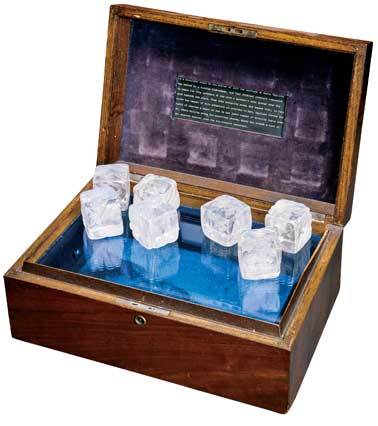
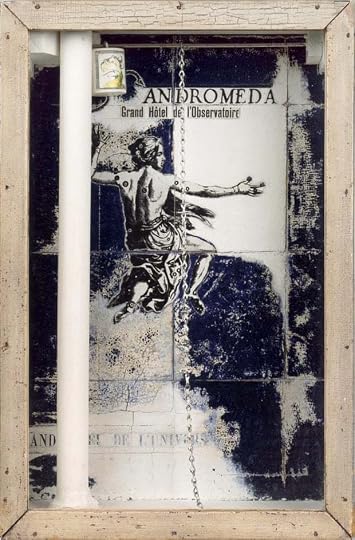
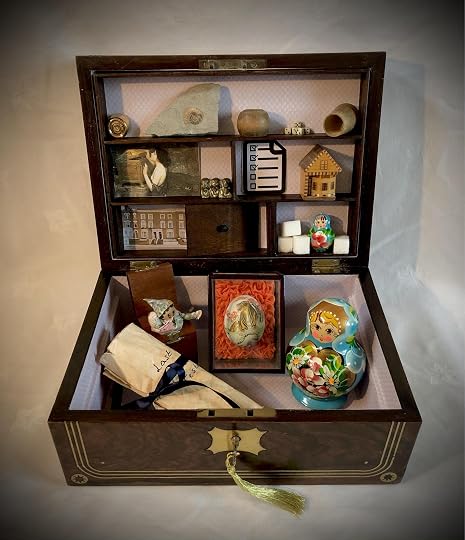
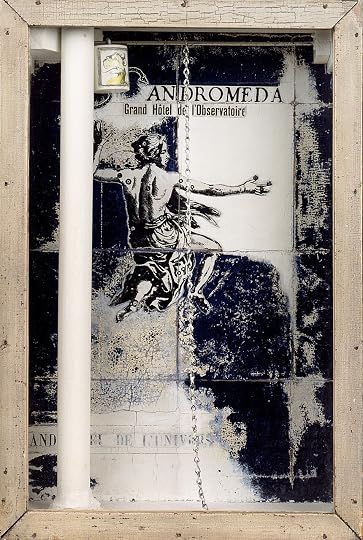
4 stars? 5? 5 For the writing, 4 because although I was enthralled by many aspects of this work, I was not terribly moved by it. It's more style than emotion, though I did feel a lot of sadness for Helena by the end. Like her subject, Joseph Cornell, she creates boxes for her life. She can't handle intimacy--perhaps doesn't even feel lonely--and cares only for her work, which she can't really believe in.
That's not quite true. She has a connection to an elderly neighbor, and she's at least friendly to some new neighbors. But otherwise she seems to have few social needs. I'm not sure Cornell was quite as devoid of emotional intensity as Helena was, so the parallel, if there was one, diverges a bit there. it seems he was needy, socially challenged, but still wanting connection. Though both, one way or another, have lost a sibling they once felt close to. (I did wonder about Cornell a bit: if he was so socially challenged, how was it that he was frequently in NYC, and that he hung out with the literary and artistic lights of his generation--they even came to visit him, seemingly often, in Flushing.)
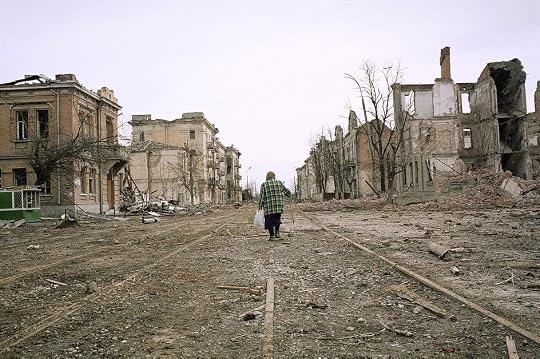
Helena claims to do nothing but think of her sister, but her obsession is hard to *feel.* She reads into her sister's silence (she never answers any letters) that Alice feels scorn for Helena's chosen occupation, writing obscure, kind of creative nonfiction studies of artists. Both have inherited enough money to live on because their father wanted them free to choose meaningful work. Alice works in an orphanage in Chechnya. Her box: saint. Helena struggles nearly as hard to understand her artist subjects as the artists struggled to create their work. Her box: self-indulgent.
But is it? That's the question the book raises, or one of them. It's what she's called to do; she can't do anything else. So how does an artistic project about an artist and his artistic projects measure up to the concrete work of helping children in Chechnya? Helena imagines Alice's work is gratifying, unlike her own most of the time. Not only is it hard for her to find the way into her books, but pretty much no one reads them. But a visitor from Chechnya, who seems to have been intimate with Alice, tells her that the kids she works with are so feral they can probably never be helped. So, given that, is Alice's contribution to the world any greater?
It's interesting to me how uninterested Helena is in Ed, a Czech war photographer, or so he says, recently kicked out of Chechnya (this is treated with suspicion by some characters, but it seems to me that it would be easy for any halfway-decent journalist to get kicked out of Chechnya). She doesn't even Google him! :) It's part of her personality, she claims, but she does have this intense curiosity about other artists. Why so little about this man's work, if he has any? She isn't sure he's what he says he is; perhaps she feels that if she looked into who he was, and busted him somehow, this would be rude in some way. We're each entitled to our fictions, perhaps.
Though Ed is supportive and appreciative of her creative drive and interests, and he's come from a couple of war-torn environments, or so we think. I remember a Scottish friend with a small inheritance wondering if he should give himself permission to write. He met someone from Bosnia who passionately enjoined him to go for it. The Bosnian said, if you have the privilege and the leisure to make art, don't waste it, because there are people all over the world in straits too dire to ever be able to express what's within them.
When Helena is done with Ed, ie, when she has extracted enough information about Alice and Chechnya as she feels she can handle, not to mention a certain kind of validation he gives her regarding her work, she throws him out. This is after sleeping with him. "Because this is the way I am," she says. But it's not clear if he has anywhere to go or is even in England legally and if not whether he can get home to the Czech Republic. She doesn't seem to have much interest in what his background as Czech was like, trauma-wise. Perhaps if he'd come at a different time, when she wasn't so absorbed, perhaps between projects, she'd have had more time for him. Or maybe she would have been wallowing in even more misery without a project to focus on.
It's intriguing that Helena feels so angst-ridden about how her work in the world compares to her sister's. She wonders if she's parasitic. But overall she offers no apologies for how she is. She doesn't feel she should be required to offer Ed even a basic human sympathy. THAT's not her work in the world, apparently. At the same time, I found her exhilarating. She takes what she wants, is what she is, and offers nothing beyond her artistic contribution as an accounting for herself.
So what was compelling about this book? Dialogue, for one. Almost the whole book is in dialogue. I thought of Embers, though the cadence is completely different. I also thought about a book I recently reviewed, Larry Watson's Let Him Go. They are very different types of stories, but both are spare, and both rely on voice as rendered in dialogue to differentiate and portray the characters. Watson rarely uses tags or gestures--it's just one person speaking or the other, and you know who it is because of the way they talk. Josipovici has a similar predilection for allowing the characters and the story to emerge through conversation (though we do get more of Helena through the excerpts from her notes about her project). I did find the tags a bit annoying, maybe simply because I was just coming out of the Watson experience. The book relies on the European style of differentiating speakers--em-dashes rather than quotes. Which means it's clearly indicated when the conversation moves from one person to another. And because there were never more than two people in a scene (except the brief meeting with the neighbors, in which Helena is quite polite but I suspect mainly wanting to know if they will make noise and disturb her work), and also because the voices were distinct from one another, I was slightly annoyed at the persistence of tags throughout the book. He says, then she says, when there is no one else in the scene. Perhaps in the hands of another author, I'd want these indicators, but I'd rather Josipovici left me to follow it on my own. Because the voices are so well done, he didn't NEED the tags, and they mucked up what would otherwise have been a graceful presentation.
I found it fascinating that in a book with so little overt exposition (also not a lot of action--just talk :) ) I formed very clear images of these characters in my mind. Perhaps they are nothing like the author's pictures, but it didn't matter. These people were real to me.
Also, the discussions about the creative process were just terrific.
Samples:
--But there's something between the great scheme of things and pure self-indulgence, isn't there? the old lady asks.
Helena says:
--I know what you mean, but it's hard to keep believing. I mean I believe when I'm at my desk working, I really do. I know it's important to get it right and if it's important to get it right then that means there's a right and a wrong and it's outside myself. Call it truth. ... But the rest of my time, away from my desk...
--That's true of everyone, the old lady says.
--Not of Alice, Helena says. She's never doubted for an instant that what she's doing is important. ...
--If that's true, the old lady says, then she's very lucky.
--But why are some people lucky? Helena says, pouring herself another cup of tea.
See what I mean? Great conversation, but why all the tags?
Another neighbor, a writer whom I guess I she sometimes sleeps with (and who wants more from her), says:
--...most of us can't ever really decide whether we're happy or unhappy. Sometimes we think one thing and sometimes the other. And there's no one to turn to for arbitration.
W the old lady again, now called Ruth:
--So you'll just press on, Ruth says.
--You think so?
--I do, Ruth says. And at the end of it there will be a book.
--That's what I fear, sometimes, Helena says.
--You fear you'll have a new book?
--I fear I'll have a book I don't really believe in.
--That, Ruth says, is a chance you have to take.
With Ed:
--But England can never be Europe.
--No, she says. Perhaps not. But what it is then?
--Look at these houses, he says. These small English houses with small rooms for small English people
--But the English are big, she protests. [She's SO literal. Perhaps this is the real nature of her struggle to understand art and artists and the value of her own work.] Compared to the Czechs, for instance.
--But they live in small houses. With small rooms. [Here's Cornell again.]
...
--But now you can get to Paris in two hours by train it's starting to feel part of Europe. London, at least.
--But without the traumas of Europe, he says. The traumas are what make Europe what it is today. ...
--You think so?
--The guilt, the shame. That is not found here.
...
He says:
--The shame of collaboration is still strong in Europe. With the Nazis. And then with the Communists. Forced or free, it's still collaboration. People cannot forget these things.
--But they will in time, no?
--You think so?
--Don't you?
--No, he says. No, I do not think so. Always, there is new collaboration. New reasons for shame.
That's a lot of the book right there. Helena doesn't collaborate, or she doesn't think she does. She also seems to have no shame or guilt, or any sense of obligation to the people who want to connect with her. Unlike Alice, she doesn't feel a need to help, though she assumes that such outward manifestations of helpful behavior are by definition "good."
Americans too, are largely ignorant of the extent of their collaboration. And that is why, Ed says, Enlightenment and Democracy are doomed. Not enough guilt or shame.
So, think about that for a while.
I'll read more of Josipovici soon. I'm not sure why I was unaware of him till now.