Seishi Yokomizo (横溝 正史) was a novelist in Shōwa period Japan. Yokomizo was born in the city of Kobe, Hyōgo (兵庫県 神戸市). He read detective stories as a boy and in 1921, while employed by the Daiichi Bank, published his first story in the popular magazine "Shin Seinen" (新青年[New Youth]). He graduated from Osaka Pharmaceutical College (currently part of Osaka University) with a degree in pharmacy, and initially intended to take over his family's drug store even though sceptical of the contemporary ahistorical attitude towards drugs. However, drawn by his interest in literature, and the encouragement of Edogawa Rampo (江戸川 乱歩), he went to Tokyo instead, where he was hired by the Hakubunkan publishing company in 1926. After serving as editor in chief of several magazines, he resigned in 1932 to devote himself full-time to writing. Yokomizo was attracted to the literary genre of historical fiction, especially that of the historical detective novel. In July 1934, while resting in the mountains of Nagano to recuperate from tuberculosis, he completed his first novel "Onibi" (『鬼火』), which was published in 1935, although parts were immediately censored by the authorities. Undeterred, Yokomizo followed on his early success with a second novel Ningyo Sashichi torimonocho (1938–1939). However, during World War II, he faced difficulties in getting his works published due to the wartime conditions, and was in severe economic difficulties. The lack of Streptomycin and other antibiotics also meant that his tuberculosis could not be properly treated, and he joked with friends that it was a race to see whether he would die of disease or of starvation. However, soon after the end of World War II, his works received wide recognition and he developed an enormous fan following. He published many works via Kodansha's Weekly Shōnen Magazine in serialized form, concentrating only on popular mystery novels, based on the orthodox western detective story format, starting with "Honjin Satsujin Jiken" (『本陣殺人事件』) and "Chōchō Satsujin Jinken" (『蝶々殺人事件』) (both in 1946). His works became the model for postwar Japanese mystery writing. He was also often called the "Japanese John Dickson Carr" after the writer whom he admired. Yokomizo is most well known for creating the private detective character Kosuke Kindaichi (金田一 耕助). Many of his works have been made into movies. Yokomizo died of colon cancer in 1981. His grave is at the Seishun-en cemetery in Kawasaki, Kanagawa (神奈川県 川崎市).
I read this book at least a few times years ago, and during the progress of re-reading, I noticed quite a number of flaws in the plot and the characters, which I hadn't paid attention to before.
The Queen Bee isn't among the author's most adored novels and the plot is a bit weak comparing with the masterpiece such as The Inugami Clan by the same author. The plot twists are a bit forced and predictable, the romance is also forced and I do think the author had focused too much on the tension among characters (everyone is keeping secrets behind everyone's back, to a point that it becomes tiresome) whilst not enough of effort had been put into the murder mysteries. And sadly even though there're so many things going on with the characters and there are so many 'shocking revealing' and conflicts among them, still the story comes off too melodramatic. Once again, The Inugami Clan works a lot better than this book even with similar plots about the secrets and conflicts within a powerful, well respected family and the very twisted love-hate relationship among the family members.
To make things worse, I now noticed how the author repeated himself in this book for I kept seeing familiar elements from his previous novels coming into play in The Queen Bee, I also noticed how stupid the great Detective Kindaichi acted in this novel! No wonder the murderer had managed to get away for the longest of time and killed four men before Kindaicihi could figure out what's going on!
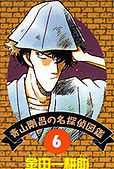
Here's the manga-version of Detective Kindaichi, but this is NOT Kindaichi Hajime, Detective Kindaichi's supposed 'grandson' from the Kindaichi Case Files manga series.
Don't get me wrong, Detective Kindaichi would always have a special place in my heart, and he used to be such a terrific detective in the other novels, so it's very unbecoming for him to come off looking stupid and let some of the obvious hints escape his notice! ARGH!
My Top Ten Yokomizo's Detective Kosuke Kindaichi Mysteries novels
Ladies and gentlemen, I will certainly attempt to write a review of Perahim by Constantin Virgil Gheorghiu. My goal for the end of this year is to reach 150 books in the Goodreads challenge. I am sorry that I couldn't finish reading Elfling by Corinna Turner, but I will try to finish this novel by the end of the year despite the Christmas, New Year's, and Christmas holidays. I don't know if I'll have time to post the review of A Drama in Livonia by Jules Verne, which is being translated into French and English, and I know that many reviews have been left unfinished: A Sport and a Passtime by James Salter (my first reading of this author), Don Clorato de Potasa by Edgar Neville (with a surrealist aesthetic similar to the Greguerias by Ramón Gómez de la Serna), Till death do us part,: A Dr. Fell mystery story by John Dickson Carr (a case of my favorite detective Gideon Fell) which is always very interesting and, very stimulating and, failures like The best horror stories II by Charles L. Grant I know left me for this year very good reviews behind, but my will was faster than my own energies. For next year—and I know I'm getting eight days ahead of the 2026 promises—I'd like to do a review of Away Days by Alvaro de Grado (first I'll read it, something I couldn't do due to my Christmas expenses) (the extended version), which is a collaboration with my admired mentor and great YouTuber, Quillo Barrios, whose Real Madrid YouTube channel I'll never tire of recommending. I'd also like to do a review of The Purple Ribbon by Alejandro Núñez Alonso who is considered by some media as the best Spanish novel writer that has ever existed and who has been compared to Robert Graves the acclaimed author of the duology of I, Claudius/Claudius the God a subscriber has asked me to and, another of my objectives is to write a review and, make a video of two dystopias for my Youtube channel. My friend Rafael, a member of the Catholic Tolkien Association in Spain, to which I belong and which is wisely guided by Father Bernardo, asked me to make a video about Brave New World by Aldous Huxley We also plan to make another video about 1984 by George Orwell and compare the two books. Next year, I also plan to finish the book that G.M. Baker sent me, which I promised to review. As Goodreads users can see, there's a lot of work to be done, and several projects are planned for the next cycle, God willing, and of course, we won't forget Professor Manuel Alfonseca and, post the review of his book that is pending and, the reviews that are pending of the sacred vestments of my friend Jaime Blanch Queral must also be posted and, it remains pending the plans of my friends José Baena Castel (whose wonderful novels are recommended) and, the same happens with my dear friends the sisters Marta Luján, Ana M. Luján (and their charming daughter who has just been met on my instagram account). This review faces the same difficulty as the one I had with Jules Verne's *Drama in Livonia*: many things have been forgotten, and some errors may be made because my memory isn't as good as it used to be. However, it has one great advantage: like the classic novels of the Golden Age, this novel, following the Detection Club aesthetic, begins with a dramatis personae. A list of the characters, as most Detection Club writers do, is particularly thought of, especially the queen of crime Agatha Christie. The famous quote referring to the queen of mystery is well-known, but I don't know who uttered it: the great politician Sir Winston Churchill or the philosopher Bertrand Russell. This humble writer leans more towards the latter. It's pure Hispanophobia, but it's indicative of the great success that the Jane Austen of detective fiction, that “No woman had gained so much from crime since Lucrezia Borgia,” who apparently never poisoned anyone in her entire life, but Victor Hugo Lucrézia Borgia of Victor Hugo and the Renaissance writers weigh too heavily on the collective imagination. This dramatis personae is done with a playful purpose; the writer proposes a game to the reader: to figure out who the murderer is before the detective. Interesting Seishi Yokomizo. If it wasn't the first Gokumon-tō: The Island of Hell's Gate, it was one of the first reviews on Goodreads, and it gave me a lot of prestige and earned me the affection of the publisher Quaterni, with whom I share a common history. Many writers have been published by Quaterni, or they have personally introduced me to some great writers, with Miyuki Miyabe being the one I've enjoyed the most. I will never tire of recommending that gem of a fantasy novel called Brave Story. It's one of the best things I've ever read, and it's not easy for me to praise a contemporary novel, so what can be said about his Tokyo tetralogy? For me, The Devil's Whisper is the best crime novel I've ever read. Not to belittle gems like Shadow FamilyAll She Was Worth and Crossfire (the latter could have been written by the best Stephen King, Dean R. Koontz, or Clive Barker, about whom my cousin Hugin, Munin, and Galloglass speak wonders). Besides that, this publisher has introduced me to wonderful authors like Fūtarō Yamada with his The Ninjas of Kôga and Their Secret CodeRyōtarō ShibaThe Castle of Owls. The War Against NobunagaThe Great Naval Battle and, Ryō Wada are on the list of the best historical novels ever read. To date, nothing has ever been read like the battles in the first part, since both parts are a single book that, for editorial reasons, was divided into two. Creepy: Chill by Yutaka Maekawa is among the best psychological thrillers ever written. The Thief by Fuminori Nakamura is a great novel with a powerful existential charge. How can we forget the savagery, brutality, and harshness of Shigurui. El torneo del castillo Sunpu by Norio Nanjo (the most brutal thing I've ever read, surpassing Battle Royale by Koushun Takami Another favorite of mine is the excellent humor novel The Strange Methods of Doctor Irabu by Hideo Okuda. How could I forget this iconic character and the incomparable exhibitionist nurse, Mayumi? Friends, that story from the aforementioned novel is among the best I've ever read. Summer in Ubume by Natsuhiko Kyogoku, with its fantastical touch, was also quite good. Many more authors could be cited, but these have been the most decisive in my journey with Quaterni. But if we disregard Miyuki Miyabe, the best of them all is undoubtedly Seishi Yokomizo, who initially began as a disciple of Edogawa Rampo, but in my humble opinion, Seishi Yokomizo finally achieved what Darth Vader longed for Star Wars: A New Hope. I personally had the opportunity to read both, and with the exception of *The Black Lizard* The Black Lizard (how could I forget the villainess's striptease at the beginning with her henchman watching), it also featured a fascinating battle between the villainess and the legendary detective Kogoro Akechi, who was very possibly parodied in the manga Détective Conan, Tome 1 by Gosho Aoyama as the protagonist's future father-in-law. In addition to revealing humanity, it's shown that the Black Lizard was a woman, and perhaps its conclusion is one of the most satisfying. The Strange Case of Panorama Island also had its morbid fascination with the harem of the same name as the title, which the protagonist built with ill-gotten and even more poorly spent money. The novel published by Quaterni, The Crimes of the Hunchback, also deserves a separate mention. Despite its classical aesthetic, it contained homosexuality and conjoined twins. This author, who adopted this pseudonym after the American author Edgar Allan Poe, has written remarkable works, but also a great deal of rubbish. In some stories, he even attacked Christianity, as he shared many of the prejudices that a segment of Japanese society held against this religion. I have, of course, mentioned the ones I liked. His disciple, Shishi Yokomizo, is much more consistent. I've read all the novels published by Quaterni. The best is Gokumon-tō: The Island of Hell's Gate, but it would be a mistake to dismiss masterpieces like Murder in the Honjin and Other Stories, where his detective Kosuke Kindaichi made his debut. In the first case, the author demonstrated his mastery of the detective novel, and the last case in that book is excellent. The Village of Eight Graves had a flaw that made me value it less: Kosuke Kindaichi ceded the spotlight to other characters and had less weight in the narrative than the main characters, but even so, it was a very worthwhile novel. The Devil Plays the Flute The penultimate one that has been read was perhaps too sordid and led to plots that fit better with Game of Thrones - A Song of Ice and Fire Vol. 1 of 2 by George R.R. Martin and the novels of V.C. Andrews to be continued
One of the most enjoyable and entertaining reads I've had in months. Yokomizo's way of narrating is very easy to follow and thanks to that makes this book very enjoyable to read, plus the portrayal of the characters, the places and the culture behind the story are well detailed, making it even more interesting to read.
Talking about the plot and the story, it is quite relaxing to follow, it seems as if you were watching a series on Netflix, it has moments of intrigue and suspense (although not very strong) and personally the development of the story goes at a pretty good pace (neither too fast nor too slow).
Personally the ending didn't surprise me much, but I think it is coherent with the story itself and it is explained in a very detailed way, so I'm satisfied. I would read another book by this author again, more for how entertaining and enjoyable his writing style is rather than for the complexity of the plot
Mi único problema ha sido el lío de nombres, porque hay MUCHOS personajes, pero doy gracias por la guía de nombres del principio y la pequeña descripción de cada uno de ellos. Aunque las descripciones sean un poco exageradas a veces, tampoco son desagradables o babosas y las tiene para mujeres y para hombres. Ha sido un buen libro de misterio, intriga y asesinatos. Me ha hecho mucha gracia que varios personajes trabajan juntos sin saberlo para destrozarle la vida a la pobre Tomoko, porque hablar las cosas en esa época estaba sobrevalorado. En general muy entretenido, no me importaría leerme algún libro más del detective (a veces) más denso de Japón jajaja.
De la misma calidad que otras novelas protagonizadas por el detective Kindaichi. Es un poco teatrero cuando explica como resuelve los casos pero me encanta el personaje, jejeje.
Espero que Quaterni traiga a España más libros de esta serie, ya que estoy impaciente por leer más aventuras de este detective. Espero que sí, ya que en España sólo hay publicada una ínfima cantidad de las novelas protagonizadas por Kindaichi y son bastante famosas.
I'm still confused. I'm not really sure was there something about the Royal Family allegory underlying that I don't know enough to get it. Or it's just so scattering I don't get it.
What it is though, is the first mystery novel that still confused me even right before the solution. And I'm not sure it's positive or negative because I'm still confused???
está escrito de una manera diferente a como suelen ser este tipo de libros, es como si el narrador quisiera tomar contacto con el lector, eso me ha gustado. la historia está bien, aunque un poco enrevesada. recomiendo leerlo porque es un clásico japonés
La abeja reina (1952, 女王蜂 / Joobachi), novela de Seishi Yokomizo / 横溝正史 Traducción del japonés al español de Kazumi Hasegawa ; Revisión y adaptación de Eva González Rosales
Historia perteneciente a la serie Detective Kindaichi (#06)