"The Narrow Land" "The Masqerade on Dicantropus" "Where Hesperus Falls" "The World-Thinker" "Green Magic" "The Ten Books" "Chateau D'If" (aka "New Bodies for Old")
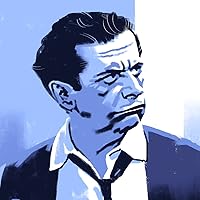
John Holbrook Vance was an American writer widely celebrated for his imaginative contributions to science fiction, fantasy, and mystery literature. Over a career that spanned more than six decades, he became known for richly detailed worlds, inventive language, and stories that combined adventure with sharp social observation. His work influenced generations of speculative fiction writers and helped expand the literary possibilities of the genre. Vance wrote more than sixty books and numerous short stories, many first appearing in science fiction magazines before later being expanded into novels and collections. His fiction was widely translated and developed an international readership. Vance grew up in California and spent part of his youth on a ranch near the Sacramento River delta, where he developed a love of the outdoors and an appetite for reading. The family experienced financial hardship during the Great Depression, prompting him to take a variety of jobs before completing his studies at the University of California, Berkeley. During these years he worked in several trades and cultivated interests in music, travel, and sailing, experiences that later informed many of the settings and themes in his fiction. Before becoming a full-time writer he held numerous occupations, including shipyard worker, merchant seaman, carpenter, and surveyor. His earliest published story appeared in the mid 1940s in a science fiction magazine, marking the beginning of a long writing career. Throughout the following decades he produced stories across multiple genres, though he became best known for science fiction and fantasy cycles that combined imaginative settings with elaborate cultures and social systems. Among his most famous works are The Dragon Masters and The Last Castle, both of which received Hugo Awards. The Last Castle also earned the Nebula Award, confirming Vance's reputation as one of the most distinctive voices in speculative fiction. His fantasy trilogy Lyonesse later received the World Fantasy Award, while his memoir This Is Me, Jack Vance! earned another Hugo decades later. In addition to speculative fiction, Vance wrote several mystery novels, some under pseudonyms including Ellery Queen. These works often blended crime elements with psychological or social themes and sometimes anticipated ideas that later appeared in his science fiction. His storytelling frequently emphasized cultural conflict, moral ambiguity, and intricate social customs rather than large-scale warfare, setting him apart from many contemporaries in the genre. Vance maintained close friendships with other science fiction writers and participated in literary communities that shaped postwar American speculative fiction. He traveled widely with his family and spent extended periods abroad, experiences that influenced the exotic settings and cosmopolitan tone found in many of his books. Music also played a role in his life and writing, reflecting his long-standing enthusiasm for traditional jazz. Despite gradually losing his eyesight later in life, Vance continued writing with the aid of specialized software and completed both fiction and autobiography in his later years. Over time his reputation grew steadily, and he received numerous honors, including the World Fantasy Award for Life Achievement and recognition as a Grand Master by the Science Fiction and Fantasy Writers of America. Critics and fellow writers often praised his distinctive style, wit, and imagination, and his stories remain widely read within the science fiction and fantasy community.
The Narrow Land is a collection of seven stories by Jack Vance published in 1984 by Coronet. It is has the same contents as the 1982 edition by DAW Books. Both are mass market paperbacks. One of the works is a novella, three are novelettes and three are short stories. The were written between 1945 and 1967. All of them are worth reading but especially the novelette that provides the title for this collection. Below are brief reviews of each story. For the most recent review and other Vance reviews please see: https://vancealotjackvanceinreview.bl...
The first story, the one that also serves as the title for this collection, is "The Narrow Land." This is a 23 page novelette that was first published in 1967 in Fantastic magazine. It is a fascinating story that I found totally engaging and thought provoking. One thing that makes it very unusual is that the protagonist is an alien creature that hatches on a beach and then crawls to the water where it tries to survive while exploring its environment. Vance is a superb master at creating other worlds. In this story he creates a world from the perspective of an alien creature who must learn about his new world while trying to figure out who and what he is. Through Vance's masterly use of language, I actually felt like I was viewing the world from the consciousness of this creature. It is amazing how much Vance can create in so few pages. Our main character, Ern, learns that he is one of what he refers to as "water children" and that there are different types of children, some with single crests and others with double crests. They are born with some minimal ability to speak. Ern finds out that he must be wary of predatory birds, a large dangerous creature he calls an "ogre" and "men" who come to the beach to capture water children. Ern learns to speak fluently and to eventually walk on land where he discovers what he is and encounters a frightening world were "children" are eugenically culled and where the single and double crested adult creatures kill each other as enemies. A number of sociological and social psychological issues are presented as the story develops. I found this short work to be a masterpiece and one of Vance's finest writings. It is best read more than once to be fully appreciated. My rating: 5.
The second story, "The Masquerade on Dicantropus," is a 15 page short story that is an early work, originally published in 1951 in Startling Stories magazine. A couple named Jim and Barbara Root live on the planet Dicantropus where he is studying the planet's archeology and she is deeply bored and unhappy. Jim agrees to return to Earth in three months when the next supply ship arrives and suggests that they might engage in more swimming and badminton in the until then. There is an unusual pyramid on the planet that intrigues Jim but is afraid to explore it because he thinks it is guarded by the alien creatures who live on the planet. One day one of the resident creatures, a Dicantrops, swims up to them wearing a diamond necklace. They converse with the Dicantrops but it will only say that it found the necklace but not where. The Roots suspect it came from the pyramid and Barbara wants Jim to explore the pyramid in case there are more jewels there. Jim refuses because of the dangers involved but when another man crash lands on the planet, Barbara convinces the new visitor to explore the pyramid. They will soon find out what the pyramid is and who the Dicantrops are. The story is enjoyable and I rated it a 3 "Liked it"
"Where Hesperus Falls" is the third work, a short eight page short story that was published first in 1956 in Fantastic Universe magazine. Henry Revere is a man who lives in a very technologically advanced society where he is told, "you are not your own property. You are a ward of the race." Henry, you see, is over 96,000 years old and is kept living even though, "life long ago lost that freshness and anticipation which makes it enjoyable." Bored with life, Henry keeps trying to kill himself but is thwarted each time by the intense surveillance and advanced medical skills of those who watch over him as his "servants." He is not really a prisoner, but he is not allowed to die. Thousands of years ago Henry had been a bio-chemist and offered himself as the subject of an experiment. But this resulted in "an incalculable error had distorted the experiment, with my immortality as the perverse result." He now finds himself being, "a living fossil, a curio among curious, a public ward, a creature denied the option of life or death." Henry's only interest other than suicide is writing his great "History of Man." What Henry does about his dilemma and how he does it are the basis of the story. I rated it a 3 "Liked it."
The next work is the 25 page novelette titled "The World-Thinker." It was the first story Vance ever published and was issued in Thrilling Wonder Stories in August of 1945. Reportedly he wrote it while he was at sea. It is a pretty good story for a first publication and involves a woman, Isabel May, who escapes prison on Earth and flees in a spaceship pursued by Lanark who is hired to capture her alive. She has a very valuable code that is highly important to the government. Lanark finally tracks her spaceship down on another planet but cannot find Isabel May. Instead he encounters a godlike creature Laoome, "the one-time Sage of the Fifth Universe--Laoome the World-Thinker, the Final Sage of the Fifth Universe." Laoome has the ability to create through his mind other planets and realities and has placed Isabel May under his protection on one of the planets he created. Lanark convinces Laoome to allow him to visit this planet to talk with Isabel May. The story involves what happens on this planet in Laoome's mind as Lanark seeks out Isabel May. A number of cosmological ideas are explored in this early work. I rated it a 3.5 "Liked it."
The fifth story in this collection is "Green Magic." This is a 12 page short story that was first published in 1963 in The Magazine of Fantasy and Science Fiction. It is a philosophical fantasy story rather than science fiction. Howard Fair is well trained in white magic and black magic and knows some purple magic. He is intrigued when he finds an old notebook by his great uncle that describes green magic. He meets some sprites who come from a world of green magic but who warn him that it would be dangerous for him to study it. He is told that his grand uncle studied it and ended up regretting having done so. Despite their warnings, Fair's curiosity and desire to learn are greater than any concerns he has and he manages to persuade the sprites to allow him to learn green magic. His learning is described as a fascinating process and it changes him forever. Is it sometimes better to remain ignorant and innocent? Is it worthwhile to try to discover knowledge that might make you unhappy or discontent? These questions and others are explored in this story which I found to be quite interesting. I rated it a 4.
"Ten Books" is also known as "Men of the Ten Books" and was first published in Startling Stories in 1951. It is a 29 page novelette. A couple, Ralph and Betty Welstead from Earth, are exploring other planets in their spaceship and discover a planet about the size and temperature of Earth. When they land they find a thriving society that greets them as long awaited heroes or rescuers. The planet called Haven is inhabited by humans who are the descendants of those who crash landed there 271 years previously. Other than a few verbal stories passed on from their predecessors, the only thing they know about Earth is from some books they have, the ten volume edition of "The Encyclopedia of Human Achievement." These books adulate human achievement on Earth and do not mention poverty, crime or any social or cultural problems. Although Haven society runs in perfect harmony and is almost a paradise, the people from Haven idolize Earth and have glorified it into something that is far grander than their own planet. Now that a ship from Earth has arrived, many of them want to visit Earth, a planet they think is magnificent beyond their imagination. The Welstead's have to decide whether or not to tell them the truth about Earth, that it is not the idealized paradise the books depict. They are concerned about what will happen to the people of Haven because they have been eagerly awaiting rescue for nearly three centuries. I found the story fairly interesting and rated it a 3 "Liked it."
"Chateau d'If" is a 61 page novella that is also known as "New Bodies for Old." It was first issued in 1950 in the magazine Thrilling Wonder Stories. Five friends are sitting together at the Oxonion terrace having drinks and conversing. They seem bored and have had enough to drink but decide to continue drinking anyhow. One of them comments, "Might as well spend my money on liquor as anything else." Another comments that "drunkenness is about the only adventure left." Someone else mentions how expensive adventures are and that it costs twenty million dollars for planetary rocket. One member says that he heard interesting things about an adventure that might be more affordable. It is called Chateau d'If. While they are talking a telescreen commercial appears with the message, "Jaded? Bored? Want adventure? Try the Chateau d'If." Members of the group are intrigued and decide to pool their money to sponsor one of them to visit Chateau d'If and report back to the rest of the group. They roll dice to see who will be the test subject and Zaer loses. After visiting Chateau d'If though, Zaer does not appear at the scheduled time to meet his friends. He is later observed by one of the friends at an expensive hotel. He informs the other members of the group so they decide to go to the hotel to find Zaer. They find him in the company of a beautiful woman in a sumptuous setting, obviously having obtained a great deal of money. But when they approach Zaer, he does not seem recognize them. When they mention the money they pooled together to sponsor him to visit Chateau d'If, he pulls out his wallet and reimburses them even though he claims he has no idea what it is all about. The group members conclude that he is being secretive and somehow obtained a large sum of money after visiting Chateau d'If . They are now all eager to sign up for this experience themselves. We eventually learn what Chateau d'If is and what happens to people when they visit there. This early work by Vance is well worth reading. My rating: 4.
This short story collection had been lying around the house for a while, but when Vance sadly passed away recently, decided to dust it off. Although I had a pretty positive opinion of Vance based on Lyonesse, The Narrow Land surprised me with a couple of really good tales. All seven were enjoyable and show how diverse science fiction can be, but the first and the last were the best.
The title story of the collection explores a kind of alien biology in which one species can have three pretty divergent physiologies depending on whether a young comes from one two or three eggs. The ones and twos are most common, and each have separate societies, but the story follows Erg, who gradually discovers that he is different from the others.
In between, there was a good picture of a demiurge God in The World Thinker, a wry humour about an immortal man not allowed to kill himself in Where Hesperus Falls, as well as several observations about human space colonisation and exploration in multiple stories.
Chateau d'If, finally, is an excellent detective-like story about what it would be like if people could swap memories/identities/bodies for a fee. Vance manages to make several interesting points about living a good life, and how others can profit from people wanting to escape from aging bodies or boring prospects. The money earned from the body-swapping interestingly goes toward constructing a massive Empyrean Tower reaching toward heaven.I'm not going to spoil the whole story for you, but this is one worth rereading some time.
The World-Thinker (1945) Has all the essentials of a great Jack Vance story, i.e. an interplanetary criminal intrigue, a capricious monster of superhuman intelligence, and sensational descriptions of dissolving planets.
Chateau D'If (1950) A really fun novella about the idle rich, body swapping, and revenge.
The Ten Books (1951) The most blatant philosophizing about human civilization and the need for hardship, but with beautiful descriptions of the planet and also a wife who actually does something which is always great.
Green Magic (1963) A classic cautionary tale about seeking knowledge. A lot of these stories don't have the most original base ideas, but Vance's weird details always make it. Here I love the descriptions of the green realm.
Where Hesperus Falls (1956) A "WeLcUm 2 my TwIsTed MiNd" type story about a millennia-old man getting real creative with his suicide attempts. Again, not the most original premise, but he makes it eminently enjoyable with all his subtly funny descriptions, especially of the Doctor.
The Narrow Land (1967) This one has a cool idea and some nice turns of phrase but also dragged a bit in the way the others don't.
The Masquerade on Dicantropus (1951) The idea here is over-done (native race that is more intelligent than expected) and the characters are one-dimensional, but in the annoying flat way and not in the usual Jack Vance crazy grotesque cut-out way.
A very good collection of stories by Jack Vance. My personal favourite is Chateau d'If but I also enjoyed the other stories. The characters are always convincing and the plots show a surprising variety.
A mix of older and later works of Vance. A bit of a mixed bag. I liked the titular story, and the 'Chateau d'If' felt like an early version of a formula Vance would return to often. The other stories while nice were not that memorable.
A slight change from Jack Vance's norm, this features stories from the 40's and 50's. No spacemen arriving on exotic alien worlds, no collapsing, embattled feudal-style civilizations, but good effective storytelling, with tales built around intriguing speculations.
The Narrow Land is a collection of six short stories and one novella by Jack Vance. This was my first exposure to Vance after The Dying Earth. It doesn’t have the magic of The Dying Earth stories. But it is better by a large margin than the average collection of short stories you would see today. The stories remind me a lot of the original Twilight Zone, which I tend to consider the platonic ideal for science fiction short stories.
The Narrow Land This is the title story represented by the cover art on my copy. It’s a mix of pulp weirdness and New Age interest in social science fiction. Lizardmen crawl out of a primordial ooze. Some develop more crests than others. Vaguely does some interesting things with gender, but ultimately it’s all worldbuilding and little story.
The Masquerade on Dicantropus This is the sort of “hearth-and-home” story Kristine Kathryn Rusch talked about grade-A jacklegs like James Blish dismissing when they were written by women, and the kind of story modern speculative fiction writers with literary pretensions try and fail to write. There is a space man who crash lands on an alien planet with alien people and ziggurats, but this is a story all about adultery.
Where Hesperus Falls This is the shortest and perhaps the best story in the collection. A man granted accidental immortality in a science experiment tries to kill himself. Exceedingly clever, and handles a necessarily dark premise without the nihilism a more modern treatment would’ve given it.
The World Thinker An earthman hunts a fugitive across the stars. A much better take on a penny-ante god than Star Trek’s. This reminds me a little of Brandon Sanderson’s Perfect State too.
Green Magic Not my favorite story, but a much better take on the fae than you typically see these days. One Bright Star by John C. Wright is sort of a fusion of this and The Chronicles of Narnia.
The Ten Books Man-and-wife explorers discover a utopian human civilization on an unmarked planet. I despise utopian fiction, but this is more than tolerably done.
Chateau D’If (novella) Has everything from this collection been redone, and not as well? Chateau D’If reminds me of Death Becomes Her. The Chateau D’If targets men, though. The pitch is simple, “Jaded? Bored? Want Adventure? Try the Chateau D’If.” Five bored bros toss in ten grand for one of their number to check it out. Chateau D’If offers a ten-thousand- and a ten-million-dollar option. Should’ve taken the second option.
My first delve into the strange and wonderful worlds of Jack Vance. This book covered seven takes covering a writing period of 1945 to 1967. It shows a gift for creating varied and interesting stories using all aspects of the genre, indicating why he was seen as o e if the leading lights of the genre. There’s a blend of the fantastical of Aldiss, the tech thriller of Dick, the space adventure of Asimov or Heinlein, definitely a man of many talents, though not all entirely successful.
I’ll just give a brief synopsis and review of each tale:
The Narrow Land (1967) - an intelligent creature is born from a cluster of eggs into The Narrow Land, a thin world bordered on two sides by a giant storm and a wall of darkness. We follow his life as he learns this world and its strange rules.
This was a great tale full of pure imagination built on a single high concept. It plays out like a snapshot of sociology, evolution and gender politics but shot through with a hint of 60s psychedelia that makes it a thoughtful, weird bit fun read. One I think I’ll enjoy more with each reading 4/5
The Masquerade on Dicantropus (1951) A married couple on a far-flung research station are disrupted by the sudden arrival of a handsome space traveller. As he inserts himself into their lives, a growing desire to know what’s in an alien pyramid nearby leads to strife and discovery.
This was one of the weaker tales, a pretty standard 50s sci-if tale you’d expect in Amazing Stories and suchlike of the time. It rattles along well enough but I found the unending unbelievable and overtly comic, making the tone very inconsistent overall. 2.5/5
Where Hesperus Falls ((1956) The man who cannot die lives a in a seeming paradise, but with his every move watched over by a society that Idolises him. So why is it that he desperately wants to kill himself and why are they preventing it from happening?
This is an excellent sci-fi tale with a darkly comic tone. In an age where male suicide is a hot button issue, this very humorous story centring on a quest for the protagonist to take his own life (and for the reader to will him on) is a deft twist of societal norms and a warning against how exciting immortality might actually be. The plots follows his increasingly inventive ways to die and a final cunning plan that we see through to a hilarious conclusion. I loved this story, it’s everything that made ground breaking 50s sci-fi so enjoyable. 5/5
The World Thinker (1945) Lanarck, a Hardned space detective with attitude, is put on the trail of a missing young socialite, Isabel May. Is Johnny bring men to the presents of a Godlike creature, and into a world of his making.
This imaginative, exciting space opera adventure, the earliest work in this book, was an early work in Vance’s career. It’s a pure space romp very much of its time, combining space opera adventure with elements of hard nose 40s, detective fiction. Lanarck is a great lead character, not afraid to stand up to us bosses or bend and break the rules when necessary. The adventure itself feels inspired by Rice Burroughs combined with the popular other worlds fiction of Flash Gordon and Buck, Rogers of the time. There’s an incredible imagination on display here with the concept of a’’ world that leads to some dramatic twist and turns and a very very exciting. The denim was also I’m using (something that seems to be a hallmark of advance in most of these takes). I’m hoping he wrote more stories, featuring Lanarck as he is very much a character I would like to soend time with. 4/5
Green Magic (1963) Howard Fair is an Crowley style student of the Mr Clark. The discovery of a journal of his deceased uncle lead him to try to discover the secrets of the mystical green magic.
This was Vance stepping out of sci-fi to something more magical, the world of the Fae. I found this story to be slight and the lead character rather unlikable. As such I wasn’t really engaged with this one, perhaps that’s a matter of personal taste as I tend to not like this sort of magical fae tale. This seemed like an early 60s attempt at something more pagan and fantastical, which I don’t feel was particularly successful. 2/5
The Ten Books (1951) A couple unsuccessfully charting the furthest reaches of space finally strike gold with the discovery of a planet of populated by a lost colony of humans, totally isolated from Earth. Their society has become Utopian, with no illness, greed and a shared desire for knowledge and artistic perfection. Do the couple reintegrate this colony with the rest of human society, knowing they will be exposing it to the reality of life on earth: corruption, societal dysfunction, and class struggle.
Given the time of its writing, this is an interesting piece of work from Vance. The society he paints is one of seemingly pure, perfect socialism, and I suspect that was very intentional. He seems to put a lot of Stock into the societies ability to weather storms and find solutions to all problems. The picture he paints of earth at this time also feels like reaction to what he could see going on around him postwar, with a growing trend towards consumer and capitalist living. Personally, I feel if that is the case this is a bit ideologically naive, but there’s enough of an end for the reader to assume Vance was not 100% nailing his colours to this utopian socialist mast. I like a piece of sci-fi that gets me thinking and it’s not so heavy-handed that it was immediately obvious where this was going. An intelligent piece of sci-fi writing that shows Vance was thinking far beyond the space opera tendencies of many of his peers at the time. I would align this with the style of tales told in the Foundation series. 3.5/5
Chateau D’If (1950) In a near future, five comfortable young men facing ennui learn of the Chateau D’If, a business promising adventure for the bored and listless. Two packages are available: £10million or £10,000 but information is scarce. The roll of a dice decides who will take up the lower package to discover its secrets. The result leads to horror and conspiracy.
This book finishes strong with the best tale of the bunch. I find it amazing. This was written in 1950. This is a forerunner to the type of near-future tech horror that Philip K Dick made his own, and more recently Charlie Brooker’s Black Mirror. I can only imagine this story was hugely influential on both of these, tapping into ideas of identity, class, capitalism and power. It’s even-handed, playing out as a mystery, revenge story and ultimately idealistic take on the spirit of Man. The idea of the separation of mind and body and what truly makes us who we are is fascinating. I will read this again and would love to see this adapted sone time as it would make a great tech-thriller! 5/5
The short story The Narrow Land within this collection is the important work. It sums up the situation of mankind. We are divided into 3 types. And there's not many of the 3's. Leaves a searing impression though just a quick short story. Always left me wishing for it to continue. Though it ends when it should.
Can be used as a litmus test for people but almost all will fail and if you even find someone worth testing congrats.
The Narrow land is a 23 page early story that does a decent job at building a world, seen from the perspective of an alien that hatches in the near shore waters. It is quite hard to relate to the protagonist and the story is very limited in characterization which left me disengaged. Passable but not memorable.
Wow! Quite a trip! Laden with allegory and symbolism. Charles Kingsley would be proud! The quote of quotes: "Neither the ones nor the twos contrived, except for an immediate purpose." Do tell! The story of my life and its disappointments! Fellow threes are so rare, especially female threes. 😢
The Narrow Land is a collection of seven stories by Jack Vance published in 1982. One is a novella, three are novelettes and three are short stories. The were written between 1945 and 1967. All of them are worth reading but especially the novelette that provides the title for this collection. Below are brief reviews of each story. For the most recent review and other Vance reviews please see: https://vancealotjackvanceinreview.bl...
The first story, the one that also serves as the title for this collection, is "The Narrow Land." This is a 23 page novelette that was first published in 1967 in Fantastic magazine. It is a fascinating story that I found totally engaging and thought provoking. One thing that makes it very unusual is that the protagonist is an alien creature that hatches on a beach and then crawls to the water where it tries to survive while exploring its environment. Vance is a superb master at creating other worlds. In this story he creates a world from the perspective of an alien creature who must learn about his new world while trying to figure out who and what he is. Through Vance's masterly use of language, I actually felt like I was viewing the world from the consciousness of this creature. It is amazing how much Vance can create in so few pages. Our main character, Ern, learns that he is one of what he refers to as "water children" and that there are different types of children, some with single crests and others with double crests. They are born with some minimal ability to speak. Ern finds out that he must be wary of predatory birds, a large dangerous creature he calls an "ogre" and "men" who come to the beach to capture water children. Ern learns to speak fluently and to eventually walk on land where he discovers what he is and encounters a frightening world were "children" are eugenically culled and where the single and double crested adult creatures kill each other as enemies. A number of sociological and social psychological issues are presented as the story develops. I found this short work to be a masterpiece and one of Vance's finest writings. It is best read more than once to be fully appreciated. My rating: 5.
The second story, "The Masquerade on Dicantropus," is a 15 page short story that is an early work, originally published in 1951 in Startling Stories magazine. A couple named Jim and Barbara Root live on the planet Dicantropus where he is studying the planet's archeology and she is deeply bored and unhappy. Jim agrees to return to Earth in three months when the next supply ship arrives and suggests that they might engage in more swimming and badminton in the until then. There is an unusual pyramid on the planet that intrigues Jim but is afraid to explore it because he thinks it is guarded by the alien creatures who live on the planet. One day one of the resident creatures, a Dicantrops, swims up to them wearing a diamond necklace. They converse with the Dicantrops but it will only say that it found the necklace but not where. The Roots suspect it came from the pyramid and Barbara wants Jim to explore the pyramid in case there are more jewels there. Jim refuses because of the dangers involved but when another man crash lands on the planet, Barbara convinces the new visitor to explore the pyramid. They will soon find out what the pyramid is and who the Dicantrops are. The story is enjoyable and I rated it a 3 "Liked it"
"Where Hesperus Falls" is the third work, a short eight page short story that was published first in 1956 in Fantastic Universe magazine. Henry Revere is a man who lives in a very technologically advanced society where he is told, "you are not your own property. You are a ward of the race." Henry, you see, is over 96,000 years old and is kept living even though, "life long ago lost that freshness and anticipation which makes it enjoyable." Bored with life, Henry keeps trying to kill himself but is thwarted each time by the intense surveillance and advanced medical skills of those who watch over him as his "servants." He is not really a prisoner, but he is not allowed to die. Thousands of years ago Henry had been a bio-chemist and offered himself as the subject of an experiment. But this resulted in "an incalculable error had distorted the experiment, with my immortality as the perverse result." He now finds himself being, "a living fossil, a curio among curious, a public ward, a creature denied the option of life or death." Henry's only interest other than suicide is writing his great "History of Man." What Henry does about his dilemma and how he does it are the basis of the story. I rated it a 3 "Liked it."
The next work is the 25 page novelette titled "The World-Thinker." It was the first story Vance ever published and was issued in Thrilling Wonder Stories in August of 1945. Reportedly he wrote it while he was at sea. It is a pretty good story for a first publication and involves a woman, Isabel May, who escapes prison on Earth and flees in a spaceship pursued by Lanark who is hired to capture her alive. She has a very valuable code that is highly important to the government. Lanark finally tracks her spaceship down on another planet but cannot find Isabel May. Instead he encounters a godlike creature Laoome, "the one-time Sage of the Fifth Universe--Laoome the World-Thinker, the Final Sage of the Fifth Universe." Laoome has the ability to create through his mind other planets and realities and has placed Isabel May under his protection on one of the planets he created. Lanark convinces Laoome to allow him to visit this planet to talk with Isabel May. The story involves what happens on this planet in Laoome's mind as Lanark seeks out Isabel May. A number of cosmological ideas are explored in this early work. I rated it a 3.5 "Liked it."
The fifth story in this collection is "Green Magic." This is a 12 page short story that was first published in 1963 in The Magazine of Fantasy and Science Fiction. It is a philosophical fantasy story rather than science fiction. Howard Fair is well trained in white magic and black magic and knows some purple magic. He is intrigued when he finds an old notebook by his great uncle that describes green magic. He meets some sprites who come from a world of green magic but who warn him that it would be dangerous for him to study it. He is told that his grand uncle studied it and ended up regretting having done so. Despite their warnings, Fair's curiosity and desire to learn are greater than any concerns he has and he manages to persuade the sprites to allow him to learn green magic. His learning is described as a fascinating process and it changes him forever. Is it sometimes better to remain ignorant and innocent? Is it worthwhile to try to discover knowledge that might make you unhappy or discontent? These questions and others are explored in this story which I found to be quite interesting. I rated it a 4.
"Ten Books" is also known as "Men of the Ten Books" and was first published in Startling Stories in 1951. It is a 29 page novelette. A couple, Ralph and Betty Welstead from Earth, are exploring other planets in their spaceship and discover a planet about the size and temperature of Earth. When they land they find a thriving society that greets them as long awaited heroes or rescuers. The planet called Haven is inhabited by humans who are the descendants of those who crash landed there 271 years previously. Other than a few verbal stories passed on from their predecessors, the only thing they know about Earth is from some books they have, the ten volume edition of "The Encyclopedia of Human Achievement." These books adulate human achievement on Earth and do not mention poverty, crime or any social or cultural problems. Although Haven society runs in perfect harmony and is almost a paradise, the people from Haven idolize Earth and have glorified it into something that is far grander than their own planet. Now that a ship from Earth has arrived, many of them want to visit Earth, a planet they think is magnificent beyond their imagination. The Welstead's have to decide whether or not to tell them the truth about Earth, that it is not the idealized paradise the books depict. They are concerned about what will happen to the people of Haven because they have been eagerly awaiting rescue for nearly three centuries. I found the story fairly interesting and rated it a 3 "Liked it."
"Chateau d'If" is a 61 page novella that is also known as "New Bodies for Old." It was first issued in 1950 in the magazine Thrilling Wonder Stories. Five friends are sitting together at the Oxonion terrace having drinks and conversing. They seem bored and have had enough to drink but decide to continue drinking anyhow. One of them comments, "Might as well spend my money on liquor as anything else." Another comments that "drunkenness is about the only adventure left." Someone else mentions how expensive adventures are and that it costs twenty million dollars for planetary rocket. One member says that he heard interesting things about an adventure that might be more affordable. It is called Chateau d'If. While they are talking a telescreen commercial appears with the message, "Jaded? Bored? Want adventure? Try the Chateau d'If." Members of the group are intrigued and decide to pool their money to sponsor one of them to visit Chateau d'If and report back to the rest of the group. They roll dice to see who will be the test subject and Zaer loses. After visiting Chateau d'If though, Zaer does not appear at the scheduled time to meet his friends. He is later observed by one of the friends at an expensive hotel. He informs the other members of the group so they decide to go to the hotel to find Zaer. They find him in the company of a beautiful woman in a sumptuous setting, obviously having obtained a great deal of money. But when they approach Zaer, he does not seem recognize them. When they mention the money they pooled together to sponsor him to visit Chateau d'If, he pulls out his wallet and reimburses them even though he claims he has no idea what it is all about. The group members conclude that he is being secretive and somehow obtained a large sum of money after visiting Chateau d'If . They are now all eager to sign up for this experience themselves. We eventually learn what Chateau d'If is and what happens to people when they visit there. This early work by Vance is well worth reading. My rating: 4.