

What do you think?
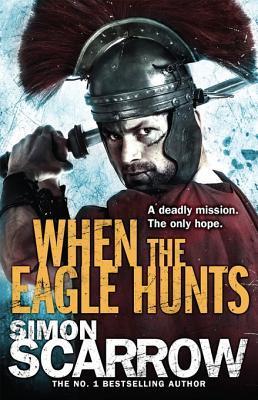
Eagles of the Empire #3
When the Eagle Hunts
After a series of bloody battles, Camulodunum (modern-day Colchester) has fallen to the invading Roman army. The Emperor has returned to Rome, leaving the fearless Centurion Macro and his young Optio, Cato, to rest and regroup, along with the rest of the Second Legion. As their leader General Plautius plans the next phase of their campaign, word arrives that the ship carrying his family to join him was wrecked in a storm off the south coast. His wife and children have fallen into the hands of a dark sect of Druids, who now demand the return of those of their brotherhood taken prisoner by the Romans. Unless their demands are met within one month, Plautius's family will be burned alive. Will Cato and Macro discover where the Druids are hiding their hostages? And can they find some way to rescue them before time runs out?
452 pages, Kindle Edition
First published August 5, 2002
About the author
Simon Scarrow
176 books2,251 followersSimon Scarrow is a UK-based author, born in Nigeria, and now living in Norfolk. He completed a master's degree at the University of East Anglia, and, after working at the Inland Revenue, went into teaching as a lecturer at City College, Norwich.
He is best known for his "Eagle" series. This is Roman empire military fiction, starting with the second invasion of Britain, and continuing with subsequent adventures in every corner of the empire. The stories are told through the eyes of two centurions, Macro and Cato. To date there are eighteen books in the series.
Scarrow has also written a series of four novels on the Napoleonic wars, focusing on the lives of Wellington and Napoleon.
He is best known for his "Eagle" series. This is Roman empire military fiction, starting with the second invasion of Britain, and continuing with subsequent adventures in every corner of the empire. The stories are told through the eyes of two centurions, Macro and Cato. To date there are eighteen books in the series.
Scarrow has also written a series of four novels on the Napoleonic wars, focusing on the lives of Wellington and Napoleon.
Ratings & Reviews
Friends & Following
Create a free account to discover what your friends think of this book!
Community Reviews
Displaying 1 - 30 of 285 reviews

May 5, 2026
Scarrow’s works and world building is incredible and it really shows his depth of knowledge in the history and field from his years as a teacher, but nonetheless and maybe it’s me, I find lull points where I struggle to fully understand or grasp the situation or event and I’m left going back and rereading or googling things to fully grasp it. Which a book that makes you think is no problem or a bad thing either but if not in the right mood, it can be a little slog. Hence the reason I took so long to fully get through it. The last ten or so chapters were incredible and the gruesome reality of war was never pictured as well in his books before as they were in this one. Cato and Macro and steadily growing into memorable characters in my literary heart and I look forward to the countless books I still have yet to read in this series. 3.75/5

April 2, 2026
7/10. Entretenido, sin más.
Esto son las legiones en tiempos de Claudio que llegan a Britania y se pegan con, obviamente, lo de britanos (durotrigues en este caso).
Como sois muy listos seguro que sabéis quien gana.
Sale Boadica!!! Pero no, no siendo l reina guerrera que le dio la lata a la en legiones, no. Unos cuantos añitos antes, que con el que se pegó fue con Nerón.
Pasan muchas cosas y uno se entretiene leyendo pero los personajes no me han llegado. Y como creo que este ya es el tercero de los s mismos personajes pues creo que no voy a seguir con la saga.
Esto son las legiones en tiempos de Claudio que llegan a Britania y se pegan con, obviamente, lo de britanos (durotrigues en este caso).
Como sois muy listos seguro que sabéis quien gana.
Sale Boadica!!! Pero no, no siendo l reina guerrera que le dio la lata a la en legiones, no. Unos cuantos añitos antes, que con el que se pegó fue con Nerón.
Pasan muchas cosas y uno se entretiene leyendo pero los personajes no me han llegado. Y como creo que este ya es el tercero de los s mismos personajes pues creo que no voy a seguir con la saga.
January 5, 2022
Read this book in 2006, and its the 3rd volume of the amazing "Cato & Macro Eagle" Series.
This tale is set in the year AD 43, and Macro and Cato find themselves near Camulodunum (now Colchester), victorious after battle against the Britons.
Emperor Claudius has returned to Rome as a Victor, with Centurion Macro and his Optio Cato resting and regrouping with the 2nd Legion.
But General Plautius is restless and plans another campaign, when news arrives that a ship carrying Plautius's family members has been shipwrecked, and his wife and children taken by a dark sect of Druids.
The Druids demand that all of their brotherhood to be released within one month, or Plautius's family members will be burned alive.
In the end our two heroes, Macro & Cato, will start their investigations, and hopefully find the lair of these Druids, and whenever they can release these family members of Plautius.
What is to follow is a suspenseful and superb historical Roman adventure, in which Cato & Macro will excel in their hunting skills and eliminate those who stands against the mighty of Rome and its brutal values of life and death.
Highly recommended, for this is another great addition to this terrific series, and that's why I like to call this episode: "A Tremendous Eagle Hunt"!
This tale is set in the year AD 43, and Macro and Cato find themselves near Camulodunum (now Colchester), victorious after battle against the Britons.
Emperor Claudius has returned to Rome as a Victor, with Centurion Macro and his Optio Cato resting and regrouping with the 2nd Legion.
But General Plautius is restless and plans another campaign, when news arrives that a ship carrying Plautius's family members has been shipwrecked, and his wife and children taken by a dark sect of Druids.
The Druids demand that all of their brotherhood to be released within one month, or Plautius's family members will be burned alive.
In the end our two heroes, Macro & Cato, will start their investigations, and hopefully find the lair of these Druids, and whenever they can release these family members of Plautius.
What is to follow is a suspenseful and superb historical Roman adventure, in which Cato & Macro will excel in their hunting skills and eliminate those who stands against the mighty of Rome and its brutal values of life and death.
Highly recommended, for this is another great addition to this terrific series, and that's why I like to call this episode: "A Tremendous Eagle Hunt"!

February 6, 2009
If you are a Simon Scarrow fan then please shield your eyes, this is not going to be pretty.
I can't believe it! I bought this book (and two others in the series) based purely on the good reviews left for it on goodreads. So what I can't believe is how it got them in the first place. This book is atrocious and it's no wonder that people can pick them up from bargain bins in supermarkets. I'm sure if I got a pair of scissors and cut out all the dialogue I may have myself a book that may be worth reading, but considering I'm not going to do that I've decided to go immediately and trade all three books (two of which are unread and brand new from the bookstore) at our local book exchange. I will lose money on them, but I don't have room for books like this on my shelves.
I could only suffer through half of this title before removing my bookmark for good and shoving the book away in disgust. How does this author get good reviews and sell books? It reads as if written by a ten year old. The dialogue is woeful and of no substance, and is all modern day language. I doubt an Iceni woman from 44AD (a woman who is actually Boudica during her single days) would be saying, "What kind of a girl do you think I am? I'm not some cheap tart." I mean seriously, how amatuer hour is this stuff. Open any page and it's blaringly rank. "No," Cato whispered, "It's your kinsman who's in danger. He's had a skinful and he's p%#$ed Macro off. He'd better watch it." I dunno, maybe this b grade dialogue is normal for some people, but I don't know how. I have no doubt that any number of reviewers on this page could outwrite this fellow in a heartbeat. If a person can really make money off pumping out books like this then I think I had better give up my day job and have a go myself.
Don't be too mad at me Scarrow fans, after all, there are so many good reviews here what does one bad one matter.
I can't believe it! I bought this book (and two others in the series) based purely on the good reviews left for it on goodreads. So what I can't believe is how it got them in the first place. This book is atrocious and it's no wonder that people can pick them up from bargain bins in supermarkets. I'm sure if I got a pair of scissors and cut out all the dialogue I may have myself a book that may be worth reading, but considering I'm not going to do that I've decided to go immediately and trade all three books (two of which are unread and brand new from the bookstore) at our local book exchange. I will lose money on them, but I don't have room for books like this on my shelves.
I could only suffer through half of this title before removing my bookmark for good and shoving the book away in disgust. How does this author get good reviews and sell books? It reads as if written by a ten year old. The dialogue is woeful and of no substance, and is all modern day language. I doubt an Iceni woman from 44AD (a woman who is actually Boudica during her single days) would be saying, "What kind of a girl do you think I am? I'm not some cheap tart." I mean seriously, how amatuer hour is this stuff. Open any page and it's blaringly rank. "No," Cato whispered, "It's your kinsman who's in danger. He's had a skinful and he's p%#$ed Macro off. He'd better watch it." I dunno, maybe this b grade dialogue is normal for some people, but I don't know how. I have no doubt that any number of reviewers on this page could outwrite this fellow in a heartbeat. If a person can really make money off pumping out books like this then I think I had better give up my day job and have a go myself.
Don't be too mad at me Scarrow fans, after all, there are so many good reviews here what does one bad one matter.
April 17, 2025
I liked Macro and Cato but I felt some unease as the Iceni tribespeople that were instrumental in the success of their mission will one day be betrayed by the Romans. Boudica as history books tell us will lead a famous revolt against Rome that will be noted for being a bloodbath. The politicians of Rome will be the cause of this and not Macro or Cato but I still feel they share some culpability. The story on the other hand was a great adventure that will keep the reader interested until the last page.

December 13, 2023
4.5 stars

June 22, 2022
4.5
Another great read.
Another great read.

August 23, 2013
-Cada vez más novela y menos Historia.-
Género. Novela histórica.
Lo que nos cuenta. La familia del general Plautio naufraga camino de encontrase con el patriarca en Britania y cae en manos de fuerzas hostiles a Roma, la logia de los druidas de la Luna Oscura. Además de enfrentarse a los grupos locales que tratan de detener el avance de las legiones, Cato y Macro se verán envueltos en el intento de rescate de los rehenes. Tercer libro de la serie de Quinto LicinioCato.
¿Quiere saber más de este libro, sin spoilers? Visite:
http://librosdeolethros.blogspot.com/...
Género. Novela histórica.
Lo que nos cuenta. La familia del general Plautio naufraga camino de encontrase con el patriarca en Britania y cae en manos de fuerzas hostiles a Roma, la logia de los druidas de la Luna Oscura. Además de enfrentarse a los grupos locales que tratan de detener el avance de las legiones, Cato y Macro se verán envueltos en el intento de rescate de los rehenes. Tercer libro de la serie de Quinto LicinioCato.
¿Quiere saber más de este libro, sin spoilers? Visite:
http://librosdeolethros.blogspot.com/...

July 19, 2014
"We few, we happy few, we band of brothers..."
You'd think the II Legion Augusta would have had a easier ride hiking through the south-west of England. If you know about this side of the country, you'd know the stereotype - easy going, farmers, cider drinkers. Take out the first and third term, you wouldn't be far off the mark. The land is fertile and would provide land based food stuffs for the Roman forces, instead of relying on produce brought from overseas. A marching diet generally consisted of; gruel, oats, watered down wine, dried and salted meats such as; beef, pork and sometimes horse. Tasty! What they need is fresh produce. Legate Vespasian and his II Legion also need to rescue General Aulus Plautius family whom were shipwrecked due west of Dover from the clutches of The Dark Moon - a fictional sect of druids whom preformed human sacrifice to appease their god. Did human sacrifice actually take place during this period? I believe it did, evidence points to this - most recently (in the last 3 years) a discovery was found in 'wind' caves somewhere in Yorkshire (I forget where exactly, I could look but academia is out for the summer). What they found was a family of Roman's, the archaeological find showed scarring to the bones that strongly suggest de-fleshing i.e. skinning of the flesh. These bones were dated between 50BC - 70AD. Make your own mind up on that.
Arguably the springboard to begin offensive operations would have been around Reading - the 2nd make camp around this area when they are forced with a choice by the Chief of the druid sect; release druid prisoners the Roman's have captured or Plautius's family would be torched inside a wicker-man *shudders*. Macro and Cato are selected to lead a small force into the Dark Moon's territory to recover the General's family. What they don't bank on is that they would be lead by the Iceni pair Boudicca and Prasutagus (yes I laughed to - especially as Macro had a fling with Boudicca previously). In future years both would become heavily involved in attempting to oust the Roman's from 'Britain'. I won't damn the novel for this, as ironically Boudicca came across how I'd imagine her to be in the early years of the invasion - inquisitive, wanting to know who she faced... # one rule - 'know your enemy'. Better yet, 'keep your friends close and your enemies closer'. Why not? It's plausible that's how some of the 'British' tribes would have been.
Optio Cato really begins to develop as a character, he begins to realise the bonds of brotherhood he is making with his Legion chums, especially the Sixth Century who Macro leads. For this one, the dynamic duo are left to their own initiative as I said above. The four of the party become steadfast friends, something I enjoyed reading - seeing how their friendship developed during their attempts to locate and rescue Aulus's family. We get to learn a great deal more about both Cato and Macro, the background helps to give the reader understanding of background.
There were a few faults with the novel, the author seemed to get confused between 'Cohorts' and 'Centuries' a few times. When Marco and Cato are with the Fourth Cohort, searching for raiders early on in the novel, the writer says "... the Cohorts formed up" - then in the next paragraph "... the Fourth Cohort and the Second Cohort aligned with each other". There's only one Cohort there buddy! It's a minor thing, not like Cato turned into Macro.
Simon doesn't skimp on the brutality of the Moon Druids, it gets a bit grim in places, but then that's the reality of what Rome would have termed 'a barbaric people'. Hundreds of bodies are discovered dumped in a well; women, children, elderly and even animals. None are spared. Nowadays in war we've got bombs and missiles, back then, it would have been 'up close and personal' - can you imagine how such a discovery would have affected a person? Tough men, for a tough era.
Again the pace is set by the tone of the battles and skirmishes - Vespasian is again always second guessing his own abilities. He seems paranoid how he interacts with his 'betters' which you can imagine how it would have been, especially from someone who is seeking services in public office at a later date. Cato again is always concerned about how he interacts with his fellow legionaries. Effectively these little side tales help to slow the pace down, otherwise this story would race away and become a blur of engagements and no character development.
When The Eagle Hunts wasn't up to the standard of the first two novels, which isn't a bad thing as I know they get better as they go along. Enjoy!
You'd think the II Legion Augusta would have had a easier ride hiking through the south-west of England. If you know about this side of the country, you'd know the stereotype - easy going, farmers, cider drinkers. Take out the first and third term, you wouldn't be far off the mark. The land is fertile and would provide land based food stuffs for the Roman forces, instead of relying on produce brought from overseas. A marching diet generally consisted of; gruel, oats, watered down wine, dried and salted meats such as; beef, pork and sometimes horse. Tasty! What they need is fresh produce. Legate Vespasian and his II Legion also need to rescue General Aulus Plautius family whom were shipwrecked due west of Dover from the clutches of The Dark Moon - a fictional sect of druids whom preformed human sacrifice to appease their god. Did human sacrifice actually take place during this period? I believe it did, evidence points to this - most recently (in the last 3 years) a discovery was found in 'wind' caves somewhere in Yorkshire (I forget where exactly, I could look but academia is out for the summer). What they found was a family of Roman's, the archaeological find showed scarring to the bones that strongly suggest de-fleshing i.e. skinning of the flesh. These bones were dated between 50BC - 70AD. Make your own mind up on that.
Arguably the springboard to begin offensive operations would have been around Reading - the 2nd make camp around this area when they are forced with a choice by the Chief of the druid sect; release druid prisoners the Roman's have captured or Plautius's family would be torched inside a wicker-man *shudders*. Macro and Cato are selected to lead a small force into the Dark Moon's territory to recover the General's family. What they don't bank on is that they would be lead by the Iceni pair Boudicca and Prasutagus (yes I laughed to - especially as Macro had a fling with Boudicca previously). In future years both would become heavily involved in attempting to oust the Roman's from 'Britain'. I won't damn the novel for this, as ironically Boudicca came across how I'd imagine her to be in the early years of the invasion - inquisitive, wanting to know who she faced... # one rule - 'know your enemy'. Better yet, 'keep your friends close and your enemies closer'. Why not? It's plausible that's how some of the 'British' tribes would have been.
Optio Cato really begins to develop as a character, he begins to realise the bonds of brotherhood he is making with his Legion chums, especially the Sixth Century who Macro leads. For this one, the dynamic duo are left to their own initiative as I said above. The four of the party become steadfast friends, something I enjoyed reading - seeing how their friendship developed during their attempts to locate and rescue Aulus's family. We get to learn a great deal more about both Cato and Macro, the background helps to give the reader understanding of background.
There were a few faults with the novel, the author seemed to get confused between 'Cohorts' and 'Centuries' a few times. When Marco and Cato are with the Fourth Cohort, searching for raiders early on in the novel, the writer says "... the Cohorts formed up" - then in the next paragraph "... the Fourth Cohort and the Second Cohort aligned with each other". There's only one Cohort there buddy! It's a minor thing, not like Cato turned into Macro.
Simon doesn't skimp on the brutality of the Moon Druids, it gets a bit grim in places, but then that's the reality of what Rome would have termed 'a barbaric people'. Hundreds of bodies are discovered dumped in a well; women, children, elderly and even animals. None are spared. Nowadays in war we've got bombs and missiles, back then, it would have been 'up close and personal' - can you imagine how such a discovery would have affected a person? Tough men, for a tough era.
Again the pace is set by the tone of the battles and skirmishes - Vespasian is again always second guessing his own abilities. He seems paranoid how he interacts with his 'betters' which you can imagine how it would have been, especially from someone who is seeking services in public office at a later date. Cato again is always concerned about how he interacts with his fellow legionaries. Effectively these little side tales help to slow the pace down, otherwise this story would race away and become a blur of engagements and no character development.
When The Eagle Hunts wasn't up to the standard of the first two novels, which isn't a bad thing as I know they get better as they go along. Enjoy!

March 21, 2020
Eagle of the Empire book 3: My first read of one of quite few best selling historical fiction serials. Presumably a well researched and well crafted historical fiction. Cato and Macro work with Iceni's Boudicea and Prasutagus to rescue General Plautius' family from the Dark Moon Druids. Sounds like a rip roaring adventure... which it is! 6 out of 12.


August 1, 2014
Finally a book in the Eagle series that didn't feel like a huge waste of time reading.
It has taken this far in to make me actually enjoy (slightly too strong a word) one and if I'm honest, if I hadn't been over-eager and bought all the books before having read any, I probably wouldn't have bothered with the series again.
This book can neatly be summed up as Macro & Cato versus some typically evil as hell Druid bastards who've captured some Romans - the family of General Plautius himself no less - and the story essentially revolves around the rescue attempt.
Most of the irks I had with the previous books in the series don't seem as much of an issue any more as it's either significantly different or it's been long enough between books for me to only see the previous books in a boring, staid light compared to this. That said there are similarities between this book and the last; specifically how the plot feels awkwardly bent and warped solely to ensure that Macro & Cato - two relatively anonymous middling officers - are at the very centre of the story all the way through, at the expense of credibility.
Other historical fiction manages to pull of making it appear that the lead characters are set on this path thanks to the decision of others, incidental choices and just the way life goes, you know, a more casual sense. Whereas there's the distinct feeling in this book that the narrative was almost intentionally mangled to put them in the limelight.
There appears to have been a lack of either a competent proof-reader or mistakes by the author himself, as on one occasion the word 'cohort' is repeatedly used instead of the word 'century' (think hundreds of men instead of less than 80) and there are typos too.
There is also one particularly glaring error where, as Macro & Cato are attempting to sneak into a Druid village, Scarrow makes a point of describing the village as having an outer palisade and then an inner enclosure with it's own (second?) palisade, making it doubly protected. Yet as he describes the action, neither palisade is even mentioned again as if the characters have somehow teleported themselves from outside the palisade to right bang inside where they want to go.
All that said, the reason I still gave this a three out of five is that is still one of those books that you find yourself almost galloping through the pages and, even if it's one of those books that lets you check your brain in at the door, doesn't feel like you've wasted the time it took you to read it.
Overall, an improvement on the previous books in the series yet still some way short of being of the level to set it apart from the scores of other Roman fiction authors out there.
Hopefully though the next book in the series will continue the upwards trajectory as, to be honest, the only reason I started this book at all was to clear space on my shelf, rather than any particular devotion to the series.
It has taken this far in to make me actually enjoy (slightly too strong a word) one and if I'm honest, if I hadn't been over-eager and bought all the books before having read any, I probably wouldn't have bothered with the series again.
This book can neatly be summed up as Macro & Cato versus some typically evil as hell Druid bastards who've captured some Romans - the family of General Plautius himself no less - and the story essentially revolves around the rescue attempt.
Most of the irks I had with the previous books in the series don't seem as much of an issue any more as it's either significantly different or it's been long enough between books for me to only see the previous books in a boring, staid light compared to this. That said there are similarities between this book and the last; specifically how the plot feels awkwardly bent and warped solely to ensure that Macro & Cato - two relatively anonymous middling officers - are at the very centre of the story all the way through, at the expense of credibility.
Other historical fiction manages to pull of making it appear that the lead characters are set on this path thanks to the decision of others, incidental choices and just the way life goes, you know, a more casual sense. Whereas there's the distinct feeling in this book that the narrative was almost intentionally mangled to put them in the limelight.
There appears to have been a lack of either a competent proof-reader or mistakes by the author himself, as on one occasion the word 'cohort' is repeatedly used instead of the word 'century' (think hundreds of men instead of less than 80) and there are typos too.
There is also one particularly glaring error where, as Macro & Cato are attempting to sneak into a Druid village, Scarrow makes a point of describing the village as having an outer palisade and then an inner enclosure with it's own (second?) palisade, making it doubly protected. Yet as he describes the action, neither palisade is even mentioned again as if the characters have somehow teleported themselves from outside the palisade to right bang inside where they want to go.
All that said, the reason I still gave this a three out of five is that is still one of those books that you find yourself almost galloping through the pages and, even if it's one of those books that lets you check your brain in at the door, doesn't feel like you've wasted the time it took you to read it.
Overall, an improvement on the previous books in the series yet still some way short of being of the level to set it apart from the scores of other Roman fiction authors out there.
Hopefully though the next book in the series will continue the upwards trajectory as, to be honest, the only reason I started this book at all was to clear space on my shelf, rather than any particular devotion to the series.

April 18, 2013
Wow! Definitely the best addition to the Macro/Cato series so far.
Throughout these epic novels, Scarrow seamlessly switches from the personal POV of Macro and Cato to the view point of the army as a whole, to the ongoing invasion of Britain, and back again without a glitch. It's very cleverly done and keeps you hanging on to every word. He doesn't bombard the reader with technicality or historical terms that might leave people like myself scratching their heads over it. I really admire his style for this - it is quite some skill.
As for 'When The Eagle Hunts', it's a fast and furious read with non-stop action and dilemma. Scarrow doesn't really need to set his main protagonists up, however he does describe their roots enough for new readers of the series to be able to enjoy it without going too far and re-explaining everything to veterans to the books.
Although Scarrow's plotline hides fresh suspense round every corner, his characters are immense and really enjoyable to follow. Fresh faces Boudica and Prasutagus are very well-rounded and likeable, alongside some of the more familiar comrades (Vespasian for example, with his softer qualities but stern exterior is a particular favourite of mine). Scarrow gives even the most minor of characters a full bodied personality, and it's for this reason that the reader can easily grow attached to the likes of Maxentius and Diomedes despite them only appearing for a handful of pages.
Macro's touch of brutal humour is always welcome to break up the more serious and bloodied battles that are consistently encountered, and the way that the great Prasutagus is revealed as the novel continues only adds to this relief. And Cato - Cato got awesome!!!
It's not often that a series gets even better as it goes along, but Scarrow is a master of his genre and I'm looking forward to The Eagle And The Wolves.
Throughout these epic novels, Scarrow seamlessly switches from the personal POV of Macro and Cato to the view point of the army as a whole, to the ongoing invasion of Britain, and back again without a glitch. It's very cleverly done and keeps you hanging on to every word. He doesn't bombard the reader with technicality or historical terms that might leave people like myself scratching their heads over it. I really admire his style for this - it is quite some skill.
As for 'When The Eagle Hunts', it's a fast and furious read with non-stop action and dilemma. Scarrow doesn't really need to set his main protagonists up, however he does describe their roots enough for new readers of the series to be able to enjoy it without going too far and re-explaining everything to veterans to the books.
Although Scarrow's plotline hides fresh suspense round every corner, his characters are immense and really enjoyable to follow. Fresh faces Boudica and Prasutagus are very well-rounded and likeable, alongside some of the more familiar comrades (Vespasian for example, with his softer qualities but stern exterior is a particular favourite of mine). Scarrow gives even the most minor of characters a full bodied personality, and it's for this reason that the reader can easily grow attached to the likes of Maxentius and Diomedes despite them only appearing for a handful of pages.
Macro's touch of brutal humour is always welcome to break up the more serious and bloodied battles that are consistently encountered, and the way that the great Prasutagus is revealed as the novel continues only adds to this relief. And Cato - Cato got awesome!!!
It's not often that a series gets even better as it goes along, but Scarrow is a master of his genre and I'm looking forward to The Eagle And The Wolves.

August 8, 2017
This is by far the best book of the series yet. The book is about a pair of Roman legionaries and their adventures as army officers which include leading from the front to solo spy and rescue mission, the setting is Roman invasion of Briton. The book is perfect mixture of historical facts and creative embellishment, while the timeline, battle style and strategy are historically accurate, the adventure and the one on one fight are realistic and not mystically heroic, only the characters and plot are made up for enriching the reading experience. The take on Boudica and Prasutagus are wacky, fun and totally unexpected.
This book has darker tone then the previous ones in the series, with the Druids bringing the stakes up. Did feel the middle kind of got boring, still by the end it was super intense. It’s a light read, trademark of Simon Scarrow.
This book has darker tone then the previous ones in the series, with the Druids bringing the stakes up. Did feel the middle kind of got boring, still by the end it was super intense. It’s a light read, trademark of Simon Scarrow.
February 7, 2017
Si no hubiera sido por mis exámenes , estoy segura de que hubiera acabado este libro antes .
En este tomo podemos ver como el protagonista principal el optio Cato cada vez va evolucionando cada vez más y como cada vez tiene más sentido de la estrategia mejorando sus habilidades como soldado no solo en la lucha que es importante sino también a la hora de trazar planes como ha sido vital en este caso por una misión casi suicida que junto a Macro ha tenido que realizar . Sigue teniendo todavía sus luchas internas sobre lo que está bien y si debe hacer ciertas cosas ahora como soldado y algo que me gusta es que en el fondo sigue siendo él mismo aunque haya cambiado un poco.
En cuanto a Macro se puede ver que a pesar de su aspecto de hombre duro y frío por la vida que ha tenido con mucho sufrimiento , en el fondo tiene sentimientos tanto que puede enamorarse y además estima y quiere aunque no lo diga mucho a Cato como un hijo .
Pasando a los personajes secundarios reales en este caso todos me han caido bien aunque ha habido uno que al principio por lo bruto que era y arrogante llamado Prasutago , que a medida que avanzaba la historia que hasta una persona así que se cree el mejor en algún momento puede flaquear y tener miedo como todos .
Pasando a Boadicea que en serio que os puedo decir de ella , es el tipo de mujer que me gusta , fuerte , inteligente y astuta , valiente , decidida , que no necesita a los hombres para hacer nada ,además de que es muy tierna con los niños , sin duda sería una gran madre .
Vespasiano sin duda para mí es el mejor comandante de todos , porque realiza las mismas cosas que realizaban los soldados rasos C
Desde luego en este libro hay más crueldad y acción que en los otros además de que se conoce a más etnias de Britania. , con ganas de leer el siguiente que el final me dejo con ganas de mas .
Le doy un 10 .
En este tomo podemos ver como el protagonista principal el optio Cato cada vez va evolucionando cada vez más y como cada vez tiene más sentido de la estrategia mejorando sus habilidades como soldado no solo en la lucha que es importante sino también a la hora de trazar planes como ha sido vital en este caso por una misión casi suicida que junto a Macro ha tenido que realizar . Sigue teniendo todavía sus luchas internas sobre lo que está bien y si debe hacer ciertas cosas ahora como soldado y algo que me gusta es que en el fondo sigue siendo él mismo aunque haya cambiado un poco.
En cuanto a Macro se puede ver que a pesar de su aspecto de hombre duro y frío por la vida que ha tenido con mucho sufrimiento , en el fondo tiene sentimientos tanto que puede enamorarse y además estima y quiere aunque no lo diga mucho a Cato como un hijo .
Pasando a los personajes secundarios reales en este caso todos me han caido bien aunque ha habido uno que al principio por lo bruto que era y arrogante llamado Prasutago , que a medida que avanzaba la historia que hasta una persona así que se cree el mejor en algún momento puede flaquear y tener miedo como todos .
Pasando a Boadicea que en serio que os puedo decir de ella , es el tipo de mujer que me gusta , fuerte , inteligente y astuta , valiente , decidida , que no necesita a los hombres para hacer nada ,además de que es muy tierna con los niños , sin duda sería una gran madre .
Vespasiano sin duda para mí es el mejor comandante de todos , porque realiza las mismas cosas que realizaban los soldados rasos C
Desde luego en este libro hay más crueldad y acción que en los otros además de que se conoce a más etnias de Britania. , con ganas de leer el siguiente que el final me dejo con ganas de mas .
Le doy un 10 .

January 5, 2026
Just completed my third foray into the series and they only seem to get more engrossing.
Pulling the night shift with a newborn son allows for very little down time as you might imagine, however, in those rare quieter moments having the company of these adrenaline-fuelled adventures across untamed Britain by a pair of Roman Soldiers tasked with a suicidal rescue mission? What's not to love.
Well researched with excellent set-pieces, these books are just a pleasure to read for historical fiction buffs!
I look forward to number 4.
Pulling the night shift with a newborn son allows for very little down time as you might imagine, however, in those rare quieter moments having the company of these adrenaline-fuelled adventures across untamed Britain by a pair of Roman Soldiers tasked with a suicidal rescue mission? What's not to love.
Well researched with excellent set-pieces, these books are just a pleasure to read for historical fiction buffs!
I look forward to number 4.

September 8, 2019
7/10
Como el resto de la saga, libro muy entretenido y ameno, sobre todo al ágil estilo narrativo que suele emplear Simon Scarrow. Es de esas novelas que en cada capítulo sucede algo y que te mantienen siempre enganchado a la trama. No pasará a la historia por su complejidad, pero mientras me entretenga, que lo hace, seguiré leyendo el resto de libros.
Como el resto de la saga, libro muy entretenido y ameno, sobre todo al ágil estilo narrativo que suele emplear Simon Scarrow. Es de esas novelas que en cada capítulo sucede algo y que te mantienen siempre enganchado a la trama. No pasará a la historia por su complejidad, pero mientras me entretenga, que lo hace, seguiré leyendo el resto de libros.

August 8, 2021
This installment is the best one yet, without a doubt. Adventure, scheming, Romans with native Briton allies and with enemies, druids wielding sickles, what more can you ask for?!? And top shelf bromance!!! Can't wait for the next one.

May 22, 2025
Very good if you like this sort of thing. Unfortunately I only semi like this sort of thing.

January 24, 2020
The plot is pretty straightforward: A brief prologue details a ship lost at sea. Only four Romans survive. They wake up on a beach in Britannia only to be taken away by barbaric tribesmen just when they think they're saved.
Cut to Macro and Cato, soldiers in the Roman army, busy trying to conquer Britannia. There's lots of marching and fighting, and marching and fighting, and fighting and marching. That's until they're given a very special mission: find and save the people who were lost at sea. The emperor's family.
It's a good book. I'm archaeologist, educated in England, so anything with Roman usually piques my interest. But...
The first half of the book is just a long fight scene. There's the prologue which I mentioned, a scene in a tavern where Cato and Macro drink for a little bit, and after that they're constantly on a march or fighting, or recovering from either.
All the time I was reading this, I kept thinking "what's the point?" There didn't seem to be much in terms of character development, and at this point, the whole "we got to save the important people from the prologue" hadn't even been mentioned. Not even once.
And, no offense to Scarrow, but Oit's not his writing style and way with words that sells this book, it's his story. So it's weird that the story took so long to get going.
*Now, I didn't know this at the time, but this is apparently the third book in as series, though I didn't feel like I'd missed out on much*
After the 50% mark we get to the core of the story. They're given their secret mission to save some important people and they run off after some druids. It's fun, it's exciting, and I enjoyed the story in general.
But at the same time, I have to ask myself: Why did someone decide to pick this up? What agent read the first 1-2 chapters of this, and decided to the carry on, and then apparently read half a book before hardly anything happened and still went with? This cover suggests Scarrow has written some great stuff before (I'd never heard of him before this), so I assume that has much to do with it. And I don't mean to berate him as an author, like I said, I liked the book.
If you like historical fiction, and enjoy a good fight scene or twelve, I'll highly recommend this.
Cut to Macro and Cato, soldiers in the Roman army, busy trying to conquer Britannia. There's lots of marching and fighting, and marching and fighting, and fighting and marching. That's until they're given a very special mission: find and save the people who were lost at sea. The emperor's family.
It's a good book. I'm archaeologist, educated in England, so anything with Roman usually piques my interest. But...
The first half of the book is just a long fight scene. There's the prologue which I mentioned, a scene in a tavern where Cato and Macro drink for a little bit, and after that they're constantly on a march or fighting, or recovering from either.
All the time I was reading this, I kept thinking "what's the point?" There didn't seem to be much in terms of character development, and at this point, the whole "we got to save the important people from the prologue" hadn't even been mentioned. Not even once.
And, no offense to Scarrow, but Oit's not his writing style and way with words that sells this book, it's his story. So it's weird that the story took so long to get going.
*Now, I didn't know this at the time, but this is apparently the third book in as series, though I didn't feel like I'd missed out on much*
After the 50% mark we get to the core of the story. They're given their secret mission to save some important people and they run off after some druids. It's fun, it's exciting, and I enjoyed the story in general.
But at the same time, I have to ask myself: Why did someone decide to pick this up? What agent read the first 1-2 chapters of this, and decided to the carry on, and then apparently read half a book before hardly anything happened and still went with? This cover suggests Scarrow has written some great stuff before (I'd never heard of him before this), so I assume that has much to do with it. And I don't mean to berate him as an author, like I said, I liked the book.
If you like historical fiction, and enjoy a good fight scene or twelve, I'll highly recommend this.

January 28, 2015
I saw on the jacket a comment from Bernard Cornwell that 'I just don't need this competition'. He's wrong; there is no competition, Scarrow is by far the better writer. Cornwell wrote the Arthur trilogy of which he can be justly proud - and nothing else of worth in all his many books. Scarrow writes with increasing confidence with each of these tales of Macro and Cato. I could wish he hadn't used Boudica as a character in this one in the way he did (and Prasutagas was a very odd confection) but I think I can see where he is going in his longer game. His war/fighting scenes are not as 'true' as Simon Turney's but they are very visual and place me right there in the middle of the action.
Scarrow and Turney both fill me with pleasure as two of the best British historical writers of this genre.
Scarrow and Turney both fill me with pleasure as two of the best British historical writers of this genre.

March 28, 2016
Continua a saga. Uma boa história e bem contada. Por vezes o ritmo é: hipnótico.
Obrigado, Simon.
Obrigado, Simon.
October 3, 2024
A gripping tale that transports you into the heart of the Roman Empire’s military machine.
As someone who enjoys historical fiction, I found this book to be an excellent portrayal of Roman soldiers' lives, from the lowest ranks to the highest command. Scarrow's attention to detail really pulls you into the daily struggles, camaraderie, and strategies that governed their existence.
This book gives us a fascinating insight into the various levels of command within the Roman army. From the perspective of the grizzled veteran Centurion Macro to the more idealistic young Optio Cato, you experience the different pressures and responsibilities that come with leadership in the Roman legions. It paints a vivid picture of not just the soldiers' battlefield prowess but also the complex dynamics of rank and command.
One of the most interesting aspects of this book is how it showcases the Romans' view of the rest of the world. The Romans see themselves as superior, driven by a belief in their cultural and military dominance. At the same time, the native Britons have a complex relationship with their Roman occupiers. On one hand, they admire the Romans for their discipline and military organization. On the other, they see them as treacherous, even foolish at times, as they clash over freedom and territory.
For readers who enjoy military action, particularly Roman military action, this book delivers in spades. The battle scenes are fast-paced and brutal, showing the raw realities of war in a way that keeps you turning the pages. Scarrow’s writing is vivid, and he doesn’t shy away from the harshness of life in the Roman army.
I recommend it for those who like this genre
September 20, 2020
When the Eagle Hunts continues the series of the Roman invasion of Britain under Emperor Claudius. This time, our heroes Macro and Cato go on a difficult mission - rescue the family of General Plautius, the overall Roman general leading the invasion, who has been captured when their ship was wrecked on unfriendly shores.
I think that Scarrow did a good job of throwing suspense and action into this plot. Cato and Macro don't come through unscathed and have to overcome many hurdles, but the end is never in doubt.
If I have one beef with this series, it is that it is virtually impossible to tell where your book that you are reading is in the series. I had to go online to look the order up, which is annoying when you don't want to read them out of order.
Overall, I really enjoy this series. The action is good and the day-day living the life of a Roman soldier is quite interesting. If you are interested in Roman history, this series is a must read.
I think that Scarrow did a good job of throwing suspense and action into this plot. Cato and Macro don't come through unscathed and have to overcome many hurdles, but the end is never in doubt.
If I have one beef with this series, it is that it is virtually impossible to tell where your book that you are reading is in the series. I had to go online to look the order up, which is annoying when you don't want to read them out of order.
Overall, I really enjoy this series. The action is good and the day-day living the life of a Roman soldier is quite interesting. If you are interested in Roman history, this series is a must read.

April 22, 2023
Seguimos con la saga de Macro y Cato, pero ahora el autor nos saca de la seguridad y civilización dentro de los muros del castro de la legión. Para llevarnos al mundo abierto y desconocido del territorio britano. Una interesante muestra de cómo era el vivir de los nativos así como su visión hacia los romanos aún siendo "aliados". Así como la conexión de los personajes ficticios con personales reales de la historia.
El recorrido que nos da el texto es increíble que nos transporta a los lugares en especial el asentamiento fortificado del cual "somos" participes en su defensa y ataque tanto de britanos como de romanos.
El recorrido que nos da el texto es increíble que nos transporta a los lugares en especial el asentamiento fortificado del cual "somos" participes en su defensa y ataque tanto de britanos como de romanos.

March 12, 2025
Romanticised (haha) account of a legionary's life of the Roman invasion, "When the Eagle Hunts" is a thrilling james bond-esque historical fiction novel. I'm not really qualified to say anything about its accuracy, though the time-scale and nomenclature does nudge me to dive deeper into wikipedia entries such as Vespasianus.
Having finished the first 2 entries only weeks before, this one was a breath of fresh air. It delves less into the politics and for the first time describes something of an ancient Rome version of special forces. Compared to the large battlefields of book 1 and 2, it made for really exciting action.
Cool book!
Having finished the first 2 entries only weeks before, this one was a breath of fresh air. It delves less into the politics and for the first time describes something of an ancient Rome version of special forces. Compared to the large battlefields of book 1 and 2, it made for really exciting action.
Cool book!
May 1, 2026
Book: When the Eagle Hunts
Series: Eagles of the Empire
Author: Simon Scarrow
Rating: ⭐️⭐️ (2.5)
We’re back in Britain again with the boys who are: still Roman, and still killing people all the time. I don’t know if this is the effect of having read three of these on the bounce, but the dialogue is tiresome. There is only so much ‘Oi Lad, what the fu**ing ‘ell are you doing’, ‘you cheap tart’, ‘the yank’s a bloody journo’ etc. I get that we can’t be accurate to how Roman soldiers could have sounded but jeez’ everything is written like they’re holding a sign up saying ‘please clap’.
*SPOILER* Cato gets promoted to Centurion at the end, and the Legate is like ‘Optio…. Hahaha oh I’m just laughing because that’s the last time I can call you that…Centurion’ *drops mic and winks at the camera*. There really is only so much I can take.
Cato and Macro have to find the general’s captured wife and children. The children don’t really act like children, and walking muscles stereotype Briton acts exactly like you think he would. He wrestles, he stinky, he stupid. BUT, it was quite fun.

July 4, 2022
Absolutely awful! Too much padding with descriptive writing. It’s also like his research has just been moved around, rewritten and dumped on to the page. No idea where the story is leading. I know the story of Boudicca.
Really, reading through the great reviews people have left I don’t really understand how they came to their decision. Thrown into a bag (with another one of these by same author) for going to charity shop (would have thrown in bin in disgust if the books weren’t in such excellent condition - picked up second hand). Just awful.
Really, reading through the great reviews people have left I don’t really understand how they came to their decision. Thrown into a bag (with another one of these by same author) for going to charity shop (would have thrown in bin in disgust if the books weren’t in such excellent condition - picked up second hand). Just awful.
September 20, 2024
If you're looking for some very readable, fast-paced and action-packed historical fiction, you can never go wrong with Simon Scarrow.
The third novel in the Eagles of the Empire series delivers edge-of-your-seat entertainment with aplomb.
The third novel in the Eagles of the Empire series delivers edge-of-your-seat entertainment with aplomb.
June 24, 2024
Sometimes a bit too much of the same (fighting, cursing, fighting). Some extra story layers would have made it more interesting. But fine book for a holiday or late night in bed.
August 10, 2024
Just as good as the first two (Amazing)
Displaying 1 - 30 of 285 reviews