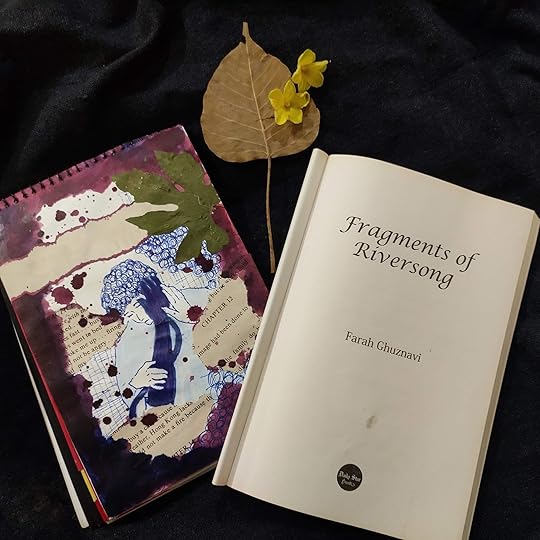
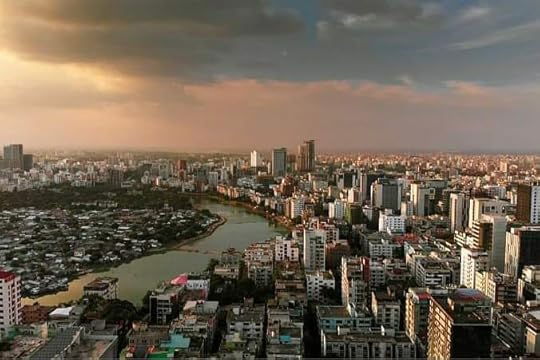
Jump to ratings and reviews
Rate this book

Fragments of Riversong

Rate this book
‘Fragments of Riversong’ showcases a dozen masterfully-crafted tales that bring alive the beauty, chaos and contradictions of contemporary Bangladesh. Here are scenes from lives less often examined.

A visa applicant at the US Embassy struggles with her conscience. Strange things happen when a street child finds his life intersecting with those of a wealthy housewife and a teenage schoolgirl. A guava tree becomes a source of conflict between an unorthodox grandmother and her stubborn grandchild. A successful architect suddenly finds herself the reluctant guardian of two children. A young man returns to his village in order to come to terms with bereavement. A Bangladeshi-American schoolgirl learns a hard lesson. A confident urbanite grapples with the challenges of a rural environment during a field trip. A dream holiday takes a disastrous turn for two friends. Revenge manifests in an unusually creative form within an unhappy marriage. A young child realizes she must depend on herself to survive. The search for love remains oddly familiar in a dystopian future.

Like fragments from an emerging mosaic, these stories fit together to illustrate the transformation of a once-rural, riverine land into its more recent incarnation, telling the stories of the country through the voices of its people.

125 pages, Paperback

First published November 1, 2013

3 people are currently reading
158 people want to read

About the author

Farah Ghuznavi

8 books50 followers
Farah Ghuznavi is a writer, translator and newspaper columnist, with a background in development work. She holds an undergraduate and two postgraduate degrees from the London School of Economics, and has worked for the Grameen Bank and the United Nations Development Programme, as well as NGOs in the UK, Bangladesh and elsewhere.

She remains an unrepentant idealist despite the existence of empirical evidence suggesting that it might be better to think otherwise.

Farah began writing fiction in a desperate attempt to make the stories leave her in peace, in the hope that putting them down on paper would send them on their way. So far, this strategy appears to be working, one story at a time.

Farah’s work has been published in a number of story collections and literary magazines in Britain, the US, Canada, Singapore, India, Nepal and her native Bangladesh.

These include the fiction anthologies The Storm is Coming (Sleeping Cat Books, USA), Curbside Splendor Issues 1 and 2 (Curbside Splendor, USA ), The Path, Winter Issue 2011 (The Path to Publication, USA) and Woman's Work (Girl Child Press, USA); Lady Fest: Winning Stories from the Oxford Gender Equality Festival (Dead Ink, UK), The Monster Book for Girls (Exaggerated Press, UK) and Journeys (Sampad, UK ); The Rainbow Feast (Marshall Cavendish, Singapore); La.Lit Vol. 1 (Nepal); What the Ink? (Writer’s Block, Bangladesh), Sticks and Stones Vol. 1 (Sticks and Stones, Bangladesh) and From the Delta (UPL, Bangladesh); and Lifelines (Zubaan Books, India).

Her story "Judgement Day" was Highly Commended in the 2010 Commonwealth Short Story Competition, and another story, “Getting There”, placed second in the Oxford Gender Equality Festival Short Story Competition. Farah is working to finalise a manuscript of her own short stories and has most recently edited and contributed to Lifelines, an anthology of new writing from Bangladesh for Zubaan Books, India.

She is a regular contributor to The Star Magazine, which is affiliated to the Daily Star newspaper in Bangladesh, and writes a fortnightly column entitled "Food for Thought”. Her website is under construction at: www.farahghuznavi.com

Ratings & Reviews

What do you think?
Rate this book

Friends & Following

Create a free account to discover what your friends think of this book!

Community Reviews

5 stars
40 (42%)
4 stars
42 (44%)
3 stars
8 (8%)
2 stars
3 (3%)
1 star
2 (2%)
Displaying 1 - 30 of 52 reviews
Profile Image for Tiash ..
315 reviews113 followers
July 18, 2021
[3.5 ✨]

Fragments of Riversong is a grandiloquent celebration of life in Bangladesh. Author used rhetorical wording to convince the readers to see her viewpoint, which in a manner of speaking was cristal clear and eloquent. Themed on basically a feministic tinted lens to observe deeply rooted patriarchy and It's toxic practice in daily life, these stories are poignant, triggering, also at times unpleasant.

description

Short story, probably is the trickiest genre to write, read or review, As the abundance of topic requires a gentle handling. Making the plot enticing, characters relevant and also adding individuality, that within a very limited space, making it sententious, lovable is not a piece of cake. To author's credit it was mostly (!) executed idiomatically. Fragments of Riversong is a collection of 12 stories of slice of life genre that allows you to peak in the life of native as well as immigrant Bangladeshi people.

The Mosquito Net Confessions is my favorite story from this lot which focuses on stereotyping people, existential crisis and a journey of self discovery and finally coming out as a better, stronger version of yourself. This Succinctly executed story is relatable, effective and motivating. The pacing and span suited the plot through and through.

I wholeheartedly believe a story should be as long as it requires to be. So It's a vital thing to know what to focus & where to finish off. A Thing short story writers often tend to mess up, making it either a verbosely wordy mess or a redundantly convoluted piece. Big Mother, a content heavy, potential story from this collection can be an epitome of such classic case, that explores deeply rooted patriarchy, household conflicts, polygamy, interfaith relationship, favouritism towards male child, sexual assault, trauma and to finish it off sprinkle Rana Plaza Tragedy. It's a mess of content, none being explored properly. Characters not getting enough room to grow, ultimately not resonating with us at all.

To be brutally honest , Fragments of Riversong is a weird assembly of stories, some with paper thin plot, some are overly complicated. The inconsistency in writing is apparent. Few poorly conceived, poorly executed story felt out of synchrony in contrast to other pitch perfect stories (like, The Mosquito net Confessions). You see the conflict? Whilst i was blown away by the skeletal development of some of the stories and well chosen vocabulary, It's the sloppy execution at times that lessened my reading experience to a degree. Considering all of it, I'll go with a rating of 3.5 stars.

description

Profile Image for Timothy Green.
63 reviews25 followers
April 6, 2017
A fantastic collection of short stories, each one uniquely Bangladeshi.
Farah Ghuznavi has done an excellent job showcasing the enticing Bangladeshi spirit of hope, compassion and endurance; a spirit I have come to admire very much.
I have been fortunate enough to visit Bangladesh a couple of times and felt, whilst reading this book, instantly transported back to this vibrant tangle of a country, with its enduring beauty despite its widespread suffering.

This book covers a wide range of issues prevalent in modern day Bangladesh, but also relevant globally, such as family, gender, childhood, poverty, identity and many more. Remarkably, the author doesn't rely on grand events in her stories to get these messages across, but instead has created everyday tales involving believable characters that the reader can relate to.

With a lovely use of language and expertly crafted characters, some of these powerful stories will bring a smile to your face, whilst others will leave you in tears.

Informative and a pleasure to read - a very fulfilling read indeed.
Profile Image for Sameirah Ahsan.
18 reviews7 followers
July 12, 2021
Farah Ghuznavi's Fragments of Riversong, consists of twelve short stories. Each of these stories embody the nuances and beautiful complexities that make up contemporary Bangladesh. The author discusses the psychology of Bangladesh and some of the deep biases that have become so inherently Bangladeshi that we do not even notice them anymore, let alone question them. What I found most fascinating is how the stories did not focus on great drama or detailed backstories to create the setting in order to draw the reader in and to help them empathize. Instead, the author presents a handful of some incredibly Bangladeshi, incredibly ordinary moments to tell the stories of these characters; and uses their social standing, gender, religion and class to highlight the frequent divides that define life in Bangladesh. She talks about wealth, poverty, marriage expectations, sexism, classism to name a few. Central to all of this is the conditions of women living in a patriarchal society. I am particularly grateful for this, because the average Bangladeshi woman is hardly ever spoken for. No matter how some may disagree with my statement, the fact remains: those of us that have voices are exceptions and not the rule.

I really connected with Farah Ghuznavi's stories on a visceral level. I felt like I've known the characters long before they appeared in this book, every single one of them. It felt like I've seen them in reality, outside the pages of her book, on the streets, at every corner, waiting in the elevator, wiping the sweat of their brow at some bus stop, arguing with a friend or laughing with them, hailing down a cng, crossing a street. They are reflections of friends that I love, and of strangers that pass me by everyday.

My two favourite stories from the list are "Waiting" and "Waiting for the Storm".

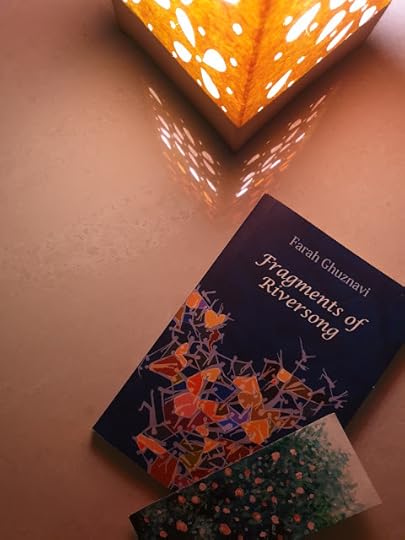
I want to thank Farah Ghuznavi for gifting me this absolute gem of a book at a time when I was starved for stories that were exclusively Bangladeshi. Thank you so much, apu! In the message that you had written inside my copy of Fragments of Riversong, you had asked if I could figure out the cover of the book. To me, if examined from the bottom right corner, it looks like people (stick-figures) linking arms to form a rough map of Bangladesh. I hope I'm right. :)

Bookstagram:@booksnher
Profile Image for Musharrat Zahin.
420 reviews505 followers
July 26, 2021
How good is that beautiful aroma pouring out of your favorite fresh flowers? The flowers immediately bring them up to your face to breathe in the fragrance is one of a kind. To attract the right pollinator, flowers produce different smells. So did this book!

The author with her amazing talent managed to captivate me. Short stories are more likely to strike with a sudden force and leaving the reader with questions, and often a sense of wanting to know more. It provides authors the freedom to convey a message or experiment with a theme without the burden of committing to a lengthier, more time-consuming task. And Farag Ghuzanvi used these advantages.

The book touches so many different themes, from sisterhood to family, cultural appropriation to traumatized childhood, toxic parents, misogyny- the author handled all wonderfully. It contains a dozen of short stories, based on Bangladeshi people, so the stories feel like home, so relatable. They're so vibrant and thought-provoking, Farah has a voice that is all her own.

My two favorite stories from the list are "Waiting" and "Waiting for the Storm".


Also, can we all take a moment to appreciate how beautiful the cover is! If you tilt the book a bit, then you can see the map of Bangladesh! I want to thank @farahghuznavi for giving me this book! She is literally one of the most humble people I've ever met on this platform!
Profile Image for Habiba♡.
352 reviews23 followers
August 10, 2021
The fragments of riversong is a short story collection of 12 unique stories portraying Bangladesh's native people, their Culture, their unseen feelings and emotions.

The first story i read from this collection was 'Getting There'. and i remember reading that story i felt so relatable with Laila. i had the privilege to talk to the author and i remember texting her at midinght after finishing the story and telling her how much i loved it.

When you'll start reading these stories you'll get to know how beautifully she has written and focused on tiny emotions too.. It was written in a row like Happy-sad-happy-sad verse.
Every story has their own feature, every story portrays our POV of Rural lives. Be it male solidarity or patriarchy, Assault or household conflicts or domination. Also some sweetness like Sisterhood-brotherhood, Caring In between. Some of stories ending were heartwarming as well as thought-provoking.

Coming to the title of the book. I asked her in a conversation of Dailystar 'Why Fragments of riversong? And what's idea behind this title?

She said, "Bangladesh is a vibrant kind of mosaic. It has millions of stories but these are only 12 fragments from the mosaic. and why the name riversong is Because on old days majhi's (Boatman) on the riverbank used to sing folk songs like 'Bhatiyari' songs which portrays Bengali's Culture and people. Which is nowhere to seen nowadays. So to show how rich our culture, our lives and Stories are it's named 'Fragments of riversong' ".
Profile Image for Shamuna.
1 review2 followers
December 8, 2013
As with other books of Farah Guzhnavi, this too is a wonderful read!
Profile Image for Anjum Haz.
288 reviews71 followers
April 9, 2022
In one of the excursions of my college life, we girls were heading towards Kushtia, to visit kuthibari, then the country house of Rabindranath Tagore, now the tourist attraction of the city. Our bus paused near the Hardinge bridge and we let ourselves out to stretch our body and mind amidst the cozying half awake winter breeze. There, beneath the bridge, I have tasted the best baro vaja, twelve mixed, a street food of Bangladesh prepared by mixing twelve spicy and crunchy ingredients, in my life. A sugar cane field on one side of us, the great Padma on the other side, the mighty Hardinge over our heads and this perfection in my mouth– left a dear memory in my mind. Which I relived again after reading Fragments a Riversong, a collection of 12 short stories, each cooked with premium, original Bangladeshi spices.

Bangladesh is about– uprising high class citizens who speak Americanized Bangla, farmers who produce the most and receive the least, price hikings just when Ramadan is on its way, crazy cricket lovers, public examinations’ tension, Facebook hashtags to support a religion that you hardly follow and so on. Farah Ghuznavi picked some of these deshi ingredients, sprinkled indigenous spices on top and made very readable short stories out of them. Her stories cover both the lives of the passengers of six-wheeled cars and the hawkers and beggars who keep knocking the glasses of those air-conditioned cars to convince the people inside to spend on their product or begging. From the lives of female garment workers to immigrant Bangladeshis who speak no Bangla, how she mastered building the stories on such a wide spectrum, I don’t know! And she was at ease playing Bangla terms and our very own cultural instruments like shap ludu, fuchka throughout the book.

I could relate to most of the stories, some with “tell me about it!”, some with “LOL”, some with “ow yeah”, and some with sad nods.
The most unexpected people became ostentatiously pious during this month.

You know which month it is.
It’s such a circus, with everyone trying to outdo everyone else, showing off their expensive saris and gold jewellery. Young girls are expected to dress up, and be on display like cattle at the eid markets.
Boy, weddings in Bangladesh. LOL.

The story about Rana plaza tragedy moved me so much. "We have several urgent orders to ship to Europe, so they won’t shut the factory–they would lose too much money." This gave me goosebumps. I was reminded of my sociology teacher’s lecture where he said “when the poor of a third world country die, it’s the number of deaths, not their names that come into the headlines.”

My personal favorite is Escaping the Mirror. You know the story very well if you are a female (or male with low chance) Bangladeshi. Into whichever class, status of family you were born, you were never protected from perverts in the form of distant or close relatives/acquaintances. You thought, what is this weird thing going on? Nothing similar ever happened to someone else. And it takes you until your 20s or so to understand what happened to you (and to all your girl friends at least!) was sexual abuse, a crime with huge number of victims, yet so under-reported status as you were only seven years old.

I was always proud of the rich Bangla literary works of East and West Bengal, my most read are from the 20th century. We had some excellent short story writers back then like Bonoful, Abu Ishaque. But I have always felt the void of true Bengali, precisely contemporary Bangladeshi stories written in English, that I wanna boast about to the international readers. When I read and recommended Arundhati Roy, Kader Abdolah, Khaled Hosseini, I used to sigh for an English book on contemporary Bangladesh. Now I have a strong recommendation ready in my stock!


I want to thank Aadrita for not only posting her review on this book in Goodreads, that took my attention, but also for answering my desperate query on where I can find this potential gonna-hit-me-strong book. Thank you, girl!
Profile Image for Nazia Disha.
42 reviews16 followers
July 18, 2021
🔷𝐁𝐨𝐨𝐤 𝐑𝐞𝐯𝐢𝐞𝐰:

𝙁𝙧𝙖𝙜𝙢𝙚𝙣𝙩𝙨 𝙤𝙛 𝙍𝙞𝙫𝙚𝙧𝙨𝙤𝙣𝙜 (Daily Star Books,2013) is a fictional book which is written by Farah Ghuznavi. This book is a collection of twelve short stories. Each story is about Bangladesh and the lives of the people of this country-Bangladeshis. Farah has presented a few ordinary Bangladeshis and described their lives but after reading each tale, you will not find it ordinary; you will find them extraordinary and get to know about the lives of Bangladeshi people. Farah has highlighted the lives of some Bangladeshi women who are living in a patriarchal society and the problems which a woman has to face while living in that society.

Farah Ghuznavi has told me to take a break after finishing a story. At first, I did that but later I couldn’t. The stories are told in such a comforting manner that it was hard to read this book slow. Each story is easy to read but not easy to forget. Each story will take you to the different places of Bangladesh, it can be in a developed urban city or an undeveloped rural city; to a different household and a different life! While reading each story, it felt like I've known these characters and these are not stories, I can see them in front of me.

Before getting this book, I have been reading books that are written by foreign writers in English. The stories of those books had been placed in foreign countries, not in my country. So, I couldn’t relate to those stories. But Farah Ghuznavi’s book- 𝙁𝙧𝙖𝙜𝙢𝙚𝙣𝙩𝙨 𝙤𝙛 𝙍𝙞𝙫𝙚𝙧𝙨𝙤𝙣𝙜 is a book that consists of stories that are about the people of Bangladesh. And I can relate to each story. Although I’m still very young to face the situations that these characters of this book have faced, I know about these situations.
So, thanks to Farah Ghuznavi for giving me this great book before my birthday with a beautiful wish that you have written inside the copy of 𝙁𝙧𝙖𝙜𝙢𝙚𝙣𝙩𝙨 𝙤𝙛 𝙍𝙞𝙫𝙚𝙧𝙨𝙤𝙣𝙜. You have inspired me to read more stories that are purely Bangladeshi. And you had also told me to let you know if I could have figured out the cover of this book. Well, yes I’ve figured out the cover! It looks like the people on the cover are holding hands to form the rough map of Bangladesh.
In the first story of this book-’Getting There’, I loved reading about how Laila finds a little bit of hope on an unplanned journey. While reading the 2nd story of this book-’Old Delhi, New Tricks’, I was craving for Dosas. The name of the main characters of ‘The Mosquito Net Confessions’ and ‘Escaping the Mirror’ stories are the same which is “Diya” but the spelling in both stories are different. You might be thinking about why I’m writing this. It’s because my elder sister’s name is also Diya. At first, the spelling of her name was ‘Dia’ but when she was admitted to school, my father changed the spelling of her name and it became ‘Diya’. I loved how Farah has beautifully and brilliantly written the 5th story of this book-‘Waiting’. In ‘The Mosquito Net Confessions’, I loved how Diya engages herself with the people of the village and everyone else around her through her interactions.
All the twelve stories of this book are brilliantly penned down and I loved all the stories in 𝙁𝙧𝙖𝙜𝙢𝙚𝙣𝙩𝙨 𝙤𝙛 𝙍𝙞𝙫𝙚𝙧𝙨𝙤𝙣𝙜 but among them, my most favourite stories are- ”Getting There”, “Waiting” and “The Mosquito Net Confessions”.
Each of the stories will amaze you and inspire you. I recommend this book to every person in our country and also to those foreigners who want to know about Bangladesh and Bangladeshis.
4 reviews
December 9, 2013
Fragments of Riversong is a definite keeper! Each of the stories are unique, set in different backgrounds. The protagonist in turn takes one to experience a multitude of scenerios, based on the theme and context of each story. I have especially enjoyed the perspectives they provide and would like to re-read the tales over time.
Personal favourites include "The Guava Tree Rebellion" - the interaction between the grandmum and the grandchild reminds me of my very own Nanu, whom we adored for her stories. This particular story is still intriguing for the daring youngster who wishes to challenge the guardian in spite of dreading the punishment that is yet to befall upon her... "Waiting" is also an interesting plot where three completely different characters are in the same situation and yet each has a mind of his/her own. It is a story that seems close to being non-fiction and is interesting to come across their individual thoughts given the circumstances. Finally, "Big Mother" is a story that I personally would like elaborated to a larger plot. It keeps your mind pondering about what will happen to the girl, whether her brother turns out to be a savior and and how she faces tomorrow, especially after acknowledging all that she has faced in her life already...
This collection holds something for everybody. I feel any reader would be able to connect oneself at least once, with any of the stories.
3 reviews1 follower
December 8, 2013
This is an excellent collection of short stories, which provides unexpected insights into contemporary Bangladesh. The cast of characters is impressive - from a would-be immigrant in the US Embassy Visa queue, to a career woman who finds herself unwillingly saddled with two of her sister's children, to a grieving young man returning to his village, to a boy who lives in the slums with his parents and little sister.

The author also displays considerable stylistic variation in her writing, demonstrating range. It would be hard to pin down this collection . In terms of genre because it contains a variety of stories, shifting with ease from literary fiction to science fiction to more suspenseful stories and those which incorporate current events in Bangladesh.

What I like best about Fragments of Riversong is its sense of timelessness yet relevance and relatability to today's readers, whatever age group they may belong to. Some stories do stand out and 'stay' with the reader long after finishing the story. Like "Getting There". The characters find a way into the subconscious.


There is much to enjoy, and I highly recommend it to anyone who wants to get beyond the tired stereotypes of Bangladesh that most frequently feature in international media headlines and really understand the lives of people in our country.
Profile Image for Aunohita Mojumdar.
1 review2 followers
December 21, 2013
Fragments of Riversong delighted me. What i liked most about the short stories was that they did not try to capture dramatic moments - of action or emotion - but much more ordinary everyday things. Ghuznavi takes ordinary moments and chisels them into short sharp moments that stay with you.
A field trip that leaves an aid worker with a greater sense of confidence, the friendship of a grandchild with a grandmother, the acute loves, jealousies and hatred of childhood as well as its darker terrors.
The stories evoked in me many of the smells, sounds and thoughts of childhood spent in another part of Southasia. Yet,they were both familiar and unfamiliar, evoking also new sights and sounds. Not for Ghuznavi the sometimes anodyne 'third world' experience stripped of its peculiarities that is sometimes now presented as third world literature. Her writing is rooted in the specificity of the experience of her home. The politics of Bangladesh, the 1971 war, the garment industry's simultaneous empowering and disempowering impact - the experience of the immigrant and the wannabe immigrant are pervasive in her writing enriching it. I hope to read much more from her in the years ahead bringing to us a slice of life that many of us may not have had access to.
1 review
December 21, 2013
Fragments of riversong is a collection of short stories from the Bangladeshi author Farah Ghuznavi. All the stories exhibit the same resilience that many of us foreigners who have travelled and lived in the region admire and respect. Though each story stands on its own, the collection as a whole has a coming of age feel to it, with strong narratives of childhood experiences, youth, and the challenges of adulthood and married life. The collection has a distinct South Asian flavour, and is recommended to anyone who likes a good story.
2 reviews1 follower
December 8, 2013
'Fragments of Riversong' is a dynamic collection of well crafted short stories. The diverse stories shift from a young woman's adventure in an alien land to a surprising twist of fate for two street urchins to a man mourning the death of his martyred father; the stories amuse, question and haunt the mind of the reader long after it has been read. A must read for every lover of literature.
Profile Image for Faeeja Humaira Meem.
55 reviews41 followers
November 6, 2021
When I received the copy of Fragments of Riversong, I had already had a few conversations, meaningful ones at that, with the author herself, and I planned to read the stories in one sitting. However, my mother and sister both surprisingly took an interest and one fine afternoon, we decided to read the first of the twelve stories in the collection, “Getting There,” together. My sister and I were already in tears midway and by the end of the story we were smiling along with our mother. We resonated with Laila and Shaheen, the main character of the story and her elder sister, not only because we share similarities, Shaheen being the writer while Laila was interested in art, the family dynamic was something we faced as well. Thankfully, and I cannot be more grateful, we “got there” earlier than Laila and Shaheen did.

The story begins with Laila riding in a car from Chittagong to Dhaka, and as the story progresses, we learn about her past, her family’s past, and the cause for her lengthy journey. It progresses in such a manner that the reader is drawn to learn more about Laila’s past, as well as a woman’s life in a patriarchal society such as ours. The backdrop is familiar and homey, yet it reminds you of the suffocation a woman feels in this society from which they yearn to free themselves from.

Farah encourages her readers to take breaks in between the stories, as they are quite different, and while I wanted to devour them all at once, I did what she asked. Not to mention, I was reading with two other people, one of whom happen to be quite the busy person! Much is to be said about each of these stories, these fragments, and much has been said, but what strikes me the most about them is how familiar and relatable the words were, even when they weren’t. Despite living in a South Asian country my whole life, I have never had Dosas before, yet when reading “Old Delhi, New Tricks,” I felt like I could almost taste the Dosas. Speaking of, I really need to try them out soon!

In addition, the author’s work has a wide spectrum of stylistic variance. As an English major, this part of reading is always satisfying yet nerve-wracking when not done well. It was the former for Farah’s writing, fortunately. This collection of stories is difficult to categorise. In terms of genre, it offers a wide range of stories that easily transition from literary fiction to science fiction, suspenseful stories, and stories that reflect current events in Bangladesh. Her work is rooted on the uniqueness of her personal experience growing up. Bangladeshi politics, the 1971 war, the garment industry’s concurrent empowering and disempowering influence are all present in her writing, simultaneously enhancing it.

My only pet peeve in reading any anthology which unfortunately worked here as well is when all the stories end on a hopeful/happy note, after presenting an array of crucial and grim issues. The author expertly penned stories set in modern Bangladesh concerning tradition, social stigma, prejudices, treachery, and harassment. In one of the stories, the author manages to touch on polygamy, fertility and abortion rights, contraceptive rights, attempted murder, rape, racism, the Tazreen Factory disaster, fleeing to the United States after escaping oppression in Bangladesh and other issues, all in under 20 pages. That requires skill, and Farah proved she has it in her, however, it’s a lot to take in when it’s all done so haphazardly. The short stories did not always establish or retain a sense of intrigue, and they often ended abruptly, and while understandably so, what with the book being so tiny, I personally like to read stories that cover all grounds, so if it is a short story, I find it is best to keep the content less heavy than a book-length story normally would.

What I loved best about these stories, on the other hand, was how incredibly the women were demonstrated, like A Tiny Reader mentions in her review. Their emotional intelligence, honesty, and capacity to adapt and accept individuals for who they are were their greatest assets. The stories cover a wide range of topics, and each one has its unique tone. “The Mosquito Net Confessions” is the one of the richest and most thought-provoking tale of numerous contrasts — between rural and urban life, Bengali and African women, and even Bengali women themselves. The plot centers around a group of women who visit a village as part of their financial sector of their job and discover a lot about themselves while attempting to learn about the villagers.

None of the stories have any preaching, no dramatic descriptions of lessons learned, action or emotion, but just glimpses of women who have been able to break free from conventional and stereotypical oppression of patriarchy when the need arises. Each of these stories embody the nuances and beautiful complexities that make up contemporary Bangladesh, just as depicted by the cover of the book, with tiny, ordinary humans holding hands and creating these fragments of riversong. This collection is indeed important and a recommended read consisting of a distinct South Asian flavour, and I, along with my mother and sister, will definitely cherish these stories for a long time. I wish Farah Ghuznavi, already a prominent name in our country, the best wishes for her future endeavours and look forward to them myself.
2 reviews2 followers
March 11, 2015
“Fragments of Riversong” is a compelling collection of short stories about a variety of people from a different backgrounds in Bangladesh. These stories take seemingly ordinary moments and show the readers what life is like for a variety of Bangladeshi, especially Bangladeshi women. An underlying theme in many of the stories is difficulties that women face in a male dominated society. Many of the stories contain sadness as the main characters struggle to make it through life, but there is also humor in several stories.

“Getting There” starts with Laila on a car ride from Chittagong to Dhaka, and as the story unfolds, we learn of her history, her family’s history, and the reason for her long journey. The story unfolds in a way that makes the reader want to learn more about Laila’s past, as we also learn about a woman’s life in a patriarchal society.

“Old Delhi, New Tricks” is an amusing tale about an Englishwoman and a Bangladeshi living in England, as they visit Delhi and have to deal with some of the difficulties that any tourist would in a strange land.

“Big Mother” is a story with a lot of unhappiness for Lali, but a hopeful ending, as she is on the verge of getting a visa to come to America for a better life, which primarily means escaping the overbearing title character. This is another story showing the difficulties of being a woman in a male dominated society.

“Just One of the Gang” shows two teenage Bangladeshi girls who drift apart as they go to new schools. Tough Bangladeshi-Americans, this story could be of any two “mean girls”, showing that this phenomenon is not limited to Lindsay Lohan.

“Waiting” is a story about two poor siblings during Ramadan, the Muslim month of fasting. In addition to showing how hunger can be such a big part of being poor in Bangladesh, but it also gives us a glimpse into how some other people, such as a rich woman, conduct themselves during Ramadan. I enjoyed looking at how the people from different walks of life fare during Ramadan, and the happy ending was especially enjoyable.

I especially enjoyed “The Mosquito Net Confessions”. This story is about Diya, an employee of Grameen Bank who has been assigned to escort two African women from the Ivory Coast through rural Bangladesh. This story is about several different things – the culture shock of a city person (Diya, in this case) travelling through rural areas (something many Americans could relate to just as easily); the difficulties of acting as a translator (Diya speaks English and Bengali, but no French, so yet another translator, Shahanna, a Bangladeshi-American who speaks French but not Bengali) as we see the mental fatigue this causes; and the growing confidence and self-worth of Diya, as this trip takes her out of her comfort zone and forces her to grow as a person. My wife, being from Dhaka (capital of Bangladesh) is a city girl’ and also had to act as translator for me when I visited, so these first two issues are something that I could relate to, even if only through my wife.

In “The Assessment” Ghuznavi dabbles in science-fiction, though this is just a vehicle to make a statement about society.

In “Waiting for the Storm”, another story about a repressed wife, she decides to turn the tables on her husband.

“The Homecoming” tells of the atrocities committed during Bangladesh’s war for independence against Pakistan in 1971. As my wife’s parents lived through this war, I have heard stories from her that give this tale resonance.

“Escaping the Mirror” is a heart-wrenching story of a schoolgirl from a well to do family who is harassed by the family chauffer for a period of years. This was a difficult story to read, as I felt Dia’s distress, and wondered how it would end. This story of sexual abuse is something that could just as easily happen in America, or probably just about any society.

"The Guava Tree Rebellion" is told from the perspective of a young girl, about her relationship with her Nanu (grandmother). This story is a fun one, and I especially enjoyed the interesting character of Nanu, who has her own way of raising children.

Ghuznavi’s style is informal and easy to read. This book is a good choice if someone wants to find out more about the state of women in Bangladesh, and life in Bangladesh in general, or if someone just wants a fun, quick read.
Profile Image for Saadia Faruqi.
Author 145 books496 followers
Read
May 4, 2016
This review appeared in The Aerogram:

Short stories fascinate me. The art of weaving a tale in limited words and allowing readers to gain understanding of a topic or theme in a short amount of time is a wonderfully creative thing. In Fragments of Riversong, a short story collection by Bangladeshi author Farah Ghuznavi, I appreciated this very aspect of her craft.

Fragments of Riversong contains 12 short stories; some longer fiction, others very short flash fiction. Despite the variations in length they have a few recurring themes. For me, the two most relevant recurring themes were studies in contrast and the condition of women.

The collection highlights a variety of contrasts that make up contemporary Bangladeshi life. In the story “Waiting” there is a not-so-subtle contrast between the rich and poor, while in “Old Delhi, New Tricks” the contrast is between tourists and citizens, those who are from the “desh” and those who pretend to be. Some contrasts are not really contrasts at all, such as in the futuristic story “The Assessment” set in a 25th-century subcontinent where women are supposed to have it all, yet their condition is still the same.

“The Mosquito Net Confessions” is probably the richest and most thought provoking story of many contrasts — between rural and city life, between Bengali and African women, even between the Bengali women themselves. The story revolves around a group of women who visit a village as part of their job in the financial sector and find out much about themselves while they attempt to learn about the villagers.

Diya is a Bengali who has studied abroad, while Shahana is a Bangladeshi American who fits in nowhere because she has no cultural cues to fall back on. The typical portrait of village life aside, the best parts of the story for me were the conversations the two women had under the mosquito net at night, ranging from the market-like atmosphere at Bangladeshi weddings, to the much deeper realization that Bengali immigrants in the U.S. and U.K. have frozen images of their home country which they foist onto their children. In itself a common-enough observation, it packs a punch when explained within the context of a story of American or British women coming “home” with no idea of where home actually is.

The second theme of the female condition is always front and center in the collection, sometimes bright as a neon sign and sometimes subtle and fine. As a Pakistani American, this condition reverberated with me even though these particular stories are set in Bangladesh. I saw in Ghuznavi’s fictional women many of the same stories about which I write and know.

From the crazy, harmful mix of female relationships in “Big Mother,” to the hilariously real picture of a courageous and fun loving grandmother in “The Guava Tree Rebellion,” to the unnamed wife who tries to escape her husband’s oppression by slowly poisoning him in “Waiting for the Storm,” women show bravery in the face of oppression, hope in the face of bad news, and dedication in the face of insurmountable circumstances. There is no preaching here, no descriptions of lessons learned, but vignettes of women who are able to free themselves of traditional oppression when times demand it.

Overall, Fragments of Riversong is a solid collection of tales of contemporary Bengali life with all its beauty and ugliness.
Profile Image for Madhulika Liddle.
Author 22 books547 followers
March 20, 2014
"What stayed with me, in particular, is the haunting way in which the author describes her characters, their joys and woes, their flaws and strengths, their rebellions, all that makes them human. There is empathy here, and compassion. A sense, not of drama, but of concern."

My complete review of the book, here:

http://madhulikaliddle.com/updates/bo...
Profile Image for Aadrita.
278 reviews229 followers
November 15, 2021
Short stories are like safe space. They are like warm hugs in midst of chaos. Being a reader, I run towards books whenever life gets stressful. And in those awful times when finding a little time for reading or concentrating on the pages don't come easily, short stories embrace me like a saviour. Fragments of Riversong fit that description perfectly.

Fragments of Riversong is a collection of contemporary short stories about Bangladesh and it's people. About the people we've known all our lives, whom we see everyday around us and sometimes, those people are us. Laila struggling to find her own self in a controlling brown household, Diya trying to strengthen her place in a male dominated work environment, Nawara getting excited for summer vacation at her grandmother's, Dia struggling through a lifetime of trauma from being harassed in her childhood - were all stories we've seen before our eyes. And to find these familiar people and their stories in the pages of this book was weirdly comforting. Kudos to the author (who I must say is one of the loveliest persons ever) for getting these stories out there, that too in the international language for everybody to read.

But a little bit of caution before you go diving into this book, it's not for beginner level English readers. The author's narrative style and rich word selection may prove a bit intimidating. Otherwise, it'll be a treat! "Getting There", " Escaping the Mirror", "The Mosquito Net Confessions" and "Waiting for the Storm" were my favourite from the bunch. These stories tugged at my heart, made me feel seen and in the process made me calm.
Profile Image for Jane Robinson.
1 review
January 20, 2015
Fragments of Riversong is a collection of short stories from Bangla Desh. I found the stories evoked a vibrant picture of life there. They contained protagonists who achieved some kind of resolution. I loved "Waiting" where the poor children got a taste of something good and savoured it in a way the rich lady couldn't. "Big Mother" which features a young woman with a scarred past waiting for a visa application conjures up her anxiety but gives her resolution. Ms Ghuznavi has a powerful use of imagery once comparing rage to a monstrous butterfly emerging from the cocoon of a character's chest.
Titles too are important and to me "Fragments of Riversong" conjures up the image of Bangla Desh crossed by so many waterways.
I would highly recommend this collection of stories.

Profile Image for World Literature Today.
1,190 reviews361 followers
Read
September 14, 2014
"Ghuznavi is undoubtedly a master of contrasting a character’s circumstances of gender, class, religion, linguistic background, and ethnicity in order to inform her readers of the deepening divides and fractured lives in the developing world. Fragments of Riversong is a critical and creative culmination of Farah Ghuznavi’s journalistic passage for over a decade." - Shilpa Kameswaran, New York

This book was reviewed in the September 2014 issue of World Literature Today. Read the full review by visiting our website: http://bit.ly/1y3hwH9
Profile Image for A Tiny Reader | Sharfin Islam.
261 reviews27 followers
October 20, 2021
I received a free copy of this book from the author in exchange for an honest review. However, it does not affect my opinions and review about it in any way.

Fragments of Riversong is a collection of short stories of Bangladeshi women, from different backgrounds and with different stories to tell. I'm really glad that I took it slow and had time to absorb each story before bed everyday.

What I loved about this collection is how beautifully the women were created. Their strength lay in their emotions, integrity, ability to adapt and accept people for who they are. Personality traits that are often said to be "feminine" were focused on to show how they are far from being "weak", as often portrayed.

I genuinely enjoyed all of the stories, but my favourites were the travel ones, New Delhi Old Tricks and Mosquito Net Confessions. I also chuckled several times when reading Guava Tree Rebellion. Escaping the Mirror affected me the most, to be honest, though, for reasons I stated in my stories last night.

There were a few, though, which didn't really leave much of an impression on me (compared do all the rest that most certainly did) namely, Just One of the Gang and Silver Lining. It's not that I didn't like them at all. It was more because the author usually gets into the characters' backgrounds which means I felt closer to them. Given that the stories mentioned above are the shortest from the collection, it meant that just wasn't as much of a priority, and quite understandably.

Overall, this was refreshing yet somehow familiar, with the settings being mostly in Bangladesh and characters that looked and felt like us.
Profile Image for Tanjim Ferdous.
10 reviews4 followers
July 19, 2021
“The one with a Contemporary Bangladeshi Fiction”

Read the book -

- If you like short stories, this book consists of 12 short ones.
- If you want to go through a few triggering issues, those have been faced by girls/women in Bangladesh.
- The characters are portrayed in a way as if we’ve known them in reality.
- If you want to explore simple story telling of contemporary Bangladesh.

I had the privilege to talk to this wonderful author and I loved how humble and kind she was the first time I talked to her. I want to thank Farah Ghuznavi for giving me this absolute gem of a book.
Profile Image for AFIFA ALAM RAISA.
90 reviews4 followers
July 11, 2021
"A terrified adolescent, I kept my promise to Baba never to display weakness.Until I returned many months later, to meet the lonely figure of my dignified mother, still standing amidst the ruins of a life; and visited the grave of a man who had suffered such torment for doing what he knew to be the right thing." - Farah Ghuznavi (The Homecoming, Fragments of Riversong)


A collection of twelve brilliantly penned stories.


As the beautiful title suggests, the book is where you find fragments of life glued together with love and acrimony, joy and sorrow, and smiles and tears.


With her mesmerizing style of narration, Farah Ghuznavi has marvelously painted diverse pictures of Bangladesh and Bangladeshis. Each word has been plucked from life and each line is meant to leave an impression on the reader's heart.


The stories make you wonder.

The stories make you feel.

The stories inspire.


Recommended to anyone looking for a different read.
1 review
July 12, 2021
A beautiful series of stories. I was never into short stories but this author made me fall in love with them! Each one has a unique storyline and some of them feel so close to my heart that I feel like she wrote it for me! It's the perfect book to read when you just want to take a break from life. Strongly recommending everyone to give it a read!
Profile Image for readwithlogolepsy || AFNAN.
177 reviews3 followers
September 5, 2022
reading this book made me feel like I'm not reading a fiction book but actual stories from people's lives. composed of 12 beautiful short stories, my favorites were "Getting There" and "Escaping the Mirror". The dedication toward Farah's parents was so sweet at the beginning of the book that I became restless to start it. As a member of any South Asian home, when a child expresses their desire to be a writer when they grew up, it would've been immediately rejected by any right-thinking parent of those households. but her parents seem to be fine with her choice. kudos to them, for they are the reason why we now can enjoy her beautiful and excellent stories as readers.

anyways returning to the stories, they were in the narrative of the author, of females who have gone through some hard reality in their lives. from stories of little children as well as full-grown adults, it was a mix of both sad and bittersweet stories. reading this book helped my vocabulary to improve since I tumbled upon some rich words because of the author's rich and diverse narrative style which some readers might find intimidating. so I would suggest beginner-level English readers find more options which would suit them best.

I felt warm reading the "Guava Tree Rebellion", not to mention chuckled a lot whilst reading it. "Mosquito Net Confession" was a whole lot of travel and life along with it which seemed just fine with me.

I really took an interest in how Farah writes stories. her narrative style bloomed curiosity in me since I never quite read anything like this. it was refreshing and felt familiar. maybe because I reside in Bangladesh where the stories are based on. That's why it felt familiar and easy to relate to so much.

overall a great read. I would suggest especially if you're Indian or Bangladeshi readers, you will find it relatable with the environment and what the author wanted to deliver to her readers better than anyone else.
1 review
January 23, 2015
Farah Ghuznavi is an insightful and skilled storyteller, who writes about the internal and external journeys of the human soul. She shows how identity is sometimes shaped by loss and at other times by reconnecting with estranged family members, creating characters that make a lasting impression on the reader’s mind.

“Getting There” is one example of this. It appears in both the Lifelines and Fragments of Riversong collections, and is intensely readable. It is a story of transformed lives and generates a sense of wonder and affection for the protagonists. The story explores the subtle, extrasensory connections among the characters. It shows that there is hope, maturity and humanity to be found, sometimes without even looking. A surprisingly tender story, it also makes a powerful point about what can happen when flowers aren’t allowed to blossom. When getting there becomes difficult, one can still make it through perseverance.

Farah offers her readers a canvas on which love, respect, joy, pain and personal transformation are subtly painted. An affectionate observer of the haplessness of human nature, her stories are narratives of compassion and wisdom, offering an unflinching look at the struggles of the individual against a contemporary or historical backdrop.

This author is establishing herself as one of the true voices from Bangladesh, with a writing style that is lucid and straightforward, yet subtle. – Rita Shabnam Nezami
Profile Image for Zowie Norris.
728 reviews37 followers
November 20, 2021
A collection of entertaining and unique stories. The author Farah Ghuznavi gifted me a number of shorts stories from this collection for an honest review.
I was truly hooked and immersed in each story too! She has an effective way of describing creating interest characters through dialogue and action, which the appropriate create drama and tension to captivate the reader. Her vocabulary may be deemed as simplistic in some stories but because of this, the emotional connection and story lines are very powerful.
Escaping the Mirror is an example of this - with a story line that raises the tricky subject area of abuse , written in a subtle and effective way that hooks you in as I reader.
Old Delhi, New Tricks is a delightful read that gives you an entertaining insight of both the culture and lifestyle from the point of view of someone who has elements of this culture but highlights the differences between culture and country in her discoveries. Again - a great read.
Judgement Day is written with passion and challenge against societies views and how judgements are made without understanding.
I truly recommend reading Farah’s captivating work.
Profile Image for Amanda.
104 reviews
June 8, 2015
If you are interested in reading literature written in English about contemporary Bangladesh, Fragments of Riversong by Farah Ghuznavi must be recommended. A volume of short stories that may be enjoyed individually but together deliver a well observed sense of Bangladesh today, its many voices, contrasts, beauty, and pain. The characters (particularly the women) are developed with nuance and fine insight giving access to personal and individual views, conflicts, and desires conveying a sense of not only of human experience on the surface, but also undercurrents, thoughts and emotion driving contemporary Bangladesh. However, whether your interest is directly related to South Asia or not, the stories are skillfully told; the characters and dilemmas tap into experience that transcends niche interest in Bangladesh, sure to resonate and reward any reader who picks up a copy of Fragments of Riversong.
Profile Image for Ahsan.
161 reviews34 followers
April 12, 2018
Here's my summary of the book: "And then, this happened...and then, that happened...and then, something else happened...and then, everything was good and everyone was happy. Also, feminism and empowerment and other things."

In a 20 page short story 'Big Mother', which, by all accounts, should not cover more than one topic, the author manages touch up polygamy, fertility rights and abortion, rights to contraceptives, attempted murder, rape, racism, Tazreen Factory disaster, escaping oppression in Bangladesh and running away to USA, and a light sprinkling of other issues. Nothing is coherent, nothing gels together, but everything is fine and dandy by the last page. Of every single story.
Displaying 1 - 30 of 52 reviews

Can't find what you're looking for?

Get help and learn more about the design.