

What do you think?

ציוויליזציות
מה היה קורה אילו לא גילה קולומבוס את אמריקה, ובני האינקה היו פולשים לאירופה, מנחילים את דת השמש וכובשים את היבשת בהדרכת "הנסיך" של מקיאוולי?
ציוויליזציות הוא רומן היסטוריה חלופית מבריק, שמעלה השערה: שלושה דברים חסרו לאינדיאנים כדי לעמוד בפני הכובשים הספרדים: תנו להם סוסים, ברזל ונוגדנים למחלות, ושיניתם את תולדות העולם.
בתנאים אלה נוחת אפוא שליט האינקה אטַוַולְפָּה באירופה של קרל החמישי.
מה הוא מוצא?
את האינקוויזיציה הספרדית, את מרטין לותר ותומכיו ואת הקפיטליזם בחיתוליו; את פלא הכתב והדפים המדברים; מלכויות מותשות ממלחמות אין־סופיות; ים שורץ שודדי ים; יבשת קרועה ממריבות דת וירושה.
אך יותר מכול הוא מוצא אוכלוסיות מדוכאות, מורעבות, על סף התקוממות: יהודים אנוסים מטולדו, מוסלמים מגרנדה, איכרים גרמנים – במילים אחרות בעלי ברית. האם יעלה בידם של בני האינקה לייסד ביבשת אירופה עולם יפה וצודק יותר במקום זה שהצמיחה הדת הנוצרית?
יצירתו השאפתנית והמבדרת של לורן בינה, זוכה פרס גונקור וזוכה פרס האקדמיה הצרפתית לרומן זה, מביאה סיפור של גלובליזציה הפוכה – בזכות כישרונו המופלג של בינה, נדמה כי ביסודו של דבר רק קוצו של יו"ד חסַר כדי שתנצח ותהיה למציאות.
ציוויליזציות הוא רומן היסטוריה חלופית מבריק, שמעלה השערה: שלושה דברים חסרו לאינדיאנים כדי לעמוד בפני הכובשים הספרדים: תנו להם סוסים, ברזל ונוגדנים למחלות, ושיניתם את תולדות העולם.
בתנאים אלה נוחת אפוא שליט האינקה אטַוַולְפָּה באירופה של קרל החמישי.
מה הוא מוצא?
את האינקוויזיציה הספרדית, את מרטין לותר ותומכיו ואת הקפיטליזם בחיתוליו; את פלא הכתב והדפים המדברים; מלכויות מותשות ממלחמות אין־סופיות; ים שורץ שודדי ים; יבשת קרועה ממריבות דת וירושה.
אך יותר מכול הוא מוצא אוכלוסיות מדוכאות, מורעבות, על סף התקוממות: יהודים אנוסים מטולדו, מוסלמים מגרנדה, איכרים גרמנים – במילים אחרות בעלי ברית. האם יעלה בידם של בני האינקה לייסד ביבשת אירופה עולם יפה וצודק יותר במקום זה שהצמיחה הדת הנוצרית?
יצירתו השאפתנית והמבדרת של לורן בינה, זוכה פרס גונקור וזוכה פרס האקדמיה הצרפתית לרומן זה, מביאה סיפור של גלובליזציה הפוכה – בזכות כישרונו המופלג של בינה, נדמה כי ביסודו של דבר רק קוצו של יו"ד חסַר כדי שתנצח ותהיה למציאות.
366 pages, Paperback
First published August 14, 2019
About the author
Laurent Binet
19 books896 followersSon of an historian, Binet was born in Paris, graduated from University of Paris in literature, and taught literature in Parisian suburb and eventually at University. He was awarded the 2010 Prix Goncourt du Premier Roman for his first novel, HHhH.
Laurent Binet est né à Paris. Il a effectué son service militaire en Slovaquie et a partagé son temps entre Paris et Prague pendant plusieurs années. Agrégé de lettres, il est professeur de français en Seine-Saint-Denis depuis dix ans et chargé de cours à l'Université. HHhH est son premier roman.
Laurent Binet est né à Paris. Il a effectué son service militaire en Slovaquie et a partagé son temps entre Paris et Prague pendant plusieurs années. Agrégé de lettres, il est professeur de français en Seine-Saint-Denis depuis dix ans et chargé de cours à l'Université. HHhH est son premier roman.
Ratings & Reviews
Friends & Following
Create a free account to discover what your friends think of this book!
Community Reviews
Displaying 1 - 30 of 1,074 reviews

August 11, 2021
Kill Them All; Let God Sort It Out
Ah, it all could have been so different - if the Caribs had been a bit more organised and eliminated the threat of Christopher Columbus by simply destroying his little ships; if the Vikings of Greenland had been a little more attracted to warm climates; if the rapacious Incas had moved from their mountains to the sea.
Not that the differences in themselves would have mattered according to Laurent Binet’s tale of reverse colonisation in which the New World invades the Old. The same human pomposity, the same greed, the same vectors of new diseases, the same instinctive violence exist in both worlds. And yet the world turns out to be very different indeed.
One way to interpret Binet’s story is in terms of sociology, particularly the sociology of religion. He uses the Lisbon earthquake of 1531 as the equivalent of the Aztec smallpox epidemic in 1520 that eliminated resistance to the Spanish and rapidly led to the destruction of the Mexican Empire. Both events would seriously undermine the fundamental, mostly unconscious, presumptions of the respective cultures.
Perhaps that is the real merit of this kind of alternative history. It reveals the presumptions that we unconsciously maintain about what is normal, moral, valuable, and important. That God (or the gods) speaks in natural catastrophe is a commonplace of religion. But what he (or they) means depends on the happenstance of the human interaction that follows.
The meaning of the world is the real core of something called metaphysics, the study of existential significance, which is a social as much as an academic enterprise. Metaphysics is certainly not a popular topic of conversation; but the expression of metaphysical reality, namely ritual, is. It is our ritual, both religious and their secular derivatives, that institutionalise, as it were, what is beyond language, rationality and analysis into our most intimate personal and communal being.
Ritual isn’t only observable in our religious or political events. Ritual is contained in the clothes we wear (or don’t), the layout of our dwellings, artistic themes and styles, and of course in the myriad of social behaviours we use every day, from how we shop and pay for the items we buy to the physical distance that is considered acceptable between us while we do these things. Language is mostly ritual in the greetings and small talk we engage in. Ritual pervades government and its processes - the three part government of the United States, for example, owes much to the interpretation of the Christian Trinity by a bunch of 18th century deists. Our laws reflect, for ill as well as good, our religious heritage - for example in the primacy of males, belief in retributive justice, and in cour judgments of equity.
So metaphysics is not some hidden, arcane philosophy of being. It is apparent, public, and pervasive. Ultimately it determines what constitutes a fact, that is, reality itself. What prevents us from realising this is an absence of contrast - there is nothing to experience except what is already literally inculturated within us. Until someone like Binet comes along and allows us to see our own metaphysical eye.
What is incalculably creative is the bulk of the book in which Binet places historical figures like Henry ViII, Charles V, Titian, and Cervantes within a new metaphysical context. They are all different in varying degrees from how we perceive them now, suggesting ways, perhaps, that we also might be different than we believe ourselves to be. Civilisations is not, therefore, merely an account of an alternative history; it is also a confrontation with our most profoundly held metaphysical prejudices.
Ah, it all could have been so different - if the Caribs had been a bit more organised and eliminated the threat of Christopher Columbus by simply destroying his little ships; if the Vikings of Greenland had been a little more attracted to warm climates; if the rapacious Incas had moved from their mountains to the sea.
Not that the differences in themselves would have mattered according to Laurent Binet’s tale of reverse colonisation in which the New World invades the Old. The same human pomposity, the same greed, the same vectors of new diseases, the same instinctive violence exist in both worlds. And yet the world turns out to be very different indeed.
One way to interpret Binet’s story is in terms of sociology, particularly the sociology of religion. He uses the Lisbon earthquake of 1531 as the equivalent of the Aztec smallpox epidemic in 1520 that eliminated resistance to the Spanish and rapidly led to the destruction of the Mexican Empire. Both events would seriously undermine the fundamental, mostly unconscious, presumptions of the respective cultures.
Perhaps that is the real merit of this kind of alternative history. It reveals the presumptions that we unconsciously maintain about what is normal, moral, valuable, and important. That God (or the gods) speaks in natural catastrophe is a commonplace of religion. But what he (or they) means depends on the happenstance of the human interaction that follows.
The meaning of the world is the real core of something called metaphysics, the study of existential significance, which is a social as much as an academic enterprise. Metaphysics is certainly not a popular topic of conversation; but the expression of metaphysical reality, namely ritual, is. It is our ritual, both religious and their secular derivatives, that institutionalise, as it were, what is beyond language, rationality and analysis into our most intimate personal and communal being.
Ritual isn’t only observable in our religious or political events. Ritual is contained in the clothes we wear (or don’t), the layout of our dwellings, artistic themes and styles, and of course in the myriad of social behaviours we use every day, from how we shop and pay for the items we buy to the physical distance that is considered acceptable between us while we do these things. Language is mostly ritual in the greetings and small talk we engage in. Ritual pervades government and its processes - the three part government of the United States, for example, owes much to the interpretation of the Christian Trinity by a bunch of 18th century deists. Our laws reflect, for ill as well as good, our religious heritage - for example in the primacy of males, belief in retributive justice, and in cour judgments of equity.
So metaphysics is not some hidden, arcane philosophy of being. It is apparent, public, and pervasive. Ultimately it determines what constitutes a fact, that is, reality itself. What prevents us from realising this is an absence of contrast - there is nothing to experience except what is already literally inculturated within us. Until someone like Binet comes along and allows us to see our own metaphysical eye.
What is incalculably creative is the bulk of the book in which Binet places historical figures like Henry ViII, Charles V, Titian, and Cervantes within a new metaphysical context. They are all different in varying degrees from how we perceive them now, suggesting ways, perhaps, that we also might be different than we believe ourselves to be. Civilisations is not, therefore, merely an account of an alternative history; it is also a confrontation with our most profoundly held metaphysical prejudices.

July 12, 2019
Grand prix du roman de l'Académie française 2019
As usual, Laurent Binet is not here to play - or wait: He IS here to play, but his game of choice is the literary equivalent to three-dimensional chess. His king is called Atahualpa, the Inca Emperor, and he and his allies strategize to conquer Europe. Yes, Binet gives us an alternative history that re-imagines conquest, dominance, and colonization, thus creating a thought experiment that challenges readers to question their perception of our current world.
All of Binet's books play with our notions of history and the role of language in constructing present and past realities. For HHhH, his metafictional novel about the assassination of high-ranking Nazi official Reinhard Heydrich, he won the the Prix Goncourt du premier roman 2010, for The Seventh Function of Language, an experimental crime novel in which Roland Barthes has developed a weapon made of language, he was awarded the Prix du roman Fnac and the Prix Interallié 2015. "Civilizations" was apparently inspired by Boucheron's Histoire du monde au XVe siècle that already discussed alternative histories of the world. Not all of Binet's scenarios really could have played out like that (due to slightly manipulated timelines etc.), but that's not the point: This author wants us to take a new look at our own history and the history of the world by changing perspectives, and he succeeds. Also, the novel is frequently very funny - the title might be a reference to the video game "Civilization", as the text also underlines all the neuralgic points where history (a concept that often appears static) might have taklen a completely different turn.
The book is made up of four parts, and all of them work and play with a myriad of historic references. Following up on the many hints the author has planted in the text is crucial for the enjoyment of the story - much like the highly ambitious The Seventh Function of Language, "Civilizations" is a puzzle.
The first part, "La saga de Freydis Eriksdottir", is a re-working (and partly re-writing) of the Vinland sagas (the Greenland saga and the saga of Erik the Red), putting the main focus on Freydís Eiríksdóttir. Smartly using some signature narrative traits of the classic saga genre, Binet lets the female Viking warrior become the head of the exploration to Vinland and Freydis proceeds to venture further South than the real Viking exploration that landed in North America around the year 1,000. As a result of these travels, some indigenous peoples develop an immunity against certain pathogens that were previously unknown on the continent, plus they are now in possession of horses and know how to work with iron...
...which is too bad for Columbus. Part 2, "Le journal de Christophe Colombe (fragments)" is written, as the title suggests, in the form of a diary, and recounts a discovery of America under altered circumstances, and the subjective viewpoint reflects the attitudes and perceptions of the European explorers - it's probably no spoiler to say that in this version, they are quickly healed from their superiority complex, but not from the self-betrayal employed to justify their aims. Columbus and his crew are captured and never return to Europe.
The third part, "Les chroniques d'Atahualpa", is the main and by far longest part of the novel, starting with the Inca Civil War between the armies of Atahualpa, the last Inca Emperor, and his brother Huáscar. In reality, Spanish Conquistador Francisco Pizarro conquered Peru shortly after Atahualpa's victory over his brother, but in Binet's version, the war goes badly for Atahualpa and he, his troops and his royal household flee and finally venture to the East, which allows Binet to craft a kind of adventure tale in which the Incas explore and conquer 16th century Europe.
The beginning of the story is interspersed with "Les Incandes", chants reminiscent of the chorus in Ancient Greek tragedy, so referring to a culture that Europe sees as foundational while Binet turns the Incas into our civilizers and ancestors (at some point, Binet even refers to the travels of the Incas as an "odysée") - and that is not the only text form Binet is working with, later we encounter letters, laws, metafictional elements, you name it. The Incas turn into conquerors, rulers, diplomats, reformers, lawmakers, political strategists as well as anthropologists trying to decipher the rituals of the, from their point of view, often superstitious (hello, religious wars) and barbaric indigenous peoples of Europe. The story is populated by many characters from the era, from Martin Luther to Anton Fugger, Erasmus of Rotterdam, Michelangelo, Moctezuma, the kings and queens of the time and many, many more. (Really, do yourself a favor and closely compare the scenes Binet imagines to the real events, his narrative twists and turns are so smart and fascinating).
"Les aventures des Cervantès" is part 4, and in this pastiche, Binet gives us another version of Don Quixote. This author is an evil genius.
This is a challenging book that puts its readers to work, but also rewards them generously for their efforts. There's not only plenty of stuff to think about, it's also joyfully imaginative and often wildly hilarious: How good would Greenlanders fare at the potentially deadly Mesoamerican ballgame? Couldn't there be a more impressive pyramid in the main courtyard of the Louvre (which then of course wouldn't be the Cour Napoléon)? And is the spirit of Brutus still haunting Italy, rolling the dice, scheming against the new Ceasar, and now calling himself - wait for it - Laurent???
What a wild ride- I wonder what Binet will come up with next...
...the book is now also available in German (Eroberung), you can listen to the podcast gang discussing it here.
As usual, Laurent Binet is not here to play - or wait: He IS here to play, but his game of choice is the literary equivalent to three-dimensional chess. His king is called Atahualpa, the Inca Emperor, and he and his allies strategize to conquer Europe. Yes, Binet gives us an alternative history that re-imagines conquest, dominance, and colonization, thus creating a thought experiment that challenges readers to question their perception of our current world.
All of Binet's books play with our notions of history and the role of language in constructing present and past realities. For HHhH, his metafictional novel about the assassination of high-ranking Nazi official Reinhard Heydrich, he won the the Prix Goncourt du premier roman 2010, for The Seventh Function of Language, an experimental crime novel in which Roland Barthes has developed a weapon made of language, he was awarded the Prix du roman Fnac and the Prix Interallié 2015. "Civilizations" was apparently inspired by Boucheron's Histoire du monde au XVe siècle that already discussed alternative histories of the world. Not all of Binet's scenarios really could have played out like that (due to slightly manipulated timelines etc.), but that's not the point: This author wants us to take a new look at our own history and the history of the world by changing perspectives, and he succeeds. Also, the novel is frequently very funny - the title might be a reference to the video game "Civilization", as the text also underlines all the neuralgic points where history (a concept that often appears static) might have taklen a completely different turn.
The book is made up of four parts, and all of them work and play with a myriad of historic references. Following up on the many hints the author has planted in the text is crucial for the enjoyment of the story - much like the highly ambitious The Seventh Function of Language, "Civilizations" is a puzzle.
The first part, "La saga de Freydis Eriksdottir", is a re-working (and partly re-writing) of the Vinland sagas (the Greenland saga and the saga of Erik the Red), putting the main focus on Freydís Eiríksdóttir. Smartly using some signature narrative traits of the classic saga genre, Binet lets the female Viking warrior become the head of the exploration to Vinland and Freydis proceeds to venture further South than the real Viking exploration that landed in North America around the year 1,000. As a result of these travels, some indigenous peoples develop an immunity against certain pathogens that were previously unknown on the continent, plus they are now in possession of horses and know how to work with iron...
...which is too bad for Columbus. Part 2, "Le journal de Christophe Colombe (fragments)" is written, as the title suggests, in the form of a diary, and recounts a discovery of America under altered circumstances, and the subjective viewpoint reflects the attitudes and perceptions of the European explorers - it's probably no spoiler to say that in this version, they are quickly healed from their superiority complex, but not from the self-betrayal employed to justify their aims. Columbus and his crew are captured and never return to Europe.
The third part, "Les chroniques d'Atahualpa", is the main and by far longest part of the novel, starting with the Inca Civil War between the armies of Atahualpa, the last Inca Emperor, and his brother Huáscar. In reality, Spanish Conquistador Francisco Pizarro conquered Peru shortly after Atahualpa's victory over his brother, but in Binet's version, the war goes badly for Atahualpa and he, his troops and his royal household flee and finally venture to the East, which allows Binet to craft a kind of adventure tale in which the Incas explore and conquer 16th century Europe.
The beginning of the story is interspersed with "Les Incandes", chants reminiscent of the chorus in Ancient Greek tragedy, so referring to a culture that Europe sees as foundational while Binet turns the Incas into our civilizers and ancestors (at some point, Binet even refers to the travels of the Incas as an "odysée") - and that is not the only text form Binet is working with, later we encounter letters, laws, metafictional elements, you name it. The Incas turn into conquerors, rulers, diplomats, reformers, lawmakers, political strategists as well as anthropologists trying to decipher the rituals of the, from their point of view, often superstitious (hello, religious wars) and barbaric indigenous peoples of Europe. The story is populated by many characters from the era, from Martin Luther to Anton Fugger, Erasmus of Rotterdam, Michelangelo, Moctezuma, the kings and queens of the time and many, many more. (Really, do yourself a favor and closely compare the scenes Binet imagines to the real events, his narrative twists and turns are so smart and fascinating).
"Les aventures des Cervantès" is part 4, and in this pastiche, Binet gives us another version of Don Quixote. This author is an evil genius.
This is a challenging book that puts its readers to work, but also rewards them generously for their efforts. There's not only plenty of stuff to think about, it's also joyfully imaginative and often wildly hilarious: How good would Greenlanders fare at the potentially deadly Mesoamerican ballgame? Couldn't there be a more impressive pyramid in the main courtyard of the Louvre (which then of course wouldn't be the Cour Napoléon)? And is the spirit of Brutus still haunting Italy, rolling the dice, scheming against the new Ceasar, and now calling himself - wait for it - Laurent???
What a wild ride- I wonder what Binet will come up with next...
...the book is now also available in German (Eroberung), you can listen to the podcast gang discussing it here.

August 20, 2026
2.5 stars
The Inca leader, Atahualpa, lost the civil war to his brother. He and his men must now cross the ocean and travel to a new continent.
The idea behind this novel is based on a "What if" question. What if the Incas had crossed the ocean and reached European shores? What if they had conquered Spain instead of the other way around? The author builds his alternate universe with erudition. He creates a chain of events that seems to make sense. However, upon closer inspection, some parts appear much less convincing. One of the first building blocks of the Incan conquest is the presence of horses and steel in Mesoamerica. The Incas have a few more tricks up their sleeves, one of which is their flexibility in religious matters.
This flexibility allows the Supreme Inca, Atahualpa, to issue edicts of toleration and win over Jews, Muslims, and other groups persecuted by Catholic rulers. Although the Incas encounter opposition here and there, most people in the newly discovered lands seem to accept the new order, which allows for the coexistence of different religions, including the Inca sun cult.
I find it difficult to reconcile the majority's compliance with the intensely religious sixteenth century in which these events take place.
Although it takes time to transport the gold and silver from his native lands, Atahualpa can show generosity toward ordinary people. To further his plans, he strikes a deal with banker Fugger. As he conquers new lands and peoples, Atahualpa proves himself to be a shrewd politician. If necessary, the Inca leader knows how to gain popularity with the masses. Some of his actions appeal to peasants who are dissatisfied with their lords and taxes. Atahualpa turns into the most feared and revered man in this new "Old World." He also becomes an admirer of Machiavellian ideas. Eurocentrism pops up in this instance, as in some others in Binet's novel. Why can't we have an Incan thinker whose concepts could help Atahualpa rule competently?
Unlike the Spanish conquistadors in real history, the Incas do not possess a technological advantage over the Europeans, but the timing of their arrival in Europe turns out to be fortunate for them.
In many ways, though, the Incas' actions mirror what the Spanish did in a real timeline. The Incas can be ruthless and insidious, skillfully exploiting internal tensions and setting traps for local rulers like Charles V, the Holy Roman Emperor and King of Spain. His fate can be compared to that of Montezuma in actual history. The Aztecs also appear in this alternate timeline. The author plays with the idea of reversal. The author plays with the idea of reversal. Even the episode in which Charles V reportedly picked up a brush that Titian dropped and handed it to the painter is repeated, this time with Atahualpa replacing Charles.
Laurent Binet blends different literary styles, including a fictional Scandinavian saga, a historical chronicle, and a 17th-century novel. I liked the idea, but not its execution.
The novel left me with one big question: "Why was it written?" What was the point of this intellectual exercise in creating an alternate universe? Perhaps some forays into the future would have made Binet's games with history more thought-inducing. For example, what would this reimagined world have looked like in the 20th century? Would the world after the Incan conquest have differed significantly from the real timeline?
Another downside for me was how slowly the novel started, but after a rather stodgy beginning, the pace picked up significantly.
Various celebrities from that period, including Cervantes and Montaigne, make appearances in the novel. Montaigne serves the new regime established after the Aztecs invaded and conquered his homeland. The philosopher regrets some of the Aztecs' practices, particularly human sacrifices, yet he praises their religious toleration. Montaigne is quite optimistic about the future, hoping that they will soon abandon their 'backward' customs.
Why were these passages included? Do they mean to show that humans are complicated, capable of both oppression and enlightenment? Or, as Miranda from The Devil Wears Prada put it, humans are at once glorious and fallible.
The final segment, The Adventures of Cervantes, imitates Cervantes's writing style. Honestly, I found it humdrum. As a side note, I liked Don Quixote.
There is another way to look at this story of the Inca conquest of Europe. Parts of the novel are written as if by chroniclers who share their knowledge and opinions on the subject. Perhaps these chroniclers view Atahualpa favorably, which leads them to present Atahualpa's deeds in a more positive light, exaggerate the support the Incas received from the local populations, and portray their adversaries as mostly duplicitous.
To conclude, I could have looked past all the inconsistencies if only I had found the novel entertaining. If only.
The Inca leader, Atahualpa, lost the civil war to his brother. He and his men must now cross the ocean and travel to a new continent.
The idea behind this novel is based on a "What if" question. What if the Incas had crossed the ocean and reached European shores? What if they had conquered Spain instead of the other way around? The author builds his alternate universe with erudition. He creates a chain of events that seems to make sense. However, upon closer inspection, some parts appear much less convincing. One of the first building blocks of the Incan conquest is the presence of horses and steel in Mesoamerica. The Incas have a few more tricks up their sleeves, one of which is their flexibility in religious matters.
This flexibility allows the Supreme Inca, Atahualpa, to issue edicts of toleration and win over Jews, Muslims, and other groups persecuted by Catholic rulers. Although the Incas encounter opposition here and there, most people in the newly discovered lands seem to accept the new order, which allows for the coexistence of different religions, including the Inca sun cult.
I find it difficult to reconcile the majority's compliance with the intensely religious sixteenth century in which these events take place.
Although it takes time to transport the gold and silver from his native lands, Atahualpa can show generosity toward ordinary people. To further his plans, he strikes a deal with banker Fugger. As he conquers new lands and peoples, Atahualpa proves himself to be a shrewd politician. If necessary, the Inca leader knows how to gain popularity with the masses. Some of his actions appeal to peasants who are dissatisfied with their lords and taxes. Atahualpa turns into the most feared and revered man in this new "Old World." He also becomes an admirer of Machiavellian ideas. Eurocentrism pops up in this instance, as in some others in Binet's novel. Why can't we have an Incan thinker whose concepts could help Atahualpa rule competently?
Unlike the Spanish conquistadors in real history, the Incas do not possess a technological advantage over the Europeans, but the timing of their arrival in Europe turns out to be fortunate for them.
In many ways, though, the Incas' actions mirror what the Spanish did in a real timeline. The Incas can be ruthless and insidious, skillfully exploiting internal tensions and setting traps for local rulers like Charles V, the Holy Roman Emperor and King of Spain. His fate can be compared to that of Montezuma in actual history. The Aztecs also appear in this alternate timeline. The author plays with the idea of reversal. The author plays with the idea of reversal. Even the episode in which Charles V reportedly picked up a brush that Titian dropped and handed it to the painter is repeated, this time with Atahualpa replacing Charles.
Laurent Binet blends different literary styles, including a fictional Scandinavian saga, a historical chronicle, and a 17th-century novel. I liked the idea, but not its execution.
The novel left me with one big question: "Why was it written?" What was the point of this intellectual exercise in creating an alternate universe? Perhaps some forays into the future would have made Binet's games with history more thought-inducing. For example, what would this reimagined world have looked like in the 20th century? Would the world after the Incan conquest have differed significantly from the real timeline?
Another downside for me was how slowly the novel started, but after a rather stodgy beginning, the pace picked up significantly.
Various celebrities from that period, including Cervantes and Montaigne, make appearances in the novel. Montaigne serves the new regime established after the Aztecs invaded and conquered his homeland. The philosopher regrets some of the Aztecs' practices, particularly human sacrifices, yet he praises their religious toleration. Montaigne is quite optimistic about the future, hoping that they will soon abandon their 'backward' customs.
Why were these passages included? Do they mean to show that humans are complicated, capable of both oppression and enlightenment? Or, as Miranda from The Devil Wears Prada put it, humans are at once glorious and fallible.
The final segment, The Adventures of Cervantes, imitates Cervantes's writing style. Honestly, I found it humdrum. As a side note, I liked Don Quixote.
There is another way to look at this story of the Inca conquest of Europe. Parts of the novel are written as if by chroniclers who share their knowledge and opinions on the subject. Perhaps these chroniclers view Atahualpa favorably, which leads them to present Atahualpa's deeds in a more positive light, exaggerate the support the Incas received from the local populations, and portray their adversaries as mostly duplicitous.
To conclude, I could have looked past all the inconsistencies if only I had found the novel entertaining. If only.

Read
August 9, 2021This is the third Laurent Binet book I've read and he continues to surprise and delight me with his creative approach to telling history-based stories. In the two previous books, HHhH and La Septième Fonction du langage, he looked at episodes in which famous/notorious men, SS Officer Reinhard Heydrich, in 1942, and French author Roland Barthes in 1980, suffered injuries which eventually lead to their deaths. Much of each narrative concerned the time lapse between the injuries and the deaths, a week in Heydrich's case and a month in Barthes's.
In the Heydrich book, Laurent Binet played with the dilemma an author encounters when he wants to tell a story faithfully yet has to invent any details that weren’t set down in the records at the time. In the Barthes book, he moved away from faithfulness to facts and instead played with alternative scenarios, triggered by the Barthes incident, which he then imagined impinging on other real events of the time.
In this third book, Binet goes further into the notion of alternative scenarios. He takes the reader back to Christopher Columbus’s first voyage to the Americas in 1492, and he imagines an alternative outcome which changes the course of world history. In the process, he shakes up the notions that we, at least those of us who hail from Europe, accept without thinking: new world, old world, north, south, east and west, notions which carry specific historical and geographical connotations for Europeans who for centuries have considered themselves at the centre of the 'civilised' world. And the notion of 'civilised' gets the biggest shake-up of all.
As you might expect, many famous names from the 1500s are characters in Binet's alternative history, Emperor Carlos V of Spain, François I of France, Henry VIII of England, Lorenzino de Medici of Florence, and many more including Luther and Erasmus, Thomas More and Pius V.
Renaissance artists such as Titian and Michelangelo also feature, and paintings commemorating the alternative history Binet invents are described in terms which make them resemble existing history paintings very closely—except that the Incan Emperor Atahualpa always has a prominent position among the European kings and queens. I enjoyed that a lot.
I also enjoyed the links to literature. Emperor Atahualpa is a fan of Machiavelli's writings, Michel de Montaigne is a character, and Miguel de Cervantes gets a leading role in the final section. Binet eventually gives Cervantes an alternative life in Central America but not before retelling some of the stories that are told in Don Quixote. The surprising thing in a book where everything is turned upside down and inside out is that those stories are remarkably faithful to the originals. It's hard to improve on Don Quixote!
In the Heydrich book, Laurent Binet played with the dilemma an author encounters when he wants to tell a story faithfully yet has to invent any details that weren’t set down in the records at the time. In the Barthes book, he moved away from faithfulness to facts and instead played with alternative scenarios, triggered by the Barthes incident, which he then imagined impinging on other real events of the time.
In this third book, Binet goes further into the notion of alternative scenarios. He takes the reader back to Christopher Columbus’s first voyage to the Americas in 1492, and he imagines an alternative outcome which changes the course of world history. In the process, he shakes up the notions that we, at least those of us who hail from Europe, accept without thinking: new world, old world, north, south, east and west, notions which carry specific historical and geographical connotations for Europeans who for centuries have considered themselves at the centre of the 'civilised' world. And the notion of 'civilised' gets the biggest shake-up of all.
As you might expect, many famous names from the 1500s are characters in Binet's alternative history, Emperor Carlos V of Spain, François I of France, Henry VIII of England, Lorenzino de Medici of Florence, and many more including Luther and Erasmus, Thomas More and Pius V.
Renaissance artists such as Titian and Michelangelo also feature, and paintings commemorating the alternative history Binet invents are described in terms which make them resemble existing history paintings very closely—except that the Incan Emperor Atahualpa always has a prominent position among the European kings and queens. I enjoyed that a lot.
I also enjoyed the links to literature. Emperor Atahualpa is a fan of Machiavelli's writings, Michel de Montaigne is a character, and Miguel de Cervantes gets a leading role in the final section. Binet eventually gives Cervantes an alternative life in Central America but not before retelling some of the stories that are told in Don Quixote. The surprising thing in a book where everything is turned upside down and inside out is that those stories are remarkably faithful to the originals. It's hard to improve on Don Quixote!

April 25, 2021
Jared Diamond meets Philip K Dick meets Sid Meier.
Or “Guns, Germs and Steel” meets “The Man in the High Castle” meets “Civilisation”
This novel, translated from the French by Sam Taylor, is written in four parts.
By far the main part of the novel is the third part – an alternative history in which a small force of Incas conquer Spain and Portugal (rather than vice versa).
And the key reason this happens is the first part – a rewrite of the Vinland sagas in which lead by a woman, the Icelanders continue their path down the coast of the Americas, trailing disease-ridden death with them until in Inca territory the native population develops some form of immunity. And with the immunity to Western diseases they also bring the horse.
As a result the second section, a fragmentary journal of Christopher Columbus, is largely a story of failure ending on Cuba – only really achieving the result of introducing those he meets to the concept of guns (albeit with limited ammunition) and to the practice of ship building (although any ambition to sale in the opposite direction seems muted).
And the main third section begins with the events of the Inca Civil War between Huáscar and Atahualpa (which in our world, aided by the epidemic the Spaniards bought, paved the way for the Spanish conquests). Here – with no Spanish forces to intervene – it ends with Atahualpa fleeing to Cuba still pursued by his more powerful brother. There he meets a Taino Princess who learnt Castilian from Columbus and his crew as a girl and has always wanted to see the lands where Columbus came from and she accompanies the Quito originating Incas on a speculative adventure East – which sees them landing in Lisbon just after a devastating earthquake (moved forwards some 220 years or so by the author) and into a Europe convulsed by religious intolerance and wars – something Atahualpa and his consort are able to cleverly (if often fuelled by a desperate lack of alternative) into survival and some form of power, and then (when they achieve a method to ship their native gold and silver to what they see as a New World) an Imperial dynasty – completely altering the make-up and history of Europe.
The book ends, slightly oddly, with a short story of Cerventes and his participation in an alternative battle of Lepanto, before he is shipped to the Americas (it being remarked that the arts are one area where the New World of Europe remains the superior of the Central American Empires).
It would spoil the third and main section to say too much more about it – other than to make some general observations.
And the first observation is that a key reason for that is that this is not a book where one can delight in the writing – as it is, I assume rather deliberately, written in the third section in the style of a rather factual and dull history book.
A second observation is that the book seems to be rather Euro-centric – just as one example Atahualpa draws his main tactics from a book he finds – by Machiavelli.
And perhaps related to that the author is clearly not a believer in chaos theory – in fact the book could be said to be something of the opposite to the butterfly effect: a rather large perturbation in initial conditions leads to a rather bounded series of changes in the world – characters, locations, events from our world timeline recur again and again just with a different slant.
This makes the book interesting and easy to pick up all the way through for anyone with familiarity with European history but does not really function as a real alternative or as something bringing a distinctly non-Western world view.
Some of these changes are clever (Francis willingness to do a deal with the Turk makes him a natural ally for the Incas);
Some deliberately funny (a later Aztec invasion of France and England leads to the erection of a sacrificial pyramid in the courtyard of the Louvre);
Some I think inadvertently apposite (the Icelandic explorers survive Chihen Itza due to a surprisingly strong ability at the life-or-death ball games – their opponents are sacrificed instead of then – at least Roy Hodgson only had to resign);
Some rather silly I felt (Henry VIII – already free to marry Anne due to the change in Holy Roman Empire/Pope power politics the Inca’s forced – still converting to sun-worship due to the ability for Kings to take multiple wives may be good for a cheap laugh but rather misses the tortuous religious arguments he went through to justify his actions and his strong refusal to brook even mild religious reforms);
And some not entirely convincing (the author does a good job in the first two sections of partly levelling the advantages that helped Europe conquer the Americas, but missed I felt really creating any real advantages the other way to allow the reverse to occur: as just as another example the Inca’s finding Portugal on what is literally the first ocean ship they have ever sailed in as a people does not seem a plausible reversal of the Spanish and Portuguese age of explorers).
Overall this was an interesting and enjoyable book, brilliantly conceived but which I nevertheless felt fell short of its potential.
4+ for the concept, but only 3- for the execution
My thanks to from Random House UK, Vintage for an ARC via NetGalley
Or “Guns, Germs and Steel” meets “The Man in the High Castle” meets “Civilisation”
This novel, translated from the French by Sam Taylor, is written in four parts.
By far the main part of the novel is the third part – an alternative history in which a small force of Incas conquer Spain and Portugal (rather than vice versa).
And the key reason this happens is the first part – a rewrite of the Vinland sagas in which lead by a woman, the Icelanders continue their path down the coast of the Americas, trailing disease-ridden death with them until in Inca territory the native population develops some form of immunity. And with the immunity to Western diseases they also bring the horse.
As a result the second section, a fragmentary journal of Christopher Columbus, is largely a story of failure ending on Cuba – only really achieving the result of introducing those he meets to the concept of guns (albeit with limited ammunition) and to the practice of ship building (although any ambition to sale in the opposite direction seems muted).
And the main third section begins with the events of the Inca Civil War between Huáscar and Atahualpa (which in our world, aided by the epidemic the Spaniards bought, paved the way for the Spanish conquests). Here – with no Spanish forces to intervene – it ends with Atahualpa fleeing to Cuba still pursued by his more powerful brother. There he meets a Taino Princess who learnt Castilian from Columbus and his crew as a girl and has always wanted to see the lands where Columbus came from and she accompanies the Quito originating Incas on a speculative adventure East – which sees them landing in Lisbon just after a devastating earthquake (moved forwards some 220 years or so by the author) and into a Europe convulsed by religious intolerance and wars – something Atahualpa and his consort are able to cleverly (if often fuelled by a desperate lack of alternative) into survival and some form of power, and then (when they achieve a method to ship their native gold and silver to what they see as a New World) an Imperial dynasty – completely altering the make-up and history of Europe.
The book ends, slightly oddly, with a short story of Cerventes and his participation in an alternative battle of Lepanto, before he is shipped to the Americas (it being remarked that the arts are one area where the New World of Europe remains the superior of the Central American Empires).
It would spoil the third and main section to say too much more about it – other than to make some general observations.
And the first observation is that a key reason for that is that this is not a book where one can delight in the writing – as it is, I assume rather deliberately, written in the third section in the style of a rather factual and dull history book.
A second observation is that the book seems to be rather Euro-centric – just as one example Atahualpa draws his main tactics from a book he finds – by Machiavelli.
And perhaps related to that the author is clearly not a believer in chaos theory – in fact the book could be said to be something of the opposite to the butterfly effect: a rather large perturbation in initial conditions leads to a rather bounded series of changes in the world – characters, locations, events from our world timeline recur again and again just with a different slant.
This makes the book interesting and easy to pick up all the way through for anyone with familiarity with European history but does not really function as a real alternative or as something bringing a distinctly non-Western world view.
Some of these changes are clever (Francis willingness to do a deal with the Turk makes him a natural ally for the Incas);
Some deliberately funny (a later Aztec invasion of France and England leads to the erection of a sacrificial pyramid in the courtyard of the Louvre);
Some I think inadvertently apposite (the Icelandic explorers survive Chihen Itza due to a surprisingly strong ability at the life-or-death ball games – their opponents are sacrificed instead of then – at least Roy Hodgson only had to resign);
Some rather silly I felt (Henry VIII – already free to marry Anne due to the change in Holy Roman Empire/Pope power politics the Inca’s forced – still converting to sun-worship due to the ability for Kings to take multiple wives may be good for a cheap laugh but rather misses the tortuous religious arguments he went through to justify his actions and his strong refusal to brook even mild religious reforms);
And some not entirely convincing (the author does a good job in the first two sections of partly levelling the advantages that helped Europe conquer the Americas, but missed I felt really creating any real advantages the other way to allow the reverse to occur: as just as another example the Inca’s finding Portugal on what is literally the first ocean ship they have ever sailed in as a people does not seem a plausible reversal of the Spanish and Portuguese age of explorers).
Overall this was an interesting and enjoyable book, brilliantly conceived but which I nevertheless felt fell short of its potential.
4+ for the concept, but only 3- for the execution
My thanks to from Random House UK, Vintage for an ARC via NetGalley

September 19, 2021
Meike's review is an excellent and thoughtful critique of this book and I suggest you read it.
This novel reminded me very strongly, in its voice and narrative style, of two beloved books that I'm sad to never have the chance to read for the first time again: The Long Ships by Frans G. Bengtsson, and Her Mother's Mother's Mother and Her Daughters by Maria José Silveira. Bengtsson, I know, very deliberately rejected modern storytelling techniques with their interiorities and their streams-of-consciousness, to go back to a much older style of tale-telling. All three of these books tell their stories through narrative anecdote, like the style of sagas and legends and epic poems, and the style allows all three authors to sweep across centuries at a breathless pace to tell their stories. "Saga" sounds a little boring, maybe, but to me these books are full of action and consequences with no time to spare for how people feel or what they happen to be thinking. I love it in all three books and I admire their authors for trying a storytelling style so old it's new again.
This novel reminded me very strongly, in its voice and narrative style, of two beloved books that I'm sad to never have the chance to read for the first time again: The Long Ships by Frans G. Bengtsson, and Her Mother's Mother's Mother and Her Daughters by Maria José Silveira. Bengtsson, I know, very deliberately rejected modern storytelling techniques with their interiorities and their streams-of-consciousness, to go back to a much older style of tale-telling. All three of these books tell their stories through narrative anecdote, like the style of sagas and legends and epic poems, and the style allows all three authors to sweep across centuries at a breathless pace to tell their stories. "Saga" sounds a little boring, maybe, but to me these books are full of action and consequences with no time to spare for how people feel or what they happen to be thinking. I love it in all three books and I admire their authors for trying a storytelling style so old it's new again.

September 16, 2021
You can safely call this book a ‘tour de force’. It is clear that Laurent Binet has put quite a bit of research into this. The extensive third part in particular bears witness to a very thorough knowledge of the history of the sixteenth century, especially of the European and Mediterranean context: continually names of monarchs, writers and artists pass who are effectively known to us in the classical historiography. So, in order to fully appreciate Binet's perspective, some prior knowledge is required on the part of the reader. But then again, perhaps not. Because in the end, the message of this voluminous book rests on a single assumption: that things could have turned out radically differently, and in particular that Europe would not have succeeded in dominating America after Columbus, but vice versa. And in order to do that, Binet only suggests in the first part of this book that the Vikings in the 10th-11th centuries did not frequent the North American coast on an occasional basis (as is currently assumed), but that a group of them also penetrated further south, and armed the later Aztec and Inca empires against the arrival of the Westerners.
I am absolutely impressed by Binet's consistent thinking through these small shifts in their major consequences. But this book also shows the limitations of this kind of counter-factual approach: once you get the gimmick, and thus see that things could have evolved differently, the most important thing has been said. Okay, that change of perspective indeed shows that everything is relative, and that is a refreshing thought. But nevertheless: history has run the way it did, period.
So reading this book really is an amusing experiment, but to me it was not much more than that. On top of that Binet puts his reader's patience to the test by writing his episodes more or less in the style of the time in question; that too is amusing, but at the same time quite demanding. For instance, the bulky third part, written in the typical chronical style, with its many details and twists and turns, at times becomes rather tedious. So again: this book certainly is a tour de force, but no more than that. And hey, actually, I remember that was also my reaction after I had read Binet's previous books, (HHhH and The Seventh Function of Language. So, after all, could it be that history does repeat itself?
(more musings on this in my review in my History account on Goodreads: https://www.goodreads.com/review/show....
I am absolutely impressed by Binet's consistent thinking through these small shifts in their major consequences. But this book also shows the limitations of this kind of counter-factual approach: once you get the gimmick, and thus see that things could have evolved differently, the most important thing has been said. Okay, that change of perspective indeed shows that everything is relative, and that is a refreshing thought. But nevertheless: history has run the way it did, period.
So reading this book really is an amusing experiment, but to me it was not much more than that. On top of that Binet puts his reader's patience to the test by writing his episodes more or less in the style of the time in question; that too is amusing, but at the same time quite demanding. For instance, the bulky third part, written in the typical chronical style, with its many details and twists and turns, at times becomes rather tedious. So again: this book certainly is a tour de force, but no more than that. And hey, actually, I remember that was also my reaction after I had read Binet's previous books, (HHhH and The Seventh Function of Language. So, after all, could it be that history does repeat itself?
(more musings on this in my review in my History account on Goodreads: https://www.goodreads.com/review/show....

January 8, 2021
Das neueste Buch von Laurent Binet erfuhr ausnahmslos positive Bewertungen im Feuilleton. Sprühende Kreativität und ein enormer Lesespaß sollte dieses Geschichtsbuch mit alternativen Fakten liefern. Bei mir kam dieser Spaß leider nur zu Beginn des Buchs auf, als in den beiden kurzen ersten Teilen des Romans zum einen die Entdeckung Amerikas durch die Wikinger und zum anderen das Scheitern der Mission des Christopher Columbus in zwei sehr unterschiedlichen Schreibstilen erzählt wurden. Im Stil einer nordischen Heldensaga kamen die Wikinger nicht nur bis an die kanadische Küste, sondern stießen bis nach Mittelamerika vor und brachten den Einheimischen Pferde und die Eisenverarbeitung. Diese Veränderung der beiden kleinen Rädchen in der Weltgeschichte, lösten daraufhin größer werdende Veränderungen aus. Columbus traf nämlich auf ein gut bewaffnetes und berittenes Volk, was seinen gnadenlosen Untergang bewirkte, erzählt in Tagebuchform.
Der folgende dritte und längste Teil des Buchs ist als Chronik verfassend und handelt von der Eroberung Europas durch den Inkaführer Atahualpa im Jahr 1531. Und ab da begann mich das Buch zunehmend zu langweilen, denn der Chronist kommt seiner Aufgabe sachgerecht nach und schildert die kommenden Ereignisse nach der Landung in Portugal rein nach den Fakten, ohne näher auf die handelnden Personen einzugehen. So wird das Buch so langweilig wie ein Mittelstufen-Geschichtsunterricht, wo der Lehrer nur Jahreszahlen und Ereignisse an die Tafel schrieb.
Die Idee des Buchs ist eigentlich gut. Was wäre passiert, wenn man den Spieß herumdreht und Europa inkanisiert worden wäre? So wie Binet, das seelenlos herunter erzählt, erinnert es an eine achtstündige Beschreibung eines Civilization-Spiels des kleinen Laurent, der das Volk der Inkas zur Weltherrschaft führt. Wären die Inkas denn wirklich die Heilsbringer der kleinen Leute geworden, die die Bauern auf ihre Seite gezogen hätten und ihnen die neue Existenzgrundlage Kartoffeln und Quinoa gebracht hätten? Würden wir wirklich heute alle den Sonnengott anbeten. Das Buch als Kritik am europäischen Kolonialismus zu verstehen, scheitert für mich daran, dass auch die Inkas sich so verhielten, wie europäischen Eroberer (Massenmord in Toledo).
Binets Buch HHhH finde ich wesentlich gelungener. Er bleibt weiter auf meinem Fokus, obwohl mich Eroberung mehr enttäuscht als erfreut hat.
Der folgende dritte und längste Teil des Buchs ist als Chronik verfassend und handelt von der Eroberung Europas durch den Inkaführer Atahualpa im Jahr 1531. Und ab da begann mich das Buch zunehmend zu langweilen, denn der Chronist kommt seiner Aufgabe sachgerecht nach und schildert die kommenden Ereignisse nach der Landung in Portugal rein nach den Fakten, ohne näher auf die handelnden Personen einzugehen. So wird das Buch so langweilig wie ein Mittelstufen-Geschichtsunterricht, wo der Lehrer nur Jahreszahlen und Ereignisse an die Tafel schrieb.
Die Idee des Buchs ist eigentlich gut. Was wäre passiert, wenn man den Spieß herumdreht und Europa inkanisiert worden wäre? So wie Binet, das seelenlos herunter erzählt, erinnert es an eine achtstündige Beschreibung eines Civilization-Spiels des kleinen Laurent, der das Volk der Inkas zur Weltherrschaft führt. Wären die Inkas denn wirklich die Heilsbringer der kleinen Leute geworden, die die Bauern auf ihre Seite gezogen hätten und ihnen die neue Existenzgrundlage Kartoffeln und Quinoa gebracht hätten? Würden wir wirklich heute alle den Sonnengott anbeten. Das Buch als Kritik am europäischen Kolonialismus zu verstehen, scheitert für mich daran, dass auch die Inkas sich so verhielten, wie europäischen Eroberer (Massenmord in Toledo).
Binets Buch HHhH finde ich wesentlich gelungener. Er bleibt weiter auf meinem Fokus, obwohl mich Eroberung mehr enttäuscht als erfreut hat.

January 31, 2021
A most satisfying read. Laurent Binet has written a brilliant alternative history that should completely win over all readers with an interest in Spanish, Latin American, German, French, Roman Catholic, Reformation history. As well, there is something thrown in for those of us who worship Miguel de Cervantes Saavedra as the greatest writer of all time.
From the back cover:
“Vers l'an mille: la fille d'Erik le Rouge met cap au sud.
1492: Colomb ne découvre pas l'Amérique.
1531: les Incas envahissent l'Europe.”
With these three turns of history, Binet has changed the map of the world. Indeed, it is the first of these, the decisions taken by Freydis, daughter of Eric the Red, who overturns history, bringing horses, iron and disease to the Americas. By the time Columbus sets sail, some five hundred years later, the peoples of the countries he is about to “discover” are armed with iron weapons, have mounted soldiers and , perhaps most importantly, are capable of warding off European epidemics, being armed with new antibodies. And so it goes.
The result is not only a highly entertaining novel, but a text of ideas. Initially, what happens in the book as the result of a group of Europeans travelling along the east coast of the Americas is not too far fetched. History is not often a simple, predictable flow of events. Every decision taken by powerful people can shift events dramatically. Every person who eats certain types of wild meats may set off a pandemic which will set world economic development on a new course. What are the long term events? What would have happened if religious freedoms had been in place in Europe in 1530? Would the eventual collapse of Spain’s colonial based economy been any different under another aristocratic group? It does appear to be true that all of human plans are no better than those of Robbie Burn’s “wee mouse”.
For me, an important tool of art, of literature, is to present the known in a new light, and to encourage the reader to explore new horizons in that light. This is what Binet has done. He not only reinvents the history of the modern era, he reinvents the lives of dozens of historical personages in the process. we encounter Michelangelo, Titian and El Greco; Luther and Erasmus and Montaigne; Charles V and François I and many other well- and lesser-known historical figures, all with new biographies. As well, we encounter Incas out of Peru and Aztecs from Mexico.
I’ll not go into specific details as much of the joy of the book is in the discovery, the recognition of what the reader already knows and the search for who is who as the history is changed. (Although I had believed myself to be somewhat knowledgeable, I spent a great deal of time on the internet, checking names and events just to be able to marvel in Binet’s historical research and imagination.
So, I highly recommend it. I look forward to reading your many reviews. By the way, I have read that an English translation will be available in 2021. Most other European language editions are already out there. Enjoy it.
p.s. The final chapter on Cervantes and El Greco, a true delight is really just a postscript.
From the back cover:
“Vers l'an mille: la fille d'Erik le Rouge met cap au sud.
1492: Colomb ne découvre pas l'Amérique.
1531: les Incas envahissent l'Europe.”
With these three turns of history, Binet has changed the map of the world. Indeed, it is the first of these, the decisions taken by Freydis, daughter of Eric the Red, who overturns history, bringing horses, iron and disease to the Americas. By the time Columbus sets sail, some five hundred years later, the peoples of the countries he is about to “discover” are armed with iron weapons, have mounted soldiers and , perhaps most importantly, are capable of warding off European epidemics, being armed with new antibodies. And so it goes.
The result is not only a highly entertaining novel, but a text of ideas. Initially, what happens in the book as the result of a group of Europeans travelling along the east coast of the Americas is not too far fetched. History is not often a simple, predictable flow of events. Every decision taken by powerful people can shift events dramatically. Every person who eats certain types of wild meats may set off a pandemic which will set world economic development on a new course. What are the long term events? What would have happened if religious freedoms had been in place in Europe in 1530? Would the eventual collapse of Spain’s colonial based economy been any different under another aristocratic group? It does appear to be true that all of human plans are no better than those of Robbie Burn’s “wee mouse”.
For me, an important tool of art, of literature, is to present the known in a new light, and to encourage the reader to explore new horizons in that light. This is what Binet has done. He not only reinvents the history of the modern era, he reinvents the lives of dozens of historical personages in the process. we encounter Michelangelo, Titian and El Greco; Luther and Erasmus and Montaigne; Charles V and François I and many other well- and lesser-known historical figures, all with new biographies. As well, we encounter Incas out of Peru and Aztecs from Mexico.
I’ll not go into specific details as much of the joy of the book is in the discovery, the recognition of what the reader already knows and the search for who is who as the history is changed. (Although I had believed myself to be somewhat knowledgeable, I spent a great deal of time on the internet, checking names and events just to be able to marvel in Binet’s historical research and imagination.
So, I highly recommend it. I look forward to reading your many reviews. By the way, I have read that an English translation will be available in 2021. Most other European language editions are already out there. Enjoy it.
p.s. The final chapter on Cervantes and El Greco, a true delight is really just a postscript.

April 15, 2021
There's undoubtedly concept on a grand scale here as Binet offers up nothing less than an alternative history of the world through to the seventeenth century. Starting with a revisionary take on the Icelandic Sagas in which the Vikings are led by a woman, this subverts the history of colonial conquest and asks questions about why things happen the way they do - might history have turned on a pinpoint in a completely different direction?
As this is Binet, it's erudite without being heavy but there are references galore in here from history and literature as well as famous historical figures in quite unfamiliar guises.
So why just three stars? Well, this is entertaining and makes important points about legacies and histories, about ancestries and the extent to which all cultures are really multicultural - all the same, the dry telling may be a deliberate pastiche of historical narrative and sagas but the no dialogue approach and the sweeping movement left me feeling uninvolved. I love Binet's intellectual playfulness and the fact that his books are so different from each other - but the deep moral seriousness of his HHhH hasn't been replicated for me in this book.
Thanks to the publisher for an ARC via NetGalley
As this is Binet, it's erudite without being heavy but there are references galore in here from history and literature as well as famous historical figures in quite unfamiliar guises.
So why just three stars? Well, this is entertaining and makes important points about legacies and histories, about ancestries and the extent to which all cultures are really multicultural - all the same, the dry telling may be a deliberate pastiche of historical narrative and sagas but the no dialogue approach and the sweeping movement left me feeling uninvolved. I love Binet's intellectual playfulness and the fact that his books are so different from each other - but the deep moral seriousness of his HHhH hasn't been replicated for me in this book.
Thanks to the publisher for an ARC via NetGalley

December 23, 2025
Starting of with murderous Vikings being subsequently banished from Iceland and Greenland before finding Vinland, this is an interesting if at times slow imagined history of what would happen if the Inca and Aztecs would have sailed into a fractured Europe
It is more difficult to reign than to wage war.
Erudite and interesting if at times rather slow.
Imagining a completely different history, I found this fascinating, with Europe being rebranded to the Fifth Quarter and being introduced to mais, potatoes and quinoa and irrigation, getting religious freedom, lower taxes powered by American gold and silver and a form of communistic farming.
The first chapters Laurent Binet offers us Skrelings (native Americans), Cuba and Chichen Itza in a faux Icelandic saga style.
Iron craft, animal husbandry and some lucky encounters offset the smallpox epidemic the Greenlanders bring to the new world.
We then shift to the diary of Columbus, which ends differently than we know, leading up to Europeans being called Levantines and the landing of the Inca (initially seen as envoys from the great Khan) coinciding with the Lisbon earthquake.
Along the way the Inca leaders are being painted by Titian and Pedro Pissarro becoming a page and translator. In the new continent the Inca's take guidance from the Medici and Machiavelli, profiting from the instability of the Reformation and attacks from Suleymane on the Habsburg domains.
If all the above sounds like an epic movie, it is rather slow going in Civilizations during the first 1/3 where the Inca land in Spain.
There are some battles and bloody sacrifices, but most of the book is about the rather boring business of administration and patronage, which includes hiring Michelangelo, Tintoretto and establishing the Casa de Contratacion to taxe trade across the sea. Henry VIII considering to convert to the Inca religion to enable him to marry Anne Boleyn, with Erasmus defending the new religion, was a fun take. As does taking up the Habsburg mantle of fighting Barbarossa and getting the blessing by the Pope after baptism.
A bit dry really, even when Luther is being burned (The antichrist is all that is not them), with Melanchthon succeeding Luther after 95 damming counter-declarations of the Inca.
Seville turns into the axis of the world but then we have Mexico aligning with the English and besieging Paris. All this letters at the end remind me of Perspective
There is a papal schism, but now not with Avignon but Athens, sheltered by the Ottomans and later Venice, we have Montaigne advising the Aztec ruler of France and a bit random end channeling Don Quichot.
Overall I highly doubt this would work without something like smallpox (or the Black Death) decimating the native population by 60-90%, and leapfrogging European technology goes way too fast in my view to be fully convincing. What I do find well done is the absorption of elites in the service of empire, with European countries quite used to be ruled by foreigners, Charles V as king of Spain and Holy Roman Emperor being born in what nowadays is Belgium and identifying himself as a Burgundian, a territory rule for decades by the king of France.
An enjoyable romp, which at times is a bit of hard work. Laurent Binet keeps on being a fascinating and imaginative writer who I am glad to have discovered during my 2025 reading year!
It is more difficult to reign than to wage war.
Erudite and interesting if at times rather slow.
Imagining a completely different history, I found this fascinating, with Europe being rebranded to the Fifth Quarter and being introduced to mais, potatoes and quinoa and irrigation, getting religious freedom, lower taxes powered by American gold and silver and a form of communistic farming.
The first chapters Laurent Binet offers us Skrelings (native Americans), Cuba and Chichen Itza in a faux Icelandic saga style.
Iron craft, animal husbandry and some lucky encounters offset the smallpox epidemic the Greenlanders bring to the new world.
We then shift to the diary of Columbus, which ends differently than we know, leading up to Europeans being called Levantines and the landing of the Inca (initially seen as envoys from the great Khan) coinciding with the Lisbon earthquake.
Along the way the Inca leaders are being painted by Titian and Pedro Pissarro becoming a page and translator. In the new continent the Inca's take guidance from the Medici and Machiavelli, profiting from the instability of the Reformation and attacks from Suleymane on the Habsburg domains.
If all the above sounds like an epic movie, it is rather slow going in Civilizations during the first 1/3 where the Inca land in Spain.
There are some battles and bloody sacrifices, but most of the book is about the rather boring business of administration and patronage, which includes hiring Michelangelo, Tintoretto and establishing the Casa de Contratacion to taxe trade across the sea. Henry VIII considering to convert to the Inca religion to enable him to marry Anne Boleyn, with Erasmus defending the new religion, was a fun take. As does taking up the Habsburg mantle of fighting Barbarossa and getting the blessing by the Pope after baptism.
A bit dry really, even when Luther is being burned (The antichrist is all that is not them), with Melanchthon succeeding Luther after 95 damming counter-declarations of the Inca.
Seville turns into the axis of the world but then we have Mexico aligning with the English and besieging Paris. All this letters at the end remind me of Perspective
There is a papal schism, but now not with Avignon but Athens, sheltered by the Ottomans and later Venice, we have Montaigne advising the Aztec ruler of France and a bit random end channeling Don Quichot.
Overall I highly doubt this would work without something like smallpox (or the Black Death) decimating the native population by 60-90%, and leapfrogging European technology goes way too fast in my view to be fully convincing. What I do find well done is the absorption of elites in the service of empire, with European countries quite used to be ruled by foreigners, Charles V as king of Spain and Holy Roman Emperor being born in what nowadays is Belgium and identifying himself as a Burgundian, a territory rule for decades by the king of France.
An enjoyable romp, which at times is a bit of hard work. Laurent Binet keeps on being a fascinating and imaginative writer who I am glad to have discovered during my 2025 reading year!

February 19, 2021
Die Idee ist großartig: Alles wäre anders gekommen, hätten die Wikinger deutlichere Spuren in Amerika hinterlassen und Kolumbus wäre nicht nach Europa zurückgekommen. Aus unterschiedlichen Blickwinkeln und in unterschiedlichen Stilen wird eine alternative Geschichte erzählt, die anfangs oft viel Wissen voraussetzt und im längsten Teil oft allzu ausschweifend wird.
Dennoch gibt es immer wieder sehr amüsante Stellen über den Kolonialismus, Heinrichs VIII Begeisterung für die Sonnenkultur, die viele Frauen erlaubt, Martin Luther, Erasmus von Rotterdam und Cervantes.
Für mich ein durchwachsener Leseeindruck. Binets HHhH konnte mich stärker fesseln.
Dennoch gibt es immer wieder sehr amüsante Stellen über den Kolonialismus, Heinrichs VIII Begeisterung für die Sonnenkultur, die viele Frauen erlaubt, Martin Luther, Erasmus von Rotterdam und Cervantes.
Für mich ein durchwachsener Leseeindruck. Binets HHhH konnte mich stärker fesseln.

January 6, 2021
An das Niveau von HHhH oder Die Siebte Sprachfunktion reicht Laurent Binets neuester Roman leider nicht heran. Zwar bietet die Idee einer alternativen Weltgeschichte ausreichend Potenzial für eine originelle Handlung, doch ist die Umsetzung nicht gänzlich geglückt. Vor allem der dritte und zugleich längste Teil, in dem die Eroberung Europas durch den Inkaherrscher Atahualpa im Mittelpunkt steht, weist doch einige Längen auf. Ein großes Problem ist dabei die Form, mit der ich mich nicht recht anfreunden konnte. Im Stil einer Chronik wird der Siegeszug des Inka über die alte (die neue aus Sicht der Eroberer) Welt beschrieben. Ein Ereignis reiht sich nahtlos an das andere, viele bekannte historische Persönlichkeiten treten auf, ohne dabei genügend Raum für die Charakterentwicklung der Hauptfiguren zu lassen. So erfreut man sich zwar am Spiel mit den alternativen historischen Fakten, aber irgendwann macht sich doch ein Gefühl der Langeweile breit. Wer Binets Methode der Rollenumkehr einmal durchschaut hat und halbwegs mit europäischer Geschichte vertraut ist, dürfte ab einem gewissen Punkt vom Handlungsverlauf kaum mehr überrascht sein. Die Stärke des Romans liegt vor allem in der Möglichkeit des Perspektivwechsels. Man lernt die eigene Vergangenheit mit anderen Augen (mit dem Blick einer anderen Kultur) neu zu sehen. Zum Schluss zeigt Binet noch einmal was er wirklich draufhat. Da schickt er den Dichter Cervantes und den Maler El Greco auf eine Irrfahrt, die den Abenteuern des Don Quijote in nichts nachsteht. Das ist witzig und gekonnt, wovon ich gerne mehr gesehen hätte.

January 12, 2020
J'ai bien aimé le postulat de départ qui fait que ce sont les Incas qui ont conquis l'Europe après Christophe Colomb et non l'inverse ! C'est vraiment bien mené et, même si le départ avec les Vikings n'est pas des plus faciles, ça se lit rapidement et aisément. Par contre, j'aurais beaucoup apprécié si l'auteur avait continué l'histoire jusqu'à notre époque actuelle ... peut-être qu'il en fera une suite, ce serait vraiment super !

June 8, 2020
Ucronia tra le più classiche racconta del fallimento della spedizione di Cristoforo Colombo e di come gli Incas vengano a conoscenza dell'esistenza di un continente abitato al di là dell'oceano.
Quarant'anni dopo infatti gli Incas arrivano ed il loro imperatore, Atahualpa, con la strumentazione tipica del sovrano che ha assimilato le lezioni di Machiavelli, fatta di discrete eliminazioni di rivali ed attenta politica dinastica (fa sposare vedove ed orfani a membri del suo seguito) diviene imperatore di larga parte dell'Europa. Da sovrano illuminato tollera qualsiasi pratica religiosa e con una riforma agraria oculata diffonde pace e prosperità nel continente e sanguinose guerre di religione e rivolte contadine semplicemente non avvengono.
Poi la prospettiva si complica (oltre agli Incas arrivano i più bellicosi Aztechi) e nella parte finale (un po' forzata) si capisce che la storia è stata un'altra, ma non poi così diversa da quella che è realmente accaduta.
Binet è sempre divertente (forse perché è il primo a divertirsi, come si intuisce dalla sua foto in terza di copertina), tuttavia si avverte un che di frettoloso. Meno accurato e rifinito - ed in definitiva meno divertente - de La settima funzione del linguaggio, comunque una gradevole lettura per un fine settimana.
Aggiornamento valutazione dopo aver letto Armi Acciaio e Malattie di Jared Diamond.
E poi il finto carteggio tra Erasmo da Rotterdam e Tommaso Moro è degno del miglior Umberto Eco.
Quarant'anni dopo infatti gli Incas arrivano ed il loro imperatore, Atahualpa, con la strumentazione tipica del sovrano che ha assimilato le lezioni di Machiavelli, fatta di discrete eliminazioni di rivali ed attenta politica dinastica (fa sposare vedove ed orfani a membri del suo seguito) diviene imperatore di larga parte dell'Europa. Da sovrano illuminato tollera qualsiasi pratica religiosa e con una riforma agraria oculata diffonde pace e prosperità nel continente e sanguinose guerre di religione e rivolte contadine semplicemente non avvengono.
Poi la prospettiva si complica (oltre agli Incas arrivano i più bellicosi Aztechi) e nella parte finale (un po' forzata) si capisce che la storia è stata un'altra, ma non poi così diversa da quella che è realmente accaduta.
Binet è sempre divertente (forse perché è il primo a divertirsi, come si intuisce dalla sua foto in terza di copertina), tuttavia si avverte un che di frettoloso. Meno accurato e rifinito - ed in definitiva meno divertente - de La settima funzione del linguaggio, comunque una gradevole lettura per un fine settimana.
Aggiornamento valutazione dopo aver letto Armi Acciaio e Malattie di Jared Diamond.
E poi il finto carteggio tra Erasmo da Rotterdam e Tommaso Moro è degno del miglior Umberto Eco.

December 28, 2021
What a delight of historical imagination this is! The 'alternate history' label always strikes me as dry and unappealing, but not here. Even though the majority of the narrative (outside of Columbus' diary) is told as a chronicle without any interiority - no character's thoughts, no imagined dialogue - it is riveting and the characters are fascinating. (Who isn't in love with Higuenamota by the end of the novel?) I loved seeing 16th century Europe through outsider eyes, the inexplicable rites of 'the Nailed God', the strange clothing, the bizarre superstitions. All counterbalanced by the wondrous black drink that turns red in the glass, and is shipped in vast quantities back to the 'Old World' on the east coast of South America. I also loved the way real people were figured into the narrative - not just kings and queens, but figures like Michelangelo, Titian, Montaigne and Cervantes. I have only minimal knowledge of European history, so I don't know how closely Binet stuck to historical facts and chronologies, but I suspect that if he deviated, it was in clever ways and for more reasons than simply making the Incan conquest logically possible. I'm sure that I missed many subtle delights because of my historical ignorance, but there were so many pleasures that I don't feel left out.

Read
November 1, 2021'Does anyone think that the first soldier to stand up and charge the enemy hates life? Of course not; a craving for glory is what makes him expose himself to danger. And the same is true in arts and letters.'
Well, Laurent Binet takes chances, and he did so, marvelously, in HHhH and The Seventh Function of Language. So much so that I will read whatever he publishes, as soon as its translated form finds its way across the ocean.
Speaking of which, there's a lot of ocean-crossing in this imagined alternative history. Erik the Red's daughter comes first, then Columbus, though the latter only comes once, not four times, and it doesn't end well for him. The Incas find the skeletons of his boats and repair them and, on their first try, manage to sail back to the New Old World, where they take over. Not everything is plausible.
But anyhow, turning things on their head gives Binet a canvas to explore what might have been, or could be. There is something like hope here, until humans do what they do.
For we who contemplate them long after the history of the world has reached its verdict, the augurs still seem unsparingly clear. But the truth of the present moment, albeit hotter, louder and - in all honesty - more alive, often comes to us in a more confused form than that of the past, or sometimes even that of the future.
So this got me in a counterfactual mood, enough so that I'm next going to read about the time that Beethoven came to America.
Well, Laurent Binet takes chances, and he did so, marvelously, in HHhH and The Seventh Function of Language. So much so that I will read whatever he publishes, as soon as its translated form finds its way across the ocean.
Speaking of which, there's a lot of ocean-crossing in this imagined alternative history. Erik the Red's daughter comes first, then Columbus, though the latter only comes once, not four times, and it doesn't end well for him. The Incas find the skeletons of his boats and repair them and, on their first try, manage to sail back to the New Old World, where they take over. Not everything is plausible.
But anyhow, turning things on their head gives Binet a canvas to explore what might have been, or could be. There is something like hope here, until humans do what they do.
For we who contemplate them long after the history of the world has reached its verdict, the augurs still seem unsparingly clear. But the truth of the present moment, albeit hotter, louder and - in all honesty - more alive, often comes to us in a more confused form than that of the past, or sometimes even that of the future.
So this got me in a counterfactual mood, enough so that I'm next going to read about the time that Beethoven came to America.

September 19, 2021
Alternatyvios istorijos žanras. Hmmmmm, nesu tikra ar jis man tinka. Mane erzino tų jau ir taip prisidirbusių istorinių veikėjų papildomi nepuikūs poelgiai :)).
Kaip būtų klostęsi civilizacijos istorijos įvykiai, jei Kolumbui būtų nepasisekę ir po kelių dešimtmečių Inkai su savo auksu būtų atplaukę ir užkariavę Europą? Čia man buvo įdomiausia religijos transformacijos.
Tačiau autoriui to buvo negana - į sceną dar įžygiavo ir Actekai (meksikiečiai).
Man buvo per daug veikėjų, per daug įvykių ir teorijų. Autoriui prastokai su saiko jausmu. ;)
Beje, prieš skaitymą praverstų pasidomėti aprašomo laikmečio istorija, susipažinti (kas nesusipažinęs) su Machiavellio "Valdovu" ir kitais to laikmečio iškiliaisiais.
3,4*
Nerekomenduoju audio formato.
Kaip būtų klostęsi civilizacijos istorijos įvykiai, jei Kolumbui būtų nepasisekę ir po kelių dešimtmečių Inkai su savo auksu būtų atplaukę ir užkariavę Europą? Čia man buvo įdomiausia religijos transformacijos.
Tačiau autoriui to buvo negana - į sceną dar įžygiavo ir Actekai (meksikiečiai).
Man buvo per daug veikėjų, per daug įvykių ir teorijų. Autoriui prastokai su saiko jausmu. ;)
Beje, prieš skaitymą praverstų pasidomėti aprašomo laikmečio istorija, susipažinti (kas nesusipažinęs) su Machiavellio "Valdovu" ir kitais to laikmečio iškiliaisiais.
3,4*
Nerekomenduoju audio formato.

January 7, 2021
Grönland um das Jahr 1000. Freydis Eriksdottir segelt wie schon ihr Bruder Leif mit einigen Schiffen nach Vinland, das, wie wir heute wissen, in Neufundland liegt. Sie überwirft sich mit den anderen Anführern, stiehlt deren Schiff und segelt nach Süden. Sie macht mehrfach Station, bleibt jedoch nirgends lange, zumal die Einheimischen, die sie Skrälinger nennen, alle nach einer Weile krank werden und sterben. So gelangt Freydis irgendwann bis nach Peru, zu den Lambayeque, die auch krank werden, sich jedoch erholen. Dort bleiben sie. Und sie haben etwas mitgebracht und entlang ihrer Route hinterlassen: Pferde und das Wissen über die Eisenverarbeitung.
Wenn man sich überlegt, wie faszinierend die Vorstellung ist, dass die Eroberung der Neuen Welt umgekehrt gelaufen wäre, ist es eigentlich verwunderlich, dass nicht schon früher ein Autor auf die Idee kam, das in einem Roman zu verarbeiten. Laurent Binet ist in die Bresche gesprungen und schafft es, dies durchaus plausibel umzusetzen. Da die Taíno, die Ureinwohner der Karibikinseln, dank den Wikingern über Eisen und Pferde verfügen, scheitert Kolumbus‘ Expedition – Amerika wird nicht „entdeckt“, die Seefahrer kommen bis auf den letzten Mann um. Doch sie hinterlassen ihre Schiffe und dem Inkaherrscher Atahualpa, der sich auf der Flucht vor seinem Bruder Huáscar befindet, gelingt es, mit diesen Schiffen nach Portugal zu gelangen. Und zwar just, als die Portugiesen vom großen Erdbeben von 1531 geschwächt sind. Man arrangiert sich, später kommt es zu Auseinandersetzungen und Atahualpa ergreift nach und nach die Macht.
Binets alternativer Geschichtsroman hat mir sehr viel Vergnügen bereitet. Schon die Vorstellung, dass der englische König Heinrich VIII. überlegt, zur Sonnenreligion überzutreten, da er dann mehrere Frauen haben kann, und dass der entrüstete Thomas More sich hierüber mit Erasmus von Rotterdam in einem Briefwechsel austauscht – das ist herrlich.
Geschrieben ist das Buch in unterschiedlichen Stilen, die zur jeweiligen Zeit und Situation passen, der erste Teil lehnt sich etwa an die isländischen Sagas an, die Ankunft der Inka wird im Stil der Chronisten beschrieben, nur dass die „Neue“ Welt hier aus der Sicht der Inka Europa ist. Auch dieser variable Stil hat mir sehr gefallen.
Was ich einräumen muss, ist, dass es definitiv ein großer Vorteil ist, sich ein wenig mit der Geschichte der Entdeckung Amerikas durch die Wikinger und den amerikanischen Völkern auszukennen, sodass man etwa die Bedeutung, die ein hinterlassenes Pferd für die Kulturen hat, einordnen kann. Auch im Verlauf des Buches ist es sehr hilfreich, sich mit der Geschichte des 16. Jahrhunderts auszukennen. Die Zugänglichkeit des Buches ist in dieser Hinsicht also etwas eingeschränkt.
Dass das Buch von mir nicht die Höchstbewertung kommt, liegt daran, dass es nach der Etablierung Atahualpas in Europa etwas nachlässt, vorübergehend beinahe ein wenig langweilig ist. Mit dem Wechsel des Erzählstils zum Briefwechsel zwischen Atahualpa und der Taíno-Prinzessin Higuenamota ändert sich dies jedoch wieder. Auch der letzte Abschnitt, in dem wir den jungen Miguel Cervantes und den Maler El Greco begleiten, hat mir gut gefallen.
Laurent Binets Roman ist ein Riesenspaß, den ich unbedingt weiterempfehlen kann. Ein großes Lob sei auch an den Übersetzer Kristian Wachinger gerichtet, der es wahrlich nicht einfach hatte, die verschiedenen Erzählstile rüberzubringen, da war definitiv viel Recherchearbeit notwendig.
Wenn man sich überlegt, wie faszinierend die Vorstellung ist, dass die Eroberung der Neuen Welt umgekehrt gelaufen wäre, ist es eigentlich verwunderlich, dass nicht schon früher ein Autor auf die Idee kam, das in einem Roman zu verarbeiten. Laurent Binet ist in die Bresche gesprungen und schafft es, dies durchaus plausibel umzusetzen. Da die Taíno, die Ureinwohner der Karibikinseln, dank den Wikingern über Eisen und Pferde verfügen, scheitert Kolumbus‘ Expedition – Amerika wird nicht „entdeckt“, die Seefahrer kommen bis auf den letzten Mann um. Doch sie hinterlassen ihre Schiffe und dem Inkaherrscher Atahualpa, der sich auf der Flucht vor seinem Bruder Huáscar befindet, gelingt es, mit diesen Schiffen nach Portugal zu gelangen. Und zwar just, als die Portugiesen vom großen Erdbeben von 1531 geschwächt sind. Man arrangiert sich, später kommt es zu Auseinandersetzungen und Atahualpa ergreift nach und nach die Macht.
Binets alternativer Geschichtsroman hat mir sehr viel Vergnügen bereitet. Schon die Vorstellung, dass der englische König Heinrich VIII. überlegt, zur Sonnenreligion überzutreten, da er dann mehrere Frauen haben kann, und dass der entrüstete Thomas More sich hierüber mit Erasmus von Rotterdam in einem Briefwechsel austauscht – das ist herrlich.
Geschrieben ist das Buch in unterschiedlichen Stilen, die zur jeweiligen Zeit und Situation passen, der erste Teil lehnt sich etwa an die isländischen Sagas an, die Ankunft der Inka wird im Stil der Chronisten beschrieben, nur dass die „Neue“ Welt hier aus der Sicht der Inka Europa ist. Auch dieser variable Stil hat mir sehr gefallen.
Was ich einräumen muss, ist, dass es definitiv ein großer Vorteil ist, sich ein wenig mit der Geschichte der Entdeckung Amerikas durch die Wikinger und den amerikanischen Völkern auszukennen, sodass man etwa die Bedeutung, die ein hinterlassenes Pferd für die Kulturen hat, einordnen kann. Auch im Verlauf des Buches ist es sehr hilfreich, sich mit der Geschichte des 16. Jahrhunderts auszukennen. Die Zugänglichkeit des Buches ist in dieser Hinsicht also etwas eingeschränkt.
Dass das Buch von mir nicht die Höchstbewertung kommt, liegt daran, dass es nach der Etablierung Atahualpas in Europa etwas nachlässt, vorübergehend beinahe ein wenig langweilig ist. Mit dem Wechsel des Erzählstils zum Briefwechsel zwischen Atahualpa und der Taíno-Prinzessin Higuenamota ändert sich dies jedoch wieder. Auch der letzte Abschnitt, in dem wir den jungen Miguel Cervantes und den Maler El Greco begleiten, hat mir gut gefallen.
Laurent Binets Roman ist ein Riesenspaß, den ich unbedingt weiterempfehlen kann. Ein großes Lob sei auch an den Übersetzer Kristian Wachinger gerichtet, der es wahrlich nicht einfach hatte, die verschiedenen Erzählstile rüberzubringen, da war definitiv viel Recherchearbeit notwendig.

June 22, 2020
Je n'arrive pas à savoir si ce livre se paie ma tête ou est une vaste blague.
Laurent Binet n'a pas écrit un livre, il nous raconte sa partie de Civilization sur PC (ou celle de son enfant peut être ?) et ça n'a strictement aucun intérêt. C'est comme lire l'histoire de France pour les nuls, une succession d'évènements vaguement romancés pour tenter d’intéresser le lecteur. c'est poussif, long et ennuyeux car on ne s'attache à aucun personnage.
Les 100 premières pages ne sont même pas vraiment écrites mais tiennent plus du compte rendus et encore, les CR techniques de mes collègues ont plus de vie et sont mieux écrit que ça.
Quel enfer.
Laurent Binet n'a pas écrit un livre, il nous raconte sa partie de Civilization sur PC (ou celle de son enfant peut être ?) et ça n'a strictement aucun intérêt. C'est comme lire l'histoire de France pour les nuls, une succession d'évènements vaguement romancés pour tenter d’intéresser le lecteur. c'est poussif, long et ennuyeux car on ne s'attache à aucun personnage.
Les 100 premières pages ne sont même pas vraiment écrites mais tiennent plus du compte rendus et encore, les CR techniques de mes collègues ont plus de vie et sont mieux écrit que ça.
Quel enfer.

September 3, 2022
Concept très intéressant mais ma foi pénible à la lecture et très peu palpitant

September 18, 2025
It is always nice to begin and finish a book over the course of a day. This would have been an interesting airport experience: pondering the conquest and technology curves with routine breaks. I recognized early that this was the second book I’d read in a week which featured the Reformation. Not sure that’s leading anywhere?
This is an intriguing alternative history, one where the author’s literary predilections shove their way to the fore at every turn. There’s an Inca invasion of Europe and weird things result, but not so weird that they appear alien or impossible.
My chief complaint was that the novel was a swift read, a torrent of pure exposition punctuated by fascinating epistolary exchanges.
This is an intriguing alternative history, one where the author’s literary predilections shove their way to the fore at every turn. There’s an Inca invasion of Europe and weird things result, but not so weird that they appear alien or impossible.
My chief complaint was that the novel was a swift read, a torrent of pure exposition punctuated by fascinating epistolary exchanges.

Read
September 13, 2021According to Wiki, Counterfactual History is “a form of historiography that attempts to answer the What if? questions that arise from counterfactual conditions. As a method of intellectual inquiry, counterfactual history explores history and historical incidents by extrapolating a timeline in which key historical events either did not occur or had an outcome different from the actual historical outcome”. And as such, it comes in both nonfiction and fictional form. So, this book could belong to the fictional Counterfactual History.
But I have to correct that right away. If I look at it a little further, there’s also the domain of “Alternate History”, and I apologize, because I again have to cite Wiki: “Counterfactual history distinguishes itself through its interest in the very incident that is being negated by the counterfactual, thus seeking to evaluate the event's relative historical importance. An alternate history writer, on the other hand, is interested precisely in the hypothetical scenarios that flow from the negated incident or event. A fiction writer is thus free to invent very specific events and characters in the imagined history.” In other words, Counterfactual History mainly questions the classical causality relations, an intellectual exercise that can be very fruitful. Instead, Alternate History is interested only in offering alternative versions of possible (but very different) pasts.
And that indeed to me seems to be the intention of Laurent Binet in this 'Civilizations': he adapts a few relatively small facts from known history and then outlines how history could have continued in the centuries beyond. He does this in a very ingenious way and with a lot of details; he clearly has put a lot of work into it. And I have to admit ‘Civilization’ is a very entertaining alternate history in which many familiar names and details suddenly seem to take on a completely different meaning.
Or maybe not. It's my Goodreads friends Blackoxford and Fionnuala who have put me on the right track. Blackoxford quotes in his review that “The same human pomposity, the same greed, the same vectors of new diseases, the same instinctive violence exist in both worlds.” And in the same vein, Fionnuala confirms this in a comment on my review in my general profile: “It could be argued that in Binet's alternative telling, history still repeats. The names and apparel may change but the familiar themes of brother against brother, betrayal by lovers, and greed and double-crossing of various kinds persist. Plus ça change.” And that really was an eye opener. Indeed, the alternative history that Binet sketches so extensively on closer inspection turns out to offer the same sad stories of wars, rivalries, violence, and envy as the 'official' history known to us: the more things change, the more things stay the same.
This perfectly puts Binet again in the postmodern waters he previously was swimming in, with ‘HhhH’ and the ‘Seventh function of language’, where he seems to say: reality is a fun game, because anything goes, and over which only language and story telling have some form of control. I can follow that up to a certain point. But, to be clear, at the same time I strongly disagree with this. For instance, when it comes to the past, on first sight, human history does indeed always seem to yield the same accumulation of sad facts, that is, if you select those facts from the perspective that - for example - only bad things happen, as Binet does in this book. But that's just as much a very narrow, moralistic view as if you were only emphasizing the uplifting, the good, or the progress in history. In real life, reality – including that of the past – is an infinitely more complex and nuanced story, an endless chain of continuous ànd discontinuous (and even disruptive) events and processes, with this remarkable distinction that they do make a difference. For better or for worse, our world hàs changed since we started agriculture, or since Columbus set foot on the Bahamas; even human condition has changed (yes, I'm sorry, here I follow Steven Pinker). Think about climate change: the actions of humanity do have an (probably) irreversible effect. Thus: not anything goes!
So I certainly admire Binet's intellectual effort to produce this alternative history, but his underlying message completely misses the mark. And that is why I class this book among the interesting, ingenious and above all amusing exercises, which unfortunately give us a very wrong idea of reality, also that of the past.
But I have to correct that right away. If I look at it a little further, there’s also the domain of “Alternate History”, and I apologize, because I again have to cite Wiki: “Counterfactual history distinguishes itself through its interest in the very incident that is being negated by the counterfactual, thus seeking to evaluate the event's relative historical importance. An alternate history writer, on the other hand, is interested precisely in the hypothetical scenarios that flow from the negated incident or event. A fiction writer is thus free to invent very specific events and characters in the imagined history.” In other words, Counterfactual History mainly questions the classical causality relations, an intellectual exercise that can be very fruitful. Instead, Alternate History is interested only in offering alternative versions of possible (but very different) pasts.
And that indeed to me seems to be the intention of Laurent Binet in this 'Civilizations': he adapts a few relatively small facts from known history and then outlines how history could have continued in the centuries beyond. He does this in a very ingenious way and with a lot of details; he clearly has put a lot of work into it. And I have to admit ‘Civilization’ is a very entertaining alternate history in which many familiar names and details suddenly seem to take on a completely different meaning.
Or maybe not. It's my Goodreads friends Blackoxford and Fionnuala who have put me on the right track. Blackoxford quotes in his review that “The same human pomposity, the same greed, the same vectors of new diseases, the same instinctive violence exist in both worlds.” And in the same vein, Fionnuala confirms this in a comment on my review in my general profile: “It could be argued that in Binet's alternative telling, history still repeats. The names and apparel may change but the familiar themes of brother against brother, betrayal by lovers, and greed and double-crossing of various kinds persist. Plus ça change.” And that really was an eye opener. Indeed, the alternative history that Binet sketches so extensively on closer inspection turns out to offer the same sad stories of wars, rivalries, violence, and envy as the 'official' history known to us: the more things change, the more things stay the same.
This perfectly puts Binet again in the postmodern waters he previously was swimming in, with ‘HhhH’ and the ‘Seventh function of language’, where he seems to say: reality is a fun game, because anything goes, and over which only language and story telling have some form of control. I can follow that up to a certain point. But, to be clear, at the same time I strongly disagree with this. For instance, when it comes to the past, on first sight, human history does indeed always seem to yield the same accumulation of sad facts, that is, if you select those facts from the perspective that - for example - only bad things happen, as Binet does in this book. But that's just as much a very narrow, moralistic view as if you were only emphasizing the uplifting, the good, or the progress in history. In real life, reality – including that of the past – is an infinitely more complex and nuanced story, an endless chain of continuous ànd discontinuous (and even disruptive) events and processes, with this remarkable distinction that they do make a difference. For better or for worse, our world hàs changed since we started agriculture, or since Columbus set foot on the Bahamas; even human condition has changed (yes, I'm sorry, here I follow Steven Pinker). Think about climate change: the actions of humanity do have an (probably) irreversible effect. Thus: not anything goes!
So I certainly admire Binet's intellectual effort to produce this alternative history, but his underlying message completely misses the mark. And that is why I class this book among the interesting, ingenious and above all amusing exercises, which unfortunately give us a very wrong idea of reality, also that of the past.

May 17, 2022
Laurent Binet must have read Jared Diamond’s Guns, Germs and Steels and understood the crucial question Diamond proposed: why it was Europeans who invaded and colonised the American continent, not the other way around? In Civilizations, the author sets out to build an alternative world where an Inca emperor conquered Europe.
A fun novel. I laughed out loud at the Inca people’s view of Christianity and what are the differences between the three main monotheistic religions (hint: not much). The author has done a great job imagining a different 16th century Europe. It is fun to watch all the major political, religious and cultural figures of the era perform in a new light. I like reading the correspondence between Thomas More and Erasmus, and the conversation between Domenikos Theotokopoulos, Cervantes and Montaigne.
A fun novel. I laughed out loud at the Inca people’s view of Christianity and what are the differences between the three main monotheistic religions (hint: not much). The author has done a great job imagining a different 16th century Europe. It is fun to watch all the major political, religious and cultural figures of the era perform in a new light. I like reading the correspondence between Thomas More and Erasmus, and the conversation between Domenikos Theotokopoulos, Cervantes and Montaigne.

January 5, 2020
Bof!
Un peu déçue par ce roman qui est, parait-il, le livre de la rentrée qu'il faut avoir lu... ha bon?
Une idée géniale et des personnages hauts en couleur mais le résultat n'est pas à la hauteur. manque d'ambition et une écriture un peu trop "factuelle". Et que venait faire Cervantes dans cette galère?
Un peu déçue par ce roman qui est, parait-il, le livre de la rentrée qu'il faut avoir lu... ha bon?
Une idée géniale et des personnages hauts en couleur mais le résultat n'est pas à la hauteur. manque d'ambition et une écriture un peu trop "factuelle". Et que venait faire Cervantes dans cette galère?
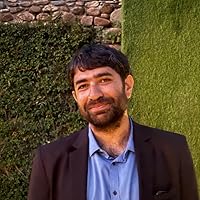
May 15, 2021
Much like The Seventh Function of Language - which I loved - Civilisations is an alternate-history novel characterised by its fierce intelligence and laugh-till-you-weep humour.
In around AD 1000, Erik the Red's daughter heads south from Cuba, and the course of history is changed forever. When, in 1492, Columbus reaches the Americas, he finds a population prepared for war, is taken captive, and never returns to Spain. Instead, a few decades later, it is the Inca Emperor Atahualpa who - escaping a disastrous civil war against his brother Huascar - sets sail east from Cuba, and comes ashore in a Lisbon ragged by war, plague, and the Inquisition.
What follows is a mirror-image of history as it actually happened. Atahualpa and his small band of Incas bribe, cajole, and fight their way to power, ultimately setting up base in the Alhambra, capturing the Spanish King in a daring sortie, and finally taking over the Kingdom of Spain. A host of historical characters traipse across the stage, from Charles V to Henry VIII, from Erasmus to Luther, from Michelangelo to Veronese, and from Cervantes to Montezuma. In the novel's climax, the Aztecs "discover" Europe as well, leading to a war of supremacy between the Inca and the Aztec Empires, upon the battlefields of Europe.
At a time when the word "anti-colonial" is used far too often and far too cheaply to describe genre novels, Civilisations is a genuinely anti-colonial novel, a deliciously elegant reversal of the history of colonialism. There's much to love about this novel, but for me, the parts I enjoyed most were Binet's clever historical inversions. For example, we have various extracts from the fictional epic poem, "The Incades", which is evidently riffed of the Portuguese national epic, The Lusidades - except this one is about Atahualpa's exploits in Europe. There are throwaway references to Italian renaissance painters - Titian, Veronese, Tintoretto - painting scenes about the Incas' arrival. Some of Atahualpa's battles are exact mirror images of Spanish and Portuguese battles against the Incas in the early period of colonisation. There is a fiendishly clever episode involving "the ninety-five theses of Atahualpa" that are nailed to the door of the church in Wittenberg, even as Atahualpa and Luther are negotiating inside. And the final section of the novel - featuring the adventures of a hapless Cervantes at the Battle of Lepanto - but this time involving Inca and Aztec navies - is an added bonus.
Fans of Laurent Binet, of alternate history, and just about anyone interested - and vaguely well-versed in - the intertwined histories of medieval Lusitania and colonialism in Latin America - will love this book, in cackling-with-glee fashion.
In around AD 1000, Erik the Red's daughter heads south from Cuba, and the course of history is changed forever. When, in 1492, Columbus reaches the Americas, he finds a population prepared for war, is taken captive, and never returns to Spain. Instead, a few decades later, it is the Inca Emperor Atahualpa who - escaping a disastrous civil war against his brother Huascar - sets sail east from Cuba, and comes ashore in a Lisbon ragged by war, plague, and the Inquisition.
What follows is a mirror-image of history as it actually happened. Atahualpa and his small band of Incas bribe, cajole, and fight their way to power, ultimately setting up base in the Alhambra, capturing the Spanish King in a daring sortie, and finally taking over the Kingdom of Spain. A host of historical characters traipse across the stage, from Charles V to Henry VIII, from Erasmus to Luther, from Michelangelo to Veronese, and from Cervantes to Montezuma. In the novel's climax, the Aztecs "discover" Europe as well, leading to a war of supremacy between the Inca and the Aztec Empires, upon the battlefields of Europe.
At a time when the word "anti-colonial" is used far too often and far too cheaply to describe genre novels, Civilisations is a genuinely anti-colonial novel, a deliciously elegant reversal of the history of colonialism. There's much to love about this novel, but for me, the parts I enjoyed most were Binet's clever historical inversions. For example, we have various extracts from the fictional epic poem, "The Incades", which is evidently riffed of the Portuguese national epic, The Lusidades - except this one is about Atahualpa's exploits in Europe. There are throwaway references to Italian renaissance painters - Titian, Veronese, Tintoretto - painting scenes about the Incas' arrival. Some of Atahualpa's battles are exact mirror images of Spanish and Portuguese battles against the Incas in the early period of colonisation. There is a fiendishly clever episode involving "the ninety-five theses of Atahualpa" that are nailed to the door of the church in Wittenberg, even as Atahualpa and Luther are negotiating inside. And the final section of the novel - featuring the adventures of a hapless Cervantes at the Battle of Lepanto - but this time involving Inca and Aztec navies - is an added bonus.
Fans of Laurent Binet, of alternate history, and just about anyone interested - and vaguely well-versed in - the intertwined histories of medieval Lusitania and colonialism in Latin America - will love this book, in cackling-with-glee fashion.

January 6, 2022
Knyga – svogūnas (ne smirda, ne – tiesiog daugiasluoksnė), knyga – žaidimas.
Alternatyvi istorija, kurioje viso labo pora šimtų inkų (ir nereikia čia maivytis – ne ką daugiau karių turėjo Hernánas Cortésas) išsilaipina Portugalijoje ir imasi Europos užkariavimo. Ne tik imasi, bet ir gana sėkmingai tai daro, pasinaudodami religiniu, tautiniu ir netgi turtiniu Senojo Pasaulio (hmm... gal Binte atveju reikėtų atvirkščiai sakyt – Naujojo?) susiskaldymu. Ir kai jau atrodo, kad viskas ir toliau inkams klostysis gerai, į Europą atvaro dar ir actekai, priversdami imtis dar vieno kontinento perdalinimo – kur karais, kur diplomatija.
Parašyta veikiau kaip kronika, nei kaip grožinis kūrinys. Ir atitinkamai stilizuota.
Pasakojimą sudaro keturios tiesiogiai tarpusavy nesusijusios dalys, bet kiekviena atskleidžianti savą Binet sukurtos istorijos puslapį.
Pirmoji dalis pasakoja apie Freydis, Eriko Rudojo dukterį, kuri ieškodama geresnio gyvenimo (ir truputį bėgdama nuo kitų vikingų keršto) keliauja Vinlando (t.y. Amerikos) pakrantėmis vis piečiau, kol nusibeldžia iki pat Panamos.
Antroji – Kolumbo dienoraštis ir laiškai, pasakojantys, kaip jis atplaukė iki Indijos (kaip jis manė). Atplaukt atplaukė, o štai toliau viskas klostėsi nebe taip gerai. Ir atgal Ispanijon, pranešti, ką jis ten atrado, negrįžo nei jis pats, nei kuris nors ekspedicijos narys.
Trečioji (ir didžiausia) dalis pasakoja mums būtent apie Atahualpos, paskutiniojo inkų imperatoriaus žygį Europon ir jos užkariavimo istoriją.
Na, o ketvirtojoje dalyje netikėtai sutinkame „Don Kichoto“ autorių ir trumpai pasiblaškome su juo po gyvenimo negandų jūrą tame naujame, keistame pasaulyje.
Binet „Civilizacijos“, nepaisant viso savo išorinio lengvumo, knyga, kuriai pilnai suvokti reikia šiokio tokio istorinio bei kultūrinio išprusimo. Ne visur aliuzijos ir sąmojis tokie akivaizdūs, kaip actekų pastatyta aukojimų piramidė Luvro kieme. Nesu tikras, kad ir aš viską sugaudžiau. Meluoju, esu tikras, kad nemažai praleidau. Nepaisant visko – tvirti keturi iš penkių.
Alternatyvi istorija, kurioje viso labo pora šimtų inkų (ir nereikia čia maivytis – ne ką daugiau karių turėjo Hernánas Cortésas) išsilaipina Portugalijoje ir imasi Europos užkariavimo. Ne tik imasi, bet ir gana sėkmingai tai daro, pasinaudodami religiniu, tautiniu ir netgi turtiniu Senojo Pasaulio (hmm... gal Binte atveju reikėtų atvirkščiai sakyt – Naujojo?) susiskaldymu. Ir kai jau atrodo, kad viskas ir toliau inkams klostysis gerai, į Europą atvaro dar ir actekai, priversdami imtis dar vieno kontinento perdalinimo – kur karais, kur diplomatija.
Parašyta veikiau kaip kronika, nei kaip grožinis kūrinys. Ir atitinkamai stilizuota.
Pasakojimą sudaro keturios tiesiogiai tarpusavy nesusijusios dalys, bet kiekviena atskleidžianti savą Binet sukurtos istorijos puslapį.
Pirmoji dalis pasakoja apie Freydis, Eriko Rudojo dukterį, kuri ieškodama geresnio gyvenimo (ir truputį bėgdama nuo kitų vikingų keršto) keliauja Vinlando (t.y. Amerikos) pakrantėmis vis piečiau, kol nusibeldžia iki pat Panamos.
Antroji – Kolumbo dienoraštis ir laiškai, pasakojantys, kaip jis atplaukė iki Indijos (kaip jis manė). Atplaukt atplaukė, o štai toliau viskas klostėsi nebe taip gerai. Ir atgal Ispanijon, pranešti, ką jis ten atrado, negrįžo nei jis pats, nei kuris nors ekspedicijos narys.
Trečioji (ir didžiausia) dalis pasakoja mums būtent apie Atahualpos, paskutiniojo inkų imperatoriaus žygį Europon ir jos užkariavimo istoriją.
Na, o ketvirtojoje dalyje netikėtai sutinkame „Don Kichoto“ autorių ir trumpai pasiblaškome su juo po gyvenimo negandų jūrą tame naujame, keistame pasaulyje.
Binet „Civilizacijos“, nepaisant viso savo išorinio lengvumo, knyga, kuriai pilnai suvokti reikia šiokio tokio istorinio bei kultūrinio išprusimo. Ne visur aliuzijos ir sąmojis tokie akivaizdūs, kaip actekų pastatyta aukojimų piramidė Luvro kieme. Nesu tikras, kad ir aš viską sugaudžiau. Meluoju, esu tikras, kad nemažai praleidau. Nepaisant visko – tvirti keturi iš penkių.

November 23, 2021
At long last, the time has come to review this book. I've been waiting since April or May, since whenever I read the review in the Guardian and thought that it sounded interesting. Interesting, indeed, it was, but not always in the best of ways.
Briefly outlining the work, the first part is a faux-saga written only haltingly in saga-style featuring the coastal American travels of a band of Nordics led by a domineering woman who constantly pushes the men further and further to the south where they meet people, generally amicably, live among them, win esteem, and then everybody starts dropping like flies some time later, necessitating the fleeing of our blonde-haired warriors.
Part two carries forward a few centuries to 1492, that famous year which saw what event again? Columbus discovers America! But nobody in Binet's Europe will find out for a while, because he never makes it back. His crew are massacred and Columbus teaches a princess Spanish. Two intact ships and a partially-wrecked third remain on the shore of Cuba until...
In part three, a few decades later, Atahualpa and a band of men flee a civil war among the Inca and arrive in Cuba where they meet that princess from earlier. Together, they decide to risk their lives crossing the ocean rather than await Atahualpa's murderous brother. This volume is where most of the action occurs, so I'll leave it here and move on with the review for now.
I said the book's interesting. One way it's interesting is to see how he managed to take an alternative history in which native Americans (the Inca) conquer Europe, and yet somehow Eurocentrism remains the lifeblood of the story, the prime mover of the action. The Inca, it would seem, are incapable on their own. It's only presumably because they have Norse blood, some Norse customs, the Spanish-speaking princess (named Higuenamota) and Columbus's ships that they manage to cross the ocean.
As a brief aside, I'll explain: At the core of white supremacism is this Eurocentric notion, patently and almost absolutely false in both the general contours and the most intimate details, that Europe is the great producer of ideas and innovations; it is the center of human culture and intellectuality, the wellspring of every momentous positive that has advanced history (history-changing negatives, like diseases, all come from outside Europe, the Periphery, in this puerile fantasy). I'm not suggesting by any means a white supremacist motive of the author, of course; this is so intrinsically a part of the culture that almost everybody accepts it without thought and almost nobody (white) sees it without a great deal of experience and awareness of non-European history.
But I couldn't help but ask: Why was it that the Inca couldn't have developed their own navigational technology? If you're going to change history to produce a work of fiction, surely you're free to come up with new devices to move the story along, as Binet did in abundance, no? Columbus and his men were not massacred and thought failures in Europe until the Inca arrived in Lisbon decades later, that's all made up by Laurent Binet, along with the action of every other page of the book. So then why did the Inca have to rely on Europe for everything good that happened to them in this timeline? Is it because most people still just can't imagine such a thing, such that it would have turned an alternative fiction into a fantasy in the minds of too many readers?
I won't dwell on that point any longer. There is much more to criticize. To start with low-hanging fruit, I'll note how their abundant gold, for instance, allows them to essentially buy Europe (never does Binet consider the obvious inflation that would result from the massive influx of countless shiploads of gold, being distributed widely across Europe), with all the princes, merchants and electors eager to give away European sovereignty to dip their hand into this endless fountain of gold arriving from the constant stream of ships sent by Atahualpa's brother back home. Poor Suleiman the Magnificent, if only he'd realized Europe would have been his for the taking with enough bribes and a promise of religious freedom!
Atahualpa arrives to find Lisbon devastated by a tsunami, so nobody knows how to react to their arrival. Higuenamota only partially understands the language and there isn't much to interest them in this little kingdom, so after holing up in a monastery and drinking tons of wine, they leave. They move on to a Spain so spiritually exhausted by the Inquisition that nobody even really registers their arrival, the low point of which is the massacre of a city. Eventually they arrange a meeting with the king in what should be a tactically inexcusable location, such an obvious ploy, where they effortlessly take 'Charles Quint' hostage and use him to cement Incan power in the Hapsburg monarchy. They could never have done anything more without this initial victory, since there's only like a hundred Americans present in all of Europe by this point, but with the king in their hands, everything else is there for the taking.
Next, on to the Germanic lands, where the Reformation has torn society asunder. After having instituted freedom of religion in Spain (with a heathen caveat that almost nobody seems to mind), the Germans are more than happy to compromise on their newly won Protestantism. Even the great Christian theologians of the Reformation are mostly on board with this new program. How in the world could that have happened in an atmosphere of intense religious violence and extreme calls for doctrinal purity over the most insignificant of points?
Halfway through the Atahualpa section, it turns from an engaging narrative that could have won a third star from me, to a painfully didactic exercise in juvenile wish fulfillment, imagining a Europe so eager for the Enlightenment that it's able to be layered atop the culture by force of law rather than naturally evolving over (mostly later) centuries of thought and writing and, significantly, contact with other cultures and ways of being around the world.
Nowhere are we given an explanation for why Atahualpa is such a man of the Enlightenment. The 95 theses (written by Atahualpa himself?) posted to the door a la Luther read like the manifesto of a heathen Dawkins and ends up roiling the people to the point that they kill Luther (I have not yet figured out why). It includes communalist items like:
24. Christians must learn that one who sees a poor man and, ignoring him, spends his money on indulgences, will earn not the indulgence of the Pope but the wrath of Viracocha.
59. The Sun supports the rights of the poor.
63. The earth cannot be monopolised. It is divided according to each man’s needs.
But also some downright heretical entries, including:
11. The Holy Trinity imagined by Tertullian at the beginning of the old era is the imperfect allegorical representation of the Sun, the Moon and the Thunder.
From Spain to the Netherlands to the Holy Roman Empire, everyone is tripping over each other to secure freedom, freedom only Atahualpa is willing to provide. No less likely, as far as I'm concerned, would be Martians landing to conquer the Five Quarters (America, the Four Quarters, and Europe, the Fifth Quarter, as they're known to the Inca) right about now.
One of the implicit goals of Binet, I believe, is to show religion as nothing but a tool of power, something all the characters seem to understand, unspokenly at least. This seems like projection on the part of the author. I don't disagree with the notion itself, but I absolutely cannot for a moment consider with a straight face the possibility that all these zealous Christians who lived, killed, and died in wars of religion during this same period would agree with us. Faith is most assuredly a real part of human existence, it's not going anywhere today, why would it have been so absent during a pre-scientific era? Sure, there were probably a number of characters who in reality felt the same way as us, but everybody? It is essentially taken as a given that nobody at all could care less about their religion or any of the unfathomable doctrinal issues that caused such a commotion in real history.
Binet seems to take a perverse pleasure in having his historical personages take ridiculous actions. Henry VIII converts to the religion of the Sun because the pope refuses to condone his divorce, unlike the real Henry who merely tweaked Roman Catholicism a little to produce the Anglican Church with himself as head. Pius V runs away from the Incan conquerors and takes refuge with the Ottomans, receiving Athens from Selim II to set up a new Holy See. In history, of course, it was Pius V who championed the Holy League to fight against the Ottomans. I have no problem with alternative history, but this is just sadistic, an exercise in creating the illusion of hypocrisy around so many dead people. Nothing is sacred for Binet (except Eurocentrism, perhaps?).
What's more, the constant name-dropping is a little tedious, too, with almost no original characters to my knowledge (I didn't recognize every name, but the dozen or so I Googled all came back positive, while he gave some later American characters names from earlier centuries to maintain continuity), as if everyone who is known to history would have played analogous roles in this alternative timeline, with nothing truly original happening, a sort of fatalism I simply cannot abide. The vast differences of Binet History versus real history should have thrown many lives completely off course, yet here we have too standard of occurrences, if at times anachronistic. Leo XI, for instance, becomes antipope decades earlier than he really became pope, perhaps a decade before the real one was even made a cardinal! Lorenzaccio, too, plays the role of assassin, though his victim is not the same as in real history. And not just people, but events are similar, as well, like the battle of Lepanto, which this time is between the Franco-Incan alliance versus the Ottomans, Venice and Austria.
The fourth and closing part deals with Cervantes, the author of Don Quixote, who escapes to Italy (fleeing seems a very frequent activity in this book) after committing a crime in his native Spain, where he's rounded up and put in chains to be taken back to Spain. However, he's rescued by rebels fighting against the heathen overlords and becomes close friends with El Greco, with whom he has a series of misadventures, including losing the Battle of Lepanto.
Another cameo is made by Hieronimo de Mendoza, who was kidnapped by Moroccan pirates in 1578 and later wrote about the experience, only to surface near the end of the novel - as a galley slave, no less! He's there with Cervantes and El Greco when Sir Francis Drake, fighting out of Queen Elizabeth's Icelandic base (because the Mexicans and French have taken England), attacks, freeing the prisoners (not lost on me is the inverse historical incident, the Turkish Raid on Iceland, which claimed hundreds of slaves, told grippingly by survivor Olafur Egilsson in a book a hundred times better than this one).
One of the more ridiculous episodes began like this: "so they sharpened their iron spoons and used them to saw open the doors." They'd been sitting in a crowded prison cell with neither food nor light for days because nobody outside the jail was left alive who would bother to bring them food thanks to the Plague. This becomes apparent as soon as they escape to find dead rats littering the floors beyond their cell. Considering how poorly treated and fed they had been in such a crowded jail, with rats apparently quite prevalent in the building, it is simply miraculous that the prisoners were the people who survived unharmed from such a position of powerlessness in the midst of the epidemic!
In the end, I'm happy I read this book, despite the invective. It's been a fun experience, one point of agreement between me and the Guardian. But a lot of the fun has been heaping scorn on the nonsense that can be found not just on every page but behind the page. I wouldn't suggest anybody else bother to read this novel, though for the sake of the translator, who did a good job with such hopeless material, maybe picking up an English copy wouldn't be the worst decision you'll ever make; I won't be mad at you if you do.
Briefly outlining the work, the first part is a faux-saga written only haltingly in saga-style featuring the coastal American travels of a band of Nordics led by a domineering woman who constantly pushes the men further and further to the south where they meet people, generally amicably, live among them, win esteem, and then everybody starts dropping like flies some time later, necessitating the fleeing of our blonde-haired warriors.
Part two carries forward a few centuries to 1492, that famous year which saw what event again? Columbus discovers America! But nobody in Binet's Europe will find out for a while, because he never makes it back. His crew are massacred and Columbus teaches a princess Spanish. Two intact ships and a partially-wrecked third remain on the shore of Cuba until...
In part three, a few decades later, Atahualpa and a band of men flee a civil war among the Inca and arrive in Cuba where they meet that princess from earlier. Together, they decide to risk their lives crossing the ocean rather than await Atahualpa's murderous brother. This volume is where most of the action occurs, so I'll leave it here and move on with the review for now.
I said the book's interesting. One way it's interesting is to see how he managed to take an alternative history in which native Americans (the Inca) conquer Europe, and yet somehow Eurocentrism remains the lifeblood of the story, the prime mover of the action. The Inca, it would seem, are incapable on their own. It's only presumably because they have Norse blood, some Norse customs, the Spanish-speaking princess (named Higuenamota) and Columbus's ships that they manage to cross the ocean.
As a brief aside, I'll explain: At the core of white supremacism is this Eurocentric notion, patently and almost absolutely false in both the general contours and the most intimate details, that Europe is the great producer of ideas and innovations; it is the center of human culture and intellectuality, the wellspring of every momentous positive that has advanced history (history-changing negatives, like diseases, all come from outside Europe, the Periphery, in this puerile fantasy). I'm not suggesting by any means a white supremacist motive of the author, of course; this is so intrinsically a part of the culture that almost everybody accepts it without thought and almost nobody (white) sees it without a great deal of experience and awareness of non-European history.
But I couldn't help but ask: Why was it that the Inca couldn't have developed their own navigational technology? If you're going to change history to produce a work of fiction, surely you're free to come up with new devices to move the story along, as Binet did in abundance, no? Columbus and his men were not massacred and thought failures in Europe until the Inca arrived in Lisbon decades later, that's all made up by Laurent Binet, along with the action of every other page of the book. So then why did the Inca have to rely on Europe for everything good that happened to them in this timeline? Is it because most people still just can't imagine such a thing, such that it would have turned an alternative fiction into a fantasy in the minds of too many readers?
I won't dwell on that point any longer. There is much more to criticize. To start with low-hanging fruit, I'll note how their abundant gold, for instance, allows them to essentially buy Europe (never does Binet consider the obvious inflation that would result from the massive influx of countless shiploads of gold, being distributed widely across Europe), with all the princes, merchants and electors eager to give away European sovereignty to dip their hand into this endless fountain of gold arriving from the constant stream of ships sent by Atahualpa's brother back home. Poor Suleiman the Magnificent, if only he'd realized Europe would have been his for the taking with enough bribes and a promise of religious freedom!
Atahualpa arrives to find Lisbon devastated by a tsunami, so nobody knows how to react to their arrival. Higuenamota only partially understands the language and there isn't much to interest them in this little kingdom, so after holing up in a monastery and drinking tons of wine, they leave. They move on to a Spain so spiritually exhausted by the Inquisition that nobody even really registers their arrival, the low point of which is the massacre of a city. Eventually they arrange a meeting with the king in what should be a tactically inexcusable location, such an obvious ploy, where they effortlessly take 'Charles Quint' hostage and use him to cement Incan power in the Hapsburg monarchy. They could never have done anything more without this initial victory, since there's only like a hundred Americans present in all of Europe by this point, but with the king in their hands, everything else is there for the taking.
Next, on to the Germanic lands, where the Reformation has torn society asunder. After having instituted freedom of religion in Spain (with a heathen caveat that almost nobody seems to mind), the Germans are more than happy to compromise on their newly won Protestantism. Even the great Christian theologians of the Reformation are mostly on board with this new program. How in the world could that have happened in an atmosphere of intense religious violence and extreme calls for doctrinal purity over the most insignificant of points?
Halfway through the Atahualpa section, it turns from an engaging narrative that could have won a third star from me, to a painfully didactic exercise in juvenile wish fulfillment, imagining a Europe so eager for the Enlightenment that it's able to be layered atop the culture by force of law rather than naturally evolving over (mostly later) centuries of thought and writing and, significantly, contact with other cultures and ways of being around the world.
Nowhere are we given an explanation for why Atahualpa is such a man of the Enlightenment. The 95 theses (written by Atahualpa himself?) posted to the door a la Luther read like the manifesto of a heathen Dawkins and ends up roiling the people to the point that they kill Luther (I have not yet figured out why). It includes communalist items like:
24. Christians must learn that one who sees a poor man and, ignoring him, spends his money on indulgences, will earn not the indulgence of the Pope but the wrath of Viracocha.
59. The Sun supports the rights of the poor.
63. The earth cannot be monopolised. It is divided according to each man’s needs.
But also some downright heretical entries, including:
11. The Holy Trinity imagined by Tertullian at the beginning of the old era is the imperfect allegorical representation of the Sun, the Moon and the Thunder.
From Spain to the Netherlands to the Holy Roman Empire, everyone is tripping over each other to secure freedom, freedom only Atahualpa is willing to provide. No less likely, as far as I'm concerned, would be Martians landing to conquer the Five Quarters (America, the Four Quarters, and Europe, the Fifth Quarter, as they're known to the Inca) right about now.
One of the implicit goals of Binet, I believe, is to show religion as nothing but a tool of power, something all the characters seem to understand, unspokenly at least. This seems like projection on the part of the author. I don't disagree with the notion itself, but I absolutely cannot for a moment consider with a straight face the possibility that all these zealous Christians who lived, killed, and died in wars of religion during this same period would agree with us. Faith is most assuredly a real part of human existence, it's not going anywhere today, why would it have been so absent during a pre-scientific era? Sure, there were probably a number of characters who in reality felt the same way as us, but everybody? It is essentially taken as a given that nobody at all could care less about their religion or any of the unfathomable doctrinal issues that caused such a commotion in real history.
Binet seems to take a perverse pleasure in having his historical personages take ridiculous actions. Henry VIII converts to the religion of the Sun because the pope refuses to condone his divorce, unlike the real Henry who merely tweaked Roman Catholicism a little to produce the Anglican Church with himself as head. Pius V runs away from the Incan conquerors and takes refuge with the Ottomans, receiving Athens from Selim II to set up a new Holy See. In history, of course, it was Pius V who championed the Holy League to fight against the Ottomans. I have no problem with alternative history, but this is just sadistic, an exercise in creating the illusion of hypocrisy around so many dead people. Nothing is sacred for Binet (except Eurocentrism, perhaps?).
What's more, the constant name-dropping is a little tedious, too, with almost no original characters to my knowledge (I didn't recognize every name, but the dozen or so I Googled all came back positive, while he gave some later American characters names from earlier centuries to maintain continuity), as if everyone who is known to history would have played analogous roles in this alternative timeline, with nothing truly original happening, a sort of fatalism I simply cannot abide. The vast differences of Binet History versus real history should have thrown many lives completely off course, yet here we have too standard of occurrences, if at times anachronistic. Leo XI, for instance, becomes antipope decades earlier than he really became pope, perhaps a decade before the real one was even made a cardinal! Lorenzaccio, too, plays the role of assassin, though his victim is not the same as in real history. And not just people, but events are similar, as well, like the battle of Lepanto, which this time is between the Franco-Incan alliance versus the Ottomans, Venice and Austria.
The fourth and closing part deals with Cervantes, the author of Don Quixote, who escapes to Italy (fleeing seems a very frequent activity in this book) after committing a crime in his native Spain, where he's rounded up and put in chains to be taken back to Spain. However, he's rescued by rebels fighting against the heathen overlords and becomes close friends with El Greco, with whom he has a series of misadventures, including losing the Battle of Lepanto.
Another cameo is made by Hieronimo de Mendoza, who was kidnapped by Moroccan pirates in 1578 and later wrote about the experience, only to surface near the end of the novel - as a galley slave, no less! He's there with Cervantes and El Greco when Sir Francis Drake, fighting out of Queen Elizabeth's Icelandic base (because the Mexicans and French have taken England), attacks, freeing the prisoners (not lost on me is the inverse historical incident, the Turkish Raid on Iceland, which claimed hundreds of slaves, told grippingly by survivor Olafur Egilsson in a book a hundred times better than this one).
One of the more ridiculous episodes began like this: "so they sharpened their iron spoons and used them to saw open the doors." They'd been sitting in a crowded prison cell with neither food nor light for days because nobody outside the jail was left alive who would bother to bring them food thanks to the Plague. This becomes apparent as soon as they escape to find dead rats littering the floors beyond their cell. Considering how poorly treated and fed they had been in such a crowded jail, with rats apparently quite prevalent in the building, it is simply miraculous that the prisoners were the people who survived unharmed from such a position of powerlessness in the midst of the epidemic!
In the end, I'm happy I read this book, despite the invective. It's been a fun experience, one point of agreement between me and the Guardian. But a lot of the fun has been heaping scorn on the nonsense that can be found not just on every page but behind the page. I wouldn't suggest anybody else bother to read this novel, though for the sake of the translator, who did a good job with such hopeless material, maybe picking up an English copy wouldn't be the worst decision you'll ever make; I won't be mad at you if you do.

December 16, 2024
After enjoying Perspective, I wanted to read another book by Laurent Binet. I found Civilizations at my local library and thought it would be a good choice. Like Perspectives, Binet mixes history with his imagination, creating a "what if" story. This time, he asks: What if the Incas had discovered Europe instead of the other way around?
The idea is very interesting. In Civilizations, Atahualpa, the Inca leader, escapes his land after fighting with his brother. He travels to Spain with his small but strong group. Europe is full of problems at that time—political fights and religious disagreements—so Atahualpa quickly takes over the Spanish throne and begins to change the continent. A bold idea, full of chances for smart commentary and exciting events.
But as I read more, the promise of the idea started to fade. The book feels more like a list of events than a story you can get lost in, making me feel like a mere observer. Binet seems more focused on fitting historical figures and events into his idea than letting the story flow naturally. This approach might work for some, but it made it hard for me to believe the story. The idea of an Incan invasion of Europe, interesting at first, starts to feel less realistic as the story goes on.
This feeling is made worse by the storytelling style. The book often falls into a boring pattern of "and then this happened, and then that happened," making it hard to stay interested quickly becoming a flat, unconvincing tale. For me, the rich historical detail and cultural depth that the idea promised never really appeared.
That said, I still like Laurent Binet. Perspectives showed his talent and I hope Civilizations will prove to be a misstep, not a sign of his overall ability. While this book didn’t work for me, it hasn’t stopped me from wanting to read more of his work. I hope my next Binet book will bring back the excitement that Perspectives gave me.
Read in Dutch
The idea is very interesting. In Civilizations, Atahualpa, the Inca leader, escapes his land after fighting with his brother. He travels to Spain with his small but strong group. Europe is full of problems at that time—political fights and religious disagreements—so Atahualpa quickly takes over the Spanish throne and begins to change the continent. A bold idea, full of chances for smart commentary and exciting events.
But as I read more, the promise of the idea started to fade. The book feels more like a list of events than a story you can get lost in, making me feel like a mere observer. Binet seems more focused on fitting historical figures and events into his idea than letting the story flow naturally. This approach might work for some, but it made it hard for me to believe the story. The idea of an Incan invasion of Europe, interesting at first, starts to feel less realistic as the story goes on.
This feeling is made worse by the storytelling style. The book often falls into a boring pattern of "and then this happened, and then that happened," making it hard to stay interested quickly becoming a flat, unconvincing tale. For me, the rich historical detail and cultural depth that the idea promised never really appeared.
That said, I still like Laurent Binet. Perspectives showed his talent and I hope Civilizations will prove to be a misstep, not a sign of his overall ability. While this book didn’t work for me, it hasn’t stopped me from wanting to read more of his work. I hope my next Binet book will bring back the excitement that Perspectives gave me.
Read in Dutch
Displaying 1 - 30 of 1,074 reviews