

What do you think?

Eva dort
Mille trois cent quatre-vingt-dix-sept kilomètres. Eva voyage en train depuis son Tyrol du Sud natal jusqu'en Calabre pour rendre visite à Vito, disparu de sa vie trop tôt. Durant ce trajet du nord au sud de l'Italie, de sa région frontalière et germanophone au Sud profond, c'est toute son enfance et l'histoire de sa mère Gerda qui défilent dans sa tête. Celle-ci, fille-mère, était parvenue à mener une prestigieuse carrière de chef cuisinière quand elle rencontra un sous-officier des carabiniers luttant contre le mouvement indépendantiste, Vito... Et Eva de se souvenir du destin du Haut-Adige, passé en 1919 de l'Empire austro-hongrois défait à l'Italie, que Mussolini essaya d'italianiser de force.
Dans ce premier roman, plébiscité par la critique et les lecteurs, Francesca Melandri nous offre une fresque historique et familiale inoubliable, dressant aussi bien le portrait d'une mère exceptionnelle que celui d'une nation italienne à l'unité encore fragile.
Dans ce premier roman, plébiscité par la critique et les lecteurs, Francesca Melandri nous offre une fresque historique et familiale inoubliable, dressant aussi bien le portrait d'une mère exceptionnelle que celui d'une nation italienne à l'unité encore fragile.
443 pages, Mass Market Paperback
First published March 1, 2010
About the author
Francesca Melandri
8 books152 followersFrancesca Melandri was born in Rome in 1964. She started writing very young, working first as a screenwriter, and has worked on films and television series, as well as a number of prize winning documentaries.
In 2010 she published her first novel, 'Eva dorme' ("Eva Sleeps"), set in the border regions of Northern Italy and Austria, a sweeping story about family, forgiveness, conflict and the search for truth. The novel, which won several literary prizes in 2010 and 2011, has been translated in German, Dutch, French and English.
Melandri's second novel, 'Più alto del mare', was published in 2012 and it has also won several literary prizes.
In 2010 she published her first novel, 'Eva dorme' ("Eva Sleeps"), set in the border regions of Northern Italy and Austria, a sweeping story about family, forgiveness, conflict and the search for truth. The novel, which won several literary prizes in 2010 and 2011, has been translated in German, Dutch, French and English.
Melandri's second novel, 'Più alto del mare', was published in 2012 and it has also won several literary prizes.
Ratings & Reviews
Friends & Following
Create a free account to discover what your friends think of this book!
Community Reviews
Displaying 1 - 30 of 294 reviews

May 3, 2020
First a coronavirus lockdown connection. In looking for bio info about the author I found she has just written this about her experience of the lockdown in Italy: https://www.theguardian.com/world/202...
This is a great historical novel that takes us to a part of the world most of us know little about: the Italian-German area of the northernmost part of Italy: Alto Adige. And I call it a historical novel even though it runs right up to recent times – 1992.

First the story. Eva is a 40-year old convention organizer. She’s had a ten-year relationship with a married man. She’s not waiting for him to leave his wife because she knows it won’t happen and she’s fine with that. Her mother was a single mom. Eva receives a call from the man who had an affair with her mother 30 years ago and was the closest thing Eva ever had to a father. She only saw her real father a few times, always at a distance. Eva takes a long train ride from northern Italy to Sicily to see her almost-father who is ill.
The story is structured in chapters voiced by an omniscient narrator and arranged by years starting in 1919. Those chapters alternate with first-person chapters voiced by Eva as she reminisces on her long train ride.
Taken together the chapters tells us the stories of Eva and her mother. Her mother grew up in the rural German culture of the area, started out as a maid, and rose to become a cook in a resort restaurant some distance away. Eva has to live with her mother’s German cousins for 10 months of each year. Eva’s mother and an Italian soldier fall in love but the German-Italian cultural difference means it’s not to be. They break up and this is the man Eva is on her way to see.
The historical aspects of the novel focus on the unique history and geography of this small region. It’s about the size of Connecticut and has about a million people. Currently it’s a semi-autonomous region of Italy, declared such to give its majority German residents more say in their own affairs. Almost 70% of the population and almost all of the rural population is German. Only about a quarter are Italian, although most people in the small cities are Italian. There is also an old culture of folks who speak a distinct Romance language called Ladin, and some new immigrants from all over.
Both German and Italian are official languages and the province has two names: Alto Adige in Italian and Sudtirol (South Tyrol) in German. Cities have dual names, such as Bolzano/Bozen and so do the mountains. The province had originally been an area of German settlement but was traded back and forth after wars. During the era of fascism in Italy, even though the country aligned with Germany, the Italian government banned German schools and public speaking of German. Many Germans uprooted their lives and left for Bavaria.
After World War II, the efforts to force “Italianization” continued and terrorist acts began. (One of Eva’s uncles was killed as a terrorist.) They bombed electric substations and attacked and killed Italian policemen and soldiers. Eventually a political compromise was worked out, which resulted in the dual culture of today. Meanwhile over time, skiing, tourism and some manufacturing replaced much of the rural economy of the region.
The author has a keen eye for geography, including what we can call micro geography. In the old days (1919, the first chapter in the book) she points out how the slope and orientation of the land determined a family’s destiny. If you had some of the flat valley land you were probably well off; if you had steeply sloped north-facing land you were dirt poor. Other combinations were in the middle. On her train ride almost the entire length of Italy, she describes in detail how it looks like you are in different countries based on whether you are looking out the west windows toward the ocean or east toward the mountains.
There’s a lot more going on in the book. One of Eva’s male cousins is gay and we follow his difficult path as a youth but see how some attitudes changed. In bits and pieces we learn some about the development of the ski industry from shoveling snow onto paths to modern snow-cat machines, ski-lifts and snow-making machinery. We learn how Eva’s mother was ripped off by her employer and the start of efforts to unionize. And we learn some about cooking and running a professional kitchen operation.

I liked the story and the historical and geographical aspects of it. Maybe that train ride was a little TOO long. This first novel by the author (b. 1964) was named Book of the Year by Elle Magazine. She also writes plays, TV scrips and documentaries.
Top photo of Trentino-Alto Adige from res.cloudinary.com
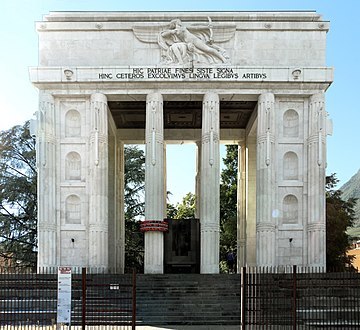
The Bolzano Victory Monument, a particular target of the bombers from Wikipedia
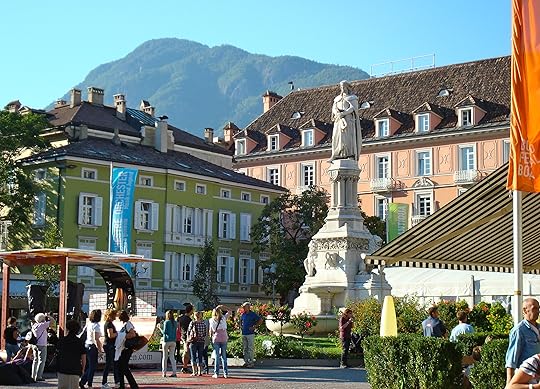
Bolzano, largest city of the region, from backroadjournal.files.wordpress.com
The author from Goodreads
This is a great historical novel that takes us to a part of the world most of us know little about: the Italian-German area of the northernmost part of Italy: Alto Adige. And I call it a historical novel even though it runs right up to recent times – 1992.
First the story. Eva is a 40-year old convention organizer. She’s had a ten-year relationship with a married man. She’s not waiting for him to leave his wife because she knows it won’t happen and she’s fine with that. Her mother was a single mom. Eva receives a call from the man who had an affair with her mother 30 years ago and was the closest thing Eva ever had to a father. She only saw her real father a few times, always at a distance. Eva takes a long train ride from northern Italy to Sicily to see her almost-father who is ill.
The story is structured in chapters voiced by an omniscient narrator and arranged by years starting in 1919. Those chapters alternate with first-person chapters voiced by Eva as she reminisces on her long train ride.
Taken together the chapters tells us the stories of Eva and her mother. Her mother grew up in the rural German culture of the area, started out as a maid, and rose to become a cook in a resort restaurant some distance away. Eva has to live with her mother’s German cousins for 10 months of each year. Eva’s mother and an Italian soldier fall in love but the German-Italian cultural difference means it’s not to be. They break up and this is the man Eva is on her way to see.
The historical aspects of the novel focus on the unique history and geography of this small region. It’s about the size of Connecticut and has about a million people. Currently it’s a semi-autonomous region of Italy, declared such to give its majority German residents more say in their own affairs. Almost 70% of the population and almost all of the rural population is German. Only about a quarter are Italian, although most people in the small cities are Italian. There is also an old culture of folks who speak a distinct Romance language called Ladin, and some new immigrants from all over.
Both German and Italian are official languages and the province has two names: Alto Adige in Italian and Sudtirol (South Tyrol) in German. Cities have dual names, such as Bolzano/Bozen and so do the mountains. The province had originally been an area of German settlement but was traded back and forth after wars. During the era of fascism in Italy, even though the country aligned with Germany, the Italian government banned German schools and public speaking of German. Many Germans uprooted their lives and left for Bavaria.
After World War II, the efforts to force “Italianization” continued and terrorist acts began. (One of Eva’s uncles was killed as a terrorist.) They bombed electric substations and attacked and killed Italian policemen and soldiers. Eventually a political compromise was worked out, which resulted in the dual culture of today. Meanwhile over time, skiing, tourism and some manufacturing replaced much of the rural economy of the region.
The author has a keen eye for geography, including what we can call micro geography. In the old days (1919, the first chapter in the book) she points out how the slope and orientation of the land determined a family’s destiny. If you had some of the flat valley land you were probably well off; if you had steeply sloped north-facing land you were dirt poor. Other combinations were in the middle. On her train ride almost the entire length of Italy, she describes in detail how it looks like you are in different countries based on whether you are looking out the west windows toward the ocean or east toward the mountains.
There’s a lot more going on in the book. One of Eva’s male cousins is gay and we follow his difficult path as a youth but see how some attitudes changed. In bits and pieces we learn some about the development of the ski industry from shoveling snow onto paths to modern snow-cat machines, ski-lifts and snow-making machinery. We learn how Eva’s mother was ripped off by her employer and the start of efforts to unionize. And we learn some about cooking and running a professional kitchen operation.
I liked the story and the historical and geographical aspects of it. Maybe that train ride was a little TOO long. This first novel by the author (b. 1964) was named Book of the Year by Elle Magazine. She also writes plays, TV scrips and documentaries.
Top photo of Trentino-Alto Adige from res.cloudinary.com
The Bolzano Victory Monument, a particular target of the bombers from Wikipedia
Bolzano, largest city of the region, from backroadjournal.files.wordpress.com
The author from Goodreads

June 3, 2019
L'anno scorso sono stato in Alto Adige per la prima volta in vita mia. Ho trovato una cura e una bellezza che è inutile cercare nel resto d'Italia e in molte parti del mondo. Mi sono goduto anche l'accento tedesco e gli sforzi dei giovani con l'italiano. Curioso: in Alto Adige, i giovani parlano l'italiano peggio degli adulti. Mesi dopo, scopro grazie a Lilli Gruber che esiste una "questione Tirolese".
Poi mi è capitato per le mani questo libro, letto più che altro per soddisfare la curiosità nei confronti della provincia e della sua storia. Da questo punto di vista, il libro è soddisfacente, ricco com'è di informazioni sconosciute agli italiani, me incluso. La postfazione rassicura sull'affidabilità di quanto letto, esplicitando le fonti e il lavoro di ricerca dell'autrice. Letterariamente, è forse un po' convenzionale, ma discretamente bene scritto.
Il racconto procede su un doppio binario: la storia di una madre durante gli anni del terrorismo tirolese e della trattatativa con lo stato (nella persona di Aldo Moro); la storia della figlia che rivive quelle vicende nel ricordo, mentre va in Calabria a incontrare un quasi padre adottivo che non vede da decenni.
Il romanzo racconta anche cosa accade in un posto quando mutamenti storici e conquiste tecnologiche lo espongono al contatto con culture estranee; di come questo contatto possa erodere e trasformare la vecchia società creando squilibri che possono avere esiti drammatici. Pare che l'Altoadige/Sudtirol abbia sfiorato un esito tragico tra gli anni '60 e i '70, esito evitato grazie alla mediazione di due grandi politici (Aldo Moro e Silvius Magnago) e al senso pratico di un popolo che, a un certo punto, ha trovato più utile cercare il compromesso, imparare l'italiano e accogliere turisti.
L'ho letto con piacere in pochi giorni, ma non so se leggerei altro della Melandri, mancando la curiosità che nutrivo per il tema di questo libro in particolare.
Poi mi è capitato per le mani questo libro, letto più che altro per soddisfare la curiosità nei confronti della provincia e della sua storia. Da questo punto di vista, il libro è soddisfacente, ricco com'è di informazioni sconosciute agli italiani, me incluso. La postfazione rassicura sull'affidabilità di quanto letto, esplicitando le fonti e il lavoro di ricerca dell'autrice. Letterariamente, è forse un po' convenzionale, ma discretamente bene scritto.
Il racconto procede su un doppio binario: la storia di una madre durante gli anni del terrorismo tirolese e della trattatativa con lo stato (nella persona di Aldo Moro); la storia della figlia che rivive quelle vicende nel ricordo, mentre va in Calabria a incontrare un quasi padre adottivo che non vede da decenni.
Il romanzo racconta anche cosa accade in un posto quando mutamenti storici e conquiste tecnologiche lo espongono al contatto con culture estranee; di come questo contatto possa erodere e trasformare la vecchia società creando squilibri che possono avere esiti drammatici. Pare che l'Altoadige/Sudtirol abbia sfiorato un esito tragico tra gli anni '60 e i '70, esito evitato grazie alla mediazione di due grandi politici (Aldo Moro e Silvius Magnago) e al senso pratico di un popolo che, a un certo punto, ha trovato più utile cercare il compromesso, imparare l'italiano e accogliere turisti.
L'ho letto con piacere in pochi giorni, ma non so se leggerei altro della Melandri, mancando la curiosità che nutrivo per il tema di questo libro in particolare.

September 22, 2019
Io sono bella, sono bella, sono bella sììì - ma non mi frega niente"
Sono indecisa tra le tre stelle e le tre e mezza. La ricetta usata dall'autrice per mescolare la Storia d'Italia - e più in particolare di una parte di Italia, dal '19 alla fine degli anni '90 - con le storie dei protagonisti mi è piaciuta, gli ingredienti sono ben scelti e ben dosati.
La costruzione delle due protagoniste, la madre Gerda e la figlia Eva, mi convince molto meno. E' vero che sono personaggi di invenzione, e quindi se l'autrice ritiene opportuno le può anche plasmare sul modello di wonder woman o che so io, ma non è tanto un problema di realismo quanto di convinzione. Un personaggio può essere del tutto fantasioso eppure convincente, e viceversa. I molteplici significati del titolo del romanzo vertono tutti a significare la caparbietà, la forza di queste due donne, il loro voler andare in direzione ostinata e contraria, ma a conti fatti queste due figure rispondono più a dei cliché che non a delle vere e proprie costruzioni - e già questo è un punto a sfavore - ed inoltre non ci vuole molto ad accorgersi che è un cliché terribilmente contemporaneo, da cui il titolo del mio commento, leggevo le storie di queste due donne e non ho potuto fare a meno di associarle alla canzone che ha scritto Vasco per Emma, e dal fatto di trapiantare negli anni sessanta un cliché degli anni duemila deriva un altro punto a sfavore.
La struttura del romanzo è classicissima ma comunque buona: procede su un doppio binario, con una voce onnisciente che ripercorre la storia della famiglia a partire dal '19, e con essa anche la Storia dell'Alto Adige e dell'Italia in generale; e la voce di Eva che in prima persona racconta la propria storia al tempo presente. Le due voci si alternano con un capitolo ciascuna e permettono di seguire il racconto molto facilmente.
Invece più nello specifico, il fraseggio e il periodare, hanno un andamento un po' a singhiozzo, in qualche passaggio mi è sembrato di perdere il filo logico del discorso: riconosco che se non avessi precedentemente letto Resto qui di Balzano, libro con il quale questo ha molti temi in comune, molti dettagli della questione Sudtirolese mi sarebbero rimasti meno chiari. Il che è paradossale visto che Balzano si propone con un'opera dal taglio decisamente più fantasioso per non dire fiabesco.
Tanti i temi, come dicevo sopra: questione Sudtirolese e minoranze etniche in generale, storia d'Italia e anni di piombo, rapporti familiari, incomunicabilità, rapporti madre-figlia, questione femminile e problemi della famiglia in rapporto con la società e le sue leggi a volte assurde.
Il tema del terrorismo in fin dei conti rimane poco più che sfiorato, certo non approfondito e neanche affrontato in maniera incisiva.
Comunque la pecca peggiore resta nell'irritazione che mi hanno procurato le protagoniste, o meglio le intenzioni con cui esse sono state costruite: la quarta di copertina parla di "romanzo epico al femminile", e ad un primo e superficiale impatto può sembrare sia così; ma ben vedere, attribuire così tanta avvenenza e splendore contemporaneamente a carattere e forza e il tutto, di nuovo, contemporaneamente a discrete dosi di c*lo proprio laddove serve... boh, non so se si tratta più di modelli di maschilismo strisciante o soltanto irreali. Di certo un filo irritanti.
Si risolleva un poco nel finale, dove pure con grande semplicità riesce a dare la sensazione delle tessere del mosaico che tornano al loro posto. Lettura agile, ambientazione sempre interessante, ma non posso dirla emozionante.
Sono indecisa tra le tre stelle e le tre e mezza. La ricetta usata dall'autrice per mescolare la Storia d'Italia - e più in particolare di una parte di Italia, dal '19 alla fine degli anni '90 - con le storie dei protagonisti mi è piaciuta, gli ingredienti sono ben scelti e ben dosati.
La costruzione delle due protagoniste, la madre Gerda e la figlia Eva, mi convince molto meno. E' vero che sono personaggi di invenzione, e quindi se l'autrice ritiene opportuno le può anche plasmare sul modello di wonder woman o che so io, ma non è tanto un problema di realismo quanto di convinzione. Un personaggio può essere del tutto fantasioso eppure convincente, e viceversa. I molteplici significati del titolo del romanzo vertono tutti a significare la caparbietà, la forza di queste due donne, il loro voler andare in direzione ostinata e contraria, ma a conti fatti queste due figure rispondono più a dei cliché che non a delle vere e proprie costruzioni - e già questo è un punto a sfavore - ed inoltre non ci vuole molto ad accorgersi che è un cliché terribilmente contemporaneo, da cui il titolo del mio commento, leggevo le storie di queste due donne e non ho potuto fare a meno di associarle alla canzone che ha scritto Vasco per Emma, e dal fatto di trapiantare negli anni sessanta un cliché degli anni duemila deriva un altro punto a sfavore.
La struttura del romanzo è classicissima ma comunque buona: procede su un doppio binario, con una voce onnisciente che ripercorre la storia della famiglia a partire dal '19, e con essa anche la Storia dell'Alto Adige e dell'Italia in generale; e la voce di Eva che in prima persona racconta la propria storia al tempo presente. Le due voci si alternano con un capitolo ciascuna e permettono di seguire il racconto molto facilmente.
Invece più nello specifico, il fraseggio e il periodare, hanno un andamento un po' a singhiozzo, in qualche passaggio mi è sembrato di perdere il filo logico del discorso: riconosco che se non avessi precedentemente letto Resto qui di Balzano, libro con il quale questo ha molti temi in comune, molti dettagli della questione Sudtirolese mi sarebbero rimasti meno chiari. Il che è paradossale visto che Balzano si propone con un'opera dal taglio decisamente più fantasioso per non dire fiabesco.
Tanti i temi, come dicevo sopra: questione Sudtirolese e minoranze etniche in generale, storia d'Italia e anni di piombo, rapporti familiari, incomunicabilità, rapporti madre-figlia, questione femminile e problemi della famiglia in rapporto con la società e le sue leggi a volte assurde.
Il tema del terrorismo in fin dei conti rimane poco più che sfiorato, certo non approfondito e neanche affrontato in maniera incisiva.
Comunque la pecca peggiore resta nell'irritazione che mi hanno procurato le protagoniste, o meglio le intenzioni con cui esse sono state costruite: la quarta di copertina parla di "romanzo epico al femminile", e ad un primo e superficiale impatto può sembrare sia così; ma ben vedere, attribuire così tanta avvenenza e splendore contemporaneamente a carattere e forza e il tutto, di nuovo, contemporaneamente a discrete dosi di c*lo proprio laddove serve... boh, non so se si tratta più di modelli di maschilismo strisciante o soltanto irreali. Di certo un filo irritanti.
Si risolleva un poco nel finale, dove pure con grande semplicità riesce a dare la sensazione delle tessere del mosaico che tornano al loro posto. Lettura agile, ambientazione sempre interessante, ma non posso dirla emozionante.

January 20, 2017
Ever been taken along for a ride from one end of Italy to the other? And while you were on this ride, your companion tells you this wild story that involves lovers, family secrets, terrorists, politics and ethnic divisions? And as the train nears its destination, you are so swept up with the story that you want to hear it faster, more of it, explain me this; explain me that. And the story involves Germans living in a region of Italy that fought for its independence. And you say, go on, I never heard of this! and you are in utter disbelief but slowly you believe it. All of this is packed into this book.
Just before Christmas I heard a podcast interview with Francesca Melandri, an Italian author talking about her first book translated into English. This love story tells the recent history of South Tyrol (Alto Adige in Italian; Südtirol in German). An area consisting of mainly Austrian Germans that was given to Italy after WWI and was brokered by the Allies. The fascist Italians of the 1920s had a simple idea to blend them into the Italian state - ban German in schools, work, life.
This brought about two reactions: racism and terrorism. Some were relocated to the south; those who remained fought in various ways. One German family invested in the first ski industry and grew fabulously rich. Silvius Magnago tried the political method. The Huber family of his book took on many hardships.
As their story unfolds, Francesca Melandri creates two very strong characters, Eva and her mother Gerda. This book is a romance but adding the political issues kept my interest throughout. I am old enough to remember Aldo Moro and the terrorist period of the 70s to 90s. Sadly, I didn't know about the South Tyrolean fight but I recalled so many other "people's" who wanted autonomy during this time, from Northern Ireland, Basques, Catalans, the former Yugoslavia and even in my own country, the Québécois (FLQ) just to name a few.
This is a book about love and family. Melandri makes no commentary about the politics but shows how people's lives can be changed in a flash. It was a fast, enlightening and enjoyable read.
Just before Christmas I heard a podcast interview with Francesca Melandri, an Italian author talking about her first book translated into English. This love story tells the recent history of South Tyrol (Alto Adige in Italian; Südtirol in German). An area consisting of mainly Austrian Germans that was given to Italy after WWI and was brokered by the Allies. The fascist Italians of the 1920s had a simple idea to blend them into the Italian state - ban German in schools, work, life.
This brought about two reactions: racism and terrorism. Some were relocated to the south; those who remained fought in various ways. One German family invested in the first ski industry and grew fabulously rich. Silvius Magnago tried the political method. The Huber family of his book took on many hardships.
As their story unfolds, Francesca Melandri creates two very strong characters, Eva and her mother Gerda. This book is a romance but adding the political issues kept my interest throughout. I am old enough to remember Aldo Moro and the terrorist period of the 70s to 90s. Sadly, I didn't know about the South Tyrolean fight but I recalled so many other "people's" who wanted autonomy during this time, from Northern Ireland, Basques, Catalans, the former Yugoslavia and even in my own country, the Québécois (FLQ) just to name a few.
This is a book about love and family. Melandri makes no commentary about the politics but shows how people's lives can be changed in a flash. It was a fast, enlightening and enjoyable read.

May 14, 2011
Eva dorme, ma chi dorme si sa, non piglia pesci.
Se c'è una cosa che mi irrita è vedere buone idee buttate al vento.
"Eva dorme" appartiene a questa categoria.
Stile corretto, saga familiare che abbraccia luoghi, eventi storici e sentimenti, descrizioni opportune, nessun disorientamento creato da parentesi temporali poco chiare.
Anzi, a dirla tutta, il maggior pregio del libro, è il contesto storico che fa da sfondo alla storia, l'annosa e scomoda storia del Sudtirolo, di cui al di fuori dell'Alto Adige, pochi ne sanno qualcosa. Il tutto spiegato con dovizia di particolari non romanzati.
Eppure, Eva non si sveglia e non riesce a decollare.. Piatto.
A tal proposito c'è una frase del libro stesso che spiega benissimo quello che voglio dire. È uno stralcio che riguarda l'esigenza di saper scegliere la carne, prima di buttarsi a sperimentare qualsiasi ricetta la riguardi.
«Il taglio è tutto. Nessuna cottura a puntino, nessuna aggiunta di aromi, nessuna farcia, nessuna marinatura, rosolatura, salatura può salvare un pezzo di carne tagliato male. La padella, la teglia, la casseruola dove essa verrà cucinata è come il letto dove si consuma l'amplesso nuziale tra la carne e il suo cuoco; ma la casa, lì dove la coppia vive insieme più o meno felice, è il tagliere dove egli dà la sua forma. Se tagliata male, di fretta, con incuria, la carne sarà come una moglie maltrattata di giorno: per quanto poi nel talamo di notte, il marito la possa blandire, lei resterà secca, inerte, avvilita. Quando la si prende dal verso giusto, invece, la carne è come un'amante appagata, si fa cedevole e tenera, offre i suoi succhi.»
In quest'ordine di idee, si può dire che la Melandri ha preso una storia con un buon taglio, diciamo che ha preso lo "scamone", e invece che farne un brasato, l'ha utilizzato per farci delle cotolette alla milanese. Carne sprecata.
Il risultato del libro, è per chi ha dimestichezza coi cartoni animati degli anni 80 un misto tra "Anna dai capelli rossi", "Sara, lovely Sara" e "Belle e Sebastien" in versione femminile.
Un vero peccato.
Se c'è una cosa che mi irrita è vedere buone idee buttate al vento.
"Eva dorme" appartiene a questa categoria.
Stile corretto, saga familiare che abbraccia luoghi, eventi storici e sentimenti, descrizioni opportune, nessun disorientamento creato da parentesi temporali poco chiare.
Anzi, a dirla tutta, il maggior pregio del libro, è il contesto storico che fa da sfondo alla storia, l'annosa e scomoda storia del Sudtirolo, di cui al di fuori dell'Alto Adige, pochi ne sanno qualcosa. Il tutto spiegato con dovizia di particolari non romanzati.
Eppure, Eva non si sveglia e non riesce a decollare.. Piatto.
A tal proposito c'è una frase del libro stesso che spiega benissimo quello che voglio dire. È uno stralcio che riguarda l'esigenza di saper scegliere la carne, prima di buttarsi a sperimentare qualsiasi ricetta la riguardi.
«Il taglio è tutto. Nessuna cottura a puntino, nessuna aggiunta di aromi, nessuna farcia, nessuna marinatura, rosolatura, salatura può salvare un pezzo di carne tagliato male. La padella, la teglia, la casseruola dove essa verrà cucinata è come il letto dove si consuma l'amplesso nuziale tra la carne e il suo cuoco; ma la casa, lì dove la coppia vive insieme più o meno felice, è il tagliere dove egli dà la sua forma. Se tagliata male, di fretta, con incuria, la carne sarà come una moglie maltrattata di giorno: per quanto poi nel talamo di notte, il marito la possa blandire, lei resterà secca, inerte, avvilita. Quando la si prende dal verso giusto, invece, la carne è come un'amante appagata, si fa cedevole e tenera, offre i suoi succhi.»
In quest'ordine di idee, si può dire che la Melandri ha preso una storia con un buon taglio, diciamo che ha preso lo "scamone", e invece che farne un brasato, l'ha utilizzato per farci delle cotolette alla milanese. Carne sprecata.
Il risultato del libro, è per chi ha dimestichezza coi cartoni animati degli anni 80 un misto tra "Anna dai capelli rossi", "Sara, lovely Sara" e "Belle e Sebastien" in versione femminile.
Un vero peccato.

November 11, 2018
Eva spava je prvi roman Francesce Melandri. Eva spava roman je koji sam prvi put procitala 2017. godine, a cija radnja je smjestena u Juzni Tirol, autonomnu talijansku pokrajinu, a koja je do 1919. pripadala Austriji. U medjuvremenu sam, isto tako, prvi put, posjetila Südtyrol (njemacki) iliti na talijanskom Alto Adige. Da je covjek, Sudtirol, bio bi visok, zgodan, plecat plavooki muskarac, siguran u sebe, jedan tren na skijama, drugi vec na konju. U drugom trenu je zena, zdrava, ponosna, samouvjerena, uspjesna, ogrnuta bijelim plastom, sigurnim hodom i blistavim osmijehom. U svakom slucaju, i muskarac i zena tecno i tocno, pricaju dva jezika (njemacki, talijanski plus ladinski, opet kompilacija njemackog i talijanskog, s time da i ladinski ima mnogo verzija razasutih po planinama) obrazovani su, inteligenti i posljedicno bogati u svakom smislu te rijeci.
Osuncani gleceri, rozo-bijeli vrhovi Dolomita, zaledjena jezera s “uzorkom” sarenih klizaca, jedne su od najljepsih vizura naseg planeta, koje je zastitio i Unesco sam. Zrak, vjerujte mi, obuzima cijelo tijelo te kao najbolja infuzija, tijelu daje energiju, instant bistri um. Zivot tamo svakako je privilegija. Svaki korak, svaki udah booster je za dugovjecnost i zdravlje. Mjesta(sca) su austrijskog stiha, autenticna, nicim nagrdjena i iako je vrhunac sezone, ne prenapucena turistima i turistickim objektima. Ne samo da nema “divlje” i nekontrolirane gradnje, nema niti papirica na podu (a kamoli zaljepljenih zvaka); nema starih automobila, kamioncica, koji buce i iz cijih auspuha ide crni dim koji gusi; nema odstupanja od tradicionalnog stila u gradnji, iako su konacni proizvodi, privatne kuce, pretvorene u bajte i hotele, iznimno atraktivne i moderne (kvadrat stana je oko 10000 eura, a smjestaj se moze naci i po 3200 eura za noc). Svidja mi se taj austrijski mentalitet, sve uredjeno, organizirano, nema slamperaja ni u tragovima, koji je svojstven i nama, ali i Talijanima (ali gdje smo mi od Italije). Talijanski utjecaj doprinio je najboljim okusima kave, pizze i naravno svih drugih specijaliteta koja se nude na tom podrucju, a fuzija su najboljeg Austrije i Italije. No, povijest te danas ponosne i bogate regije, nije bila nimalo jednostavna, nije bila bez sukoba, bez izgubljenih zivota, bez prolivene krvi. Sve to, pomno je, toplo, ljudski opisano u knjizi Eva spava: prica je to o nekoliko generacija, nesretnim fuzijama, eksplozijama koje su bile potrebne da se u Südtirolu uspostavi suzivot kakav prilici njegovim dostojanstvenim i mirnim stanovnicima. Francesca je spisateljica koja ne pise samo fikciju, ona napravi domacu zadacu i municiozno istrazuje politicku proslost Italije i djelovanja politicara i ponasanja ljudi na odredjenim prostorima, pa vjesto plete zivotnu pricu od glecera do talijanskog juga. Francesca je za mene jedna od vaznijih spisateljica 21. stoljeca koja osim iznimnog talenta za pisanje, ne samo da podsjeca, vec i ukazuje na zlodjela koja je, u ovom slucaju, njezin narod sposoban uciniti u ime odredjenih ideologija, ideja, politika, a uvijek stavljeno u kontekst covjeka, obitelji i njihovih zivotnih prica. I kada konacno pomislimo da smo svi mi nesto naucili iz proslosti i ratova, novi rat kljuca na granicama Europe, u Ukrajini. I sada u ozujku 2022. I danas ce biti ljudskih zrtava, nebrojene obitelji ostat ce bez doma, spasavajuci zivu glavu, u kolonama napustaju zivot kojeg su gradili i odlaze kao izbjeglice, u bolnu i tesku neizvjesnost.
Osuncani gleceri, rozo-bijeli vrhovi Dolomita, zaledjena jezera s “uzorkom” sarenih klizaca, jedne su od najljepsih vizura naseg planeta, koje je zastitio i Unesco sam. Zrak, vjerujte mi, obuzima cijelo tijelo te kao najbolja infuzija, tijelu daje energiju, instant bistri um. Zivot tamo svakako je privilegija. Svaki korak, svaki udah booster je za dugovjecnost i zdravlje. Mjesta(sca) su austrijskog stiha, autenticna, nicim nagrdjena i iako je vrhunac sezone, ne prenapucena turistima i turistickim objektima. Ne samo da nema “divlje” i nekontrolirane gradnje, nema niti papirica na podu (a kamoli zaljepljenih zvaka); nema starih automobila, kamioncica, koji buce i iz cijih auspuha ide crni dim koji gusi; nema odstupanja od tradicionalnog stila u gradnji, iako su konacni proizvodi, privatne kuce, pretvorene u bajte i hotele, iznimno atraktivne i moderne (kvadrat stana je oko 10000 eura, a smjestaj se moze naci i po 3200 eura za noc). Svidja mi se taj austrijski mentalitet, sve uredjeno, organizirano, nema slamperaja ni u tragovima, koji je svojstven i nama, ali i Talijanima (ali gdje smo mi od Italije). Talijanski utjecaj doprinio je najboljim okusima kave, pizze i naravno svih drugih specijaliteta koja se nude na tom podrucju, a fuzija su najboljeg Austrije i Italije. No, povijest te danas ponosne i bogate regije, nije bila nimalo jednostavna, nije bila bez sukoba, bez izgubljenih zivota, bez prolivene krvi. Sve to, pomno je, toplo, ljudski opisano u knjizi Eva spava: prica je to o nekoliko generacija, nesretnim fuzijama, eksplozijama koje su bile potrebne da se u Südtirolu uspostavi suzivot kakav prilici njegovim dostojanstvenim i mirnim stanovnicima. Francesca je spisateljica koja ne pise samo fikciju, ona napravi domacu zadacu i municiozno istrazuje politicku proslost Italije i djelovanja politicara i ponasanja ljudi na odredjenim prostorima, pa vjesto plete zivotnu pricu od glecera do talijanskog juga. Francesca je za mene jedna od vaznijih spisateljica 21. stoljeca koja osim iznimnog talenta za pisanje, ne samo da podsjeca, vec i ukazuje na zlodjela koja je, u ovom slucaju, njezin narod sposoban uciniti u ime odredjenih ideologija, ideja, politika, a uvijek stavljeno u kontekst covjeka, obitelji i njihovih zivotnih prica. I kada konacno pomislimo da smo svi mi nesto naucili iz proslosti i ratova, novi rat kljuca na granicama Europe, u Ukrajini. I sada u ozujku 2022. I danas ce biti ljudskih zrtava, nebrojene obitelji ostat ce bez doma, spasavajuci zivu glavu, u kolonama napustaju zivot kojeg su gradili i odlaze kao izbjeglice, u bolnu i tesku neizvjesnost.

May 17, 2020
iako korektno napisana, nije me se posebno dojmila. 350 stranica obiteljske sage od 1919. do 1992. - tip romana koji prati nekoliko generacija jedne obitelji, bez nekog određenog zapleta, bez nekog konkretnog zbivanja, više pratiš što se kome događalo, a ništa se baš posebno i nije dogodilo.. riječi spretno posložene u rečenice, ali ostaje mlaki okus na jeziku i blijeda magla u glavi.

February 16, 2022
Ця книга заслуговує на значно кращу обкладинку, зважаючи на її геть не легковажний зміст. Роман розповідає про події в тій суперечливій частині Італії, про етнічні проблеми та екстремістські рухи якої я досі не чула, тим паче в контексті тероризму. Йдеться про італійський Південний Тіроль, населенню якого добре забив баки Гітлер. Після аншлюсу Австрії частина тамтешніх німецьких італійців послухалася намовлянь фюрера, спакувала свої родини і з майном вирушила заселяти австрійські землі, звільнені в кращих нацистських традиціях у ході етнічних чисток і масових переселень. Але грунту всім не вистачило, війну програно і серед розчарованих і принижених поверненців до Південного Тіролю опиняється зокрема дід головної героїні Еви.
Далі йде розповідь про злидні, злість, звинувачення в дискримінації німецькомовного населення італійською владою, незаздрісну долю жінок з їхніми чоловіками-альпійськими стрільцями, які тижнями нипають у лісах з плануванням терактів, а на дозвіллі мають традицію стріляти в цілі з іменами своїх дітей і гордо демонструвати прострелені дощечки на чільному місці в родинному гніздечку. Про решту здогадатися не тяжко: на багато десятків років цей регіон стає центром тероризму з численними жертвами серед представників італійської влади і звичайного населення. Одним з навіжених терористів-борців з "поневолювачами" в цій розповіді є дядько Еви, після "героїчної смерті" якого "побратими" роками навідуються до вдови і втовкмачують малолітнім синам, що батько доблесно боровся за їхнє майбутнє й сподівався на продовження синами своєї справи.
Так у цій родині народжується, виростає і помирає нещасним і озлобленим покоління за поколінням, топлячи неймовірно красиву частину альпійських схилів у крові. Це триватиме аж до кінця 1990-х, коли вперше від закінчення ІІ Світової війни у світовому списку місцевостей, де діють терористи, нарешті не згадають Південного Тіролю. Життя налагодиться, регіон здобуте автономність, обов'язковою стане двомовність, у минулому залишаться ідеї етнічної чистоти і заборона міжетнічних шлюбів. Натомість пошириться суто туристична слава про привабливий куток земної кулі, куди з задоволенням приїжджають відпочивальники і щоразу запитують кожного місцевого стрічного: "А все-таки, ким ви більше почуваєтеся - італійцями чи німцями?"
Далі йде розповідь про злидні, злість, звинувачення в дискримінації німецькомовного населення італійською владою, незаздрісну долю жінок з їхніми чоловіками-альпійськими стрільцями, які тижнями нипають у лісах з плануванням терактів, а на дозвіллі мають традицію стріляти в цілі з іменами своїх дітей і гордо демонструвати прострелені дощечки на чільному місці в родинному гніздечку. Про решту здогадатися не тяжко: на багато десятків років цей регіон стає центром тероризму з численними жертвами серед представників італійської влади і звичайного населення. Одним з навіжених терористів-борців з "поневолювачами" в цій розповіді є дядько Еви, після "героїчної смерті" якого "побратими" роками навідуються до вдови і втовкмачують малолітнім синам, що батько доблесно боровся за їхнє майбутнє й сподівався на продовження синами своєї справи.
Так у цій родині народжується, виростає і помирає нещасним і озлобленим покоління за поколінням, топлячи неймовірно красиву частину альпійських схилів у крові. Це триватиме аж до кінця 1990-х, коли вперше від закінчення ІІ Світової війни у світовому списку місцевостей, де діють терористи, нарешті не згадають Південного Тіролю. Життя налагодиться, регіон здобуте автономність, обов'язковою стане двомовність, у минулому залишаться ідеї етнічної чистоти і заборона міжетнічних шлюбів. Натомість пошириться суто туристична слава про привабливий куток земної кулі, куди з задоволенням приїжджають відпочивальники і щоразу запитують кожного місцевого стрічного: "А все-таки, ким ви більше почуваєтеся - італійцями чи німцями?"

June 8, 2019
Un’occasione mancata.
Basterebbe questo per esprimere il mio giudizio su questo libro, ma voglio aggiungere qualcosa di più per non sembrare gratuitamente lapidaria.
La storia, o meglio sarebbe dire le due storie, sono ambientate in Sudtirolo, una zona d’Italia dalle dinamiche complesse e poco conosciute. Il periodo storico è forse il più difficile per la regione. Insomma, la scelta dell’autrice è coraggiosa e farebbe presagire una bella lettura. E invece no.
Intanto, perché le protagoniste devono, sempre più spesso, essere bellissime, ma dignitose, con la grazia di una nobildonna? Non prendetela per invidia, ma è una domanda che mi faccio. Che senso ha leggere un libro in cui gran parte delle cose succedono perché “lei era la donna più bella che lui avesse mai visto”? Non siamo davanti alla storia della bella addormentata, ma a un libro che ha la pretesa di avvicinarci a tematiche importanti (il senso di appartenenza etnica, l’italianizzazione forzata, il rispetto, la cecità del governo italiano). Allora perché le protagoniste non possono essere normali? Davvero il libro perderebbe appeal senza parlare di seni gonfi sotto le camicette?
Dall’altro lato la Melandri si lascia andare a tutti i cliché: ragazze madri, famiglie smembrate, omosessuali respinti dalla comunità. Mettere troppa carne al fuoco è come giustificarsi in troppi modi per non essere riusciti a fare qualcosa: suona come una scusa.
Il libro si legge, non è scritto male in senso lato, ma lascia un sapore denso di amarezza. Perché cadere nelle ovvietà? Perché solo personaggi maschili (quasi tutti con rarissime eccezioni) negativi?
Un libro che ha la pretesa di raccontarci una di quelle storie che sarebbe potuta succedere avrebbe dovuto essere solo molto più onesto.
L’unica nota positiva è che mi è tornata una nuova grande nostalgia di montagna e camminate all’aria aperta.
Ah sì, se non vi piacciono i facili sentimentalismi non leggetelo. Davvero.
Basterebbe questo per esprimere il mio giudizio su questo libro, ma voglio aggiungere qualcosa di più per non sembrare gratuitamente lapidaria.
La storia, o meglio sarebbe dire le due storie, sono ambientate in Sudtirolo, una zona d’Italia dalle dinamiche complesse e poco conosciute. Il periodo storico è forse il più difficile per la regione. Insomma, la scelta dell’autrice è coraggiosa e farebbe presagire una bella lettura. E invece no.
Intanto, perché le protagoniste devono, sempre più spesso, essere bellissime, ma dignitose, con la grazia di una nobildonna? Non prendetela per invidia, ma è una domanda che mi faccio. Che senso ha leggere un libro in cui gran parte delle cose succedono perché “lei era la donna più bella che lui avesse mai visto”? Non siamo davanti alla storia della bella addormentata, ma a un libro che ha la pretesa di avvicinarci a tematiche importanti (il senso di appartenenza etnica, l’italianizzazione forzata, il rispetto, la cecità del governo italiano). Allora perché le protagoniste non possono essere normali? Davvero il libro perderebbe appeal senza parlare di seni gonfi sotto le camicette?
Dall’altro lato la Melandri si lascia andare a tutti i cliché: ragazze madri, famiglie smembrate, omosessuali respinti dalla comunità. Mettere troppa carne al fuoco è come giustificarsi in troppi modi per non essere riusciti a fare qualcosa: suona come una scusa.
Il libro si legge, non è scritto male in senso lato, ma lascia un sapore denso di amarezza. Perché cadere nelle ovvietà? Perché solo personaggi maschili (quasi tutti con rarissime eccezioni) negativi?
Un libro che ha la pretesa di raccontarci una di quelle storie che sarebbe potuta succedere avrebbe dovuto essere solo molto più onesto.
L’unica nota positiva è che mi è tornata una nuova grande nostalgia di montagna e camminate all’aria aperta.
Ah sì, se non vi piacciono i facili sentimentalismi non leggetelo. Davvero.

November 10, 2016
"EVA SLEEPS" is both a generational saga largely centered around the lives of a mother (Gerda Huber) and daughter (Eva Huber), as well as a 20th century story about the Tyrol Region of Northern Italy (known by its German speakers as 'Trentino-Südtirol' and officially by Italians as 'Alto Adige'), which is a unique part of the country by virtue of its decidedly Germanic culture, language, and ethos. I enjoyed very much learning about Alto Adige, which prior to 1919 (when it was incorporated into Italy) had been a part of the defeated Austro-Hungarian Empire. Indeed, the history of the long, protracted struggle of the people in Alto Adige/Trentino-Südtirol to have their culture respected by Rome and to be accorded special status within Italy itself is cleverly superimposed by the author Francesca Melandri against the lives of the Huber family, beginning with Gerda's father, Hermann, a rather stern, austere character. It was very fascinating for me to learn all these things. And besides, as someone who studied German in college, I liked being reacquainted with die deutsche Sprache, too.
"EVA SLEEPS" also takes the reader into the life of Eva Huber, who, as a successful businesswoman in her 30s in the late 1990s embarks on a long train ride from Rome to Reggio Calabria on the tip of the Italian boot to reconnect with a part of her past. It offers the reader much more than meets the eye.
On the whole, "EVA SLEEPS" was a novel that put me on a journey that enthralled and fascinated me. One of the most striking aspects about it was the following reflections that Melandri made that held for me a special resonance:
"There is the time that flows around us, toward us, and through us, time that conditions us and shapes us, the memory we cultivate or shake off --- our History. Then, there is a sequence of places in which we live, between which we travel, where we are physically, places made of roads and buildings but also trees, horizons, temperatures, levels of atmospheric pressure, the major or minor speed with which the water of a river flows, altitude --- our Geography.
"These two trajectories, linked partly by fate and partly by free will, meet every instant and in every place at a spot, like in a Cartesian graphic cosmos, and the sequence of these spots forms a line, a curve and sometimes, if we're lucky, even a pattern which, if it's not harmonious, then at least it's one you can make out.
"This is the shape of our lives."
"EVA SLEEPS" also takes the reader into the life of Eva Huber, who, as a successful businesswoman in her 30s in the late 1990s embarks on a long train ride from Rome to Reggio Calabria on the tip of the Italian boot to reconnect with a part of her past. It offers the reader much more than meets the eye.
On the whole, "EVA SLEEPS" was a novel that put me on a journey that enthralled and fascinated me. One of the most striking aspects about it was the following reflections that Melandri made that held for me a special resonance:
"There is the time that flows around us, toward us, and through us, time that conditions us and shapes us, the memory we cultivate or shake off --- our History. Then, there is a sequence of places in which we live, between which we travel, where we are physically, places made of roads and buildings but also trees, horizons, temperatures, levels of atmospheric pressure, the major or minor speed with which the water of a river flows, altitude --- our Geography.
"These two trajectories, linked partly by fate and partly by free will, meet every instant and in every place at a spot, like in a Cartesian graphic cosmos, and the sequence of these spots forms a line, a curve and sometimes, if we're lucky, even a pattern which, if it's not harmonious, then at least it's one you can make out.
"This is the shape of our lives."

October 27, 2021
wow. okay. a lot to unpack here...
Eva Sleeps was originally written in Italian and is set in Alto Adige in northern Italy. This area was Austria before WW1 and most people are bilingual speaking german and Italian. The novel attempts to tell the history of the people of South Tyrol through the personal histories of a mother and daughter, Eva and Gerda - who is (as is mentioned about a billion and 3 times) very beautiful....because she is tall, blonde, and german looking.
From a historical stand point this book was actually pretty interesting and at first I did feel that I was learning a lot about the complicated history of the peoples of South Tyrol. I also genuinely enjoyed the sections in which Gerda works in a hotel kitchen. But this author casually throws around hurtful unnecessary stereotypes about people from other parts of the world. Non-European side-characters are sprinkled about in this book as examples of otherness in order to compare and uphold a standard of tall, white, blonde, blue-eyed german beauty of the two main characters. At one point even saying Eva is the most beautiful person on a beach in Bali because she's the only woman not wearing a sari? And at another point saying that a woman’s Indian accent sounded like she was barefoot? What? The author even randomly discusses the weight of two women on a train for no reason at all. There are a lot of comments about women that sound and feel a lot like internalized misogyny. And I’m not sure she was going for that with either Eva or gerda’s characters.
Suffice it to say that the language used in this novel isn’t just outdated it’s gross. I’m not sure if Something was lost in the translation but I was so disappointed in this book.
Eva Sleeps was originally written in Italian and is set in Alto Adige in northern Italy. This area was Austria before WW1 and most people are bilingual speaking german and Italian. The novel attempts to tell the history of the people of South Tyrol through the personal histories of a mother and daughter, Eva and Gerda - who is (as is mentioned about a billion and 3 times) very beautiful....because she is tall, blonde, and german looking.
From a historical stand point this book was actually pretty interesting and at first I did feel that I was learning a lot about the complicated history of the peoples of South Tyrol. I also genuinely enjoyed the sections in which Gerda works in a hotel kitchen. But this author casually throws around hurtful unnecessary stereotypes about people from other parts of the world. Non-European side-characters are sprinkled about in this book as examples of otherness in order to compare and uphold a standard of tall, white, blonde, blue-eyed german beauty of the two main characters. At one point even saying Eva is the most beautiful person on a beach in Bali because she's the only woman not wearing a sari? And at another point saying that a woman’s Indian accent sounded like she was barefoot? What? The author even randomly discusses the weight of two women on a train for no reason at all. There are a lot of comments about women that sound and feel a lot like internalized misogyny. And I’m not sure she was going for that with either Eva or gerda’s characters.
Suffice it to say that the language used in this novel isn’t just outdated it’s gross. I’m not sure if Something was lost in the translation but I was so disappointed in this book.

January 30, 2022
Francesca Melandri, “Eva spava”
Suvremeni pseudopovijesni roman koji problematizira život na krajnjem sjeveru Italije. Povijesna previranja uvelike utječu na život junaka i njihovo formiranje karaktera. Roman prati generacije različitih obitelji koje su međusobno povezane.
,,Postoji vrijeme koje teče oko nas, prema nama i kroz nas, vrijeme koje nas uvjetuje i oblikuje, uspomene koje gajimo i kojih se rješavamo - naša povijest.”
Središnje junakinje djela su samohrana majka Gerda i njezina kći Eva, kojoj ujedno pripada i glas pripovjedačice romana.
Vrijedi li pročitati roman?
DA, jer će vas naučiti lekciju koja se ne spominje u školama. Jer će vas naučiti kako cijela Italija ipak ne priča istim jezikom.
Ovo je roman koji ruši sliku tipične Italije. Ovo je djelo o ljudima čiju sudbinu je odredio raspad Austrougarske. Roman o ljudima koji su neprestano prisiljeni birati tko su i što su. O ljudima koji pripadaju nikome, a opet pripadaju svima. O Južnotirolcima.
Ocjena?
Iznad 3,5, a opet nije 4.
Smatram da je previše pažnje posvetila odredenim situacijama i dogadajima, a premalo nekim likovima koji su bitan dio života glavnih junakinja.
Suvremeni pseudopovijesni roman koji problematizira život na krajnjem sjeveru Italije. Povijesna previranja uvelike utječu na život junaka i njihovo formiranje karaktera. Roman prati generacije različitih obitelji koje su međusobno povezane.
,,Postoji vrijeme koje teče oko nas, prema nama i kroz nas, vrijeme koje nas uvjetuje i oblikuje, uspomene koje gajimo i kojih se rješavamo - naša povijest.”
Središnje junakinje djela su samohrana majka Gerda i njezina kći Eva, kojoj ujedno pripada i glas pripovjedačice romana.
Vrijedi li pročitati roman?
DA, jer će vas naučiti lekciju koja se ne spominje u školama. Jer će vas naučiti kako cijela Italija ipak ne priča istim jezikom.
Ovo je roman koji ruši sliku tipične Italije. Ovo je djelo o ljudima čiju sudbinu je odredio raspad Austrougarske. Roman o ljudima koji su neprestano prisiljeni birati tko su i što su. O ljudima koji pripadaju nikome, a opet pripadaju svima. O Južnotirolcima.
Ocjena?
Iznad 3,5, a opet nije 4.
Smatram da je previše pažnje posvetila odredenim situacijama i dogadajima, a premalo nekim likovima koji su bitan dio života glavnih junakinja.

April 29, 2023
"Román súčasnej talianskej spisovateľky, scenáristky a dokumentaristky je hlbokou citlivou sondou do histórie malebnej taliansko-rakúskej alpskej oblasti, kde sa za idylickou kulisou horských letovísk skrývajú dramatické príbehy z nedávnej minulosti."
Toľko o debutovom príbehu Francescy Melandri prezrádza anotácia a hoci sa nemýli ani nezavádza, román Eva spí by sme pokojne mohli nazvať aj generačnou výpoveďou či rodinnou kronikou na pozadí búrlivých geo-politických zmien vykresľujúcou patálie a neľahké životné osudy niekoľkých generácií jednej (taliansko-rakúskej či možno skôr rakúsko-talianskej) rodiny.
Na jednej strane anexia, represie, partizánske hnutia, útoky a rebélie či dlhoročná snaha o zmierenie a uznanie autonómie, na druhej strane neľahký život v horách, predsudky, drina, výčitky a odsudzovanie... Nekonečný kolotoč tráum, bolestných rozhodovaní či ublížení, no aj vášnivých lások či zhovievavých odpustení.
Melandri skrz tajomnú prítomnosť, nesúcu sa v duchu zmätku i snahy pochopiť, respektíve skrz ťaživú minulosť, ktorá jej predchádzala, priblžuje démonov znepríjemňujúcich životy obyčajných ľudí - démonov osobných i sociálno-politických - čím mapuje a autenticky zachytáva (pre mňa) takmer neprebádaný úsek talianskych dejín.
Musím síce priznať, že úvod autorka nezvolila práve šťastný, začítať sa do Evy môže byť celkom oriešok, no čítanie je to predsa len príjemné a čo je dôležitejšie, aj nesmierne zaujímavé (historický presah, pozerám sa na teba 😀).
Toľko o debutovom príbehu Francescy Melandri prezrádza anotácia a hoci sa nemýli ani nezavádza, román Eva spí by sme pokojne mohli nazvať aj generačnou výpoveďou či rodinnou kronikou na pozadí búrlivých geo-politických zmien vykresľujúcou patálie a neľahké životné osudy niekoľkých generácií jednej (taliansko-rakúskej či možno skôr rakúsko-talianskej) rodiny.
Na jednej strane anexia, represie, partizánske hnutia, útoky a rebélie či dlhoročná snaha o zmierenie a uznanie autonómie, na druhej strane neľahký život v horách, predsudky, drina, výčitky a odsudzovanie... Nekonečný kolotoč tráum, bolestných rozhodovaní či ublížení, no aj vášnivých lások či zhovievavých odpustení.
Melandri skrz tajomnú prítomnosť, nesúcu sa v duchu zmätku i snahy pochopiť, respektíve skrz ťaživú minulosť, ktorá jej predchádzala, priblžuje démonov znepríjemňujúcich životy obyčajných ľudí - démonov osobných i sociálno-politických - čím mapuje a autenticky zachytáva (pre mňa) takmer neprebádaný úsek talianskych dejín.
Musím síce priznať, že úvod autorka nezvolila práve šťastný, začítať sa do Evy môže byť celkom oriešok, no čítanie je to predsa len príjemné a čo je dôležitejšie, aj nesmierne zaujímavé (historický presah, pozerám sa na teba 😀).

June 20, 2018
Франческа Меландрі – римлянка, але у післямові до роману “Ева спить” вона коротко пояснює, в чому укорінений її інтерес до Південного Тіролю та його кривавої і спірної історії в ХХ столітті:
Про географію: здається, це я вперше читала книжку про місцевість, куди знайомі літають кататися на лижах. Меландрі із захопленням описує ідилічні краєвиди, своєрідний місцевий уклад (відокремленість малих громад, специфічний діалект німецької, розвеселі пережитки патріархального ладу – як Австрія, але вже сильно не вона), фантастичну кухню і навіть влаштовує короткий, проте дуже цікавий екскурс в історію становлення тих самих гірськолижних курортів: від колишнього невдатного пасовиська до загальноєвропейської принади. Причому ці пояснення аніскільки не вибиваються із ритміки загальної оповіді, а прописати таке – неабиякий талант.
Про історію: та яким би прекрасним не був цей край, історія в нього – не позаздриш (та і як тут позаздриш, надто яскраві паралелі можна проводити, хіба що… є з ними деякі проблеми). Письменниця вибудовує строкату історію родини Грубер так, щоби показати усі ключові точки: Перша світова, пандемія “іспанки”, пацифікація (перепрошую, що позичила термін) німецькомовної громади часів Муссоліні, Друга світова та Option часів Райху, повоєнне притрамбовування (громадянське, економічне, культурне) “поборників нацистів”, зародження політичного самоусвідомлення південних тірольців та укріплення національних партій, зародження і укріплення прибічників неполітичних методів боротьби, терор, контроперації армії та карабінерів, спроби замирення – аж до культурно-політичної автономії, яка в подібних обставинах править за уже майже не очікуваний гепі-енд. І знову ж таки, Меландрі час від часу перемикається на майже телеграфний стиль історичної розвідки, але ніколи не втрачає балансу. Так, вона розповідає про історію краю, але через історію людей. Розповідає про біль, про постійне приниження, про системну дискримінацію, про розпач, про те, що змушує людей перейти межу.
Про родину: між тим “Ева спить” є не лише історичним романом (навіть в доволі строгому визначенні, історичні події і реальні історичні діячі тут в асортименті), але й сімейною сагою, і то трішки незвичною. Головна незвичність полягає в тому, що більшості представників родини Грубер співчувати не дуже хочеться. Авторка вправно балансує на дроті “Не ми такі – життя таке”, в кожному конкретному випадку розглядаючи, де в людських вчинків історичне підґрунтя, де – помилки, а де – найзвичайнісіньке людське паскудство. Виходить переконливо, хоча іноді аж дрижаки беруть.
Про жінку: а ще це книжка не стільки про родину, скільки про її представницю – не окрему, бо все в історії Ґерди пов’язане з навколишньою реальністю надто міцними узами. З цієї точки зору “Ева спить” – це про жіноче питання в квадраті – цього разу з гірським колоритом. Нещасливе дитинство, позашлюбна вагітність в підліткові роки, необхідність тяжко працювати з мінімальними соціальними гарантіями – оце от усе. А ще – це історія про талант, що пробивався крізь асфальт з упертістю бульдозера. Про надійну жіночу дружбу та всеохопну материнську любов. Про кохання, якому не дали жодного шансу історія з географією. Про численні життя, що могли би бути інакшими, але не судилося. Про жахіття наяву, від яких хотілося би прокинутися, про непевність снів як життєвої стратегії і про ілюзії, яким вже час розвіятися. Навіть, коли вже пізно. Головне, щоби не занадто.
Розширений варіант відгуку можна знайти у бллозі.
Якби не моя мати, цієї книжки не було б. Італійка, що відпочивала в Альто-Адідже, починаючи з шістдесятих років, вона прищепила мені цікавість і пошану до мешканців землі, географію якої, і тоді, і нині, люблять багато італійців, але історії якої вони не знають.
Про географію: здається, це я вперше читала книжку про місцевість, куди знайомі літають кататися на лижах. Меландрі із захопленням описує ідилічні краєвиди, своєрідний місцевий уклад (відокремленість малих громад, специфічний діалект німецької, розвеселі пережитки патріархального ладу – як Австрія, але вже сильно не вона), фантастичну кухню і навіть влаштовує короткий, проте дуже цікавий екскурс в історію становлення тих самих гірськолижних курортів: від колишнього невдатного пасовиська до загальноєвропейської принади. Причому ці пояснення аніскільки не вибиваються із ритміки загальної оповіді, а прописати таке – неабиякий талант.
Про історію: та яким би прекрасним не був цей край, історія в нього – не позаздриш (та і як тут позаздриш, надто яскраві паралелі можна проводити, хіба що… є з ними деякі проблеми). Письменниця вибудовує строкату історію родини Грубер так, щоби показати усі ключові точки: Перша світова, пандемія “іспанки”, пацифікація (перепрошую, що позичила термін) німецькомовної громади часів Муссоліні, Друга світова та Option часів Райху, повоєнне притрамбовування (громадянське, економічне, культурне) “поборників нацистів”, зародження політичного самоусвідомлення південних тірольців та укріплення національних партій, зародження і укріплення прибічників неполітичних методів боротьби, терор, контроперації армії та карабінерів, спроби замирення – аж до культурно-політичної автономії, яка в подібних обставинах править за уже майже не очікуваний гепі-енд. І знову ж таки, Меландрі час від часу перемикається на майже телеграфний стиль історичної розвідки, але ніколи не втрачає балансу. Так, вона розповідає про історію краю, але через історію людей. Розповідає про біль, про постійне приниження, про системну дискримінацію, про розпач, про те, що змушує людей перейти межу.
Про родину: між тим “Ева спить” є не лише історичним романом (навіть в доволі строгому визначенні, історичні події і реальні історичні діячі тут в асортименті), але й сімейною сагою, і то трішки незвичною. Головна незвичність полягає в тому, що більшості представників родини Грубер співчувати не дуже хочеться. Авторка вправно балансує на дроті “Не ми такі – життя таке”, в кожному конкретному випадку розглядаючи, де в людських вчинків історичне підґрунтя, де – помилки, а де – найзвичайнісіньке людське паскудство. Виходить переконливо, хоча іноді аж дрижаки беруть.
Про жінку: а ще це книжка не стільки про родину, скільки про її представницю – не окрему, бо все в історії Ґерди пов’язане з навколишньою реальністю надто міцними узами. З цієї точки зору “Ева спить” – це про жіноче питання в квадраті – цього разу з гірським колоритом. Нещасливе дитинство, позашлюбна вагітність в підліткові роки, необхідність тяжко працювати з мінімальними соціальними гарантіями – оце от усе. А ще – це історія про талант, що пробивався крізь асфальт з упертістю бульдозера. Про надійну жіночу дружбу та всеохопну материнську любов. Про кохання, якому не дали жодного шансу історія з географією. Про численні життя, що могли би бути інакшими, але не судилося. Про жахіття наяву, від яких хотілося би прокинутися, про непевність снів як життєвої стратегії і про ілюзії, яким вже час розвіятися. Навіть, коли вже пізно. Головне, щоби не занадто.
Розширений варіант відгуку можна знайти у бллозі.

July 21, 2019
Meraviglioso.
Sudtirolo. Solo conoscendo la storia di questo pezzo di terra si può arrivare a capirla e ad apprezzarla. Troppi pregiudizi hanno e tutt'ora condizionano l'approccio a questo popolo.
A tratti agghiacciante in quello che ti racconta ma altretanto emozionante, commovente quando racconta delle vicende personali, di Gerda e di sua figlia Eva, per non parlare delle diverse vicende che ruotano intorno a queste due donne.
Ho iniziato a leggerlo in ebook ma non ho potuto evitare di comprarmi il cartaceo, perchè merita un posto nella mia libreria.
Probabilmente non riesco a trasmettervi quando questo libro mi abbia dato e mi sia piaciuto. Che dire, leggetelo.
Sudtirolo. Solo conoscendo la storia di questo pezzo di terra si può arrivare a capirla e ad apprezzarla. Troppi pregiudizi hanno e tutt'ora condizionano l'approccio a questo popolo.
A tratti agghiacciante in quello che ti racconta ma altretanto emozionante, commovente quando racconta delle vicende personali, di Gerda e di sua figlia Eva, per non parlare delle diverse vicende che ruotano intorno a queste due donne.
Ho iniziato a leggerlo in ebook ma non ho potuto evitare di comprarmi il cartaceo, perchè merita un posto nella mia libreria.
Probabilmente non riesco a trasmettervi quando questo libro mi abbia dato e mi sia piaciuto. Che dire, leggetelo.

February 13, 2024
Encheu o meu coração.
A minha opinião em vídeo no Livros à Lareira com chá no YouTube.
A minha opinião em vídeo no Livros à Lareira com chá no YouTube.

September 2, 2017
come partire da un tema interessante (il terrorismo in alto adige) e appiattire il tutto in una storia trita e melensa in cui i personaggi sono poco più che macchiette e la superficialità impera. peccato.

October 19, 2018
I struggled with the decision to rate this book 2 or 3 stars.
I really wanted to love this book because it takes place in Italy and my family comes from there, though they come from the south rather than the north. I thought it would be very interesting to learn some of Italy's history, and the author definitely did a lot of research. But the style of writing and the way the story unfolded wasn't what I expected. There were times where I felt the author was telling or summarizing events, and that's not a style I have an easy time reading. It actually took me almost a month to finish the book. Also . So while there were some parts of the book I sped through - mostly having to do with the relationship and Gerda's struggles being a single mom - the writing style is my biggest complaint.
I really wanted to love this book because it takes place in Italy and my family comes from there, though they come from the south rather than the north. I thought it would be very interesting to learn some of Italy's history, and the author definitely did a lot of research. But the style of writing and the way the story unfolded wasn't what I expected. There were times where I felt the author was telling or summarizing events, and that's not a style I have an easy time reading. It actually took me almost a month to finish the book. Also . So while there were some parts of the book I sped through - mostly having to do with the relationship and Gerda's struggles being a single mom - the writing style is my biggest complaint.

April 29, 2018
"Eva sleeps/Eva dorme" has left me completely speechless with its marvelous and warm story, with the thoughts that describe emotions so perfectly and the inner voices we all hear in depths of our soul. Reading this book has taught me a lot about the history of South Tyrol and the love story enchanted me becuse of its beautiful true (and definitely non-cliché) form. If you have regrets about something or you feel that your life is going in a direction you don't like, I would recommend you to read this book as soon as possible. For me, this book is really like a little piece of art.

July 10, 2024
Cestu k tomuto príbehu som si musela nájsť. To, čo sa mi zo začiatku zdalo nezaujímavé, ma ale nakoniec doviedlo k nádhernému, emotívnemu záveru plného hlbokých myšlienok. Emócia vo mne rezonuje ešte aj teraz, keď si na knihu spomínam a snažím sa do pár riadkov napísať o čom bola. Politická situácia na talianskom vysokohorskom pohraničí nebola jednoduchá a ľudia, ktorí túto oblasť považovali za domov sa snažili s ňou vyrovnať najlepšie ako vedeli. Ale asi nikto z nej nevyšiel bez strát. Eva to mala asi najťažšie. Nemať a strácať pre ňu nebolo nič prekvapujúce. A aj tak nezatrpkla. Našla si svoju cestu odpustenia a porozumenia situácie za ktorú nemohla, ale musela znášať jej dôsledky.

May 8, 2017
Eva Sleeps is a thought-provoking novel that takes the reader on multiple journeys, as the narrative slowly unravels the mystery that connects Eva, her mother Gerda and Vito.
Eva Sleeps is a reference from Paradise Lost and a quote in the book that is repeated both in the prologue (above) and at the end of the novel, referring to the delivery of a package that arrives from the postal worker for Eva, one that her mother rejects, saying it is unwanted. It is an indirect introduction to the three main characters, introducing a connection that will be alluded through throughout and revealed by the end after we too have travelled that same journey the package takes.
We meet Eva as she is met at Munich airport by Carlo, he will drive her the three-hour journey across two borders to her home in Sudtirol/Alto Adige in a German-speaking part of northern Italy. It is the beginning of the Easter holiday and the beginning of a longer journey she will make when she receives the call from Vito telling her he doesn’t have long to live and that he’d like to see her again.
Eva’s chapters are titled Kilometre 0, Kilometres 0-35, up to Kilometre 1397 ending with Kilometre 0, Today. These chapters contain her thoughts and observations as she makes the 1400km journey towards the dying Vito in Sicily.
The interposing chapters are Gerda’s story and they are labelled by the years within which her story is narrated, beginning in 1919, a year in which:
It was also the year her father inherited the family home after the death of his parents. The fate of the family would forever be affected by that political decision, for all those native to the area, who overnight were ruled in a language and culture foreign to their ways, making them like strangers in their own country, as people from the poorer southern parts of Italy were sent to live among them, in an effort to try to make these tall, blond people more Italian.
Gerda’s family is poor and as soon as she is old enough she is sent out to work, she works in the kitchen of a large hotel and alongside her striking beauty, develops a talent for creating delectable local dishes, twin characteristics that will lift her out of poverty and give her a measure of independence, much required after her father disowned her upon the arrival of Eva. She finds a way to continue working without losing her daughter.
Alongside the enthralling life of Gerda, who is the most well-rounded and well-known of the characters we follow, we are exposed to the context of the freedom fights of Alto Adige, those who protested against the cultural white-washing, labelled terrorists for their protests when they turn violent.
Eva Sleeps is a provocative novel of journeys, of connections and contradictions across cultures, of love in its many forms, of struggles and conflicts, identity and how we are connected to place.
Told in a compelling narrative while backgrounding the fascinating and little known history of this part of northern Italy, it does what the historical novels often do best, increase our historical knowledge, while highlighting the ricochet effects political decisions can have on humanity, on innocent civilians, making us understand why the oppression that results turn some towards violence and others to seek love, as ways to dull the pain.
The novel is being made into a film.
“Where’s Eva anyway?”
“Eva is sleeping.”
The brown parcel travelled backward along the road it had taken to arrive at that spot: two thousand, seven hundred and ninety-four kilometres in total,there and back.
Eva Sleeps is a reference from Paradise Lost and a quote in the book that is repeated both in the prologue (above) and at the end of the novel, referring to the delivery of a package that arrives from the postal worker for Eva, one that her mother rejects, saying it is unwanted. It is an indirect introduction to the three main characters, introducing a connection that will be alluded through throughout and revealed by the end after we too have travelled that same journey the package takes.
“Let Eve (for I have drench’d her eyes, Here sleep below, while thou to foresight wak’st.”
John Milton, Paradise Lost, book XI
We meet Eva as she is met at Munich airport by Carlo, he will drive her the three-hour journey across two borders to her home in Sudtirol/Alto Adige in a German-speaking part of northern Italy. It is the beginning of the Easter holiday and the beginning of a longer journey she will make when she receives the call from Vito telling her he doesn’t have long to live and that he’d like to see her again.
Eva’s chapters are titled Kilometre 0, Kilometres 0-35, up to Kilometre 1397 ending with Kilometre 0, Today. These chapters contain her thoughts and observations as she makes the 1400km journey towards the dying Vito in Sicily.
The interposing chapters are Gerda’s story and they are labelled by the years within which her story is narrated, beginning in 1919, a year in which:
“…the peace treaty was being signed in Saint-Germain, with which the victorious powers of the Great War – France, especially – wishing to punish the dying Austrian Empire, assigned South Tyrol to Italy. Italy was very surprised. There had always been talk of liberating Trento and Trieste, but never Bolzano – let alone Bozen. It was perfectly logical. South Tyrolean’s were German people, perfectly at ease in the Austro-Hungarian empire, and didn’t need anyone to liberate them. Even so, after a war that had certainly not been won on the battlefield, Italy ended up with that stretch of the Alps as their unexpected booty.”
It was also the year her father inherited the family home after the death of his parents. The fate of the family would forever be affected by that political decision, for all those native to the area, who overnight were ruled in a language and culture foreign to their ways, making them like strangers in their own country, as people from the poorer southern parts of Italy were sent to live among them, in an effort to try to make these tall, blond people more Italian.
Gerda’s family is poor and as soon as she is old enough she is sent out to work, she works in the kitchen of a large hotel and alongside her striking beauty, develops a talent for creating delectable local dishes, twin characteristics that will lift her out of poverty and give her a measure of independence, much required after her father disowned her upon the arrival of Eva. She finds a way to continue working without losing her daughter.
Alongside the enthralling life of Gerda, who is the most well-rounded and well-known of the characters we follow, we are exposed to the context of the freedom fights of Alto Adige, those who protested against the cultural white-washing, labelled terrorists for their protests when they turn violent.
“Until a few years ago, when you said you were a German speaker from Alto Adige, they thought you were a terrorist. At the very least they’d ask: but why do you people hate Italians so much?
Then things changed. In the weekly supplement of the newspaper, a few months ago, the front cover was devoted to separatist ethnic movements in Europe. It mentioned:
Corsica, Slovakia, Scotland, Catalonia, the Basque country, Kosovo, Montenegro, Slovenia, Croatia, Bosnia and the Po Valley.
The Po Valley!
No sign of Alto Adige.
Eva Sleeps is a provocative novel of journeys, of connections and contradictions across cultures, of love in its many forms, of struggles and conflicts, identity and how we are connected to place.
Told in a compelling narrative while backgrounding the fascinating and little known history of this part of northern Italy, it does what the historical novels often do best, increase our historical knowledge, while highlighting the ricochet effects political decisions can have on humanity, on innocent civilians, making us understand why the oppression that results turn some towards violence and others to seek love, as ways to dull the pain.
The novel is being made into a film.
February 22, 2026
Hab zwischendurch den Überblick über manche Randfiguren verloren aber lag auch eher an meiner unterbrochenen Leseweise. Am Ende hat es mich schon gepackt und berührt und man lernt einiges über Südtirol aber irgendwie mochte ich die die Art wie es geschrieben war nicht zu 100%
August 21, 2019
De l’auteure, j’avais beaucoup aimé son second roman Plus haut que la mer, ainsi que son tout dernier Tous, sauf moi.
Je prend donc le temps de lire son premier qui se déroule en Italie, dans le Sud Tyrol où l’on parle allemand.
Eva voyage en train depuis son Tyrol du Sud natal jusqu’en Calabre pour rendre visite à Vito, disparu de sa vie trop tôt.
Durant ce trajet du nord au sud de l’Italie, de sa région frontalière et germanophone au Sud profond, c’est toute son enfance et l’histoire de sa mère Gerda qui défilent dans sa tête.
Celle-ci, fille-mère, était parvenue à mener une prestigieuse carrière de chef cuisinière quand elle rencontra un sous-officier des carabiniers luttant contre le mouvement indépendantiste, Vito…
Et Eva de se souvenir du destin du Haut-Adige, passé en 1919 de l’Empire austro-hongrois défait à l’Italie, que Mussolini essaya d’italianiser de force.
Pendant 1 387 kilomètres, j’ai découvert l’histoire mouvementée de ce petit morceau d’Italie et de ses habitants.
J’ai grandi avec Eva, suivie Gerda et ses amours malheureuses.
Si j’ai suivie avec passion encore une fois le propos politique de l’auteure, j’ai moins aimé les paragraphes descriptifs du travail de Gerda en cuisine. Mais ils ne sont pas nombreux.
J’ai tremblé avec Ulli annonçant son homosexualité à sa famille et rejeté par son petit frère. Mais j’ai passé de bon moment avec lui et Eva dans la dameuse.
J’ai aimé Vito, droit et fière, qui adopte presque Eva, mais qui ne peut se résoudre à quitter sa mère.
J’ai rit avec M.Song, immigré chinois, et devant se décider pour une appartenance : allemande, italienne ou ladine ?
Et bien sûr, j’ai laissé dormir Eva.
L’image que je retiendrai :
Celle de la petite Eva et son ami Ulli dans leur refuge sur l’Himalaya.
Une citation :
C’est comme si quelqu’un n’avait pas envie que l’Italie devienne une vraie démocratie, lui avait dit Magnago. (p.391)
https://alexmotamots.fr/eva-dort-fran...
Je prend donc le temps de lire son premier qui se déroule en Italie, dans le Sud Tyrol où l’on parle allemand.
Eva voyage en train depuis son Tyrol du Sud natal jusqu’en Calabre pour rendre visite à Vito, disparu de sa vie trop tôt.
Durant ce trajet du nord au sud de l’Italie, de sa région frontalière et germanophone au Sud profond, c’est toute son enfance et l’histoire de sa mère Gerda qui défilent dans sa tête.
Celle-ci, fille-mère, était parvenue à mener une prestigieuse carrière de chef cuisinière quand elle rencontra un sous-officier des carabiniers luttant contre le mouvement indépendantiste, Vito…
Et Eva de se souvenir du destin du Haut-Adige, passé en 1919 de l’Empire austro-hongrois défait à l’Italie, que Mussolini essaya d’italianiser de force.
Pendant 1 387 kilomètres, j’ai découvert l’histoire mouvementée de ce petit morceau d’Italie et de ses habitants.
J’ai grandi avec Eva, suivie Gerda et ses amours malheureuses.
Si j’ai suivie avec passion encore une fois le propos politique de l’auteure, j’ai moins aimé les paragraphes descriptifs du travail de Gerda en cuisine. Mais ils ne sont pas nombreux.
J’ai tremblé avec Ulli annonçant son homosexualité à sa famille et rejeté par son petit frère. Mais j’ai passé de bon moment avec lui et Eva dans la dameuse.
J’ai aimé Vito, droit et fière, qui adopte presque Eva, mais qui ne peut se résoudre à quitter sa mère.
J’ai rit avec M.Song, immigré chinois, et devant se décider pour une appartenance : allemande, italienne ou ladine ?
Et bien sûr, j’ai laissé dormir Eva.
L’image que je retiendrai :
Celle de la petite Eva et son ami Ulli dans leur refuge sur l’Himalaya.
Une citation :
C’est comme si quelqu’un n’avait pas envie que l’Italie devienne une vraie démocratie, lui avait dit Magnago. (p.391)
https://alexmotamots.fr/eva-dort-fran...

April 14, 2019
Se come me sapete poco della storia dell'Alto Adige o Südtirol, a seconda di chi pronunci il nome di questa regione acquisita per riscatto di guerra, questo libro è un buon mezzo per imparare qualcosa. L'odio e l'insofferenza non nascono mai dal nulla. Come in altri suoi romanzi la Melandri sfrutta la narrazione di storie piccole, individuali, famigliari, per raccontarci la grande Storia. In questo libro, sebbene pecchi in alcuni momenti di una leggera retorica romantica, alcune immagini sembrano troppo da fotoromanzo, la vicenda storica è ben delineata e intrisa di tutto l'umano costretto a scontrarsi o ad incontrarsi, il nord e sud, austriaci e italiani, soprattutto militari e meridionali. Le figure storiche Magnago e Moro, da rimpiangere ai giorni nostri, gente che con tutti i propri limiti lavorava per il bene del paese. Non c'è un lieto fine, ci sono storie di vite che vanno avanti con le assenze e con ciò che si ha. Un viaggio da Bolzano a Reggio Calabria in treno, scandito dalla storia della famiglia di Eva e di Eva stessa a partire dagli anni in cui il fascismo impose una italianizzazione forzata del Südtirol con azioni repressive e impositive pesanti, che diede luogo al terrorismo secessionista degli anni 60.
August 21, 2023
historischer part und geschichte eigentlich vier sterne, aber die hauptfigur wird durchgehend übertrieben sexualisiert beschrieben und es werden unnötige abwertende kommentare zu verschiedenen frauen und ihren körpern gemacht (die nichts zur story beitragen), deswegen nur drei.

April 15, 2019
Nimalo. Ništa; ni stil, ni likovi, ni prelasci s jednog doba na drugo... i sama priča je spetljana. Možda je imala dobru ideju i želju da nešto napravi s njom, ali nije joj baš uspjelo.

November 17, 2020
All’inizio degli anni Cinquanta, mia madre, per la prima volta in vita sua, lasciava la natìa Puglia per andare al suo primo incarico di insegnante. Aveva richiesto, e ottenuto, di assumerlo in un posto lontanissimo dove notoriamente non voleva andare nessuno, l’Alto Adige. Per cui aveva preso il treno per attraversare tutta l’Italia per quanto era lunga. Sul treno si era messa a parlare con un altro viaggiatore. - Dove va di bello? - A Vipiteno, in Alto Adige, ad insegnare. - E lo dice con quella faccia? - Eh… perché? - Ma lo sa dove sta andando? Lì c’è sempre neve… freddo… bronchiti… polmoniti… tubercolosi… ghiaccio… foreste… gente rozza e ostile… Mia madre proseguì il lunghissimo viaggio nel terrore, pensando che appena scesa dal treno sarebbe stata aggredita e sbranata da un branco di lupi famelici. E invece non solo questo non accadde, ma in Alto Adige ci stette pure bene, tanto che spesso, negli anni a seguire, ci raccontava di quel periodo forse non con nostalgia, ma certo con serenità ed affetto per le persone che l’avevano accolta. Tra cui la signora che l’aveva presa a pensione, una donna gentilissima e disponibile, ovviamente di lingua tedesca; tanto che spesso il me bambino, e non solo, si interrogava su quel posto strano in mezzo alle montagne dove la gente parla tedesco pur essendo in Italia. Più tardi lessi sul mio libro di geografia delle medie, cito a memoria, che “gli altoatesini non hanno mai voluto saperne di diventare italiani, continuano a definirsi ‘tirolesi del sud’ e hanno ottenuto per questo molte ampie autonomie linguistiche ed amministrative”. A distanza di molti anni devo fare i complimenti all’illustre libro per essere riuscito a spiaccicare la realtà in tre righe condensate di luoghi comuni peraltro tutti sbagliati. A cominciare dal fatto che definirsi “tirolesi del sud” non è poi un vezzo, visto che la località che dà il nome a tutta la macroregione – Castel Tirolo – si trova alla periferia di Merano, piantata quindi ampiamente al sud del “patrio confine” del Brennero. Mia madre poi, durante una breve vacanza in Trentino ci portò a vedere la mitica Vipiteno, e fu veramente una sorpresa scoprire quanto, appena al di sopra di Trento, oltre la chiusa di Salorno, dove per un attimo la valle si stringe strettissima – il confine tra Romània e Germània, tra terre di lingua neolatina e di lingua germanica, avrei scoperto poi – il mondo visto dai finestrini del treno cambiasse, geograficamente e urbanisticamente; a cominciare dai campanili a cipolla, tipici dell’Europa centrale, nonché per le fitte abetaie e il colore verdissimo dei campi e dei prati. Oltre che, ovviamente, per la lingua tedesca parlata ovunque e presente su tutte le insegne. Poi in Alto Adige ci sono tornato varie volte con i miei mezzi, prevalentemente da turista, e ho potuto vedere da vicino, con diversa percezione di adulto, questa realtà, conoscendone anche la vera storia, della quale al di qua di Salorno si parla poco e male dato soprattutto il fatto che noi, italiani “brava gente”, non è che ci facciamo proprio una gran bella figura. La storia è tutta contenuta in questo libro, che peraltro non è un libro di storia ma un gran bel romanzo, anzi, giustamente, un romanzo storico. La storia di una famiglia di una località dell’Alto Adige (mi sembra di averla individuata in Brunico, anche se non viene mai esplicitamente nominata), che attraversa tutto il “secolo breve”, dall’epoca dell’Austria e poi della frettolosa annessione all’Italia a quella dell’italianizzazione forzata sotto il fascismo, al patto Mussolini-Hitler per la “deportazione volontaria” dei sudtirolesi a nord del Brennero, operazione demenziale che venne interrotta dallo scoppio della guerra; e poi i primi, difficili anni della Repubblica, un’autonomia inizialmente concessa solo a parole, poi faticosamente ottenuta, mentre parallelamente il terrorismo e le trame occulte facevano le prove generali di quello che si sarebbe presto drammaticamente proposto su scala nazionale. Poi la durissima risposta italiana, con adozione, da parte della “brava gente”, di stili repressivi da dittatura latinoamericana; e poi finalmente l’autonomia, la mediazione perorata da Silvius Magnago – storica figura a cui sono dedicati alcuni capitoli molto belli – anche contro gli estremisti del “Los von Rom”, arrivando finalmente a creare, di concerto con il presidente del Consiglio italiano, Aldo Moro, una convivenza almeno equilibrata tra le due etnie. Nel romanzo si dà conto anche di un’altra voce storica purtroppo spentasi troppo presto, quella di Alexander Langer, che definì oltraggiosamente la pace raggiunta “Apartheid dolce” (adesso, nei confronti degli italiani) e per questo venne duramente ostracizzato e messo al bando dai suoi stessi concittadini. Oggi, a distanza di molti anni dalla sua morte – uno dei due a cui personalmente non riesco a perdonare il suicidio, a lui e a Primo Levi, ma sul fatto che di questo secondo si sia trattato di un suicidio ho molti dubbi, non purtroppo sul primo – in tutto l’Alto Adige non esiste una sola via a lui intitolata, in quanto, citando e traducendo a memoria quanto ha scritto un politico bolzanino, “la sua azione è sempre stata contraria ai valori della patria sudtirolese e il suo suicidio può essere disturbante per i buoni cattolici”. Allo stesso modo, anche se ne comprendo il punto di vista, mi spiace quando il presidente della Provincia – Provincia che nella sostanza è ormai una specie di Stato confederato – prenda le distanze dagli incontri protocollari con le autorità nazionali, o il fatto che ormai in Alto Adige viga una specie di monocultura su base etnica, quella contro la quale protestava Langer. Il romanzo è costruito, in pratica, a capitoli alternati. Alcuni sono, appunto, il resoconto storico di un’epoca e di una famiglia; altri sono invece pronunciati in prima persona, ai giorni nostri, dall’ultima esponente della suddetta famiglia – Eva, appunto – che percorre in treno l’Italia per andare a incontrare in Calabria una persona che per lei fu molto importante nella sua infanzia, facendo diventare questo viaggio una sorta di riflessione e di autocoscienza. Sono felice di poter dire che, per una volta, questo romanzo non mi ha deluso sotto alcun aspetto. E’ scritto bene, in modo chiaro e lineare, senza artifici o sperimentazioni linguistiche di inutile ricercatezza. Non ci sono zone squilibrate, buchi narrativi, pagine “tirate via” o inutilmente prolisse. Alle spalle di tutto quello che è scritto è stato fatto evidentemente un lavoro di accurata documentazione, ancora più meritevole nella misura in cui si parla di una vicenda che non è certo parte del bagaglio esistenziale dell’autrice, essendo lei non di origine altoatesina; mi vengono in mente le estenuanti ricerche che Ian McEwan ha compiuto prima di scrivere romanzi come Sabato od Espiazione per fare in modo che i suoi personaggi fossero credibili, e leggendoli mi sono sempre chiesto perché tra i giovani scrittori italiani contemporanei fosse così poco presente la convinzione che scrivere è soprattutto un faticoso mestiere di ricerca, interiore ed esteriore, piuttosto che raccontare “le cose che ti vengono meglio” cercando di centrare a caso il capolavoro di successo. Un romanzo che ha il merito di raccontare “una” bellissima storia dentro “la” storia, facendolo sempre con parole giuste, e che molti italiani dovrebbero leggere, anche per capire qualcosa di più di una realtà che è dietro l’angolo ma che, magari anche “grazie” a libri di geografia come quello su cui studiai io, spesso rimane misconosciuta. Nello stesso tempo, mi chiedo se questo libro possa piacere ai sudtirolesi, e quanto essi gradiscano che una Walsche cerchi di immedesimarsi in loro e nella loro vita. Viene spontaneo accostarlo ai romanzi di Joseph Zoderer, in particolare “Il dolore di cambiare pelle”, anche quello una vicenda tutta ambientata dentro la dialettica storica sudtirolese, su Anobii purtroppo presente con solo quattordici occorrenze, il che la dice lunga sulla scarsa comunicatività che c’è tra Sudtirolo e (resto d’)Italia. Ma la scrittura di Zoderer è ferocemente viscerale, tutta fatta di sensazioni vive, scavate a forza nella carne, con quel tanto di claustrofobico e di oppressivo così facile da rintracciare negli autori della vicina Austria. La scrittura di una persona che racconta – benissimo – una storia restandone al di fuori non è detto che debba per forza di cose essere peggiore. Alcune pagine di “Eva Dorme” su Il Post: http://www.ilpost.it/2010/07/08/le-mo...

June 22, 2023
This is the story of Eva, her mother Gerda, her relatives, her region, her culture.
When Eva receives an unexpected message from Vito, a man she briefly knew as a child as her mother's partner and that she hasn't seen in decades, she knows that meeting him would help her understand her childhood and especially her mother's life choices. Eva immediately hops on a train and, while she travels through Italy, she recalls her past and the history of her region.
Eva Sleeps is a fantastic historical novel that takes us to a little region in the north of Italy, Trentino Alto Adige, and especially into its soul, which is a meeting of different cultures and languages, pushed together by history and conflicts during the 20th century. The novel is structured in chapters alternating two storylines: Eva's travel in her present (in the 90's) and the pretty accurate history of Alto Adige / Süd Tyrol told by a narrating voice starting from the years after WW1.
It's exactly the kind of book that I didn't expect to love that much, but that now I know will stay with me for a very long time. Characters like Gerda and Eva, the tragedies and losses they had to overcome, the strength they needed to find to survive, and for nobody but themselves... well, they broke my heart. I know their story is fictional, but it's so well written it really seems real. But it's also the sad and bitter story of Gerda's dad, who was only a poor child when his Austrian town was assigned to Italy, and it's also the story of Ulli, who loved his family so much that he couldn't bear being away from it and not being accepted by it. And it's the story of Vito, who found true love on the opposite side of the country and bravely tried to change Italy with his big heart.
It's a book that deserves to be read, savored, loved. It's beautiful, painful, generous of emotions and full of thought-provoking chapters. Truly a fantastic novel, a new favorite!
Can't wait to discuss about Eva Sleeps with my book club!
#michelasbookclub
5 stars.
When Eva receives an unexpected message from Vito, a man she briefly knew as a child as her mother's partner and that she hasn't seen in decades, she knows that meeting him would help her understand her childhood and especially her mother's life choices. Eva immediately hops on a train and, while she travels through Italy, she recalls her past and the history of her region.
Eva Sleeps is a fantastic historical novel that takes us to a little region in the north of Italy, Trentino Alto Adige, and especially into its soul, which is a meeting of different cultures and languages, pushed together by history and conflicts during the 20th century. The novel is structured in chapters alternating two storylines: Eva's travel in her present (in the 90's) and the pretty accurate history of Alto Adige / Süd Tyrol told by a narrating voice starting from the years after WW1.
It's exactly the kind of book that I didn't expect to love that much, but that now I know will stay with me for a very long time. Characters like Gerda and Eva, the tragedies and losses they had to overcome, the strength they needed to find to survive, and for nobody but themselves... well, they broke my heart. I know their story is fictional, but it's so well written it really seems real. But it's also the sad and bitter story of Gerda's dad, who was only a poor child when his Austrian town was assigned to Italy, and it's also the story of Ulli, who loved his family so much that he couldn't bear being away from it and not being accepted by it. And it's the story of Vito, who found true love on the opposite side of the country and bravely tried to change Italy with his big heart.
It's a book that deserves to be read, savored, loved. It's beautiful, painful, generous of emotions and full of thought-provoking chapters. Truly a fantastic novel, a new favorite!
Can't wait to discuss about Eva Sleeps with my book club!
#michelasbookclub
5 stars.

November 27, 2017
In “Eva dorme”, suo primo romanzo, Francesca Melandri mette insieme la storia toccante, tra sofferenze e amore, di due donne, madre e figlia, e la Storia della loro terra, l’Alto Adige/Südtirol, nella fase assai critica degli anni ’50-’60. In particolare, quelli tra il 1957 e il 1969 furono lassù anni di fuoco, con una sequela di atti violenti di matrice sudtirolese e di risposte forti degli apparati dello stato: fu allora la diplomazia di persone sagge e lungimiranti, come Silvius Magnago e Aldo Moro, a gettare le basi per la risoluzione delle tensioni più aspre e per la successiva convivenza pacifica delle diverse etnie.
Ecco, la Melandri racconta bene le due storie, la privata e la pubblica, con cura e delicatezza, e il risultato è un gran bel romanzo popolare: un’opera la cui lettura, pure se “facile”, è al contempo utile per comprendere, coinvolgente e piacevole, dunque appagante.
Ecco, la Melandri racconta bene le due storie, la privata e la pubblica, con cura e delicatezza, e il risultato è un gran bel romanzo popolare: un’opera la cui lettura, pure se “facile”, è al contempo utile per comprendere, coinvolgente e piacevole, dunque appagante.

August 21, 2025
Ocjena 3,5. Vrlo zanimljiva tema - Južni Tirol u Italiji - o kojoj do sada nisam imala priliku čitati i da je samo do toga ocjena za ovu knjigu bi bila pet. Priča iz dva vremena i prebacivanje s likova na likove isto jako dobro složeno. Međutim ne mogu se oteti dojmu da nešto fali, pogotovo u 'današnjici'. Povijesne okolnosti su također mogle biti malo jasnije opisane jer ipak čitatelji nisu upoznati s ovom temom, a i naglašavanje određenih likova bi moglo biti bolje.
Displaying 1 - 30 of 294 reviews