On court days in colonial New England, folks gathered from miles around to listen as local magistrates convened to hear cases. In the abundant records extant from these hearings, we experience the passions and concerns of ordinary people, often in their own words, more than three centuries after the emotion-charged events that brought them to court. Rapaport is a lawyer and historian who, by drawing on these court records, has created an award-winning column for New England Ancestors, the journal of the New England Historic Genealogical Society. Some of the twenty-five true stories in The Naked Quaker were previously published there; others are new to this volume. Rapaport's topics include: Witches and Wild Women, Coupling, Tavern Tales, and Sunday Meeting. The title story concerns a Quaker woman who walked into Puritan Sunday meeting and dropped her dress in front of the gathering, to protest actions of the colonial authorities. The Naked Quaker takes us into the lives of our ancestors, revealing how they behaved and spoke. The word Puritan conjures up dour images of seventeenth-century New Englanders. We rarely think of Puritans as people who had fun, or sex. But while our ancestors used different words, human nature was not so different 350 years ago.
Diane Rapaport, a former trial lawyer, has made a new career as an award-winning author and speaker. She brings history to life with true stories from colonial New England, and she uses her legal training to help people find ancestors and trace regional history in underutilized court records. Her special interests include 17th-century New England, American legal history, and Scottish heritage.
Her latest book is The Naked Quaker: True Crimes and Controversies from the Courts of Colonial New England, published by Commonwealth Editions in October 2007. Her first book, New England Court Records: A Research Guide for Genealogists and Historians (Quill Pen Press, 2006), received three 2007 Benjamin Franklin Awards from PMA, the Independent Book Publishers Association. Dianes articles for New England Ancestors magazine, some of which appear in The Naked Quaker, have earned three Excellence in Writing awards from the International Society of Family History Writers and Editors. She also writes a Scottish genealogy column for The Highlander magazine, and she is currently working on a historical novel about 17th-century New England and Scotland. Diane lives in the Boston area. Visit her web site, www.diane-rapaport.com.
This is a great idea for a book, and it's a quick and fairly enjoyable read. It could be a lot better, though. Working court records into flowing paragraphs is difficult, and only a handful of writers seem to do it really well (David D. Hall is an example that comes to mind for this time period). It's hard to pin down what exactly it is that makes someone like Hall's prose sound good when working with court records. Here, I think Rapaport needs to work on the balance in her writing. More (longer) quotations from the records and additional background information about the court system and about the individual cases would improve the chronological narratives that she tries to construct. Set up properly, the ridiculous euphemisms and impassioned accusations of old court proceedings can be amusing entirely by themselves. On the other side, the asides and speculation that fill up much of the text often take away from the narrative. Often, Rapaport tries to build the scene by imagining what the people involved in the cases may have been doing, but this doesn't come off well. For example, one of the cases involves a woman taking a ferry across a body of water. Rapaport adds, "Perhaps another passenger, with a squealing pig or crate of chickens, shifted to make room while Mary boarded the boat." It's obvious what she's trying to do, but it doesn't quite work. I think this would have been accomplished more fluidly (and less speculatively) by saying something like, "ferries in colonial New England were often used to transport live stock, as well as passengers, and ran frequently across well-traveled rivers," or something to that effect.
Ms Rapaport provides us with a perspective that brings to life our New England ancestors through court records. An enlightening and interesting book that my ninth great grandmother Lydia Wardell, the Naked Quaker of the title, would have appreciated.
Being a former law professor and a rabid history buff, The Naked Quaker: True Crimes and Controversies from the Courts of Colonial New England, by Diane Rapaport [Commonwealth Editions, 2007] was right up my alley. It is a collection of cases gleaned from the archival court records of Puritan New England, c. 1620s to the latter part of that century.
Although we think of the present as being a litigious time, and in some ways it is, it doesn’t hold a tallow candle to the inhabitants of 17-century Massachusetts. Moreover, many of the causes are remarkably familiar even today—i.e. drunkenness, unlicensed sale of liquor, unpaid debts, unwanted advances, and obstreperous youth, etc. Therefore, as Ms Rapaport points out, “Goin to law” was a common remedy for large and small issues.
It was also a source of spectator entertainment that came around usually every quarter (Courts of Quarterly Session)—but more often as required—and people would gather from miles around to watch or partake. Lawyers were hardly ever retained, judges were sometimes commissioned from the ranks of the previously convicted, and the courtroom was generally a tavern. All of this Ms Rapaport reveals as part of her meticulous research.
In fact, going through the pages of The Naked Quaker is like taking a front row seat at some of the sessions. For example we have Mrs. Elizabeth Goodman, a notoriously outspoken widow, who was accused of being a witch on the basis that she had an uncanny knowledge of her neighbours affairs, and that, after Mrs. Goodman admitted “some affection” for a certain gentleman, his new wife suffered “very strange fits” after the wedding. Nonetheless, the judges decided that the evidence was “not sufficient … take away her life,” and so she was set free.
Then we have a “lascivious meeting” of unmarried men and women in the fall of 1660. This group, including Harvard students and their young women friends, drank wine together at a tavern, and then moved on to Harvard Yard where they were witnessed holding hands. One witness even described a girl sitting on a boy’s lap, and other amorous behaviour that shocked the sensibilities of proper Puritan judges, and so the participants were admonished to “avoid the like loose practices in the future.”
On the other hand, a husband and wife were severely punished for playing and allowing to be played games of cards at their home.
Outright religious intolerance was not only rife, particularly between Puritans and Quakers, it was legally sanctioned. For years the Massachusetts authorities had engaged in unrelenting persecution of Quakers—the General Court issued a series of laws penalizing the “accused sect of heretics”—and it was illegal for Quakers to meet together or to teach others about their beliefs.74 It was also unlawful (whether Quaker or not) not to attend church on the Sabbath, and Lydia Wardell and her husband had been fined for missing (Puritan) services on twenty consecutive Sundays. Consequently, Lydia did attend one Sunday in 1663—only she did it naked.
Although this is a chronicle of digested court cases, the reader need have no concerns about it being a dry or dusty read. On the contrary, probably because of her experience as a speaker on the subject, Ms Rapaport has struck an agreeable balance between law and journalism. In addition, given the direct quotes in the arcane language of the day, and the grassroots insight into everyday life, it could also be a valuable resource for writers working on that era.
Highly recommended for his buffs like myself. Five stars.
This book was gifted to me by an author friend living in Boston. It is a gift I enjoy over and over. "The Naked Quaker" - my history lesson brought into real life people and situation by the author, Diane Rapaport's good eye for interesting and often funny real legal cases in Colonial times. I enjoy history very much and with the book's recorded cases have found how people at that time are like people nowadays; squabbles over property, young people drinking and partying against the rules, women who were piss a*& mean cheating on husbands, married men cheating on wives, men who struggled with work opportunities and slaves of different colors and how some dealt with it better than others. An enjoyable, historical and well written book that I recommend for those who like history and drama with a bit of humor.
The stories are perfect for what they originally were which is magazine articles. As a collection though they become repetitive and disjointed. I had this book with me on 2 5 hour flights, a 4 hour train ride and a similar length bus ride. I still was not able to get myself to continue reading it. Only one person out ten in my book club liked it.
What was life like in Colonial New England? Apart from a childhood visit to Plymouth Rock and a love of the Robert Eggers film the VVitch it's not a question I'd thought of much. The answers revealed in Diane Rapaport's fascinating little book are complex and almost alien to our modern lives.
Rapaport splits her work across 13 chapters and delves into trial histories, pulling out short narratives of lawbreaking, merrymaking, and a dab of witchcraft. There's not too much more to say here, the stories are often entertaining and they paint a picture of people struggling under a strict theocracy that relied heavily on corporal punishment to enforce itself. One especially sad chapter regarding an illicit card game (sinful!) springs to mind, contrasting heavily with other stories like a heroic bender by sailors drunk on Spanish wine.
If there's a flaw it's that Rapaport spends little time embroidering on each chapter's theme, and often repeats herself. A good example is that at least once a chapter King Philip's War will come up, usually in the context of some borderline apocalyptic event. But at no point is King Philip's War explained or put in context.
Go figure, as a former lawyer herself I'm guessing Rapaport hewed as close as possible to the cases in front of her, and I can appreciate that choice as well. My hunch is that I'll probably be returning to this book when it's time to write something on the colonial era myself.
The Naked Quaker is the catchy title of a delightful non-fiction collection chronicling the literal trials and social tribulations of our colonial ancestors. The author, a former lawyer, has found a niche for herself researching New England town archives to recount these amazing tales which she brings to life with a good deal of empathy for all parties concerned.
The accused are called to account for a variety of offences including card playing, witchcraft, fornicating, partying, highway robbery, livestock thievery, protesting day-long church services, and disrespecting their parents—a capitol offence at the time, by the bye. But this is not a one sided mockery of antiquated laws, as many of the decisions handed down by the learned barristers were clearly weighed and often delivered with a keen sense of jurisprudence.
Perhaps the most surprising element of the book is how alive the characters seem, a far cry from the two dimensional grade school images some of us may have of these people, as evidenced by the crimes themselves as well as the defenses given for committing them, such as a man who played cards to alleviate his urban wife’s melancholy at moving to the wilds of Massachusetts.
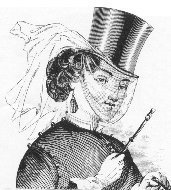
A slender volume, wonderfully illustrated, relating twenty-five litigations, it makes up in quality for what it lacks in quantity.
This book was recommended by one of my favorite podcasts, Hub History, I picked it up at the Salem Witch Museum, and it didn’t let me down. Focusing on people and events documented in New England court records, Diane Rapaport’s book is easy and interesting reading, especially for those interested in early New England History.
I picked this up at an antique shop in Maine and really enjoyed perusing it during my time there. This made for good bedtime reading.
These stories are hilarious and even more interesting because they're true! This is the exact kind of history I love-- local, rooted in historical documents, surprising and myth busting.
I'll never think of the early colonists the same again.
Diane Rapaport, The Naked Quaker: Trues Crimes and Controversies from the Courts of Colonial New England, Commonwealth Editions, (2007).
The subject of this book is really summarised in the subtitle. The author has delved into the -apparently unusually fulsome – court records and, essentially, picked out a twenty or so cases and in ten chapters gives a brief summary of two such cases. Each is clearly selected for its distance from our present times to give a survey of a legal order wholly different from our own.
I don’t think this is a bad book so long as you know what you are buying is a book designed to entertain only. The Naked Quaker does achieve that so if you are looking for an entertaining and non-taxing book of quirky historical legal trials and their actors then this may be the book for you.
My purchase of the book was simply because of the title. Quakers and nakedness had a pedigree in legal history (especially in an English context), so much so that Quakers had a name for it ‘going naked for a sign’ – and Quakers were certainly not the first to adopt some practices for religious reasons. I had hoped that this would delve a bit deeper into this, especially in the context of the developing American Puritan mindset but ultimately this did not materialise and there was just a simple narrative of a offence.
Another disappointment for me is it appears that the author herself is – or at least was – an attorney in addition to evidently being a person with an interest in criminal history in the pre-revolutionary period. I would have dearly loved to see some more substantive survey of these issues and the legal principles at play in the cases and how they differed from current norms. A recent example of a similar title, which retains its entertaining and conversational style is Kate Morgan’s “Murder: The Biography (2021)”. I have no doubt Rapaport would be up to a more focussed and joined up survey but, ultimately, I came away feeling while enjoyable this book could have been much more than it ended up being.
I'll admit, this books somewhat salacious title induced me to purchase it on a recent trip to Boston. I'll also admit that I was a bit disappointed that the contents of the book proved to be nowhere near as titillating as the title suggested they would be. That having been said, however, this is really a pretty good book. Essentially, it's simply a collection of various interesting episodes found in court records from Colonial New England, which sounds pretty boring. Fortunately, the author is good enough to summarize the cases in modern English, and she has a fairly readable writing style, so it's more interesting than this description sounds. It's always great fun to trip over some of the more colorful insults and threats. One young man called his father a "shittabed" and his mother "Gamar [Grandma:] Shithouse" and "Gamar Pissehouse." Another man threated someone by saying, "Sirrah get ye out of the room [or:] I will heave a pot at thy head." Which he apparently did. Good times. By the time I was finished with this book, I was reminded once again that human nature does not change, because these people would sue each other at the drop of a freakin' hat. Sure, maybe some of the charges are different than what we would see today, but it would seem that America has always been "The Land of the Lawsuit."
The premise of this book had much promise -- odd, but true, court cases from colonial New England -- but it just didn't come together very well. It was not written in a manner that grabs the reader. Several of my book club did not finish, and it's a really short book. I realize the author was trying to stick to the facts of the cases, but a little speculation would have lightened up the stories. I really liked the case in which a church tried to move its building to a piece of property that the owner refused to sell to the church.
While I didn't think the writing was superb, I thought the stories were fascinating. But, I agree with others who suggested that as a book, the stores didn't really go together...but, the author tried to tie them together by mentioning characters that would appear in other stories, which created some confusion. That said, I thought the stories were very interesting and in some cases, hilarious.
A fun idea, but the writing doesn't live up to the subject matter. History buffs will love this one, because it's a look at the weirdest and most scandalous (and drunkest) crimes of Colonial New England.
Not a half bad companion to The Wordy Shipmates, as they both point out that the people back then were human, too.
A series of fascinating and often funny stories taken from court records during the colonial period. It just goes to show that there's nothing new under the sun -- drunkenness, adultery, public brawls and lawsuits seem to have been just as common then as they are now. Anybody who thinks the Puritans were just stuffy people in black and white clothes who never did anything fun should think again. I really enjoyed this.
Diane Rapaport, a former trial lawyer turned historian, uses court cases as a window into the lives of early New Englanders. As she notes, colonial New England was a more litigious society than America today, and nothing provides as much detail into everyday life as court testimony and depositions. Human nature being what it is, her accounts are lively, pointed, and quite entertaining.
Diane has gathered an odd assortment of true-life stories, culled from 17th & 18th century New England courthouse records, that could be featured in Ripley's "Believe it or Not." Apparently our ancestors weren't all that quietly appropriate or religiously obedient as we once thought.
This is a great book. For anyone wanting to learn more about life in colonial New England. It was a very enjoyable read and well documented. I also found two ancestors mentioned, one on the side of the law and the other, well, let's just say he didn't have full knowledge of the law.
I LOVED this book! I love anything about old New England, the customs, and the things that happened that molded some of our laws into what they are today.
Diane Rapaport has done an excellent job in flushing out some of the more exemplary cases. Her work is thorough and good.
An absolutely fascinating look at Puritan New England in a totally different light. Fascinating to read about some very odd laws that were on the books back in the day (and I'm sure probably still are)!
I didn't read all of it, but most. Her blasé tone when detailing cruel, often racist historical events is just plain horrible. Oh, la di da, some poor Indian was cheated out of his livelihood, ha ha. The author just seems to find these historical legal dealings amusing. Yuck.
Lots of shenanigans in colonial New England. Diane Rapaport loves reading colonial court documents and so do I. Here, she puts them into readable stories.