

What do you think?

Strange Days Indeed: The Golden Age of Paranoia
Strange Days Indeed tells the story of how the paranoia exemplified by Nixon and Wilson became the defining characteristic of western politics and culture in the 1970s.
Francis Wheen will vividly evoke the characters, events and atmosphere of an era in which the truth was far stranger than even the most outlandish fiction.
357 pages, Kindle Edition
First published January 1, 2009
About the author
Francis Wheen
27 books85 followersFrancis James Baird Wheen (born 22 January 1957) is a British journalist, writer and broadcaster.
Wheen was educated at Copthorne Prep School, Harrow School and Royal Holloway College, University of London. At Harrow he was a contemporary of Mark Thatcher who has been a recurring subject of his journalism.[citation needed] He is a member of the 'soap' side of the Wheen family, whose family business was the long-established "Wheen & Sons", soap-makers, as was revealed in the gossip column of the Daily Mail on 26 March 2007. He was married to the writer Joan Smith between 1985 and 1993.
He is the author of several books including a biography of Karl Marx, which won the Isaac Deutscher prize. A column for The Guardian ran for several years. He writes for Private Eye and is the magazine's deputy editor. His collected journalism – Hoo-hahs and Passing Frenzies won him the George Orwell Prize in 2003. He has also been a regular columnist for the London Evening Standard.
Wheen broadcasts regularly (mainly on BBC Radio 4) and is a regular panellist on The News Quiz, in which he often referred to the fact that he resembles the former Tory party leader Iain Duncan Smith. He is also one of the more frequently recruited guests for Have I Got News For You.
Wheen wrote a docudrama, The Lavender List, for BBC Four on the final period of Harold Wilson's premiership, concentrating on his relationship with Marcia Williams, which was first screened in March 2006. It starred Kenneth Cranham as former Prime Minister Wilson and Gina McKee as Williams. In April 2007 the BBC paid £75,000 to Williams (Baroness Falkender) in an out-of-court settlement over claims made in the programme.
Francis Wheen is a signatory to the Euston Manifesto and a close friend of Christopher Hitchens. In late-2005 Wheen was co-author, with journalist David Aaronovitch and blogger Oliver Kamm, of a complaint to The Guardian after it published a correction and apology for an interview with Noam Chomsky by Emma Brockes. Chomsky complained that the article suggested he denied the Srebrenica massacre of 1995. The writer Diana Johnstone also complained about references to her in the interview. The Guardian's then readers' editor Ian Mayes found that this had misrepresented Chomsky's position, and his judgement was upheld in May 2006 by an external ombudsman, John Willis. In his report for the Guardian, Willis detailed his reasons for rejecting the argument.
Wheen was educated at Copthorne Prep School, Harrow School and Royal Holloway College, University of London. At Harrow he was a contemporary of Mark Thatcher who has been a recurring subject of his journalism.[citation needed] He is a member of the 'soap' side of the Wheen family, whose family business was the long-established "Wheen & Sons", soap-makers, as was revealed in the gossip column of the Daily Mail on 26 March 2007. He was married to the writer Joan Smith between 1985 and 1993.
He is the author of several books including a biography of Karl Marx, which won the Isaac Deutscher prize. A column for The Guardian ran for several years. He writes for Private Eye and is the magazine's deputy editor. His collected journalism – Hoo-hahs and Passing Frenzies won him the George Orwell Prize in 2003. He has also been a regular columnist for the London Evening Standard.
Wheen broadcasts regularly (mainly on BBC Radio 4) and is a regular panellist on The News Quiz, in which he often referred to the fact that he resembles the former Tory party leader Iain Duncan Smith. He is also one of the more frequently recruited guests for Have I Got News For You.
Wheen wrote a docudrama, The Lavender List, for BBC Four on the final period of Harold Wilson's premiership, concentrating on his relationship with Marcia Williams, which was first screened in March 2006. It starred Kenneth Cranham as former Prime Minister Wilson and Gina McKee as Williams. In April 2007 the BBC paid £75,000 to Williams (Baroness Falkender) in an out-of-court settlement over claims made in the programme.
Francis Wheen is a signatory to the Euston Manifesto and a close friend of Christopher Hitchens. In late-2005 Wheen was co-author, with journalist David Aaronovitch and blogger Oliver Kamm, of a complaint to The Guardian after it published a correction and apology for an interview with Noam Chomsky by Emma Brockes. Chomsky complained that the article suggested he denied the Srebrenica massacre of 1995. The writer Diana Johnstone also complained about references to her in the interview. The Guardian's then readers' editor Ian Mayes found that this had misrepresented Chomsky's position, and his judgement was upheld in May 2006 by an external ombudsman, John Willis. In his report for the Guardian, Willis detailed his reasons for rejecting the argument.
Ratings & Reviews
Friends & Following
Create a free account to discover what your friends think of this book!
Community Reviews
Displaying 1 - 30 of 77 reviews

October 11, 2015
I was casting about for a book about revolutionary terrorists operating in the 1970s, and in particular the Angry Brigade. I know, I know. Welcome to my world. Anyway, my research suggested that Strange Days Indeed: The Golden Age Of Paranoia might be just the ticket. I can report that I found what I was looking for, and then some.
Strange Days Indeed: The Golden Age Of Paranoia was my first book by Francis Wheen and it won’t be my last. Indeed within a few chapters I had ordered a copy of his biography of Karl Marx, and copies of How Mumbo-Jumbo Conquered the World: A Short History of Modern Delusions and Hoo Hahs And Passing Frenzies: Collected Journalism, 1991 2001, and I am eagerly anticipating all of them.
Strange Days Indeed: The Golden Age Of Paranoia was right up my street as I’m someone who grew up in, and remains mildly obsessed by, the 1970s. Francis Wheen's earlier book How Mumbo-Jumbo Conquered The World began in 1979, and the elections of Thatcher and Reagan. Strange Days Indeed: The Golden Age Of Paranoia recounts how we got there. As Francis states in the introduction, "Fasten your seatbelts: it's going to be a bumpy ride”.
Unlike those tedious TV documentaries that tend to focus on spacehoppers, flares and Chopper bikes, this book highlights the turmoil and paranoia that characterised so much of the 1970s. The book's subtitle "The Golden Age of Paranoia” is at the book’s heart, opening with a chapter on Richard Nixon, who I had never before realised was quite so consumed by paranoia and an inferiority complex. The book goes on to provide similar examinations of the dysfunctional regimes of Heath and Wilson in the UK and, yes, the various terrorist organisations that bombed their way through the decade. It’s all here and what an extraordinary read it is. Despite the topics under discussion, the book is very readable and frequently amusing and the book abounds with surprising and amazing anecdotes about figures like Carlos the Jackal, Idi Amin, Tariq Ali, Harold Wilson, Uri Geller and many more.
It is, in short, entertaining and fascinating and I finished the book a confirmed Francis Wheen fan.
4/5
Strange Days Indeed: The Golden Age Of Paranoia was my first book by Francis Wheen and it won’t be my last. Indeed within a few chapters I had ordered a copy of his biography of Karl Marx, and copies of How Mumbo-Jumbo Conquered the World: A Short History of Modern Delusions and Hoo Hahs And Passing Frenzies: Collected Journalism, 1991 2001, and I am eagerly anticipating all of them.
Strange Days Indeed: The Golden Age Of Paranoia was right up my street as I’m someone who grew up in, and remains mildly obsessed by, the 1970s. Francis Wheen's earlier book How Mumbo-Jumbo Conquered The World began in 1979, and the elections of Thatcher and Reagan. Strange Days Indeed: The Golden Age Of Paranoia recounts how we got there. As Francis states in the introduction, "Fasten your seatbelts: it's going to be a bumpy ride”.
Unlike those tedious TV documentaries that tend to focus on spacehoppers, flares and Chopper bikes, this book highlights the turmoil and paranoia that characterised so much of the 1970s. The book's subtitle "The Golden Age of Paranoia” is at the book’s heart, opening with a chapter on Richard Nixon, who I had never before realised was quite so consumed by paranoia and an inferiority complex. The book goes on to provide similar examinations of the dysfunctional regimes of Heath and Wilson in the UK and, yes, the various terrorist organisations that bombed their way through the decade. It’s all here and what an extraordinary read it is. Despite the topics under discussion, the book is very readable and frequently amusing and the book abounds with surprising and amazing anecdotes about figures like Carlos the Jackal, Idi Amin, Tariq Ali, Harold Wilson, Uri Geller and many more.
It is, in short, entertaining and fascinating and I finished the book a confirmed Francis Wheen fan.
4/5

November 19, 2010
For some reason, I have found myself intrigued by the period of history known as the 1970s, the “me decade.” While dividing history into convenient decade long portions may be an oversimplification, as pointed out by Francis Wheen in Strange Days Indeed, particularly in a century of such drastic change, something about the “Seventies” seems to represent a turning point in the 20th century. While missing the decade personally by two years, I still have found study of this time of mixed crisis and banality to be oddly familiar.
Wheen’s book examines this ten-year period through the lens of one of its, arguably, most defining features, paranoia, and paints a vivid and disturbing picture, yet one compelling in the similarities that can be found to the world today. Paranoia, according to Wheen, truly erupted onto the world scene at the time and his anecdotes involving Nixon, Mao, Harold Wilson, and Idi Amin illustrate how a deep fear of the future had haunted the halls of power throughout the world. In addition, he describes the emergence of fears of a doomed economy, terrorism, growth in occult and conspiratorial beliefs, and other interesting themes. I particularly enjoyed Wheen’s citing of various period literature and cinema to illustrate his points, which really help to evoke the thoughts and feelings of the time. On the other hand, the variety of these diverse themes brought together in Strange Days Indeed under the overarching theme of paranoia can bury his arguments in these many interesting stories. While linked loosely by date, his chapter’s can seem a bit disorganized. Still, I found every subject described by Wheen to be interesting. His conclusion, linking many of these themes to conditions today, was something that I had noted throughout the work- there seem, culturally, to be many parallels between the 1970s and the 2000s that Wheen was able to hint at during the course of the book.
Strange Days Indeed, then, was one of the most interesting and thought-provoking accounts of the 1970s I’ve read, even when it runs into problems tackling such a broad topic. It is a very topical book as well, and a good read for anyone interested in the 1970s and its relation to the contemporary world.
Wheen’s book examines this ten-year period through the lens of one of its, arguably, most defining features, paranoia, and paints a vivid and disturbing picture, yet one compelling in the similarities that can be found to the world today. Paranoia, according to Wheen, truly erupted onto the world scene at the time and his anecdotes involving Nixon, Mao, Harold Wilson, and Idi Amin illustrate how a deep fear of the future had haunted the halls of power throughout the world. In addition, he describes the emergence of fears of a doomed economy, terrorism, growth in occult and conspiratorial beliefs, and other interesting themes. I particularly enjoyed Wheen’s citing of various period literature and cinema to illustrate his points, which really help to evoke the thoughts and feelings of the time. On the other hand, the variety of these diverse themes brought together in Strange Days Indeed under the overarching theme of paranoia can bury his arguments in these many interesting stories. While linked loosely by date, his chapter’s can seem a bit disorganized. Still, I found every subject described by Wheen to be interesting. His conclusion, linking many of these themes to conditions today, was something that I had noted throughout the work- there seem, culturally, to be many parallels between the 1970s and the 2000s that Wheen was able to hint at during the course of the book.
Strange Days Indeed, then, was one of the most interesting and thought-provoking accounts of the 1970s I’ve read, even when it runs into problems tackling such a broad topic. It is a very topical book as well, and a good read for anyone interested in the 1970s and its relation to the contemporary world.

November 15, 2018
Fascinating and fun. Tells the story of a frightening time in Western history with a dark but intelligent sense of humor. Reminds me of Nick Hornby's work.

December 13, 2015
The 70s are an unloved decade. Even while they were on there weren't many who proclaimed them a golden age. Looking back the most common reaction of survivors seems to be "Dear God, I actually wore that?" There's so much more to the 70s than gas shortages and discos. Surely no other decade had so many deeply disturbed individuals playing prominent roles in public life.
Francis Wheen tells the stories of several of these off-kilter individuals and tells them as they deserve to be told: deadpan and in detail. He offers us a veritable smorgasbord of loony tunes behavior and lets us savior every silly detail. Wheen starts off with a few stories familiar to American readers, such as Nixon's famous late night trip to the Lincoln Memorial to chat with the protestors. Nixon may be one of the more famous examples of paranoia but for sheer insanity nothing beats the inhabitants of Number 10 Downing Street and their wacky band of cohorts. From the chief civil servant who circumvents imaginary listening devices by conducting meetings in the nude to Prime Minister Wilson, his political secretary Marcia and her all powerful handbag there's plenty of side-splitting entertainment. The Wilson and Marcia saga may be the most horrifically funny political saga ever, what with Marcia's fears of being lured unawares into orgies, Wilson's bizarre acceptance of whatever abuse she threw his way and some staff members wondering if offing Marcia might not be the best for England. There's are still more crazies - mentalists, Bobby Fischer, the Weather Underground and Red Army Faction, Madame Mao, Idi Amin and on and on.
Wheen has plenty of material and he uses it brilliantly. This isn't history, however. This is Wheen's impression of the 70s, his take on events. It is neither comprehensive nor unbiased. Wheen has tangled with the all powerful Marcia before and lost, for instance, so it would be silly to pretend that Wheen is dispassionately reporting events. He makes some assertions that I would prefer to see sourced (like his repeated references to Nixon being a drunk; I'm not disputing this, I've simply never read about it before). He also has a habit of referencing fictional works as if they offer unassailable authority. It's easy for me to forgive these shortcomings because the book is so entertaining and because Wheen admits to knowing by heart all the words to two songs of epic stupidity. Anyone who can sing Gimme Dat Ding and quote Balzac is entitled to a few foibles.
This is a fun, fast read recommended for anyone who possesses a love of the absurd. Get yer ya-ya's out and enjoy.
Francis Wheen tells the stories of several of these off-kilter individuals and tells them as they deserve to be told: deadpan and in detail. He offers us a veritable smorgasbord of loony tunes behavior and lets us savior every silly detail. Wheen starts off with a few stories familiar to American readers, such as Nixon's famous late night trip to the Lincoln Memorial to chat with the protestors. Nixon may be one of the more famous examples of paranoia but for sheer insanity nothing beats the inhabitants of Number 10 Downing Street and their wacky band of cohorts. From the chief civil servant who circumvents imaginary listening devices by conducting meetings in the nude to Prime Minister Wilson, his political secretary Marcia and her all powerful handbag there's plenty of side-splitting entertainment. The Wilson and Marcia saga may be the most horrifically funny political saga ever, what with Marcia's fears of being lured unawares into orgies, Wilson's bizarre acceptance of whatever abuse she threw his way and some staff members wondering if offing Marcia might not be the best for England. There's are still more crazies - mentalists, Bobby Fischer, the Weather Underground and Red Army Faction, Madame Mao, Idi Amin and on and on.
Wheen has plenty of material and he uses it brilliantly. This isn't history, however. This is Wheen's impression of the 70s, his take on events. It is neither comprehensive nor unbiased. Wheen has tangled with the all powerful Marcia before and lost, for instance, so it would be silly to pretend that Wheen is dispassionately reporting events. He makes some assertions that I would prefer to see sourced (like his repeated references to Nixon being a drunk; I'm not disputing this, I've simply never read about it before). He also has a habit of referencing fictional works as if they offer unassailable authority. It's easy for me to forgive these shortcomings because the book is so entertaining and because Wheen admits to knowing by heart all the words to two songs of epic stupidity. Anyone who can sing Gimme Dat Ding and quote Balzac is entitled to a few foibles.
This is a fun, fast read recommended for anyone who possesses a love of the absurd. Get yer ya-ya's out and enjoy.

April 2, 2010
Strange book indeed. This book was so uneven that it drove me up the wall. There were chapters that were so interesting that I devoured them, specifically the ones on Nixon and Idi Amin. Others, like the ones on PM Heath of the UK which were a real snore - but should not have been because it was an interesting time in history for the UK. I was in my late 20s and early 30s and remember those days and they WERE interesting, but despite the potential of this book, it does not live up to its positive critical reviews.
Wheen's premise is that the 70s were characterized by a pervasive cultural paranoia that infused many countries. OK. I buy that and I buy that the ascendancy of the conspiracy mind set of the John Birch Society reached its zenith here. But he really did not connect the dots and each chapter is sort of a stand alone. Wheen has collected a lot of interesting stories and talks about a lot of interesting characters, but in the end, he just has that - stories that could be connected to a theme but really are not. E.g. What did Watergate shennanigans have to do with Heath's follies in Britain?
I bought this because it was critically acclaimed, but wound up disappointed.
Wheen's premise is that the 70s were characterized by a pervasive cultural paranoia that infused many countries. OK. I buy that and I buy that the ascendancy of the conspiracy mind set of the John Birch Society reached its zenith here. But he really did not connect the dots and each chapter is sort of a stand alone. Wheen has collected a lot of interesting stories and talks about a lot of interesting characters, but in the end, he just has that - stories that could be connected to a theme but really are not. E.g. What did Watergate shennanigans have to do with Heath's follies in Britain?
I bought this because it was critically acclaimed, but wound up disappointed.

October 23, 2011
Strange Days Indeed by Francis Wheen is an interesting look at the 1970s primarily through the political goings on in the United States and Great Britain in the early 1970s. It took me a while to get interested in the book because much of the Watergate information was already known. But interest grew as the book went into the paranoia of leaders in other countries such as Great Britain, Uganda, the Soviet Union and the People's Republic of China. Also interesting was the inclusion of the radical groups and how they too seemed to be reacting to the feeling that "they" are out to get us. Wheen does a good job of including movies and books of the era to show how the feeling of paranoia was effecting all aspects of our culture. One can use those parts of our culture as a window into what was going on in the nation's collective mind. But Mr. Wheen stops in the mid-70s and one wonders if the madness stopped then or continues to go on at the top levels of governments around the world. It is interesting to apply some of "paranoid style" that Richard Hofstadter coined in the early 1960s to some of the leaders and events of today. ( )

June 10, 2013
I am reminded of this book, today, in light of recent events and their painfully reminiscent catalog of paranoia, conspiracy and dysfunction. I feel more sympathetic than ever to the generation that lived through the 1970s, and must acknowledge that their various failings now seem wholly understandable and forgivable. At this moment, it seems indeed a wonder that so many people simply managed to muddle through at all, even with the (equally understandable) aid of drug abuse.
It is also some modest consolation, I think, in considering things the other way around; Wheen's book was informative and entertaining, but today I am particularly glad at having read it as it offers some sense of context, and reassurance that this kind of ongoing sociopolitical horror has played out before. And people survived, more or less.
Only to blunder right back into much the same fiascoes a few decades later, but glass half-full, etc.
It is also some modest consolation, I think, in considering things the other way around; Wheen's book was informative and entertaining, but today I am particularly glad at having read it as it offers some sense of context, and reassurance that this kind of ongoing sociopolitical horror has played out before. And people survived, more or less.
Only to blunder right back into much the same fiascoes a few decades later, but glass half-full, etc.

February 14, 2024
The last line of this book sums it up: "Reading about the Seventies, you may sometimes have a similar hallucinatory sensation; but when you look up and gaze out at the twenty-first century you may experience something even more unsettling - flickering glimpses of deja vu."
Wow. The Seventies were kind of crazy, but the fear, disillusionment, and paranoia are all too familiar nowadays. This book spends most of its time on the UK; not surprising as the author is British. I had no idea had bad things got there. The US gets the second deepest dive with Watergate and Nixon (what a guy.) However, there are also chapters on Idi Amin (horrific) and international terrorist movements. It's a book worth reading if you feel like the world is out of control today. Nothing is new and that can be oddly comforting.
Wow. The Seventies were kind of crazy, but the fear, disillusionment, and paranoia are all too familiar nowadays. This book spends most of its time on the UK; not surprising as the author is British. I had no idea had bad things got there. The US gets the second deepest dive with Watergate and Nixon (what a guy.) However, there are also chapters on Idi Amin (horrific) and international terrorist movements. It's a book worth reading if you feel like the world is out of control today. Nothing is new and that can be oddly comforting.

April 13, 2020
Subtitled 'The Golden Age of Paranoia', in this absorbing read Wheen takes a look at the rampant paranoia of the 1970s by the likes of Wilson, Nixon, Brezhnev, Mao, Amin etc. He documents the 'paranoid style' that dominated the decade from statesmanship and politics through to pop culture and the man on the street! A fascinating read! 8 out of 12.

January 4, 2026
The oldest book on my bookshelf and another that I have really enjoyed. The paranoia of the seventies discussed really well

June 7, 2015
I really wanted to enjoy this book. After reading another book about the 1970s, specifically 1973 I instantly became fascinated by that time period. Intrigued by the title of the book and how good the last book i read on the 70s was I was thoroughly disappointed in this book. Boring, hard to get into, inconsistent writing, are just a few words I would use to describe this book. I felt the way the book was set up was frustrating. You'd have one chapter that started talking about Nixon and in the next paragraph in the same chapter you would be reading about things going on in the UK. Which would be fine I guess if the author would have at least finished talking about Nixon before jumping back into him later in the chapter before once again jumping off to another topic. Really disappointed in this book.
December 16, 2021
- шта ћемо од додатака?
- стави све и маринаду: и никсонову параноју и ,,трому шизофренију" совјетских дисидената, па пакулине политичке трилере, мало ворхол и мао, може коста-гаврас са стране, стави пекинпоа, пинчона, рио тинто (ало), убиства у кући шерон тејт и обавезно атентат на кенедија. значи све осим ћумура.
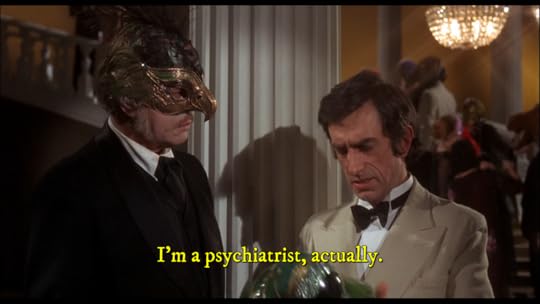
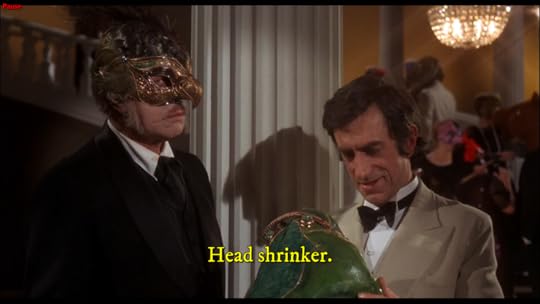
- стави све и маринаду: и никсонову параноју и ,,трому шизофренију" совјетских дисидената, па пакулине политичке трилере, мало ворхол и мао, може коста-гаврас са стране, стави пекинпоа, пинчона, рио тинто (ало), убиства у кући шерон тејт и обавезно атентат на кенедија. значи све осим ћумура.

August 25, 2016
A jaw droppingly unbelievable look at the rampant paranoia that the 70's fermented to a potent brew, and which we sip from still. As interesting as Watergate undoubtedly is, the real joy is to be found in the lesser known revelations on offer here - Harold Wilson's insane political secretary, the shrieking and unbalanced Marcia Williams; Mao's monstrous wife - a harridan straight out of some dark fairytale; the truly ludicrous obscenity trial brought against Oz magazine; Idi Amin's letters (Dear Liz) to the Queen. Up there with the Marx biography as my favourite Wheen book.

July 9, 2020
Bill put me onto this.
I loved this - almost all the episodes he describes occurred as I was - in any sense - becoming "aware", and he reports various things I hadn't already known about the Big Events of the 70s decade. Wheen is a more than capable writer and so the accounts are very well communicated too.
It lurches from the planet-defining to to the local history. Nixon, Ford, Mao, Chou, Idi Amin, Thorpe, Wilson, Heath, Thatcher - what a bloody family. Together with the second string whose names were so familiar at the time but somehow more recently forgotten. Good to see Marcia Forkbender rubbished!
The back cover blurb seemed to imply a laugh-a-line, but that is wrong. Sometimes yes, but often no - these people were running the planet I was living on (still do). As the closing chapter says, there's a strong sense of "Here we go again".
I loved this - almost all the episodes he describes occurred as I was - in any sense - becoming "aware", and he reports various things I hadn't already known about the Big Events of the 70s decade. Wheen is a more than capable writer and so the accounts are very well communicated too.
It lurches from the planet-defining to to the local history. Nixon, Ford, Mao, Chou, Idi Amin, Thorpe, Wilson, Heath, Thatcher - what a bloody family. Together with the second string whose names were so familiar at the time but somehow more recently forgotten. Good to see Marcia Forkbender rubbished!
The back cover blurb seemed to imply a laugh-a-line, but that is wrong. Sometimes yes, but often no - these people were running the planet I was living on (still do). As the closing chapter says, there's a strong sense of "Here we go again".

Read
February 7, 2022Economies fail, leaders are underwhelming, paranoia and misinformation run rampant, and the international situation is troubling; sound familiar? Not 2022: this is a book about the 1970s, a kidney stone of a decade which could be a primer on our contemporary times. Francis Wheen has a pretty interesting and engaging take on the decade of Richard Nixon, Idi Amin, Edward Heath, Britain's sick socialist economy, double digit inflation, the SLA, fall of Saigon and other disasters. Some British intelligence officers thought prime minister Harold Wilson was a Soviet spy, and he in turn thought they were bugging him, and the MI6 knew about Nixon's secret taping system in the White House before the CIA. Everywhere was disillusionment, disappointment and a general fear of the future of "the system." All theories of democracy or capitalism ending were premature, as they of course are nowadays as well. A very good book with a British focus much of the time.

April 28, 2022
This book disappointed because the cover gave me the impression of focus on Britain in the 70’s, all of the 70’s but focus is about 60% American and 90% 1970-1975. I wasn’t convinced by the conclusion either but it was an interesting read all that said.
In a way it felt like Adam Curtis in book form but not quite as compelling, but at least almost as dynamic.
Anyways, this cultural and political history of paranoia is worth reading but I won’t give it a second sitting.
In a way it felt like Adam Curtis in book form but not quite as compelling, but at least almost as dynamic.
Anyways, this cultural and political history of paranoia is worth reading but I won’t give it a second sitting.

August 2, 2023
‘If you plunge into the Seventies now, whether or not you lived through them then, you find yourself gawping and gasping at what passed for normality’. So concludes Francis Wheen at the end of this chilling, jaw-dropping and frequently darkly hilarious conducted tour through the highways and byways of ‘the golden age of paranoia’. Ranging widely, from dirty tricks in Nixon’s White House, to the disruptive forces released by imperial decline, to the frankly dysfunctional ‘kitchen cabinet’ of Harold Wilson’s final government, and covering much more besides, Strange Days Indeed is a compulsively readable, entertaining and cold sweat-inducing survey of a most peculiar decade.
March 13, 2010
There's a saying a number of people my age share: "If you remember the '70s, it means you didn't live through them." British journalist and author Francis Wheen, though, has me thinking that maybe that lack of memory was not chemically induced but, rather, the result of trying to forget.
With Strange Days Indeed: The 1970s: The Golden Days of Paranoia , Wheen proposes exactly what the subtitle suggests: that the Seventies were "a pungent mélange of apocalyptic dread and conspiratorial fever." Paranoia may be a psychiatric term, but given that it is defined as a "pervasive distrust and suspiciousness of others," there's plenty of reason the Seventies could be described as the days of paranoia.
First published in Britain last year and released in the U.S. this month, Strange Days Indeed kicks off its discussion of the 1970s and paranoia with the poster child, Richard Nixon. Depending on perspective, Nixon can be seen as both cause and effect, with his "enemies list" and taping his own conversations while at the same time burglarizing and bugging those perceived enemies. Wheen, though, doesn't suggest this was solely an American affliction. He points to how the British government struggled to keep on the lights, declared five states of emergency between June 1970 and February 1974 and actually went to three-day workweeks. Then there was Uganda's Idi Amin and China in the midst of its Cultural Revolution.
Governments weren't the only entities displaying the symptoms. There seemed to be a worldwide bloom of so-called revolutionary movements, from Italy's Red Brigades to Germany's Baader-Meinhof Gang to America's Symbionese Liberation Army. Yet many of these groups offered no alternatives to what they opposed. Instead, their terrorism seemed an end rather than a means. "Nihilist hyperbole and exaggerated fury filled the analytical void," Wheen writes. "It wouldn't do to admit that they were suffering from little more than existential angst, bourgeois guilt and a nagging discontent at the soullessness and shallowness of consumerist society."
But politics weren't the only part of society that seemed to be caught up in a collective derangement. Among those reflecting the tenor of the times was science fiction author Phillip K. Dick. His noted break with reality left him, Wheen says, "trapped in one of his own novels." For example, Dick wrote numerous letters to the FBI but didn't mail them. Instead, he put each in an outside trash can, figuring the FBI would get them through its spy operations.
Wheen sometimes tends to overreach a bit in his premise. Certainly, nits could be picked as to whether many of the items he cites are paranoid behavior or symptoms of a widespread anxiety. Additionally, American readers may find a number of British public figures and issues with which they are unfamiliar. And while Wheen's tour through the Seventies is always tinged with a touch of humor, some readers may want a dictionary handy as they encounter phrases like "corybantic orgy." Still, Strange Days Indeed has a value not only as history but as a prism on today's cultural and political psyche.
Wheen's last book, How Mumbo-Jumbo Conquered the World , used 1979 as a starting point for examining the growth of conspiracy theory, superstition and the supernatural in so-called modern thinking. Looking back on the decade that preceded that survey, he suggests those familiar with the Seventies may see "flickering glimpses of déjà vu" in this century.
He may be right. Plenty of news stories at the end of 2009 suggested the 2000s were the worst decade ever. Time even ran a cover story last December calling it "the Decade from Hell." This week Newsweek not only suggested America may truly be in decline, it refers to this as "America's Age of Angst." Is that angst merely part of a bad flashback or did the golden days of paranoia produce an irreversible effect? Although that question probably can't be answered for a few decades and is beyond the scope of Strange Days Indeed, Wheen's look at the Seventies certainly leaves us more to ponder than just that decade.
(Originally posted at A Progressive on the Prairie)
With Strange Days Indeed: The 1970s: The Golden Days of Paranoia , Wheen proposes exactly what the subtitle suggests: that the Seventies were "a pungent mélange of apocalyptic dread and conspiratorial fever." Paranoia may be a psychiatric term, but given that it is defined as a "pervasive distrust and suspiciousness of others," there's plenty of reason the Seventies could be described as the days of paranoia.
First published in Britain last year and released in the U.S. this month, Strange Days Indeed kicks off its discussion of the 1970s and paranoia with the poster child, Richard Nixon. Depending on perspective, Nixon can be seen as both cause and effect, with his "enemies list" and taping his own conversations while at the same time burglarizing and bugging those perceived enemies. Wheen, though, doesn't suggest this was solely an American affliction. He points to how the British government struggled to keep on the lights, declared five states of emergency between June 1970 and February 1974 and actually went to three-day workweeks. Then there was Uganda's Idi Amin and China in the midst of its Cultural Revolution.
Governments weren't the only entities displaying the symptoms. There seemed to be a worldwide bloom of so-called revolutionary movements, from Italy's Red Brigades to Germany's Baader-Meinhof Gang to America's Symbionese Liberation Army. Yet many of these groups offered no alternatives to what they opposed. Instead, their terrorism seemed an end rather than a means. "Nihilist hyperbole and exaggerated fury filled the analytical void," Wheen writes. "It wouldn't do to admit that they were suffering from little more than existential angst, bourgeois guilt and a nagging discontent at the soullessness and shallowness of consumerist society."
But politics weren't the only part of society that seemed to be caught up in a collective derangement. Among those reflecting the tenor of the times was science fiction author Phillip K. Dick. His noted break with reality left him, Wheen says, "trapped in one of his own novels." For example, Dick wrote numerous letters to the FBI but didn't mail them. Instead, he put each in an outside trash can, figuring the FBI would get them through its spy operations.
Wheen sometimes tends to overreach a bit in his premise. Certainly, nits could be picked as to whether many of the items he cites are paranoid behavior or symptoms of a widespread anxiety. Additionally, American readers may find a number of British public figures and issues with which they are unfamiliar. And while Wheen's tour through the Seventies is always tinged with a touch of humor, some readers may want a dictionary handy as they encounter phrases like "corybantic orgy." Still, Strange Days Indeed has a value not only as history but as a prism on today's cultural and political psyche.
Wheen's last book, How Mumbo-Jumbo Conquered the World , used 1979 as a starting point for examining the growth of conspiracy theory, superstition and the supernatural in so-called modern thinking. Looking back on the decade that preceded that survey, he suggests those familiar with the Seventies may see "flickering glimpses of déjà vu" in this century.
He may be right. Plenty of news stories at the end of 2009 suggested the 2000s were the worst decade ever. Time even ran a cover story last December calling it "the Decade from Hell." This week Newsweek not only suggested America may truly be in decline, it refers to this as "America's Age of Angst." Is that angst merely part of a bad flashback or did the golden days of paranoia produce an irreversible effect? Although that question probably can't be answered for a few decades and is beyond the scope of Strange Days Indeed, Wheen's look at the Seventies certainly leaves us more to ponder than just that decade.
(Originally posted at A Progressive on the Prairie)
May 12, 2018
This was pretty fascinating. The writing was clear and engaging, and the material it covered sounded vaguely familiar in outline and then was pretty wild once you got into the details. (I missed the 70s the first time around; experiences may vary if you lived it!)
However, the chapters were disjointed -- it felt a little like, "and another thing!" each time a chapter started. The book also only seems to make it through about 1975 before ending. You get the sense the author was overwhelmed by the amount of material, and just had to ... stop.
That said, what was there was quite interesting.
However, the chapters were disjointed -- it felt a little like, "and another thing!" each time a chapter started. The book also only seems to make it through about 1975 before ending. You get the sense the author was overwhelmed by the amount of material, and just had to ... stop.
That said, what was there was quite interesting.

July 23, 2015
This book takes an in-depth look at how individual, national, and global paranoia was the underlying driving force of the 1970's, with insightful portrayals of prominent people whose over-the-top paranoia (and just plain, pervasive, and worsening mental illness in most cases) created the tenor of that decade.
The background information on the public events that happened is eye-opening. Names from history books - Richard Nixon, Idi Amin, Margaret Thatcher, Harold Wilson, and Edward Heath among many others - are given full three-dimensional and brutally honest portraits in this book.
How any of these people came to power and stayed in power (except Amin, who ironically, was the choice of Western leaders) has never made sense to me, based on the extensive study of history I've done and do, but after reading this book, it becomes an even deeper mystery to me (and reminds me why I eschew and reject ALL human politics of any kind in any venue because I have no faith in humanity - and that includes me - being able to solve/fix the big problems and the big messes that we have created and continue to create).
If, as in many of the cases presented here, these people are an indication of the masses choosing their leaders, God help us all.
The background information on the public events that happened is eye-opening. Names from history books - Richard Nixon, Idi Amin, Margaret Thatcher, Harold Wilson, and Edward Heath among many others - are given full three-dimensional and brutally honest portraits in this book.
How any of these people came to power and stayed in power (except Amin, who ironically, was the choice of Western leaders) has never made sense to me, based on the extensive study of history I've done and do, but after reading this book, it becomes an even deeper mystery to me (and reminds me why I eschew and reject ALL human politics of any kind in any venue because I have no faith in humanity - and that includes me - being able to solve/fix the big problems and the big messes that we have created and continue to create).
If, as in many of the cases presented here, these people are an indication of the masses choosing their leaders, God help us all.

August 31, 2014
I found this a bit uneven and disjointed. It's good at conveying the atmosphere of the 70s, when so many very odd things happened, and there are some very readable sections, but it seems to jump about a lot, from US to international to a few domestic events (a lot more could have been said about Britain). It seems to be suggesting that every conspiracy theory was not only true but that reality was far worse - there really were British right-wingers, Establishment figures, considering trying to persuade the army to take part in a coup, for instance. The ghastly Marcia Williams seems to have been every bit as bad as she was painted by the press at the time. The book seemed to run out of steam towards the end of the decade. (Oh, and guilty confession: I am sure we still have the Alan Coren Idi Amin LP somewhere. We did of course know that Idi Amin was a bad thing, but we didn't know the extent of his crimes, some of which are described graphically here. Too easy to laugh at a buffoon and miss the significance of what he was actually up to - but yes, it most certainly did "pass for entertainment" and was very popular at the time).

March 7, 2010
I originally started this book because of the author. (I listen to the podcast of BBC Radio 4's The News Quiz on which he is a frequent guest.)
The book rapidly sucked me in. A wonderfully entertaining history of the '70s. He covers not just Watergate and the fuel crisis, but banana republics, military coups, and dictators. I was in grade school during this decade, and I remember very little about what happened. I probably wasn't paying much attention. I do recall Three Mile Island, a solar eclipse, watching the pictures that Voyage sent back of Jupiter, the Iranian hostage crisis.
Francis Wheen expands on the whole decade as well as showing me how similar are current times are to that one. I highly suggest this book for people that like history, especially tinged with a bit of whimsy.
The book rapidly sucked me in. A wonderfully entertaining history of the '70s. He covers not just Watergate and the fuel crisis, but banana republics, military coups, and dictators. I was in grade school during this decade, and I remember very little about what happened. I probably wasn't paying much attention. I do recall Three Mile Island, a solar eclipse, watching the pictures that Voyage sent back of Jupiter, the Iranian hostage crisis.
Francis Wheen expands on the whole decade as well as showing me how similar are current times are to that one. I highly suggest this book for people that like history, especially tinged with a bit of whimsy.

December 7, 2018
It has been said that if you remember the ‘60s you weren’t there. On the other hand, if you remember the ‘70s then you also know “just because you’re paranoid, doesn’t mean they aren’t out to get you.” The anthem of the ‘70s had to be “For What It’s Worth” by Stephen Stills, released by Buffalo Springfield as a single in 1967:
“Par-a-noia strikes deep
into your life it will creep
it starts when you’re always afraid
step out of line the man come and take you away
we better stop
hey what's that sound
everybody look what's going down”
Author Francis Wheen doesn’t mention the song, perhaps because it didn’t have the same impact in the UK or because of the 1967 release date. Nevertheless, the song ran through my mind as I followed the author’s exposition of the paranoid world that was the 1970s.
This is not a history of the ‘70s but the author’s reflections as he presents several narratives that speak to paranoia that dominated the decade. As the author suggests, much of the ‘70s seems to have taken place in a series of cigarette-smoke filled rooms wherein huddled a small band of desperate conspirators whether a beleaguered President and his staff, a despotic Third World ruler, the dissident offspring of the modern middle class bent on destroying the corrupt system that supported their own families while waging bloody war around the world, or citizens of a Third World nation fighting in the anti-imperialist struggle.
As noted throughout this book, popular culture in film and novels also contributed to the feeling of the times as the world shifted from the hopefulness and optimism of the ‘60s into the darker and pessimistic ‘70s. “Don’t trust anyone over 30” became don’t trust anybody and especially don’t trust the government. Governments lied about their wars abroad and their actions at home. One such incident was the widely reported and mysterious deaths of more than 3,000 sheep at Skull Valley, Utah in 1968 in what was finally admitted in 1998 to have been an accidental nerve gas release by the nearby US Army Dugway Proving Ground, just as rumored at the time. Books such as Edward Luttwak’s “Coup d’état – A Practical Handbook” and “The Anarchist’s Cookbook” which presented recipes for making explosives in the home were easily found and passed around. Everyone was spying on everyone, “Secret Agent” Patrick McGoohan had morphed into No 6 and become “The Prisoner,” John LeCarre was a favorite author and superspies like James Bond and his license to kill were favorite film characters. Like many of us living through the ‘70s, each of these individuals and incidents only contributed to the decade’s sense of paranoia. Some of the “flower children” and “yippee” of the 1960s became survivalists as they retreated to planned self-sufficient rural communes and communities in the wake of the shooting deaths of 4 Kent State University students at an anti-war protest on campus.
The author focuses especially on US President Richard Nixon and British Prime Minister Harold Wilson, with supporting appearances by the Baader-Meinhof Group, the Weather Underground, the Provisional IRA, the Serbsky Institute of Psychology (Moscow), the KGB, the CIA, the FBI and its director J Edgar Hoover, the BBC, OPEC, Edward Heath, Tony Benn, Mao Zedong of China, Idi Amin of Uganda, Carlos “the Jackal,” and a cast of millions.
Though Wheen goes into detail in some of his accounts, this truly is a mere survey of the paranoia of the 1970s aimed at the general reader who did not live through this era. Although there is no bibliography, the 20 pages of endnotes identify his many sources if the reader is interested in reading further on any particular incident. I assure younger readers, especially, that the author is presenting only a reflection of the full subject and that it is all true because you couldn’t make this stuff up. If you don’t believe me, ask your parents, grandparents, or friends who live through the 1970s – but only after you have closed all the blinds or curtains, turned the lights down so that no one knows you’re there, and then turn on a water faucet so that the microphones can’t pick up what you say.
“Par-a-noia strikes deep
into your life it will creep
it starts when you’re always afraid
step out of line the man come and take you away
we better stop
hey what's that sound
everybody look what's going down”
Author Francis Wheen doesn’t mention the song, perhaps because it didn’t have the same impact in the UK or because of the 1967 release date. Nevertheless, the song ran through my mind as I followed the author’s exposition of the paranoid world that was the 1970s.
This is not a history of the ‘70s but the author’s reflections as he presents several narratives that speak to paranoia that dominated the decade. As the author suggests, much of the ‘70s seems to have taken place in a series of cigarette-smoke filled rooms wherein huddled a small band of desperate conspirators whether a beleaguered President and his staff, a despotic Third World ruler, the dissident offspring of the modern middle class bent on destroying the corrupt system that supported their own families while waging bloody war around the world, or citizens of a Third World nation fighting in the anti-imperialist struggle.
As noted throughout this book, popular culture in film and novels also contributed to the feeling of the times as the world shifted from the hopefulness and optimism of the ‘60s into the darker and pessimistic ‘70s. “Don’t trust anyone over 30” became don’t trust anybody and especially don’t trust the government. Governments lied about their wars abroad and their actions at home. One such incident was the widely reported and mysterious deaths of more than 3,000 sheep at Skull Valley, Utah in 1968 in what was finally admitted in 1998 to have been an accidental nerve gas release by the nearby US Army Dugway Proving Ground, just as rumored at the time. Books such as Edward Luttwak’s “Coup d’état – A Practical Handbook” and “The Anarchist’s Cookbook” which presented recipes for making explosives in the home were easily found and passed around. Everyone was spying on everyone, “Secret Agent” Patrick McGoohan had morphed into No 6 and become “The Prisoner,” John LeCarre was a favorite author and superspies like James Bond and his license to kill were favorite film characters. Like many of us living through the ‘70s, each of these individuals and incidents only contributed to the decade’s sense of paranoia. Some of the “flower children” and “yippee” of the 1960s became survivalists as they retreated to planned self-sufficient rural communes and communities in the wake of the shooting deaths of 4 Kent State University students at an anti-war protest on campus.
The author focuses especially on US President Richard Nixon and British Prime Minister Harold Wilson, with supporting appearances by the Baader-Meinhof Group, the Weather Underground, the Provisional IRA, the Serbsky Institute of Psychology (Moscow), the KGB, the CIA, the FBI and its director J Edgar Hoover, the BBC, OPEC, Edward Heath, Tony Benn, Mao Zedong of China, Idi Amin of Uganda, Carlos “the Jackal,” and a cast of millions.
Though Wheen goes into detail in some of his accounts, this truly is a mere survey of the paranoia of the 1970s aimed at the general reader who did not live through this era. Although there is no bibliography, the 20 pages of endnotes identify his many sources if the reader is interested in reading further on any particular incident. I assure younger readers, especially, that the author is presenting only a reflection of the full subject and that it is all true because you couldn’t make this stuff up. If you don’t believe me, ask your parents, grandparents, or friends who live through the 1970s – but only after you have closed all the blinds or curtains, turned the lights down so that no one knows you’re there, and then turn on a water faucet so that the microphones can’t pick up what you say.

February 11, 2019
An interesting analysis of what the author implies to be the heyday of paranoia, more specifically the paranoid style of personalistic governance and its accompanying cultural mode, the Seventies. Focusing almost entirely on British and American politics (with a chapter set aside for Uganda's Idi Amin), Wheen weaves said concepts into an historical theme which distinguishes the period (supposedly) from the Sixties and Eighties - though he claims its lingering effects live on to some degree today.
In short, Wheen's exposition is (again, simplified roughly) as follows: a particular set of social, economic, and political problems which beset the industrial Atlantic nations (stagflation Britain, late Vietnam War America, the worldwide energy crisis of 1973) coincided with the uncovering of government surveillance (i.e. COINTELPRO), violent intervention in foreign affairs (assassinations of heads of state, both planned and carried out), and institutionalized impropriety on a massive scale (the Pentagon Papers, Watergate). From these conditions sprang a generation of people who, often politically engaged by or in opposition to the radical movements of the Sixties, turned to conspiracy to explain the seemingly chaotic collapse of the postwar consensus - often arriving at the conclusion that it was an attempt masterminded by Neo-Fascists, Trotskyists, the CIA, or the Illuminati to establish a new order (and, as it turns out, many were at least partially correct in their assertions - last example notwithstanding). American and British political leaders (particularly Nixon), no less human than the general populace, engaged in a number of absurd acts in reaction to perceived conspiracies against them, thereby further escalating the general atmosphere of paranoia (and despite the sadly hilarious fact that, in many instances, they themselves had launched the programs and campaigns which generated these conspiracies and pseudo-conspiracies in the first place!)
The main strength of this book is the quality of the writing itself - Wheen's excellent integration of quotations from a variety of sources help to further supplement his already very readable "voice." In terms of comprehensibly advancing the book's central thesis, if there is one, Wheen falls, perhaps, a little short - though in still-informative fashion. Similar to the paranoiacs whom he details, he connects together sometimes disparate anecdotes (always interesting and expertly detailed by Wheen), newspaper headlines, and statistics - though unlike his subjects, he offers no cohesive, overarching theory of causes, just the feeling that the Seventies were (as is often forgotten) a time characterized by the compulsion to look back over one's shoulder.
In short, Wheen's exposition is (again, simplified roughly) as follows: a particular set of social, economic, and political problems which beset the industrial Atlantic nations (stagflation Britain, late Vietnam War America, the worldwide energy crisis of 1973) coincided with the uncovering of government surveillance (i.e. COINTELPRO), violent intervention in foreign affairs (assassinations of heads of state, both planned and carried out), and institutionalized impropriety on a massive scale (the Pentagon Papers, Watergate). From these conditions sprang a generation of people who, often politically engaged by or in opposition to the radical movements of the Sixties, turned to conspiracy to explain the seemingly chaotic collapse of the postwar consensus - often arriving at the conclusion that it was an attempt masterminded by Neo-Fascists, Trotskyists, the CIA, or the Illuminati to establish a new order (and, as it turns out, many were at least partially correct in their assertions - last example notwithstanding). American and British political leaders (particularly Nixon), no less human than the general populace, engaged in a number of absurd acts in reaction to perceived conspiracies against them, thereby further escalating the general atmosphere of paranoia (and despite the sadly hilarious fact that, in many instances, they themselves had launched the programs and campaigns which generated these conspiracies and pseudo-conspiracies in the first place!)
The main strength of this book is the quality of the writing itself - Wheen's excellent integration of quotations from a variety of sources help to further supplement his already very readable "voice." In terms of comprehensibly advancing the book's central thesis, if there is one, Wheen falls, perhaps, a little short - though in still-informative fashion. Similar to the paranoiacs whom he details, he connects together sometimes disparate anecdotes (always interesting and expertly detailed by Wheen), newspaper headlines, and statistics - though unlike his subjects, he offers no cohesive, overarching theory of causes, just the feeling that the Seventies were (as is often forgotten) a time characterized by the compulsion to look back over one's shoulder.

September 24, 2013
This book is about the 1970s as you probably don't remember them.
A quick glance at the cover and at the blurb gives the impression that it is a kind of cultural history of an era. For Francis Wheen the Seventies began existentially when he decided to drop out. As he describes it:
In another place he is more explcit:, when discussing when the Sixties ended and the seventies began:
The promise these passages (and he blurb on the cover) give of the reconciliation of private histories with public narrative is not fulfilled. We are not told whether or how Francis Wheen dropped back in, or how he spent the rest of the Seventies. He presumably survived, or he wouldn't have written the book. So I was expecting a cultural history, but instead it was more of a political history, and the political history of the 1970s was laced with paranoia, at least according to Wheen.
So having established what the book is not, what is it?
It's the public narrative turned inside out.
Those of us who lived through the Seventies remember some of the headlines, and some of the major events. But what Francis Wheen does is take us behind the scenes, backstage, as it were, to see the stage props, and the actors without their make up. What were the motives for the much publicised political decisions? What was Edward Heath really up to with his successive states of emergency? What was the story behind Watergate, or Nixon's rapprochement with China, or the Allende coup in Chile? What was really going on with nihilistic terrorist groups like the Baader-Meinhof Gang, the Tupamaros urban guerrillas in Uruguay, or the Symbionese Liberation Army?
Wheen has trawled through the various memoirs, diaries, letters and papers published by people close to the seats of power, and revealed some of the conversations about and motives for some of the decisions that were announced in the press. These documents were not available at the time, and it is only now that the inside stories can be revealed. Books have been published, archives made available, and Wheen concludes that Nixon, Heath and most of the other world leaders at the time were barking mad and quite paranoid. The Seventies were the paranoid decade, and that paranoia was the decade's major bequest to those who followed.
Most of us don't have time to read those documents, and so Francis Wheen has done it for us and made a digest of it to save us the trouble.
The trouble is that his selection of events to record would not have been mine. The events that stood out for him were not those that stood out for me, even in the public narrative.
Living in South Africa we were only very vaguely aware of Britains "winter of discontent" and its "Who governs Britain?" election (Answer: Nobody).
The Yom Kippur War of 1973 (40th anniversary at time of writing, but Telkom alone knows when I'll get to post this) made more of an impact. It meant the reopening of the Suez Canal, and within a few months I no longer looked out from my front door in Durban North on 30 or more ships in the roadstead waiting to enter Durban harbour, and one could walk on Durban's beaches without the lumps of crude oil making them took like the aftermath of an explosion in a Marmite factory.
There were some consequences of the Yom Kippur War that Wheen does mention, though -- reduced oil production, rising fuel prices, and fuel restrictions . The fuel restrictions (in South Africa) were announced in November 1973, with speed limits in towns of 50 km/h and on open roads of 80 km/h. On 30 November I was driving into town from Durban North along Umgeni Road -- the traffic was preferable to the sleep-inducing boredom of driving on the freeway at 50 km/h. I stopped at a robot and an Indian guy in the car next to me shouted, "Have you filled your tank, petrol is going up to a Rand a gallon." Several other people told me the same thing on that day. Rumours abounded, and queues at filling stations were long. Now I doubt if we'll see the fuel price as low as a Rand a litre again. But back then we were suddenly aware that whether we used it quickly or slowly, oil had to come to an end some day. Someone somewhere said that if every adult male Indian used toilet paper, the world's paper supply would be exhausted in two weeks. So yes, Wheen was right about that. The Seventies was a time of the feeling of an approaching disaster, of inflation and the imminent end of the world.
But in South Africa it was also the decade in which PW Botha and Magnus Malan decided to invade Angola (Wheen did not consult any diaries of their associates) and thus of what the South African public were led to believe was the "Border War", though much of it took place a long way from any borders.
In the 1960s, under Vorster, South Africa had turned into a police state, but with the accession of P.W. Botha there was a military take-over, By the end of the Seventies the "Border War" had mutated into the "total onslaught" and South Africa came to be ruled by a military junta which lasted throughout the 1980s.
So in Wheen's book I was expecting more of a cultural history of the 1970s, though there was not much of that. But the book did inspire me to think of how we do reconcile our private histories with public narratives, even if Wheen does not deliver on this. I'll continue with that theme on my blog, since it drifts away from the actual content of the book.
http://khanya.wordpress.com/2013/10/0...
A quick glance at the cover and at the blurb gives the impression that it is a kind of cultural history of an era. For Francis Wheen the Seventies began existentially when he decided to drop out. As he describes it:
With my rucksack and guitar in hand, I came to London on 27 December 1973 brimming with the ambition and optimism of the Sixties -- a dream of change, a sense of limitless possibility -- only to find the Seventies enveloping the city like a pea-souper.
In another place he is more explcit:, when discussing when the Sixties ended and the seventies began:
So it goes for most of us as we try to reconcile our private histories with a public narrative. Philip Larkin, recording the start of free love in 1963, lamented that 'this was rather late for me.' For me, alas, it was rather too early. I came to the party a full decade later, on 27 December 1973, when I caught a train to London from suburban Kent, having left a note on the kitchen table advising my parents that I'd gone to join the alternative society and wouldn't be back. An hour or so later, clutching my rucksack and guitar, I arrived at the 'BIT Alternative Help and Information Centre,' a hippy hangout on Westbourne Park Road which I'd often seen mentioned in the underground press. 'Hi,' I chirruped. 'I've dropped out.' I may even have babbled something about wanting to build the counter-culture. This boyish enthusiasm was met by groans from a furry freak slumped on the threadbare sofa. 'Drop back in, man,' he muttered through a dense foliage of beard. 'You're too late... It's over.' And so it was. The Prime Minister, Edward Heath, had declared a state of emergency in November, his fifth in just over three years...
The promise these passages (and he blurb on the cover) give of the reconciliation of private histories with public narrative is not fulfilled. We are not told whether or how Francis Wheen dropped back in, or how he spent the rest of the Seventies. He presumably survived, or he wouldn't have written the book. So I was expecting a cultural history, but instead it was more of a political history, and the political history of the 1970s was laced with paranoia, at least according to Wheen.
So having established what the book is not, what is it?
It's the public narrative turned inside out.
Those of us who lived through the Seventies remember some of the headlines, and some of the major events. But what Francis Wheen does is take us behind the scenes, backstage, as it were, to see the stage props, and the actors without their make up. What were the motives for the much publicised political decisions? What was Edward Heath really up to with his successive states of emergency? What was the story behind Watergate, or Nixon's rapprochement with China, or the Allende coup in Chile? What was really going on with nihilistic terrorist groups like the Baader-Meinhof Gang, the Tupamaros urban guerrillas in Uruguay, or the Symbionese Liberation Army?
Wheen has trawled through the various memoirs, diaries, letters and papers published by people close to the seats of power, and revealed some of the conversations about and motives for some of the decisions that were announced in the press. These documents were not available at the time, and it is only now that the inside stories can be revealed. Books have been published, archives made available, and Wheen concludes that Nixon, Heath and most of the other world leaders at the time were barking mad and quite paranoid. The Seventies were the paranoid decade, and that paranoia was the decade's major bequest to those who followed.
Most of us don't have time to read those documents, and so Francis Wheen has done it for us and made a digest of it to save us the trouble.
The trouble is that his selection of events to record would not have been mine. The events that stood out for him were not those that stood out for me, even in the public narrative.
Living in South Africa we were only very vaguely aware of Britains "winter of discontent" and its "Who governs Britain?" election (Answer: Nobody).
The Yom Kippur War of 1973 (40th anniversary at time of writing, but Telkom alone knows when I'll get to post this) made more of an impact. It meant the reopening of the Suez Canal, and within a few months I no longer looked out from my front door in Durban North on 30 or more ships in the roadstead waiting to enter Durban harbour, and one could walk on Durban's beaches without the lumps of crude oil making them took like the aftermath of an explosion in a Marmite factory.
There were some consequences of the Yom Kippur War that Wheen does mention, though -- reduced oil production, rising fuel prices, and fuel restrictions . The fuel restrictions (in South Africa) were announced in November 1973, with speed limits in towns of 50 km/h and on open roads of 80 km/h. On 30 November I was driving into town from Durban North along Umgeni Road -- the traffic was preferable to the sleep-inducing boredom of driving on the freeway at 50 km/h. I stopped at a robot and an Indian guy in the car next to me shouted, "Have you filled your tank, petrol is going up to a Rand a gallon." Several other people told me the same thing on that day. Rumours abounded, and queues at filling stations were long. Now I doubt if we'll see the fuel price as low as a Rand a litre again. But back then we were suddenly aware that whether we used it quickly or slowly, oil had to come to an end some day. Someone somewhere said that if every adult male Indian used toilet paper, the world's paper supply would be exhausted in two weeks. So yes, Wheen was right about that. The Seventies was a time of the feeling of an approaching disaster, of inflation and the imminent end of the world.
But in South Africa it was also the decade in which PW Botha and Magnus Malan decided to invade Angola (Wheen did not consult any diaries of their associates) and thus of what the South African public were led to believe was the "Border War", though much of it took place a long way from any borders.
In the 1960s, under Vorster, South Africa had turned into a police state, but with the accession of P.W. Botha there was a military take-over, By the end of the Seventies the "Border War" had mutated into the "total onslaught" and South Africa came to be ruled by a military junta which lasted throughout the 1980s.
So in Wheen's book I was expecting more of a cultural history of the 1970s, though there was not much of that. But the book did inspire me to think of how we do reconcile our private histories with public narratives, even if Wheen does not deliver on this. I'll continue with that theme on my blog, since it drifts away from the actual content of the book.
http://khanya.wordpress.com/2013/10/0...
September 17, 2023
What Strange Days Indeed does especially well is its sense of capturing a cast of paranoid characters operating in almost farcical circumstances. Wheen’s book feels like windows into different halls of paranoic excess, and at times it might feel like it lacks a suitable thesis statement other than the overarching paranoiac undertones running through all of them, meaning characters as disparate as Harold Wilson, Idi Amin, and Richard Nixon come out of it as victims of some totalising sweating sickness. As Richard Hofstadter suggested, “the fear of catastrophe is most likely to elicit the syndrome of paranoid rhetoric”, and to illustrate such Wheen takes an episodic dive into the tenor of the decade, covering inflation, strikes, and a general sense of miasma that thus enabled ‘the golden age of paranoia’ to flourish. Sometimes it elicits mild amusement and at other times an abiding sense of horror. In many ways it feels like a book that came a little too early, as much of the material on Nixon and other leaders feels more prescient now than in the very early Obama period. What did surprise me – in more of a bug bear reaction – is how inconsistent the referencing was, at least in my edition, so sometimes facts and quotations are cited and at other points not. The ‘hall of mirrors’ episodic tenor of the book, too, means that at times we feel a little like we are on a rollercoaster ride through paranoic episodes, though the final chapter (before the Conclusion) is an excellent dissection of the paranoic streak, with explanations for just why this crystallised in the 1970s.
Nevertheless, the episodes that are covered are done well, reflecting the amazing fact that a tired Nixon went walkabout in May 1970 to speak to some protestors on the lawn, that former army officers really did consider launching coups against the Wilson government, and that two hypochondriacs were running China in the early 1970s. It has to be read to be believed.
Nevertheless, the episodes that are covered are done well, reflecting the amazing fact that a tired Nixon went walkabout in May 1970 to speak to some protestors on the lawn, that former army officers really did consider launching coups against the Wilson government, and that two hypochondriacs were running China in the early 1970s. It has to be read to be believed.
This entire review has been hidden because of spoilers.

June 14, 2020
I know of Francis Wheen through The News Quiz and as a regular contributor to Private Eye. A reference to Harold Wilson in a previous read led me to this. What a compelling read. A genuine page turner, written with great clarity and an acute eye for what was happening and a great quote. I lived through the 1970s from school to the end of university, at least that was my 'day job'. It was also the time of my awakening to the world around me, from getting the vote to being marginally active in fringe politics. I remember it well, at least from my perspective. Wheen joins the dots (a recurrent phrase of conspiracy theorists) and gives a fascinating overview of a world in chaos, from the USA to China, from the UK to Uganda and beyond. He writes with fluency, moving effortlessly from his text to a quotation (all attributed) and back, building a picture of, almost entirely, men trying to control the forces amassed against them (the latter often for the best of reasons). The 1970s, on the back of the 1960s, seemed such a dull and even dreadful decade as I lived through it. 50 years on, it is fascinating and far more interesting than its predecessor. I am becoming increasingly drawn by literature about the period. This is up there with A Very English Scandal and I will be reading more of Francis Wheen, I am sure. Wheen completed writing in 2009 and indicates an optimism at the election of Obama in late 2008. I can't help wondering how he would write it now.

May 6, 2024
This is a nostalgia trip for those of us with memories of the 1970s, and a (very entertaining) history lesson for those of us without. The book is light in tone, with an anecdotal, conversational style that reminded me a little of Bill Bryson (though not as overly funny). I bought the book fairly specifically in order to remind myself of the political and cultural landscape of the 70s for a writing project of my own, but found it genuinely engaging to read. If Toast: The Story of a Boy's Hunger was your cup of tea, then this provides the background against which Slater's childhood was set. Whether your interest is socio-political or personal, this is an easy, fun read.

October 4, 2022
This was an absolutely terrific book that should be read now as the Western world suffers from inflation, conspiracy theories, and political paranoia. It traces the 1970s in (mainly) Britain and the US, including Watergate, the decline of Britain, and the suspicions about secret cabals formulated by both right and left.
The 1960s, the author writes, was the "We" decade, and the 1980s was the "Me" decade". The 1970s, he says, was the "They" decade -- an it has not gone away.
The 1960s, the author writes, was the "We" decade, and the 1980s was the "Me" decade". The 1970s, he says, was the "They" decade -- an it has not gone away.
May 28, 2018
Interesting page by page and chapter by chapter, competently written. But some how the "topic by topic" nature of the chapters meant that, as the book ground on, things just felt more and more dispersed. And then, by 1975, Wheen just seems to give up.
The 70's sound like they were mad and this book actually made me feel happier about the state of politics today, so that's certainly a good thing!
The 70's sound like they were mad and this book actually made me feel happier about the state of politics today, so that's certainly a good thing!
Displaying 1 - 30 of 77 reviews