

What do you think?
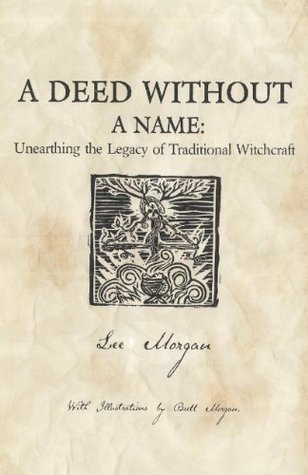
Deed Without a Name: Unearthing the Legacy of Traditional Witchcraft
The field of witchcraft studies is continually over-turning new information and research about traditional witchcraft practices and their meanings. A Deed Without a Name seeks to weave together some of this cutting-edge research with insider information and practical know-how. Utilising her own decades of experience in witchcraft and core-shamanism Lee Morgan pulls together information from trial records, folklore and modern testimonials to deepen our understanding of the ecstatic and visionary substrata of Traditional Witchcraft. Those who identify themselves as 'Traditional' tend to read a lot of scholarly texts on the subject and yet still there remains a vast gulf between this information and knowledgeably applying it in practice; this book aims to close that gap.
181 pages, Kindle Edition
First published January 16, 2013
About the author
Lee Morgan
11 books71 followersLee Morgan lives on a communal homestead on kunanyi/Mt Wellington in nipaluna/Hobart, where he creates sanctuary for other weirdos, raises books, people, and ideas from the grave. He has had novels and non-fiction published by Moon Books, Three Hands Press, The Witches Almanac and Rebel Satori. Having survived an enormous tumour, Lee currently is busy filling the room in his skull with new brains, writing Folk Horror, and queering the world one step at a time.
Ratings & Reviews
Friends & Following
Create a free account to discover what your friends think of this book!
Community Reviews
Displaying 1 - 26 of 26 reviews
January 5, 2016
The author very clearly states their intention right from the beginning of this book; that is, to help the reader to find ways of integrating scholarly texts on historical witchcraft into a practical, working framework. I think in some ways this is accomplished very elegantly and on a few occasions I feel the author ignores the historical context and overlays the sources with a type of personal 'pagan' ideology, which leads to a debased historicity.
I really enjoyed some chapters and felt really put off by other parts. The book goes into quite some depth regarding the need for us moderns to appreciate a world before electricity, highlighting how the lack of electricity allowed people more liminal time and how this would've fostered a context in which the Otherworld was better able to be experienced. Also spoken about is how the boundary between the inner world and the outer world has become much more delineated and how, back then, the idea of "without substance" was unknown to the psyche and all phenomena was physical. I think this is a very valid and important context in which to approach the Craft, thus discouraging the somewhat anti-physical "New Age" mind-set. I also enjoyed the idea that imagination can lead to vision and how narratives can act as a kind of springboard from which to experience the Otherworld. Again, this ties into the idea of a lack of delineation between the inner, outer and Otherworld.
I found attempting to read the book from an academic perspective to be disappointing and somewhat frustrating. From this perspective it lacks depth, objectivity and the actual editing is quite poor too. The chapters are very short and I was frequently left wanting more or some kind of objective conclusion, making it seem a bit bitty in places. The author is pretty anti-Christian and sometimes this lead to interesting thoughts, whilst at other times it caused the narrative to drift off into Christian-bashing and the history and context-oriented perspective was lost. This is exemplified when the author notes that Necromancy as it is presented in Grimoires suffers from being full of Christian material, which may not work ideologically for the Witch, so the author attempts to bring out the best of the Grimoire tradition into the authors own 'witchcraft context' by adapting the rite. This contradicts the best parts of the book, parts that express the importance of entering into the mind-set of the period.
Despite this, the idea that Witchcraft is a myth and a story that we must embrace and claim is very attractive. The idea that the Myth of Witchcraft is a conduit for Otherness is a profound one and this is where the book has its value; it is poetic and pulsates with a "witchy" feel, a feeling that will inspire the reader to go off in search for the world of Other, to dwell in the twilight and to Know that which fuels the Myth.
I really enjoyed some chapters and felt really put off by other parts. The book goes into quite some depth regarding the need for us moderns to appreciate a world before electricity, highlighting how the lack of electricity allowed people more liminal time and how this would've fostered a context in which the Otherworld was better able to be experienced. Also spoken about is how the boundary between the inner world and the outer world has become much more delineated and how, back then, the idea of "without substance" was unknown to the psyche and all phenomena was physical. I think this is a very valid and important context in which to approach the Craft, thus discouraging the somewhat anti-physical "New Age" mind-set. I also enjoyed the idea that imagination can lead to vision and how narratives can act as a kind of springboard from which to experience the Otherworld. Again, this ties into the idea of a lack of delineation between the inner, outer and Otherworld.
I found attempting to read the book from an academic perspective to be disappointing and somewhat frustrating. From this perspective it lacks depth, objectivity and the actual editing is quite poor too. The chapters are very short and I was frequently left wanting more or some kind of objective conclusion, making it seem a bit bitty in places. The author is pretty anti-Christian and sometimes this lead to interesting thoughts, whilst at other times it caused the narrative to drift off into Christian-bashing and the history and context-oriented perspective was lost. This is exemplified when the author notes that Necromancy as it is presented in Grimoires suffers from being full of Christian material, which may not work ideologically for the Witch, so the author attempts to bring out the best of the Grimoire tradition into the authors own 'witchcraft context' by adapting the rite. This contradicts the best parts of the book, parts that express the importance of entering into the mind-set of the period.
Despite this, the idea that Witchcraft is a myth and a story that we must embrace and claim is very attractive. The idea that the Myth of Witchcraft is a conduit for Otherness is a profound one and this is where the book has its value; it is poetic and pulsates with a "witchy" feel, a feeling that will inspire the reader to go off in search for the world of Other, to dwell in the twilight and to Know that which fuels the Myth.

June 27, 2013
What can I say this is a great book for those who feel a calling for traditional witchcraft of a non-wiccan variety. I would say that the book gives a great overview for those just starting on the path. As for those who have read a lot of material and are practicing on their own without a mentor this book will teach you a few things as well. Several notable author's are referred to which will give one further fuel to continue their quest. Such greats as Emma Wilby, Carlo Ginzburg,Claude Lecoeux and a few other.
The book covers a liminal space between myth and scholarship while giving a good strong taste of both. Some of the topics covered are how witches are called to the craft, forming alliances with the different spirits, different animals the witch will ally with and the parts of the soul. This great overview offers a quick read and a very enjoyable experience. The end of the book has some working that you can do to discover your daimon, allies and doubles.
Witches are called to the craft in a variety of ways just as their are a great variety of witches. Some care called forth in dreams where they meet their spirit guide or dead ancestor. Sometimes they will endure great sickness before receiving their powers. Traditional Witchcraft is more aptly compared to Shamanism. Shaman's will have plant, animal and spirit allies. Most cross over to the spirit world to bring good to the community while the bad ones may do it for selfish cause or to do harm. The Benadnati in Italy are ones who fight for the good. Sometimes witch will be marked by being born with a caul, six fingers or extra teeth. It ccould alos be the seventh son of the seventh son. The witch can cross into the realm of spirit both the realm of the dead and nature spirits. A witch will make a pacts with the faerie royalty, devil and damme Sans Merci at the crossroads which could be physical or a cross meeting place between the world of spirit and the physical world.
The witches initiation also can coincide with a carnal relationship of sorts with the devil, faerie queen or spirit guardian. It is of described as being hard and cold. Spirit allies are fed by the humans. This can be done with blood, milk fat or other sorts of fat. If the spirit ally gets nourishment from the witches blood there could be a tell tale mark, like between the knuckles, on the feet or near the breast.
The soul can be divided into three so to speak. The Daimon is a guardian spirit usually inherited from the family. It is usually the opposite gender of the witch. The next level is the astral double which can human form or animal form. It is usually powered by the shadow. The second skin can sometimes be taken and used by someone elses shadow. They refer to this as being hag ridden
The witch can release their inner beast. But it has got to be kept in balance with the flame of human reason. Just as animals can ridden so too can plants. THe double enables witches to commune with the dead, march with faeries , astral travel and go to sabbats. Getting to the spirit realm one must come upon a power spot. It is here that one must make friends with the guardian dragon in order to enter.
This easy to read book covers lots of material. To find out more I advise that your read it.
The book covers a liminal space between myth and scholarship while giving a good strong taste of both. Some of the topics covered are how witches are called to the craft, forming alliances with the different spirits, different animals the witch will ally with and the parts of the soul. This great overview offers a quick read and a very enjoyable experience. The end of the book has some working that you can do to discover your daimon, allies and doubles.
Witches are called to the craft in a variety of ways just as their are a great variety of witches. Some care called forth in dreams where they meet their spirit guide or dead ancestor. Sometimes they will endure great sickness before receiving their powers. Traditional Witchcraft is more aptly compared to Shamanism. Shaman's will have plant, animal and spirit allies. Most cross over to the spirit world to bring good to the community while the bad ones may do it for selfish cause or to do harm. The Benadnati in Italy are ones who fight for the good. Sometimes witch will be marked by being born with a caul, six fingers or extra teeth. It ccould alos be the seventh son of the seventh son. The witch can cross into the realm of spirit both the realm of the dead and nature spirits. A witch will make a pacts with the faerie royalty, devil and damme Sans Merci at the crossroads which could be physical or a cross meeting place between the world of spirit and the physical world.
The witches initiation also can coincide with a carnal relationship of sorts with the devil, faerie queen or spirit guardian. It is of described as being hard and cold. Spirit allies are fed by the humans. This can be done with blood, milk fat or other sorts of fat. If the spirit ally gets nourishment from the witches blood there could be a tell tale mark, like between the knuckles, on the feet or near the breast.
The soul can be divided into three so to speak. The Daimon is a guardian spirit usually inherited from the family. It is usually the opposite gender of the witch. The next level is the astral double which can human form or animal form. It is usually powered by the shadow. The second skin can sometimes be taken and used by someone elses shadow. They refer to this as being hag ridden
The witch can release their inner beast. But it has got to be kept in balance with the flame of human reason. Just as animals can ridden so too can plants. THe double enables witches to commune with the dead, march with faeries , astral travel and go to sabbats. Getting to the spirit realm one must come upon a power spot. It is here that one must make friends with the guardian dragon in order to enter.
This easy to read book covers lots of material. To find out more I advise that your read it.
September 20, 2021
Extremely wanting of citations. You cannot write a supposedly historical-based nonfiction on witchcraft and then not have citations for every claim you make. The author's attempts to merge the historical perspective the book's marketing and paratexts imply with personal anecdotes from his friends whom he can 'personally vouch for' was an extremely clumsy and bad-taste move. It was so odd getting pages and pages of personal modern anecdotes (with zero interpretation) in a book that is supposed to unearth the history of witchcraft. What this book actually did is take modern witchcraft and try to cherry pick evidence from historical sources to say 'hey! See? This happened then too. 😌' as if that isn't the same historical revisionism pagans revile in Christians. It's just not good faith research, it's poorly written and ungenerous in its explanations, it is riddled with grammar and formatting errors, and after the author started compiling anecdotes about his friends wanting to fuck dogs, I tapped out.
Read
May 10, 2026'He or she who wishes to be a great enchanter must possess the ability to be enchanted.'
A well-meant book, but... First of all, it really, really needs editing. My Kindle edition had paragraph breaks in the wrong places, and reading about Carlos Ginzburg got on my nerves. But apart from that, the whole structure is somewhat chaotic: we pass from theoretical observations to a list of magical beings from various cultures with descriptions too brief to give us a real feel for them, and then suddenly to exorcism and a rite of necromancy.
Lee Morgan has read Carlo Ginzburg's, Éva Pócs's and Emma Wilby's works and is trying to see how this material might fit with his own personal gnosis and that of some unnamed 'modern witches'. I think this is a valid question, but probably each practitioner comes to their own personal answers.
A well-meant book, but... First of all, it really, really needs editing. My Kindle edition had paragraph breaks in the wrong places, and reading about Carlos Ginzburg got on my nerves. But apart from that, the whole structure is somewhat chaotic: we pass from theoretical observations to a list of magical beings from various cultures with descriptions too brief to give us a real feel for them, and then suddenly to exorcism and a rite of necromancy.
Lee Morgan has read Carlo Ginzburg's, Éva Pócs's and Emma Wilby's works and is trying to see how this material might fit with his own personal gnosis and that of some unnamed 'modern witches'. I think this is a valid question, but probably each practitioner comes to their own personal answers.

May 3, 2013
This is a compilation of good books with some Clan of Tubal Cain thrown in. It isn't really usable stuff for crafting, but is a little historical jaunt into books like Carlos Ginzburg's "Ecstasies" and "Night Battles" with a little neopaganism thrown in, like this quote "And whilst Benandanti favored Thursday for their meetings (betraying a Jupiterian current to their magic and association with protective warrior gods like Thor), Friday has always been associated with witchcraft" Page 111. Not sure if the Benandanti had anything to do with Norse gods like Thor, I would have mentioned an Italian deity like Mars, but oh well...
Quite a bit of the Benandanti is mentioned, though they really have little to do with English traditional witchcraft, they are sexy!
The book uses references and for that I give respect, a decent book should admit to using references.
Though there are a few books I think that the author should have read to round out her education, like "Dreamtime: Concerning the Boundary Between Wilderness and Civilization" by Hans Peter Duerr, it would have given the author a little more information on actual witch usages of entheogens and travelings, but I'm sure that the author will come out with a revised edition when she learns more on the path.
I think the book is okay, a decent 101, but one should take the lead and read the books used to write this on one's own, because otherwise you will miss quite a bit, of course the author takes for granted and depends on the fact that people don't read the classics any more, or this book would be useless.
Quite a bit of the Benandanti is mentioned, though they really have little to do with English traditional witchcraft, they are sexy!
The book uses references and for that I give respect, a decent book should admit to using references.
Though there are a few books I think that the author should have read to round out her education, like "Dreamtime: Concerning the Boundary Between Wilderness and Civilization" by Hans Peter Duerr, it would have given the author a little more information on actual witch usages of entheogens and travelings, but I'm sure that the author will come out with a revised edition when she learns more on the path.
I think the book is okay, a decent 101, but one should take the lead and read the books used to write this on one's own, because otherwise you will miss quite a bit, of course the author takes for granted and depends on the fact that people don't read the classics any more, or this book would be useless.

March 25, 2013
This is quite a good book on the topic of traditional witchcraft. The author uses many examples and has compiled tons of information from authors such as Eva Pocs, Emma Wilby, Carlos Ginzburg, and Claude Lecouteux among others. Good info and practicum on fetch beasts, hedge riding and some necromancy.
I enjoyed this book but I do not believe a beginner would. I think they may end up feeling lost and possibly freaked out a bit.
There is a sizable appendix of references and list of books for further reading nearly as long as the references.
In some areas there are small typos such as "of" instead of "if" and vice versa. Nothing that your mind can't easily skim over or correct.
I enjoyed this book but I do not believe a beginner would. I think they may end up feeling lost and possibly freaked out a bit.
There is a sizable appendix of references and list of books for further reading nearly as long as the references.
In some areas there are small typos such as "of" instead of "if" and vice versa. Nothing that your mind can't easily skim over or correct.
December 9, 2013
If you are interested in European traditional witchcraft (which is not the same as Wicca) this book is an excellent starting point. It bridges the gap between the scholarly study of Renaissance-era and earlier magical works and actual practice as it comes down to us through blurred and broken traditions. As author Lee Morgan writes,
“To access what some people call the ‘tradition’ of witchcraft we need to first understand that witchcraft as we know it today is a myth. But this is not to say it doesn’t exist. The ‘nameless deed’ that lies behind that myth is part of the eternal nature of mankind. But it is also universally part of human nature to experience the divine and the transcendent through the conduit of myth.”
Ms. Morgan addresses not only the better-known aspects of the Craft such as the Mark, fetches, hedge-riding, and ritual work but also the psychological and emotional implications of approaching the Powers in traditional fashion. This is not a voyage for the merely curious, a fact this book makes clear. Setting foot along the path of the Cunning Craft will change you deeply and irretrievably. But if you feel called, this volume is an excellent starting point. There is no fluff in it but real, practical information gleaned from time-honored texts, interviews with modern practitioners and the author’s personal experience.
As I read through the text, I was impressed with the way Ms. Morgan has brought the basics of the Craft into the modern day without losing the mystery and timelessness of the practice. I have heard the complaint that this book does too much of the ‘hard work’ novices are expected to attempt by themselves – digging through arcane texts, connecting the dots among obscure and obsolete practices – and I must disagree. The true hard work of the Craft comes in the journeying, the Work itself, the times when we meet the Mystery head-on in person and are transformed. All Ms. Morgan does is organize the material in a sensible manner and provide stepping stones to set the reader on his or her way. She leaves the real work for us to do ourselves. Her writing is both realistic and inspirational; I expect it will give many readers the push they need to move forward along this path.
Though I do recommend A Deed Without a Name, I must add my own disclaimer here: Reading a book does not make you a witch. Walking the Path every day of your life does. So yes, read the book – it’s wonderful and I’m sure you’ll refer back to it time and again. But do the Work as well. The serious student of witchcraft will also apply themselves to the Further Reading list at the end of the book in order to move deeper into the material and the experience. And of course, no book can substitute for the guidance of a good teacher.
“To access what some people call the ‘tradition’ of witchcraft we need to first understand that witchcraft as we know it today is a myth. But this is not to say it doesn’t exist. The ‘nameless deed’ that lies behind that myth is part of the eternal nature of mankind. But it is also universally part of human nature to experience the divine and the transcendent through the conduit of myth.”
Ms. Morgan addresses not only the better-known aspects of the Craft such as the Mark, fetches, hedge-riding, and ritual work but also the psychological and emotional implications of approaching the Powers in traditional fashion. This is not a voyage for the merely curious, a fact this book makes clear. Setting foot along the path of the Cunning Craft will change you deeply and irretrievably. But if you feel called, this volume is an excellent starting point. There is no fluff in it but real, practical information gleaned from time-honored texts, interviews with modern practitioners and the author’s personal experience.
As I read through the text, I was impressed with the way Ms. Morgan has brought the basics of the Craft into the modern day without losing the mystery and timelessness of the practice. I have heard the complaint that this book does too much of the ‘hard work’ novices are expected to attempt by themselves – digging through arcane texts, connecting the dots among obscure and obsolete practices – and I must disagree. The true hard work of the Craft comes in the journeying, the Work itself, the times when we meet the Mystery head-on in person and are transformed. All Ms. Morgan does is organize the material in a sensible manner and provide stepping stones to set the reader on his or her way. She leaves the real work for us to do ourselves. Her writing is both realistic and inspirational; I expect it will give many readers the push they need to move forward along this path.
Though I do recommend A Deed Without a Name, I must add my own disclaimer here: Reading a book does not make you a witch. Walking the Path every day of your life does. So yes, read the book – it’s wonderful and I’m sure you’ll refer back to it time and again. But do the Work as well. The serious student of witchcraft will also apply themselves to the Further Reading list at the end of the book in order to move deeper into the material and the experience. And of course, no book can substitute for the guidance of a good teacher.
September 18, 2013
A Deed Without A Name: Unearthing the Legacy of Traditional Witchcraft
By Lee Morgan
Reviewed by Arietta
( www.facebook.com/Arietta.smallsongs )
I was unsure what to expect of this book....
As a Wiccan, I was worried that this book might just be a dig at those of us whose traditions do not have an unbroken lineage to trace back though. However, thankfully and surprise, my fears were unfounded, and this book turned out to be a real find!
"A Deed Without A Name" is in fact a delightful mix of historical and anecdotal tales, sharing information on the origins of the Witch in every form, including a look at the misuse of the word and what the word can mean to different people.
The bestiary section was an especially interesting read giving an insight into the many and varied "creatures of the night" which have been recorded and connected with tales of witches.
The author has drawn on the writings of Eva Pocs, Emma Wilby & Carlos Ginzburg, to name a few, and has put their work into her framework and context, building upon it to great effect.
Whilst the £11.99 price tag for a paperback of less than 200 pages might seem a bit much for some, I find that the collected knowledge within those pages is honestly priceless and I would recommend anyone with an interest in the craft of the wise to take a look at this book. Be you a seeker or a sage you will find something new in here.
By Lee Morgan
Reviewed by Arietta
( www.facebook.com/Arietta.smallsongs )
I was unsure what to expect of this book....
As a Wiccan, I was worried that this book might just be a dig at those of us whose traditions do not have an unbroken lineage to trace back though. However, thankfully and surprise, my fears were unfounded, and this book turned out to be a real find!
"A Deed Without A Name" is in fact a delightful mix of historical and anecdotal tales, sharing information on the origins of the Witch in every form, including a look at the misuse of the word and what the word can mean to different people.
The bestiary section was an especially interesting read giving an insight into the many and varied "creatures of the night" which have been recorded and connected with tales of witches.
The author has drawn on the writings of Eva Pocs, Emma Wilby & Carlos Ginzburg, to name a few, and has put their work into her framework and context, building upon it to great effect.
Whilst the £11.99 price tag for a paperback of less than 200 pages might seem a bit much for some, I find that the collected knowledge within those pages is honestly priceless and I would recommend anyone with an interest in the craft of the wise to take a look at this book. Be you a seeker or a sage you will find something new in here.

November 21, 2017
I must admit I didn't initially want to read A DEED WITHOUT A NAME by Lee Morgan. Truth is, I'm a bit of an occultist snob. If a book isn't "worthy" enough to be published in hard cover then I'm not interested. However, a member of my study group - whose academic chops I respect - insisted I make the effort to read it. He even gave me a free copy. I'm glad I listened and followed his advice.
I LOVED this book! At only 168 pages it took me as long to read as some of the more academically challenging works on my Traditional Witchcraft reading list. The reason it took so long was because I felt compelled to read slowly for maximum comprehension. It was that good.
If you are looking for a grimoire on Modern Traditional Witchcraft then you may be disappointed in this important work (although there are some very worthwhile exercises at the back), because it is not so much a grimoire as a collection of essays explaining in detail exactly what is Traditional Witchcraft. In this regard it reminds me of Heart of the Initiate by Victor and Cora Anderson.
In the first chapter (A Deed Without a Name), which serves as the introduction, Lee Morgan states his intention to bridge the gap between scholarship and practice: a feat he accomplishes decisively. Each chapter is referenced to a bibliography that reads like a who's who of witchcraft scholars: Carlo Ginzburg, Eva Pocs, and Emma Wilby, just to name a few.
On the practice side there is a real sense of "the other" with this book that I've only felt once before with Emma Wilby's CUNNING FOLK & FAMILIAR SPIRITS. I found myself restricting my reading to late at night using a book light in bed, along with a hardbound journal (Canterbury Journal by Peter Pauper Press) purchased just for taking notes. To be honest, the book has an eerie presence, almost as if it is inhabited by the material rather than being a simple inanimate object created to disseminate information.
As for the writing it is enjoyable. The chapters are short, on average about four pages long, which is the right length to convey the serious subject matter without being burdensome.
At this point I want to caution readers about the exercises at the end of the book, which are in my opinion advanced work. Traditional Witchcraft by its very nature is dangerous. The core practice concerns spirits and the Otherworld. Familiar Spirits in particular are not pets, but intelligent entities witches engage in relationships with that are often times sexual in nature. Lee Morgan warns reckless practice can leave the witch a dried out husk. I agree.
Warning aside, I think A DEED WITHOUT A NAME should be required reading for anybody interested in Modern Traditional Witchcraft. Actually, I recommend it be the first book a student reads as it will give him or her the necessary information to make an informed decision if further study into the subject is wanted.
I LOVED this book! At only 168 pages it took me as long to read as some of the more academically challenging works on my Traditional Witchcraft reading list. The reason it took so long was because I felt compelled to read slowly for maximum comprehension. It was that good.
If you are looking for a grimoire on Modern Traditional Witchcraft then you may be disappointed in this important work (although there are some very worthwhile exercises at the back), because it is not so much a grimoire as a collection of essays explaining in detail exactly what is Traditional Witchcraft. In this regard it reminds me of Heart of the Initiate by Victor and Cora Anderson.
In the first chapter (A Deed Without a Name), which serves as the introduction, Lee Morgan states his intention to bridge the gap between scholarship and practice: a feat he accomplishes decisively. Each chapter is referenced to a bibliography that reads like a who's who of witchcraft scholars: Carlo Ginzburg, Eva Pocs, and Emma Wilby, just to name a few.
On the practice side there is a real sense of "the other" with this book that I've only felt once before with Emma Wilby's CUNNING FOLK & FAMILIAR SPIRITS. I found myself restricting my reading to late at night using a book light in bed, along with a hardbound journal (Canterbury Journal by Peter Pauper Press) purchased just for taking notes. To be honest, the book has an eerie presence, almost as if it is inhabited by the material rather than being a simple inanimate object created to disseminate information.
As for the writing it is enjoyable. The chapters are short, on average about four pages long, which is the right length to convey the serious subject matter without being burdensome.
At this point I want to caution readers about the exercises at the end of the book, which are in my opinion advanced work. Traditional Witchcraft by its very nature is dangerous. The core practice concerns spirits and the Otherworld. Familiar Spirits in particular are not pets, but intelligent entities witches engage in relationships with that are often times sexual in nature. Lee Morgan warns reckless practice can leave the witch a dried out husk. I agree.
Warning aside, I think A DEED WITHOUT A NAME should be required reading for anybody interested in Modern Traditional Witchcraft. Actually, I recommend it be the first book a student reads as it will give him or her the necessary information to make an informed decision if further study into the subject is wanted.
March 15, 2019
I was giving this book 2 stars but that seems a bit low considering the wealth of knowledge in the pages so I have raised it to 3. There truly is a lot of information in the book about some of the darker, more profound aspects of witchcraft but the book itself is just erratic. There seems no rhyme or reason to the chapter flow, it's as if the author was just spewing it all out trying to get it into book form as quickly as possible, for that I suppose we could blame the editing. Anyway, a worthwhile book if you are an experienced crafter but if you are not, this will just be a big old ball of confusion.
September 11, 2026
I’m susceptible to a bibliography. Give me enough references and I’ll happily spend a week following them, occasionally forgetting what I wanted to know. Lee Morgan addresses a problem I appreciate seeing acknowledged in a witchcraft book. You can become extremely well informed about what witches supposedly did and still have very little idea how that knowledge might inform a practice.
A Deed Without a Name brings historical research into conversation with contemporary experience, concentrating on the ecstatic and visionary aspects of traditional witchcraft. That is where my interest lies, so Morgan has a considerable advantage here. I want to know what these accounts might suggest about consciousness and what a practitioner could actually explore. There is plenty to occupy that curiosity.
I do keep a little distance between a historical account and a modern interpretation of it. Trial records are difficult material, and finding something magically useful in them doesn’t settle what happened. That tension interests me. A practical interpretation can be worth exploring while the historical question remains open, and I’m comfortable having both thoughts in my head.
What appeals to me most is the book’s ambition to make all that reading matter to the practice. I enjoy scholarship enough to get comfortably stranded in it. Morgan gives me a reason to consider what I’m going to do with the information once I close the book. A slightly inconvenient thing for an author to ask of a reader, perhaps, but a fair one.
A Deed Without a Name brings historical research into conversation with contemporary experience, concentrating on the ecstatic and visionary aspects of traditional witchcraft. That is where my interest lies, so Morgan has a considerable advantage here. I want to know what these accounts might suggest about consciousness and what a practitioner could actually explore. There is plenty to occupy that curiosity.
I do keep a little distance between a historical account and a modern interpretation of it. Trial records are difficult material, and finding something magically useful in them doesn’t settle what happened. That tension interests me. A practical interpretation can be worth exploring while the historical question remains open, and I’m comfortable having both thoughts in my head.
What appeals to me most is the book’s ambition to make all that reading matter to the practice. I enjoy scholarship enough to get comfortably stranded in it. Morgan gives me a reason to consider what I’m going to do with the information once I close the book. A slightly inconvenient thing for an author to ask of a reader, perhaps, but a fair one.
August 10, 2023
This was a very interesting read. It offers a description of how people used to see reality before and consequently gives another perspective to witch trial records. The main purpose of this book is (in author's words) to bridge the theory and practice of witchcraft. It does what it says, but not in that much depth. Rather it covers a wide variety of topics and gives a list of further readings in the back. Some topics that it covers are: spirit flights, Otherworld, shamanism, diffrrent types of entities, etc. This approach was great and it definitely suited the style and purpose of the book. Considering that I'll follow some of the suggested readings to learn more in depth about certain topics, I think that the author did succeed in what they wished to achieve.
Another great thing I love about this book is that it's full of confessions (both very early confessions, but also from modern witches as well). There are sources for every early confessions and I'll definitely go to them. These confessions show yet another perspective to how the world views have changed, but that the themes of confessions do allign, only it's in a slightly different style due to lifestyle change.
Overall, I definitely learned a lot from this book and I suggest it to anyone interested in traditional witchcraft.
Another great thing I love about this book is that it's full of confessions (both very early confessions, but also from modern witches as well). There are sources for every early confessions and I'll definitely go to them. These confessions show yet another perspective to how the world views have changed, but that the themes of confessions do allign, only it's in a slightly different style due to lifestyle change.
Overall, I definitely learned a lot from this book and I suggest it to anyone interested in traditional witchcraft.

February 19, 2020
A rough gem with a genuinely authentic and enthusiastic core, it consists of snippets ranging over a wide variety of traditional witchcraft topics. I say rough because it could definitely use editing, since the typos and syntax mistakes are legion and the flow of the text is quite rough. This notwithstanding it is discernible that the author has studied the subject, both theoretically and practically.
She distills the crucial academic works (Pocs, Ginzburg, Lecouteux, Wilby), immerses them in practice, and provides solid advice and several quite promising rituals synthesizing trad. witchcraft and shamanism with grimoire lore. Absolutely recommended, despite the shortcomings of the text itself (something that should definitely by taken care of in a future edition).
She distills the crucial academic works (Pocs, Ginzburg, Lecouteux, Wilby), immerses them in practice, and provides solid advice and several quite promising rituals synthesizing trad. witchcraft and shamanism with grimoire lore. Absolutely recommended, despite the shortcomings of the text itself (something that should definitely by taken care of in a future edition).
September 15, 2025
If I had to define this book in one word, it would be "Witch-Lore." It’s definitely a book that goes in that direction, exploring European folklore surrounding witches and witchcraft. It’s a very interesting treatise on traditional/folkloric witchcraft. It’s not a book for beginners, as it deals with concepts that require some prior knowledge. For the most part, it’s a theoretical book, but towards the end, it includes several very interesting practical elements, as well as an extensive bibliography. A very good book.

January 1, 2020
A pretty decent overview of Traditional Witchcraft, and enjoyable to read. So, so many typos, though! Do proofreaders/editors not exist anymore? Is that the world we live in?
I can't speak to the accuracy of the information, being fairly new to the subject myself. This book definitely it written for the new practitioner, and serves as a sort of guide to getting started as well as providing an overview of the subject matter.
I can't speak to the accuracy of the information, being fairly new to the subject myself. This book definitely it written for the new practitioner, and serves as a sort of guide to getting started as well as providing an overview of the subject matter.
October 14, 2017
I enjoyed the style of writing. The content was surprisingly original.
Worth reading, a couple of times over.
Worth reading, a couple of times over.

July 5, 2020
As someone who has been a practicing witch for almost thirty years now, I have read hundreds of books on witchcraft. If you are into Wicca, this book is not for you. However, if you are a witch that follows traditional craft, I highly recommend. Not everything in this book is original, but there are some really fine points I appreciate. Good info.

September 18, 2022
Good book for people wanting to dig into traditional witchcraft.
January 11, 2026
Recommend!
February 21, 2022
Quando leggo i libri di magia solitamente isolo quanto mi serve da quanto non aderisce alla mia vita o alla mia persona.
Ho trovato gli spunti che rimandavano allo sciamanesimo molto interessanti, per mia cultura personale ma il messaggio principale che mi ha illuminata è che la magia è sempre esistita e che sempre esisterà perchè in ogni epoca l'uomo utilizzerà gli strumenti e le conoscenze a disposizione per andare oltre la propria realtà.
Così si spiegano le streghe che ai tempi dell'inquisizione si diceva volassero sulle scope o cavalcassero capre e animali. Oggi la stessa forza ci spinge verso i viaggi astrali, ci spinge alla meditazione, all'indagine delle nostre proprie ombre.
La magia non cesserà mai di esistere perchè l'uomo non cesserà mai di volersi bene o male o comunque di cercare di andare oltre la propria realtà quotidiana.
Consiglio questo libro agli amanti della magia, ai praticanti ma anche ai curiosi possibilisti che cercano sempre un modo per aprire le porte chiuse.
Ho trovato gli spunti che rimandavano allo sciamanesimo molto interessanti, per mia cultura personale ma il messaggio principale che mi ha illuminata è che la magia è sempre esistita e che sempre esisterà perchè in ogni epoca l'uomo utilizzerà gli strumenti e le conoscenze a disposizione per andare oltre la propria realtà.
Così si spiegano le streghe che ai tempi dell'inquisizione si diceva volassero sulle scope o cavalcassero capre e animali. Oggi la stessa forza ci spinge verso i viaggi astrali, ci spinge alla meditazione, all'indagine delle nostre proprie ombre.
La magia non cesserà mai di esistere perchè l'uomo non cesserà mai di volersi bene o male o comunque di cercare di andare oltre la propria realtà quotidiana.
Consiglio questo libro agli amanti della magia, ai praticanti ma anche ai curiosi possibilisti che cercano sempre un modo per aprire le porte chiuse.
January 19, 2016
The aim of the book is, says the author, is to go beyond the “do this, do that” witch craft writing by using personal experience and the research of others, and in the opening section she explains the desire to look at the dark places with the light of understanding and shared experiences, using witch trial records amongst other written records as starting points for further investigation
Throughout the book the author tries to give advise and explanation to some of the more common ideas of witchcraft from:
What is a witch ?
To why people thought witches rode broom sticks
The author argues that we have forgotten, in modern witch craft, the idea of being called the serve the community with self discovery now being a bigger part of what is seen as being a witch.
By looking at shamanic or ecstatic experiences, the author tries to build an understanding of this commitment in the reader and backs up her point by cross referencing academic studies and pulling together ideas from many researches and writers.
Modern life she argues, with absolute light or dark does not allow for the in between state brought on by staring into the fire at dusk.
There is beastery which aims to draw together examples of similar phenomenon and occurrences from across Europe and history, and an attempt to reclaim “the devil “as a term on its own without the veneer of modern implication influenced by the inquisition.
At times I felt there was a little too much willingness to accept testimony of a historical source, and an over reliance on sexual congress when talking about fetch beasts, spirit guides and helpers from over the hedge.
Over the hedge or outside the hedge being phrases used by the author to describe a trance state or the act of committing to living as a witch.
The end of the book draws together rites and practises the author feels will help an initiate call or identify their spirit animal and guide.
Overall a thoughtful and insightful attempt to bring together current thought strands and studies of the many faceted views of witch craft coupled with personal insight and first hand experiences. This is a book for anyone who wants to go beyond the beginner's guide style of writing on witch craft and consider what it means to call yourself a witch in modern times.

January 21, 2013
This is a fascinating book digging into the history and fact behind the different myths and legends that make up the legacy of Witchcraft.
Giving insight and interesting details on many of the facets of the Craft that we use now such as hedge crossing, fetch beasts and familiars and hag riding.
I found myself nodding as I read this book, agreeing with so many of the statements and also learning some history along the way.
To be honest the author had me hooked with one line in the first few pages
“Those who consult scholarship too often err on the side of the arm-chair occultist, reading tomes upon tomes of books and journal articles, practicing ‘witchcraft in the head’ without finding a way to bridge the gap between scholarship and practice”.
I knew it was going to be my kind of book!
This book not only includes lots of research and history it also includes ideas and exercises to work through.
It should definitely be on your bookshelf.
Giving insight and interesting details on many of the facets of the Craft that we use now such as hedge crossing, fetch beasts and familiars and hag riding.
I found myself nodding as I read this book, agreeing with so many of the statements and also learning some history along the way.
To be honest the author had me hooked with one line in the first few pages
“Those who consult scholarship too often err on the side of the arm-chair occultist, reading tomes upon tomes of books and journal articles, practicing ‘witchcraft in the head’ without finding a way to bridge the gap between scholarship and practice”.
I knew it was going to be my kind of book!
This book not only includes lots of research and history it also includes ideas and exercises to work through.
It should definitely be on your bookshelf.

July 7, 2016
Love This Book!
A whole lot of information but so much more. The author has a very approachable writing style and I appreciate the very lovely illustrations. Great bibliography too. I'm going to see what else she has written.
A whole lot of information but so much more. The author has a very approachable writing style and I appreciate the very lovely illustrations. Great bibliography too. I'm going to see what else she has written.
April 2, 2016
Fantastic
This is full of good information and has several bits from larger more expensive tomes laid out and explained. I very much enjoyed this book
This is full of good information and has several bits from larger more expensive tomes laid out and explained. I very much enjoyed this book

April 11, 2021
A good book...
I learned a lot of. Interesting things about witchcraft from this book, particularly about the different types of spirits associated with witches.
I learned a lot of. Interesting things about witchcraft from this book, particularly about the different types of spirits associated with witches.

May 2, 2017
This is an excellent little manual on Traditional Witchcraft which focuses on bridging the gap between academic study and witchcraft practice. I highly recommend this book for beginners on the path of Traditional witchcraft who may be intimidated by the often inscrutable books by authors such as Chumbley, Schulke and Artisson as Lee Morgan writes in an engaging manner, and for those who may be stuck in trying to figure out a way in which to bring their knowledge and study of witchcraft into the practical realm.
I have been on both sides of the spectrum, while practice was the focus of much of my earlier years as a witch, I spent little time studying the academics. Later on, I have consumed books upon books, often stuck wondering what to do with the information that has been gleaned. I truly appreciate Morgan's approach as I am attempting to learn more about my own cultural roots.
I have been on both sides of the spectrum, while practice was the focus of much of my earlier years as a witch, I spent little time studying the academics. Later on, I have consumed books upon books, often stuck wondering what to do with the information that has been gleaned. I truly appreciate Morgan's approach as I am attempting to learn more about my own cultural roots.
Displaying 1 - 26 of 26 reviews