This book is based on a profound study of literary sources and carefully planned fieldwork which throw fresh and novel light on the origins and development of Indian culture. Professor Damodar Dharmanand Kosambi has raised, analysed and solved questions of vital importance to all those interested in the study of Indology such as the data of Karle Caves; the background of Kalidasa’s plays; the significance of the great Pandharpur pilgrimage; and the economic, cultural and historical basis of the Goan struggle for union with India and others. The work is most refreshing in its range of material as presented for the first time. The author makes an impressive use of scientific methods in many fields―archaeology, ethnography, philology and others. The logically consistent and intensely stimulating analyses and conclusions are often startling but always convincing and undeniably important as a landmark in the study of Indian tradition. Key Features
• Essays in this volume are based upon the collation of field?work with literary evidence.
• Fresh data and logical interpretation cast fresh and novel light on the origins and development of Indian culture.
• The work is most refreshing in its range of new material presented here for the first time Original discoveries of megaliths, microliths, rustic superstition and peasant customs.
• Author′s masterly analysis is logically consistent and profoundly stimulating.
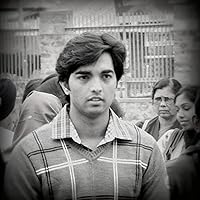
Damodar Dharmananda Kosambi (31 July 1907 – 29 June 1966) was an Indian mathematician, statistician, philologist, historian and polymath who contributed to genetics by introducing Kosambi map function.He is well known for his work in numismatics and for compiling critical editions of ancient Sanskrit texts. His father, Dharmananda Damodar Kosambi, had studied ancient Indian texts with a particular emphasis on Buddhism and its literature in the Pali language. Damodar Kosambi emulated him by developing a keen interest in his country's ancient history. Kosambi was also a Marxist historian specialising in ancient India who employed the historical materialist approach in his work.He is particularly known for his classic work An Introduction to the Study of Indian History.
He is described as "the patriarch of the Marxist school of Indian historiography".Kosambi was critical of the policies of then prime minister Jawaharlal Nehru, which, according to him, promoted capitalism in the guise of democratic socialism. He was an enthusiast of the Chinese revolution and its ideals, and, in addition, a leading activist in the World Peace Movement.
essays exploring India in historical outlines in archaelogy , literature and folk as well as Brahmical traditions especially in Deccan. The central thesis of the the author is this that any tradition, cult, clash or synthesis has economic and social bases. These traditions and rituals are moulded largely according to the needs of the time but older ones survive for pretty long time, may be in changed form many a time.
This brief but brilliant study needs to be a compulsory reading for students of Indian history and culture. Despite being published almost six decades ago, the book outshines most of the tomes produced by his contemporaries by virtue of its brevity and expansive perspective. It contains analytical studies regarding the following aspects of Indian culture~ Part I: Social and Economic Aspects of Bhagavad-Gita— 7 chapters; Part II: Urvasi and Pururavas— 10 chapters; Part III: At the Crossroads: A Study of the Mother-Goddess Cult Sites— 7 chapters; Part IV: Pilgrim's Progress: A Contribution to the Prehistory of the Western Deccan Plateau— 7 chapters; Part V: The Village Community in the 'Old Conquests' of Goa— 4 chapters. Today the scholarly approach has become a lot more monolithic and pedantic. Consequently, Kosambi's conclusions might appear unnecessarily dramatic, if not outrageous. But for a student, this is what the doctor would prescribe— lucid write-ups that fire question after question within the reader's mind. And that's the beauty of this book. It has become rather dated in terms of contents. A comprehensive revision and addition is urgently needed. Until then, four stars. But the book is a must-read, irrespective of your inclinations or opinions.
The book is not an easy read like other books on mythology. It is a sort of deep research into seemingly unimportant, thus forgotten, myths of various locations, especially the deccan. I would certainly come back to it whenever some information is needed to draw parallels to findings elsewhere.
Exceptional book, gives a different perspective. The first 3 chapters are interesting, the rest 2 may not attract you if you don't belong to Maharashtra or Goa like me.