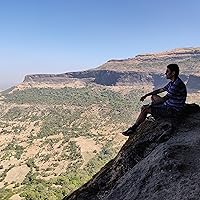
The extraordinarily diverse Indian subcontinent covers a vast area extending from Pakistan in the west to Bangladesh in the east and stretching north to the Himalayan kingdoms of Bhutan and Nepal. Marked by dramatic extremes of climate and terrain, it is home to black bears, snow leopards, elephants, and flying lizards, and it is the only place in the world where both lions and tigers reside.
After a lifetime devoted to the study and conservation of the tiger, Valmik Thapar turns his attention to the plants and animals that share the tiger's domain. How have so many species survived on such a crowded continent, where twenty percent of the world's population exerts intense pressure on the environment? Thapar links the region's tremendous diversity to the reverence shown to nature by Eastern religions, including Hinduism, Buddhism, and Jainism. But fifty years after India's independence, modern and urban values are seriously eroding the subcontinent's ecosystems.
Thapar's careful natural history is enriched by his personal anecdotes and musings on spirituality and culture. His own reverence for the wildlife and landscape he encounters and his brilliant photographs make this book an enthralling read, and it is also a moving argument for more vigilant nature conservation on the Indian subcontinent.
Valmik Thapar was an Indian naturalist, conservationist and writer. He was the author of 14 books and several articles, and was the producer of a range of programmes for television. He was one of India's most respected wildlife experts and conservationists, having produced and narrated documentaries on India's natural habitat for such media as the BBC, Animal Planet, Discovery and National Geographic.
_Land of the Tiger: A Natural History of the Indian Subcontinent_ by Valmik Thapar is a beautiful coffee table type book that I originally bought for its gorgeous full color photos of Indian wildlife and natural landscapes but ended up reading its fairly extensive text (and was glad I did so). Written to accompany a PBS television series (which unfortunately I have not seen), it is a great non-specialist introduction to the wildlife of India, Sri Lanka, Pakistan, Bhutan, Nepal, Tibet, and Bangladesh.
The introduction noted the very rich biodiversity of the subcontinent (2000 fish species, 1200 bird species, and 340 mammal species for instance) and focused on why wildlife has done as well as it has in a region of 1.2 billion people. Despite the growing influx of Western television and consumerism, religion and its respect for many wild animals remains a powerful force, particularly among rural areas and especially among the Hindu population of India and the Buddhist population of Nepal. One particular group, the Jainists, have such a high regard for life that its members are against harming insects and cutting down trees (one Jainist sect, the Bishnoi of the Thar Desert, which Thapar detailed in a later chapter, even celebrate the martyrdom of some if its members years ago in an effort to save a grove of trees). Sacred groves are maintained throughout the subcontinent (which provide vital wildlife habitat), worship of tigers, elephants, monkeys, snakes, and peacocks (which Thapar provided some very interesting details on) have played a large role in their conservation, and many local communities have worked hard to protect local animals from poachers and have tolerated their consumption of some of their crops or livestock so great is their reverence for some species.
The second chapter explored the fauna of the icy mountains and arid plateaus of the Himalayas. The many melt-water fed bogs, marshes, and lakes of the region provide refuge for many migratory species such as the bar-headed goose and other waterfowl, while the region boasts year-round residents like the lammergeyer or bearded vulture, two species of crow-like birds called choughs (both species of which have been observed on the peak of Mount Everest), and several pheasant species such as the chir pheasant and western tragopan. Other animals discussed were Himalayan brown and black bears, yak, black-necked cranes, snow leopards, bharal or blue sheep (favorite prey of snow leopards, taxonomically according to some experts somewhere between sheep and goats), Himalayan ibexes, Himalayan tahr (a mountain goat), musk deer, kiang or Tibetan wild ass, leopards, Tibetan wolves, dholes or Indian wild dogs, Himalayan lynxes, and the tiger (a recent arrival). In the lush forests of the lower, eastern Himalaya one can find many orchid species, satyr tragopans, blood pheasants, red pandas, and the golden langur.
Chapter three was titled "Sacred Waters" and covered life in the great Indian rivers, river valleys, and flood plains. One of the most fertile of these areas is the terai, a 60 kilometer-wide flat marshy strip that stretches 1,600 kilometers across the Gangetic plain in northern India and parts of Nepal, Bhutan, and Bangladesh, home to tigers, elephants, swamp deer, Indian rhinos, marsh crocodiles or muggers, and many other species. Highlights include coverage of India's seven stork and nine eagle species, the migratory fish known as the mahseer, the black soft-shelled turtle (a sacred species, known only from one location, a shrine in Bangladesh), Gangetic freshwater dolphins, the gharial (a species of crocodilian, the male is distinguished by a growth called a ghara on the tip of its snout, which in Hindi means "earthen pot"), and hog and swamp deer (which cannot graze in areas where the grass grows too high and are dependent upon such animals as elephants, rhinos, and wild buffalo for opening up the terrain).
Chapter four was on the wildlife of the sea, coasts, and nearby islands and focused in particular on sea turtles, flamingos, the interesting Andamanese and Nicobarese island peoples (the latter group believes that their ultimate ancestors were a man and a female dog), sea snakes, dugongs, the megapode (a bird species that uses the heat of decaying vegetation in mounds it creates to incubate its eggs), various monitor species (one of which, the water monitor, is known to lay its eggs in megapode nests), various crab species, and the Bombay duck, a member of the salmon family and a major food fish on India's western coast.
The next chapter examined desert wildlife. Very interesting to me were the black buck (a very fast herbivore that evolved to evade the now locally extinct cheetah, this species has a prominent place in Hindu mythology), the chinkara or Indian gazelle, the caracal (or "gazelle cat," which like the cheetah was once trained to hunt), and the Gir lion.
The following chapter was titled "Wet Forests" and covered the evergreen forests of India, which annually get drenched by the monsoon. A wonderful chapter, this section covered sacred groves called kavu; the shola (patches of montane evergreen forest, interspersed with open grassland, a naturally occurred feature); flying frogs, lizards, and snakes; the fascinating life cycles of the fig wasp and the hornbill; as well as lion-tail macaques, Nilgiri langurs, Malabar giant squirrels, Nilgiri tahr, Nilgiri martens (all found in the wet forest of the Western Ghats) and the hoolock gibbon, clouded leopard, golden cat, and binturong (found in the very wet forests of northeastern India).
The final chapter analyzed the life habits of the tiger and its associated fauna, both in the drier, desert-edge environs of Ranthambhore National Park in Rajasthan and the moist bamboo forests of Madhya Pradesh - "Kipling Country," land of the _Jungle Books_. In addition to lots of information on tigers, the author covered sloth bears, gaur or giant ox, the sambar (largest of the Asiatic deer), nilgai or blue cow (India's largest antelope), cobras, peacocks, and elephants.
The epilogue was brief and basically general comments by the author on the troubled future of the region's wildlife.
This book is really neat. While learning about the animals and habitats, I became quite curious about the author, Valmik Thapar. He had clearly spent a lot of time tramping through the wilds of India, observing animals and getting photos and generally having amazing experiences. His impassioned plea at the book's end for people to work politically to protect the environment really struck a chord with me, too. I just looked him up and am pleased to find he is still out there being a cool naturalist and conservationist. Good on you, Mr. Thapar. The world needs more of you.
a beautiful book. basically just a wildlife survey of India and the surrounding areas, but all encompassing. Enjoyed the fact that the author provided descriptions from different authors through history as well as his own experienes
This is a very interesting book and with the vhs tapes made even more enjoyable showing all the kind of wildlife in India and birds which had amazing g colours
Imagine a Planet Earth episode focused entirely on India, and then presented in book form. The result is In the Land of the Tiger, which takes readers on a guide through the lush natural landscape of the Indian subcontinent, starting from the mountains and following the rivers to the coast, from there visiting islands before examining other disparate areas of the land. This volume is replete both with photos and picturesque writing, displaying a soul-stirring variety of animals. Many I had no idea existed, like the Hoolock gibbon, India's only ape, and the pied hornbill. The expanse of human settlement has pushed many animals into new territories and created interesting adapational behavior: for instance, although lions typically hunt in prides, those who live in India's forested margins must become solo artists. There are also elephants who swim in the open sea between different islands. (There is an extraordinary shot of an elephant swimming, taken from below. Talk about perilous photography!) Land of the Tiger makes more cultural references than Planet Earth or related series did, connecting animals to Hindu religion and traditional medicine.
When I finished this book I noticed that Land of the Tiger was actually a BBC nature series. I was more on the nose than I realized!
Land of the Tiger: A Natural History of the Indian Subcontinent_ by Valmik Thapar gives a mesmerizing deep insight into the natural history of India covering the tiger's domain and going beyond.The book covers the most spectacular wildlife in the country covering all the landscapes of its immense vastness from the Icy Mountains - Arid Desserts - and the Wet Evergreen Forests....must read if you are a wildlife aficionado...!!! the illustrations are the icing on the cake....creating a sublime mosaic of the tiger country.
This is an engrossing introduction to the wildlife of the Indian Subcontinent. The vivid descriptions and photography in places made me feel like I was there. I wish there was more!