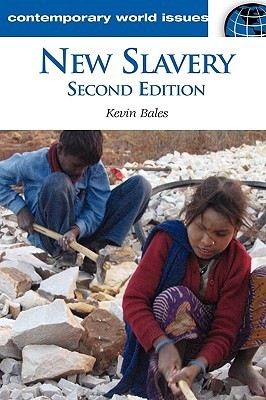
A shocking account of how slavery continues to afflict millions around the world today―from children in the carpet trade in Asia, to immigrants forced into prostitution in Europe, to domestic workers in the United States and other Western countries.
New A Reference Handbook is as scholarly as it is shocking―a gripping account of modern slavery, from Pakistan to Paris, Nepal to New York. From bonded laborers in India and prostitutes in Thailand to illegal domestic workers in Kuwait, Tokyo, and London, this book surveys the grim and violent world of contemporary forced labor, human trafficking, and slavery.
More commonly associated with the horrors of 19th-century cotton plantations or Nazi concentration camps, slave labor remains alive and well. Despite antislavery laws in almost every country, slavery today is booming― fueled by poverty, war, organized crime, and globalization. This book is both a serious study and an essential guide for policy makers, human rights lawyers, labor activists, and all those concerned with the ongoing fight against this timeless evil.
For years I traveled the world meeting people in slavery trying to understand the depth and truth of their lives. What I saw, heard, and learned changed me, and led me deeper into the work of ending slavery, but I was missing something important. Where there are slaves, the environment is under assault, forests are being destroyed, endangered species are dying, and climate change is worsening – and all of this destruction is driven by profits from products we buy.
Children, especially, are suffering: in the fish camps of Bangladesh, in the mines of Eastern Congo feeding the electronics industry, in mercury-saturated gold pits in Ghana, and when brutally used and disposed of by criminals decimating the Amazon forest. And beside the children, endangered species are being wiped out, or pressed to fight back - like the ‘protected' Bengal tigers that prey on child slaves in fishing camps.
After seven years of research and travel we now know that if slavery were a country it would be the third largest producer of CO2 in the world after China and the USA, though its population is only the size of Canada’s. The scale of this joint disaster has been too big to see, until now. Yet, it is precisely the role that slaves play in this ecological catastrophe that opens a new solution, one that unleashes the power of abolition to save and preserve the natural world.
To hear more about Blood and Earth tune in to NPR’s Fresh Air on Tuesday 19 January, and check out an excerpt in Scientific American HERE.
I'm a guy that grew up in Oklahoma thinking if the whole world is as quiet as this place I better cram life to the fullest. The good news: the world is often much more interesting than Oklahoma. I lived a long time in London, and now live in DC. For the last 14 years all my work has been about modern slavery - real slavery, not sweatshops, or bad marriages, or not being able to stop shopping. Back in 1999 I published a book about contemporary slavery that changed my life. It went into 10 languages, got made into a movie, won some prizes, stuff like that. Since then I've published three more books, and three more will come out in 2008.
In Sept 2007 I published a book that is a plan for the eradication of global slavery. It's called Ending Slavery: How We Free Today's Slaves. This is what people said about it:
“None of us is truly free while others remain enslaved. The continuing existence of slavery is one of the greatest tragedies facing our global humanity. Today we finally have the means and increasingly the conviction to end this scourge and to bring millions of slaves to freedom. Read Kevin Bales' practical and inspiring book and you will discover how our world can be free at last.” -- Archbishop Desmond Tutu
“I was enslaved at age 11 as part of a human trafficking plot. I know modern slavery from the inside, and since coming to freedom I am committed to end it forever. Every human life has value. People have been sold for far too long and it's time to stop it. This book shows us how to make a world where no more childhoods will be stolen and sold as mine was.” Given Kachepa, former child slave in the United States.
“Ever since the Emancipation Proclamation, Americans have congratulated themselves on ending slavery once and for all. But did we? Kevin Bales is a powerful and effective voice in pointing out the appalling degree to which servitude, forced labor and outright slavery still exist in today's world, even here. This book is a valuable primer on the persistence of these evils, their intricate links to poverty, corruption and globalization--and what we can do to combat them. He's a modern-day William Lloyd Garrison.” --Adam Hochschild, author of Bury the Chains: Prophets and Rebels in the Fight to Free an Empire's Slaves
Here's the other bio. stuff: My book Disposable People: New Slavery in the Global Economy published in 1999, was nominated for the
Very well-written and, apparently, well-researched. How can modern day slavery exist? Oh, it's alive and well: supply and demand--all over the world. Plenty of examples here: child slaves in India, rolling beedis (small cigarettes) or making rugs, mining, agriculture or sex slaves transported all over the world.
I know the case of a woman named Sante Kimes (and her son) who went to prison for murder but before that, they had enslaved a woman from Mexico. Then there was the much-publicized case in Berkeley, CA: women who were house-confined and prostituted out.