

What do you think?

A Gathering of Old Men
A powerful depiction of racial tensions arising over the death of a Cajun farmer at the hands of a black man--set on a Louisiana sugarcane plantation in the 1970s.
The Village Voice called A Gathering of Old Men “the best-written novel on Southern race relations in over a decade.”
The Village Voice called A Gathering of Old Men “the best-written novel on Southern race relations in over a decade.”
226 pages, Kindle Edition
First published January 1, 1983
About the author
Ernest J. Gaines
63 books1,294 followersErnest James Gaines was an American author whose works have been taught in college classrooms and translated into many languages, including French, Spanish, German, Russian and Chinese. Four of his works were made into television movies.
His 1993 novel, A Lesson Before Dying, won the National Book Critics Circle Award for fiction. Gaines was a MacArthur Foundation fellow, was awarded the National Humanities Medal, and was inducted into the French Ordre des Arts et des Lettres (Order of Arts and Letters) as a Chevalier.
His 1993 novel, A Lesson Before Dying, won the National Book Critics Circle Award for fiction. Gaines was a MacArthur Foundation fellow, was awarded the National Humanities Medal, and was inducted into the French Ordre des Arts et des Lettres (Order of Arts and Letters) as a Chevalier.
Ratings & Reviews
Friends & Following
Create a free account to discover what your friends think of this book!
Community Reviews
Displaying 1 - 30 of 708 reviews

December 18, 2020
I very much enjoyed this author’s A Lesson Before Dying. (I thought it was classic quality). Gathering is a good story, although not as strong.
We’re in Louisiana in the 1970’s. A white man has been killed in a rural African American neighborhood. By the time the sheriff arrives at the scene he finds about 17 old and aging black men standing around with shotguns and one white woman. They all claim to have shot him, including the white woman.
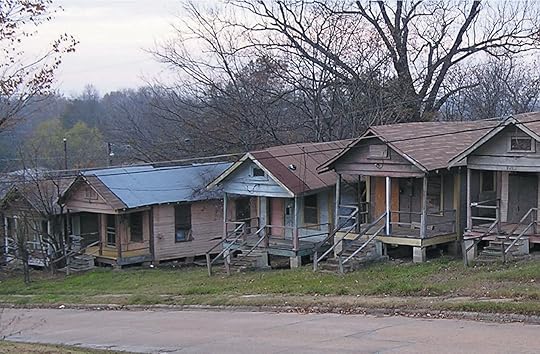
The victim is a young man, the son of a notorious Klan-type guy, patriarch of an important local family known for their hatred of blacks. Everyone knows the patriarch and his other sons will round up like-minded neighbors and take revenge.
As the sheriff and his deputy interview, and at times, slap and knock the men around, the black men give their reasons for hating the man they supposedly killed. We hear horror stories of lives of terror. I’ll give just two examples so I don’t give away too much of the story. Years ago one man’s son was beaten so badly by local white thugs that he suffered brain damage and had to be institutionalized. A decorated WW I veteran is there in his old moth-eaten uniform which he could never before wear in public because he was told not to be seen in it because he had dared to kill white people (Germans).
The sheriff thinks he knows who did it, but we have a surprise twist at the end. Even football gets into the story. A two-man superstar team, one player black, one white, plays a role in the events.

This story would make a good play. There are only three settings – the front stoop of the house where the man was shot, a scene at the home of the family gathered to mourn the victim, and a scene in a bar where the white thugs hang out.
The story is set among the French Creole population in Louisiana. Some French influence remains from Cajun culture in things like calling their godfather ‘Parain.’The author (1933-2019) was an African American man who grew up as a son of sharecroppers in Louisiana, picking cotton when he was six years old and growing up in old slave quarters on a plantation.

In his novels Gaines used his background to create the fictional world of Bayonne in St. Raphael Parish, Louisiana. While A Lesson Before Dying is his most-read work, the general public may know him better for the TV movie made from one of his other works, The Autobiography of Miss Jane Pittman, modeled on his aunt who raised him. A Gathering of Old Men was made into a TV movie in 1987, starring Louis Gossett, Jr.
Here is a link to my review of A Lesson Before Dying: A Lesson Before Dying
Top photo: modern-day houses in Louisiana from manhattan-institute.org
Middle: a rural Louisiana family around the time the author was growing up from thevintagenews.com
The author from the vermilion.com
We’re in Louisiana in the 1970’s. A white man has been killed in a rural African American neighborhood. By the time the sheriff arrives at the scene he finds about 17 old and aging black men standing around with shotguns and one white woman. They all claim to have shot him, including the white woman.
The victim is a young man, the son of a notorious Klan-type guy, patriarch of an important local family known for their hatred of blacks. Everyone knows the patriarch and his other sons will round up like-minded neighbors and take revenge.
As the sheriff and his deputy interview, and at times, slap and knock the men around, the black men give their reasons for hating the man they supposedly killed. We hear horror stories of lives of terror. I’ll give just two examples so I don’t give away too much of the story. Years ago one man’s son was beaten so badly by local white thugs that he suffered brain damage and had to be institutionalized. A decorated WW I veteran is there in his old moth-eaten uniform which he could never before wear in public because he was told not to be seen in it because he had dared to kill white people (Germans).
The sheriff thinks he knows who did it, but we have a surprise twist at the end. Even football gets into the story. A two-man superstar team, one player black, one white, plays a role in the events.
This story would make a good play. There are only three settings – the front stoop of the house where the man was shot, a scene at the home of the family gathered to mourn the victim, and a scene in a bar where the white thugs hang out.
The story is set among the French Creole population in Louisiana. Some French influence remains from Cajun culture in things like calling their godfather ‘Parain.’The author (1933-2019) was an African American man who grew up as a son of sharecroppers in Louisiana, picking cotton when he was six years old and growing up in old slave quarters on a plantation.
In his novels Gaines used his background to create the fictional world of Bayonne in St. Raphael Parish, Louisiana. While A Lesson Before Dying is his most-read work, the general public may know him better for the TV movie made from one of his other works, The Autobiography of Miss Jane Pittman, modeled on his aunt who raised him. A Gathering of Old Men was made into a TV movie in 1987, starring Louis Gossett, Jr.
Here is a link to my review of A Lesson Before Dying: A Lesson Before Dying
Top photo: modern-day houses in Louisiana from manhattan-institute.org
Middle: a rural Louisiana family around the time the author was growing up from thevintagenews.com
The author from the vermilion.com

September 3, 2017
"But they comes a day, Sheriff, they comes a day when a man got to stand".
And that's what this book is about.
And that's what this book is about.

October 4, 2012
A Gathering of Old Men: The Way It Used to Be
I selected A Gathering of Old Men by Ernest J. Gaines as the Moderator's Choice for September, 2017, for On the Southern Literary Trail. This is the fourth book by Professor Gaines to be read by "The Trail."
Come join us.
All but one of Ernest J. Gaines' works are set in and around Bayonne, Louisiana. Perhaps a bit strange for a man who has spent more than half his life in California. But it is something that comes as no surprise considering Gaines' childhood. He was born January 15, 1933, on a plantation in Pointe Coupee, Louisiana. He was one of twelve children. They were among the fifth generation of the family to live on that plantation. His Grandparents were slaves. His ancestors lie buried in a cemetery at the rear of that plantation. Many of the graves bear no marker, no names, nothing to identify his ancestors.
By the time Gaines was nine he was picking cotton on the plantation. He lived in a small cabin among many others that at one time had been slave quarters. His first education was in the plantation school, held in the plantation church. No black child attended a school where white children were allowed to go. It was the way it used to be. Neither Gaines or any of the other children on the plantation had access to a library. Those were for whites only. It was the way it used to be.
Gaines and his siblings were raised by an aunt. She was crippled, unable to walk. She was raising Gaines, his brothers, and sisters, when she could only crawl. Ernest Gaines lived in poverty for the first fifteen years of his life. But his mother and stepfather took Ernest with them when they moved to Vallejo, California.
Imagine waking in a new world. Imagine entering a library for the first time at the age of sixteen. The library was two stories tall. Non-fiction was on the first floor. Fiction on the second. Gaines went to the second story. He began to devour novels. He looked for books with people like him in them. He couldn't find them. Even a California library had no books by black authors. That was the way it used to be. He discovered he didn't care for other Southern novelists. He searched for novels set in farm country, the closest he could come to the life of his young years. He read John Steinbeck and Willa Cather. "See, I came from a society -- the South -- in which I wasn't supposed to do things, wasn't supposed to investigate things. I was supposed to stay in my place."
Gaines only returned to Louisiana for short visits. However, as he entered college he was well aware of the Civil Rights Movement. It was the admission of James Meredith to Ole Miss that sparked in Gaines the need to return to Louisiana. After the publication of his first novel, Catherine Carmier in 1964, Gaines returned to Louisiana. He split his year six months in California, six months in Louisiana.
From 1981 until 2004 when he retired, Ernest J. Gaines became Professor Gaines, the writer in residence at The University of Louisiana at Lafayette. He and his wife have a home on land once part of the plantation on which he lived as a child. He moved the plantation church on to his property. When he walks through the old cemetery he cannot find the grave of the aunt who raised him.
What is it that drives Ernest J. Gaines to continue to set his work in Southwest Louisiana? In This Louisiana Thing That Drives Me: The Legacy of Ernest J. Gaines Gaines wrote:
I love the novels of Ernest J. Gaines. He is among my favorite authors. Being a native born Southerner, growing up in Alabama, and white, Gaines opened a world to me to which I return again and again. I finally met Professor Gaines late in October, 2014. I consider him the most significant writer I have ever met. I also consider him to lack the recognition he deserves as an American writer. I am not alone in my belief.
Madison Smart Bell reviewed A Gathering of Old Men upon its publication in 1983. He wrote, "I think he's oddly underrated, because he's one of those black writers who has been on the program for a long time." Bell went further to say this book was "the best-written novel on Southern race relations in over a decade." Returning to the thought that Gaines was underrated, Bell wrote, "At certain times he has been greatly celebrated, and his subsequent work has not gotten the attention it should have. But people like Ernest Gaines are a lot more important than anyone has fully recognized."
This is my second reading of A Gathering of Old Men. I've also listened to the wonderful Audible edition of the novel. It fully captures the flavor of Gaines' use of multiple narrators. I have previously said I could not decide whether this novel or The Autobiography of Miss Jane Pittman was my favorite. After multiple reads, this novel takes the lead for me. I do chalk it up to the powerful multiple narratives of those old men who gathered on one day to throw off the oppression which they had endured thirty years or more.
Gaines captures the decades of racism endured by the old men who share crop the Marshall plantation. Each tells the story behind the reason they are there this particular day. Listening to each of them is reminiscent of the chorus of a Greek tragedy.
What drives each of the old men is a recognition they will no longer bow to the shame they and their ancestors have accepted until the unbelievable has happened. A black man has killed a white man. The dead man is Beau Boutan a Cajun farmer who has leased land worked by them as sharecroppers for generations. The mule and plow has been replaced by the tractor. The Boutans and their Cajun neighbors have inflicted rape, murder, and humiliation on the old men. Once word gets out that Beau is dead, all anticipate that the father, "Fix Boutan" will night ride into their quarters to dispense their own version of justice.
All the men who gather are there to claim they each killed Boutan. The suspect in the killing is Matthu, the only black man to ever stand up to Fix Boutan and beat him in a fair fight. Candy Marshall the heiress to the Marshall plantation considers Matthu and all the men who arrive at his house to be "her people." Orphaned when her parents died in an automobile accident, Candy considers Matthu to be her Parrain or Grandfather. She engineers the scheme to gather the old men, all carrying shotguns with the same shot shells as Matthu's gun, to protect the man.
What ensues is a taut novel as local Sheriff Mapes attempts to deal with all these old men and Candy Marshall, each who claim to have killed Beau Boutan. Nothing will break their story. As Mapes bullies each of the old men, each reveals the tragedies of their lives they will no longer endure.
Gaines draws the story to a conclusion in a surprising denoument. Set in the 1970s, Gaines paints a vivid portrait of a South beginning to change, but not having changed enough. This is a novel of hope, found strength, and courage. Any reader will never forget A Gathering of Old Men.
I selected A Gathering of Old Men by Ernest J. Gaines as the Moderator's Choice for September, 2017, for On the Southern Literary Trail. This is the fourth book by Professor Gaines to be read by "The Trail."
Come join us.
All but one of Ernest J. Gaines' works are set in and around Bayonne, Louisiana. Perhaps a bit strange for a man who has spent more than half his life in California. But it is something that comes as no surprise considering Gaines' childhood. He was born January 15, 1933, on a plantation in Pointe Coupee, Louisiana. He was one of twelve children. They were among the fifth generation of the family to live on that plantation. His Grandparents were slaves. His ancestors lie buried in a cemetery at the rear of that plantation. Many of the graves bear no marker, no names, nothing to identify his ancestors.
By the time Gaines was nine he was picking cotton on the plantation. He lived in a small cabin among many others that at one time had been slave quarters. His first education was in the plantation school, held in the plantation church. No black child attended a school where white children were allowed to go. It was the way it used to be. Neither Gaines or any of the other children on the plantation had access to a library. Those were for whites only. It was the way it used to be.
Gaines and his siblings were raised by an aunt. She was crippled, unable to walk. She was raising Gaines, his brothers, and sisters, when she could only crawl. Ernest Gaines lived in poverty for the first fifteen years of his life. But his mother and stepfather took Ernest with them when they moved to Vallejo, California.
Imagine waking in a new world. Imagine entering a library for the first time at the age of sixteen. The library was two stories tall. Non-fiction was on the first floor. Fiction on the second. Gaines went to the second story. He began to devour novels. He looked for books with people like him in them. He couldn't find them. Even a California library had no books by black authors. That was the way it used to be. He discovered he didn't care for other Southern novelists. He searched for novels set in farm country, the closest he could come to the life of his young years. He read John Steinbeck and Willa Cather. "See, I came from a society -- the South -- in which I wasn't supposed to do things, wasn't supposed to investigate things. I was supposed to stay in my place."
Gaines only returned to Louisiana for short visits. However, as he entered college he was well aware of the Civil Rights Movement. It was the admission of James Meredith to Ole Miss that sparked in Gaines the need to return to Louisiana. After the publication of his first novel, Catherine Carmier in 1964, Gaines returned to Louisiana. He split his year six months in California, six months in Louisiana.
From 1981 until 2004 when he retired, Ernest J. Gaines became Professor Gaines, the writer in residence at The University of Louisiana at Lafayette. He and his wife have a home on land once part of the plantation on which he lived as a child. He moved the plantation church on to his property. When he walks through the old cemetery he cannot find the grave of the aunt who raised him.
What is it that drives Ernest J. Gaines to continue to set his work in Southwest Louisiana? In This Louisiana Thing That Drives Me: The Legacy of Ernest J. Gaines Gaines wrote:
"I wanted to smell that Louisiana earth, feel that Louisiana sun, sit under the shade of one of those Louisiana oaks, search for pecans in that Louisiana grass in one of those Louisiana yards next to one of those Louisiana bayous, not far from a Louisiana river. I wanted to see on paper those Louisiana black children walking to school on cold days while yellow Louisiana busses passed them by. I wanted to see on paper those place parents going to work before the sun came up and coming back home to look after their children after the sun went down. I wanted to see on paper the true reason why those black fathers left home--not because they were trifling or shiftless--but because they were tired of putting up with certain conditions. I wanted to see on paper the small country churches (schools during the week), and I wanted to hear those simple religious songs, those simple prayers--that true devotion....And I wanted to hear that Louisiana Dialect--that combination of English, Creole, Cajun, Black. For me there's no more beautiful sound anywhere--unless, of course, you take exceptional pride in "proper" French or "proper" English. I wanted to read about the true relationship between whites and blacks--about people I had known."
I love the novels of Ernest J. Gaines. He is among my favorite authors. Being a native born Southerner, growing up in Alabama, and white, Gaines opened a world to me to which I return again and again. I finally met Professor Gaines late in October, 2014. I consider him the most significant writer I have ever met. I also consider him to lack the recognition he deserves as an American writer. I am not alone in my belief.
Madison Smart Bell reviewed A Gathering of Old Men upon its publication in 1983. He wrote, "I think he's oddly underrated, because he's one of those black writers who has been on the program for a long time." Bell went further to say this book was "the best-written novel on Southern race relations in over a decade." Returning to the thought that Gaines was underrated, Bell wrote, "At certain times he has been greatly celebrated, and his subsequent work has not gotten the attention it should have. But people like Ernest Gaines are a lot more important than anyone has fully recognized."
This is my second reading of A Gathering of Old Men. I've also listened to the wonderful Audible edition of the novel. It fully captures the flavor of Gaines' use of multiple narrators. I have previously said I could not decide whether this novel or The Autobiography of Miss Jane Pittman was my favorite. After multiple reads, this novel takes the lead for me. I do chalk it up to the powerful multiple narratives of those old men who gathered on one day to throw off the oppression which they had endured thirty years or more.
Gaines captures the decades of racism endured by the old men who share crop the Marshall plantation. Each tells the story behind the reason they are there this particular day. Listening to each of them is reminiscent of the chorus of a Greek tragedy.
What drives each of the old men is a recognition they will no longer bow to the shame they and their ancestors have accepted until the unbelievable has happened. A black man has killed a white man. The dead man is Beau Boutan a Cajun farmer who has leased land worked by them as sharecroppers for generations. The mule and plow has been replaced by the tractor. The Boutans and their Cajun neighbors have inflicted rape, murder, and humiliation on the old men. Once word gets out that Beau is dead, all anticipate that the father, "Fix Boutan" will night ride into their quarters to dispense their own version of justice.
All the men who gather are there to claim they each killed Boutan. The suspect in the killing is Matthu, the only black man to ever stand up to Fix Boutan and beat him in a fair fight. Candy Marshall the heiress to the Marshall plantation considers Matthu and all the men who arrive at his house to be "her people." Orphaned when her parents died in an automobile accident, Candy considers Matthu to be her Parrain or Grandfather. She engineers the scheme to gather the old men, all carrying shotguns with the same shot shells as Matthu's gun, to protect the man.
What ensues is a taut novel as local Sheriff Mapes attempts to deal with all these old men and Candy Marshall, each who claim to have killed Beau Boutan. Nothing will break their story. As Mapes bullies each of the old men, each reveals the tragedies of their lives they will no longer endure.
Gaines draws the story to a conclusion in a surprising denoument. Set in the 1970s, Gaines paints a vivid portrait of a South beginning to change, but not having changed enough. This is a novel of hope, found strength, and courage. Any reader will never forget A Gathering of Old Men.

August 29, 2017
Wow, here's a simply written book that packs one walloping punch. Written in 1983 by Ernest J Gaines, this book which won high acclaim as the best novel about racial tension in that decade, still rings all too true today.
Read ( slightly ahead) for On The Southern Literary Trail-Sept. 5 stars
Read ( slightly ahead) for On The Southern Literary Trail-Sept. 5 stars

September 15, 2017
Books like this make me wish I believed in reincarnation so that could come back as a teacher and share this book with young impressionable minds. It is an amazing book, especially so because of the deft, multifaceted approach it takes in attacking the subject of racism.
It tackles it directly. This is does by relating stories which, while fictional within these pages, were duplicated countless times over in real life. It tells of black men who volunteered to fight in World War I, who served with distinction and who were decorated for their bravery. But when they returned home they were not given heroes’ welcomes but were feared and oppressed all the more because they had had the gall to think that they could get away with killing white men, even if they were Germans.
It attacks its inhumanity by discussing the many little ways that an entire people can be thought of as something less than human, something unfit to breathe the same air and drink the same water as human beings.
It attacks its impersonality. In almost every case, the old men justified their actions by relating events that occurred long in the past and had nothing to do with the victim of the crime at hand. Why did this happen to this man? Because he’s a white man and must share the guilt with all white men. Similarly, when Gil hears what happens to his brother, he immediately behaves as if his black teammate is in some way responsible. People are racist not because they find an individual offensive but because the faults they perceive in that person’s race are applied without exception to all of its members.
It attacks the way racism plays with our fears. If you want to get a white man riled up, ask him how he’d feel if his wife or daughters were raped by one of them. If you see a group of them armed with shotguns, you immediately assume aggressive, rather than defensive intentions.
While Gaines’ book can be treated as a treatise against racism, it is still an amazingly gentle book, full of characters you, for the most part, will become very attached to. It is also very much a book about loyalty and the courage to stand up for your friends, your beliefs, and yourself.
My thanks to the folks at the On the Southern Literary Trail group, and especially to Lawyer Mike, its chief moderator, for allowing me the opportunity to read and discuss this and many other fine books with my friends.
FYI: On a 5-point scale I assign stars based on my assessment of what the book needs in the way of improvements:
*5 Stars – Nothing at all. If it ain’t broke, don’t fix it.
…Actually, there is no point to go on. This is a five point book, my favorite so far this year. I really loved it.
It tackles it directly. This is does by relating stories which, while fictional within these pages, were duplicated countless times over in real life. It tells of black men who volunteered to fight in World War I, who served with distinction and who were decorated for their bravery. But when they returned home they were not given heroes’ welcomes but were feared and oppressed all the more because they had had the gall to think that they could get away with killing white men, even if they were Germans.
It attacks its inhumanity by discussing the many little ways that an entire people can be thought of as something less than human, something unfit to breathe the same air and drink the same water as human beings.
It attacks its impersonality. In almost every case, the old men justified their actions by relating events that occurred long in the past and had nothing to do with the victim of the crime at hand. Why did this happen to this man? Because he’s a white man and must share the guilt with all white men. Similarly, when Gil hears what happens to his brother, he immediately behaves as if his black teammate is in some way responsible. People are racist not because they find an individual offensive but because the faults they perceive in that person’s race are applied without exception to all of its members.
It attacks the way racism plays with our fears. If you want to get a white man riled up, ask him how he’d feel if his wife or daughters were raped by one of them. If you see a group of them armed with shotguns, you immediately assume aggressive, rather than defensive intentions.
While Gaines’ book can be treated as a treatise against racism, it is still an amazingly gentle book, full of characters you, for the most part, will become very attached to. It is also very much a book about loyalty and the courage to stand up for your friends, your beliefs, and yourself.
My thanks to the folks at the On the Southern Literary Trail group, and especially to Lawyer Mike, its chief moderator, for allowing me the opportunity to read and discuss this and many other fine books with my friends.
FYI: On a 5-point scale I assign stars based on my assessment of what the book needs in the way of improvements:
*5 Stars – Nothing at all. If it ain’t broke, don’t fix it.
…Actually, there is no point to go on. This is a five point book, my favorite so far this year. I really loved it.

September 6, 2017
Written in a simple and straightforward fashion, this book is anything but simple in its message and impact. The choice of having a different narrator for each chapter would not work well in just anyone’s hands, but Gaines is not just anyone, and he makes this device serve to reveal the truth of the situation without any bias or personal slant.
How could anyone read this without feeling a great deal of pride for the subject old men? Each of them reaches into his deepest self and emerges as his own master, a role they have each been denied for most of their lives. When Charlie declares, “I am a man,” he seems to speak not just for himself, but for all of the old men.
An excellent and important read.
How could anyone read this without feeling a great deal of pride for the subject old men? Each of them reaches into his deepest self and emerges as his own master, a role they have each been denied for most of their lives. When Charlie declares, “I am a man,” he seems to speak not just for himself, but for all of the old men.
An excellent and important read.

July 15, 2021
“He was on that river at one time, and he sure did his dirty work when he was there, like drowning those two little children up the road,” said Beulah.
“You’re talking about 35, 40, 50 years ago, Beulah…and you ain’t got no proof that he was mixed up in that,” the sheriff said.
“Now ain’t that just like white folks. Black people get lynched, get drowned, get shot, guts all hanging out, and here he come up with, ‘ain’t no proof who did it.’ The proof was those two little children laying in them two coffins…And let’s don’t be getting off into that 35, 40, 50 years ago stuff either. It ain’t changed that much around here.”
I bought this book years ago because I loved the cover. Three old men sitting on a bench n front of a building. I thought of my hometown in the 50s when old men would sit on the park benches telling old stories ortalking politics, and just enjoying the outdoors. I wanted to read a story just like that, and I thought I had it. I did not see that the old men on the cover of the book had shotguns in their hands. The mind sees what it wants to see sometimes.
By now, you know that it isn’t a leisurely book to read; instead, it is about the killing of a white man on a Black man’s property. It is about how nothing has changed much over the years. The Black man is always blamed. The date is in the 1970s in Louisiana. Yes, nothing much has changed there over the years, but in some ways it has. Even at this late date, little has changed.
The white man’s tractor is still running but not moving. No one thinks to turn it off for there are more important things to do. The man is on the ground, dead from a shotgun wound. The suspect is Matthew, a Black man who lives in a house on the land. The Blacks know what is coming and make plans. Candy, a Black woman sends out a young man to gather up some old men, as many as he can find. Tell them to bring a 12-gauge shotgun and shells of a certain shot size, like that that were used in the killing. Now I don’t know if this was allCany’s idea or not. It just happened. The young man took off running, stopped at various homes. Some of the men’s wives gave him a hard time. They want no trouble, but their men gather their guns and left.
By now, I am in awe of this author’s writing, even his great dialogues. How did I ever miss reading any of his books? Then I learn that he had written “A Lesson Before Dying.” A book I found to be a powerful, but depressing.
Two and a half hours after the white man had been shot, the sheriff got call and showed up at the scene of the crime. Seventeen men and two women claimed that they murdered the white man, and they all tell their horrible stories of what had happened in the past that caused them to kill him. “I did it,” each said. And while it was not the stories that the white men in my hometown had told white sitting on the park benches, I still loved the book.
“You’re talking about 35, 40, 50 years ago, Beulah…and you ain’t got no proof that he was mixed up in that,” the sheriff said.
“Now ain’t that just like white folks. Black people get lynched, get drowned, get shot, guts all hanging out, and here he come up with, ‘ain’t no proof who did it.’ The proof was those two little children laying in them two coffins…And let’s don’t be getting off into that 35, 40, 50 years ago stuff either. It ain’t changed that much around here.”
I bought this book years ago because I loved the cover. Three old men sitting on a bench n front of a building. I thought of my hometown in the 50s when old men would sit on the park benches telling old stories ortalking politics, and just enjoying the outdoors. I wanted to read a story just like that, and I thought I had it. I did not see that the old men on the cover of the book had shotguns in their hands. The mind sees what it wants to see sometimes.
By now, you know that it isn’t a leisurely book to read; instead, it is about the killing of a white man on a Black man’s property. It is about how nothing has changed much over the years. The Black man is always blamed. The date is in the 1970s in Louisiana. Yes, nothing much has changed there over the years, but in some ways it has. Even at this late date, little has changed.
The white man’s tractor is still running but not moving. No one thinks to turn it off for there are more important things to do. The man is on the ground, dead from a shotgun wound. The suspect is Matthew, a Black man who lives in a house on the land. The Blacks know what is coming and make plans. Candy, a Black woman sends out a young man to gather up some old men, as many as he can find. Tell them to bring a 12-gauge shotgun and shells of a certain shot size, like that that were used in the killing. Now I don’t know if this was allCany’s idea or not. It just happened. The young man took off running, stopped at various homes. Some of the men’s wives gave him a hard time. They want no trouble, but their men gather their guns and left.
By now, I am in awe of this author’s writing, even his great dialogues. How did I ever miss reading any of his books? Then I learn that he had written “A Lesson Before Dying.” A book I found to be a powerful, but depressing.
Two and a half hours after the white man had been shot, the sheriff got call and showed up at the scene of the crime. Seventeen men and two women claimed that they murdered the white man, and they all tell their horrible stories of what had happened in the past that caused them to kill him. “I did it,” each said. And while it was not the stories that the white men in my hometown had told white sitting on the park benches, I still loved the book.

February 5, 2017
Wow! What a powerful story! I often think that a five-star rating is just too many stars to choose from, but after reading this novel, five stars is just not enough.
It was hard to put the book down, but necessary at times just to take a deep breath before continueing to read (and breathe).
This is the second novel by Gaines I read (this month, ever). After reading A Lesson Before Dying I thought my expectations for this book might just be too high. Yet I was in for another big surprise. I already ordered two more of his books/stories and after I finishing this review I will add Ernest J. Gaines to my list of favourite authors.
It was hard to put the book down, but necessary at times just to take a deep breath before continueing to read (and breathe).
This is the second novel by Gaines I read (this month, ever). After reading A Lesson Before Dying I thought my expectations for this book might just be too high. Yet I was in for another big surprise. I already ordered two more of his books/stories and after I finishing this review I will add Ernest J. Gaines to my list of favourite authors.

April 2, 2013
I’m going to start off by stating that A Gathering Of Old Men is the best book that I have read so far in 2013. Though it is a short novel, barely 200 pages, it packs a powerful punch as it portrays the need of a few elderly black men to finally stand up to the injustices that they felt living with Jim Crow. The raw emotion and dignity that is felt as one by one they tell their stories about the horror of being black in the deep south during the 30’s, 40’s and 50’s is gut-wrenching. There are so many lessons in this book - letting go of fears, standing up to injustice, when does something wrong become something right? that I found myself pausing to rethink what I know about history especially racism in the late 1970's.
Gaines does an amazing job capturing the essence of the people living in a small parish in Louisiana who will all make choices that will shape the direction of their lives. Highly recommend.
Gaines does an amazing job capturing the essence of the people living in a small parish in Louisiana who will all make choices that will shape the direction of their lives. Highly recommend.

December 24, 2020
A dead man. A running tractor. A white woman who claims she shot him. A gathering of old men with shotguns. A sheriff who knows everyone is lying. A father who needs revenge.
What is so marvelous about this work is that Gaines tells it from a variety of viewpoints, as different characters narrate chapters. Candy Marshall is the woman who owns the plantation that has been in her family for generations. It is she who spreads the word among those in “the Quarters” that the men need to show up at Mattu’s place. By the time Sheriff Mapes is called and arrives there are dozens of elderly black men, each with a fired shotgun, though many can barely hold the gun let alone aim and fire it with any accuracy. One by one they tell their stories of how and why they shot Beau Bouton.
Meanwhile Beau’s brother, Gil, comes home to meet with his father, Fix, who wants nothing more than to call up his group of Klansmen to “take care of this problem.” It is Fix’s arrival that the group of old men is awaiting.
Their stories are simply but eloquently told. Oppression lasting for generations. Men who will not take it any longer. Their decision to stand up for what is right and against those who would continue the sins of the past has been coming for a long time and they are united and steadfast in their determination to see this through. And that includes NOT allowing some white woman, however well-intentioned, to “save” them. No, they will save themselves, or die trying.
Gaines’s writing is evocative of time and place. I can feel the humid heat, taste the dust that fills the air, hear the buzz of mosquitos as evening comes, smell the swamp and sweat. This is the second book by Gaines that I have read (and I’ve read A Lesson Before Dying three times), but I have all his works on my tbr. The world of literature lost a great writer when he passed on in 2019.
What is so marvelous about this work is that Gaines tells it from a variety of viewpoints, as different characters narrate chapters. Candy Marshall is the woman who owns the plantation that has been in her family for generations. It is she who spreads the word among those in “the Quarters” that the men need to show up at Mattu’s place. By the time Sheriff Mapes is called and arrives there are dozens of elderly black men, each with a fired shotgun, though many can barely hold the gun let alone aim and fire it with any accuracy. One by one they tell their stories of how and why they shot Beau Bouton.
Meanwhile Beau’s brother, Gil, comes home to meet with his father, Fix, who wants nothing more than to call up his group of Klansmen to “take care of this problem.” It is Fix’s arrival that the group of old men is awaiting.
Their stories are simply but eloquently told. Oppression lasting for generations. Men who will not take it any longer. Their decision to stand up for what is right and against those who would continue the sins of the past has been coming for a long time and they are united and steadfast in their determination to see this through. And that includes NOT allowing some white woman, however well-intentioned, to “save” them. No, they will save themselves, or die trying.
Gaines’s writing is evocative of time and place. I can feel the humid heat, taste the dust that fills the air, hear the buzz of mosquitos as evening comes, smell the swamp and sweat. This is the second book by Gaines that I have read (and I’ve read A Lesson Before Dying three times), but I have all his works on my tbr. The world of literature lost a great writer when he passed on in 2019.

July 8, 2025
My second book by Gaines is yet another tour de force. The impact of this book lingers long after its completion and would be an excellent choice for high school reading.
Taking place in 1979, this group of old men are displaying their regret for being so passive toward the racial injustices they and their ancestors have endured for so long. They decide it’s time to take a stand and determine what it is to be a man in this world that has been changing. The men who are gathered up with their rifles on the porch are primarily in their seventies. Over the course of a day, we witness how these men determine to gain the recognition and respect that they believe they deserve. Each and every one of these men have a reason to be there and to have pulled the trigger and killed Beau Baton.
Gaines knows how to tell a story. He adeptly weaves each of these narratives together so effortlessly and gives readers some humorous moments throughout the tension-filled circumstances.
Taking place in 1979, this group of old men are displaying their regret for being so passive toward the racial injustices they and their ancestors have endured for so long. They decide it’s time to take a stand and determine what it is to be a man in this world that has been changing. The men who are gathered up with their rifles on the porch are primarily in their seventies. Over the course of a day, we witness how these men determine to gain the recognition and respect that they believe they deserve. Each and every one of these men have a reason to be there and to have pulled the trigger and killed Beau Baton.
Gaines knows how to tell a story. He adeptly weaves each of these narratives together so effortlessly and gives readers some humorous moments throughout the tension-filled circumstances.

March 21, 2009
I like how Gaines's books highlight the connections between people who are supposed to be unconnected, according to Southern traditions: redneck sheriffs and poor black men, white patriarchs and white rabble, light-skinned and dark-skinned black men, white women and black men, and, of course, blacks and whites generally. I understand that this book could be summed up in Big Charlie/Mr. Biggs's declaration "I am a man" - that is, this book is about emasculated, old black men taking a stand in their twilight years to become men instead of "[Negro:] boys," as Big Charlie says. But I was frustrated that he effectively silenced every woman in the book after the first quarter or so of it, especially the black women. Was this really about "men business," as one of the main characters tells his wife in the opening chapters? I thought it was about something much bigger. And seeing's how women - black and white - ended up standing between a gun barrel and what they thought was right, I think their silencing at Gaines's hands was unnecessary and (I have to admit) a little insulting.
But this is a primary tension of the legacies of the 1960s, isn't it? Especially where the civil rights movements and the women's movement intersect. Maybe "A Gathering of Old Men" should be considered a primary source now.
But this is a primary tension of the legacies of the 1960s, isn't it? Especially where the civil rights movements and the women's movement intersect. Maybe "A Gathering of Old Men" should be considered a primary source now.

November 30, 2021
Amid the resurgence of interest in African American authors, how have I never heard of this book? A superb, though difficult read, about a racially-tinged murder. The story begins when a black man is accused of killing a white man in Louisiana in the 1970s. The story builds as 20 elderly black men "confess" to the murder.
The book was difficult for me, at the beginning, because of the constantly shifting perspective. Each chapter is told by a new character. Each new voice is a bit jarring; it took my ear a while to adjust to the new concern and tone of each new speaker. Yet the multifarious voices contributed to the complex social fabric of the era.
My favorite aspect of the book is this: Ernest Gaines is at his best while describing the most pernicious characters in his tale. His graciousness — to characters he surely finds repugnant — is evidence of real magnanimity. An excellent novel by an underrated writer.
The book was difficult for me, at the beginning, because of the constantly shifting perspective. Each chapter is told by a new character. Each new voice is a bit jarring; it took my ear a while to adjust to the new concern and tone of each new speaker. Yet the multifarious voices contributed to the complex social fabric of the era.
My favorite aspect of the book is this: Ernest Gaines is at his best while describing the most pernicious characters in his tale. His graciousness — to characters he surely finds repugnant — is evidence of real magnanimity. An excellent novel by an underrated writer.

October 19, 2021
Initial response: Blown. Away.
A week later: I've been pondering this book for many days. I love how clearly it highlights racial injustice but also acknowledges the complexities of personal relationships.
There comes a day of reckoning. A day to stand up. A day to stand together. A day to be heard. A day to line up to get slapped by the sheriff.
I was on the edge of my seat until the end.
I love Gaines's use of repetition. When a woman hears what has happened she says, Lord, have mercy. Lord, Jesus, have mercy. Lord, Jesus, I told myself. ... Lord, Jesus, help me. Help me, Lord, Jesus, I said.
At one point in the narrative, the sheriff and his deputy have been standing in the heat at the scene of the crime for hours, 18 black men and 1 white woman are each declaring that he/she is the one who shot the white man; things are at a standstill. The sheriff predicts a lynching if he doesn't jail a suspect, and yet every man gathered has promised to go to jail if he takes one of them. Enter Miss Merle. She drives up with baskets of sandwiches and hands them out to each person. Communion.
A week later: I've been pondering this book for many days. I love how clearly it highlights racial injustice but also acknowledges the complexities of personal relationships.
There comes a day of reckoning. A day to stand up. A day to stand together. A day to be heard. A day to line up to get slapped by the sheriff.
I was on the edge of my seat until the end.
I love Gaines's use of repetition. When a woman hears what has happened she says, Lord, have mercy. Lord, Jesus, have mercy. Lord, Jesus, I told myself. ... Lord, Jesus, help me. Help me, Lord, Jesus, I said.
At one point in the narrative, the sheriff and his deputy have been standing in the heat at the scene of the crime for hours, 18 black men and 1 white woman are each declaring that he/she is the one who shot the white man; things are at a standstill. The sheriff predicts a lynching if he doesn't jail a suspect, and yet every man gathered has promised to go to jail if he takes one of them. Enter Miss Merle. She drives up with baskets of sandwiches and hands them out to each person. Communion.

June 23, 2023
It’s never too late to claim your dignity. But no one is going to give you your dignity, you have to claim it. Also this book comments on how defying the status quo changes it. From page one you’re hooked. Compelling. A story that goes to the core of self-respect. Gaines paints with broad strokes which imbues the tale with a feeling of legend.

May 7, 2009
We read this book in an Advanced Reading class that I taught for the Spring session. This was the second or third time that I have used this book in a reading class, and with each read it reveals more to me and increases my appreciation of Ernest Gaines' writing.
Gaines' device of using different narrators for each chapter gives this book a layered perspective of the events that happen over one day on a Louisiana sugar cane plantation in the nineteen seventies. Gaines knows his subject, Southwestern Louisiana and its people, well.
After a couple of chapters the students became interested in the story and often commented that they wanted to read beyond the assignment in order to find out what happens next.
Gaines' device of using different narrators for each chapter gives this book a layered perspective of the events that happen over one day on a Louisiana sugar cane plantation in the nineteen seventies. Gaines knows his subject, Southwestern Louisiana and its people, well.
After a couple of chapters the students became interested in the story and often commented that they wanted to read beyond the assignment in order to find out what happens next.

September 13, 2017
review to come

August 7, 2013
I really enjoyed this story, which derives much of its power from its portrayal of racial tensions in the South a decade after the civil rights movement by exploring the topic from both sides, something I haven't noticed in similar books that I've read.
The writing is strong. The characters are colorful and filled with life, and I was impressed by the dialogue, which is something that can make or break a book for me.
I also didn't mind the multiple POV characters (each chapter is told by a different character who is usually (not always) a passive observer in that scene). I'm not sure that so many viewpoints were necessary and will agree with other reviewers who have pointed out that many of the voices sounded identical. I occasionally found myself flipping back to the beginning of a chapter because I had forgotten the POV I was reading. Also several of the POV characters are secondary characters, so it seems more gimmicky than a tool to reveal something worthwhile through POV.
Overall, this had many things I appreciate in a book: good writing, convincing and interesting characters, and a deep and meaningful theme that prompts me to see an issue in a new or slightly different light.
Would recommend this to anyone who appreciates books that explore racial tensions in a poignant yet entertaining way.
The writing is strong. The characters are colorful and filled with life, and I was impressed by the dialogue, which is something that can make or break a book for me.
I also didn't mind the multiple POV characters (each chapter is told by a different character who is usually (not always) a passive observer in that scene). I'm not sure that so many viewpoints were necessary and will agree with other reviewers who have pointed out that many of the voices sounded identical. I occasionally found myself flipping back to the beginning of a chapter because I had forgotten the POV I was reading. Also several of the POV characters are secondary characters, so it seems more gimmicky than a tool to reveal something worthwhile through POV.
Overall, this had many things I appreciate in a book: good writing, convincing and interesting characters, and a deep and meaningful theme that prompts me to see an issue in a new or slightly different light.
Would recommend this to anyone who appreciates books that explore racial tensions in a poignant yet entertaining way.

March 31, 2011
I have a love/hate reaction to this story. It is set in the late 70s in that far south part of Louisiana where sugar cane grows on the dry spots and Cajuns fish in all the bayous. There is a murder and tension builds between the whites and the blacks. The language is realistic and not politically correct. I think the same as one of the characters, "Won't it ever stop?" p. 122 I am pulling for the South to look its best. I tell myself this book would have made sense if it were set in the 40s but surely these things did not go on in the 70s. Even as I think this I read on; one of the women says "And let's don't be getting off into that thirty-five, forty, fifty year ago stuff, either. Things ain't changed that much round here. In them demonstrations somebody was always coming up missing. So let's don't be putting it all on no thirty-five, forty, fifty years ago like everything is so nicety-nice now." p.108 I think this is a truthful book and that makes me sad and I want to point to the racism in other parts of the country and the world. Those places will have to get there own authors to write embarrassing truths. In the end, this author tells a satisfying story and I am not sorry I read it.

February 9, 2012
Destined to be one of my top reads for 2012, this is a powerful tale of the deep south and the terrible bigotry that existed in the 1970's.
When a son of the local, powerful white racist is killed, it takes a strong white woman to gather the old black men to rally.
When each man arrives on the porch, gun in hand, they await the sheriff and the local near do wells who will seek revenge.
When the sheriff demands to know who is to blame, each and every older gentleman claims he was the culprit.
Each chapter, excellently, compellingly written from the perspective of each man, tells a tale of subjugation at the hands of the white racists and the need to finally take a stand against intolerance and evil.
When a son of the local, powerful white racist is killed, it takes a strong white woman to gather the old black men to rally.
When each man arrives on the porch, gun in hand, they await the sheriff and the local near do wells who will seek revenge.
When the sheriff demands to know who is to blame, each and every older gentleman claims he was the culprit.
Each chapter, excellently, compellingly written from the perspective of each man, tells a tale of subjugation at the hands of the white racists and the need to finally take a stand against intolerance and evil.

October 10, 2011
Excellent! Powerful, thought-provoking book by a very talented writer. I am looking forward to reading his other works.
June 23, 2024
“Life’s so sweet when you know you ain’t no coward no more.” -Charlie
“We had all done the same thing sometime or another, we had all seen our brother, sister, mama, daddy insulted once and didn’t do a thing about it.” -Rufe
Ernest J. Gaines takes readers to the Marshall Plantation`located near the town of Bayonne in Southwestern,Louisiana. First up, we meet young “Snookum” in this novel, on the Marshall Quarters which is a narrow, small, white, country road with weeds on both sides. As this Fantastic Storyteller continues describing the Quarters, he allows readers to understand this setting resembles an actual ghost town. “Snookum” is eating at the table with his family when Candy Marshall (partial owner of the plantation) comes to their front yard and tell him to run without stopping and gather up Reverand Jameson, Corrine, and the other men to meet and Mathu’s house…
Surprisingly, when Sheriff Mapes arrives at Mathu’s house, he witnesses a sight he has not ever seen in his life, but it was not just..
“A Gathering Of Men.”
Each chapter unravels a voice of a new character on the Marshall Quarters, uniquely. And, as this story continually develops, readers learn more about these characters’ identity, family history, and their personal reasoning for the “Gathering.” 🔆
Excerpt:
“What’s the matter with me? Woman, what’s the matter with me? All these years we been living together, woman, you still don’t know what’s the matter with me? The years we done struggled in George Medlow’s field, making him richer and richer and us getting poorer and poorer—and you still don’t know what’s the matter with me? The years I done stood out on that front garry and cussed the world, the times I done come home drunk and beat you for no reason at all–
and, woman, you still don’t know what’s the matter with me?” Oliver, woman! I screamed at her. “Oliver, how they let him die in the hospital just ‘cause he was black. No doctor to serve him, let hime bleed to death, ‘cause he was black. And, you ask me what’s wrong with me?” -Matthew Lincoln Brown aka Mat
For me, this was a novel that needed to be read very carefully since there are so many different narrators who recount events from their point of view. Even of other characters. I believe it was 15 narrators in total. It is an extremely thought provoking novel just as all of Gaines’ novel brings to readers. In this novel, he shows readers (through his characters) how: some are willing and ready to progress, some are willing to progress, some are completely oblivious to things that have happened around them, some have are still living in the past and refuse to move forward.
Another Treasure by Ernest J. Gaines of Men reaffirming their Humanity and Manhood. It’s an Honor to add this to my ~ 2024 Reading Challenge ~ 🪷
“We had all done the same thing sometime or another, we had all seen our brother, sister, mama, daddy insulted once and didn’t do a thing about it.” -Rufe
Ernest J. Gaines takes readers to the Marshall Plantation`located near the town of Bayonne in Southwestern,Louisiana. First up, we meet young “Snookum” in this novel, on the Marshall Quarters which is a narrow, small, white, country road with weeds on both sides. As this Fantastic Storyteller continues describing the Quarters, he allows readers to understand this setting resembles an actual ghost town. “Snookum” is eating at the table with his family when Candy Marshall (partial owner of the plantation) comes to their front yard and tell him to run without stopping and gather up Reverand Jameson, Corrine, and the other men to meet and Mathu’s house…
Surprisingly, when Sheriff Mapes arrives at Mathu’s house, he witnesses a sight he has not ever seen in his life, but it was not just..
“A Gathering Of Men.”
Each chapter unravels a voice of a new character on the Marshall Quarters, uniquely. And, as this story continually develops, readers learn more about these characters’ identity, family history, and their personal reasoning for the “Gathering.” 🔆
Excerpt:
“What’s the matter with me? Woman, what’s the matter with me? All these years we been living together, woman, you still don’t know what’s the matter with me? The years we done struggled in George Medlow’s field, making him richer and richer and us getting poorer and poorer—and you still don’t know what’s the matter with me? The years I done stood out on that front garry and cussed the world, the times I done come home drunk and beat you for no reason at all–
and, woman, you still don’t know what’s the matter with me?” Oliver, woman! I screamed at her. “Oliver, how they let him die in the hospital just ‘cause he was black. No doctor to serve him, let hime bleed to death, ‘cause he was black. And, you ask me what’s wrong with me?” -Matthew Lincoln Brown aka Mat
For me, this was a novel that needed to be read very carefully since there are so many different narrators who recount events from their point of view. Even of other characters. I believe it was 15 narrators in total. It is an extremely thought provoking novel just as all of Gaines’ novel brings to readers. In this novel, he shows readers (through his characters) how: some are willing and ready to progress, some are willing to progress, some are completely oblivious to things that have happened around them, some have are still living in the past and refuse to move forward.
Another Treasure by Ernest J. Gaines of Men reaffirming their Humanity and Manhood. It’s an Honor to add this to my ~ 2024 Reading Challenge ~ 🪷

March 8, 2026
What an incredible and powerful book!!! You have a group of older black men standing up to make a right from prior wrongs, with nothing to lose. You have a young white man standing up to make a change, with everything to lose. Then of course you have the racists in town….enough said there. But you also have a sheriff caught in the middle, who understands where both sides are coming from, trying to keep the peace. And throughout, you have the bond of friendship and family prevalent. The story takes place in a matter of hours, with stories of the past thrown in, and all of it is significant. All of it with lessons to learn. The story takes place in the 70s and was published in the 80s but, unfortunately, I feel it should continue to be a must read all these many years later. I would love for it to be taught in high school literature classes but I’m guessing the dreaded “N word” would keep it out of some schools. It is used throughout the book, but it is used properly both historically and contextually and the author is African-American so I don’t see an issue with its use. Granted, I’m a white woman so I don’t know that my opinion matters in that sense. Regardless, I highly recommend this book. If you haven’t read it yet – go read it. If you have, go read it again. It is a story that needs to be read and understood.

August 2, 2010
Ernest J. Gaines's novel A Gathering of Old Men is set on a sugarcane plantation in Louisiana in the 1970s. There, one white woman and about 18 armed, old black men go nose-to-nose with the sheriff and his inept deputy over the death of a Cajun farmer. Each of the 18 men and say he did it, and so does the woman, but the sheriff believes he knows who is responsible. They engage in a day-long stand-off while Sheriff Mapes waits for the lynch mob he believes will come to vindicate the death of the Cajun.
The black men unite in what they believe is their last stand against bigotry and its attendant physical and psychological abuses. As the hours tick by, though, these men as well as the would-be lynch mob learn--reluctantly and with a considerable fight--that times have changed, that being a man requires something other than beating down someone else. Their lives need not be defined by the enemies they imagine.
Every time I read one of Gaines's books, I think, "This is the best one yet." So, today, this is the best one yet.
The black men unite in what they believe is their last stand against bigotry and its attendant physical and psychological abuses. As the hours tick by, though, these men as well as the would-be lynch mob learn--reluctantly and with a considerable fight--that times have changed, that being a man requires something other than beating down someone else. Their lives need not be defined by the enemies they imagine.
Every time I read one of Gaines's books, I think, "This is the best one yet." So, today, this is the best one yet.
March 20, 2014
I decided against an afternoon at a fantastic art museum in favor of finishing this book! Yes, it was that compelling. In fact, as I got closer and closer to the end, I had to set it down time after time, as I couldn't handle the suspense--but then I had to pick it up again in 30 sec or so, because I just HAD to know what happened. How did I not know about this author until now?? This book was published in 1983, at a time when I didn't read fiction for almost 2 decades. I will now read anything else of his I can get my hands on.
May 27, 2025
One of Gaines' better novels, if not in his tippy-top. Yes, that is the correct jargon per the Modern Language Association.
Here, after the slight misfire of Father's House, Gaines very wisely returns to his fictional, wonderfully realized Bayonne, LA. Whereas his previous outing saw him outside the quarters (read: plantation) of Bayonne and acting largely with solitary characters, Gathering very literally uses its Old Men to shore Gaines up. It takes a plantation.
By the design of its ensembled cast, Gathering allows for not only a corrective reorientation to place and community, but a recommitment of dedication. I have no authoritative insight on the matter but, having read all of Gaines' work pretty much in a few week blast, I would dare add that Ernest may have needed to close the many doors that his previous work had left open. This is his clean break with owing history a goddamn thing; the equity of its resolution and who is involved (largely as symbolic representatives of their separate racial sub-communities in Bayonne) are the last clearing of the field Gaines needed to torch the fucking thing in A Lesson Before Dying.
Here, after the slight misfire of Father's House, Gaines very wisely returns to his fictional, wonderfully realized Bayonne, LA. Whereas his previous outing saw him outside the quarters (read: plantation) of Bayonne and acting largely with solitary characters, Gathering very literally uses its Old Men to shore Gaines up. It takes a plantation.
By the design of its ensembled cast, Gathering allows for not only a corrective reorientation to place and community, but a recommitment of dedication. I have no authoritative insight on the matter but, having read all of Gaines' work pretty much in a few week blast, I would dare add that Ernest may have needed to close the many doors that his previous work had left open. This is his clean break with owing history a goddamn thing; the equity of its resolution and who is involved (largely as symbolic representatives of their separate racial sub-communities in Bayonne) are the last clearing of the field Gaines needed to torch the fucking thing in A Lesson Before Dying.

October 11, 2012
A Gathering of Old Men by Ernest Gaines is an excellent book. It takes place in Louisiana. A Cajun man is shot and killed in the front yard of a black person's home. The white sheriff needs to determine who killed the guy.. but all the Old Men in the area gather around, and each claims to have done it. There is also a feisty, young, white woman who claims she did it. The sheriff believes he knows who did it but must sift through all the stories before he can act.
Gradually the reader learns more about the past hurts and cruelties suffered by the Old Men and also learns about the views of the family of the deceased. Both groups are changing as laws and mores of the society change. Change, as we all know, often comes with resistance and angst. Sometimes it happens within a person and surprises the person with new-found strength. It also challenges long-held beliefs that a person may have thought were good and well-intentioned but are revealed to be oppressive. Well-intentioned people: take note.
A Gathering of Old Men subtly and beautifully reveals many community and individual dynamics and gives the reader much to ponder. This is a great read; I give it 5 out of 5 stars.
Gradually the reader learns more about the past hurts and cruelties suffered by the Old Men and also learns about the views of the family of the deceased. Both groups are changing as laws and mores of the society change. Change, as we all know, often comes with resistance and angst. Sometimes it happens within a person and surprises the person with new-found strength. It also challenges long-held beliefs that a person may have thought were good and well-intentioned but are revealed to be oppressive. Well-intentioned people: take note.
A Gathering of Old Men subtly and beautifully reveals many community and individual dynamics and gives the reader much to ponder. This is a great read; I give it 5 out of 5 stars.

December 19, 2014
This is a tale of a dead white men in 1970s Louisiana on a sugarcane plantation and all the black men in the quarter who decided that today, today they were going to stick together for this cause. It's a bit more than that, but that is the set up for this simply written book. I enjoyed the social commentary of the book and the depth of the characters, but to be honest that's about it. I didn't particularly like the language, some of it was very repetitive and I'm sure the reason for it was something that I just didn't understand. There were moments when I was 1/2 way through it and wanted to stop reading it. It's not a bad book by any means, just kind of boring.

June 12, 2010
I loved this book! It’s like "The Magnificent Seven" transformed into The Geriatric Eighteen. It is both comedic and tragic, and I believe it deserves its status as a classic of recent American literature.
This is one of those books that made me so excited by reading it. It’s an ineffable feeling that hits you when you know you have come upon something really good.
Rating: 4.5/5
This is one of those books that made me so excited by reading it. It’s an ineffable feeling that hits you when you know you have come upon something really good.
Rating: 4.5/5
November 8, 2021
This book is fantastic. A nuanced look at the layered pressures of class and race. Earnest Gaines avoids easy or cliched caricatures of both the black and white characters. He doesn't allow a careful reader to completely lionize our heroes or demonize the big bads lurking just beyond the rows of sugar cane. This is the first book by Gaines I have read but it won't be the last.
Displaying 1 - 30 of 708 reviews