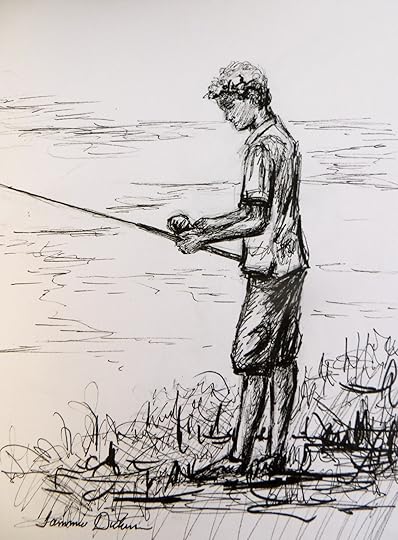
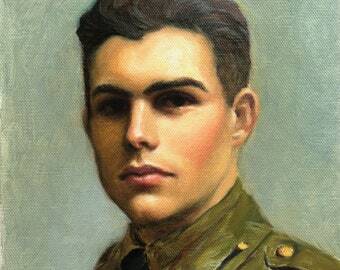
From one of the 20th century's greatest voices comes the complete chronological anthology of his short stories featuring Nick Adams, Ernest Hemingway's memorable character, as he grows from child to adolescent to soldier, veteran, writer, and parent—a sequence closely paralleling the events of Hemingway's life.
The complete collection of Ernest Hemingway's Nick Adams two dozen stories are gathered here in one volume, grouped together according to the major time periods in the protagonist's life. Based on Hemingway's own experiences as a boy and as a member of the Red Cross ambulance corps in World War I. The collection follows Nick's life as a child to parent, along with soldier, veteran, and writer and feature some of Hemingway's earliest work such as "Indian Camp" and some of his best-known short stories, including "Big Two-Hearted River." Perfect for longtime Hemingway fans and as an introduction to one of America's most famous writers.
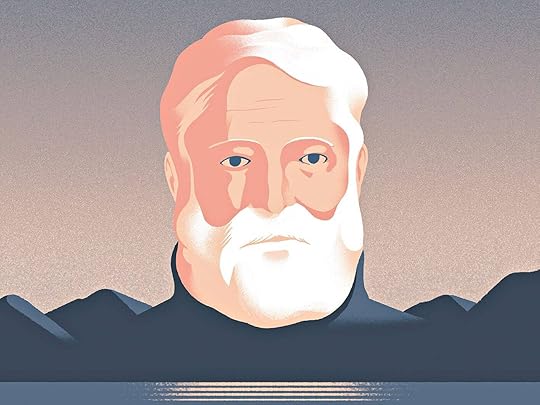
Ernest Miller Hemingway was an American novelist, short-story writer and journalist. Best known for an economical, understated style that significantly influenced later 20th-century writers, he is often romanticized for his adventurous lifestyle, and outspoken and blunt public image. Most of Hemingway's works were published between the mid-1920s and mid-1950s, including seven novels, six short-story collections and two non-fiction works. His writings have become classics of American literature; he was awarded the 1954 Nobel Prize in Literature, while three of his novels, four short-story collections and three nonfiction works were published posthumously. Hemingway was raised in Oak Park, Illinois. After high school, he spent six months as a cub reporter for The Kansas City Star before enlisting in the Red Cross. He served as an ambulance driver on the Italian Front in World War I and was seriously wounded in 1918. His wartime experiences formed the basis for his 1929 novel A Farewell to Arms. He married Hadley Richardson in 1921, the first of four wives. They moved to Paris where he worked as a foreign correspondent for the Toronto Star and fell under the influence of the modernist writers and artists of the 1920s' "Lost Generation" expatriate community. His debut novel The Sun Also Rises was published in 1926. He divorced Richardson in 1927 and married Pauline Pfeiffer. They divorced after he returned from the Spanish Civil War, where he had worked as a journalist and which formed the basis for his 1940 novel For Whom the Bell Tolls. Martha Gellhorn became his third wife in 1940. He and Gellhorn separated after he met Mary Welsh Hemingway in London during World War II. Hemingway was present with Allied troops as a journalist at the Normandy landings and the liberation of Paris. He maintained permanent residences in Key West, Florida, in the 1930s and in Cuba in the 1940s and 1950s. On a 1954 trip to Africa, he was seriously injured in two plane accidents on successive days, leaving him in pain and ill health for much of the rest of his life. In 1959, he bought a house in Ketchum, Idaho, where, on July 2, 1961 (a couple weeks before his 62nd birthday), he killed himself using one of his shotguns.
'You're going to have things to repent, boy,' Mr. John had told Nick. 'That's one of the best things there is. You can always decide whether to repent them or not. But the thing is to have them.' The Nick Adams Stories ~~ Ernest Hemingway
This past January, I decided to take a deep dive into one of my favorite writers, Ernest Hemingway. It was my goal to explore his later and unpublished works as well as rereading his short stories.
My sixth Hemingway read of January 2023 was The Nick Adams Stories. These stories were my introduction to Hemingway in my teens. I have returned to Nick Adams' world often since then. I find great comfort in these stories.
No American writer since Mark Twain has so captivated and entranced his readers to the extent that Hemingway did ~~ his success had a quality of simplicity and naturalness that was breathtaking.
I consider Hemingway not only one of the finest novelists of the twentieth century, but one of the two greatest American writers of all time, the other, of course, being Mark Twain. To my mind, his novels The Sun Also Rises, and For Whom the Bell Tolls rank at the very top of the American literary tradition. Hemingway’s nonfiction pieces are great reads, and are without parallel in his exceptional combining of memoir and literature. And then there are the many excellent stories and vignettes ~~ The Nick Adams Stories being among the finest of these pieces. Lastly, there is the brilliant The Old Man and the Sea.
As I reread these stories, I came to the realization that every primary, male protagonist in Hemingway’s stories, stands squarely upon Nick Adams’ shoulders. In fact, Nick is the foundation upon which all of Hemingway’s fiction is built ~~ and what a foundation it is. I even suspect that the nameless primary male characters in many of Hemingway’s early short stories are actually Nick Adams.
Another realization: one of the things I love about Goodreads is that members here actually openly read and discuss Hemingway ~~ for far too long he has been looked down upon and cast into the heap of Dead White Male Writers.
My first exposure to these stories was reading some of them in anthologies in my teens. I read this posthumously published collection as an adult. Hemingway’s stories about his alter ego Nick Adams weren’t written and published in chronological order, so whoever put together this compilation set out to rearrange them and include some material that wasn’t published in Hemingway’s lifetime to form a somewhat coherent narrative of Nick’s life ~~ the end result here is to make the stories read more like an episodic novel, and it works very well. Some of them, as the preface points out, make a lot more sense this way.
Of course, the stories are excellent ~~ no matter in which order you read them. Included are classics like The Light of the World ~~ which has one of the all-time great opening paragraphs ~~ When he saw us come in the door the bartender looked up and then reached over and put the glass covers on the two free-lunch bowls. We also have The Killers and Big Two-Hearted River. The previously unpublished material includes the novella The Last Good Country ~~ which unfortunately ends in the middle of the action; perhaps, Hemingway couldn’t figure out where to go from there. Regardless of this, we are left with a story that is very good.
So, what else is there to say? I loved being back in this world. The Nick Adams Stories make for a fantastic read. I highly recommend this book.
I'm not excited about reading the novels gathered in this book. They are undoubtedly meant to be read as they were published, one by one, on occasion, to fill a moment of idleness. Proof that great authors can also be irregular in their mood and inspiration. Like everyone.
Some of these stories appear here and there, scattered across various short story collections. In this one, they come together and are ordered properly. There are some that don’t appear in any other collections either. Nick’s life periods are split up into 5 eras:
The Northern Woods On His Own War A Soldier Home Company of Two
You start with Nick as a young’un, follow him as he begins to come into his own, go with him to war, and see what happens when he comes back and starts to get used to living in the post-war world. There is raw charm about the stories in the first portion. In The Northern Woods, I loved reading about Nick dealing with shame in Three Shots, learning about birth and death in Indian Camp, and finding out what it means to have your heart shattered in Ten Indians. A beautiful sentence from the last story:
“In the morning there was a big wind blowing and the waves were running high up on the beach and he was awake a long time before he remembered that his heart was broken.”
On His Own is not my favourite section. The Last Good Country was a cute story about Nick and his little sister trying to outrun the game wardens. I wonder why Hemingway left it unfinished. I assume he would have been just a few pages out from the typical Hemingway ending, but it was already too long as is. Here is a great line from Crossing the Mississippi:
“Mark Twain, Huck Finn, Tom Sawyer, and LaSalle crowded each other in Nick’s mind as he looked up the flat, brown plain of the slow-moving water. Anyhow I’ve seen the Mississippi, he thought happily to himself.”
War was okay, with In Another Country being the highlight for me.
The best parts of the collection come with the last two sections. In A Soldier Home, you get the beautiful (and previously discussed) The Three-Day Blow, followed by the melancholic and sexy Summer People.
With Company of Two, you see the realization of Nick Adams as a person. He has had his fun, he has done a good portion of his growing, and he is going into the start of the rest of his life. The stories here all hit me. On Writing comes just after Wedding Day, and sees Nick represented almost exactly like Ernest Hemingway. I know he is a stand-in character for the author anyhow, but this is where it’s the most obvious. He even refers to Nick visiting Gertrude Stein and discussing things with her. A couple of nice sections from that one:
“The only writing that was any good was what you made up… That was the weakness of Joyce. Daedalus in Ulysses was Joyce himself, so he was terrible. Joyce was damn romantic and intellectual about him. He’d made Bloom up, Bloom was wonderful. He’d made Mrs. Bloom up. She was the greatest in the world.”
and
“It was hard to be a great writer if you loved the world and living in it and special people. It was hard when you loved so many places. Then you were healthy and felt good and were having a good time and what the hell.”
Finally, An Alpine Idyll, discussing the gradual erosion of certain previously-steel bonds upon settling down, and Fathers and Sons. What to say about the last story in the collection but that any aspiring male author should be lucky to write something that comes even close to this in immortalizing his father.
After reading Ernest Hemingway’s “The Nick Adams Stories” as a whole, I have changed my mind about him a little. (Please refer to my previous goodreads.com reviews of other books by ‘Hemenstein’ as he sometimes called himself.) Whereas in the past, I have not liked his sometimes boasting about his muscularity as a writer and his bragadoccio masculinity, which to me hints at some self-doubt in that regard.
His Nick Adams stories is about the life of Hemingway as a youth—hunting, fishing, his relationship with his father (especially in the final story, “Fathers and Sons”), the craft of writing, relations with women, early war years in Italy, and so on.
You can detect how original he was in his day by his skirting around plot and homing in on the importance of mood, atmosphere and observation. I thought “The Killers” was an example of this.
Hemingway was obsessive about accuracy in his descriptions of fauna and flora, almost as if he were practicing accuracy. His descriptive writing became somewhat weighty for me until I realized that he was purposely putting me in a trance over baiting a fish hook or describing the hills and rivers of northern Michigan. Hemingway reminded me of Henry David Thoreau, even Audubon, in how keenly he observed nature.
A little distracting for me was his attempt at experimentation with techniques and styles used by contemporaries of his such as Sherwood Anderson, Joyce or Faulkner, all of whom he admired to some degree. When he respected writers, he was generous with his praise. If he didn’t, you could wind up with seeing him do things like breaking your cane over his own head just to prove a point as he did with John O’Hara. Being highly competitive, he sometimes challenged others to a boxing match and talked of keeping score comparing his work to those of his contemporaries.
Yet, there is a sweetness in many of his stories which portends, to me anyway, an impending sadness, even doom. As we know, Hemenstein blew out his own brains either by accident or on purpose (as Sigmund Freud would have it), leaving this world by his own hand as his father had done. He seems to have been in awe of his father who had taught him so much about nature.
The stories I liked most in “The Nick Adams Stories” are the following: The Last Good Country which I have already reviewed on goodreads.com; four stories about Indians—probably Ojibways; The Killers, The Last Good Country, Big Two-Hearted River, Three-Day Blow, On Writing, and Fathers and Sons. Summer People has one of the best love scenes that I have read. The rest deserves to be read as well.
The main thing I would venture to say about Ernest Hemingway is that he was vast.
Kako pripoveda Hemingvej? Čisto. Ravno. Skromno i uspavljujuće. Na ivici siromaštva, a sklisko i mimikrično. Kao voda. Taman toliko manje-a-više da se zametne sve što treba zametnuti.
"Priče o Niku" su ucelovljenje onoga što, očigledno, nisam mogao dočitati niti u 4, niti u 6. razredu (čisto sumnjam da bi mi legle i u podrazumevanom 7). Kao suvenir se obdržala samo ilustracija nesretnog "Boksera", njegova crno-bela ulubljena faca. Očekivao sam verovatno više događajnog, više Indijanaca,... više svega u najkraćem, a manje isprazne svakidašnjice, monotonije, zatiskivanja životom i istrajavanjem, manje pecanja, šta li?! Nisam se upecao na varalicu. Naravno, sada razumem jednu mogućnost - odatle ide ono što u sopstvenoj naivi nazivam "amerikanom" - kojoj je pirotehničko zauvek strano, čak i onda kada ga ima. "Nik" je rasparčan, ponegde "nasilno" uvezan [jer neke priče odavde s Nikom veze nemaju], kao da je samo ime objedinjujuću garant, što opet ne smeta. Nikako. Dovoljno je valjda što su "Ubice" predložak za Borhesovo "Iščekivanje", a u trenutnom raspoloženju, u shvatanju onoga što je nemoć da se ispadne iz odabranog-a-nametnutog žanra, "Ubice" su dovoljne za čitav jedan čitalački život. ["Priče o Niku", Nolit, 1989]
P.S. Druga je stvar što ne umem a da se ne razvodnim. Nicknamed favorite poput "Ubica", "Sad ja ležem" (nema je u Nolit izdanju), "Indijanskog logora", "Lekara i lekareve žene", "Boksera", "Mog starog", ne bi bilo loše dopuniti sa ovim brzopoteznim d-best-ofom: "Bregovi kao beli slonovi", "Čisto, dobro osvetljeno mesto", "Vojnikov dom", "Mačka na kiši".
Here's my admission: this collection is a sentimental favorite of mine. I have no objectivity when it comes to rating this collection. Why? I grew up in Michigan. I've traveled through much of the state (both peninsulas). I've been to Walloon Lake where Hemingway summered as a child at the family cottage called Windemere. I've visited the Little Traverse History Museum in Petoskey that houses a permanent exhibit on Hemingway in Michigan. But mostly because these stories resonate with my own childhood.
As a young boy, my family (including some aunts, uncles, cousins and my Nana) rented lake cottages for a few summers on Black Lake. Here we swam almost daily; fished often; picked Huckleberries (one aunt made a terrific Huckleberry pie); played Euchre and checkers; and shot at cans in a nearby gravel pit. We usually stayed for 2 or 3 weeks during August. My arrival and departure depended on how the accommodations were arranged but usually us kids tried to arrive with whoever got there first and we tried to stay with whoever was departing last. There were fishing trips that came back with great catches and others that came back with just stories. There were lots of shared meals and almost nightly campfires near the small, yellow sandy beach. Was it ideal? No, we had our fights and petty moments. But was it fun and filled with life experiences? Absolutely and I have plenty of fond memories of those summers long since gone.
So when I read Hemingway's Nick Adams stories (particularly the ones focusing on his adventures in northern Michigan), I make connections to the times and the joys (and the sorrows) that I too experienced during my Black Lake summers. These stories are Papa Hemingway's gift to Michigan and I treasure them.
I think a person can only read so much of Hemingway before you say... that's enough I've reached my limit! SO, yes, I reached my Hemingway saturation point while reading these short stories. I bought this to read "The Big Two-Hearted River", and it was very good. It reminded me of my trout fishing days in Michigan.
Although the stories were interesting, Hemingway's short, terse prose grated on my nerves after a while. Each story was interesting on it's own and was told through the eyes of the fictitious Nick Adams. It sort of followed his life chronologically from being a kid to his adulthood with a son of his own. Each story ended- but not all had an ending. Some left me satisfied and some left me searching the question- why did he write this? Those seemed to have no purpose, no ending and were just a bunch of images left for me to ponder.
I neither liked nor disliked this book... hence the 3 stars. Sorry Ernest, but this just didn't do it for me.
I struggle with Hemingway's novels. I have only read two of them, and have started others only to get sidetracked/restless while reading them. I think maybe his style is better suited to short stories. I love the Nick Adams stories, this collection has them all. There is the classic required reading: "Indian Camp," "The Killers," and "The End of Something," etc., but also stories like "Three Shots," which I believe was originally part of "Indian Camp," but is great as a super brief, separate story.
The Nick Adams Stories is one of the collections of Hemingway’s short stories published after his death. Organized by Phillip Young in 1972, it includes a total of 24 works presumably arranged in chronological order in regard to Nick Adam’s life rather than in regard to the actual date when Hemingway published the stories themselves. Young notes in his preface:
Arranged in chronological sequence, the events of Nick’s life make up a meaningful narrative in which a memorable character grows from child to adolescent to soldier, veteran, writer, and parent—a sequence closely paralleling the events of Hemingway’s own life. In this arrangement Nick Adams, who for a long time was not widely recognized as a consistent character at all, emerges clearly as the first in a long line of Hemingway’s fictional selves.
Of the 24 stories included in the volume, 16 had been published previously by Hemingway: 8, in In Our Time in 1924; 5, in Men Without Women in 1927; 3, in Winner Take Nothing in 1933. The remaining 8 were unpublished manuscripts and/or manuscript fragments that Hemingway had left among his papers.
The stories are uneven in quality. Some are among the best of Hemingway’s fiction including, for example, “Indian Camp”, “The Battler”, “Big Two Hearted River” “Three-Day Blow” and “Fathers and Sons”. Others, generally those that Hemingway had not published and/or had not actually finished such as "The Last Good Company”, tend to be substandard.
Although Young intended the order of the stories to follow Nick Adams fictional life, I am not certain that the arrangement is accurate. In particular, the stories included in the second section titled “On His Own” seem out of sequence:
Young’s Order Ten Indians The Indians Moved Away The Light of the World The Battler The Killers The Last Good Company Crossing Mississippi
Apparent Order Ten Indians The Last Good Company The Battler The Indians Moved Away The Light of the World The Killers Crossing Mississippi
Still, even ordered as they are, the collection does provide a more coherent sense of the struggles and challenges of one of Hemingway’s major fictional characters. With the stories in one volume, it is also easier to see the linkages between Hemingway’s life and that of Nick Adams. The stories flow clearly from northern Michigan and Nick’s youth; to Europe and Nick’s involvement in the war including his injuries sustained in battle; Nick’s return to Michigan and his recovery from the emotional strains of the war; his marriage and his return to Europe; his final reflections back in Michigan, with his son. In broad outlines, Nick’s life trajectory reflects part of Hemingway’s, a similarity that have led many to suggest that Nick Adams is one of Hemingway’s alter egos, although Nick does not follow Hemingway much after the early 1930s. Nick, except for World War One and a brief return to Europe, stays in Michigan.
It can be unsettling, unnerving to revisit an author embraced during one's teenage years. Reader reaction can have less to do with literature than with memory and passion. I read all of Hemingway when I was in high school, and I had quite a crush on him. He became the first version of my Jungian "animus." Now, four decades later, I reread these stories and am stunned by the powerful feelings they generate - adolescent yearning, glorious self-confidence, a naive sense of ownership of all that is significant - yes, the world does revolve around me and why not? look at how marvelous it is to be young and alive. But emotion aside, the older reader in me was pleased to find well-crafted passages and true-to-the-ear dialog. A rewarding book.
--from "The Last Good Country" pg. 84 "Mr. John liked Nick Adams because he said he had original sin. Nick did not understand this but he was proud. "'You're going to have things to repent, boy,' Mr. John had told Nick. 'That's one of the best things there is. You can always decide whether to repent them or not. But the thing is to have them.'"
-- on insomnia after a war wound, from "Now I Lay Me" pg.126 & 130 "I myself did not want to sleep because I had been living for a long time with the knowledge that if I ever shut my eyes in the dark and let myself go, my soul would go out of my body. I had been that way for a long time, ever since I had been blown up at night and felt it go out of me and go off and then come back. I tried never to think about it, but it had started to go since, in the nights, just at the moment of going off to sleep, and I could only stop it by a very great effort. So while now I am fairly sure that it would not really have gone out, yet then, that summer, I was unwilling to make the experiment..... "If I could have a light to sleep I was not afraid to sleep, because I knew my soul would only go out of me if it were dark. So, of course, many nights I was where I could have a light and then I slept because I was nearly always tired and often very sleepy. And I am sure many times, too, that I slept without knowing it - but I never slept knowing it..."
-- the opening of "In Another Country" pg. 149 "In the fall the war was always there, but we did not go to it any more. It was cold in the fall in Milan and the dark came very early. Then the electric lights came on, and it was pleasant along the streets looking in the windows. There was much game hanging outside the shops, and the snow powdered in the fur of the foxes and wind blew their tails. The deer hung stiff and heavy and empty, and small birds blew in the wind and the wind turned their feathers. It was a cold fall and the wind came down from the mountains."
At Grinnell College there was a self-proclaimed Diggers collective which, among things like free meals, parties, parades and other "happenings", ran a "free store" off the lounge of my south campus dorm, Loose Hall (renamed Augustus Stanley Owsley Hall by its residents). Basically, it was an disused cloakroom which students were urged to fill with unwanted, but still useful, items. Among other things, I found Hemingway's Nick Adams Stories there and allowed myself the pleasure of reading them while the school year was still on.
The most memorable of the stories were those portraying Nick's return to his community in the northern midwest. Disillusioned, taciturn, he found such solace as could be found in the woods and upon the lakes, the portrayals of which I readily related to thanks to a lifetime of summers in the midwestern wilds. Furthermore, I enjoyed the stories because of their implicit critique of war, the conflict in Southeast Asia being very much on everyone's mind.
Nick Adams stories are inspired by the author’s own experiences. Have picked it up, only for being written by Heming way. I doubt if someone were to read this book without knowing by whom it is written, she may not persist beyond couple of stories. The stories capture Nick Adam’s escapades and experiences in a chronological order. Some of them are good, for they capture the essence of the age of Nick at that point in time. Like getting exposed to the stark realities of the world during the childhood. Yet to Hemingway’s credit as Hemingway is revered for, the prose simply flows. His words flow like a fresh water river. Effortlessly, placid at times and turbid at others. His works are a training ground for aspiring writers as to how to write uncomplicated.
I found these stories very tedious and self serving; I get that Hemmingway was obsessed with death and manliness but even the glorification of nature in the upper portions of Michigan couldn't capture my attention. Women are undeveloped characters and frankly nothing much happens. I can't believe that one paragraph could constitute a short story; where were the beginning, middle and ends of the tales. What the heck is the significance of the rabbit at the end of "On writing".
He had already learned there was only one day at a time and that is was always the day you were in. It would be today until it was tonight and tomorrow would be today again. This was the main thing he had learned so far.
אל המינגווי חזרתי לאחר שנים רבות, יותר נכון עשרות שנים מאז קראתי את ספרו ״הזקן והים״, שהיה ספר חובה בבית הספר. לא סבלתי את הספר הזה... קיבלתי המלצה חמה על ״סיפורי ניק אדמס״ מחבר שאמר לי שאיננו אוהב את המינגווי למעט הסיפורים הקצרים שלו.. הרעיון לאגד את סיפורי ניק אדמס, ששולבו לאורך השנים כאפיזודות בספריו של המינגווי, מתוך מחשבה ליצור רצף כרונולוגי ובעצם ליצור מעין רומן אחד שלם, נראה לי לכאורה רעיון מבריק. דא עקא כשהתחלתי לקרוא הרצף לא ממש קיים וכמעט כל סיפור עומד בפני עצמו ללא התחלה וסוף ידועים... הסיפור הראשון שהתחלתי לגלות בו עניין כלשהו היה הרוצחים והסיפור השני ממנו כבר ממש התלהבתי היה הנובלה ״אין עוד מקומות כאלו״. גם הסיפור ״אבות ובנים״ שחותם את הספר היה חביב מאד אבל כל השאר מבחינתי פיהוק אחד גדול. בסיכומו של דבר הספר מקבל ממני שלושה כוכבים ולולא הנובלה שהזכרתי הייתי נותן רק שניים...
I wanted to read these stories because, as a fan of much of Hemingway's writing (The Sun Also Rises and For Whom the Bell Tolls are two of my favorites of his) I was curious to see how he wrote about the state where I grew up, Michigan. It was nice seeing the names of places that I knew for most of my life (Charlevoix, Petoskey, Cadillac...).
The stories were good for feeding my nostalgia, but I wouldn't say they are representative of Hemingway's better works. Some of the better stories for me were: - "The Killers" (it's also interesting to read right afterwards Borges' "The Wait", which is a retelling of the story from the point of view of a different character) - "The Last Good Country" - "Big Two-Hearted River"
I debated between the three and four star rating for this one. In terms of Hemingway's storytelling and writing ability it is certainly a four. On the contrary, in terms of how much I enjoyed the content of this book, it is most definitely a three for me. This is the second Hemingway book I've read (after promising myself that I would give each book a chance on it's own before I make my ultimate judgment on him. After tearing through "A Farewell to Arms", I immediately picked up the next Hemingway I found in the library. However, this one took me over a month to read, as I kept going back to it sporadically in between reading other novels. This collection of stories featuring character Nick Adams spans his childhood to the point where he becomes a father. I had a real problem getting through the majority of this book and it no doubt stems from the fact that this is not exactly a novel. Thus, the stories are disjointed and it feels somehow incomplete. While I understand that this is the collected stories of Nick Adams, the way in which Hemingway writes each of these stories seems like it jumps between completely different voices. Overall, not my cup of tea.
Unlike most of Hemingway's writings, I liked this set of stories. Much of his other works are dark or too bohemian for my taste. I have read bits and pieces of the Nick Adams stories, out of sequence, over a number of years but just recently read the entire collection as assembled in this book.
Nick Adams, the hero of the stories, some say, is actually Hemingway, as he sees himself. Symbolism can be read into many of the scenes throughout the stories so it isn't a stretch to say that Hemingway is telling his own life story. Case in point is in the Big Two Hearted River where Nick, just home from the war, searches out the quietude of his old fishing spots. Picking his way through the barren landscape where fire had destroyed everything seems to symbolize all the horrors of the war Hemingway just witnessed. Pushing forward, Nick comes to land untouched by the fire... still green and lush... it seems fitting this would represent Hemingway's journey to self renewal.
Although Hemingway was a tremendous influence on literature, his subject matter isn't something I enjoy reading. That said, I would recommend this collection of stories.
This has a unique and special place in my heart. I think Hemingway's writing style shined in short story format. And of course my dual love of Michigan and Hemingway has made me extremely biased.
Well, what can one say about Hemingway that hasn't already been said? So in that spirit, I'll keep this brief.
Indian Camp is one of the best short stories ever written and I'll fight anyone who says otherwise.
Other standouts in this collection include The Last Good Country, A Way You'll Never Be, and Big Two-Hearted River.
There are some other very nice pieces in this collection and some that feel unfinished. Like really unfinished. But you have to give Papa props for being the first one to bring minimalism to the mainstream.
The way Hemingway writes his literature unfolded through an iceberg. And 70% of the iceberg submerges below the sea. In the story Indian Camp, lies a rather simple story. It’s the 4th of July, everyone is happy, Nick goes to a ball game with another family and their kids come back, talks to his dad, and realizes his girlfriend has cheated on him. Simple. Yet entangled with connotations. It’s the 4th of July! The biggest non-religious holiday of that country. And the father stays home? Hemingway drops keys, multiple keys, that helps shed layer 1. His father claims he’s been dawdling at the Indian camp, just a carefree day. But again, it’s the 4th of July, no one is going to be there. But he claims he saw Nick's girlfriend, ironically called Prudence, cheating with another Frank Washburn. Nick being too heartbroken, brushed this excuse off. But nevertheless, it’s the 4th of July. What was his father doing at the Indian camp when no one was going to be there? Why didn’t he come with Nick to his ball game? Because, what if there was no Frank Washburn. What if there was no Frank Washburn in the first place. Everything. The dialogues, clues seemed to click together like those of a puzzle. It was no Frank Washburn. It was his father. Hemingway never told you that. And that’s the hint of magic submerged beneath the ocean of an iceberg.
This entire review has been hidden because of spoilers.
Os contos que me salvaram o cérebro e o coração durante as frequências.
"Não estava bêbado.Dissipara-se tudo. Só sabia que tivera Marjorie e que a perdera. Ela fora-se embora, fora ele que a mandara embora. Era isso apenas que interessava. Talvez nunca mais a visse. Provavelmente nunca mais a veria. Acabara-se tudo.
Hemingway wrote stories that are good. He chose common words to name the lands of Michigan and the Midwest, he named their rivers and swamps and the fish that swim. He named the trees and hills and the people who hike, both the no-account types working for the government and the honest types just making their way and having a little fun. Sure this book has guns in it and yes many animals were harmed in the making of the stories. But nobody writes with more respect for nature. Nobody else’s stories read like recipes for a spiritual retreat via camping and fishing.
Nick Adams is Hemingway’s voice and his stand-in, witness to all the ordeals and high points of life that you and I evade and seek both. Adams struggles with birth and death, sex and violence, love and crime, war and poverty, fatherhood and adolescence. Most of the stories are narrated by someone outside of him, though he speaks a few in first person, and anyway all of the stories are told from his point of view. His desires are remote even from himself, but the emotion is always there even when he tries hardest to hide it or push it aside. These are men’s stories and while the world of women abuts them, it never dominates them or sets their agenda.
This collection is also a master class in minimalism. Everything important happens between the lines and underneath the dialogue, the way men spoke in the early twentieth century and the way they continue to speak in certain places. It is a healthy ambiguity, for the most part. The more meaningful the occasion, the less Hemingway is likely to say about it. Any details noted about a wedding or a funeral or a watershed moment between father and son will be peculiar, and they’ll hint at a narrative not present in surface recollections or acted upon in the here and now. But for all that Hemingway knows who we are and why we struggle, and he knows how important the quiet moments between the action are to a healthy psyche.
I’m afraid that short stories are just not Hemingway’s strong suit. One of the amazing things about his novels is the way he gradually adds layer after layer to his characters, slowly exposing their complexity. With the short vignettes here, we don’t have this deep understanding of the characters, so rather than the tension of unspoken emotions behind brusque dialogue, we’re just left with a lot of declarative sentences.
That said, some stories worked much better than others. The war stories were the best in the collection; Hemingway excels at writing trauma and fear and frustration. Unfortunately, when dealing with more commonplace subjects, the stories verged on boring.
Really Hemingway's bread and butter, the short story. I once copied "Indian Camp" out word for word, suspecting the practice would make me a writer. My suspicion has been wrong so far, but that still doesn't lessen my appreciation for most of these stories. Ole Krebs in "Soldier's Home," too. Great stuff. "The Three Day Blow." Can't teach THAT one in class, anymore. And of course, "Big Two-Hearted River," which Hem so named to put sycophant slash fishermen off the scent (of the Fox River, that is).
It never ceases to amaze me the crud that teachers will subject their students to. This was my case in high school. I was forced to write numerous papers talking about how awesome this book was.
In reality Ernest Hemingway was a total Eeyore. Everything he writes is depressing and boring. It's crazy that every one applauds him as being such a realist. I feel sorry for anyone who sees life in that way.
I guess it's fine if you read a little Hemingway to broaden your horizons. Just be sure to read positive stuff too.
Vorrei vivere l’entusiasmo dei laghi e dei torrenti freddi, delle zone d’ombra dove le trote stanno contro corrente, gli strappi alla lenza che travolgono mentre l’acqua arriva alle ginocchia, e la memoria l’amore verso la propria natura che da lontano ti riporta sempre a casa.
“Avevo diversi modi per tenere occupata la mente mentre stavo sdraiato senza dormire. Pensavo a un torrente pieno di trote lungo il quale avevo pescato quando ero ragazzo; e la pesca lungo tutto il torrente si svolgeva nella mia mente con tutti i particolari.”