

What do you think?

TARDIS Eruditorum #4
TARDIS Eruditorum - An Unofficial Critical History of Doctor Who Volume 4: Tom Baker and the Hinchcliffe Years
In this fourth volume of essays adapted from the acclaimed blog TARDIS Eruditorum you'll find a critical history of Tom Baker’s first three seasons of Doctor Who. TARDIS Eruditorum tells the ongoing story of Doctor Who from its beginnings in the 1960s to the present day, pushing beyond received wisdom and fan dogma to understand that story not just as the story of a geeky sci-fi show but as the story of an entire line of mystical, avant-garde, and radical British culture. It treats Doctor Who as a show that really is about everything that has ever happened, and everything that ever will. This volume focuses on the early gothic-horror tinged years of Tom Baker, looking at its connections with postmodernism, the Hammer horror films, conspiracy theories, and more. Every essay from Tom Baker’s first three seasons has been revised and expanded from its original form, along with nine brand new essays exclusive to this collected edition, including a look at how Genesis of the Daleks changed Dalek history, the philosophical implications of the TARDIS translating language, and the nature of the Master. Plus, you’ll How Doctor Who’s golden age was cut short by a bully with poor media literacy. Why bubble wrap is scary. The secret of alchemy.
337 pages, Kindle Edition
First published November 23, 2013
About the author
Elizabeth Sandifer
25 books91 followersNote: This author previously published under the name Philip Sandifer.
Ratings & Reviews
Friends & Following
Create a free account to discover what your friends think of this book!
Community Reviews
Displaying 1 - 17 of 17 reviews

July 15, 2014
So, having demanded an essay on The Master when I reviewed the previous (Pertwee) edition of Tardis Eruditorium, I was delighted and thrilled to see one included in this version. I'm glad that the age of instant gratification has spread even to the books I read.
Here Phil Sandifer tackles what is held out by fans as the apex of Doctor Who, the scary and thrilling and dramatic in the best BBC fashion first three years of Tom Baker's tenure. The years when the show was run by producer Philip Hinchcliffe and script editor Robert Holmes, and the two produced if not classic after classic, then more classics than any other production team ever got close to managing.
Clearly Phil Sandifer is blown away like everyone else, there are parts of this that do read like a love letter to a great run of a great TV show. But Phil being Phil he doesn't let the rose tinted glasses blind him to the flaws. Instead he gets out his most powerful microscope, having a field day of flaw picking, so that – even if I don’t always agree with him – I'll certainly go back to some of these stories with different eyes. This approach does lead to an odd conflict across the essays, between appreciation and condemnation. As of course fan favourite 'The Talons of Weng Chiang' comes in for a beating for its myriad of flaws (if you think its biggest problem is the rat then you really do have to open your eyes a bit), but Phil also acknowledges how fantastic he finds watching it and how incredibly entertaining it is. In many ways that story is perfect ‘Doctor Who’, even if in many, many other ways it isn’t.
The problem with this book as opposed to earlier volumes is that there are a lot less stories to work with and so Phil has had to pad things about. I don't really have a problem with him writing about the books or the audios, as I always find those essays highly entertaining as they're generally about works I myself have not previously encountered. While on TV, 'The Deadly Assassin' is the kind of work which really should inspire fifteen thousand words. I've no problem with that. But it does seem that some of these essays are a lot less tight than previously and that Phil can't spot a digression without leaping aboard it. Some of these digressions can be fun, while others couldn’t be any more obviously pointless if a little stick figure appeared alongside them whistling with his feet up.
However these remain a fascinating guide and resource for fans of the show and my biggest disappointment on finishing was that Volume 5 isn’t yet ready for me to sink me teeth into.
Come on, Phil!
Here Phil Sandifer tackles what is held out by fans as the apex of Doctor Who, the scary and thrilling and dramatic in the best BBC fashion first three years of Tom Baker's tenure. The years when the show was run by producer Philip Hinchcliffe and script editor Robert Holmes, and the two produced if not classic after classic, then more classics than any other production team ever got close to managing.
Clearly Phil Sandifer is blown away like everyone else, there are parts of this that do read like a love letter to a great run of a great TV show. But Phil being Phil he doesn't let the rose tinted glasses blind him to the flaws. Instead he gets out his most powerful microscope, having a field day of flaw picking, so that – even if I don’t always agree with him – I'll certainly go back to some of these stories with different eyes. This approach does lead to an odd conflict across the essays, between appreciation and condemnation. As of course fan favourite 'The Talons of Weng Chiang' comes in for a beating for its myriad of flaws (if you think its biggest problem is the rat then you really do have to open your eyes a bit), but Phil also acknowledges how fantastic he finds watching it and how incredibly entertaining it is. In many ways that story is perfect ‘Doctor Who’, even if in many, many other ways it isn’t.
The problem with this book as opposed to earlier volumes is that there are a lot less stories to work with and so Phil has had to pad things about. I don't really have a problem with him writing about the books or the audios, as I always find those essays highly entertaining as they're generally about works I myself have not previously encountered. While on TV, 'The Deadly Assassin' is the kind of work which really should inspire fifteen thousand words. I've no problem with that. But it does seem that some of these essays are a lot less tight than previously and that Phil can't spot a digression without leaping aboard it. Some of these digressions can be fun, while others couldn’t be any more obviously pointless if a little stick figure appeared alongside them whistling with his feet up.
However these remain a fascinating guide and resource for fans of the show and my biggest disappointment on finishing was that Volume 5 isn’t yet ready for me to sink me teeth into.
Come on, Phil!
October 22, 2023
Elizabeth Sandifer's "TARDIS Eruditorum" blog project kicked off in January 2011: a phenomenally ambitious effort to tell the story of Doctor Who and its place within British culture from 1963 to the present. There is something about Doctor Who - its longevity, its hold on those who fall down its rabbit hole, and its ravenous nature when it comes to devouring stories, weird imagery, mythology, and intertextuality - that spurs fans to write serious academic works about it, more than you will find for almost any other television programme. Such volumes vary from Tat Wood and Lawrence Miles' About Time to the Black Archive series (critical monographs on individual stories). Within this pantheon, however, Sandifer's work stands out as exceptional for a variety of reasons:
(1) while proceeding in chronological order from 1963 to the present might be an approach taken by any number of other guidebooks, few are as meticulous or explicit about tracing Doctor Who's relationship with the wider culture surrounding it. In Sandifer's hands, analysis of Doctor Who is not just about appreciating themes or characterisation, nor is it a matter of documenting ever-changing television production over the decades, although both of these approaches are frequently factored into her work. Rather, she uses the lens of Doctor Who to examine stories the United Kingdom tells about itself - its obsessions and fears, the way it uses its literary heritage, and its material social circumstances - in a startlingly original manner I have not otherwise encountered. One imagines a similar sort of project could be embarked upon with the Bond franchise, and the way its films reflect changing social mores, but I find it highly dubious it would yield results that are anywhere near as interesting or as insightful, not least because Doctor Who's mercurial, ever-shifting nature allows for a far greater range of perspectives, styles and influences than Bond has ever had or could ever have. It has been noted in some quarters that the fact that Sandifer is American leads her to misinterpret certain things or come to unlikely conclusions; I have to say I've never felt this particularly strongly, and would indeed go so far as to say that the perspective of someone looking in from the outside (who has obviously conducted extensive research and immersed herself in British culture) is in some ways more valuable than that of a Brit, and in some respects permits fresher insight.
(2) there is genuine power and bite to the arguments she sets forth. Far too much fan writing falls into the same traps of regurgitating the familiar positives or negatives about a story, or ticking off continuity points of interest as though everything set down in the Holy Writ of Rassilon were actually true in our universe and the pleasure of verifying it falls to the truly devout. By being explicitly aware and indeed profoundly focussed on Doctor Who as fiction but also as having a solid ethical dimension rooted in the real world, Sandifer's essays are as likely to be rousing polemics against a story's abhorrent politics or sensitive discussion about the nature of bullying as they are discussions of production codes and which audio drama contradicts which novel. This inherently politicised approach will probably not be for everyone; clearly, Sandifer is approaching the series from a leftist perspective, although if this fact surprises anybody you have to wonder whether they've ever watched much Doctor Who in the first place. It lends her work a tremendously compassionate and humane quality which also demands the highest of ethical and moral standards, while often being aware and forgiving of the times the series falls short of meeting those standards.
(3) Sandifer is an extremely literate and well-read critic, and it shows, although for the most part not in an obviously showy way. This extends both back into wider literary movements as well as forward to the specifics of television and concerns about spectacle. Clearly, Marxist criticism is a major influence, and she tips her metaphorical hat to Guy Debord and the Situationist International on more than one occasion, the concept of 'psychogeography' being as it is a direct influence on her own term 'psychochronography'. But in this volume alone you will find an eclectic mix of references to Kant, Blood From the Mummy's Tomb, Frankenstein, Roger Bacon, Ted Sturgeon, Bentham, Foucault, Karl Popper, Asimov and Christie, and discussion of such concepts as the aforementioned psychochronography, the intersection of detournement and derive, cargo cults, and the show's burgeoning postmodernism before postmodernism was really a thing. It is the presence of provocative discourse on occultism, metatextuality, and countercultural movements of the day which enlivens Sandifer's essays enormously and which elevates them above the bulk of fan criticism.
(4) despite the above, the writing is mostly jargon-free, engaging, and extremely entertaining. I frequently find myself laughing out loud at the author's dry asides or sarcastic observations, and she has a gift for a memorable turn of phrase. You will not always agree with Sandifer (though find me a writer or indeed a person of whom that cannot be said?!), but you will rarely if ever be bored. It is no surprise that the blog series quickly developed a sizeable readership, nor that it has inspired a number of similar projects: I ran a blog along similar lines myself for a time, but far more accomplished examples include GigaWho, Darren Mooney, and Andrew Ellard. The debt these critics, all extremely good in and of themselves, owe Sandifer is significant, and invariably gratefully acknowledged. You could fill a large bookcase with books about Doctor Who, but any such collection that does not include the work of this giant of the field is seriously incomplete.
This particular volume, adapted from the section of the blog covering the first three years of Tom Baker's tenure as the Doctor, spans 1974-77. In many ways this is the show's "imperial phase" and Sandifer duly rises to the occasion with some truly excellent essays, especially the 40-page, 13,000 word piece on 'The Deadly Assassin', although for my money the essay on 'The Brain of Morbius' - an obvious favourite of the author's - is even better. The assessment of exactly what it is that makes the Hinchcliffe era so special, and how the programme has become one where the Doctor fights conceptual horrors rather than literal monsters, is compelling. Sandifer is particularly good at not being cowed by the momentousness of many of these stories: every fan brain has an in some ways unhelpfully overawed tendency to exclaim "Genesis of the Daleks! The Talons of Weng-Chiang!" and the like. Instead of approaching them with hindsight, she tends to peel back the dusty layers of history they have accrued and consider how they might have gone down at the time and what they would've said to their original audience. The value of this approach is obvious; no one making 'The Android Invasion' would have dreamed we'd be discussing it in the 2020s, after all. In this book version there are also a number of additional essays not found on the blog, many of which turn out to be unexpected highlights - 'The True History of the Conspiracy' is absolutely hilarious, while there are thoughtful essays on 'Managra', 'Asylum' and 'Eye of Heaven' (it's a shame that the Big Finish Lost Story covered is 'The Valley of Death' rather than the far superior 'The Foe from the Future', but the former makes sense from the POV of discussing Hinchcliffe's aesthetics and flaws, which is ultimately more integral to the book than simply reviewing a very good audio drama).
There really is hours of reading to be enjoyed and savoured here: essays and insights I will return to time and time again. I cannot recommend this book (and the series as a whole) highly enough.
(1) while proceeding in chronological order from 1963 to the present might be an approach taken by any number of other guidebooks, few are as meticulous or explicit about tracing Doctor Who's relationship with the wider culture surrounding it. In Sandifer's hands, analysis of Doctor Who is not just about appreciating themes or characterisation, nor is it a matter of documenting ever-changing television production over the decades, although both of these approaches are frequently factored into her work. Rather, she uses the lens of Doctor Who to examine stories the United Kingdom tells about itself - its obsessions and fears, the way it uses its literary heritage, and its material social circumstances - in a startlingly original manner I have not otherwise encountered. One imagines a similar sort of project could be embarked upon with the Bond franchise, and the way its films reflect changing social mores, but I find it highly dubious it would yield results that are anywhere near as interesting or as insightful, not least because Doctor Who's mercurial, ever-shifting nature allows for a far greater range of perspectives, styles and influences than Bond has ever had or could ever have. It has been noted in some quarters that the fact that Sandifer is American leads her to misinterpret certain things or come to unlikely conclusions; I have to say I've never felt this particularly strongly, and would indeed go so far as to say that the perspective of someone looking in from the outside (who has obviously conducted extensive research and immersed herself in British culture) is in some ways more valuable than that of a Brit, and in some respects permits fresher insight.
(2) there is genuine power and bite to the arguments she sets forth. Far too much fan writing falls into the same traps of regurgitating the familiar positives or negatives about a story, or ticking off continuity points of interest as though everything set down in the Holy Writ of Rassilon were actually true in our universe and the pleasure of verifying it falls to the truly devout. By being explicitly aware and indeed profoundly focussed on Doctor Who as fiction but also as having a solid ethical dimension rooted in the real world, Sandifer's essays are as likely to be rousing polemics against a story's abhorrent politics or sensitive discussion about the nature of bullying as they are discussions of production codes and which audio drama contradicts which novel. This inherently politicised approach will probably not be for everyone; clearly, Sandifer is approaching the series from a leftist perspective, although if this fact surprises anybody you have to wonder whether they've ever watched much Doctor Who in the first place. It lends her work a tremendously compassionate and humane quality which also demands the highest of ethical and moral standards, while often being aware and forgiving of the times the series falls short of meeting those standards.
(3) Sandifer is an extremely literate and well-read critic, and it shows, although for the most part not in an obviously showy way. This extends both back into wider literary movements as well as forward to the specifics of television and concerns about spectacle. Clearly, Marxist criticism is a major influence, and she tips her metaphorical hat to Guy Debord and the Situationist International on more than one occasion, the concept of 'psychogeography' being as it is a direct influence on her own term 'psychochronography'. But in this volume alone you will find an eclectic mix of references to Kant, Blood From the Mummy's Tomb, Frankenstein, Roger Bacon, Ted Sturgeon, Bentham, Foucault, Karl Popper, Asimov and Christie, and discussion of such concepts as the aforementioned psychochronography, the intersection of detournement and derive, cargo cults, and the show's burgeoning postmodernism before postmodernism was really a thing. It is the presence of provocative discourse on occultism, metatextuality, and countercultural movements of the day which enlivens Sandifer's essays enormously and which elevates them above the bulk of fan criticism.
(4) despite the above, the writing is mostly jargon-free, engaging, and extremely entertaining. I frequently find myself laughing out loud at the author's dry asides or sarcastic observations, and she has a gift for a memorable turn of phrase. You will not always agree with Sandifer (though find me a writer or indeed a person of whom that cannot be said?!), but you will rarely if ever be bored. It is no surprise that the blog series quickly developed a sizeable readership, nor that it has inspired a number of similar projects: I ran a blog along similar lines myself for a time, but far more accomplished examples include GigaWho, Darren Mooney, and Andrew Ellard. The debt these critics, all extremely good in and of themselves, owe Sandifer is significant, and invariably gratefully acknowledged. You could fill a large bookcase with books about Doctor Who, but any such collection that does not include the work of this giant of the field is seriously incomplete.
This particular volume, adapted from the section of the blog covering the first three years of Tom Baker's tenure as the Doctor, spans 1974-77. In many ways this is the show's "imperial phase" and Sandifer duly rises to the occasion with some truly excellent essays, especially the 40-page, 13,000 word piece on 'The Deadly Assassin', although for my money the essay on 'The Brain of Morbius' - an obvious favourite of the author's - is even better. The assessment of exactly what it is that makes the Hinchcliffe era so special, and how the programme has become one where the Doctor fights conceptual horrors rather than literal monsters, is compelling. Sandifer is particularly good at not being cowed by the momentousness of many of these stories: every fan brain has an in some ways unhelpfully overawed tendency to exclaim "Genesis of the Daleks! The Talons of Weng-Chiang!" and the like. Instead of approaching them with hindsight, she tends to peel back the dusty layers of history they have accrued and consider how they might have gone down at the time and what they would've said to their original audience. The value of this approach is obvious; no one making 'The Android Invasion' would have dreamed we'd be discussing it in the 2020s, after all. In this book version there are also a number of additional essays not found on the blog, many of which turn out to be unexpected highlights - 'The True History of the Conspiracy' is absolutely hilarious, while there are thoughtful essays on 'Managra', 'Asylum' and 'Eye of Heaven' (it's a shame that the Big Finish Lost Story covered is 'The Valley of Death' rather than the far superior 'The Foe from the Future', but the former makes sense from the POV of discussing Hinchcliffe's aesthetics and flaws, which is ultimately more integral to the book than simply reviewing a very good audio drama).
There really is hours of reading to be enjoyed and savoured here: essays and insights I will return to time and time again. I cannot recommend this book (and the series as a whole) highly enough.

December 28, 2013
http://nwhyte.livejournal.com/2223888.html[return][return]This is of course my favourite era of Old Who, the run from Robot to Talons of Weng-Chiang, and so I read the book with more than the usual degree of interest (also looking to see if my brother is quoted again - he is, in the essay on Brain of Morbius but talking about Terror of the Zygons). [return][return]As usual I found myself nodding in satisfied agreement 90% of the time and blinking in surprise 10% of the time. Sandifer's deconstruction of The Android Invasion, for example, is brutal; his defence of Planet of Evil a little surprising. Almost fifty pages out of 320 total are devoted to a single story - but The Deadly Assassin was my favourite Old Who story anyweay, and Sandfer convinces that there is far more going on within those 100 minutes than I had realised (and also makes it seem pretty obvious in retrospect). I also very much liked the "Time Can Be Rewritten" entries on spinoff books (Managra, System Shock, Asylum, Corpse Marker and Eye of Heaven), all of which I had read and most of which I enjoyed. And the penultimate piece on The Valley of Death, a Big Finish "lost adventure" by Hinchcliffe, points out some general problems with the era as a whole. Basically this series - in the definitive ebook / print version - joins About Time as key material for the inquiring Whovian.

December 10, 2013
A terrific book, and not just because it contains an essay on matter transmitters that Phil wrote for me. :-)

April 23, 2014
Worth the price of entry for the Mary Whitehouse article alone. Marvelous stuff.
December 28, 2022
In this fourth collection of essays examining the history of Doctor Who as related to the history of modern Britain, we enter the early Tom Baker era and specifically the Hinchcliffe era, for which the author has affection for (though is not without a healthy dose of critique). Indeed, Sandifer places the beginnings of the long ’80s to be concurrent with the period in which Hinchcliffe is sacked from the programme after a moral panic concerning some of the more ‘frightening ‘elements of his tenure. This marrying of the sociopolitical with the iconic blue box show has worked for the first three volumes and shows no signs of running out of steam.
Sandifer suggests that in future volumes we shall see how “[t]he fallout from Hinchcliffe's sacking results in a neutered show less equipped to handle shifts in the television landscape than it has been before; a show that begins to die by a thousand cuts”. Until then, though, we have essays on everything from Children of the Stones to why Genesis of the Daleks is a fundamental rewiring of the show in a postmodern way, how the show is experimenting again with ideas and disparate intertextual elements to create new things, and how The Deadly Assassin pulls out the rug from under us in dramatising a version of the JFK assassination in a way that calls back to the show’s own origins. The thesis is that the era appeals by being many things to many people, though much of this, as the essays clarify, is thanks to the work of its creative leading lights rather than an auteur running the show. Tom Baker is the author’s first Doctor and comes in for a lot of praise (rightly so) - especially how he lampoons the previous era’s pretensions and becomes a gravitating force to be reckoned with, almost becoming the sofa behind which kids hide from the monsters. So many of these villains emerge form the past to stalk the present: an ideal representation of the post-60s sense of malaise and defeat.
Overall, this book proves this was an era full of ideas and things to say in a time just before the show would be forced into a rear-guard fight for survival in the 1980s and beyond.
Sandifer suggests that in future volumes we shall see how “[t]he fallout from Hinchcliffe's sacking results in a neutered show less equipped to handle shifts in the television landscape than it has been before; a show that begins to die by a thousand cuts”. Until then, though, we have essays on everything from Children of the Stones to why Genesis of the Daleks is a fundamental rewiring of the show in a postmodern way, how the show is experimenting again with ideas and disparate intertextual elements to create new things, and how The Deadly Assassin pulls out the rug from under us in dramatising a version of the JFK assassination in a way that calls back to the show’s own origins. The thesis is that the era appeals by being many things to many people, though much of this, as the essays clarify, is thanks to the work of its creative leading lights rather than an auteur running the show. Tom Baker is the author’s first Doctor and comes in for a lot of praise (rightly so) - especially how he lampoons the previous era’s pretensions and becomes a gravitating force to be reckoned with, almost becoming the sofa behind which kids hide from the monsters. So many of these villains emerge form the past to stalk the present: an ideal representation of the post-60s sense of malaise and defeat.
Overall, this book proves this was an era full of ideas and things to say in a time just before the show would be forced into a rear-guard fight for survival in the 1980s and beyond.

April 10, 2021
The fourth volume of TARDIS Eruditorum, this book is a collection of essays originally posted on the blog of the same name plus a few book exclusives. Here, Sandifer covers the first half of the Tom Baker era: the Hinchcliffe years or for easier reference, Seasons 12-14. The Eruditorum project is described in the simplest terms as a walking tour through time with a focus on Doctor Who. This was a fascinating book to read as it's less a straight review/behind-the-scenes guidebook and more a literary critique/historical-and-political-companion/philosophical examination of Doctor Who and about how the culture of the time affected it and how it affected the culture.
This book is more positive and upbeat than the last one because this is era the author grew up with. That said, it can still be cynical and downbeat in places. Not only does this book cover all the TV stories of era in question but also Doctor Who novels that fit into the period (but where written later) such as "Corpse Marker", "Eye of Heaven", "Asylum" and "System Shock". It also covers subject in popular media at the time such as The Tomorrow People, The Uncanny X-Men and Terry Nation's Survivors just to name a few. There's also an essay about Mary Whitehouse that also discusses topics such as the "Silent Majority", Thatcher's relationship with Whitehouse and the topic of bullying.
I find Sandifer's writing to be immensely readable and fascinating. It takes the history, culture and philosophies of, in this case the mid-70s, and filters them through the lense of Doctor Who for a highly interesting read. If you're in any way interested in history and politics, and a Doctor Who fan, then this is the book, the series, for you.
This book is more positive and upbeat than the last one because this is era the author grew up with. That said, it can still be cynical and downbeat in places. Not only does this book cover all the TV stories of era in question but also Doctor Who novels that fit into the period (but where written later) such as "Corpse Marker", "Eye of Heaven", "Asylum" and "System Shock". It also covers subject in popular media at the time such as The Tomorrow People, The Uncanny X-Men and Terry Nation's Survivors just to name a few. There's also an essay about Mary Whitehouse that also discusses topics such as the "Silent Majority", Thatcher's relationship with Whitehouse and the topic of bullying.
I find Sandifer's writing to be immensely readable and fascinating. It takes the history, culture and philosophies of, in this case the mid-70s, and filters them through the lense of Doctor Who for a highly interesting read. If you're in any way interested in history and politics, and a Doctor Who fan, then this is the book, the series, for you.

October 16, 2020
As always some fabulous essays from Elizabeth Sandifer; often taking new and fresh perspectives on Doctor Who.
However, I didn't enjoy this volume as much for various reasons. There were an unusual amount of grammatical and spelling errors (sometimes words that I didn't believed existed) Some of her opinions were quite harsh and scolding. Often critising fans for liking a particular episode over another.
All in all, another great read.
However, I didn't enjoy this volume as much for various reasons. There were an unusual amount of grammatical and spelling errors (sometimes words that I didn't believed existed) Some of her opinions were quite harsh and scolding. Often critising fans for liking a particular episode over another.
All in all, another great read.
January 27, 2022
This era is always weird for me it's just before I started watching the show, so it's interesting to hear the views of someone who even though they started after me is more or less defined by this era.

August 8, 2018
This book covered what is also my favorite portion of Classic Doctor Who. Most of the essays were enjoyable.

November 9, 2014
This collection of academic essays about Doctor Who is not a book that I would have bought or read of my own accord, but it was a Christmas present last year, and now that I have read it, it was quite interesting.
Adapted from the blog of the same name, this is the fourth volume of the series, covering the first half of Tom Baker's reign as the Doctor, under producer Philip Hinchcliffe, regarded by many as the show's Golden Age. I haven't read any of the other books, but I don't feel that I really missed out on anything.
The book has an essay for each of the Baker stories that it covers, although it tends to use them as a jumping off point for discussing 'around' the series, Britain and popular culture of the era in general, a technique that the author refers to as 'psychochronography' and which is described in more detail on the blog prelude linked above. As well as these, there are other essays, generically headed under titles such as 'Time Can Be Rewritten' (essays using some of the novels as jumping off points, rather than the TV show); 'Pop Between Realities, Home In Time for Tea' (about other TV shows of the era and how they affected British culture); 'You Were Expecting Someone Else?' (dealing with spin-off material); and some other generic essays, some written specially for the book, rather than being adapted from the blog.
I'm not an academic and I often have trouble reading academic texts, so I was unsure about this. To be honest, reading this hasn't changed that. Some of what he wrote does seem awfully pompous (especially the [awfully long] essay on The Deadly Assassin) and some left me scratching my head. But there's also some solid critique of Doctor Who in there, and something that made me think again about stories I really like (particularly The Talons of Weng Chiang).
So, interesting enough, but I don't think I'll search other the other volumes of the series. I might go and read the blog though.
Adapted from the blog of the same name, this is the fourth volume of the series, covering the first half of Tom Baker's reign as the Doctor, under producer Philip Hinchcliffe, regarded by many as the show's Golden Age. I haven't read any of the other books, but I don't feel that I really missed out on anything.
The book has an essay for each of the Baker stories that it covers, although it tends to use them as a jumping off point for discussing 'around' the series, Britain and popular culture of the era in general, a technique that the author refers to as 'psychochronography' and which is described in more detail on the blog prelude linked above. As well as these, there are other essays, generically headed under titles such as 'Time Can Be Rewritten' (essays using some of the novels as jumping off points, rather than the TV show); 'Pop Between Realities, Home In Time for Tea' (about other TV shows of the era and how they affected British culture); 'You Were Expecting Someone Else?' (dealing with spin-off material); and some other generic essays, some written specially for the book, rather than being adapted from the blog.
I'm not an academic and I often have trouble reading academic texts, so I was unsure about this. To be honest, reading this hasn't changed that. Some of what he wrote does seem awfully pompous (especially the [awfully long] essay on The Deadly Assassin) and some left me scratching my head. But there's also some solid critique of Doctor Who in there, and something that made me think again about stories I really like (particularly The Talons of Weng Chiang).
So, interesting enough, but I don't think I'll search other the other volumes of the series. I might go and read the blog though.

January 9, 2016
I picked this up expecting just another episode guide, perhaps with some attempt to be high-faulting given the "critical history" part of the title, but nothing more intellectual than Star Trek and Philosophy. What I got instead is a nearly academic-level discourse on themes like postmodern narrative techniques in The Brain of Morbius and the influence of the Situationist Internationale on the 14th season.
Yeah.
Some of Sandifer's arguments are such a stretch it's a wonder he doesn't pull a muscle (the chapter on The Deadly Assassin in particular), but he does pick up on some interesting themes. My favorite section was the lengthy essay on Mary Whitehouse, the British equivalent of Helen Lovejoy who managed to get producer Philip Hinchcliffe fired because the show was too violent.
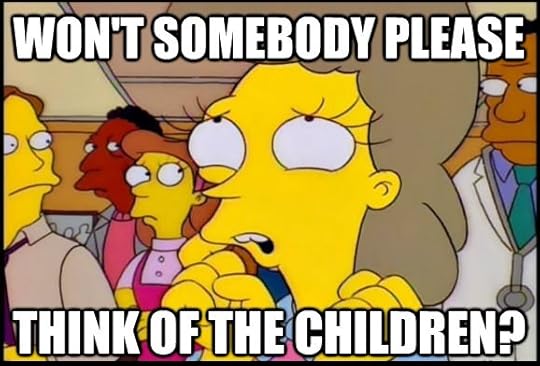
Instead of going for the obvious points -- censorship is bad, blah, blah, blah -- which we've heard a thousand times before, Sandifer turns the subject into a meditation on the difference between Enlightenment and Post-Modern liberalism, arguing that Whitehouse and Thatcher, for all their reactionary politics, represent the former. If you don't feel like buying the book, Sandifer has the piece on his website, and it's worth checking out even if you don't know a Cyberman from a Sontaran.
My only peeve with the book is that Sandifer never bothers to recapitulate the episodes he's discussing, which would be useful with a show that lasted for more than a quarter century in its original run. This volume covers the period with the most memorable episodes, but even so I had to dredge my memory for the plot of The Hand of Fear.
Yeah.
Some of Sandifer's arguments are such a stretch it's a wonder he doesn't pull a muscle (the chapter on The Deadly Assassin in particular), but he does pick up on some interesting themes. My favorite section was the lengthy essay on Mary Whitehouse, the British equivalent of Helen Lovejoy who managed to get producer Philip Hinchcliffe fired because the show was too violent.
Instead of going for the obvious points -- censorship is bad, blah, blah, blah -- which we've heard a thousand times before, Sandifer turns the subject into a meditation on the difference between Enlightenment and Post-Modern liberalism, arguing that Whitehouse and Thatcher, for all their reactionary politics, represent the former. If you don't feel like buying the book, Sandifer has the piece on his website, and it's worth checking out even if you don't know a Cyberman from a Sontaran.
My only peeve with the book is that Sandifer never bothers to recapitulate the episodes he's discussing, which would be useful with a show that lasted for more than a quarter century in its original run. This volume covers the period with the most memorable episodes, but even so I had to dredge my memory for the plot of The Hand of Fear.

January 3, 2015
Another Sandifer book down. I'm loving reading these essays in volumes. So often I will pop over to his site to read the odd entry I'm interested in. But the overall narrative tapestry he's weaving is engaging, insightful, and a real delight. Eruditorum is, I'd argue, best in order. Sandifer coming to realizations and revelations as he peels back this show that's (as of the end of this book) fourteen years old and still getting unpeeled. Doctor Who has such layers, and digging deep (as this book does) is the only way to cover them.
Also that Deadly Assassin essay is like 13% of this book. Because he's a crazy person (and it was also a crazy good essay). His perspectives, educatedness, and resulting views make this series (still) one good time of a read.
Also that Deadly Assassin essay is like 13% of this book. Because he's a crazy person (and it was also a crazy good essay). His perspectives, educatedness, and resulting views make this series (still) one good time of a read.

October 18, 2014
Book 4 in a set of compilations of a Dr. Who blog which deconstructs, reviews and critiques all the Dr. Who episode from 1963. This book covers 1975-1978 my doctor Tom Baker. I have no plans to read the first three but I did buy volume 5. Dense and detailed giving more significance to the television show than perhaps it deserves but a fascinating take nonetheless.

December 13, 2013
I've already raved about this series. If you have any interest in Doctor Who as a cultural artefact or as a reflection of British society, just read it. This volume is worth it for the epic four-part essay on 'The Deadly Assassin' alone.

January 9, 2017
Just as wonderful as all the other Philip Sandifer volumes I've read & absorbed to date. That said, I almost took a star off the rating, when my brain nearly imploded during the reading of the entry on "The Deadly Assassin". Luckily, I got better fast enough to survive those momentary rapids.

November 30, 2015
A superb and superlative look at the Hinchcliffe era of Doctor Who.
Displaying 1 - 17 of 17 reviews