

What do you think?

The Blue Cliff Record
The Blue Cliff Record is a translation of the Pi Yen Lu, a collection of one hundred famous Zen koans accompanied by commentaries and verses from the teachings of Chinese Zen masters. Compiled in the twelfth century, it is considered one of the great treasures of Zen literature and an essential study manual for students of Zen.
688 pages, Kindle Edition
First published January 1, 1112
Ratings & Reviews
Friends & Following
Create a free account to discover what your friends think of this book!
Community Reviews
Displaying 1 - 26 of 26 reviews
March 29, 2012
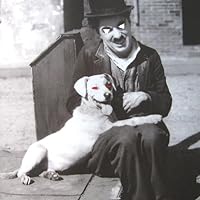
What is the meaning of Bodhidharma?
The master smacked his student across the face with a nine foot wooden dildo.
The master smacked his student across the face with a nine foot wooden dildo.

February 26, 2009
This is the classic compendium of Zen koans, with commentary appended, along with poetic commentary on the commentary. It is for the most part brain shattering, and it's appeal is broad, as it bridges the sudden and gradual paths.
It is a supreme melding of radical metaphysics and radical language. A perfect union of pure spirituality and pure poetry. I do not know how the Clearys managed to translate this. One of the great feats of that art.
Too often Zen is thought of as a kind of peaceful mindless blankness that serves as a universal approach to activities ranging from archery to shitting, but this collection lays bare its intense intellectual vibrancy. Which isn't to say it's academic and egg-heady, rather it lays bare the mental activity required when thoughts are used to free one from ego-centric thought-prisons. The practice of Zen, and the reading of this book, is an extremely calisthenic activity that strikes repeatedly at the root of consciousness as it repeatedly, and thoughtlessly, strives to shrink itself into an identity with the tiny thought-enclosed ego self.
It is a supreme melding of radical metaphysics and radical language. A perfect union of pure spirituality and pure poetry. I do not know how the Clearys managed to translate this. One of the great feats of that art.
Too often Zen is thought of as a kind of peaceful mindless blankness that serves as a universal approach to activities ranging from archery to shitting, but this collection lays bare its intense intellectual vibrancy. Which isn't to say it's academic and egg-heady, rather it lays bare the mental activity required when thoughts are used to free one from ego-centric thought-prisons. The practice of Zen, and the reading of this book, is an extremely calisthenic activity that strikes repeatedly at the root of consciousness as it repeatedly, and thoughtlessly, strives to shrink itself into an identity with the tiny thought-enclosed ego self.

July 2, 2010
I know almost nothing about zen buddhism but I found the koans to be 1. great slapstick, 2. incomprehensible, 3. philosophically challenging. I think each of these responses was intended. There were a few koans which made the philosophical intentions clear (e.g. 2). I took a slap to be a pretty good indication of chastisement but even this sign is inconsistent.
A few of the themes I gleamed:
Each of the following leads to an inauthentic relationship to phenomena and the world:
-trying to 'seize' and organize things with concepts/ language
-seeking out the hidden meaning behind actions as if every action symbolized something else.
-trying to find the essence or essential property of a thing (e.g. buddha nature).
-fixation on causation or dichotomies.
(but if I merely understand in terms of effable theses rather than intuition, I miss the point)
I can see why some people claim to see Zen ideas in the early work of Heidegger.
A few of the themes I gleamed:
Each of the following leads to an inauthentic relationship to phenomena and the world:
-trying to 'seize' and organize things with concepts/ language
-seeking out the hidden meaning behind actions as if every action symbolized something else.
-trying to find the essence or essential property of a thing (e.g. buddha nature).
-fixation on causation or dichotomies.
(but if I merely understand in terms of effable theses rather than intuition, I miss the point)
I can see why some people claim to see Zen ideas in the early work of Heidegger.

March 6, 2016
This is The Book.
The one you show people who think they've seen everything under the sun.
The one you take with you when you know you have a tendency to get smug.
The one you hit someone over the head with, accidentally, even when the book is in a different room.
This is the book you find yourself crying over. This is where you find words you can't unread, can't move past, and can't let go of, even though it's all a crock of worn-out shit.
Sometimes there's a breakthrough, but you're right back where you started and there was no breakthrough.
You could kill a man with this book, if you just got him hooked enough to claim it as his own.
The one you show people who think they've seen everything under the sun.
The one you take with you when you know you have a tendency to get smug.
The one you hit someone over the head with, accidentally, even when the book is in a different room.
This is the book you find yourself crying over. This is where you find words you can't unread, can't move past, and can't let go of, even though it's all a crock of worn-out shit.
Sometimes there's a breakthrough, but you're right back where you started and there was no breakthrough.
You could kill a man with this book, if you just got him hooked enough to claim it as his own.
January 30, 2023
Without a Zen Master teacher this would have been incomprehensible.
With such a teacher this indeed cannot be comprehended.
What freedom is this!
With such a teacher this indeed cannot be comprehended.
What freedom is this!

December 17, 2011
This is one of my "go to" paper-based books. But it's huge and awkward to carry. But I think a kindle edition would detract from the spirit of the thing too much.
That's really beside the point. It is not a book so much as it is a lesson plan. Good luck.
My advice - give it a quick first read; don't try to get anything from it - just let it wash into you. Then read it again. and again, and again and again. I've read it cover to cover three times.
Nothing will stick. It isn't that your mind is a sieve - it won't pour *through* you - it will just splash against you or go around. And it will mock you while it does it, too.
I expect to read this over and over again for the rest of my life. Yes, yes - I could just choose to "understand it" and be done with it.
Would rather the abuse, apparently.
That's really beside the point. It is not a book so much as it is a lesson plan. Good luck.
My advice - give it a quick first read; don't try to get anything from it - just let it wash into you. Then read it again. and again, and again and again. I've read it cover to cover three times.
Nothing will stick. It isn't that your mind is a sieve - it won't pour *through* you - it will just splash against you or go around. And it will mock you while it does it, too.
I expect to read this over and over again for the rest of my life. Yes, yes - I could just choose to "understand it" and be done with it.
Would rather the abuse, apparently.

January 21, 2014
The Blue Cliff Record is a classic text of Ch'an Buddhism, drawing on a hundred public cases (the famous koans) from the lives of the Ancient Masters. The dialogues are brimming over with surprising meanings and insights. However, in the style of the old masters, I ask: "What is prior to and beyond meaning and insight?" As always, the answer is in the question. Once you die the Great Death and burry your body and mind in What, you will understand without minding and see without seeing.
Read and bleed!
Read and bleed!

September 11, 2020
I mean, c'mon now.

May 13, 2020
A fascinating book. I wouldn‘t say I understood much, but it is a fascinating view into Koans and people on their path to awareness. Especially the commentary and the different styles proved useful even if the Koan did not speak to me. Interesting on so many levels and for sure the first reading of many
May 29, 2021
I bought because I'm interested in Chinese classics and I'm interested in what Chinese students had to study.
I feel bad that any student has to read this garbage of knots.
I could only handle a few of them and I think it's a waste of time.
What I understood was either obvious "life has no meaning" or obtuse poetry "see the flower as a dream"
I feel bad that any student has to read this garbage of knots.
I could only handle a few of them and I think it's a waste of time.
What I understood was either obvious "life has no meaning" or obtuse poetry "see the flower as a dream"

November 4, 2024
gotta say, the bios at the end are my favorite part. It's tempting to go back and read all the cases again now that names are attached to real people.
"how much sand have I thrown in people's eyes today?"
"how much sand have I thrown in people's eyes today?"


July 5, 2019
Quite a compendium of zen koans. Not recommended for zen beginners. Despite cleary ‘s clear writing, it is not an easy read( as in any koan ).
Want to Read
March 13, 2025Presente in 3 Volumi, in lingua italiana, editi da "Astrolabio Ubaldini"
Cleary Thomas
Cleary Thomas
This entire review has been hidden because of spoilers.
Currently Reading
May 24, 2026"If you see cheeks on the back of his head, don't go along with him"
You don't need to tell me twice!
You don't need to tell me twice!

October 8, 2018
You'll need familiarity with Chan Buddhism. This is a treasure of the Chan Buddhist Tradition, which can serve as a introduction to the history of this tradition for the serious individual. It's a history, but told in colloquial language and with wit and humor. Legendary encounters, quick witted responses and devastatingly profound insights abound! You will meet Bodhidharma (Chan founder in China,) Master Ma and Chao Chou. Huang Po is in there and Yunmen. Yunmen's the most quoted of all the Masters in such collections! Unfortunately, you'll need background to follow.
Here's an example:
Vimalakirti's Gate of Nonduality
POINTER
Though you say "It is," there is nothing which "is" can affirm.
Though you say "It is not," there is nothing that "is not" can
negate. When "is" and "is not" are left behind, and gain and
loss are forgotten, then you are clean and naked, free and at
ease.
But tell me, what is in front of you and in back of you? If
there is a patchrobed monk who comes forward and says, "In
front is the Buddha shrine and the main gate, behind is the
abbot's sleeping room and private quarters," tell me, does this
man have eyes or not? If you can judge this man, I'll allow that
you have personally seen the Ancients.
Vimalakirti asked Manjusri, (This fellow is making quite a fuss. He should shut his mouth.) "What is a bodhisattva's entry
into the Dharma gate of nonduality? "(He knows, yet he deliberately transgresses.)
Manjusri said, "According to what I think, (What will he say? It simply can't be explained. He's wearing stocks, carrying evidence of his crime, hauling himself into the
magistrate's office.) in all things, (What is he calling "all things"?) no
words, no speech, (What is he saying?), no demonstration and no recognition, (He can fool others ...) to leave behind all questions and answers; (What is he saying?) this is entering the
Dharma gate of nonduality." (What's the use of entering? What's the use of so many complications?)
Then Manjusri asked Vimalakirti, "We have each already
spoken. Now you should tell us, good man, what is a
bodhisattva's entry into the Dharma gate of nonduality? " (Not even the Buddhas of the past, present, and future, let alone the Golden Grain Tathagata (Vimalakirti), can open their mouths
about this one support. Manjusri has turned the spear around and
stabbed one man to death. The arrow hits Vimalakirti just as he
was shooting at the others.)
Hsueh Tou said, "What did Vimalakirti say?" (Bah! Hsueh Tou gathers ten thousand arrows to his breast and speaks the truth in Vimalakirti's place.) He also said,
"Completely exposed." (Not only that time, but now too, it is so. Hsueh Tou is drawing
his bow after the thief has gone. Although he uses all his strength
to help the congregation, what can he do-calamity comes forth
from his own door. But tell me, can Hsueh Tou see where this
comes down? Since he hasn't seen it even in a dream, how can he
say "completely exposed"? Danger! Even the golden-haired lion is
unable to search it out.)
That should tell you if you would like this title.
Here's an example:
Vimalakirti's Gate of Nonduality
POINTER
Though you say "It is," there is nothing which "is" can affirm.
Though you say "It is not," there is nothing that "is not" can
negate. When "is" and "is not" are left behind, and gain and
loss are forgotten, then you are clean and naked, free and at
ease.
But tell me, what is in front of you and in back of you? If
there is a patchrobed monk who comes forward and says, "In
front is the Buddha shrine and the main gate, behind is the
abbot's sleeping room and private quarters," tell me, does this
man have eyes or not? If you can judge this man, I'll allow that
you have personally seen the Ancients.
Vimalakirti asked Manjusri, (This fellow is making quite a fuss. He should shut his mouth.) "What is a bodhisattva's entry
into the Dharma gate of nonduality? "(He knows, yet he deliberately transgresses.)
Manjusri said, "According to what I think, (What will he say? It simply can't be explained. He's wearing stocks, carrying evidence of his crime, hauling himself into the
magistrate's office.) in all things, (What is he calling "all things"?) no
words, no speech, (What is he saying?), no demonstration and no recognition, (He can fool others ...) to leave behind all questions and answers; (What is he saying?) this is entering the
Dharma gate of nonduality." (What's the use of entering? What's the use of so many complications?)
Then Manjusri asked Vimalakirti, "We have each already
spoken. Now you should tell us, good man, what is a
bodhisattva's entry into the Dharma gate of nonduality? " (Not even the Buddhas of the past, present, and future, let alone the Golden Grain Tathagata (Vimalakirti), can open their mouths
about this one support. Manjusri has turned the spear around and
stabbed one man to death. The arrow hits Vimalakirti just as he
was shooting at the others.)
Hsueh Tou said, "What did Vimalakirti say?" (Bah! Hsueh Tou gathers ten thousand arrows to his breast and speaks the truth in Vimalakirti's place.) He also said,
"Completely exposed." (Not only that time, but now too, it is so. Hsueh Tou is drawing
his bow after the thief has gone. Although he uses all his strength
to help the congregation, what can he do-calamity comes forth
from his own door. But tell me, can Hsueh Tou see where this
comes down? Since he hasn't seen it even in a dream, how can he
say "completely exposed"? Danger! Even the golden-haired lion is
unable to search it out.)
That should tell you if you would like this title.

September 10, 2017
This is one of those books that are extremely difficult for me to rate. In such cases, I go back to the exact meaning of rating stars, which is a measure of how I experienced the book. I didn't like it, which is why I give it one star. But allow me to elaborate.
I have to review the book on several different levels of analysis.
At the level of koans/cases themselves, I can say that I read them all. I found most if it extremely esoteric and unnecessarily obscure, especially when compared with later scripture, for example "101 Zen Stories". Ones that annoyed me the most were koans of the following type:
A monk asked Tung Shan, "What is Buddha?"
Tung Shan said, "Three pounds of hemp."
Whenever anything was asked,
Master Chu Ti would just raise one finger.
Elder Ting asked Lin Chi, "What is the boundary when one goes beyond?"
Lin Chi said, "Raindrops falling in a jade palace".
A monk asked Yun Men,
"How is it when the tree withers and the leaves fall?"
Yun Men said, "Body exposed in the golden wind."
I made one of those up, by the way, guess which. See my point?
Some cases simply seem like mental masturbation and snobbery to me, I'm not sure how I should "penetrate" them.
At the level of commentary, I absolutely hated the book. Yuan Wu's (圜悟克勤) pointers and commentary seemed to me like a total waste of time. In addition to that, I couldn't escape the feeling of contradiction because these guys always talk how one shouldn't try to analyze the stories and how explanations don't mean anything, but then they go on and try to explain/analyze, often contributing absolutely nothing. I guess I should be able to "pierce through" to get the meaning directly. Well, then I wouldn't need the explanation anyway. After two thirds of the book, I started simply skimming through Yuan Wu's text, since I couldn't extract anything useful from it.
Hsueh Tou's (雪竇重顯) comments and verses were so incredibly annoying that I had to stop reading them alltogether halfway through the book. His comments feel so patronizing and snobbish and again, I couldn't extract anything useful from them.
To be fair, this book is extremely far from where I am, both in time and space, so I suspect that the lack of my understanding is at least partly related to that. Also, I will allow the possibility of me being simply too stupid to understand this stuff. Maybe I will understand this more deeply at some other time. In any case, someone needs thirty blows to the head and I hope it's not me.
I have to review the book on several different levels of analysis.
At the level of koans/cases themselves, I can say that I read them all. I found most if it extremely esoteric and unnecessarily obscure, especially when compared with later scripture, for example "101 Zen Stories". Ones that annoyed me the most were koans of the following type:
A monk asked Tung Shan, "What is Buddha?"
Tung Shan said, "Three pounds of hemp."
Whenever anything was asked,
Master Chu Ti would just raise one finger.
Elder Ting asked Lin Chi, "What is the boundary when one goes beyond?"
Lin Chi said, "Raindrops falling in a jade palace".
A monk asked Yun Men,
"How is it when the tree withers and the leaves fall?"
Yun Men said, "Body exposed in the golden wind."
I made one of those up, by the way, guess which. See my point?
Some cases simply seem like mental masturbation and snobbery to me, I'm not sure how I should "penetrate" them.
At the level of commentary, I absolutely hated the book. Yuan Wu's (圜悟克勤) pointers and commentary seemed to me like a total waste of time. In addition to that, I couldn't escape the feeling of contradiction because these guys always talk how one shouldn't try to analyze the stories and how explanations don't mean anything, but then they go on and try to explain/analyze, often contributing absolutely nothing. I guess I should be able to "pierce through" to get the meaning directly. Well, then I wouldn't need the explanation anyway. After two thirds of the book, I started simply skimming through Yuan Wu's text, since I couldn't extract anything useful from it.
Hsueh Tou's (雪竇重顯) comments and verses were so incredibly annoying that I had to stop reading them alltogether halfway through the book. His comments feel so patronizing and snobbish and again, I couldn't extract anything useful from them.
To be fair, this book is extremely far from where I am, both in time and space, so I suspect that the lack of my understanding is at least partly related to that. Also, I will allow the possibility of me being simply too stupid to understand this stuff. Maybe I will understand this more deeply at some other time. In any case, someone needs thirty blows to the head and I hope it's not me.

February 23, 2008
This is one of the essential texts on Zen Buddhism, straight from the source. The Blue Cliff Record is ancient. The original 100 Koans (or "cases") were compiled almost a thousand years ago. Koans are to be taken alongside meditation (practice) and instruction, and can on occasion offer direct insight. To me, this was the clearest text on Koans I've read; at times it seems to be spelling everything out explicitly.
Most of the "meaning" is on the surface; if you start digging deeper, trying to tie things together in a way that makes sense then you lose the point completely. These koans try to get at something that can't be expressed in words and which cannot, strictly speaking, be "thought." The words are like a finger pointing to the moon.
There is also a body of commonly used metaphors and phrases that the commentary employs. Things like "patchrobed monk" or "threescore blows," etc, which are mostly referring to states of mind / attainment. There are also allusions and references which probably would have made immediate sense to a monk in the thirteenth century, but now are culturally inacessible to a westerner. I had an introduction to these ideas from other volumes on Koans. This is something of a barrier to translation, but can be understood with time.
The end result is that this volume probably appears meaningless or deliberately obscure. There is a lot to be found here, but it takes some effort. The Koan demands immediate engagement, and requires corresponding practice.
Most of the "meaning" is on the surface; if you start digging deeper, trying to tie things together in a way that makes sense then you lose the point completely. These koans try to get at something that can't be expressed in words and which cannot, strictly speaking, be "thought." The words are like a finger pointing to the moon.
There is also a body of commonly used metaphors and phrases that the commentary employs. Things like "patchrobed monk" or "threescore blows," etc, which are mostly referring to states of mind / attainment. There are also allusions and references which probably would have made immediate sense to a monk in the thirteenth century, but now are culturally inacessible to a westerner. I had an introduction to these ideas from other volumes on Koans. This is something of a barrier to translation, but can be understood with time.
The end result is that this volume probably appears meaningless or deliberately obscure. There is a lot to be found here, but it takes some effort. The Koan demands immediate engagement, and requires corresponding practice.

August 14, 2014
Good translation of this classic collection of Zen koans.
In case you can read German, I strongly advise to use the following volume next to the translation of Thomas Cleary:
Yamada Koun Roshi: Die Niederschrift vom blauen Fels - Hekiganroku: Die klassische Koansammlung mit neuen Teishos. München: Kösel Verlag, 2002
This German volume includes extensive Teishos on each koan.
Also the translation of the Zen Comments by Hakuin and Tenkei is useful:
Thomas Cleary, Secrets of the Blue Cliff Record - Zen Comments by Hakuin and Tenkei. Boston & London: Shambhala, 2000
In case you can read German, I strongly advise to use the following volume next to the translation of Thomas Cleary:
Yamada Koun Roshi: Die Niederschrift vom blauen Fels - Hekiganroku: Die klassische Koansammlung mit neuen Teishos. München: Kösel Verlag, 2002
This German volume includes extensive Teishos on each koan.
Also the translation of the Zen Comments by Hakuin and Tenkei is useful:
Thomas Cleary, Secrets of the Blue Cliff Record - Zen Comments by Hakuin and Tenkei. Boston & London: Shambhala, 2000
December 2, 2014
One of the Treasures of Chan Buddhism wonderfully translated by the Cleary brothers. I would be better to read one volume at a time (they are still available as separate volumes), unless one is quite familiar with this tradition.
While the Wumenguan gets the most attention as far as gongan (J. koans) are concerned, this collection has the commentary of one of the most wonderful Chan authors, Yuanwu, none compare with the beauty and insight into these traditional gongan!
While the Wumenguan gets the most attention as far as gongan (J. koans) are concerned, this collection has the commentary of one of the most wonderful Chan authors, Yuanwu, none compare with the beauty and insight into these traditional gongan!

May 15, 2022
El Blue Cliff Record es uno de los libros más importantes que he leído. Tengo la seguridad de que voy a revisitarlo en el futuro.
Hay tantas cosas que decir que una reseña general no le hace justicia. Estoy comentando todos los casos aquí: https://www.reddit.com/user/astroemi/...
Si les interesa, eso es lo mejor que puedo hacer. Con cualquier otra cosa me quedo corto.
Hay tantas cosas que decir que una reseña general no le hace justicia. Estoy comentando todos los casos aquí: https://www.reddit.com/user/astroemi/...
Si les interesa, eso es lo mejor que puedo hacer. Con cualquier otra cosa me quedo corto.

December 9, 2012
A textbook of koans, and a pillar in Zen Buddhism. Koans are not riddles, or mindfucks as people who are new to them first surmise. Contemplating them, meditating on them gets beyond the nonsense. By breaking down logic and perceptions, you touch the truth of direct experience. I have read this for years, and have I touched such truth? Mu!
Read
June 7, 2011Recommended by a great friend, will always have a place in my heart. A slow, hard read but well worth it.

October 10, 2017
astonishing book and more astonishing still
May 22, 2012
Very esoteric. Not much meaning found by this Western laymen.

January 29, 2017
70 % (of useful information)
Displaying 1 - 26 of 26 reviews