Este libro ha sido convertido a formato digital por una comunidad de voluntarios. Puedes encontrarlo gratis en Internet. Comprar la edición Kindle incluye la entrega inalámbrica.
Oscar Fingal O'Fflahertie Wills Wilde was an Irish poet and playwright. After writing in different forms throughout the 1880s, he became one of the most popular playwrights in London in the early 1890s. He is best remembered for his epigrams and plays, his novel The Picture of Dorian Gray, and his criminal conviction for gross indecency for homosexual acts. Wilde's parents were Anglo-Irish intellectuals in Dublin. In his youth, Wilde learned to speak fluent French and German. At university, he read Greats; he demonstrated himself to be an exceptional classicist, first at Trinity College Dublin, then at Magdalen College, Oxford. He became associated with the emerging philosophy of aestheticism, led by two of his tutors, Walter Pater and John Ruskin. After university, Wilde moved to London into fashionable cultural and social circles. Wilde tried his hand at various literary activities: he wrote a play, published a book of poems, lectured in the United States and Canada on "The English Renaissance" in art and interior decoration, and then returned to London where he lectured on his American travels and wrote reviews for various periodicals. Known for his biting wit, flamboyant dress and glittering conversational skill, Wilde became one of the best-known personalities of his day. At the turn of the 1890s, he refined his ideas about the supremacy of art in a series of dialogues and essays, and incorporated themes of decadence, duplicity, and beauty into what would be his only novel, The Picture of Dorian Gray (1890). Wilde returned to drama, writing Salome (1891) in French while in Paris, but it was refused a licence for England due to an absolute prohibition on the portrayal of Biblical subjects on the English stage. Undiscouraged, Wilde produced four society comedies in the early 1890s, which made him one of the most successful playwrights of late-Victorian London. At the height of his fame and success, while An Ideal Husband (1895) and The Importance of Being Earnest (1895) were still being performed in London, Wilde issued a civil writ against John Sholto Douglas, the 9th Marquess of Queensberry for criminal libel. The Marquess was the father of Wilde's lover, Lord Alfred Douglas. The libel hearings unearthed evidence that caused Wilde to drop his charges and led to his own arrest and criminal prosecution for gross indecency with other males. The jury was unable to reach a verdict and so a retrial was ordered. In the second trial Wilde was convicted and sentenced to two years' hard labour, the maximum penalty, and was jailed from 1895 to 1897. During his last year in prison he wrote De Profundis (published posthumously in abridged form in 1905), a long letter that discusses his spiritual journey through his trials and is a dark counterpoint to his earlier philosophy of pleasure. On the day of his release, he caught the overnight steamer to France, never to return to Britain or Ireland. In France and Italy, he wrote his last work, The Ballad of Reading Gaol (1898), a long poem commemorating the harsh rhythms of prison life.
Another heartbreaking story by Wilde. For me, it is the saddest I’ve read by him so far, so I put his books aside for a while now, and read something entirely different.
It's so sad ..don't you think ? the way they saw him , they were the true monsters. I saw he was so kind ,pure creature and it wasn't his fault that they couldn't see how beautiful his heart was . the way he imagined how he could take care of the princess against how she saw him makes you realize how unfair the life can be . He died when he found the truth " it was he who was misshapen and hunchbacked, foul to look at and grotesque. He himself was the monster, and it was at him that all the children had been laughing, and the little Princess who he had thought loved him -- she too had been merely mocking at his ugliness, and making merry over his twisted limbs. Why had they not left him in the forest, where there was no mirror to tell him how loathsome he was? Why had his father not killed him, rather than sell him to his shame? The hot tears poured down his cheeks, and he tore the white rose to pieces. The sprawling monster did the same, and scattered the faint petals in the air. It grovelled on the ground, and, when he looked at it, it watched him with a face drawn with pain. He crept away, lest he should see it, and covered his eyes with his hands. He crawled, like some wounded thing, into the shadow, and lay there moaning. "
A bit long-winded, but nevertheless a good short story. The Birthday of the Infanta is even sadder than The Devoted Friend.
The part where the dwarf recognized himself in the mirror and his subsequent breakdown touched me deeply. The whole scene reminded of Lovecraft's The Stranger (could it be that he was inspired by Wilde when he wrote it?) and Orwell's 1984.
What a deep and heart-wrenching story. What it lacks in length, the story makes up for in detail, strict adhesion to Spanish history/culture (historia y cultura), and allusion. The amount of imagery and description attributed to each aspect of the story is very expressive, just as the story itself is emotional.
The story also centers around some central themes that it effectively gravitates around: love, beauty, class struggle, and freedom.
First is love, a theme first explored through the King. He is described as melancholy and it is explained that his wife (the queen) has passed away, leaving him a shell of his younger self. He is so distraught from losing the love of his life that he can barely focus on the matters of state. Similarly, the sight of his happy daughter, the Infanta, brings him no joy, as he leaves to go to sleep on her birthday.
Of course, love is also explored in the Dwarf, a complex, yet overall relatable character. While the Dwarf is depicted as the epitome of ugliness and disgust, he can be thought of as our own innate insecurities and naiveties. When he is given the white flower from the Infanta, he feels that he is on the receiving end of love, a love that he wants so strongly to reciprocate. His being blinded by this love is what causes him to eventually fall victim to his own sight.
This can easily be a representation of a contemporary view of love and interpersonal relationships. As we begin to develop feelings for others, our guards begin to slowly be let down; the end result is a prioritizing of our own looks and how we are perceived by those we love. Before we care about others, are insecurities are meaningless. Once we start to think about how others perceive us, however, we begin to doubt in ourselves.
Beauty is another theme explored in this story. It is made very clear that the Dwarf is not pretty. He is not loved by his father, the royals, the flowers, nor the Peacock. His disfigurement is even a source of amusement. The way he is portrayed can also be a metaphor for physical beauty and how we do not always look like the perfect images we want.
Cliche as a message as it is, the Dwarf’s character highlights the importance of internal beauty. External looks are what some people notice, and these are not people worth spending time on. The flowers are all gorgeous, yet they look down on the Dwarf for his inferior physical attributes. Even the Infanta is described by many as the beacon of beauty, but her pest-like personality causes her to treat others with no respect whatsoever.
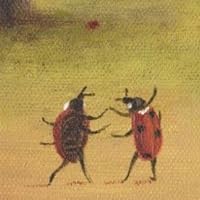
The birds and lizards, on the other hand, love the Dwarf. Even when they acknowledge that he is not physically attractive, they love him because of his kindness, his generosity, his softness, and his sweetness. In times of distress and hardship, he still tries his best to help and please. The lizards dance for him when he is tired and the birds fly around him.
This reinforces a lesson that your time should be dedicated to people who care about you. Not you for what you look like or for how others will perceive you. You should give your time and attention to people who want to spend time with you because they like the type of person you are.
Class struggle is not as much a point of discussion, but references to the Infanta’s place in society, paired with the flowers’ lifestyle, express the metaphor of an elite/elitist class.
Freedom is the last theme that I noticed and it is something that is alluded to along with the class difference. The flowers describe how they can call their gardeners to move them whenever they wish. This is indicative of power, but also of immobility. Flowers are rooted and do not have the will to move on their own. Similarly, the Infanta has no time to spend with other children (except her birthday). Whereas the lizards and birds are free to move and fly (and the Dwarf can enjoy the freedom of the forest), those who are in a place of power appear to lack the freedom that is so fulfilling to life.
This is the end of my analysis. Sorry it’s so long, but the story was actually really interesting
This entire review has been hidden because of spoilers.
Far from the best of Wilde's work but his signature wit and melancholy is very much present. At least I can now boast about being well-acquainted with the source material of my upcoming ballet performance where I play one of the statues lol.
"But the little Infanta was not there, only some wonderful white statues that looked down on him from their jasper pedestals, with sad blank eyes and strangely smiling lips." STATUES MENTIONED 💪 💪 💪
Oscar Wilde consegue enfiar o dedo na ferida até quando escreve para crianças, impressionante! Para mim foi uma ótima surpresa descobrir que ele tinha escrito esse tipo de texto.
"- Mi bella princesa, vuestro divertido enanillo no volverá a bailar nunca. Es una lástima, porque era tan feo que hubiera hecho sonreír al rey. - Pero ¿por qué no bailará nunca?- preguntó la infanta riendo. - Porque su corazón se ha roto - contestó el chambelán. Y la infanta frunció el ceño y sus bellos labios de rosa se curvaron en una mueca de desdén. - Para el futuro, aquellos que vengan a jugar conmigo, que no tengan corazón - exclamó; y se marchó corriendo al jardín."
Saņēmu šo grāmatu savā dzimšanas dienā. Gluži kā apsveikuma kartiņa. Viena no skaistākajām grāmatām manā grāmatu plauktā. Tās izlasīšana prasa īsu laika sprīdi, tās apdomāšana ilgāku. Šī pasaka beigās kļūst par apsveikuma kartiņas rindām. Vailda acīm redzēt Spāniju, saostīt karstumā plīstošus granātābolus, pieskārties brokāta kleitai....un tā līdz satriecošam grāmatas finālam. Vienkāršam, negaidītam, bet tieši tādēļ tik lieliskam. Pasakas arī šodien ir jāprot izstāstīt.
Oh wow. This is really heartbreaking. I'm a little bit in shock but I think I'm going to give this a reread and then probably a 5* rating. Firstly, the descriptions of everything was so vivid; for such a short story I really felt sucked within this world. Secondly, I accidentally called my mum as I grabbed my phone to write this review because I couldn't see through the tears.
"Pero lo más divertido de la fiesta, lo mejor de todo sin duda alguna, fue la danza del enanito. Cuando apareció en la plaza tambaleándose sobre sus piernas torcidas y balanceando su enorme cabezota deforme, los niños estallaron en ruidosas exclamaciones de alegría, y la infanta rió tanto que la camarera se vio obligada a recordarle que si bien muchas veces en España la hija de un Rey había llorado delante de sus pares, no había precedente de que una Princesa de Sangre Real se mostrara tan regocijada en presencia de personas inferiores a ella. Pero el enano era irresistible, y ni siquiera en la Corte de España, conocida por su afición a lo grotesco, se había visto jamás un monstruo tan extraordinario."
Very definitely a story of its time. It’s intended for children, but I seriously doubt many modern kids would read this. There are moral lessons buried here, but they are largely lost in the unnecessarily detailed descriptions of the riches of the royal family featured. Some of these are effectively lists of luxury items and they were possibly included to demonstrate the lavish and excessive lifestyle of the monarchy. But in this case, less would undeniably have been more. There is also an unfortunate undercurrent of admiration present in some of these descriptions that diminishes their effectiveness. As I say, of its time.
Entendiendo que mi lengua materna no es el inglés y este cuento se escribió en el siglo XIX, sumándole el hecho de que Oscar es conocido por sus grandes, creativas y profundas descripciones, fue una lectura interesante, entretenida y hasta graciosa. Los mensajes de Wilde son claros y completamente reales, y la estrategia de contarlos en cuentos “infantiles” es muy buena, llegando e interpelando más al lector. Aquí nos muestra la superficialidad de la gente y cómo alguien, con un muy buen corazón pero feo en fin, puede sufrir los peores tratos y las más injustas burlas.
This was a beautiful and truly heartbreaking story, that shows how cruel people can be and that beauty is in the inside, not on the outside. He’s heart was beautiful it’s so sad nobody could see it… Highly recommend this short story!
Поки що найсумніша казка Вайлда, що я читала. Точно не для дітей! Не через те, що трагічна, а через велику кількість дуже дорослих деталей (стосунки короля і королеви, інквізиція, вбивства, політичні відсилки, тощо).
Diesmal waren mir die detaillierten Beschreibungen der Umgebung etc. etwas zu viele, das "heftige", schmerzhafte Ende hat es aber in sich. Ein weiteres tolles, sehr tiefsinniges Märchen von Wilde.
It was interesting until the story was only about the appearance of the dancer, I lost interest and the interesting politics it spoke about at the start became obsolete. It was cruel how everyone treated him, and the cruelty was well spoken about, but everything in the story just became about how 'ugly' and 'disgusting' he was.