

What do you think?

The Elements of Academic Style: Writing for the Humanities
Eric Hayot teaches graduate students and faculty in literary and cultural studies how to think and write like a professional scholar. From granular concerns, such as sentence structure and grammar, to big-picture issues, such as adhering to genre patterns for successful research and publishing and developing productive and rewarding writing habits, Hayot helps ambitious students, newly minted Ph.D.'s, and established professors shape their work and develop their voices.
Hayot does more than explain the techniques of academic writing. He aims to adjust the writer's perspective, encouraging scholars to think of themselves as makers and doers of important work. Scholarly writing can be frustrating and exhausting, yet also satisfying and crucial, and Hayot weaves these experiences, including his own trials and tribulations, into an ethos for scholars to draw on as they write. Combining psychological support with practical suggestions for composing introductions and conclusions, developing a schedule for writing, using notes and citations, and structuring paragraphs and essays, this guide to the elements of academic style does its part to rejuvenate scholarship and writing in the humanities.
Hayot does more than explain the techniques of academic writing. He aims to adjust the writer's perspective, encouraging scholars to think of themselves as makers and doers of important work. Scholarly writing can be frustrating and exhausting, yet also satisfying and crucial, and Hayot weaves these experiences, including his own trials and tribulations, into an ethos for scholars to draw on as they write. Combining psychological support with practical suggestions for composing introductions and conclusions, developing a schedule for writing, using notes and citations, and structuring paragraphs and essays, this guide to the elements of academic style does its part to rejuvenate scholarship and writing in the humanities.
256 pages, Hardcover
First published July 15, 2014
About the author
Eric Hayot
13 books13 followersEric Hayot is professor of comparative literature and Asian studies at the Pennsylvania State University. He is the author of The Elements of Academic Style (Columbia, 2014), On Literary Worlds (2012), and The Hypothetical Mandarin (2009).
Ratings & Reviews
Friends & Following
Create a free account to discover what your friends think of this book!
Community Reviews
Displaying 1 - 30 of 56 reviews

May 27, 2015
Several friends and colleagues recommended this book to me, so I was surprised by how little I enjoyed it. Part of the problem has to do with the kind of writing Hayot advocates—which is the echt academic genre of cultural theory. Few of his examples of strong prose strike me as compelling. (There's even an odd moment when Frederic Jameson is held up as an avatar of style.)
But his advice about writing is also often troubling. For instance, Hayot takes the valid insight that the interest of critical prose tends to hinge on the ability of the writer to move fluidly between the general and particular, ideas and examples, and reduces it to a formula, "The Uneven U", which tells writers exactly how to structure the levels of abstraction in a paragraph.
Even more, though, I disliked the tone of the book. When trying to understand why people don't stick to regular schedules for writing, Hayot seems only able to imagine excuses like "cleaning the house or doing the dishes", or, heaven forfend, a devotion to teaching—which he describes variously as a form of "virtuous procrastination", "compensation", and a task "easier than writing" (29-30). He comes off, that is, as someone who's never had to worry about anything more urgent than the advancement of his career.
But his advice about writing is also often troubling. For instance, Hayot takes the valid insight that the interest of critical prose tends to hinge on the ability of the writer to move fluidly between the general and particular, ideas and examples, and reduces it to a formula, "The Uneven U", which tells writers exactly how to structure the levels of abstraction in a paragraph.
Even more, though, I disliked the tone of the book. When trying to understand why people don't stick to regular schedules for writing, Hayot seems only able to imagine excuses like "cleaning the house or doing the dishes", or, heaven forfend, a devotion to teaching—which he describes variously as a form of "virtuous procrastination", "compensation", and a task "easier than writing" (29-30). He comes off, that is, as someone who's never had to worry about anything more urgent than the advancement of his career.

September 18, 2015
I'm teaching this book in my introduction to Graduate Studies book and its emphasis on some of the toughest structural and stylistic challenges of scholarly writing is offset with its lightness of touch, Hayot's wit and frankness. He begins the book with generative writing strategies--reminiscent of Professors as Writers or How to Write a Lot: A Practical Guide to Productive Academic Writing, and his emphasis on habit-building was generous and practical. I also particularly liked his articulation of writing-as-thinking (rather than writing as the fleshing out of a predetermined outline), the importance of unstinting drafting (have to have material before you can cut from it), and the transformative quality of revision (not just cosmetic but shaping). I found myself constantly writing stars and smiley faces in the margins of his prose, and he chooses engaging, complex examples of literary and cultural studies scholarship to unpack.
The second half of the book is self-confessedly more scattershot, as Hayot moves through a number of stylistic tics that he likes or doesn't like and explains why. This felt less cohesive and powerful for me than the first half of the book, which focused on writing experientially and structurally. Hayot's diagramming of the "uneven U" made me think of my own composition process and paragraph structure in a new way. I also like the manifesto quality of the very opening of the book, where he talks about how unfortunate it is that institutions overlook writing training for graduate students.
Unlike many books or articles about scholarly writing, the gusto and humor with which Hayot wrote his own book made me want to sit down and write rather than cower in the corner.
The second half of the book is self-confessedly more scattershot, as Hayot moves through a number of stylistic tics that he likes or doesn't like and explains why. This felt less cohesive and powerful for me than the first half of the book, which focused on writing experientially and structurally. Hayot's diagramming of the "uneven U" made me think of my own composition process and paragraph structure in a new way. I also like the manifesto quality of the very opening of the book, where he talks about how unfortunate it is that institutions overlook writing training for graduate students.
Unlike many books or articles about scholarly writing, the gusto and humor with which Hayot wrote his own book made me want to sit down and write rather than cower in the corner.
January 25, 2023
I usually find books about writing to be full of platitudes (I also struggle more with other genres; the academic mode feels weirdly natural to me), but this book is really charming, often quite specific, and probably quite useful.

December 21, 2024
While I did enjoy other books on writing like William Zinsser’s On Writing Well and E.B. White and William Strunk’s The Elements of Style more than this one, I think Hayot’s brings into focus some important and perhaps overlooked ideas. The Uneven-U is likely the book's biggest contribution. Although I do not really like it as a writing technique and more as a reading method, the Uneven-U can be very useful when you reread your final draft and want to tie any loose ends. Chunking is the term Hayot uses for this process—you basically latch onto what he calls your specific “privileged vocabulary of themes and concepts” and their synonyms and disperse them strategically, usually by the end of paragraphs or level-five sentences (78). This way you keep nudging your readers back into your main idea and what you are trying to convey. As a writing tool, I think the Uneven-U falls short because it seems incapable of accommodating contingencies in writing by encouraging structure. What I mean by this is that sometimes it is really powerful and appropriate to finish or begin with a quotation or a piece of evidence. More so than trailing with another generalization.
If I were to give advice on writing Hayot's book does not cover, it would be about emphasizing the importance of editing and rewriting. In the context of academic writing, I say never trust your first and second draft, always keep a record of the process leading to your final draft (that includes all working outlines and drafts), always record citational information as soon as you start skimming or reading a secondary source, and try your best to rewrite a better version of every sentence.
If I were to give advice on writing Hayot's book does not cover, it would be about emphasizing the importance of editing and rewriting. In the context of academic writing, I say never trust your first and second draft, always keep a record of the process leading to your final draft (that includes all working outlines and drafts), always record citational information as soon as you start skimming or reading a secondary source, and try your best to rewrite a better version of every sentence.
April 13, 2024
3.75 STARS
This was a suggested read for my BA colloquium this semester and I started reading the book because I was curious about what tips the author would be giving (and my professor spoke very highly of the book). I think, overall, reading it definitely has its merits and I was honestly surprised how many of the tips I have already been implementing while writing term papers the past semesters. (I'm aware that writing a BA / MA / dissertation or an academic book is something entirely different from a term paper but, essentially, only the length is different.)
I have underlined many parts of this book and I'm sure I will go back to it over the course of my academic career (however that may look, I'm not predicting anything). I have yet to begin working on my BA but I'll definitely be thinking about and implementing some of these tips in my process.
The rating is mostly due to the fact that many of the things were not that groundbreaking to me (although it is nice to see these methods put into words and on the page because I'd never really thought about them). Reading this also got a little tedious after a while, but maybe that was also caused by my higher-than-average stress level... Nevertheless, I think this is definitely a valuable resource and a nice book to consult. It's also clearly structured in case you only need some input on one singular topic (such as titles or structure). Even if you don't read the entire book, looking at some chapters is definitely worth it!
This was a suggested read for my BA colloquium this semester and I started reading the book because I was curious about what tips the author would be giving (and my professor spoke very highly of the book). I think, overall, reading it definitely has its merits and I was honestly surprised how many of the tips I have already been implementing while writing term papers the past semesters. (I'm aware that writing a BA / MA / dissertation or an academic book is something entirely different from a term paper but, essentially, only the length is different.)
I have underlined many parts of this book and I'm sure I will go back to it over the course of my academic career (however that may look, I'm not predicting anything). I have yet to begin working on my BA but I'll definitely be thinking about and implementing some of these tips in my process.
The rating is mostly due to the fact that many of the things were not that groundbreaking to me (although it is nice to see these methods put into words and on the page because I'd never really thought about them). Reading this also got a little tedious after a while, but maybe that was also caused by my higher-than-average stress level... Nevertheless, I think this is definitely a valuable resource and a nice book to consult. It's also clearly structured in case you only need some input on one singular topic (such as titles or structure). Even if you don't read the entire book, looking at some chapters is definitely worth it!

May 13, 2025
Well written (!), but some of the author's favorite topics - like "the uneven u" - were hard for me to be as enthusiastic about as the whole.

May 30, 2020
Great book for graduate students or professionals in the humanities. There are a couple things readers will inevitably disagree with, as much of this is subjective. Hayot makes strong cases for all his strategies. I found this book very clarifying and it helped me psychologically move past a stuck place in my dissertation writing.

November 13, 2019
Read for work.
Solid and analytical. (Longer review to follow?)
Solid and analytical. (Longer review to follow?)
February 6, 2022
I have mixed feelings about this book. Some aspects were very appealing, and helped a great deal, while others felt condescending. I have to sit with it more but I am glad I read it all the same.


October 1, 2022
UPDATE: i read it closer this morn and I don't agree with the practical advice re writing ("don't use teaching or childcare as an excuse to not write" is one of the strongest assertions in the book, lol) and its emphasis on structure and discipline and "habit-building" simply does not work for people with ADHD. Some of the advice on style, structure, etc. was v helpful but the "how to get your butt in the seat and write" advice I think fell predictably short, bc diff things work for diff people. additionally he doesn't specify what it is that you are doing when you set yourself "two pages per day" reccomendation - are you writing two pages of an article, or two pages of thoughts, or research notes? like the actual production of an article I feel begins primarily with research, preparation, testing ideas, fiddling with things and then you make the structure and then you write. So how are you meant to "write two pages a day" when you're still doing the first phase - which takes a generous amount of time?? how do we think about the work that happens before or in the midst of the writing and how can we integrate it more into our writing practice (taking notes about an archival experience, freewriting, thinking journals, etc.) so that this impetus to produce 2 actual finished pages of academic work a day is more possible? It takes a lot of work to get to the phase where you are actually able to write - and for me it can't begin til I'm done with the structure and the research. He suggests you should be able to write in medias res and can come up with your ideas as you go/impose structure later. But what might doing that actually LOOK LIKE? What exactly is on the two pages!???
..........
Original review from yesterday: "A genuinely helpful book for me, because I've never had specific academic writing instruction as such. Very, very useful if you are writing academic work in the humanities. You can take or leave some of his advice but considering it is helpful - I always want to know top tips and tricks and whether or not I use them depends on the rhythm I'm in. If it's a good rhythm, I throw caution to the wind. If it's nonexistent, and I feel stuck, despondent, etc; I turn to Hayot's ideas to give me a structure for how I'm going to manage things!! I don't even think we agree ideologically, but it's useful nonetheless to have some strategies and ways of thinking about writing, which is unfortunately as I am now learning, more difficult than simply mimicking the style of the things you read and liked."
..........
Original review from yesterday: "A genuinely helpful book for me, because I've never had specific academic writing instruction as such. Very, very useful if you are writing academic work in the humanities. You can take or leave some of his advice but considering it is helpful - I always want to know top tips and tricks and whether or not I use them depends on the rhythm I'm in. If it's a good rhythm, I throw caution to the wind. If it's nonexistent, and I feel stuck, despondent, etc; I turn to Hayot's ideas to give me a structure for how I'm going to manage things!! I don't even think we agree ideologically, but it's useful nonetheless to have some strategies and ways of thinking about writing, which is unfortunately as I am now learning, more difficult than simply mimicking the style of the things you read and liked."

July 13, 2017
This book is quite illuminating to a new grad student like me. I love the way Hayot describes some things, such as showing only the tip of your ice burg, or avoid giving your reader all of your background info and research. Using that advice really helped me decide what was important and what wasn't important in my papers for class.
I still struggle with the uneven U, because I can totally tell a 5 from a 1, but the middle numbers sort of jumble together for me, no matter how many times I reread that section. It trips me up that a 4 in one paragraph might function as a 2 or a 3 in another.
I won't say I completely have this book's message down; the conference paper I'm currently writing proves that isn't yet the case. However, I feel like a more confident graduate student writer after having studied this book.
I still struggle with the uneven U, because I can totally tell a 5 from a 1, but the middle numbers sort of jumble together for me, no matter how many times I reread that section. It trips me up that a 4 in one paragraph might function as a 2 or a 3 in another.
I won't say I completely have this book's message down; the conference paper I'm currently writing proves that isn't yet the case. However, I feel like a more confident graduate student writer after having studied this book.

October 17, 2015
Hayot means well, but this book left a bad taste in my mouth. There were some helpful comments, like when he says that "the work you do in your first years after starting graduate school... [will] determine, in almost every case, the first decade or so of your life as a publishing scholar" (119). His ideas on writing as process were also very useful. But I found his comments on style, which occupy roughly 2/3 of the book, commonsensical and even trite oftentimes. I think he's a mediocre stylist & an awkward humorist, and I often felt as though he wasn't qualified to advise his readers on matters of style. Also, he seems to have a knack for picking tedious & unnecessarily long passages to illustrate his points.

February 9, 2019
Sometimes I wanted more examples or an extended discussion, other times I found the exames and commentary to be too lengthy, but on the whole, it was helpful, particularly the section on the uneven-U structure.

June 18, 2023
I appreciate the effort that went into trying to systemize the elements of writing. It's somewhat impressive to see all the sections, sections I would have never considered, but which made sense as soon as I read them (e.g. "ventilation"). However, the actual suggestions within these sections were very hit or miss. And to an extent that's fine--Hayot is allowed to give his personal preferences. However, the framing of such preferences as objective or dogma becomes grating, and I found myself at least as likely as not to wholly disagree with some of the advice (e.g. the idea that you should demonstrate an air of casuality when discussing "famous" theorists to boost your ethos. "But I do declare that of course Lacanian theory tells us that a better reading of this scene is... 🎩." And of course the only famous people he exemplifies are white men. And that's not even getting into his total ignorance of a Black feminist politics of citation.)
And then this is a personal pet peeve, but one that I could not overlook in a book on writing: cut the unnecessary words! The most glaring example was, "...think about the ways in which..." Please, for the love of all that is good, just say, "...consider how..."
Lastly, he makes some weird assumptions about who will be reading the book. The beginning is all advice for how to overcome your "crippling" (yes, ableism abounds in this book) writing anxiety. And I'm just sitting here like, can we get to some actual advice, because this doesn't apply for me. Thankfully that subsides for the most part as the book progresses (save his discussion of using "you" in writing where he praises an example in which the author writes how "you" talk to your refrigerator. Buddy, I have bad news for you...).
Despite my gripes, I would recommend the book. Whether you agree with the advice or not, the book is helpful for considering your writing in systemic ways, and that's ultimately a worthwhile take away regardless of anything else.
And then this is a personal pet peeve, but one that I could not overlook in a book on writing: cut the unnecessary words! The most glaring example was, "...think about the ways in which..." Please, for the love of all that is good, just say, "...consider how..."
Lastly, he makes some weird assumptions about who will be reading the book. The beginning is all advice for how to overcome your "crippling" (yes, ableism abounds in this book) writing anxiety. And I'm just sitting here like, can we get to some actual advice, because this doesn't apply for me. Thankfully that subsides for the most part as the book progresses (save his discussion of using "you" in writing where he praises an example in which the author writes how "you" talk to your refrigerator. Buddy, I have bad news for you...).
Despite my gripes, I would recommend the book. Whether you agree with the advice or not, the book is helpful for considering your writing in systemic ways, and that's ultimately a worthwhile take away regardless of anything else.

December 24, 2020
Although I get that the book has some idiosyncrasies, I was very happy to come across it toward the end of my graduate career. I wish I had found it earlier. Unlike some of the other (very useful) academic writing books that are focused on other parts of writing (studies about productivity in How to Write a Lot, a specific process for being productive in Writing Your Journal Article in 12 Weeks), this one was the most encouraging for me personally. I AM the person who worries about the dishes when I sit down to write. I AM the person who over-prepares for teaching as procrastination for writing.
"I am terrified - seriously terrified - of academic writing" (17).
"The ultimate truth about graduate school is that successful academics are not always the smartest ones in their cohort. They're the ones who manage that anxiety well, who learn to live with their fears and continue, despite everything, to write" (18).
Thank you! Here are some specific elements that I found useful: advice for what to do when you're stuck; advice for how to handle fear; things that writers know instinctively but that Hayot has laid out explicitly, like being aware of the need for surprise; a brief explanation about why chapters are longer than articles; the chapter on introductions; the chapter on transitions; the chapter on ending well!; and more.
I also appreciated Chapter 12, "Don't Say It All Early." This has always been my instinct, but it seems the trend is to give away the whole argument right away (making reading the rest incredibly tedious).
I didn't find the author's persona to be as annoying as some other people did. For me, this was a very valuable book.
"I am terrified - seriously terrified - of academic writing" (17).
"The ultimate truth about graduate school is that successful academics are not always the smartest ones in their cohort. They're the ones who manage that anxiety well, who learn to live with their fears and continue, despite everything, to write" (18).
Thank you! Here are some specific elements that I found useful: advice for what to do when you're stuck; advice for how to handle fear; things that writers know instinctively but that Hayot has laid out explicitly, like being aware of the need for surprise; a brief explanation about why chapters are longer than articles; the chapter on introductions; the chapter on transitions; the chapter on ending well!; and more.
I also appreciated Chapter 12, "Don't Say It All Early." This has always been my instinct, but it seems the trend is to give away the whole argument right away (making reading the rest incredibly tedious).
I didn't find the author's persona to be as annoying as some other people did. For me, this was a very valuable book.

December 11, 2025
Hayot's book is really hard to like. I was assigned it in a few graduate courses in English. Hayot does have some good points, but his book also has some major pitfalls: 1. I cannot subscribe to the idea that all paragraphs should be formulaic to the point that you can assign a 'number' to each sentence in the uneven-u format, 2. he contradicts himself over the course of the book numerous times which makes it difficult to understand what he is truly saying (I still don't understand where my transition should actually happen-- if my last sentence in a paragraph should be the broadest (basically my mini-thesis), then how can it also always act as my transition between one paragraph and the next?), 3. his tone in writing makes it sound like he takes his reader for someone who has never written before-- his anecdotal style is odd and, along with his tendency to merge into fluid accounts of his 'favorite sentences' and 'intro paragraphs from old books that he just CANNOT FORGET!!,' is a tad condescending, elitist, and just bizarre on an argumentative front. It's a bit like playing 'follow the leader' when the leader has given no concrete evidence for why you should, in fact, follow them. Some reviews on here say that the book's biggest pitfall is the sarcastic humour that leaves a bad taste in your mouth, and I agree-- not simply because it is not funny, but because it is patronizing.

October 5, 2023
This book is engaging and thorough and frustratingly arbitrary. Quotes in titles are forgettable (144). Examples should go from the literal to the figurative (167). "We" is a fresher pronoun than "I" (186). Why? Mostly the confidence of the author, whom we are all prone to believe because, as scared academic writers, we want someone to give us answers . It is all so engaging and unqualified that we suspect it might be law, much like the usage guides of lore.
But in the midst of this unbased advice, there are some good bits. Hayot describes a "U-shaped" organization for papers, paragraphs, and everything in between, that I've found useful with my students to describe just how to use the ladders of abstraction in practice. I also really like the writing process chapter, or maybe I was also seduced by just wanting answers to my own anemic academic writing schedules. The lazy and incomplete paragraph on childcare as a distraction to academic writing left a research-based gap in my heart.
I guess I just wanted this to be comprehensive discourse analysis, written by a linguist, rather than bearing more than a passing similarity to the parenting books that speak so assertively about what they did with their kids.
But in the midst of this unbased advice, there are some good bits. Hayot describes a "U-shaped" organization for papers, paragraphs, and everything in between, that I've found useful with my students to describe just how to use the ladders of abstraction in practice. I also really like the writing process chapter, or maybe I was also seduced by just wanting answers to my own anemic academic writing schedules. The lazy and incomplete paragraph on childcare as a distraction to academic writing left a research-based gap in my heart.
I guess I just wanted this to be comprehensive discourse analysis, written by a linguist, rather than bearing more than a passing similarity to the parenting books that speak so assertively about what they did with their kids.
August 19, 2025
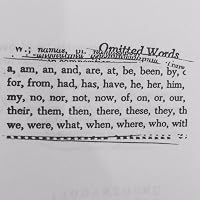
43 ‘My own take: a book must be more than the sum of its parts. A book should gather meaning over time, and should accumulate that meaning into a whole that necessarily includes all its pages. Books that give away all their answers in the introduction, leaving the pages to just lay out a continuum of evidence and examples; books whose chapters relate to one another only thematically or topically (“immigrant literature in Albania”; “immigrant literature in Belgium”; “immigrant literature in Ireland”); books whose chapters can be reordered without affecting the argument; books that don’t think they nee a conclusion; books whose only logic is a kind of endless piling on: all these run the risk of producing a whole that is less than what it contains.’
47 ‘Thinking of the ideas as somehow separate from the sentences—either “before” or “after” them, as most writers tend to do for academic prose—means having a fairly dismal theory of language.’
48 ‘Writing is a performance that happens in the intersection between your work and the reader’s experience of it. The ethos of good writing begins with that recognition.’
47 ‘Thinking of the ideas as somehow separate from the sentences—either “before” or “after” them, as most writers tend to do for academic prose—means having a fairly dismal theory of language.’
48 ‘Writing is a performance that happens in the intersection between your work and the reader’s experience of it. The ethos of good writing begins with that recognition.’

Read
January 26, 2022had to only read a chapter of this for class but it was so good i had to keep going. i hav no hope, at all, in what academic writing can *do* for the world in terms of like. radical, fundamental change but aside from that, this text helped me realize how misplaced and unfounded my guilt + shame over not always working on my MRP really is. i knew this, logically, because im constantly reminding myself that constantly grinding is a capitalistic attitude that i don’t want to participate in.
grad students are just never taught how to write something over months/years, re-working and evolving it - my whole BA degree has been invested in teaching me how to do seminar papers, not something long-term like an MRP or a dissertation.
hayot’s text not only helps to acknowledge and dispel the shame/guilt around not always writing or not knowing how to write, but it also offers some really helpful tools on how to actually write the damn thing.
grad students are just never taught how to write something over months/years, re-working and evolving it - my whole BA degree has been invested in teaching me how to do seminar papers, not something long-term like an MRP or a dissertation.
hayot’s text not only helps to acknowledge and dispel the shame/guilt around not always writing or not knowing how to write, but it also offers some really helpful tools on how to actually write the damn thing.

January 31, 2024
I want to give this book a 3/5 or even a 2/5, but in truth, that would be me projecting. It’s a good book, a guiding book, and one that my brilliant senior thesis advisor recommended. However, it gave me anxiety to read all these dos and don’ts of writing (all phrased as “suggestions” and sometimes articulating new ideas for me and therefore new anxieties, such as with eliminating the word “if”). I’m not sure, I’m losing steam. The presence of Elena Ferrante is slipping from me—I need to go back to her earlier work that I read, her Guardian articles, her public lecture. I guess I just get stressed to think that student status and one day potentially professional tenure(d?) status depends on creative output. Hayot seems highly regimented, and he kept quoting Fredric Jameson which is funny because I read a piece in the course Migrant Narratives that lit Jameson’s ass on fire and then point by point demolished it. Conversely, Hayot point by point worships and kisses said ass.

August 15, 2020
Full disclosure: I adore books about writing. I don't find Hayot's minute analysis of the writing process here to be helpful, though. Much of his advice seems to consist of the kinds of strategies that one develops naturally as one reads and writes more. Does breaking everything down really help understand what makes good writing good? In some cases, yes; but in this case, I don't think so. Hayot's many examples can also be difficult to follow, being lifted from knotty texts, and end up amounting to an equivalent of "these are a few of my faaaaavorite things..."

July 2, 2025
This book was delightful. Informative on an abstract and practical level (great exercises but also great philosophy of writing as a form of learning). Sometimes it seemed like Hayot was attempting to write for a broader academic audience and sometimes it felt like he was only writing for literature scholars which could be a bit frustrating. But overall the book is full of great insights alongside Hayot’s great sense of humor (truly a shock to laugh this much throughout a writing reference book). Hayot managed to make his book wildly helpful AND entertaining.

July 7, 2024
Had to read a few chapters of this book for a class and decided afterwards to read the whole book while I was at it. There is a lot of interesting, informative, and even inspiring contained within, and the writing is lively enough not to bore you (at least for most of it). Some parts are a bit drawn out or outdated (stop the "he or she" phrasing which on top of that is also clunky). Took some good things from it overall!

September 24, 2020
Scholars should look at this book as an example to position themselves toward the rest of the world. There are suggestions and readings on the craft of writing that I do not fully understand or necessarily agree with. Yet that does not prevent me from gaining support, guidance, and more importantly a sense of academic collectivity from Eric Hayot's writing.

November 13, 2023
I enjoyed the advice and examples given. I think a lot of it is information I am glad to keep in mind, but little of it is information I will feel compelled to memorize exactly. Still, I think Hayot presents a positive, encouraging, and realistic insight to academic writing that I, as a grad student in History, will be able to use for years to come.
March 23, 2026
The book felt a little alien sometimes since the book was written with Graduate students in mind.
Despite this, the prose is consice, engaging, and sometimes comforting. The lessons of writing in Elements of Academic Style aren't limited to Graduate level education and is something that you will have to refer to over and over again.
Despite this, the prose is consice, engaging, and sometimes comforting. The lessons of writing in Elements of Academic Style aren't limited to Graduate level education and is something that you will have to refer to over and over again.

July 25, 2020
I mean the first chapter was waste of time to me. Yes, it’s important to know how to build its own habit, but I was hopping to get more writing info. Also his humor was kinda too sarcastic which wasn’t my type.

October 5, 2020
I had to read this book for one of my classes and it was fine. I'm not mad that I read it, but I'm not really happy that I read it either. I did learn a bit about how to better structure my writing, but I'm not really a fan of writing theory in itself.
September 5, 2023
Based on part I of this book, I assumed the specific advice to come would be about big-picture stuff that people actually have trouble with, and not the minutiae of structure and style that everybody writes about and nobody asks for.
Displaying 1 - 30 of 56 reviews