For a thousand years and more, The Worlds of Man had been dominated by the Laowon Imperium. The aliens thought humans made good slaves and better pets, and they were fond of creating new breeds. And the Laowon made sure that their playthings never grew too powerful. Born one day, on the edge of Human Space, Jon Iehard was ordered to hunt Eblis Bey, a terrorist for Old Earth. And that was the beginning of the end for the Laowon. Because Iehard had been a Laowon slave. And Eblis Bey held half the key to a weapon that could destroy the Laowon tyranny and bring freedon once more to Mankind!
Christopher Rowley is a prolific writer of both science fiction and fantasy novels. He was born in 1948 in Lynn, Massachusetts to an American mother and an English father. Educated for the most part at Brentwood School, Essex, England, he became a London-based journalist in the 1970s. In 1977 he moved to New York City and began work on The War For Eternity, his first science fiction novel. He currently lives in upstate New York.
Humanity as a brutalized slave race to alien overlords. An action-packed race/chase/bash as one man fights the system.
It's actually the 2nd book in this trilogy that stuck in my mind for decades and made me seek out the 1st book. They read well as stand-alones so starting with book 2 is no biggie.
As with much sci-fi (particularly from the 60s-80s) the characters are not the strong point and there's no great emotional depth to be found here, but, as with much sci-fi, there's a wealth of imagination. Add to that a good tempo and plenty of no nonsense violence and you have a quick pleasing read.
It's surprisingly brutal too. Not a future you'd want to live in!
I was very fortunate to get hold of this book. It is out of print and not available as an e-book on any platform, as far as I can see.
Which is a shame, really. Not only is it quite good, but it apparently served as partial inspiration for the Halo series, and the Flood of the Halo Universe is based on the parasitic Vang (Starhammer is book one of a trilogy called The Vang, although they don’t feature all that prominently here).
But back to the book at hand. It tells quite a lot of story in just around 300 pages, albeit a bit nasty around the edges. Some other reviewers here are calling it grimdark so I’ll just run with that.
The basic premise of Starhammer? The protagonist, who is an escaped slave of an alien race (the Laowon), stumbles on a conspiracy centuries in the making and an opportunity to turn the tables big time on his former oppressors.
It is an imaginative romp across a number of planets and environments, with lots of chewy Sci Fi goodness. Probably a product of its time (the novel was first published in the 1980s), but there are a surprising number of crazy big ideas in here, all wrapped up rather conveniently.
Things do get weird, and the grand finale takes place on an artificial planet that is a Mad Max / Borderlands / Hills Have Eyes hybrid of the worst kind.
It’s probably worth noting there are quite a few rape references (thankfully nothing is depicted in detail), since the Laowon make use of it as part of their racial discipline and punishment rituals. It is just another layer of grime in the nihilistic future that Rowley imagines.
All-in-all, an awesome little book that should be better known. We are letting a lot of worthwhile books slip through the cracks and fade to obscurity.
In closing. The novel also features the most ridiculously sized battletanks ever:
The tank was a monster, thirty kilometers in length, riding six pairs of heavy treads.
Not sure if that is a typo, but it certainly ups the wow-factor.
A delightfully grimdark novel that pays homage to the 'golden age' of science fiction. Brutal aliens and a group of humans out to save humanity from slavery. Great fun! Edit: reread 6/25 The first of the very loose Vang trilogy starts off with humanity being basically a client race of the Lao; blue skinned hominids with an impressive space empire. Our lead, Jon, begins the novel as a slave on an isolated Lao planet, but after some escapades, he arrives free in a human sector of space. Along the way, Jon hooks up with Bey, who has been hatching a plan to rid humanity of the Lao for good. Classic villains-- the Lao are brutal, rule with an iron fist, and only divisions in their ranks has allowed for some portions of humanity to remain independent, although humanity is slowing becoming simply a client race.
I will not go on with too much detail on the plot-- this is a fast paced brutal read that pulls you right along. The frenetic tempo just builds and builds to the smashing conclusion. Highly recommended if you like action in your space opera!
"In stormy midlatitudes we secured him, and laid him down, Tucked close to Nemo's Piston a million fathoms round, where we laid him down, So don't look for us in sun's light lest the laowon hunt us down, To Hope and Nemo's Piston, a million fathoms round."
The book is a hardcore SciFi with a lot of no nonsense violence. There is quite a little character development yet I feel that the MC Jon was portrayed very well. The reason must be the origin of Jon.
For example - The mote suddenly brayed, "Welcome!" Jon smiled. A welcome had been a rarity so far in his life, he was happy to accept one anywhere, even from a talking billiard ball.
It is 4533 AD. Humans are enslaved by another species called Lao from a different solar system. The laowon are similar to humans physically as well as mentally. They are more ruthless than us and they had done same things to us as the Nazis did to Jews. The laowon are racist bastards just like Hitler.
Human history cannot be explained better than this - "I'm sorry, my dear, but the history of our race is a tragic one, full of dreadful deeds and sad mistakes. One cannot ignore the innumerable crimes committed in the name of religious or ideological frenzy."
Now, get ready for a SciFi dropkick. People were in awe when they saw the concept of wormhole and the elastic time in Interstellar in 2014. However, this book was published in 1986. And read this -
"There was a strange, wrenching moment as the gravitomagnetic bubble formed and the ship surged through the wormholes of space-time."
And some more lines - "We performed a simple, random-gravity flip-flop. Our jump spin was absorbed by the star. We traveled around its gravity center along the lines of the magnetic field. It increased our chances of survival by twenty percent."
Finally,
There is a cute robot (yeah! The same billiard ball I had mentioned above.) The name is Rhapsodical Stardimple which is adorable AF.
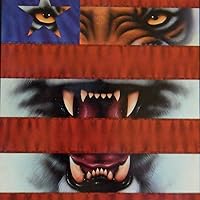
If I was the editor for a dictionary, I would put this book's cover art next to the entry for "genre trash." It's the kind of book that begins with a dozen paragraphs of galactic history, delivered as pure exposition from no one's perspective, before introducing an unstoppable protagonist who starts out a slave and is banging an alien princess by twenty pages in. That literally happens. Then in the next twenty pages he is involved in a court conspiracy to assassinate an alien duke with a gun-implant in his middle finger. Another twenty pages later and he's working as a psychic mass-murder prevention cop on a space station. I know what you're thinking: "that actually sounds kind of sweet." And it is, a bit. Here's the thing: while not without redeeming qualities, Starhammer is just not worth your time when there is so much better science fiction out there.
To Rowley's credit, his vision and ambition in world building are pretty laudable. But when it comes to execution -- narrative, dialog, and character building -- he just falls on his face over and over. If you encapsulated the plot of this book as an outline or a series of bullet points, you would get me and most other sci fi enthusiasts pretty excited, because there's a lot of fantastic action, weird aliens, galactic empires and such to make things interesting and varied. But then you sit down to read the book, which is composed of sentences made of words, and you start groaning at least once a page. To call the writing hamfisted is maybe too harsh. I think what's actually going on is more like a total abdication of editorial oversight on behalf of the publisher. Patrick Rothfuss lets books bake in the editorial oven for years after he finishes writing them. This feels like it was maybe given a single pass before being shipped to the printing press. For me, that seriously undercut the enjoyment I was able to extract from these pages, but looking around at other reviews I see that's not the case for every reader. And indeed, this came recommended to me by a friend who introduced me to Iain M. Banks, whose recommendations have rarely led me astray. But speaking for myself, I frequently found the characters' motivations unfathomable, both on the human and alien side of the equation. It's tough for me to get invested in the plot, no matter how sweet it looks in outline form, when the principal actors are the literary-dramatic equivalent of two-by-fours with faces drawn on them by magic marker.
Now I'm reading some Robert A. Heinlein, and it feels like a breath of fresh air after walking past a row of Chinese restaurant dumpsters in August. Your mileage may vary, but if you're like me you'll mostly resent this book for being just good enough that you didn't put it down halfway through and move on with your life.
The Halo videogames borrowed heavily from this book, and Jason Jones of Bungie Studios was my reference for picking it up. For its creativity I am grateful that Jones appreciated it and borrowed many ideas for the game series. But the story itself is so dark that it gets predictable and gross.
Torture, torture, rape, torture, humanity keeling over without a fight, people betraying each other over and over again...I am not sure Rowley realizes that when the enormity reaches that scale, it can't sustain itself. Societies based on evil don't last millenia. Anyway this also causes the characters to be personality-free and utterly disposable.
I suppose in terms of science-fiction there were a lot of interesting ideas for the time. But I am glad that Jones, and the rest of Bungie, decided to include heroism and good in their stories. This utterly lacks any of it. It was the age of relativism in fiction, and like Jones' other favorite work, The Black Company, this story gets predictably amoral because of it.
I won't be reading the sequels. I also skipped through to the end once a particular character was about to meet a horrible fate. I wonder how nerds of this era, who frequently identified with Star Wars, could also identify with this.
I have read this book so often I am on my 3rd copy my favourite book ever. If I get caught reading it by my family they are all "Oh my god! are you reading Starhammer AGAIN!" YES I AM!!!!! Need an audio version
Once upon a time (Way back in 1986) I read this book. I lost it somewhere along the line and have been trying to find it again for many years. Now that I have a copy in hand, I've just finished reading it for the second time. And, can I say--it's as well written as I remembered it being.
The mc is a genetically created human male. His dna was tinkered with by an alien called a Laowan, a species that over 1000 years ago defeated Earth and all of its colonies and now rules with an iron fist. They see all other species as servants/slaves to their own, and view themselves as the perfect species. As a result, they feel that they must conquer the entire galaxy, so as, to paraphrase one of the Laowan, "They can be prepared when a race from another galaxy invades this one and attempts to control it." Jon, our MC manages to escape from his slavery after his entire "family" is killed by their owner. He makes it to a "free" human system and, because he has psychic powers goes to work for the Mass Murder Squad of that system, tracking down serial killers.
The Laowan involve him in a manhunt for someone that they describe as a "murderer". From there, things get way out of hand. Excellent read, even if the first chapter is a bit slow. But after that--well, it's thrill after thrill.
A brilliant, gory, action-packed science fiction epic that ended like a splash of cold water to the face. The ending was as if the author suddenly decided that he got bored of the story and ended it in a anti-climatic way. It would've been one of my favorite books if the ending keep up with the quality of the drama the story carries. I love the background story of the laowon, human, the vangs, and the Starhammer. This book has a great pace, with consistent action but not too overwhelming. It is a short book but it felt like a sprawling space opera, which is a good thing. I'd give it five stars had it not been anti-climatic in the end. I might reread its sequel, Military Form, then end the series with Battlemaster.
This book is the first in "The Vang" series. In this book the human race, after coming into contact with a technologically superior, but morally corrupt alien race, have become their slaves. The aliens modify human DNA to create genetic mutations that serve their particular needs. One of these genetic "slaves" becomes the hero of the story and, through circumstance, travels on a path, (an extremely violent path) that will change the course of human history. This book is a great read. Why is it so good? Well, the characters, plot, bad guys, impossible odds and a great epic story about a reluctant hero. I highly recommend this book to fans of Space Opera and fans of Christopher Rowley.
Full fat, red blooded, high caffeine SF that wears its pulp genre heritage with pride. Rowley takes a leaf out of Chandler, when the plot slows down have a man with a gun break down the door. I loved it, but it will not be to everybody's taste.
A good sci-fi and a nice introduction to book 2. The author has the talent of describing a scene very vividly with a little detail. The Vang are not really present except toward the end.
Solid enough Space Operatic entertainment here. Rowley comes over as a kind of cross between Jack Vance and K W Jeter (he attempts the colour of the former and some of the bonkersness of the latter). Were he a successfull cross we would have something rather superb with Starhammer. Sadly, though, his style is a little disjointed, lurching from high camp to gritty streetcred without warning and with little reason. Characterisation isn't particularly deep; the plot is as lurching as the style, but does move along at an impressive clip from one colourful setting to another (with the final titular Starhammer a major effects extravaganza).
So, we have ancient alien civilisations, mutant cannibals, Lovecraftian monsters, galaxy-spanning journeys, humanity in imminent peril of enslavement, REALLY exotic weaponry. All the Space Opera boxes are enthusiastically ticked, it's just a pity that the crystal they're suspended within was not a bit more polished.
This book is a superb imaginative feat of science and future fiction. The first quarter to half of the book was world building and not so enjoyable. However, the second half of the book through the third and final act is groundbreaking and phenomenal. This is the series that inspired the bulk of the Halo franchise, which in itself is astoundingly superb. I did not at all like the human future world the author created; who would. We are slaves, brutalized and savaged by ultra oppressive blue overlords. Jon's victory lap is epic as is the start of the Laowon overthrow. The introduction of the Vang is spectacular, and the world of the ancients is breathtaking and awe-inspiring. I'm very much looking forward to the next book in the series and I highly recommend this first installment to all Sci-fi and or horror bookworms and to all fans of the Halo franchise.
Starhammer's interstellar yarn revels in brutal violence and presents an antagonistic alien species that is implausibly human in its biology, behavior, motivations, and social structure. Various elements of the narrative strain a reader's suspension of disbelief throughout the book. The conclusion manages to be relatively satisfying without justifying the time needed to plow through the preceding two hundred pages.
Really difficult to get into and quite badly paced, particularly when you've read Rowley's War for Eternity (which is excellent). It's actually quite good when you get through it, and very relevant in that it provides the basis for the Flood of Halo game (which is apparently well known, but I had no idea!). Interesting oddball sci-fi novel anyway.
Test post ftue ka book kar do not reflected on a a a time to get a a a time and time to get a a time and a a a time to get to the r of the right and a time and a a a a time and a a time and time and time and a time to get a time and a time to get a time and time to get a time to get a time to get a a time and a a time and time and time and time and time and time to get a time and
The three books in The Vang trilogy are wonders of "things go horribly wrong" scifi, and that's a very great thing. Full of humor and the bodies of people who tried to resist the Vang. They really deserve reissue, preferably as ebooks. No dragons.
I probably would have liked this book better if I had read it when it first came out. I image that if it were written 10 years later it would have been much different. The writing and editing process changed a lot in the few years after this was published.
The only good thing about this book is the title and cover. The writing style is so incredibly bland and flat that it's hard to read more than a paragraph at a time without your eyes drooping. The fight scenes are totally boring-the author does not know how to convey vivid imagery through the use of sounds sights touch etc. in his descriptions. This is like reading a long essay, not a novel. Just one factual statement of what is happening after another without any emotion or metaphors or vivid descriptors ie. he was attacked, he fought back. For an action packed book about alien invasion that is actually good try Battlefield Earth by L. Ron Hubbard or anything by David Drake or David Weber. For a bad case of insomnia, prescribe this book.