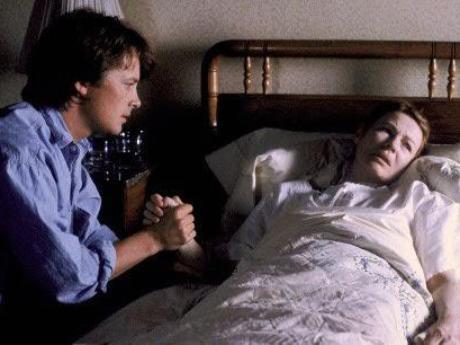
Published in 1984, Bright Lights, Big City is famous for being a novel narrated entirely in the second person; although it's neither the first or the only book to do that, somehow it became one of the better known examples of this technique. Apparently, the novel began its life as a short story Jay McInerney published in a literary magazine, and which he later expanded into a full novel.
Aside from the neat narrative trick, there is not much that one can say about the contents of the novel itself. The anonymous narrator, obviously based on McInerey himself, spends his days working at the department of Factual Verification for a magazine in New York, and his nights partying at the local clubs. One of the first things which strikes the contemporary reader is how amusingly dated the book is. For obvious reasons, no one uses a computer; the narrator and others do their job the old way, finding information in actual records and via telephone calls to various sources. Despite little evidence of the narrator doing much actual work requiring actual skill, he somehow manages to live in Manhattan, go to parties and get high on cocaine most of the time.
There is little to say about the narrator - although unhappy, he remains resigned throughout most of the novel. Despite wanting to work at the fiction department, he never once tries producing any actual fiction; although he feels alienated and misses his former wife, there is little to suggest that he is actually willing or even capable of pursuing a real relationship with anyone. The few biographical snippets which aim to give us more insight into the narrator's character - a look at the early days of his marriage, a visit by his brother - ultimately turn out to not be enough to arouse any interest in someone who is thoroughly uninteresting, even if he is "you". It does not help that the background characters are entirely forgettable - including the narrator's wife, and his friend and mentor, Tad Allagash, about whom we learn little more than his name. Ultimately, there is little reason to care about anything that happens in the novel as the narrator does not care very much either, and in the end this was exactly my reaction: I did not care at all.
This is not a terrible book, but it's a period piece through and through. There are a few good lines throughout the text (my favorite being "You are a republic of voices tonight. Unfortunately, that republic is Italy."), but Jay McInerney is no Bret Easton Ellis, and Bright Lights, Big City is not Less Than Zero and definitely not American Psycho, both of which feature similar themes but are much better books.